




The Ultimate Guide to Condo & Apartment Architectural 3D Rendering
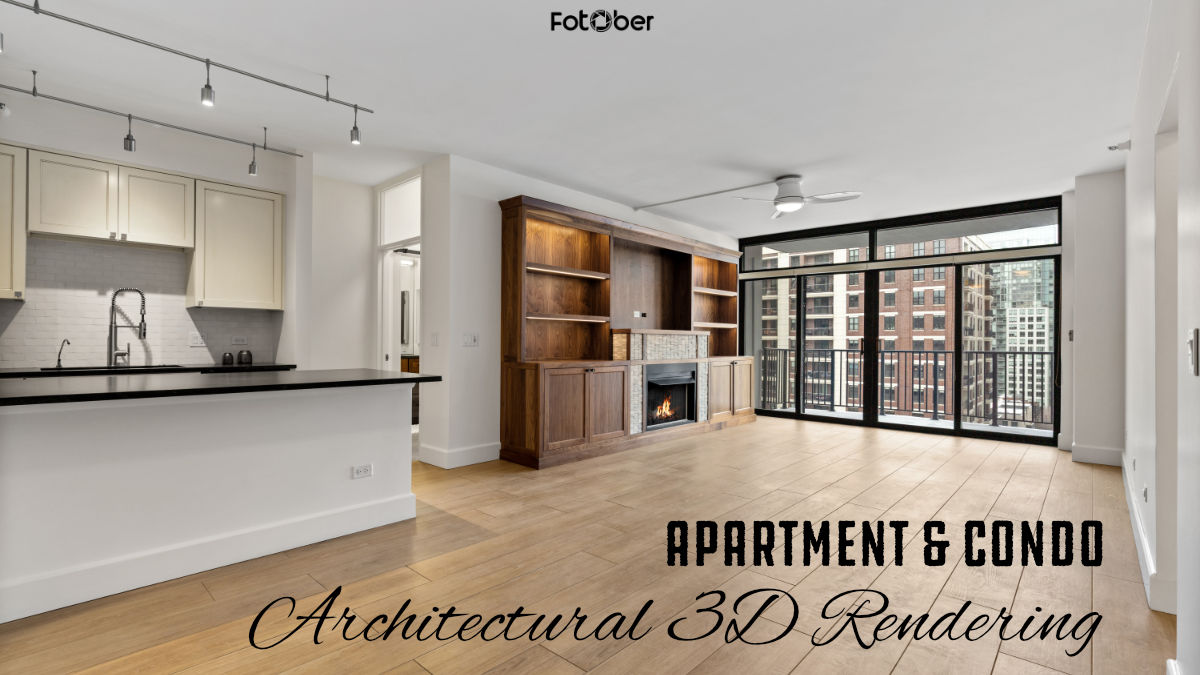

Share:
Table of Contents
- 1. The visual revolution in multi-family real estate
- 2. Unlocking value with condo architectural 3D rendering
- 3. Driving volume with apartment architectural 3D rendering
- 4. The intersection of photography, videography, and condo architectural 3D rendering
- 5. Why editing and outsourcing condo architectural 3D rendering is a business necessity
- 6. How Fotober empowers realtors, photographers, and videographers with condo architectural 3D rendering
- 7. Deep dive: The step-by-step condo architectural 3D rendering process at Fotober
- 8. Real-world case studies: How rendering transforms campaigns
- 9. Conclusion: Elevate your creative agency with Fotober
The real estate landscape has undergone a seismic shift. There was a time when a clean, well-lit photograph and a printed floor plan were enough to close a deal. Today, in the hyper-competitive world of luxury condominiums and urban apartments, buyers are no longer purchasing just physical spaces; they are buying a lifestyle, a vision, and a future. But how do you sell a future that hasn’t been built yet? Or how do you showcase the full potential of an empty, outdated unit?
As photographers, videographers, and realtors, we understand the power of visual storytelling. We know that the right angle, the perfect play of golden hour light, and a sense of depth can evoke an emotional response that triggers a sale. However, when dealing with pre-construction properties, extensive renovations, or large-scale multi-family developments, traditional cameras hit a wall.
This is where 3D rendering for condos and apartments steps in. These technologies do not merely replace the camera; they extend the vision of the photographer, the strategy of the videographer, and the selling power of the realtor. In this comprehensive guide, we will explore the nuances of condo architectural 3D rendering and apartment architectural 3D rendering, examine how the principles of photography apply to CGI, and reveal why outsourcing this highly technical work to a specialized agency like Fotober is the smartest business decision you can make.
1. The visual revolution in multi-family real estate
In real estate, first impressions are entirely digital. Long before a prospective buyer or tenant steps into a leasing office, they have scrolled through hundreds of listings on Zillow, StreetEasy, or Instagram.
For multi-family developments, such as high-rise condominiums and sprawling apartment complexes, the visual demands are uniquely complex. Unlike single-family homes, multi-family marketing requires selling both private sanctuaries and shared community experiences.
|
Traditional photography |
Architectural 3D rendering |
|
Captures “what is” (Limited by physical reality) |
Captures “what could be” (Unlimited creative freedom) |
Historically, developers relied on 2D architectural blueprints and flat CAD drawings to pitch projects. For the average buyer, interpreting these technical diagrams is incredibly difficult. They cannot feel the texture of the quartz countertops, appreciate the flow of natural light through floor-to-ceiling windows, or visualize how their sofa will fit in the living room.
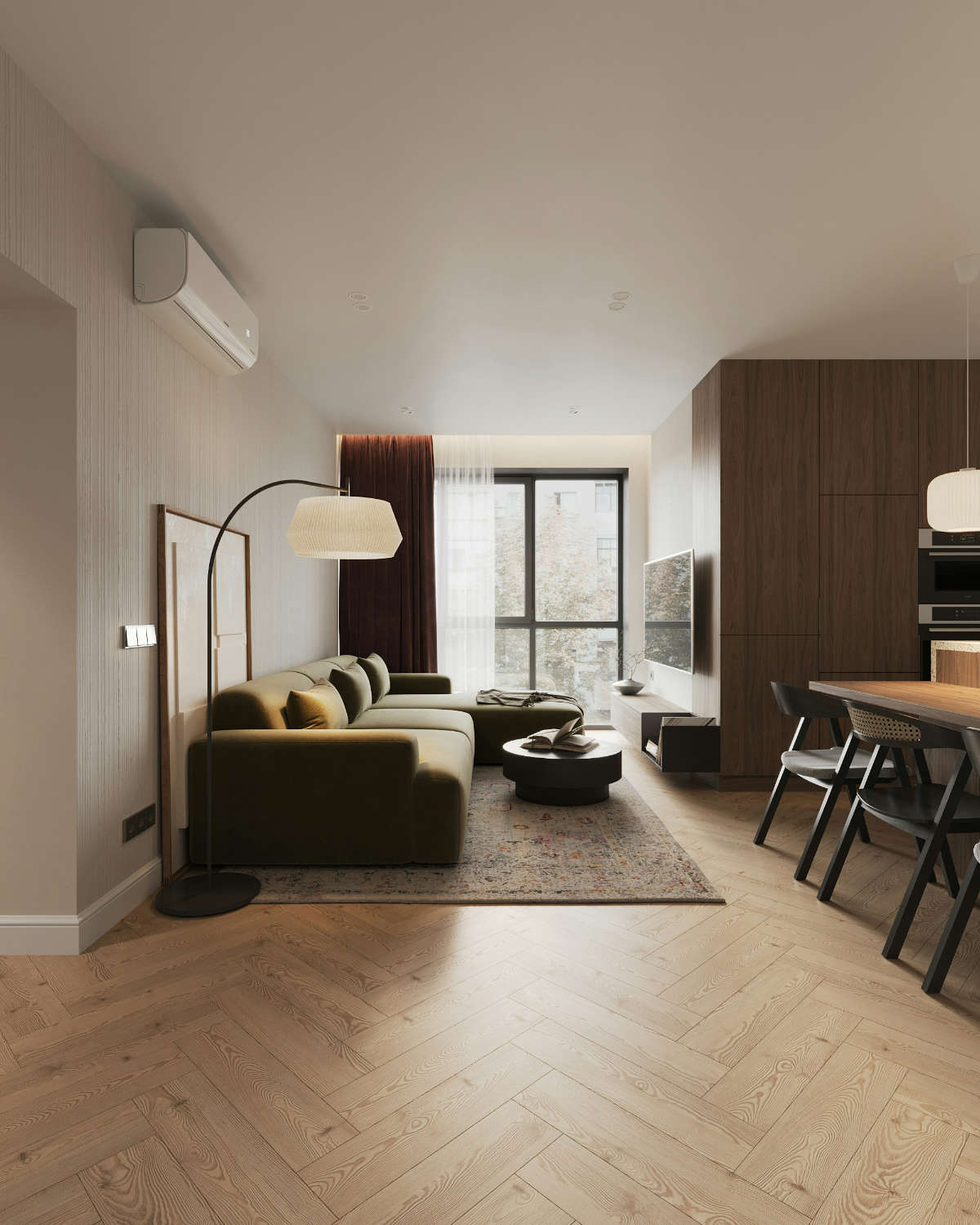 3D renderings bridged the imagination gap of buyers between a blueprint and the finished construction.
Condo architectural 3D rendering translates technical data into emotional reality. By combining architectural precision with artistic flair, 3D artists create photorealistic visualizations that are indistinguishable from high-end interior photography.
2. Unlocking value with condo architectural 3D rendering
When we talk about condo architectural 3D rendering, we are entering the realm of high-ticket real estate and ownership. Condominium buyers are making a long-term investment. They demand luxury, customization, and premium amenities. To capture this market, your visual assets must exude sophistication.
|
Condo 3D rendering focus | ||
|
High-end finish texture |
Lifestyle & personalization |
Premium amenities (spas, lounges) |
2.1. Defining the interior luxury lifestyle
A successful condo rendering does not just show a room; it tells a story.
- Material accuracy: With advanced physics-based rendering (PBR), materials like Italian marble, brushed brass, matte oak, and velvet upholstery are rendered with absolute realism. The way light reflects off a polished surface or diffuses through sheer curtains is captured down to the last photon.
- Spatial composition: High-end condos often feature unique architectural layouts, lofts, duplexes, or penthouse suites. 3D rendering allows you to showcase these complex spaces from dramatic, wide-angle perspectives that would be physically impossible for a photographer to capture without specialized rigging.
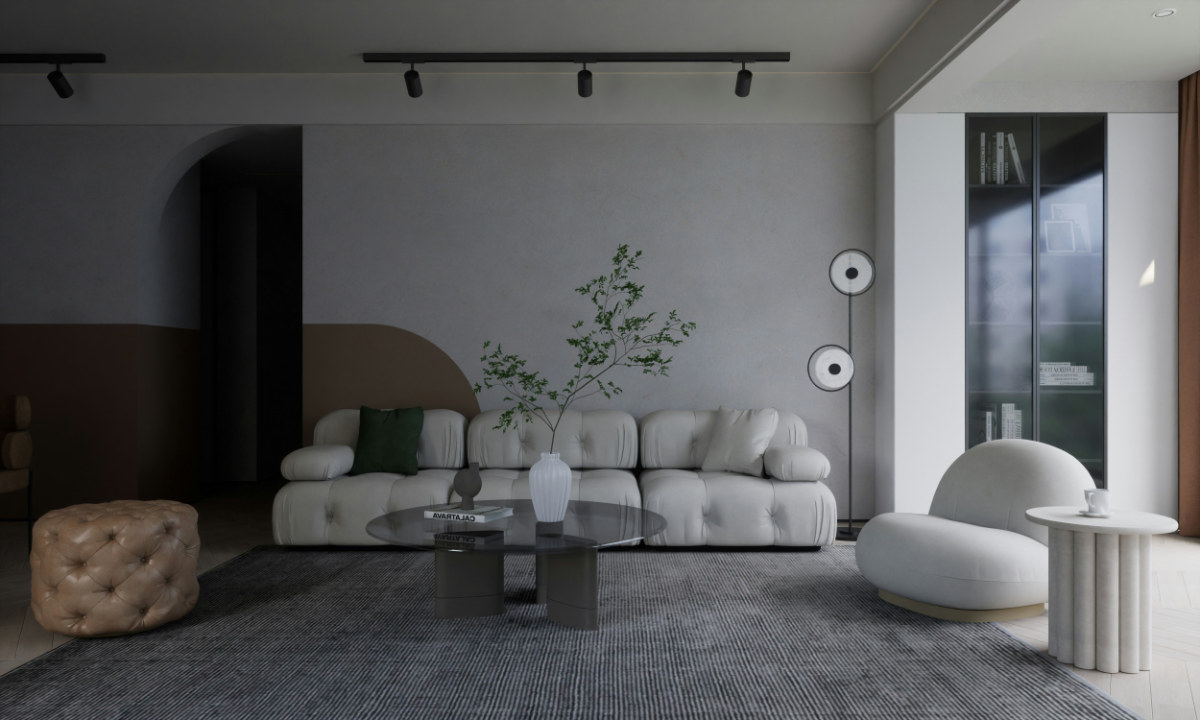 Renderings should be the perfected display of lifestyle and architecture.
2.2. Showcasing premium amenities
In modern condo developments, amenities are just as important as the individual units. Buyers want to see the rooftop infinity pool, the private wine cellar, the state-of-the-art wellness spa, and the resident lounge.
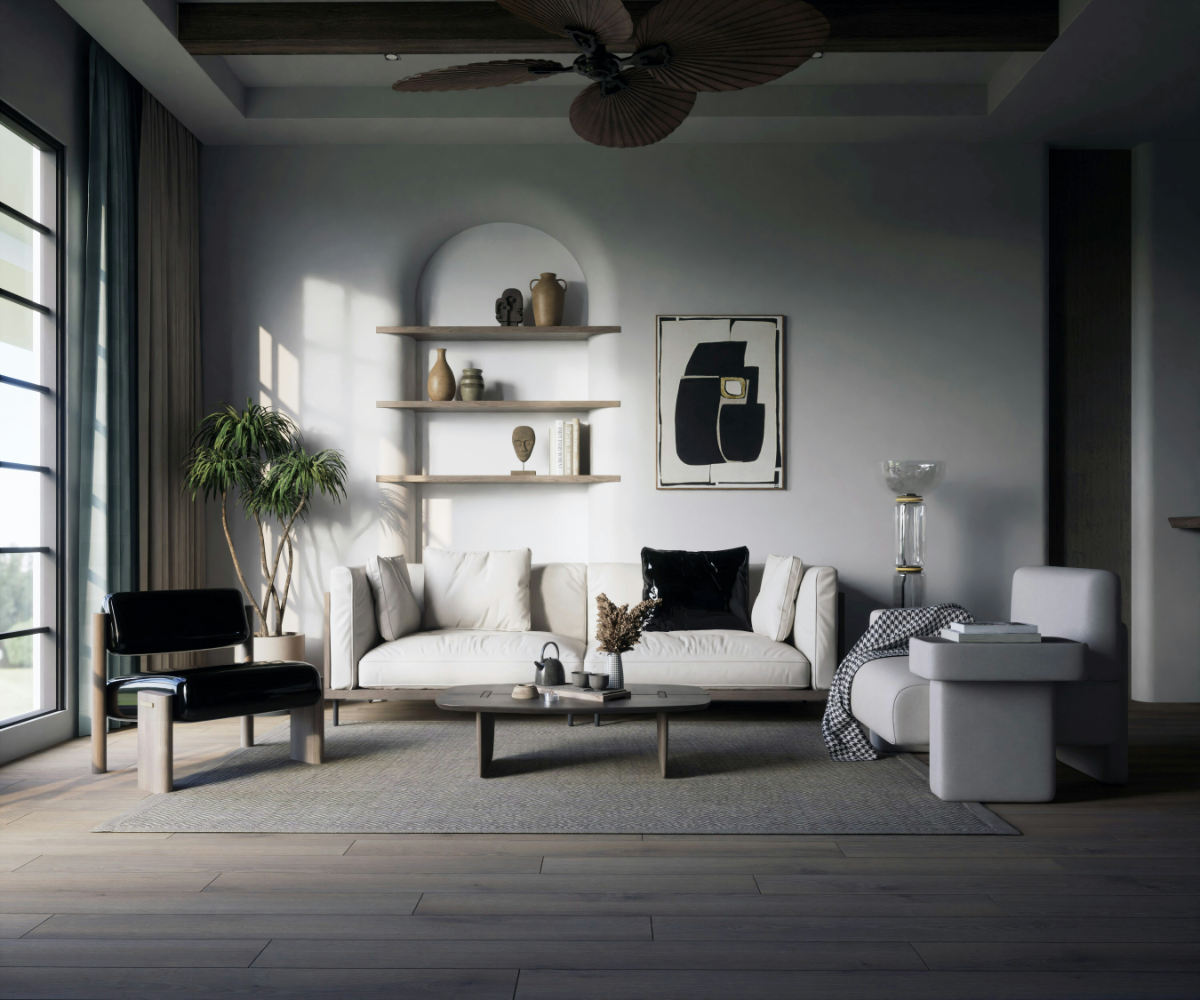 A condo's amenities are highly appreciated by investors and buyers.
Through condo architectural 3D rendering, you can populate these spaces with realistic 3D human figures (3D staffage), warm evening lighting, and ambient details that make the viewer think: "I want to live there."
3. Driving volume with apartment architectural 3D rendering
While condo architectural 3D rendering focuses on ownership and premium luxury, apartment architectural 3D rendering is often geared toward leasing, community living, and volume. For property managers, developers, and realtors specializing in rentals, the goal is to minimize vacancy rates and accelerate the pre-leasing phase of new developments.
|
Apartment 3D rendering focus | |
|
Space efficiency (micro-units) |
Community spaces (co-working) |
3.1. Optimizing urban living spaces
Urban apartments often feature compact, highly efficient layouts. Apartments above businesses, micro-apartments, studios, and junior one-bedrooms require careful spatial planning.
- Smart furniture placement: 3D rendering allows you to stage these apartments with space-saving, modern furniture. This demonstrates to renters how they can live comfortably without feeling cramped.
- Multi-functional visuals: You can easily generate multiple versions of the same apartment layout, showing it styled for a young professional, a retired couple, or roommates, broadening the appeal of the listing.
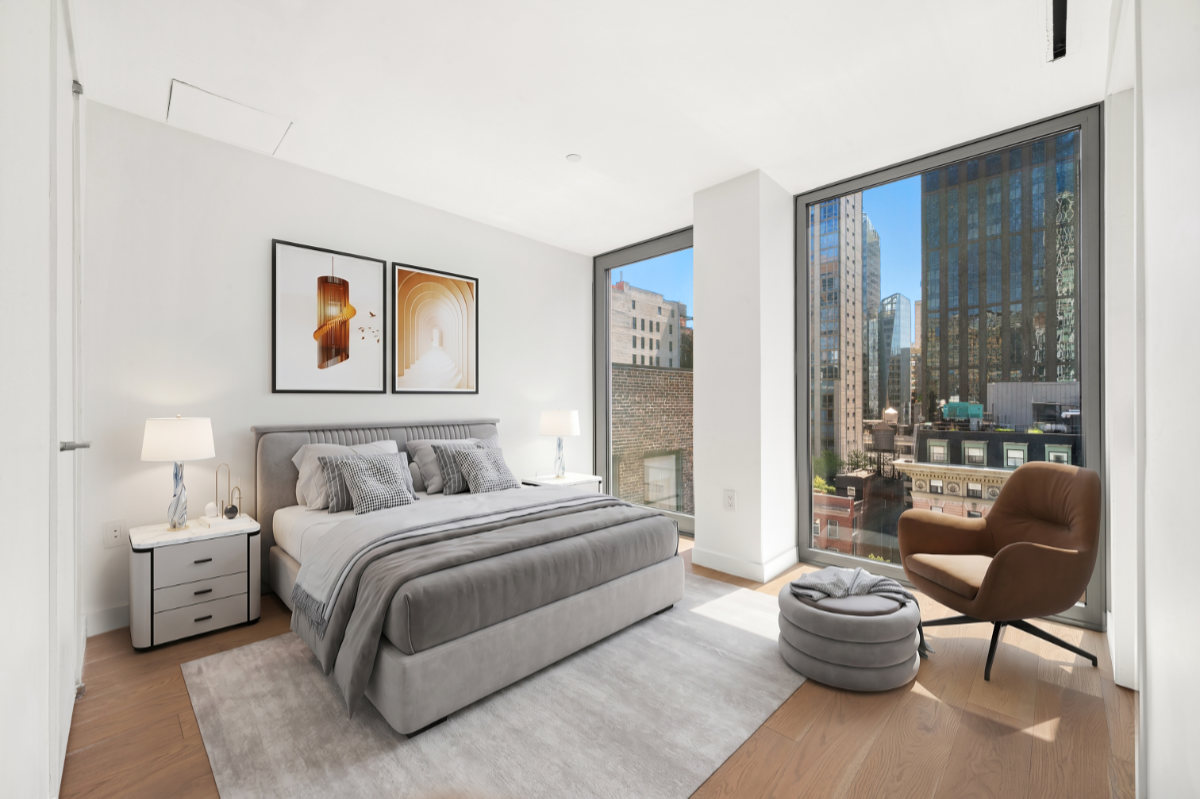 Apartment renderings aim to showcase the layout's efficiency, which allows for effortless living.
3.2. Highlighting shared co-working & social zones
The modern apartment renter, particularly among Millennials and Gen Z, highly values community. Co-working spaces, pet spas, communal kitchens, and outdoor fire pits are major selling points.
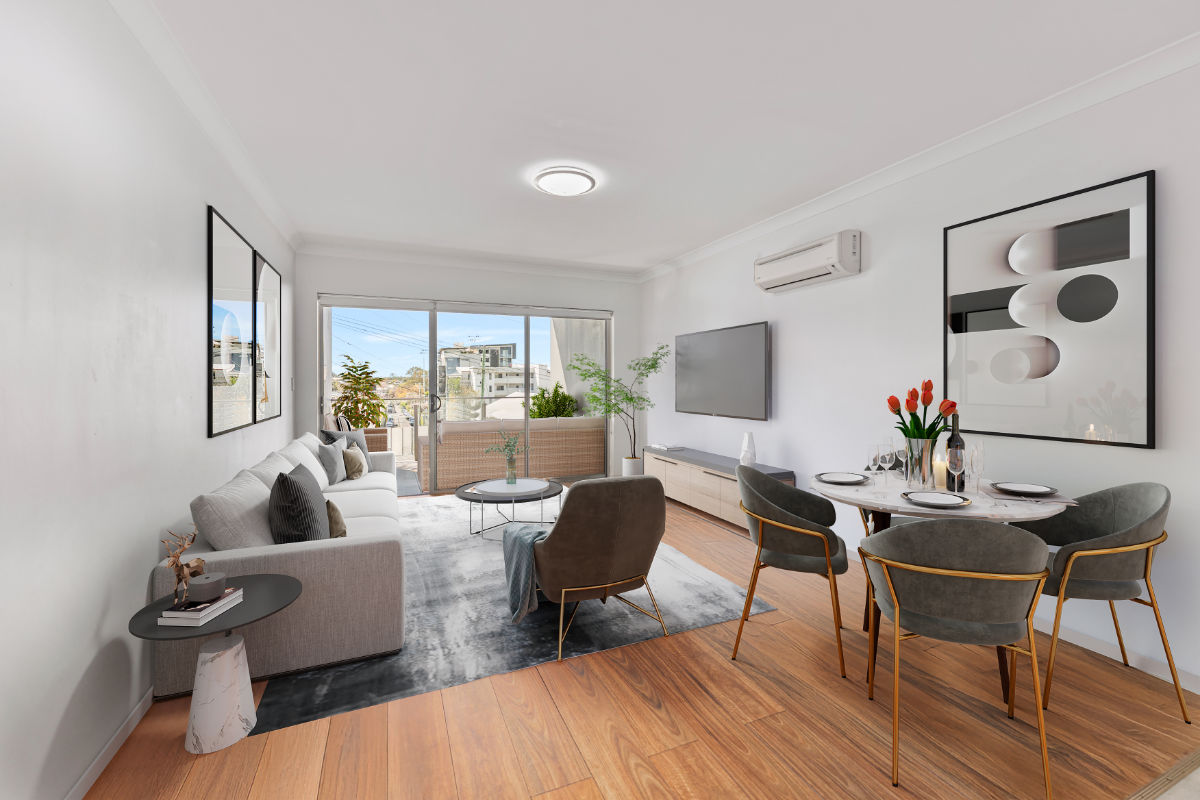 Social zones' layouts and amenities can be displayed with crystal-clear detail.
Using apartment architectural 3D rendering, you can showcase these shared spaces under different lighting conditions, from vibrant daylight for a co-working space to cozy twilight for a rooftop lounge. This creates a multi-layered narrative of daily life within the apartment community.
4. The intersection of photography, videography, and condo architectural 3D rendering
As creative professionals in photography and videography, we often view CGI (Computer Generated Imagery) with a hint of skepticism. However, the truth is that the best 3D artists are simply digital photographers. The principles that govern a stunning architectural photograph are identical to those that make a 3D render look spectacularly photorealistic.
|
Photography concept |
Translation in 3D rendering |
|
Exposure & dynamic range |
Balancing HDRI environments with interior artificial light sources to avoid blown-out windows. |
|
Camera composition |
Utilizing the Rule of Thirds, leading lines, and vanishing points to guide the viewer's eye. |
|
Depth of field (DoF) |
Applying subtle lens blur to foreground or background elements to emphasize key design features. |
|
Color temperature |
Balancing cool morning light spilling through a window with the warm glow of recessed LED fixtures. |
To create a photorealistic condo architectural 3D rendering, an artist must understand focal lengths. A 24mm lens perspective might be perfect for capturing the expansiveness of an open-plan kitchen, while a 50mm close-up shot is ideal for highlighting the delicate texture of custom cabinet hardware.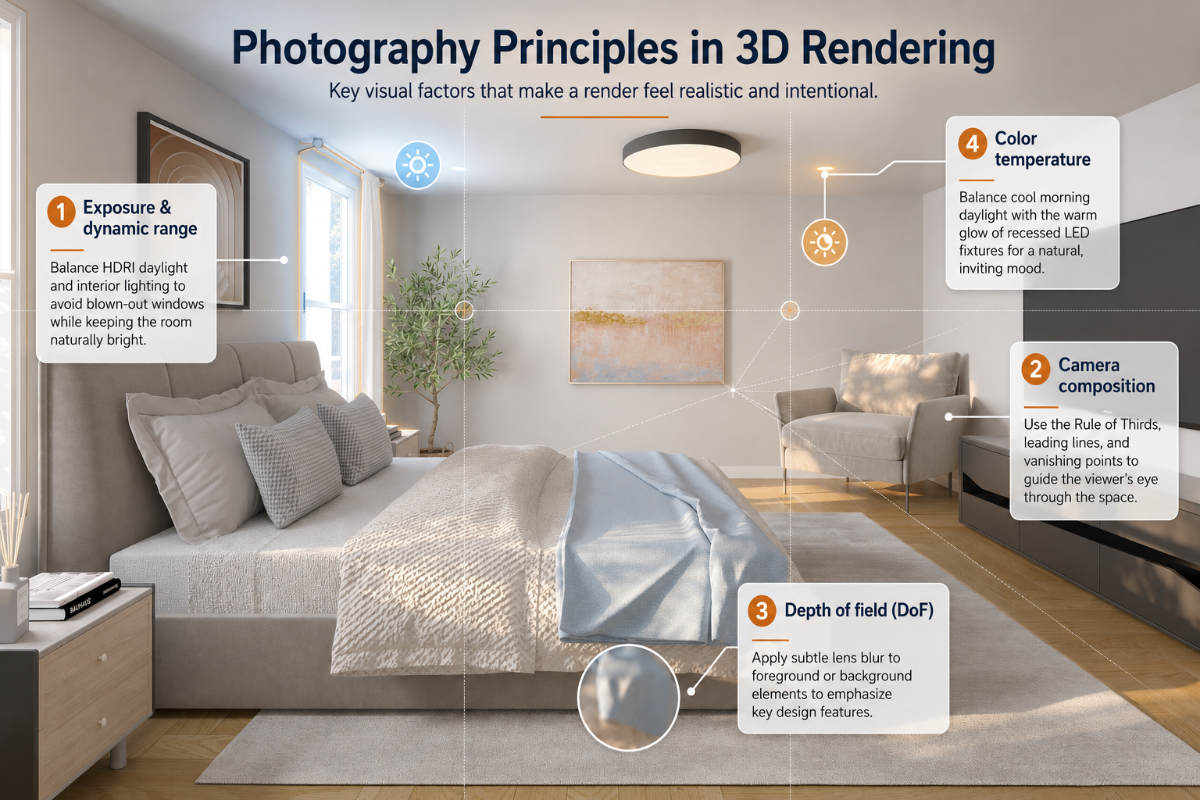 Rendered images should also comply with the rules of photography to establish a familiar feel to viewers instead of being uncanny and unbelievably sharp edge-to-edge.
Furthermore, video pros will appreciate that architectural 3D rendering is the foundation for 3D walkthroughs, flyovers, and virtual reality (VR) tours. By rendering a space in 3D, you can animate a virtual camera path, creating cinematic video tours of an apartment complex long before construction crews break ground.
5. Why editing and outsourcing condo architectural 3D rendering is a business necessity
If you are a photographer, videographer, or busy realtor, you might ask: “Why can’t we just do this ourselves?” or “Why shouldn't I hire an in-house 3D artist?” The answer lies in the harsh realities of production overhead, technical complexity, and scalability.
|
In-house production |
Outsourced production (Fotober) |
|
[High salaries] + [Expensive licenses] + [Long render times] = Low profit margins |
[On-demand pricing] + [Unlimited render farm access] + [Expert editors] = High ROI & scalability |
5.1. The bottleneck of in-house 3D production
Astronomical software and hardware costs: To produce high-end apartment architectural 3D rendering or condo visualisations, you need commercial licenses for industry-standard software such as 3ds Max, Blender, Corona Renderer, V-Ray, and Unreal Engine. These subscriptions cost thousands of dollars annually per seat. Moreover, you need ultra-high-end workstations equipped with dual workstation GPUs and enterprise-grade CPUs to handle the computational math required for ray-tracing.
The rendering time trap: Rendering a single photorealistic frame at 4K resolution can take hours, even on a powerful machine like one of the best laptops for architectural rendering. If you are producing an animation or multiple angles of a large condo development, your local hardware will be locked up for days. For a fast-moving marketing campaign, this delay is unacceptable.
The steep learning curve: 3D modeling, texturing, lighting, and post-processing require years of specialized study. A great photographer is not automatically a great 3D modeler. Trying to learn these skills while managing your core real estate business or photography studio is a recipe for burnout.
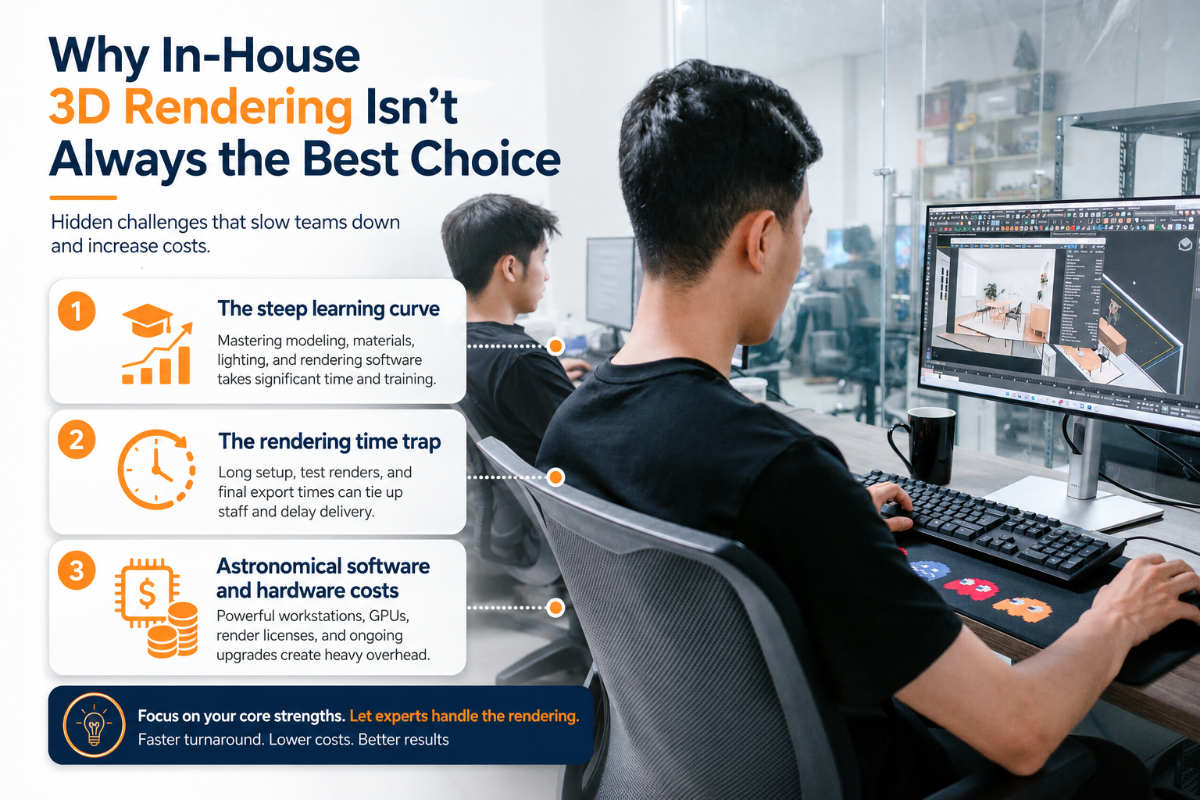 Outsourcing 3D rendering can save your studio some headaches.
5.2. The power of post-processing & fine editing
Even when a 3D model is generated, it rarely looks perfect straight out of the rendering engine. It requires the touch of a professional photo editor.
Post-processing involves color grading, balancing highlights and shadows, adding realistic lens flares, correcting vertical lines, and blending the 3D environment with real-world photographic backdrops (photomontage). This delicate editing process is where the true "magic" happens, turning a sterile digital image into an organic, living photograph.
6. How Fotober empowers realtors, photographers, and videographers with condo architectural 3D rendering
At Fotober, we have built a state-of-the-art ecosystem designed specifically to serve as the white-label backend for real estate photographers, videographers, and realtors. We don’t just offer services; we offer a strategic partnership that lets you scale your business without increasing your overhead.
|
Realtors & agencies | |
|
Photos & videos (Your core team) |
3D rendering & CGI (Outsourced to Fotober) |
6.1. For real estate photographers and videographers: Expand your menu
If you are a real estate photographer, your income is physically limited by the number of hours in a day and the number of shoots you can drive to. By partnering with Fotober, you can immediately add condo architectural 3D rendering and apartment architectural 3D rendering to your services menu.
- Double your average order value: When a developer asks for photos of a newly built phase and 3D renderings of an unbuilt phase, you don't have to walk away from half the project. You shoot the photography, and Fotober handles the CGI.
- White-label delivery: We work entirely behind the scenes. You deliver the breathtaking renderings to your client under your own brand name, boosting your reputation as a full-service creative agency.
6.2. For realtors and developers: Sell fast, sell early
For realtors and property developers, time is literally money. Wrestling with complicated software and rendering pricings on empty developments or delayed pre-sale campaigns can ruin a project's profitability.
Pre-sell with confidence: With Fotober's photorealistic condo renderings, you can launch marketing campaigns, secure pre-sales, and obtain financing months before construction is completed.
Virtual staging & virtual renovations: Got a dated, vacant apartment listing? Don't spend thousands on physical staging. Send the photos to Fotober, and we will digitally renovate and stage the space to match modern house design trends, attracting higher bids from buyers.
6.3. Why choose Fotober as your outsourcing partner?
A team of specialized artists: Our staff consists of highly skilled architectural 3D modelers, lighting specialists, and photo editors who understand the specific visual cues that sell real estate.
Lightning-fast turnaround: Thanks to our advanced rendering farms and streamlined pipeline, we deliver world-class renders in a fraction of the time it would take an in-house artist.
Rigorous quality control: Every rendering undergoes a multi-step quality assurance process to ensure architectural accuracy, correct material representation, and perfect photographic composition.
Unbeatable cost-efficiency: Our scalable outsourcing model means you only pay for what you use. No expensive software subscriptions, no idle hardware, and no full-time salaries.
7. Deep dive: The step-by-step condo architectural 3D rendering process at Fotober
Understanding how a 3D rendering is created helps clarify why professional outsourcing is so valuable. At Fotober, we follow a rigorous, collaborative pipeline to transform architectural plans into marketing masterpieces.
[CAD/Blueprints] ➔ [3D wireframe modeling] ➔ [Materials & texturing] ➔ [Lighting & composition] ➔ [Render engine processing] ➔ [Fotober post-processing & polish]
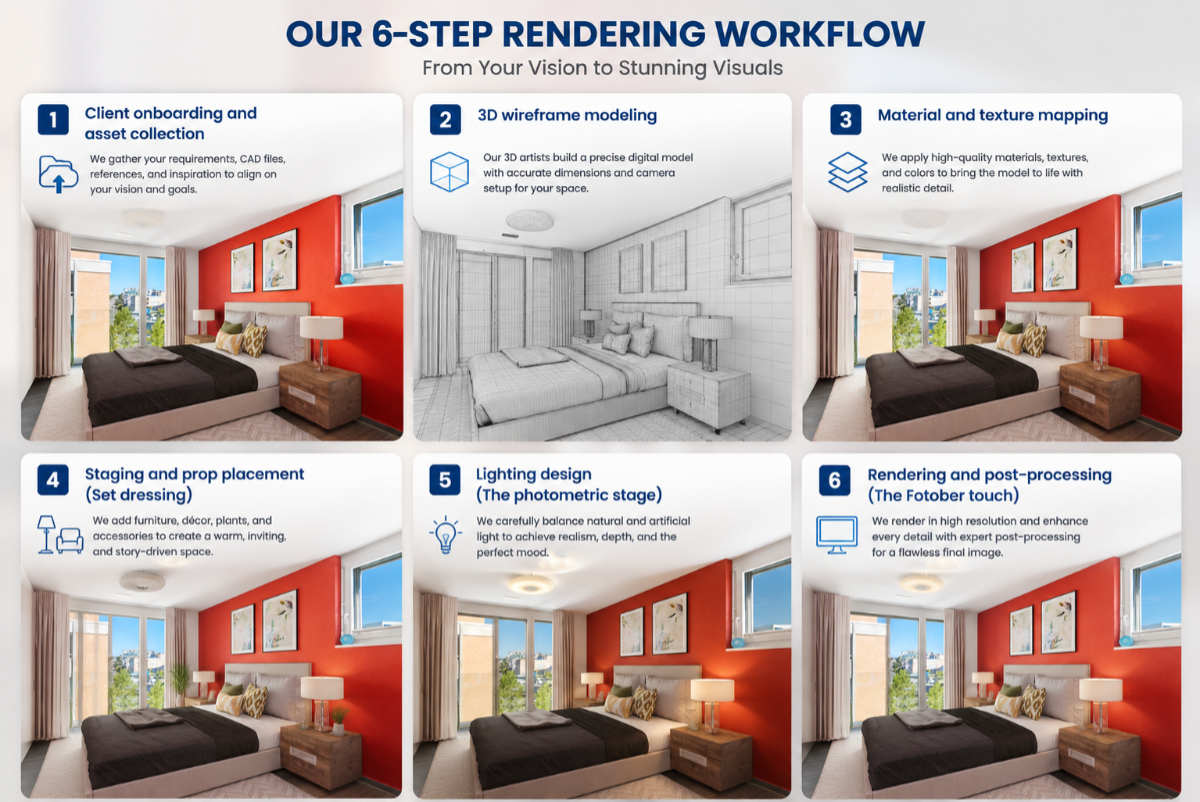 How your final rendering images get shaped.
Step 1: Client onboarding and asset collection: We begin by gathering all available assets from you or your architect client. This includes: CAD files, architectural blueprints, or basic floor plans; Mood boards or reference images showing the desired interior design style (e.g., Scandinavian modern, industrial loft, luxury minimalist); Material schedules (specifications for flooring, countertops, paint colors, and plumbing fixtures).
Step 2: 3D wireframe modeling: Our artists construct the digital skeleton of the condo or apartment unit. This wireframe defines the physical walls, ceilings, doors, windows, and structural columns. Accuracy at this stage is critical, ensuring the final render matches the exact physical dimensions of the built space.
Step 3: Material and texture mapping: Next, we apply digital "skins" to the wireframe model. We meticulously map materials to every surface:
- The reflection of wood: Ensuring hardwood floors have a realistic grain pattern and a subtle satin sheen that catches the light.
- The depth of stone: Setting up realistic bump-mapping on marble backsplashes to simulate natural stone textures.
Step 4: Staging and prop placement (Set dressing): To make an apartment architectural 3D rendering feel lived-in and warm, we carefully furnish the space. We select high-quality 3D assets, designer sofas, contemporary light fixtures, realistic potted plants, open books, coffee mugs, and artwork to create a curated, aspirational setting.
Step 5: Lighting design (The photometric stage): This is where our photographic expertise shines. We set up virtual light sources to mimic real-world physics:
- Natural sunlight: Utilizing HDRI skies to stream authentic daylight through windows, casting realistic, soft shadows across the floor.
- Interior lighting: Placing warm spotlights, LED strip lights, and pendant fixtures to add depth and create a cozy evening or afternoon ambiance.
Step 6: Rendering and post-processing (The Fotober touch)
Once the scene is set, our rendering engines compute millions of light paths to output a raw, high-resolution image. Finally, our editing team steps in. We adjust contrast, apply professional color grading, blend in background scenery (such as a real city skyline photographed from the actual construction site), and clean up any digital artifacts. The result is a breathtaking, photorealistic image ready for print, social media, or billboard displays.
8. Real-world case studies: How rendering transforms campaigns
Let’s look at two practical scenarios where professional 3D rendering completely changed the trajectory of a real estate marketing campaign.
|
Traditional path |
Rendering path |
|
Wait for construction ➔ Take photos ➔ Start marketing ➔ Lost time (Months of carrying costs) |
Create 3D renderings ➔ Start marketing immediately ➔ Secure pre-sales ➔ High ROI |
8.1. Case study A: The pre-sale success of "The Meridian" luxury condos
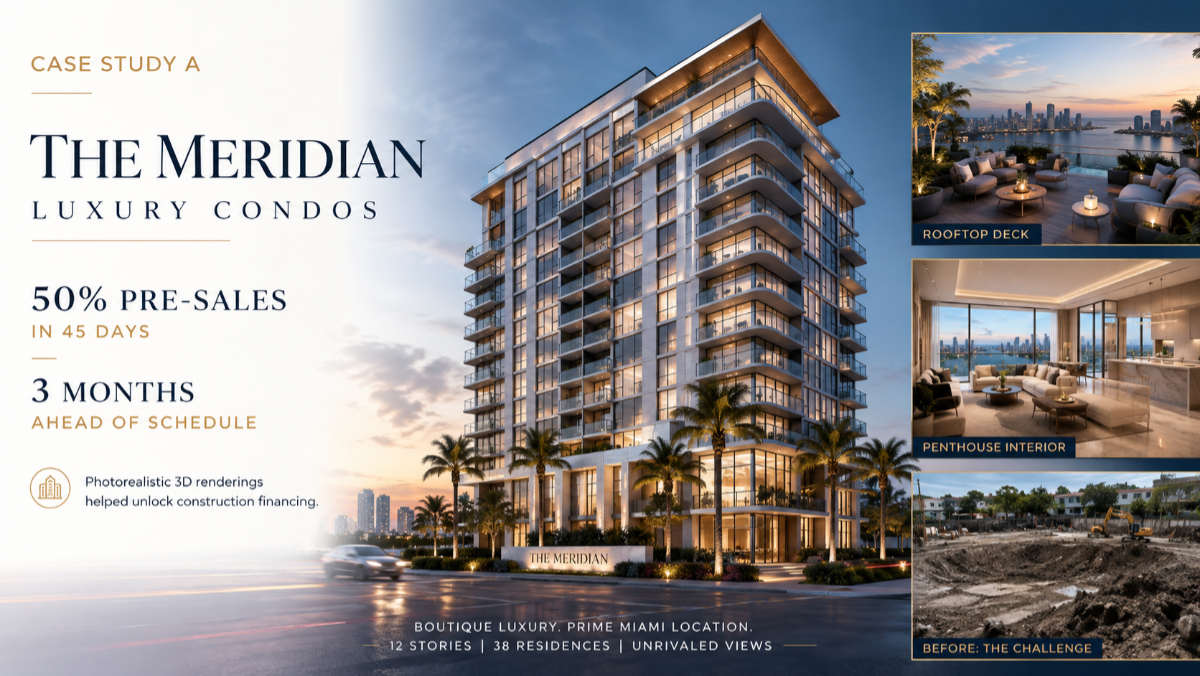 Luxury condo's pre-sales got kick-started thanks to premium 3D rendering visuals.
The challenge: A boutique developer in Miami was constructing a luxury 12-story condominium building called The Meridian. They needed to secure 50% pre-sales to unlock construction financing. However, the site was still a muddy excavation hole.
The solution: The developer partnered with a real estate photographer who outsourced the visual production to Fotober. Fotober created a suite of ten condo architectural 3D renderings, including a dramatic dusk exterior shot, the rooftop deck, and several luxury penthouses.
The result: The photorealistic renderings were featured on a dedicated marketing website and in a high-end print brochure. The developer reached their 50% pre-sale target in just 45 days, three months ahead of schedule, allowing construction to proceed without delay.
8.2. Case study B: Accelerating leasing at "The Union" apartments
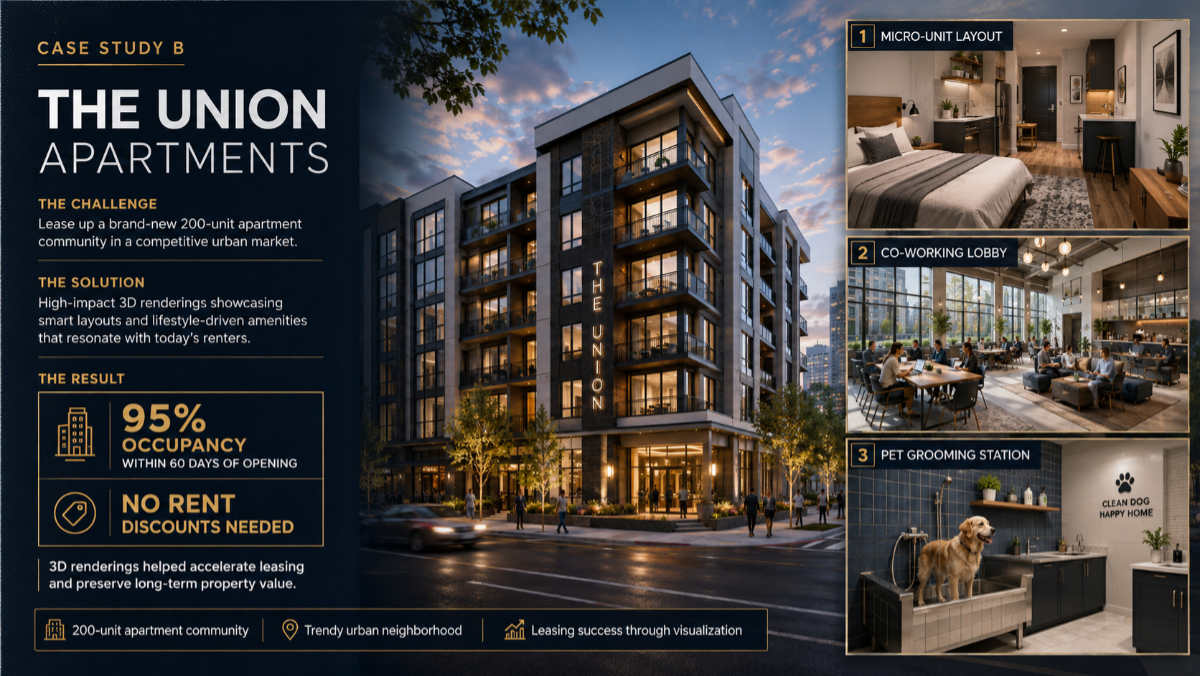 Rendering images help an apartment developer secure an impressive number of pre-leases without rent discounts.
The challenge: A property management company was struggling to pre-lease a new 200-unit apartment building in a trendy urban neighborhood. Competitor properties were offering aggressive rent concessions.
The solution: Fotober was commissioned to create several apartment architectural 3D renderings highlighting the micro-unit layouts, the shared co-working lobby, and the pet grooming station.
The result: The leasing team integrated these renderings into their social media ads and online listing portals. Renters were able to visualize how their furniture would fit in the compact spaces. The building achieved a 95% occupancy rate within 60 days of opening, bypassing the need for rent discounts and preserving the property’s long-term valuation.
9. Conclusion: Elevate your creative agency with Fotober
In the modern real estate market, visual quality is the ultimate differentiator. Whether you are a realtor wanting to win luxury listings, a photographer looking to grow your business, or a videographer striving to deliver comprehensive digital campaigns, you must offer top-tier 3D visualization.
You don’t need to spend thousands of dollars on expensive hardware, fight with complicated software interfaces, or stress over tight delivery windows. Partner with Fotober. Let our world-class team of 3D artists, lighting experts, and photo editors handle the technical heavy lifting, while you focus on what you do best: building client relationships, capturing beautiful moments, and closing deals.
Ready to transform your real estate visuals? Contact Fotober today to explore our premium condo and apartment architectural 3D rendering services and take your marketing to the next level.
Follow us on social media to stay updated with the latest visualization services to make every home look premium and succeed in the pre-sales phase.
- Facebook: fotobermedia.co
- YouTube: Fotober
- TikTok: @fotober
- Instagram: fotober_media.
Related posts

Cincinnati Housing Market 2026: Prices, Trends, and What It Means for Buyers, Sellers, and Investors
October 20, 2026

Modern Luxe Interior Design: Elements, Style Guide and How to Stage It
October 10, 2026

Minimalist Interior Design: Characteristics, Style Guide, and Staging
October 8, 2026

Coastal Interior Design: Style Definition & Staging Guide
September 30, 2026
