










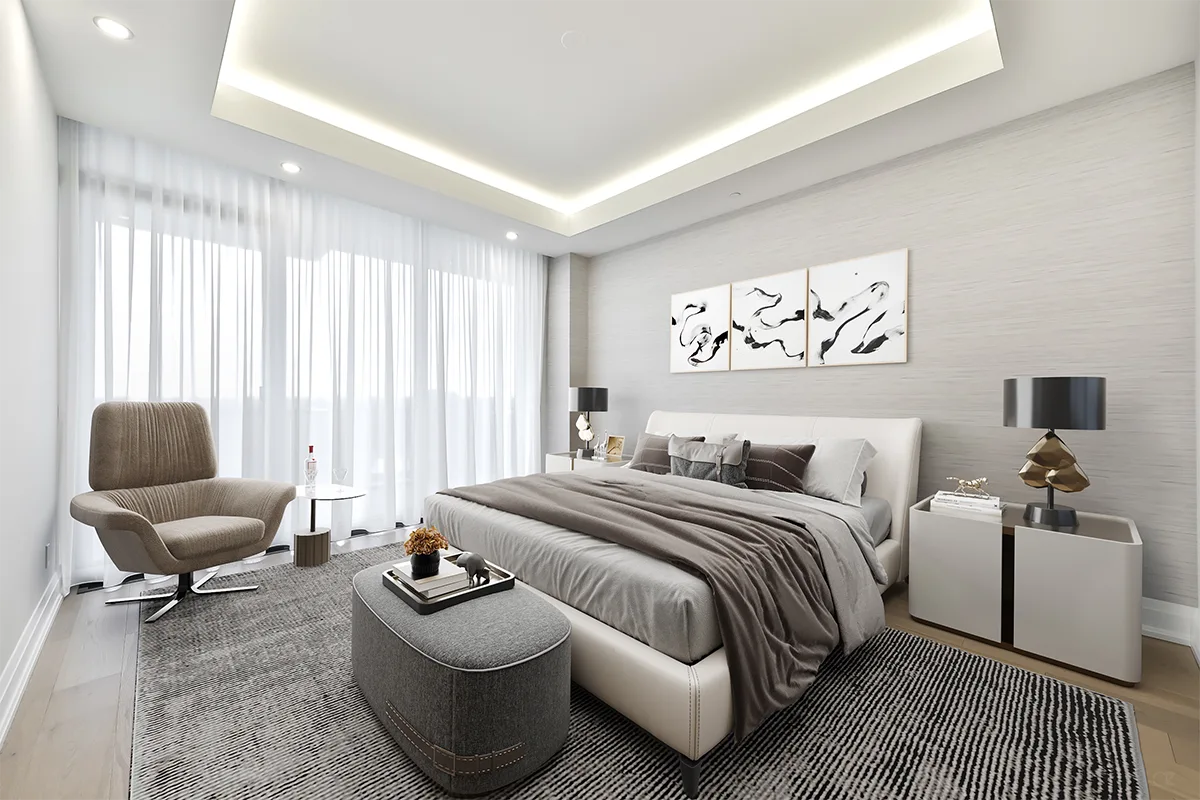
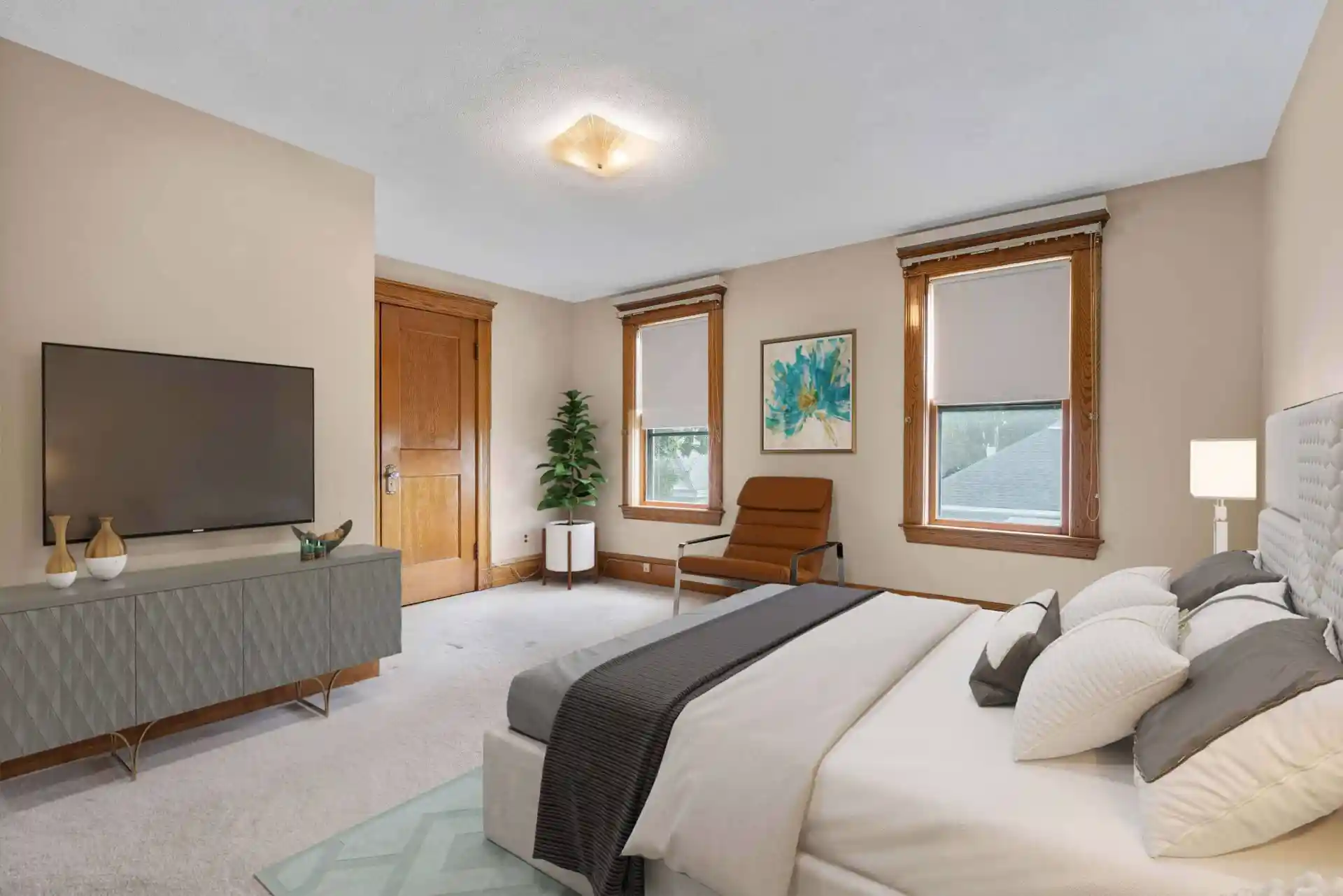
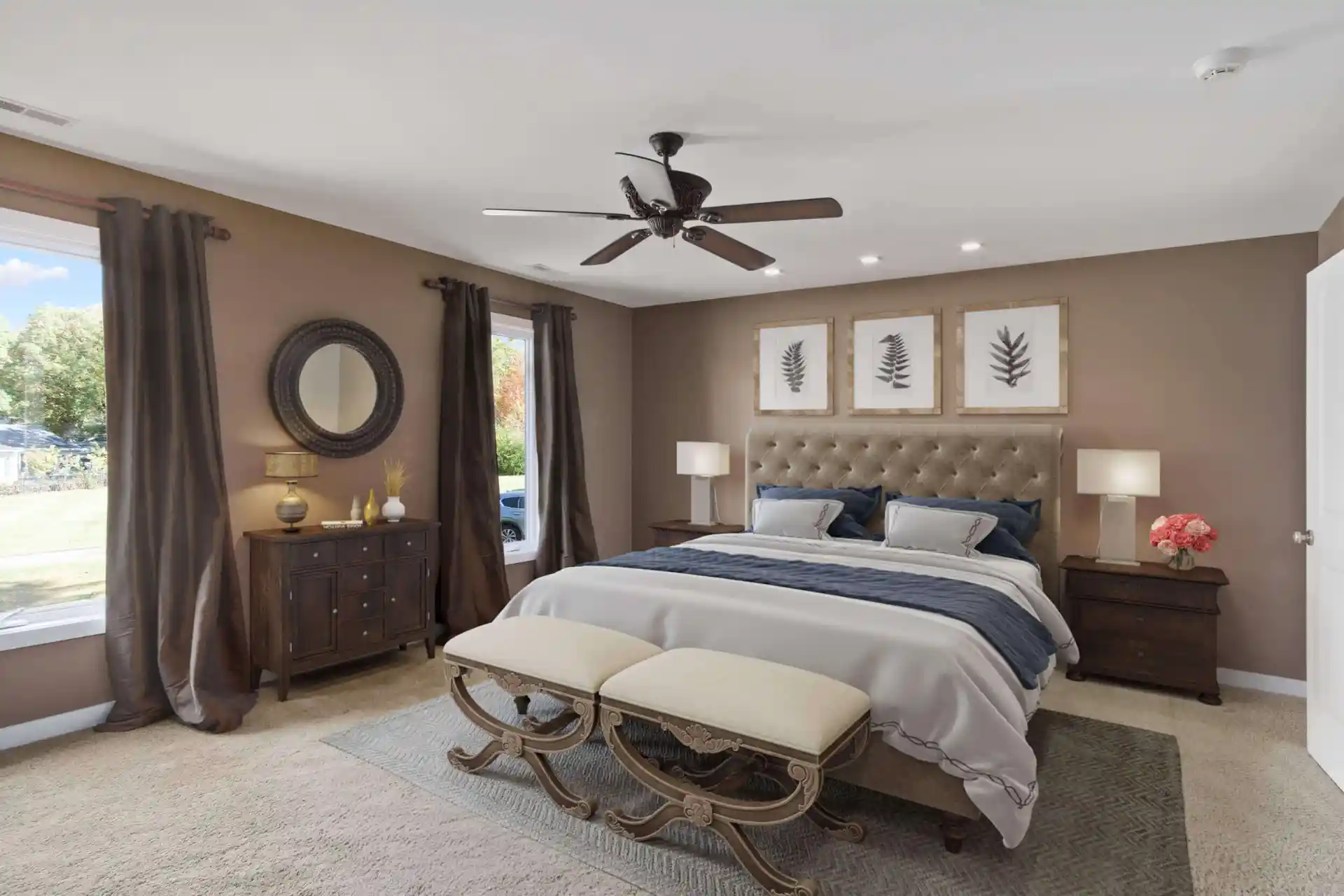

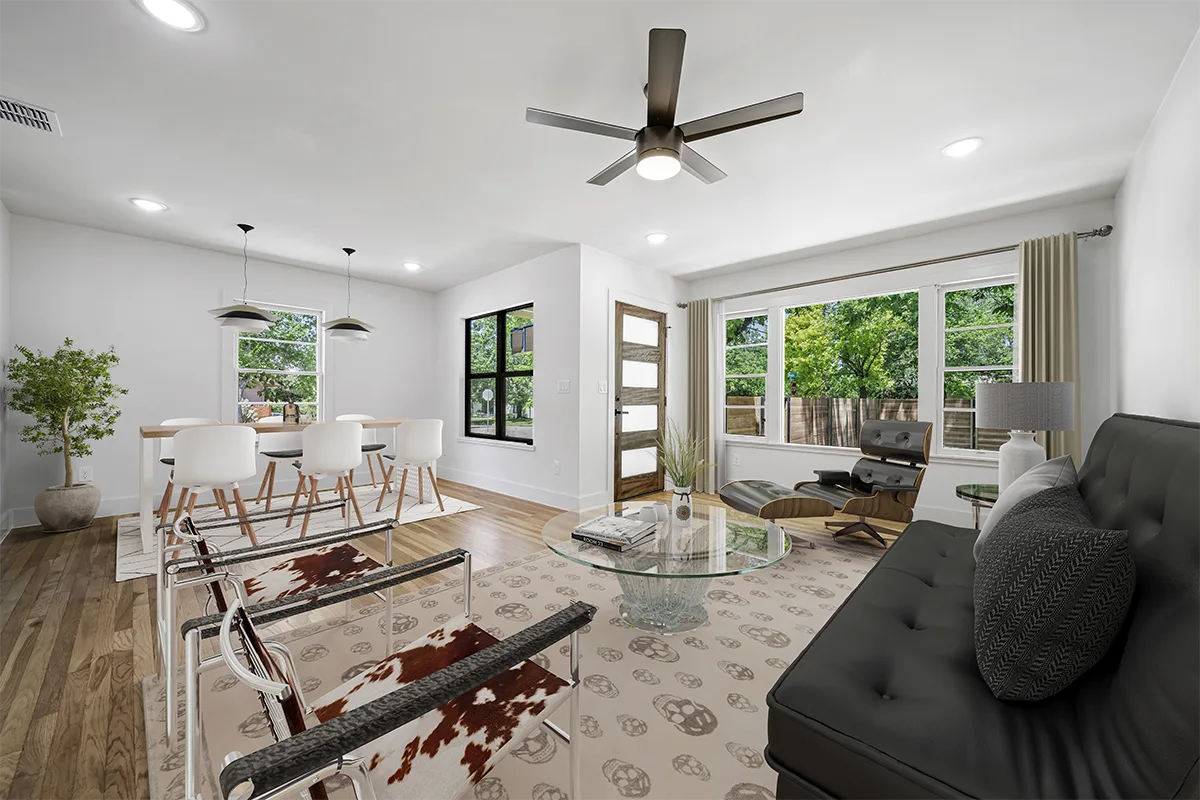
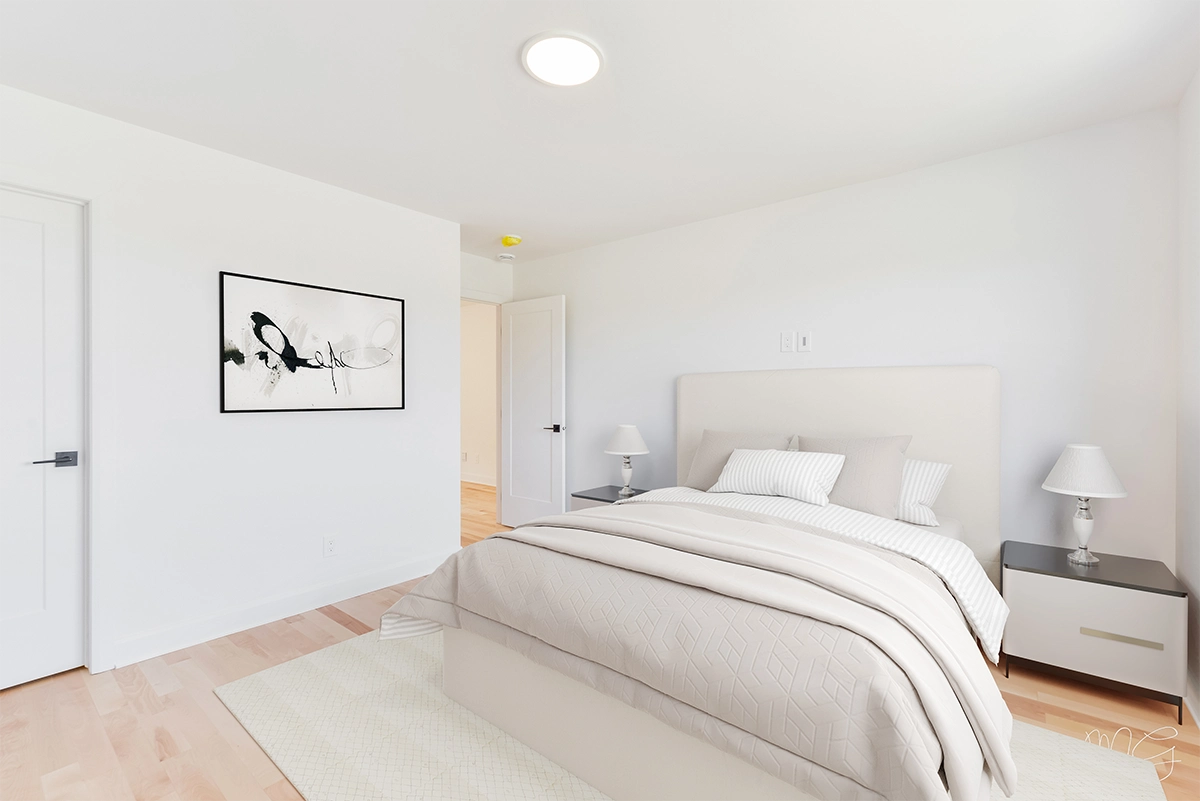
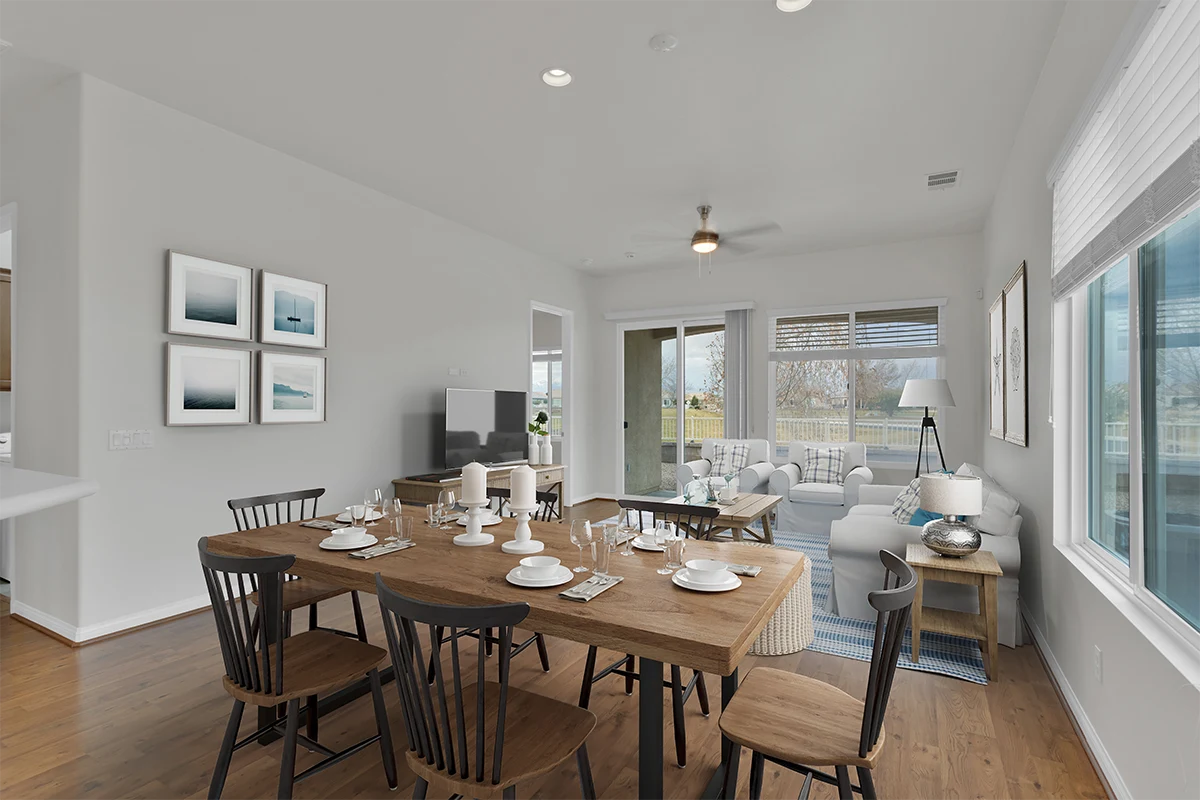

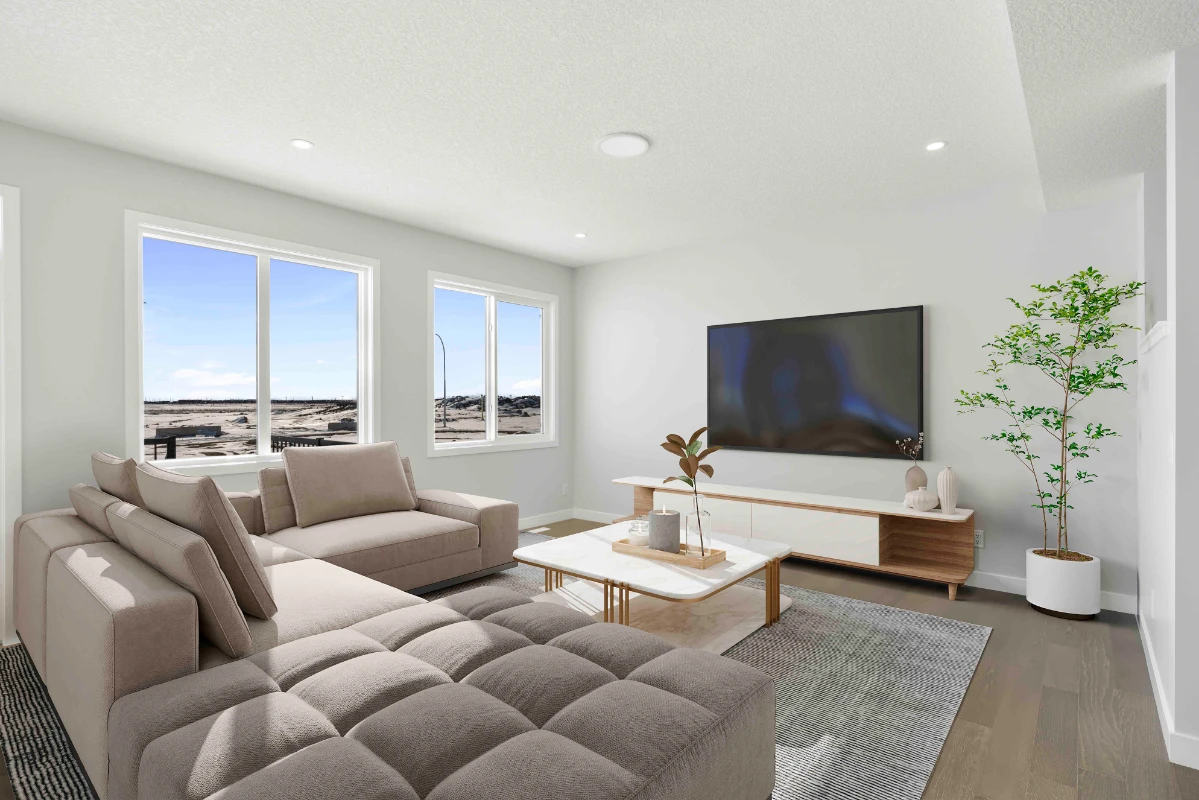
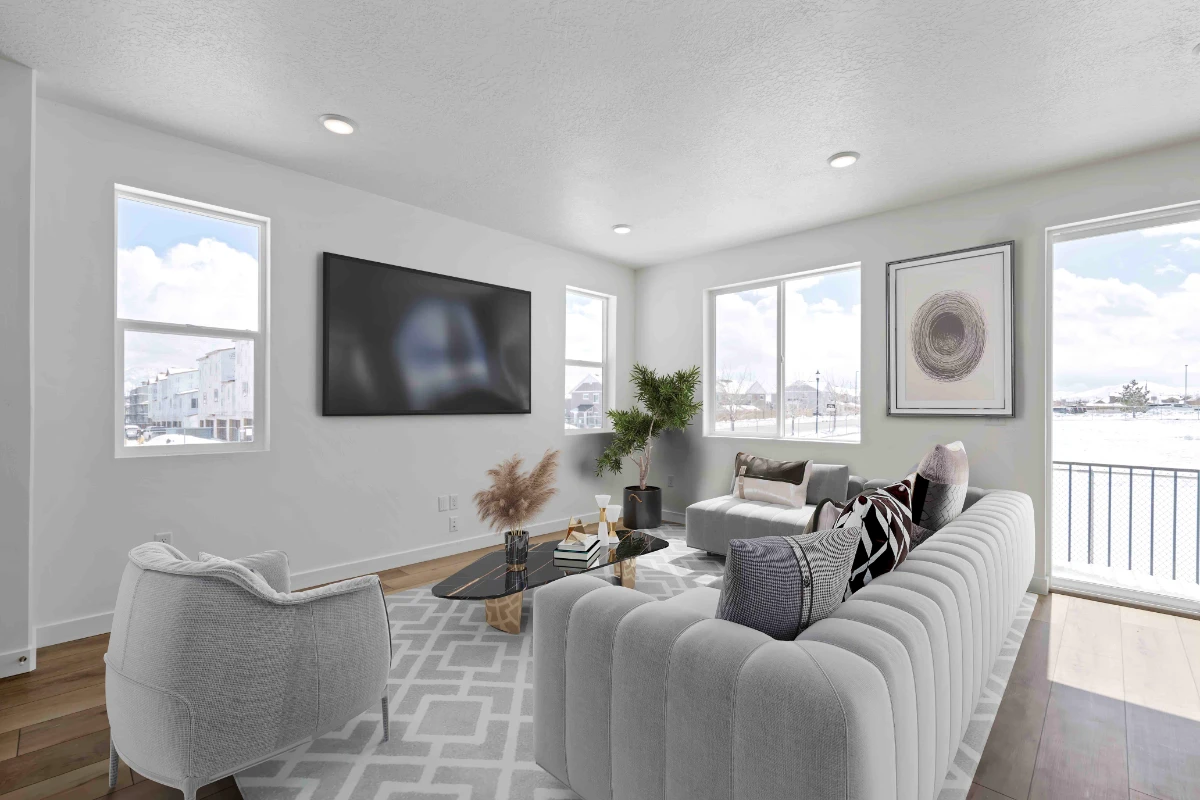
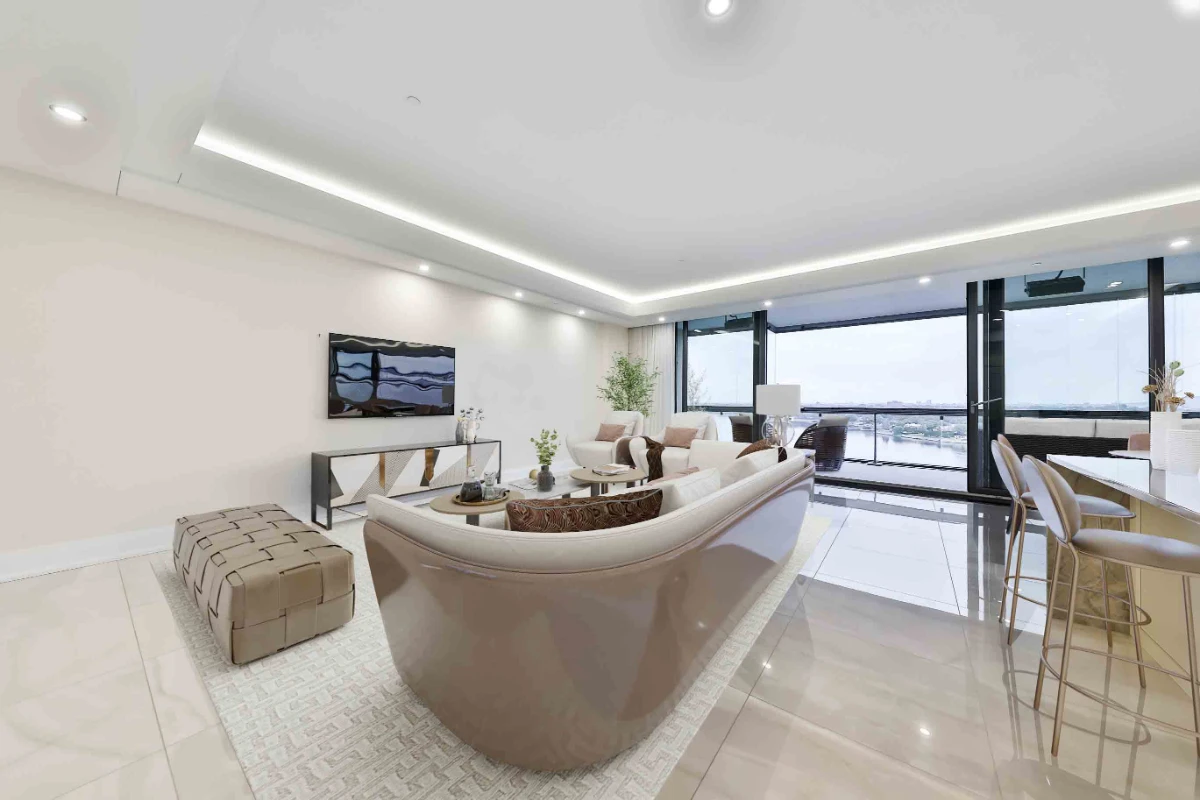
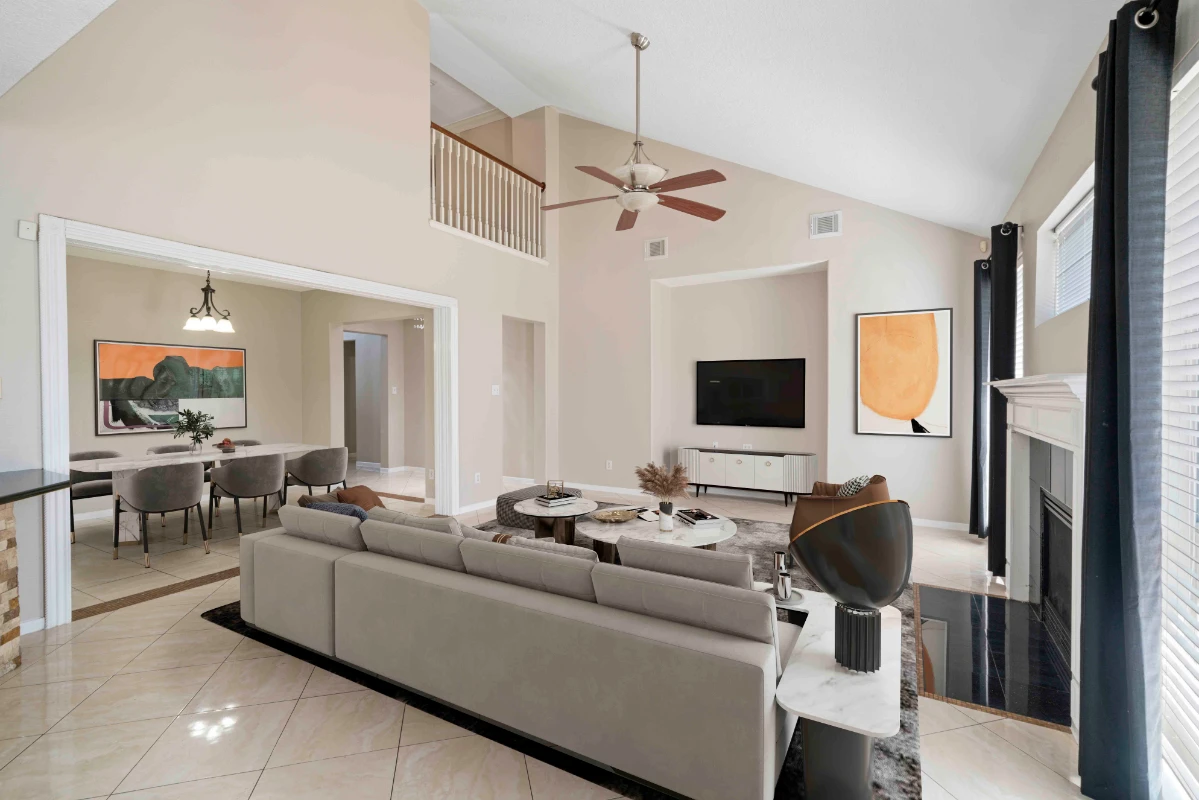
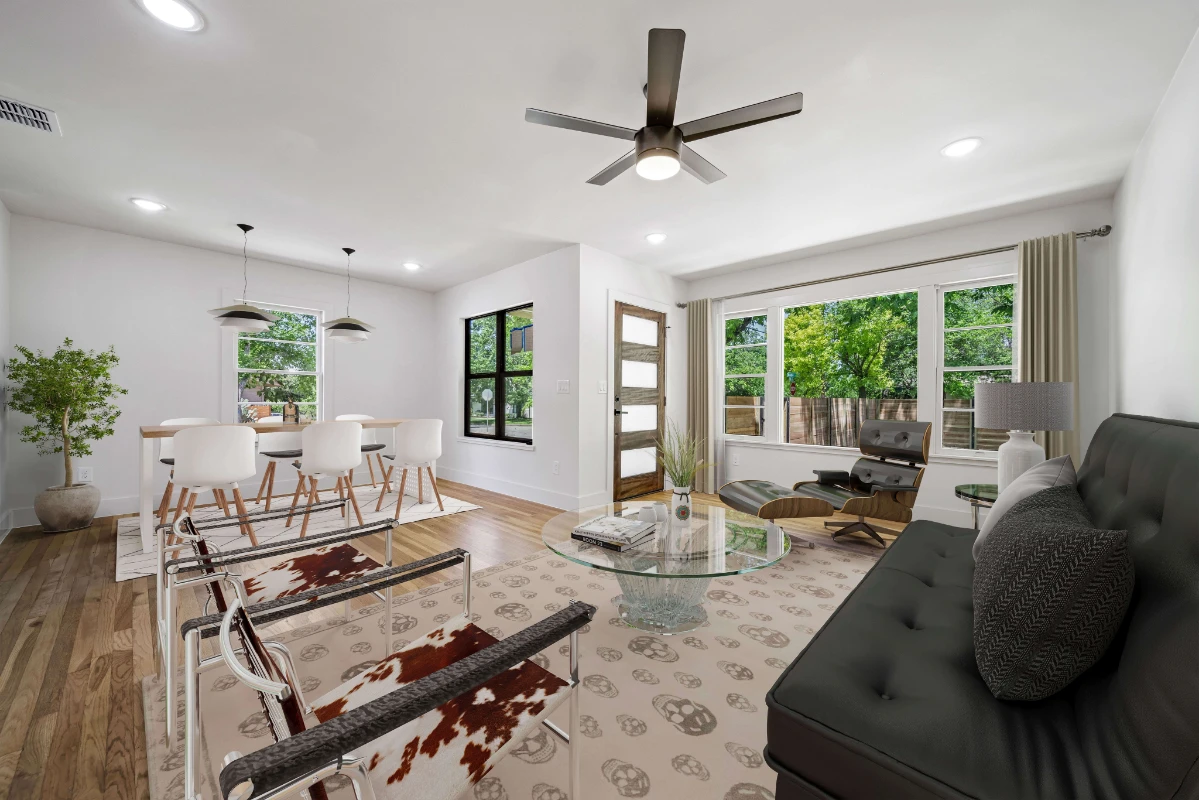
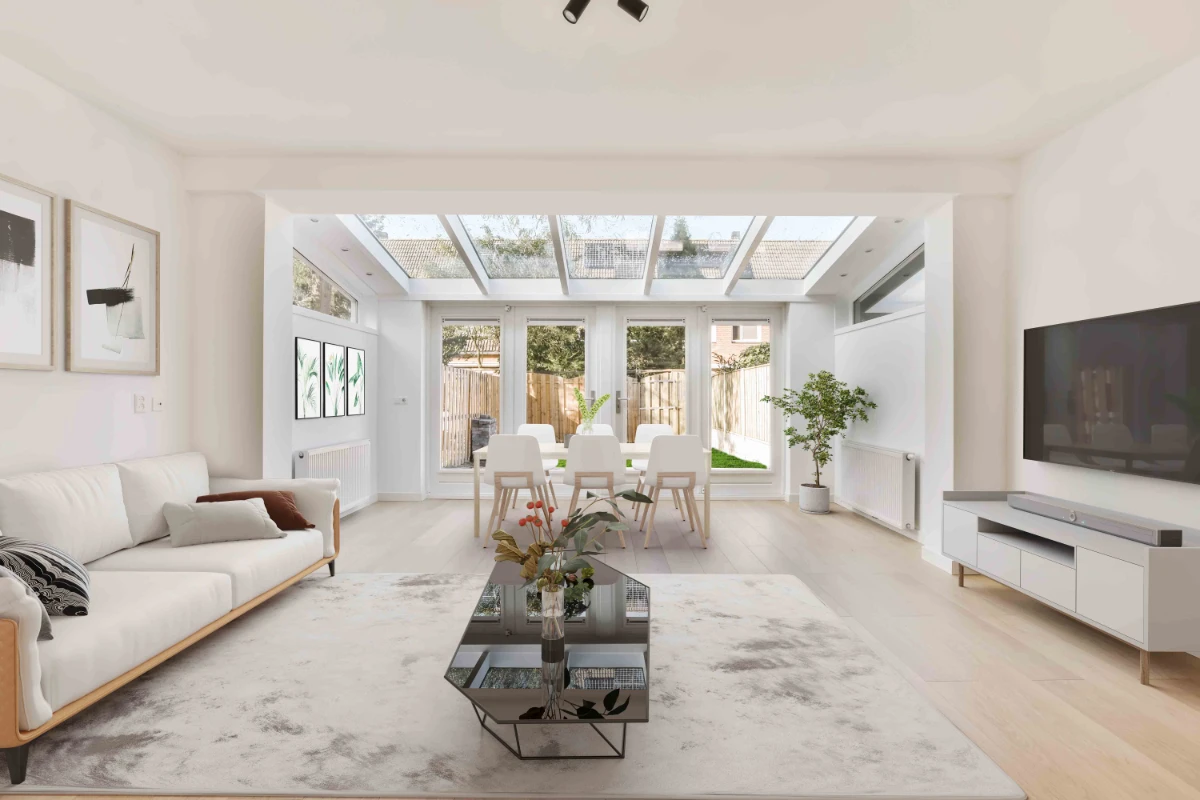





In today’s real estate market, visuals often determine whether a listing captures attention or gets overlooked. With buyers quickly browsing multiple properties online, listings without strong visual presentation can easily be ignored. This is where a professional virtual staging service helps agents and photographers present properties more effectively.
By adding realistic furniture and interior styling, virtual staging transforms empty spaces into inviting, move-in ready homes that help buyers better visualize the property. As demand grows for scalable and cost-effective alternatives to traditional staging, many real estate professionals now rely on virtual staging as part of their marketing strategy. This guide explains how it works, what it costs, and how to choose the right provider.
1. What is a virtual staging service and why it matters in real estate
The service of virtual staging is quite popular in real estate marketing.
1.1. What a virtual staging service is
A virtual staging service is a professional photo editing solution that digitally adds furniture, décor, and interior styling elements to empty property photos. Instead of physically bringing furniture into a home, designers use advanced editing techniques and 3D visualization tools to create realistic staged images.
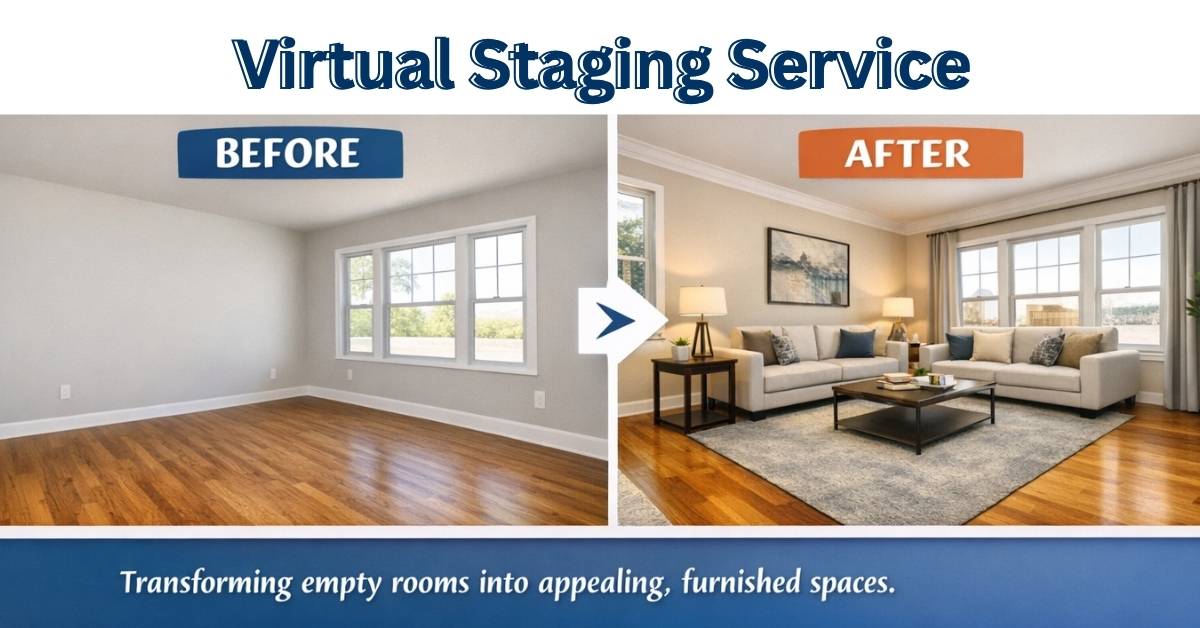
The goal is not simply decoration but visualization. A well-executed home staging service helps buyers understand how a space can function, how large rooms actually are, and how layouts can be optimized.
Professional staging editors carefully consider:
- Room proportions
- Perspective accuracy
- Lighting direction
- Shadow realism
- Interior design trends
When done correctly, the final result looks natural rather than artificial, helping buyers imagine themselves living in the property.
1.2. How it differs from traditional home staging service
Although both traditional staging and virtual staging aim to improve how a property is presented to buyers, they differ significantly in execution, cost, flexibility, and marketing efficiency. A traditional home staging service focuses on physically preparing a property for showings, while a virtual staging service focuses on improving how the property performs visually in online listings, where most buying decisions now begin.
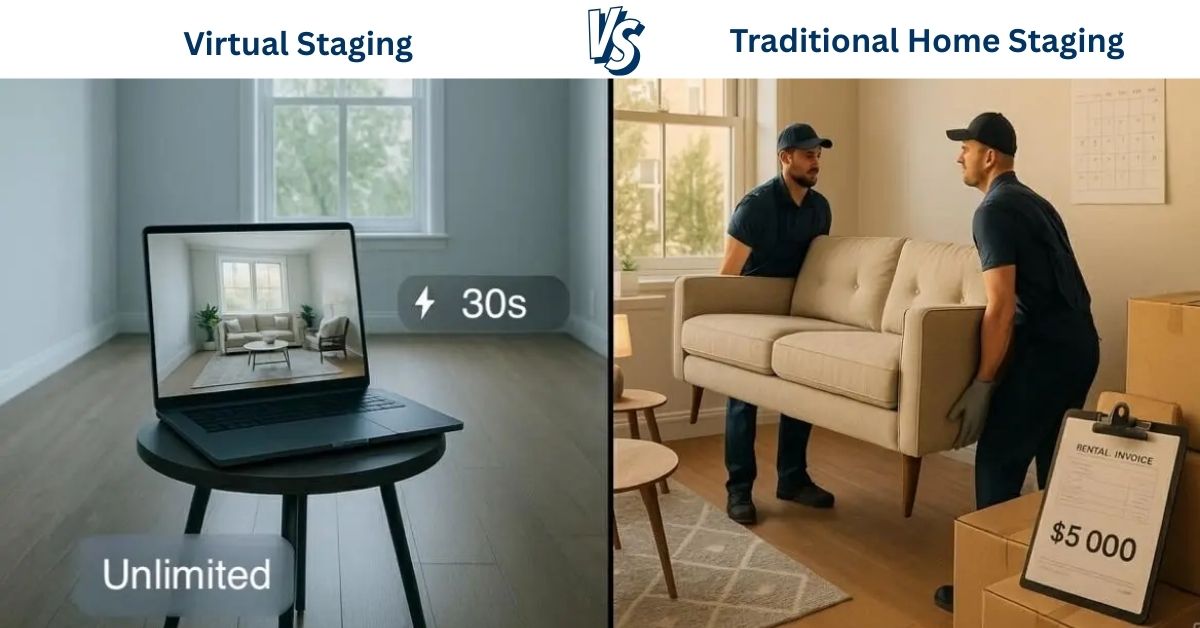
Comparison virtual staging with traditional home staging
1.2.1. Traditional home staging service: Higher cost and longer preparation
A traditional home staging service involves furnishing a property with real furniture to improve its appeal during showings. This process usually includes design planning, furniture rental, delivery, installation, and removal. While effective for in-person tours, staging often requires several days or weeks to complete and can delay listing timelines.
Cost is also a major consideration. Expenses such as furniture rental, transportation, and labor can easily reach several thousand dollars, making traditional staging more suitable for higher-value listings. Flexibility is also limited, as design changes often require replacing physical furniture.
1.2.2. Virtual staging service: A faster and more flexible digital solution
A virtual staging service enhances listing photos by digitally adding realistic furniture and décor. Because the process is fully digital, it removes the need for logistics such as delivery or installation, allowing projects to be completed much faster, often within 24–48 hours.
Virtual staging is also more cost-efficient, typically priced per image, making it easier for agents to control marketing budgets. It also offers greater flexibility, allowing styles and layouts to be adjusted easily without additional costs. For this reason, many agents now use virtual staging for most listings while reserving traditional staging mainly for luxury properties or in-person presentation needs.
Quick comparison summary:
|
Factor |
Virtual staging service |
Traditional home staging service |
|
Cost |
Low, per image pricing |
High upfront investment |
|
Turnaround |
24–48 hours |
Several days or weeks |
|
Marketing impact |
Strong online performance |
Strong in-person experience |
|
Best for |
Most standard listings |
Luxury and show homes |
|
Potential issues |
Quality depends on provider |
High cost and logistics |
1.3. Why empty properties struggle to sell
Vacant properties often face more challenges than sellers expect. While empty homes may appear clean, they frequently underperform on listing platforms because they fail to help buyers visualize how the space can actually function. In digital marketplaces where first impressions are visual, empty rooms can feel cold, unfinished, and difficult to interpret.
One major issue is the lack of spatial reference. Without furniture, buyers often struggle to judge room size accurately. A large living room, for example, may appear smaller simply because there are no visual elements to provide scale. This can lead buyers to underestimate the usable space of the property.
Empty interiors also make it harder to understand functionality. Buyers naturally try to picture how they would use a space, where a sofa might go, whether a dining area fits, or how practical the layout feels. When listings fail to answer these questions visually, many buyers simply move on to properties that present clearer context through staged photos.
Another factor is emotional engagement. Buyers often form opinions within seconds of viewing listing images. Empty rooms tend to feel impersonal and lack the warmth that helps people imagine living there. Staged spaces, by contrast, create a more inviting atmosphere and help buyers connect with the property.
This is why many real estate professionals now use a virtual home staging service to improve listing performance. By adding realistic furniture digitally, listings become easier to understand, more visually balanced, and more compelling. Instead of asking buyers to imagine the potential of a space, staging shows it clearly, often resulting in stronger engagement and more inquiries.
1.4. How virtual home staging service improves listing presentation
A professional virtual home staging service helps transform standard real estate photos into stronger marketing visuals. While photography captures the structure and layout of a property, staging adds context that helps buyers understand how the space can actually be used. This shift from simple documentation to visual storytelling is what makes staging valuable in modern real estate marketing.
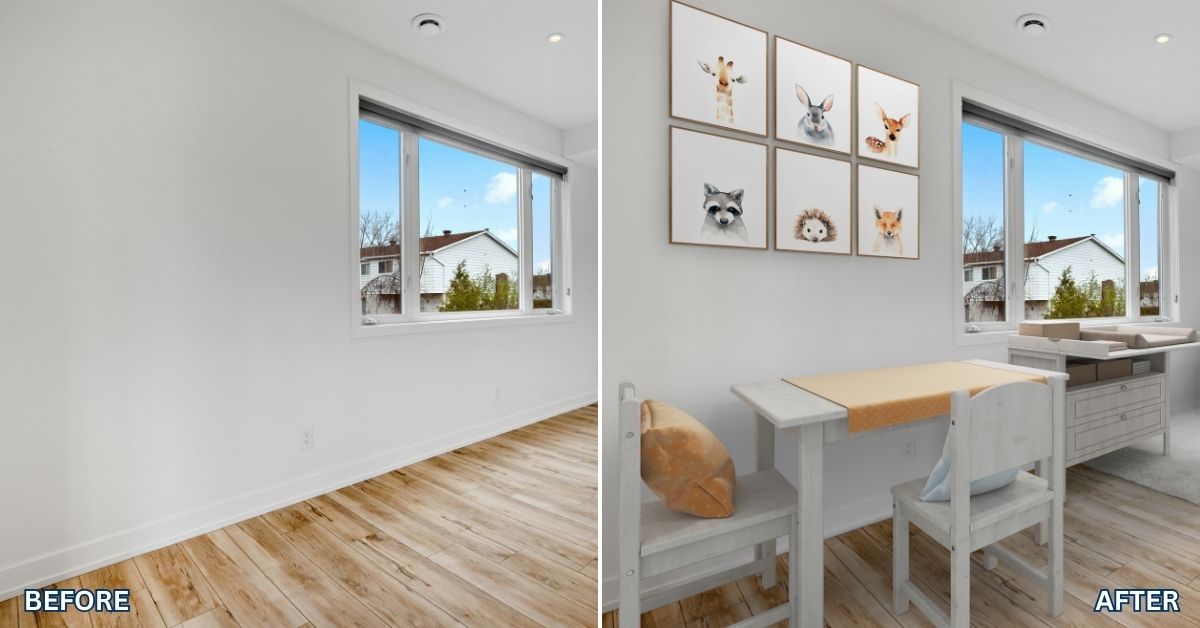
One of the biggest advantages is the ability to create lifestyle-driven imagery. Instead of empty rooms, staged photos show how spaces function, a living room feels inviting, a bedroom feels comfortable, and a dining area feels practical. These visual cues help buyers move from simply evaluating a property to imagining themselves living there.
Staging also helps listings feel complete and market-ready. Empty homes can appear unfinished even when newly renovated. Adding realistic furniture and décor creates a more polished presentation and can improve perceived property value, especially in competitive markets where visual quality influences buyer attention.
Another key benefit is visual consistency. A professional staging workflow ensures that styles, colors, and layouts feel cohesive across listing photos, helping agents present a stronger and more professional brand image.
Because of these advantages, many photographers now include real estate virtual staging services as part of their standard offerings. As online competition increases, virtual staging is no longer just an upgrade, it has become a practical tool for improving listing presentation and marketing performance.
1.5. Types of real estate listings that benefit most
While almost any property can benefit from staging, certain types of listings see the greatest impact because they rely heavily on visual presentation to attract buyers. A professional virtual staging service is especially effective for properties that lack context, emotional appeal, or competitive differentiation in online listings.
Vacant homes are the most common candidates because empty rooms often feel smaller and less functional in photos. Virtual staging helps define how spaces can be used by adding realistic furniture layouts, making listings easier to understand and more appealing.

New construction properties also benefit because unfurnished homes can appear sterile despite high build quality. Staging helps developers present a finished vision of the property and maintain visual consistency across multiple units, especially for pre-sale marketing.
Luxury listings often rely on strong presentation to justify their price point. Virtual staging helps reinforce a premium image by showcasing sophisticated interior styles that match buyer expectations.
Rental properties and fix-and-flip investments also benefit because staging improves marketing visuals without the cost of physical furniture. Investors can present renovated spaces more effectively and help buyers or tenants understand the lifestyle potential of the property.
Across these listing types, the common advantage is improved visual communication. By helping buyers understand space, function, and lifestyle potential, virtual staging makes listings more competitive and increases the likelihood of attracting serious interest.
2. Key benefits of using a virtual staging service for real estate listings
One of the most immediate benefits of virtual staging services is its ability to transform empty spaces into homes that feel ready for occupancy.
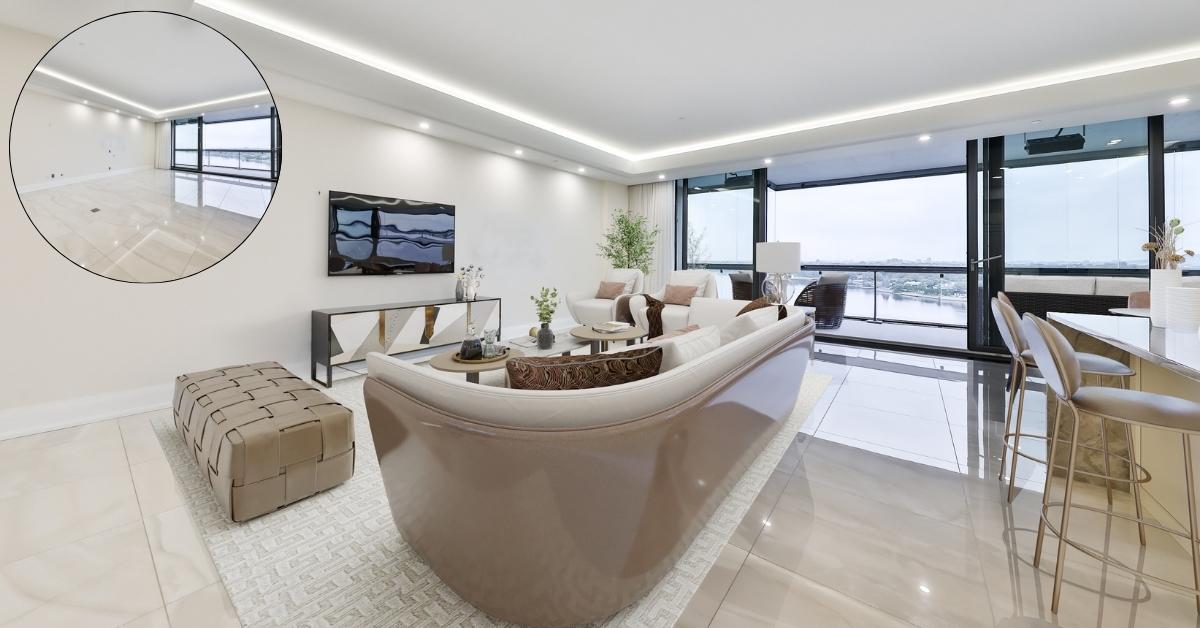
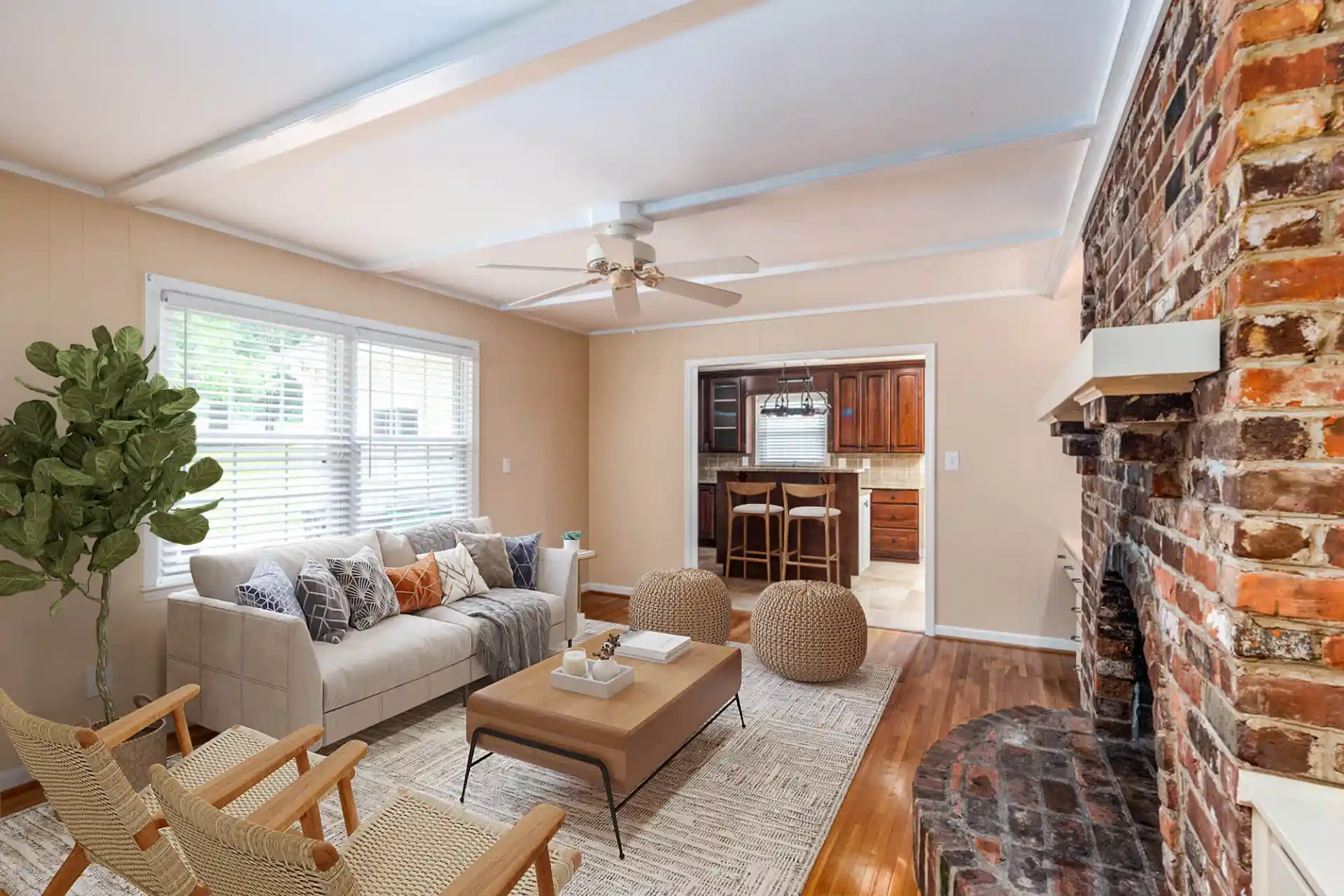
Living room
2.1. Making vacant properties look move-in ready
Vacant properties often look cold and unfinished in listing photos, which can make them less attractive compared to furnished homes on the same platform.
Through digital staging, empty rooms can be presented as fully functional living spaces. For example, a blank living room can be transformed into a welcoming entertainment area, an empty bedroom can become a comfortable personal retreat, and unused corners can be presented as productive home office spaces. These improvements help buyers quickly understand how each room can be used.
This visual transformation allows vacant listings to compete more effectively with furnished properties and helps ensure that the property does not feel incomplete simply because it is empty.
2.2. Helping buyers visualize how the space can be used
Visualization plays a major role in real estate decision-making. Most buyers do not purchase a property based only on technical specifications such as square footage or number of rooms. Instead, they respond to how easily they can imagine living in the space.
A professional virtual staging service helps bridge this gap by showing practical and relatable use cases. Buyers can better picture daily life scenarios such as relaxing in a living room, working from a home office, or hosting guests in a dining area.
This emotional connection is often what turns passive viewers into active inquiries. When buyers can clearly understand how a space supports their lifestyle, they are more likely to schedule showings or request additional information.
2.3. Improving listing performance and marketing efficiency
Staged listings generally perform better because they are more visually engaging. Properties with professionally staged images often benefit from higher click-through rates, longer viewing times, and stronger buyer interest compared to listings with empty rooms.
The reason is simple: staged images provide context, balance, and visual interest. Instead of presenting empty structures, they present a complete visual story of the home.
Because of this marketing advantage, many photographers now include real estate virtual staging services as part of their service offerings. By integrating staging into their workflow, they can help clients achieve stronger listing performance while also increasing the value of their photography packages.
2.4. Faster and more cost-effective than traditional staging
Speed and affordability are two of the biggest reasons real estate professionals choose virtual staging. Traditional staging often requires coordinating furniture delivery, installation schedules, and eventual removal, which can slow down the listing process.
A virtual home staging service eliminates these delays. Most projects can be completed within 24–48 hours after photography is finished, allowing agents to publish listings faster and respond quickly to market opportunities.
Cost savings are equally important. While a traditional home staging service may cost thousands of dollars depending on property size, virtual staging is typically priced per image and remains affordable even when multiple rooms are staged.
Because of this balance between speed, cost efficiency, and marketing impact, many agents now reserve physical staging for select luxury listings while using virtual staging as their standard solution for most properties.
3. How professional virtual home staging services work
Understanding how a professional virtual home staging service works helps agents and photographers set realistic expectations for quality and turnaround time. While the process may appear simple, high-quality staging usually follows a structured workflow to ensure realism and marketing effectiveness.
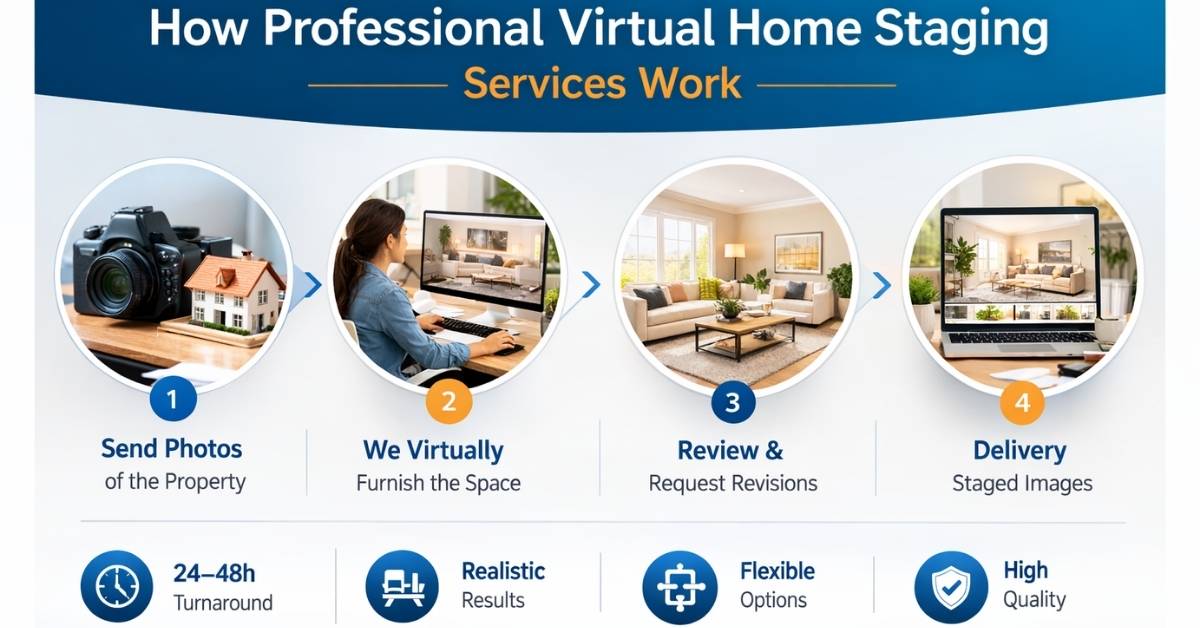
The process of service
The process typically begins with image review, where editors evaluate resolution, camera angles, lighting conditions, and exposure balance. High-quality photos are essential because they directly affect how realistic the final staging will look.
Next comes style selection based on the target buyers. For example, modern styles are often used for condos, family-oriented interiors for suburban homes, and luxury contemporary designs for high-end listings. Many professional providers offer style catalogs to ensure the design matches the property’s price point and audience.
Furniture placement is another critical step. Editors must consider room proportions, traffic flow, and realistic layout principles to ensure the space looks natural rather than artificially filled. Proper placement helps buyers understand how the space can actually function.
To improve realism, editors also match lighting direction, shadows, and color temperature so the added furniture blends naturally with the original photo. Additional refinements such as color correction, texture adjustments, and contrast balancing further enhance visual consistency.
Finally, professional providers perform quality control checks before delivery to ensure perspective accuracy, lighting consistency, and MLS compliance. This structured process is what allows professional virtual staging to produce believable results that support stronger listing presentation.
4. Virtual staging service pricing and what affects the cost
Let see how much virtual service and the factors that affect virtual staging’s price.
4.1. Average industry pricing
The cost of a virtual staging varies depending on complexity and quality. Typical industry pricing:
Virtual staging typically costs $15–$75 per image depending on:
- Design complexity
- Revision needs
- Turnaround speed
- Custom styling
Lower-cost providers often use automated tools, while higher-end providers focus on manual realism.
4.2. Factors affecting virtual staging service cost
The cost of a professional virtual staging can vary depending on several project-specific factors. While base pricing is often calculated per image, the final cost usually depends on complexity, customization needs, and delivery requirements. Understanding these variables helps agents and photographers estimate budgets more accurately and choose the right service level.
Below are the most common factors that influence virtual staging pricing:
|
Factor |
What affects cost |
Typical pricing impact |
|
Number of photos |
Larger projects often qualify for volume discounts |
1–5 images → standard price10–20 images → discounted rate50+ images → custom quote |
|
Furniture detail level |
Basic staging uses standard furniture sets, while premium staging may include décor, artwork, plants, and detailed textures |
Higher realism and detailed interiors increase cost |
|
Custom design requirements |
Custom requests such as brand-matched interiors, unique themes, or specific layouts require additional design time |
Custom staging usually costs more than template staging |
|
Delivery speed |
Faster turnaround requires priority editing resources |
Standard (24–48h) → base priceRush (12–24h) → extra feeExpress (<12h) → premium fee |
|
Revision rounds |
Some providers include limited revisions, while additional changes may require extra cost |
More revisions may increase total pricing |
In most cases, a reliable virtual home staging service will clearly define what is included in the base price and how additional requests may affect the total cost. Professional providers also tend to offer flexible revision policies to ensure the final images meet marketing expectations while maintaining predictable pricing structures.
5. Choosing the right real estate virtual staging service provider
Selecting the right real estate virtual staging service can directly impact listing quality and marketing performance. The best providers typically combine real estate experience, consistent workflows, and reliable delivery standards.
Service at Fotober
5.1. Real estate editing experience
Not all editing companies understand the specific requirements of real estate marketing. It is important to choose providers familiar with MLS guidelines, property photography standards, and current interior design trends. Experienced providers are more likely to deliver realistic and market-ready results.
5.2. Portfolio realism quality
A strong portfolio is one of the best indicators of quality. Before choosing a provider, review before-and-after samples and look for natural lighting, correct perspective, realistic shadows, and proper furniture scale. High-quality virtual staging should look believable at first glance.
5.3. Workflow consistency and turnaround reliability
Consistency is essential, especially for photographers and agencies managing multiple listings. Reliable providers usually follow structured workflows that include image review, style confirmation, draft delivery, revisions, and final quality checks. Clear turnaround commitments and communication are also important to keep listing schedules on track.
5.4. Revision flexibility and quality control
Revisions are a normal part of the staging process, so it is important to work with providers that allow reasonable adjustments such as furniture changes or layout refinements. A strong quality control (QC) process, including multi-step reviews and realism checks, also helps ensure consistent results across projects.
Conclusion
In today’s competitive real estate market, strong visual presentation is no longer optional. A professional virtual staging service helps transform empty properties into compelling marketing visuals that attract attention, improve buyer engagement, and increase listing performance.
As the demand for high-quality real estate visuals continues to grow, many professionals are also combining virtual staging with complementary solutions such as rendering services and 360 image enhancement services to create more immersive property presentations and stand out in competitive markets.
If you are looking for a reliable editing partner, Fotober provides professional real estate visual solutions including virtual staging, rendering, and image enhancement services tailored for photographers and real estate professionals.
Contact Fotober today to elevate your real estate listings with professional visual solutions.
- Facebook: fotobermedia.co
- YouTube Channel: Fotober
- TikTok Channel: @fotober
- Instagram: fotober_media
- Email support: [email protected]
- Hotline: +84 942 110 297