

















As a photographer, my life has been defined by the pursuit of the "golden hour", that fleeting moment when the sun kisses the horizon, bathing architectural structures in a warm, amber glow that evokes immediate emotion. As a videographer, I chase the fluid transition of space, the way a tracking shot can make a viewer feel the volume of a room before they ever step inside. As an architect, I know the precision of a blueprint. And as a real estate marketer, I understand that emotion is the ultimate currency of sales.
In the modern real estate and design landscapes, we no longer have to wait for the perfect weather, nor do we need to wait for a building to be physically constructed to capture these moments. Welcome to the era of professional 3D rendering services, where the precision of architecture meets the artistry of photography, completely untethered from physical limitations. For platforms like Fotober, a leader in visual solutions, 3D rendering is not merely a technical utility. It is a storytelling medium. In this comprehensive guide, we will explore the depths of architectural rendering services, analyze how photorealistic 3D rendering transforms bottom lines, and examine why choosing the right creative partner is the most critical decision a modern property developer or designer can make.
1. Demystifying 3D rendering services: The intersection of code, camera, and concrete
To the uninitiated, 3D rendering services might look like sophisticated computer graphics. But to those of us who have spent decades behind camera lenses and drafting tables, it is the digital rebirth of classical photography and architectural model-making.
1.1. What is 3D rendering?
At its core, 3D rendering is the process of converting three-dimensional wireframe models, created via computer-aided design (CAD) or Building Information Modeling (BIM) software, into highly detailed, two-dimensional images or animations.
However, a technical definition misses the soul of the craft.
Think of a 3D artist as a director, photographer, and interior designer rolled into one. The artist starts with a digital skeleton of a building. They then apply "materials" (the texture of polished concrete, the grain of reclaimed oak, the reflectivity of double-paned glass). Next, they set up "virtual lights", simulating the exact latitude and longitude of the sun at 4:30 PM in October, or positioning recessed LED fixtures to create a cozy interior ambiance. Finally, they position a "virtual camera," adjusting the focal length, aperture, and depth of field to capture the perfect frame.
[CAD/BIM blueprint] ➔ [3D modeling - The skeleton] ➔ [Texturing & lighting - The soul] ➔ [Rendering engine calculation] ➔ [Photorealistic 2D image]
1.2. What do professional 3D rendering services offer?
A comprehensive suite of professional 3D rendering services provides a diverse toolkit for developers, architects, and marketers:
- Still renderings (Interior & exterior): High-resolution, static images that serve as the hero shots for marketing brochures, websites, and billboards.
- Virtual walkthroughs and animations: Cinematic videos that guide viewers through a property, showcasing the flow of space, changing light conditions, and lifestyle elements.
- 3D floor plans: Interactive or static bird's-eye views that help buyers understand spatial layouts far better than flat, black-and-white 2D blueprints.
- Virtual reality (VR) & augmented reality (AR) assets: Fully immersive environments where prospective buyers can walk through their future homes using VR headsets or place digital furniture in a physical space using AR.
- Product renderings: Highly detailed visualizations of furniture, fixtures, and architectural elements before they go into production.
2. The spectrum of architectural rendering services: Classifications & applications
Not all renders are created equal. Depending on where you are in the project lifecycle, from initial concept pitch to the final pre-sales push, different types of architectural rendering services are required.
|
Types of rendering services |
|
|
Type of render |
Primary purpose & audience |
|
Conceptual/Clay render |
Massing studies, architectural competitions |
|
Exterior renderings |
Urban planning approvals, developer fundraising |
|
Interior renderings |
Interior design verification, pre-sales marketing |
|
Aerial/Dron-integrated renderings |
Showcasing neighborhood context, scale |
|
Interactive 360 panorama |
Virtual reality tours, engaging website listings |
2.1. Conceptual & clay renderings
Before we worry about the exact shade of marble for the kitchen island, we must understand form and volume. Conceptual renders, often presented as monochromatic "clay" renders, strip away color and texture to focus entirely on architectural massing, light play, and shadows. These are invaluable during early-stage design phases and municipal planning presentations.
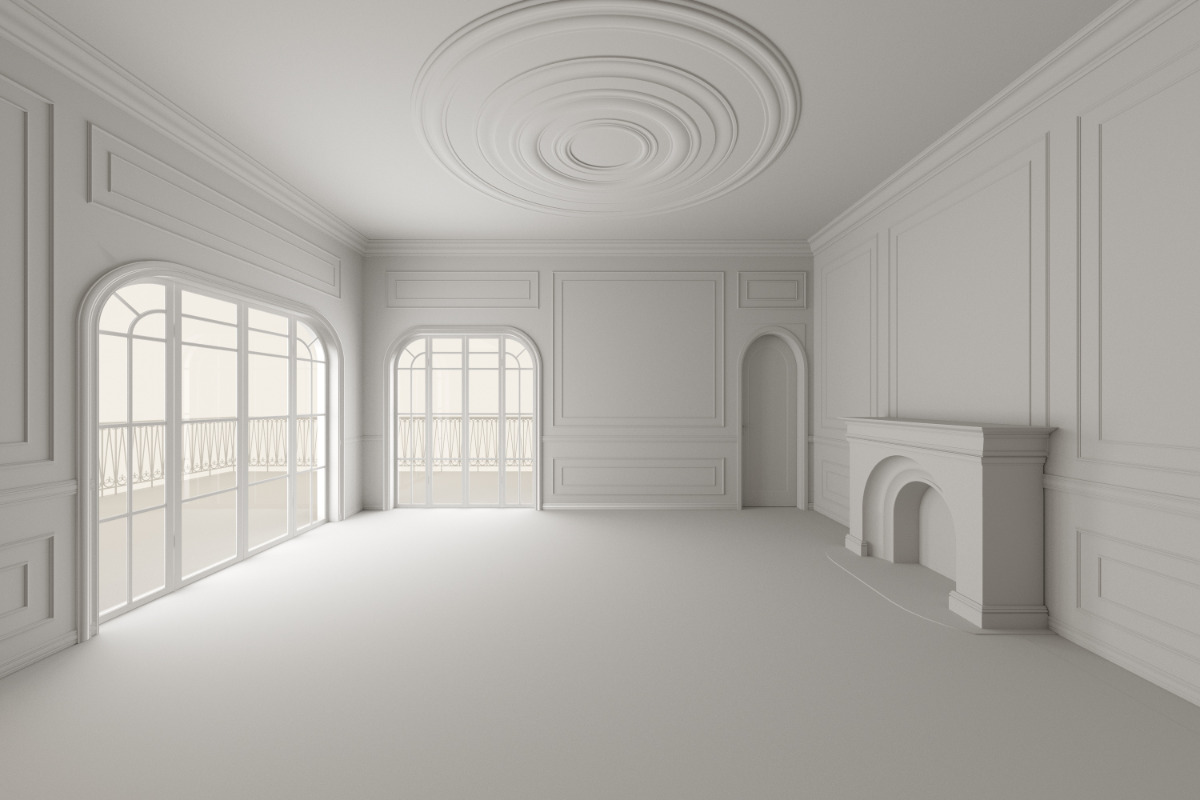 Conceptual rendering is the foundation for the finished product.
2.2. Exterior architectural renderings
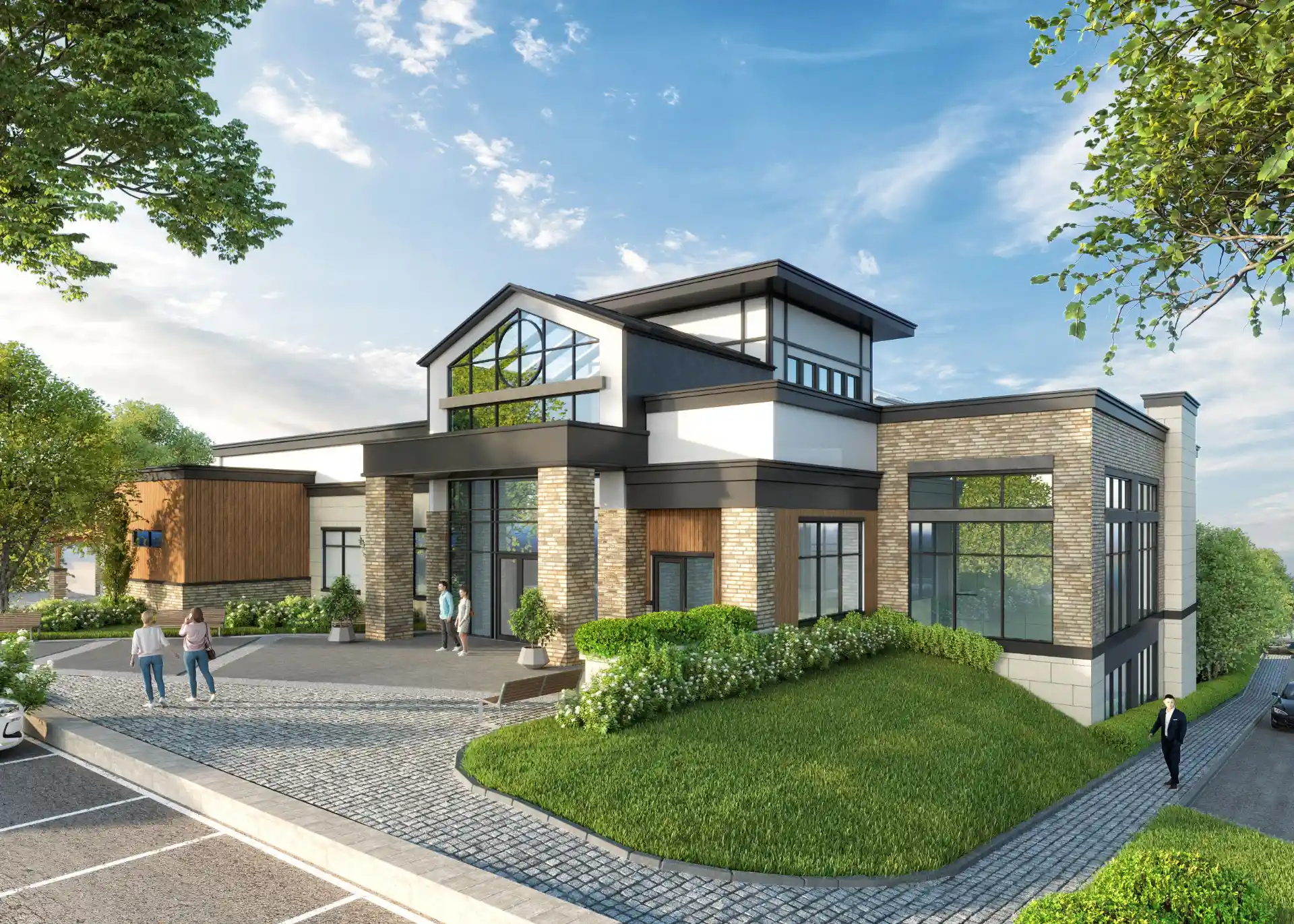
Exterior renderings place a planned structure into its future real-world context. This requires a deep understanding of landscape photography. An artist must seamlessly blend the digital building with high-resolution drone photography of the surrounding environment, ensuring that the reflections on the building's glass match the actual surrounding sky and neighboring structures.
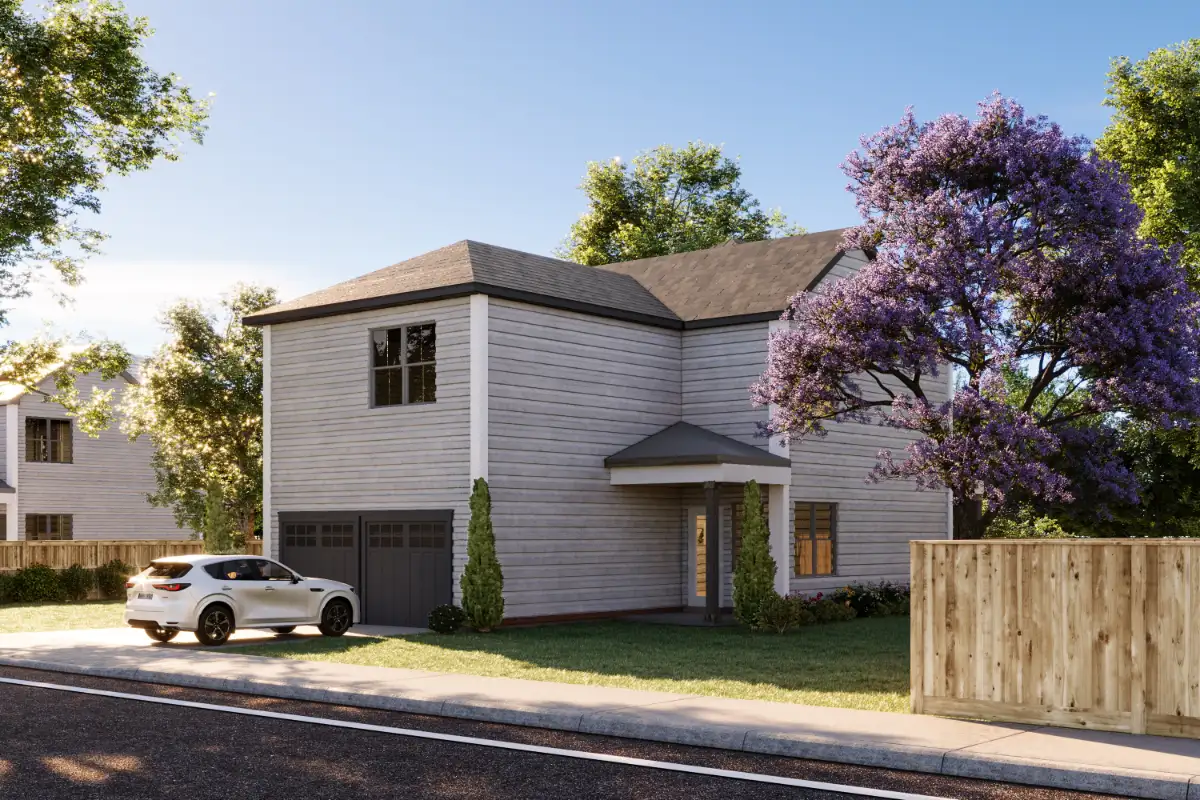 Exterior rendering catches buyers’ attention by showing the curb appeal.
2.3. Interior renderings: Designing the human experience
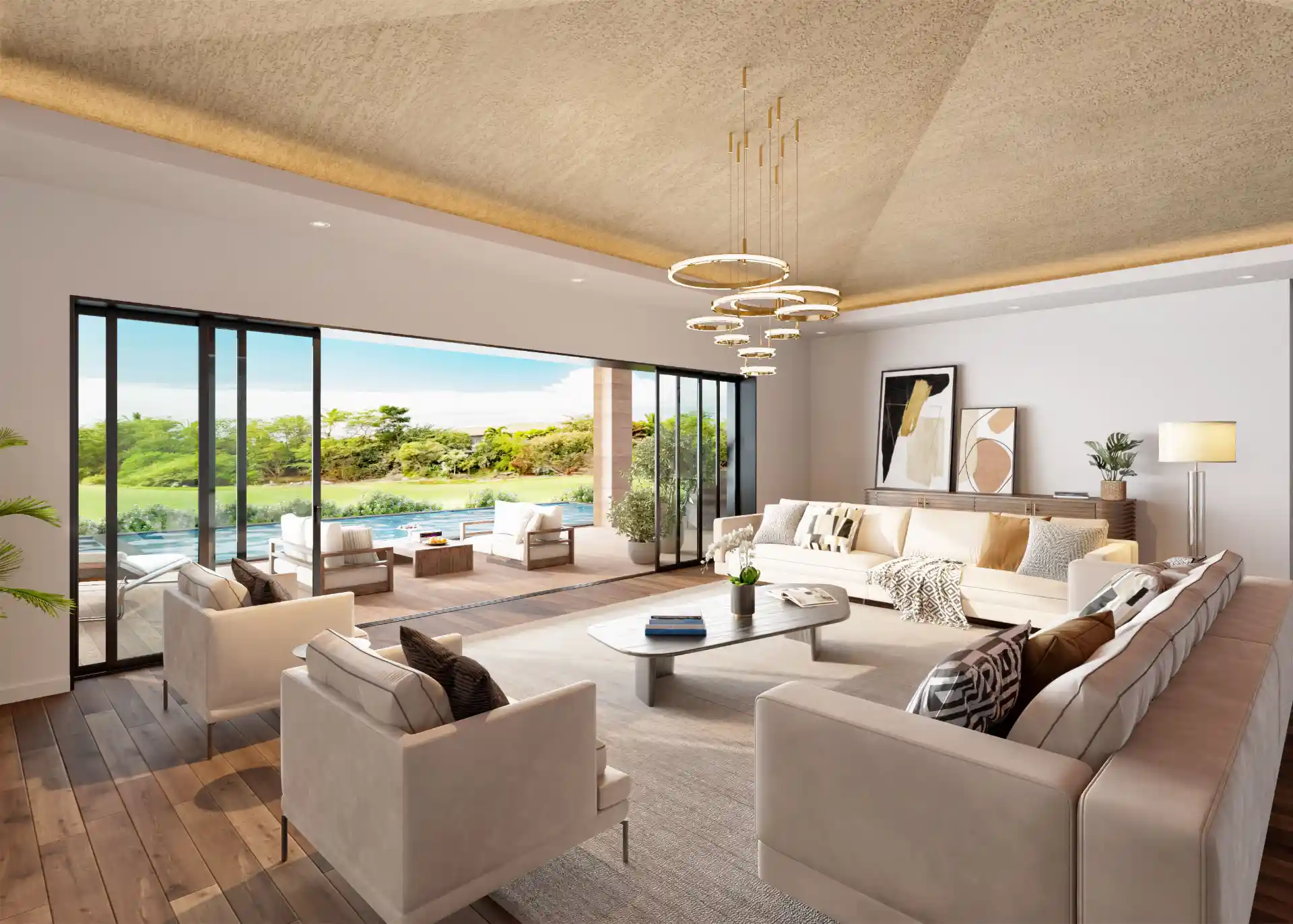
Interior rendering is where psychology meets design. As a photographer, I know that a room isn't just a collection of furniture; it’s an atmosphere.
Interior photorealistic 3D rendering focuses on the tactile details:
- The soft drape of a linen curtain.
- The subtle imperfections on a hand-carved wooden table.
- The way morning light spills across a hardwood floor, casting soft-edged shadows.
These renderings are designed to answer a buyer's most critical question: "What will my life feel like in this space?"
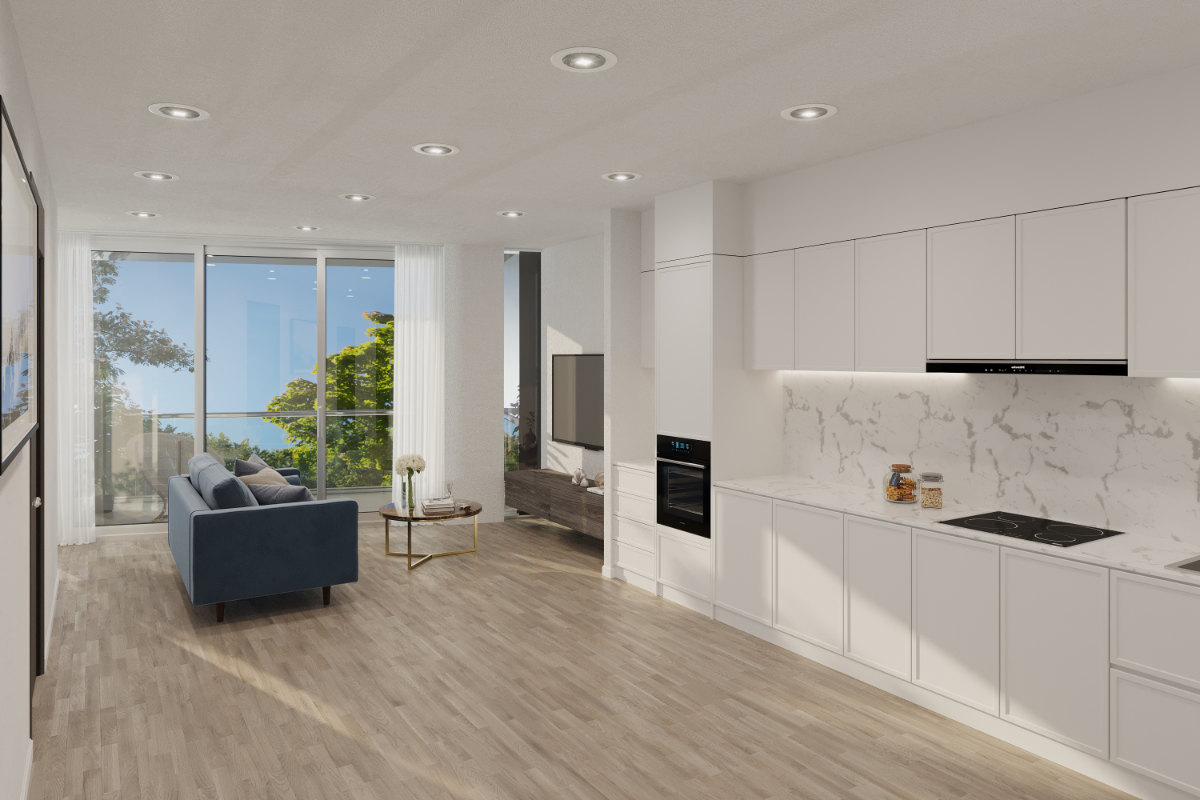 Interior rendering is the perfect realization of the living space.
2.4. Aerial and master plan renderings
For large-scale developments, master plans, and high-rise condominiums, aerial 3D rendering services are essential. They provide a bird's-eye view of the entire development, highlighting amenity spaces, green areas, transit connectivity, and the project’s relationship to the broader cityscape.
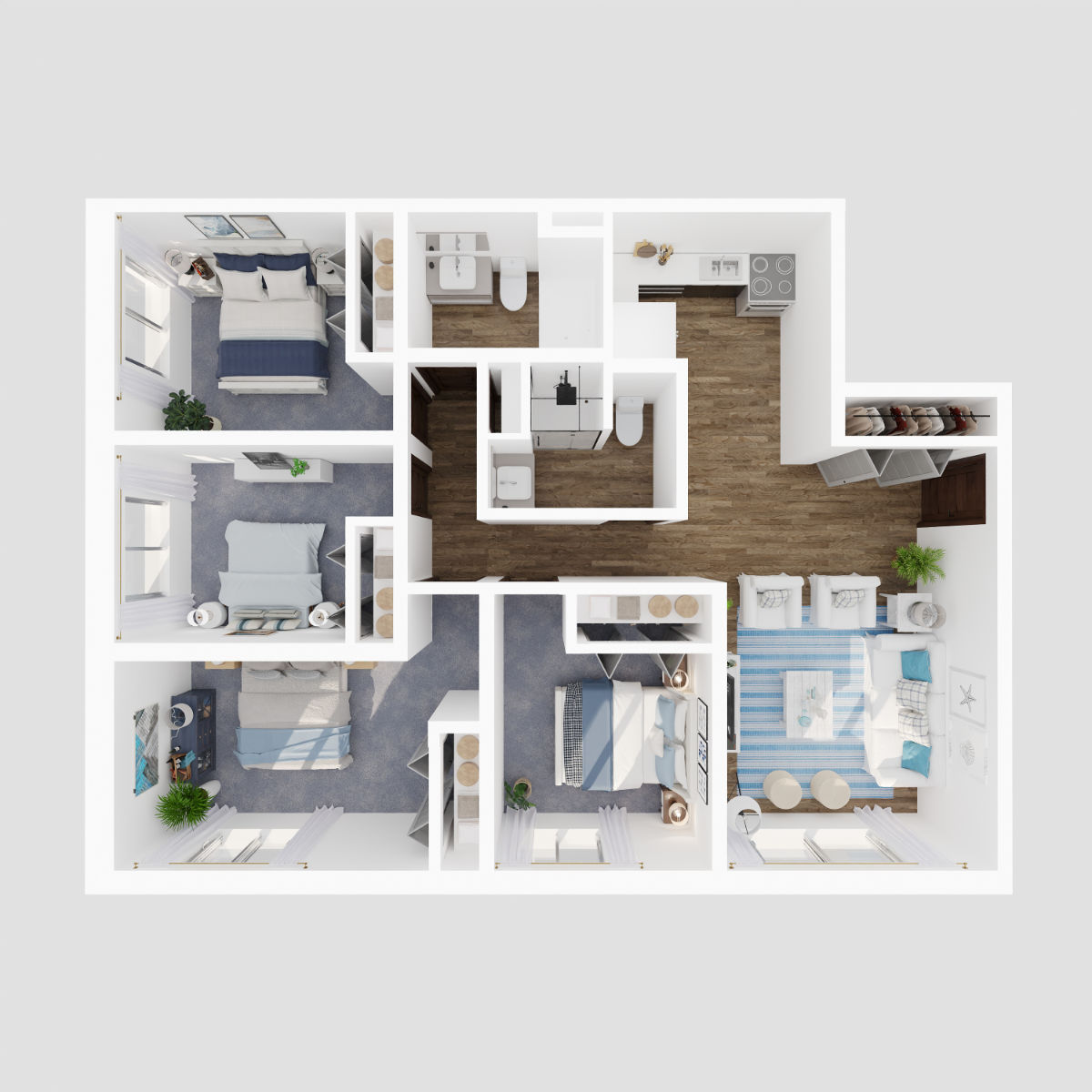 Master plan rendering can help home developers showcase the construction and its overall structure to potential clients.
3. The toolkit and artistry behind photorealistic 3D rendering
Achieving true photorealistic 3D rendering is a delicate dance between raw computational power and refined artistic sensibility. It is not enough to own the software; one must understand how light behaves in the physical world.
3.1. The software ecosystem
Most 3D rendering services in the industry utilize a sophisticated array of digital tools, each specializing in different aspects of the pipeline:
- Modeling: Autodesk 3ds Max, Maya, Blender, and Rhino are industry standards for creating precise digital geometry.
- Rendering engines: Chaos V-Ray, Corona Renderer, and Unreal Engine act as the digital cameras. They calculate how millions of light rays bounce off different surfaces (a process known as global illumination).
- Post-production: Adobe Photoshop and After Effects are where the final magic happens. Here, digital artists adjust color grading, add atmospheric effects (like mist, lens flare, or light leaks), and composite real-world elements (such as people, pets, and cars) to bring the image to life.
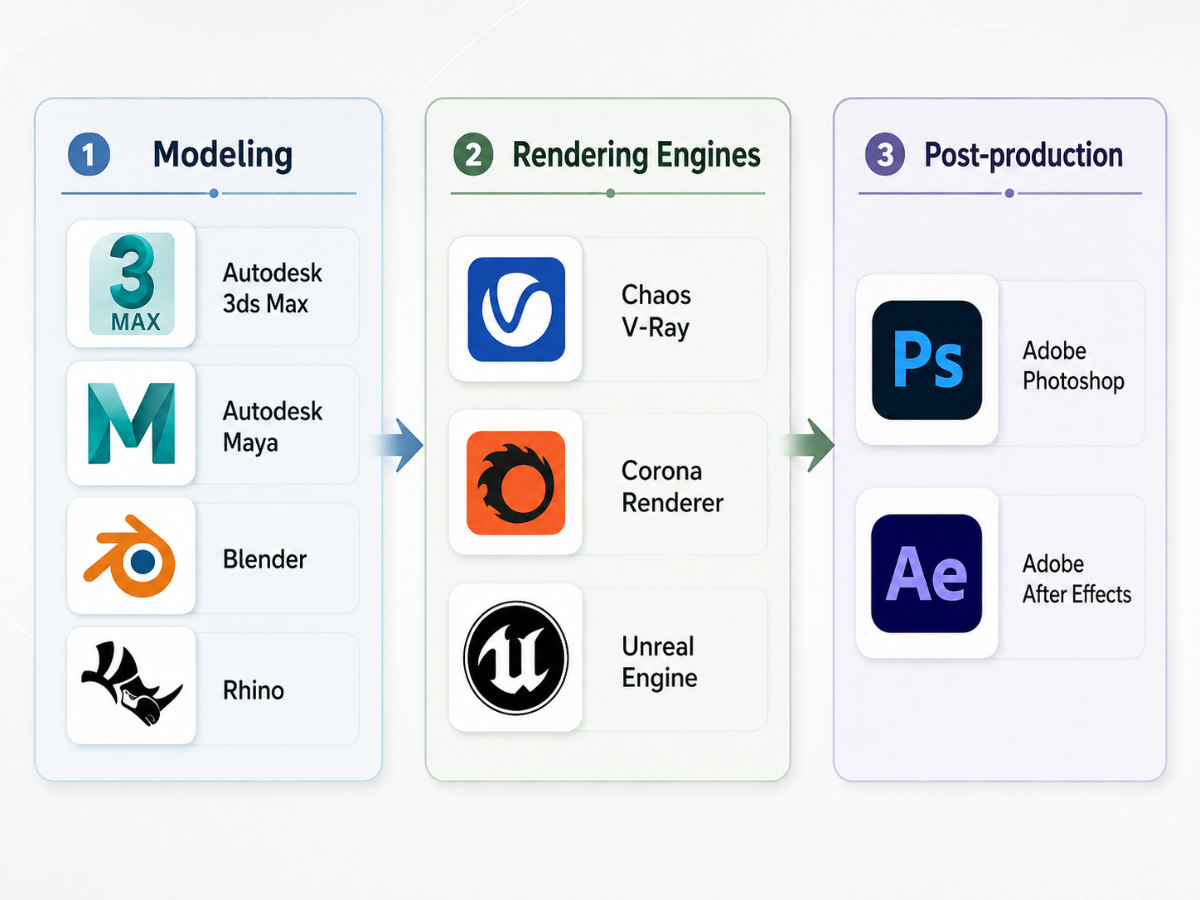 A typical rendering pipeline for real estate.
Finding the actual software ecosystem that 2026 pros are using? There's a detailed breakdown of the best 3D architectural rendering software right on our blog to see if your studio or architecture company is keeping up with the modern-day standard.
3.2. The photographic principles of photorealism
A computer program naturally produces perfect, sterile lines. But reality is imperfect. To bridge the gap between "obviously computer-generated" and "indistinguishable from a photograph," professional artists apply classical photographic principles:
Depth of field (DoF): In physical photography, shooting with a wide aperture (e.g., f/1.8) creates a shallow depth of field, blurring the background to draw focus to a specific detail. Professional renderers use virtual apertures to create this same cinematic focus, adding instant depth and realism to interior shots.
Physically based rendering (PBR) materials: Materials in the real world react to light based on their physical properties. Polished marble has a high, sharp reflectivity; brushed brass has a diffused, anisotropic reflection; concrete is rough and absorbs light. PBR materials use complex mathematical algorithms to ensure that every material in a render reflects, refracts, and absorbs light exactly as it would in nature.
Imperfection mapping: As the legendary designer Leonard Koren wrote of Wabi-Sabi, beauty lies in imperfection. Perfect digital walls look fake. True photorealistic 3D rendering introduces subtle imperfections: microscopic dust on glass, slight variations in wood grain, minor scuff marks on concrete floors, and organic wrinkles in bedsheets. These tiny details bypass our brain's skepticism, convincing us that the image is real.
Color science and high dynamic range (HDR) lighting: Using High Dynamic Range Images (HDRI) as light sources allows artists to wrap digital models in the complex, nuanced light of real-world environments. This ensures that the blue bounce light from a clear sky subtly tints the shadow sides of a building, just as it would in an actual outdoor photo shoot.
4. Why we need 3D rendering services: ROI, conversions, and solving client pain points
For developers, brokers, and architects, investing in professional 3D rendering services is not a luxury; it is a core business strategy. Let us examine the tangible, financial impact of high-end visualizations by addressing the most common pain points in the real estate lifecycle.
4.1. Pain point 1: The "unbuilt" dilemma and slow pre-sales
Selling a property that only exists on paper is notoriously difficult. Traditional 2D blueprints do not inspire emotional connections, and average buyers struggle to visualize spatial volumes from line drawings.
- The 3D solution: Photorealistic renderings transform abstract plans into tangible, aspirational realities. Buyers can walk through their future living rooms, look out their future windows, and select their finishes years before the first shovel hits the dirt.
- The conversion impact: Properties marketed with premium 3D visualizations consistently experience up to 40% faster pre-sale cycles. They allow marketing campaigns to launch on day one of design, vastly reducing carrying costs and interest payments on construction loans.
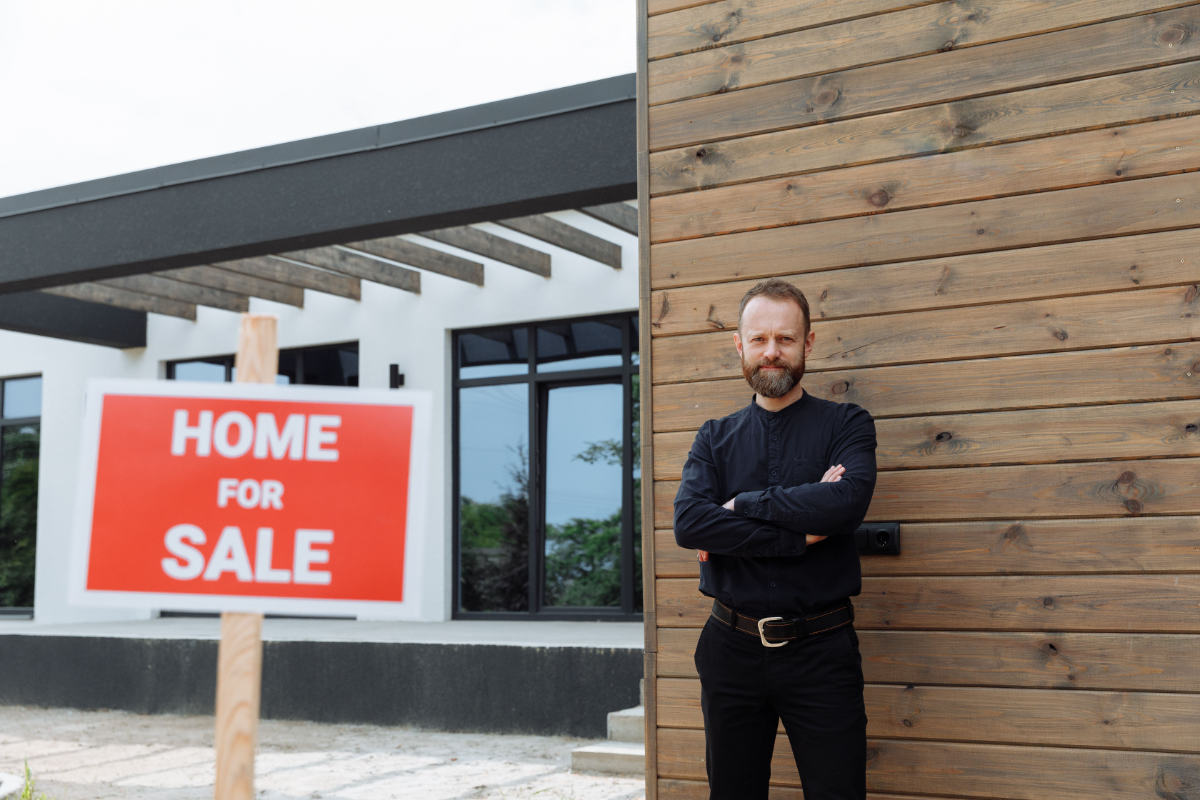 Without a clear visualization, making pre-sales is just like hitting a brick wall.
4.2. Pain point 2: Costly design alterations mid-construction
One of the most expensive phrases in real estate development is: "That’s not what I thought it would look like." Changing finishes, moving walls, or altering structural elements once construction has begun can result in catastrophic delays and budget overruns.
- The 3D solution: Think of 3D rendering as a digital prototype. It allows developers and clients to test different materials, color palettes, and structural layouts in a risk-free digital environment.
- The ROI impact: Identifying a design flaw or aesthetic mismatch in a digital render costs pennies compared to demolishing a physical wall. The ROI here is measured in hundreds of thousands of dollars saved in change orders.
|
The financial impact of 3D visualization |
|
|
Traditional sales process |
3D-enabled sales process |
|
Launch: After construction starts |
Launch: Immediately during the design phase |
|
Marketing: 2D floor plans, text |
Marketing: Photorealistic renders, virtual tours |
|
Buyer trust: Low (hard to imagine) |
Buyer trust: High (immersive, visual certainty) |
|
Average sales cycle:12-18 months |
Average sales cycle: 6-9 months (up to 50% faster) |
|
Post-build changes: high cost |
Post-build changes: near zero (decided in render) |
4.3. Pain point 3: High marketing costs and content fatigue
In the digital age, attention is the scarcest resource. Standard real estate listings get lost in a sea of identical-looking photography.
- The 3D solution: Premium architectural rendering services deliver high-impact, visual content optimized for social media, digital ads, and luxury print catalogs. Renderings can be customized to show the same space in day, night, summer, and winter settings, providing a wealth of marketing assets from a single digital model.
- The conversion impact: Listings utilizing high-quality 3D renders and virtual staging generate double the click-through rates (CTR) on major listing portals and significantly higher engagement rates on social media channels.
5. Use cases: Who needs 3D rendering services?
The demand for professional 3D rendering services has transcended real estate applications. In 2026, high-fidelity 3D visuals have become the cornerstone of building design, serving as a critical referencing asset in the construction and marketing processes.
5.1. Real estate agents & brokers
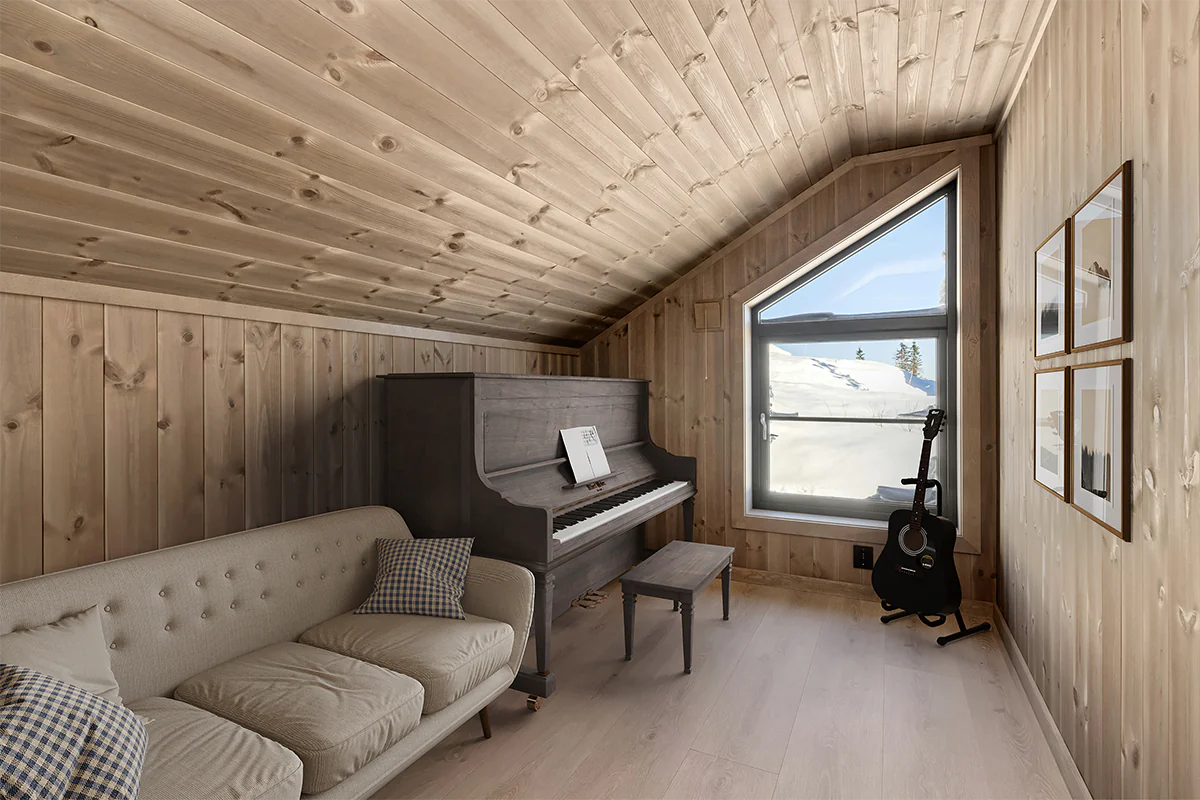
For agents, time is the most expensive commodity. Using photorealistic 3D rendering allows them to list properties the moment a design is finalized, rather than waiting for construction crews to finish. Virtual staging and renovation services enable agents to show a property’s "best self," helping potential buyers look past dated wallpaper or empty rooms. This lead-generation strategy is proven to increase click-through rates on listings and shorten the time a property stays on the market.
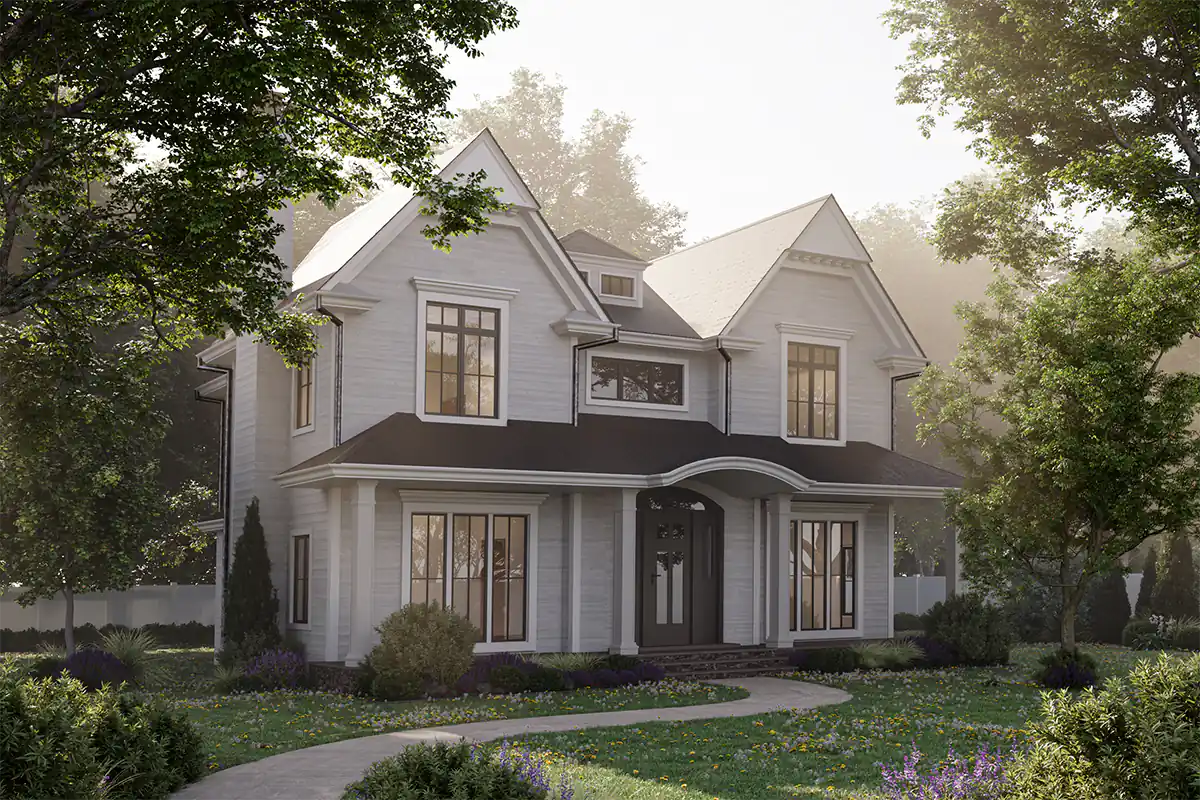 3D rendering can enhance the perceived value of the property and indicate the agent’s professionalism.
5.2. Architects & design firms
Architects use architectural rendering services as a bridge between technical precision and client emotion. While a blueprint confirms structural integrity, a render confirms the aesthetic vision. Renders are essential during design competitions to win new contracts and during the planning phase to secure municipal approvals. By seeing a 1:1 digital representation of their work, architects can also identify lighting or spatial issues that might not be obvious on a 2D plane.
5.3. Property developers & investors
For large-scale developers, 3D rendering services are a fundamental part of the capital-raising process. Investors need to see the "big picture" of how a multi-unit complex fits into the neighborhood or the luxury amenities of a high-rise. High-end animations and virtual tours are used in sales galleries to secure "off-plan" purchases, providing the necessary cash flow to keep massive projects on schedule and within budget.
5.4. Interior designers
Interior designers rely on photorealistic 3D rendering to ensure total alignment with their clients. Choosing between expensive marble types, lighting fixtures, or custom furniture becomes much easier when the client can see the exact combination in a rendered environment. It eliminates the "buyer’s remorse" that often occurs when a physical result doesn't match a client's mental image.
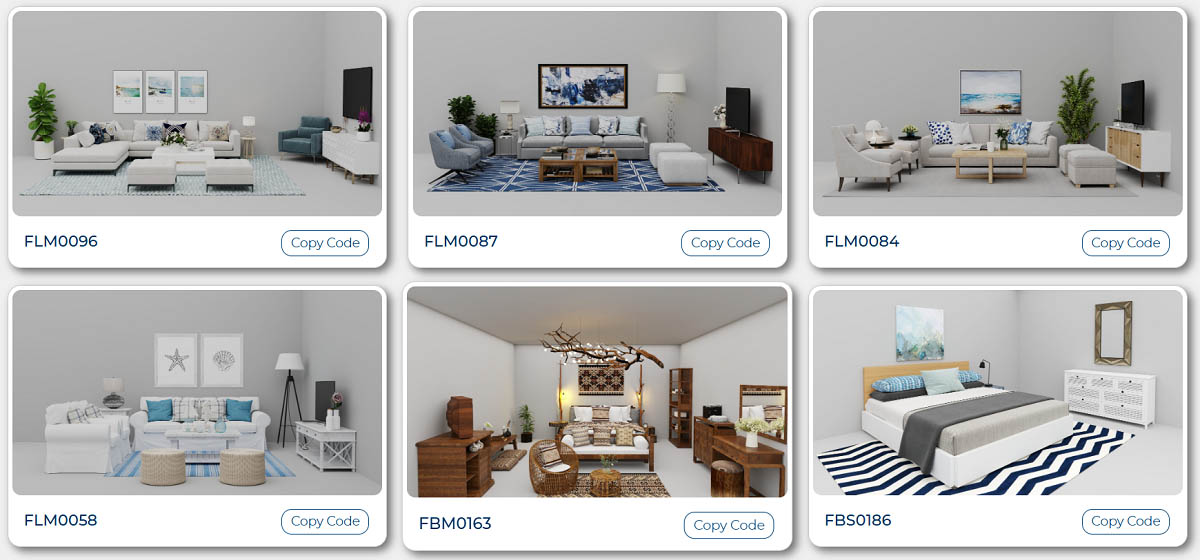 Home rendering services provide agents and clients with many freely customizable interior options.
5.5. Video editors & marketing agencies
Modern marketing requires high-impact content. Video editors and digital marketers use 3D assets to create cinematic commercials or social media "reels" that blend reality with CGI. By integrating rendered environments into real estate video editing, agencies can create aspirational lifestyles around a brand, making the marketing campaign feel premium and cutting-edge.
Whether you are selling a single-family home or developing a smart city, professional 3D rendering services provide the visual proof needed to close the gap between a concept and a finished masterpiece.
6. The industry debates: In-house vs. outsourcing & AI vs. human craftsmanship
As the industry evolves, businesses face critical decisions regarding how they produce their visual assets. Let’s dissect the two most prominent debates shaping the world of architectural visualization.
6.1. Debate 1: In-house rendering teams vs. specialized outsourcing
Many large architectural and development firms consider building an in-house rendering department. While this offers direct control, it is rarely the most efficient or cost-effective route.
|
In-house team |
Outsourced partner (e.g., Fotober) |
|
High overhead (salaries) |
Pay-per-project flexibility |
|
Software/hardware costs |
Global talent pool |
|
Limited scale capacity |
Rapid overnight turnaround |
|
Direct face-to-face communication |
State-of-the-art tech scale |
The real cost of in-house teams:
- Astronomical overhead: High-end rendering requires specialized artists, expensive workstations equipped with top-tier GPUs, and continuous software licensing (3ds Max, V-Ray, Adobe Suite). This represents a massive fixed cost that must be paid regardless of whether you have active projects.
- The bottleneck effect: An in-house team has a hard limit on its bandwidth. During major launch phases, they become a bottleneck, leading to delayed campaigns and missed market windows.
- Skill stagnation: A small in-house team is limited by its own collective experience.
The advantages of outsourcing to specialists like Fotober:
- Scalability: Need one render this week and fifty next month? An outsourced partner has the infrastructure to scale production up or down instantly.
- Cost efficiency: You only pay for what you use, transforming a massive fixed overhead into a flexible, project-based operational expense.
- Global expertise: Specialized studios have dedicated teams for modeling, texturing, lighting, and post-production, ensuring every phase of the project is handled by an expert in that specific discipline.
6.2. Debate 2: Generative AI vs. human artistic craftsmanship
With the rise of generative AI platforms like Midjourney, Stable Diffusion, and specialized architectural AI tools, a critical question arises: Will AI replace professional 3D rendering services?
The short answer is: No. AI is a powerful assistant, but it cannot replace the precision of human craftsmanship.
|
AI vs human craftsmanship |
||
|
Metric |
Generative AI (prompt-based) |
Human-led professional rendering |
|
Dimensional accuracy |
Poor. Hallucinates details, ignores strict scale. |
Exact. Matches CAD/BIM blueprints down to the millimeter. |
|
Material control |
Random. Cannot guarantee specific manufacturer brands. |
Precise. Can specify exact SKUs, fabric weaves, wood grain. |
|
Iteration & revisions |
Impossible. Regenerating changes the entire image composition. |
Perfect. Can easily swap furniture or change a light fixture. |
|
Speed & cost |
Extremely fast, near-zero effort |
Slower, professional pricing. |
Why human artistry remains Irreplaceable:
AI tools are fantastic for rapid brainstorming and mood-boarding during the absolute earliest stages of a design. However, they lack spatial and structural logic. An AI does not know how a building is engineered; it merely predicts what pixels should look like based on past images.
If you prompt an AI to render a kitchen based on a specific blueprint, it will "hallucinate" details, placing windows where walls should be, creating physically impossible stairs, or ignoring real-world dimensions.
Furthermore, professional 3D rendering services require exactitude. If an interior designer specifies a particular sofa from a specific Italian manufacturer in a precise velvet finish, a human artist can model and texture that exact piece. AI cannot.
Finally, human artists bring intentionality. We place a light source not just to illuminate a room, but to guide the viewer’s eye to a specific architectural detail, creating a narrative arc within a single frame.
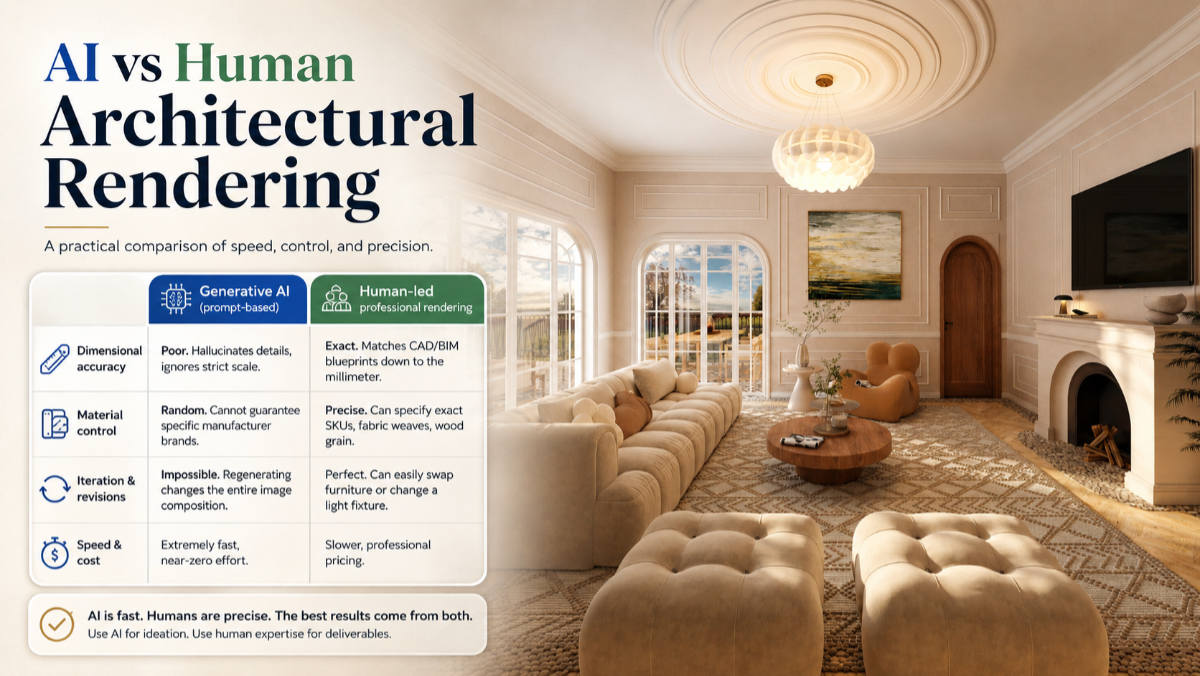 A hybrid workflow is the proven approach to modern home rendering.
7. Fotober: Crafting visual masterpieces with photorealistic 3D rendering that sell
At Fotober, we do not just render buildings; we render aspirations. We merge the technical rigor of architectural drafting with the artistic soul of premium photography and filmmaking to deliver industry-leading professional 3D rendering services at a reasonable cost.
|
The Fotober advantage |
|
✓ Photorealistic precision (PBR materials, HDR light) |
|
✓ Architect-led project managers (Flawless blueprints) |
|
✓ Fast, scalable turnarounds (Overnight capability) |
|
✓ Flexible, cost-effective pricing structure |
7.1. What sets Fotober apart?
The "photographer’s eye": Our artistic directors come from backgrounds in architecture, photography, and videography. We understand composition, the rule of thirds, color harmonies, and the psychological impact of lighting. When we craft an interior render, we don't just put virtual furniture in a room; we style a scene, telling a story of curated luxury and warmth.
Architectural accuracy: Our production team is staffed by specialists who understand architectural blueprints, interior design schedules, and landscape plans. We match your exact specifications down to the millimeter, ensuring that the final rendering is a true, buildable representation of your design intent.
Scalable, global infrastructure: Whether you are a boutique interior designer needing a single bedroom render or a global developer launching a multi-tower master plan, Fotober’s scalable production pipeline ensures that your projects are delivered on time, every time, without sacrificing quality.
Cutting-edge technology: We leverage the latest rendering engines and hardware, allowing us to produce ultra-high-resolution images (4K, 8K, and beyond) and seamless cinematic animations that captivate luxury buyers.
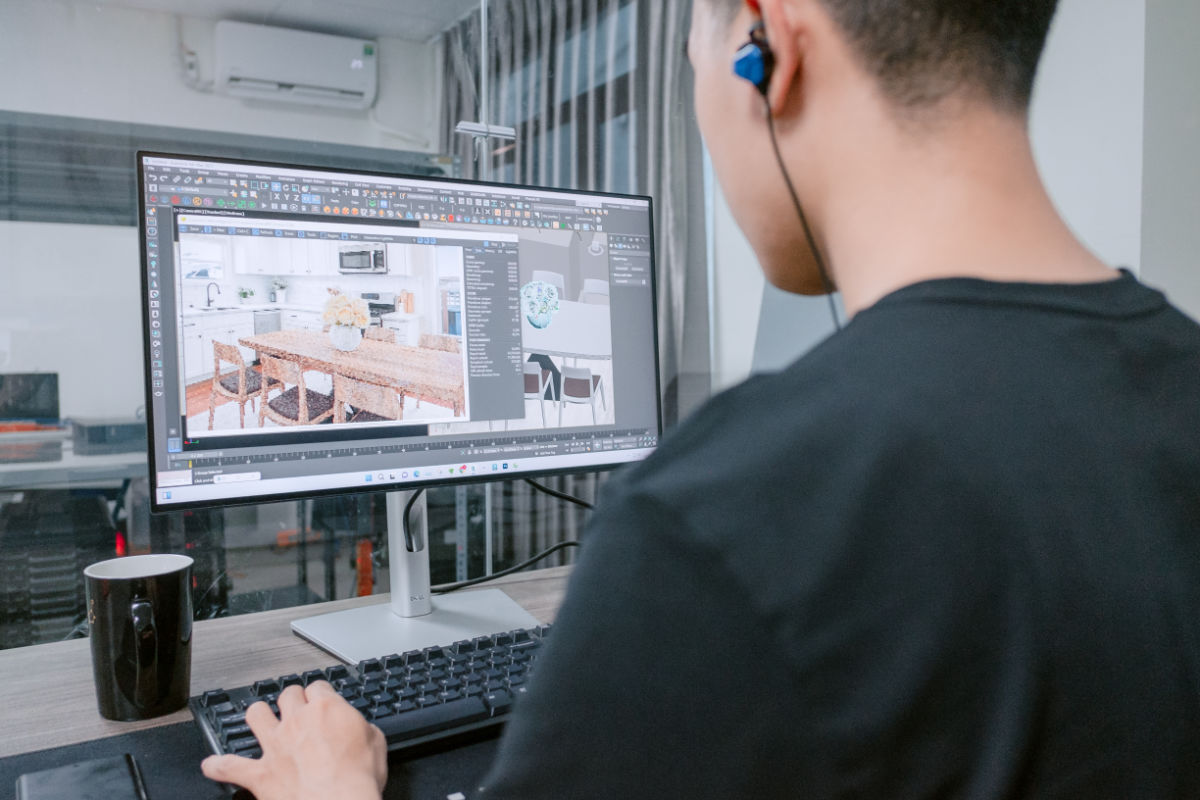 Fotober stands out with efficiency and the refined quality of the final product.
7.2. Showcasing excellence: The Fotober portfolio
At Fotober, we believe that our work should speak for itself. Our portfolio is a curated testament to the transformative power of photorealistic 3D rendering, showcasing a diverse range of projects that span the globe and various industries. We don’t just create images; we craft digital experiences that capture the soul of a design.
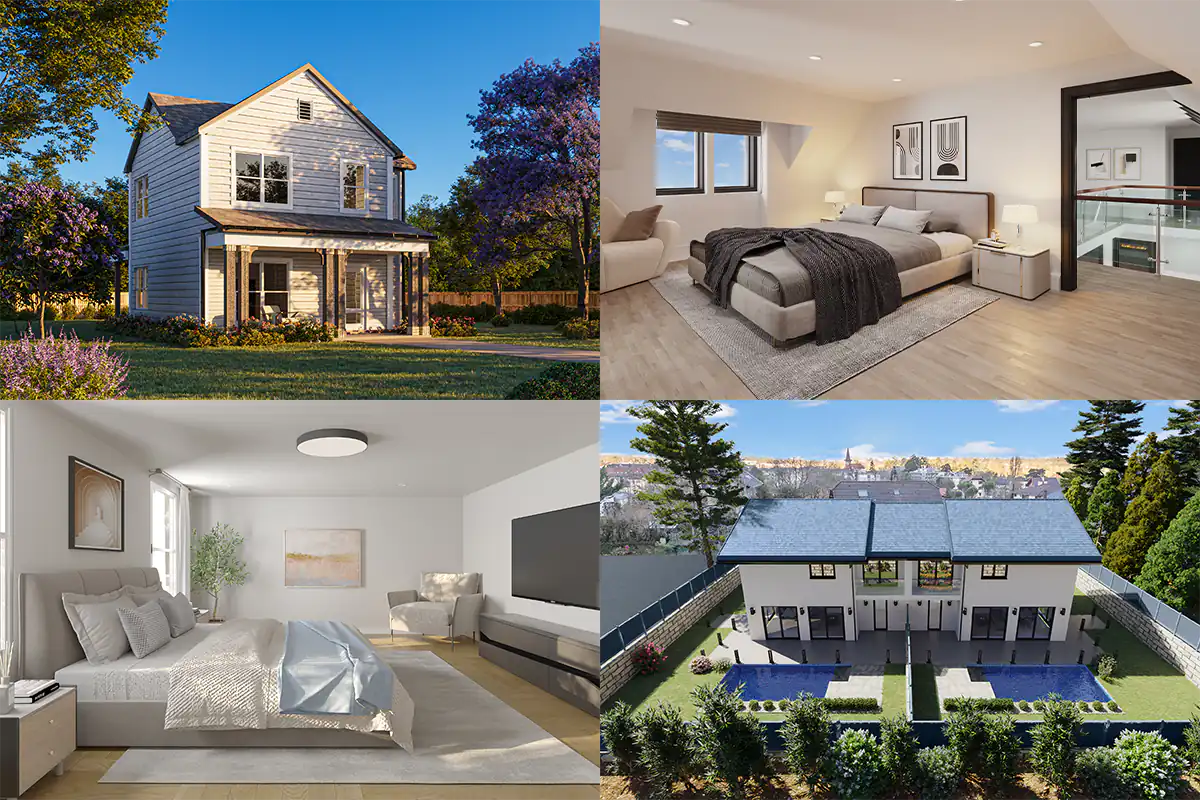 Fotober excels in a wide range of rendering projects.
Our expertise in architectural rendering services is visible across four main pillars:
- External rendering: Transform your dream home's exterior into a visual masterpiece with our expert rendering services. From facade enhancements to landscaping, we bring your vision to life.
- Internal rendering: Step inside your dream home and visualize every detail with our internal rendering services. From cozy living spaces to sleek kitchens, we create immersive interiors that inspire.
- 360° renders & virtual tours: Explore your dream home from every angle with our immersive 360° virtual tours. Step into each room, soak in the ambiance, and envision yourself living your best life.
- Custom order: We offer custom services tailored to your specific needs. Whether it's personalized design elements or special requests, we're here to bring your dream home to reality.
Fotober provides external/internal real estate renderings, virtual tours, and customized 3D simulations for more specific demands.
Notice the meticulous attention to detail in our work: the way natural light refracts through a glass facade at sunset, the tangible texture of weathered brick, or the soft glow of interior ambient lighting. These details are what separate a "computer drawing" from a professional 3D rendering service masterpiece.
We invite you to explore our full gallery on Behance to see how Fotober consistently turns technical blueprints into high-impact marketing assets.
8. Frequently asked questions about 3D rendering services (FAQ)
Q1: How much do professional 3D rendering services cost?
A: Pricing is highly dependent on the project’s scale, complexity, the number of views, and the level of detail required. A simple interior room render will cost significantly less than a large-scale exterior commercial development with complex landscaping and drone integration. At Fotober, we offer tailored, competitive pricing models designed to maximize your return on investment. Contact us for a customized quote based on your specific project files.
Q2: What files do I need to provide to start a project?
A: To ensure maximum accuracy, we prefer CAD files (.dwg), Revit models (.rvt), SketchUp files (.skp), or BIM models. Along with the structural files, providing design mood boards, material schedules (specifying exact finishes, wood types, paint codes), and reference photos of the desired style is highly beneficial.
Q3: What is the typical turnaround time for a photorealistic 3D render?
A: A standard still rendering project typically takes between 5 and 10 business days from the initial kickoff to the final high-resolution delivery, depending on the complexity of the design and the speed of client feedback during the review phases. For urgent projects, Fotober offers expedited production services.
Q4: How many rounds of revisions are included in your architectural rendering services?
A: At Fotober, we believe in collaboration. We typically include 2 to 3 rounds of revisions at key milestones (such as the clay model phase and the initial color draft phase) to ensure the final product aligns perfectly with your vision.
Q5: Can 3D rendering help with zoning and city planning approvals?
A: Absolutely. City planning departments and local zoning boards increasingly require photorealistic renderings to understand how a proposed development will impact the surrounding skyline, sun shadow patterns, and neighborhood aesthetic. High-quality exterior renders are often the deciding factor in securing municipal project approvals.
9. Conclusion
In the highly competitive arenas of architecture, design, and real estate, how you present your vision is just as important as the vision itself. You can have the most beautiful, structurally sound, and innovative design in the world, but if your client or buyer cannot visualize it, the project remains grounded on the drawing board.
Investing in professional 3D rendering services is the key to unlocking client trust, accelerating pre-sales, and elevating your brand above the noise. It is the bridge that spans the gap between imagination and physical reality.
Let us help you tell your project’s story. Bring your blueprints, your materials, and your boldest ideas to Fotober. Our team of master digital artists, guided by a photographer's eye and an architect’s precision, will transform your concepts into breathing, light-filled, photorealistic masterpieces that inspire, convince, and sell.
Contact Fotober today to schedule a consultation and take the first step toward visual excellence.