











.webp)
.webp)
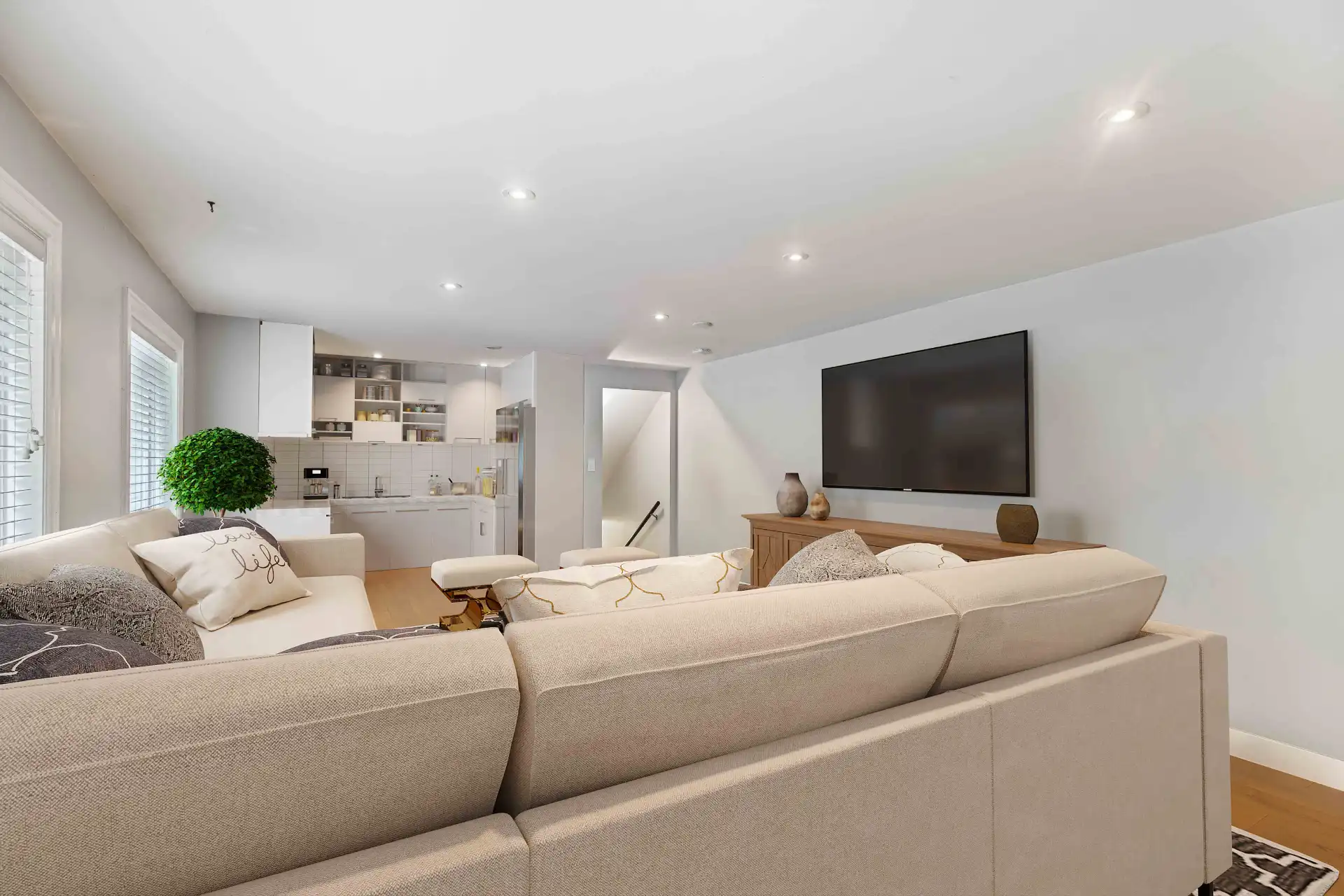





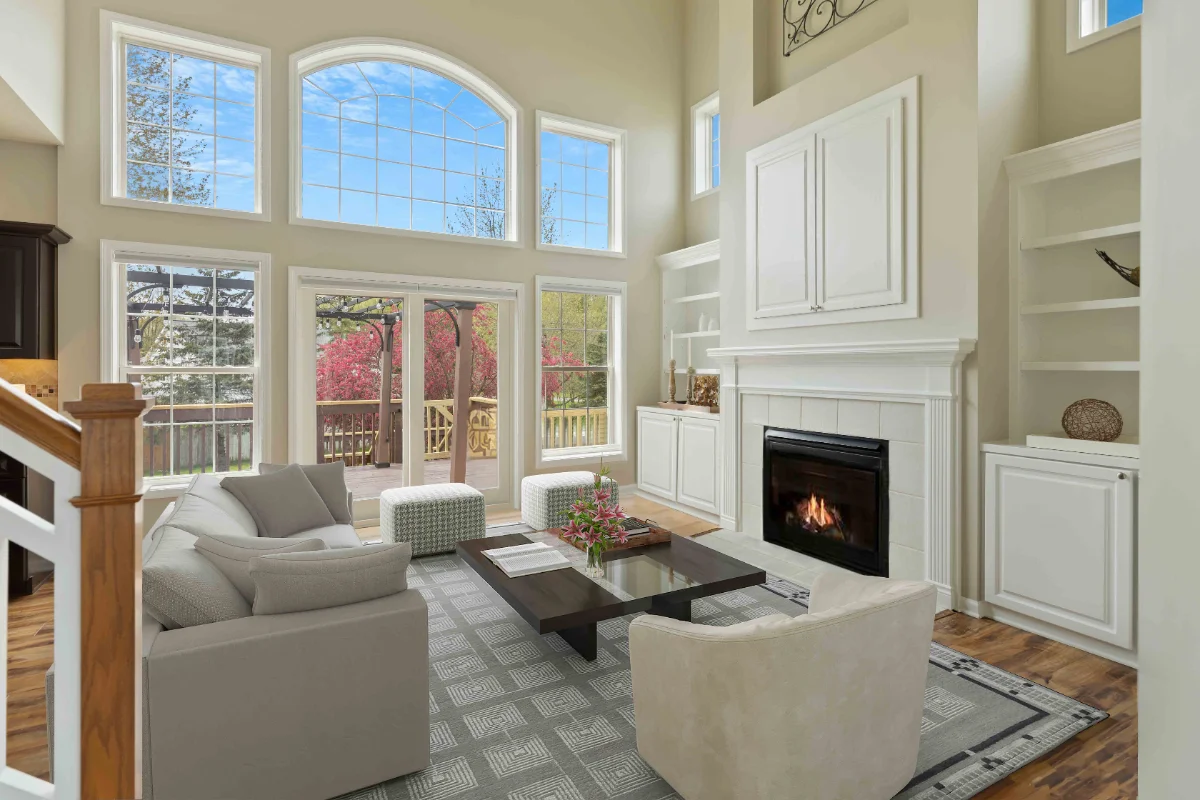
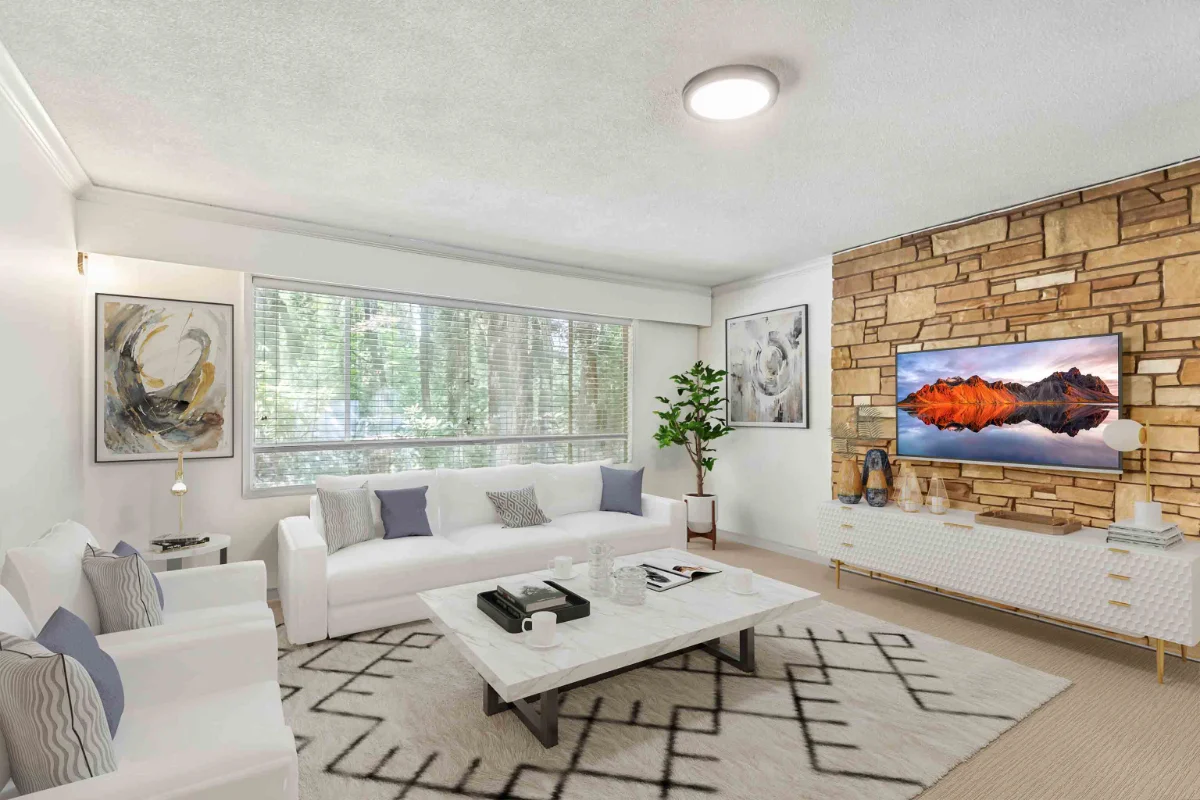
In real estate, visual narrative is everything. Whether looking through a 24mm tilt-shift lens, scanning an architectural blueprint, or calculating cap rates for a residential portfolio, one truth remains absolute: buyers purchase a lifestyle long before they purchase a property. When a property suffers from outdated interiors, structural decay, or uninspiring finishes, traditional real estate photography hits a wall. A high-dynamic-range (HDR) photograph can perfectly expose the light coming through a window, but it cannot fix popcorn ceilings, retro countertops, or dysfunctional floor plans.
This is where virtual renovation bridges the gap between raw physical potential and visual persuasion. This simulation approach utilizes advanced 3D rendering to digitally remodel the entire space, from replacing flooring to completely gutting and modernizing kitchens and bathrooms. In this introductory article, we’ll explore how Fotober’s virtual renovation service can help you sell properties faster, save on physical staging costs, and captivate modern buyers instantly.
1. What is virtual renovation? Defining the visual revolution
A virtual renovation service is the digital transformation of an existing space using advanced 3D modeling, photogrammetry, architectural visualization, and digital post-processing techniques.
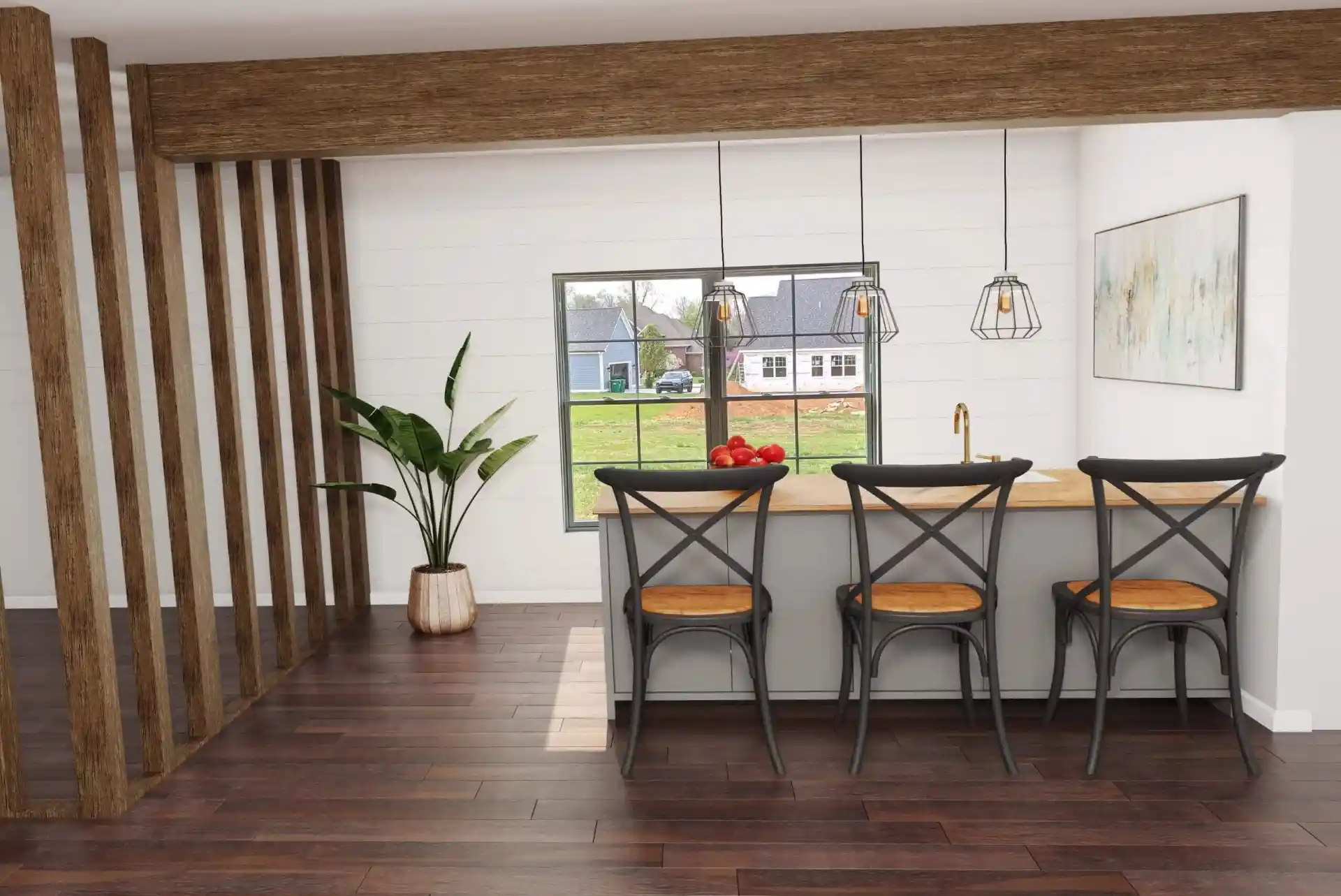
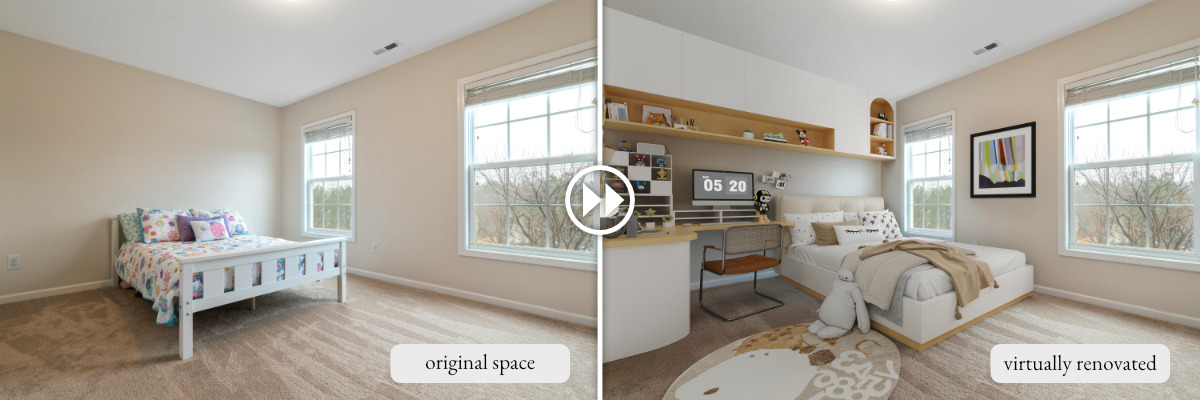 A virtual renovation service aims to digitally create a finished residential space from a bare-bones image.
[Raw photo/2D plate] ➔ [Spatial/Perspective analysis] ➔ [Digital demolition] ➔ [3D rendering & lighting match] ➔ [Realistic visual output]
Unlike basic virtual staging, which simply places digital furniture into an empty room, virtual home renovation involves structural, material, and spatial alterations. It allows creators, agents, and developers to visually alter:
- Structural elements: Removing load-bearing or partition walls, adding open-concept kitchen islands, expanding window frames, or raising ceilings.
- Surface finishes: Replacing outdated carpet with wide-plank oak flooring, swapping vinyl countertops for custom Calacatta marble, or re-tiling bathrooms.
- Fixtures and built-ins: Modernizing cabinetry, installing designer lighting fixtures, upgrading plumbing hardware, and integrating recessed architectural lighting.
- Exterior architecture: Re-cladding facades with modern board-and-batten siding, replacing roofs, installing floor-to-ceiling glass doors, and re-landscaping exterior spaces.
From an architectural photography standpoint, virtual renovation is not about altering reality to deceive; it is about revealing potential. It gives buyers a clear visual blueprint of what a space can become, eliminating the cognitive strain required to look past peeling wallpaper or decades of wear.
Depending on property condition and marketing goals, a virtual renovation service falls into distinct visual tiers:
1.1. Cosmetic surface refresh
Ideal for structurally sound homes with dated aesthetic treatments.
- Wall treatments: Paint color changes, drywall smoothing, removing dated wallpaper or wood paneling.
- Flooring upgrades: Swapping carpet or worn linoleum with hardwood, engineered plank, stone, or tile.
- Fixture modernization: Replacing dated brass lighting with matte black or brushed brass architectural fixtures.
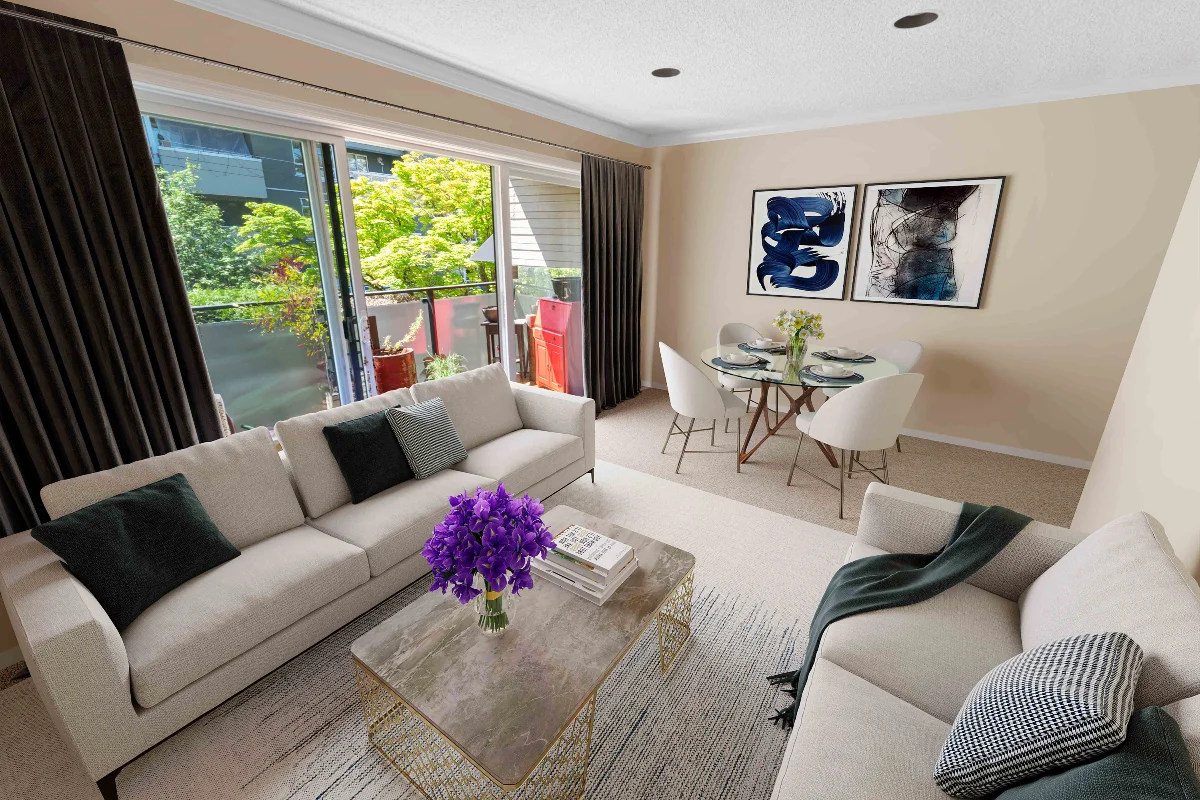
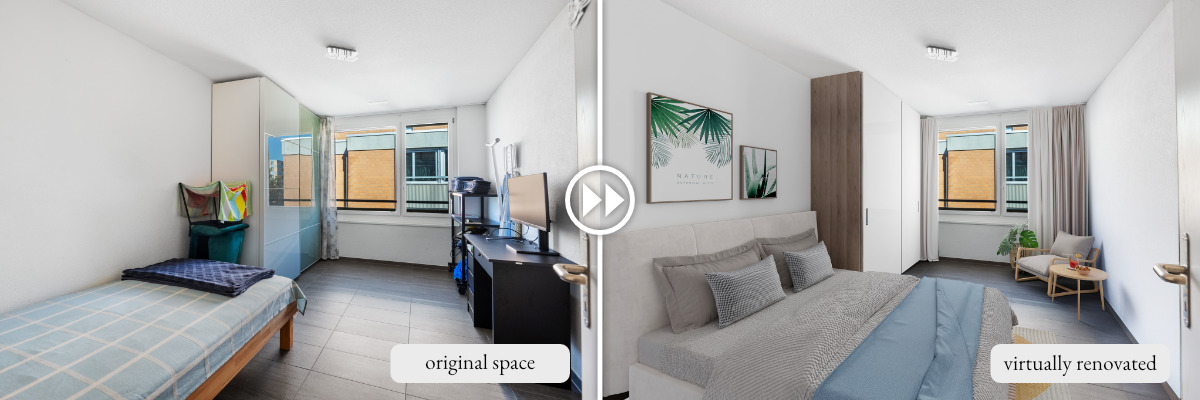 Virtual remodeling can give your home a subtle facelift.
1.2. Kitchen and bath overhauls
Kitchens and bathrooms yield the highest return on physical investment, making them the most critical areas for virtual home renovation.
- Cabinet re-facing or replacement: Converting dark oak cabinets into clean shaker-style or modern flat-panel cabinetry.
- Countertops & backsplashes: Adding quartz, granite, or waterfall marble edges.
- Appliance upgrades: Swapping white plastic appliances for integrated stainless steel or custom-paneled high-end options.
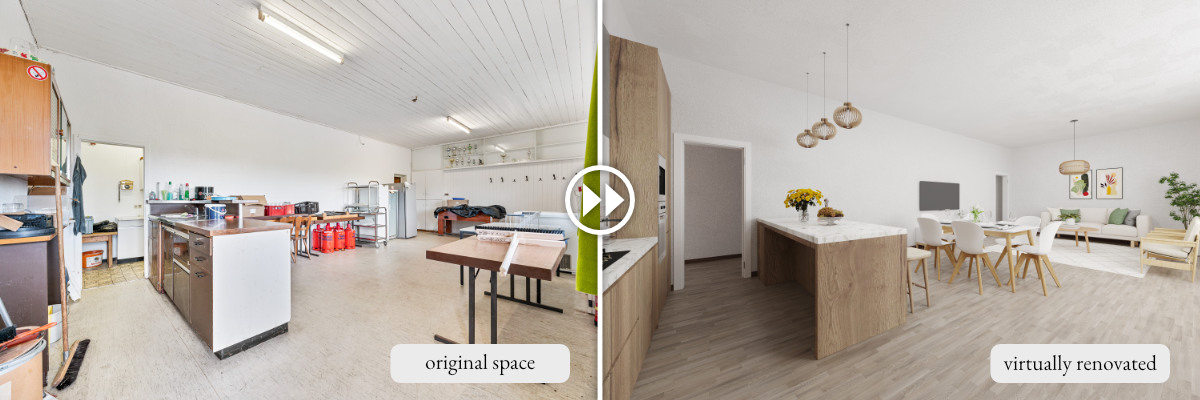 A neat-looking kitchen on listings can attract more buyers.
1.3. Structural layout changes (Open-concept transitions)
For homes with closed-off, compartmentalized floor plans built in past decades.
- Removing non-load-bearing walls to connect kitchens directly to dining and living spaces.
- Opening up vaulted ceilings or inserting skylights.
- Adding or expanding window openings and sliding glass doors to maximize natural light flow.
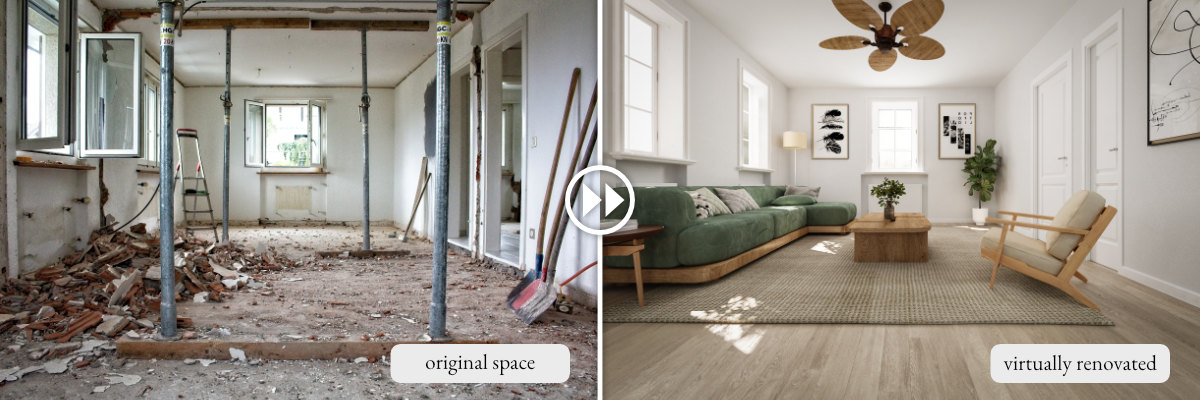 Virtual renovation pushes the boundaries of listing image manipulations by altering the “bones” of your home.
1.4. Exterior architecture and curb appeal
First impressions occur at the curb. Exterior virtual home remodeling visualization transforms street-level presentation.
- Facade refinishing: Painting brick, applying modern stucco, or installing natural timber accents.
- Roofing & windows: Upgrading asphalt shingles to metal seam roofing; replacing single-pane windows with modern black-frame units.
- Landscaping & hardscaping: Replacing overgrown brush with curated gardens, stone pathways, patio decks, and outdoor fire pits.
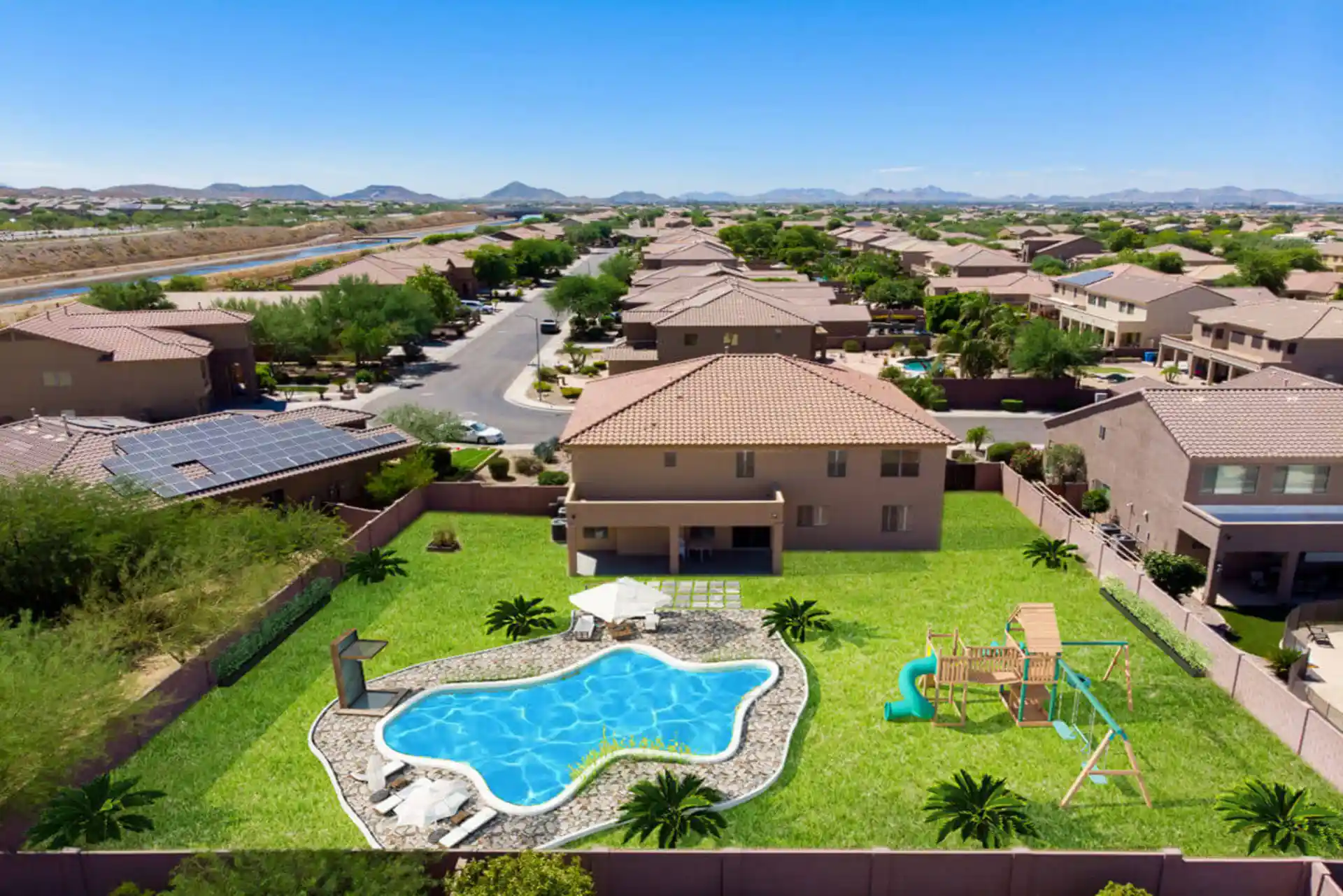
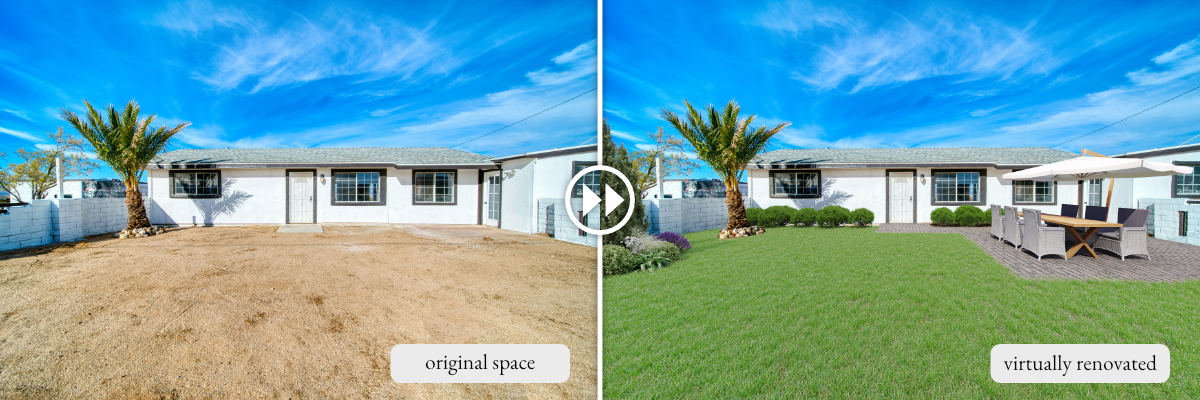 Dull exterior shots can also be liven up with virtual renovation.
1.5. Commercial shell to build-out
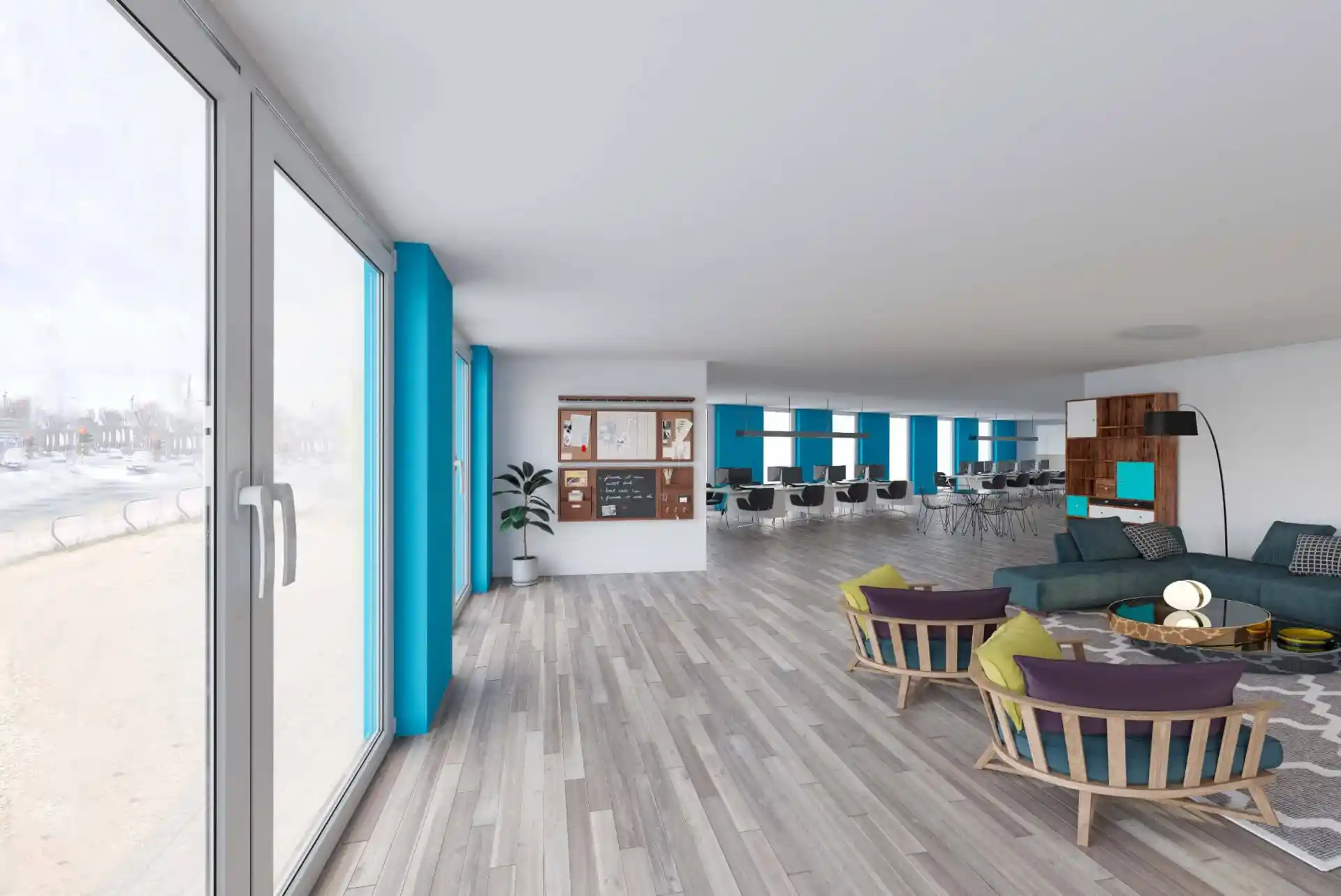
For commercial real estate brokers leasing gray-shell or vanilla-box office, retail, or industrial spaces. Visualizing full office layouts, reception areas, collaborative workspaces, and executive suites over bare concrete floors and exposed infrastructure.
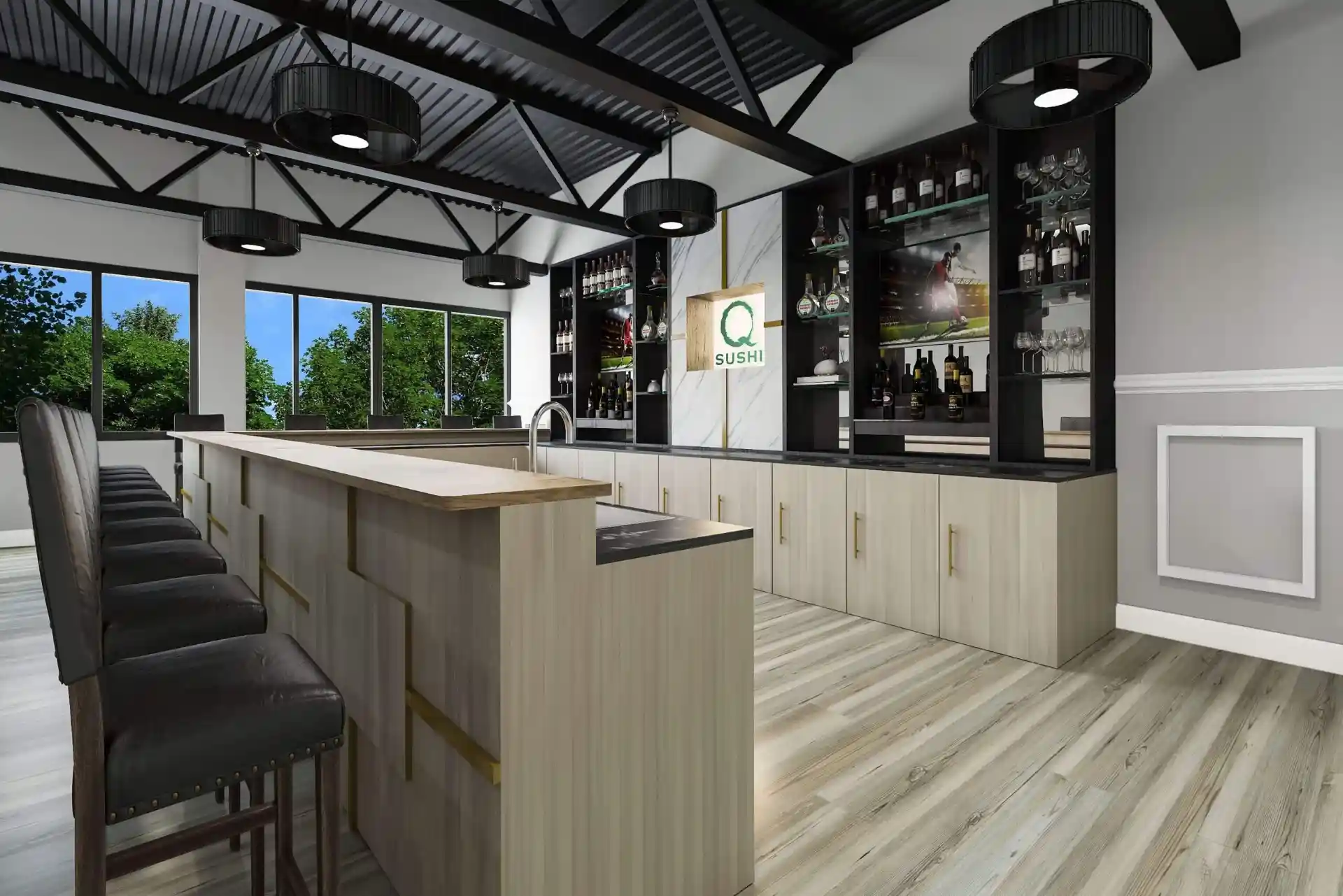
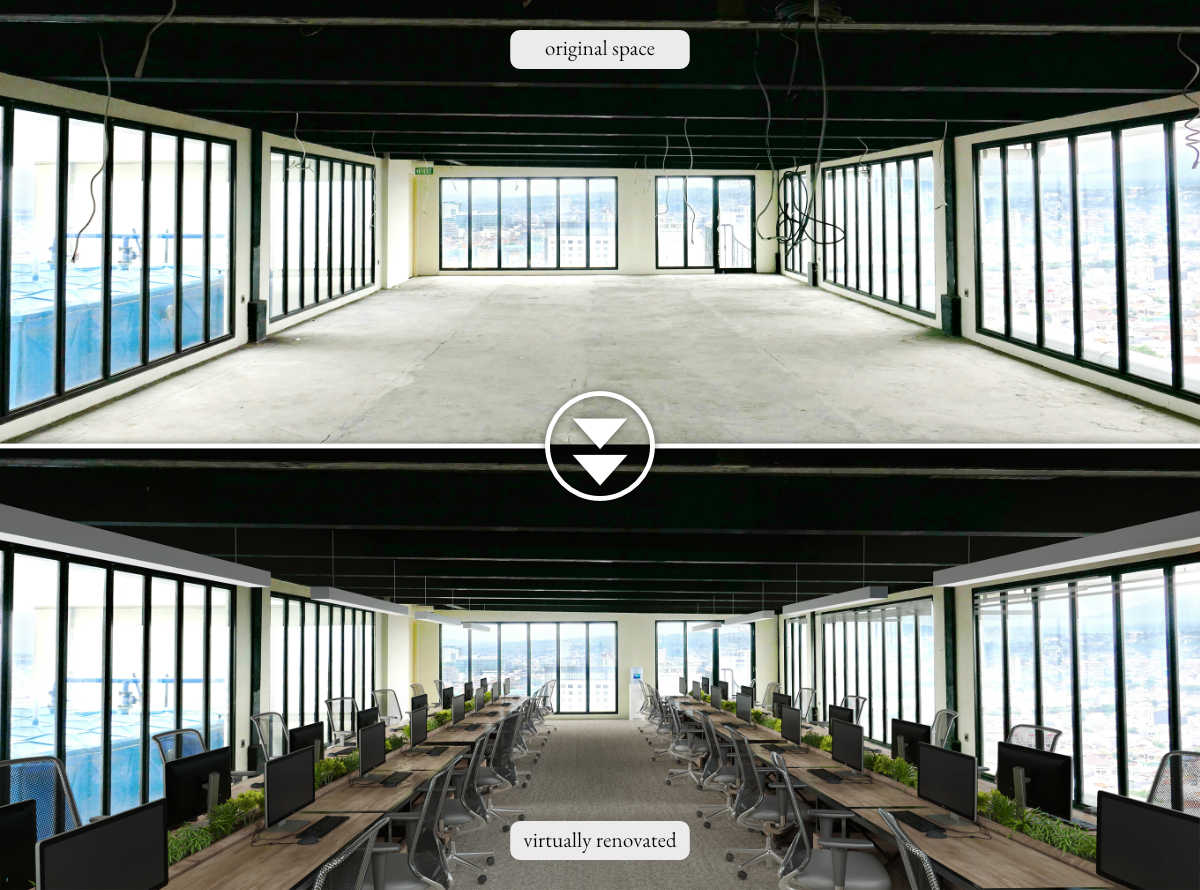 Virtual renovation can showcase the potential of commercial spaces.
2. Why your listings need virtual home renovation visualization
Fewer than 10% of prospective home buyers can visualize the spatial or architectural potential of an unrenovated space. When presented with dark wood paneling, low ceilings, or damaged flooring, most buyers experience immediate visual friction. They see work, expense, and delay.
2.1. Overcoming the "as-is" discount
Properties that require cosmetic or structural updates often suffer from the "as-is discount." Buyers overestimate renovation costs by 20% to 50% when calculating their initial offers. A high-grade virtual home remodeling visualization sets an intentional anchor price by showcasing the final vision directly alongside actual contractor estimates.
The real estate market in 2026 moves at lightning speed, and agents who rely solely on "as-is" photography for dated properties often find themselves leaving money on the table. In an era where the first showing happens on a smartphone screen, real estate photo editing for renovation has shifted from a "nice-to-have" tool to a strategic necessity.
One of the most compelling reasons to adopt this technology is extreme cost-efficiency. A physical kitchen remodel or a full flooring replacement can cost tens of thousands of dollars and take months to coordinate. In contrast, Fotober’s virtual renovation service provides the same visual impact for a tiny fraction of that investment. This allows agents to showcase a property’s full potential without requiring the seller to commit to expensive, time-consuming construction before the sale.
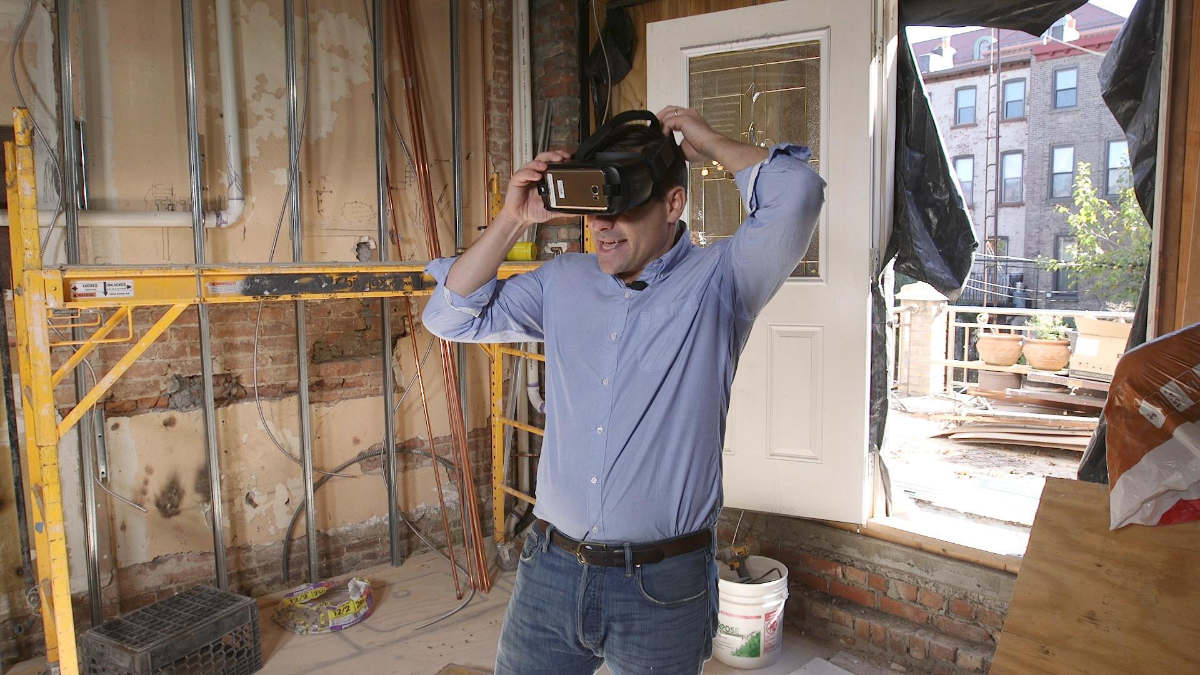 Elite real estate agents are adopting new visualization technologies to stand out in a crowded market and optimize ROIs.
Furthermore, the speed to market is unparalleled. The first 48 hours of a listing are the most critical for generating buzz. While physical renovations can delay a listing by weeks or even months, Fotober delivers high-quality, digitally renovated images within 24 to 48 hours. This agility allows you to launch a high-impact marketing campaign almost immediately, capturing buyer interest while the inventory is fresh.
Beyond logistics, there is a powerful psychological component at play. Research consistently shows that most buyers struggle to see past cosmetic flaws like old wallpaper or cluttered rooms. By presenting a digitally modernized space, you remove the "mental friction" of a renovation project. You aren't just showing them a house; you are helping them visualize a home.
Ultimately, this leads to a significantly higher return on investment (ROI). Listings featuring professional renovation visuals see higher click-through rates on platforms like Zillow or the MLS, leading to more showings and, more importantly, more competitive offers. By partnering with Fotober, you empower yourself to sell the "dream" rather than the "fixer-upper," ensuring a faster closing and a more satisfied client.
2.2. Cost efficiency vs. physical staging & modeling
Physical renovation for marketing purposes is financially unviable, and traditional physical staging can cost thousands of dollars per month with zero flexibility for layout changes.
|
Feature / Metric |
Physical renovation |
Physical staging |
Digital virtual renovation |
|
Average cost |
$20,000 – $150,000+ |
$2,500 – $8,000/month |
$30 – $150 per image |
|
Turnaround time |
2 – 12 months |
3 – 7 days |
24 – 48 hours |
|
Design flexibility |
Fixed permanently |
Limited by physical inventory |
Unlimited design & layout options |
|
Marketing speed |
Very slow |
Moderate |
Immediate |
First, consider the financial commitment. A traditional kitchen remodel can easily exceed $30,000, whereas Fotober’s digital equivalent costs less than a nice dinner. For a seller looking to maximize their net profit, spending a few hundred dollars to show a renovation is often far wiser than spending tens of thousands to do one, especially when buyer tastes are so subjective. Why install marble if the buyer prefers quartz?
Time is the next critical factor. Physical construction is notorious for delays, permit hurdles, and contractor backlogs. In the real estate world, a listing that sits for months during a renovation becomes "stale." Fotober delivers a "remodeled" home in under 48 hours, keeping your marketing momentum at its peak.
Ultimately, digital renovation serves as the ultimate "try-before-you-buy" experience. It allows agents to present multiple design paths: Modern, Scandi, or Industrial, giving buyers the freedom to choose their favorite vision without the seller ever having to endure the dust and noise of a sledgehammer. By using high-end realistic renovations, you capture maximum digital engagement on listing platforms (Zillow, Realtor.com, Redfin) before a physical footstep is ever taken on the property.
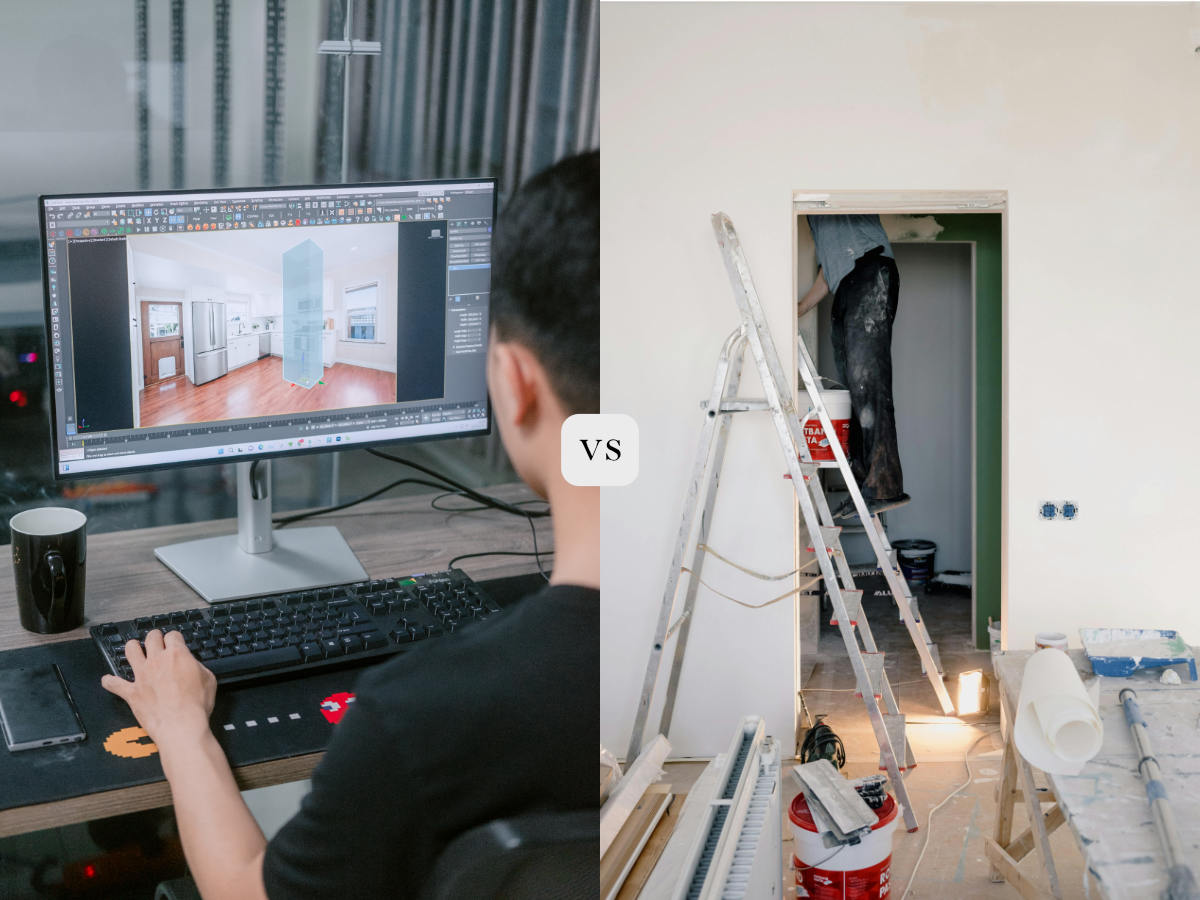 Virtual home remodeling visualization is significantly less costly compared to physically renovating the space.
3. How does virtual renovation work? Behind the lens & canvas
Understanding how virtual renovation works requires a dive into both photographic theory and digital architectural rendering. Producing photorealistic imagery demands exact alignment between camera physics and digital render engines.
3.1. Tools and techniques: The craft behind seamless realism
|
The professional stack |
||
|
3D modeling |
Rendering engines |
Post-processing |
|
Autodesk 3ds Max, Blender, Cinema 4D |
Chaos V-Ray, Corona Renderer, Unreal Engine 5 |
Adobe Photoshop, Lightroom, Capture One |
Software ecosystems:
- Autodesk 3ds Max / Blender: Industry-standard tools for precise parametric structural geometry modeling and camera matching.
- Chaos V-Ray & Corona Renderer: Advanced ray-tracing renderers that simulate true light physics, photons, bounces, dispersion, and refractions.
- Adobe Photoshop / Lightroom Classic: Master post-processing platforms used for multi-exposure blending, focal masking, grain matching, and color harmonization.
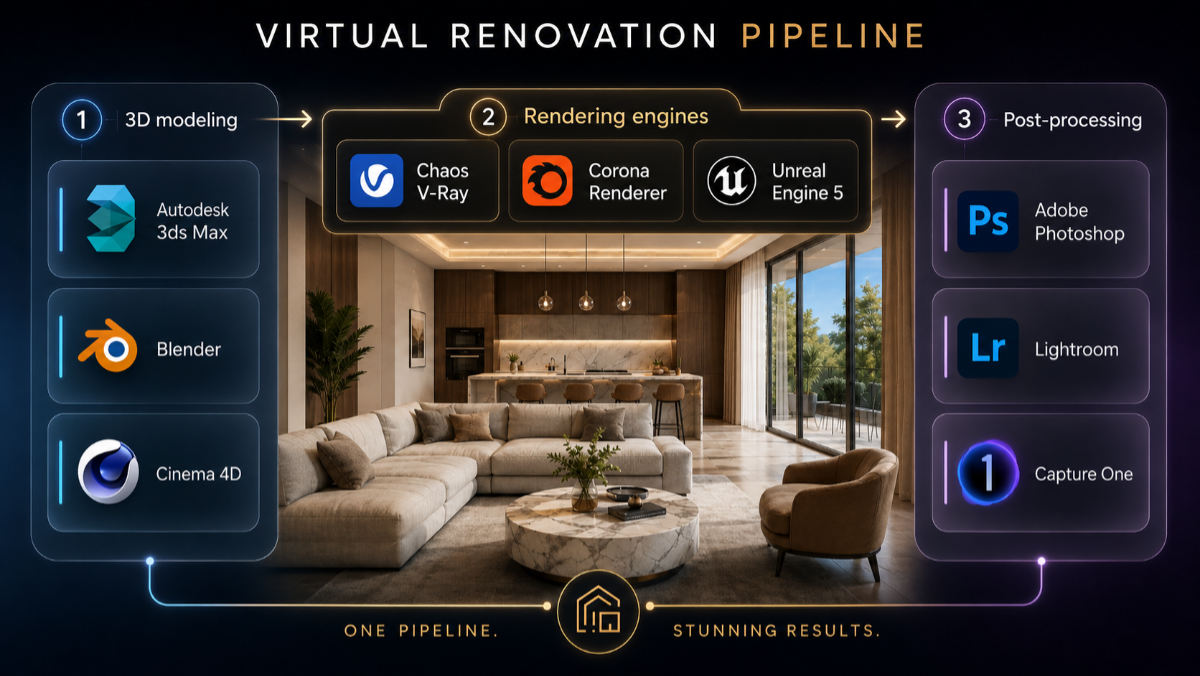 Virtual renovation makes use of many specialized rendering software.
Advanced rendering techniques:
- Photometric lighting setup: To ensure the digital insertion looks integrated with the host image, digital light sources must mirror real-world light data (IES profiles). If an incandescent bulb exists in the base image, the added digital elements must be illuminated by a matching warm 2700K point light source with proportional falloff.
- Ambient occlusion (AO): Without precise contact shadows, added digital objects appear to float above surfaces. An Ambient Occlusion pass calculates how light is blocked by dark, tight spaces, like where a new sofa base meets a newly rendered wood floor, or where a ceiling joist intersects a wall.
- Shadow and reflection matching: A newly inserted quartz island must reflect the existing window lighting and nearby wall colors accurately. Ray-traced environment maps capture light bounces off surrounding surfaces, ensuring reflections align perfectly with the scene’s optics.
- Match-grain and lens aberration calibration: Digital renders are inherently sterile and perfectly sharp. Physical camera sensors, however, introduce subtle digital noise, chromatic aberration, and corner vignetting. Master retouchers reintroduce subtle lens profile characteristics and camera noise onto digital renders so that physical background photos and 3D overlays share identical image grain structure.
3.2. Common steps to virtually renovate a space
Step 1: High-resolution source capture
The process begins with clean, uncompressed base photography. Professional architectural photography standards apply:
- Shot on a full-frame sensor (typically 24mm to 35mm focal lengths to avoid extreme fisheye distortion).
- Captured at camera level or mid-torso height to ensure natural vanishing points.
- Clean bracketed exposures (HDR) to retain highlight detail in windows and deep shadow detail in corners.
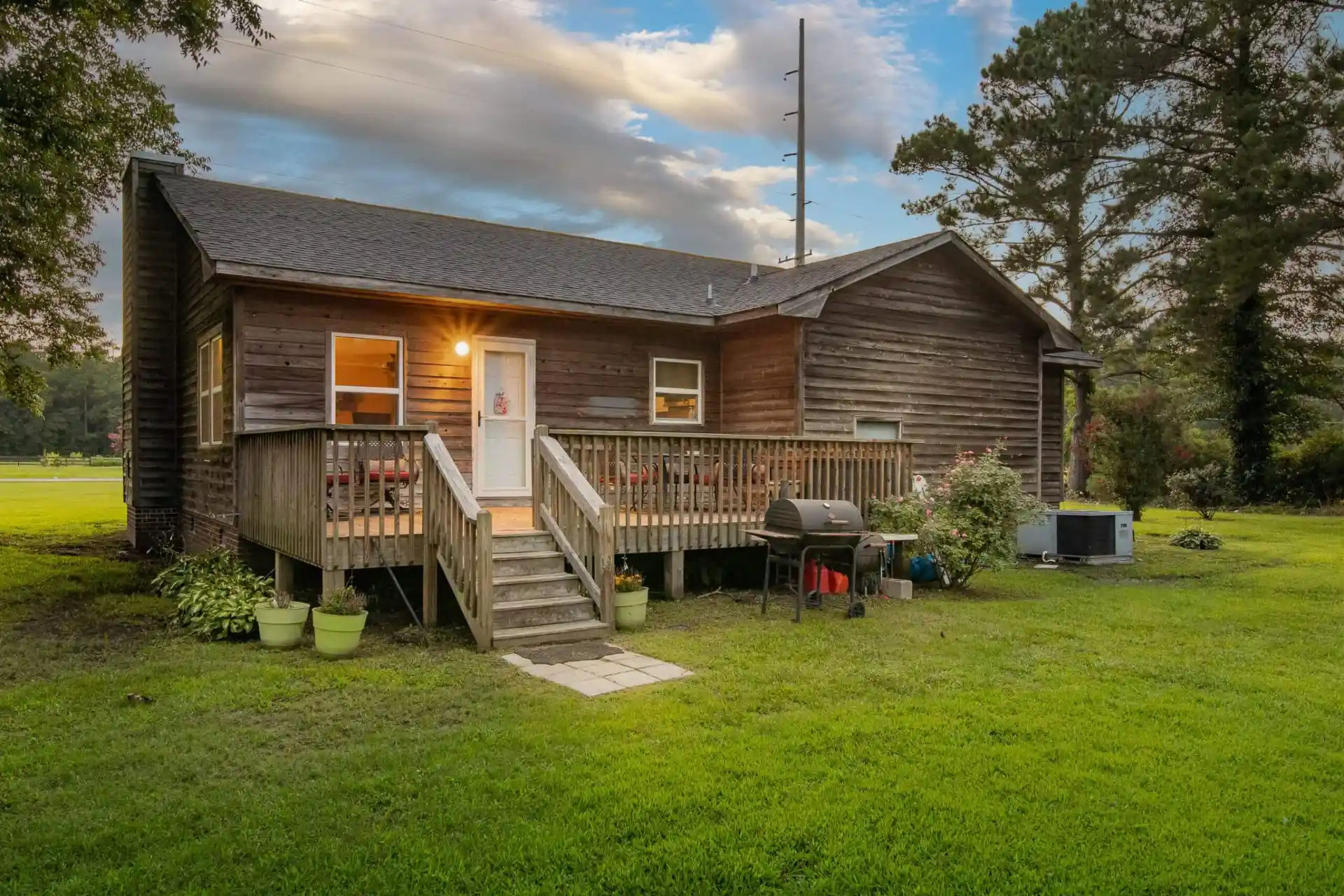
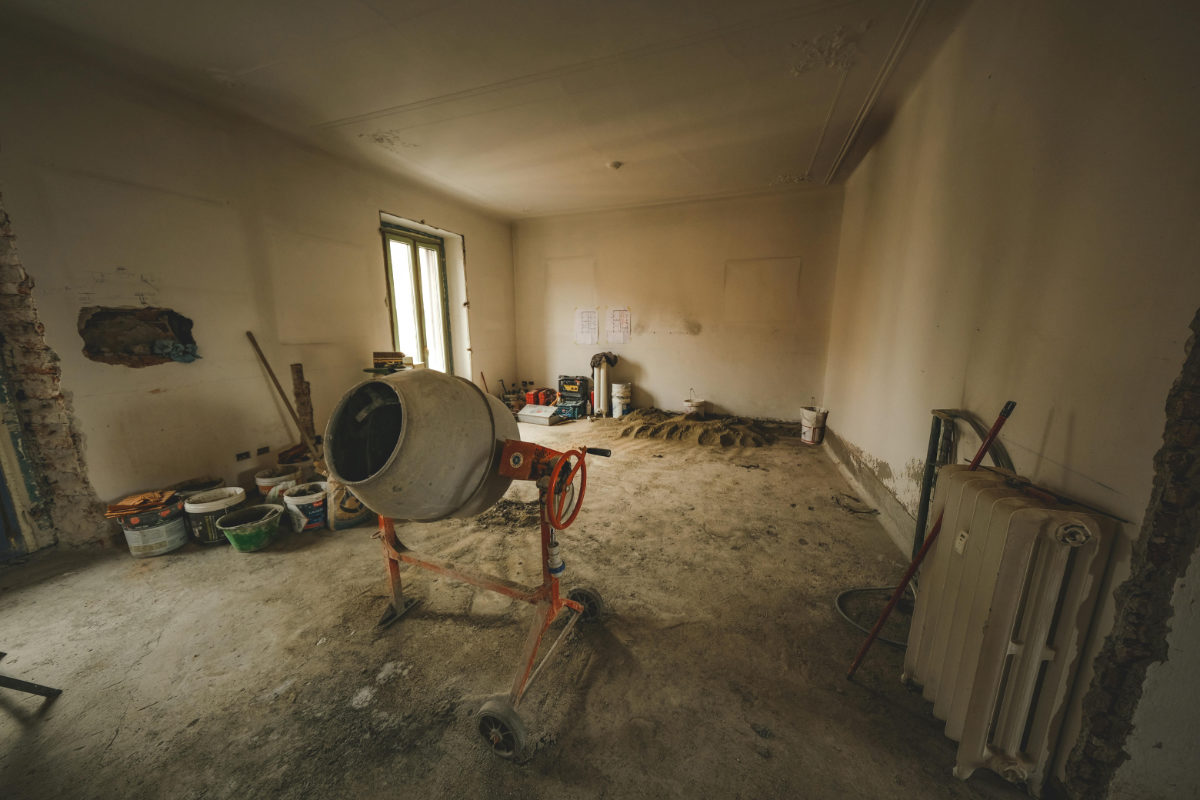 You can send us images of the unfinished room.
Step 2: Spatial & perspective alignment
The source photograph is imported into digital workspace environments (such as 3ds Max, Maya, or Blender). Here, 3D artists calculate the exact focal length, camera height, tilt angle, and horizon line of the original camera lens. Using vanishing point analysis, a matching digital 3D camera is aligned perfectly over the 2D background plate.
Step 3: Digital demolition and masking
Before new elements are added, old features must be systematically removed. Using digital painting tools, retouchers strip out old cabinets, walls, appliances, or floor surfaces. Advanced image synthesis fills in masked background areas while maintaining underlying perspective lines and baseline ambient light.
Step 4: 3D geometry and asset integration
Architectural artists build high-polygon 3D geometry over the masked plate. If a kitchen wall is being knocked down to create an open concept, the artist builds the newly revealed room space, matching the perspective grid of the existing background structure.
Step 5: Texture, PBR shading, and photometric lighting
Realism lives and dies in light and texture interaction:
- PBR materials: Photometrically accurate Physically Based Rendering (PBR) materials are applied to surfaces. Wood grain reflects light based on roughness maps, marble features depth and refraction, and polished metal reflects environment highlights correctly.
- Lighting match: Radiance maps and directional lights match the exact intensity, color temperature (Kelvin scale), shadow softness, and ambient bounce light of the original physical room.
Step 6: Post-processing and color grading
The rendered layer is composited back over the source photograph. Master photo retouchers apply dodge and burn adjustments, micro-contrast enhancement, ambient occlusion passes, and unified color grading to blend digital elements seamlessly into the physical photographic frame.
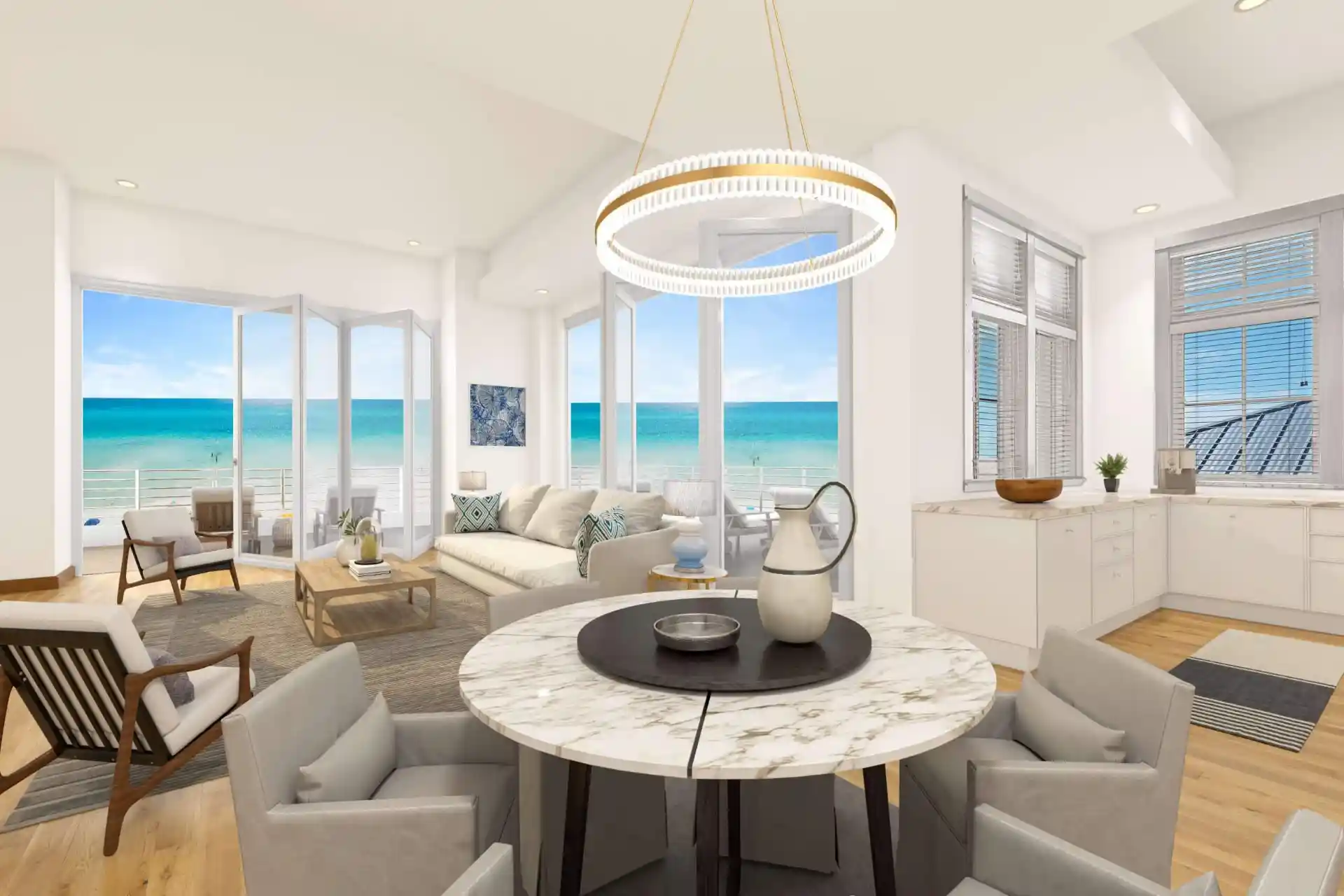
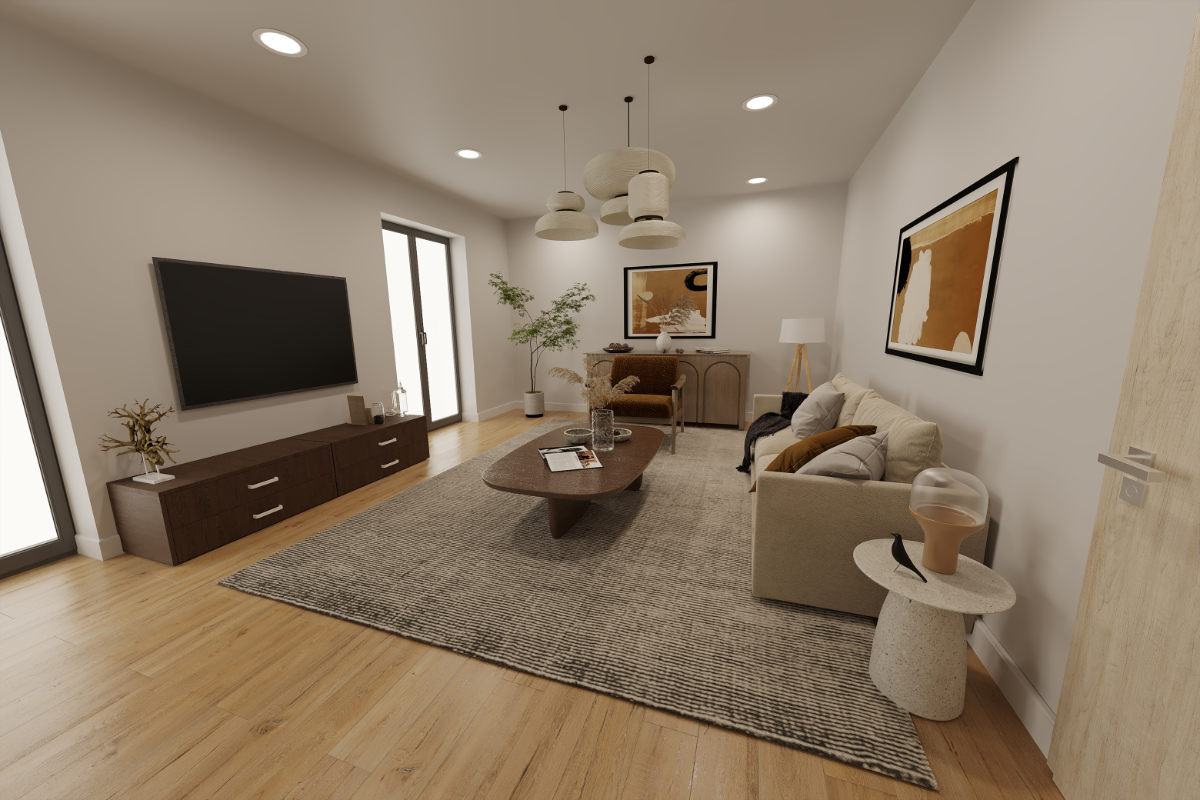 Our architectural visualization experts will realize your dream home with photorealistic quality.
4. Use cases: Who needs a virtual renovation service?
The application of virtual home renovation spans every sector of the property life-cycle:
4.1. Real estate agents and brokers
- Problem: Representing sellers with poorly maintained, outdated, or estate-sale properties where sellers lack capital or desire to renovate before listing.
- Solution: Use high-end realistic renovations on digital MLS boards and print collateral to sell potential right away, securing higher click-through rates (CTR) and driving open-house attendance.
 Realtors and brokers can maximize listings’ engagement with attractive virtually renovated photos.
4.2. Property developers and builders
- Problem: Marketing homes pre-construction or during active structural frame stages when physical spaces are unsafe or visually unappealing for buyers.
- Solution: Combine CAD floor plans and frame photos with virtual finishes to pre-sell homes before drywall is even installed.
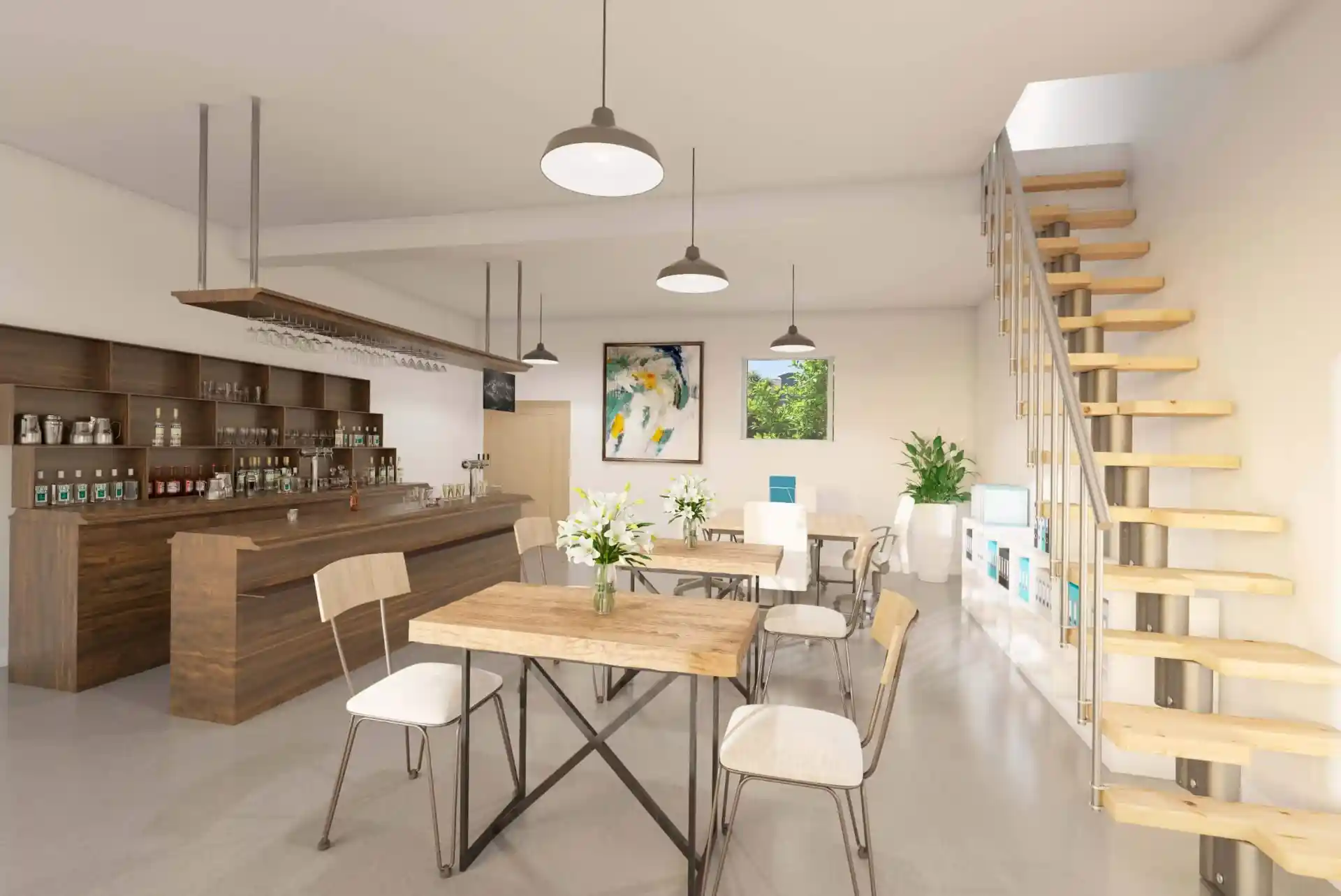
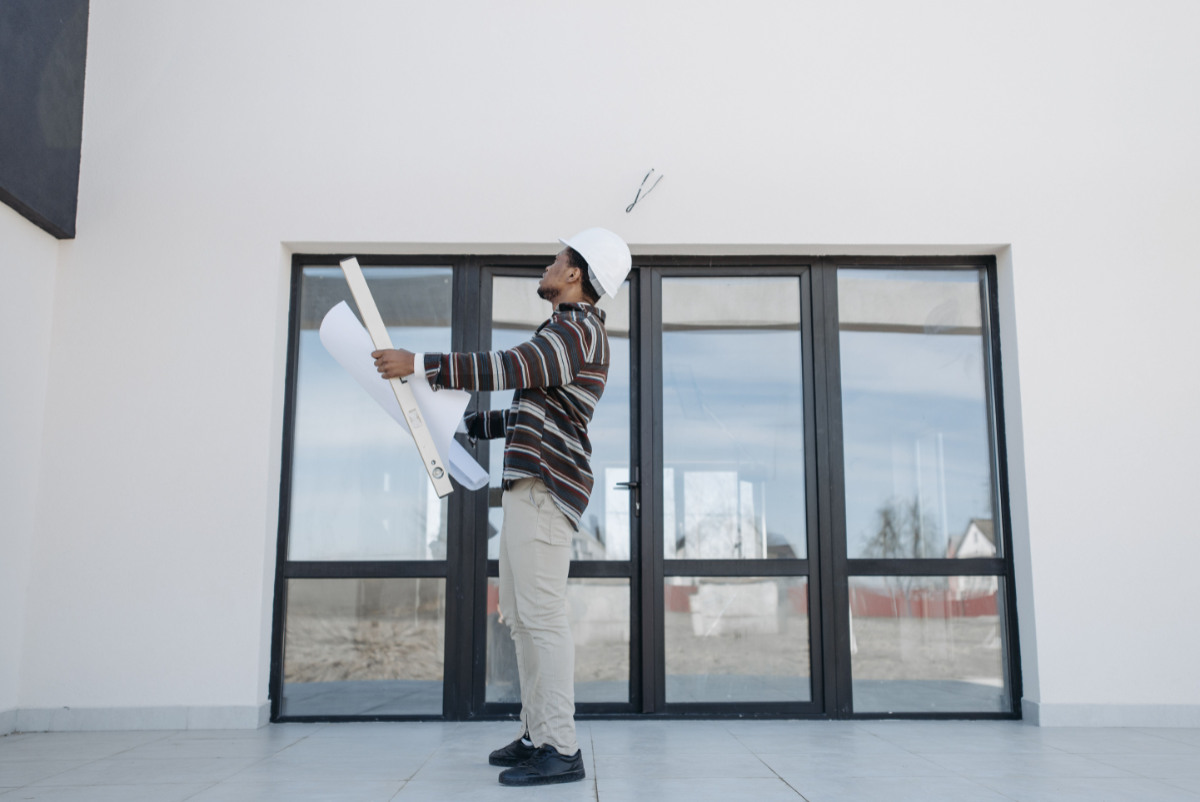 Homes can be listed sooner from the building phase thanks to virtual modeling.
4.3. Real estate investors and house flippers
- Problem: Securing hard-money funding or investor equity for distressed properties requires convincing pitch decks.
- Solution: Present high-resolution "before & virtual after" visualization packages to lenders and equity partners to demonstrate project vision and projected After Repair Value (ARV).
4.4. Interior designers and architectural studios
- Problem: Clients struggle to visualize complex design proposals through 2D architectural drawings or small physical material swatches.
- Solution: Provide clients with immersive spatial visualizations showing proposed knock-down walls, custom millwork, and updated color schemes in their actual home settings before construction begins.
 Architectural studios now have more visualization options to bring their ideas to life.
4.5. Property managers and commercial leasing agents
- Problem: Outdated residential units or empty commercial office bays remain vacant on the market for extended periods.
- Solution: Market renovated visual options to prospective tenants to pre-lease units prior to physical tenant turnover renovations.
5. In-house vs. outsourcing, AI vs. human artistry in virtual renovation
Real estate teams and media agencies face choices regarding how visual assets are produced.
|
Production pathways |
||
|
Option A: In-house production (high overhead) |
Option B: Automated AI generators (Low quality, artificially distorted) |
Option C: Specialized outsourcing studio (High quality, scalable, cost-effective) |
5.1. In-house production vs. professional outsourcing
Building an internal visual rendering department requires:
- High-end workstation hardware (GPUs, CPUs with high multi-core thread counts).
- Expensive software licenses (3ds Max, V-Ray, Photoshop suites).
- Hiring specialized 3D visualizers and architectural retouchers.
For 95% of real estate agencies, photography studios, and marketing firms, outsourcing to a specialized post-processing team like Fotober offers enterprise-grade output with zero capital overhead, scalable capacity, and fast turnaround.
5.2. AI generators vs. specialized human artistry
With the emergence of generative AI image tools, automated virtual staging applications have flooded the market. However, generative AI tools fall short when applied to professional architectural marketing:
|
AI GENERATION |
HUMAN EXPERT ARTISTRY |
|
❌ Distorts architectural proportions |
100% perspective & scale accuracy |
5.3. Why AI fills the gap imperfectly
1. Architectural hallucination: Generative AI often adds floating table legs, misaligned windows, or physically impossible staircases.
2. Loss of original geometry: AI usually regenerates an entirely new image rather than altering the existing floor plan, changing structural walls that cannot actually be removed in real life.
3. Inconsistent lighting physics: Generative algorithms create visually pleasing textures that ignore the real natural light sources coming through surrounding physical windows.
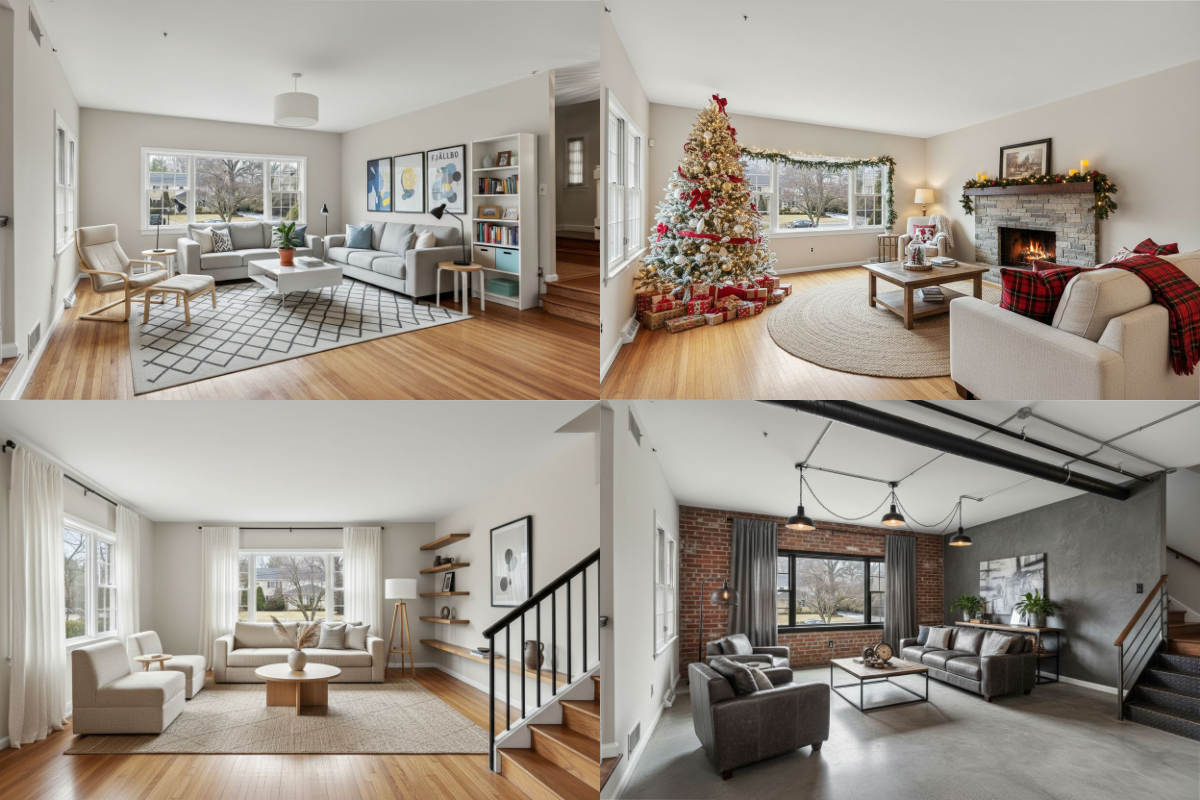 Relying on AI renovations will leave you with wildly uncontrollable results.
Human artists, guided by architectural understanding and photographic intuition, ensure that every virtual home remodeling visualization remains grounded in real-world feasibility and pinpoint perspective matching.
6. Fotober’s virtual renovation service: Precision meets visual storytelling
At Fotober, we do not view real estate media editing as simple photo manipulation; we view it as high-end visual production tailored to boost sales velocity.
[Fotober workflow]: Raw image analysis ➔ Architectural masking ➔ 3D spatial buildout ➔ Physical lighting match ➔ QC audit ➔ Delivery
|
Fotober core advantages |
Exact photogrammetry camera alignment |
|
Flawless dynamic range & light matching |
|
|
Complete design flexibility with diverse material libraries |
|
|
Quicker turnaround with AI-assisted workflow |
|
|
Ethical real estate marketing standards |
As a leading post-processing partner for real estate photographers, brokers, marketing agencies, and developers worldwide, Fotober's virtual renovation service brings deep domain expertise across multiple disciplines:
6.1. Photography-first lens mechanics
Our editing teams understand focal lengths, sensor dynamic range, depth-of-field falloff, and color science. We do not just slap 3D assets onto photos; we blend digital updates directly into your photo's specific camera DNA. We do not approximate perspective grids. We reconstruct camera positions using exact vanishing point calculations, preserving precise focal plane alignment across every image edit.
6.2. Architectural feasibility
Our artists understand floor plan structures. When we remove a wall, update a kitchen layout, or redesign an exterior elevation, the resulting visual is designed to be architecturally viable and buildable in the real world.
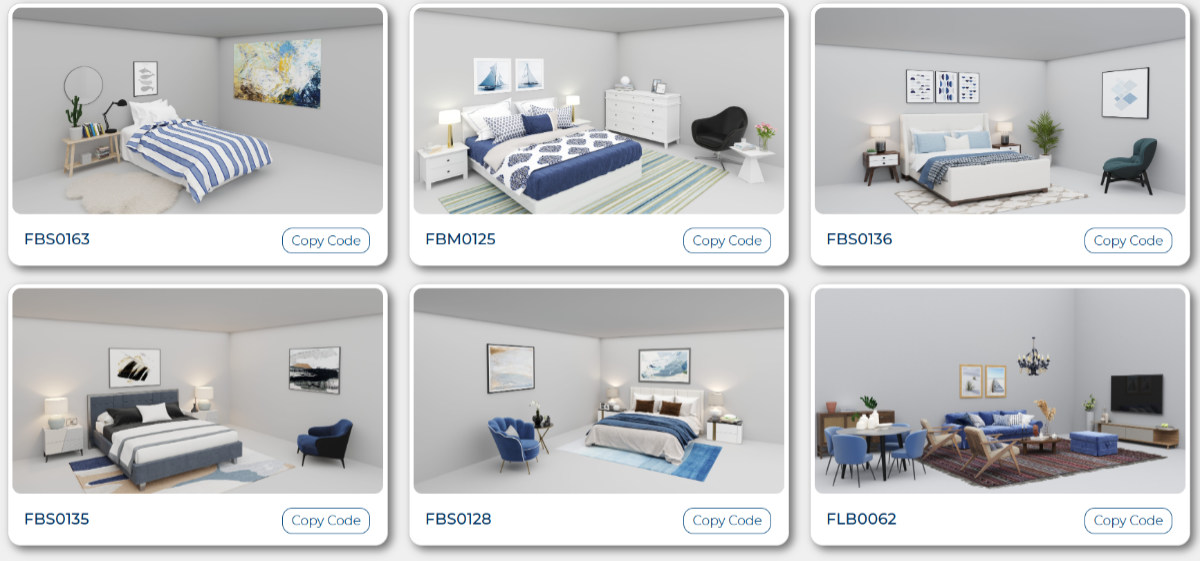 Fotober offers many options for customizing the space to buyers’ needs.
Want to change a dark craftsman home into an airy Scandinavian design? Or turn a mid-century kitchen into a contemporary luxury space? Fotober provides tailored architectural styles to match your target buyer demographic precisely.
6.3. High-definition photorealism
Using rich material libraries (PBR textures, authentic stone finishes, designer wood grains) alongside ray-tracing render technology, our output achieves total visual believability. We match real-world ambient, directional, and bounced light parameters. Added digital fixtures radiate light that accurately wraps around nearby furniture edges, floor planks, and ceiling borders.
6.4. Seamless workflow integration
Rapid turnaround: Standard project delivery in as fast as 24 to 48 hours.
Dedicated quality control: Multi-tier QA checks ensure correct lighting balance, crisp edges, clean background extractions, and proper structural perspectives before image release.
Scalable output: Built to handle high-volume photo batches during peak real estate listing seasons without sacrificing quality.
We craft visuals that elevate marketing power while clearly enabling transparent disclosure ("Virtually Renovated") to keep listings aligned with regional real estate compliance guidelines.
6.5. Conversion metrics & ROI: The financial case example of virtual renovation
Visual quality directly correlates with real estate transaction velocity and ultimate yield. Investing in a virtual renovation service is not a marketing expense; it is a revenue driver.
|
Market data performance |
|
|
Metric |
Average market impact |
|
Online listing CTR |
+40% to +140% increase |
To see the real-world impact of Fotober’s virtual home remodeling visualization, consider the case of a 950-square-foot cottage in Nashville, Tennessee. Built in the late 1950s, this small 2-bedroom home had great "bones" but was struggling to attract buyers due to its cramped, dark interior and an original bathroom featuring faded pink tiling. The listing had sat dormant for 45 days, with feedback consistently citing that the home felt "too small" and required "too much work."
Instead of recommending a price drop, the listing agent turned to Fotober. Our team performed a strategic virtual overhaul: we digitally removed a non-load-bearing partition to show an open-concept living area and replaced the dated bathroom fixtures with modern white subway tiles and a sleek floating vanity.
The results were instantaneous. Within 72 hours of updating the MLS photos with Fotober’s virtual renovation, the property saw a 140% increase in showing requests. The cottage received three competitive offers and ultimately sold for $15,000 above the asking price. The buyer noted that the virtual images and the construction time-lapse were the only reasons they decided to visit, as they finally understood how the small square footage could be optimized for modern living. This project proves that for small US homes, visualization is the key to unlocking maximum market value.
7. Looking ahead: Virtual renovation trends for 2026 and beyond
As computer graphics, real-time rendering, and display media evolve, virtual renovation is expanding beyond static imagery.
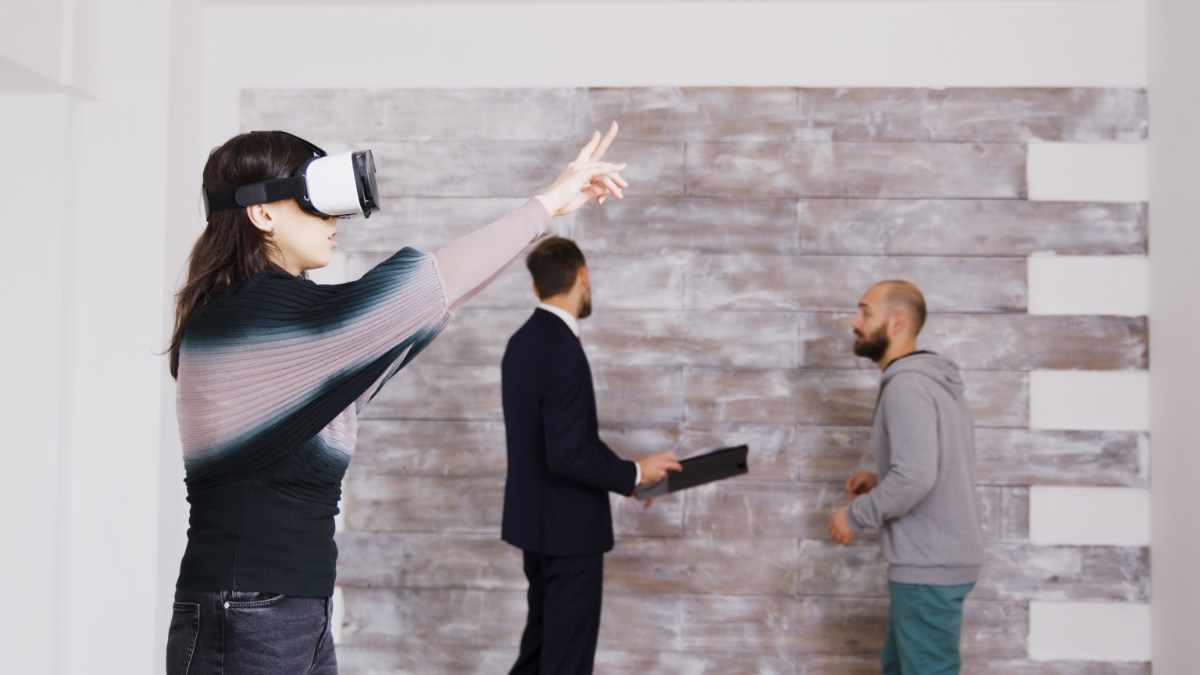 Digital renovation will get increasingly immersive to the point that you can even walk through a real-time simulation of the property.
Interactive WebXR & real-time renovations: Static images are evolving into real-time interactive 3D web environments. Buyers navigating a virtual tour will toggle instantly between "As-Is Current State," "Modern Minimalist Renovation," or "Luxury Contemporary Upgrade" with zero latency, running on real-time engines like Unreal Engine 5.
Hyper-personalized buyer portals: Listing platforms will automatically serve buyers custom virtual renovation styles based on search behavior and design preferences. A buyer searching for modern farmhouses will see listings virtually styled in that aesthetic, while another buyer sees contemporary urban finishes on the same property.
Integrated architectural quantity surveying: Future virtual home renovation engines will instantly match digital designs with local building supplier databases. As a buyer views a virtually renovated kitchen, the platform will generate real-time cost estimates for materials, appliances, and labor from local contractors simultaneously.
8. Frequently asked questions (FAQ) about virtual renovation service
Q1: What is the main difference between virtual staging and virtual renovation?
Virtual staging adds loose digital furniture and decor items (e.g., sofas, rugs, art) to an empty or uncluttered space without changing the physical structure. Virtual renovation alters structural and material components of the building, such as removing walls, changing flooring, replacing kitchen cabinets, modernizing bathrooms, or modifying exterior facades.
Q2: Is using virtual renovation photos legal on MLS listings?
Yes, provided that listings comply with regional MLS disclosure guidelines. Best practice (and standard regulatory requirement) requires clear labeling on images, such as "Virtually Renovated" or "Virtual Remodeling Concept", and including the unedited original photo alongside the virtually renovated visual in the listing presentation.
Q3: What source photo quality is required for a virtual renovation service?
High-resolution, well-exposed base photos yield the best results. Ideally, photos should be captured with wide-angle lenses (24mm–35mm), kept level with straight vertical lines, and shot under bright natural lighting. However, Fotober can also work with standard high-res real estate photography assets.
Q4: How long does a virtual renovation service take to complete?
Standard turnaround times at Fotober range between 24 and 48 hours depending on project complexity, the number of structural updates requested, and the batch volume submitted.
Q5: How do I request specific design materials or styles?
You can provide reference images, design mood boards, floor plans, or direct text descriptions detailing preferred flooring types, tile selections, cabinet finishes, wall paint colors, and fixture designs. Our team will tailor the visual output precisely to your requested specifications.
9. Conclusion
In today's fast-moving real estate market, static, outdated, or visually unappealing photos drain listing momentum and lower final sale values. Virtual renovation gives you the visual power to present a property's true architectural promise instantly.
Whether you are a real estate photographer looking to expand your client offerings, a listing agent selling a home that needs cosmetic work, or a property developer pre-selling upcoming releases, Fotober provides enterprise-grade realistic renovations that capture buyer interest and accelerate transactions.
Ready to unlock your listing's full potential? Visit Fotober today to submit your photos and explore our high-impact virtual renovation services.
Follow us on social media to gain more useful architectural advice, updated insights into the property market, and our latest projects.
- Facebook: fotobermedia.co
- YouTube: Fotober
- TikTok: @fotober
- Instagram: fotober_media.