




Understanding 3D Rendering Pricing for Real Estate: A 2026 Breakdown

Share:
Table of Contents
- 1. What 3D rendering services actually deliver
- 2. Top 5 critical factors influencing 3D rendering pricing in 2026
- 3. Common 3D rendering pricing models & service packages in 2026
- 4. Strategic choice: In-house vs. outsourcing
- 5. Case study: Price analysis of a real 2-story villa project
- 6. Why Fotober is your premier partner for 3D architectural rendering
- Conclusion
- Frequently asked questions (FAQ)
In 2026, 3D rendering has become the essential language of global real estate. As technologies continuously redefine realism, the visual standard has never been higher. Yet, a persistent "price paradox" remains for developers and architects: why does one studio quote $200 while another asks for $5,000? This guide deconstructs the current 3D rendering pricing landscape, examining the variables that influence the total cost of 3D rendering. Our goal is to empower you to optimize your investment and ensure maximum project ROI.
1. What 3D rendering services actually deliver
When analyzing 3D rendering pricing, many stakeholders mistakenly view it as a mere overhead cost. However, in the high-stakes 2026 real estate market, rendering services serve as a multi-functional business asset that delivers value far beyond aesthetics.
1.1. Accelerating the sales cycle
The most immediate impact of premium rendering is its ability to shorten the sales cycle. In an era where digital first impressions are everything, high-fidelity visuals like 3D floor plans and detailed renderings foster an immediate emotional connection. Buyers no longer have to struggle to interpret flat 2D blueprints; they can "experience" the textures, lighting, and spatial flow of a property before a single brick is laid. This clarity leads to faster decision-making and significantly higher pre-sale conversion rates.
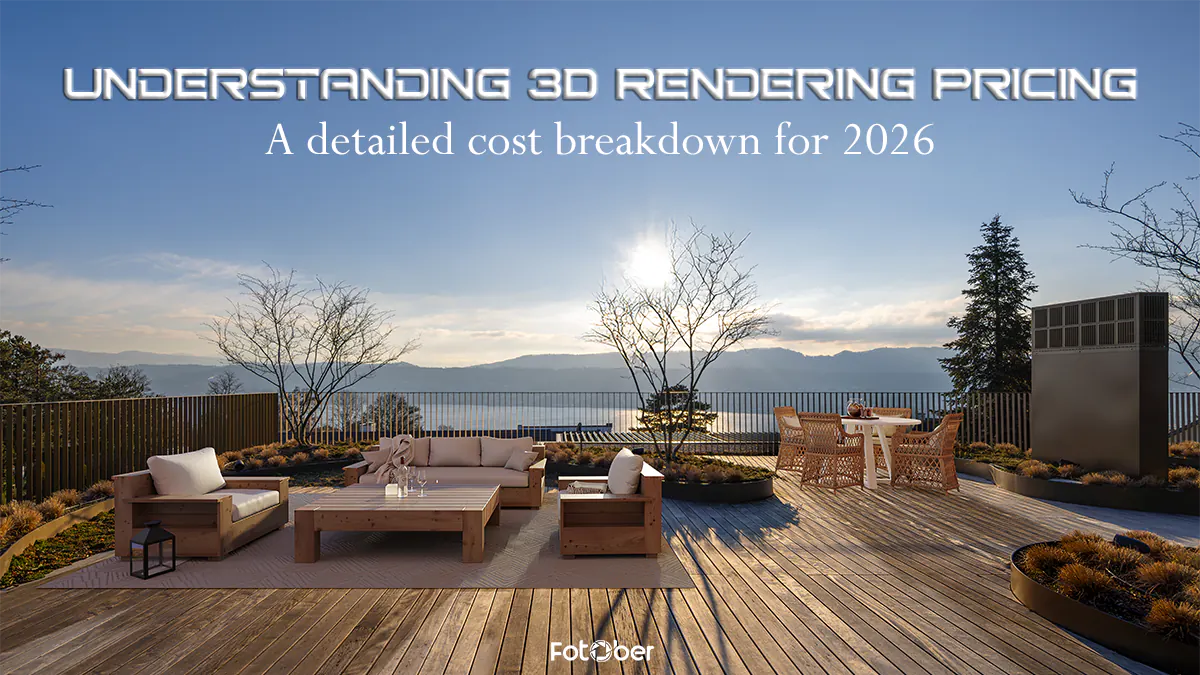
 3D renderings lay the foundation for a premium real estate firm that can attract buyers before the construction starts
1.2. Design validation and risk mitigation
Rendering acts as a critical design validation tool. By creating a digital twin of the project, architects and developers can identify aesthetic clashes or structural inconsistencies early in the process. Correcting a window placement or a material choice in a 3D model costs a fraction of the cost of 3D rendering itself, whereas making those same changes during construction could lead to catastrophic delays and budget overruns.
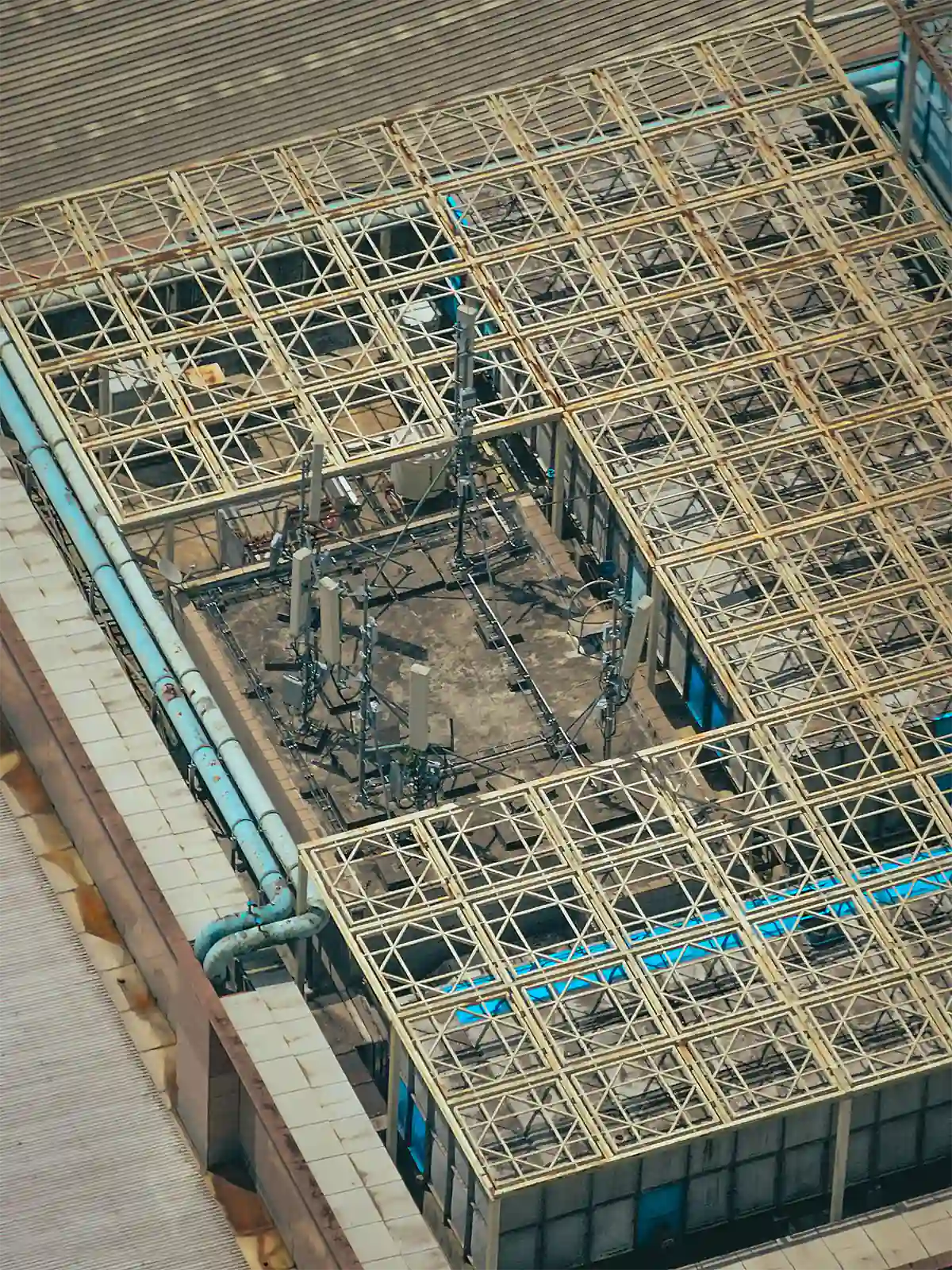 Revising and adjusting in the 3D render version are less costly than performing those tasks on a real-life construction
1.3. Multi-channel marketing versatility
A single high-quality render is the engine for a diverse marketing strategy. These assets are optimized for:
- Social media: High-engagement content for Instagram and TikTok.
- Immersive tech: Providing the foundation for VR tours and AR mobile apps.
- Investor relations: Securing capital by presenting a polished, professional vision of the project’s potential.
1.4. Establishing brand authority
In a competitive landscape, the quality of your visual presentation is a direct reflection of your brand authority. Utilizing cutting-edge 2026 rendering technology, incorporating hyper-realistic lighting and AI-driven environmental details signals to the market that your project is premium and forward-thinking. Ultimately, these services bridge the gap between an abstract concept and a closed deal.
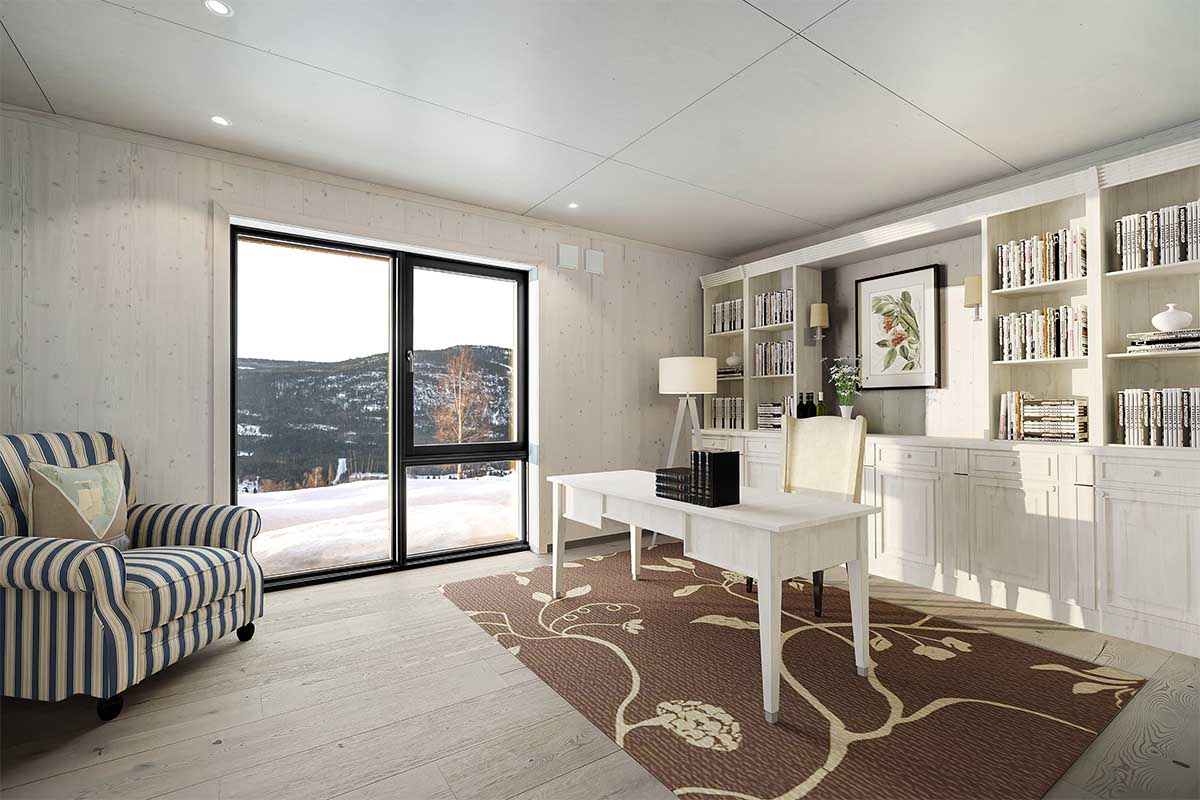 3D rendering products reflect your brand’s values and commitments.
2. Top 5 critical factors influencing 3D rendering pricing in 2026
Understanding the variables behind 3D rendering pricing is essential for any developer or architect looking to maximize their marketing budget. In 2026, pricing isn't a "one-size-fits-all" figure; it is a calculated response to several technical and strategic factors. Here are the five critical elements that dictate your final quote.
2.1. Project complexity and scope
The most obvious driver of architectural rendering cost is the sheer scale of the project. Visualizing a single-room interior requires significantly less labor than a high-rise luxury condominium or a sprawling master-planned community. A large-scale project involves complex site plans, extensive landscaping, and thousands of digital assets (trees, cars, people) that must be rendered in harmony. Naturally, the more geometry the artist has to manage, the higher the investment.
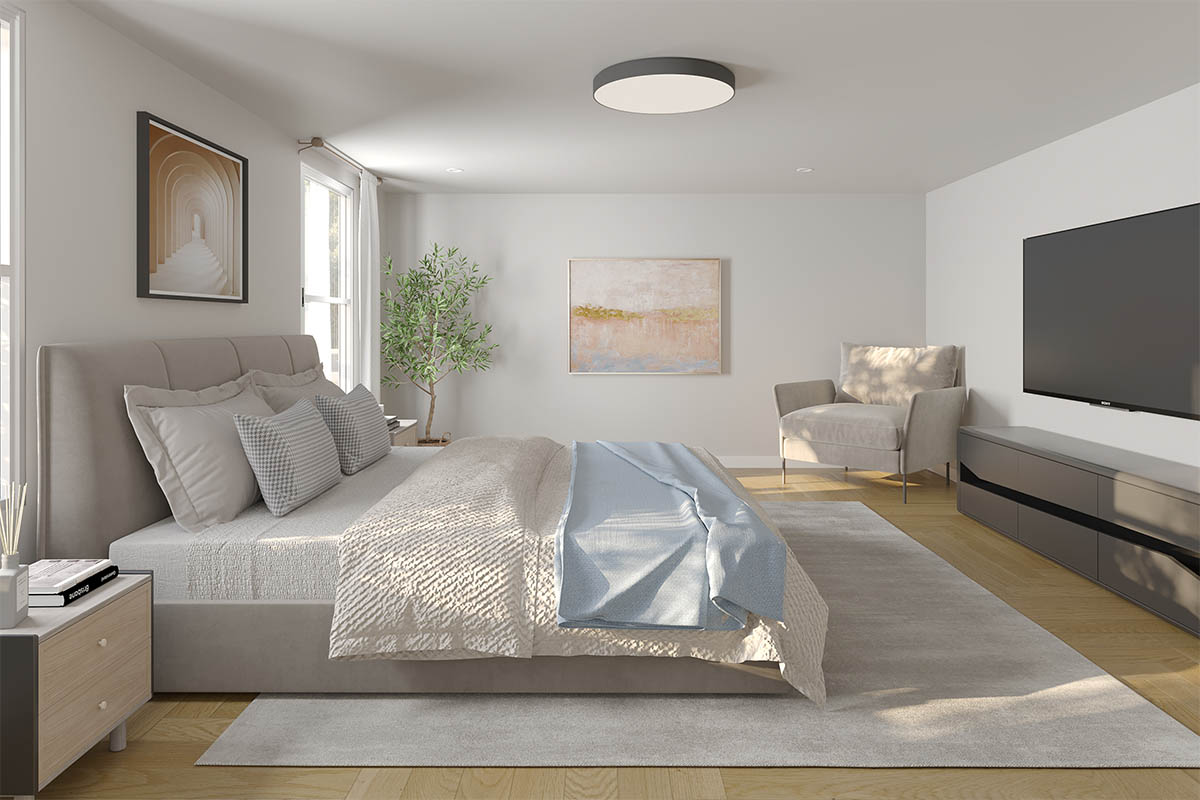 Interior renderings usually feature less complex structures and objects than exterior scenes, which lowers the cost for the project
2.2. Level of detail (LOD) and photorealism
In 2026, the gap between "good" and "hyper-realistic" is wider than ever. Achieving photorealism, where a viewer cannot distinguish a render from a photograph, requires advanced lighting setups (Global Illumination) and high-quality PBR (Physically Based Rendering) materials. If your project demands custom-modeled furniture or specific architectural textures that aren't in a standard library, the cost of 3D rendering will increase to reflect the specialized artistry required.
2.3. Number of views and deliverables
There is a distinct economy of scale when it comes to the 3D rendering price per image. The initial "set-up" phase, modeling the building and setting up the environment, is the most time-consuming. Once the 3D scene is built, rendering additional angles becomes significantly cheaper. Many agencies offer bundle packages in which the price per image drops as you increase the order volume.
2.4. Turnaround time and urgency
The "rush fee" remains a standard in the industry. High-end rendering requires massive computational power and dedicated artist hours. If a project that typically takes two weeks needs to be delivered in 48 hours, it necessitates "all-hands-on-deck" workflows and prioritized access to render farms. Expect to pay a premium of 25% to 50% for expedited delivery.
2.5. Quality of input data
"Garbage in, garbage out" applies perfectly to 3D rendering. If you provide clean, well-organized BIM (Building Information Modeling) or CAD files, the artist can skip the tedious manual modeling phase and jump straight to texturing. Conversely, working from rough sketches or disorganized blueprints requires the rendering team to build the model from scratch, which directly inflates the total project cost.
3. Common 3D rendering pricing models & service packages in 2026
As we move through 2026, the 3D rendering industry has shifted toward highly transparent, data-driven pricing structures. Whether you are a solo architect or a massive development firm, understanding these models is key to managing your cost of 3D rendering effectively while ensuring the highest ROI for your marketing assets.
3.1. The "per image" model: Precision and flexibility
The "Per Image" model remains the most popular choice for specific marketing needs. It allows clients to pay only for the exact views they require, be it a hero shot of a skyscraper or a detailed close-up of a kitchen island. In 2026, the 3D rendering price per image typically ranges from $200 to over $1000, depending on the complexity. This model is ideal for real estate agents who need high-impact visuals for a single listing without committing to a full-scale production.
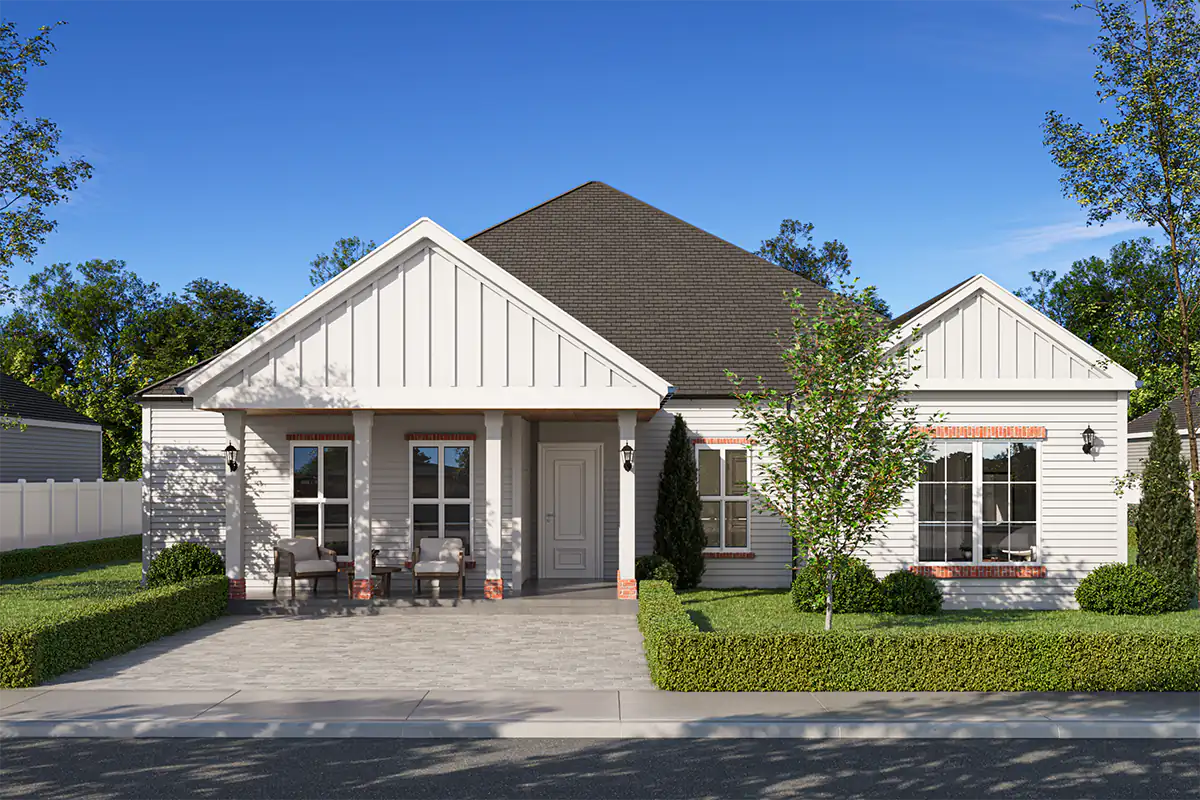 Agents with single listings can benefit from paying for each rendered image.
3.2. The "per project" model: Efficiency at scale
For developers overseeing large-scale residential or commercial builds, the "per project" model offers a holistic approach. Instead of billing for individual shots, agencies provide a flat fee for a "package" that might include several exterior angles, key interior rooms, and a site plan. This model significantly lowers the architectural rendering cost per unit of work, often saving clients 15-20% compared to a la carte pricing. It ensures visual consistency across the entire project, which is vital for high-end branding.
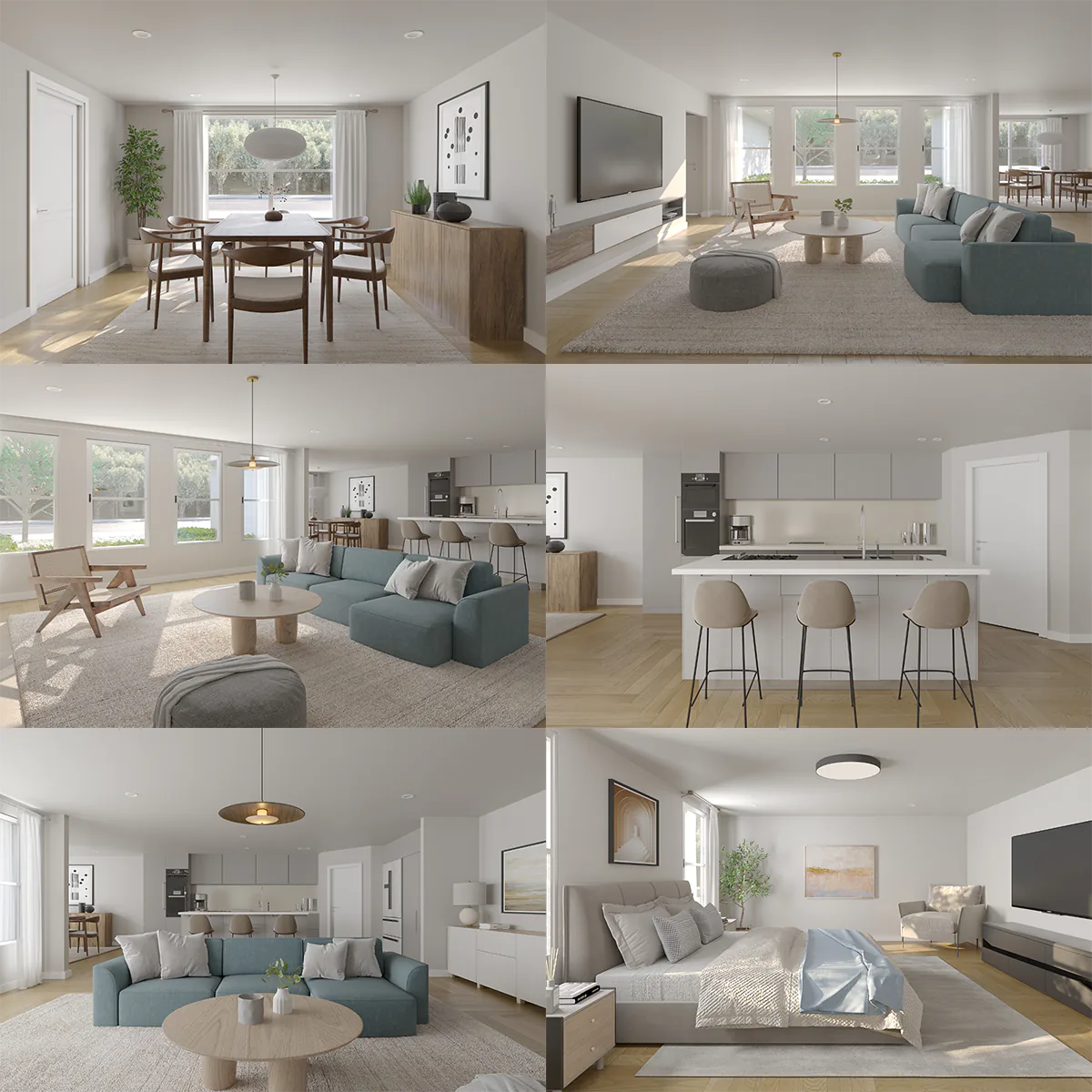 Comprehensive projects require more efficient budgeting
3.3. Subscription-based rendering: The 2026 innovation
A rising trend in 2026 is the subscription or "Retainer" model. This is designed for architectural firms and marketing agencies that require a steady stream of content throughout the year. By paying a monthly fee, firms secure a dedicated block of artist hours or a set number of renders each month. This eliminates the need for repeated quoting and invoicing, streamlining the workflow and ensuring priority turnaround times.
3.4. Service package comparison table
|
Service type |
Estimated price range (USD) |
Best for |
|
Standard render |
from $200 |
Residential/commercial developers |
|
Virtual staging |
from $20 |
Interior designers & stagers |
|
3D floor plans |
from $20 |
Real estate listings & brochures |
Ultimately, the best 3D rendering pricing strategy is one that aligns with your project’s specific stage, whether that is a quick conceptual sketch or a hyper-realistic campaign for a global launch.
4. Strategic choice: In-house vs. outsourcing
In the rapidly evolving landscape of 2026, the choice between building an in-house rendering team and outsourcing to specialized agencies is a critical strategic decision. For many architectural firms and real estate developers, this choice directly impacts their bottom line and operational agility.
4.1. The in-house reality: High fixed overheads
Maintaining an internal 3D department offers maximum control, but it comes with a staggering price tag. In 2026, a top-tier 3D artist’s salary is only the beginning. You must also account for "hidden costs":
- Hardware & infrastructure: High-end workstations capable of handling real-time engines like Unreal Engine 5 can cost upwards of $5,000 each, plus the maintenance of local render farms.
- Software licensing: Annual subscriptions for industry-standard tools (3ds Max, V-Ray, Corona, and Adobe Creative Cloud) add thousands to the yearly budget.
- Idle time: Perhaps the biggest drain on ROI is "idle time." You are paying full salaries and overhead even during slow months when there are no active projects to render.
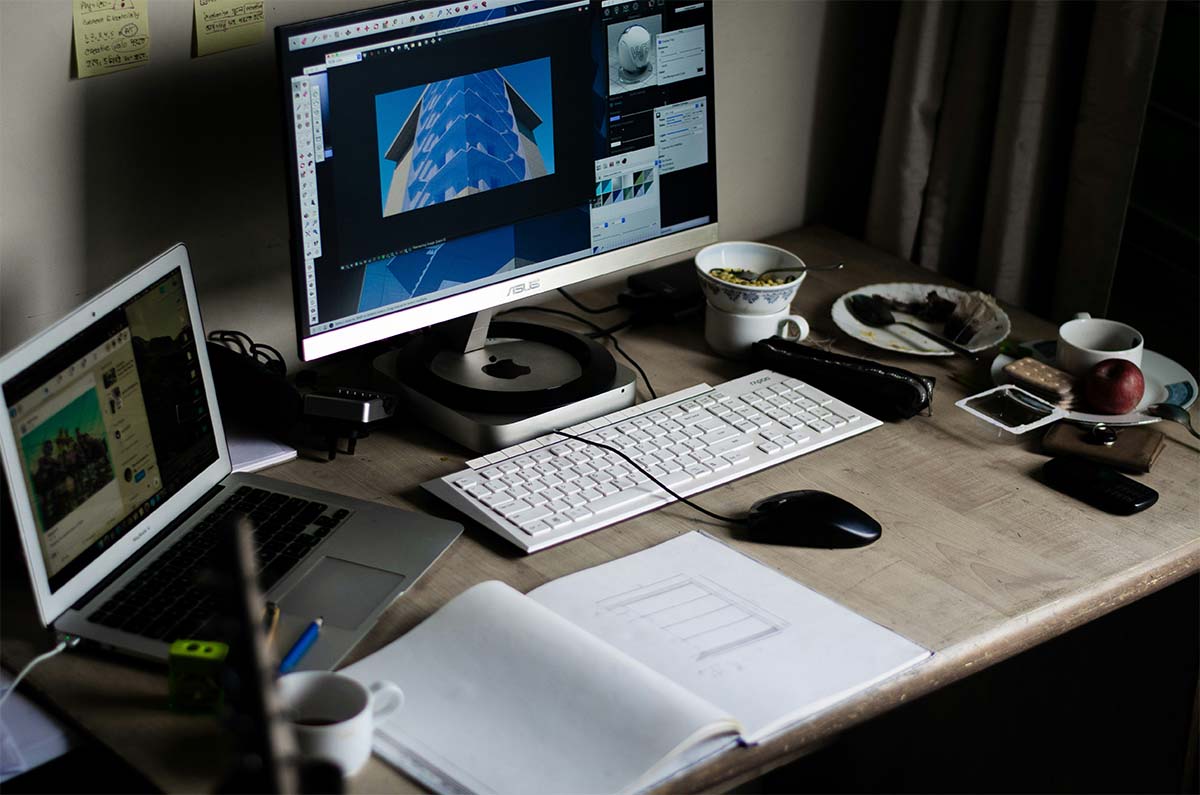 Investing in hardware, software and a fixed workforce for 3D rendering is a head-scratcher for many real estate agencies
4.2. The outsourcing advantage: Scalability and ROI
Outsourcing to a dedicated partner like Fotober transforms these substantial fixed costs into manageable variable expenses. When you outsource, you only pay for the 3D rendering price per image or per project. If you have no projects, you have zero costs.
Furthermore, outsourcing provides instant scalability. An in-house team of two artists can only handle so much; a global agency can mobilize a dozen experts to meet a sudden, high-stakes deadline for a massive architectural rendering cost estimate. You gain access to a diverse talent pool that is constantly updating their skills to stay competitive in the 2026 market, sparing you the time and expense of constant internal training.
Ultimately, for most mid-sized firms, outsourcing offers a significantly higher ROI, allowing them to focus on their core competencies: designing and selling, while leaving the technical heavy lifting to the specialists.
5. Case study: Price analysis of a real 2-story villa project
To bring these numbers to life, let’s analyze a typical project from a 2026 perspective. This case study illustrates how 3D rendering pricing is calculated by a renowned rendering agency in the US market for a high-end residential property, moving from the initial brief to the final marketing assets.
5.1. Project snapshot: The "lumina" modern villa
- Property type: 2-story contemporary villa (approx. 300 sqm).
- Features: Open-plan living, floor-to-ceiling glass walls, and a sustainable biophilic garden.
- Deliverables: 2 Exterior views (one "golden hour" hero shot and one nighttime lighting study) + 3 Interior views (great room, kitchen, and master suite).
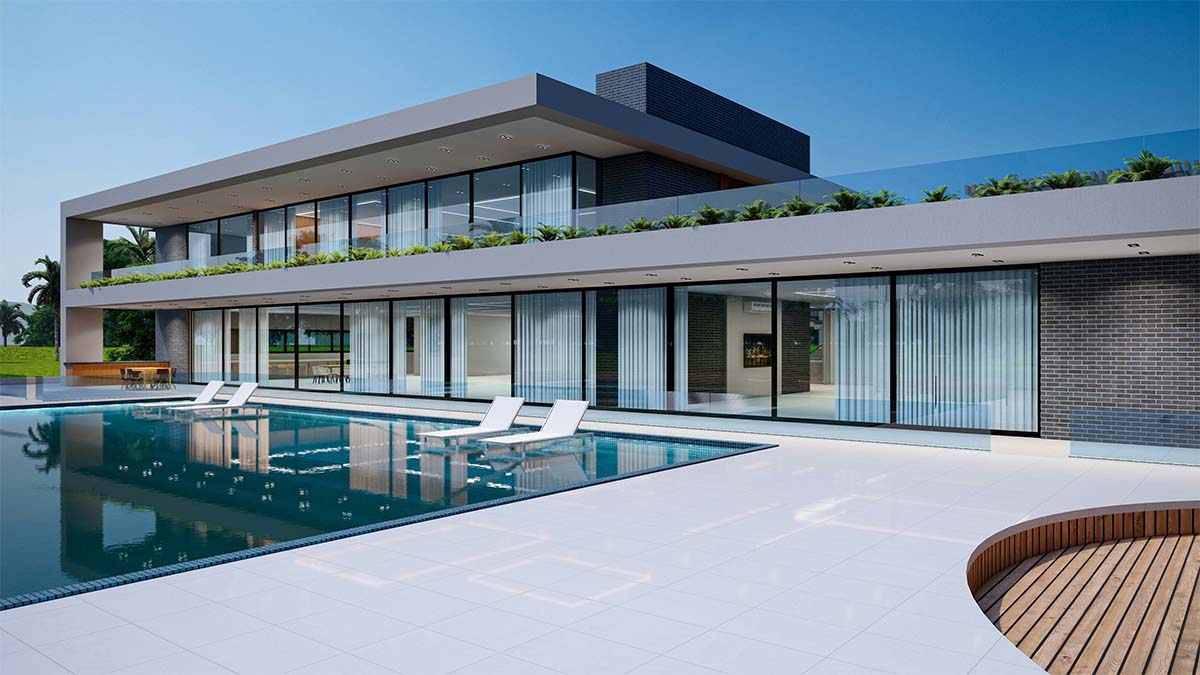 The 2-story modern villa
5.2. Step-by-step architectural rendering cost breakdown
1. 3D modeling phase (15-20% of cost): Using a provided Revit BIM file, the artist optimizes the geometry. Since the villa features complex "soft modernism" curves, this phase ensures the structure is technically perfect.
2. Texturing, lighting, and asset population (50% of cost): This is the most labor-intensive stage. It involves applying PBR (Physically Based Rendering) materials such as charcoal gray stone and warm wood, and setting up the 2026-standard Global Illumination. Custom digital assets like high-end furniture and specific local vegetation are added to create a "lived-in" feel.
3. Post-production and environment (30% of cost): Final color grading, adding atmospheric effects (like subtle morning mist), and compositing the villa into its actual geographic background to ensure the architectural rendering cost reflects real-world accuracy.
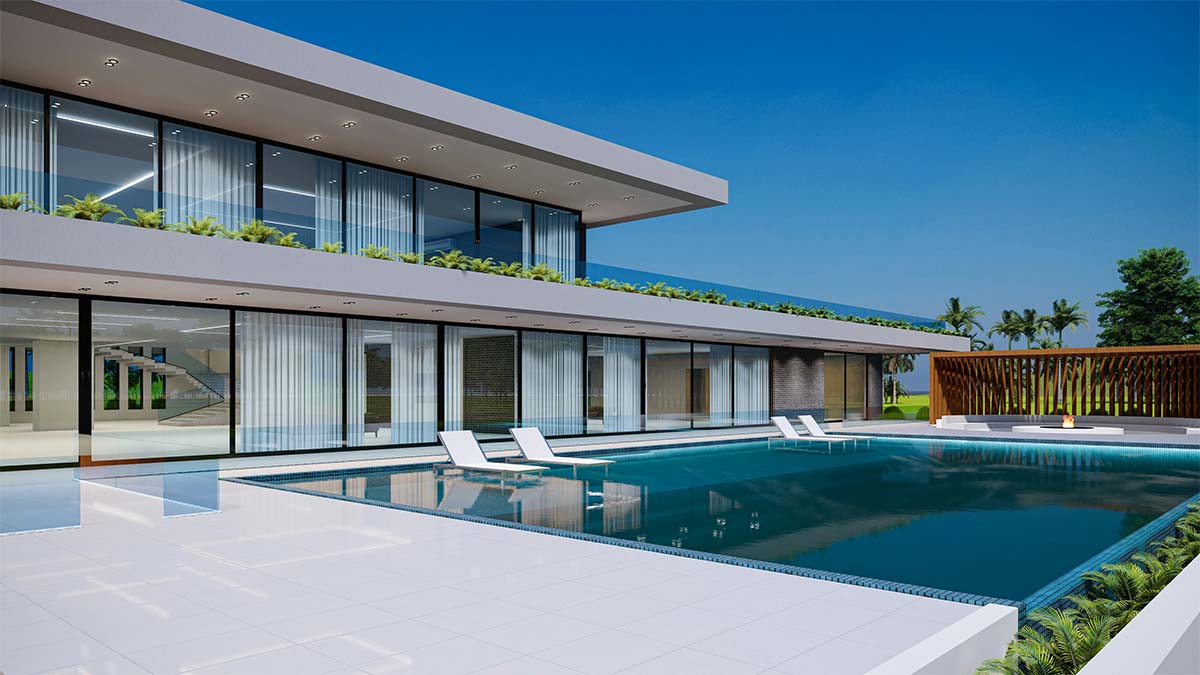 An exterior render of the villa
5.3. Final quote analysis
For this project, the total investment landed at approximately $2,100. While a freelancer might offer a lower price, a professional agency ensures that these five high-impact images are cohesive and sales-ready. When viewed against a property valuation of $1.5M+, this rendering cost represents less than 0.15% of the total value, making it an incredibly high-ROI investment for the developer’s marketing campaign.
6. Why Fotober is your premier partner for 3D architectural rendering
Choosing the right rendering partner is as critical as the architectural design itself. Fotober stands at the forefront of the 2026 market by blending artistic intuition with cutting-edge technology. This combination delivers visuals that don't just depict a space but also sell a lifestyle.
What sets Fotober apart in the competitive world of 3D rendering pricing is our commitment to "Hyper-Realistic Accuracy." Our team of 150+ expert artists utilizes advanced software like Chaos Corona and Unreal Engine 5 to ensure every texture, shadow, and light reflection is physically correct. This technical precision is balanced with a deep understanding of global real estate aesthetics, making our work resonate with buyers from the US to Europe and Australia.
 Fotober provides 3D rendering services tailored for real estate applications
Moreover, Fotober offers an unmatched operational advantage. With the capacity to handle high-volume demands and a reputation for fast, reliable turnaround times, we provide the scalability that growing firms need. Beyond static images, we offer a comprehensive ecosystem including 3D floor plans, virtual staging, and cinematic video editing. When you choose Fotober, you aren't just paying for a service; you are investing in a transparent, professional partnership that prioritizes your project’s ROI and brand authority.
Conclusion
In 2026, premium 3D rendering is no longer just a luxury, it is a strategic cornerstone for real estate success. As we’ve explored, managing 3D rendering pricing effectively is the first step toward maximizing your project’s market impact. By prioritizing photorealistic quality over the lowest bid, you guarantee a higher ROI, accelerated sales, and a sophisticated brand identity.
Ready to turn your blueprints into a breathtaking reality? Partner with Fotober to experience the perfect harmony of technical precision and artistic vision. Contact us today for a personalized quote and let’s bring your architectural dreams to life with unrivaled clarity.
Follow us on social media to get more useful tips and in-depth analysis on real estate 3D rendering and up-to-date details of our services!
- Facebook: fotobermedia.co
- YouTube: Fotober
- TikTok: @fotober
- Instagram: fotober_media.
Frequently asked questions (FAQ)
Why is the architectural rendering cost for exteriors usually higher than for interiors?
Exterior renders are generally more complex because they require extensive environmental modeling. Artists must simulate realistic lighting (HDRIs), complex landscaping, and detailed surrounding contexts like neighboring buildings and streets. While an interior focuses on a contained space, an exterior must harmonize the architecture with its entire ecosystem.
Can I get a discount for ordering multiple views?
Yes. Most professional agencies offer a tiered 3D rendering price per image. Once the initial 3D model is built, capturing additional angles is significantly more efficient. Ordering a bundle package can often reduce the per-image cost by 15% to 25% compared to a single standalone render.
How does AI impact rendering prices in 2026?
AI has streamlined the early stages of the workflow, such as denoising and basic texture generation, which helps keep prices stable despite rising labor costs. However, hyper-realistic, high-stakes marketing assets still require the specialized "human touch" of an artist to ensure brand consistency and structural accuracy.
What do I need to provide for an accurate quote?
To receive a precise estimate, you should provide CAD/BIM files, material schedules, and reference images for lighting and mood. Clear input data minimizes the modeling hours required, directly lowering your total project investment.
Related posts

Modern Luxe Interior Design: Elements, Style Guide and How to Stage It
October 10, 2026

Minimalist Interior Design: Characteristics, Style Guide, and Staging
October 8, 2026

Coastal Interior Design: Style Definition & Staging Guide
September 30, 2026

Contemporary Interior Design: Key Elements and How to Stage This Style
September 30, 2026
