




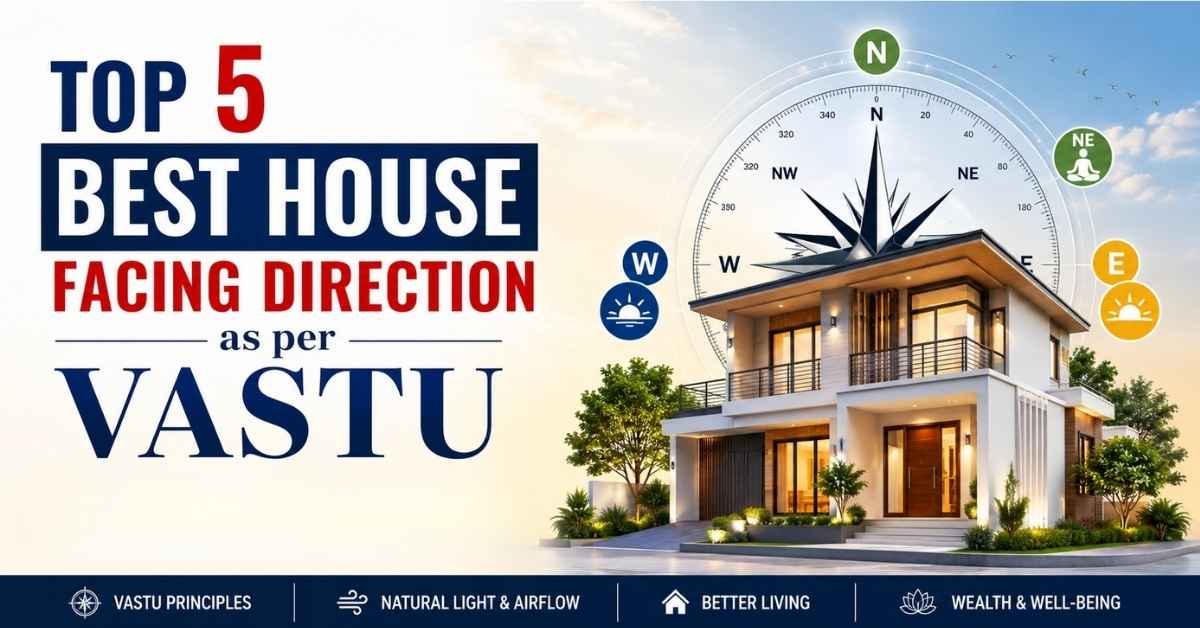
Top 5 Best House Facing Direction as per Vastu

Share:
Table of Contents
Best house facing direction as per Vastu remains one of the biggest considerations for homeowners because house orientation directly affects natural light, airflow, indoor temperature, and overall living comfort. In modern residential architecture, Vastu is no longer viewed only as a traditional belief system. Many of its principles align closely with environmental design, especially when it comes to daylight exposure, ventilation, and spatial balance.
However, many buyers misunderstand Vastu completely. A common assumption is that only north or east-facing homes are “good,” while west and south-facing homes should always be avoided. In reality, experienced architects evaluate far more than compass orientation alone. Entrance placement, room layout, ventilation strategy, sunlight exposure, and surrounding site conditions all influence how comfortable a property actually feels in daily life.
Today, developers increasingly combine traditional Vastu concepts with climate-responsive architecture to create homes that are not only symbolically favorable but also practical, efficient, and visually balanced.
1. How to identify your house-facing direction correctly
Before evaluating the best house facing direction as per Vastu, homeowners first need to understand how house orientation is actually determined in professional architectural practice. Many buyers incorrectly identify a home’s direction based on balcony views, road position, or where sunlight enters the living room, which often leads to completely inaccurate Vastu assumptions.
1.1. What “house-facing direction” actually means
In Vastu Shastra, the facing direction of a house is determined by standing inside the main entrance and looking outward. If the compass points north while facing outside, the house is officially classified as north-facing.

The facing direction of a house
This system is widely used by architects, developers, and Vastu consultants because it creates a standardized method for evaluating residential orientation. In apartments, confusion becomes more common because balconies, windows, and open spaces may face different directions. A flat may have a west-facing balcony but still be considered east-facing if the main entrance aligns toward the east.
Another important distinction is the difference between plot orientation and built-house orientation. A north-facing plot can still contain a south-facing house depending on how the structure is positioned within the site. Because of this, professionals rarely evaluate direction using visual assumptions alone.
1.2. How to check your house direction accurately
The simplest way to identify direction is by using a smartphone compass or magnetic compass. Stand directly at the main entrance, face outward, and record the compass reading.
However, accuracy depends heavily on where the measurement is taken. Elevators, metal gates, electrical systems, and reinforced concrete structures can interfere with compass readings, especially in apartment buildings. Professional architects often double-check measurements from multiple positions and combine compass readings with environmental analysis tools.
Modern residential design increasingly uses sun-path studies and airflow simulations to understand how orientation affects:
- Heat gain
- Daylight distribution
- Ventilation quality
- Indoor comfort
This becomes especially important in luxury residential projects where environmental performance matters more than symbolic direction alone.
1.3. Why direction alone is not enough in Vastu
One of the biggest misconceptions surrounding the best house facing direction as per Vastu is the belief that direction alone determines whether a house will feel comfortable or successful.
In practice, orientation is only one part of a much larger architectural equation. A poorly ventilated east-facing house may still feel dark and uncomfortable, while a carefully planned west-facing home with proper airflow and shading can feel significantly more livable.
Modern architects focus heavily on:
- Cross ventilation
- Window positioning
- Daylight quality
- Ceiling height
- Circulation flow
- Thermal comfort
- Spatial openness
because these elements directly affect daily living comfort. This is why contemporary Vastu planning increasingly overlaps with environmental architecture rather than superstition alone.
2. Factors that make a house direction good or bad in Vastu
The effectiveness of the best house facing direction as per Vastu depends heavily on how the property responds to environmental conditions such as sunlight, airflow, heat exposure, and spatial circulation.
A house may technically follow a favorable Vastu direction but still perform poorly if ventilation is weak or the layout blocks natural light. On the other hand, a carefully designed west or south-facing home can feel significantly more balanced than a poorly planned north-facing property.
2.1. Importance of natural sunlight and airflow
East-facing homes are often preferred because they receive soft morning sunlight that creates brighter and more refreshing interiors during the early part of the day. North-facing homes, meanwhile, provide more stable daylight conditions with reduced solar heat gain, especially in warmer climates.
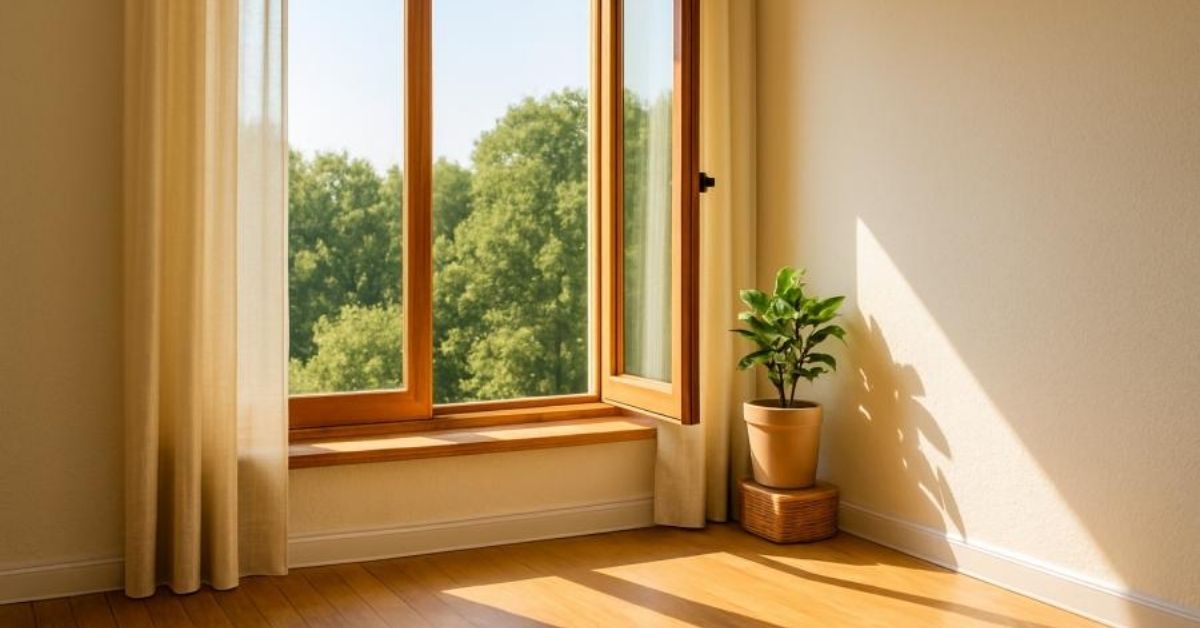
Natural sunlight
Architects often prefer north-facing glazing because it creates:
- Controlled daylight
- Reduced glare
- Better thermal stability
- More consistent brightness
This balance between lighting and temperature control is one reason north-facing homes are frequently associated with the best house. Airflow is equally important. Homes designed with proper cross ventilation feel cooler and healthier regardless of orientation, while poor airflow can make even a favorable direction feel uncomfortable.
2.2. Role of entrance placement in Vastu
The main entrance strongly affects how people experience a house spatially. In many cases, entrance quality influences comfort more than orientation itself.
A well-designed entrance improves:
- Circulation flow
- Natural lighting
- Visual openness
- Ventilation movement
while poor entrances create cramped and uncomfortable interiors regardless of direction. Modern architects frequently use open foyers, skylights, glass partitions, and double-height spaces to improve entrance experience and create stronger spatial balance.
2.3. Impact of room layout and space planning
Even the best house facing direction as per Vastu cannot compensate for poor space planning. Layout quality directly affects comfort, privacy, movement, and environmental performance.
For example:
- Southwest bedrooms often feel quieter and more thermally stable
- Southeast kitchens isolate cooking heat more effectively
- Open living areas improve visual spaciousness and airflow
In compact urban apartments, efficient circulation and daylight distribution often matter more than orientation alone. A well-designed 900-square-foot apartment can feel significantly larger than a poorly planned 1,200-square-foot unit.
2.4. Modern architecture vs traditional Vastu rules
Urban housing has changed dramatically over the past two decades. High-rise apartments, narrow plots, and dense residential developments often make traditional Vastu rules difficult to apply exactly as originally intended.
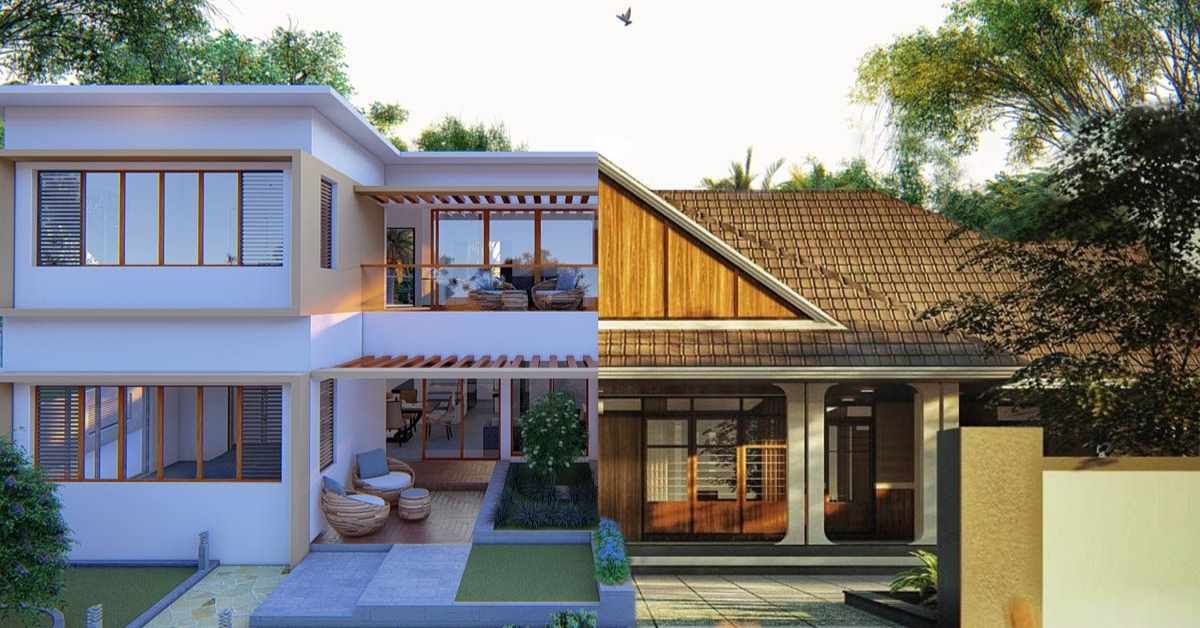
Urban housing vs traditional Vastu
As a result, modern architects increasingly adapt Vastu principles instead of following rigid directional formulas. Today’s buyers prioritize:
- Functional layouts
- Energy efficiency
- Natural ventilation
- Flexible living spaces
- Visual openness
while still wanting symbolic alignment with the best house facing direction.
3. Top 5 best house facing direction as per vastu
When homeowners search for the best house facing direction as per Vastu, they are usually looking for homes that feel comfortable, environmentally balanced, and practical in long-term daily living. In modern residential architecture, direction affects far more than symbolic energy flow. It influences daylight quality, heat buildup, ventilation performance, and overall spatial comfort.
Experienced architects rarely describe one orientation as universally perfect because every direction behaves differently depending on climate, site conditions, surrounding buildings, and layout quality. The most successful homes are the ones where orientation, architecture, and environmental response work together naturally.
3.1. Northeast-facing house
Northeast-facing homes are widely considered the most favorable orientation in Vastu because they combine balanced daylight conditions with softer environmental exposure. These homes usually receive gentle morning sunlight while avoiding the harshest afternoon heat, allowing interiors to remain naturally bright without becoming excessively warm.
Northeast-facing homes
This orientation performs especially well in dense urban developments where access to natural daylight is limited. Northeast-facing apartments often feel visually larger and more breathable because the lighting quality remains softer and more evenly distributed throughout the day.
Architects also prefer northeast-facing layouts because they work extremely well with open-plan contemporary interiors. Living rooms, balconies, and family spaces can be positioned toward the northeast to maximize daylight penetration while maintaining thermal comfort.
In premium residential projects, northeast-facing homes are frequently marketed as part of the best house facing direction as per Vastu because they combine:
- Comfortable daylight
- Better airflow potential
- Reduced glare
- Strong Vastu appeal
- Better long-term livability
This combination of symbolic and environmental value explains why northeast-facing homes remain highly desirable in both luxury villas and urban apartment developments.
3.2. North-facing house
North-facing homes are strongly associated with prosperity and career growth in Vastu planning, but their popularity also comes from practical environmental performance.
Unlike west-facing properties that receive strong afternoon heat, north-facing homes benefit from softer and more stable daylight throughout the day. This creates interiors that remain naturally bright without excessive solar heat gain, improving both thermal comfort and energy efficiency.
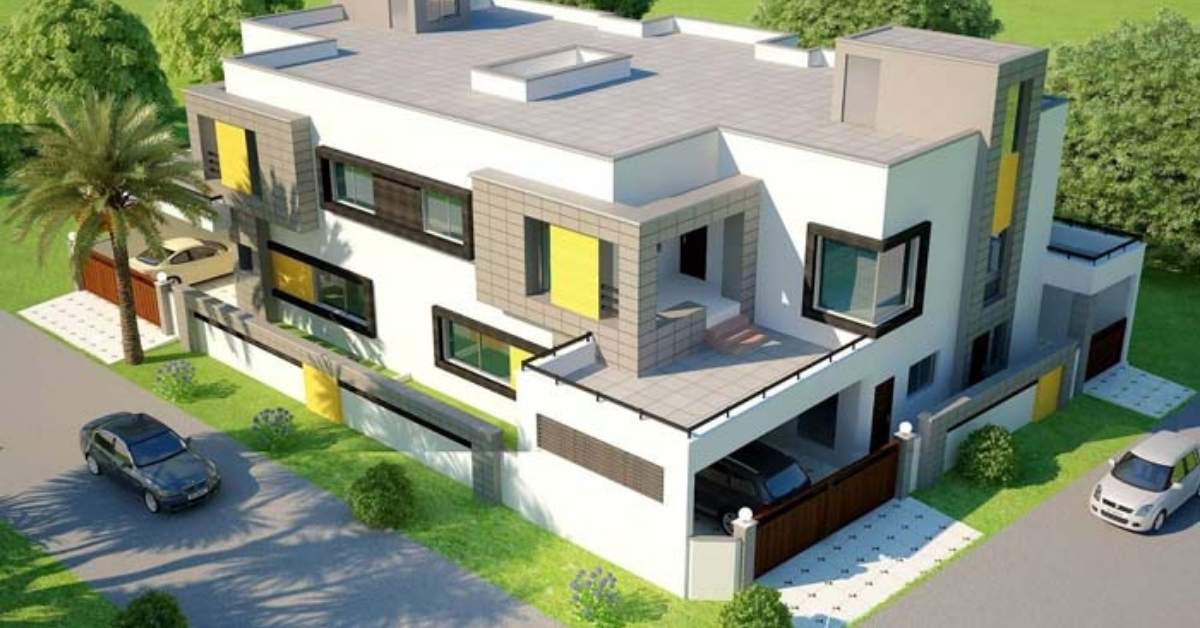
North-facing homes
Architects often prefer north-facing layouts because they allow:
- Larger windows
- Better daylight control
- Reduced glare
- More flexible open-plan interiors
This environmental stability is one reason north-facing homes are frequently categorized as part of the best house facing direction as per Vastu for long-term residential comfort.
In luxury developments, north-facing units are often positioned as premium inventory because buyers associate them with better daylight quality, stronger resale demand, and more comfortable living conditions.
3.3. East-facing house
East-facing homes remain one of the most preferred choices for families because they receive soft morning sunlight that creates brighter and more active interiors during the early part of the day.
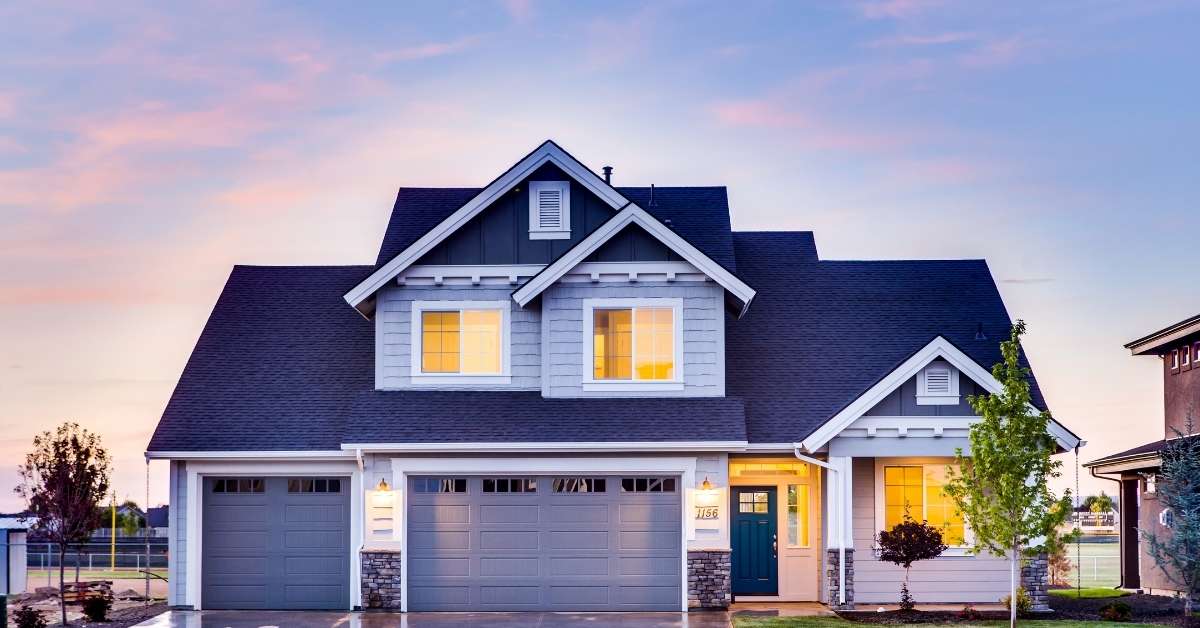
East-facing homes
In both Vastu planning and environmental architecture, east-facing properties are valued because they align naturally with daily routines. Bedrooms, kitchens, and living spaces positioned toward the east often feel more welcoming and visually open during morning hours.
East-facing layouts work particularly well when combined with:
- Open balconies
- Large windows
- Landscaped entrances
- Semi-open living areas
These features maximize daylight penetration while helping interiors feel more connected to outdoor space.
Architects also appreciate east-facing homes because they balance natural lighting with manageable thermal performance. Unlike west-facing properties, east-facing homes usually experience less aggressive afternoon overheating.
3.4. West-facing house
West-facing homes are often misunderstood because many homeowners assume they automatically create poor living conditions. In reality, modern architectural design can dramatically improve west-facing performance.
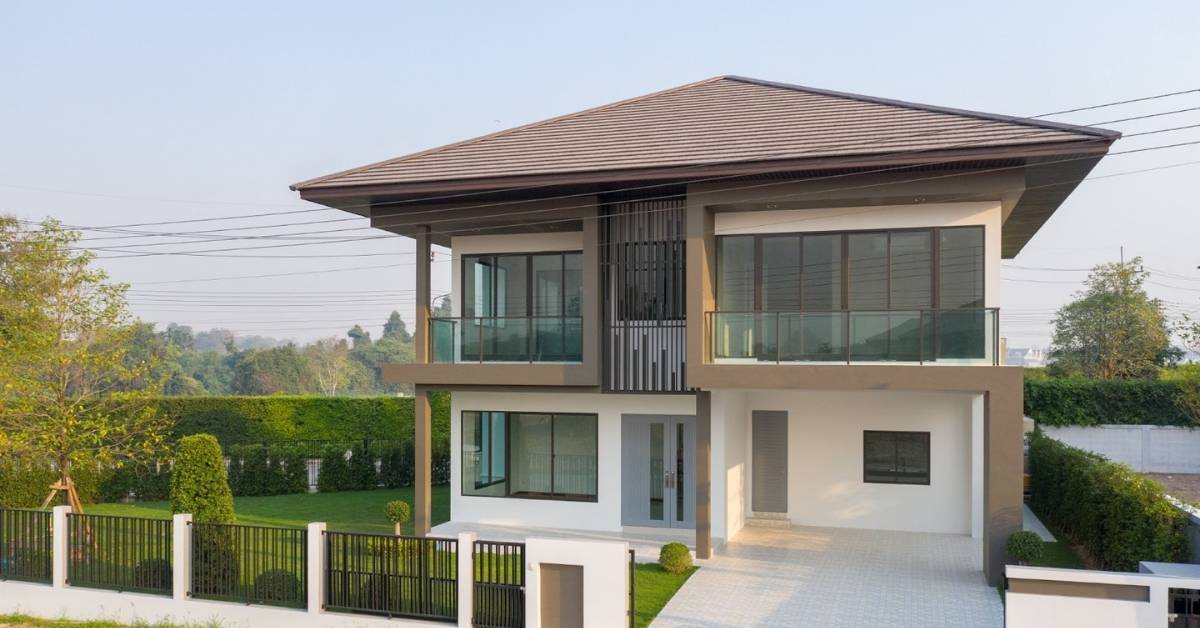
West-facing homes
The primary challenge with west-facing homes is late-afternoon solar heat gain. However, architects now use:
- Deep roof overhangs
- Vertical shading systems
- Double-glazed windows
- Ventilated facades
- Landscape buffers
to reduce overheating while preserving natural light.
Interestingly, west-facing homes can also create dramatic evening interiors because sunset lighting produces warmer tones and richer visual atmosphere later in the day. In dense urban environments, surrounding buildings often naturally reduce harsh sunlight exposure, allowing west-facing homes to perform much better than expected.
3.5. South-facing house
South-facing homes remain one of the most controversial topics in Vastu discussions because many homeowners believe they are automatically unfavorable. In reality, south-facing homes can perform extremely well when climate response and architectural planning are handled properly.
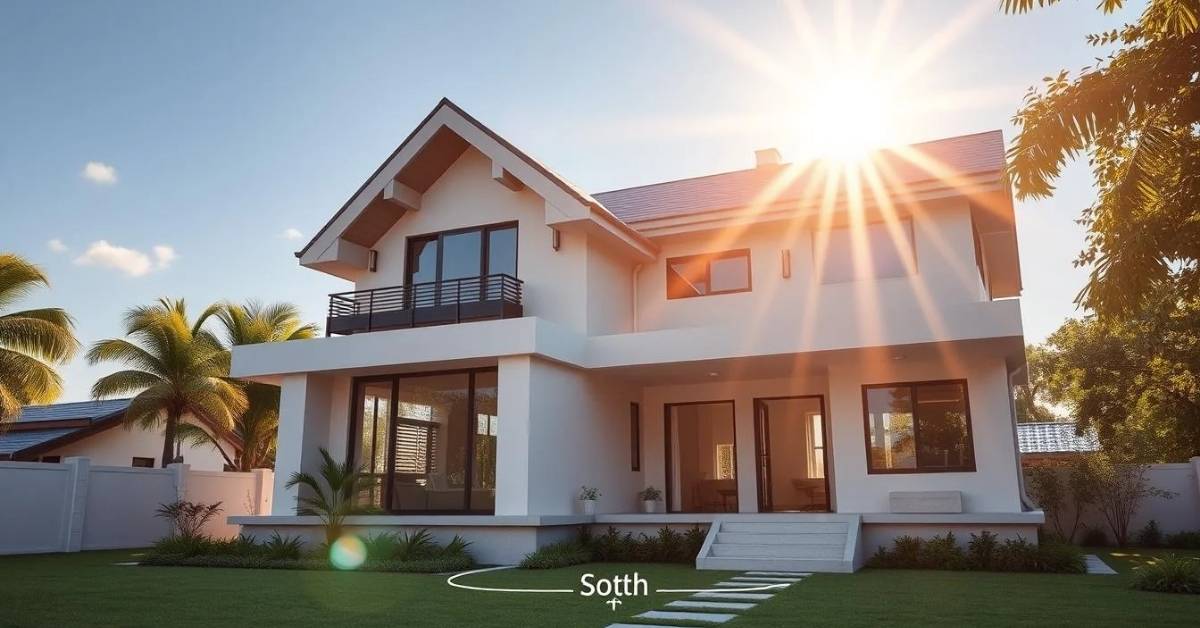
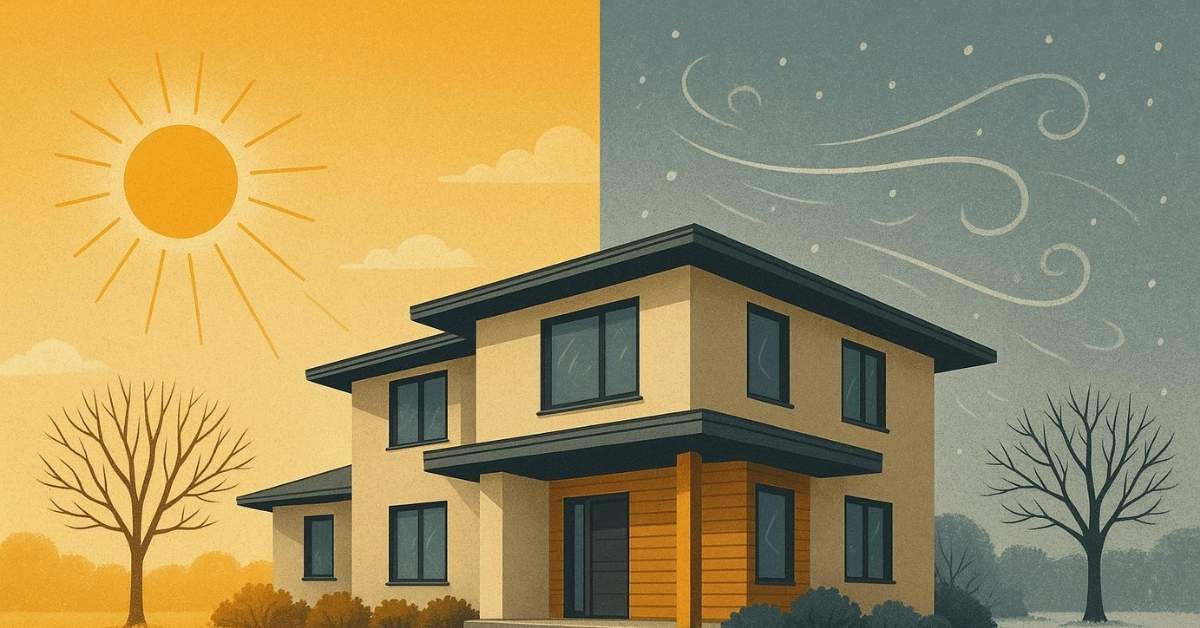
South-facing homes
In colder regions, south-facing properties often improve winter thermal comfort because they receive stronger sunlight exposure during the day. Many sustainable residential projects intentionally maximize southern exposure to improve passive heating efficiency.
Architects typically manage southern heat gain using:
- Deep balconies
- Roof shading systems
- Controlled glazing placement
- Insulated walls
- Ventilated exterior facades
These strategies help preserve natural daylight while reducing overheating. This is why experienced architects increasingly evaluate residential performance through daylight analysis, thermal simulation, and airflow modeling rather than relying purely on directional assumptions. A carefully designed south-facing home can feel significantly more comfortable than a poorly planned northeast-facing property.
4. Common mistakes people make when choosing house direction
One of the biggest mistakes buyers make when evaluating the best house facing direction as per Vastu is focusing entirely on compass orientation while ignoring the actual architectural quality of the home. In real residential planning, direction alone does not determine whether a property will feel comfortable, functional, or environmentally balanced. A house may technically follow a highly preferred Vastu direction, yet still perform poorly because of weak ventilation, inefficient circulation, poor daylight access, or badly organized interior spaces.
This issue is especially common in modern apartment developments where buyers prioritize direction labels without fully analyzing how the unit actually functions. For example, a north-facing apartment may still feel dark if neighboring buildings block natural light, while an east-facing home may become uncomfortable if airflow is weak and heat accumulates in enclosed areas. Experienced architects therefore evaluate how orientation interacts with layout, window placement, ceiling height, and environmental conditions rather than relying on direction alone. Another major mistake is ignoring climate and regional environmental behavior. Many homeowners assume the same Vastu direction performs equally well in every city, but this is rarely true in practice. A west-facing home in a cooler or densely shaded environment may feel perfectly comfortable, while the same orientation in a tropical climate with direct afternoon exposure may experience severe heat buildup if shading strategies are poorly designed.
Modern residential architecture increasingly relies on climate-responsive planning instead of rigid directional assumptions. Architects now analyze:
- Seasonal sunlight angles
- Wind direction
- Humidity levels
- Urban shading conditions
- Heat gain patterns
- Ventilation flow
before determining how a property should be designed. This environmental approach explains why the best house facing direction cannot be treated as a universal formula applicable to every location.
Many homeowners also continue following outdated Vastu myths without understanding how modern building technology has transformed residential performance. Statements such as “all south-facing homes are bad” or “west-facing homes should always be avoided” ignore the impact of contemporary architectural systems.
Today’s homes use:
- Double-glazed insulated windows
- Passive shading systems
- Thermal insulation materials
- Ventilated facades
- Smart airflow planning
- Solar heat-control glazing
to dramatically improve comfort regardless of orientation.
For example, a professionally designed west-facing villa with insulated glazing, landscape shading, and strong cross ventilation may feel significantly cooler and brighter than a poorly planned northeast-facing house with blocked airflow and inadequate daylight penetration. This is why experienced architects and developers increasingly combine Vastu principles with environmental design and building science rather than treating direction as an isolated rule. The most successful homes are not simply the ones with a “good” compass orientation, but the ones where layout, climate response, ventilation, and architectural planning work together to create long-term living comfort.
5. Why visualization helps when planning a Vastu-friendly home
Modern homeowners increasingly rely on visualization technology because traditional floor plans rarely communicate how a house will actually feel after construction.
3D floor plans and architectural rendering help buyers understand:
- Daylight behavior
- Airflow movement
- Furniture circulation
- Spatial openness
- Environmental comfort
before construction begins.
This becomes especially valuable when evaluating the house, because orientation affects real environmental performance rather than symbolic diagrams alone. Today, many architects and developers use services such as Fotober 3D Floor Plan Services and Fotober Rendering Services to analyze layout quality, daylight exposure, and airflow more accurately before finalizing residential projects.
Conclusion
Finding the right home direction involves far more than simply checking a compass. While northeast, north, and east-facing homes remain highly desirable, west and south-facing homes can also perform exceptionally well when designed thoughtfully.
Ultimately, the best house facing direction as per Vastu depends not only on orientation but also on how the entire home responds to light, airflow, circulation, climate, and daily living patterns. A truly comfortable home is created through balanced architectural planning rather than direction alone.
- Facebook: fotobermedia.co
- YouTube Channel: Fotober
- TikTok Channel: @fotober
- Instagram: fotober_media
- Email support: [email protected]
- Hotline: +84 942 110 297
Related posts

Modern Luxe Interior Design: Elements, Style Guide and How to Stage It
October 10, 2026

Minimalist Interior Design: Characteristics, Style Guide, and Staging
October 8, 2026

Coastal Interior Design: Style Definition & Staging Guide
September 30, 2026

Contemporary Interior Design: Key Elements and How to Stage This Style
September 30, 2026
