




How to Virtually Stage a Living Room: Staged Photos Bring Real Results

Share:
Table of Contents
- 1. Why the living room is the make-or-break space in real estate marketing
- 2. Step-by-step guide: How to virtually stage a living room
- 3. Popular living room furniture styles for virtual staging
- 4. Creative virtual staging living room ideas to inspire buyers
- 5. Pro living room virtual staging tips for real estate agents
- 6. Supercharge your listings with Fotober’s premium virtual staging services
- 7. Conclusion
When potential buyers browse online listings, the living room is often the very first space they evaluate. Consequently, a vacant, cold, or poorly furnished room can hinder a property’s market potential. Learning how to virtually stage a living room offers a high-impact, cost-effective alternative to expensive physical staging. By leveraging advanced digital composition, you can seamlessly transform empty spaces into warm, aspirational environments that capture attention instantly.
In this article, we will walk you through the exact process of bringing your property photos to life. You will discover practical living room virtual staging tips, explore the most popular living room furniture styles, and gain creative virtual staging living room ideas to maximize your listing's online appeal and attract high-value buyers.
1. Why the living room is the make-or-break space in real estate marketing
In real estate, first impressions are everything, and the living room is the primary anchor for buyer psychology. This space is where families gather, relax, and entertain; therefore, it carries the heaviest emotional weight during a home search. An empty living room often feels cold and structurally confusing, leaving online browsers struggling to gauge scale or imagine their own lives within the walls. By contrast, a thoughtfully designed living room triggers an immediate aspirational connection.
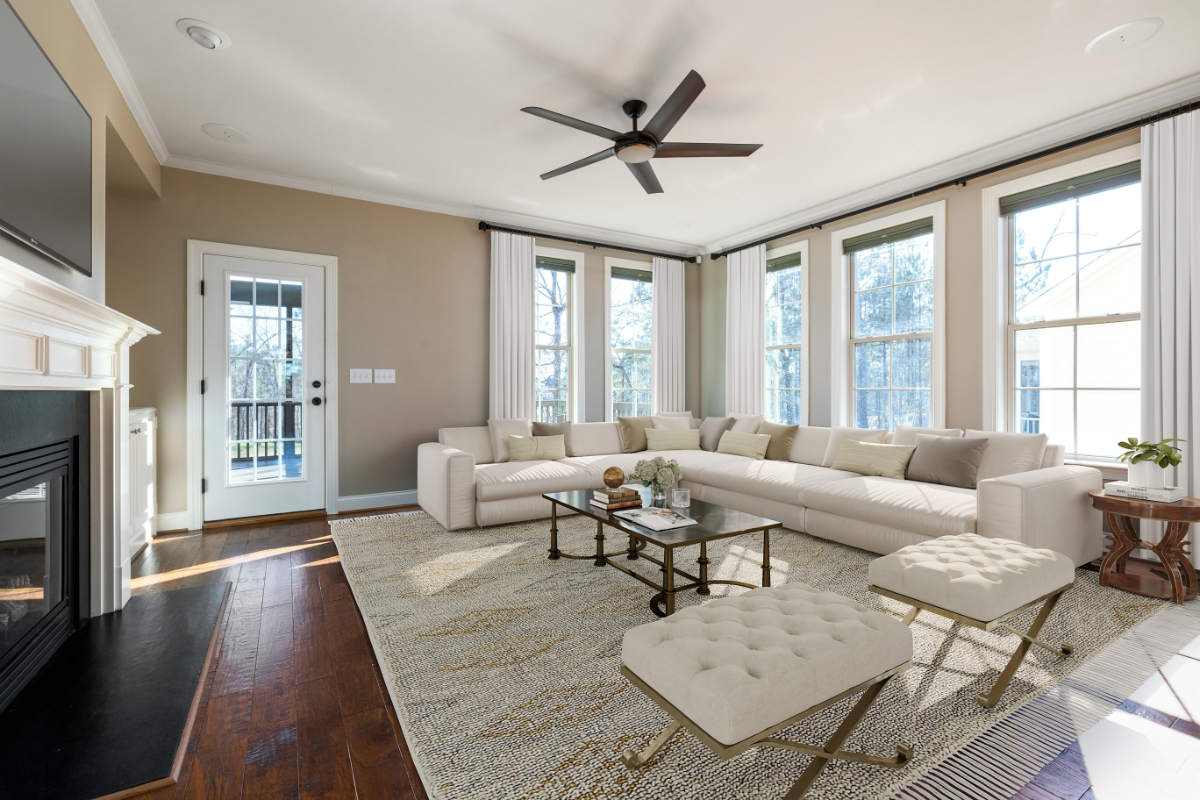 The living room usually gets the most attention whenever a listing is viewed.
The numbers heavily back up this psychological impact. Reports from the National Association of Realtors (NAR) consistently show that over 81% of buyer's agents find that staging makes it significantly easier for clients to visualize a property as their future home. Furthermore, staged listings routinely spend less time on the market and can command a substantial increase in dollar value compared to vacant properties. So you may think, why should I know how to virtually stage a living room when I can do it for real?
However, traditional physical staging comes with a hefty price tag, often costing thousands of dollars in furniture rentals and design fees. Virtual staging completely disrupts this costly barrier. It delivers the same high-end visual impact and emotional hook for a tiny fraction of the expense, allowing real estate professionals to maximize their marketing ROI from day one.
2. Step-by-step guide: How to virtually stage a living room
Mastering how to virtually stage a living room requires a seamless blend of photographic precision, interior design strategy, and advanced rendering technology. To achieve a hyper-realistic result that leaves buyers completely unaware that the furniture is digital, you must follow a structured, professional workflow. Here is the step-by-step breakdown to execute flawless virtual staging.
2.1. Step 1: Capture the perfect foundational photo
The entire process hinges on the quality of your base image. When shooting the property, ensure the room is thoroughly cleaned, decluttered, and well-lit. Position your camera at a natural height, typically around chest or waist level, to maintain realistic perspective lines. Crucially, pay close attention to your camera settings: wide apertures like f/2.8 are entirely unsuitable for architectural photography due to insufficient depth of field. Instead, use a narrower aperture between f/8 and f/11 to ensure every corner of the living room, from the foreground to the background, remains perfectly sharp and in focus.
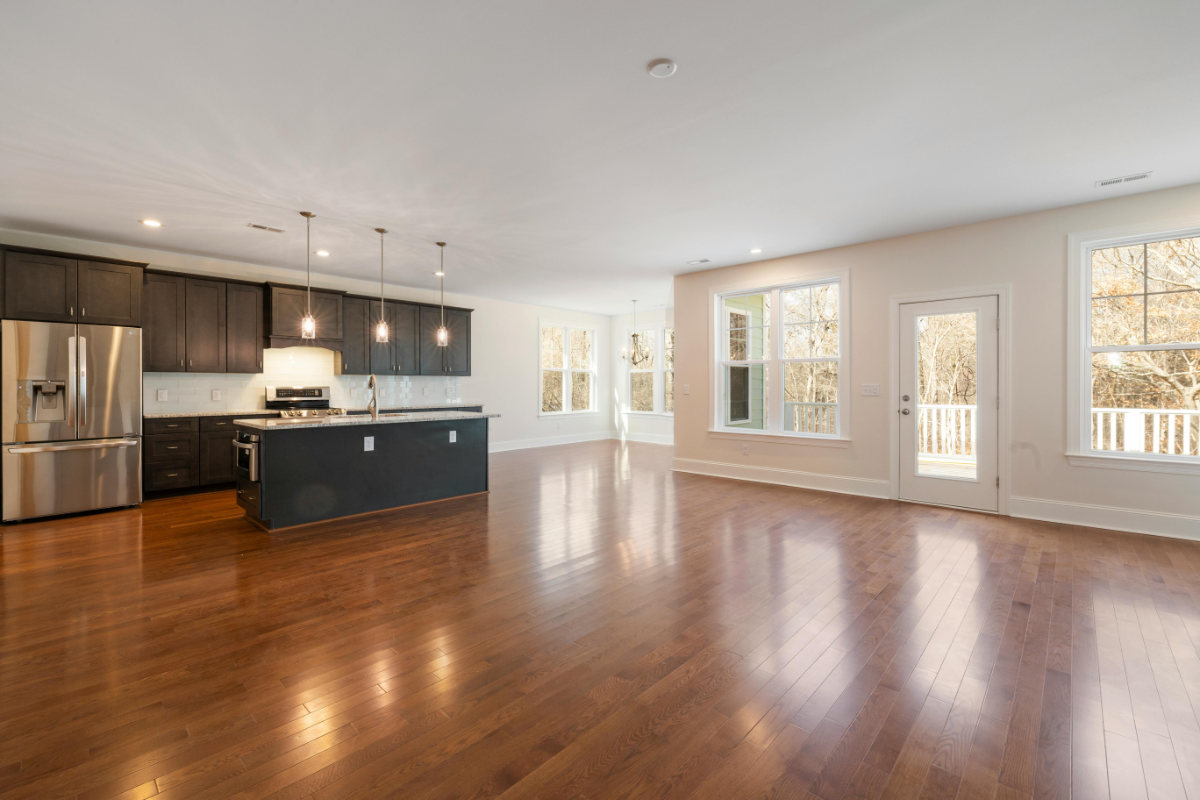 The base image should be free of distracting color shifts, clipped pixels, stray objects, and distortions.
2.2. Step 2: Analyze spatial architecture and traffic flow
Before placing digital assets, take time to read the room. Identify the natural focal points, such as a fireplace, a large picture window with a scenic view, or a prominent accent wall. A successful layout must respect traffic flow, ensuring that the virtual arrangement feels open and spacious rather than cramped. Determine where the main seating area should reside to maximize the perception of square footage while directing the eye toward the room's best features.
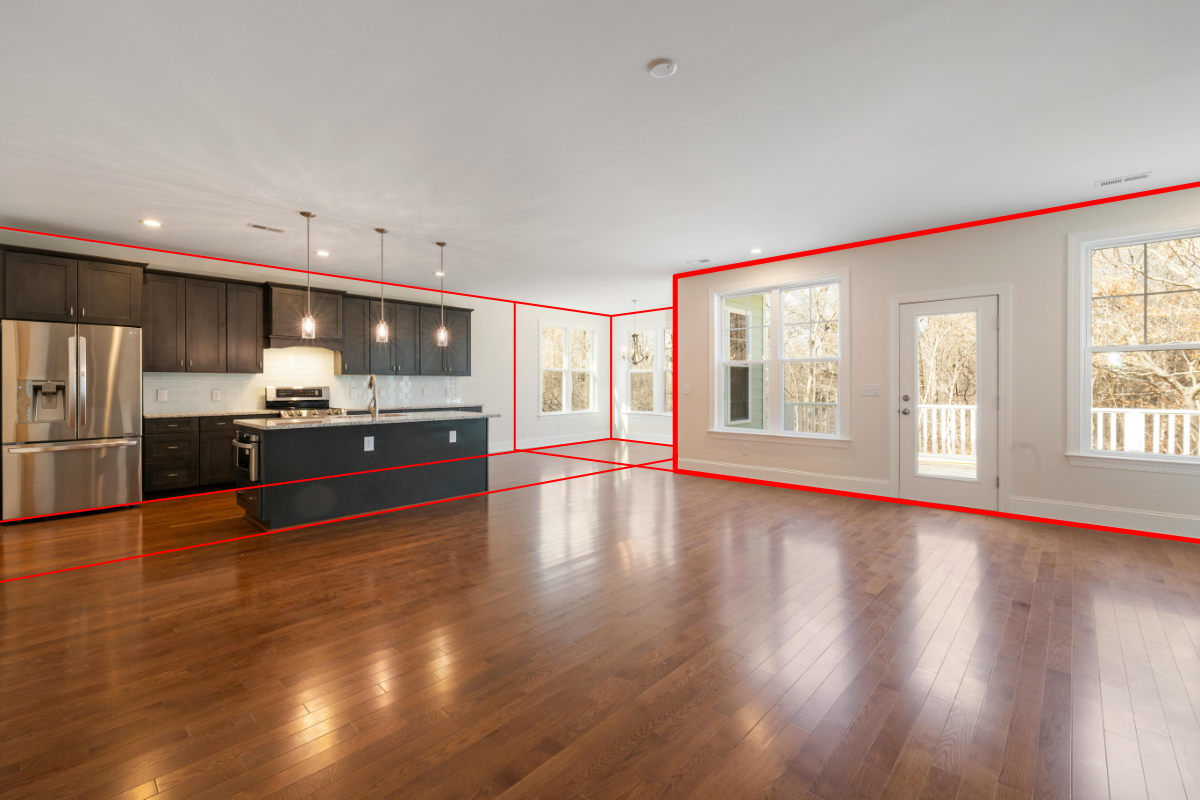 The first step to a realistic staging result is ensuring perspective coherence.
2.3. Step 3: Select the right living room furniture styles
Your choice of digital furniture must align harmoniously with the home's architectural DNA and its target demographic. Integrating appropriate virtual staging furniture styles, whether it is a sleek modern look for an urban loft or a warm transitional setup for a suburban estate, creates a cohesive narrative. The digital furniture catalog should offer high-resolution 3D models with lifelike textures, fabrics, and finishes that perfectly mimic real-world designer furniture.
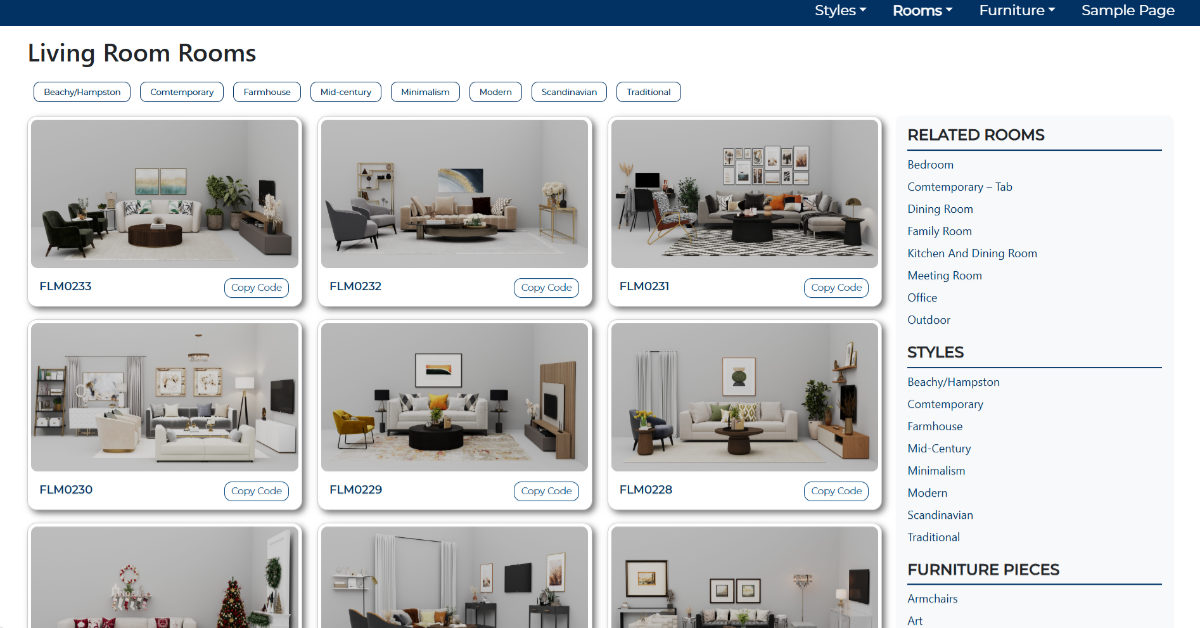 Make sure there is a furniture catalogue that fits your preferred style.
2.4. Step 4: Execute seamless lighting and shadow integration
There may be too many studios claiming they know how to virtually stage a living room, but only a few can achieve believable results. Realism is all won or lost in the shadows. Once the furniture is positioned, advanced 3D software must match the virtual light sources with the actual ambient and natural light present in the original photograph. If light floods in from a large left-hand window, the digital sofas and tables must cast accurate, soft shadows toward the right. Adjusting the color temperature, highlights, and contrast ensures that the digital furniture seamlessly embeds into the photo rather than looking like a flat sticker.
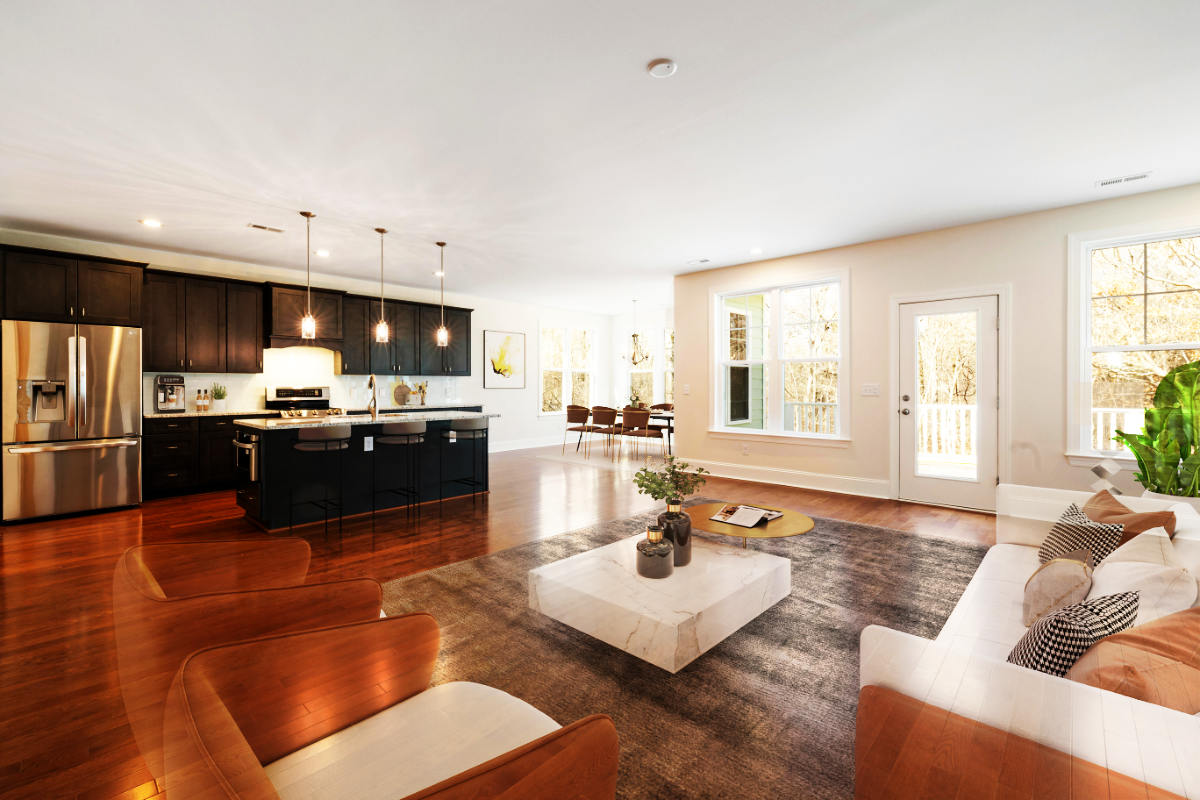 Putting in the furniture is not enough. The shadows they cast make the results feel more life-like and less floaty.
2.5. Step 5: Final quality control and proofing
The final step is a rigorous quality check. Review the image at a 100% zoom level to verify that the scale of the furniture is perfectly proportional to the room's actual dimensions. Check for clipping errors where furniture legs might bleed into walls or baseboards, and perform fine color corrections to deliver a polished, market-ready masterpiece.
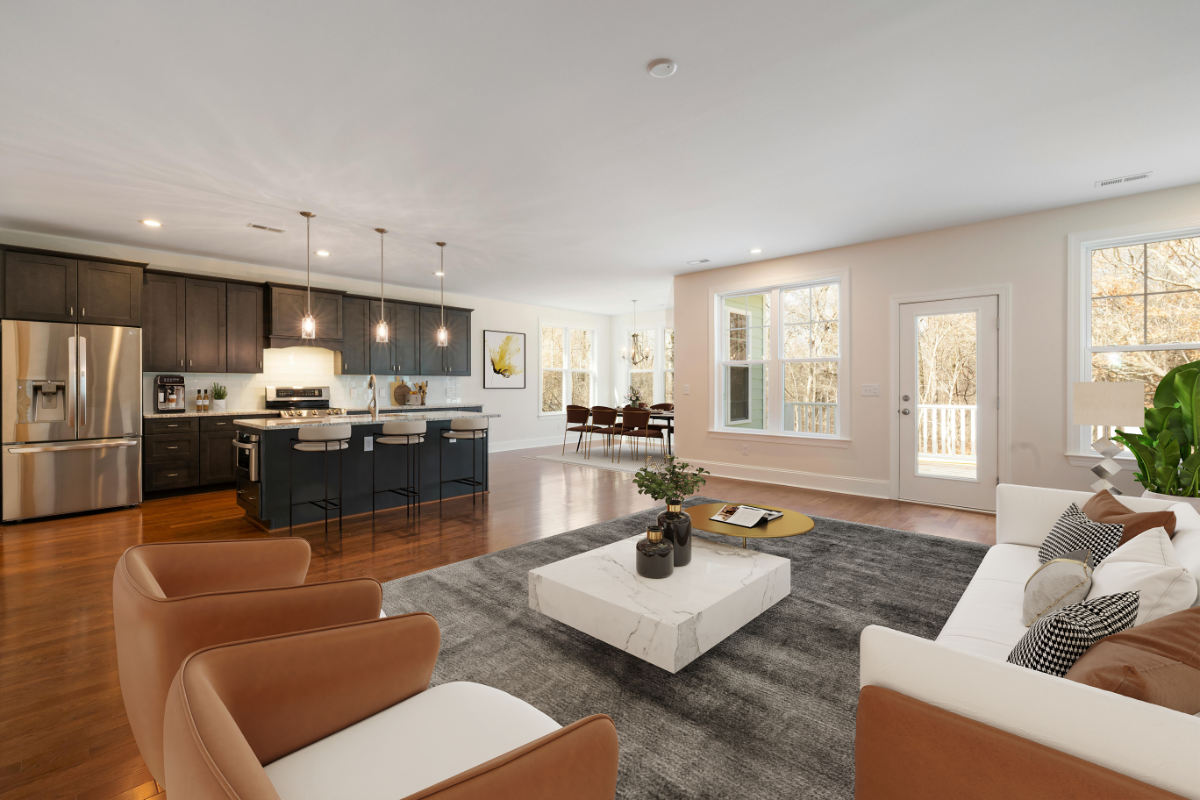 The staged furniture should match the original photo in proportion, colors, lighting, and textures.
3. Popular living room furniture styles for virtual staging
Selecting the appropriate living room furniture styles is one of the most critical decisions in the virtual staging process. The design aesthetic you choose defines the property's identity and speaks directly to the specific demographic of buyers you want to attract. Rather than forcing a single trend onto every listing, successful marketing relies on matching the furniture to the home's architectural DNA. Here are the four most effective styles used in modern real estate marketing.
3.1. Modern / Minimalist
Modern and minimalist styles prioritize function, open space, and simplicity. Characterized by clean geometric lines, low-profile seating, sleek metals, and a restricted, neutral color palette, this aesthetic is perfect for urban apartments, lofts, and high-end contemporary condos. By eliminating visual clutter, virtual staging for modern floor plans makes compact spaces feel significantly larger, brighter, and more sophisticated.
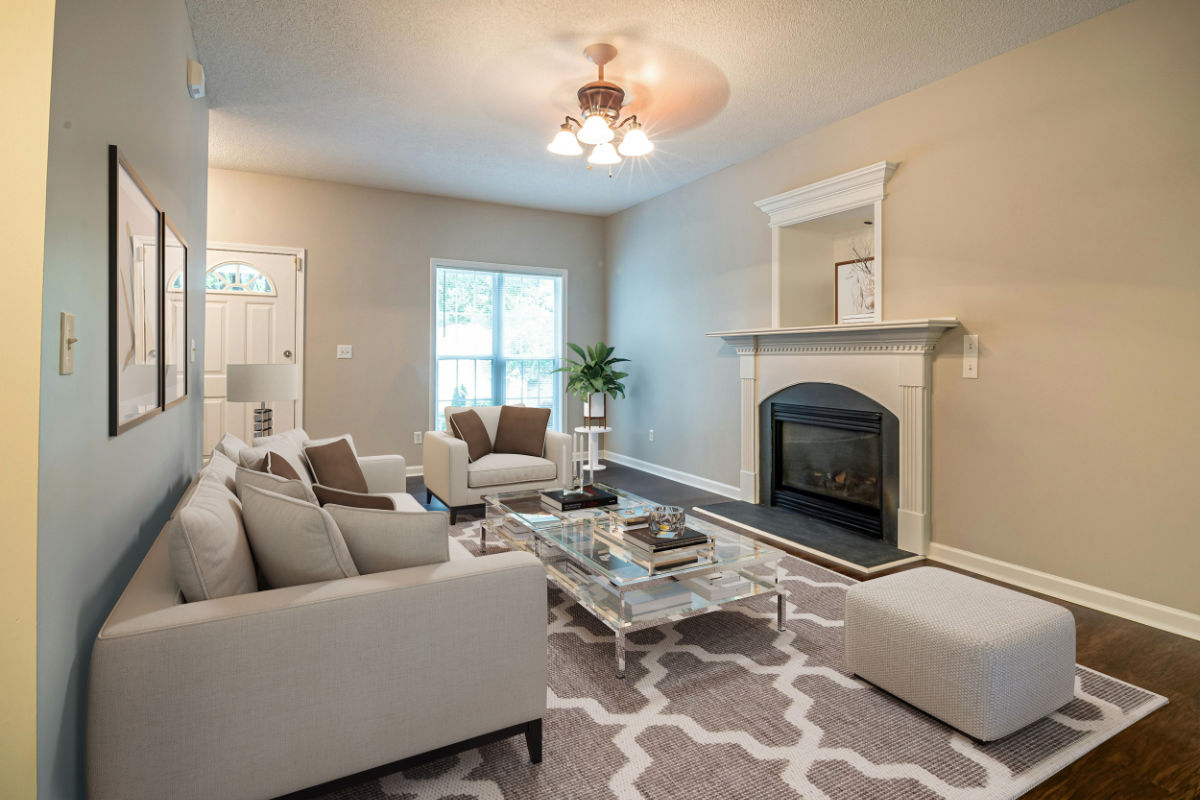 Modern style offers the most efficiency in terms of function and visual decluttering.
3.2. Contemporary / Transitional
Contemporary and transitional styles represent the ultimate sweet spot for the vast majority of residential listings. By blending the warm, cozy comfort of traditional design with the clean, updated lines of modern aesthetics, transitional staging offers broad universal appeal. The style reminds me of plush, neutral-toned sofas paired with elegant, understated coffee tables and subtle pops of color. It feels immediately inviting, familiar, and remarkably easy for a diverse pool of buyers to fall in love with.
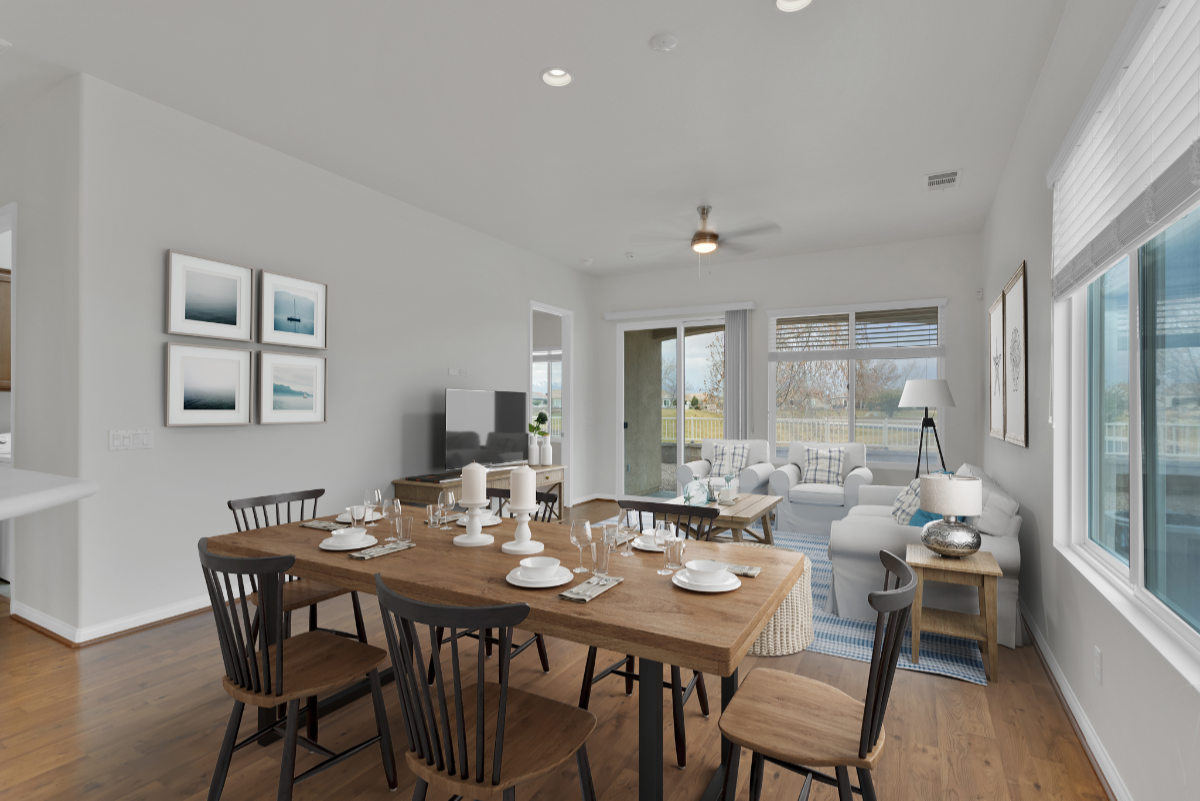 Contemporary aesthetics retain a touch of soulful and personalized traditional design instead of stripping down every element.
3.3. Traditional / Classic
Traditional and classic styles lean into timeless elegance, rich history, and formal symmetry. Featuring rich wood tones like mahogany or walnut, ornate detailing, plush fabrics like velvet, and highly structured layouts, this style is ideal for historic estates, character-rich suburban homes, or properties with classical architectural elements like crown molding. It conveys a deep sense of luxury, stability, and enduring comfort.
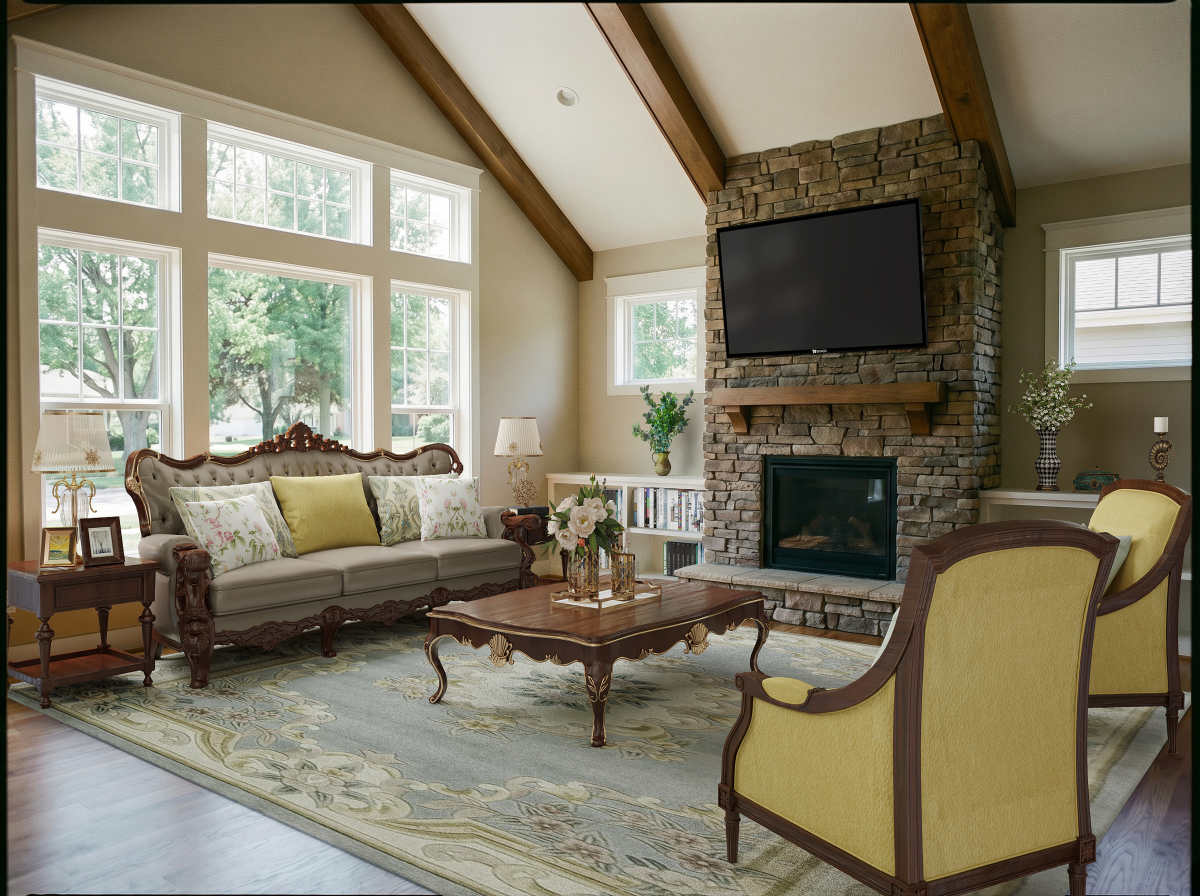 Staging for a classic home requires an exquisite set of handcrafted furniture.
3.4. Scandinavian / Japandi
Scandinavian and Japandi styles have surged in popularity due to their focus on warmth, natural elements, and organic minimalism. Utilizing light-toned woods, highly functional layouts, and textured, cozy textiles, this style works beautifully in bright, sun-drenched living rooms. Studios knowing how to virtually stage a living room in this style should be able to bring an atmosphere of serene, sustainable luxury that resonates heavily with younger, design-conscious buyers.
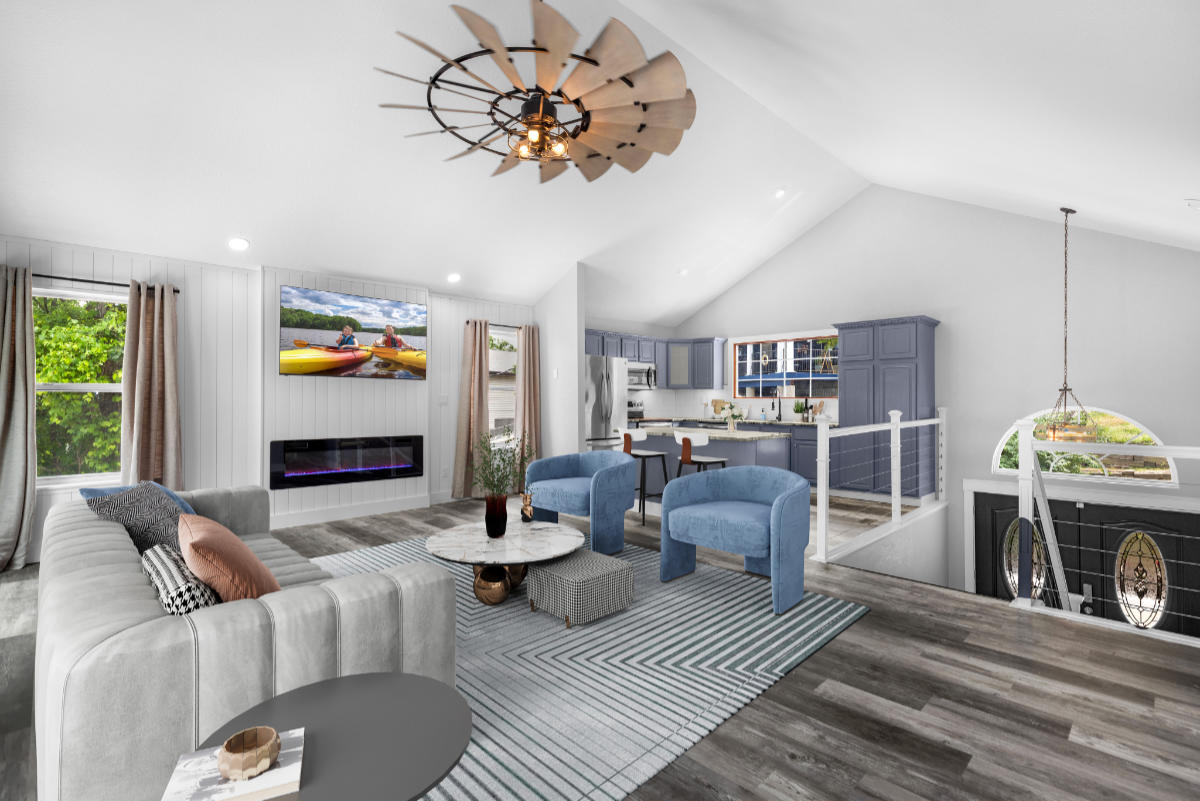 Scandinavian and Japandi styles are popular among younger buyers in the luxury sector.
4. Creative virtual staging living room ideas to inspire buyers
Beyond the technical execution, the real power of digital design lies in its ability to spark imagination and showcase a property's hidden potential. To truly inspire buyers, real estate professionals must think beyond basic furniture placement and embrace innovative concepts. Here are four creative virtual staging living room ideas that can dramatically elevate your listings.
4.1. Idea 1: The "empty space glow-up"
The most common and impactful use of virtual staging is the "empty space glow-up." Imagine a large, beautiful, but utterly vacant living room. To the average buyer, this is an uninspiring void where they cannot envision their life. Virtual staging breathes life into this space, turning it from cold and sterile into a warm, aspirational environment. The digital transformation can instantly add a stylish sofa, an inviting rug, a chic coffee table, and personalized decor, allowing buyers to imagine cozy evenings, family gatherings, and comfortable relaxation.
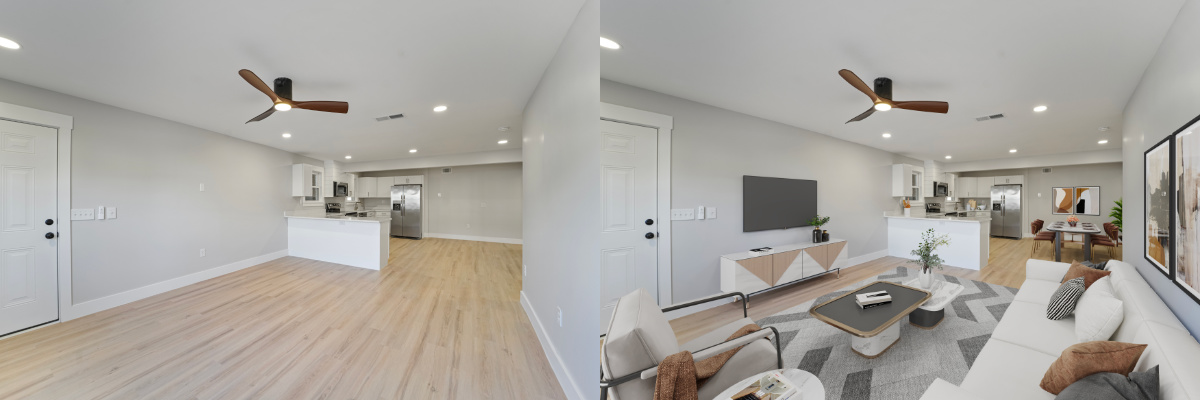 The room looks neat already, but making it more life-like will definitely help with salability.
4.2. Idea 2: The virtual “decline” / Object removal
Mastering how to virtually stage a living room is not just knowing what to add. Sometimes, it calls for the ability to see the problem to be eliminated first. A cluttered or dated living room can be a significant barrier to sale. Physical decluttering and removal are time-consuming and expensive. In that case, "virtual decline" or "object removal" is a powerful digital alternative. Advanced 3D rendering can virtually erase old furniture, outdated wallpaper, cluttered shelves, and awkward decor. A fresh, modern design is then layered in, showcasing the room’s potential as a clean, sophisticated space. This allows buyers to focus on the room's architecture and possibilities rather than getting distracted by existing visual static.
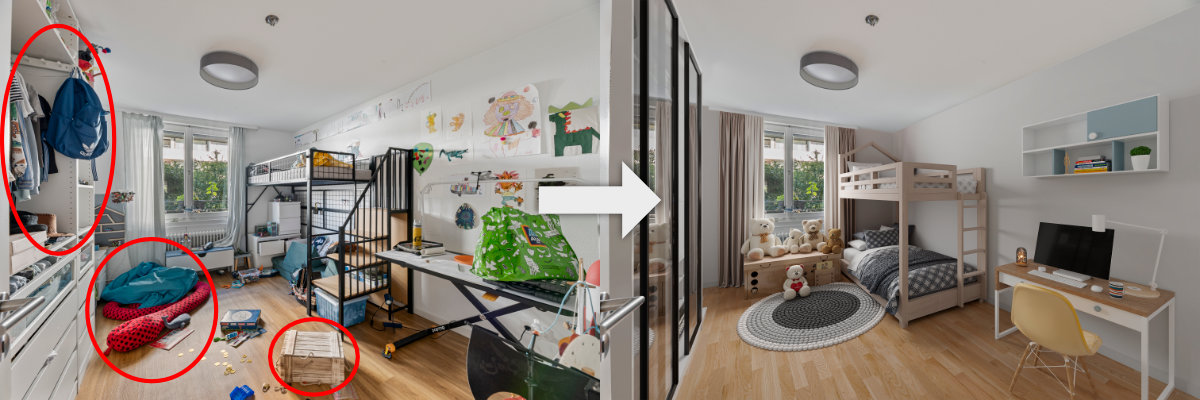 Virtual staging and renovation go hand-in-hand.
4.3. Idea 3: The virtual twilight transition
To add an extra layer of luxury and romance, consider a "virtual twilight transition." The lighting in your living room shot is synchronized with a beautiful, virtual sunset view outside the windows. The interior lighting, from lamps, ceiling lights, and accent fixtures, is digitally adjusted to create a rich, inviting glow. This creates an unforgettable first impression, making the living room look incredibly cozy, intimate, and sophisticated. It targets the buyer's emotional desire for a perfect evening retreat.
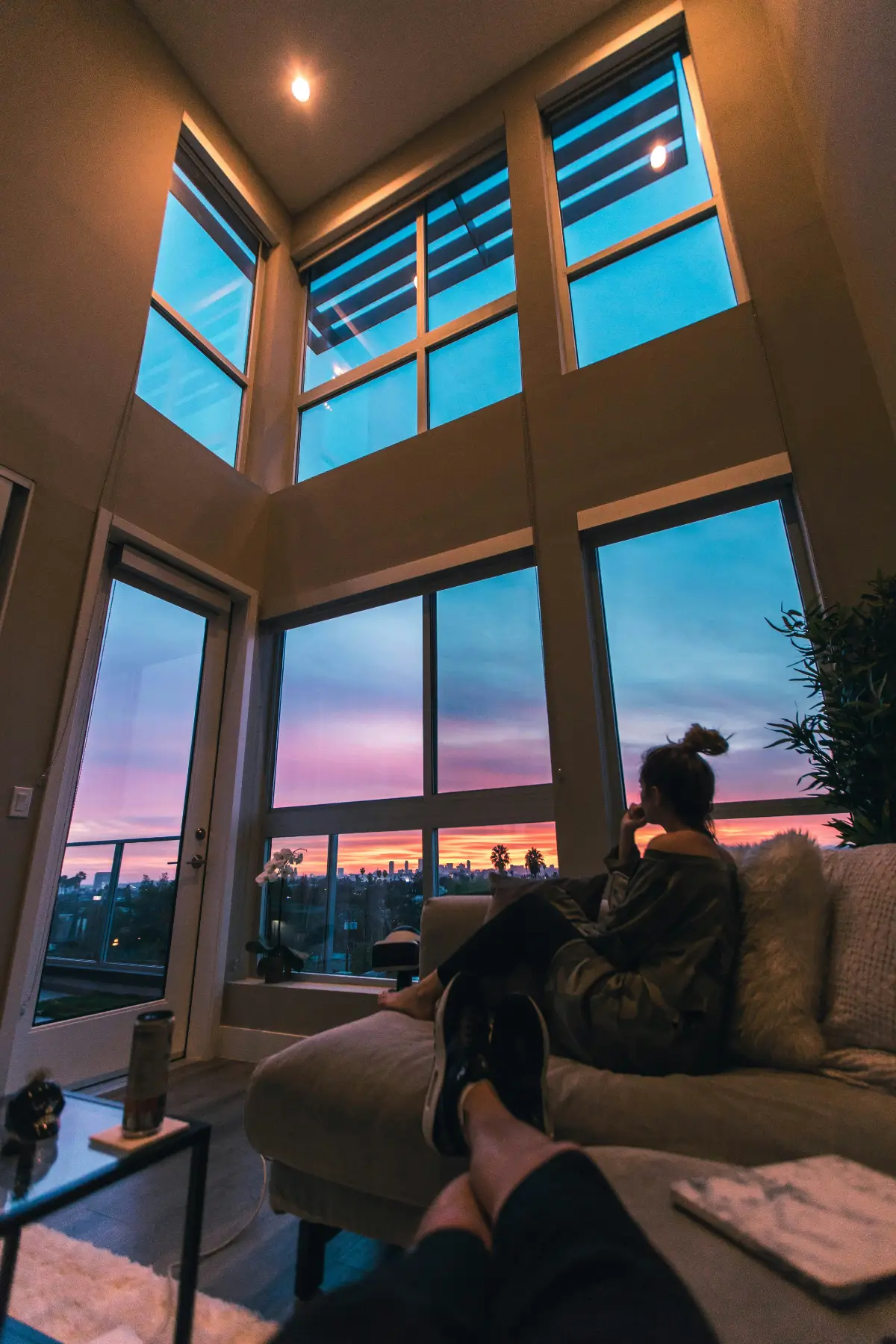 Twilight transformations turn a living room into a glorious scene.
4.4. Idea 4: Multi-functional layouts
Many modern buyers are looking for spaces that can serve multiple purposes. A large living room can be reconfigured virtually to showcase a traditional seating area plus other functional zones. A corner can become a stylish chic home office with a sleek desk and ergonomic chair. A different area can serve as a cozy reading nook, complete with a comfortable armchair and a floor lamp. This maximizes the property's value proposition, proving the room can adapt to their modern, flexible lifestyle.
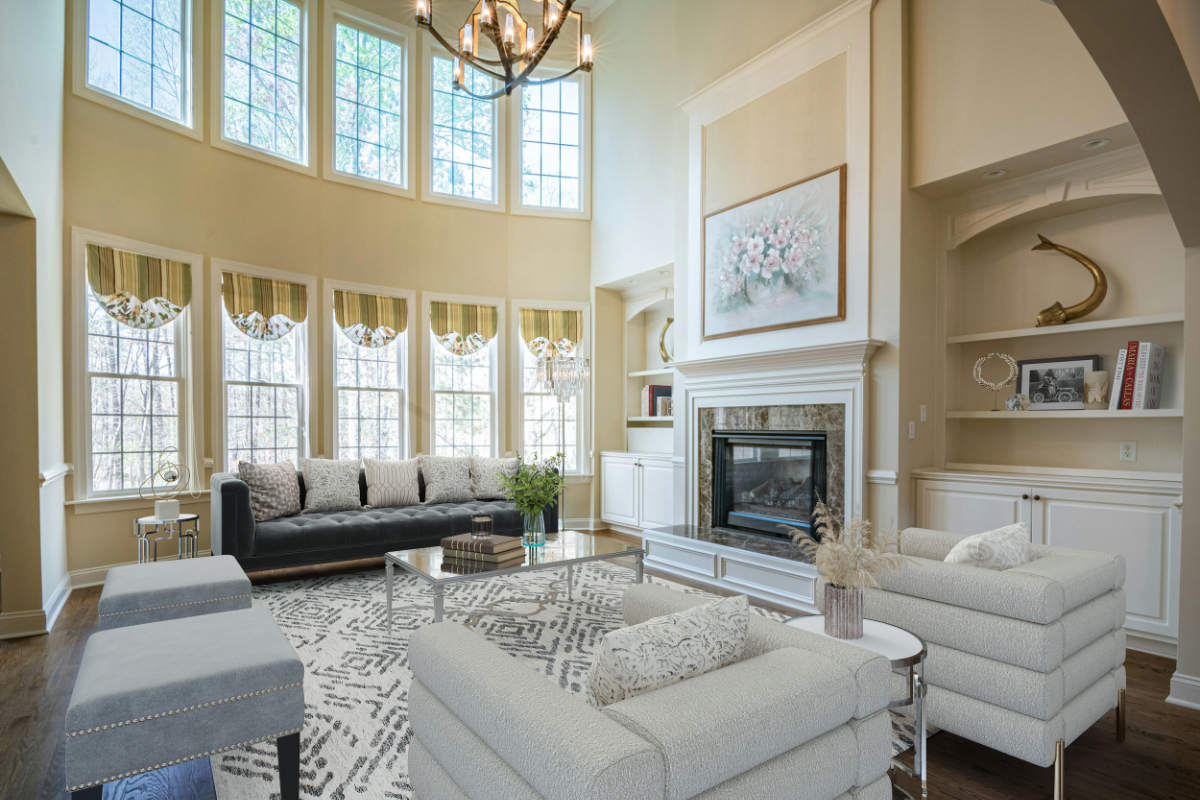 The living can serve many purposes catered to the needs of the modern buyers.
5. Pro living room virtual staging tips for real estate agents
To maximize your marketing ROI and ensure your online listings look completely flawless, implementing the right living room virtual staging tips is absolutely essential. While modern rendering technology offers almost endless creative freedom, maintaining a grounded, hyper-realistic approach is what ultimately wins over discerning home buyers. Here is how top-producing real estate agents successfully navigate the digital design process.
5.1. Maintain strict scale and proportion
One of the most frequent mistakes when learning how to virtually stage a living room is misjudging the scale of 3D assets. Adding a massive sectional sofa can crowd a medium-sized living room, inadvertently making the entire property look cramped and small. Conversely, placing an undersized rug makes the layout feel awkward and disjointed. Your digital elements must mathematically align with the actual physical dimensions of the space to accurately showcase its true volume and square footage.
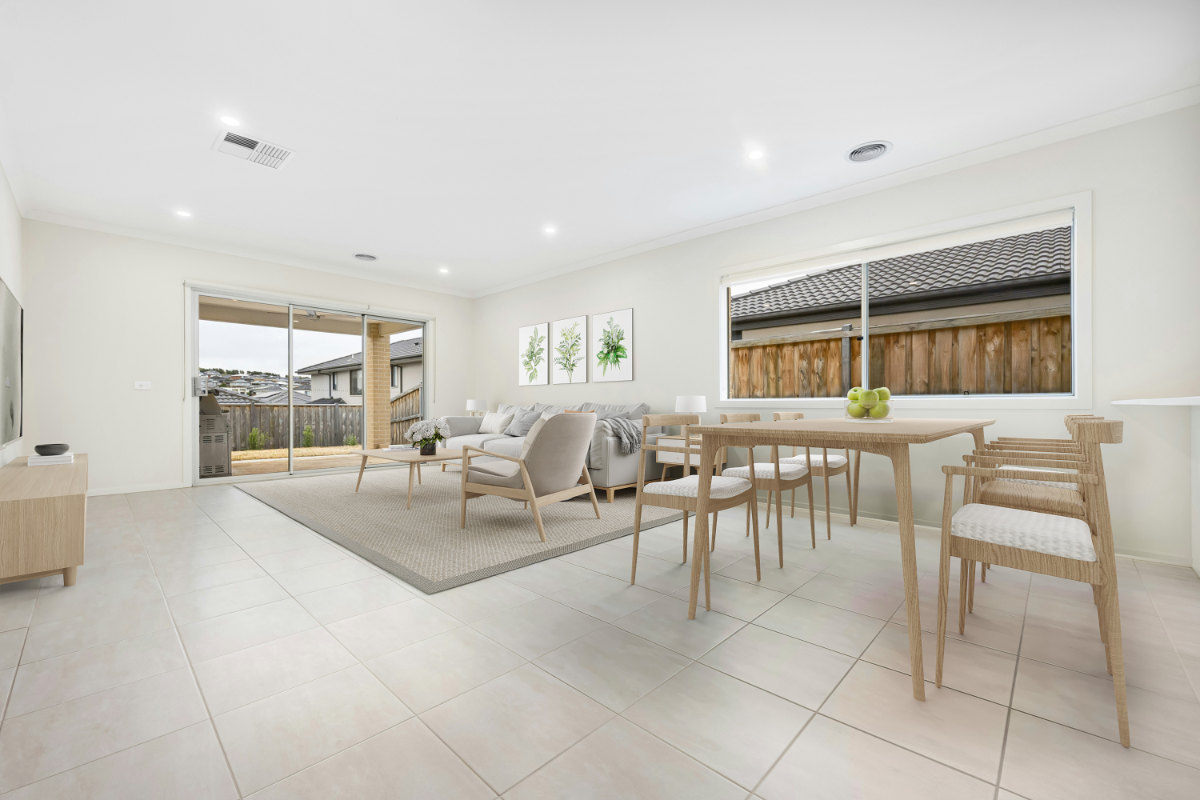 Proportions and perspectives of added furniture should be faithful to the original image, especially when the shooting angle is tricky.
5.2. Keep design grounded in reality
It can be highly tempting to design an over-the-top dream space filled with gravity-defying shelves, impossible architectural modifications, or overly sterile surfaces. However, savvy buyers will immediately spot the artificiality. Stick to believable, high-end interior designs and natural placements that closely reflect how people actually live and interact within a home.
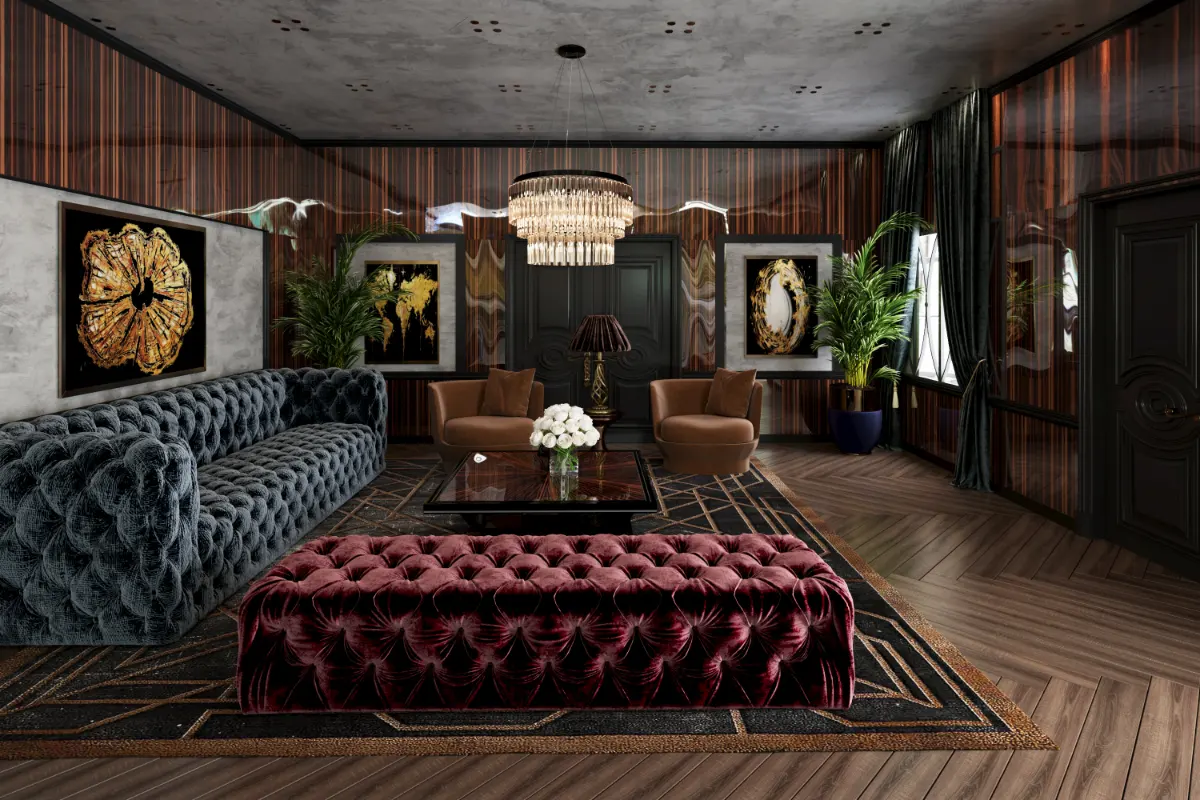 Avoid using exotic designs unless the room calls for it.
5.3. Harmonize interior lighting with the exterior view
If your living room features expansive windows, glass doors, or a patio view, the internal digital lighting must perfectly complement the environment outside. For instance, if bright natural sunlight floods in from a left-hand window, your virtual furniture must cast soft, accurate shadows toward the right. Misaligned lighting angles instantly ruin the illusion of reality.
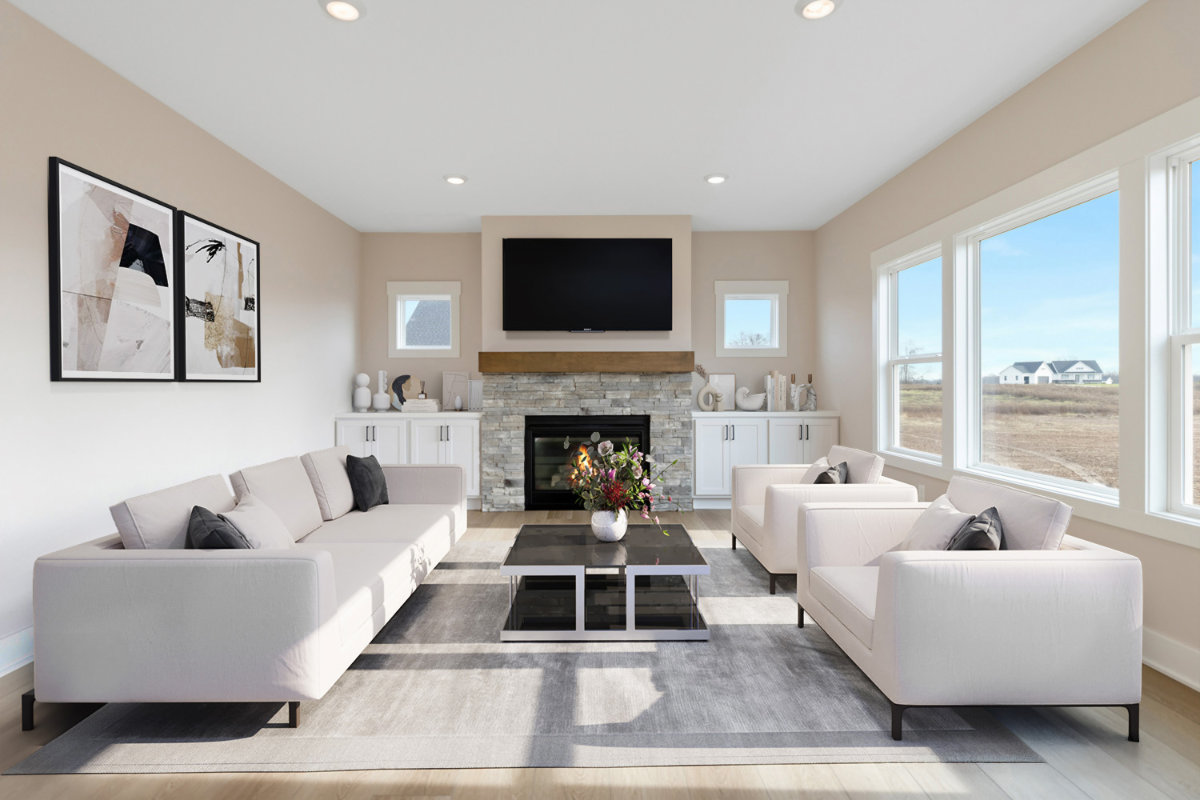 Natural lighting can add a touch of life to the static scene.
5.4. Prioritize ethical disclosure
Transparency builds trust. Always include a subtle "virtually staged" watermark or a clear caption on your MLS listings. This effectively manages buyer expectations before they step into a vacant home during a physical showing, ensuring they appreciate the design inspiration without feeling misled.
6. Supercharge your listings with Fotober’s premium virtual staging services
In today's competitive real estate market, standard imagery is no longer enough to capture a buyer's attention. That is where Fotober’s premium virtual staging services come in to completely elevate your property marketing. As a premier partner for virtual staging in real estate, Fotober seamlessly blends cutting-edge 3D rendering technology with the refined eye of professional interior design experts who have mastered how to virtually stage a living room.
 Fotober can liven up empty living rooms with professional virtual staging.
When you partner with Fotober, you gain access to an expansive, hyper-realistic digital catalog featuring the latest trend-setting living room furniture styles. Whether your listing calls for sleek urban minimalism, breezy Scandinavian charm, or warm transitional comfort, our team meticulously designs spaces that feel genuinely authentic and inviting. We understand that time is money in real estate, which is why we guarantee rapid turnaround times to meet your tightest listing deadlines. Furthermore, our value-driven tier-based pricing structure ensures top-tier quality that scales comfortably to fit any marketing budget.
Don't let empty or uninspired spaces diminish your listing's true potential. Supercharge your visual appeal, generate more clicks, and win more clients. Visit Fotober today to get your first living room virtually staged by our industry-leading experts!
7. Conclusion
In today's fast-paced real estate market, virtual staging is no longer an optional luxury; it has become an essential marketing standard. As the emotional heart of the home, the living room demands a presentation that captures a buyer’s imagination instantly. By mastering how to virtually stage a living room with the right furniture styles and strategic execution, you can unlock a vacant property's true financial potential. Embracing these digital design innovations allows real estate professionals to stand out in a crowded online marketplace, maximize their marketing ROI, and turn empty spaces into high-value sales.
Follow us on social media to stay updated with the latest architectural visualization services to upgrade your listings to the next level.
- Facebook: fotobermedia.co
- YouTube: Fotober
- TikTok: @fotober
- Instagram: fotober_media.
Related posts

Cincinnati Housing Market 2026: Prices, Trends, and What It Means for Buyers, Sellers, and Investors
October 20, 2026

Modern Luxe Interior Design: Elements, Style Guide and How to Stage It
October 10, 2026

Minimalist Interior Design: Characteristics, Style Guide, and Staging
October 8, 2026

Coastal Interior Design: Style Definition & Staging Guide
September 30, 2026
