




San Antonio Housing Market Forecast 2026: Prices & Trends


Share:
Table of Contents
- 1. Key takeaways
- 2. San Antonio housing market forecast 2026: the big picture
- 3. Inventory and the shift to a buyer's market
- 4. Is San Antonio a good investment compared with other markets?
- 5. Selling in a cooling market: why presentation matters more
- 6. How Fotober helps you sell faster in San Antonio
- 7. Frequently asked questions about San Antonio housing market forecast
- 8. Conclusion
San Antonio housing market forecast 2026 points to a noticeably calmer, more buyer-friendly market after several years of rapid price growth. Home values have flattened or softened in parts of the metro, inventory has increased, and buyers have regained more time and negotiating leverage. For sellers, that same shift means pricing, condition, and presentation matter far more than they did when limited supply helped almost any well-located listing attract immediate attention.
This guide breaks down the San Antonio housing market forecast 2026 in practical terms, including current home prices, inventory trends, the move toward a buyer’s market, investment potential, and how San Antonio compares with other Texas and national markets. It also explains why a strong listing presentation has become increasingly important for sellers competing in a slower, more selective market.
1. Key takeaways
- The San Antonio housing market forecast 2026 points to a soft, buyer-friendly market with prices roughly flat to down about 2% year over year.
- Median prices sit near the mid-$250,000s to around $295,000 depending on the source, with homes taking about 64 days to sell.
- Rising inventory has shifted negotiating power toward buyers, a reversal from the frenzied 2021–2023 years.
- Affordability and steady Texas growth keep San Antonio attractive to long-term investors despite the near-term cooldown.
- In a buyer's market, listing presentation, professional photos, video, and virtual staging are what help a home sell faster.
2. San Antonio housing market forecast 2026: the big picture
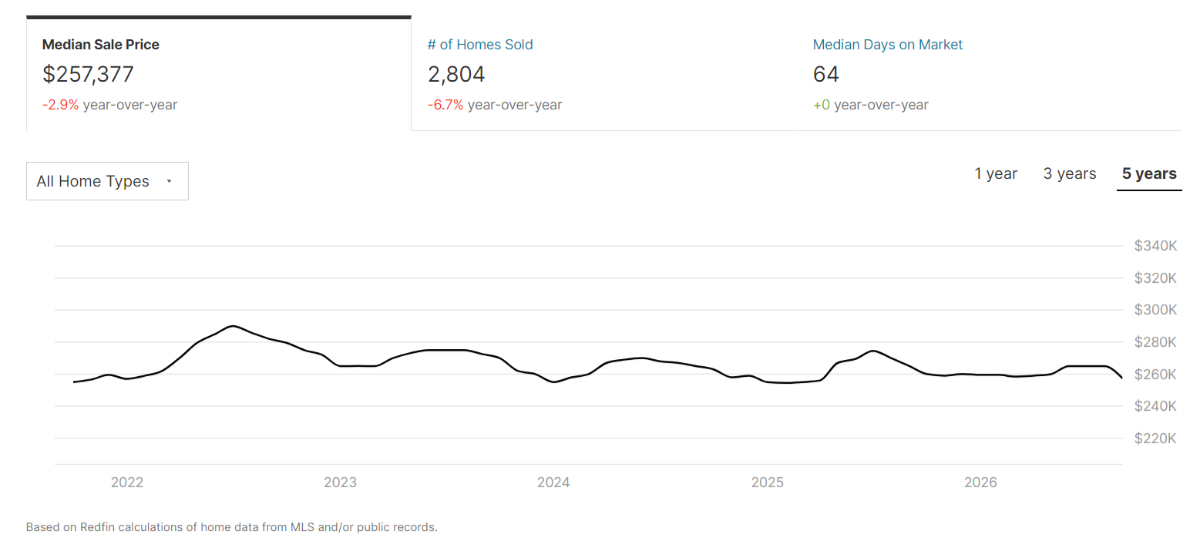
The headline of the San Antonio housing market forecast 2026 is a clear cooldown from the pandemic-era boom. Prices have stopped climbing and softened modestly, which the major trackers confirm. Redfin reports a median sale price of about $257,000 over the three months ending September 2026, down roughly 2.9% year over year, while Zillow's typical home value sits near $245,000, down about 2.2% over the same period. Local brokerages peg the median somewhat higher, in the 260,000-295,000 range depending on property mix, but every source agrees the era of rapid appreciation has paused.
Those San Antonio real estate trends reflect a market finding its footing rather than crashing. According to Redfin's San Antonio market data, homes are taking around 64 days to sell, unchanged from a year earlier but far slower than the frantic pace of the boom, giving buyers time to shop and negotiate. Zillow's San Antonio home value data shows the same gentle downward drift in values through 2026.
Context keeps this in perspective: home prices San Antonio, Texas buyers face remain affordable by national and even Texas standards, which is precisely why the slowdown looks more like a healthy reset than a downturn. As trade publication NewHomeSource notes in its San Antonio market outlook, the metro's long-term fundamentals remain sound even as short-term prices soften. In short, the San Antonio housing market forecast 2026 is one of stabilization and opportunity rather than decline.
3. Inventory and the shift to a buyer's market
One of the biggest forces shaping the San Antonio housing market forecast 2026 is the return of inventory. After several years of unusually tight supply, more homes are now available across the metro, giving buyers a broader selection and reducing the urgency that defined the 2021–2023 market. New listings have also increased at various points throughout the year, while demand has remained steady rather than overheated. That combination has moved San Antonio away from a strong seller’s market and toward a more balanced, increasingly buyer-friendly environment.
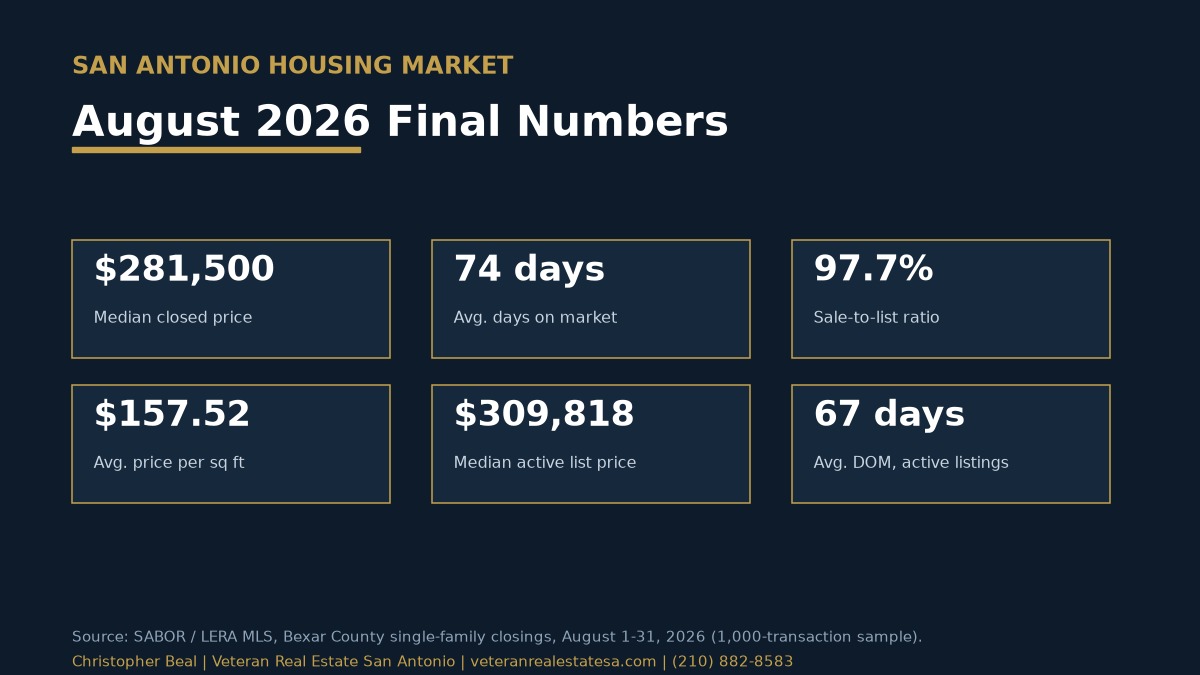
The shift does not mean housing demand has disappeared. San Antonio continues to benefit from relatively affordable home prices compared with other major Texas metros, along with a stable employment base supported by the military, healthcare, government, manufacturing, and other major industries. Continued population growth and migration into Texas also provide a long-term foundation for housing demand. The difference in 2026 is that supply is better able to meet that demand, so buyers no longer need to compete as aggressively for every available property.
That change gives purchasers more leverage throughout the transaction. Buyers can take more time to compare homes, negotiate on price, request repairs, and evaluate seller concessions instead of feeling pressure to waive contingencies or submit offers immediately. For first-time buyers, military households using VA financing, and move-up buyers who struggled with the intense competition of previous years, the current market may offer a more practical opportunity to enter or move within San Antonio. For sellers, however, higher inventory raises the standard for competing successfully. A home that is overpriced, poorly presented, or slow to respond to market feedback can remain active while comparable properties attract the available buyers. Pricing strategy, property condition, professional photography, and overall listing presentation therefore carry more weight than they did when limited supply generated multiple offers almost automatically.
Overall, the San Antonio housing market forecast for 2026 points to a healthier but more competitive market for sellers. Demand remains present, but buyers have regained choice, time, and negotiating power, making realistic pricing and strong marketing essential to standing out.
4. Is San Antonio a good investment compared with other markets?
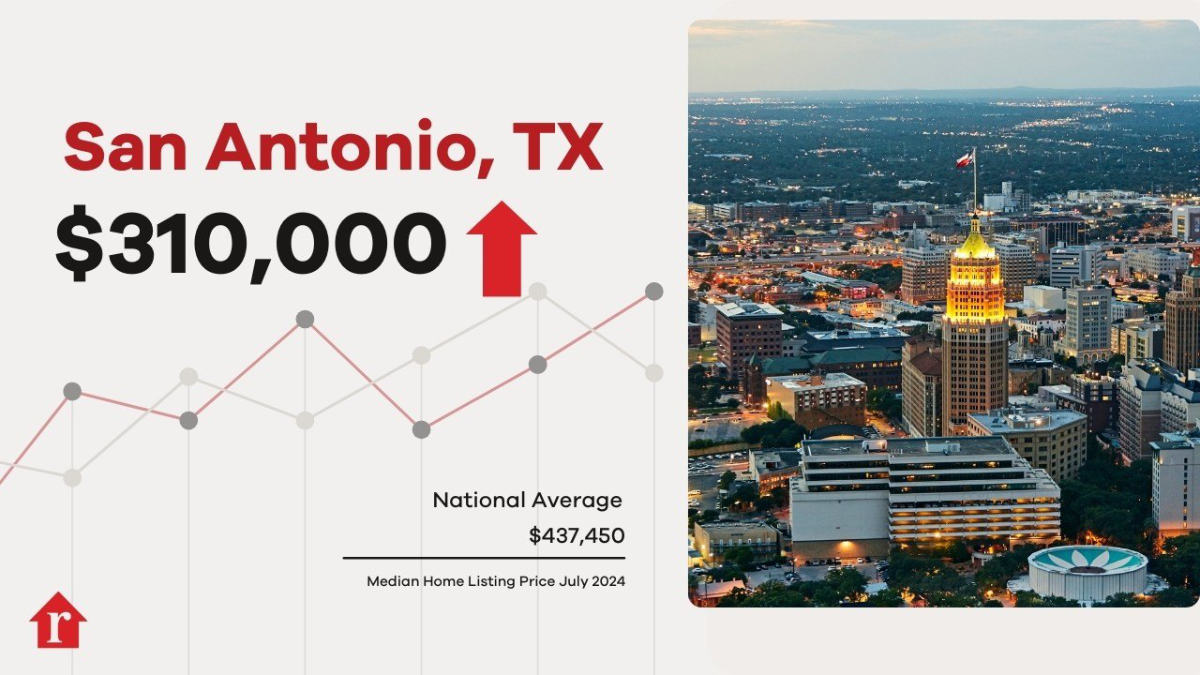
For investors, whether San Antonio is a good investment in 2026 comes down to one trade-off: near-term price softness versus stronger long-term fundamentals. The current market is not ideal for quick flips or investors relying on rapid appreciation, as prices have flattened and homes are taking longer to sell. At the same time, higher inventory and less buyer competition can create better entry points for investors who are willing to hold through the cycle.
San Antonio’s biggest advantage is affordability. Home prices remain well below markets such as Austin and Dallas, giving investors a lower cost of entry and potentially stronger cash-flow economics. That affordability also supports continued demand from relocating households and renters who may be priced out of more expensive Texas metros. Combined with a diversified employment base spanning the military, healthcare, tourism, manufacturing, and technology, the city has a relatively broad foundation for long-term housing demand.
The supply picture is equally important. Texas continues to build housing at a much faster pace than many supply-constrained states, which has helped bring inventory back toward more normal levels and reduced some of the pricing pressure seen earlier in the decade. San Antonio is benefiting from that adjustment, with buyers gaining more negotiating leverage while investors have more properties to compare. The trade-off is that abundant new construction can also limit short-term appreciation, especially in submarkets where builders are offering incentives or adding significant inventory.
That makes San Antonio different from expensive coastal markets where limited construction keeps supply tight. The contrast is similar to the dynamic explored in the Dallas vs. Los Angeles housing market: Texas markets generally have more room to add housing, while constrained coastal metros often rely on scarcity to support prices. For investors, that means San Antonio’s appeal is less about betting on a supply shortage and more about buying into a market with relatively affordable housing, population growth, and a diversified economy.
The outlook still depends heavily on mortgage rates. If borrowing costs ease, affordability could bring more buyers back into the market and support firmer pricing. If rates remain elevated, buyer-friendly conditions and longer selling times may continue, giving investors more room to negotiate but limiting short-term appreciation.
For buy-and-hold investors, the San Antonio housing market forecast 2026 remains constructive rather than speculative. The strongest opportunities are likely to come from properties with durable rental demand, sensible financing, and manageable tax and insurance costs rather than from chasing fast price gains. In that context, the current cooldown may prove more attractive to patient investors than a hotter market with higher entry prices and less negotiating power.
5. Selling in a cooling market: why presentation matters more
The San Antonio housing market forecast 2026 points to a more balanced, buyer-friendly environment, which makes presentation more important than it was during the highly competitive seller’s markets of previous years. When inventory rises and homes take longer to sell, buyers have more time and more options to compare. That means a property can be correctly priced and still underperform if its online presentation fails to compete with similar listings nearby.
The reason is simple: most buyers form their first impression before they ever step inside the home. According to the National Association of REALTORS®, online search remains a central part of the home-buying process, making listing photos, video, floor plans, and other digital assets an important part of how buyers build their shortlist. In a market where comparable homes may sit side by side in search results, bright, well-composed photography and a polished walkthrough can help a listing earn the click, while dark, inconsistent, or amateur media can make the same property easier to overlook.
Presentation matters even more when average days on market are longer because every missed first impression can translate into additional carrying costs, price reductions, or weaker negotiating leverage later. Professional photography, accurate color correction, clean verticals, strong exterior images, and well-edited video do not change the underlying property, but they help buyers understand its value more quickly and confidently.
For sellers, the takeaway is practical. In a cooling market, marketing quality becomes part of the pricing strategy rather than a separate cosmetic decision. Strong visual presentation cannot compensate for an unrealistic asking price, but it can help a competitively priced home attract more attention, generate more showings, and reduce the risk of becoming one of the listings that lingers while better-presented alternatives move first.
6. How Fotober helps you sell faster in San Antonio
The San Antonio housing market forecast 2026 suggests sellers are operating in a more competitive environment, where buyers have more inventory to compare and more leverage than they did during the peak seller’s market. In that setting, strong pricing still matters, but the quality of the listing presentation can influence whether a property earns attention early or gets lost among similar homes. Fotober helps agents, sellers, investors, and real estate photographers strengthen that first impression by turning raw property media into polished, market-ready visuals.
Video is one of the clearest examples. Professional real estate video editing can turn walkthrough, gimbal, and drone footage into a structured property tour with cleaner pacing, color consistency, music, transitions, and a stronger sense of flow. That matters because video helps buyers understand how rooms connect and how the property feels in motion, especially when they are comparing listings remotely. In a slower market, a well-edited video can give buyers more reason to stay engaged with the listing instead of moving immediately to the next option.
Photo quality is just as important. Fotober’s professional real estate photo editing can improve HDR blending, white balance, color consistency, window detail, vertical lines, sky appearance, and overall exposure while keeping the property natural and believable. For vacant homes, virtual staging can add realistic furniture and décor so buyers can better understand scale, room function, and potential without the cost and logistics of physical staging.
The workflow can also benefit agents and photographers managing a larger volume of listings. Instead of spending additional hours editing after every shoot, teams can keep capture and client relationships in-house while outsourcing the repetitive post-production work. That helps maintain faster turnaround and a more consistent visual standard across multiple properties without adding permanent editing staff.
For San Antonio sellers, the practical advantage is not that editing changes the fundamentals of the home. It helps the property communicate those fundamentals more clearly in a market where buyers have more choices. Fotober can serve as the behind-the-scenes production partner that keeps photos, video, virtual staging, and other listing assets consistent, helping competitively priced homes stand out earlier, earn more attention, and enter negotiations from a stronger position.
7. Frequently asked questions about San Antonio housing market forecast
What is the San Antonio housing market forecast for 2026?
The San Antonio housing market forecast for 2026 points to a soft, buyer-friendly market: prices roughly flat to down about 2% year over year, rising inventory, and homes taking around 64 days to sell. It's a stabilization after the 2021–2023 boom rather than a crash, with affordability keeping the market attractive.
What is the median home price in San Antonio in 2026?
It depends on the source and property mix, but home prices San Antonio, Texas buyers face sit roughly in the mid-$250,000s to around $295,000. Redfin reports about $257,000, and Zillow's typical value is near $245,000, both down about 2% year over year.
Is it a buyer's or seller's market in San Antonio?
It has shifted toward buyers. Rising inventory and steady-but-not-frantic housing demand in San Antonio mean buyers have more choices, more time, and more negotiating power than during the boom, while sellers face real competition and must price and present their homes well.
Is San Antonio a good investment in 2026?
For long-term, buy-and-hold investors, the fundamentals: affordability, Texas growth, and diversified employment, remain strong, and the current cooldown can create good entry points. It's less suited to short-term flips right now, and rising taxes and insurance should be factored in.
How can sellers compete in a cooling San Antonio market?
Presentation is the key lever. With more listings competing and longer selling times, professional photos, video, and virtual staging help a home stand out online, attract more showings, and sell faster and closer to asking than poorly marketed competitors.
8. Conclusion
The San Antonio housing market forecast 2026 is a story of balance returning: prices have cooled modestly, inventory has risen, and buyers have regained leverage after years of frenzied competition. For buyers and long-term investors, that reset spells opportunity in one of Texas's most affordable major metros; for sellers, it raises the bar, because a buyer's market rewards the homes that are priced right and, just as importantly, presented best. When buyers have options and homes take about two months to sell, bright professional photos, compelling video, and polished virtual staging are what help a listing rise above the crowd. If you're selling or marketing a home in San Antonio, Fotober can help it stand out with professional photo and video editing and virtual staging. Reach us at [email protected] or the hotline below, and send your listing media to see the difference, place an order or start a free trial today.
Connect with Fotober
- Facebook: fotobermedia.co
- YouTube Channel: Fotober
- TikTok Channel: @fotober
- Instagram: fotober_media
- Email support: [email protected]
- Hotline: +84 942 110 297
Related posts

What Drives Mortgage Rates? Explain The Forces Behind 2026's Numbers
October 29, 2026

Dallas vs. Los Angeles Housing Market: Comparing Prices & Supply
October 29, 2026

Orlando Population Growth in 2026: Trends & Housing Demand
October 26, 2026
Cincinnati Housing Market 2026: What Should Buyers & Sellers Expect?
October 20, 2026

