




Cincinnati Housing Market 2026: Prices, Trends, and What It Means for Buyers, Sellers, and Investors


Share:
Table of Contents
- 1. Key takeaways
- 2. Cincinnati housing market overview: prices and trends in 2026
- 3. Inventory, demand, and market balance in Cincinnati housing market
- 4. Cincinnati housing market outlook: investment potential and forecast
- 5. How professional media can help listings stand out in the Cincinnati housing market
- 6. Frequently asked questions about the Cincinnati housing market in 2026
- 7. Conclusion
While coastal metros swing wildly from boom to correction, the Cincinnati housing market has done something quietly remarkable in 2026: it has stayed steady. Prices are rising at a modest, sustainable pace, homes are still affordable by national standards, and demand remains healthy without the frenzy that makes other cities so volatile. For buyers, sellers, and investors alike, that stability is the whole story, and it changes how you should approach the market. This guide breaks down what's actually happening with the Cincinnati housing market in 2026: current home prices and trends, inventory and demand, whether the city is a good place to invest, and where the market is likely headed. It closes with something sellers and agents often overlook, how listing presentation influences selling speed in a steady market like this one. Whether you're buying your first home, listing a property, or weighing an investment, here's what the numbers and the dynamics mean for you.
1. Key takeaways
- The Cincinnati housing market in 2026 is steady and affordable, with modest single-digit price growth rather than dramatic swings.
- Median sale prices sit roughly in the mid-$280,000s to around $308,000 depending on the source and geography, with homes selling in about seven weeks.
- Low prices relative to coastal metros, steady appreciation, and solid rental demand make Cincinnati attractive to investors.
- Inventory remains relatively tight but balanced, keeping the market competitive without overheating.
- In a steady market, listing presentation: professional photos, editing, and virtual staging, is a key differentiator that speeds sales.
2. Cincinnati housing market overview: prices and trends in 2026
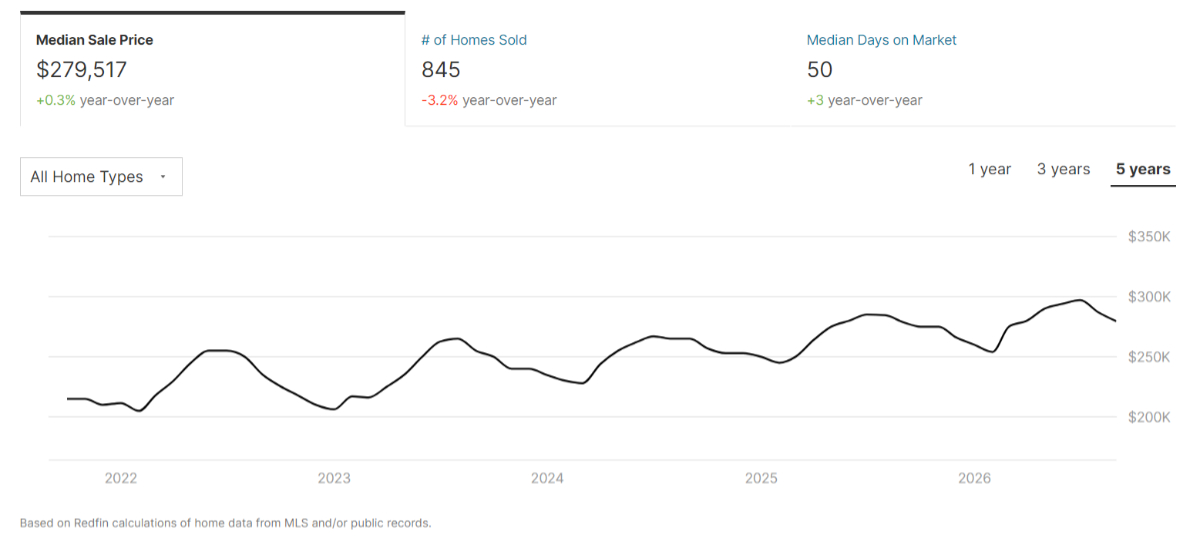
The headline for the Cincinnati housing market in 2026 is stability paired with gentle growth. Home values are edging up at a modest, single-digit annual pace rather than spiking or falling, which is exactly what makes the metro so appealing to anyone wary of volatility. The data backs this up: Redfin reports a median sale price of about $286,000 over the three months ending August 2026, up roughly 0.5% year over year, while Zillow's typical home value for the metro sits closer to $308,000 with low single-digit annual growth. The exact figure varies by source and whether you look at the city or the broader metro, but every major tracker tells the same story of steady, affordable pricing.
Pace of sales reflects that balance too. According to Redfin's Cincinnati market data, homes are selling in around 49 days on average, slightly slower than the 45 days a year earlier, a sign the market has cooled from frantic to healthy rather than stalling. These Cincinnati real estate trends point to a market that favors neither buyers nor sellers overwhelmingly, where well-priced, well-presented homes still move and buyers have a little more room to breathe than in hotter years.
Context matters here. Home prices in Cincinnati remain well below the national median and a fraction of what the same money buys on the coasts, and Zillow's Cincinnati home value data confirms the long, steady upward trend. That affordability, combined with the metro's diversified economy, is the foundation beneath the market's resilience. As trade publication NewHomeSource has noted in its coverage of the region, Cincinnati's housing market has remained notably steady even as other markets wobble.
3. Inventory, demand, and market balance in Cincinnati housing market
Underpinning the Cincinnati housing market's steady prices is a relatively tight but balanced supply. Like much of the country, housing inventory Cincinnati buyers can choose from has been constrained since the pandemic, with fewer homes listed than in the years before, a shortage that keeps gentle upward pressure on prices. The difference from hotter metros is that demand here is strong but not overheated, so limited supply produces steady competition rather than runaway bidding wars.
That balance is what keeps the market healthy. Enough buyers are active, drawn by affordability, jobs, and relative value, to absorb the homes that come to market and keep prices firm, while the slightly longer selling times give those buyers a measure of choice. For sellers, it means well-presented homes still sell at or near asking without the chaos of a seller-takes-all market; for buyers, it means opportunity without being priced out. As inventory gradually normalizes, most observers expect this equilibrium to persist rather than tip sharply in either direction, reinforcing the metro's reputation for stability.
4. Cincinnati housing market outlook: investment potential and forecast
For real estate investors, the Cincinnati housing market makes a strong case for those seeking affordability, cash flow, and steady long-term growth rather than speculative upside. The appeal starts with the math: lower entry prices than many coastal and Sun Belt metros allow a given budget to buy more property and potentially more rental units, while the market’s history of measured appreciation can help protect capital without relying on dramatic price spikes.
The rental side strengthens that investment case. Affordable purchase prices combined with consistent rental demand, supported by the region’s universities, hospitals, and major employers, can produce healthier cash flow than in high-cost markets where rents often struggle to keep pace with property values. Cincinnati’s diversified economy and relatively stable pricing also make it attractive to investors who prefer predictable performance over boom-and-bust cycles. No investment is without risk, and returns still depend heavily on the specific property, neighborhood, financing, and management strategy, but for investors focused on value and stability, the Cincinnati housing market remains a credible and increasingly appealing option.
Looking ahead, the outlook points to more of the same: modest, steady growth rather than a major boom or correction. With prices generally moving at a measured pace, inventory still relatively constrained, and demand supported by affordability and a diversified local economy, the conditions that have kept the market balanced are likely to continue through 2026 and beyond.
Mortgage rates and the broader economy remain the key variables. If rates ease, pent-up buyer demand could increase competition, put additional upward pressure on prices, and shorten selling times. If rates remain elevated, the market is more likely to continue at its current moderate pace. Either way, Cincinnati’s structural advantages, including relatively affordable housing, stable employment, and a long history of measured appreciation, reduce the likelihood of a dramatic correction.
Forecasts are never guaranteed, and conditions can vary significantly from one neighborhood to another. Still, the broader Cincinnati housing market outlook for 2026 suggests a market that continues to do what it has historically done well: grow gradually and remain comparatively stable. For investors, that predictability can be an advantage; for buyers, it offers a more accessible entry point than many larger metros; and for sellers, it raises a practical challenge: in a steady market, standing out from competing listings becomes even more important.
5. How professional media can help listings stand out in the Cincinnati housing market

In a market defined more by steady competition than dramatic swings, presentation can make a meaningful difference. The Cincinnati housing market may remain relatively affordable and stable, but buyers still compare multiple listings before deciding which properties deserve a showing. For sellers and agents, that means strong pricing alone is not always enough. A home also needs to look polished, easy to understand, and emotionally appealing from the moment buyers see it online.
This is where professional real estate media becomes especially valuable. A partner like Fotober helps photographers, agents, brokers, and real estate marketing teams turn raw property content into listing-ready visuals through services such as real estate photo retouching, video editing, virtual staging, floor plans, and architectural visualization. Rather than changing the property itself, the goal is to present its existing strengths more clearly and help potential buyers understand the space before visiting in person.
For vacant homes, virtual home staging can make empty rooms easier to visualize by adding realistic furniture, coordinated decor, and layouts suited to the property. This can be particularly useful when buyers struggle to judge room scale or imagine how an unfurnished space might function. Older or dated listings can also benefit from virtual renovation concepts that demonstrate how kitchens, bathrooms, finishes, or other interior areas could look after an update, giving buyers another way to see the property's potential.
Photography and video matter just as much. Clean color correction, balanced lighting, window enhancement, and consistent editing can make a listing feel more professional without misrepresenting the home. Well-edited property videos can then bring those visuals together into a more engaging tour, helping agents communicate layout, atmosphere, and key selling points more effectively across MLS platforms and social media.
For agents and sellers navigating the Cincinnati housing market, the advantage is straightforward: when pricing and market conditions are relatively balanced, better presentation can help a property compete for attention. Fotober provides a flexible way to strengthen that presentation without the cost and logistical demands of extensive physical staging or in-house post-production. Whether the listing is vacant, dated, newly renovated, or already move-in ready, stronger visual marketing can help buyers recognize its value sooner.
6. Frequently asked questions about the Cincinnati housing market in 2026
What is the median home price in Cincinnati in 2026?
It depends on the source and geography, but the median sale price sits roughly in the mid-$280,000s to around $308,000 in 2026. Redfin reports about $286,000 over the three months ending August 2026, while Zillow's typical metro home value is closer to $308,000, both showing modest annual growth.
Are home prices in Cincinnati rising or falling?
Rising, but gently. Home prices in Cincinnati are growing at a modest single-digit annual pace rather than spiking or declining, which is a defining feature of this steady, affordable market. Month-to-month figures wobble slightly, but the year-over-year trend is mild, sustainable appreciation.
How long do homes take to sell in Cincinnati?
Around 49 days on average as of mid-2026, according to Redfin, slightly longer than the 45 days a year earlier. That pace reflects a balanced market where well-priced, well-presented homes still sell steadily, while buyers have a bit more time to decide than in hotter years.
Is Cincinnati a good place to invest in real estate?
For many investors, yes. Low purchase prices relative to coastal metros, steady appreciation, and solid rental demand can produce healthy cash flow with lower volatility. As always, returns depend on the specific property and neighborhood, so due diligence is essential, but the market's stability and value are a strong draw.
What is the Cincinnati property market forecast?
Most forecasts point to continued modest, steady growth through 2026, with prices rising in the low single digits. Mortgage rates and the broader economy are the main variables, but Cincinnati's affordability and stable fundamentals make a sharp correction unlikely.
7. Conclusion
The Cincinnati housing market in 2026 is a case study in stability: affordable prices, modest and dependable growth, balanced inventory, and steady demand, without the volatility that defines so many other metros. For buyers, that means opportunity without a frenzy; for investors, a value-driven market with reliable fundamentals; and for sellers, a market where standing out comes down to presentation. In a steady market where homes take about seven weeks to sell, the listings with bright, professional photos and well-staged rooms are the ones that sell faster and for more. If you're marketing a Cincinnati home, Fotober can help you put its best image forward with professional photo editing and virtual staging. Reach us at our email address or the hotline below, and send your listing photos to see the difference today.
Connect with Fotober
- Facebook: fotobermedia.co
- YouTube Channel: Fotober
- TikTok Channel: @fotober
- Instagram: fotober_media
- Email support: [email protected]
- Hotline: +84 942 110 297
Related posts

Modern Luxe Interior Design: Elements, Style Guide and How to Stage It
October 10, 2026

Minimalist Interior Design: Characteristics, Style Guide, and Staging
October 8, 2026

Coastal Interior Design: Style Definition & Staging Guide
September 30, 2026

Contemporary Interior Design: Key Elements and How to Stage This Style
September 30, 2026
