




Dallas vs. Los Angeles Housing Market: Comparing Prices & Supply


Share:
Table of Contents
- 1. Key takeaways
- 2. Dallas vs Los Angeles housing market: the price gap
- 3. The supply story: why Texas builds more homes
- 4. California’s housing shortage and why Los Angeles remains expensive
- 5. Cost of housing, Dallas vs LA: what it means for buyers
- 6. Frequently asked questions about Dallas vs Los Angeles housing market
- 7. Conclusion
Dallas vs. Los Angeles housing market is one of the clearest comparisons in U.S. real estate because the two metros sit at opposite ends of the affordability and supply spectrum. Dallas continues to add housing at scale and remains relatively attainable for a major metro, while Los Angeles faces chronic supply constraints and some of the highest home prices in the country. That contrast makes the two markets a useful case study in how construction, land-use policy, and inventory shape what buyers can actually afford.
This guide breaks down the Dallas vs. Los Angeles housing market in practical terms, including the price gap, housing supply, why Texas builds more homes than California, the roots of Los Angeles’ shortage, and what the differences mean for buyers, sellers, investors, and real estate professionals in 2026.
1. Key takeaways
- The Dallas vs. Los Angeles housing market comparison is defined by supply: Dallas builds abundantly and stays affordable, while LA's shortage keeps prices among the nation's highest.
- Median home prices are roughly 300,000–360,000 in Dallas versus around $850,000 in Los Angeles, more than double.
- Dallas and Texas build far more homes than Los Angeles and California, by some estimates several times as many, which keeps prices in check.
- California's housing shortage stems from restrictive zoning, slow permitting, limited land, and high construction costs.
- In both markets, a strong listing presentation is essential: in Dallas to stand out among many listings, in LA to justify a premium price.
2. Dallas vs Los Angeles housing market: the price gap
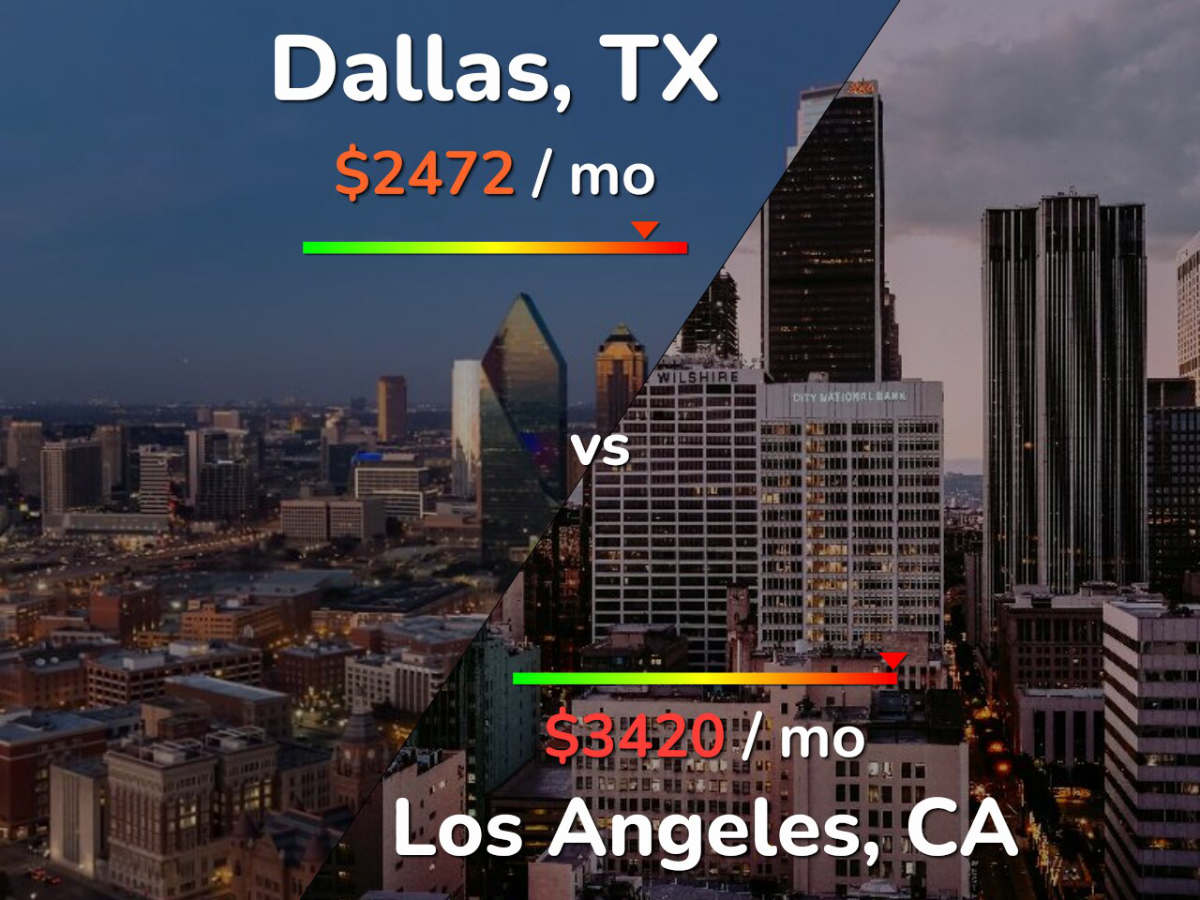 Dallas vs Los Angeles - Cost of living comparison
The most striking feature of the Dallas vs Los Angeles housing market is the sheer size of the price gap. In Dallas, the median home value sits around $300,000 to $360,000 depending on the source and whether you measure the city or the metro, Zillow puts the City of Dallas near $303,000, with the broader Dallas–Fort Worth metro somewhat higher. In Los Angeles, by contrast, the median home price runs around $850,000, roughly two and a half to three times the Dallas figure.
That gap extends to the overall cost of living, not just home prices. Cost-of-living indexes put Los Angeles far above Dallas, on the order of 173 versus 105 on common scales, with housing the single largest driver of the difference. The cost of housing in Dallas vs. LA is, in practical terms, the difference between a metro where a middle-class household can realistically buy a home and one where ownership is out of reach for many. The same salary stretches dramatically further in Texas, which is a central reason so many people and companies have relocated from California to Texas over the past decade. The question is why the two markets diverged so sharply and the answer is almost entirely about supply.
3. The supply story: why Texas builds more homes
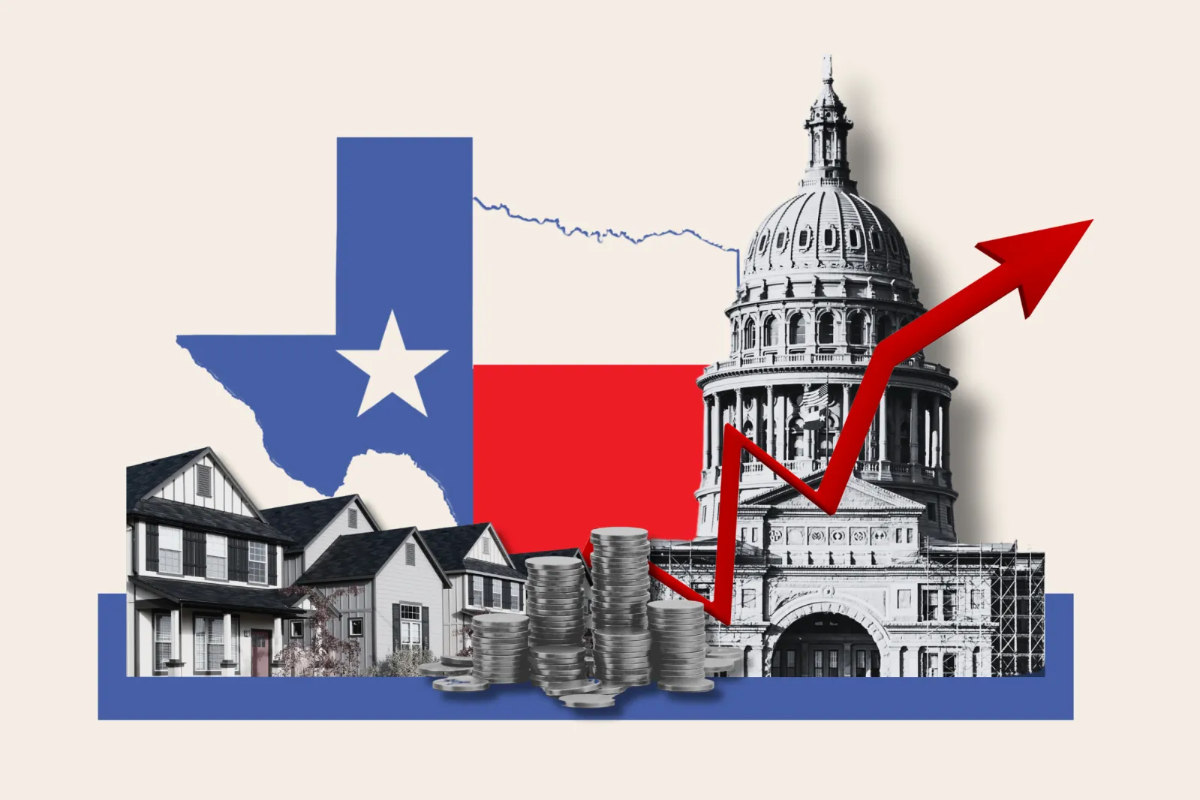
The biggest structural difference in the Dallas vs. Los Angeles housing market is not demand but the ability to add supply when demand rises. Both metros attract jobs and new residents, yet Dallas–Fort Worth consistently builds far more housing. NewHomeSource highlights that contrast in its analysis of why Dallas so dramatically outbuilds Los Angeles, showing how different development environments can shape long-term affordability.
Understanding why Texas builds more homes starts with land. Dallas–Fort Worth has large areas of relatively flat, developable land on its metro fringe, allowing builders to add subdivisions, master-planned communities, townhomes, and multifamily projects as demand expands. Los Angeles is far more constrained by the Pacific Ocean, mountains, protected land, and an already-developed urban footprint. Regulation also matters. Texas generally offers a more development-friendly environment, with fewer barriers to converting available land into housing and, in many jurisdictions, faster permitting and entitlement processes. Southern California projects may face multiple agencies, environmental review, zoning restrictions, local opposition, and longer approval timelines. Those differences directly affect the housing supply Dallas vs. Los Angeles can deliver.
Lower land and carrying costs also give Texas developers more flexibility to build across different price points instead of concentrating primarily on premium housing. That larger pipeline helps reduce pressure on existing inventory when population growth accelerates. Dallas is not immune to affordability challenges. Higher mortgage rates, property taxes, insurance, and rapid population growth can still strain household budgets. The difference is that the region has greater supply elasticity: when demand rises, builders can respond with more homes.
That response is a major reason the Dallas vs. Los Angeles housing market produces such different price outcomes. Dallas has added substantial population and employment while maintaining lower home prices because new construction continually expands buyer choice. The lesson is straightforward: affordability depends not only on how many people want to live in a region, but also on how quickly housing production can respond.
4. California’s housing shortage and why Los Angeles remains expensive

If Dallas demonstrates what happens when supply can expand, Los Angeles shows the opposite. The California housing shortage has developed over decades as strong demand for jobs, climate, culture, and coastal living has outpaced housing construction. Too many households competing for too few homes has placed persistent upward pressure on both purchase prices and rents.
Several factors reinforce the shortage. Zoning has historically limited density across large parts of Los Angeles, while new developments may face lengthy entitlement processes, environmental review, design requirements, public hearings, and neighborhood opposition. Each additional step adds cost and uncertainty before construction even begins. Geography makes expansion harder as well. Unlike Dallas–Fort Worth, Los Angeles cannot simply extend development in every direction. The Pacific Ocean, mountains, environmentally sensitive land, and an already dense urban footprint mean new supply often depends on infill, redevelopment, or higher-density construction, all of which tend to be more complex.
High land, labor, and regulatory costs compound the California housing shortage. Expensive projects are easier to justify when completed units can command premium prices, which makes it harder to produce enough entry-level and middle-income housing. California has introduced reforms aimed at encouraging more housing, including measures supporting accessory dwelling units, streamlined approvals, and greater density in selected areas. But reforms must overcome a deficit that accumulated over decades, so meaningful improvement takes time. This is where the Dallas vs. Los Angeles housing market diverges most clearly. Dallas can respond to stronger demand with large volumes of new construction, while Los Angeles has less capacity to expand supply quickly. As a result, increased demand in Los Angeles is more likely to translate into higher prices than substantially more housing.
Until the California housing shortage narrows, Los Angeles is likely to remain one of the country’s least affordable major metros. Prices can still rise or fall with economic conditions and mortgage rates, but the underlying supply constraint remains one of the strongest forces supporting the long-term affordability gap with Dallas.
5. Cost of housing, Dallas vs LA: what it means for buyers

The cost of housing in Dallas vs LA becomes most meaningful when translated into actual purchasing power. A household with the same income, savings, and mortgage rate can face dramatically different options depending on which metro it enters. That is where the Dallas vs Los Angeles housing market comparison moves from supply statistics to the practical question of what buyers can afford.
Dallas generally offers a lower entry price and a broader selection of newer housing. Suburban communities continue to add detached homes, townhouses, and master-planned developments, allowing buyers to trade off location, square footage, age, and amenities without competing for a very limited pool of properties.
The advantage is not determined by purchase price alone. Texas property taxes can be high, and buyers must account for insurance, HOA fees, and transportation costs in a sprawling metro. Even with those expenses, however, the overall cost of housing Dallas vs. LA typically gives Dallas buyers considerably more purchasing power. Los Angeles presents a higher barrier to ownership. Larger down payments and monthly mortgage payments can push buyers toward smaller homes, older properties, or locations farther from employment centers. When borrowing costs remain elevated, some households stay in the rental market longer because the gap between income and home prices is simply too large.
That premium reflects qualities Dallas cannot replicate. Los Angeles offers a coastal climate, major employment clusters, entertainment and creative industries, established neighborhoods, and cultural amenities that continue to attract buyers despite high prices. Dallas offers a different value proposition: more space, newer construction, and a lower cost of entry. Continued development also gives households greater flexibility to move outward in search of affordability.
The Dallas vs. Los Angeles housing market therefore represents two distinct affordability models. Dallas uses new construction to absorb demand, while Los Angeles depends on a much more constrained housing stock. The right choice ultimately depends on career, lifestyle, and financial priorities, but on housing costs alone, Dallas continues to offer buyers substantially greater
6. Frequently asked questions about Dallas vs Los Angeles housing market
Is it cheaper to buy a home in Dallas or Los Angeles?
Dallas is far cheaper. The median home price is roughly 300,000–360,000 in Dallas versus around $850,000 in Los Angeles, more than double. The overall cost of living is also much higher in LA, with housing the biggest driver of the gap.
Why is housing so much more affordable in Dallas?
Mainly because of supply. Dallas and Texas build far more homes than Los Angeles and California, thanks to abundant land, lighter zoning, faster permitting, and a pro-development culture. More supply meeting demand keeps prices in check.
Why are homes so expensive in Los Angeles?
The California housing shortage is the core reason. Restrictive zoning, slow permitting, local opposition to development, limited land, and high construction costs mean LA builds far too few homes to meet demand, pushing prices and rents to among the nation's highest.
Does Dallas really build more homes than Los Angeles?
Yes, by a wide margin. Analyses have found the Dallas area builds several times as many homes as Los Angeles each year despite similar metro sizes, which is the central reason the Dallas vs Los Angeles housing market diverges so sharply on price.
Which city is better for real estate buyers?
It depends on priorities. Dallas offers far greater affordability and homeownership access, while Los Angeles offers climate, coastline, and a unique economy at a steep premium. On housing cost alone, Dallas wins decisively; on lifestyle factors, many still choose LA.
7. Conclusion
The Dallas vs. Los Angeles housing market is the clearest illustration in America of a simple truth: supply determines affordability. Dallas builds abundantly and stays within reach of ordinary households; Los Angeles, constrained by a long-running housing shortage, remains one of the most expensive markets in the country. The more than two-to-one price gap between them isn't about demand; both are desirable, but about how many homes each region allows to be built. For buyers, that means a stark choice between affordability and coastal lifestyle; for sellers and agents in either market, it means presentation is what wins the sale. If you're marketing listings in Dallas, Los Angeles, or anywhere in between, Fotober can help them stand out with professional photo and video editing and virtual staging. Reach us at [email protected] or the hotline below, and send your listing media to see the difference, place an order or start a free trial today.
Connect with Fotober
- Facebook: fotobermedia.co
- YouTube Channel: Fotober
- TikTok Channel: @fotober
- Instagram: fotober_media
- Email support: [email protected]
- Hotline: +84 942 110 297
Related posts

What Drives Mortgage Rates? Explain The Forces Behind 2026's Numbers
October 29, 2026
Orlando Population Growth in 2026: Trends & Housing Demand
October 26, 2026

Cincinnati Housing Market 2026: What Should Buyers & Sellers Expect?
October 20, 2026

Modern Luxe Interior Design: Elements, Style Guide and How to Stage It
October 10, 2026
