




Modern Home Floor Plans: Ideas, Layouts & Planning Tips

Share:
Table of Contents
- 1. Key components of modern home floor plans
- 2. Modern home floor plans vs. contemporary floor plans: Key differences
- 3. Popular types of modern home floor plans
- 4. Inspiring modern house layout ideas for every lifestyle
- 5. How much does it cost to build from modern home floor plans
- 6. Step-by-step guide: How to choose the ideal modern floor plan
- 7. Elevating modern home floor plans with professional drafting & visualization
- 8. Real estate marketing for modern home floor plans: From listing to "sold"
- 9. Conclusion
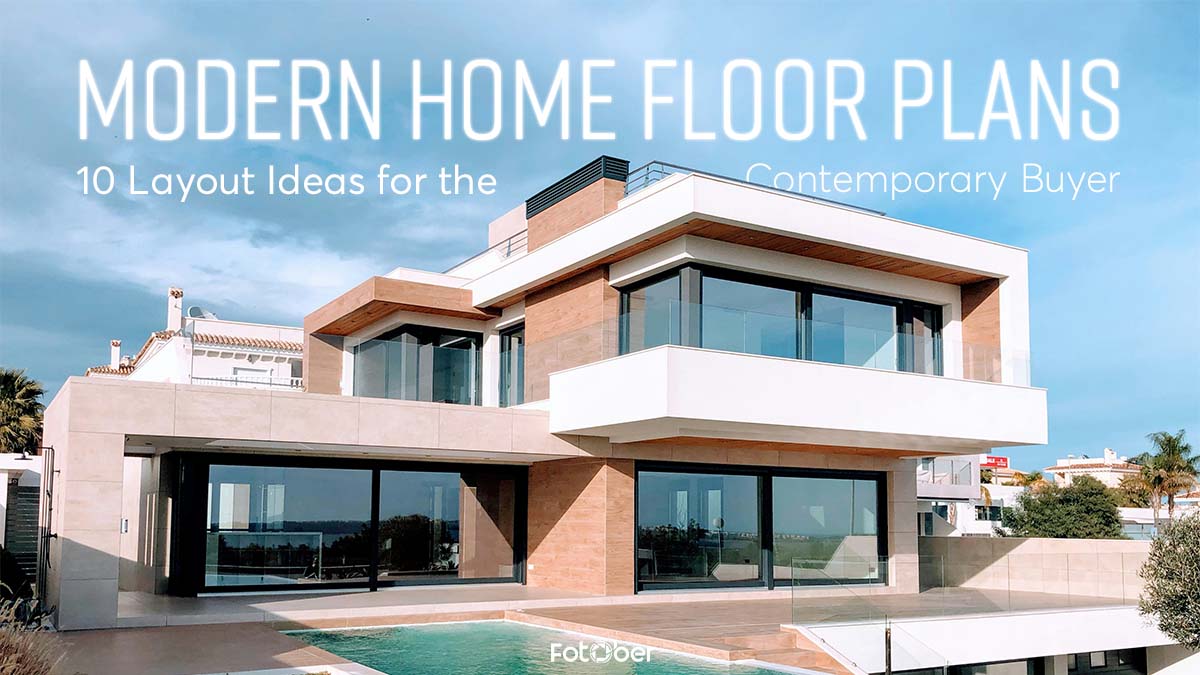
With the trends of remote work and the desire for minimalism, homeowners are moving away from traditional, compartmentalized spaces in favor of flexibility and flow. This shift explains why modern house layout ideas in 2026 tend to offer a seamless blend of aesthetic simplicity and functional efficiency. In this guide, we’ll explore the key elements of modern home floor plans, the most market-favorite layouts, and how professional visualization can turn a simple blueprint into a dream home.
When analyzing high-performing modern homes, several defining characteristics emerge that separate them from their traditional counterparts:
- Clean, geometric lines: An emphasis on structural simplicity and the absence of ornate decoration.
- Open-concept layouts: Integrated living, dining, and kitchen areas that foster social connectivity.
- Natural light: The use of floor-to-ceiling windows to merge the interior with the outdoors.
- Functional minimalism: Minimalist floor plans that eliminate wasted space in favor of multi-purpose zones.
- Sustainable materials: Incorporation of eco-friendly elements and energy-efficient designs.
1. Key components of modern home floor plans
While modern architecture encompasses a wide range of aesthetic interpretations, virtually all successful modern home floor plans share core structural and functional traits.
1.1. Open-concept living spaces
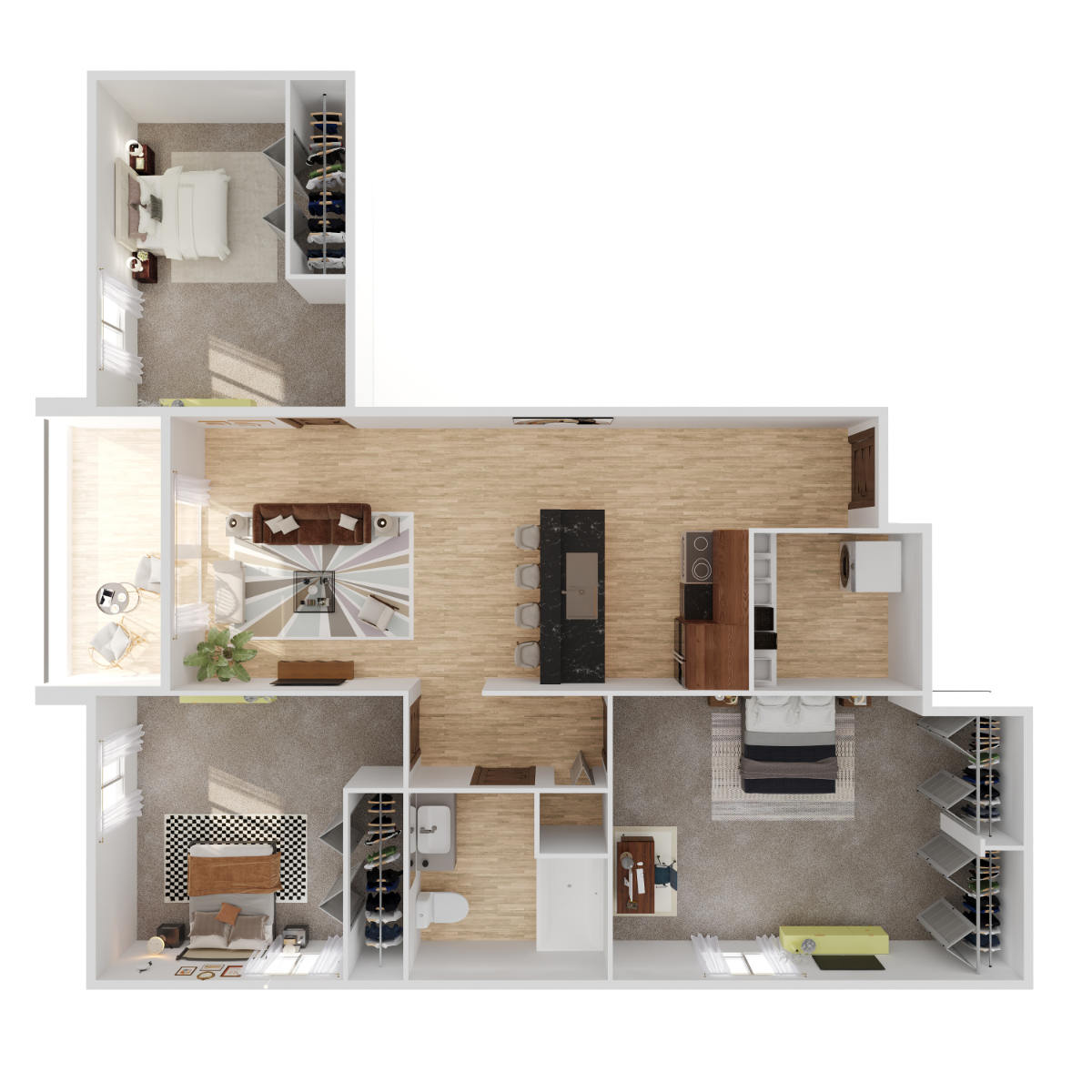
The defining hallmark of an open-concept modern home is the removal of non-load-bearing interior walls that once separated the kitchen, dining room, and primary living area. By merging these three vital spaces into a singular "great room," the home encourages social interaction, maximizes daylight distribution, and creates an airy atmosphere even within a modest footprint.
1.2. Clean geometric lines & minimalist aesthetics
Modern blueprints shun complex moldings, ornamental archways, and extraneous decorative columns. Instead, minimalist floor plans rely on clean horizontal and vertical lines, flat or low-pitched mono-slope rooflines, and simple rectangular or L-shaped structural footprints. Circulation paths are streamlined to eliminate wasted corridor space.
1.3. Large window wall integrations
Daylighting is a fundamental pillar of modern layout design. Floor plans are specifically engineered around floor-to-ceiling glass assemblies, clerestory windows, and strategic skylights. These glass features frame outdoor views and dramatically reduce reliance on artificial lighting during daytime hours.
1.4. Indoor-outdoor seamless transitions
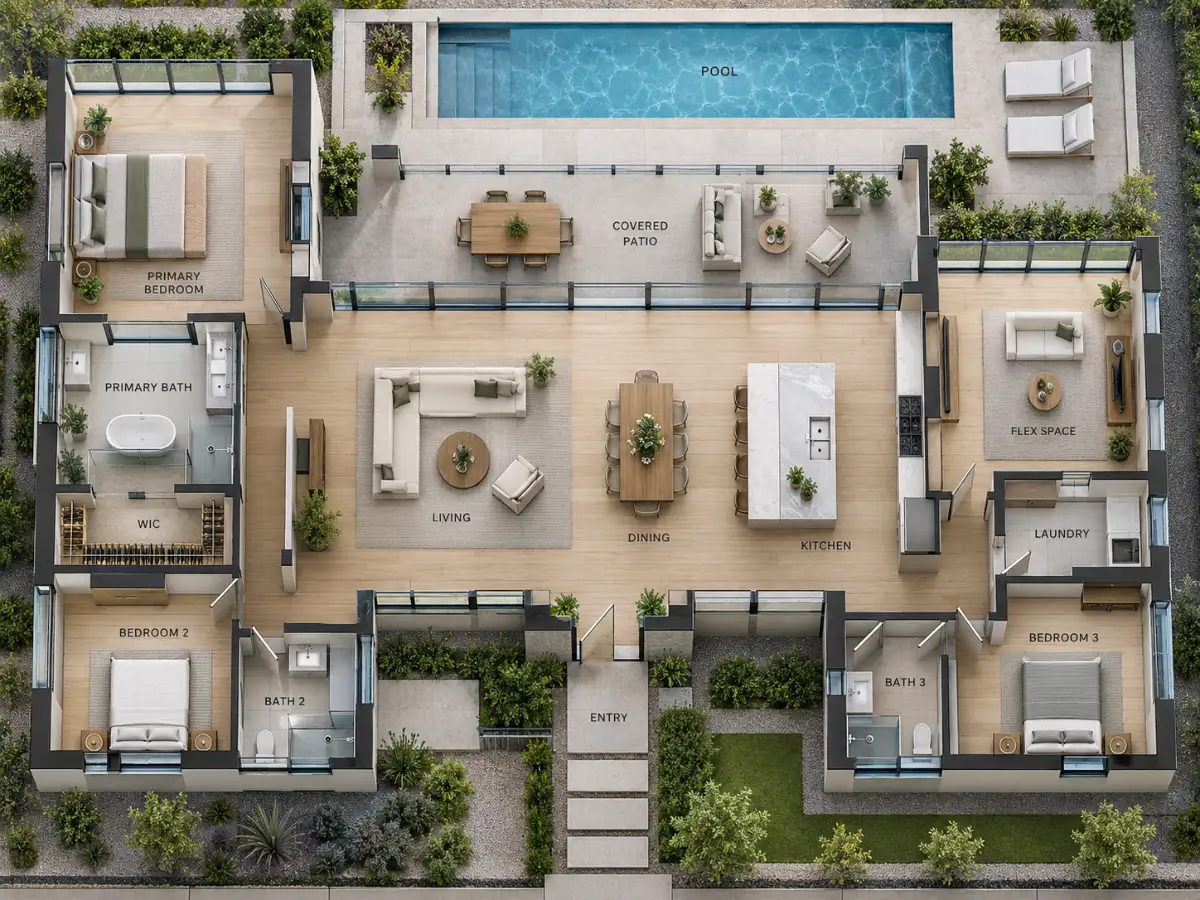
Modern open layouts treat exterior living spaces, such as covered verandas, swimming pools, and internal courtyards, as direct extensions of the interior living room. Multi-slide glass pocket doors, folding accordions, and continuous polished concrete or timber flooring draw the eye outward, creating an unbroken spatial continuum.
1.5. Multi-functional & flexible zoning
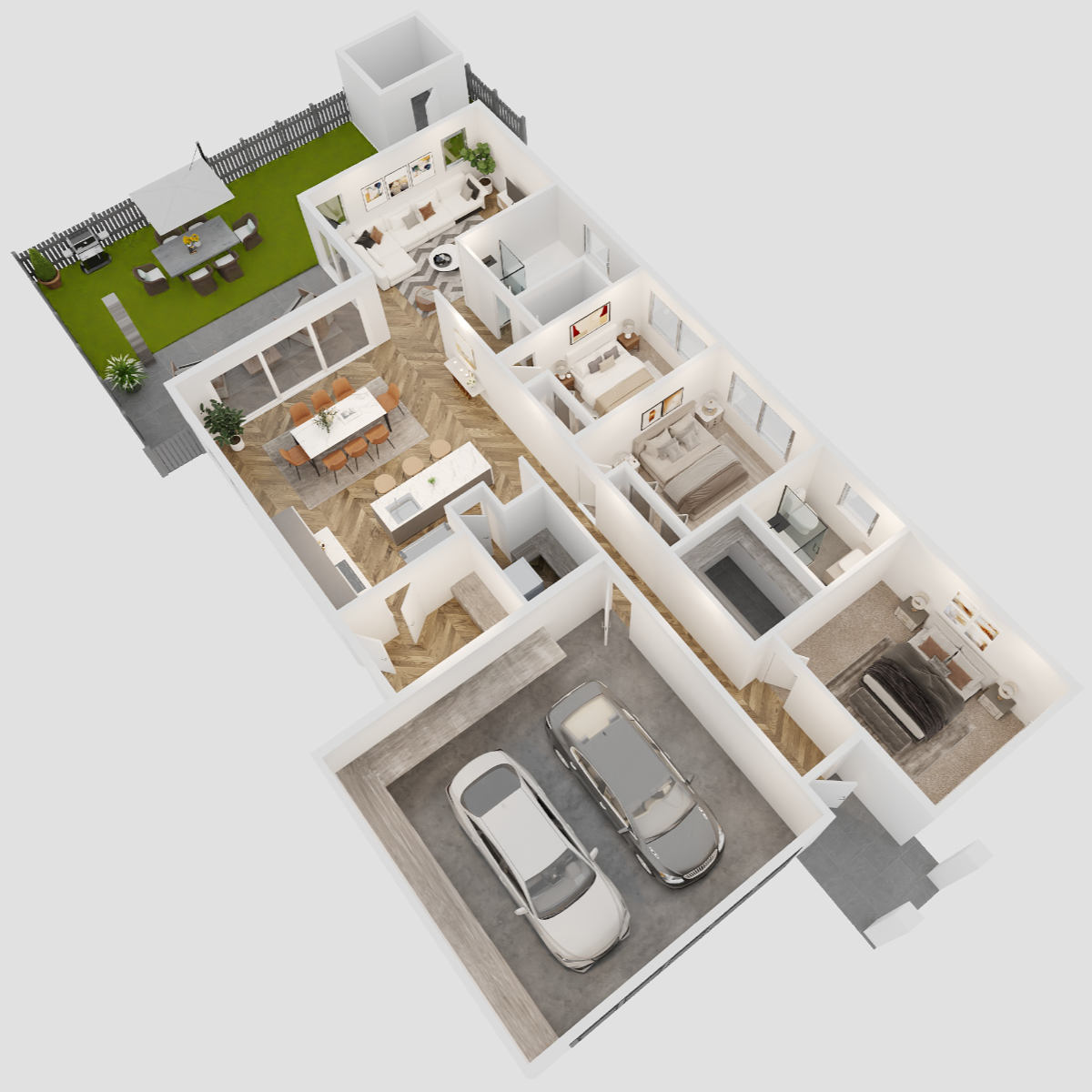
Modern living demands adaptability. Rather than fixed-use rooms, modern blueprints frequently incorporate "flex spaces", rooms that can easily transition between a home office, guest bedroom, fitness studio, or media center using pocket doors, sliding partitions, or modular furniture arrangements.
2. Modern home floor plans vs. contemporary floor plans: Key differences
In casual real estate conversations, people often use "modern" and "contemporary" interchangeably. However, in architectural design and spatial planning, they represent distinct concepts.
- Modern floor plans: Refers to a specific design era (primarily Mid-Century Modern and Bauhaus modernism of the early to mid-20th century). Modern designs adhere strictly to structural minimalism, functional grids, flat/pitched planes, and exposed structural elements like steel beams or timber posts.
- Contemporary home layouts: Refers to what is popular right now. Contemporary design is fluid and ever-evolving, borrowing clean lines from modernism while incorporating current lifestyle trends, smart home tech integrations, complex organic curves, and eco-friendly sustainable materials.
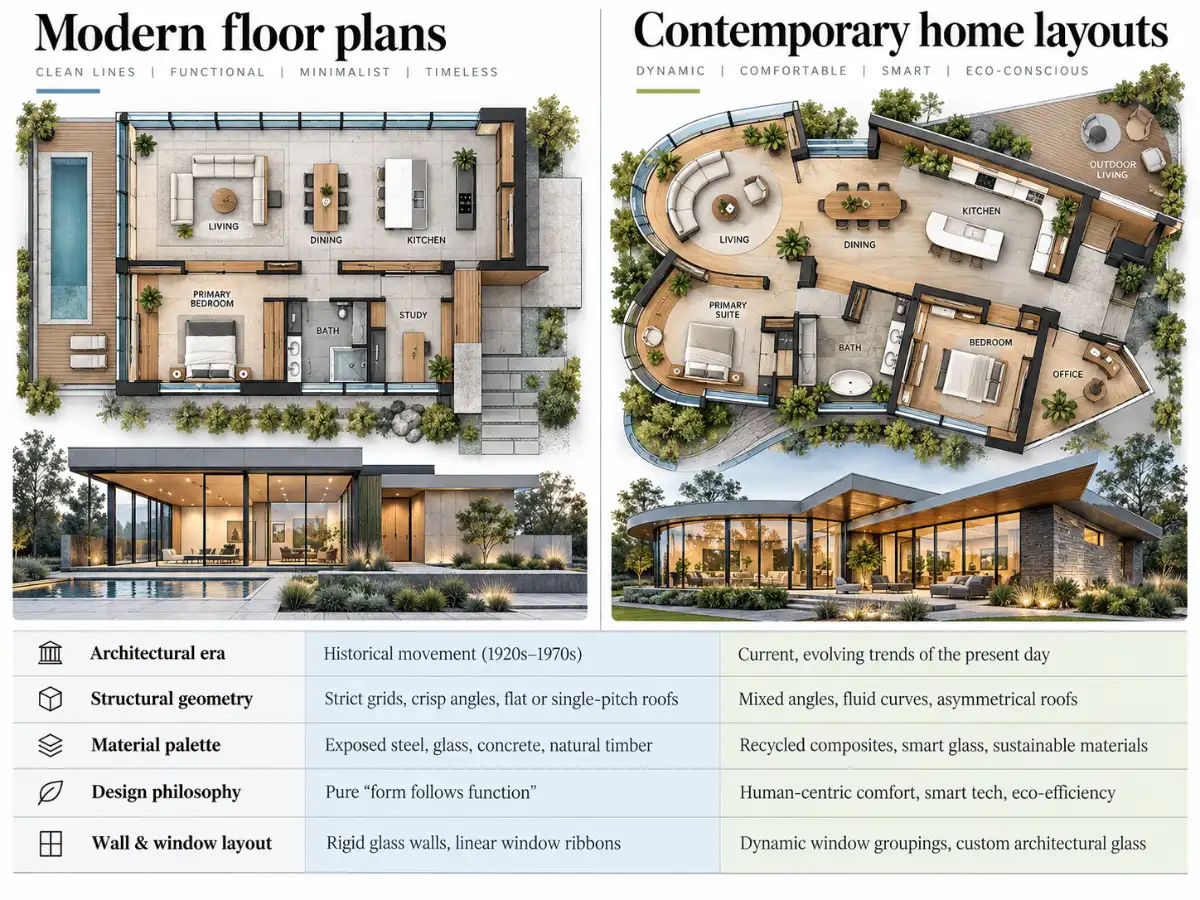
|
Feature |
Modern home floor plans |
Contemporary home layouts |
|
Architectural era |
Historical movement (1920s–1970s) |
Current, evolving trends of the present day |
|
Structural geometry |
Strict grids, crisp angles, flat or single-pitch roofs |
Mixed angles, fluid curves, asymmetrical roofs |
|
Material palette |
Exposed steel, glass, concrete, natural timber |
Recycled composites, smart glass, sustainable materials |
|
Design philosophy |
Pure "form follows function" |
Human-centric comfort, smart tech, eco-efficiency |
|
Wall & window layout |
Rigid glass walls, linear window ribbons |
Dynamic window groupings, custom architectural glass |
3. Popular types of modern home floor plans
Choosing the right base layout depends heavily on family size, lot topography, budget, and personal lifestyle preferences.
3.1. Open concept modern home plans
The quintessential choice for modern residential design. By unifying the kitchen, dining, and living quarters into a spacious central pavilion, this layout of modern home floor plans is ideal for family bonding and hosting guests. Sightlines remain uninterrupted from the kitchen island across to the outdoor patio.
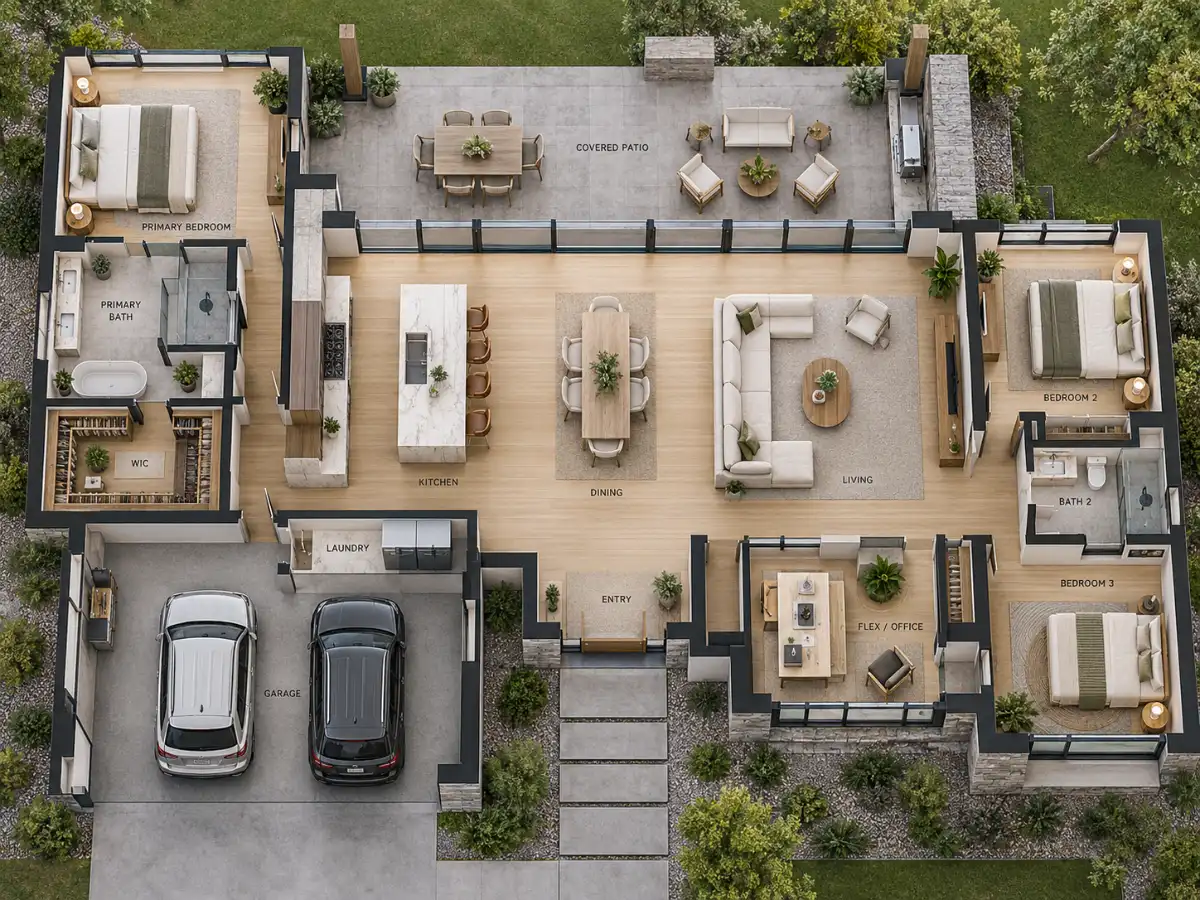
3.2. Minimalist floor plans for streamlined living
Designed for homeowners who value simplicity and decluttered environments. Minimalist floor plans prioritize built-in hidden storage, concealed appliance garages, flush pocket doors, and zero-clearance hallway transitions. Every square foot in minimalist interior design is optimized for utility and quiet aesthetic harmony.
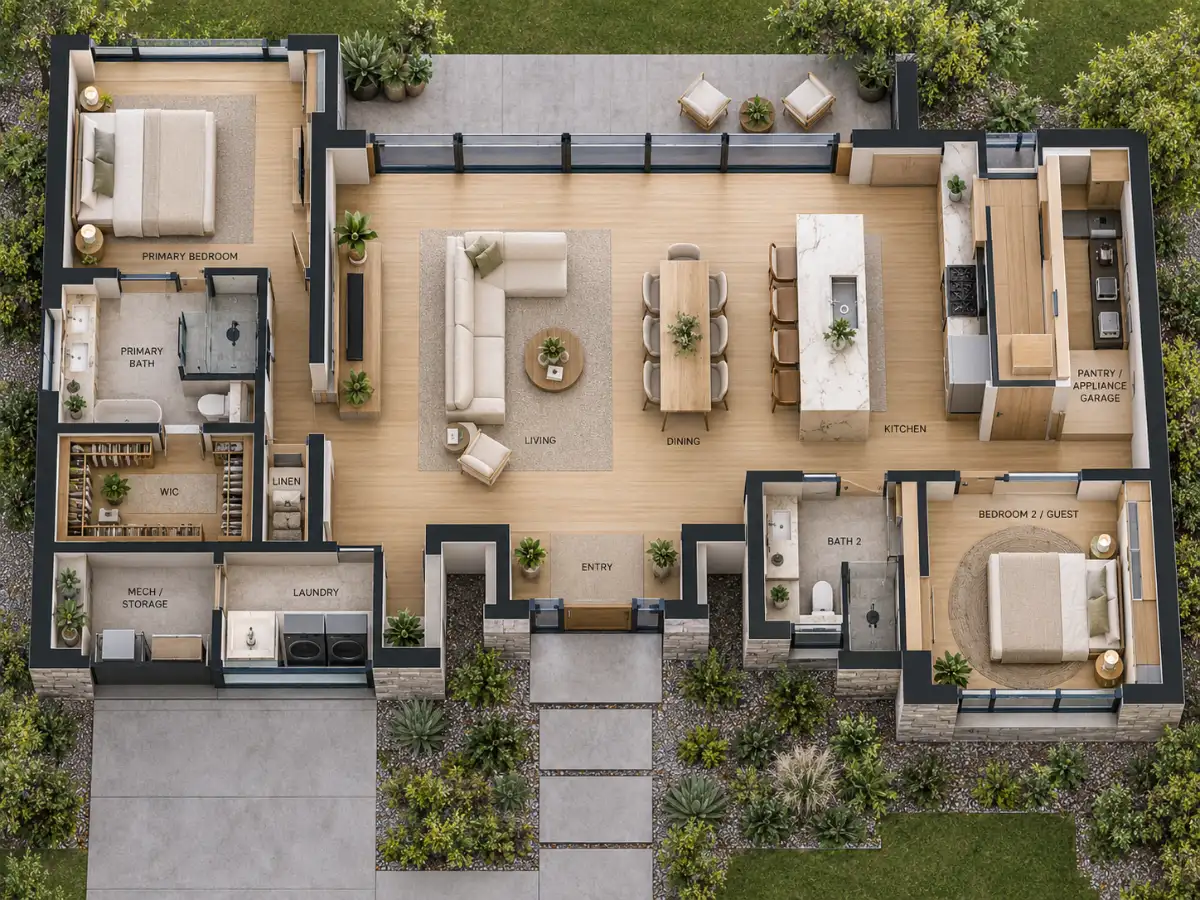
3.3. Small modern house plans
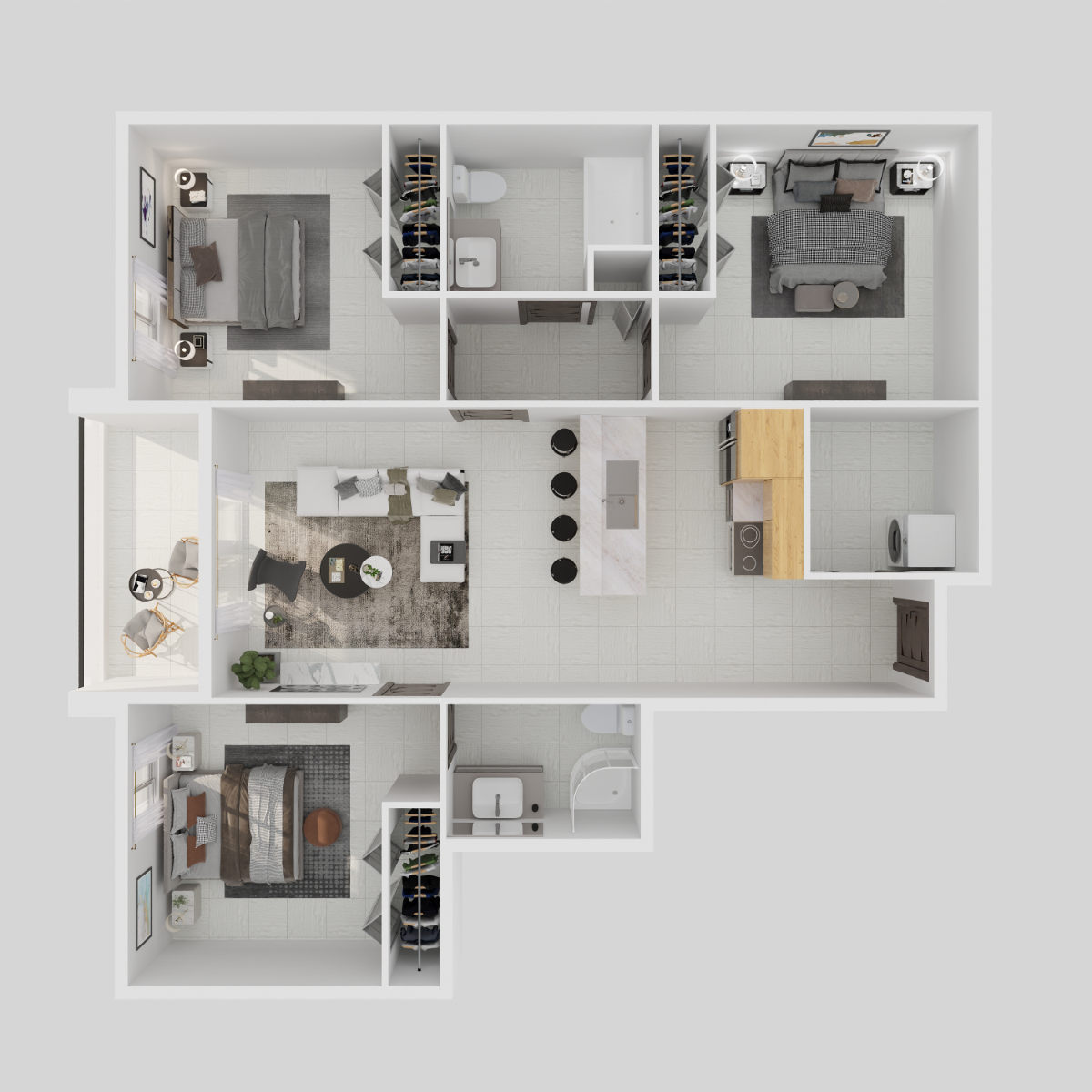
Efficiency meets elegance in small modern house plans. Ranging typically from 500 to 1,500 square feet, these compact designs are increasingly popular for urban infill lots, Accessory Dwelling Units (ADUs), vacation cabins, and downsizing retirees. High ceilings, vertical storage walls, lofted sleeping areas, and oversized glass walls make small spaces feel twice their actual size.
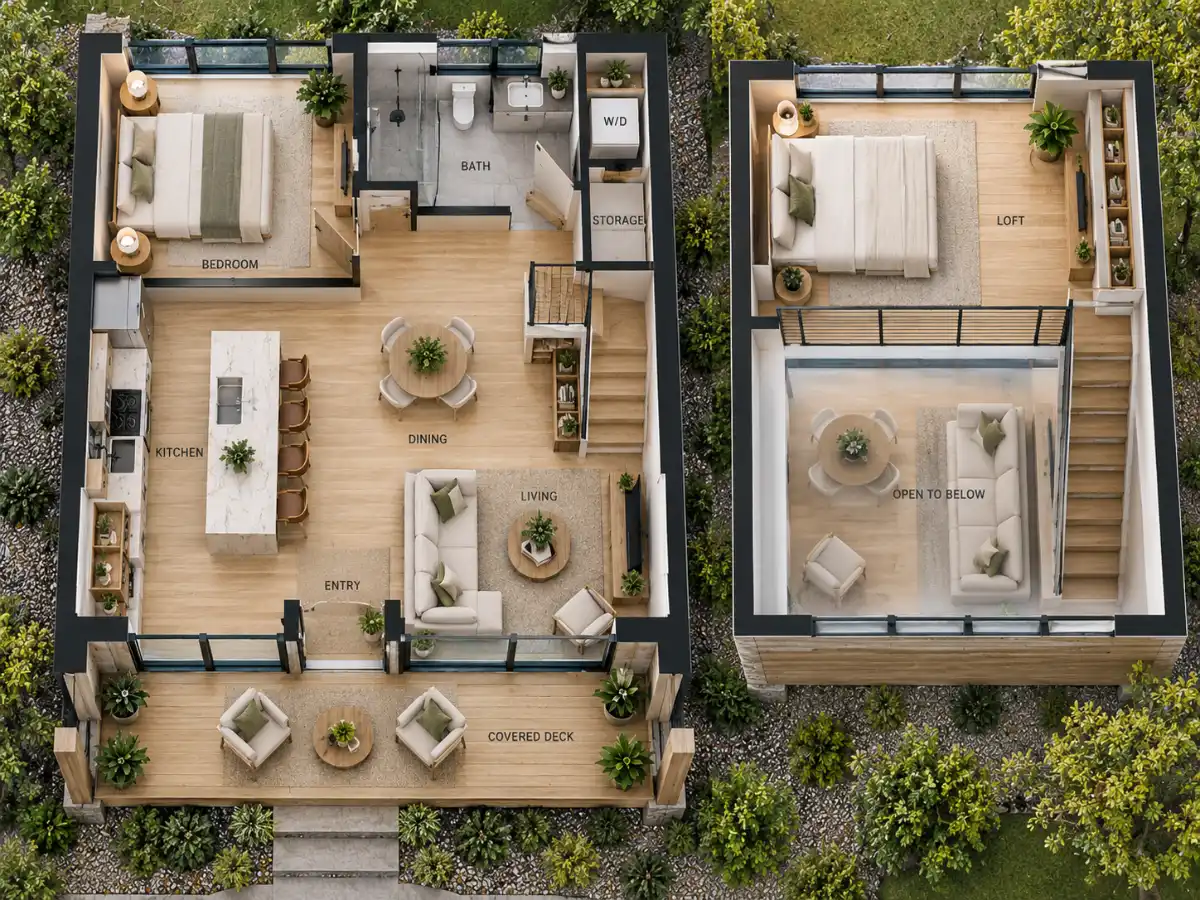
3.4. Multi-story & split-level modern layouts
On steep or narrow hillside building sites, multi-story and split-level plans excel. These styles of floor plans vertically segregate private and public life: social living hubs are positioned on the main ground or upper cantilevered level to capture surrounding views, while quiet bedroom suites are nestled on private lower or upper floors.
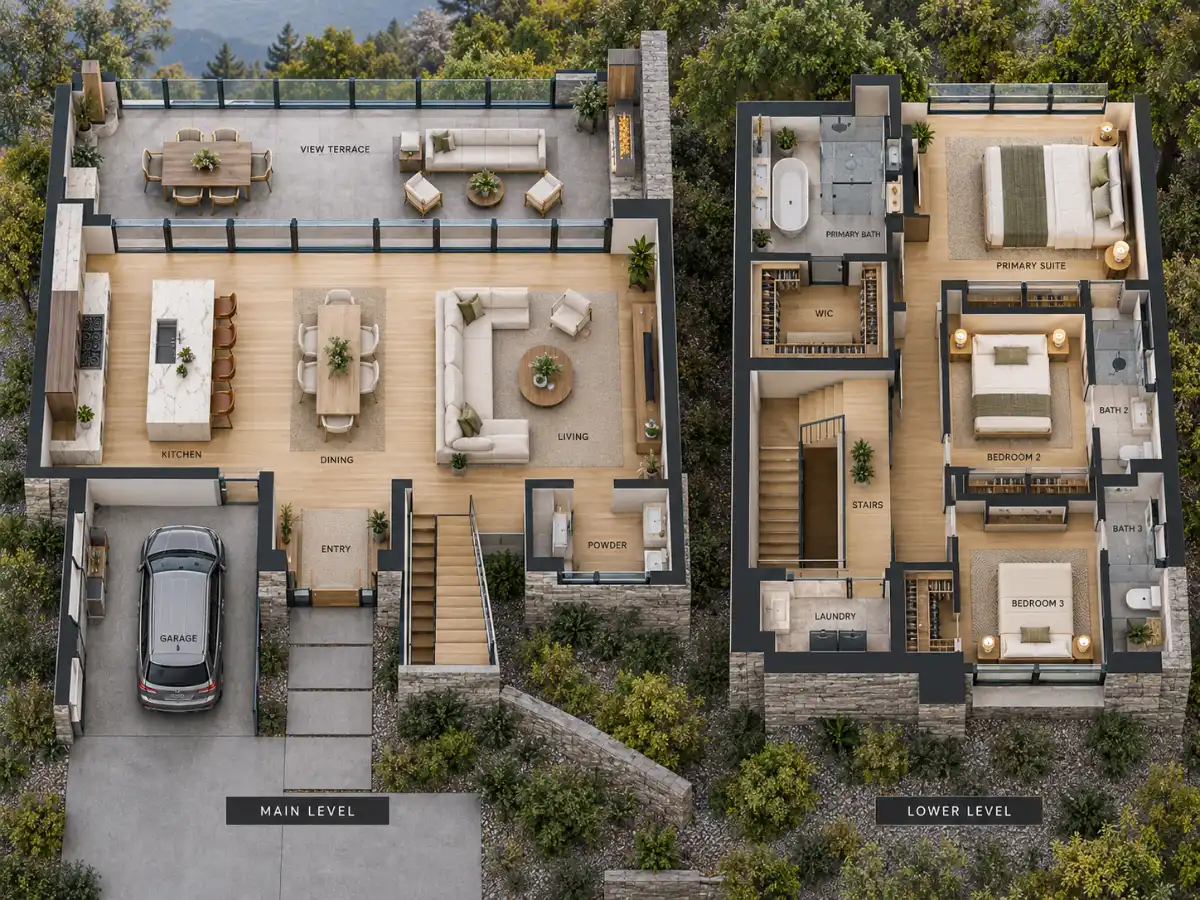
4. Inspiring modern house layout ideas for every lifestyle
When reviewing or drafting blueprints, incorporating tailored modern house layout ideas ensures that your home adapts seamlessly to your routine.
4.1. The L-shaped & U-shaped courtyard layout
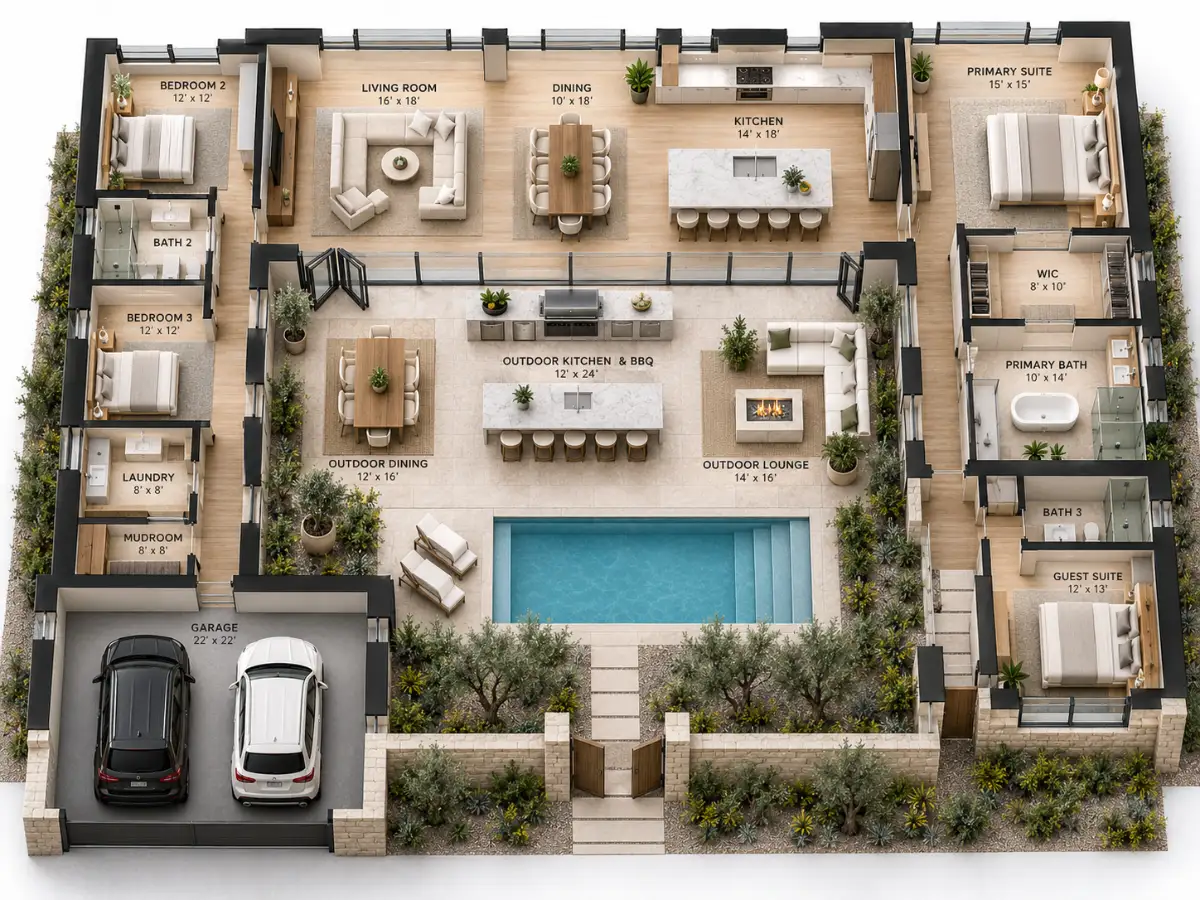
Arranging the floor plan into an "L" or "U" configuration creates a sheltered, private interior courtyard. The home's main living wings wrap around a central pool, garden, or outdoor deck, providing natural privacy from adjacent neighbors while allowing multiple rooms to open directly into the central sanctuary.
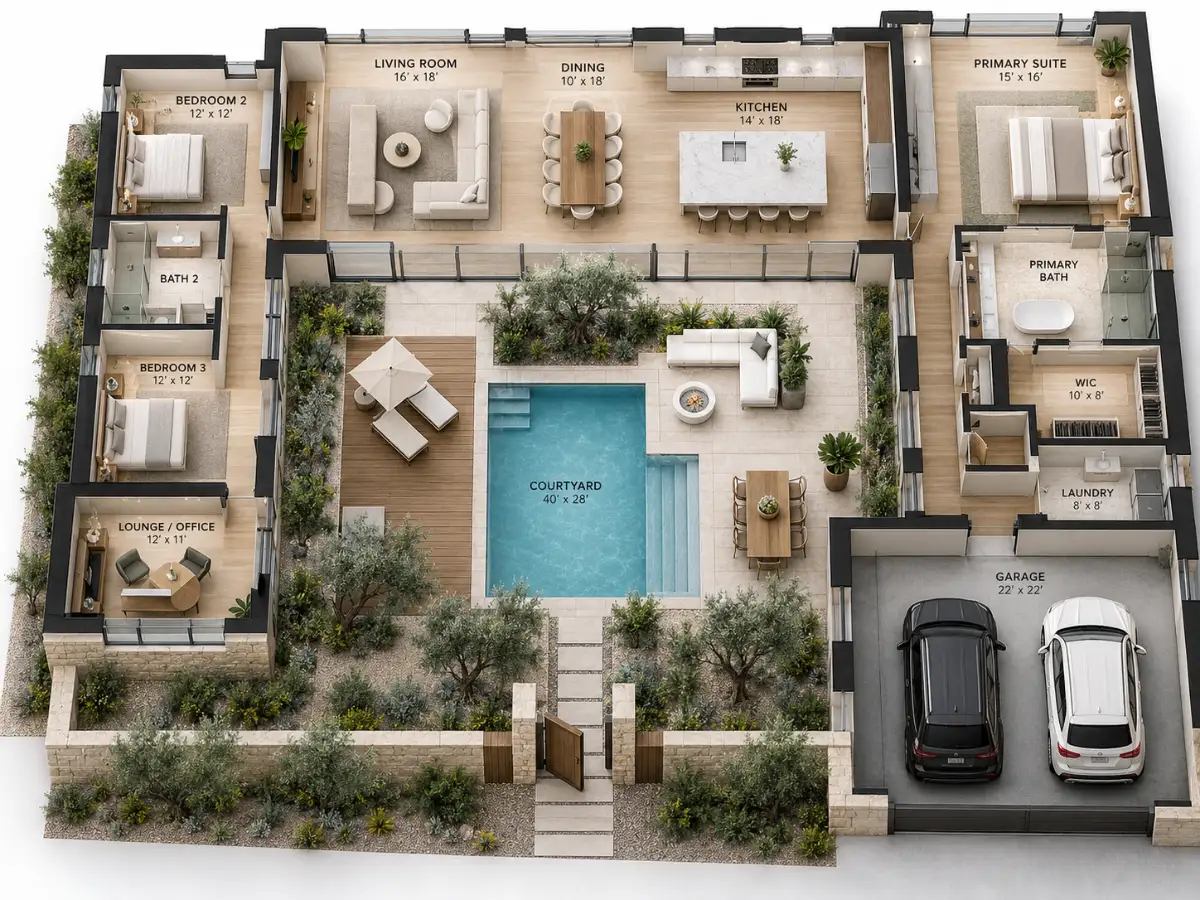
4.2. The split bedroom layout (Privacy-first plan)
In single-story modern homes, the split bedroom arrangement positions the primary bedroom suite on one side of the house and the secondary guest or children’s bedrooms on the opposite side. The shared open-concept living room acts as a central buffer, providing maximum acoustic privacy for parents or remote workers.
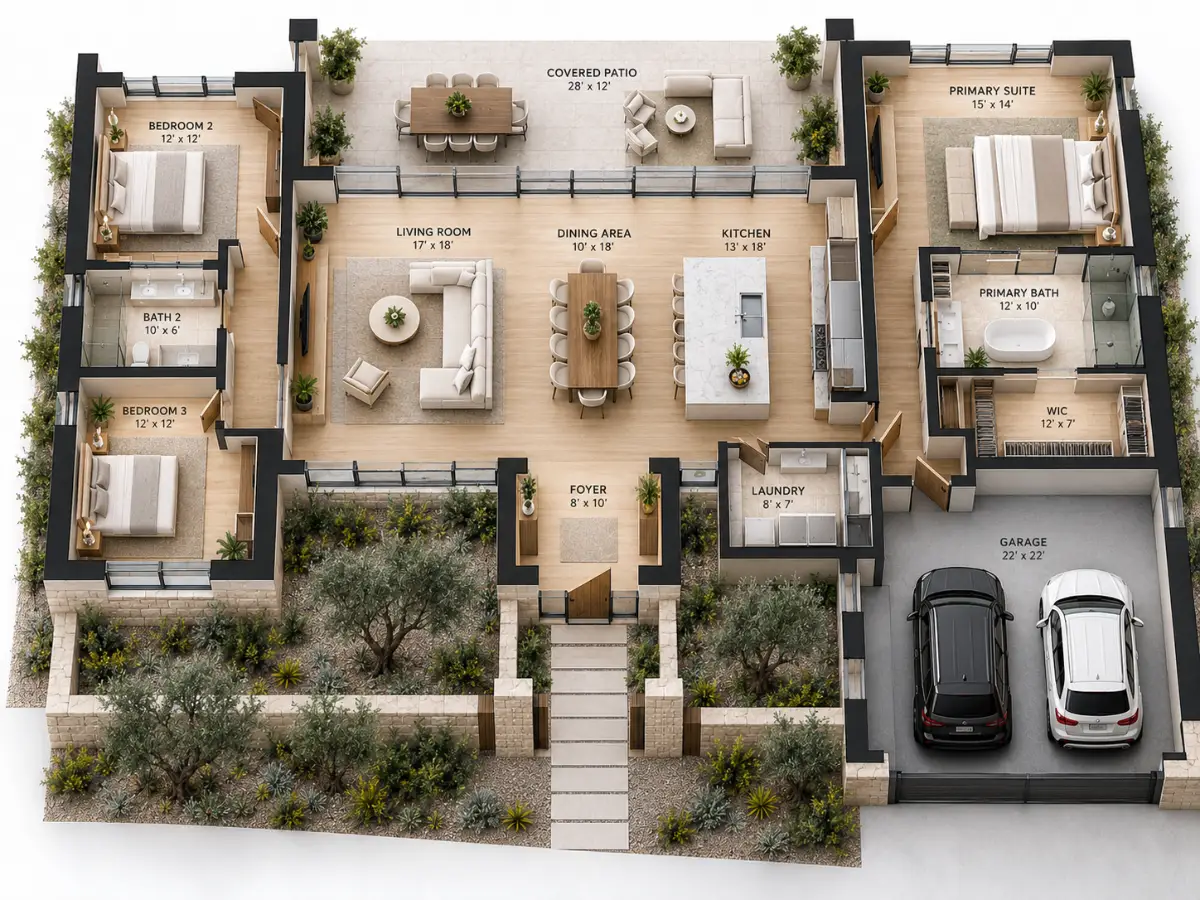
4.3. Work-from-home & hybrid living integration
Modern blueprints now treat dedicated home office spaces as an essential requirement rather than an afterthought. Successful modern layouts place home offices near the entryway for client meetings, or tucked into quiet corners equipped with acoustic wall insulation, dedicated wiring, and pleasant natural backdrop lighting for video calls.
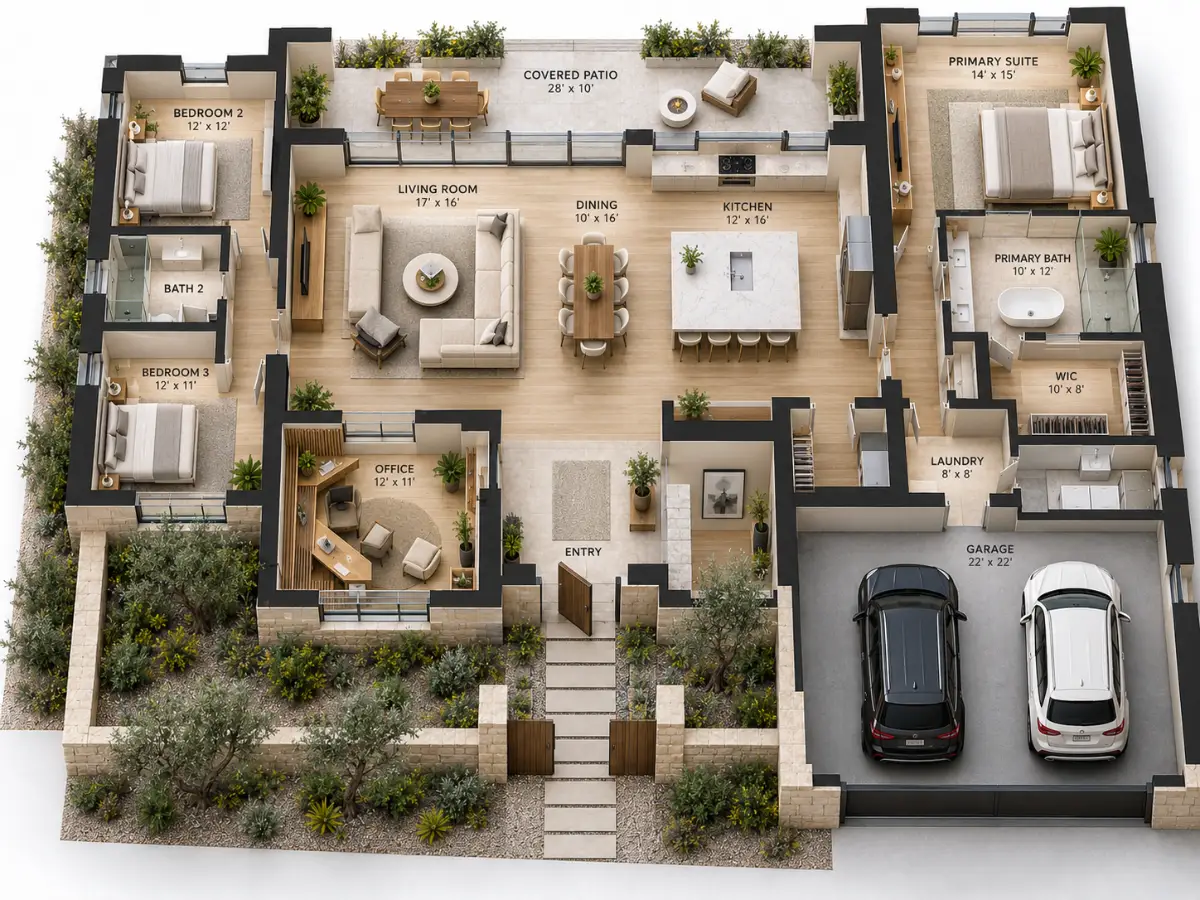
4.4. Indoor-outdoor entertaining hubs
For modern homes designed around entertaining, the kitchen island serves as the central anchor. Placing the kitchen island directly parallel to an exterior wall fitted with folding glass doors creates a continuous service bar connecting to an outdoor kitchen or barbecue patio.
5. How much does it cost to build from modern home floor plans
Building a modern home from custom floor plans involves specific cost variables that differ from traditional home construction.
5.1. Primary cost drivers in modern construction
- Structural steel framing: Because modern homes feature wide-open spans and vast glass openings without load-bearing interior walls, steel beams are frequently required alongside traditional wood framing.
- Architectural glass assemblies: Large floor-to-ceiling glass panels, thermal-break aluminum frames, and sliding glass pocket doors carry a premium price tag compared to standard double-hung windows.
- Roofing systems: Flat roofs and low-pitch mono-slope roofs require high-grade membrane waterproofing, specialized drainage systems, and rigorous insulation detailing.
- High-end exterior cladding: Modern homes often feature continuous exterior insulation finished with fiber-cement panels, architectural steel cladding, or natural cedar siding.
5.2. Estimated construction costs per square foot
|
Finish quality |
Average cost per sq. ft. (US national avg.) |
Key characteristics |
|
Standard modern |
$175 – $250 |
Pre-drawn stock plans, standard glass sizes, composite cladding |
|
Mid-range modern |
$250 – $400 |
Semi-custom modifications, large glass sliders, hardwood accents |
|
High-end custom modern |
$400 – $750+ |
Architectural steel frame, floor-to-ceiling glass walls, custom millwork |
Pro tip: Investing early in clear, high-accuracy 2D and 3D floor plan visualizations eliminates costly framing mistakes, change orders, and material rework during site excavation and framing phases.
6. Step-by-step guide: How to choose the ideal modern floor plan
Selecting or designing the perfect modern blueprint requires balancing lifestyle needs with site realities.
- Assess lot conditions & solar orientation: Analyze lot contours, local setback requirements, and sun paths. Position living areas and big glass openings to capture natural southern light while shielding sleeping quarters from direct harsh afternoon heat.
- Evaluate daily traffic patterns: Trace your daily routine on the plan, from parking in the garage with groceries to accessing the pantry, kitchen, laundry room, and bedrooms. Ensure pathways feel natural and unobstructed.
- Plan for storage & mechanical utilities: Modern aesthetics require hiding clutter. Ensure the plan includes adequate walk-in pantries, mudrooms, linen closets, and dedicated mechanical spaces for HVAC units, water heaters, and smart home automation racks.
- Factor in future adaptability & resale: Consider how your spatial needs may change over 5 to 10 years. Designing ground-floor bedroom suites or adaptable flex rooms ensures your home remains accessible and attractive to future buyers.
7. Elevating modern home floor plans with professional drafting & visualization
Whether you are a custom builder presenting concepts to clients, an architect refining layout ideas, or a real estate agent preparing a property listing, raw black-and-white CAD schematics can be difficult for non-experts to interpret.
This is where Fotober bridges the gap with professional floor plan drafting and high-definition visual media services.
7.1. For home builders & architects
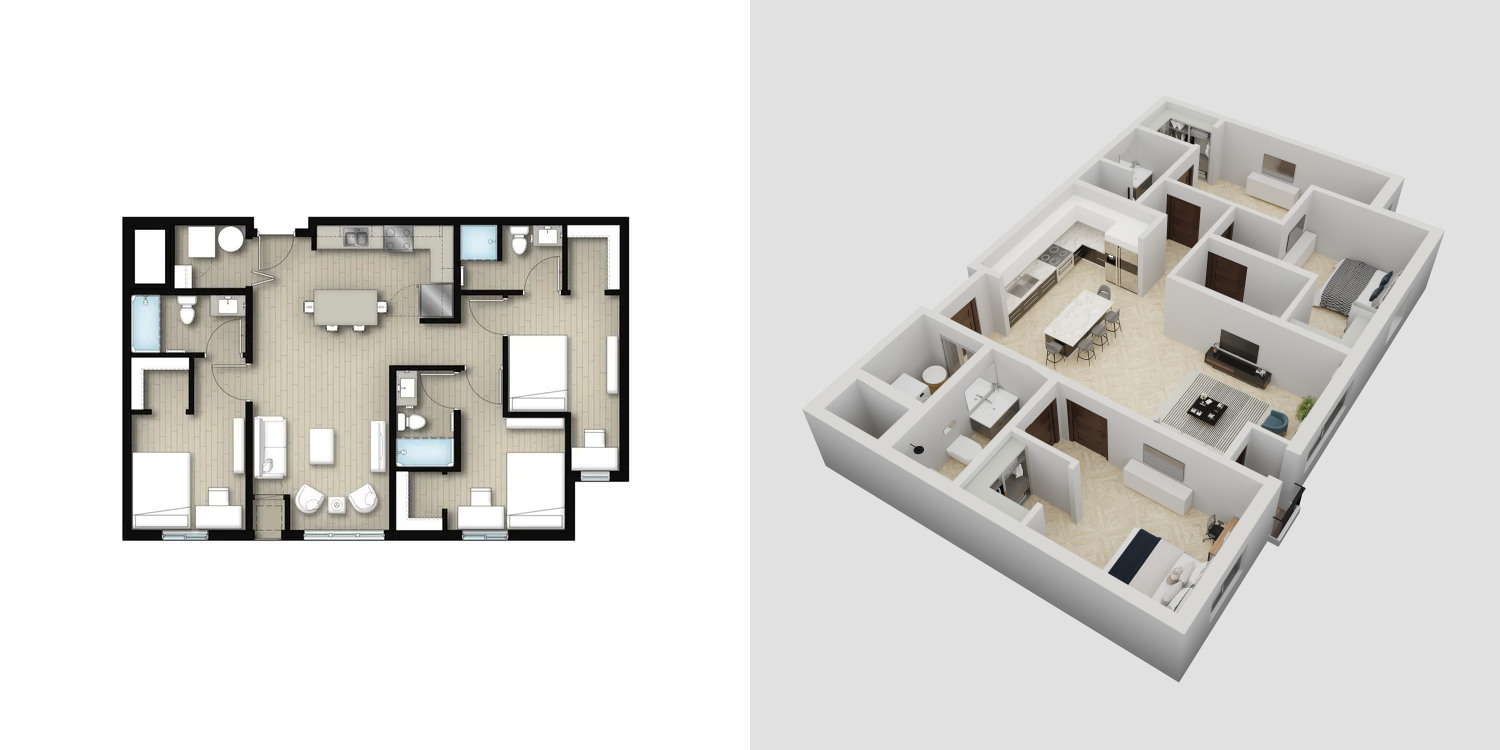
- 2D color & textured floor plans: Transform complex, technical blueprints into clear, easy-to-read, beautifully styled 2D floor plans complete with flooring textures, room dimensions, and furniture layout indicators.
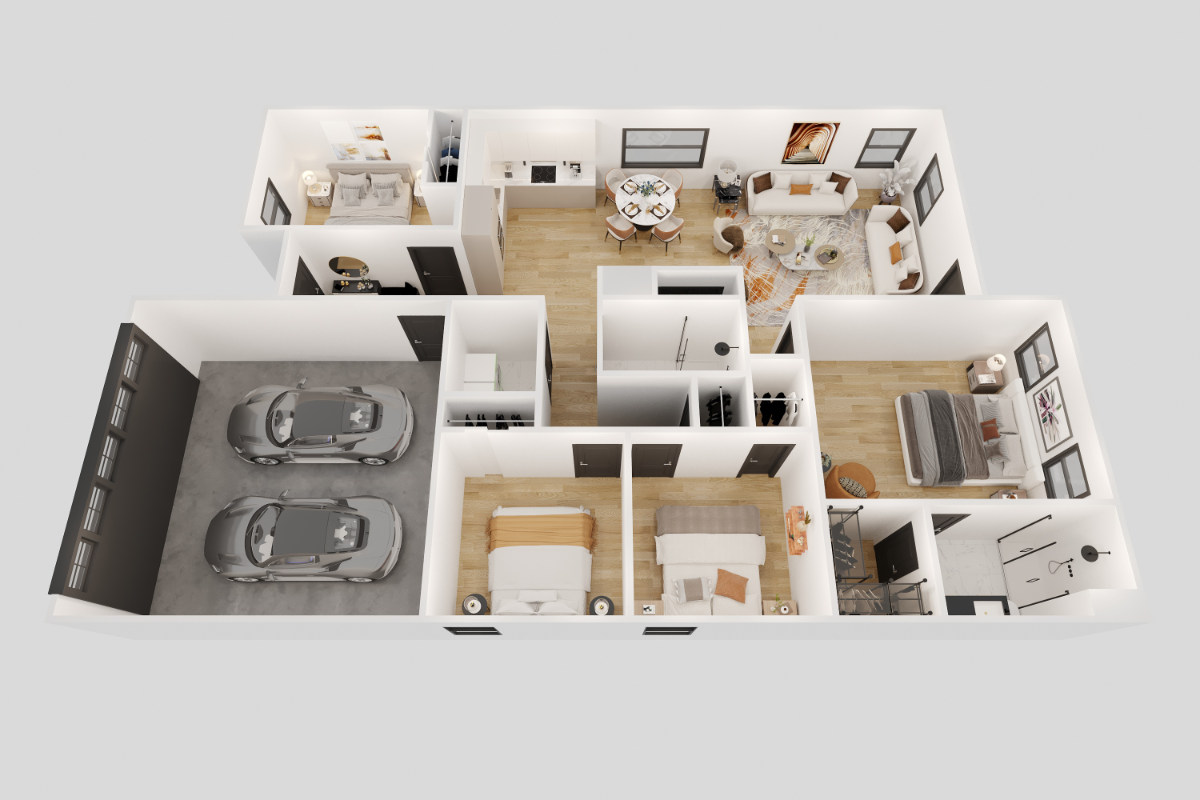
- 3D architectural floor plan models: Convert flat floor plans into immersive 3D cutaway renderings that showcase spatial height, room connections, material finishes, and interior volume before breaking ground.
7.2. For real estate agents & property sellers
- Boost listing engagement: Properties listed with accurate floor plans receive significantly higher engagement on MLS portals. Buyers can immediately grasp property layout, spatial flow, and room dimensions.
- Virtual staging integration: Combine 2D/3D floor plan redraws with Fotober’s virtual staging and photo editing services (such as Day-to-Dusk enhancements and virtual renovations) to market vacant or unfinished modern properties with maximum visual impact.
Speed and precision are the hallmarks of our service. We understand that in real estate, timing is everything. Our team delivers professional-grade assets with a quick turnaround, while maintaining flawless precision, architectural coherence, and superior context understanding compared to automated AI solutions, ensuring your listing hits the market at its peak potential. Whether you are selling a sprawling luxury house or an efficient urban dwelling, Fotober’s visualization tools ensure your contemporary home layouts are presented with the sophistication they deserve.
8. Real estate marketing for modern home floor plans: From listing to "sold"
On the fierce battlefield of gaining attention in the digital real estate market, a property is only as attractive as its presentation. The primary challenge agents face today is the "visualization gap." While architects can look at a 2D sketch and see a masterpiece, the average buyer often struggles to translate black-and-white lines into a lived-in reality. This is particularly true for modern home floor plans, where the beauty lies in the subtle flow of space and light that a flat drawing simply cannot convey.
8.1. The psychology of the digital buyer
Today’s home search begins on a smartphone screen. "Visual literacy" has become the new currency of real estate; if a listing doesn't capture attention within the first three seconds of scrolling, it is effectively invisible. Buyers are looking for an emotional connection. They aren't just buying square footage; they are buying the "feeling" of a Saturday morning in an open-concept kitchen or the serenity of a master suite.
8.2. A comparative case study
Consider two identical listings in a suburban neighborhood.
- Listing A uses a standard, flat 2D blueprint and unedited photos of empty rooms.
- Listing B utilizes precise 3D renderings and professional photo editing to showcase a fully furnished minimalist floor plan.
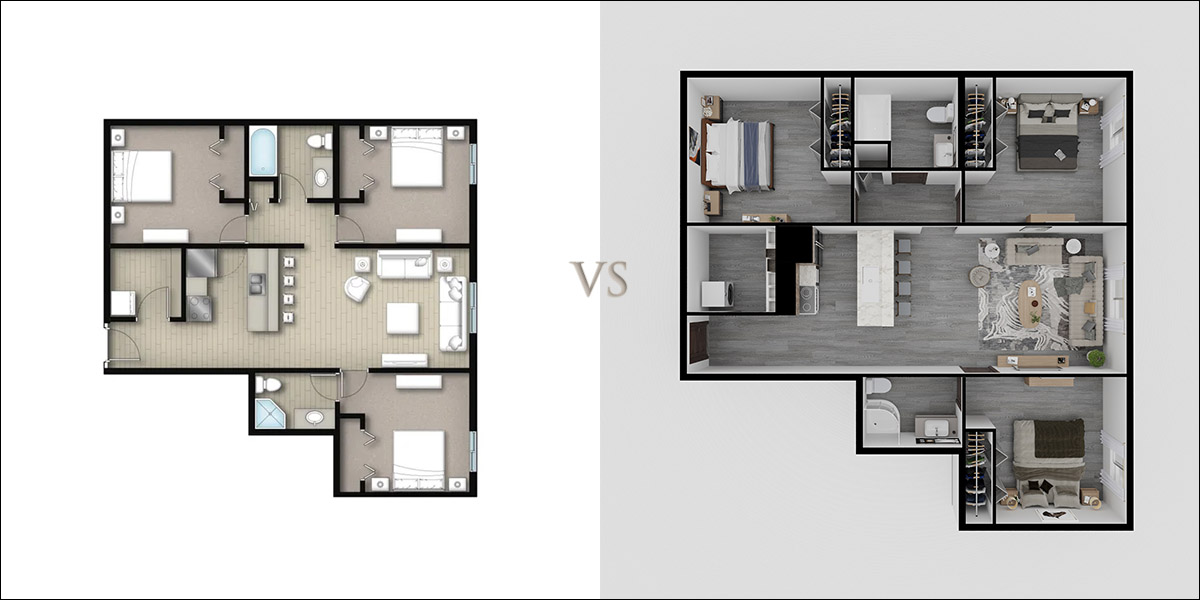 Modern real estate marketing can incorporate polished listing images and rich-detail renderings to gain more traction.
The results are predictable: Listing B consistently generates higher click-through rates, more tour requests, and ultimately, a higher closing price. By providing a clear visual narrative, Listing B removes the "work" for the buyer. Instead of wondering if their sectional sofa will fit or if the "openness" feels too cold, they can see the finished dream. In a digital-first world, high-quality visual assets act as a 24/7 virtual open house, building trust and excitement before a buyer even presents at the property.
9. Conclusion
A well-crafted modern home floor plan is far more than a simple structural layout; it is the blueprint for a clean, efficient, and light-filled lifestyle. By embracing open concepts, intentional spatial zoning, seamless indoor-outdoor transitions, and minimalist architectural principles, modern floor plans create homes that feel timeless, versatile, and deeply connected to their environment.
Whether you are embarking on a custom residential build, updating architectural blueprints, or preparing a modern home listing for market success, clear visualization is key. Explore Fotober’s floor plan redraw and 3D rendering services to transform your floor plans into captivating, high-precision visual assets.
Follow us on social media to stay updated with the latest insights into real estate and architectural styles.
- Facebook: fotobermedia.co
- YouTube: Fotober
- TikTok: @fotober
- Instagram: fotober_media.
Related posts

Modern Luxe Interior Design: Elements, Style Guide and How to Stage It
October 10, 2026

Minimalist Interior Design: Characteristics, Style Guide, and Staging
October 8, 2026

Coastal Interior Design: Style Definition & Staging Guide
September 30, 2026

Contemporary Interior Design: Key Elements and How to Stage This Style
September 30, 2026
