




Choosing the Best Style of Floor Plan for Homes: Living Layout Ideas
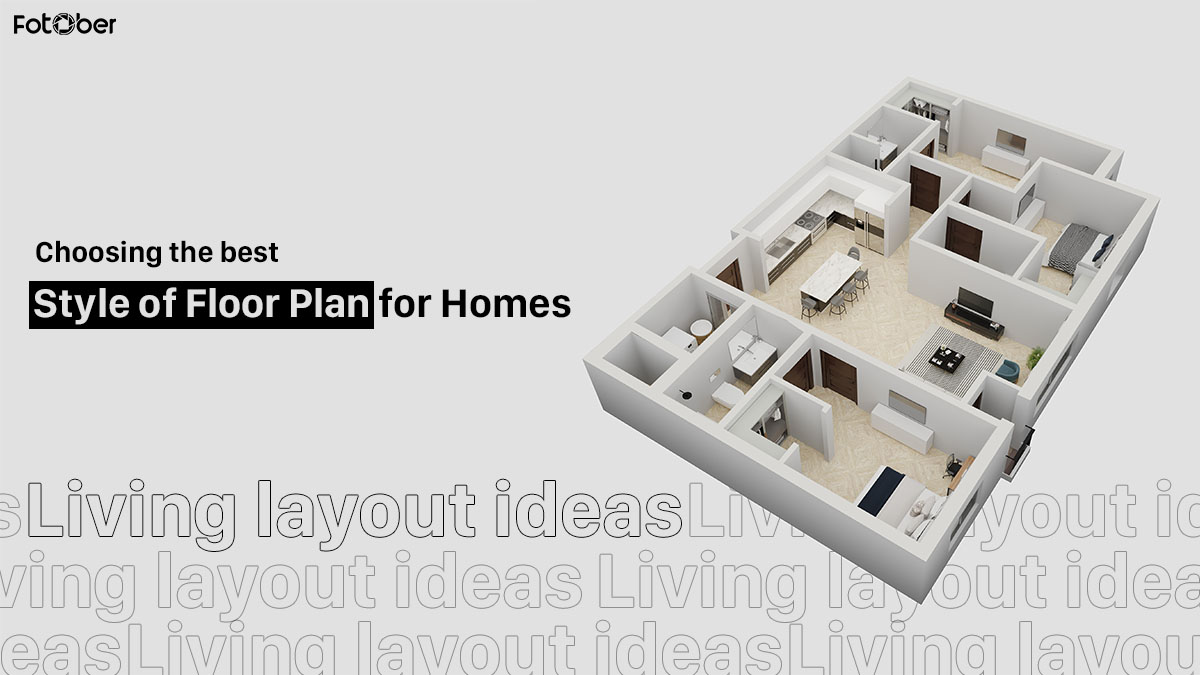

Share:
Table of Contents
- 1. Exploring popular house floor plan styles
- • 1.1. Farmhouse floor plans: A blend of tradition and function
- • 1.2. Modern home floor plans: Minimalism and light
- • 1.3. Ranch-style floor plans: Accessibility and ease
- • 1.4. Beach house floor plans: Coastal serenity and vertical living
- • 1.5. Mansion floor plans: Grandeur, symmetry, and specialization
- 2. Open vs. closed floor plan: Which layout works best?
- 3. Visualizing success: Enhancing popular house floor plan styles for real estate marketing
- 4. Strategic use cases: How floor plans sell houses
- Conclusion
When building or buying a home, the type of floor plan you choose determines how you move, how you interact with family, and how you feel within your own sanctuary. Whether you are a homeowner or a real estate professional, knowing floor plans is essential. Let’s dive into what makes up a style of floor plan for homes and the layouts shaping the way we live today.
1. Exploring popular house floor plan styles
The most popular floor plan styles in the current real estate market are: farmhouse, modern, ranch-style, beach house, and mansion. Across these designs, the open concept is gaining traction among modern homebuilders, while the traditional closed structure is still favored for its clearly defined functional spaces and privacy.
Selecting the right layout is much like choosing a tailored suit; it must fit your current proportions while leaving a little room for growth. As we navigate the diverse types of floor plans for houses available today, three specific styles continue to dominate the market due to their unique balance of aesthetics and utility. Whether you prioritize tradition, cutting-edge design, or accessibility, these layout ideas offer a foundation for almost any dream home.
1.1. Farmhouse floor plans: A blend of tradition and function
The "Modern Farmhouse" is a staple in popular house floor plan styles across North America and Europe. This style captures the essence of rural life: simplicity, warmth, and hard work, and translates it into a layout optimized for 21st-century families.
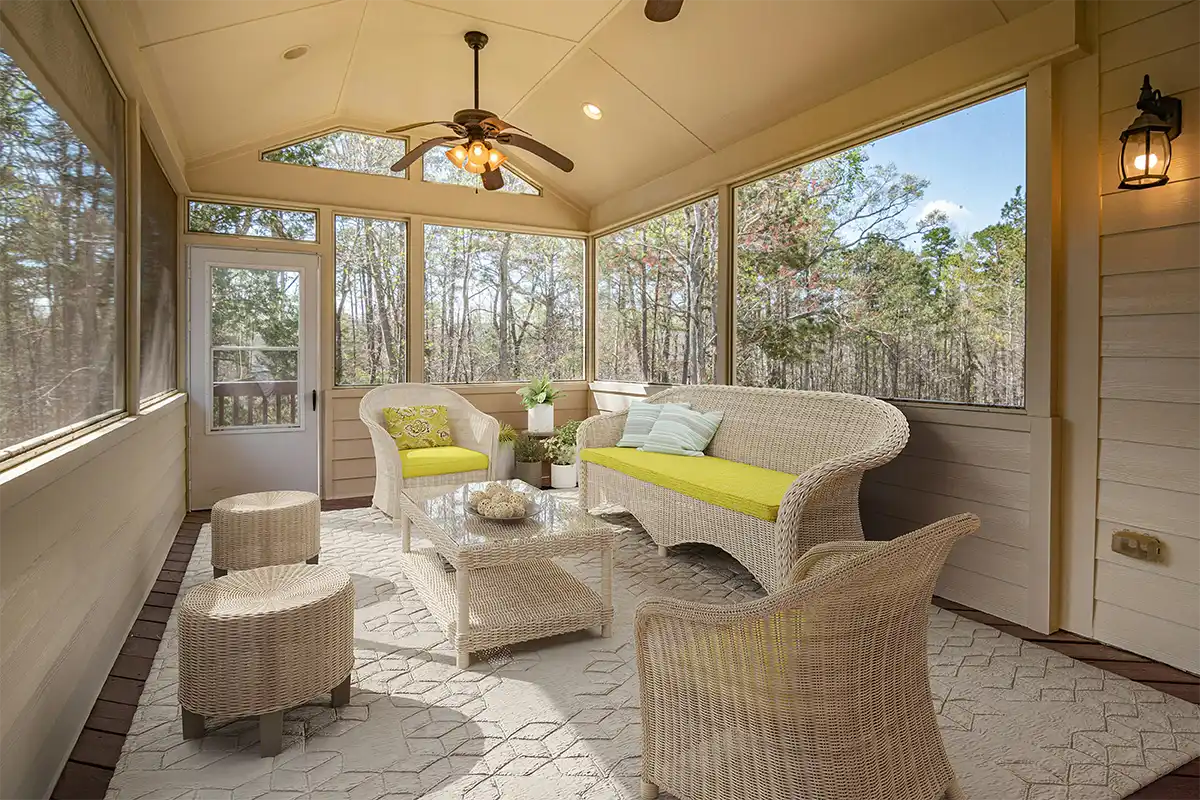 Farmhouse style blends modern convenience with the open nature of rural living space.
At the heart of these types of floor plans for houses is the "great room" concept. Unlike older, compartmentalized homes, the farmhouse floor plan layout usually features a massive, open-concept kitchen that flows directly into the dining and living areas. Key architectural features often include vaulted ceilings with exposed wooden beams, large "apron" sinks, and the iconic wrap-around porch. These porches serve as an extension of the living space, perfect for transitional indoor-outdoor relaxation. From a functional standpoint, farmhouse plans are beloved for their "mudrooms" (dedicated transition zones between the garage and the main house), making them one of the best floor plans for modern living choices for active families with children or pets.
1.2. Modern home floor plans: Minimalism and light
If the farmhouse is about warmth, the modern home floor plans are about clarity. This style is defined by an "honesty of materials" and a rejection of unnecessary ornamentation. In the search for the best floor plan for modern living, many homeowners are drawn to the sleek, geometric silhouettes and the abundance of glass that this style offers.
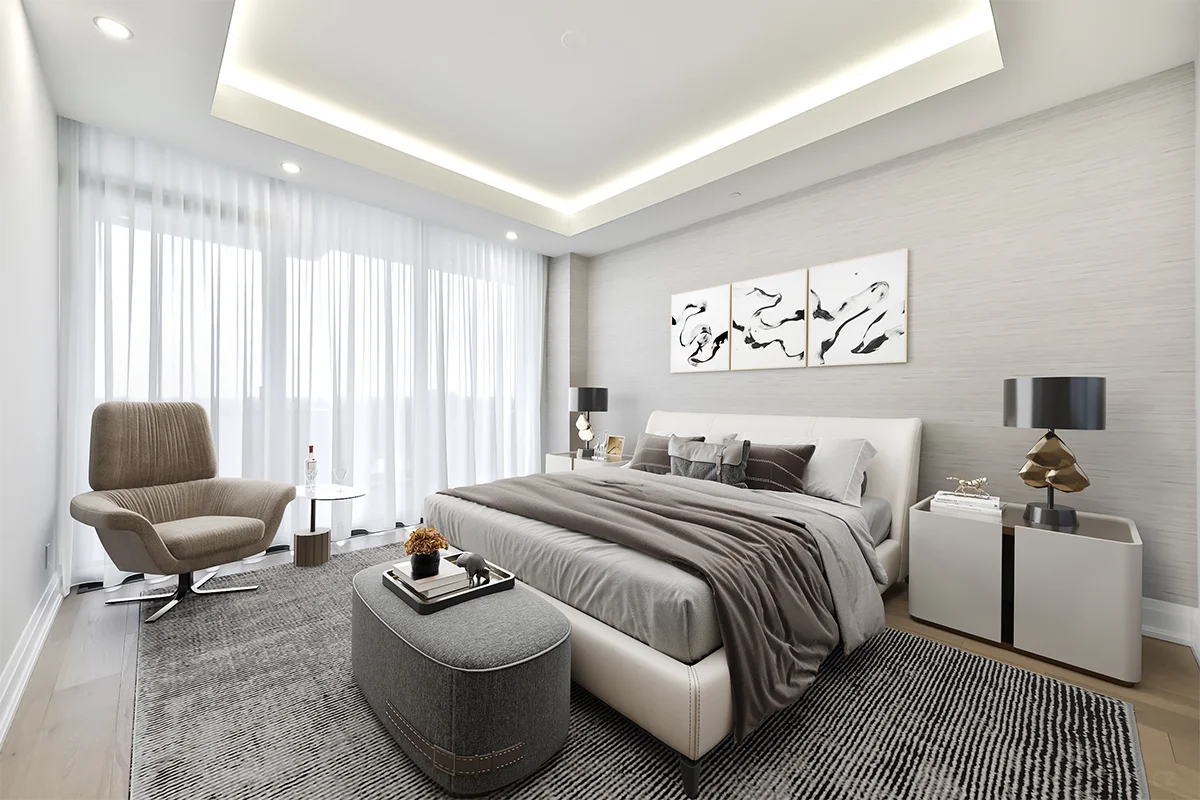 Modern floor plans maximize the usability of any space
Modern house layouts frequently utilize "flat" or "shed" rooflines and clerestory windows to invite natural light deep into the home’s core. The floor plan itself is often asymmetrical, prioritizing a seamless flow from one zone to the next without the use of traditional hallways, which can often feel like wasted space. In a modern layout, you will likely find "flexible rooms", spaces that can easily pivot from a high-tech home office to a yoga studio or a guest suite. By using industrial materials like concrete, steel, and large-scale glass panels, these plans create a gallery-like atmosphere that feels both expansive and grounded.
1.3. Ranch-style floor plans: Accessibility and ease
Originally rising to fame in the mid-20th century, the ranch-style floor plans are experiencing a significant resurgence in 2026. This style of floor plan for homes is characterized by its single-story construction and horizontal sprawl. It is arguably the most versatile layout for "aging in place" and for families who want to eliminate the hassle of stairs.
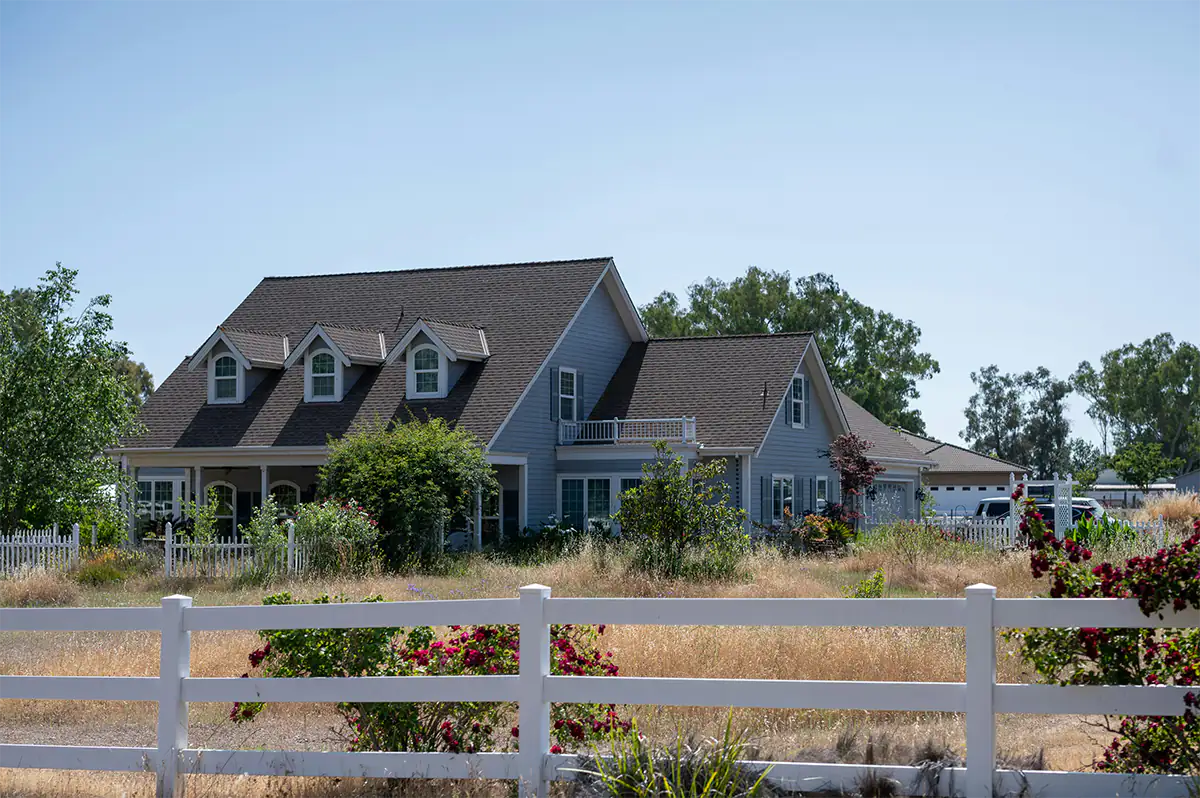 Ranch floor plans are well-suited for single-story construction
Ranch layouts usually come in "L" or "U" shapes, which naturally create a private courtyard or patio area in the center of the property. This configuration allows almost every room in the house to have a direct sliding-door connection to the outdoors, making the backyard feel like an integral part of the home’s square footage. Because they lack a second floor, these types of floor plans for houses offer incredible architectural freedom; you can have soaring ceilings throughout the entire home without worrying about the structural load of an upper level. For those looking for layout ideas that prioritize ease of maintenance and long-term livability, the ranch remains an undefeated champion.
1.4. Beach house floor plans: Coastal serenity and vertical living
When considering the style of floor plan for homes located near the coast, the architecture must answer to both the beauty and the brutality of the elements. Beach house layouts, often referred to as "Coastal" or "Seaside" plans, are uniquely designed to prioritize views and ventilation.
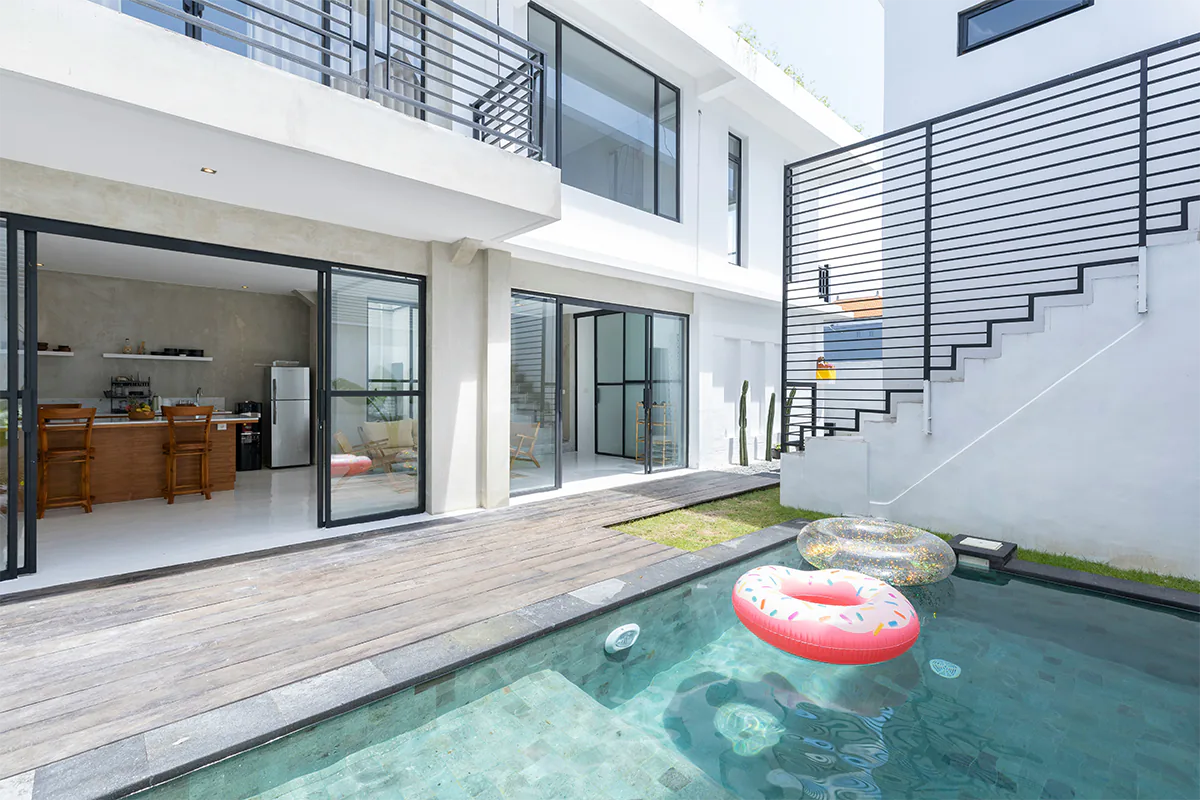 Beach house floor plans emphasize ocean views, wind flow and protection against salt water.
- Key features: This type of floor plan often features elevated living areas (sometimes on stilts or pilings) to protect against storm surges and to capture higher-altitude ocean breezes. Large, expansive decks and wraparound porches are common in this style, effectively doubling the usable living space during the summer months.
- The interior flow: Inside, you will typically find an "inverted" layout, where the main living areas and kitchen are located on the top floor to maximize panoramic water views, while bedrooms are tucked away on the lower levels for privacy and shade. This is often cited as the best floor plan for modern living in vacation destinations because it blurs the line between the indoors and the horizon.
1.5. Mansion floor plans: Grandeur, symmetry, and specialization
For those seeking the pinnacle of luxury, mansion floor plans represent the most complex and aspirational popular house floor plan styles. A mansion isn't just defined by its square footage, but by the high degree of specialization within its layout.
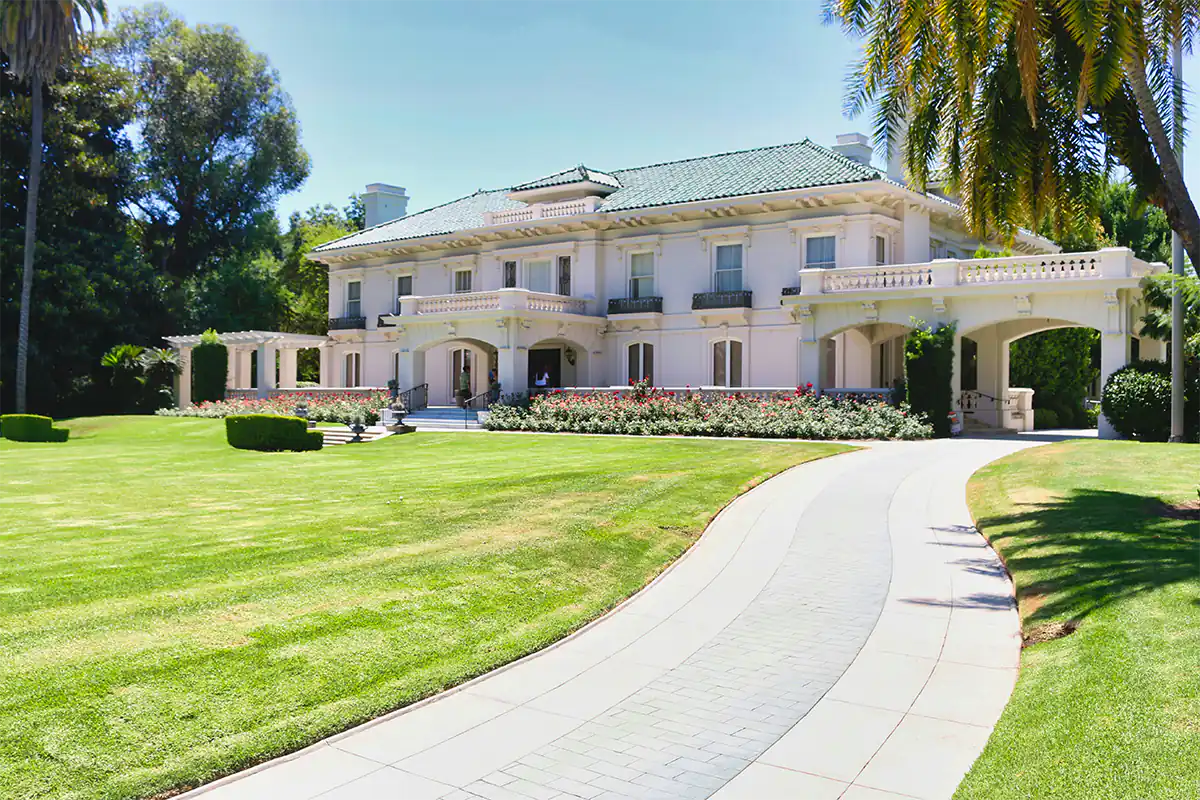 The mansion's layout is thoroughly structured with clear distinctions between functional areas.
- The "wing" concept: Unlike standard homes, a mansion layout is often divided into distinct "wings." You might have a "private family wing," a "guest wing," and a "service wing" for staff. This ensures that even in a home of 10,000+ square feet, the primary residents maintain a sense of intimacy and security.
- Specialized rooms: Mansion styles include rooms you won't find in a typical ranch or farmhouse: grand ballrooms, wood-paneled libraries, indoor spas, and sophisticated wine cellars.
- Visualizing luxury: Because mansions have so many cavernous, empty spaces before they are occupied, they are the prime candidates for virtual staging. Without high-end digital furniture, a 40-foot-long "Great Room" can feel cold and intimidating rather than palatial and inviting.
2. Open vs. closed floor plan: Which layout works best?
Choosing between an open vs closed floor plan is perhaps the most significant decision a homeowner can make. For the better part of the last two decades, the trend was clear: "knock down the walls." However, as our lifestyle needs have evolved, especially with the rise of remote work and multi-generational living in 2026, the debate has become more nuanced.
2.1. The era of the open floor plan
The open-concept style of floor plan for homes has long been hailed as the best floor plan for modern living. By removing load-bearing walls between the kitchen, dining, and living areas, this style maximizes every square inch of the home.
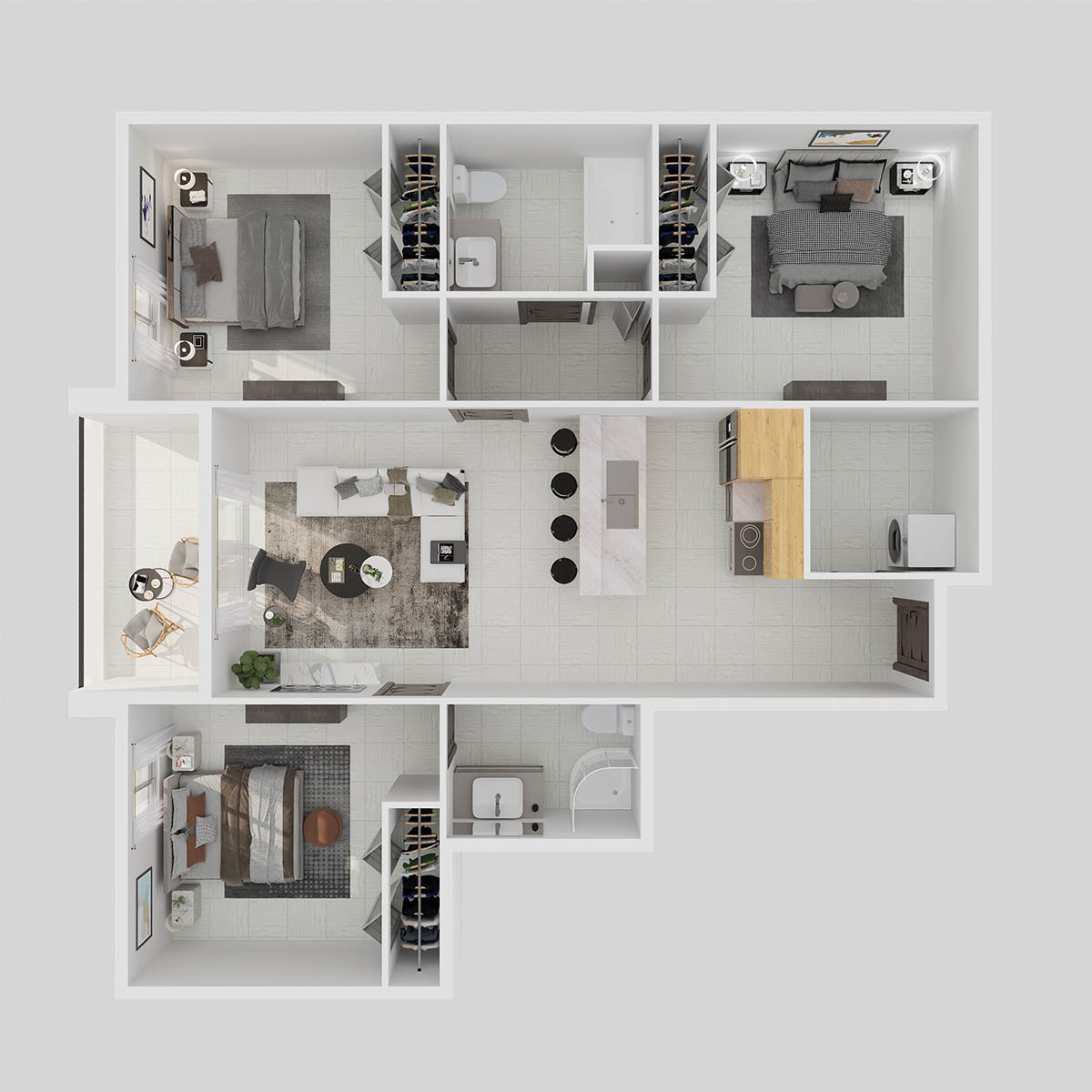 Open layouts are less cluttered and feel more spacious.
- Pros: The primary advantage is the unhindered flow of natural light and the sense of immense spaciousness, even in smaller footprints. It is the social hub of the home, allowing the person cooking in the kitchen to remain part of the conversation in the living room.
- Cons: However, the "great room" comes with challenges. Acoustic privacy is virtually non-existent; the sound of a dishwasher or a television carries through the entire floor. Additionally, keeping a large open space tidy can be stressful, as there are no walls to hide a messy kitchen from guests.
2.2. The resurgence of the closed floor plan
While it may seem traditional, the closed floor plan is making a strategic comeback. These types of floor plans for houses prioritize defined boundaries and specialized rooms.
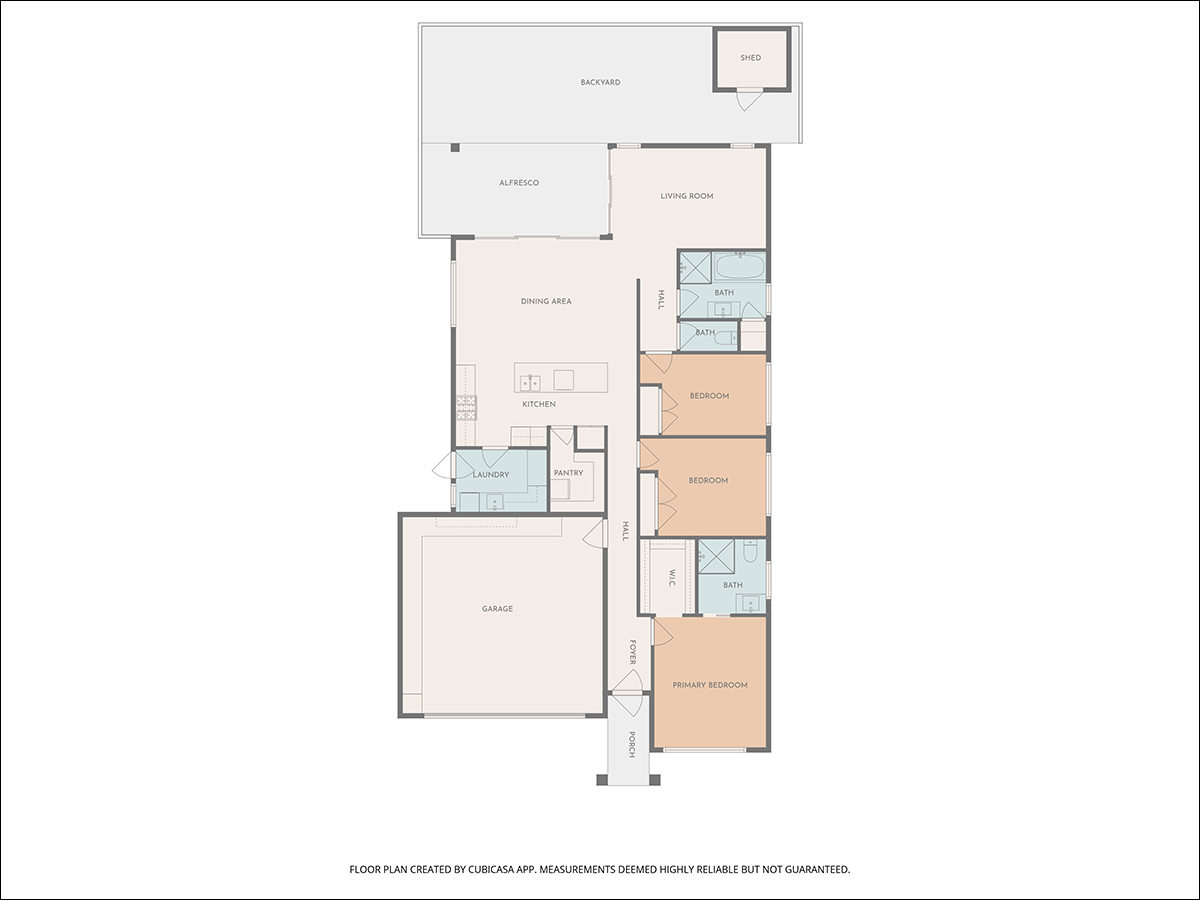 Closed floor plans are still revered for their inherent privacy between spaces.
- Pros: Closed layouts offer superior acoustic control and "containment." In an era where home offices are essential, having a door you can actually shut is a luxury. Furthermore, closed plans are often more energy-efficient, as you can heat or cool specific rooms rather than the entire house.
- Cons: The downside is that these homes can sometimes feel "choppy" or dark, with hallways consuming valuable square footage that could have been used for living space.
2.3. Comparison table: Open vs. closed floor plans
|
Feature |
Open floor plan |
Closed floor plan |
|
Social interaction |
Excellent: Ideal for hosting and keeping an eye on children. |
Limited: Encourages individual privacy and formal separation. |
|
Natural light |
Maximized: Light flows freely through the entire living area. |
Variable: Dependent on the number of windows in each specific room. |
|
Acoustic privacy |
Low: Noise from the kitchen or TV travels across all zones. |
High: Walls and doors act as effective sound barriers. |
|
Energy efficiency |
Lower: Harder to heat or cool large, vaulted open spaces. |
Higher: Allows for precise climate control in used rooms only. |
|
Mess & odors |
Visible: Kitchen clutter and cooking smells are easily noticed. |
Contained: Mess and smells stay behind closed doors. |
|
Home office suitability |
Challenging: Requires creative zoning to find a quiet spot. |
Ideal: Offers dedicated, quiet rooms for deep focus and calls. |
|
Best for |
Modern families who prioritize connection and space. |
Homeowners who value privacy and structured living. |
2.4. The 2026 winner: The "broken-plan" layout
As we look for new house layout ideas, a hybrid known as the "broken-plan" has emerged as a top contender. This approach keeps the spacious feel of an open layout but uses "internal windows," glass partitions, or double-sided fireplaces to create "zones." It offers the best of both worlds: the light of an open plan with the privacy and noise reduction of a closed one. Ultimately, your choice should reflect your daily habits, whether you crave communal energy or quiet sanctuary.
3. Visualizing success: Enhancing popular house floor plan styles for real estate marketing
In the competitive world of property sales, even the most brilliant style of floor plan for homes can fail to impress if it isn't presented with clarity and emotion. While a blueprint provides the technical "skeleton" of a house, most buyers struggle to translate 2D lines into a 3D lifestyle. This is where professional visualization tools become the ultimate bridge between a structural layout and a closed deal.
3.1. The role of real estate photo editing services
High-quality imagery is the first point of contact for any potential buyer. Real estate photo editing services go far beyond simple color correction; they are essential for highlighting the unique architectural integrity of different types of floor plans for houses. For instance, photographing an open vs closed floor plan presents distinct challenges. In an open layout, an editor must balance multiple light sources to ensure the space feels vast yet cohesive. In a closed plan, they must ensure smaller rooms don't look "boxy" or dim.
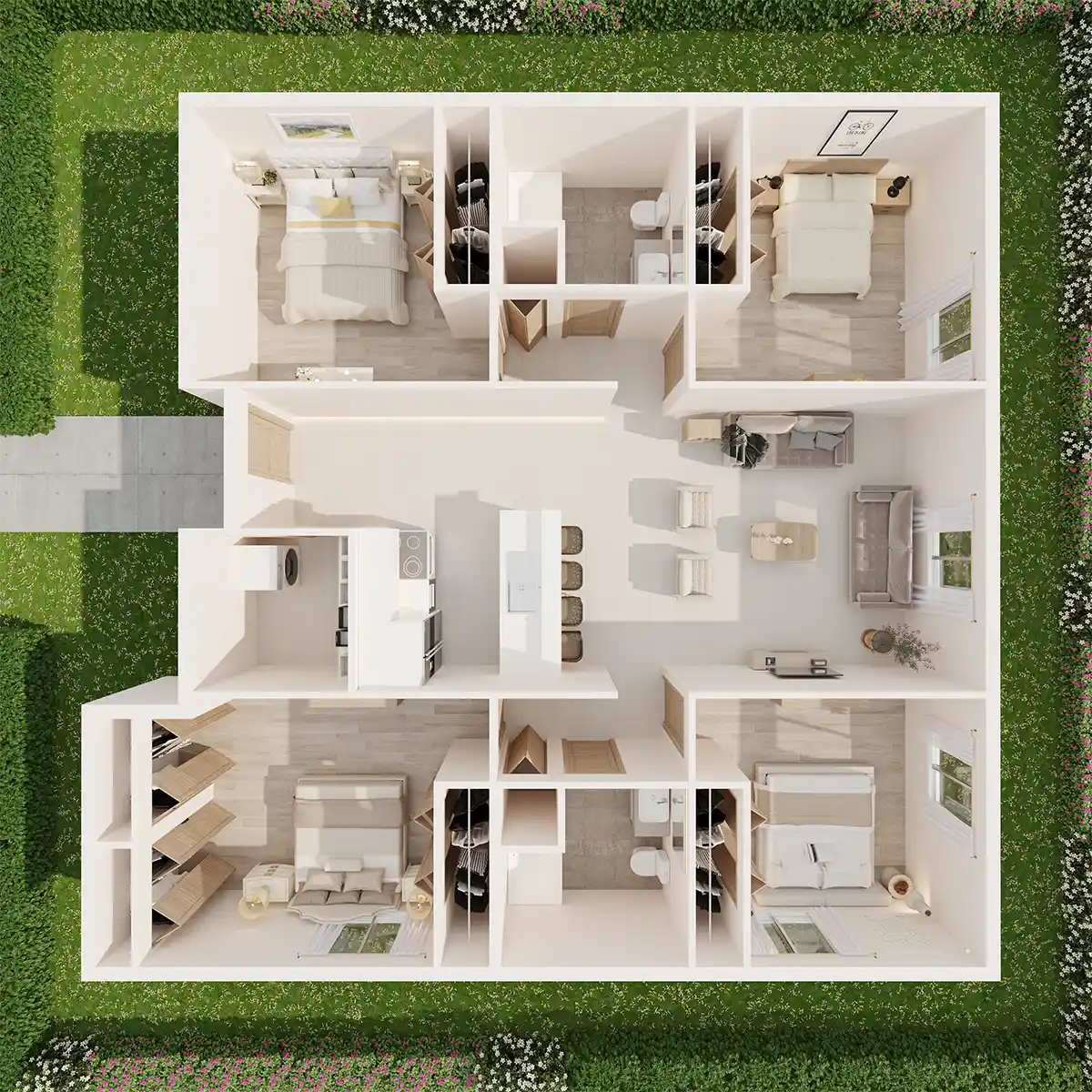 Photo editing can add a layer of lively immersion to floor plans.
By utilizing professional editing, you can remove distracting clutter that obscures the home's "flow," perform virtual twilight shots to emphasize a modern home floor plan's glass features, and ensure that the transition between rooms is visually seamless. When buyers browse popular house floor plan styles online, they gravitate toward images that look polished, airy, and structurally perfect.
3.2. Virtual staging services: Unlocking a home’s potential
While a floor plan shows dimensions, virtual staging services show the possibility. An empty room is a blank canvas that, paradoxically, often leaves buyers feeling uninspired or confused about scale. It is notoriously difficult for people to visualize a house layout when staring at bare walls and cold floors.
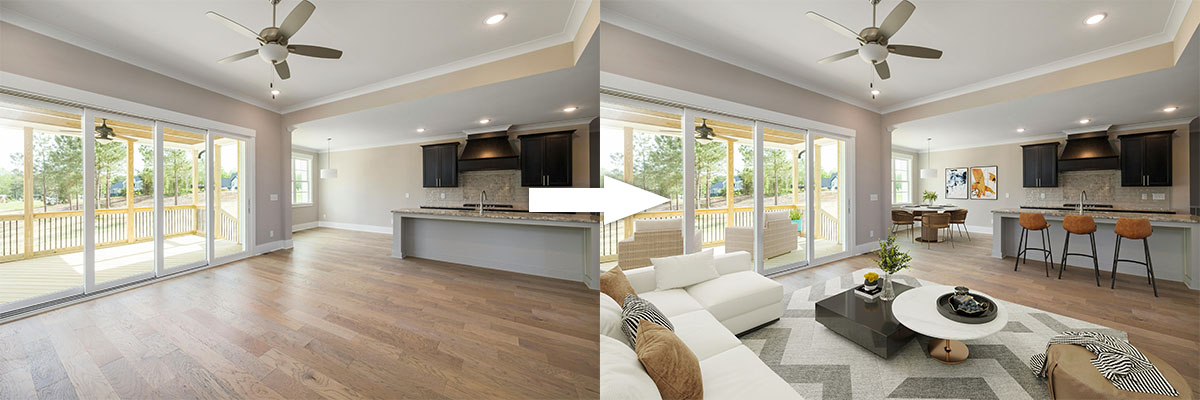 Virtual staging enhances a floor plan’s potential by showcasing more interior solutions.
Virtual staging allows you to digitally furnish an empty property with high-end, stylish furniture that complements the specific style of floor plan for homes. For a farmhouse floor plan, you can add a rustic harvest table to show the kitchen's capacity for family gatherings. For a ranch-style floor plan, staging can demonstrate how a large, open area can be divided into a functional dining zone and a cozy media nook. This technology is a game-changer that allows you to realize your dream living space. It proves that the space is not just "large," but livable. It creates an emotional connection, helping buyers imagine their morning coffee on that staged balcony or their children playing in that virtually furnished "flex" room.
4. Strategic use cases: How floor plans sell houses
In the high-stakes world of property marketing, understanding the style of floor plan for homes is not merely an architectural exercise; it is a sophisticated sales strategy. A well-presented layout serves as a roadmap for a buyer’s future, and how you showcase that roadmap can determine how quickly a "for sale" sign turns into "sold."
For fix-and-flip investors, the floor plan is the primary tool for value creation. Identifying a property with "good bones" but a dated, compartmentalized layout allows them to envision a conversion into a modern home floor plan. By removing non-load-bearing walls to create a more popular house floor plan style, investors can drastically increase the home's perceived square footage and market price.
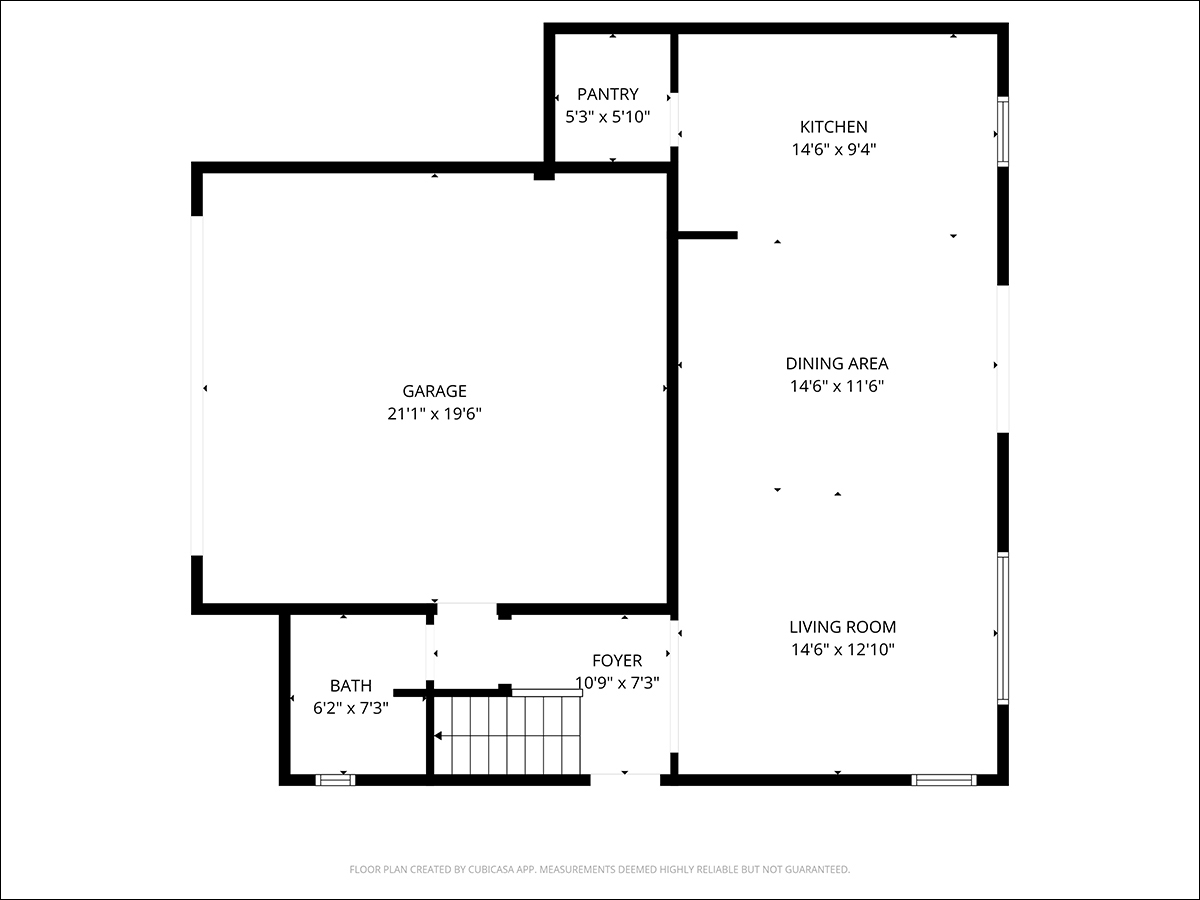 A floor plan is the first reassuring asset for home buyers.
For the modern workforce, house layout ideas must now prioritize the "Zoom room." Highlighting a dedicated, quiet office space within a farmhouse floor plan or a minimalist modern dwelling is often the deciding factor for remote professionals. This is where virtual staging services become indispensable; by digitally placing a desk, ergonomic chair, and professional background into a "flex" room, you prove the home’s functionality for modern living.
Finally, the strategic integration of real estate photo editing services ensures that the flow between rooms is visually enticing in online listings. Properties that feature a clear 2D/3D floor plan alongside staged imagery consistently see higher click-through rates up to 40% on platforms like Zillow or Realtor.com. It reduces "buyer friction" by answering spatial questions before the first showing, making it the best floor plan for a modern living marketing approach.
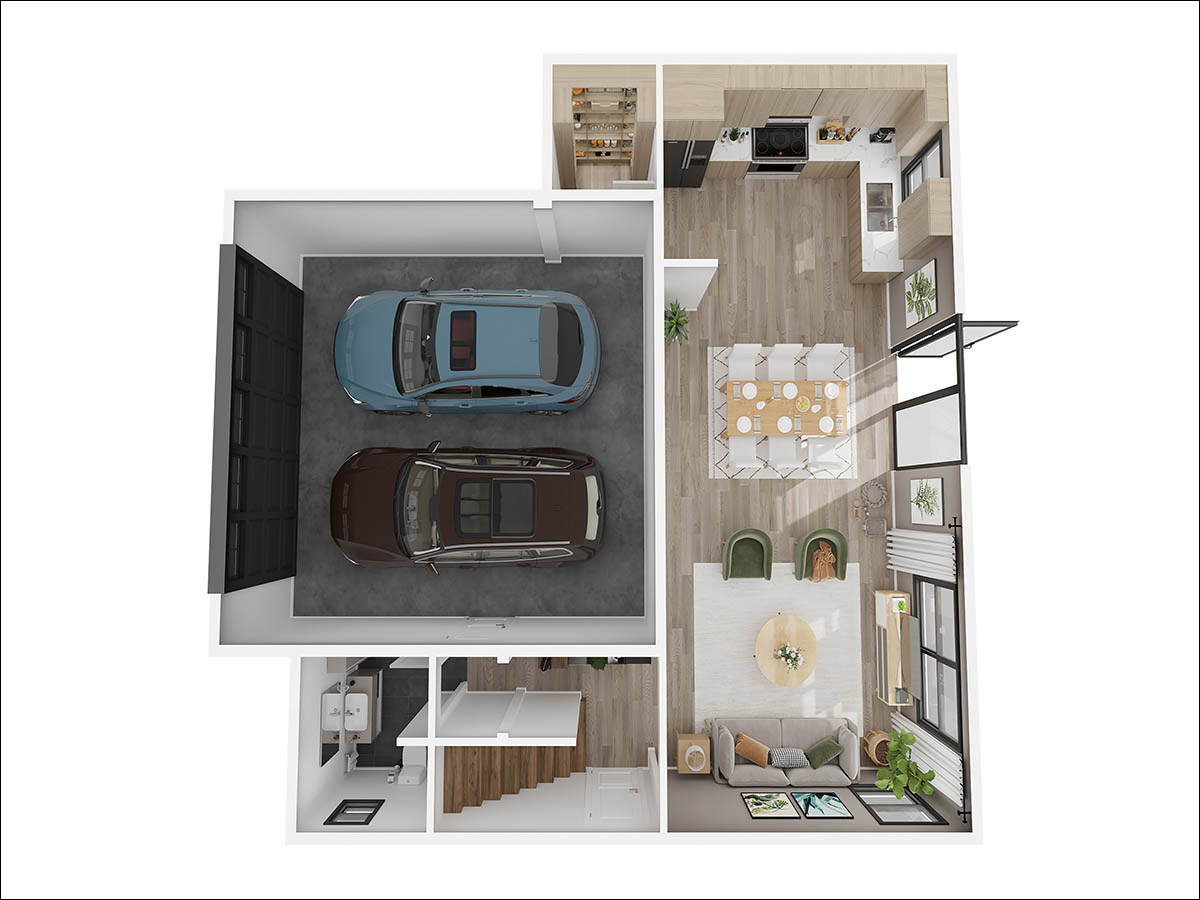 Polished 3D floor plans can enhance a property’s perceived value and the professionalism of the agent, as well as home builders.
To ensure the highest accuracy and fastest turnaround of our floor plan and staging services, we recommend providing the following:
- Clear labels: Specify the name and function of each room (e.g., Master Bedroom, Home Office, Powder Room).
- Precise dimensions: Include the measurements for each area to ensure the scale is perfect.
- Spatial layout: A rough sketch or blueprint showing the arrangement of rooms, including the kitchen, living area, and bathroom fixtures.
- Reference samples: If you have a specific style or branding guide in mind, providing a reference sample helps our team match your vision exactly.
Conclusion
In conclusion, choosing the perfect style of floor plan for homes is a deeply personal journey that balances architectural aesthetics with daily functionality. Whether you are drawn to the rustic, communal warmth of a farmhouse, the sleek, light-filled geometry of a modern layout, or the seamless accessibility of a ranch, the best floor plan for modern living is ultimately the one that aligns with your unique lifestyle and future goals. As we have seen, popular house floor plan styles are evolving to meet the demands of 2026, shifting toward more flexible and "broken-plan" house layout ideas.
However, even the most thoughtful design requires the right presentation to truly shine. Leveraging professional real estate photo editing services and immersive virtual staging services is now an essential strategy for transforming a static blueprint into a vibrant, emotional reality. By combining smart architectural choices with high-end visualization tools, you ensure your property isn't just seen but also remembered. Ready to bring your floor plan to life? Start your transformation today.
Follow us on social media to stay updated with the latest insights into the real estate and architectural styles.
- Facebook: fotobermedia.co
- YouTube: Fotober
- TikTok: @fotober
- Instagram: fotober_media.
Related posts

Modern Luxe Interior Design: Elements, Style Guide and How to Stage It
October 10, 2026

Minimalist Interior Design: Characteristics, Style Guide, and Staging
October 8, 2026

Coastal Interior Design: Style Definition & Staging Guide
September 30, 2026

Contemporary Interior Design: Key Elements and How to Stage This Style
September 30, 2026
