




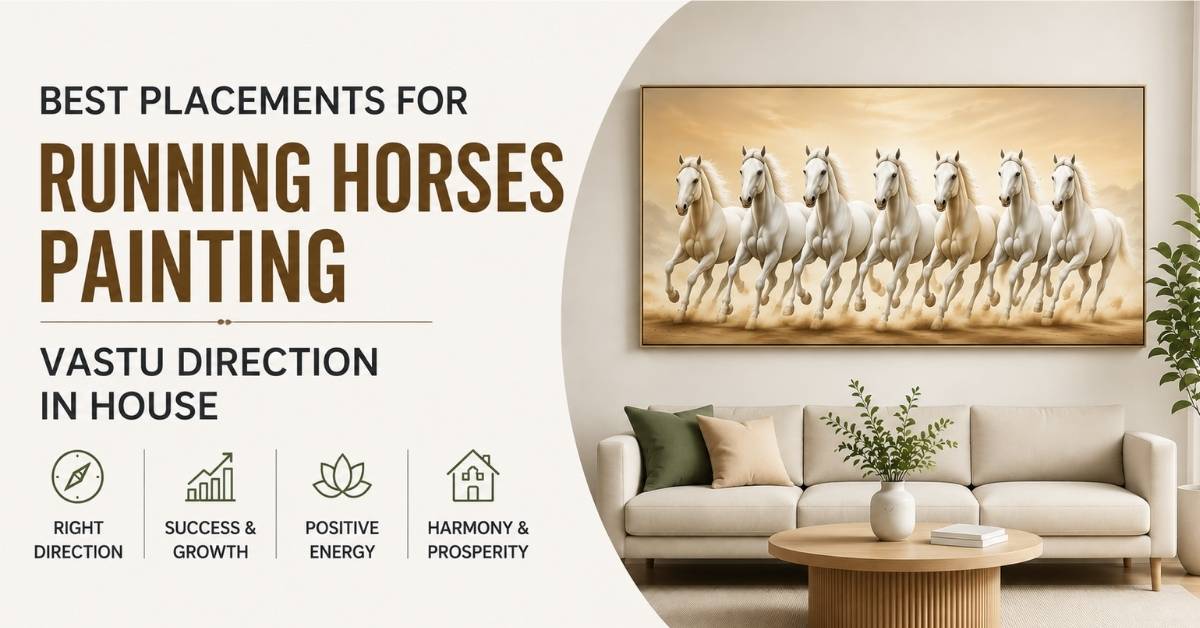
Best Placements for Running Horses Painting: Vastu Direction in House

Share:
Table of Contents
- 1. Why running horses painting vastu direction in house is important
- 2. Best placements for vastu running horse painting
- 3. Best colors for running horse paintings
- 4. Modern vs traditional horse painting styles
- 5. Horse painting in the house which direction should be avoided?
- 6. FAQs about running horse vastu direction
- 7. Conclusion
Choosing the right running horses painting vastu direction in house is not simply about following a traditional belief. In modern interior design, horse paintings are often used to create a sense of movement, ambition, elegance, and energy within a space. According to Vastu principles, the direction, placement, color, and style of the painting all influence how that symbolic energy interacts with the home. A well-placed running horse painting can strengthen the visual identity of a room while also supporting themes like career growth, motivation, and positive momentum. In many luxury homes, homeowners also combine Vastu-inspired decor with professional interior visualization services such as 3D architectural rendering services to preview how statement artwork will look before finalizing the interior layout.
If you want the short answer before going deeper into Vastu placement strategy, these are the most recommended directions for running horse paintings:
- South wall → career growth, fame, leadership, success
- East wall → motivation, creativity, new beginnings
- North wall → business opportunities and financial movement
- Southeast wall → ambition, productivity, entrepreneurial energy
- Northwest wall → networking, travel, social movement
For the best results:
- Choose paintings with 7 running horses
- Ensure the horses appear to move inward into the house
- Place the artwork in living rooms, offices, or study spaces
- Avoid bedrooms, bathrooms, kitchens, and prayer rooms
The reason so many homeowners research running horses painting vastu direction in house today is because these paintings combine both symbolic meaning and luxury interior aesthetics. In many contemporary homes, they act as statement pieces that visually energize a room while also aligning with Vastu-based placement principles.
1. Why running horses painting vastu direction in house is important
Horse paintings have remained popular in both traditional and modern interiors because they naturally communicate movement and strength. However, in Vastu, the artwork is believed to carry a symbolic influence that changes depending on where and how it is displayed. This is why placement matters just as much as the painting itself.
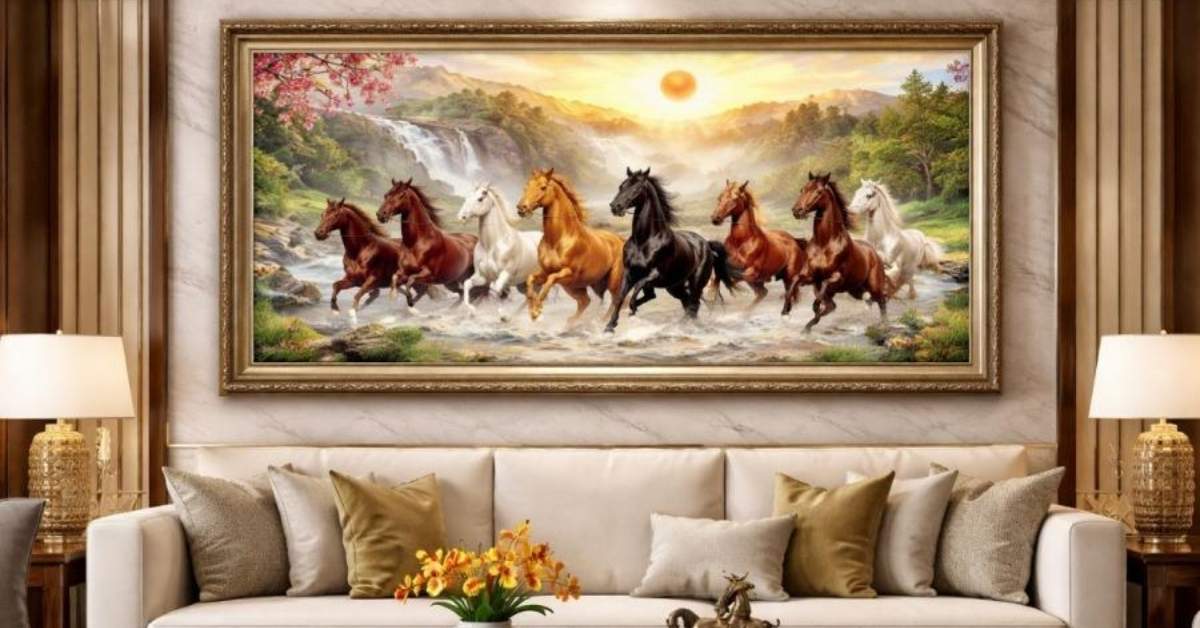
Before discussing wall placements and room positioning, it is important to understand why horse paintings are strongly associated with success-oriented interiors in both Vastu and luxury home design.
1.1. Horse paintings are associated with movement and achievement
One reason horse paintings are so widely used in homes and offices is because horses symbolize purposeful movement. Unlike static artwork such as floral paintings or landscapes, running horses create a visual sense of momentum that immediately changes the atmosphere of a room. In luxury interior projects, designers often use horse artwork to make a space feel more dynamic and aspirational.
In Vastu Shastra, horses are commonly associated with:
- Professional growth
- Confidence
- Endurance
- Determination
- Competitive success
This symbolic connection is especially strong when the horses are shown running together in the same direction. A coordinated group of horses visually represents discipline, teamwork, and sustained progress rather than chaotic energy. This is why seven-horse paintings have become one of the most recognizable forms of Vastu-inspired artwork in residential interiors.
Many homeowners searching for running horses painting vastu direction in house are also trying to create a psychological effect within the home. Artwork has a direct impact on how people emotionally experience a space, and energetic imagery can subtly influence motivation, mood, and even the perception of success within a room. A common recommendation from Vastu consultants is to place these paintings in active areas of the home such as living rooms or offices rather than quiet personal spaces. This allows the artwork to reinforce movement, ambition, and social energy naturally within the environment.
Before choosing the ideal wall placement, homeowners should understand how direction changes the symbolic meaning of the painting in Vastu design.
1.2. Direction changes the symbolic energy of the painting
In Vastu, every direction is associated with a different type of energy. Because of this, the exact same painting may carry a completely different meaning depending on where it is placed inside the house. This concept is one of the most misunderstood parts of Vastu-inspired interior design.
For example, placing a running horse painting on the South wall is believed to strengthen leadership and recognition because the South direction is traditionally connected with fame and visibility. Meanwhile, placing the same artwork in a bedroom may create excessive movement-oriented energy, making the space feel mentally restless rather than calming. Another important factor is the direction the horses are facing. In professional Vastu consultations, this detail is often treated as seriously as the wall placement itself. If the horses appear to run outward toward the main exit, the composition may symbolically suggest opportunities or positive energy leaving the home. For this reason, most Vastu practitioners recommend positioning the painting so the horses visually move inward into the living space.
This directional awareness is exactly why running horses painting vastu direction in house has become such a common search topic among homeowners designing luxury living rooms, offices, and entrance areas. In most cases, the South and East walls are considered the safest and most effective placements because they support growth-oriented symbolism without creating excessive visual heaviness.
2. Best placements for vastu running horse painting
The placement section is the most important part of choosing horse artwork according to Vastu. While many online articles provide overly simplified advice, experienced interior designers usually evaluate both symbolic placement and visual balance together. A horse painting should not only follow Vastu recommendations but also feel naturally integrated into the architecture and flow of the room.
Among all placement options, the South wall remains the most recommended direction for homeowners who want the painting to symbolize success and career advancement.
2.1. South wall placement for success and recognition
The South wall is generally considered the best placement for running horse paintings in Vastu. This recommendation appears consistently across both traditional Vastu principles and modern Vastu-inspired interior styling because the South direction is associated with power, ambition, public image, and professional advancement.
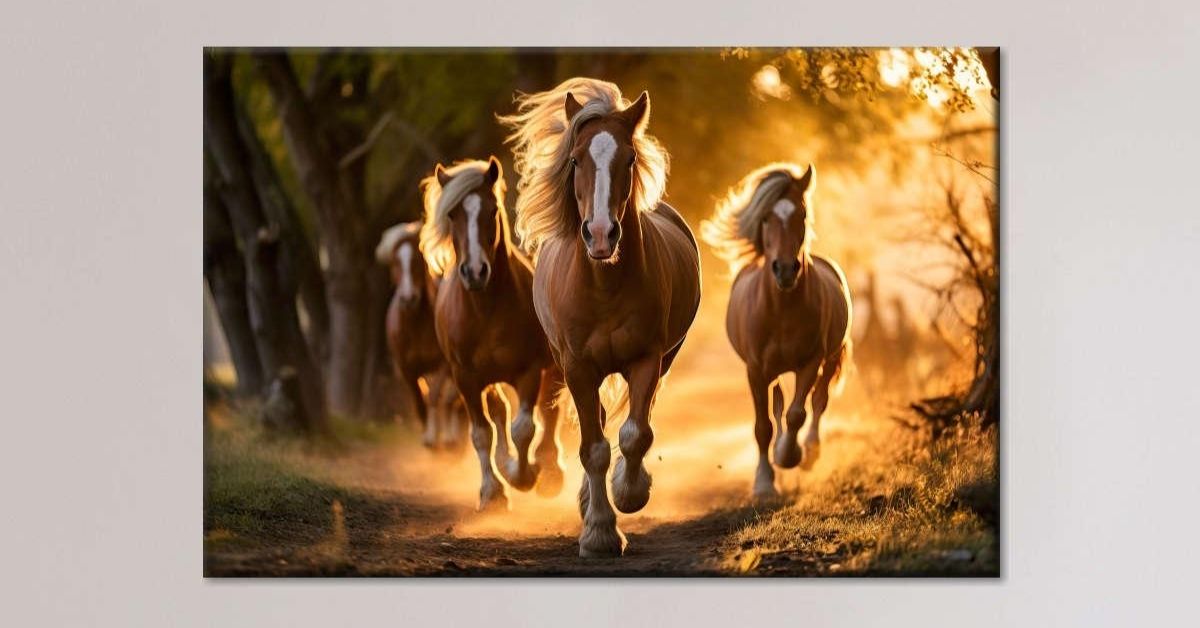
In practical interior design terms, the South wall often works well because it naturally becomes a focal point in living rooms and office spaces. Large artwork positioned here tends to command attention without disrupting the overall visual balance of the room. This makes horse paintings particularly effective on wide feature walls behind seating areas, executive desks, or entry-facing spaces.
A properly selected South-facing horse painting should feel energetic but refined. The artwork should communicate confidence rather than aggression. The most recommended painting styles usually include:
- Seven horses running in coordination
- Open landscapes with visible depth
- Bright natural lighting
- Clear forward movement
- Balanced spacing between horses
White horses are commonly recommended for South-facing placements because they create a more balanced and refined visual energy while still symbolizing strength, ambition, and forward movement. In homes with warmer interior palettes, brown or golden horses can also work beautifully, especially when paired with wood finishes, marble textures, brass accents, or traditional decor details.
For homeowners researching running horses painting vastu direction in house, the South wall is generally considered the most reliable and widely accepted placement. It is particularly suitable for people who want to strengthen themes related to career advancement, leadership, professional visibility, and long-term business growth within their living or working space.
While the South wall emphasizes recognition and authority, the East direction creates a softer and more motivational atmosphere within the home.
2.2. East wall placement for growth and motivation
The East direction is associated with sunrise energy, which is why it is commonly linked to optimism, creativity, and fresh beginnings in Vastu. This placement is especially suitable for homeowners who want their interiors to feel inspiring rather than overly formal or intense.
East-facing horse paintings are often recommended for:
- Study rooms
- Creative workspaces
- Home offices
- Startup environments
- Younger professionals or students
One reason this placement works particularly well is because East-facing rooms often receive natural morning light. When combined with horse artwork, the space feels visually active and uplifting without becoming overpowering. In modern interior projects, designers frequently use lighter-toned horse paintings in these areas to maintain openness and brightness. The painting style matters significantly for East placements. Soft backgrounds, open skies, and fluid movement usually work better than dark or dramatic compositions. A horse painting here should motivate rather than dominate the room visually.
Another advantage of East-facing placements is flexibility. Unlike South-facing walls, which are often used for formal statement pieces, East-facing horse paintings can feel more casual and contemporary. This makes them easier to integrate into modern apartments and minimalist interiors. For homeowners unsure which direction to choose, the East wall is often considered the second-best option after the South wall because it supports positive energy while maintaining a lighter and more welcoming atmosphere.
For homeowners using horse paintings in business-focused spaces, the North wall can also work effectively when the artwork is selected carefully.
2.3. North wall placement for business-related spaces
The North direction is commonly associated with career opportunities, networking, and financial movement. Because of this, horse paintings placed on North-facing walls are frequently used in:
- Commercial offices
- Business consultation rooms
- Financial workspaces
- Executive lounges
- Meeting areas
Unlike South placements, which focus heavily on recognition and leadership, North placements are more connected to steady business flow and professional expansion. This makes them particularly suitable for people working in finance, consulting, sales, or entrepreneurship. However, North-facing placements require careful artwork selection. Paintings that feel too chaotic or aggressive may create visual tension rather than a productive atmosphere. The ideal artwork should communicate controlled energy and confidence.
Professional interior designers usually recommend:
- Balanced horse formations
- Neutral or natural landscapes
- Moderate movement
- Softer contrast levels
This creates a more sophisticated and stable visual impression while still maintaining the symbolic movement associated with horses. In many modern office interiors, North-facing horse paintings are used less for traditional symbolism and more for creating a visually ambitious and high-energy environment.
Some homeowners prefer placements that create stronger motivational energy, especially in highly active workspaces or entrepreneurial environments.
2.4. Southeast direction for ambition and active workspaces
The Southeast area is often associated with active energy and productivity in Vastu. Because of this, horse paintings can work particularly well in spaces where motivation and work intensity are important parts of the environment.
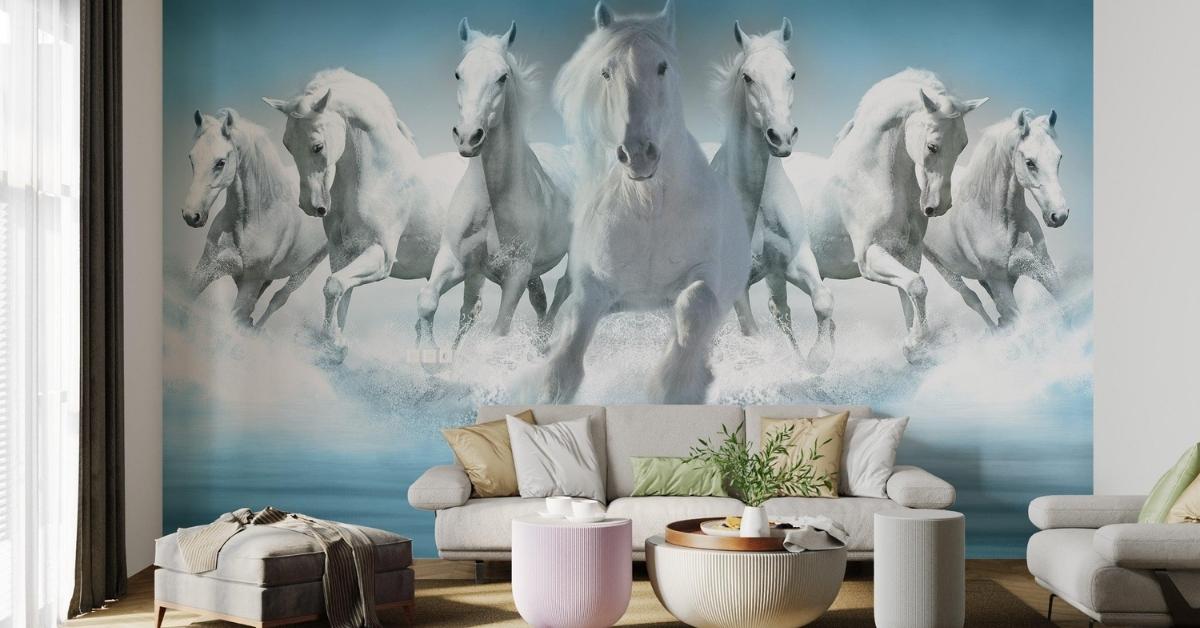
This placement is commonly used for:
- Entrepreneurial offices
- Creative studios
- Marketing workspaces
- Sales environments
- Startup offices
The key challenge with Southeast placements is balance. Since this direction already carries strong active energy, overly dramatic horse paintings may make the room feel stressful instead of motivating. This is why experienced designers often choose artwork with warm, grounded tones rather than highly aggressive compositions. Golden, brown, or earthy horse paintings usually perform better here because they create a sense of controlled ambition rather than visual chaos. Homeowners who want a stronger motivational atmosphere without the intensity of South-facing placements often find Southeast walls to be a practical compromise.
Although less commonly discussed, Northwest placements can also work well in spaces connected with communication, travel, and social interaction.
2.5. Northwest direction for networking and movement
The Northwest direction is associated with travel, communication, and social interaction. In homes or offices where networking and relationship-building are important, horse paintings can help reinforce a sense of movement and connection.
This placement is often suitable for:
- Consultants
- Real estate professionals
- Sales teams
- Travel-related businesses
- Remote workspaces
- Unlike South-facing artwork, which is usually bold and authoritative, Northwest horse paintings should feel elegant and fluid. Overly intense artwork may conflict with the more adaptable and communication-oriented symbolism of this direction.
Designers typically recommend lighter compositions with smoother motion and less visual heaviness for Northwest walls. This helps the artwork feel refined rather than overpowering, especially in smaller offices or apartment interiors.
3. Best colors for running horse paintings
Color selection affects not only the visual appearance of the room but also how the symbolic energy of the painting is perceived. In many luxury interiors, the wrong color palette can make even an expensive artwork feel disconnected from the space.
Before selecting a horse painting, homeowners should understand why white horses remain the most widely recommended option in Vastu-inspired interiors.
3.1. White horses for balance and prosperity
White horses are considered the safest and most versatile choice because they symbolize clarity, peace, stability, and controlled success. Unlike darker or highly dramatic paintings, white horse artwork tends to feel visually clean and emotionally balanced.
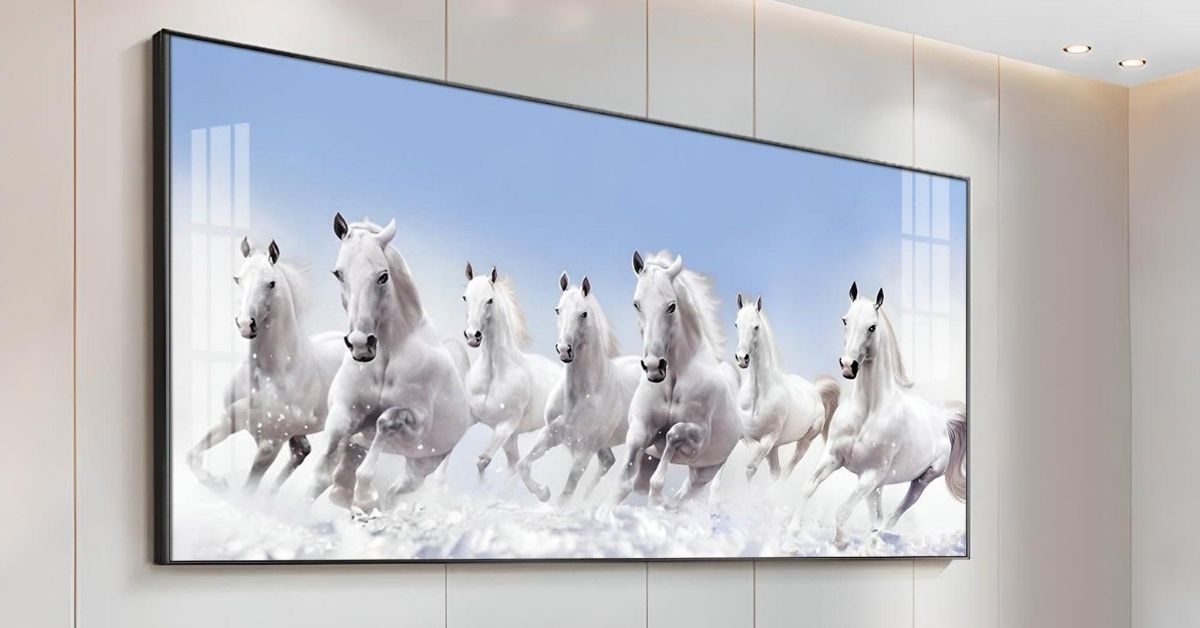
This is one reason white horses are frequently used in:
- Modern luxury homes
- Minimalist interiors
- Open-concept living rooms
- Professional office spaces
Another advantage is design flexibility. White horse paintings integrate more naturally with neutral interiors, marble textures, soft lighting, and contemporary furniture palettes. For homeowners exploring running horses painting vastu direction in house, white horses are usually the easiest choice because they work well across multiple Vastu directions without making the room feel visually heavy.
Warm-toned horse paintings create a very different atmosphere and are often selected for more traditional or executive-style interiors.
3.2. Brown and golden horses for strength and authority
Brown and golden horses create a richer and more grounded visual tone compared to white horse paintings. These colors are commonly associated with endurance, confidence, and material stability, making them particularly popular in executive offices and luxury traditional homes.
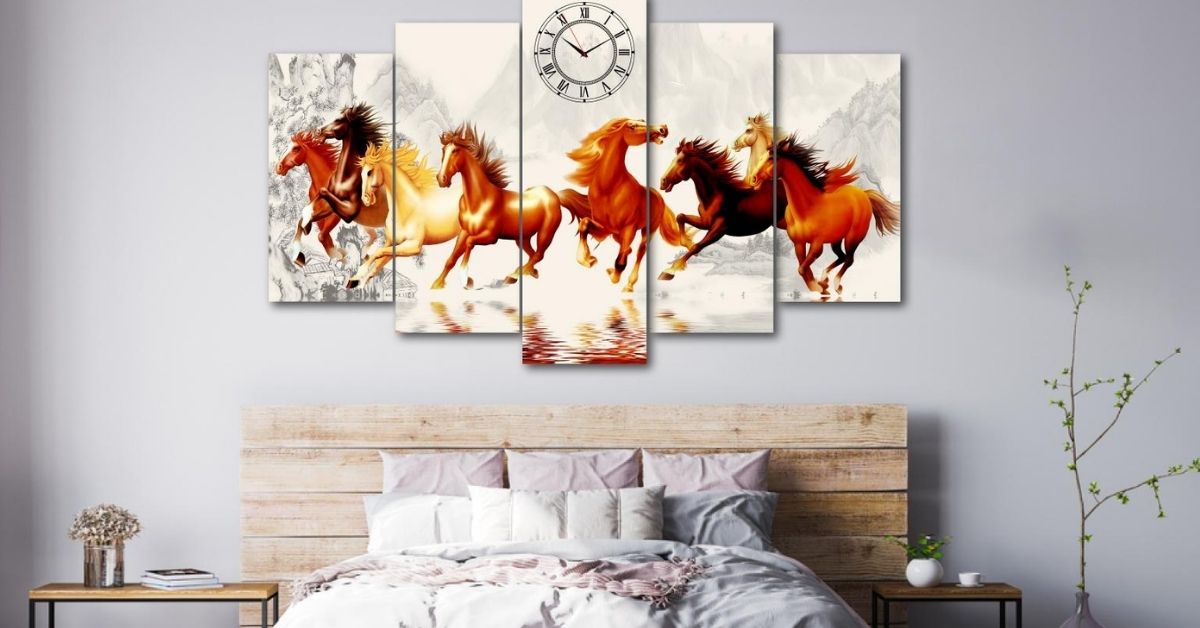
These paintings usually work best in interiors with:
- Wood textures
- Darker furniture palettes
- Warm lighting
- Traditional decor accents
When used correctly, golden horse artwork can create an upscale and authoritative appearance without feeling overly aggressive.
Dark or highly dramatic paintings may appear visually striking, but they are not always ideal according to Vastu-oriented design principles.
3.3. Avoid excessively dark color palettes
Paintings dominated by stormy backgrounds, harsh shadows, or black-heavy compositions may create emotional heaviness within the room. While dramatic artwork can work in certain artistic interiors, it is generally less preferred in Vastu-focused spaces because it may reduce the feeling of openness and positivity.
Professional designers often recommend choosing horse paintings that feel energetic but visually breathable. Open skies, visible depth, and balanced contrast levels usually create a more welcoming atmosphere.
4. Modern vs traditional horse painting styles
The style of the artwork matters just as much as placement. In many homes, the wrong painting style can make the space feel visually disconnected even if the Vastu direction is technically correct.
Modern interiors usually require cleaner and more restrained artwork compared to traditional decorative spaces.
4.1. Modern minimalist horse paintings
Modern horse paintings focus on clean composition, restrained color palettes, and fluid movement rather than excessive decorative detail. These styles work particularly well in contemporary homes where architecture and furniture already provide strong visual structure.
Minimalist horse paintings are commonly used in:
- Luxury apartments
- Scandinavian interiors
- Modern villas
- Open-concept living rooms
For homeowners interested in running horses painting vastu direction in house, minimalist artwork often provides the best balance between symbolic meaning and modern aesthetics.
Traditional horse paintings remain highly popular in culturally inspired or classic interiors where decorative detail plays a larger role.
4.2. Traditional Vastu-inspired horse artwork
Traditional horse paintings usually include:
- Detailed brushwork
- Decorative framing
- Symbolic landscapes
- Richer color palettes
These paintings often feel more ceremonial and culturally expressive compared to minimalist artwork. They work best in homes where classical architecture or traditional decor elements are already present.
5. Horse painting in the house which direction should be avoided?
Knowing where not to place a horse painting is just as important as choosing the right direction. Poor placement can create visual imbalance and weaken the intended symbolism of the artwork. Bedrooms are one of the most common placement mistakes homeowners make with energetic horse paintings.
5.1. Bedrooms are usually not ideal for energetic horse paintings
Bedrooms are designed to promote rest, calmness, and emotional relaxation. Running horse paintings, by contrast, symbolize movement, ambition, and active momentum. This creates a natural conflict between the function of the room and the emotional energy of the artwork.
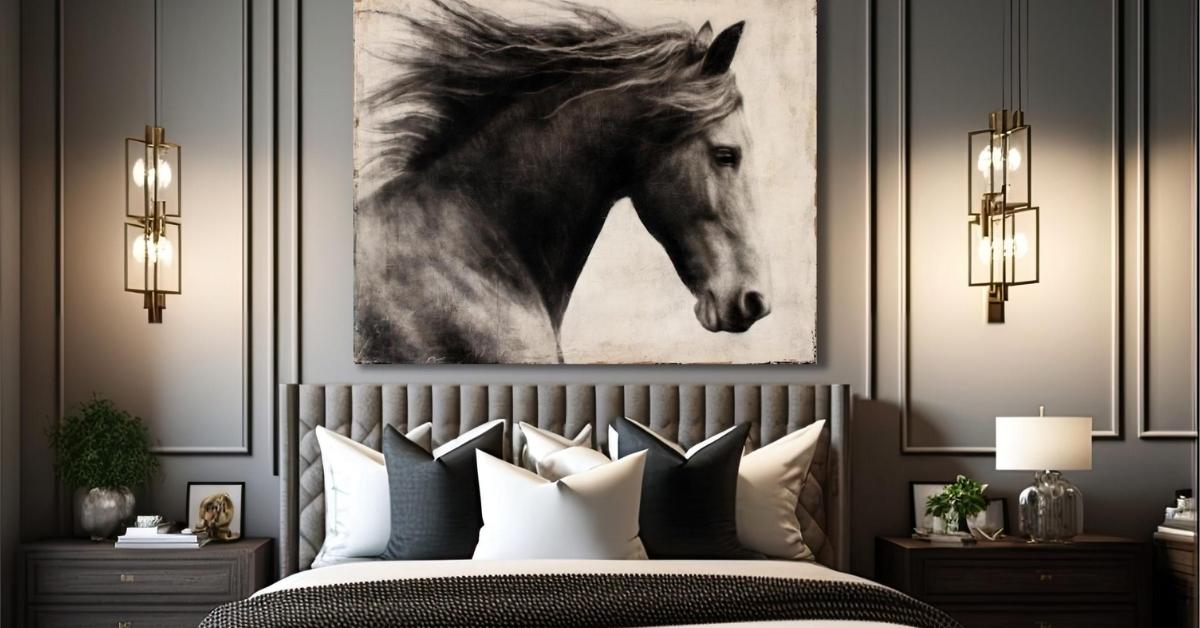
In interior design practice, highly energetic artwork in bedrooms can also make the space feel visually overstimulating. Designers typically recommend softer imagery such as landscapes, abstract neutrals, or calming nature scenes for sleeping environments.
Bathrooms and kitchens are also commonly avoided in Vastu-inspired artwork placement because they do not align with the symbolic purpose of prosperity-oriented decor.
5.2. Avoid bathrooms and kitchens
Bathrooms and kitchens are not considered ideal spaces for prosperity-focused artwork because the environment does not align with the symbolic meaning of achievement and progress.
From a practical perspective:
- Moisture can damage the artwork
- Heat affects longevity
- Steam reduces visual clarity over time
This makes these areas both symbolically and functionally unsuitable for horse paintings. The direction the horses face is another detail that homeowners often overlook when selecting artwork placement.
5.3. Avoid placing horses running outward from the home
If the horses appear to run toward the exit or away from the center of the house, the composition may symbolically represent opportunities or positive energy leaving the home. Professional designers usually position horse paintings so the movement visually flows inward into the living space. This creates a more welcoming and psychologically cohesive composition.
The number of horses also affects the symbolic interpretation of the artwork and overall visual balance.
5.4. Choosing the wrong number of horses
Seven horses are considered the most favorable arrangement because they symbolize coordinated movement and balanced progress.
Avoid:
- Broken formations
- Isolated horses
- Uneven compositions
- Confusing movement directions
The artwork should feel unified and intentional. Aggressive artwork may create intensity, but it can also make a room feel emotionally heavy and visually stressful.
5.5. Using overly aggressive artwork
Paintings showing:
- Angry horses
- Violent battle scenes
- Harsh lighting
- Excessive darkness
may create tension rather than motivation within the home. The ideal horse painting should feel powerful without appearing hostile.
Placement height is another surprisingly important detail in both Vastu and professional interior design.
5.6. Hanging the painting too high or too low
A horse painting should generally sit near eye level so it feels naturally connected with the room.
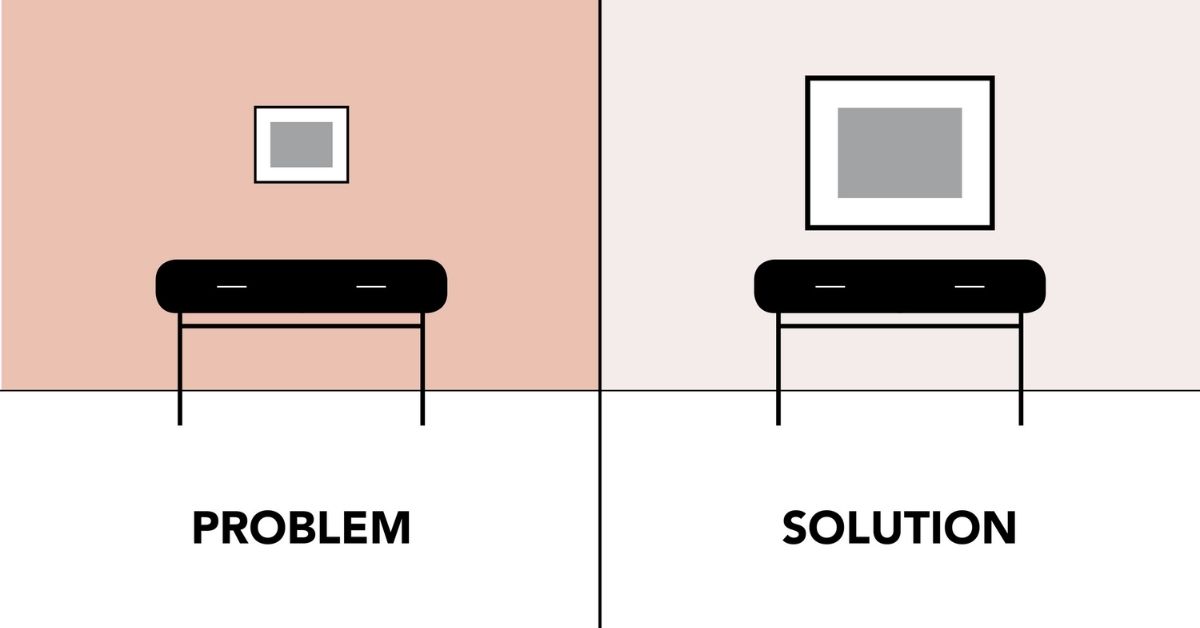
If the artwork is placed too high:
- It feels disconnected from the space
- The visual impact weakens
If it is too low:
- The room feels visually unbalanced
- Furniture may block the composition
Proper positioning helps the artwork feel integrated rather than randomly placed.
6. FAQs about running horse vastu direction
Which direction is best for running horse painting in the house?
The South wall is generally considered the strongest placement because it is associated with recognition, leadership, and professional success.
Can we place horse paintings in the bedroom?
Most Vastu recommendations advise against it because the energetic movement of running horses may create a restless atmosphere.
Why are 7 horses important in Vastu?
Seven horses symbolize balanced progress, unity, discipline, and long-term success. This is why seven-horse paintings are the most commonly recommended arrangement.
Should horses face inside or outside the house?
The horses should ideally appear to move inward into the home rather than outward toward exits.
Which color horse painting is best?
White horse paintings are generally considered the best option because they symbolize positivity, balance, and peaceful ambition.
7. Conclusion
The popularity of running horses painting vastu direction in house reflects how modern homeowners increasingly combine symbolic meaning with thoughtful interior design. A horse painting is no longer viewed as simple wall decor. In many homes, it acts as a visual centerpiece that influences the atmosphere, emotional tone, and identity of the space.
The most effective horse paintings are not necessarily the largest or most expensive ones. Instead, they are the paintings that feel balanced with the architecture, furniture layout, lighting, and directional placement of the room. When chosen carefully, a running horse painting can create a space that feels energetic, refined, and intentionally designed rather than visually overwhelming.
-
Facebook: fotobermedia.co
-
YouTube Channel: Fotober
-
TikTok Channel: @fotober
-
Instagram: fotober_media
-
Email support: [email protected]
-
Hotline: +84 942 110 297
Related posts
Cincinnati Housing Market 2026: Prices, Trends, and What It Means for Buyers, Sellers, and Investors
October 20, 2026
Modern Luxe Interior Design: Elements, Style Guide and How to Stage It
October 10, 2026

Minimalist Interior Design: Characteristics, Style Guide, and Staging
October 8, 2026
Coastal Interior Design: Style Definition & Staging Guide
September 30, 2026
