




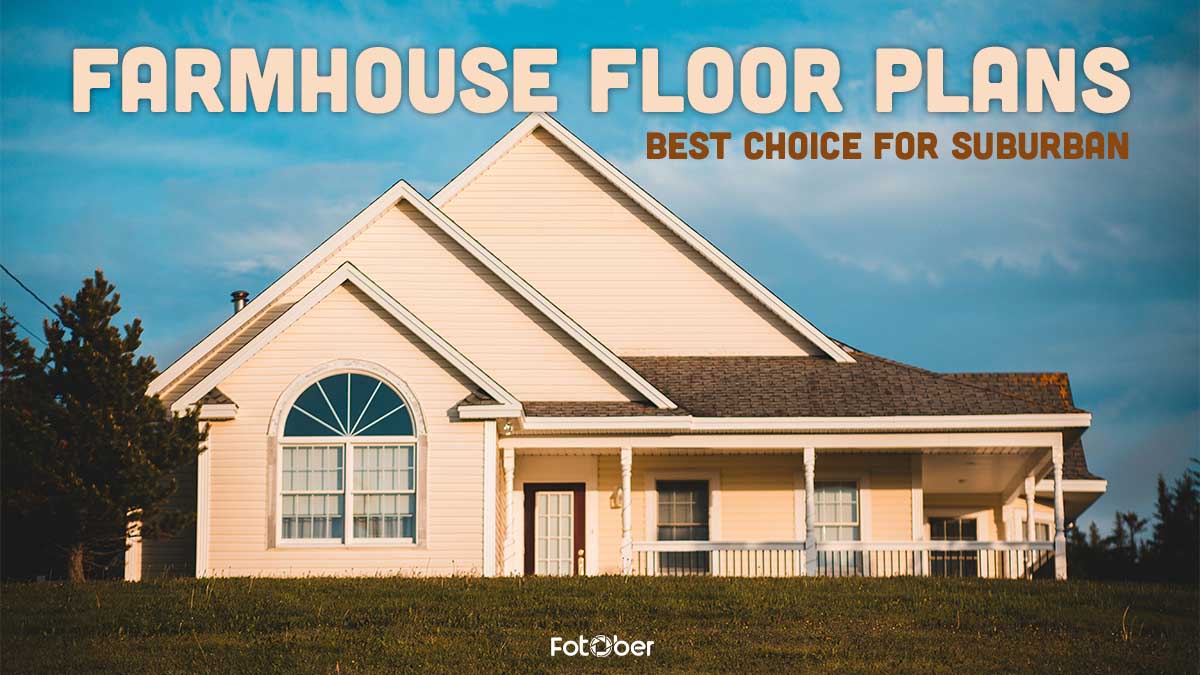
Farmhouse Floor Plans: The Definitive Home Layouts for Suburban Buyers

Share:
Table of Contents
- 1. What defines a farmhouse floor plan? Core structural elements
- 2. Exploring popular farmhouse architectural styles
- 3. Traditional vs. modern farmhouse floor plans: Key differences
- 4. Top farmhouse layout ideas to suit different lifestyles
- • 4.1. Small farmhouse floor plans for efficient living
- • 4.2. Versatile 3-bedroom farmhouse plans for growing families
- • 4.3. The power of a farmhouse open floor plan
- • 4.4. Confine dirt with a dedicated mudroom
- • 4.5. Expanded pantry and outdoor spaces
- • 4.6. Strategic farmhouse layout ideas to sell homes faster
- 5. Why farmhouse floor plans sell fast in suburban markets
- 6. How to choose the right farmhouse floor plan for your build
- 7. Transform your farmhouse floor plans with Fotober
- 8. Conclusion
Originally designed as utilitarian shelters for agricultural workers, traditional farmhouses have evolved into one of today’s most sought-after residential architectural styles. Today’s farmhouse floor plans prioritize open gathering spaces, seamless indoor-outdoor transitions through sprawling porches, and light-filled interiors that cater perfectly to modern family dynamics. Whether rooted in classic rustic aesthetics or sleek contemporary finishes, these flexible layouts offer an effortless balance between cozy comfort and spatial efficiency.
Let’s explore everything you need to know about farmhouse floor plans. From core structural elements and popular architectural styles to space-saving small layouts, versatile 3-bedroom configurations, and high-converting marketing ideas for suburban real estate, this article provides actionable insights to help you design, select, or showcase the perfect home.
1. What defines a farmhouse floor plan? Core structural elements
At its core, a farmhouse floor plan is defined by architectural practicality, structural honesty, and a warm, welcoming environment. Originating from purposeful agricultural builds, these layouts were designed to accommodate busy daily routines and multi-generational living. Today, integrating iconic architectural elements into contemporary farmhouse layout ideas ensures a timeless balance of heritage charm and modern convenience.
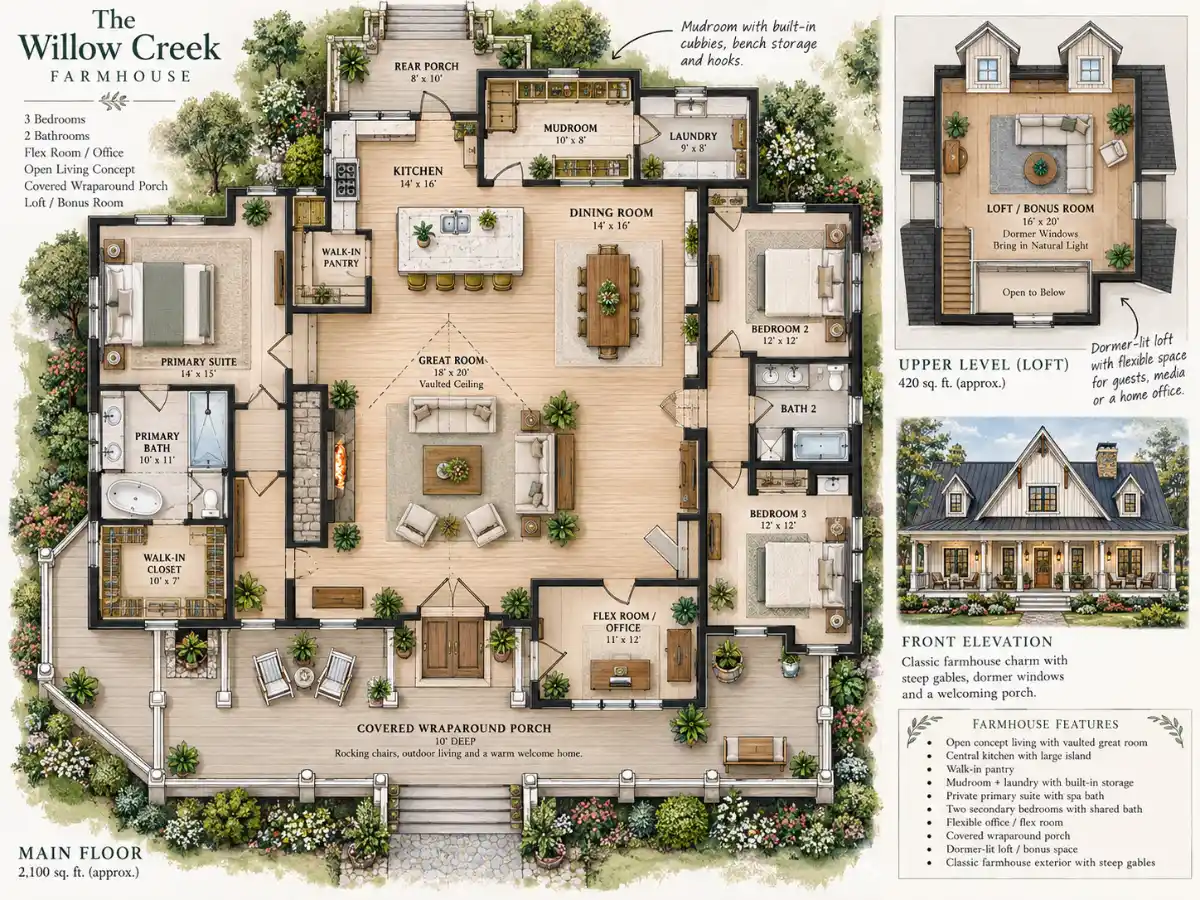
Key structural features that define authentic farmhouse floor plans include:
- Prominent covered porches: The expansive front or wraparound porch is a quintessential farmhouse signature. Serving as an outdoor extension of the main living area, it offers shelter, shade, and an inviting entry for guests.
- Centralized kitchen & dining hubs: The kitchen acts as the anchor of the floor plan. Typically featuring a generous central island, walk-in pantry, and direct connectivity to the dining space, it facilitates gathering and hospitality.
- Dedicated mudrooms & utility drop zones: Rooted in working-farm efficiency, modern layouts preserve dedicated rear or garage entry transition spaces equipped with built-in cubbies, storage benches, and laundry facilities.
- Steep gabled roofs & dormer windows: Distinctive gabled rooflines create soaring cathedral ceilings and loft spaces inside, while dormers allow natural overhead light to flood upper-level bedrooms.
- Intuitive spatial flow: Traditional floor plans blend structural exterior symmetry with adaptable, open interior zoning, eliminating wasted hallway space in favor of usable living square footage.
Together, these foundational elements make farmhouse floor plans exceptionally resilient, comfortable, and adaptable for evolving family needs.
2. Exploring popular farmhouse architectural styles
While all farmhouse floor plans share a foundation of warmth, symmetry, and practicality, the overarching architectural style has evolved into distinct sub-categories. Understanding these popular variations allows homeowners, builders, and real estate professionals to choose or market a design that aligns with specific lifestyle preferences and geographic settings.
2.1. Classic country farmhouse
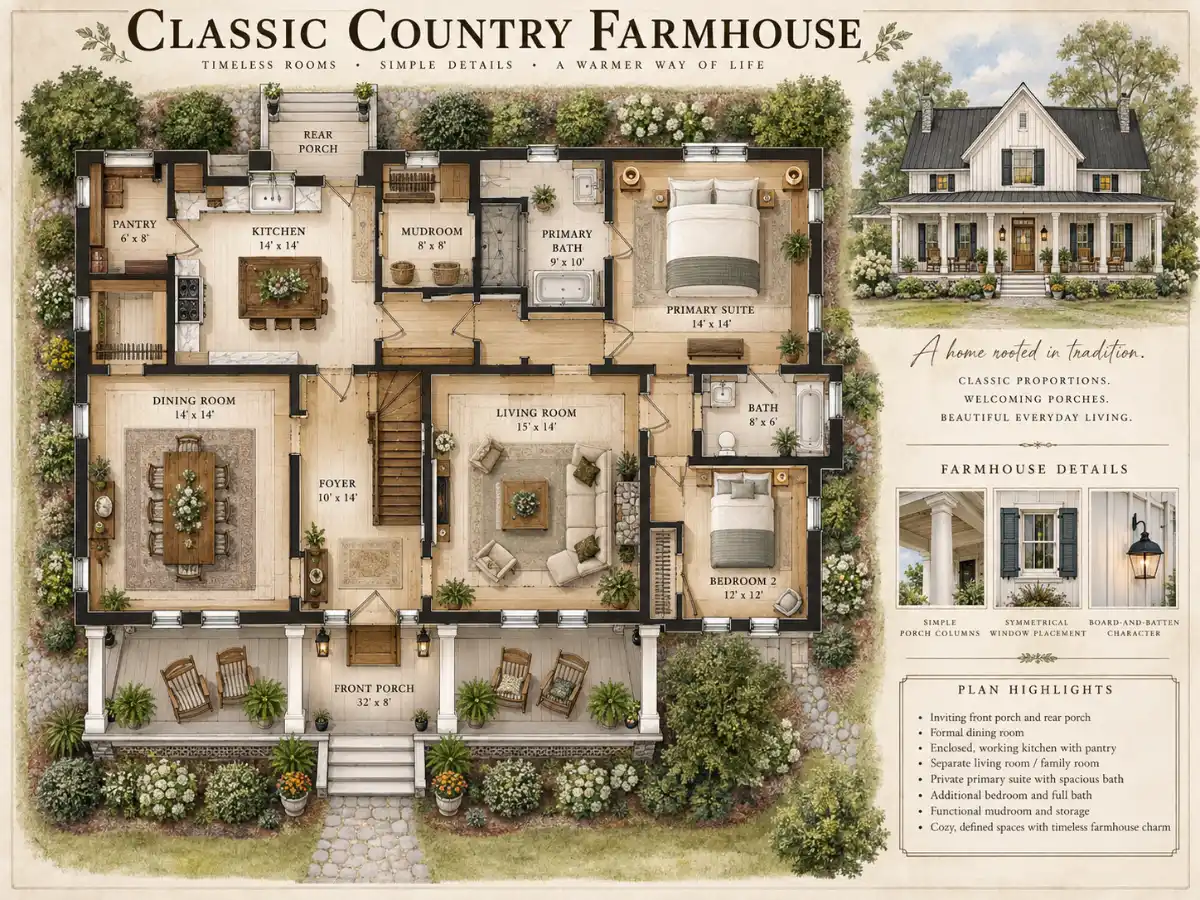
Rooted in historical authenticity, traditional country farmhouse layout ideas emphasize cozy, defined spaces over broad open concepts. These plans typically feature distinct room divisions, formal dining areas, enclosed working kitchens, and rich wood trim. Exterior features like board-and-batten siding, simple porch columns, and symmetrical double-hung windows evoke a nostalgic, time-tested rural heritage.
2.2. Modern farmhouse
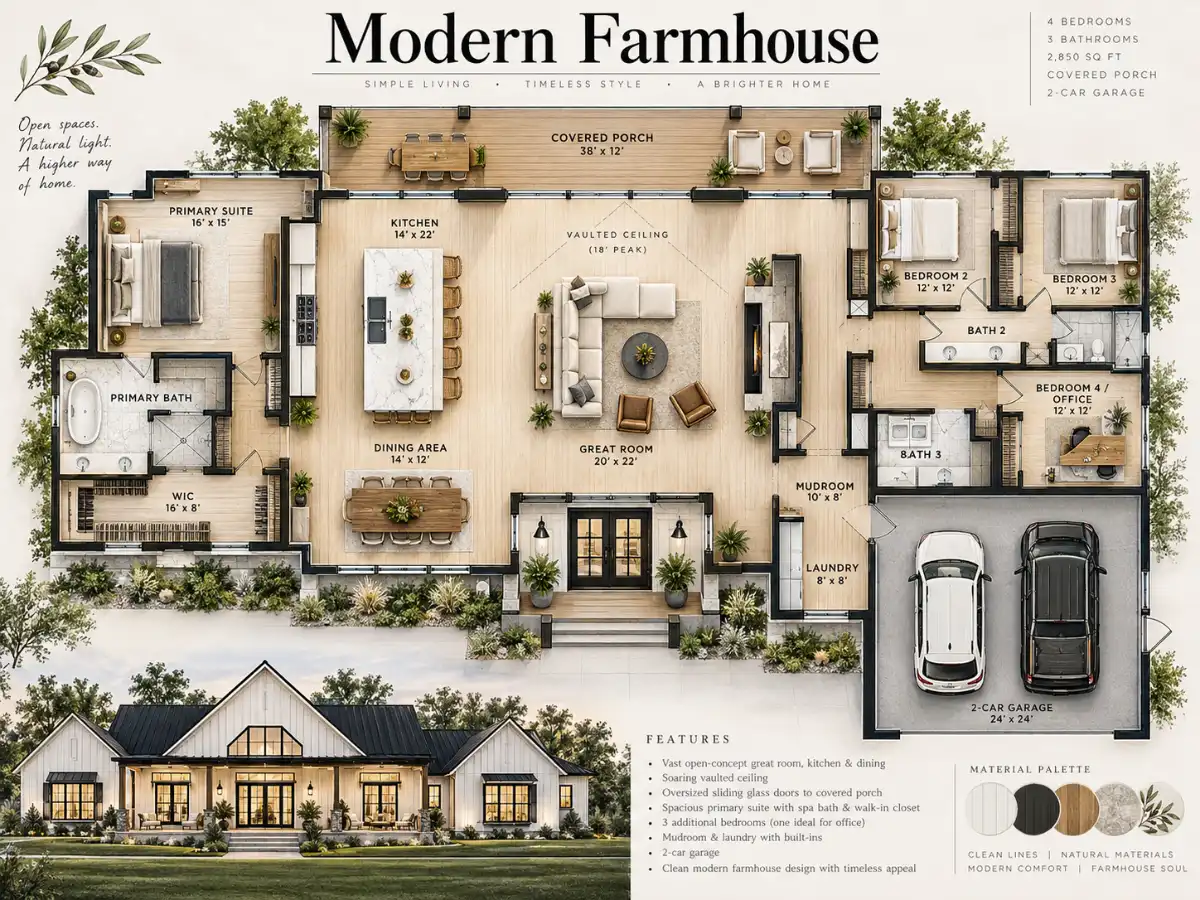
As one of the most sought-after residential trends today, modern farmhouse floor plans replace heavy rustic ornament with clean lines and sleek minimalism. Characterized by high-contrast color palettes, such as crisp white vertical siding paired with bold black window frames, these designs prioritize vast open-concept living spaces, soaring vaulted ceilings, and oversized glass sliding doors that fill the interior with natural light.
You can get to know more about farmhouse interior design and other architectural styles on our blog.
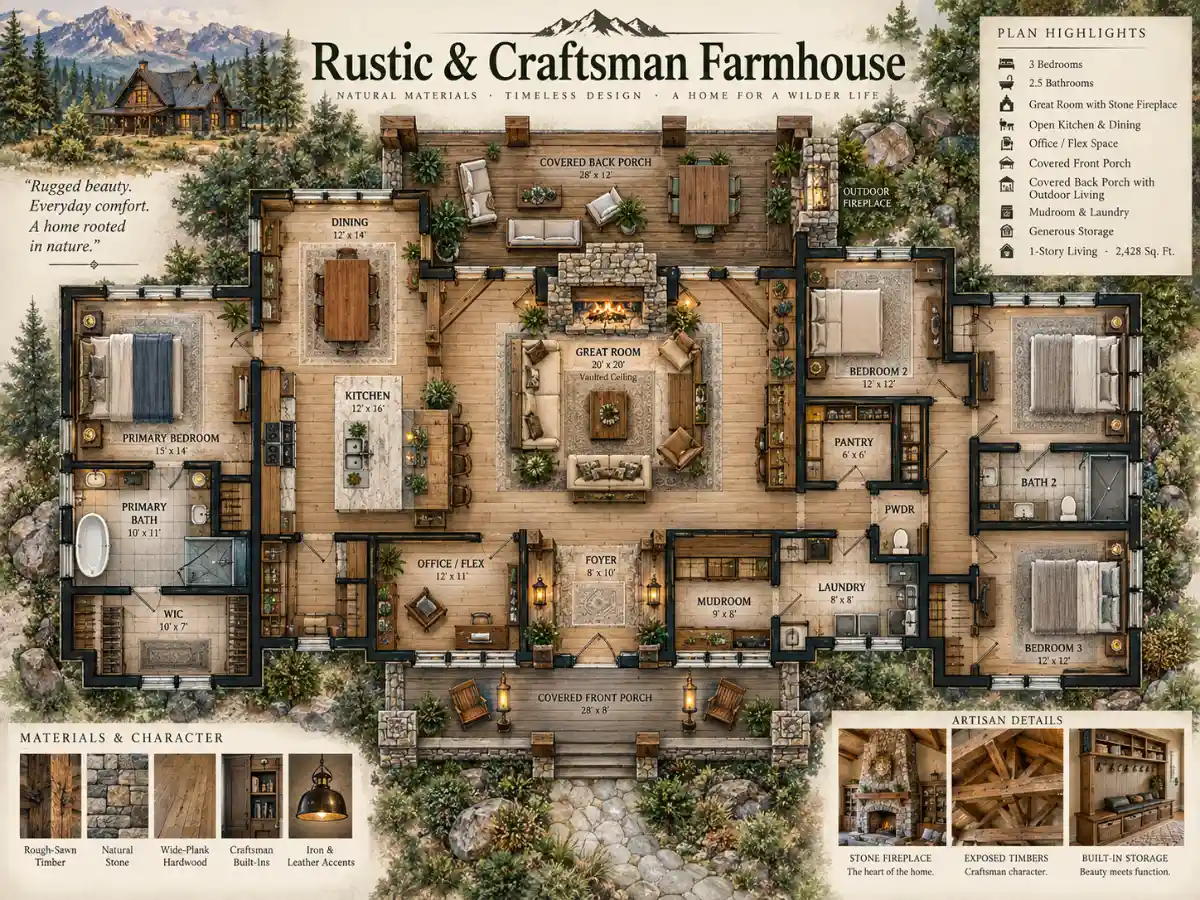
2.3. Rustic & craftsman farmhouse
Combining rugged appeal with artisanal detail, this variation incorporates heavy timber framing, exposed ceiling beams, stone accents, and handcrafted built-ins. These styles of floor plans frequently showcase a grand stone fireplace as the central focal point of the great room, creating a grounded, lodge-inspired ambiance that pairs effortlessly with woodsy or mountainous surroundings.
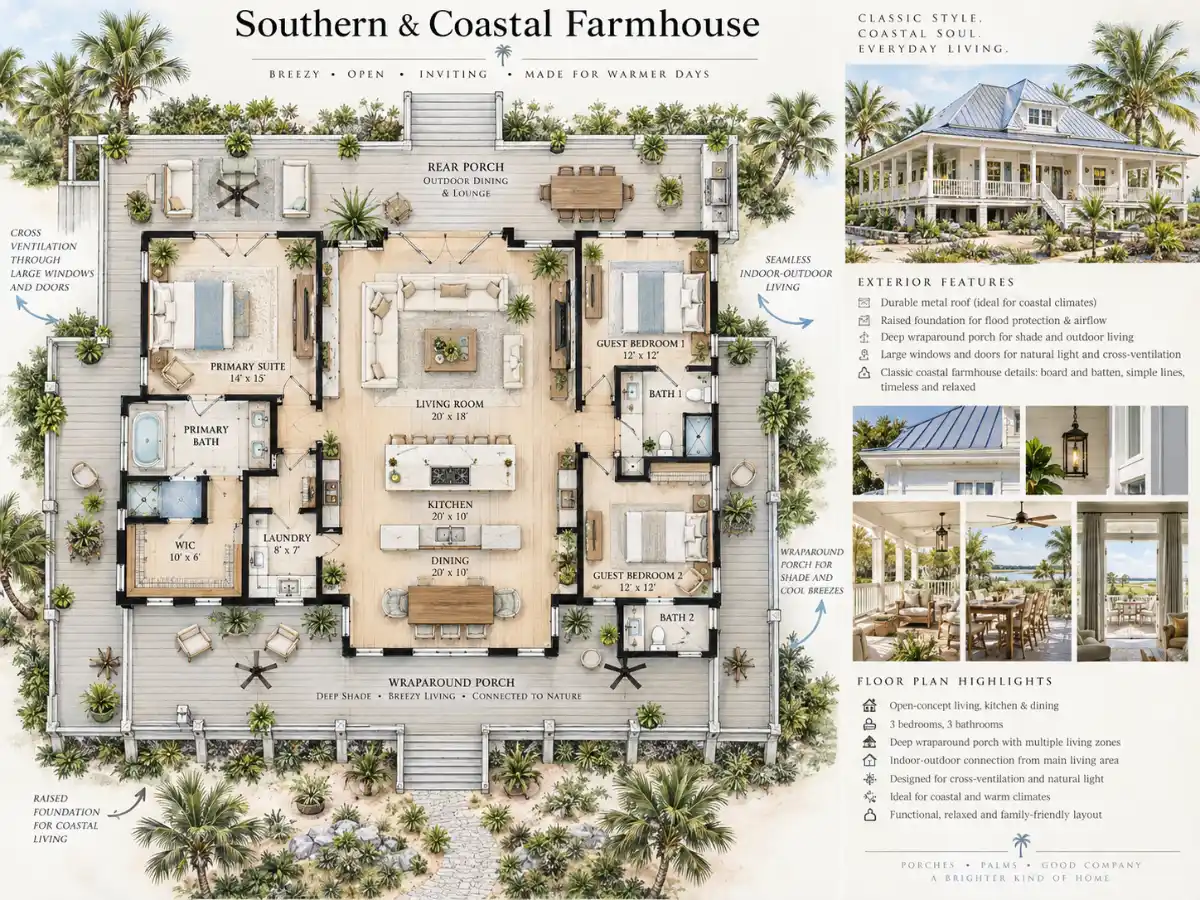
2.4. Southern & coastal farmhouse
Engineered for warmer climates, Southern and Coastal farmhouse layouts prioritize air ventilation, shade, and indoor-outdoor connectivity. Key architectural signatures include raised foundations, deep wraparound porches, floor-to-ceiling windows, and durable metal roofs designed to reflect solar heat. Light interior palettes and breezy transition zones make these plans perfect for relaxed coastal or sunny suburban environments.
3. Traditional vs. modern farmhouse floor plans: Key differences
While both traditional and modern farmhouse floor plans celebrate comfort, utility, and timeless charm, their spatial organization, architectural priorities, and visual aesthetics differ substantially. Historically, traditional farmhouses relied on segmented, closed-off room divisions to optimize heating efficiency from fireplaces and maintain distinct boundaries between heavy kitchen prep work and formal living spaces.
In contrast, contemporary homeowners overwhelmingly favor a farmhouse open floor plan. Modern variations eliminate non-structural interior walls to merge the kitchen, dining room, and great room into one expansive, light-filled central hub. Window architecture has also shifted dramatically: where traditional builds utilized small, double-hung windows to preserve interior heat, modern plans feature oversized, black-framed window walls and multi-panel patio doors that flood interiors with daylight and enhance indoor-outdoor connectivity.
|
Feature |
Traditional farmhouse |
Modern farmhouse |
|
Spatial layout |
Segmented, closed-off room divisions |
Farmhouse open floor plan |
|
Natural lighting |
Standard, smaller double-hung windows |
Floor-to-ceiling glass & sliding patio doors |
|
Kitchen focus |
Enclosed, utility-driven working kitchen |
Central island open directly to the great room |
|
Finishes & trim |
Warm wood, plaster, rustic brick accents |
Sleek black metals, quartz, clean minimalist trim |
Ultimately, while traditional plans focus on cozy, compartmentalized utility, modern versions reframe the classic farmhouse aesthetic through the lens of spaciousness, natural light, and modern entertainment needs.
4. Top farmhouse layout ideas to suit different lifestyles
Finding the right floor plan depends heavily on household size, daily routines, and long-term living goals. Whether you are downsizing, raising a family, or looking for an open layout designed for entertaining, implementing tailored farmhouse layout ideas ensures your home remains functional, comfortable, and stylish for years to come.
4.1. Small farmhouse floor plans for efficient living
For homeowners seeking manageable square footage, reduced maintenance, and optimal energy efficiency, small farmhouse floor plans offer an ideal solution without sacrificing architectural charm. Typically under 1,500 square feet, these compact designs rely on clever spatial planning to maximize every inch of living space.
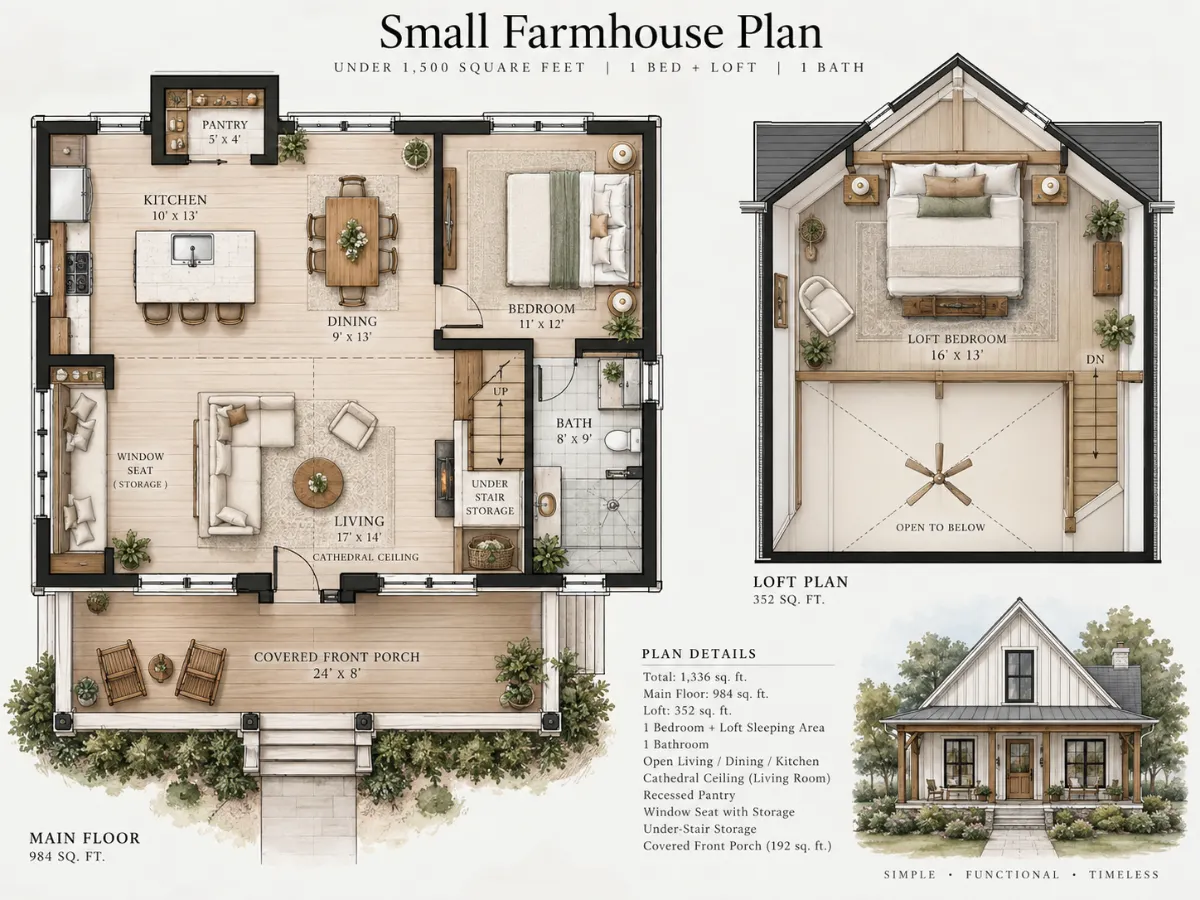
Instead of sprawling footprints, small plans frequently utilize verticality through vaulted loft bedrooms and cathedral ceilings to create an airy, expansive atmosphere. Eliminating non-essential hallways in favor of direct room transitions reclaims precious square footage for active living areas. Built-in storage solutions, such as under-stair cabinetry, window seats with hidden storage, and recessed pantry alcoves, keep clutter at bay. By pairing steep gabled roofs with cozy covered porches, small farmhouse floor plans maintain an impressive curb appeal while delivering efficient, low-maintenance living.
4.2. Versatile 3-bedroom farmhouse plans for growing families
The three-bedroom layout remains the undisputed sweet spot in residential housing. Highly sought-after for their outstanding resale value and long-term flexibility, 3-bedroom farmhouse plans offer a balanced footprint that adapts effortlessly to growing families, remote professionals, or multi-generational living.
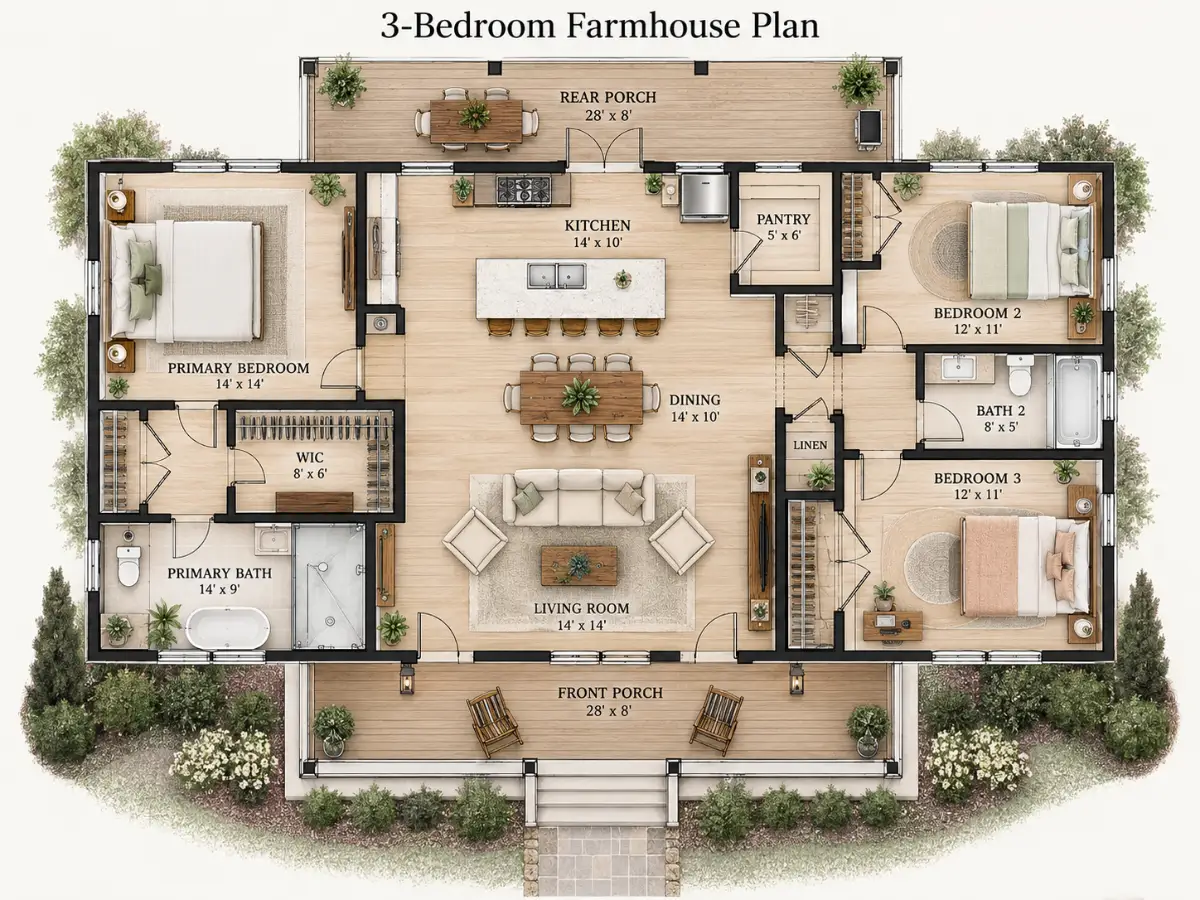
A widely favored configuration within 3-bedroom farmhouse plans is the split-bedroom layout. In this arrangement, the primary master suite is positioned on one side of the central living area to guarantee maximum privacy, while the two secondary bedrooms are located on the opposite wing or upper story. This functional separation gives parents a peaceful retreat complete with an ensuite bath and walk-in closet. Meanwhile, the additional bedrooms offer flexible utility, easily converting from nursery or children's rooms into dedicated home offices or guest quarters as life stages evolve.
4.3. The power of a farmhouse open floor plan
At the heart of modern home design, a farmhouse open floor plan redefines the central living area into a unified, multi-functional hub. By removing rigid dividing walls, this layout seamlessly connects the kitchen, dining space, and great room into one continuous gathering zone anchored by a large central kitchen island.
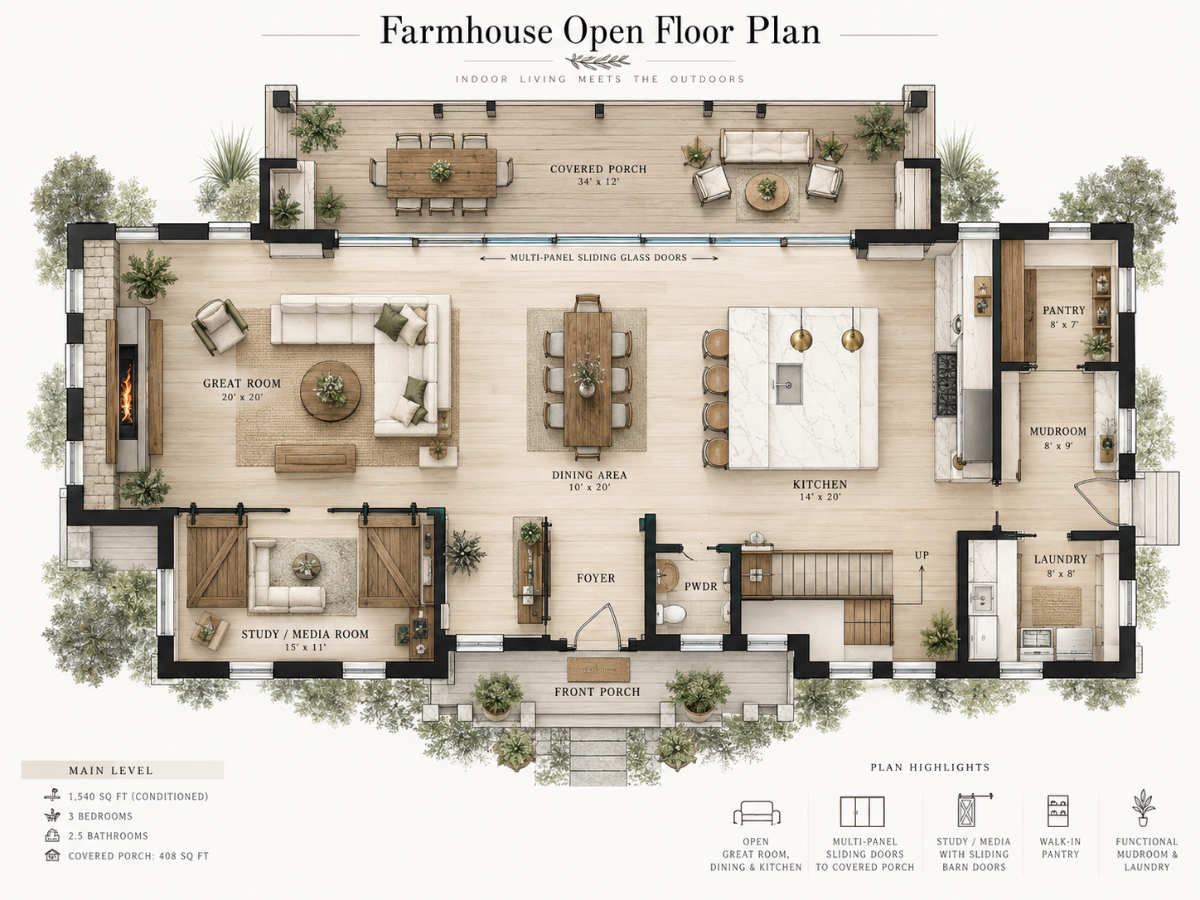
This open spatial flow encourages effortless interaction during daily routines and social gatherings while allowing sunlight from perimeter windows to illuminate the entire floor. To maintain practical functionality, smart layout ideas incorporate flexible architectural elements like sliding wood barn doors, allowing homeowners to temporarily section off study nooks, pantries, or media rooms when noise control is needed. Furthermore, pairing an open floor plan with multi-panel sliding glass doors creates a fluid transition to outdoor porches, extending your total usable living space into the fresh air.
4.4. Confine dirt with a dedicated mudroom
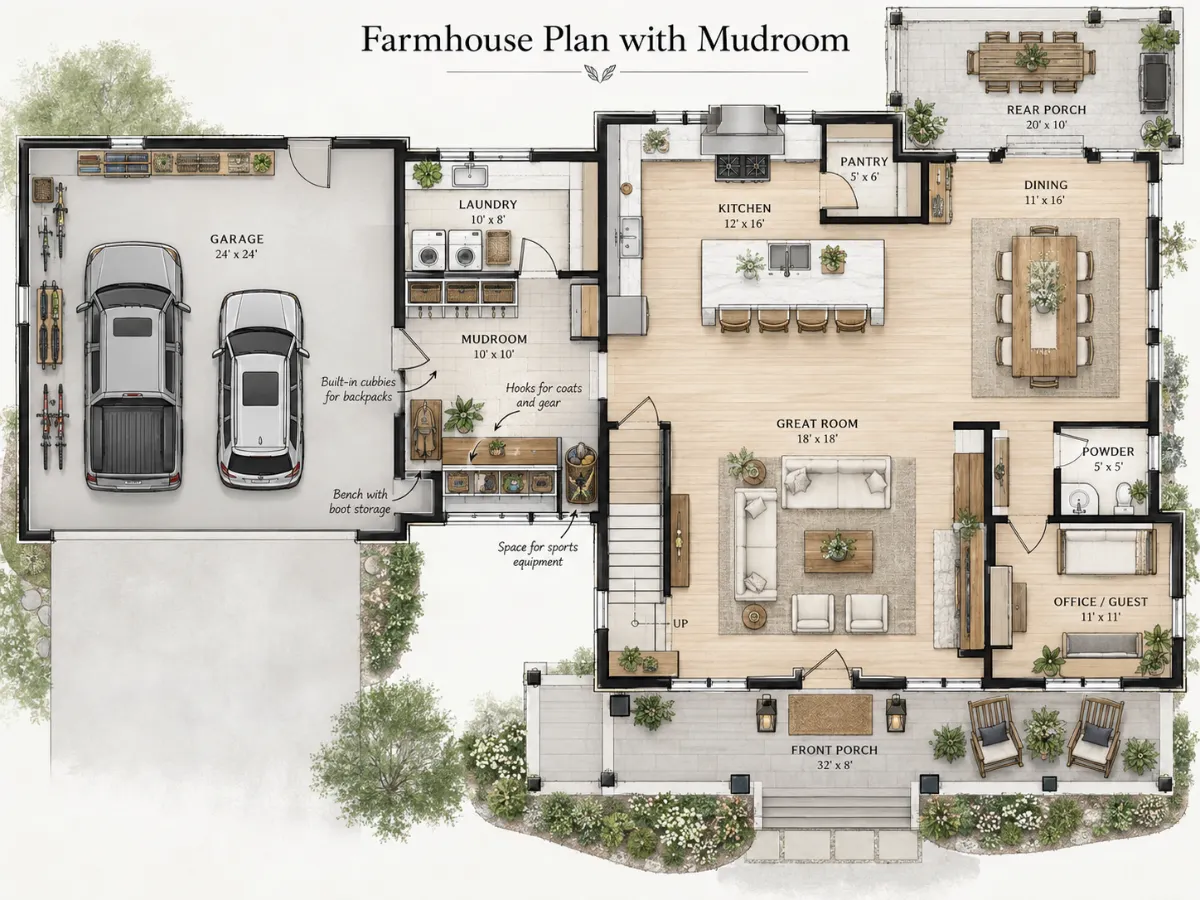
The most critical of these spaces is the mudroom. Acting as a tactical transition zone between the garage and the main living area, a well-designed mudroom features built-in cubbies, hooks, and benches. It serves as a "catch-all" for muddy boots, sports gear, and backpacks, ensuring the pristine aesthetic of the Great Room remains undisturbed. Often, these layouts integrate the laundry room into this service wing, creating a high-efficiency zone that streamlines household chores.
4.5. Expanded pantry and outdoor spaces
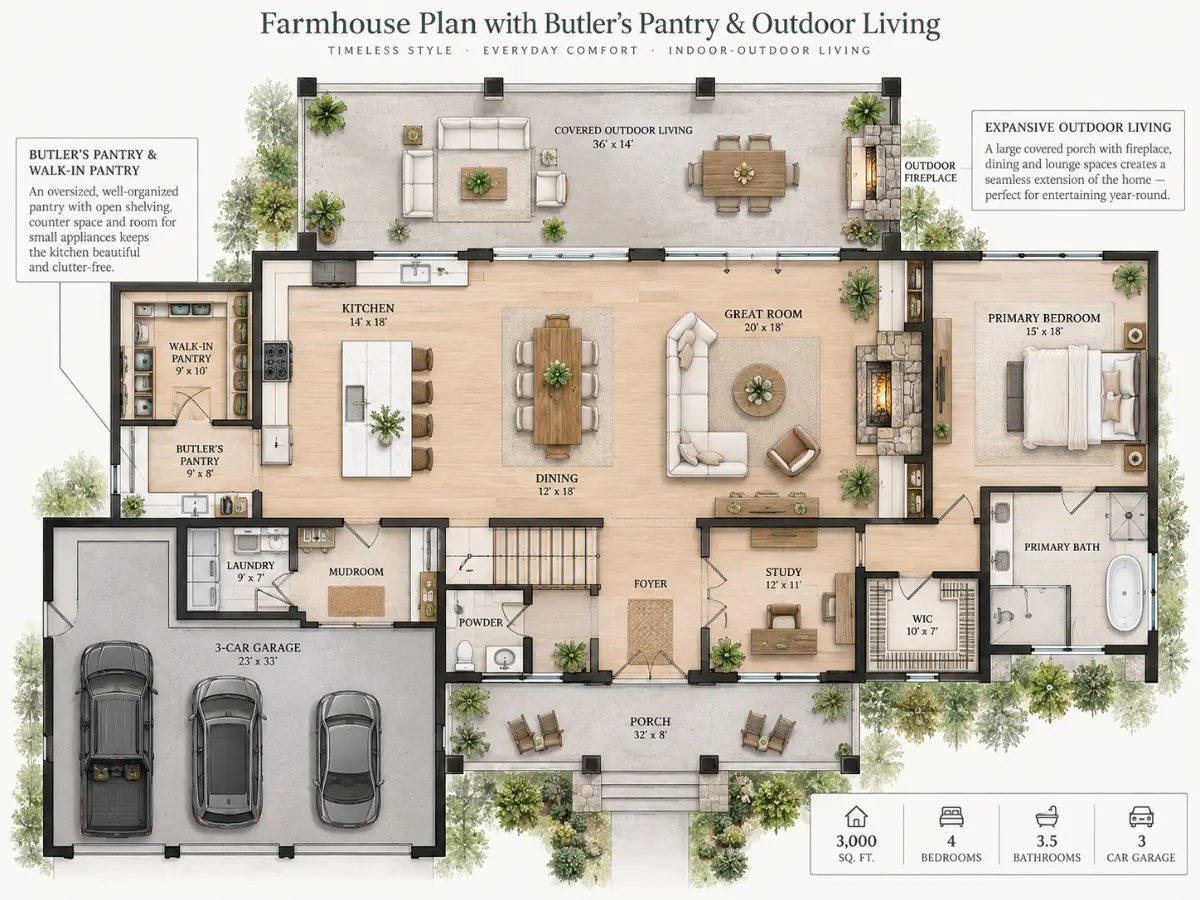
Another hallmark of successful farmhouse layout ideas is the oversized walk-in pantry, sometimes referred to as a "Butler’s Pantry." As modern kitchens move toward a cleaner look with fewer upper cabinets, these hidden storage gems allow for a clutter-free environment. They provide ample space for bulk groceries and small appliances, keeping the main counters clear for entertaining.
4.6. Strategic farmhouse layout ideas to sell homes faster
Optimizing a property's floor plan for resale is all about aligning spatial flow with modern buyer priorities. Implementing strategic layouts in farmhouse floor plans can dramatically boost buyer engagement, shorten days on market, and maximize closing prices.
- Highlight instant-impact focal points: First impressions drive emotional purchases. Ensure sightlines from the front entryway lead directly toward signature features, such as high vaulted ceiling beams, a cozy central fireplace, or a massive kitchen island designed for entertaining.
- Designate high-utility functional zones: Today's suburban buyers demand organized, multi-purpose living. Incorporating dedicated transition spaces, like mudrooms with custom storage cubbies, hidden walk-in pantries, and quiet flex rooms configured for home offices, directly addresses modern work-from-home dynamics and busy family routines.
- Leverage high-impact visual marketing: Even the most intuitive layout can be overlooked if prospective buyers struggle to visualize the space online. Presenting clean 2D floor plans alongside photorealistic 3D renderings helps buyers immediately grasp spatial flow, room dimensions, and furniture placement, effectively converting casual web browsers into scheduled in-person tours.
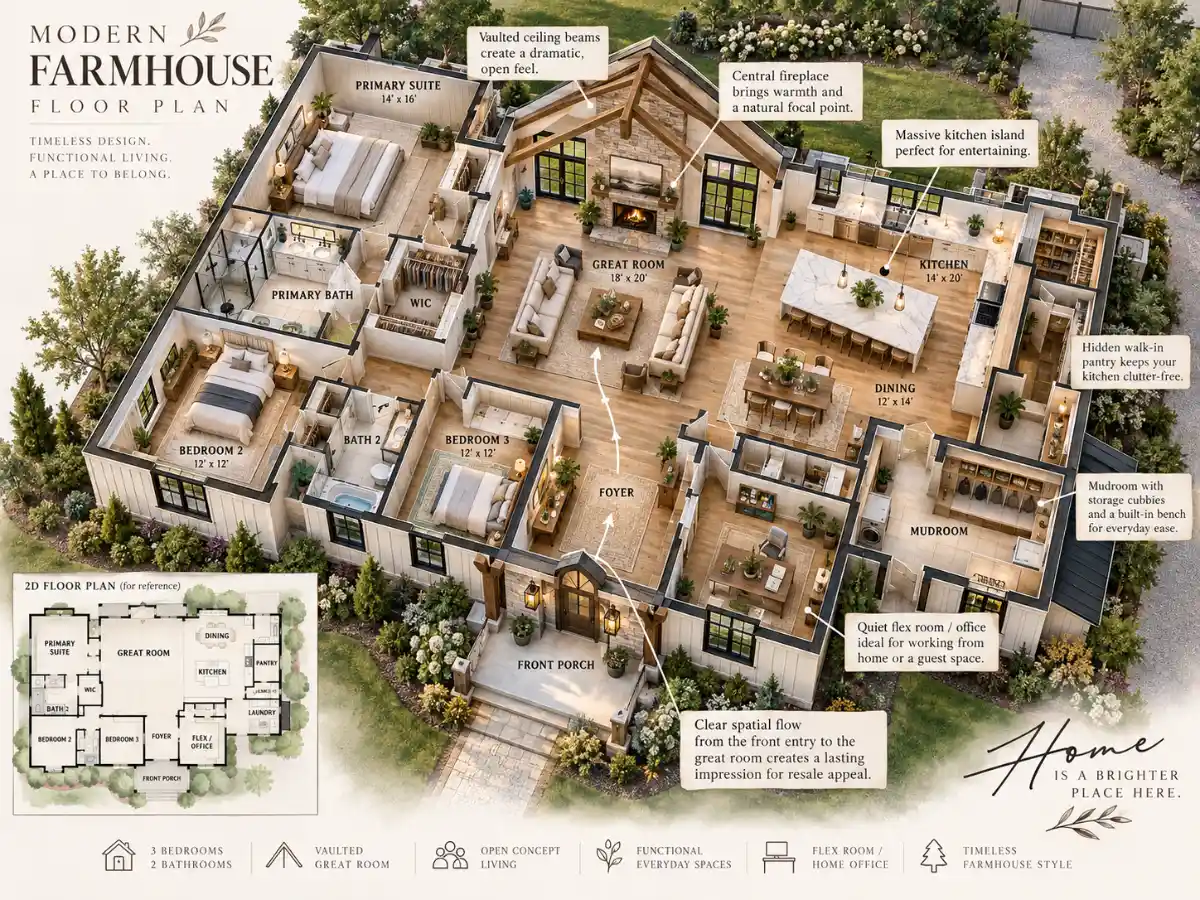
Integrating these targeted farmhouse layout ideas ensures a home stands out in competitive listings by emphasizing both architectural charm and everyday functionality.
5. Why farmhouse floor plans sell fast in suburban markets
The rapid surge in popularity of the farmhouse style across suburban developments is no coincidence. As homebuyers increasingly prioritize spatial flexibility, comfort, and character, the farmhouse aesthetic provides both rustic warmth and modern sophistication, a design movement widely embraced as "warm minimalism." Unlike ultra-modern floor plans or avant-garde styles that can sometimes feel cold or alienating, the farmhouse radiates a "timeless" quality that reassures buyers their investment will age gracefully.
Suburban land plots offer the ideal canvas for these layouts. Unlike narrow, restricted urban lots, suburban properties provide the generous width required to showcase iconic farmhouse features. Broad lot frontages allow farmhouse floor plans to incorporate sprawling covered porches, side-loading garages, deep mudroom transition zones, and wide rear patios. This expansive footprint creates an unmistakable curb appeal that instantly elevates neighborhood prestige and buyer interest.
Furthermore, the demographic shift toward remote work and multi-generational living has made these layouts uniquely attractive to suburban buyers. Modern families seek functional balance: open spaces for shared gathering alongside quiet, dedicated zones for work and study. Farmhouse plans deliver this exact versatility by combining unified central living areas with practical flex rooms, pocket offices, and split-bedroom privacy.
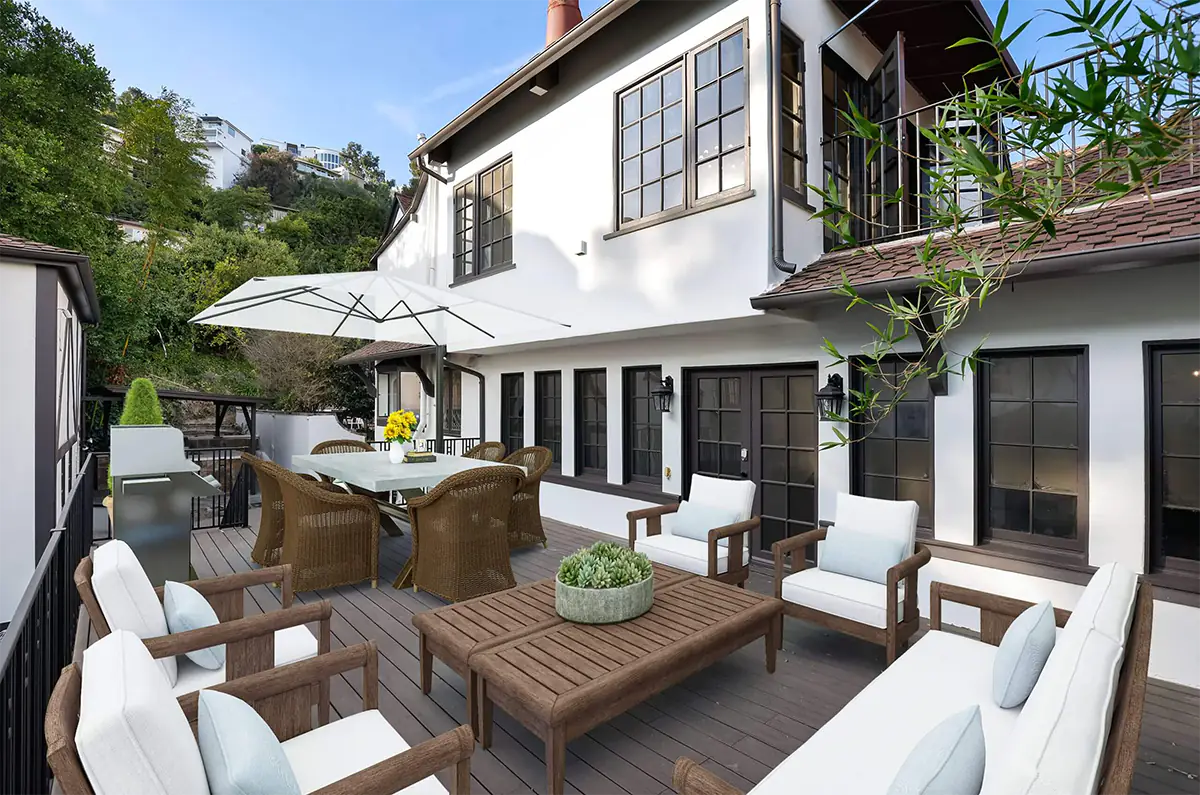
From an investment perspective, farmhouse architecture boasts exceptional market longevity. Rather than succumbing to short-lived architectural fads, these homes maintain a universal aesthetic appeal that resonates across diverse buyer demographics. For real estate developers, home builders, and sellers, properties designed around optimized farmhouse floor plans consistently command stronger appraisal values, attract larger buyer pools, and achieve faster sales in competitive suburban markets.
6. How to choose the right farmhouse floor plan for your build
Selecting the ideal floor plan is one of the most critical decisions when building a custom home. Balancing design preferences with practical constraints ensures your new build suits your lifestyle today while maintaining strong long-term value. When evaluating different farmhouse floor plans, consider these key factors before finalizing your blueprints:
- Evaluate lot size and topography: Your land plot dictates the maximum footprint of your build. Broad suburban acreage supports sprawling single-story layouts with side-loading garages and wide wraparound porches. Conversely, narrower or sloped lots pair best with compact, multi-story small farmhouse floor plans that maximize vertical space without expanding the foundation footprint.
- Assess household size and everyday routine: Tailor your home’s footprint to how your family actually lives. If you frequently entertain, prioritize an open floor plan that creates a seamless flow between kitchen and living areas. For growing families or remote professionals, exploring 3-bedroom farmhouse plans with split bedrooms or quiet flex spaces offers the ideal balance of connectivity and personal privacy.
- Balance architectural complexity with your budget: Roofline angles, dormers, and exterior materials directly impact framing and labor costs. To keep construction expenses manageable, select practical farmhouse layout ideas that feature streamlined exterior framing while concentrating your budget on high-impact interior finishes, high-efficiency windows, and outdoor living areas.
- Plan for future adaptability: Ensure your floor plan adapts to shifting life stages. Incorporating main-floor primary suites, wide hallways, and multi-purpose bonus rooms over the garage allows your farmhouse to effortlessly support long-term living, aging in place, or future resale.
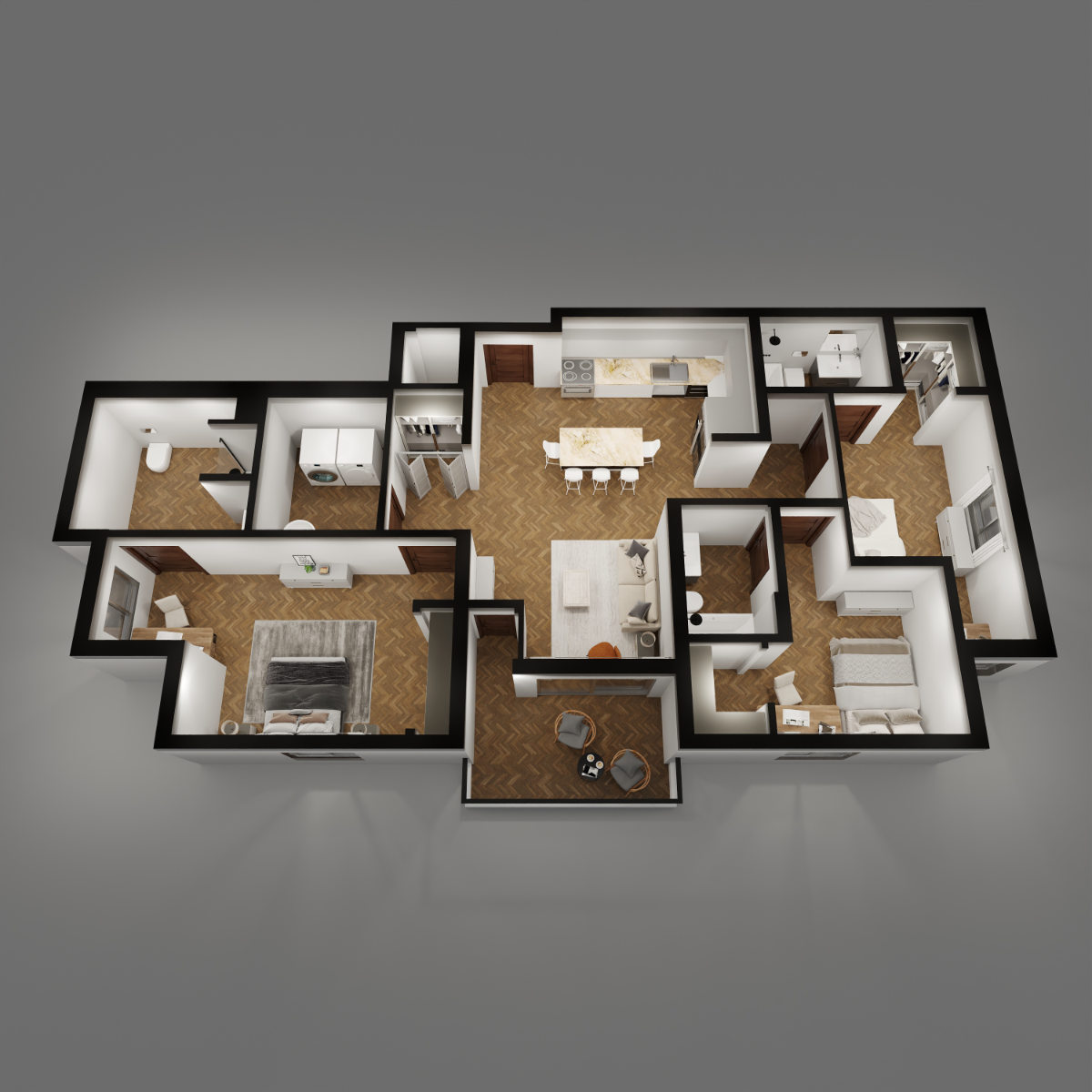
7. Transform your farmhouse floor plans with Fotober
Bringing an architectural vision to life or marketing a property effectively requires high-impact visual media that captures attention instantly. At Fotober, we specialize in professional real estate visual solutions, offering precision 2D and 3D floor plan redraws, virtual staging, and image enhancement tailored specifically for real estate agents, home builders, and architectural designers.
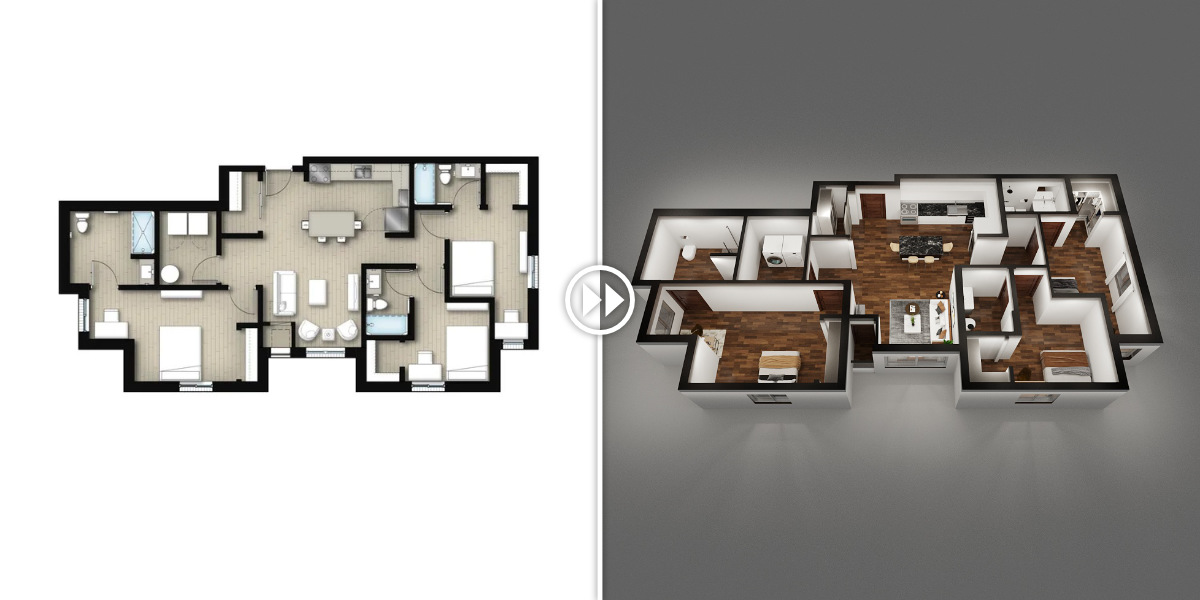
We turn raw sketches, technical CAD files, or outdated blueprints into clean, easy-to-read 2D layouts and photorealistic 3D farmhouse renderings. Our visual solutions bring your farmhouse floor plans to life by highlighting standout features, from sprawling open-concept great rooms and central kitchen islands to sweeping wraparound porches, allowing buyers to instantly picture their lifestyle within the space.
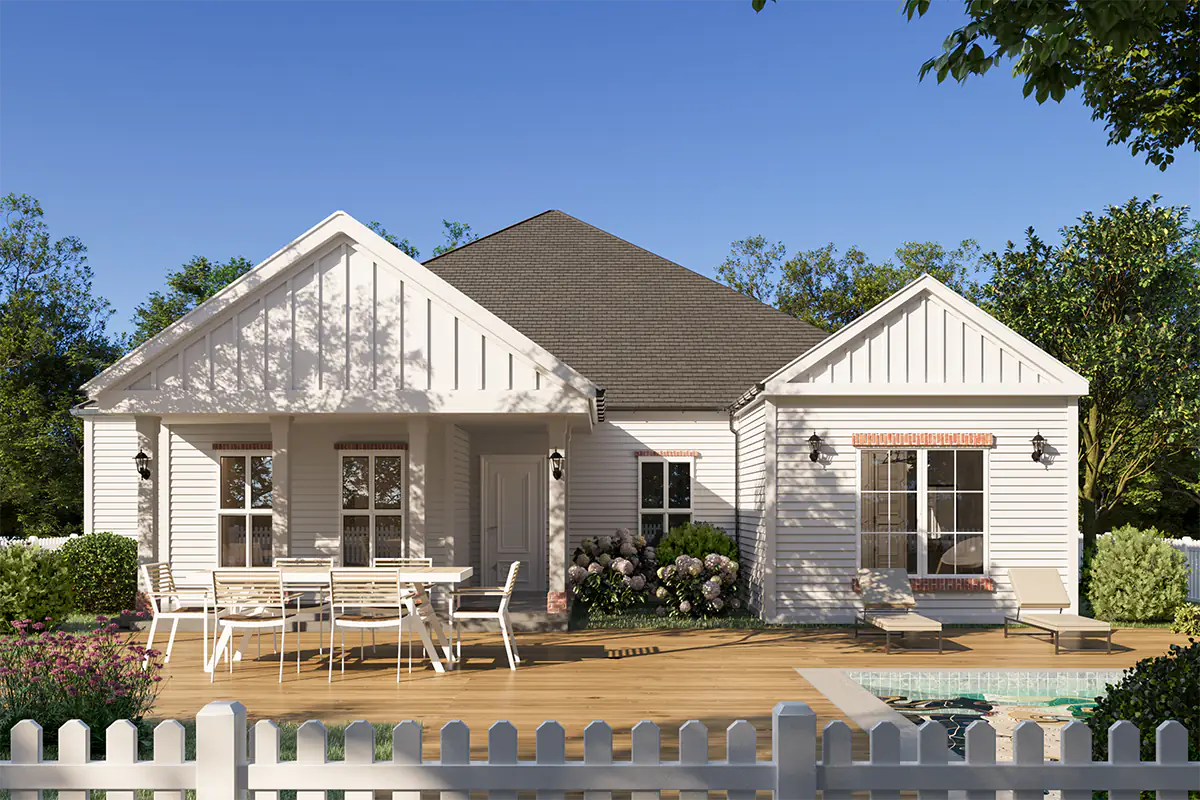
Partnering with Fotober ensures your listings stand out in crowded digital marketplaces, driving stronger engagement and faster closings. Contact Fotober today to explore our floor plan and editing services, and elevate your real estate marketing strategy.
8. Conclusion
Farmhouse floor plans continue to captivate homeowners, builders, and real estate investors with their perfect blend of rustic charm, modern efficiency, and spatial flexibility. Whether you are opting for space-saving small farmhouse floor plans, versatile 3-bedroom farmhouse plans, or an expansive open-concept layout, these designs effortlessly adapt to evolving family lifestyles while maintaining high demand across suburban markets. By combining strategic farmhouse layout ideas with professional visual marketing tools like 2D and 3D floor plans, you can effectively highlight a home's full potential, ensuring lasting living comfort, elevated resale value, and maximum property marketability.
Follow us on social media to stay updated with the latest insights into real estate and architectural styles to make your home more appealing to modern buyers.
- Facebook: fotobermedia.co
- YouTube: Fotober
- TikTok: @fotober
- Instagram: fotober_media.
Related posts

Modern Luxe Interior Design: Elements, Style Guide and How to Stage It
October 10, 2026

Minimalist Interior Design: Characteristics, Style Guide, and Staging
October 8, 2026

Coastal Interior Design: Style Definition & Staging Guide
September 30, 2026

Contemporary Interior Design: Key Elements and How to Stage This Style
September 30, 2026
