




Virtual Staging Services vs AI Software: Has AI Become Reliable?

Share:
Table of Contents
The rise of AI-powered virtual staging has completely disrupted the real estate industry, allowing realtors to populate vacant spaces digitally at a fraction of the cost. However, this rapid tech boom has sparked an intense dilemma among real estate professionals: Should you rely on instant, automated virtual staging apps to do it yourself, or is it better to delegate the work to specialized agencies?
Choosing between automated staging and a manual approach requires weighing unprecedented speed against absolute photorealism. While DIY AI tools offer instant gratification, high-value listings often demand the spatial nuance, lighting precision, and interior design expertise that algorithmic generation can still miss. This explanation will show you the pros, cons, and ROI of both virtual staging services vs AI software to help you choose the ultimate workflow for your listing strategy.
1. The rise of AI in real estate: What is AI-powered virtual staging?
The integration of Artificial Intelligence into PropTech (Property Technology) has transitioned from a futuristic novelty into an essential marketing tool. At the center of this revolution is AI-powered virtual staging, a technology that has fundamentally altered how vacant or outdated properties are presented to potential buyers online. But what exactly happens beneath the surface of these automated applications?
Unlike traditional digital staging, which requires graphic designers to manually place 3D furniture models into a photo using complex rendering software, automated virtual staging relies on advanced computer vision, spatial recognition, and deep learning algorithms.
1.1. How the technology operates
When an agent uploads a photograph of an empty room, the underlying AI instantly analyzes the space's structural blueprint. It maps out the room's geometry, detects boundaries (such as walls, floors, and ceilings), identifies natural light sources, and establishes proper perspective grids.
The entire user workflow is typically streamlined into three steps:
1. Upload: Drop a high-resolution photo of a space into the software.
2. Select: Choose a preferred interior design style (e.g., Scandinavian, Mid-Century Modern, or Industrial).
3. Generate: Let the algorithm populate the room with digital furniture, rugs, wall art, and decor in a matter of seconds.
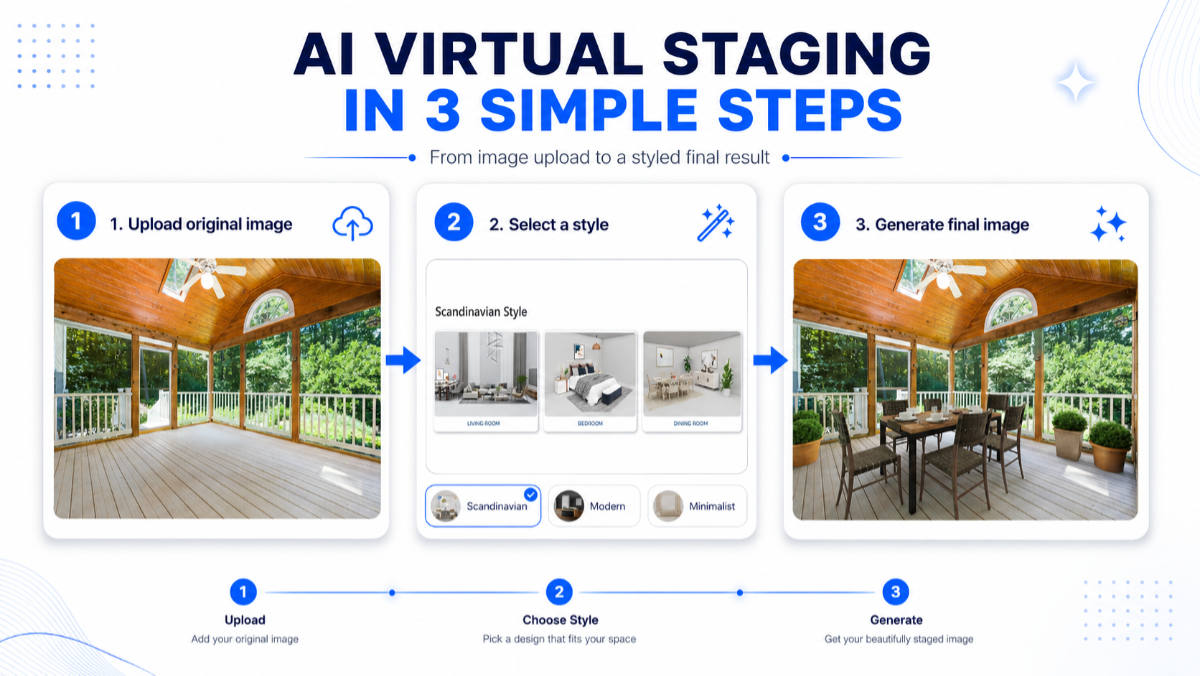 Most AI staging services provide a straightforward process of importing images and customizing the output.
1.2. The immediate appeal
The primary driver behind this tech boom is its democratization of real estate marketing. It eliminates the traditional 24-to-48-hour waiting periods and per-image fees, offering agents instant gratification and the ability to scale their listing content overnight. For property managers handling high-volume rentals or low-margin listings, these automated tools provide an accessible solution that keeps marketing costs incredibly low while significantly boosting online click-through rates.
2. Virtual staging services vs AI software: The ultimate showdown
Choosing between a self-service application and a professional digital media agency isn't just a matter of checking your budget; it directly shapes how premium your brand appears to online home shoppers. To help you determine which path maximizes your marketing ROI, let’s look at a head-to-head comparison of virtual staging services vs AI software across four critical performance metrics.
2.1. Quality and realism (The "uncanny valley" problem)
The most glaring divergence between these two approaches lies in the final visual output. Purely automated virtual staging frequently suffers from what tech experts call the "uncanny valley" effect, where an image looks almost real, but something feels fundamentally wrong to the human eye.
While the algorithms behind the best AI virtual staging tools have improved dramatically, they still struggle with complex spatial logic. It is common to see an AI-generated sofa floating an inch off the hardwood floor, a coffee table with distorted legs, or shadows cast in directions that completely contradict the room's actual windows.
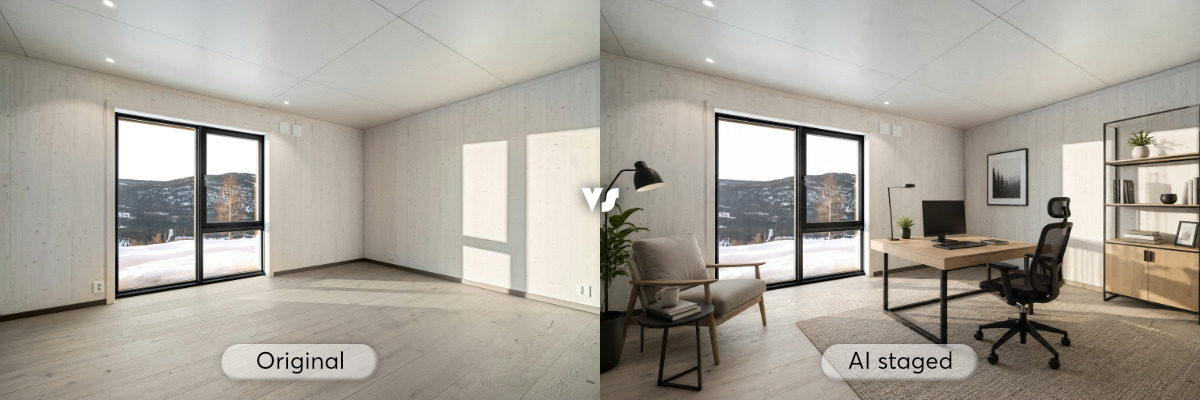 AI outputs are not always reliable when it comes to resolution and realism.
In contrast, professional virtual staging services utilize human interior designers who manually layer digital furniture into the shot. They treat every image as a unique canvas, precisely aligning shadows, matching the exact color temperature of the ambient light, and mapping high-fidelity textures (like the weave of a linen couch or the grain of an oak table) to guarantee an ultra-realistic finish. For luxury or high-stakes listings, a single glitchy AI render can break a buyer's immersion and severely damage the property’s perceived value.
2.2. Turnaround time vs. effort
When it comes to pure rendering speed, AI-powered virtual staging is the undisputed winner, generating furnished rooms in under a minute. However, this speed comes with a hidden virtual staging cost: your personal time and labor. If the initial AI output places a bed backward or chooses an awkward color palette, the user must spend time re-prompting, re-generating, and continuously tweaking settings to get an acceptable result.
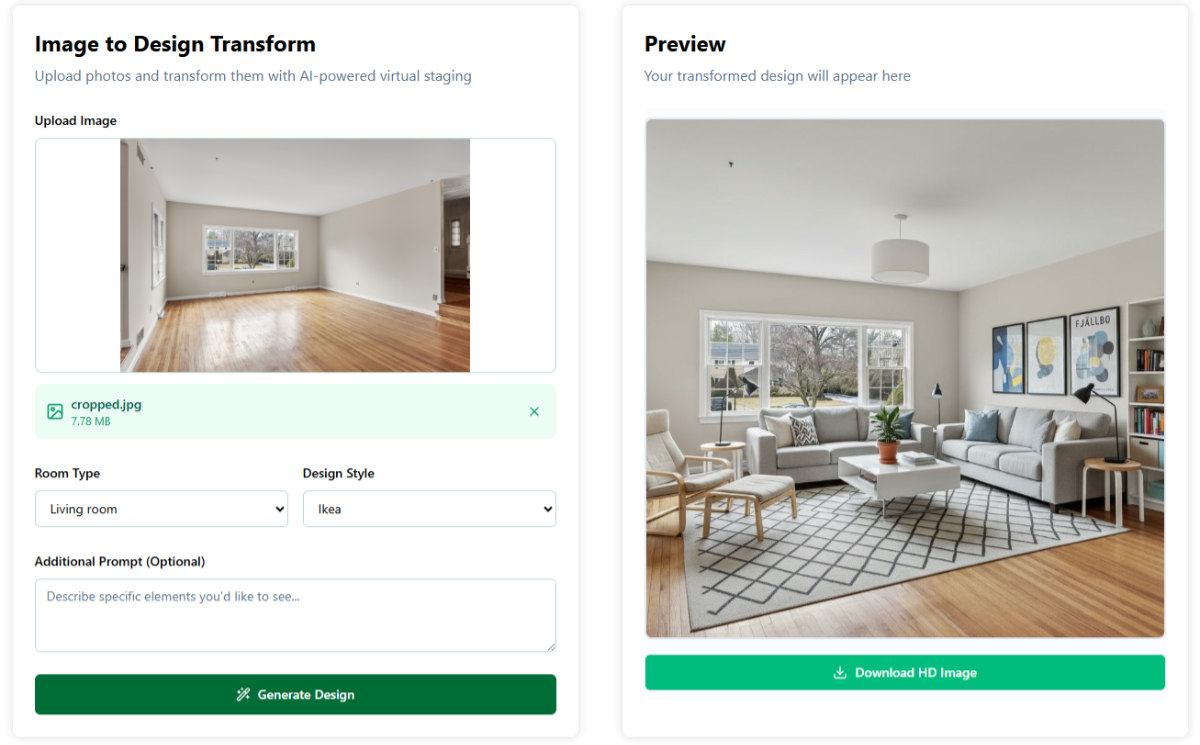 Performing virtual staging with AI just feels like a breeze.
On the flip side, full-service virtual staging operates on a completely "done-for-you" model. While the turnaround time is longer, typically 12 to 24 hours, it requires zero effort from the real estate agent. You simply upload the raw files, specify a design style, and receive flawless, marketing-ready assets while focusing your energy on closing active deals.
2.3. Customization and revisions
AI software operates on mathematical probabilities, not specific marketing intents. If you want a specific mid-century modern accent chair placed in a tight corner to highlight a cozy reading nook, most automated tools will struggle to execute that exact request. Furthermore, requesting revisions in an AI app usually means rerolling the entire image, risking losing parts of the generation you actually liked.
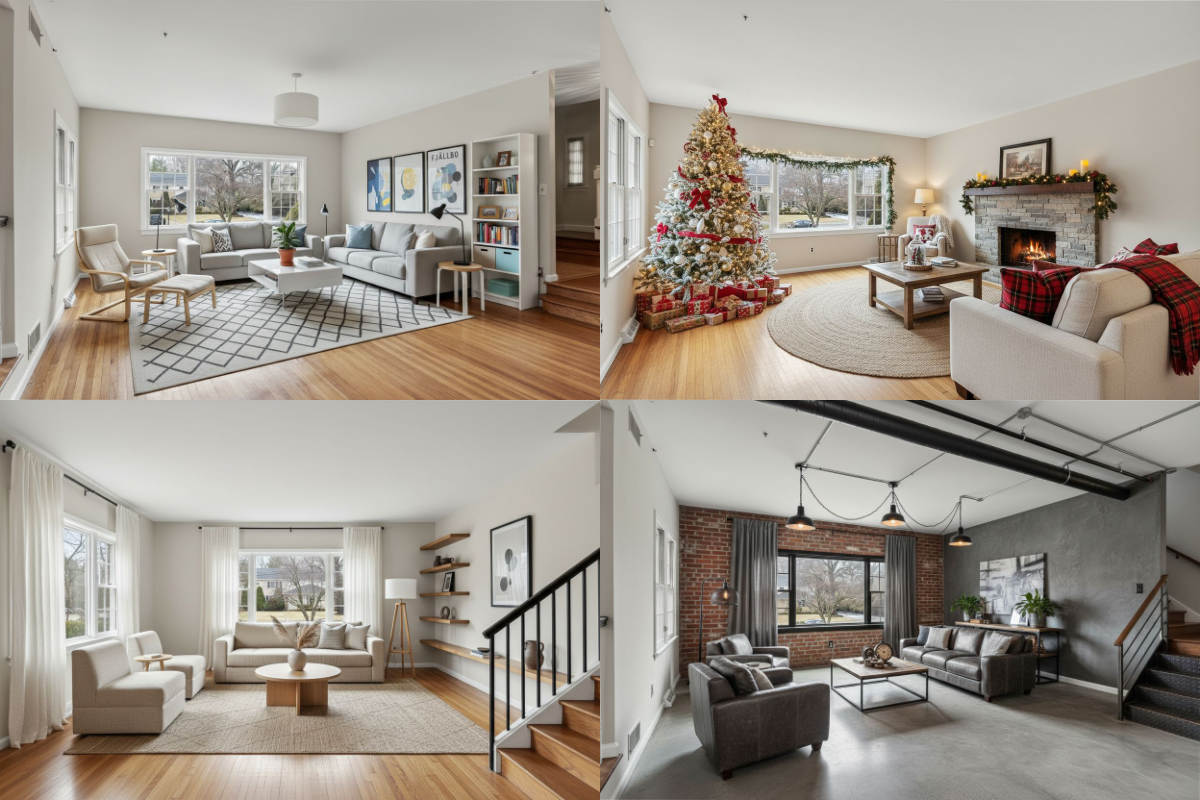 AI isn’t exactly consistent with its revision attempts.
Professional services offer meticulous control. If your target demographic for a suburban property is young families, a human designer can curate an accurate, welcoming playroom or nursery. If a client requests a change, a human editor modifies only that specific asset, guaranteeing absolute alignment with your strategic vision.
2.4. Cost-effectiveness and scalability
Financially, the best virtual home staging software from AI usually leverages flat-rate subscription models, making it incredibly cheap per image. This is highly scalable for low-margin rentals, fixer-uppers, or entry-level homes where perfect realism isn't a strict requirement.
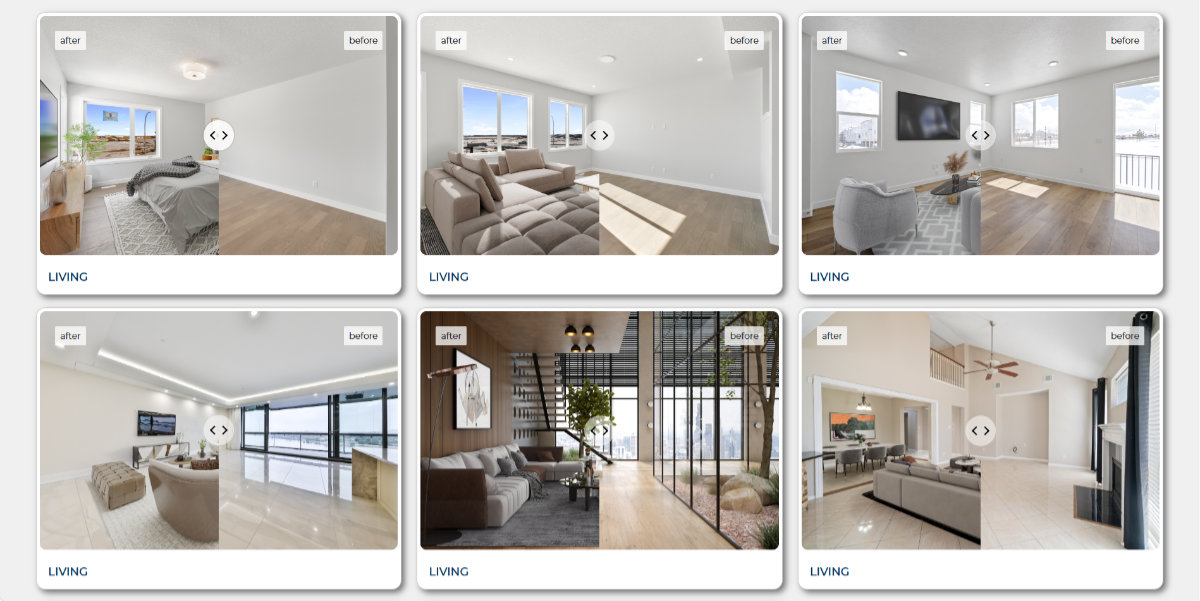 The cost of professional virtual staging services can be a problem when you manage multiple listings.
Professional services charge a flat per-image fee. While higher upfront, the return on investment is realized through faster sales cycles and significantly higher closing prices on mid-to-high-tier residential properties, where buyers demand visual perfection.
Virtual staging services vs AI software: A quick comparison
|
Feature |
AI software (DIY) |
Professional services (Done-for-you) |
|
Speed |
Instant (seconds) |
12 - 24 Hours |
|
Realism |
Moderate (Hit or miss) |
Ultra-realistic (Photorealistic) |
|
Effort required |
High (DIY prompting & tweaking) |
None (Hands-off) |
|
Best for |
Low-budget or fast-turnaround rentals |
High-value listings and premium sales |
3. The top contenders: Best AI virtual staging tools market review
To fully understand the capabilities and limitations of AI-powered virtual staging, it helps to look at the specific applications currently leading the PropTech market. For real estate agents seeking rapid turnarounds on a DIY budget, a handful of platforms have established themselves as the best AI virtual staging tools, each carving out a distinct niche in automation.
3.1. Virtual Staging AI
Developed out of the Harvard Innovation Lab, Virtual Staging AI is highly praised for its unmatched processing speed and minimalist interface. It is engineered entirely for rapid, one-click automated virtual staging. Users simply upload an empty room photo, select an interior style from a collection of over 50 concepts, and the engine renders a fully furnished space in less than 15 seconds. While it lacks granular brush tools for custom item placement, it allows for unlimited instant regenerations, making it an excellent tool for realtors who need basic, MLS-compliant staging on a tight deadline.
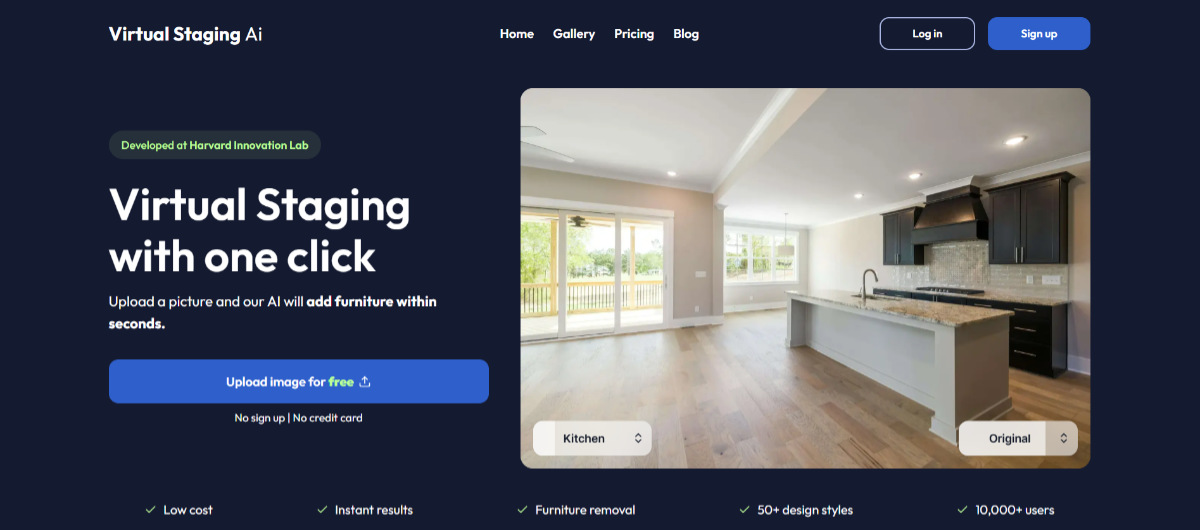 Virtual Staging AI is one of the most capable AI virtual staging solutions.
3.2. SofaBrain
SofaBrain shifts the focus from simple furniture placement to deep, feature-rich interior customization. Beyond standard furnishing, the platform allows for selective color modifications, such as changing wall paint or cabinet finishes, and selective object replacement. Its standout feature is the "style reference" capability, which enables users to upload a target inspiration photo and command the AI to replicate that exact aesthetic within the client's property. It also seamlessly handles full furniture removal and exterior remodeling, making it a favorite for design-focused professionals.
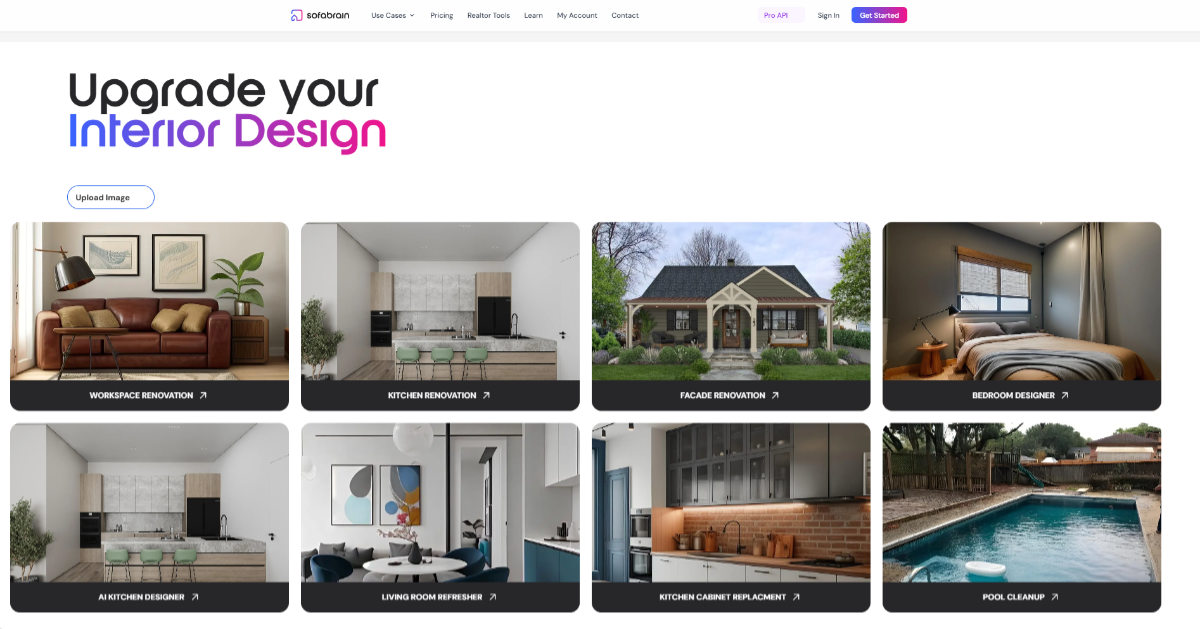 SofaBrain provides rather deep interior customization.
3.3. Collov AI
Collov AI represents the multi-tool approach to digital real estate asset enhancement. While its core engine handles interior layout generation, Collov AI excels at environmental and atmospheric modifications. It features dedicated modules for virtual twilight conversion (transforming daytime interior or exterior shots into rich dusk views), weather control (swapping overcast skies for bright blue ones), and material overlays for floors or countertops. It functions as a comprehensive creative suite for agents who want to completely alter the structural mood of a listing.
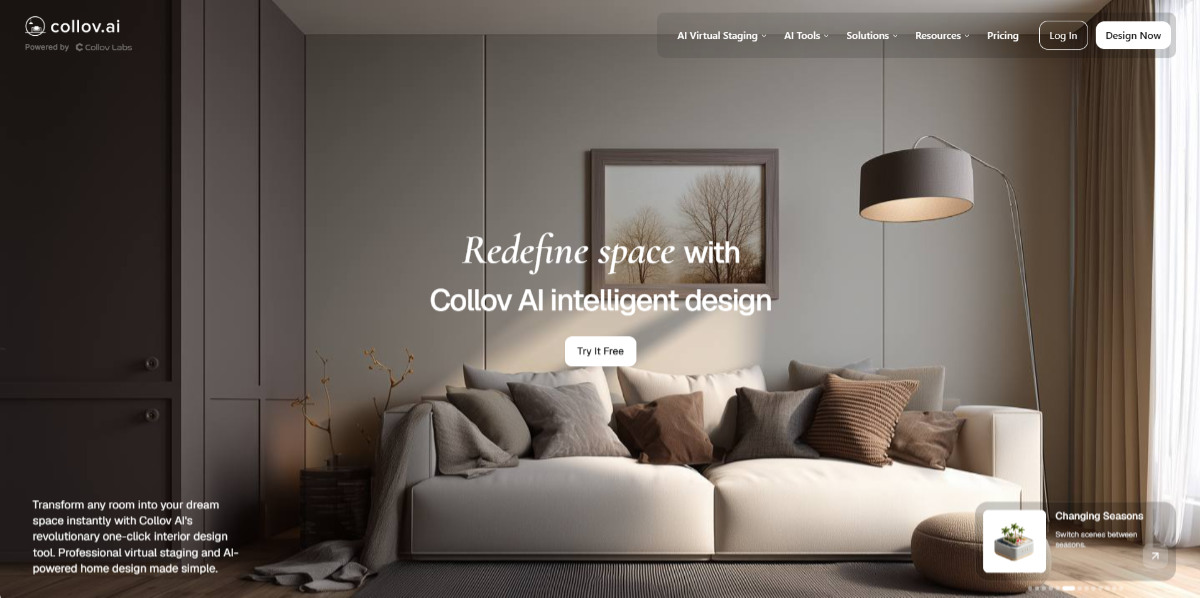 Agents can use Collov AI to fine-tune the overall aesthetic of real estate photos.
3.4. The automated reality check
While these automated tools are undeniably powerful for quick mockups and creative brainstorming, they come with a practical catch. Achieving a truly seamless, client-ready image often requires multiple attempts, strategic prompting, and flawless original photography to prevent the AI from generating floating legs or misaligned lighting vectors. For high-volume teams or premium listings, managing these technical quirks can quickly turn an automated shortcut into a time-consuming editing chore.
For a practical look at how these virtual staging services vs AI software operate in a real-world workflow, you can read our detailed review of AI virtual staging, which breaks down the visual differences and rendering accuracy of the leading tools on the market.
4. Why human-led expertise wins: Elevating your brand with Fotober
While pure AI automation offers speed, high-stakes real estate marketing requires an uncompromising standard of visual perfection to attract serious buyers. This is exactly where Fotober bridges the gap. By combining cutting-edge digital rendering technology with the sophisticated eye of professional interior designers, Fotober’s virtual staging services eliminate the unpredictable errors of purely algorithmic software, giving you the best of both worlds.
 Combining the automation of modern tools with a refined human touch is the direction of Fotober to maintain the top-notch level of quality at scale.
Here is why leading real estate professionals choose Fotober among virtual staging services vs AI software to transform their digital listings:
- Flawless realism and lighting integration: Say goodbye to floating couches, clipped coffee tables, and unnatural shadows. Fotober’s editing team treats every property photograph as a unique architectural space. We manually align perspective grids, match the room's precise ambient light temperature, and accurately render high-fidelity textures, eliminating the visual glitches common in automated virtual staging.
- Speed that matches automation: High-quality professional staging shouldn't mean a week-long bottleneck. Fotober redefines agency efficiency by offering a guaranteed 24-hour turnaround time. You get studio-grade, photorealistic renders with the rapid speed necessary to keep up with fast-moving market demands and last-minute listing deadlines.
- Demographic-targeted style catalogs: Unlike even the best AI virtual staging tools that often generate random, disjointed furniture styles and arrangements, Fotober curates interiors based on strategic marketing. Whether you need sleek Scandinavian minimalism for a metropolitan high-rise, classic luxury for a suburban estate, or cozy transitional pieces for a family home, our extensive asset library ensures the design directly appeals to your target buyer profile.
- A comprehensive property enhancement suite: Virtual staging is frequently just one piece of the property presentation puzzle. Fotober provides an all-in-one ecosystem for real estate media. Our professional services seamlessly integrate advanced item removal (decluttering lived-in homes), comprehensive virtual renovations (updating flooring, walls, or countertops), and striking day-to-dusk (twilight) conversions.
Ultimately, your online listings serve as your digital storefront. Relying on hit-or-miss AI generations risks making a premium listing look cheap. Choosing Fotober means choosing a partner dedicated to maximizing your property’s perceived value. By blending human-led design expertise with lightning-fast asset delivery, we ensure your listings stand out in crowded feeds and drive the higher closing prices your clients expect.
5. Conclusion
Ultimately, the debate between virtual staging services vs AI software comes down to your overarching listing goals. While automated apps offer quick, low-cost options suited for basic rentals, premium properties demand the flawless, photorealistic finish that only human designers can achieve. In a competitive market, glitchy AI furniture shouldn't be the reason a buyer swipes away.
Elevate your brand and captivate buyers with Fotober. Our expert virtual staging services blend rapid 24-hour turnarounds with strategic, high-end interior designs. Don’t let empty spaces lower your property's perceived value. Contact Fotober today to claim your free trial and accelerate your next closing!
What is your preference for showcasing properties? Follow us on social media to share your thoughts and stay updated with the latest trends in architectural visualization.
- Facebook: fotobermedia.co
- YouTube: Fotober
- TikTok: @fotober
- Instagram: fotober_media.
Related posts

Modern Luxe Interior Design: Elements, Style Guide and How to Stage It
October 10, 2026

Minimalist Interior Design: Characteristics, Style Guide, and Staging
October 8, 2026

Coastal Interior Design: Style Definition & Staging Guide
September 30, 2026

Contemporary Interior Design: Key Elements and How to Stage This Style
September 30, 2026
