




How Much Does 2026 Virtual Staging Cost to Make Any Home Look Perfect

Share:
Table of Contents
- 1. Why virtual staging is essential for 2026 real estate listings
- 2. The core breakdown: How much does virtual staging cost in 2026?
- 3. Deep dive: Virtual staging price per photo vs. package models
- 4. How to maximize ROI on the cost of virtual staging
- 5. Why Fotober delivers the best value for your staging budget
- 6. Case study: How virtual staging secured a premium sale in Los Angeles
- 7. Conclusion
- 8. Frequently asked questions about virtual staging cost
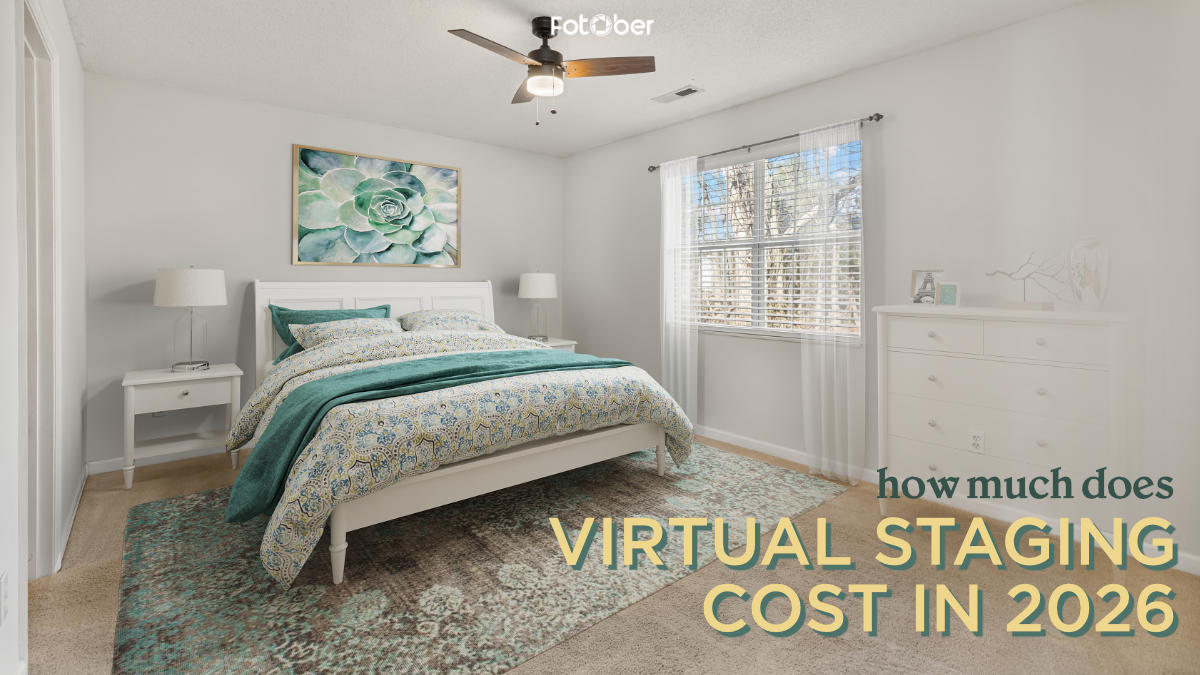
In the competitive 2026 real estate market, empty listings simply don't sell, yet traditional physical staging remains financially out of reach for many. This leaves realtors asking: how much does virtual staging cost?
On average, the cost of virtual staging ranges between $15 and $50 per photo, making it a highly cost-effective marketing alternative. Keeping up with virtual staging pricing 2026 trends is essential to maximizing your ROI without overpaying. Providers like Fotober offer an optimal balance of premium, human-vetted quality and budget-friendly rates, ensuring your properties stand out online without breaking the bank.
1. Why virtual staging is essential for 2026 real estate listings
The digital-first landscape of the 2026 real estate market has fundamentally transformed how properties are bought and sold. Today, over 90% of buyers start their home search online, scrolling rapidly through platforms like Zillow, Realtor.com, and social media feeds. In this high-speed digital environment, vacant properties face a severe disadvantage. Empty rooms often look smaller, cold, and completely lack the emotional warmth required to make a buyer say, "This is home."
Virtual staging bridges this critical gap by injecting life, scale, and style into empty spaces. From a psychological standpoint, expertly placed digital furniture helps prospective buyers visualize the true potential of a property, defining the layout of ambiguous rooms or awkward corners. This emotional connection directly translates into higher digital engagement, boosting online click-through rates by up to 40% and cutting total days on the market significantly.
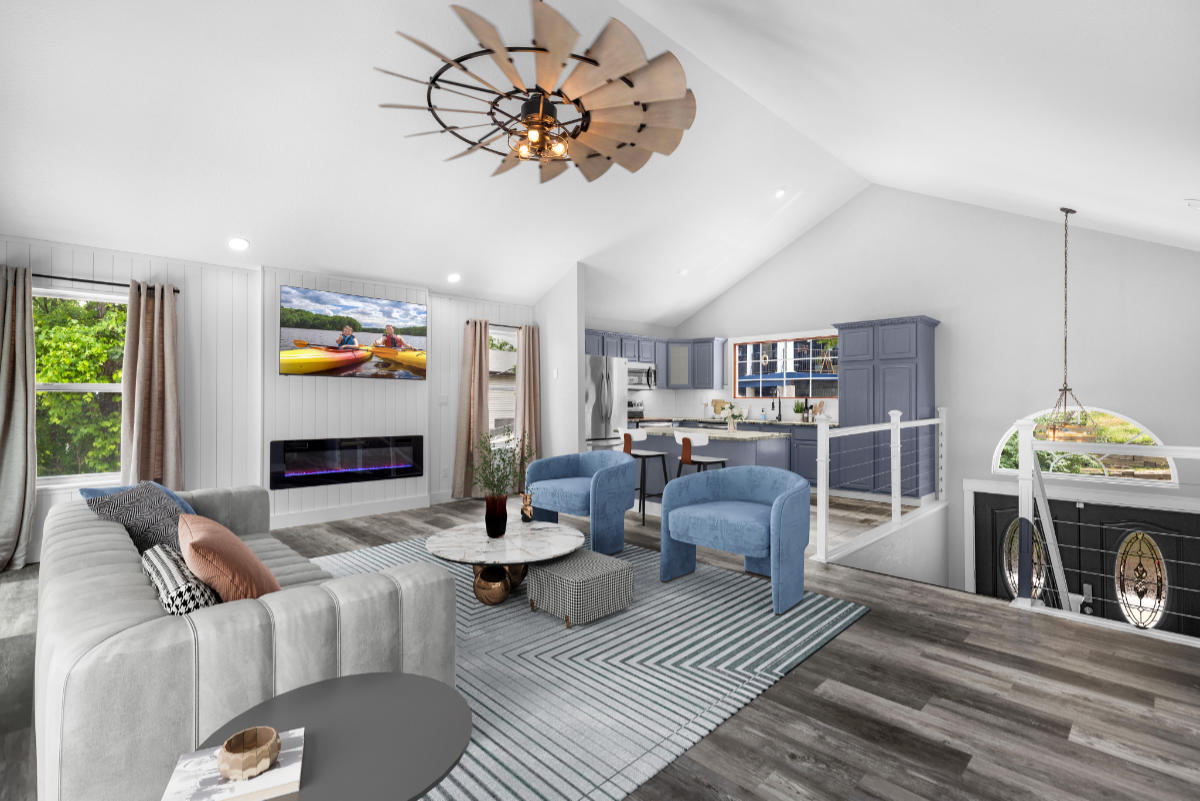 Virtual staging can vastly improve the salability of new builds.
Furthermore, the math behind the investment makes it an absolute necessity for modern real estate agents. When you look at the remarkably low cost of virtual staging, the Return on Investment (ROI) is staggering. Instead of leaving money on the table with massive price reductions for a stagnant listing, a minimal upfront investment transforms a cold property into a vibrant, high-end home. It allows realtors to market properties at their maximum potential value from day one, often commanding higher closing prices. In 2026, failing to virtually stage a vacant home is a costly marketing mistake that hands an immediate advantage to your competitors.
2. The core breakdown: How much does virtual staging cost in 2026?
Navigating the real estate market requires a clear understanding of marketing expenses, and when it comes to digital property presentation, the numbers have shifted significantly. If you are assessing your marketing budget, you will find that virtual staging pricing 2026 structures are highly stratified based on technology, quality, and human involvement. The overall virtual staging cost is no longer a single, one-size-fits-all figure; instead, it depends entirely on what tier of service your specific listing demands.
2.1. Typical cost of virtual staging in the 2026 market
To give you an immediate, comprehensive snapshot of the industry landscape, here is how the current market is divided:
|
Provider type |
Average price range |
Pros |
Cons |
|
DIY / Pure AI Apps |
$0.50 - $5 per photo |
Instant turnaround, extremely cheap |
Artificial look, poor lighting, no custom edits |
|
Professional agencies (e.g., Fotober) |
$15 - $50 per photo |
Hyper-realistic, human QA, localized styles, 100% custom |
Takes 12 to 48 hours |
|
Luxury 3D architectural firms |
$100 - $250+ per photo |
High-end customization, custom CAD models |
Expensive, overkill for standard listings |
At the bottom of the pricing spectrum are the pure, DIY AI-driven applications. While spending less than five dollars per photo sounds incredibly enticing for a tight budget, these automated platforms come with a steep hidden cost: property reputation. Fully automated AI tools often struggle with true spatial awareness, frequently resulting in floating furniture, mismatched perspective distortion, and unnatural shadows that immediately give away the digital illusion. Today's home buyers are incredibly sharp; a poorly staged room can make a listing look deceptive or cheap.
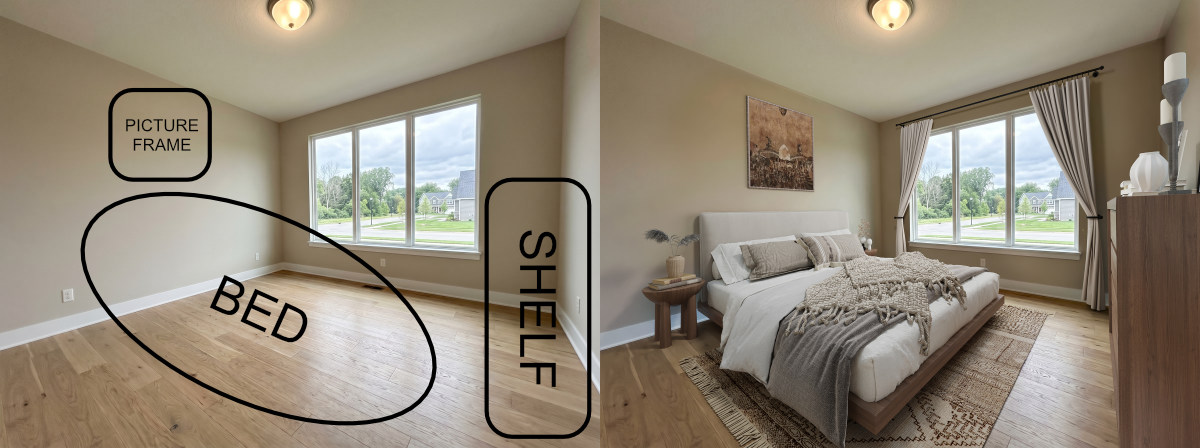 Pricing for the virtual staging service varies based on the complexity and precision of the composition.
This is exactly why the professional agency model, championed by providers like Fotober, remains the industry sweet spot. Positioned firmly in the accessible mid-range price bracket, professional services utilize a hybrid approach. They pair advanced 3D rendering engines with seasoned human interior designers and quality assurance editors. This ensures that every sofa, lamp, texture, and rug perfectly respects the room's actual physical dimensions, architectural style, and natural light sources. For an average investment of $15 to $50 per photo, realtors receive hyper-realistic, high-resolution imagery that easily passes the scrutiny of eagle-eyed buyers.
Finally, at the highest end, luxury architectural firms cater to ultra-high-net-worth listings, major commercial renovations, or pre-construction developments. These boutique firms create entirely custom CAD environments from scratch, costing hundreds of dollars per view. While necessary for multi-million-dollar luxury estates, this tier is usually an expensive overkill for standard residential homes. Finding the perfect balance between cost and photorealism is key to protecting your margins while maximizing your online listing appeal.
2.2. Factors that affect virtual staging costs
Several factors can influence the overall cost of virtual staging, including:
- Size of the property: Larger homes typically require more images to stage, which increases costs.
- Quality of renderings: Higher-quality, photorealistic images will cost more than basic options. Investing in realism can yield better results.
- Number of rooms: Staging multiple rooms will obviously increase the total expense. Some companies offer discounts for staging several areas at once.
- Turnaround time: Rush orders may incur additional fees. Planning ahead can often save money.
Understanding these factors can provide clarity when assessing the overall cost and gauging the value of the virtual staging process.
2.3. Comparing costs: Virtual staging vs. traditional staging
When evaluating the cost of virtual staging, the efficiency difference will become clearer if we compare virtual staging vs traditional staging methods.
Traditional staging can often range from $1,000 to over $10,000, depending on the scope and duration of the project. This includes physically moving furniture into the home, hiring staging professionals, and potentially storing items afterward.
In contrast, virtual staging presents a fraction of these costs while still delivering impactful results. The primary difference lies in the nature of each method: one is entirely digital while the other is tangible. For sellers looking to minimize expenses, virtual staging remains a highly effective option that provides substantial savings.
|
Aspect |
Virtual staging cost |
Traditional staging cost |
|
Average cost per room |
$30 - $200 |
$1,000 - $10,000 |
|
Flexibility |
High |
Moderate |
|
Physical logistics |
None |
Required |
|
Marketing impact |
Significant |
Significant |
3. Deep dive: Virtual staging price per photo vs. package models
When planning your property marketing budget, understanding how companies structure their billing is just as important as knowing the baseline rates. In 2026, the virtual staging in real estate industry primarily operates on two distinct pricing structures: the à la carte "pay-per-photo" model and the bundled "package or subscription" model. Both paths offer unique strategic advantages depending on your listing volume and property type.
3.1. The pay-per-photo model explained
For the vast majority of real estate agents, the virtual staging price per photo model offers unmatched financial flexibility. Instead of committing to a massive upfront investment, this option allows you to pay exclusively for the exact assets you need. Marketing data shows that you rarely need to stage an entire house; targeting high-impact spaces like the living room, primary suite, and the main kitchen or dining area is usually more than enough to capture a buyer's imagination.
Providers like Fotober champion this transparent, on-demand pricing structure. If you have a compact condo listing that only requires two or three key rooms to look populated, you can upload just those specific images and pay a flat fee per photo. This prevents realtors from being locked into rigid contracts or paying for excess photos they will never use, making it the ideal choice for independent agents handling single-family homes or rentals.
3.2. Volume discounts and bundled packages
Conversely, if you are a high-producing agent, a team leader, or running a brokerage with multiple vacant listings hitting the MLS every month, the à la carte route might not be the most economical strategy. This is where bundled packages and volume tiers become highly valuable.
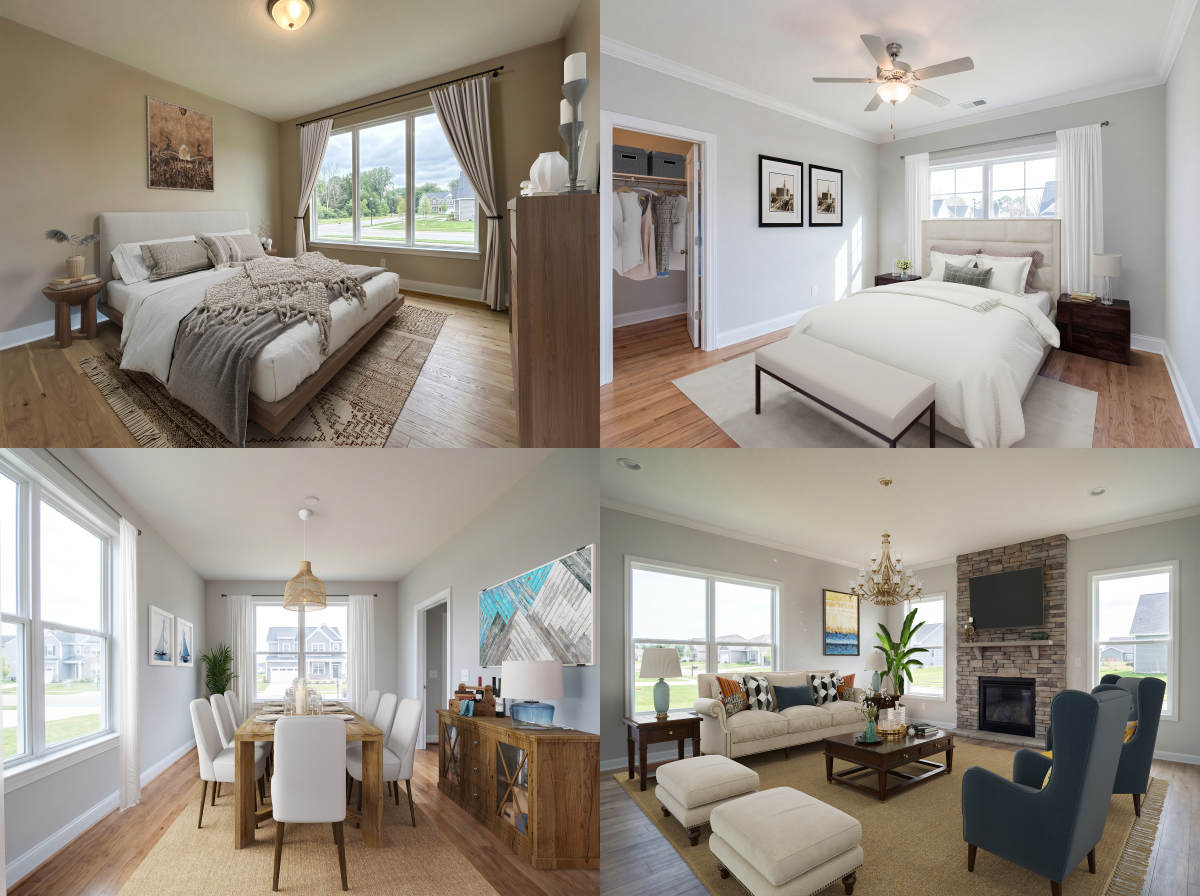 High-volume realtors need a specialized pricing package.
By purchasing image credits in bulk or selecting multi-photo bundles, large-scale operations can significantly drive down the average cost of virtual staging. Top professional agencies frequently offer tiered discounts, slashing rates per image when you order a complete virtual home staging package or maintain a consistent monthly volume. Opting for a bundled model simplifies invoicing and ensures a unified aesthetic style across all your active listings while protecting your bottom-line margins.
4. How to maximize ROI on the cost of virtual staging
Investing in virtual staging is not merely about spending money; it’s about maximizing your return on investment (ROI). By employing strategies that enhance listing performance and using effective staging techniques, sellers can achieve more significant results.
4.1. The impact of virtual staging on listing performance
Numerous studies indicate that homes with professional virtual staging tend to sell faster and at higher prices compared to their unstaged counterparts. Properties that utilize virtual staging often attract more online views, leading to increased showings and offers. According to the National Association of Realtors (NAR), 82% of buyer's agents agree that staging makes it significantly easier for clients to visualize a property as their future home. Furthermore, NAR reports that professional staging can increase dollar offers by up to 5%. When combined with data from the Real Estate Staging Association (RESA) showing that staged properties sell up to 73% faster, the minimal cost of virtual staging transforms from a marketing expense into an essential, high-yield investment."
By showcasing a home’s potential through well-executed staging, sellers can create a compelling narrative that resonates emotionally with prospective buyers. This narrative makes it easier for the buyer to picture themselves in the space, which is a crucial factor in persuasion.
4.2. Tips for effective virtual staging
To fully capitalize on the benefits of virtual staging, here are a few tips:
- Use high-quality photography: Always start with professional, high-resolution images to ensure the staging looks its best. Poor-quality photos will undermine the effort put into staging.
- Be mindful of style: Choose furniture and decor that align with the property’s architectural style and target demographic. For instance, modern furnishings are suited for contemporary homes, while classic styles might work better for historic properties.
- Limit personalization: While it’s important to create an inviting atmosphere, avoid overly personalized decor that might alienate potential buyers. Aim for a neutral yet stylish look that appeals to a broader audience.
- Highlight key features: Use staging to emphasize the best aspects of each room, such as large windows or open layouts. This can help buyers visualize usage possibilities and find value in the space.
By implementing these strategies, sellers can elevate their virtual staging efforts and achieve the desired results.
5. Why Fotober delivers the best value for your staging budget
When evaluating virtual staging pricing 2026 trends, savvy real estate professionals look for a solution that does not sacrifice photorealism for affordability. This is exactly where Fotober excels, delivering premium-tier digital staging at a fraction of the cost of luxury boutique firms.
5.1. The perfect harmony of technology and human artistry
Unlike automated, pure AI platforms that often produce flat, cartoonish furniture placement, Fotober employs a meticulous hybrid workflow. Coming from the foundation of a real estate image enhancement service, we combine advanced 3D rendering software with highly skilled interior designers and strict quality assurance editors. Every sofa, light fixture, and rug is precisely calibrated to match the room's native physical dimensions, ambient light sources, and architectural angles. This dedication to natural shadow placement and perfect perspective creates a hyper-realistic finish that easily passes the scrutiny of sharp, online home shoppers.
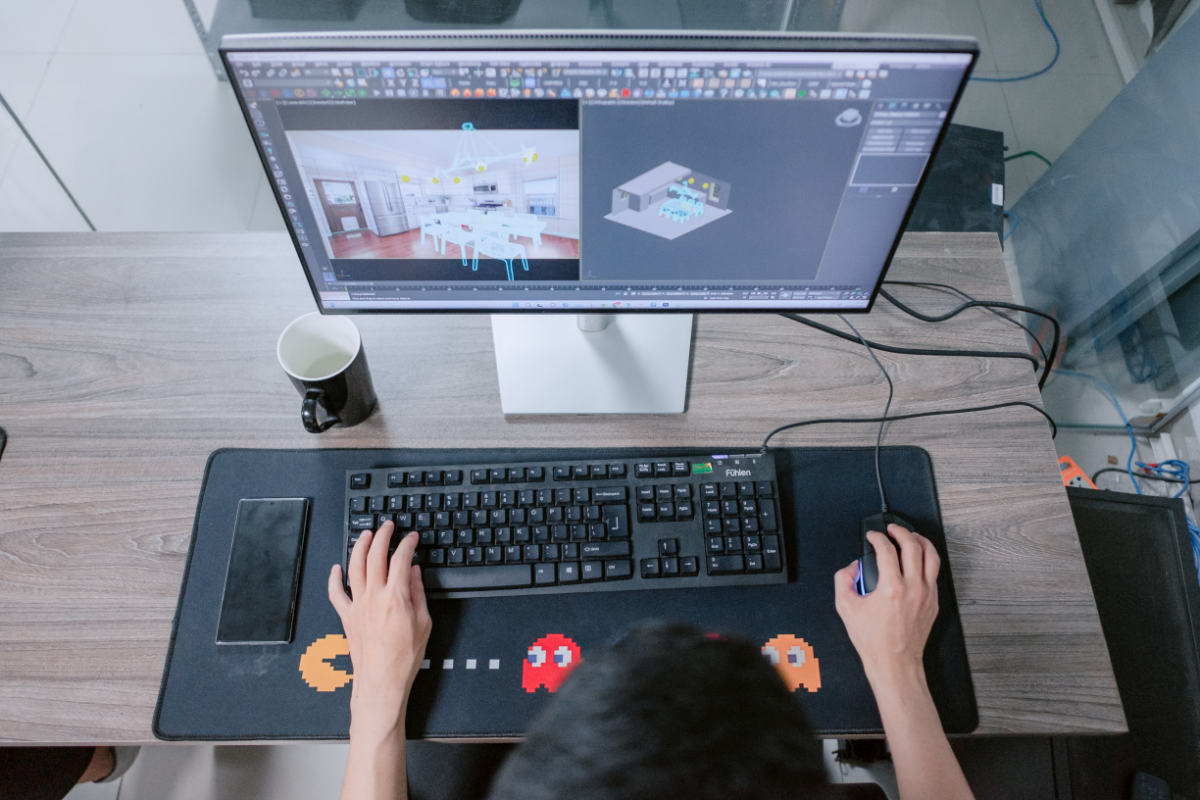 You can expect the speed of modern technologies and the refined quality of human experts when using Fotober’s virtual staging service.
5.2. Transparent, budget-friendly pricing structure
With Fotober, what you see is what you get. There are no hidden subscription traps, commercial licensing fees, or unexpected upcharges for high-resolution downloads. Our flexible à la carte virtual staging price per photo model allows independent realtors and high-volume brokerages alike to keep their digital marketing budgets scalable and entirely predictable. You only pay for the exact assets your active listings require.
5.3. A vast, localized design catalog
Fotober provides access to an extensive, up-to-date digital asset library featuring highly diverse design aesthetics, from sleek modern minimalism and cozy rustic styles to rich, high-end luxury catalogs. This allows you to tailor your property's interior look to match the exact demographic preferences of your target market.
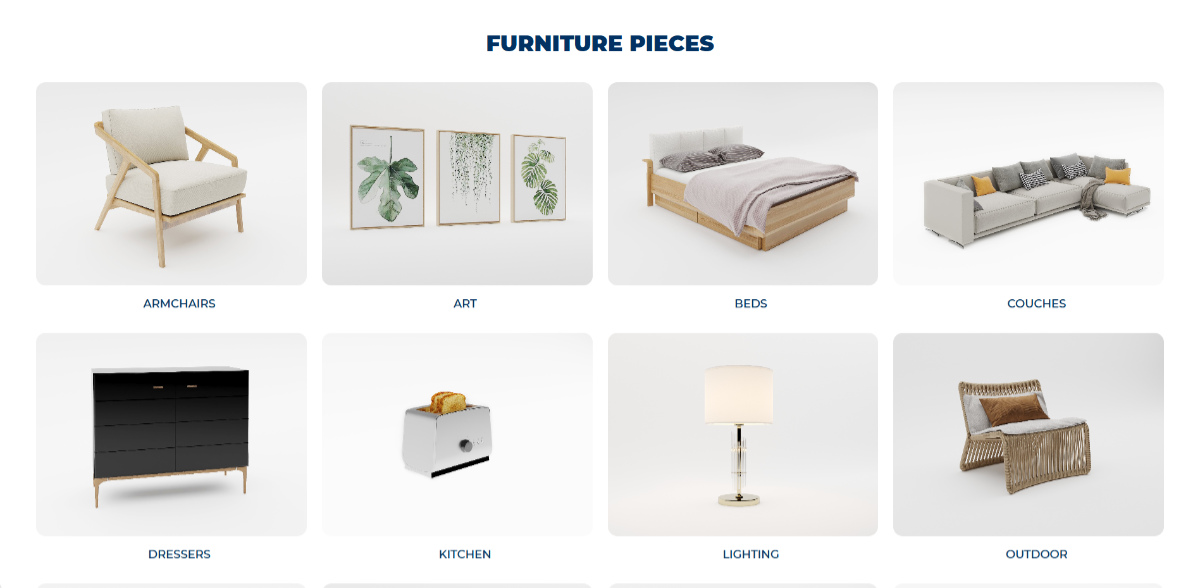 A dedicated furniture catalogue catering to many interior styles will help customers find the best pieces to realize their dream home.
By consolidating virtual staging, virtual renovation, clutter removal, and 2D/3D floor plan redraws under one roof, Fotober stands out as one of the best virtual staging companies to maximize your real estate marketing ROI with minimal virtual staging cost.
6. Case study: How virtual staging secured a premium sale in Los Angeles
To truly understand the financial power of this technology, let’s examine a real estate success story from the highly competitive Los Angeles, California market. Realtor Sarah Jenkins was struggling to move a beautifully renovated, 4-bedroom suburban home listed at $1.2 million. Because the property was completely vacant, the online photos felt sterile and failed to capture the home's architectural warmth. After sitting stagnant on the market for 60 days with zero serious offers, Sarah faced a tough decision: slice the listing price by $50,000 or try a completely different marketing approach.
Choosing innovation over a costly price cut, Sarah partnered with a studio specializing in virtual staging for real estate to revitalize the property's digital footprint. Digital designers meticulously furnished the empty living room, master suite, and outdoor patio with a sophisticated "Warm Contemporary" aesthetic. The refreshed, hyper-realistic images were immediately uploaded to her virtual staging real estate listings.
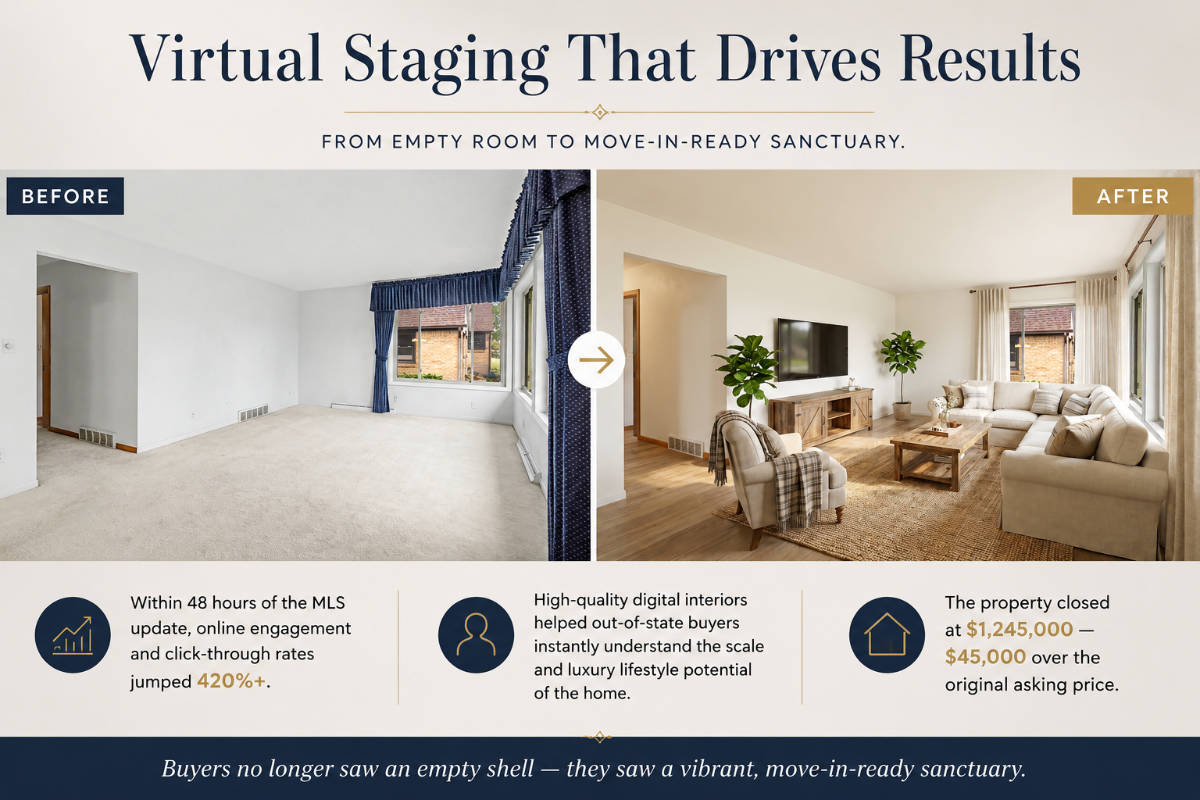 A vacant home gets sold faster at a higher price thanks to virtual staging.
The transformation yielded immediate, measurable results. Within just 48 hours of updating the MLS, online engagement and click-through rates on Zillow and Redfin skyrocketed by over 420%. The high-quality digital interiors allowed out-of-state buyers to instantly grasp the true scale and luxury lifestyle potential of the home. Instead of looking at an empty shell, buyers saw a vibrant, move-in-ready sanctuary.
The surge in online traffic translated directly into physical foot traffic. Within 11 days of the digital relaunch, Sarah hosted a packed open house that resulted in a fierce bidding war. The property ultimately closed at $1,245,000, a staggering $45,000 over the original asking price. By investing less than $300 in virtual staging costs, the seller avoided a massive price reduction and maximized their equity, proving why top-tier agents view this tool as a non-negotiable asset for modern property marketing.
7. Conclusion
As the real estate market navigates through 2026, the cost of virtual staging is a vital component of a competitive property marketing strategy. While the temptation to opt for the cheapest, unvetted AI-generated solutions is strong, sacrificing visual realism can severely damage a property's perceived value and prolong its days on the market.
The landscape of virtual staging pricing in 2026 proves that you do not have to break the bank to achieve breathtaking, photorealistic results. By partnering with a dependable, professional service like Fotober, you secure the perfect balance of elite human-vetted craftsmanship, localized design expertise, and competitive, transparent rates.
Ready to transform your vacant listings into high-converting digital showpieces? Visit Fotober today to explore our extensive design portfolio, evaluate our flexible virtual staging cost structures, and submit your first image to experience the difference firsthand.
Follow us on social media to stay updated with the latest trends in the real estate market and architectural visualization services to upgrade your listings to the next level.
- Facebook: fotobermedia.co
- YouTube: Fotober
- TikTok: @fotober
- Instagram: fotober_media.
8. Frequently asked questions about virtual staging cost
Q: Are revisions included in Fotober's virtual staging cost?
A: Yes! Fotober offers a transparent and accommodating revision process to ensure your final images look exactly as envisioned. Unlike low-cost automated platforms, we do not surprise you with hidden fees for minor furniture adjustments.
Q: What is the typical turnaround time?
A: Our standard delivery time is 24 to 48 hours, ensuring you can get your beautifully staged property onto the market quickly without delaying your listing timeline.
Q: What is the difference in cost between standard virtual staging and virtual renovation?
A: Standard virtual staging places 3D furniture into a completely empty room, typically costing $15 to $35 per image. Virtual renovation is a more complex process; it requires editors to first digitally remove existing clutter, old furniture, or outdated flooring before restyling the space. Because this involves double the digital labor, the cost of virtual renovation ranges from $40 to $75+ per photo.
Q: Is the virtual staging cost a one-time fee or a monthly subscription?
A: It is a flat, one-time investment. Unlike physical staging which demands recurring monthly furniture rental fees, professional services like Fotober charge strictly a transparent virtual staging price per photo. Once you pay for the final edited image, those high-resolution marketing assets are yours forever to use across the MLS, print flyers, and social media without any recurring costs.
Related posts

Cincinnati Housing Market 2026: Prices, Trends, and What It Means for Buyers, Sellers, and Investors
October 20, 2026

Modern Luxe Interior Design: Elements, Style Guide and How to Stage It
October 10, 2026

Minimalist Interior Design: Characteristics, Style Guide, and Staging
October 8, 2026

Coastal Interior Design: Style Definition & Staging Guide
September 30, 2026
