




8 Apartment Above Business Floor Plan Ideas for Mixed-Use Listings

Share:
Table of Contents
- 1. Key elements of the "apartment above business" design
- 2. Top 8 layout ideas for an apartment above business floor plan to maximize sales potential
- 3. Why the “apartment above business” floor plan is the future of urban markets
- 4. Why visual marketing is critical for mixed-use building floor plans
- 5. Case study: How professional visuals sold a stagnant commercial-residential layout listing
- 6. Elevating your property with Fotober’s specialized services
- Conclusion
For developers and investors, a mixed-use layout allows for diversifying income streams while maximizing the utility. However, the modern tenant now seeks a balance between the vibrancy of a street-level business and the tranquility of a private sanctuary. This requires a clever layout that prioritizes privacy and aesthetic flow. In this guide, we will explore why the apartment above business floor plan is trending in urban markets and how visual storytelling can turn a complex design into a premium, high-value listing.
1. Key elements of the "apartment above business" design
From our experience handling many home development projects, the hybrid purpose buildings always pose the most challenge in floor planning and visualization. To design a successful mixed-use property, one must master the delicate dance between two often-conflicting worlds. It requires an apartment over retail design that respects the high-energy, public-facing nature of commerce while fiercely protecting the private sanctity of the home. When these elements are ignored, the property becomes a management nightmare; when they are prioritized, the commercial and residential value skyrockets.
Five core pillars characterize a high-appeal “apartment above a business” building:
- Dual-flow access: Completely separate entrances for residents and commercial customers to ensure security and privacy.
- Acoustic engineering: Specialized soundproofing (high STC ratings) and "buffer zones" (closets/kitchens) to isolate retail noise.
- Utility independence: Dedicated HVAC, electrical meters, and plumbing stacks for the residential unit.
- Structural synergy: A design that allows for ground-floor high ceilings while maintaining a warm, "home-like" feel for the upper levels.
- Zoning compliance: Adherence to specific commercial-residential codes regarding fire safety and egress.
1.1. The art of the separate entrance
The most critical element of a high-end apartment above business floor plan is the total separation of traffic flows. You can easily imagine how a resident paying a premium for an urban loft does not want to navigate through a crowded retail lobby or walk past delivery crates to reach their front door. A distinct, well-lit, and secure residential entrance, preferably on a side street or separated by architectural buffers, is non-negotiable. This creates a psychological "threshold" that allows tenants to leave the bustle of the city behind the moment they step inside.
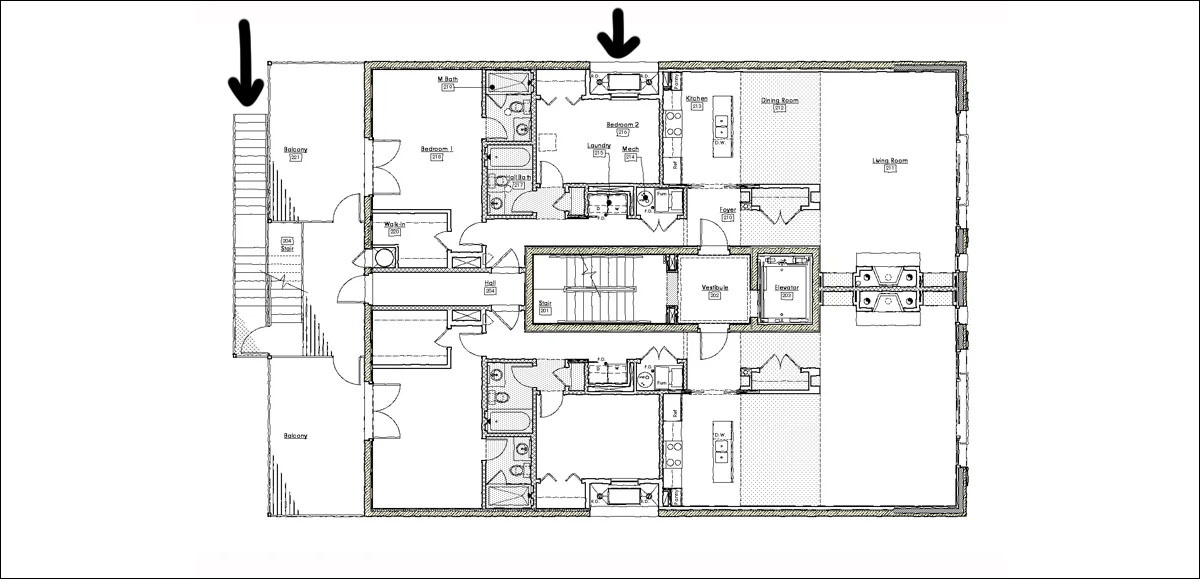 A building with hybrid purposes should have different entries for better navigation.
1.2. Acoustic engineering and buffer zones
As someone having to work in a hybrid office building myself, the biggest "dealbreaker" for live work floor plans, in my opinion, is noise. To ensure long-term occupancy, developers must invest in advanced sound-dampening technologies. This includes resilient channels in the ceilings, high-STC (Sound Transmission Class) rated floor assemblies, and strategic "buffer zones." For instance, placing the residential kitchen or closets directly above the retail sales floor can act as a natural sound barrier for the bedrooms.
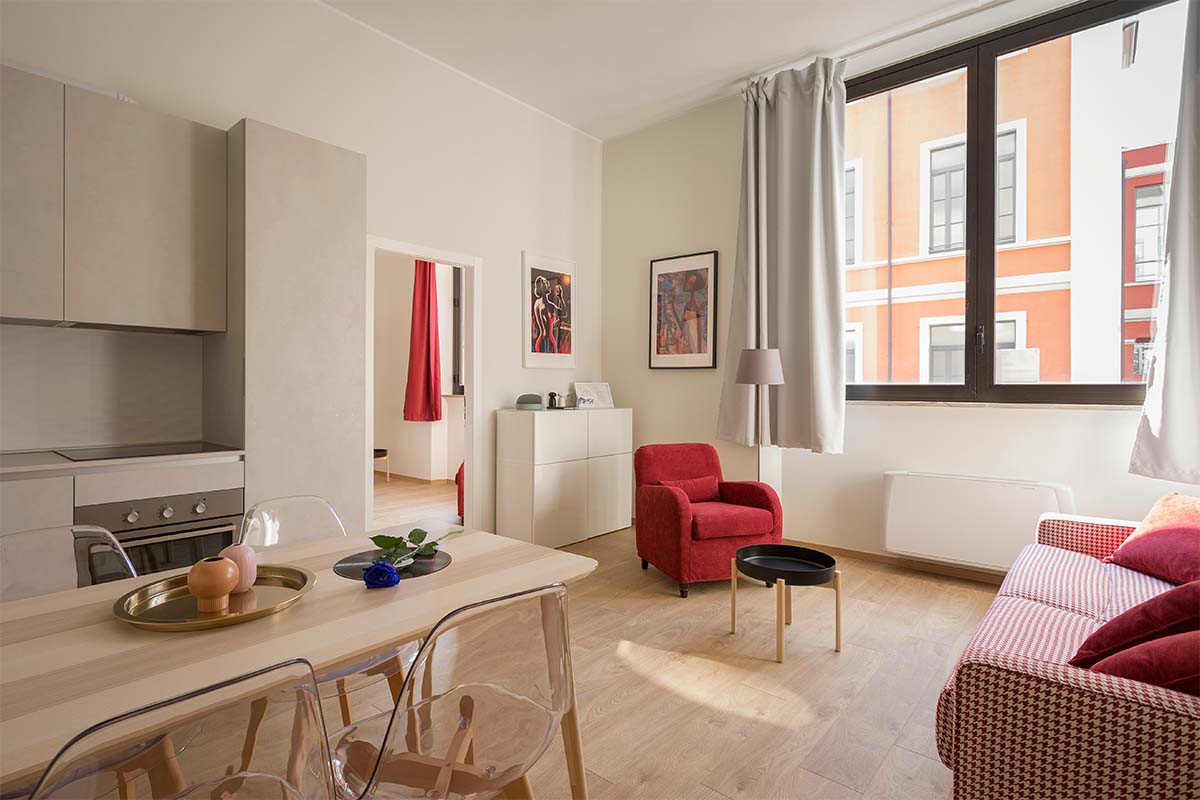 It’s better for mixed-use apartments to prioritize soft, absorbing materials to reduce irritating resonances.
1.3. Utility independence and infrastructure
From a technical standpoint, mixed-use building floor plans must treat the two zones as independent ecosystems. This means separate HVAC systems, dedicated electrical meters, and, crucially, isolated plumbing stacks. Nothing kills a "luxury" vibe faster than a resident smelling the ground-floor bakery’s exhaust in their living room. Proper ventilation routing is essential to ensure that commercial odors and heat are vented away from residential windows.
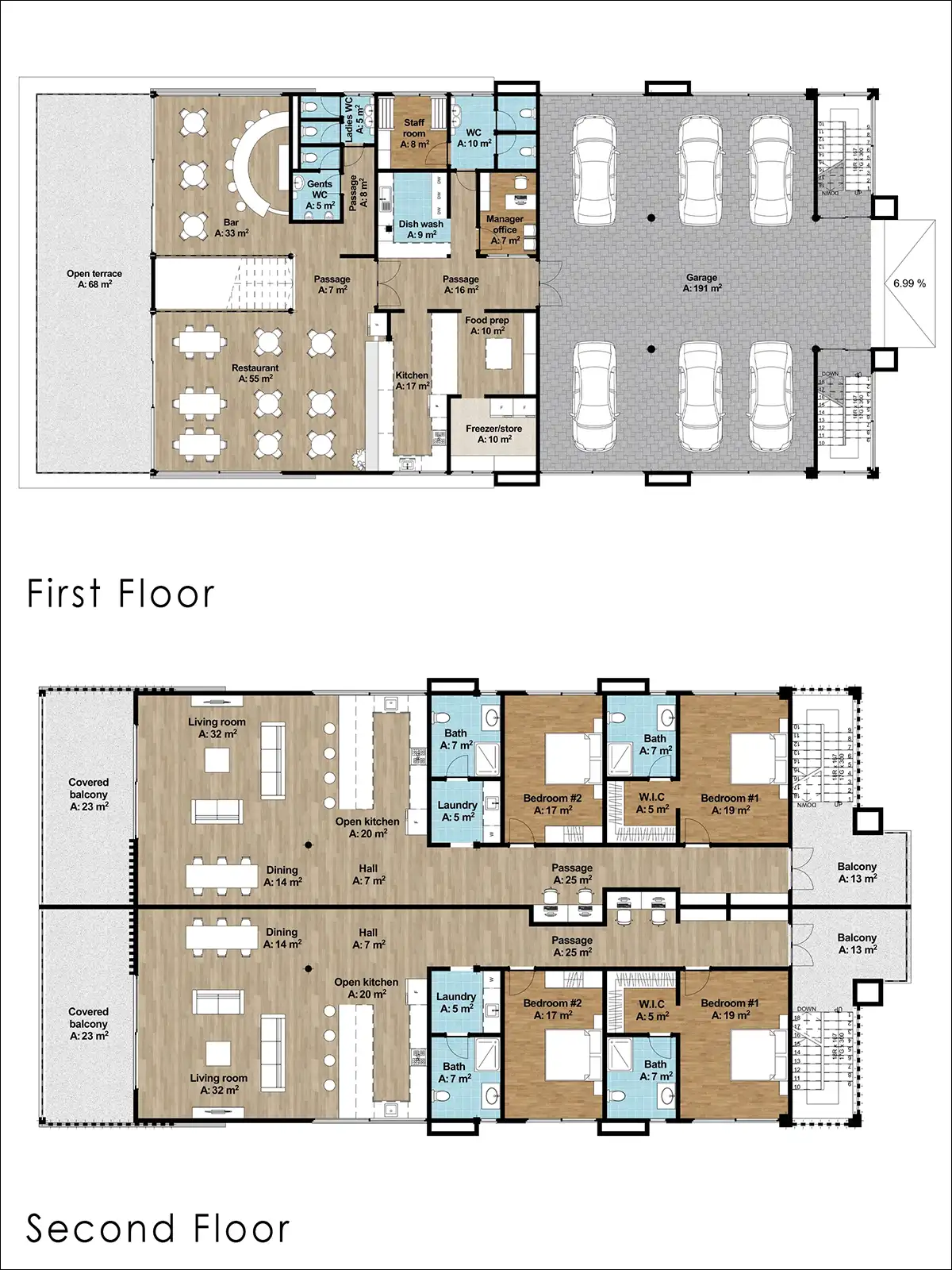 We suggest that each floor in a mixed-use building have independent infrastructure.
1.4. Cohesive exterior aesthetics
Finally, the building must look like a singular, intentional piece of architecture. The most successful designs use materials that bridge the gap, perhaps a modern industrial brick that feels "business" on the ground floor but "warm and loft-like" for the units above. By balancing large, inviting retail windows with private, recessed balconies, the design enhances the neighborhood's character while clearly defining the property’s dual purpose.
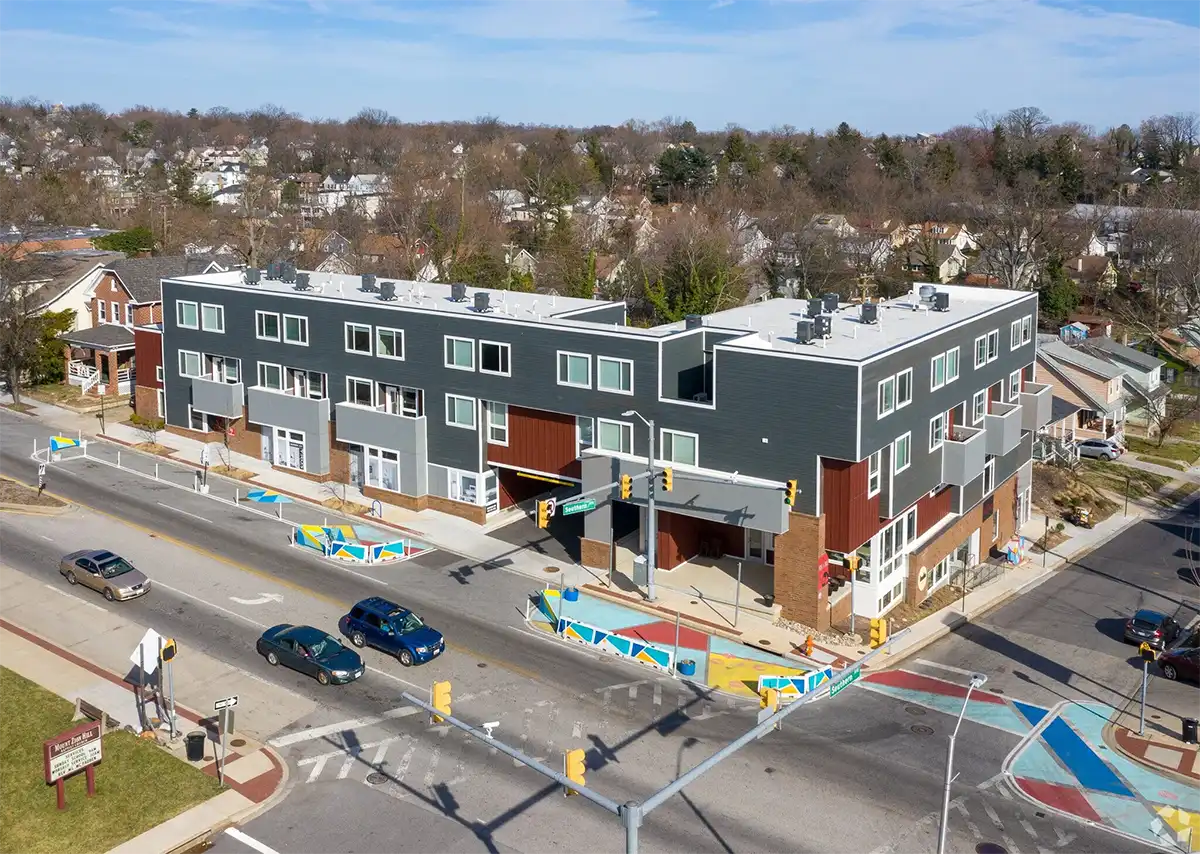 See how hybrid commercial-residential buildings still maintain the unity of outer structures.
2. Top 8 layout ideas for an apartment above business floor plan to maximize sales potential
When it comes to high-density urban living, a floor plan isn't just a map of walls and doors; it’s a blueprint for a lifestyle. To command premium prices in today’s market, developers must offer designs that solve the unique friction points of mixed-use living. Here are eight innovative apartment floor plan ideas for commercial-residential hybrid purposes, designed to captivate buyers and accelerate sales.
|
Layout type |
Primary benefit |
Best suited for |
Target buyer/tenant |
|
Modern loft mezzanine |
Maximizes vertical space and "Chic" appeal |
High-ceiling retail units |
Young professionals & Creatives |
|
Dual-entrance SOHO |
Total separation of work/home traffic |
Service-based businesses |
Accountants, Lawyers, Therapists |
|
L-shaped quiet wing |
Natural noise cancellation |
Busy, high-traffic streets |
Families & Light sleepers |
|
Open-concept flex |
Ultimate space versatility |
Small urban footprints |
Remote workers & Digital nomads |
|
Retail roof terrace |
Rare private outdoor luxury |
Low-rise commercial units |
Luxury buyers & Pet owners |
|
Sound-isolated pod |
Zero-noise environment |
Content creation & Tech |
Podcasters, Gamers, & Engineers |
|
Stacked modular |
Cost-efficient construction |
Large-scale developments |
Investors & Developers |
|
Corner shop wrap |
270° views & max visibility |
High-traffic intersections |
High-net-worth investors |
2.1. The modern loft mezzanine
By leveraging the high ceilings typically required for ground-floor retail, this apartment over retail design creates a stunning vertical experience. The living area sits on a mezzanine level, overlooking the kitchen and dining space below. This "industrial chic" aesthetic is a magnet for young professionals and creatives, making the property feel significantly larger than its actual square footage.
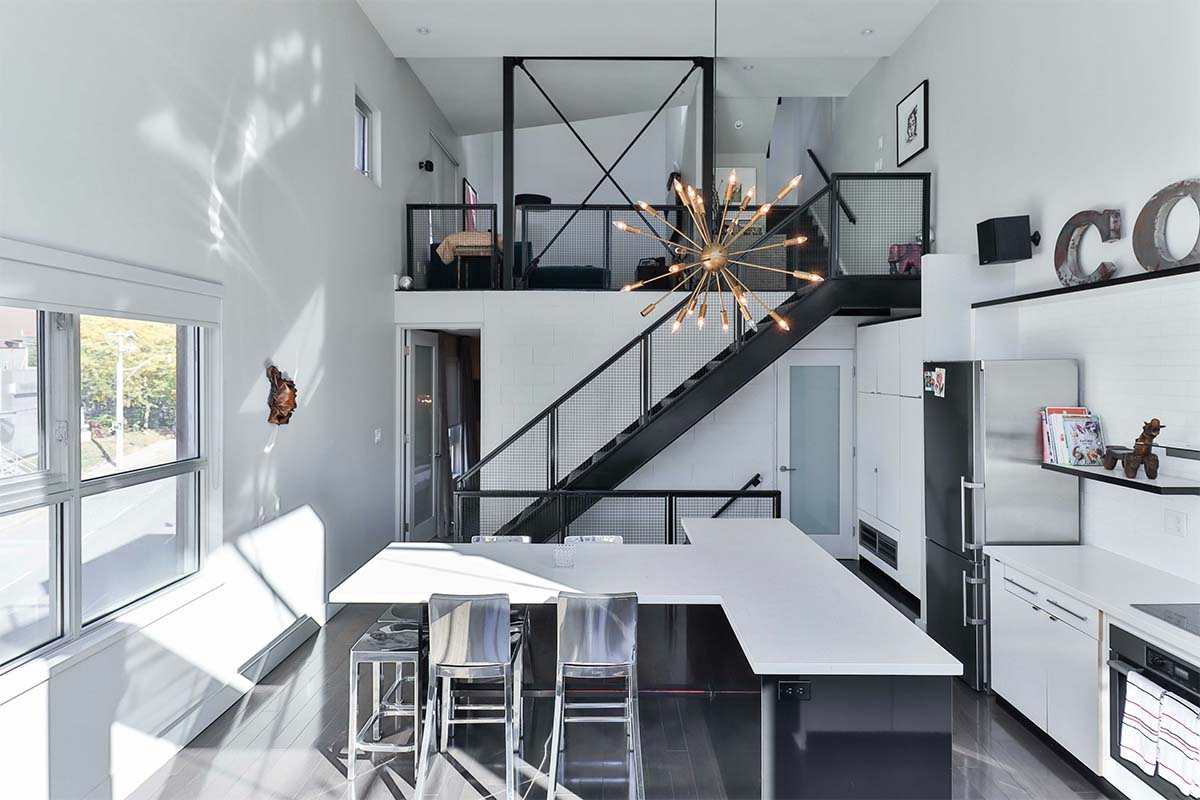 A loft creates extra usable space in apartments.
2.2. The dual-entrance "SOHO" studio
This is the gold standard for live-work floor plans. It features two distinct entrances: one that opens directly into a professional studio or office space for clients, and a separate, private residential entrance. By physically separating the "public" office from the "private" living quarters within the same unit, you offer the ultimate convenience for small business owners who refuse to compromise on privacy.
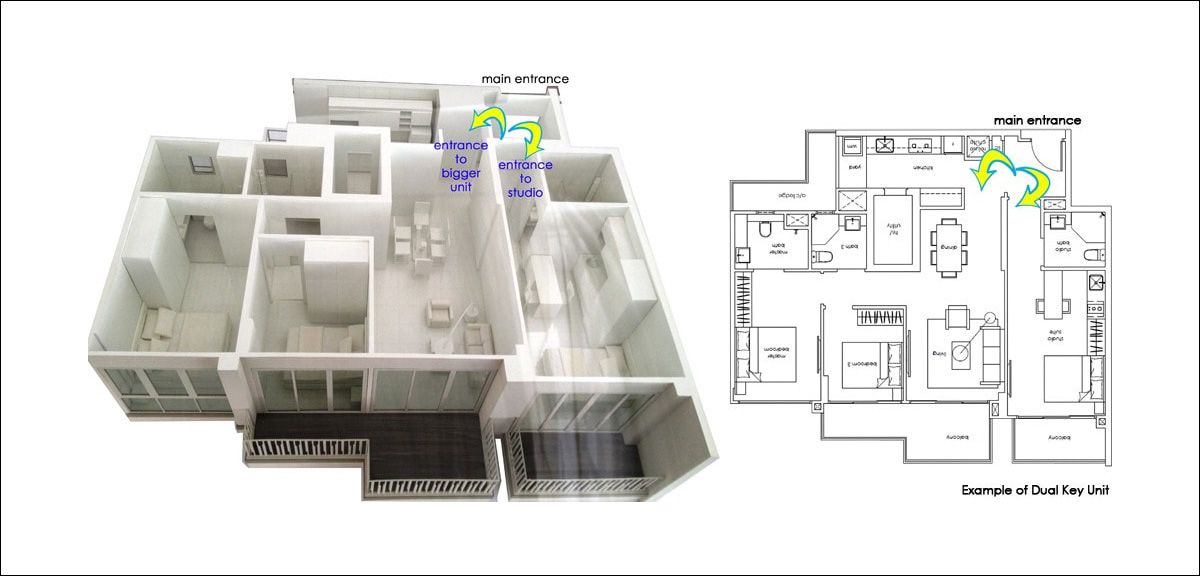 Cleverly designed entrances can save space while still allowing access to separate functional zones.
2.3. The "L-shaped" quiet wing
One of the biggest hurdles in a commercial residential layout is street noise. The L-shaped layout solves this by placing the high-traffic living and kitchen areas at the front of the building, while tucking the bedrooms into a "wing" that extends toward the back of the lot. This architectural shield ensures that residents can enjoy the vibrant urban energy during the day and total tranquility at night.
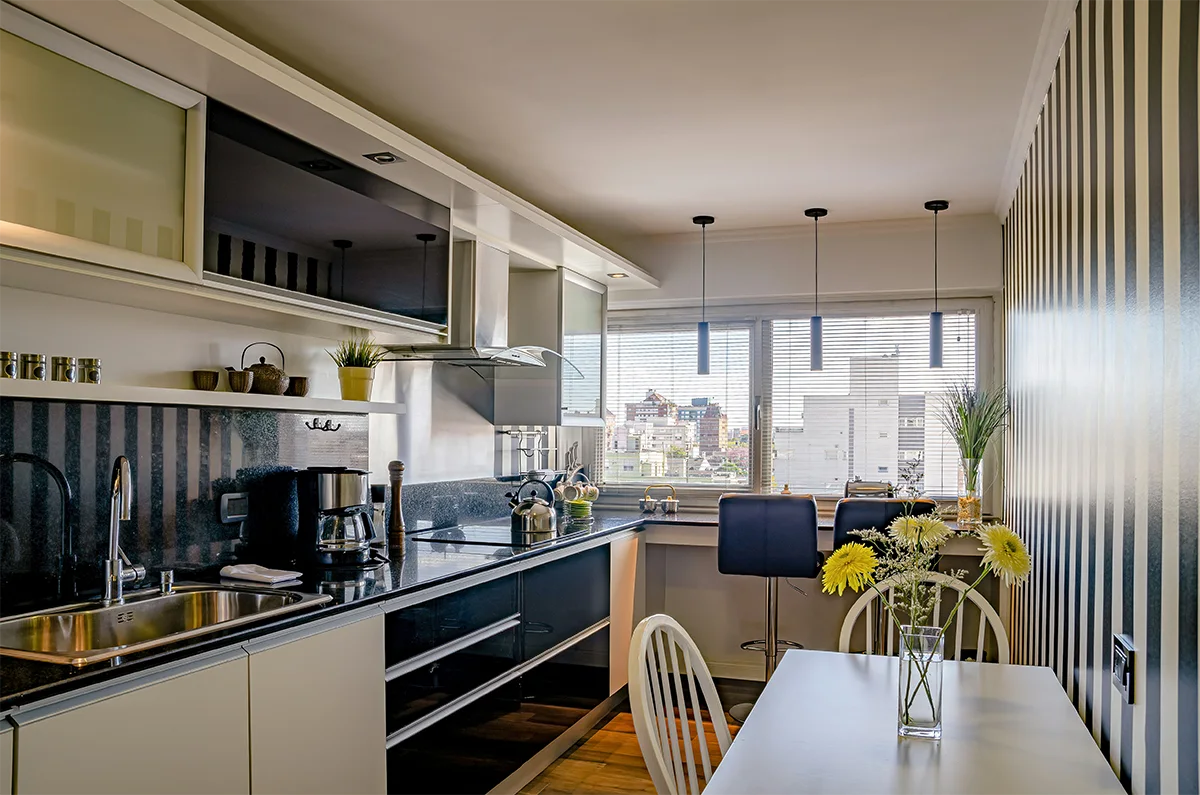 The kitchen at the front can act as a sound-absorbing unit for the rest of the apartment.
2.4. Open-concept flex spaces
Modern buyers crave versatility. Mixed-use buildings often utilize "flex rooms" with sliding glass partitions rather than permanent drywall. A room can be a sun-drenched breakfast nook in the morning, a professional Zoom-ready office in the afternoon, and a guest bedroom by night. In a market where every square foot counts, adaptability is a high-value selling point.
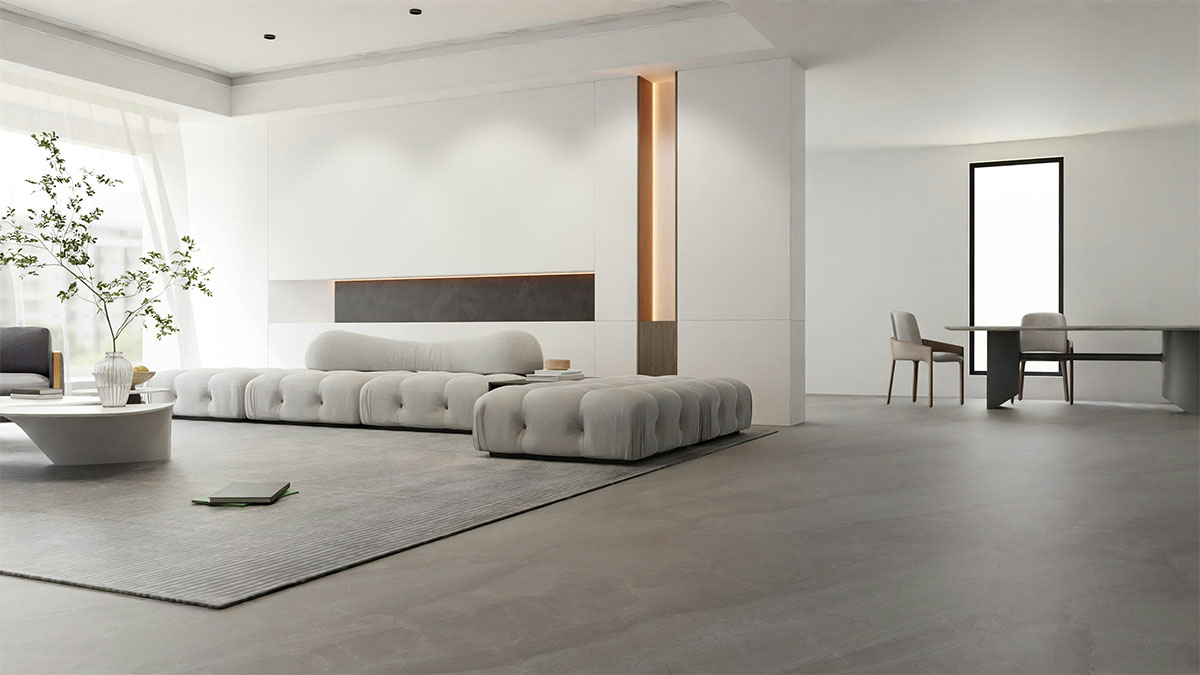 Homebuilders can maximize the flexibility of an apartment by adopting multi-functional room designs.
2.5. The "retail roof" green terrace
We found that one of the most underutilized assets in apartment-over-retail design is the flat roof of the commercial unit. By transforming this space into a private or semi-private green terrace for the apartments above, you provide residents with a rare urban luxury: outdoor space. Highlighting a lush, landscaped garden in your floor plan visualizes a "private sanctuary" that justifies a much higher price point.
 Roof spaces can be “greened” to improve the living quality of an apartment’s tenants.
2.6. The sound-isolated pod layout
For the modern digital nomad or podcaster, silence is a commodity. This layout utilizes "room-within-a-room" construction for a central office pod. By surrounding the workspace with "soft" zones like walk-in closets or thick-walled bathrooms, the apartment above a business floor plan creates a recording-studio-quality environment right in the heart of a bustling commercial district.
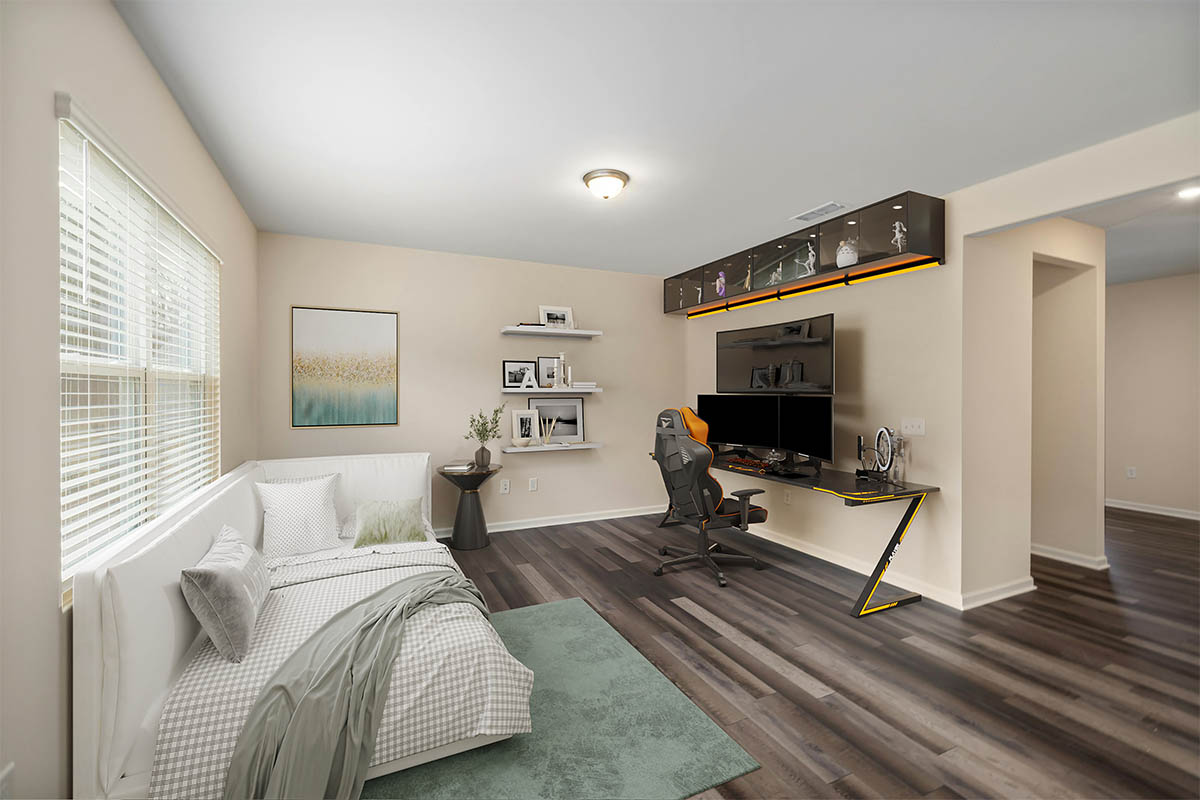 Private working spaces in mixed-use apartments shouldn’t be disturbed by noise.
2.7. The stacked modular unit
Efficiency is the key to profitability for large-scale mixed-use building floor plans. Stacked modular units use a standardized core, keeping plumbing and electrical stacks aligned across all floors, while allowing for varied interior configurations. This reduces construction costs significantly without making the residential units feel "cookie-cutter," offering a high-end feel at a mid-range investment.
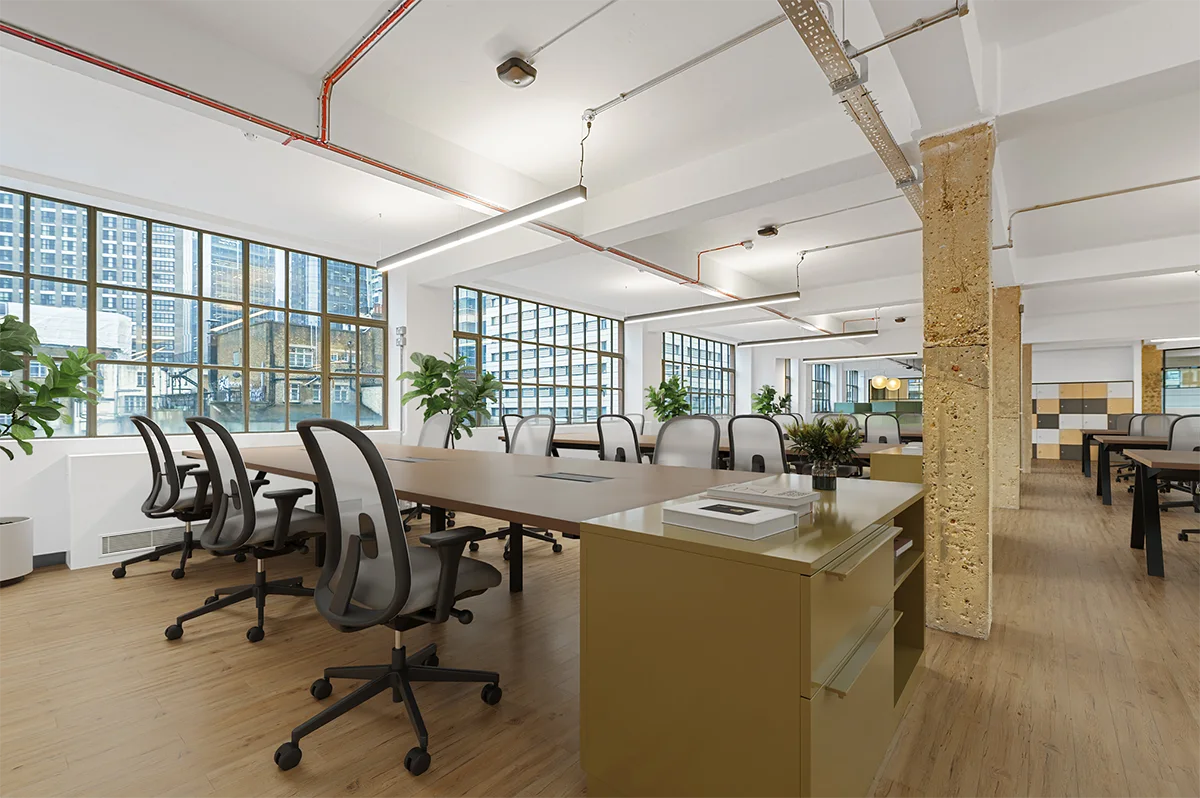 Plumbing and electricity systems should be streamlined across floors in a mixed-use building for more efficient construction costs.
2.8. The "corner shop" wrap-around
For those wondering where the "crown jewel" is in a commercial-residential building, the answer is the corner unit. By wrapping the residential balcony around the corner of the building, you offer 270-degree views of the urban skyline. This layout maximizes natural light and provides the ground-floor business with double the window-shopping visibility. It’s a win-win design that traditionally sees the highest appreciation rates in the mixed-use sector and is an ideal choice for a restaurant floor plan.
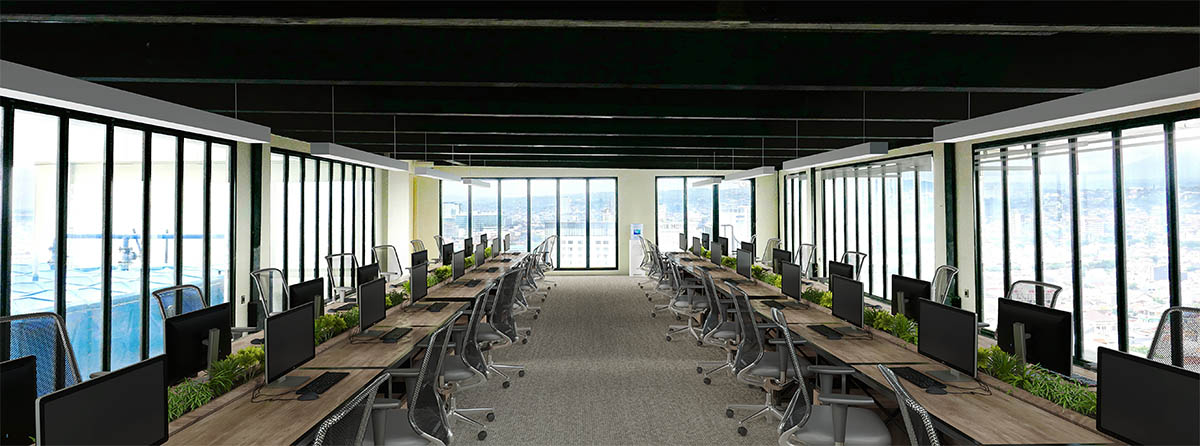 Wrap-around windows or a balcony allow tenants to take in a vast view of the sky.
For developers, these eight ideas are more than just architecture as they also represent the future of profitable, sustainable urban growth. However, don’t rejoice too early, our fellow readers. A brilliant layout on paper is only half the battle; the other half is helping your buyer see it. In a complex live work floor plan, traditional 2D blueprints can feel overwhelming and clinical. This is where high-fidelity visual rendering and precision floor plans become your most powerful sales tools. When a potential buyer can see exactly how their desk sits away from the noise, or how the terrace connects to their living room, the "emotional buy" happens much faster.
3. Why the “apartment above business” floor plan is the future of urban markets
As we look toward the end of this decade, it is clear that mixed-use developments are not merely a passing trend but a fundamental shift in the global urban fabric. The movement toward sustainability and the "15-minute city" has positioned mixed-use building layout as the cornerstone of resilient city planning. By significantly reducing car dependency and promoting walkable, high-density neighborhoods, these layouts directly address the environmental and lifestyle demands of the modern workforce.
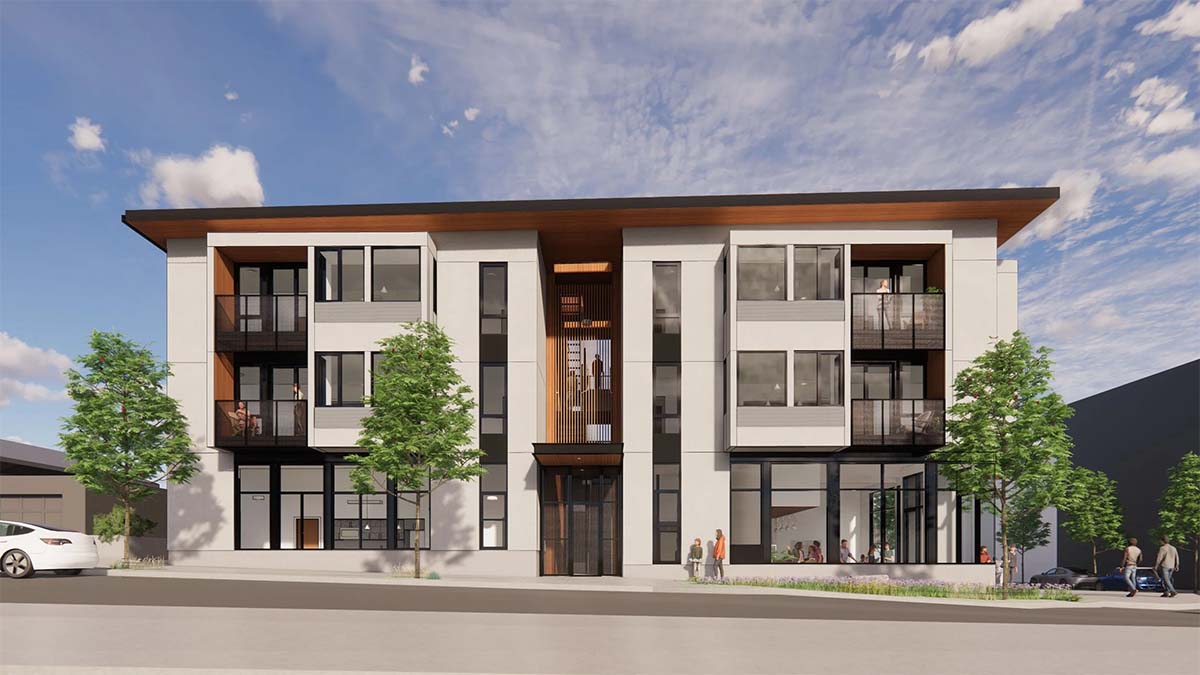 The hybrid building is the modern developers’ favorite for urban markets.
From an investment perspective, an apartment over retail hybrid approach offers unparalleled economic stability. During market fluctuations, the diversified nature of having both commercial and residential income streams provides a safety net that single-use properties often lack. Furthermore, as hybrid work models become a permanent fixture of professional life, the demand for sophisticated live-work apartments is projected to grow exponentially.
Ultimately, the future of urban real estate belongs to those who can master the balance of functionality and aspirational lifestyle. While a well-conceived apartment above business floor plan provides the structural foundation for success, it is the visual storytelling that ultimately converts a lead into a homeowner. In an increasingly digital-first market, the ability to clearly visualize the "live-work" harmony through professional imagery is what will continue to distinguish high-performing assets from the rest of the market.
4. Why visual marketing is critical for mixed-use building floor plans
In the competitive world of real estate, mixed-use properties present a unique marketing challenge: they are inherently more complex than standard residential homes. Prospective buyers or tenants often struggle to distinguish between commercial boundaries and private living spaces when looking at raw site photos or dense, technical architectural blueprints. This "visualization gap" can lead to hesitation, longer days on market, and lower offers. This is why high-end visual marketing is not just an elective luxury; it is a critical component of a successful sales strategy.
From our analysis, as with many types of floor plans commonly attached to a listing, a professional apartment above business floor plan serves as a mental map for the buyer. It translates a complicated commercial-residential layout into a clear, inviting narrative. By using clean lines and 3D perspectives, you allow a potential resident to "walk through" the space, seeing exactly how the noise-mitigation zones work and where the private entrance separates their life from the retail hustle below.
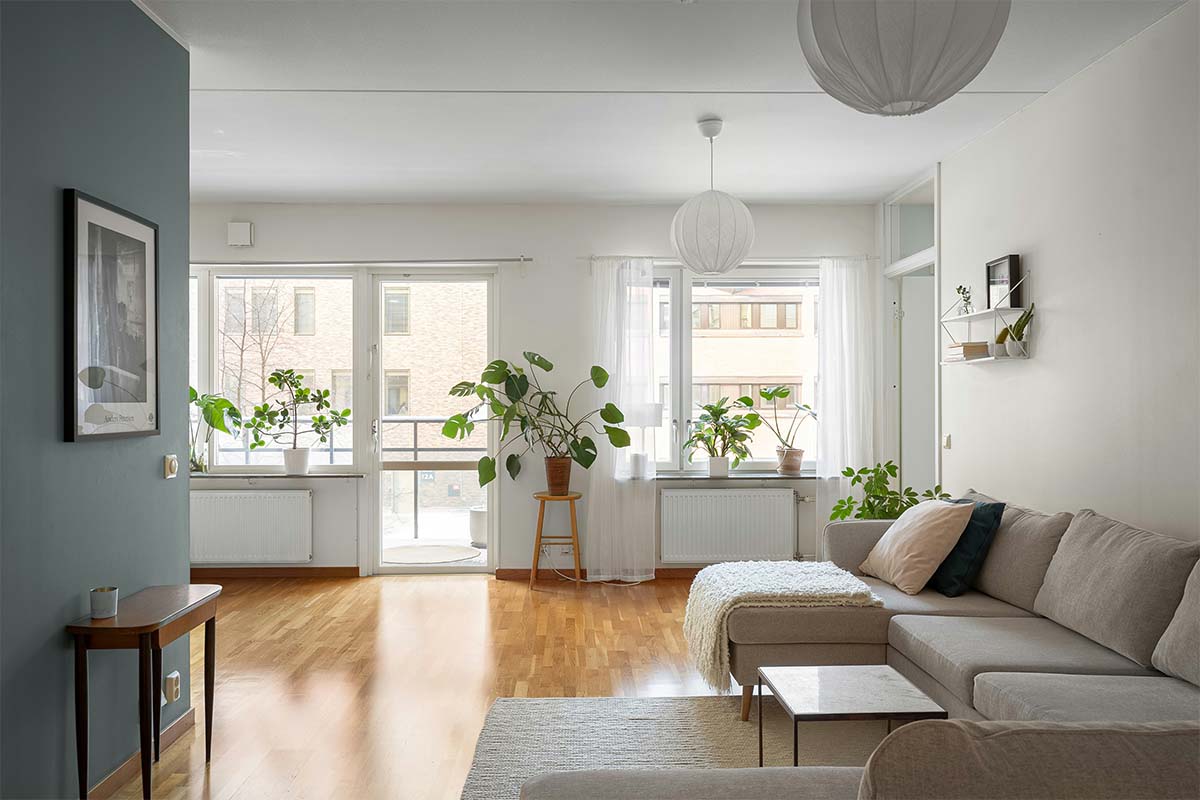 Providing a blueprint alone still can’t fully satisfy a buyer’s needs compared to listings that feature more immersive types of visuals.
Furthermore, the psychology of photo editing plays a massive role in urban sales. High-quality editing removes the visual "clutter" of busy streetscapes, power lines, or neighboring construction, focusing the viewer’s eye on the property’s potential. It transforms a cold, industrial structure into an aspirational "Live-Work" lifestyle. When developers use mixed-use floor plans enhanced by Fotober’s expert editing services, they are selling a vision of seamless urban living. In a digital-first market, these visuals act as the universal language that bridges the gap between a complex design and a signed contract.
5. Case study: How professional visuals sold a stagnant commercial-residential layout listing
The power of professional visual storytelling is best demonstrated through real-world success. Consider the case of a modern mixed-use development in a thriving urban district that, despite its prime location, sat stagnant on the market for over six months. The primary hurdle was the "visualization gap." Potential buyers were confused by the commercial-residential layout; the original listing photos made the ground-floor retail space look intrusive, and the upstairs units appeared dark and disconnected.
The listing agent turned to Fotober to bridge this gap. The intervention began with a high-definition apartment above business floor plan redraw. Fotober’s team transformed clinical, technical blueprints into clean, intuitive 2D and 3D floor plans that clearly demarcated the private residential flow from the commercial activity.
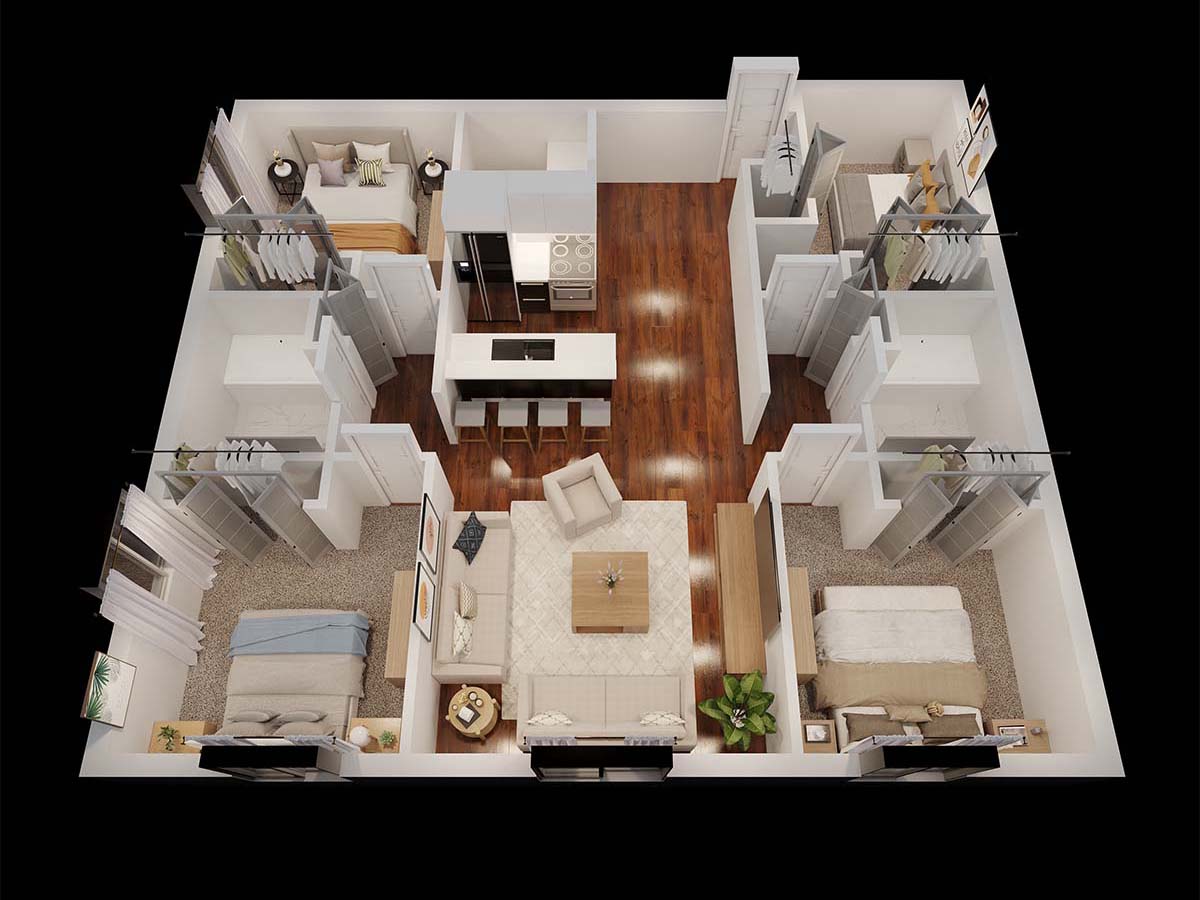 3D floor plans offer more immersion that clears up a buyer’s doubt.
Following this, the property’s photography underwent expert photo editing. Distracting street clutter was digitally removed, and the "Blue Sky" effect was added to highlight the property’s curb appeal. Virtual staging was applied to the live-work floor plans, demonstrating how a spare room could serve as a high-end professional studio.
The results were immediate and measurable. Within the first week of updating the listing with Fotober’s visuals, online engagement surged by 45%. Prospective buyers stopped asking "how does this work?" and started asking "when can I move in?" After only 22 days of re-listing, the property received three competing offers and closed 5% above the initial asking price. This case study proves that when complexity is simplified through professional imagery, value is finally realized.
6. Elevating your property with Fotober’s specialized services
In the niche of mixed-use real estate, clarity is your most valuable currency. Fotober specializes in bridging the gap between complex architecture and buyer desire. Our precision-engineered floor plan services take the technical density of a home layout and transform it into an intuitive, branded visual that highlights privacy and flow. Whether it is a 2D layout or a 3D immersive view, we ensure every apartment above business floor plan tells a story of luxury and convenience.
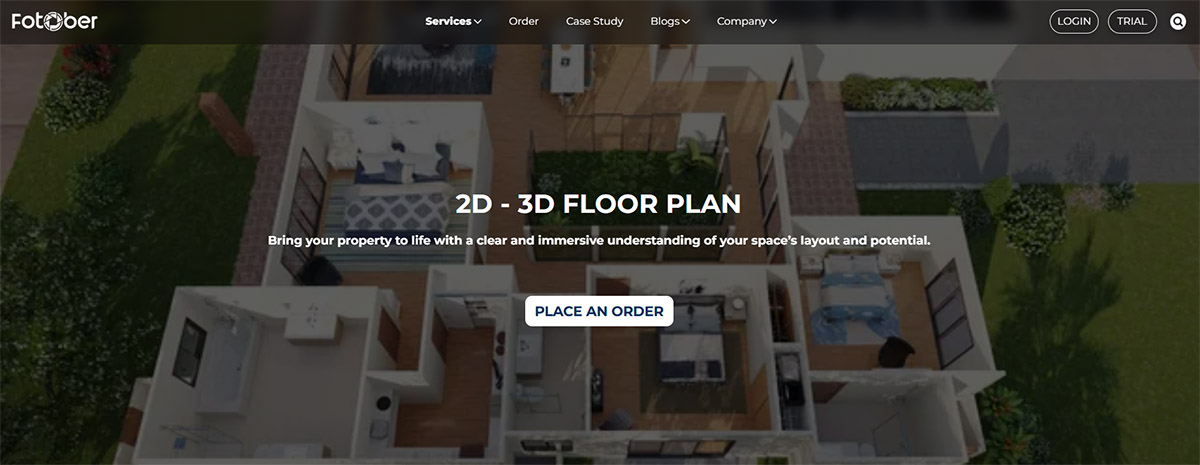 Floor plan redrawing is one of the specialties of Fotober.
Beyond structural visualization, our high-end photo editing services elevate your listing’s curb appeal by removing urban distractions and optimizing lighting for a "premium" feel. In a market where buyers decide in seconds, Fotober’s enhancements ensure your property looks like a premier destination rather than a cluttered storefront. By choosing Fotober, developers and agents are investing in a proven system that increases perceived value, attracts high-intent leads, and drastically reduces time on market.
Conclusion
The future of urban living is undoubtedly integrated. As the "15-minute city" becomes the global standard, mixed-use building floor plans have transitioned from a niche trend to an essential market necessity. Properties that successfully harmonize commercial vitality with residential peace offer a level of economic resilience and lifestyle convenience that traditional layouts simply cannot match.
However, even the most innovative apartment above business floor plan requires visual clarity to reach its full valuation. By pairing sophisticated live work floor plans with professional visual storytelling, you bridge the gap between architectural complexity and buyer desire. Visit Fotober today to transform your next listing into a premium urban destination.
Follow us on social media to stay updated with the latest architectural trends in the real estate market.
- Facebook: fotobermedia.co
- YouTube: Fotober
- TikTok: @fotober
- Instagram: fotober_media.
Related posts

Modern Luxe Interior Design: Elements, Style Guide and How to Stage It
October 10, 2026

Minimalist Interior Design: Characteristics, Style Guide, and Staging
October 8, 2026

Coastal Interior Design: Style Definition & Staging Guide
September 30, 2026

Contemporary Interior Design: Key Elements and How to Stage This Style
September 30, 2026
