




Restaurant Floor Plan: Best Strategic Layouts to Make Room for Success

Share:
Table of Contents
A successful restaurant is more than just great food; it is about the flow of energy and efficiency, which dictates everything from guest comfort to staff productivity. Without a strategic layout, even the finest establishments can suffer from service bottlenecks and cramped dining areas. In this guide, we will explore the essential components of a professional restaurant floor plan layout and reveal eight strategic designs intended to maximize your revenue and operational success.
1. What constitutes a professional restaurant floor plan?
A professional restaurant floor plan is a complex blueprint that harmonizes front-of-house (FOH) aesthetics with back-of-house (BOH) functionality. It is not merely a drawing of furniture placement; it is a strategic map designed to optimize every square inch for safety, legal compliance, and maximum profitability. To build a layout that works, several core components must be integrated seamlessly.
 The restaurant is a type of commercial property with a complex structure.
- The entrance and waiting area: This is the "handshake" of your restaurant. A professional layout provides enough space for guests to be greeted and wait comfortably without blocking the flow of departing customers or servers. Effective zoning here prevents the "door bottleneck" that can frustrate patrons before they even sit down.
- The dining room (The profit center): As your primary revenue generator, the dining area requires a delicate balance between seating capacity and guest comfort. A professional plan accounts for "circulation paths", usually requiring 18 to 24 inches between occupied chairs, ensuring that the space feels intimate rather than cramped. This area must also reflect your brand’s personality, whether through open communal tables or private booths.
- The kitchen (Back of house): The kitchen is the functional heart of the establishment. An efficient layout separates specific zones: receiving, storage, food preparation, cooking, and plating. By minimizing the steps a chef must take between the prep station and the pass-through window, you directly improve the speed of service and food quality.
- Bar and service stations: Strategically placed service stations allow staff to access POS systems, water, and cutlery without returning to the kitchen, significantly reducing travel time. Similarly, the bar should be positioned to act as both a visual centerpiece and a secondary revenue stream for waiting guests.
- Restrooms and accessibility: Professionalism also means inclusivity. Restrooms must be tucked away from the main dining sightlines but remain easily accessible. Crucially, your floor plan must comply with ADA (Americans with Disabilities Act) or local regulations, ensuring that hallways, doorways, and facilities accommodate all guests, including those with disabilities.
- Outdoor integration: Whether it is a sidewalk café or a rooftop terrace, outdoor spaces must be treated as an extension of the interior. A professional plan ensures that the transition between inside and outside is fluid for both staff service and the customer experience.
2. Top 8 strategic restaurant layouts to increase conversion and efficiency
Selecting the right restaurant floor plan is not just an aesthetic choice; it is a strategic business decision that directly impacts your bottom line. Below are eight high-converting layouts that balance operational efficiency with an exceptional guest experience.
2.1. The open concept layout
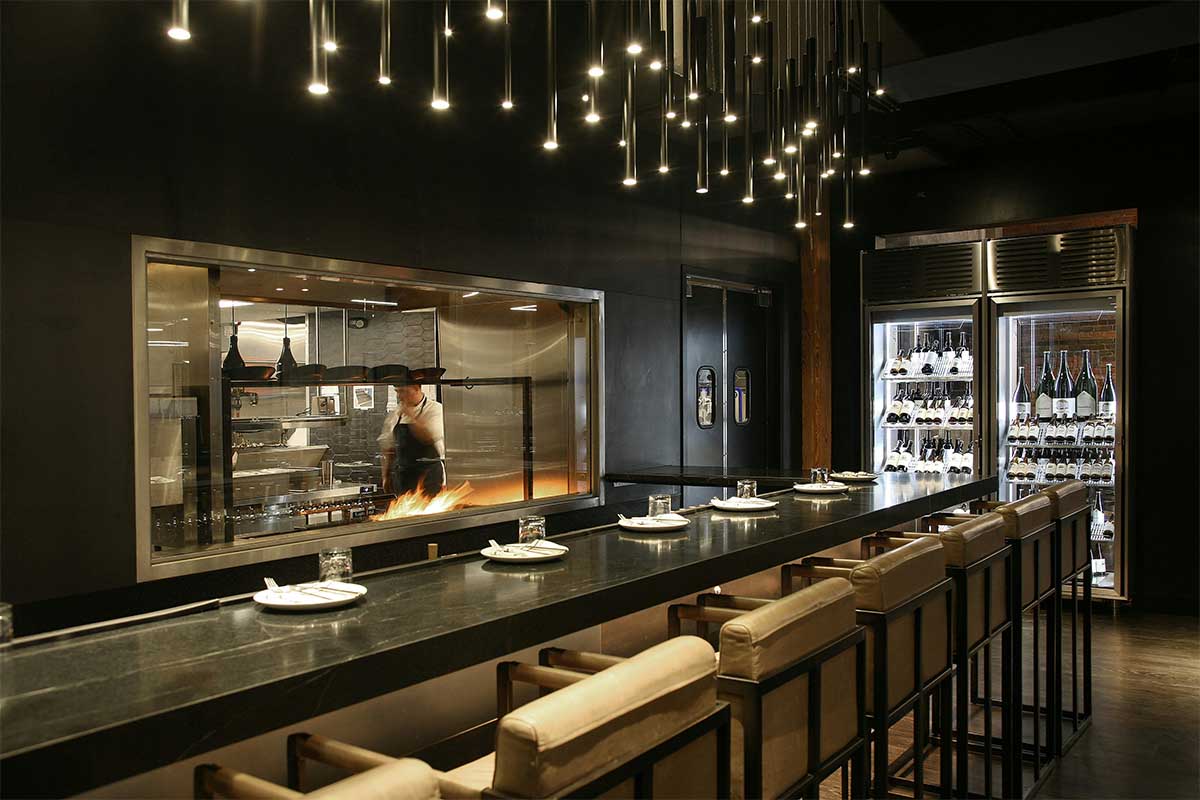
Why it works: The open concept removes the physical barrier between the kitchen and the dining room. It creates a sense of "culinary theatre," where guests can see their food being prepared, building immense trust in the food's quality and hygiene.
 Diners can witness their food being prepared in open layout restaurants.
Who it’s for: Modern fine-dining establishments, trendy farm-to-table spots, and high-end bistros.
How it drives revenue: By turning meal preparation into a performance, you increase the "experience value." This justifies higher menu prices and encourages social media sharing, providing free organic marketing.
2.2. The grid/parallel layout
Why it works: This layout utilizes a structured, rectangular arrangement of tables and booths. It is designed for maximum organization and clear traffic lanes, ensuring servers can move from the kitchen to any table without obstruction.
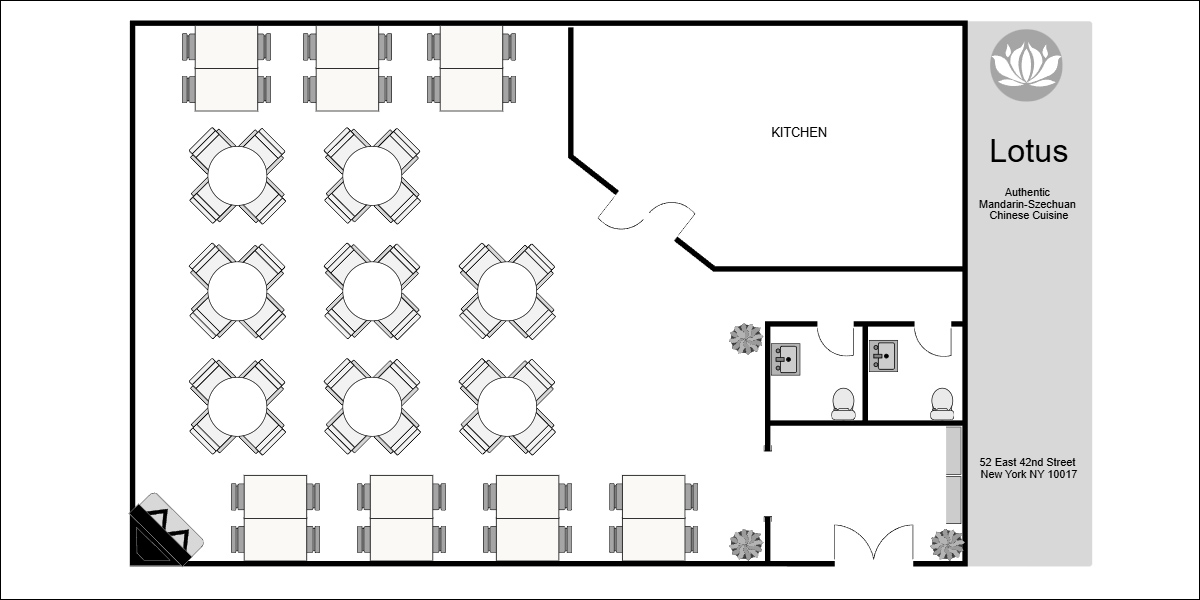 Grid layouts allow servers and guests to navigate through the tables without much hindrance.
Who it’s for: Fast-casual restaurants, busy diners, and high-volume urban cafes where turnover speed is essential.
How it drives revenue: It maximizes the number of seats per square foot. By optimizing server paths, you decrease "time-to-table" for food, which allows for faster table turnover and more covers during peak hours.
2.3. The zoned/sectional layout
Why it works: This restaurant floor plan layout divides the dining room into distinct "micro-atmospheres", such as a quiet lounge area, a lively bar section, and a family-friendly zone.
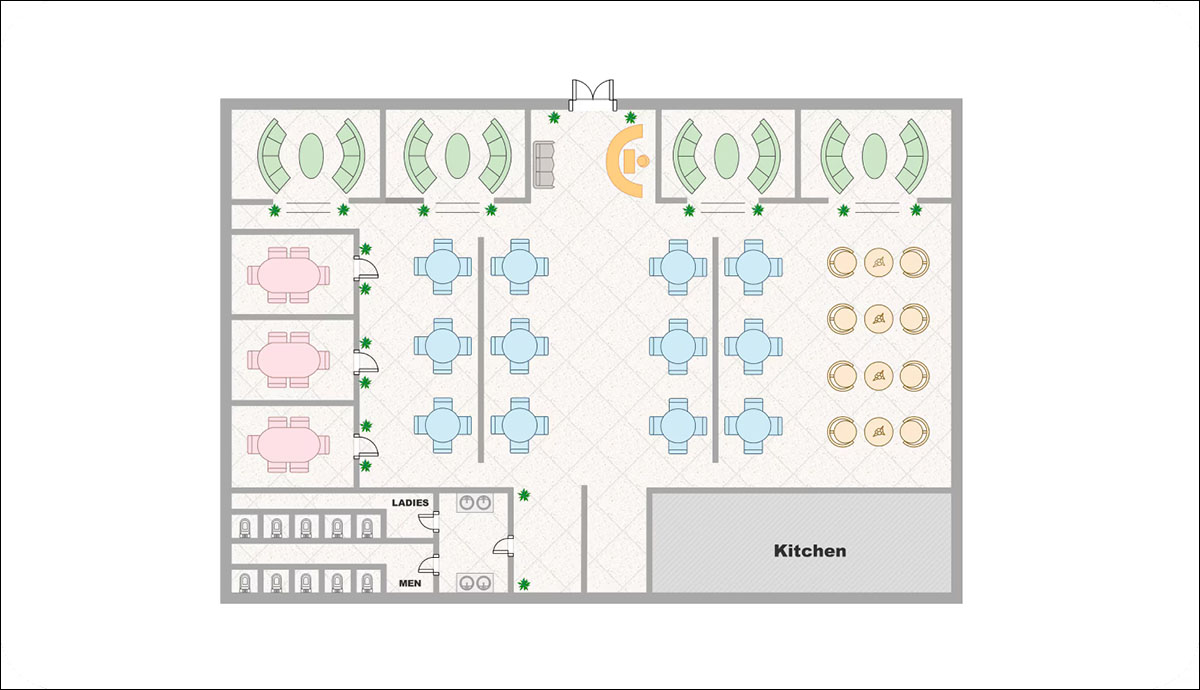 Restaurants can have separate zones for setting different atmospheres on one floor.
Who it’s for: Large gastropubs, multi-concept eateries, and family restaurants.
How it drives revenue: It broadens your demographic appeal. You can host a business meeting in one zone and a loud birthday party in another without them bothering each other, leading to higher customer satisfaction and repeat visits from diverse groups.
2.4. The perimeter layout
Why it works: The perimeter layout focuses on lining the walls with fixed booths and banquettes, leaving the center of the room open or sparsely populated with small tables.
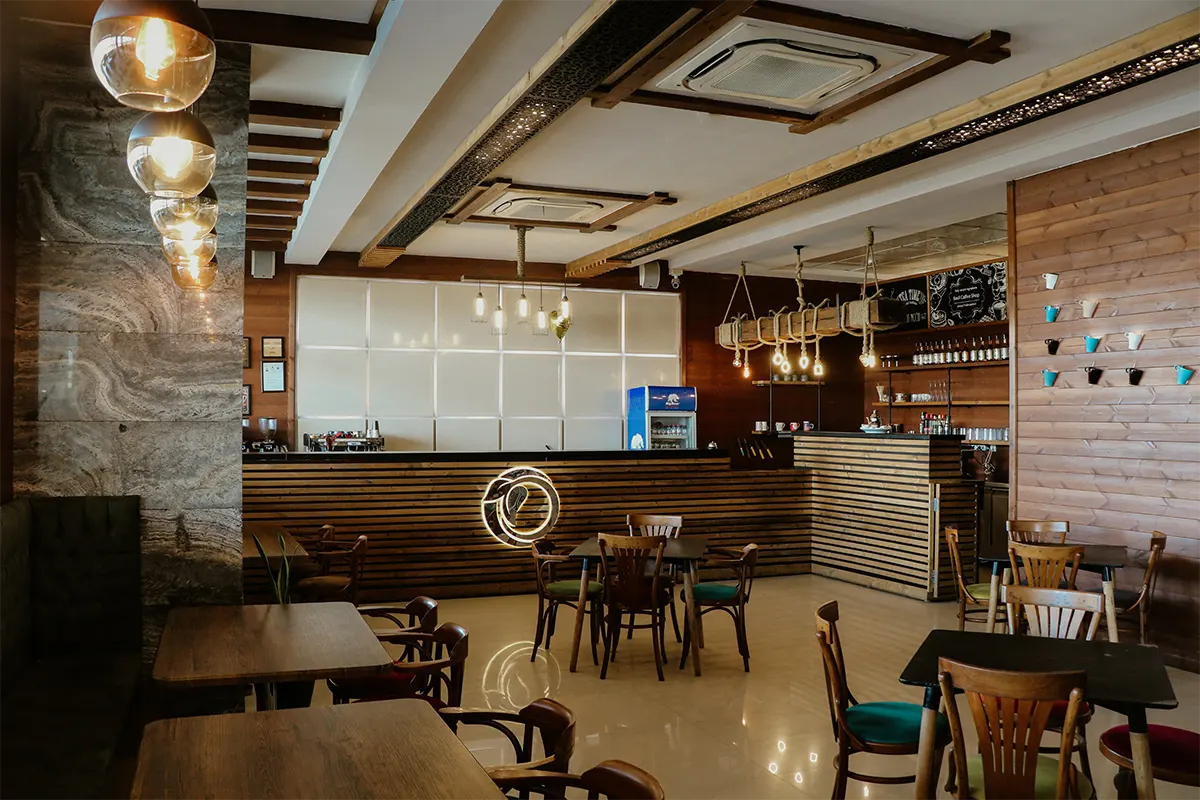 The perimeter layout creates a diners’ zone surrounded by fixed booths and banquettes.
Who it’s for: Pizzerias, intimate bistros, and upscale bars.
How it drives revenue: Psychologically, most diners prefer sitting against a wall or in a corner (the "anchor" effect). Booths are consistently the most requested seating; by maximizing them, you keep guests comfortable longer, which often leads to higher sales in appetizers, desserts, and second rounds of drinks.
2.5. The island layout (central bar)
Why it works: Here, the bar is placed in the literal center of the floor plan, acting as a 360-degree focal point. The dining tables are then arranged in the space surrounding the bar.
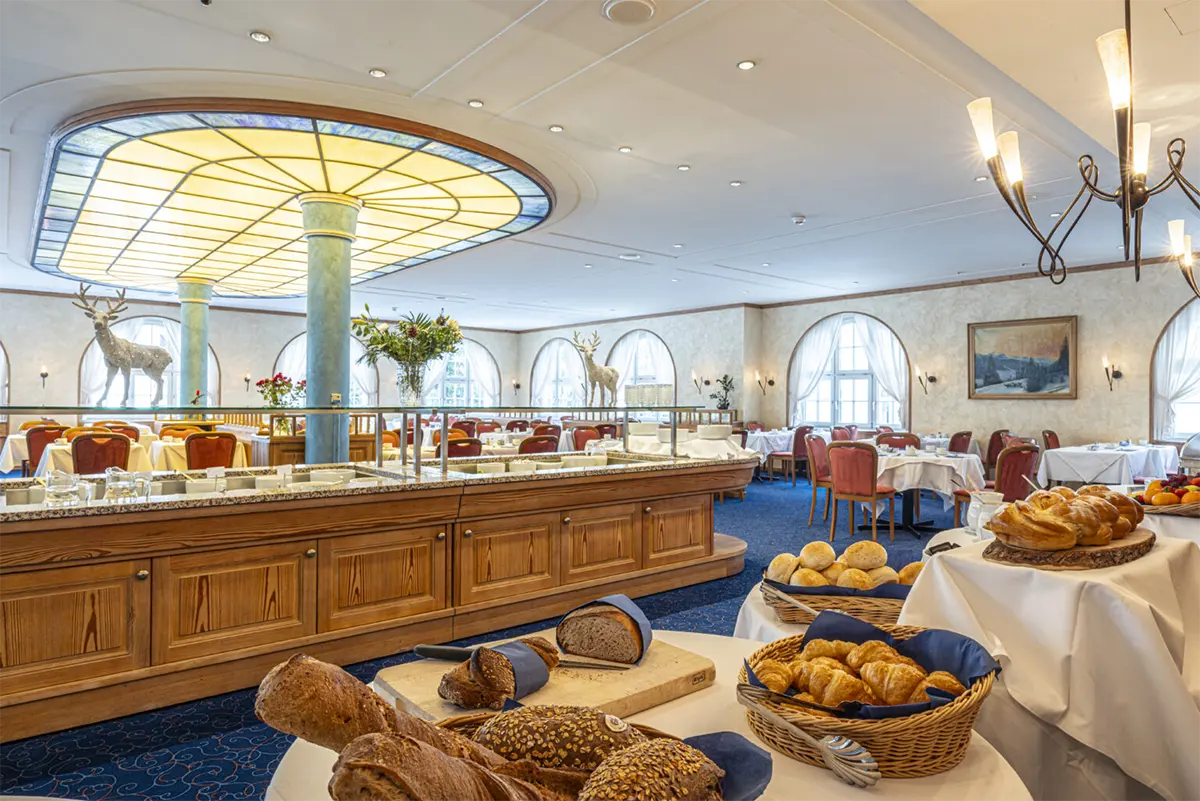 Island layout places the bar at the center, while dining tables are arranged in the surrounding space.
Who it’s for: Sports bars, cocktail-forward lounges, and "see-and-be-seen" social hubs.
How it drives revenue: It prioritizes high-margin beverage sales. A central bar creates a high-energy vibe that keeps "waiting" guests happy while they wait for a table, often resulting in "pre-meal" drinks that significantly boost the average check size.
2.6. The linear/assembly line flow
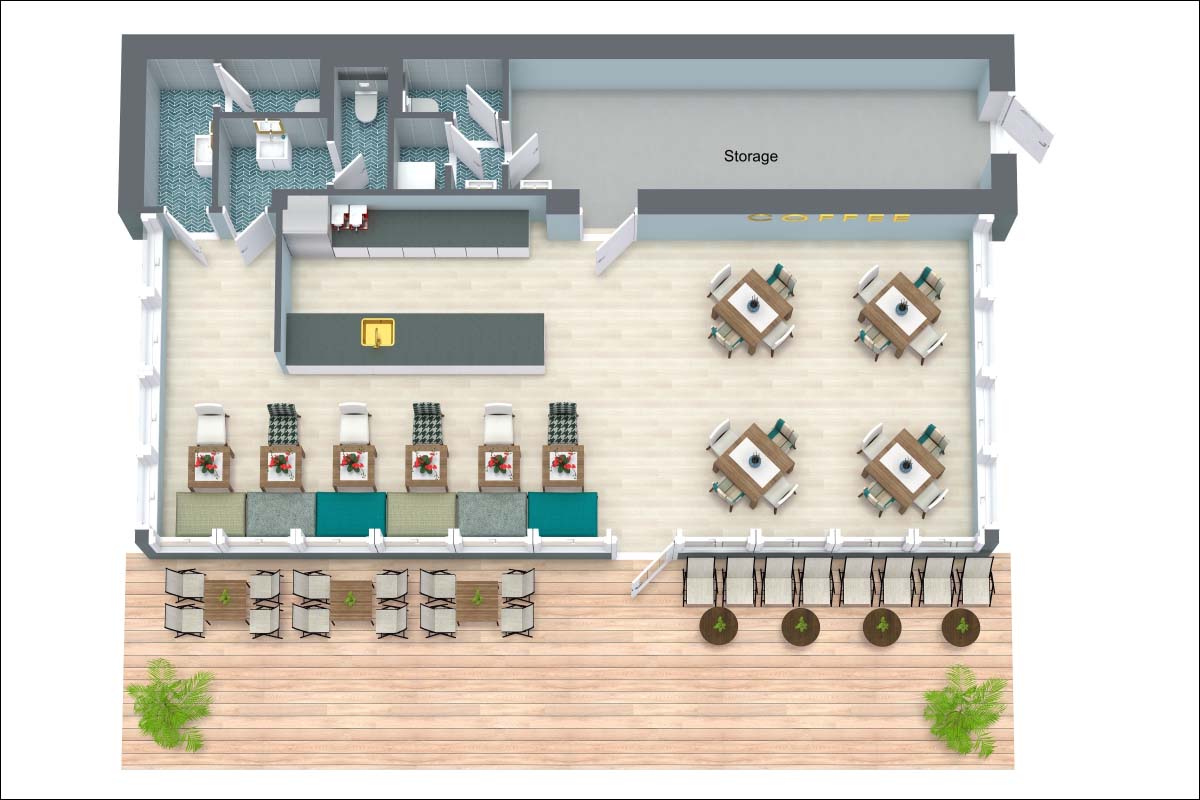
Why it works: This is a strictly functional restaurant floor plan layout where the customer moves in a single direction, from the entrance to the ordering station, through the assembly line, and finally to the POS (Point of Sale).
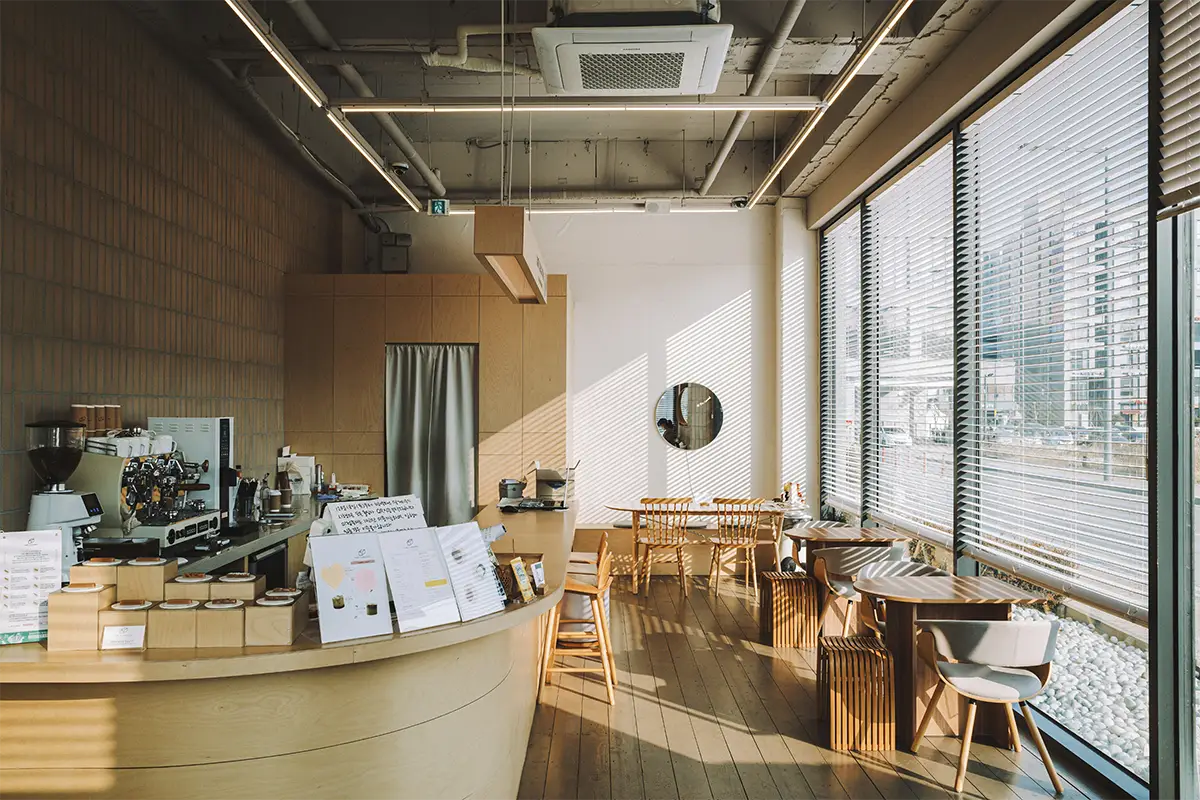 Linear layout, which guides customers to move in just one direction, is favorable for cafeterias and quick-service restaurants.
Who it’s for: QSRs (Quick Service Restaurants), cafeterias, and build-your-own concepts (e.g., poke bowls or tacos).
How it drives revenue: It minimizes labor costs per transaction and eliminates customer confusion. The speed of the line encourages "grab-and-go" sales, allowing you to serve hundreds of customers per hour with minimal staff overhead.
2.7. The multi-level/mezzanine layout
Why it works: By utilizing vertical space, you create a tiered dining experience. A mezzanine level allows for a bird's-eye view of the main floor, adding a sense of grandeur to the architecture.
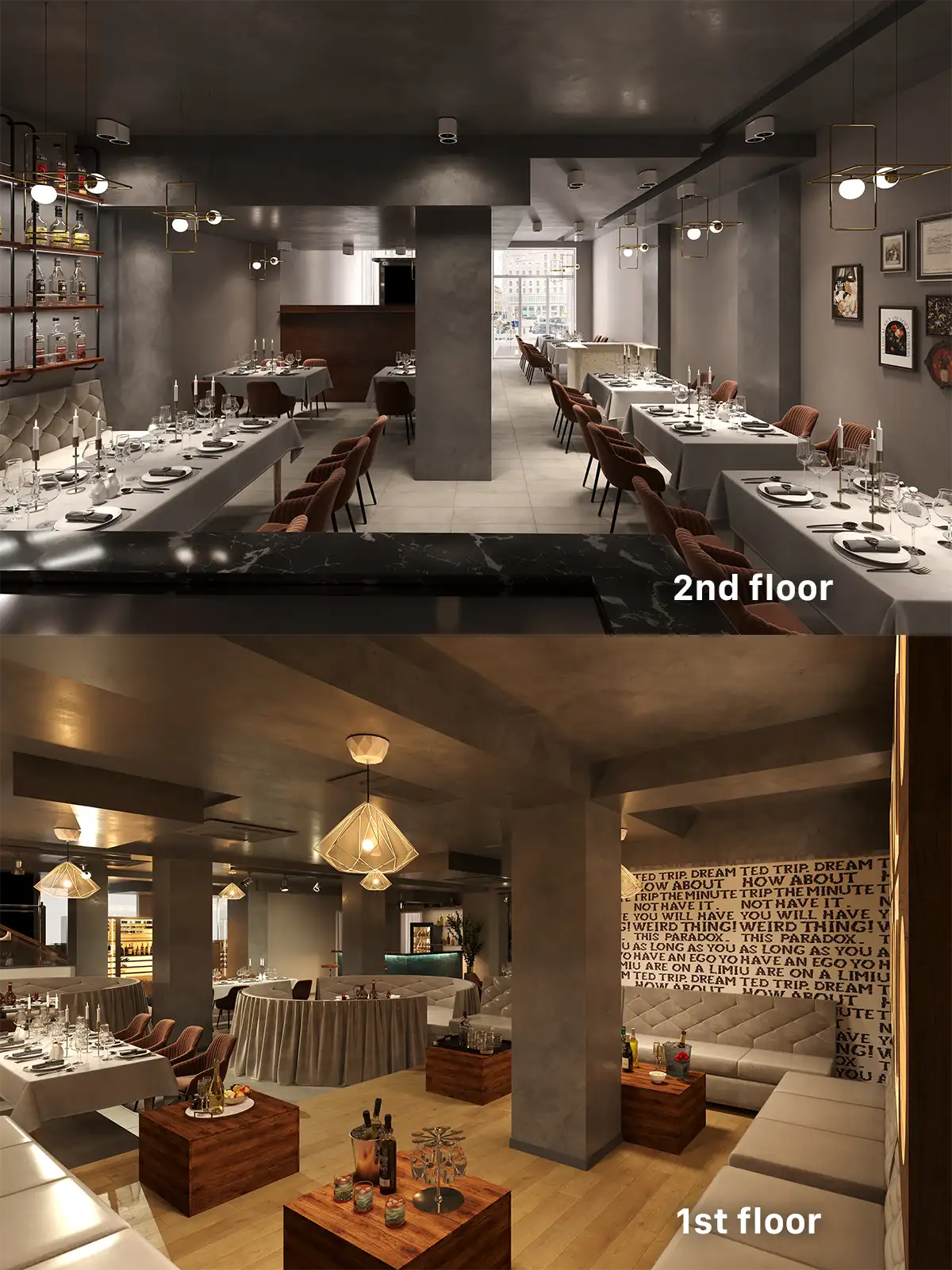 Multi-level structures allow for a tiered dining experience.
Who it’s for: Urban restaurants in high-rent districts with high ceilings.
How it drives revenue: It allows you to nearly double your seating capacity without doubling your real estate footprint. This significantly lowers your "rent per seat" ratio, making expensive prime locations much more profitable.
2.8. The flexible/modular layout
Why it works: This layout uses lightweight, modular furniture and perhaps even folding partitions. Tables can be pushed together or pulled apart in seconds to accommodate different group sizes.
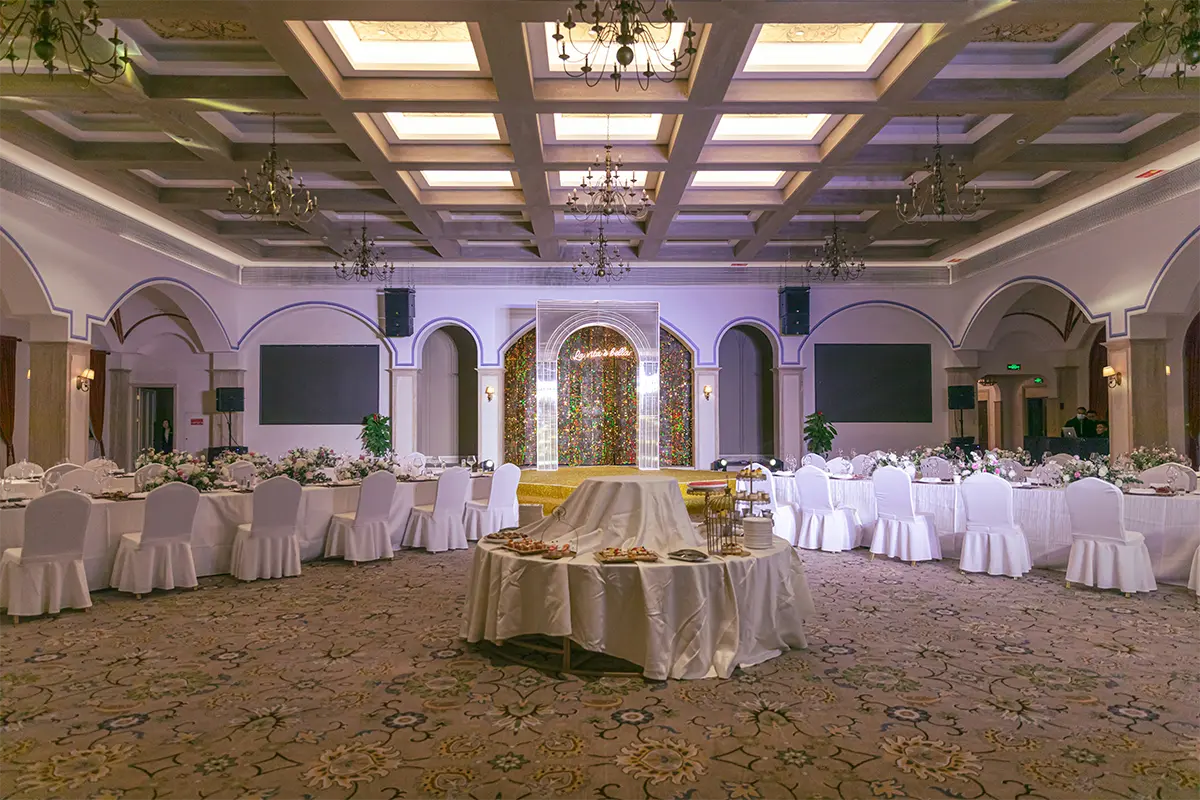 Restaurants used to organize events should adopt a flexible layout.
Who it’s for: Coffee shops that host evening events, pop-up restaurants, and event venues.
How it drives revenue: Versatility is the key to maximizing utility. A space that functions as a workspace for individuals in the morning can be transformed into a private banquet hall for 50 people in the evening, allowing the business to capture multiple revenue streams within 24 hours.
Choosing the right restaurant floor plan requires a deep understanding of your brand and your target customer's behavior. Whether you prioritize the theatricality of an open kitchen or the ruthless efficiency of a linear flow, your layout should always serve the dual purpose of guest delight and operational speed.
3. The power of visual representation in restaurant marketing
In the digital-first landscape of the modern hospitality industry, a restaurant’s online presence is often the first "meal" a customer consumes. Visual representation, particularly through professional restaurant floor plans and high-fidelity imagery, serves as a powerful psychological bridge between a potential guest and your physical space. This concept, often referred to as "spatial transparency," helps eliminate the uncertainty that can prevent a first-time diner from making a reservation.
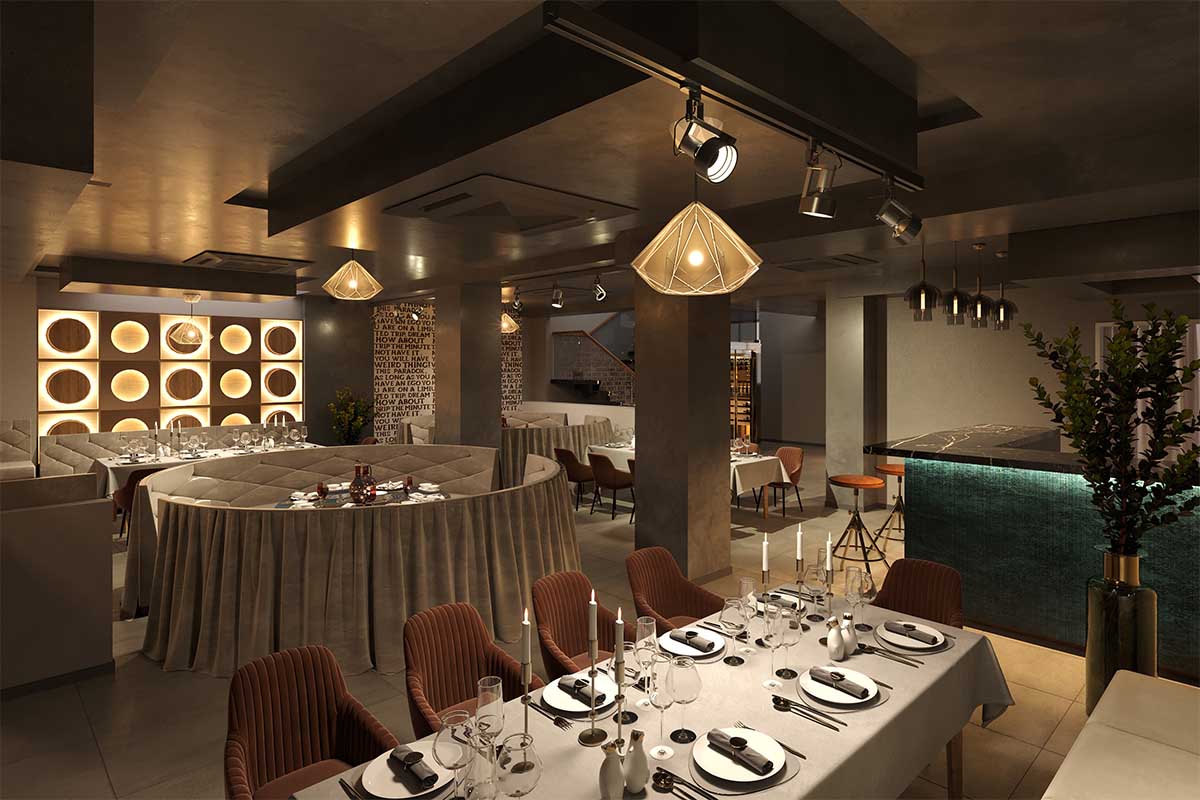 Professional visuals are a powerful marketing asset that provides clarity, establishes trust, and connects with potential customers.
When a customer can visualize the layout, seeing exactly where the cozy booths are tucked away or how the bar serves as the room’s heartbeat, it builds an immediate sense of trust. Beyond mere documentation, these visuals foster an emotional connection, allowing the guest to imagine themselves enjoying a meal in that specific atmosphere. It is about selling the vibe and the experience before the guest even steps through the door.
Furthermore, high-quality visual assets are indispensable for SEO and social media strategy. Search engines increasingly prioritize pages with rich media; a detailed 3D floor plan can attract event planners and corporate clients who are specifically searching for venues with certain capacities or layouts. On platforms like Instagram and Pinterest, stunning visualizations or professionally edited interior shots are highly shareable, acting as a visual invitation that generates significant organic reach. By investing in professional visual representation, you are not just showing your restaurant; you are creating a compelling narrative that converts digital interest into physical foot traffic.
4. Elevate your space with Fotober’s professional visual services
To turn a culinary vision into a commercial reality, you need more than just a conceptual idea; you need professional execution. This is where Fotober steps in as your strategic partner, offering a suite of visual solutions designed specifically for the high-stakes hospitality market.
4.1. High-quality floor plan services
We specialize in transforming rough sketches or outdated blueprints into high-precision restaurant floor plans. Whether you require a clean, 2D technical layout for operational planning or a stunning 3D rendering to attract investors, our team delivers with surgical accuracy. Our 3D visualizations allow stakeholders to virtually "walk through" the space, ensuring that every design element, from lighting fixtures to table spacing, aligns perfectly with your brand’s operational goals.
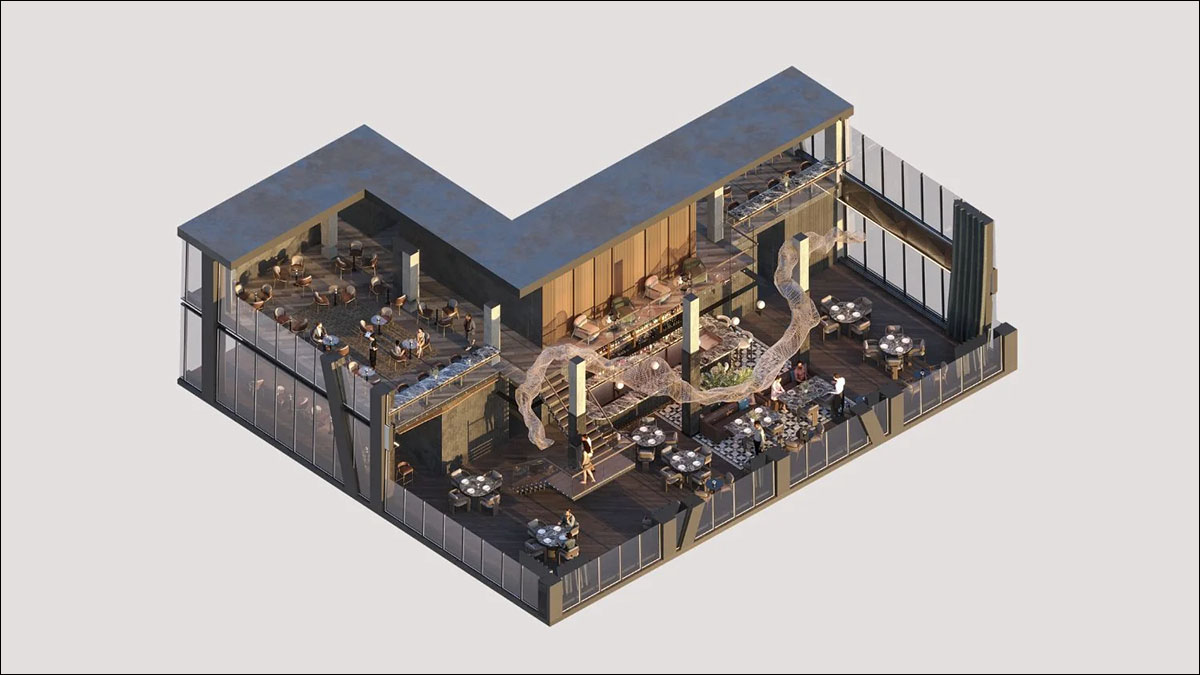 Polished floor plans showcase the potential of a restaurant.
4.2. Virtual staging and photo editing for commercial real estates
For restaurateurs looking at empty shells or those in the midst of a renovation, Fotober’s Virtual Staging services are a game-changer. Instead of investing thousands of dollars in physical furniture for a "concept" shoot, we digitally furnish your space with photorealistic decor tailored to your aesthetic. This allows you to begin marketing your venue, securing event bookings, or finalizing lease agreements long before the actual construction is complete.
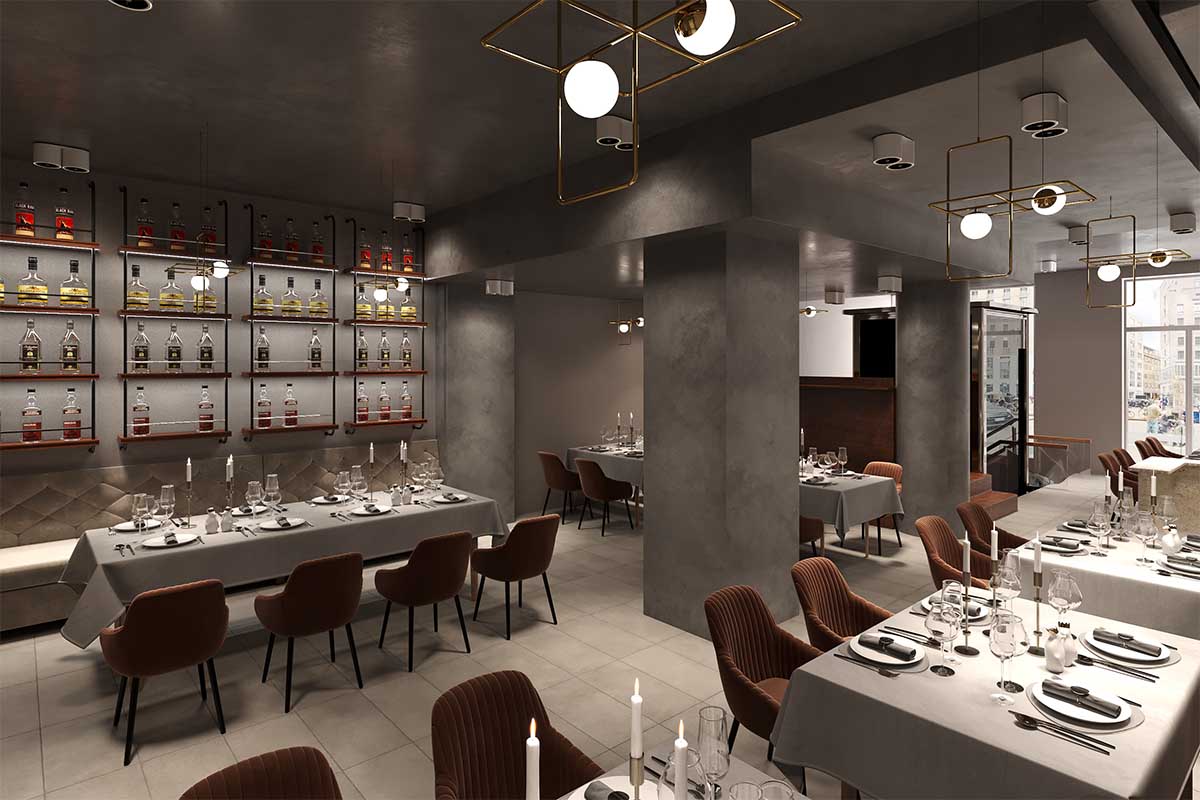 Virtual staging and photo editing can help business owners achieve flawless images that showcase the restaurant in its best light.
In an era where "the camera eats first," your digital imagery must be flawless. Our expert photo editing service goes beyond basic filters, focusing on high-end color correction, lighting enhancement, and the removal of distracting clutter. We ensure that your dining room looks warm and inviting, and your food looks as irresistible as it tastes, meeting the elite standards of competitive markets across the United States.
4.3. The Fotober advantage
The Fotober advantage lies in our unique blend of technical expertise and market-driven insights. We understand the urgency of the restaurant business, which is why we offer industry-leading turnaround times and a transparent pricing model that ensures maximum value. By choosing Fotober, you are gaining a dedicated team committed to elevating your restaurant’s visual identity and driving measurable business growth.
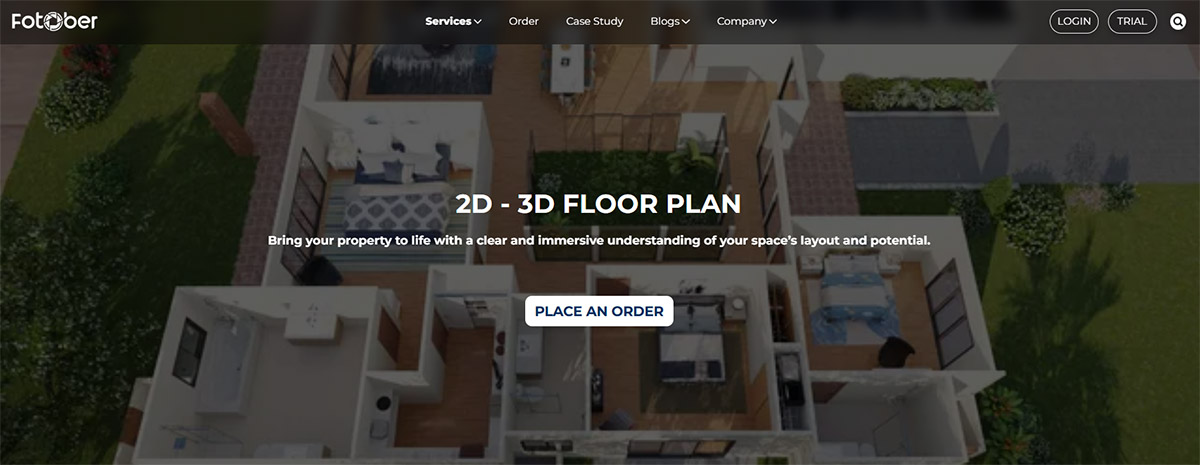 Fotober delivers consistent quality with quick turnaround thanks to the expertise of our team in real estate and architecture.
Conclusion
Mastering the restaurant floor plan is a delicate balance of art and science, blending aesthetic appeal with hard-earned operational efficiency. As we have explored, the right layout does more than just seat guests; it optimizes your revenue, empowers your staff, and defines your brand’s identity. In a competitive market, your visual assets are your most persuasive sales tools.
Ready to transform your culinary vision into a high-converting reality? Partner with Fotober for precision-engineered floor plans and photorealistic virtual staging. Contact us today for a professional consultation or browse our portfolio to discover how we can elevate your restaurant's spatial potential.
Follow us on social media to stay updated with the latest trends in the real estate market and popular architectural styles.
- Facebook: fotobermedia.co
- YouTube: Fotober
- TikTok: @fotober
- Instagram: fotober_media.
Related posts

Modern Luxe Interior Design: Elements, Style Guide and How to Stage It
October 10, 2026
Minimalist Interior Design: Characteristics, Style Guide, and Staging
October 8, 2026

Coastal Interior Design: Style Definition & Staging Guide
September 30, 2026

Contemporary Interior Design: Key Elements and How to Stage This Style
September 30, 2026
