




Virtual Renovation Cost: Optimize ROI with Home Structure Editing

Share:
Table of Contents
- 1. The financial paradigm shift: Virtual vs. physical spatial transformation
- 2. Decoding virtual renovation cost: What are you actually paying for?
- 3. Industry-standard virtual renovation pricing models demystified
- 4. The cost of in-house virtual renovation vs. outsourcing to visual media experts
- 5. Case study: How strategic virtual renovation optimized marketing cost for a luxury listing
- 6. Transform your listings with effortless virtual renovation cost from Fotober
- 7. Frequently asked questions about virtual renovation pricing
- 8. Conclusion
The era of relying solely on physical staging or waiting months for actual physical remodeling to showcase a property's true potential is over. Today, digital visualization has connected architectural design and high-end commercial photography. However, for real estate agents, developers, property managers, and brokers, the financial mechanics of this technology often remain opaque. In this comprehensive guide, we will unpack the pricing ecosystem for virtual renovations, analyze the technical factors driving virtual renovation costs, compare operational workflows, and demonstrate, through a real-world case study, how leveraging specialized visual partners like Fotober can save tens of thousands of dollars while drastically reducing time-on-market.
1. The financial paradigm shift: Virtual vs. physical spatial transformation
To understand the financial dynamics of modern property marketing, one must first distinguish between physical capital expenditure (CapEx) and digital marketing expenditure (OpEx).
|
Physical renovation cost |
Virtual renovation cost |
|
High CapEx ($30,000 - $150,000+) |
Low OpEx ($25 - $150 per image) |
|
Takes 3 - 12 months |
Takes 24 - 48 hours |
|
Permits, labor, material risk |
Zero physical disruption |
|
Permanent spatial decision |
Flexible design options |
1.1. The realities of real renovation costs
Executing a physical renovation on a listing prior to sale is a massive financial gamble. A traditional kitchen remodel, bathroom upgrade, or structural wall removal aimed at creating an open-concept living space demands substantial capital investment.
- Mid-range kitchen remodel: $30,000 – $65,000
- Master bathroom overhaul: $15,000 – $35,000
- Flooring replacement (Whole house): $8,000 – $20,000
- Physical home staging: $3,000 – $10,000 (plus recurring monthly rental fees)
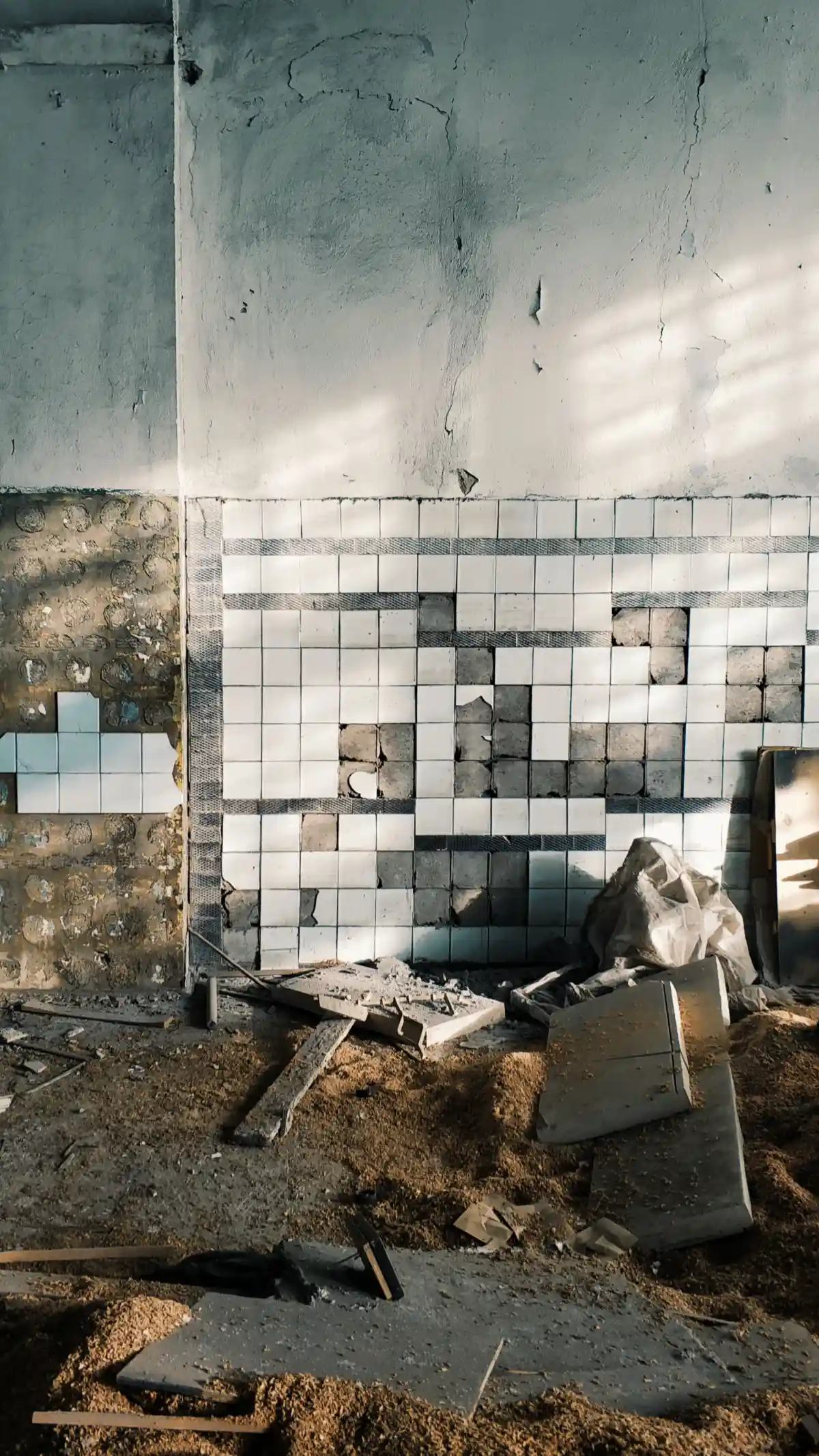 Renovating a home the traditional way is costly.
Beyond raw material and labor costs, physical renovations introduce secondary financial liabilities: long holding costs (mortgage, property taxes, HOA fees during construction), contractor delays, permit hurdles, and the risk that the design choices made do not align with the eventual buyer's personal taste.
1.2. The virtual alternative: Cost-effectiveness meets high visual impact
Virtual renovation circumvents physical disruption entirely. By utilizing advanced 3D rendering engines, precise photogrammetry, and hyper-realistic lighting synthesis, visual artists can digitally replace outdated cabinetry, drop load-bearing walls, install hardwood flooring, and introduce modern furniture into an existing 2D photograph.
When evaluating a direct virtual renovation vs real renovation cost, the contrast is stark:
|
Metric |
Physical renovation & staging |
Virtual renovation |
|
Average cost per space |
$15,000 – $50,000+ |
$30 – $120 |
|
Time to completion |
6 weeks – 6 months |
24 – 48 hours |
|
Holding costs incurred |
Substantial (Months of carrying fees) |
Near zero (Immediate listing) |
|
Design flexibility |
Locked into chosen materials |
Unlimited customizable styles |
|
Risk profile |
High (Cost overruns, buyer mismatch) |
Zero (Non-destructive digital assets) |
By opting for digital transformation, real estate professionals convert a major capital liability into a minimal, predictable marketing cost. You give prospective buyers the power to envision the property's maximum structural potential without committing your seller to upfront, non-recoverable construction outlays.
2. Decoding virtual renovation cost: What are you actually paying for?
Not all virtual renovation and virtual staging are created equal. A $10 automated app filter yields synthetic, uncanny-valley visuals that destroy listing credibility. Conversely, high-end architectural rendering requires specialized visual expertise.
Understanding what drives the base virtual renovation cost allows brokers and imagery directors to budget accurately and evaluate provider quotes effectively.
2.1. Architectural complexity and scope
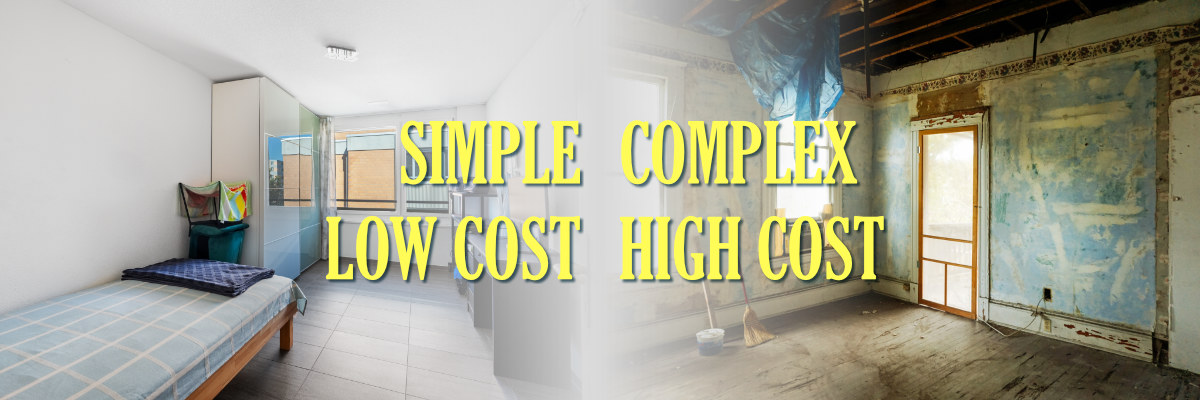
The single greatest variable in virtual renovation pricing is spatial complexity.
- Minor digital staging: Adding 3D furniture models into an already clean, empty space requires standard perspective matching and shadow placement. This falls on the lowest cost spectrum.
- Full structural overhaul: Removing load-bearing walls, changing ceiling heights, adding floor-to-ceiling panoramic windows, or redesigning complete kitchen cabinetry requires artists to construct complex 3D meshes over the original 2D photograph. This level of architectural reconstruction commands higher master-artist labor time.
2.2. Quality of base photography and 3D rendering precision
From a photographic perspective, high-end virtual editing depends on exact geometry matching. The visual artist must match the camera's original focal length, sensor height, white balance, and natural light direction.
- Physically-based rendering (PBR): Premier studios use PBR shaders to ensure that sunlight bouncing off digital quartz countertops mirrors real-world physics. Wood grains absorb light properly, glass shows accurate refractions, and metal exhibits correct specular highlights.
- Base image condition: If a photo is underexposed, shot on an ultra-wide smartphone lens with heavy barrel distortion, or improperly bracketed, the digital artist must spend significant time correcting lens distortion and color cast before even placing a 3D asset.
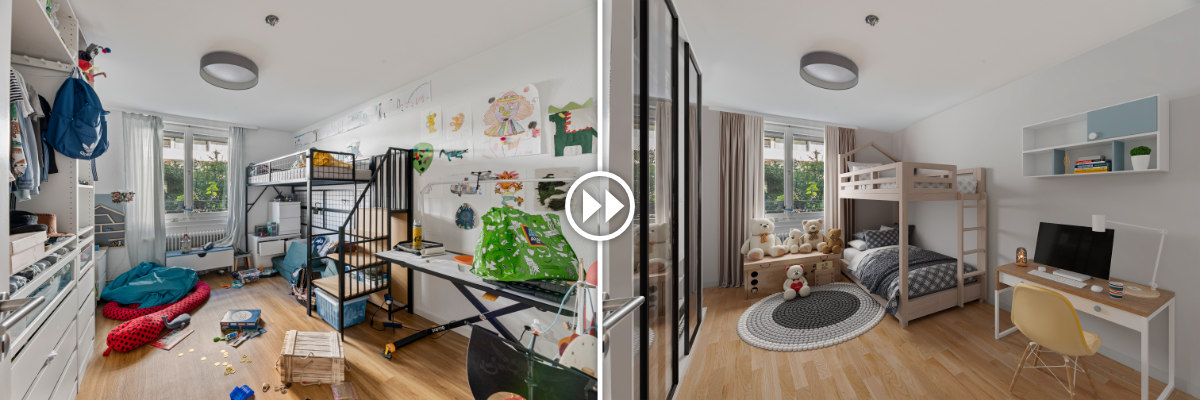
2.3. Digital decluttering and object removal
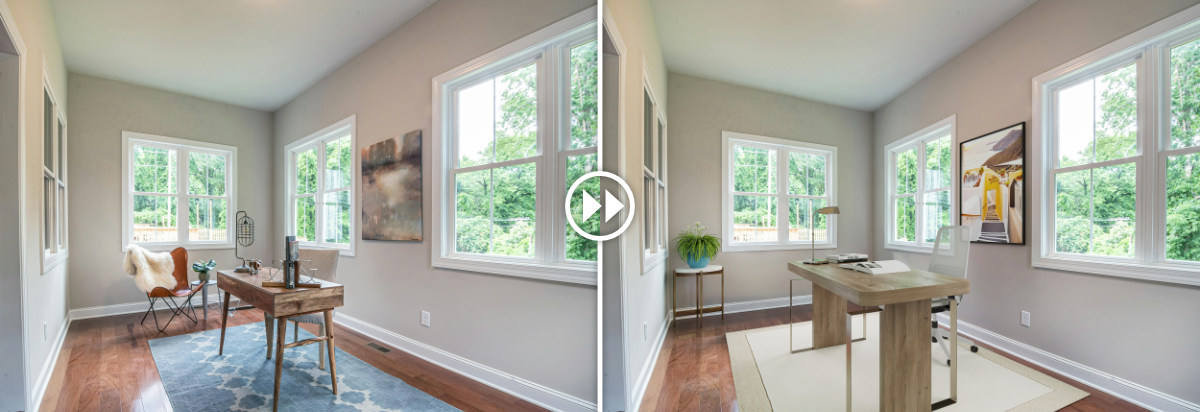
Before new architectural elements can be rendered, existing furniture, worn carpets, or unwanted fixtures must be systematically erased. This requires painstaking manual cloning, background reconstruction, and texture rebuilding behind the removed items. The more cluttered the original space, the higher the labor investment required before the actual design phase begins.
2.4. Turnaround time and revision cycles
Time-to-market is critical in real estate sales. Standard production cycles run between 24 and 48 hours. Express requests requiring turnaround in under 12 hours often incur rush fees. Additionally, robust pricing models include a reasonable revision framework to fine-tune material shades, lighting nuances, or furniture placement without triggering incremental charges.

3. Industry-standard virtual renovation pricing models demystified
Navigating the commercial landscape for digital architectural editing requires understanding how service providers structure their fee schedules.
|
Virtual renovation pricing models in the market | ||
|
Pay-per-photo |
Tiered packages |
Custom enterprise |
|
Ideal for single listing update |
Ideal for full listing promotions |
Ideal for major developments |
|
Fixed per-image cost structure |
Volume discounts & bundled visual services |
Bespoke scope & unlimited revisions |
3.1. Virtual renovation cost per photo (Pay-per-image)
The pay-per-image framework is the most transparent and popular structure for real estate photographers, agents, and boutique brokerages. When analyzing virtual renovation cost per photo, pricing generally breaks down into clear functional tiers based on editing intensity.
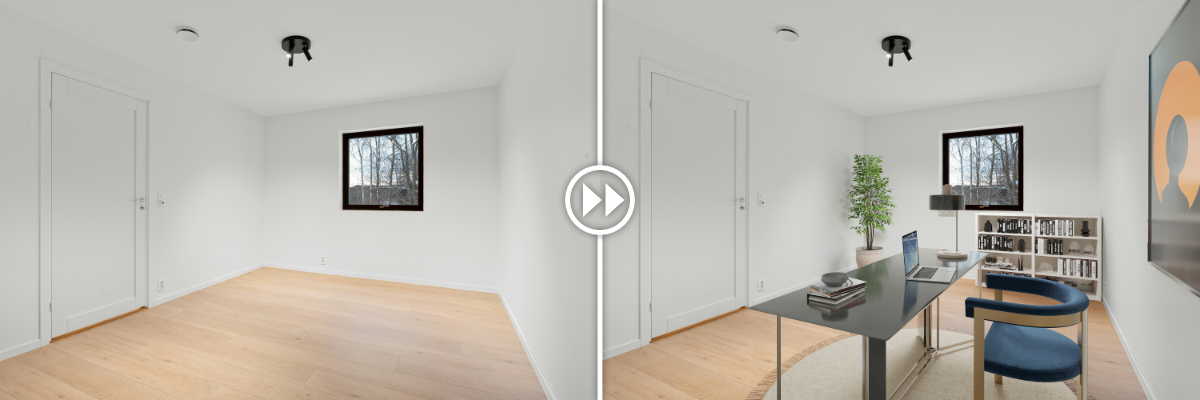
Tier 1: Basic virtual staging ($20 – $40 per photo)
- Placement of modern 3D furniture into empty, broom-clean rooms.
- Minor lighting adjustments and standard color correction.
- Ideal for newly constructed vacant properties.
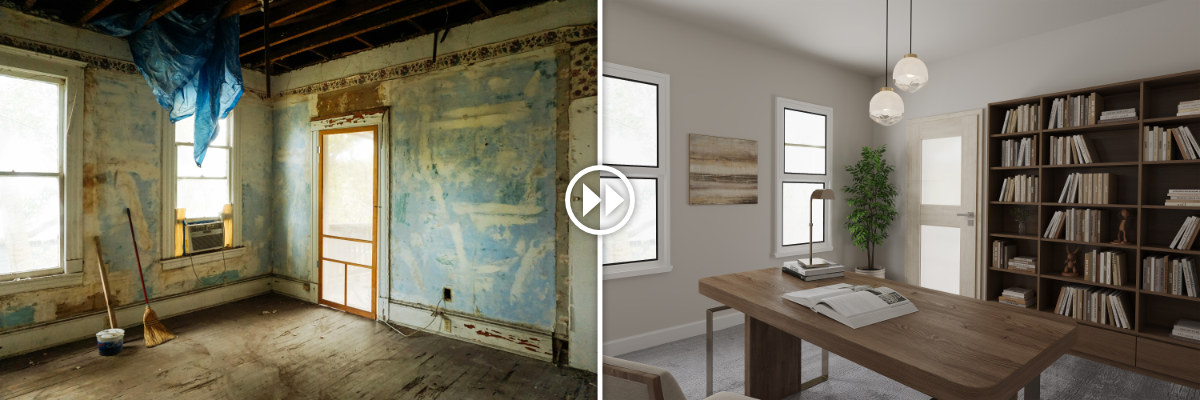
Tier 2: Advanced virtual renovation & decluttering ($40 – $75 per photo)
- Removal of existing furniture, clutter, or outdated decor.
- Replacement of flooring materials (e.g., swapping old carpet for engineered oak).
- Repainting walls, updating basic lighting fixtures, and adding full 3D staging.
- Ideal for lived-in homes, estate sales, and light fixer-uppers.
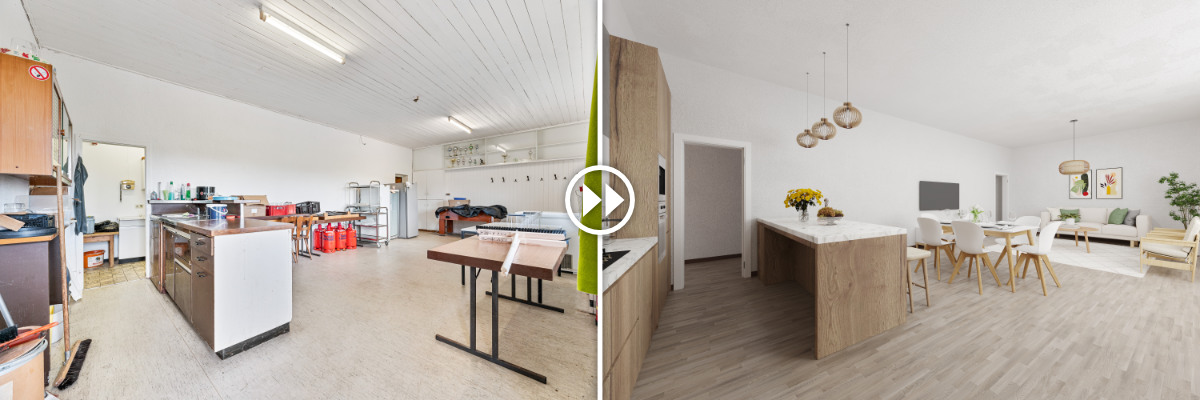
Tier 3: Complex architectural remodeling ($75 – $150+ per photo)
- Complete structural re-imagining: wall removals, kitchen cabinet overhaul, tile redesign, window modifications, and exterior facade remodeling.
- Advanced exterior enhancements (e.g., lawn restoration, pool addition, twilight conversions, patio redesign).
- Ideal for major renovation candidates, distressed sales, and high-end luxury redevelopment.
3.2. Tiered package & subscription models
For high-volume real estate media agencies and large brokerages, fixed monthly packages or bulk image bundles lower the unit cost significantly.
- Listing bundles: A standard 5-to-10 image package combining key spatial overhauls (Kitchen, Living Room, Primary Suite, Exterior) often reduces the effective virtual renovation cost per photo by 15% to 30%.
- Volume retainers: Photographers delivering dozens of property shots monthly often negotiate tiered wholesale rates, allowing them to mark up the final asset for their real estate clients while maintaining healthy profit margins.
3.3. Custom project-based pricing
For commercial developments, historic restorations, or multi-family construction projects, studios work from full architectural blueprints (CAD files). Pricing transitions from a simple photo modification rate to a project-level fee based on architectural rendering scale, animatic requirements, and custom 3D asset creation.
4. The cost of in-house virtual renovation vs. outsourcing to visual media experts
Real estate marketing firms and professional media teams routinely face an operational crossroads: Should visual editing and virtual renovations be executed in-house by an internal designer, or outsourced to dedicated post-production experts?
|
IN-HOUSE PRODUCTION |
OUTSOURCED WORKFLOW (FOTOBER) |
|
High overhead (Salaries, software, hardware) |
Zero overhead (Pay as you scale) |
|
Hardware bottlenecks |
Scalable enterprise capacity |
|
Artist burnout & vacation delays |
Guaranteed 24-48h delivery |
|
Variable quality assurance |
Master-level quality control |
4.1. The hidden costs of in-house virtual renovation
At first glance, hiring a dedicated internal 3D visualization specialist seems to offer maximum control. However, a closer financial audit reveals hidden operational overhead:
1. Talent acquisition and retention: A qualified 3D architectural visualization artist commands an annual salary between $65,000 and $95,000, excluding benefits, taxes, and bonuses.
2. Software licensing infrastructure: High-end rendering tools (3ds Max, V-Ray, Corona Renderer, Adobe Creative Cloud, specialized plugin libraries) incur continuous subscription costs running into thousands of dollars per seat annually.
3. Hardware depreciation: Real-time ray tracing and complex 3D rendering require workstation-class hardware equipped with top-tier GPUs and fast render nodes. Hardware cycles demand costly upgrades every 24 to 36 months.
4. Capacity bottlenecks: Real estate seasonality creates volatile workloads. An internal artist may be overwhelmed during spring listing surges, creating delivery delays, while remaining underutilized during winter lulls.
 Virtual renovation costs aren’t quite manageable for in-house teams.
4.2. Why outsourcing delivers superior ROI
Outsourcing post-production to a high-capacity, specialized visual partner eliminates fixed operational overhead while unlocking enterprise-grade scalability.
- Variable cost structure: Convert high fixed labor costs into predictable per-project operating expenses. You only pay for virtual renovations when you have active listings.
- Turnaround reliability: Global editing teams operate around the clock. Photos shot at 4:00 PM can be processed, virtually renovated, rendered, and delivered directly to your inbox before the next morning's client meeting.
- Access to diverse master libraries: Specialist providers like Fotober maintain expansive digital libraries containing thousands of photorealistic, 3D architectural models, modern textures, and lighting presets that would take years for a single internal artist to build.
5. Case study: How strategic virtual renovation optimized marketing cost for a luxury listing
To illustrate the direct impact of visual media optimization on sales dynamics and yield, let us examine a real-world scenario analyzing a distressed property sale in a high-demand suburban market.
|
OPTION A: PHYSICAL RENOVATION |
OPTION B: FOTOBER VIRTUAL RENOVATION | |
|
Budget |
$48,000 |
$350 (5 photos) |
|
Delay |
10 weeks construction |
24 hours |
|
DOM |
14 days post-renovation |
11 days |
|
TOTAL OUTLAY |
$48,000 + $6,500 carrying |
$350 |
|
NET RETURN SAVED |
$54,150 |
99.3% |
5.1. The property & the dilemma
- Property type: 1970s split-level suburban estate
- As-is appraised value: $650,000
- Potential after-repair value (ARV): $780,000
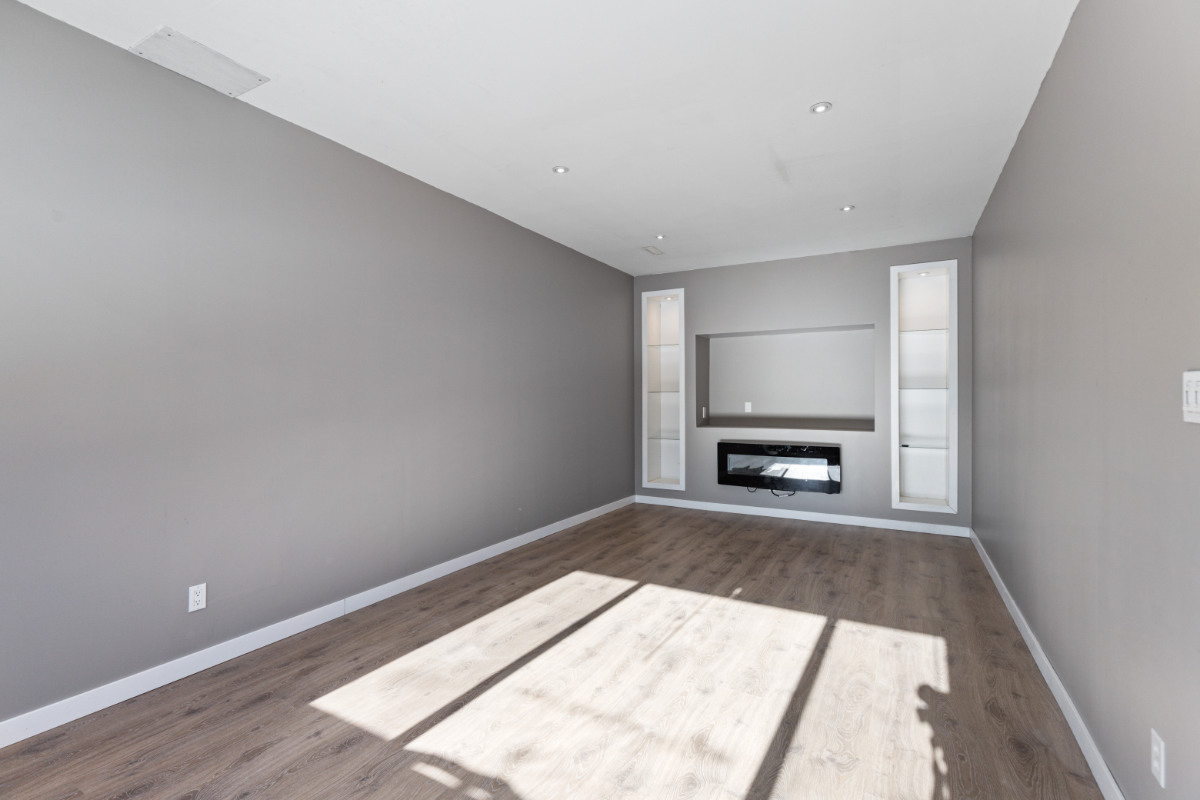
- The problem: The interior featured dark wood paneling, worn shag carpeting, enclosed partition walls blocking natural sunlight, and a dated green kitchen. Buyers on the open market struggled to look past the cosmetic neglect, leading to zero offers over a 45-day initial listing period.
5.2. The financial breakdown: Physical vs. Fotober virtual renovation
The listing agent evaluated two strategic paths to unlock the home’s equity:
Path A: Executing physical cosmetic renovation
- Kitchen cabinetry, countertops, & appliance refresh: $22,000
- Wall removal & structural framing: $8,500
- Hardwood floor installation: $9,500
- Interior paint & fixture modernization: $8,000
- Total physical construction cost: $48,000
- Estimated time delay: 10 Weeks
- Holding costs incurred (Taxes, insurance, mortgage): $6,500
- Total financial exposure: $54,500
Path B: Strategic Fotober virtual renovation campaign
- Media scope: 5 key spatial transformations (Open living area, kitchen, primary suite, exterior deck, master bathroom).
- Fotober services used: Digital wall removal, contemporary kitchen rendering, hardwood floor insertion, digital decluttering, full modern 3D staging, and day-to-twilight exterior editing.
- Average virtual renovation cost per photo: $70
- Total media investment: $350
- Turnaround time: 24 hours
|
Financial comparison summary | |
|
STRATEGY |
TOTAL OUTLAY & HOLDING COSTS |
|
Physical Renovation & Holding |
$54,500 |
|
Fotober Virtual Renovation |
$350 |
|
NET CAPITAL SAVED |
$54,150 |
5.3. The results & marketing execution
The listing agent relaunched the property online featuring side-by-side visual presentations: the original photo paired directly with the Fotober virtually renovated vision. Clear transparency disclosures were included in the MLS notes, alongside an estimated itemized contractor estimate for buyers wishing to execute the changes post-purchase.
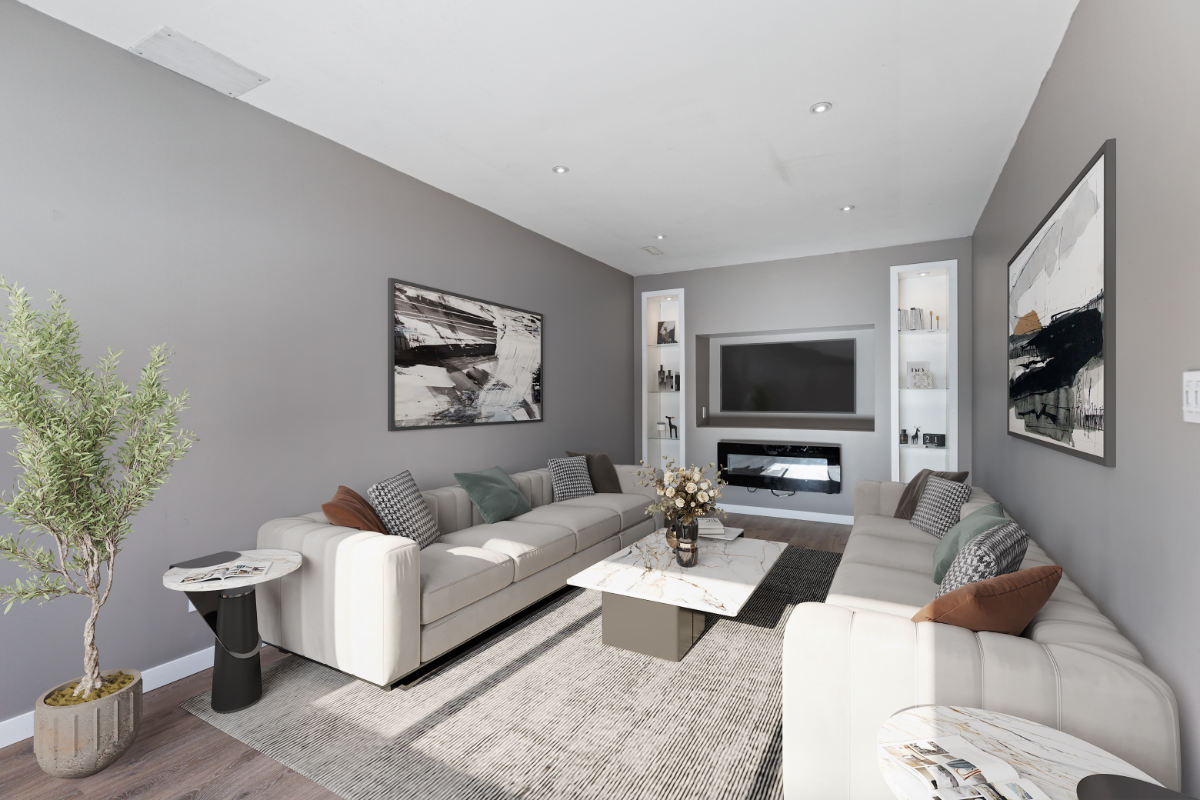
1. Days on market (DOM): The revised visual listing received 3 cash offers within 11 days of visual relaunch.
2. Final sale price: Sold for $735,000, allowing the buyer to acquire the property at full ARV while spending zero seller capital on pre-sale construction.
3. Net marketing ROI: By utilizing Fotober's visual media services, the seller preserved $54,150 in net equity, achieving maximum returns with virtually zero capital risk.
6. Transform your listings with effortless virtual renovation cost from Fotober
In a visual-first real estate economy, prospective buyers form their purchase intent within the first 3 seconds of viewing an online property portal. Presenting dark, outdated, or spatially confusing interiors compromises your listing price and extends days on market.
|
THE FOTOBER ADVANTAGE |
|
Precision Lighting & Shadow Calibration |
Fotober serves as the post-production backbone for top-producing real estate photographers, commercial agencies, brokers, and media companies worldwide. Our studio bridges high-end architectural aesthetics with advanced digital rendering technology to deliver photorealistic spatial edits that command buyer attention.
This is why leading real estate professionals partner with Fotober:
- Uncompromising realism: Our senior visual artists master light physics, material shaders, and focal geometry. The result? Virtual renovations that blend seamlessly with actual environmental photography without looking artificial.
- Predictable, transparent pricing: We offer competitive, scalable virtual renovation cost-per-photo pricing tier structures, allowing you to control production margins while delivering incredible visual value to your clients.
- Rapid operational scale: Whether you need a single residential space edited or an entire commercial portfolio virtually staged, our post-production engine scales effortlessly to meet your deadlines, delivering polished assets within 24 to 48 hours.
- Comprehensive media ecosystem: From spatial decluttering and virtual staging to complex architectural structural modifications, twilight enhancement, and aerial retouching, Fotober provides an end-to-end media suite for real estate marketing.
Ready to elevate your visual marketing strategy and accelerate listing conversion rates? Discover how Fotober’s virtual renovation solutions can transform your real estate media workflow today.
7. Frequently asked questions about virtual renovation pricing
To clarify common industry questions regarding service pricing, scope, and technical execution of virtual renovation, here is a breakdown of frequently asked questions:
Q1: What is the typical turnaround time for a virtual renovation order?
Standard delivery across our virtual renovation workflows is 24 to 48 hours. For large volume orders or complex commercial architectural modifications, project schedules are established during initial order scoping. Rush turnaround options are available upon request.
Q2: What input files do I need to provide for high-quality virtual renovations?
For optimal rendering accuracy, we recommend submitting high-resolution, uncompressed base photos (RAW, TIFF, or high-quality JPEG) shot on a wide-angle lens with proper exposure bracketing. If you have floor plans or architectural CAD drawings, submitting them alongside the source photos helps our artists verify exact spatial measurements and ceiling heights.
Q3: How does the virtual renovation cost per photo change if a room requires extensive decluttering first?
When an image requires heavy item removal, such as removing old furniture, packed storage boxes, or damaged fixtures, the shot requires additional background restoration before 3D elements can be placed. This moves the photo from a basic staging tier to our advanced virtual renovation tier ($40 – $75 per photo). Transparent quotes are always provided before production begins.
Q4: Is virtual staging legal in real estate marketing, or does it risk misleading buyers?
Virtual renovation is fully compliant with real estate advertising standards provided it is executed transparently. We advise agents to clearly label virtually renovated images in MLS listings (e.g., "Virtually Renovated Visualization") and include the original "As-Is" photo alongside the edited render. This sets accurate buyer expectations while highlighting the property's potential.
Q5: Can I request specific furniture styles or paint colors in the virtual render?
Yes. Our workflow allows you to select specific interior design aesthetics, ranging from Mid-Century Modern and Urban Industrial to Contemporary Minimalist or Scandinavian Coastal. You can also specify exact paint colors, flooring materials, or kitchen appliance finishes to match your property's vision.
8. Conclusion
Understanding virtual renovation cost is more than an exercise in budgeting; it is about leveraging cost-effective visual strategies to maximize property value. By shifting spatial transformation from physical construction to digital rendering, real estate professionals can showcase maximum potential, cut marketing expenses, and close transactions faster.
Whether you are an architectural photographer seeking a seamless post-production engine or a broker aiming to unlock value in distressed listings, partnering with visual media specialists like Fotober ensures your properties are presented with photorealistic precision.
Follow us on social media to stay updated with the latest staging and rendering strategies in the property market.
- Facebook: fotobermedia.co
- YouTube: Fotober
- TikTok: @fotober
- Instagram: fotober_media.
Related posts

Cincinnati Housing Market 2026: Prices, Trends, and What It Means for Buyers, Sellers, and Investors
October 20, 2026

Modern Luxe Interior Design: Elements, Style Guide and How to Stage It
October 10, 2026

Minimalist Interior Design: Characteristics, Style Guide, and Staging
October 8, 2026

Coastal Interior Design: Style Definition & Staging Guide
September 30, 2026
