




Types of Houses in New York: Top Styles that Buyers Seek in 2026

Share:
Table of Contents
New York City is a living architectural museum and a fast-paced vertical jungle. Here, real estate is far more than just brick, mortar, or square footage; it serves as the ultimate expression of one's lifestyle and social status. From the historic, cobblestone streets of Brooklyn to the soaring glass towers that constantly redefine Manhattan’s iconic skyline, the sheer diversity of types of houses in New York is unmatched anywhere else in the world.
In this comprehensive guide, we will take a deep dive into the defining architectural styles and dynamic lifestyles that shape New York living. Furthermore, we will discover how premium photo and video editing solutions can effortlessly transform a standard property presentation into a highly coveted masterpiece that attracts elite buyers and closes deals faster.
1. Where do many types of houses in New York stem from
To truly understand New York life, one must look at how geographic constraints have forced the city to grow upward rather than outward. In NYC, "vertical living" is not just a structural necessity; it is a profound cultural phenomenon. Unlike suburban environments where life expands horizontally across sprawling lawns, New Yorkers trade acreage for altitude and immediate proximity to urban centers. This high-density architecture fosters a fast-paced, deeply integrated lifestyle. When you live in a high-rise or a mid-century walk-up, the vibrant streets below naturally become an extension of your own living room, creating a unique urban intimacy.
Furthermore, the architectural fabric changes dramatically from one neighborhood to the next, defining the social vibe of each distinct micro-market. Walking through SoHo reveals a chic, industrial aesthetic dominated by mid-19th-century cast-iron facades and wide-open artists' lofts. Cross over to the Upper West Side or Brooklyn Heights, and the energy shifts instantly to tree-lined streets framed by stately, pre-war buildings and historic townhouses. Each neighborhood's architectural identity attracts a specific demographic, meaning that choosing a home among many types of houses in New York is as much about selecting a community culture as it is about picking a floor plan.
 House types in New York revolve around apartment designs due to the state’s inherent verticality.
Inside these residences, specific architectural elements have achieved legendary status among locals. New Yorkers actively obsess over historical features like raw exposed brick walls, towering twelve-foot ceilings, and massive oversized windows that flood compact urban spaces with natural light. Even utilitarian structures, like the classic black iron fire escapes climbing up brick exteriors, have become romanticized symbols of the city. Ultimately, New York architecture tells a continuous story of structural reinvention, where old industrial spaces become multi-million-dollar homes, and historic charm gracefully coexists with cutting-edge luxury.
2. Navigating the market: Popular types of houses in New York
The New York real estate market can be incredibly overwhelming for the uninitiated. When people discuss the diverse types of houses in New York, they are rarely talking about detached, single-family suburban homes with white picket fences. Instead, they are referring to a complex matrix of historical row houses, co-operative apartments, and converted industrial spaces.
To help you seamlessly navigate this intricate property landscape, we have broken down the five most iconic and popular types of apartments in NYC that define the five boroughs.
- Townhouses & brownstones: Multi-story historic row houses featuring classic stone stoops and private backyards.
- Condos & co-ops: The standard for apartment living, ranging from privately owned units (Condos) to corporate share-ownership (Co-ops) with full-service amenities.
- Industrial lofts: Converted former factories featuring massive open floor plans, exposed brick, and soaring ceilings.
- Walk-ups & studios: Budget-friendly, compact single-room units located in low-rise buildings without elevators.
- Penthouses & luxury high-rises: Exclusive, elite top-floor residences offering panoramic skyline views and white-glove services.
2.1. Townhouses and Brownstones
Few architectural styles evoke the romance of classic New York living quite like the brownstone. Technically a specific type of townhouse, true brownstones are multi-story row houses built in the late 19th century, instantly recognizable by their distinctive reddish-brown sandstone facades.
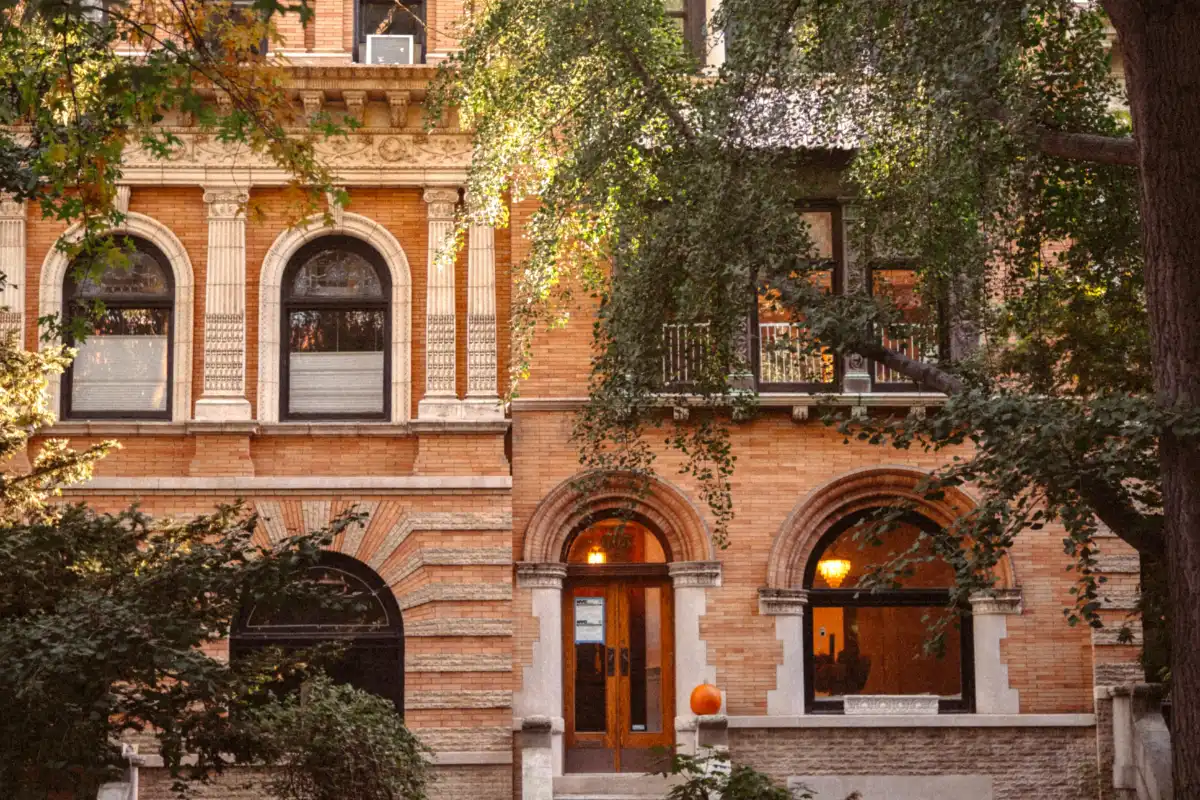 Brownstone houses are the trademark types of apartments in NYC and are featured heavily in pop culture’s representations.
- Key features: These properties typically span three to five stories and feature grand double-door entryways accessed via an outdoor stone staircase known as a "stoop." Inside, you will find preserved historical details, including original hardwood floors, ornate plaster moldings, carved marble fireplaces, and soaring pocket doors. Unlike most NYC residences, townhouses often include the ultimate luxury: a private backyard garden.
- The lifestyle: Townhouse living offers unparalleled privacy, prestigious historical charm, and substantial square footage. These types of houses in New York are highly sought after by affluent families and individuals who desire a quiet, residential neighborhood feel. You will find the most iconic examples lining the leafy, tree-filled streets of Brooklyn Heights, Park Slope, and Manhattan's Upper West Side.
2.2. Condos vs. co-ops (Apartment living)
Apartments form the absolute backbone of New York City housing, but they are split into two distinctly different legal and structural categories: Condominiums (Condos) and Co-operatives (Co-ops).
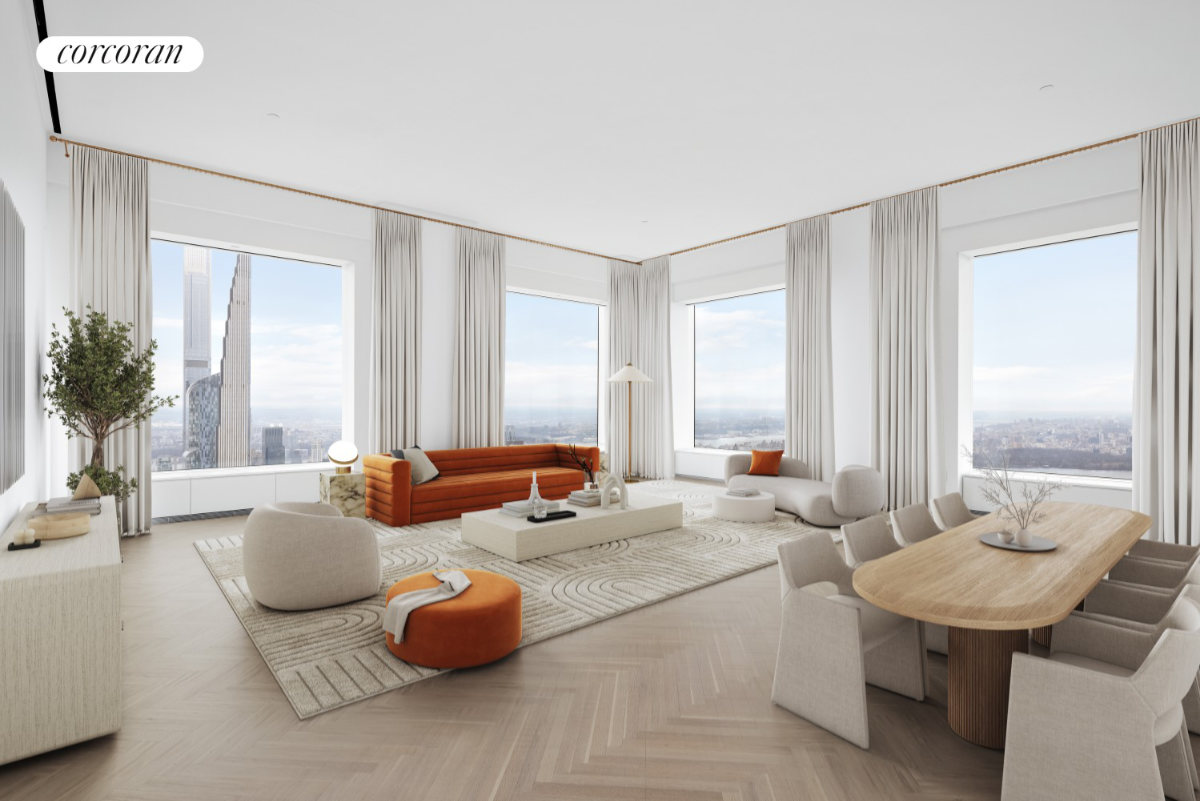 Condominiums represent the upper-class standard of New York residential spaces.
- The key distinctions: When you purchase a condominium, you own real property, the specific air space inside your apartment walls, along with a shared percentage of the building's common areas. A co-op, however, functions entirely differently. In a co-op, a corporation owns the entire building, and buyers purchase "shares" in that corporation, which grants them a proprietary lease to occupy a specific unit. Co-ops are famous for their strict board interviews and financial requirements, often demanding massive down payments and strict subletting rules.
- The lifestyle: Despite the administrative differences, both options deliver a seamless "lock-and-leave" lifestyle. They typically feature premium full-service amenities, including 24/7 uniformed doormen, package concierge services, modern fitness centers, resident lounges, and landscaped rooftop decks with panoramic views. This setup is perfect for busy corporate professionals and international buyers who value security, convenience, and zero exterior maintenance.
2.3. Industrial lofts
Born out of the manufacturing decline of the mid-20th century, industrial lofts represent the pinnacle of New York's artistic and trendy counter-culture. These spaces were originally commercial factories, warehouses, and textile mills that were later converted into residential spaces.
 Industrial lofts display a grittier side of New York.
- Key features: Lofts are defined by their massive, uninterrupted open floor plans, soaring twelve-to-fifteen-foot ceilings, and enormous gridded factory windows. Structural elements are left completely raw and exposed, featuring weathered brick walls, heavy timber support beams, and industrial concrete floors or exposed steel ductwork.
- The lifestyle: Loft living is highly flexible and appeals directly to artists, designers, entrepreneurs, and creative professionals who reject the traditional room-by-room layout. Because there are few permanent walls, residents can easily customize the space to blend their living, working, and gallery environments into one. This style is deeply synonymous with fashionable downtown neighborhoods like SoHo, Tribeca, NoHo, and DUMBO in Brooklyn.
2.4. Walk-ups and studios
For the vast majority of young New Yorkers, a walk-up apartment or an efficient studio apartment serves as their official introduction to the city.
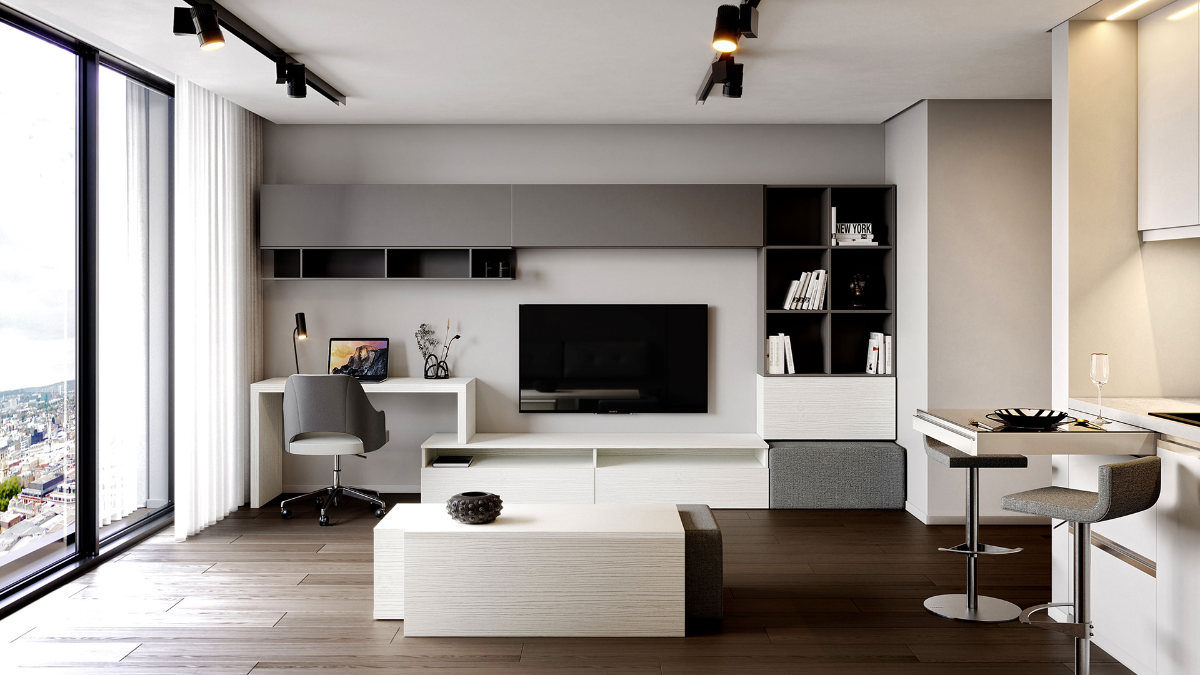 Studio apartments are the ideal choice for recent New York settlers.
- Key features: A walk-up refers to any residential apartment building that lacks an elevator, typically capped at five or six stories due to historic building codes. Within these buildings, you will frequently find studio apartments: compact, single-room units where the living room, bedroom, and kitchen are integrated into a single cohesive living space, paired with a private bathroom.
- The lifestyle: Walk-ups and studios offer a budget-friendly, minimalist lifestyle. Residents trade square footage and luxury amenities for affordable rents and unbeatable locations in vibrant, central neighborhoods. This lifestyle is fast-paced and highly active; because this type of apartment floor plan often offers limited interior space, the surrounding neighborhood's coffee shops, bars, and public parks effectively become your living area. They are incredibly popular among students, recent graduates, and young professionals.
2.5. Penthouses and luxury high-rises
Perched high above the noise and chaos of the city streets, penthouses and luxury high-rise residences are two types of houses in New York that represent the absolute pinnacle of global real estate luxury.
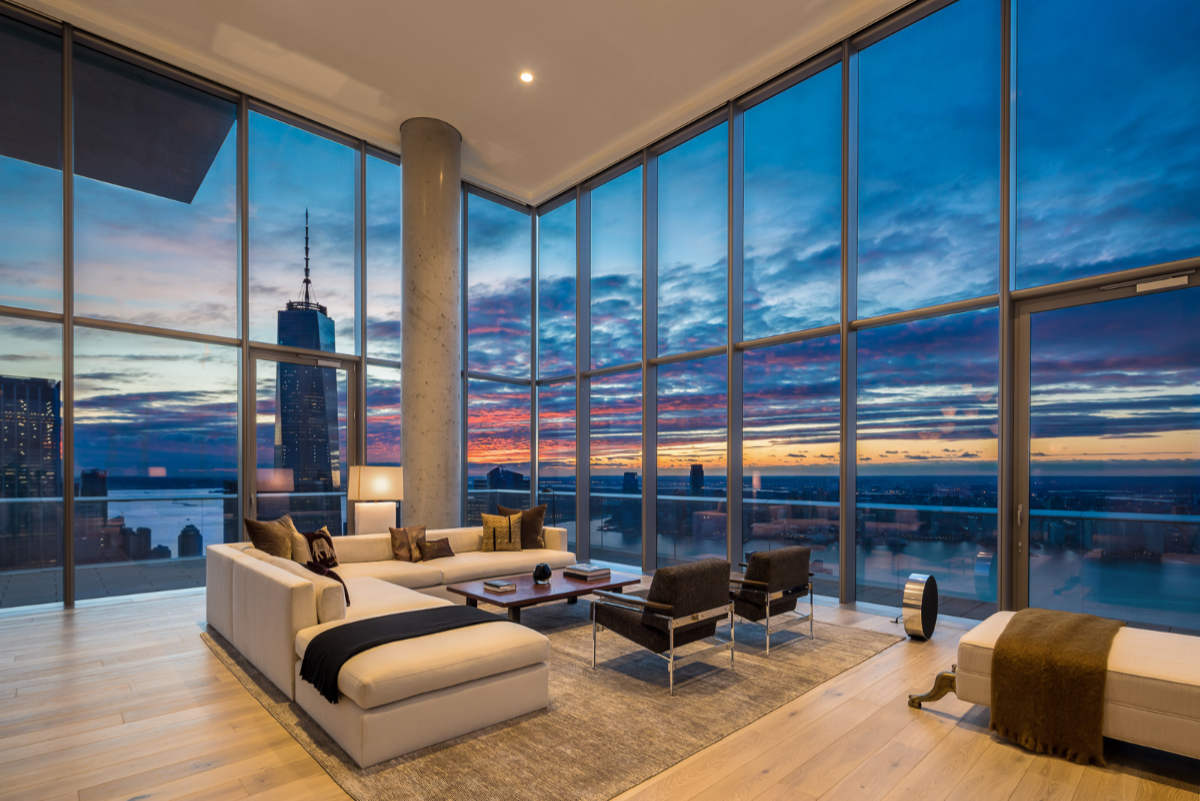 Luxury high-rises really put the homeowners above the rest of the city.
- Key features: Situated on the topmost floors of skyscrapers, penthouses feature expansive floor plans, private elevator access, ultra-premium finishes, and wrap-around floor-to-ceiling glass walls. They frequently offer expansive, private outdoor terraces that provide breathtaking, unobstructed views of the Manhattan skyline, Central Park, or the Hudson River.
- The lifestyle: This is a lifestyle of absolute exclusivity, privacy, and ultra-luxury. Residents enjoy elite white-glove services, including private chefs, private spa facilities, and around-the-clock security. Located along Billionaires' Row in Midtown or commanding the skylines of Hudson Yards and the Financial District, these properties cater to ultra-high-net-worth individuals, global executives, and elite real estate investors.
3. Standing out in a crowded market: The power of visuals in NYC real estate marketing
In the high-stakes world of New York City real estate, the market moves at a breakneck pace. Prospective buyers and renters do not start their search by attending open houses; instead, they scroll through digital platforms like StreetEasy, Zillow, and Compass. With thousands of active properties competing for attention simultaneously, agents have mere fractions of a second to capture a user's attention. This is where the "first impression" dilemma becomes critical. A property accompanied by amateur, poorly lit, or blurry smartphone photos is instantly swiped away, completely buried under a mountain of superior listings. In NYC, premium real estate photo and video assets are not optional luxuries; they are the essential digital storefront that determines whether a listing thrives or fails.
 New York is among the most premium real estate markets, reserved for “old-money” buyers with a deep appreciation for exclusivity and legacy.
Furthermore, New York's iconic architecture presents unique spatial and structural obstacles that standard photography simply cannot handle. Many highly sought-after types of houses in New York, such as historic brownstones, narrow townhouses, or pre-war walk-ups, feature deeply vertical layouts, long corridors, or limited natural light exposure due to tightly packed neighboring buildings. Conversely, modern high-rises present intense lighting contrasts, where the blinding exterior sunlight reflecting off the Manhattan skyline clashes with interior ambient lighting. Professional real estate media techniques are mandatory to accurately portray these spaces. They allow tight studios to feel intentionally cozy rather than suffocatingly cramped, and they ensure narrow architectural layouts appear open, bright, and inviting.
Finally, elite NYC real estate marketing is never just about selling physical square footage; it is about selling an aspiration, a status, and a lifestyle. Buyers are not just purchasing a bedroom; they are buying a morning view of the Chrysler Building, the golden hour light reflecting off exposed brick, or the feeling of stepping out onto a private SoHo terrace. Cinematic video walkthroughs and short-form social media reels allow out-of-state and international investors to experience this lifestyle emotionally from afar. High-impact video content traces the flow of energy through an apartment, capturing the subtle play of natural light across a room and emphasizing premium finishes. By elevating raw spaces into compelling visual stories, premium media transforms a standard property view into an emotional connection, driving higher engagement and accelerating closing times.
4. Transforming raw imagery into premium listings: The Fotober advantage
To capture the true value of unique types of houses in New York, agents need flawless media execution. This is where Fotober steps in, acting as the ultimate backend creative partner for ambitious agents. Through professional real estate photo editing, Fotober seamlessly addresses the city's unique architectural challenges. Advanced HDR enhancement perfectly balances the intense contrast between bright skyline views outside and interior spaces, while expert object removal cleans up distracting street clutter outside historic brownstones. Furthermore, their high-end virtual staging services digitally furnish empty NYC lofts, helping buyers visualize a property's full potential while saving agents thousands of dollars in physical staging costs.
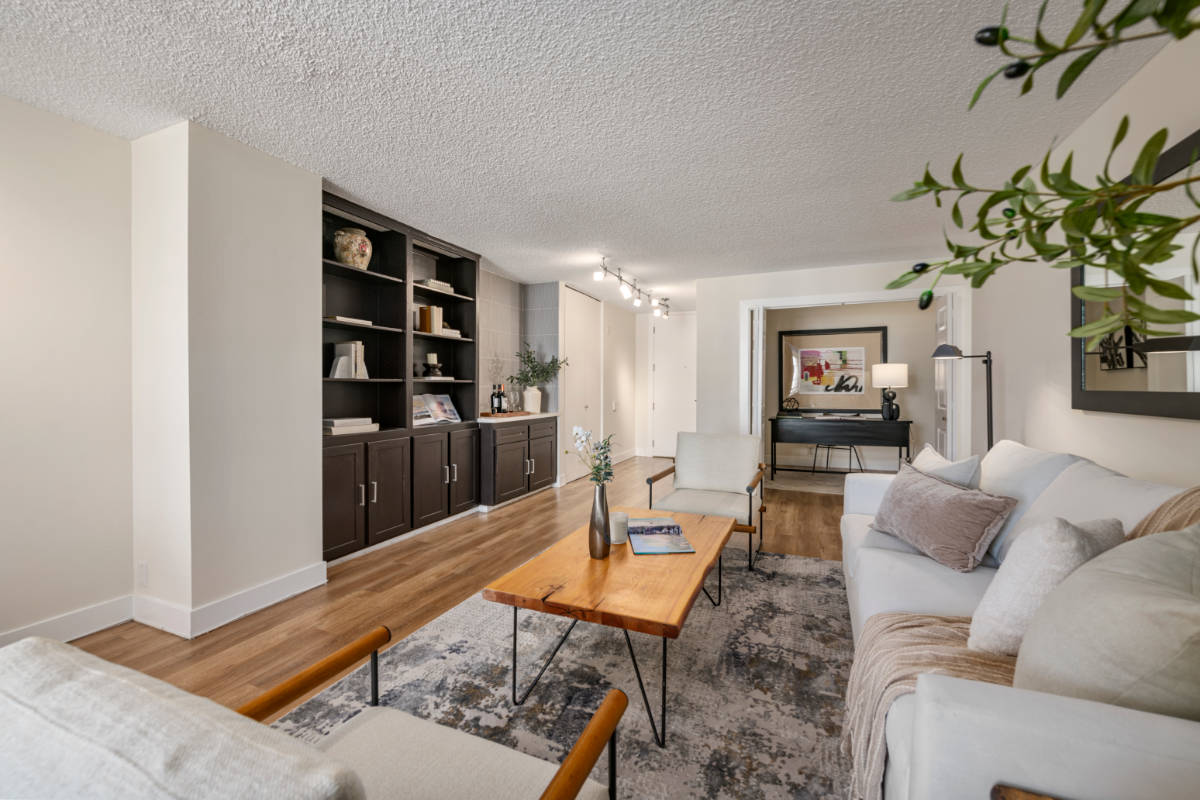 Fotober can deliver the refined New York aesthetics to bring every property listing to the premium standard that meets elite buyers’ demand.
Beyond photography, Fotober’s dynamic video editing services transform raw footage into captivating digital experiences. From cinematic property tours to snappy, high-engagement TikToks and Instagram Reels, they craft video content tailored to the modern buyer's short attention span. With rapid turnaround times, Fotober allows New York agents to list properties almost immediately. In a hyper-competitive market where speed is everything, this efficiency ensures agents beat the competition, command top dollar, and effortlessly elevate their premium personal brand.
5. Conclusion
Navigating the diverse array of types of houses in New York is only the first step toward real estate success. In a fast-moving digital market where first impressions happen on a screen, presenting these unique architectural spaces flawlessly is what ultimately closes the deal. Don't let exceptional properties get lost in the noise due to lackluster media. Partner with Fotober today to elevate your real estate photography and videography. Let our expert editing team transform your raw media into high-converting, premium listings that captivate elite buyers and accelerate your sales velocity.
Find us on social media to gain more useful insights and in-depth analysis on the US real estate market and see our latest editing projects!
- Facebook: fotobermedia.co
- YouTube: Fotober
- TikTok: @fotober
- Instagram: fotober_media.
Related posts

Modern Luxe Interior Design: Elements, Style Guide and How to Stage It
October 10, 2026

Minimalist Interior Design: Characteristics, Style Guide, and Staging
October 8, 2026

Coastal Interior Design: Style Definition & Staging Guide
September 30, 2026

Contemporary Interior Design: Key Elements and How to Stage This Style
September 30, 2026
