




360 Virtual Tours vs 3D Virtual Tours: Make Your Home Omnipresent

Share:
Table of Contents
- 1. Demystifying the digital twin: What is a 360 virtual tour?
- 2. Elevating reality: Understanding real estate 3D virtual tours
- 3. 360 virtual tours vs 3D virtual tours: What and when to use each option
- 4. Why the quality of 360 virtual tours vs 3D virtual tours hinges on post-production
- 5. The strategic move: Why outsourcing virtual tour editing is a game-changer
- 6. Fotober: Your premier partner in perfecting real estate digital assets
- 7. Conclusion
In the modern real estate landscape, the first showing doesn't happen during an open house on a Sunday afternoon. It happens on a screen, be it a smartphone on a subway commute, a laptop at a kitchen table, or a tablet in a designer’s studio. As architectural storytellers, photographers, and real estate professionals, our job is no longer just to show a property, but to transport a buyer into it. To achieve this, the industry has embraced immersive digital media. However, a common point of confusion often arises among clients and creators alike: 360 virtual tours vs 3D virtual tours. While these terms are frequently used interchangeably by marketers, they represent fundamentally different technologies, user experiences, and production pipelines.
Whether you are a real estate agent looking to elevate your listings, a photographer wanting to expand your service catalog, or an architect showcasing a newly built marvel, understanding the nuances of real estate 3D virtual tours versus 360-degree panoramas is crucial. Let us dive deep into the technical, aesthetic, and practical differences between these two digital assets, and discover how to leverage them to maximize your ROI.
1. Demystifying the digital twin: What is a 360 virtual tour?
To appreciate the difference, we must first look at the mechanics of the 360-degree virtual tour. At its core, a 360 virtual tour is a collection of high-resolution panoramic photographs stitched together to create a spherical view from a fixed point.
|
Camera position (Static node) |
Views 360° around, up, and down |
|
Connected to other nodes via "hotspots" (e.g., click to go to Kitchen) |
1.1. The technology behind 360 tours
A 360 tour is created using a specialized 360-degree camera (such as a Ricoh Theta, Insta360, or a DSLR on a panoramic tripod head). The camera captures multiple angles from a single physical spot (a "node"). In post-production, these images are stitched together, removing the tripod and correcting spherical distortion.
Users navigate these tours by clicking on interactive "hotspots" or arrows that warp them from one static viewpoint to another.
1.2. Pros of 360 virtual tours
- Cost-effective and fast: Capturing a 360 tour requires less specialized equipment and can often be completed in under 30 minutes for a standard three-bedroom home.
- High visual quality at lower costs: Because it relies on standard photography principles, you can achieve stunning dynamic range and color accuracy, especially when utilizing DSLR cameras with HDR (High Dynamic Range) bracketed exposures.
- Lightweight and highly compatible: These tours use standard web protocols, making them incredibly fast to load on mobile browsers and older devices.
1.3. Cons of 360 virtual tours
- Lack of spatial depth: A 360 tour is essentially a series of flat, curved photos. The user cannot "walk" between rooms; they are simply teleported from one photo bubble to another.
- No structural modeling: You cannot view the property as a whole (such as a "dollhouse" view) or take accurate spatial measurements.
2. Elevating reality: Understanding real estate 3D virtual tours
While a 360 tour offers a visual wrap-around, a real estate 3D virtual tour offers true spatial immersion. It does not just show the space; it maps it.
[LiDAR / Depth sensors] + [HDR cameras] -> [3D mesh / Point cloud] + [High-res texture imagery] -> [Photorealistic, dimensionally accurate 3D virtual twin]
2.1. The technology behind 3D tours
Between 360 virtual tours vs 3D virtual tours, true 3D virtual tours utilize depth-sensing technology, such as infrared sensors, structured light, or LiDAR (Light Detection and Ranging), alongside traditional high-resolution cameras. The gold standard for this technology is Matterport, though platforms like MetaReal and Cupix have also made massive strides.
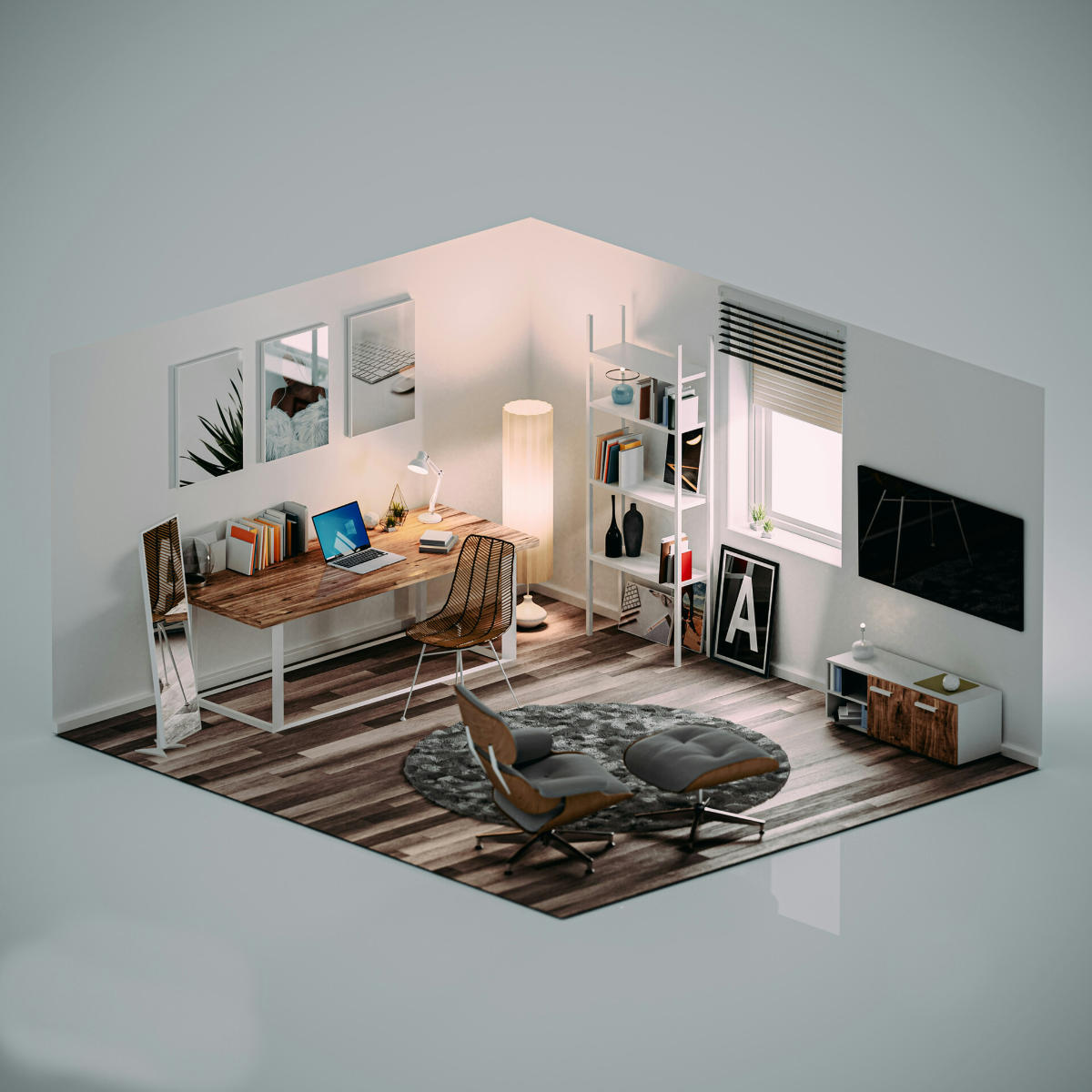 3D virtual tours provide a simulated copy of your home, allowing viewers to move freely in the space.
As the photographer moves through the property, the camera projects invisible beams to calculate the exact distance to walls, furniture, and ceilings. This data is compiled into a "polygon mesh" or "point cloud," creating a dimensionally accurate digital twin of the property.
2.2. Key features of real estate 3D virtual tours
The dollhouse view: This signature feature allows users to rotate, tilt, and view the entire property layout as a 3D miniature model, stripped of the roof. It provides an immediate, intuitive grasp of the spatial flow and architectural layout.
Fluid navigation: Instead of jumping abruptly from node to node, users experience a smooth, walking-like transition through the space.
Measurement tools: Because the underlying data is a 3D rendering model, buyers, interior designers, and contractors can measure walls, windows, and floors with up to 99% accuracy directly within the tour.
2.3. Cons of real estate 3D virtual tours
- Higher equipment and hosting costs: True 3D cameras (like the Matterport Pro2 or Pro3) are significant investments. Additionally, hosting these tours requires specialized cloud platforms with recurring subscription fees.
- Complex capture process: Capturing a 3D scan requires precise planning. Moving objects, mirrors, sunlight, and pets can easily confuse the sensors, resulting in "scan alignment errors" that require on-site troubleshooting.
3. 360 virtual tours vs 3D virtual tours: What and when to use each option
To help you make the right choice for your next architectural project or listing, let's break down the key differences across essential performance metrics.
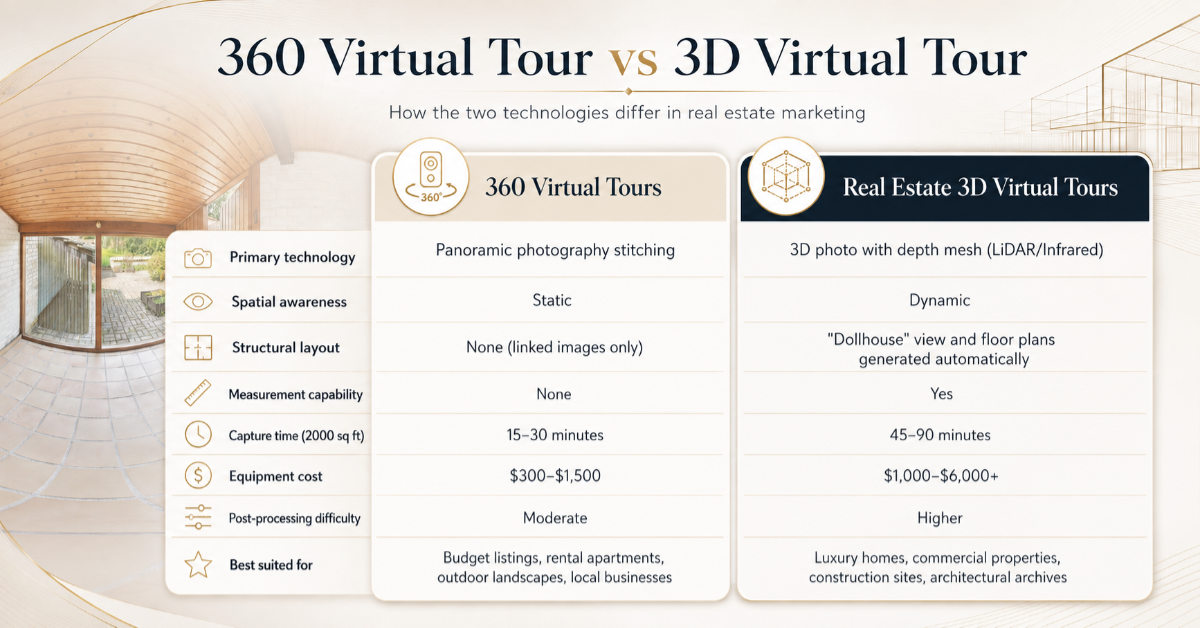 360 virtual tours and 3D virtual tours cater to different types of customers.
|
Feature / Metric |
360 virtual tours |
Real estate 3D virtual tours |
|
Primary technology |
Panoramic photography stitching |
Photographic imagery mapped over a 3D depth mesh (LiDAR/Infrared) |
|
Spatial awareness |
Static. Viewer looks around from fixed points. |
Dynamic. Viewer navigates through space with true depth perception. |
|
Structural layout |
None (linked images only) |
"Dollhouse" view and 2D floor plans generated automatically |
|
Measurement capability |
None |
Yes (highly accurate spatial measurements) |
|
Capture time (2000 sq ft) |
15–30 minutes |
45–90 minutes |
|
Equipment cost |
Low to moderate ($300-$1,500) |
Moderate to high ($1,000-$6,000+) |
|
Post-processing difficulty |
Moderate (stitching, color correction) |
High (mesh alignment, window reflections, color balancing) |
|
Best suited for |
Budget listings, rental apartments, outdoor landscapes, local businesses |
Luxury homes, commercial properties, construction sites, architectural archives |
4. Why the quality of 360 virtual tours vs 3D virtual tours hinges on post-production
As photographers, videographers, and architectural purists, we know that the camera body is only half the equation. The magic and the value of any virtual tour are unlocked during the post-production stage. Many believe that because 3D cameras use automated cloud processing, they are "plug-and-play." This is a costly misconception. Raw data from virtual tours often suffers from several critical visual flaws:
4.1. Spatial and stitching errors
In 360 tours, stitch lines can cut through doors, warp countertops, and make straight walls look bent. In 3D scans, mirrors, windows, and highly reflective surfaces (like polished concrete or stainless steel) confuse the infrared sensors, resulting in black holes, warped geometries, or ghosting artifacts.
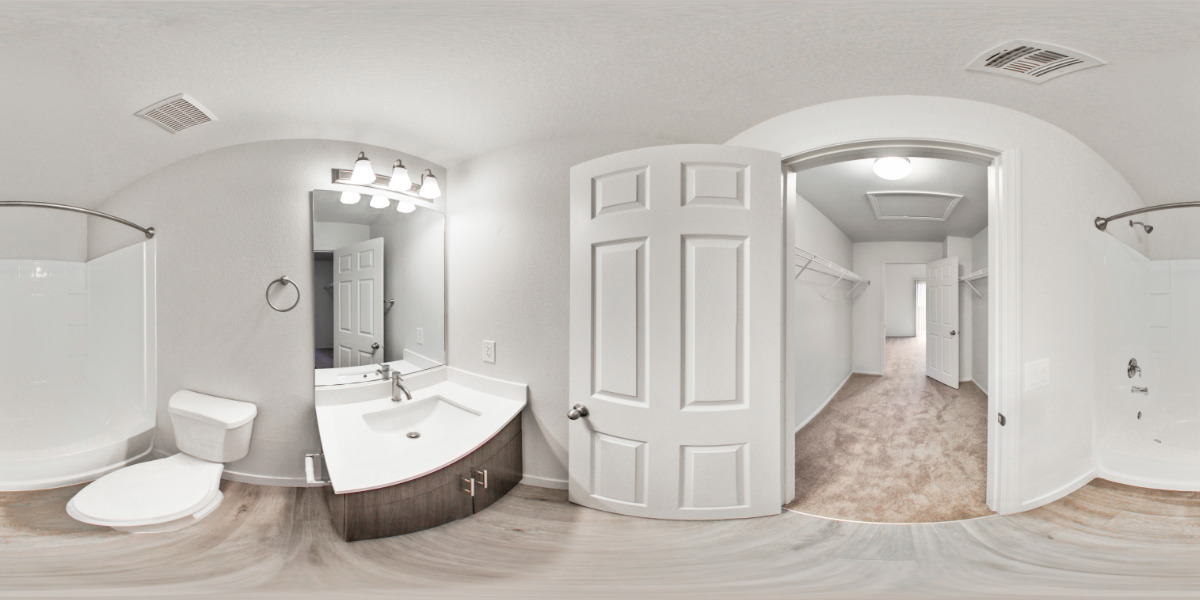 Creating a seamless 360 photo for virtual tours usually requires manual fine adjustment.
4.2. High contrast and color discrepancies
Properties often have mixed lighting: warm interior lamps, cool sunlight streaming through windows, and fluorescent under-cabinet lights. Without professional color correction in 360 photo editing, a virtual tour can feel disjointed, with one room looking cozy and warm, and the adjacent hallway looking cold and clinical.
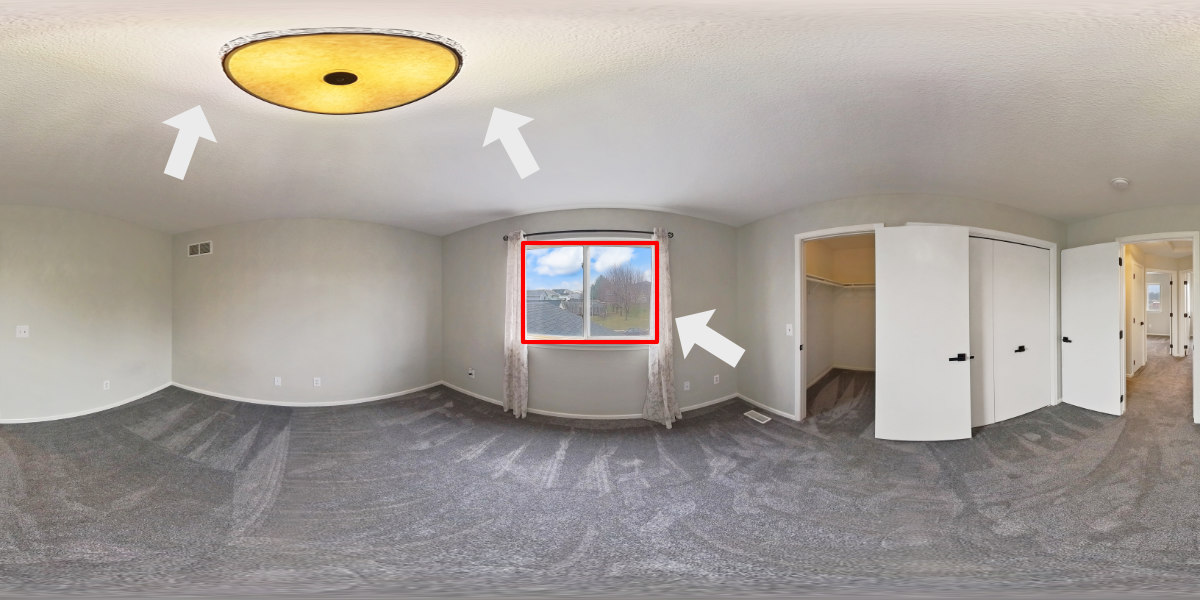 360° photos suffer from the same wildly uneven exposure that normal RAW real estate photos have.
4.3. Clutter and virtual staging
An empty home can feel cold and uninviting, while a lived-in home might look cluttered. Transforming these spaces requires specialized virtual staging, adding photorealistic 3D furniture, art, and decor directly into the 3D mesh or 360 panoramas to help buyers visualize the property's potential.
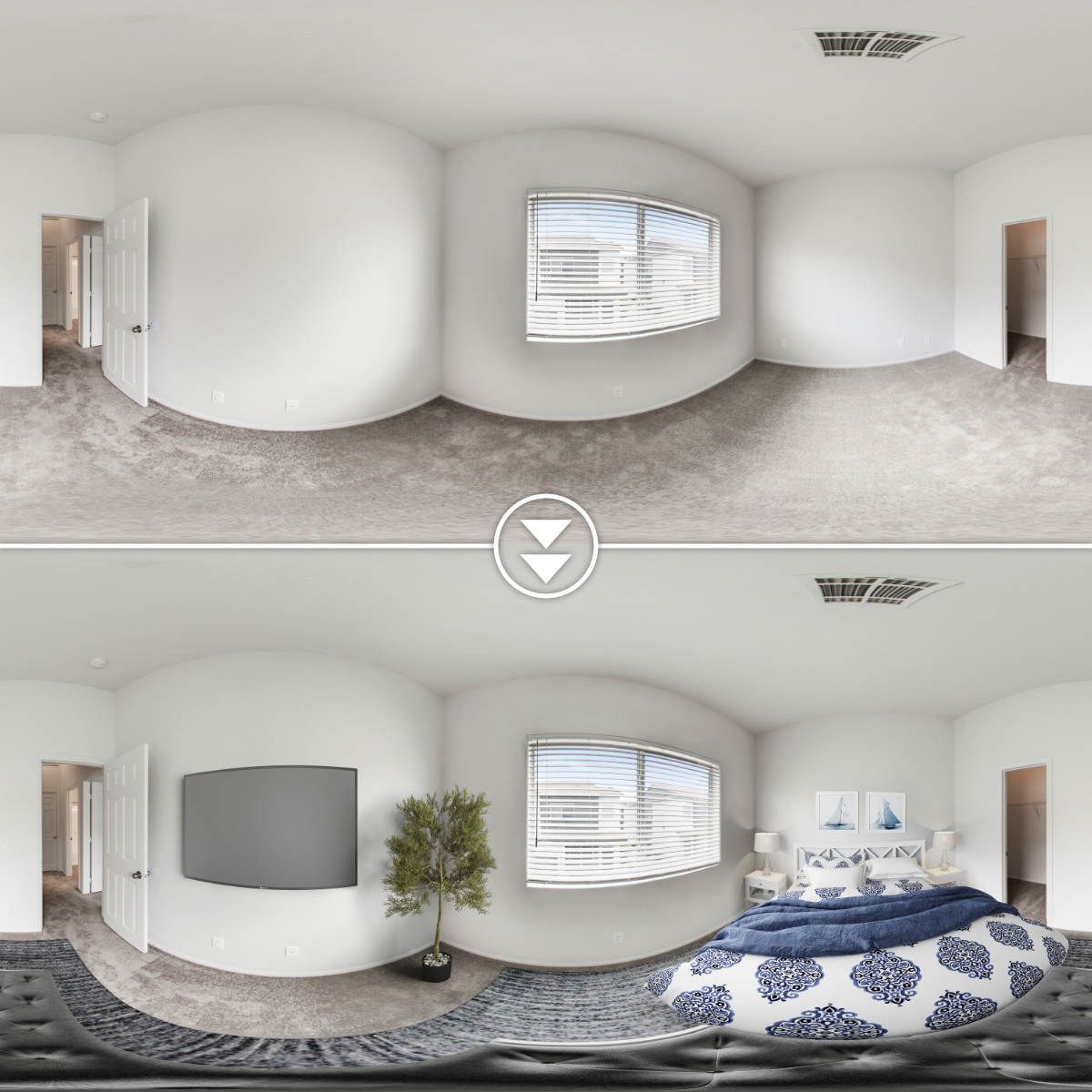 Professional editors can virtually stage your 360° photos so the virtual tour turns out livelier.
4.4. Technical distractions
Tripods reflecting in mirrors, the photographer’s shadow on the floor, dust on the lens, or cords hanging from a TV mount can instantly break the illusion of luxury. Removing these distractions requires precise cloning and patching work.
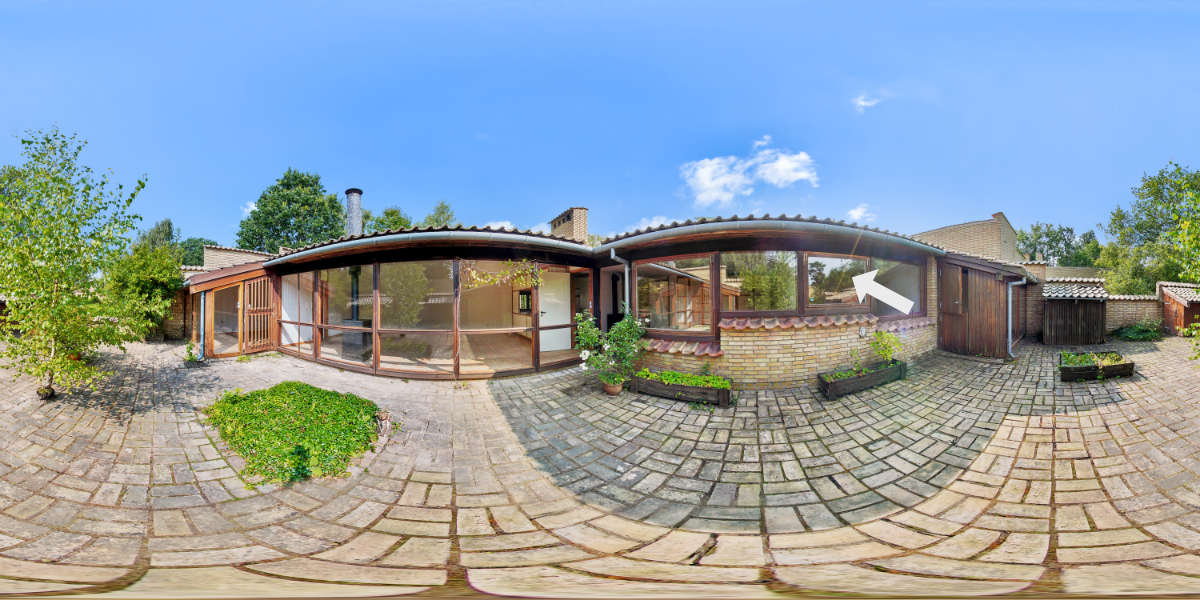 Stray flare and other distractions can make your virtual tour less comfortable to view.
5. The strategic move: Why outsourcing virtual tour editing is a game-changer
In the highly competitive world of real estate marketing, time is your most valuable asset. Whether you are a high-volume real estate photographer or an active listing agent, managing the post-production pipeline of virtual tours in-house can quickly become a bottleneck. This is where strategic outsourcing becomes a powerful business lever.
5.1. Reclaim your core business hours
A professional photographer should spend their time behind the camera, building client relationships, and booking new shoots, not spending hours staring at a screen correcting stitching lines, balancing exposures, or aligning 3D meshes. By outsourcing the tedious editing process, you can double your daily shoot capacity.
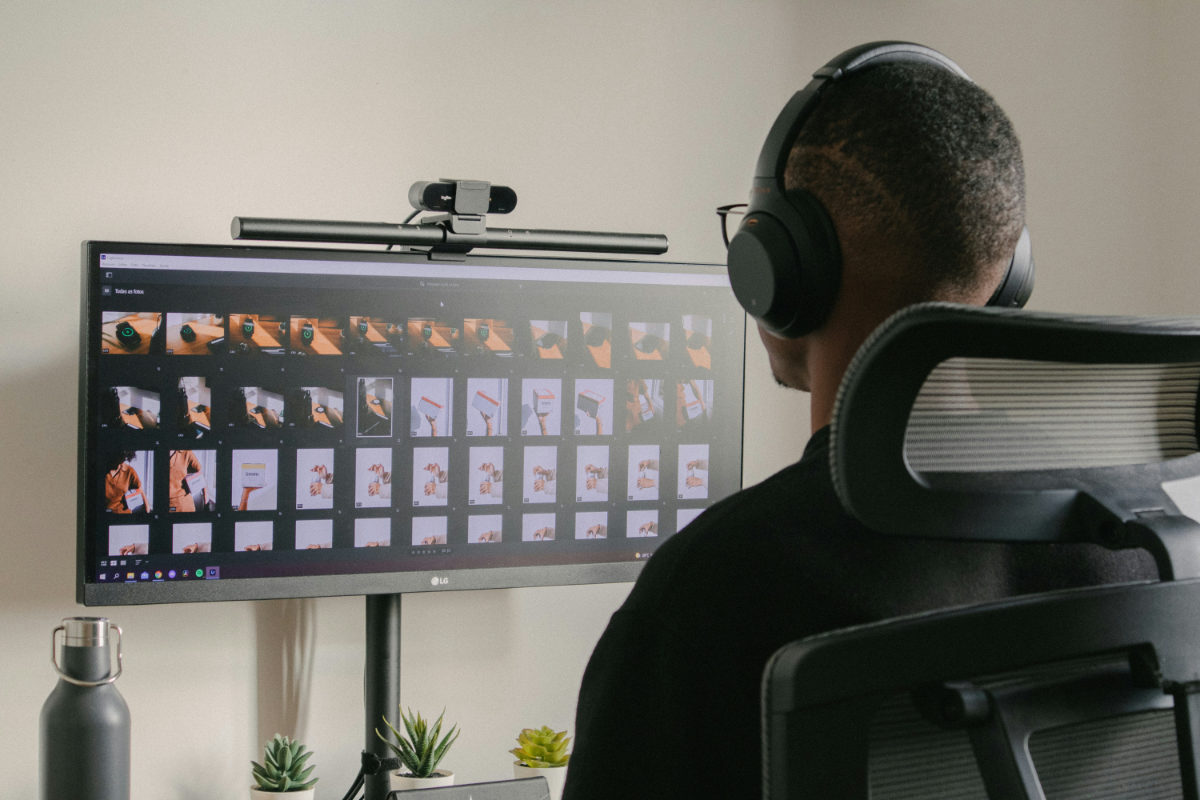 Editing is time-consuming and drains your creative mind, hindering you from doing more shooting to maximize returns.
5.2. Access specialized expertise and software
High-end virtual tour editing requires advanced software (such as PTGui, Photoshop, Lightroom, and 3D modeling tools) and a deep understanding of architectural lighting and spatial layout. Professional outsourcing teams live and breathe these tools, delivering a level of polish that is difficult to achieve as a generalist.
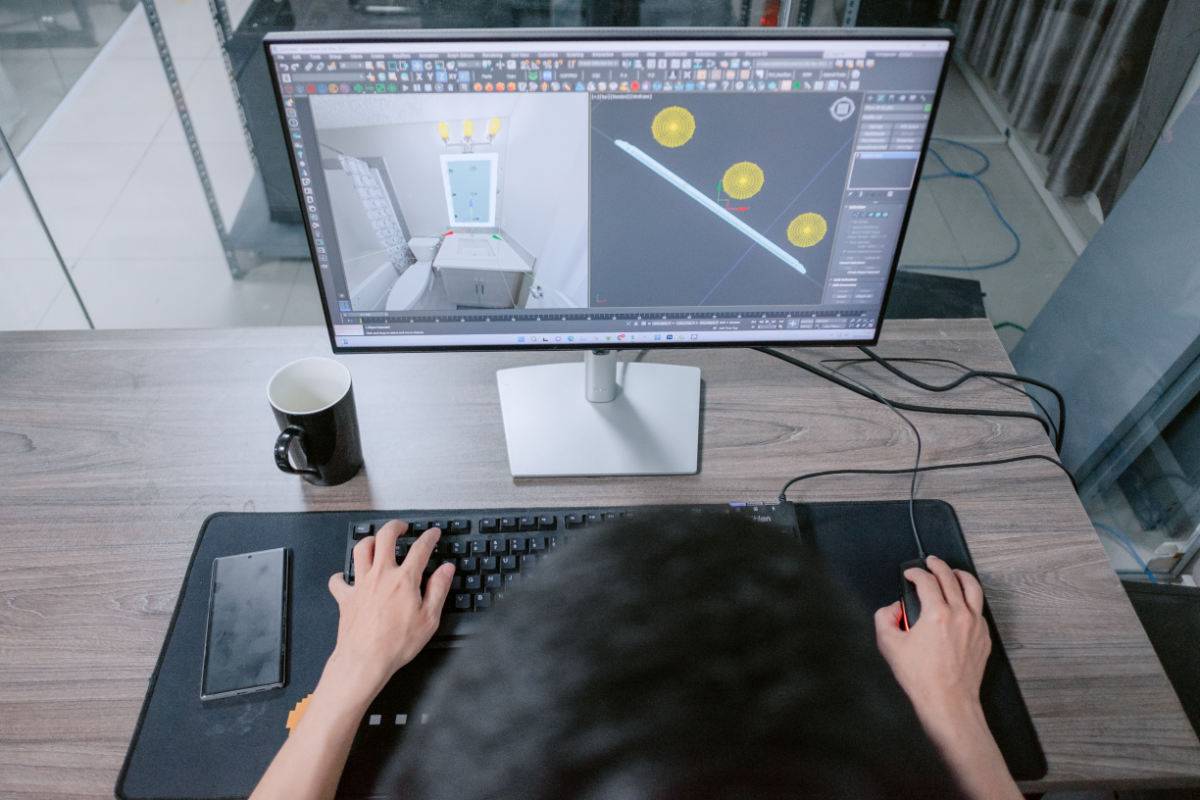 An outsourcing partner can handle the costly editing software stack for you.
5.3. Maintain consistency in brand identity
For realtors, consistency is key to building a strong brand. Outsourcing ensures that every virtual tour, floor plan, and listing photo has a uniform style, correct color temperature, and professional branding elements (like logos, contact info, and custom navigation menus), regardless of how busy the season gets.
5.4. Scalability without overhead
The real estate market is notoriously seasonal. Hiring full-time, in-house editors means paying fixed salaries during slow winter months. Outsourcing allows you to scale your editing support up or down on demand, paying only for what you use and keeping your overhead lean.
6. Fotober: Your premier partner in perfecting real estate digital assets
At Fotober, we understand that a virtual tour is not just a digital asset; it is a premium digital experience. We serve as the seamless back-end engine for realtors, professional photographers, and videographers worldwide, turning raw captures into high-converting visual masterpieces.
|
Raw photos / Scans |
Fotober expert editors |
Premium, market-ready virtual assets |
|
Flawless stitching |
Stunning virtual staging |
Cohesive branding |
Here is how Fotober elevates your real estate media production:
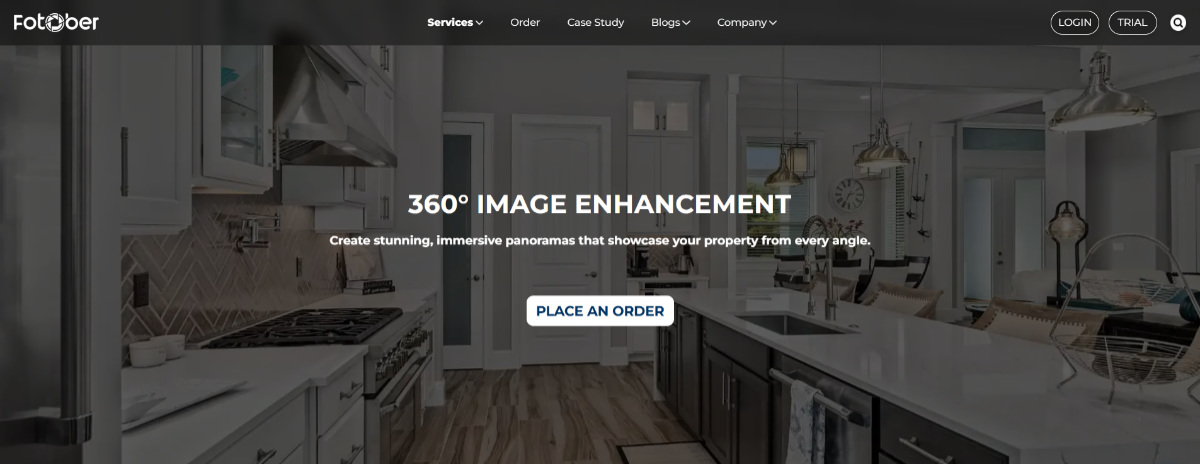
6.1. Flawless 360 photo stitching and HDR blending
Our expert editors meticulously review your 360-degree panoramas, removing stitch lines, chromatic aberration, and lens flare. We blend multiple exposures to ensure that views out of windows are crystal clear while retaining the warm, ambient light of the interior spaces.
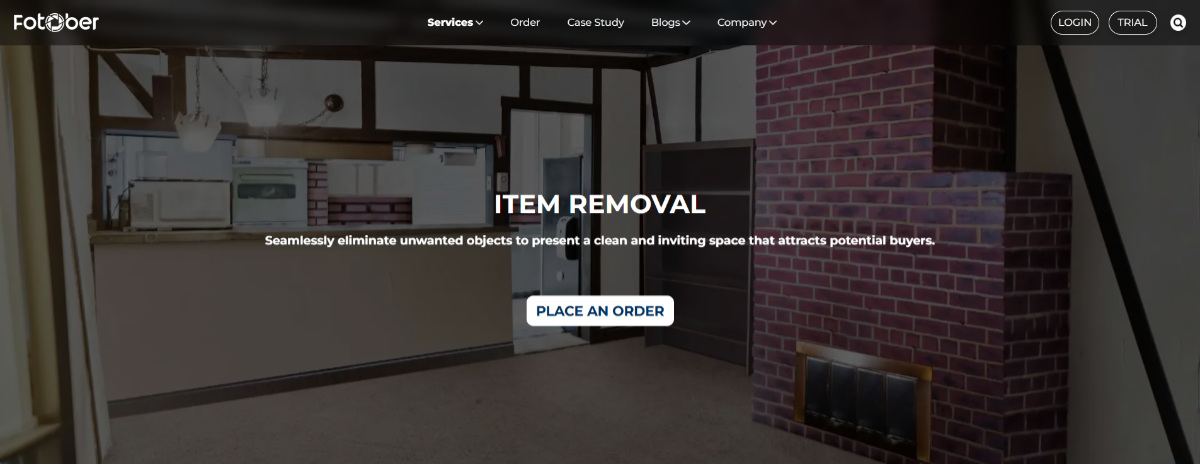
6.2. Advanced retouching and object removal
We make distracting elements vanish. Whether it is a stray cable, a camera reflection in a bathroom mirror, or temporary construction clutter outside a window, our team cleans up your frames to keep the buyer’s focus exactly where it belongs: on the beauty of the architecture.
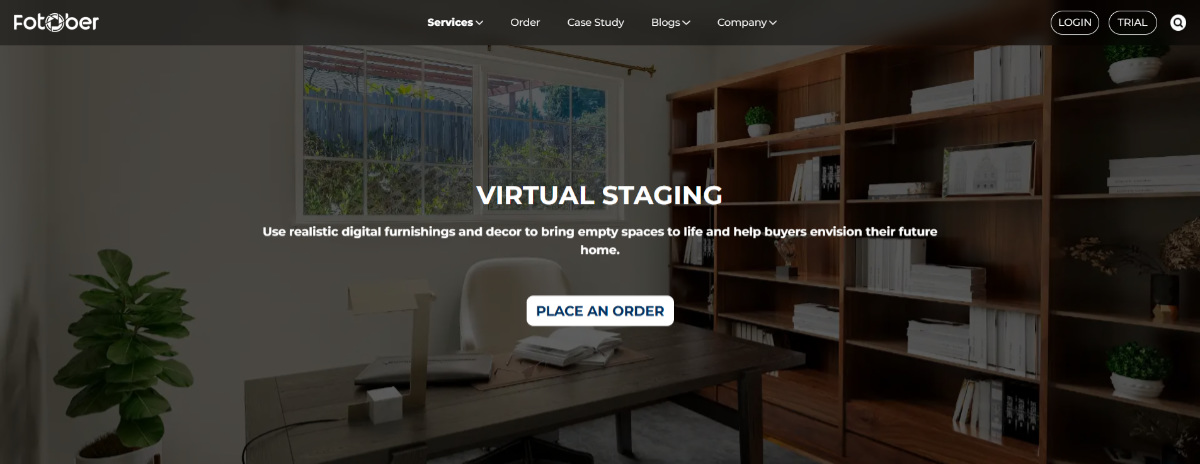
6.3. Seamless virtual staging for 360 & 3D environments
Empty listings sell slower and for less money. Fotober’s virtual staging team can place beautiful, modern, and scale-accurate 3D furniture into empty rooms. We carefully match the lighting, shadows, and perspective of the original space, creating an inviting, photorealistic environment that inspires potential buyers.
6.4. Custom branding and floor plan generation
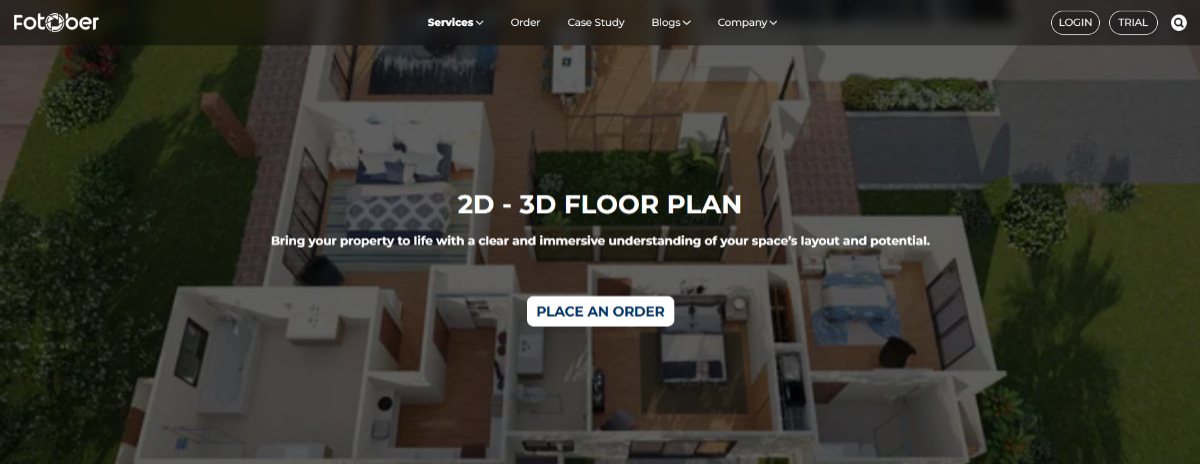
We can integrate your branding seamlessly into the virtual tour interface. Additionally, using your 3D tour data, we generate beautiful, clean, and professional 2D and 3D floor plans with exact measurements, providing a comprehensive marketing package for your listing.
7. Conclusion
When deciding between 360 virtual tours vs 3D virtual tours, there is no single "correct" choice. The right tool depends on your target audience, your budget, and the nature of the property. Choose 360 virtual tours for quick turnarounds, lower-budget listings, rental properties, or when you want to capture stunning, high-dynamic-range photography without the need for detailed spatial measurements. Choose real estate 3D virtual tours for mid-to-high-end listings, architectural showcases, commercial spaces, and projects where the dollhouse view, precise floor plans, and spatial navigation are critical to the sales narrative.
Whichever path you choose, remember that the final quality of your virtual tour determines how buyers perceive the value of the property. Do not let raw capture errors or flat lighting dull the impact of your listings.
Partner with Fotober to elevate your visual media. Let us handle the complex, time-consuming editing and post-production, so you can focus on what you do best: capturing beautiful spaces and closing deals. Contact Fotober today to discover our virtual tour editing packages and take your real estate marketing to the next dimension.
Follow us on social media to stay updated with the latest visualization technologies to catch buyers’ attention with every listing.
- Facebook: fotobermedia.co
- YouTube: Fotober
- TikTok: @fotober
- Instagram: fotober_media.
Related posts

Modern Luxe Interior Design: Elements, Style Guide and How to Stage It
October 10, 2026

Minimalist Interior Design: Characteristics, Style Guide, and Staging
October 8, 2026

Coastal Interior Design: Style Definition & Staging Guide
September 30, 2026

Contemporary Interior Design: Key Elements and How to Stage This Style
September 30, 2026
