




Real Estate Virtual Tours: Spatial Storytelling to Immerse Your Buyers

Share:
Table of Contents
- 1. What is a real estate virtual tour? Defining the immersive medium
- 2. Why the modern property market demands 360-degree virtual tours
- 3. Classifying 360 virtual tours: Finding your perfect fit
- 4. Behind the lens of real estate virtual tour: Tools, technology, and techniques
- 5. Who needs a real estate virtual tour? Key industries and use cases
- 6. The execution dilemma: How to get your real estate virtual tours done
- 7. Future horizons of real estate virtual tour: 2026 trends and beyond
- 8. Frequently asked questions about real estate virtual tours (FAQ)
- 9. Conclusion
The real estate industry has undergone a paradigm shift. Gone are the days when a static, wide-angle photograph of a living room was enough to capture the imagination of a prospective buyer. Today, real estate is bought, sold, leased, and admired online long before a physical footstep is ever set on a property. As photographers, cinematographers, architects, and real estate professionals, we understand that space is not two-dimensional. It is a narrative of volume, light, flow, and emotion. To capture this narrative digitally, the industry has turned to a revolutionary medium: the real estate virtual tour.
Whether you are a luxury real estate agent aiming to showcase a multi-million-dollar estate, an architect looking to present unbuilt designs, or a commercial developer targeting global investors, leveraging a professional 360 virtual tour real estate strategy is no longer a luxury; it is an absolute business necessity. In this comprehensive guide, we will dissect the anatomy of the 360-degree virtual tour service, explore the technical complexities of creating immersive digital spaces, evaluate the tangible ROI of these assets, and demonstrate how partnering with a specialized post-processing leader like Fotober can elevate your brand’s visual authority.
1. What is a real estate virtual tour? Defining the immersive medium
To appreciate the value of a real estate virtual tour, we must first define what it actually is, and what it is not.
A virtual tour is not a simple slideshow of photos stitched into a video. It is an interactive, digital simulation of an actual physical environment, composed of a sequence of spherical panoramic images (panoramas) or 3D digital reconstructions.
[Camera/LiDAR capture] ➔ [Post-processing & stitching] ➔ [Virtual tour software] ➔ [Interactive hosting platform]
When a user engages with a 360 virtual tour real estate asset, they are placed in the center of a sphere. They have the agency to look up at the ceiling joists, down at the hardwood floor grains, turn 360 degrees around, and move seamlessly from room to room via interactive hot spots.
From an architectural and photographic standpoint, this medium bridges the gap between spatial reality and digital representation. It respects the true proportions of a structure, eliminates the deceptive distortions often caused by ultra-wide-angle lenses, and provides an authentic sense of scale, volume, and depth.
2. Why the modern property market demands 360-degree virtual tours
The modern buyer’s journey begins behind a screen. Whether it is a millennial purchasing their first home, a remote worker relocating across state lines, or an international investor building a commercial portfolio, digital-first behavior dominates. Here is why integrating a 360-degree virtual tour service into your marketing suite is crucial:
2.1. Overcoming geographical boundaries
A real estate virtual tour functions as an open house that never closes. It is accessible 24/7 to anyone, anywhere in the world. An investor in Singapore can walk through an apartment in New York at 3:00 AM, analyzing the natural light entering the kitchen windows without booking a single flight.
2.2. Filtering high-intent buyers
Every real estate agent knows the exhaustion of conducting dozens of physical showings to unqualified window-shoppers. Virtual tours act as a highly efficient vetting mechanism. Buyers who request a physical showing after interacting with a virtual tour have already "walked" the space. They understand the layout, they know where the bedrooms are relative to the kitchen, and they are significantly closer to making an offer.
 Virtual tours can help buyers assess properties with more convenience.
2.3. The psychology of spatial ownership
In traditional photography, the viewer is a passive observer looking at a curated frame. In a 360-degree virtual tour, the viewer is an active explorer. This interactive agency triggers a psychological phenomenon known as spatial ownership. When users control their movement through a kitchen, visually measuring the island counter or imagining where their sofa would sit, they begin to mentally inhabit the space. This emotional connection dramatically accelerates the decision-making process.
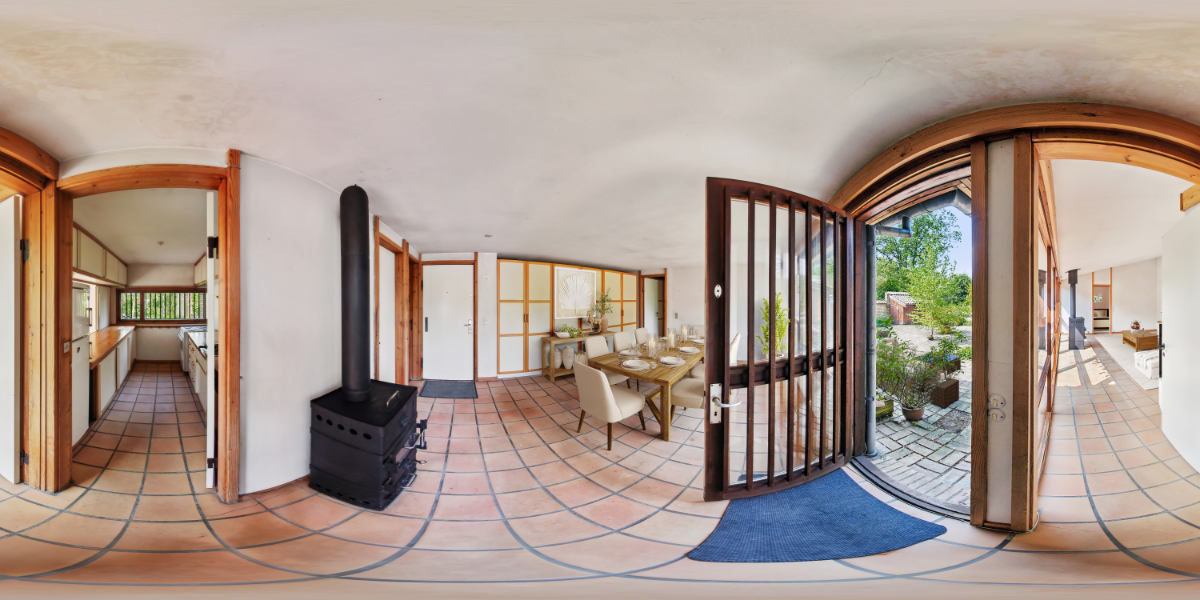 Immersive and interactive visuals can establish emotional connection more effectively.
2.4. Showcasing flow and context
Standard photos can make a house look like a collection of disjointed boxes. A virtual tour reveals how the house breathes. It showcases the transition from the indoor living area to the outdoor patio, the proximity of the master bedroom to the nursery, and the overall flow of the architectural blueprint.
3. Classifying 360 virtual tours: Finding your perfect fit
Not all virtual tours are created equal. Depending on the property type, target audience, and marketing budget, different technological formats should be deployed. Let’s break down the primary classifications of virtual tours in today’s market.
|
Virtual tour classifications | |
|
Panoramic photo tours |
Real photos High dynamic range |
|
3D rendered tours |
CGI assets Pre-construction sales |
|
Spatial/LiDAR (Matterport) |
Accurate mesh Interactive dollhouse |
3.1. Photographic 360-degree virtual tours (Spherical panoramas)
These are constructed from high-resolution, professional photographs captured using a DSLR/Mirrorless camera with a panoramic head or specialized 360-degree cameras.
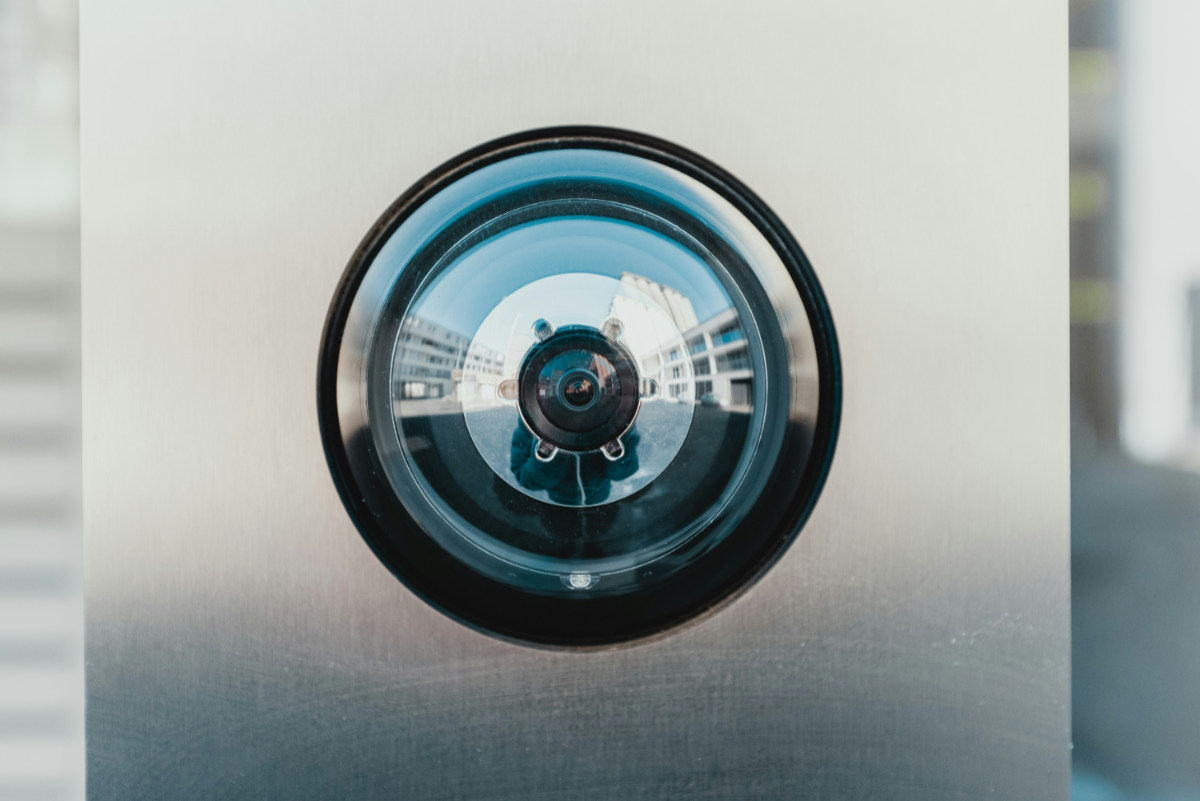 Virtual tours were usually created with specialized 360-degree cameras.
- The aesthetic: Photorealistic, rich in color, utilizing High Dynamic Range (HDR) techniques to balance interior shadows with bright window views.
- Best for: Premium residential listings, luxury estates, hotels, and retail spaces where visual fidelity and realistic lighting are paramount.
3.2. 3D rendered virtual tours (CGI/architectural visualization)
When a property does not exist yet, either because it is still in the blueprint stage or undergoing major renovations, architectural CGI (Computer Generated Imagery) is used to build a virtual environment from scratch.
- The aesthetic: Clean, hyper-realistic digital worlds where every material, furniture piece, and light source is mathematically modeled.
- Best for: Off-plan real estate sales, luxury developments, and architectural design pitches to stakeholders.
3.3. Spatial/LiDAR-based 3D digital twins (e.g., Matterport)
This kind of real estate virtual tour uses specialized infrared, structured light, or LiDAR sensors to capture both high-resolution imagery and precise spatial depth data.
- The aesthetic: Features the famous "Dollhouse View", a fully rotatable, 3D digital model of the entire structure stripped of its exterior walls.
- Best for: Medium-to-large residential properties, commercial offices, construction documentation, and insurance claims requiring millimeter-accurate measurements.
3.4. Video-based 360 virtual tours
An immersive real estate video tour format where the camera moves through a space while recording in 360 degrees. The viewer can look in any direction while the video progresses along a predetermined path.
- The aesthetic: Dynamic, cinematic, and guided, but with limited control over speed and exploration.
- Best for: High-energy lifestyle marketing, resort walk-throughs, and engaging social media content.
4. Behind the lens of real estate virtual tour: Tools, technology, and techniques
As photography and architectural specialists, we know that creating a flawless virtual tour requires a delicate balance of art and science. A poorly executed tour, with warped doorframes, misaligned floors, and blown-out window views, will actively damage a property’s perceived value.
Here is an insider look at the hardware, software, and post-processing techniques required to produce world-class assets.
4.1. The hardware suite
- The professional rig: A high-resolution Mirrorless/DSLR camera (like a Sony A7R series or Canon R5) paired with an ultra-wide fisheye lens (e.g., 8-15mm). This setup is mounted on a panoramic tripod head (like a Nodal Ninja) calibrated to rotate precisely around the lens's optical center (the "no-parallax point"). This eliminates stitching errors in post-production.
- The dedicated 360 camera: For high-speed workflows, dual-lens 360 cameras like the Insta360 Pro 2, Ricoh Theta X, or Phase One industrial cameras offer rapid capture with built-in stitching capabilities.
- Spatial scanners: The Matterport Pro3 or Leica BLK360 for high-precision LiDAR mapping of large commercial developments.
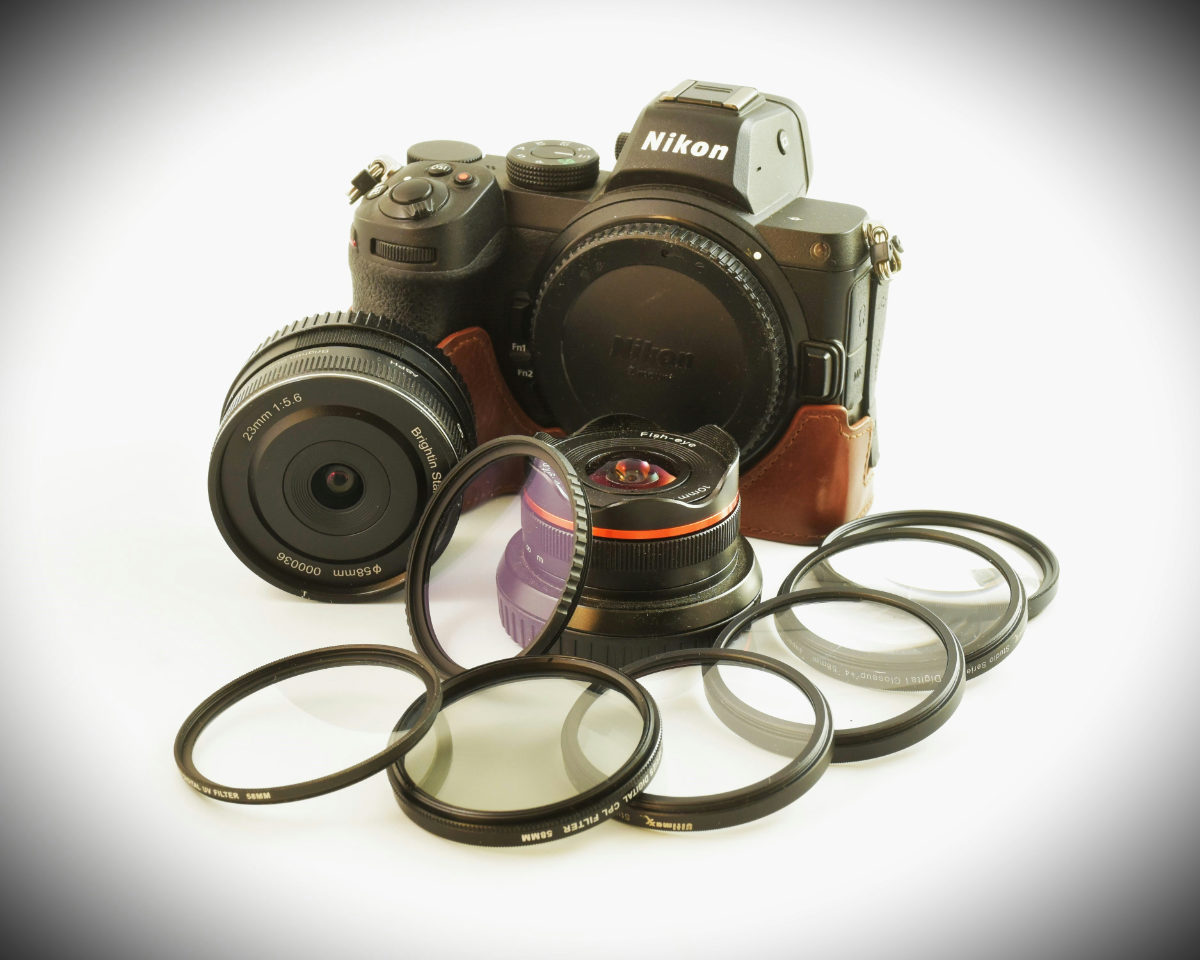 Creating virtual tours requires sophisticated equipment and processing.
4.2. The software ecosystem
Stitching software: Tools like PTGui Pro are used to align, warp, and stitch multiple overlapping photographs into a seamless equirectangular image (a flat 2:1 aspect ratio projection of a sphere).
Authoring & hosting platforms: Software like 3DVista, Kuula, Tourweaver, or Matterport Cloud is used to assemble individual panoramas into an interactive journey: the real estate virtual tour. Here, creators add navigation hotspots, information cards, floorplans, embedded videos, and background audio.
4.3. The crucible: Professional post-processing
This is where mediocre imagery is transformed into editorial art. Raw 360-degree frames face severe lighting challenges: bright sunlight streaming through windows alongside dark interior corners.
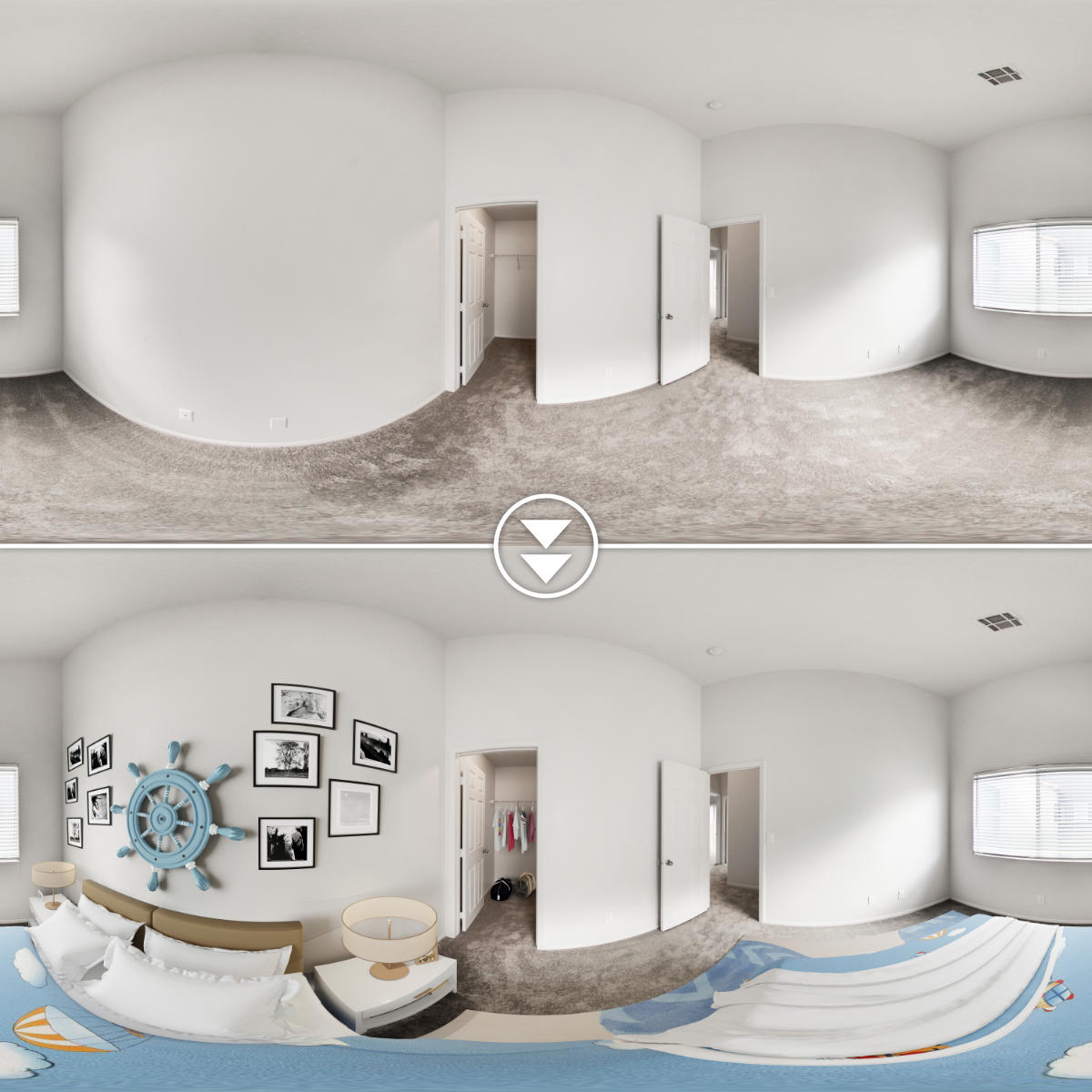 Virtual tours need many manual refinements to provide a seamless experience.
To solve this, professional editors employ:
- HDR (High dynamic range) blending: Merging multiple exposure brackets to ensure both the interior decor and the outdoor garden view through the window are perfectly exposed.
- Zenith and nadir correction: The "Zenith" (the absolute top of the photo) and the "Nadir" (the absolute bottom) are the hardest parts to capture. Editors must meticulously clone out the tripod, its shadow, and the camera operator from the nadir, replacing it with a clean patch of floor or a custom-branded agent logo.
- Color grading and correction: Aligning white balance across different light sources (e.g., warm indoor tungsten bulbs vs. cool outdoor daylight) to create a harmonious, inviting atmosphere.
- Clutter removal and virtual staging: Digitally erasing stray wires, camera reflections in mirrors, or outdated furniture, and replacing them with modern, photorealistic 3D interior assets.
5. Who needs a real estate virtual tour? Key industries and use cases
The application of a 360-degree virtual tour service extends far beyond traditional residential sales. It has become a core utility across several interconnected industries.
 Many agents are implementing virtual tours to level up the immersive standard of modern listings.
5.1. Key use cases for real estate virtual tours
|
Industry vertical |
Primary use case |
Key benefit |
|
Residential real estate |
Luxury listings, open-house alternatives, remote buyer previews. |
Accelerates sales velocity, cuts down on unqualified physical viewings. |
|
Commercial real estate |
Office space leasing, retail site selection, industrial facility tours. |
Allows corporate tenants and global boardrooms to sign leases remotely. |
|
Architecture & construction |
Progress tracking, BIM (Building Information Modeling) overlay, design validation. |
Enhances stakeholder transparency, reduces expensive rework costs. |
|
Hospitality & tourism |
Luxury resorts, vacation rentals (Airbnb/VRBO), event venues. |
Boosts direct bookings, establishes instant trust in room configurations. |
|
Interior design & staging |
Portfolios of finished spaces, interactive before-and-after showcases. |
Validates spatial concepts and design craft with immersive realism. |
5.2. The math of conversion rates, engagement, and ROI of real estate virtual tours
In business, visual beauty must translate to financial performance. The data supporting the deployment of a professional real estate virtual tour is overwhelmingly clear.
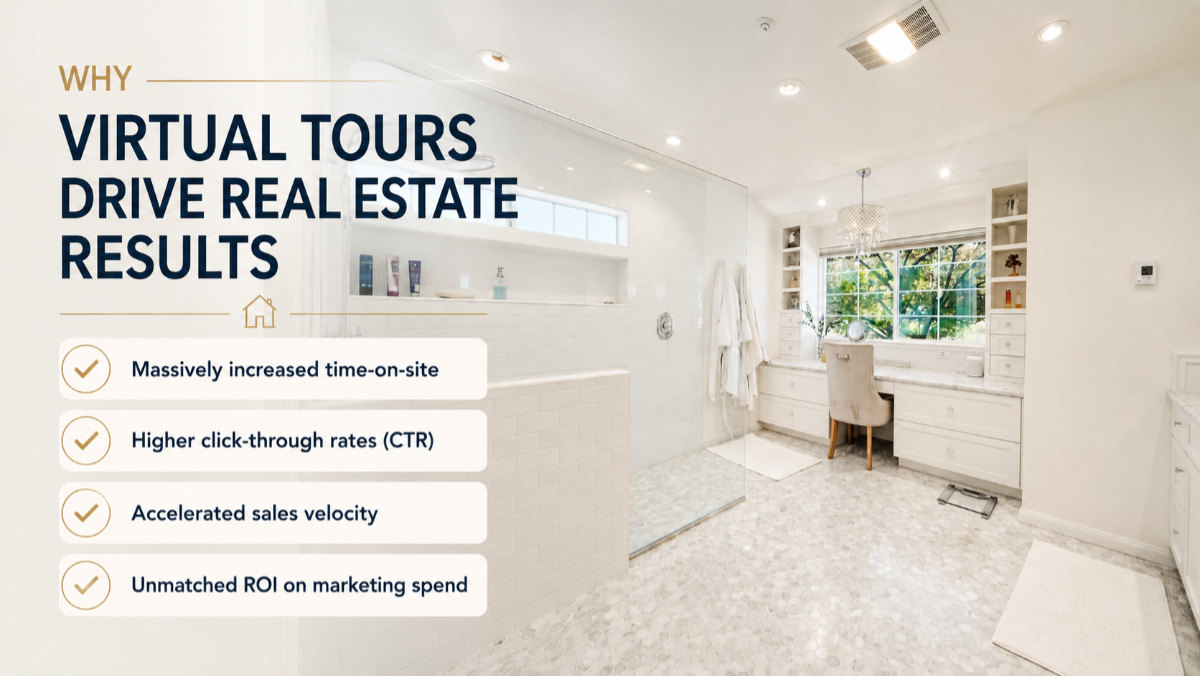 There are many factors supporting the use of virtual tours to sell homes.
Massively increased time-on-site: Listings featuring a 360 virtual tour real estate experience retain visitors for up to 5 to 10 times longer than listings with static photos alone. In the digital economy, attention is the ultimate currency. The longer a buyer stays on your listing, the higher their conversion intent.
Higher click-through rates (CTR): Properties marketed with virtual tours receive up to 85% more clicks and inquiries than those without.
Accelerated sales velocity: Study after study from national real estate associations indicates that homes with virtual tours sell up to 31% faster and for up to 9% closer to the asking price than comparable properties marketed with traditional media.
Unmatched ROI on marketing spend: While the initial investment in a professional 360-degree tour is higher than a standard photo package, the reduction in days on market (DOM), the saving of agent travel time, and the ability to attract high-value out-of-market buyers yield an ROI that frequently exceeds 300-500%.
6. The execution dilemma: How to get your real estate virtual tours done
If you are convinced that real estate virtual tours are critical for your business, you face a major execution question: How should you produce these digital assets?
Let's evaluate the pros, cons, and financial realities of three primary avenues.
6.1. In-house production vs. outsourcing
|
In-house team |
Outsourcing |
|
High capital expense Ongoing training required Full creative control |
Zero upfront hardware costs Pay-per-use scalability Professional QA and speed |
Option A: In-house production
- The process: You purchase professional cameras, panoramic heads, stitching software licenses, and assign an employee (or yourself) to shoot and edit the tours.
- The verdict: While this offers complete control over scheduling, the barrier to entry is high. The capital expense of professional gear can easily top $5,000 to $10,000, and the learning curve for flawless stitching, nadir patching, and professional color-grading is incredibly steep.
Option B: Outsourcing to local freelancers
- The process: You hire a local real estate photographer to capture and deliver the finished real estate virtual tour.
- The verdict: This is highly convenient for localized residential listings. However, scalability is difficult. If you have 50 listings across different regions, managing multiple independent freelancers with varying quality standards, turnaround times, and pricing models becomes a logistics nightmare.
Option C: The hybrid powerhouse (Local capture + expert outsourced editing)
- The process: You or a local technician capture the raw panoramic files quickly on-site. You then upload these raw files to a specialized global post-processing agency like Fotober.
- The verdict: This is the gold standard for scalability, cost-efficiency, and quality control. You eliminate the expensive overhead of editing staff and high-end software licenses, while ensuring that every single tour is polished by world-class visual artists at a fraction of the cost.
6.2. AI vs. human artistry: The post-processing battleground
With the rise of automated platforms, many agents try to use cheap mobile apps and automated AI software to stitch and clean their tours.
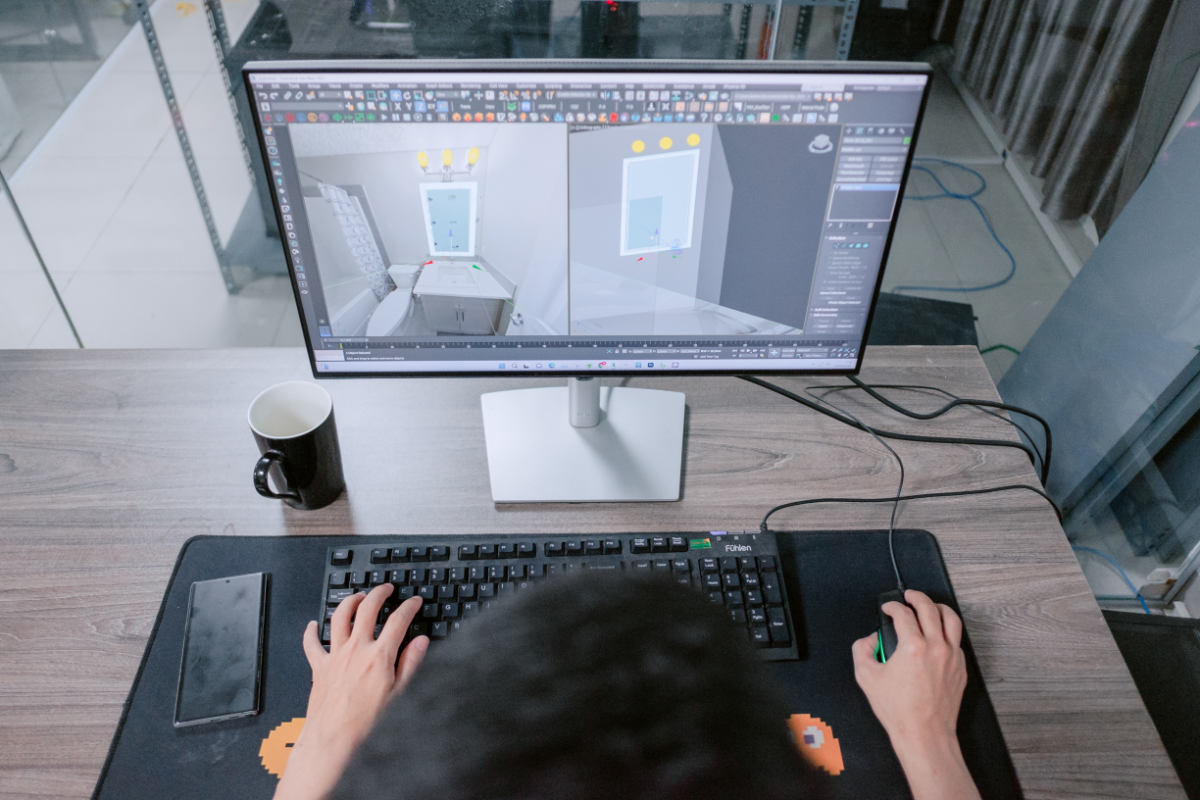 AI platforms have improved the efficiency of editing workflows, but humans are still needed to ensure technical precision.
Here is why AI-only solutions still fall short in professional real estate marketing:
- The "uncanny valley" of spatial logic: AI often fails to understand how light behaves when moving from room to room. It frequently creates harsh stitch lines, distorts structural columns, and creates bizarre architectural anomalies that look fake to the human eye.
- The nuance of glass and mirrors: Real estate is full of reflective surfaces, windows, mirrors, shower screens, and polished marble. AI struggles to differentiate a mirror reflection from an actual opening, often revealing the camera rig or creating ghostly double images.
- Custom branding and spatial logic: Integrating custom floorplans, interactive dynamic hotspots, and brand guidelines requires human design intelligence.
At Fotober, we champion a hybrid approach: Advanced technology supervised by elite human editors. We use cutting-edge algorithms to accelerate the heavy lifting of stitching, but every room, every reflection, and every transition is manually refined, color-graded, and QC'd (Quality Controlled) by an expert digital artist.
6.3. Elevating your brand: Fotober’s 360-degree virtual tour services
In the competitive landscape of real estate, your visual media is your brand's digital handshake. Fotober stands as your premier global partner, offering a comprehensive 360-degree virtual tour service designed for modern photographers, developers, and brokerages.
The Fotober workflow:
1. RAW capture: You shoot the property.
2. Cloud upload: Send your files to Fotober
3. Professional edit: HDR, stitch, nadir correction, staging
4. QA & delivery: Download a gorgeous, tour-ready asset.
Our core capabilities:
- Precision 360-degree panorama stitching: We take your raw, bracketed panoramic shots and stitch them seamlessly. We handle the complex mathematics of cylindrical and equirectangular projection, ensuring straight walls, correct perspectives, and zero stitching lines.
- Advanced HDR blending & window pulls: We balance interior exposure with beautiful exterior views, keeping the details of both the indoor fireplace and the outdoor skyline perfectly sharp and visible.
- Nadir and zenith eradication: We manually paint out your camera stand, tripod feet, and reflection ghosts, replacing them with a pristine, unbroken texture of the floor or ceiling.
- Real estate virtual staging (360°): Empty spaces look cold and small. We can digitally inject high-end, photorealistic 3D furniture, art, and decor into your empty 360-degree panoramas, matching the exact lighting and perspective of the room.
- Custom branding & interactive overlay integration: We format your tours to be perfectly compatible with major hosting engines (Kuula, 3DVista, Matterport, etc.), tailoring the assets to reflect your corporate colors, floor plans, and logos.
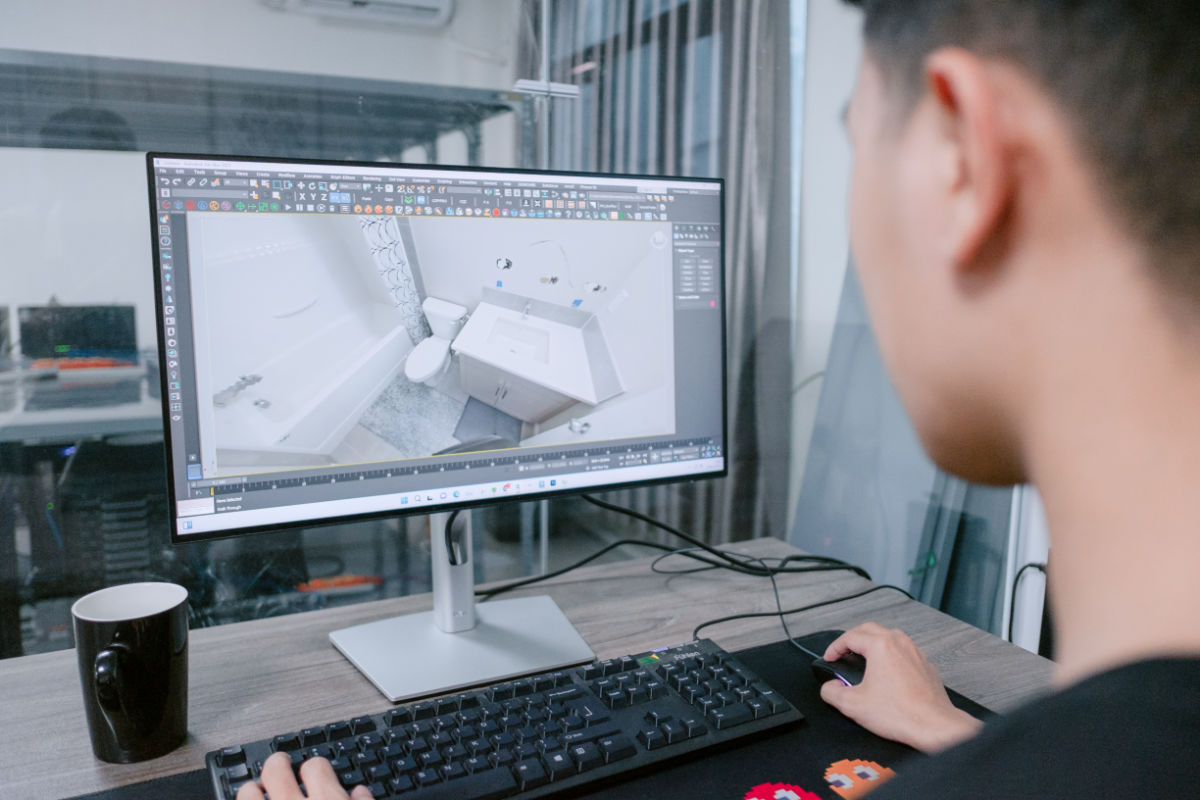 Fotober is a specialized editing partner for real estate agents, videographers, and photographers to create seamless and immersive visuals.
The Fotober difference: Why global brands trust us
- Unmatched quality control (QA): We don't rely on automatic drag-and-drop engines. Every single tour is reviewed by a Senior Art Director before it is delivered to you.
- Rapid scalability & turnaround: In real estate, time is money. Our global production hubs operate 24/7, delivering highly complex, polished 360 assets in record time.
- Consistent visual identity: Whether you are listing a cozy condo or a sprawling corporate park, our team ensures your visual output remains consistently beautiful, clean, and professional across your entire portfolio.
- Enterprise-grade security: Your digital property assets, blueprint files, and project data are handled with strict confidentiality under our robust data protection systems.
7. Future horizons of real estate virtual tour: 2026 trends and beyond
The virtual tour landscape is moving rapidly. As we head toward 2026, several disruptive technologies are set to redefine how we experience digital space.
|
Future visions 2026+ | ||
|
AR/MRR integration |
AI virtual staging |
Spatial web (Web3) |
|
Apple Vision Pro Interactive overlays |
Real-time style swaps Instant light changes |
Virtual real estate Metaverse showrooms |
7.1. Spatial computing and mixed reality (MR)
With the launch and refinement of head-mounted devices like the Apple Vision Pro and Meta Quest 3, real estate virtual tours are transitioning from flat screens to true spatial computing. Users will not just look at a tour; they will walk through it in their physical living rooms. High-end real estate listings will need to be optimized for WebXR to deliver immersive spatial experiences.
7.2. Real-time dynamic AI staging
In the near future, viewers inside a virtual tour will be able to customize the environment in real time. Want to see how the living room looks with Mid-Century Modern furniture instead of Scandinavian? Want to switch the wall paint from cream to sage green? Want to change the lighting from morning sun to cozy sunset? AI-powered dynamic tours will make this interactive personalization possible on the fly.
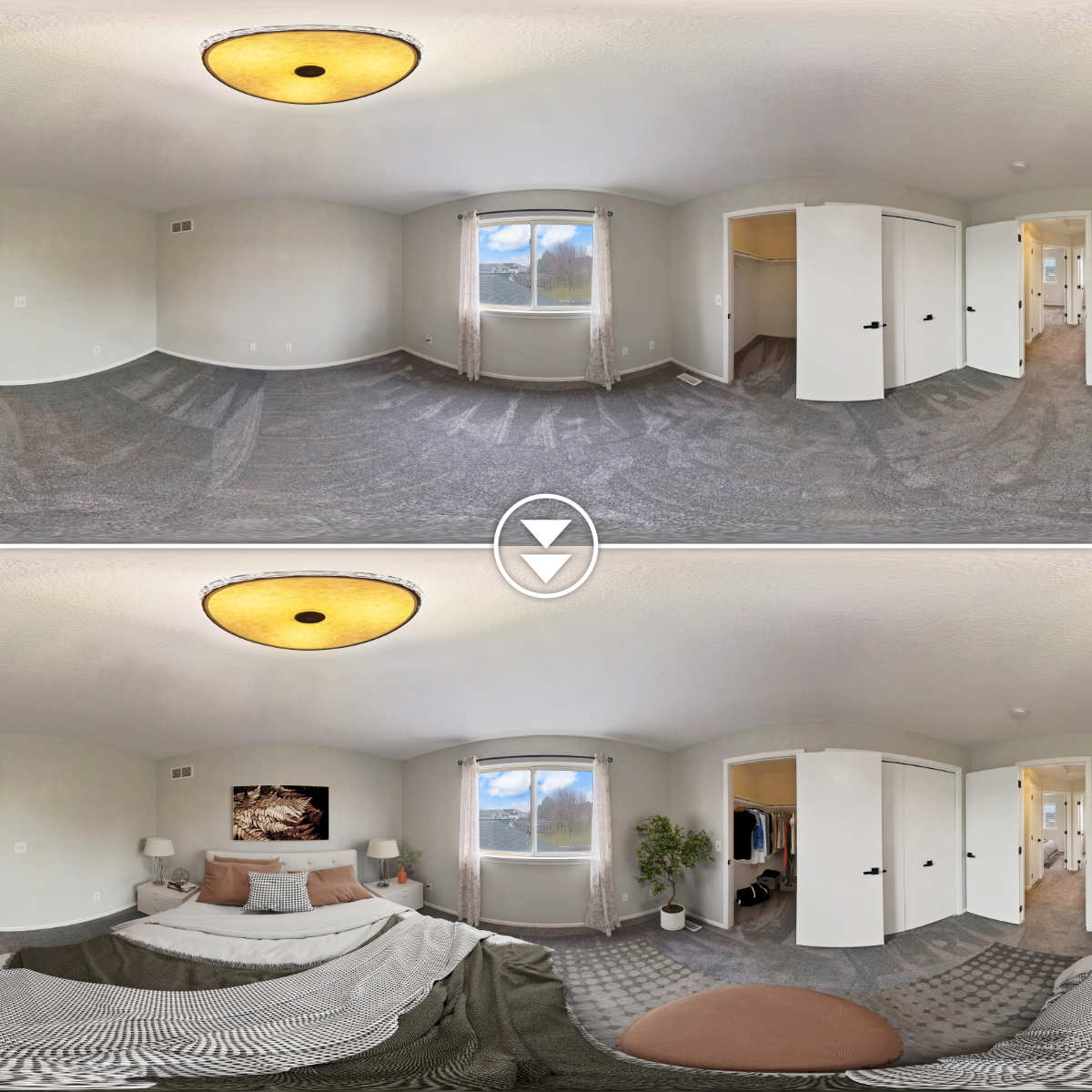 Combining virtual staging and virtual tours can drive significantly more buyer engagement.
7.3. The rise of the Spatial Web and Web3
Digital showrooms, virtual land, and metaverse developments will require architectural-grade 3D assets. Real estate agencies will construct permanent virtual offices in the cloud, allowing clients to review international portfolios with an agent's digital avatar in real time.
8. Frequently asked questions about real estate virtual tours (FAQ)
To help you navigate your journey into immersive real estate media, we have compiled answers to the most common questions from our clients.
Q1: What file formats do I need to send to Fotober for 360 editing?
We work with almost all major formats. For the highest quality results, we recommend sending raw, bracketed exposures (RAW/DNG format) captured from your DSLR/Mirrorless camera. We also accept high-resolution JPEGs from dedicated 360 cameras like the Ricoh Theta or Insta360.
Q2: What is the average turnaround time for a 360 virtual tour post-processing project?
Our standard turnaround time is 12 to 24 hours depending on the volume of panoramas and the complexity of the editing (e.g., standard stitching vs. full virtual staging). We also offer expedited delivery options for urgent listings.
Q3: How do virtual tours help with SEO (Search Engine Optimization)?
Search engines love high-quality user engagement. When you embed a real estate virtual tour on your website or listing page, users spend significantly more time on that page. This high dwell time tells Google that your website provides valuable content, which dramatically boosts your search engine rankings and drives more organic traffic to your business.
Q4: Can you virtually stage a 360-degree photo of an empty room?
Absolutely. 360-degree virtual staging is one of our key specialties. We place high-definition, spatially accurate 3D furniture models into empty 360-degree panoramas, matching the ambient lighting, shadows, and perspective perfectly to make the space look beautifully furnished and lived-in.
Q5: Are Fotober's edited tours compatible with platforms like Matterport, Zillow, or Kuula?
Yes. We deliver our stitched panoramas as clean, high-resolution equirectangular files (2:1 aspect ratio). You can easily upload these files directly into any major virtual tour hosting engine, MLS platform, or website builder of your choice.
9. Conclusion
In the digital-first era of real estate, the way you present space is the ultimate differentiator. A mediocre presentation tells the market that you represent a mediocre product. Conversely, a flawless, highly polished, immersive real estate virtual tour shows your commitment to excellence, respect for design, and dedication to your clients' investment.
Creating these experiences does not have to be a logistical or financial burden. By partnering with Fotober, you gain access to a world-class team of digital artists, colorists, and virtual staging experts ready to transform your raw architectural captures into premium, high-converting digital assets.
Are you ready to elevate your real estate marketing, increase your sales velocity, and captivate buyers globally?
Contact the Fotober Team today to discuss your next project, request a custom quote, or start a free trial of our premium 360-degree virtual tour service. Let’s build the future of real estate storytelling together.
Follow us on social media to stay updated with the latest visualization services to drive more interested buyers to your listings.
- Facebook: fotobermedia.co
- YouTube: Fotober
- TikTok: @fotober
- Instagram: fotober_media.
Related posts

Modern Luxe Interior Design: Elements, Style Guide and How to Stage It
October 10, 2026

Minimalist Interior Design: Characteristics, Style Guide, and Staging
October 8, 2026

Coastal Interior Design: Style Definition & Staging Guide
September 30, 2026

Contemporary Interior Design: Key Elements and How to Stage This Style
September 30, 2026
