




New Construction 3D Rendering: 8 Ways Builders Pre-Sell Homes

Share:
Table of Contents
- 1. Key takeaways
- 2. Why 3D rendering became the new-construction sales engine
- 3. Top 8 ways builders use new construction 3D rendering to sell faster
- • 3.1. Replace or delay the costly physical model home
- • 3.2. Let buyers customize finishes with an option visualizer
- • 3.3. Sell a whole community from a master-plan aerial
- • 3.4. Launch pre-sales before breaking ground
- • 3.5. Win investor and lender buy-in with a pitch-ready deck
- • 3.6. Fill the MLS and portals with hero images
- • 3.7. Power social and paid-ad campaigns
- • 3.8. Show phasing and future amenities buyers can't see yet
- 4. How to get new-construction renders: cost, brief, and outsourcing
- 5. Where Fotober fits into a new-construction 3D rendering workflow
- 6. Frequently asked questions about new construction 3D rendering
- 7. Conclusion: put every render to work
New construction 3D rendering gives builders a practical way to sell homes before buyers can physically walk through them. The strongest developers do more than commission a single hero image, they reuse one accurate 3D model across sales galleries, option selectors, investor decks, MLS listings, ads, and other marketing touchpoints. That matters because new homes often go to market before there is a finished model unit to show. Renders help buyers understand the design, finishes, and lifestyle being sold, but their impact depends on how strategically they are used throughout the sales cycle.
This guide covers eight practical ways builders use new construction 3D rendering to market and sell homes, plus how to produce the visuals efficiently without overspending. It is written for home builders, developers, and marketers working on new residential communities.
1. Key takeaways
- New construction 3D rendering works hardest when one 3D model is reused across many sales tools throughout the campaign, not treated as a single one-off image.
- The highest-ROI uses include replacing a costly model home, powering an option visualizer, and selling whole communities from a master-plan aerial.
- Renders let builders launch pre-sales, win investor and lender buy-in, and fill the MLS, social, and ad channels before a single wall goes up, all from the same source files.
- Most builders get the best economics by outsourcing 3D rendering services for new construction on a per-image basis rather than staffing an in-house team, keeping quality consistent across the whole development.
2. Why 3D rendering became the new-construction sales engine
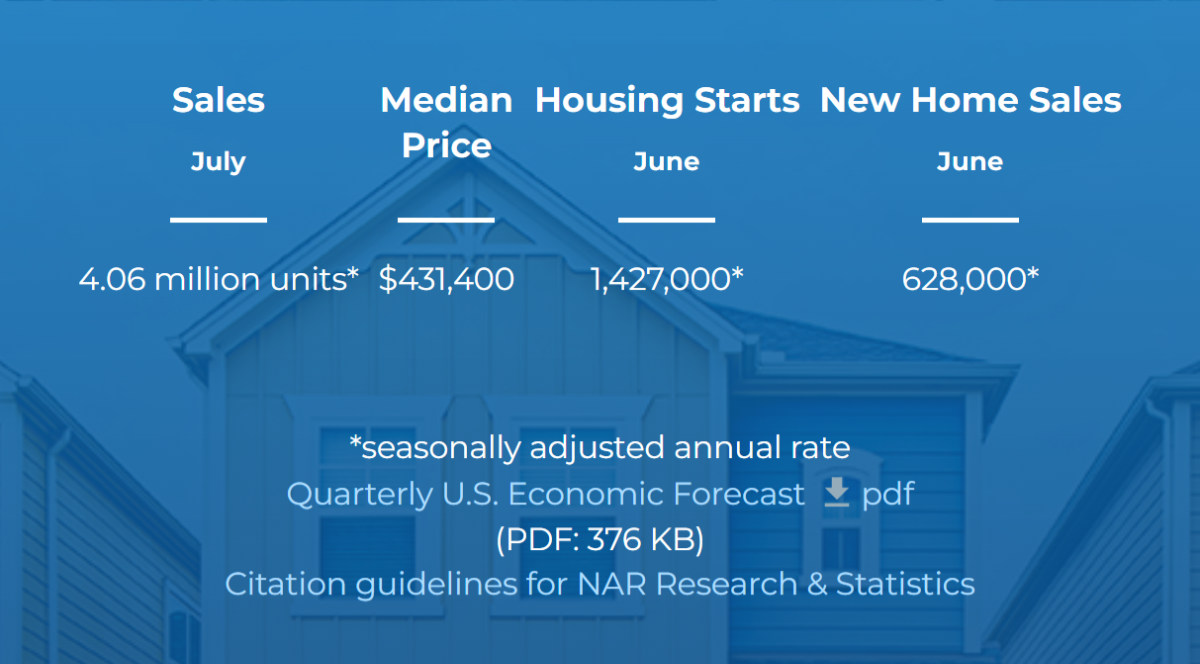
3D rendering became essential to new construction because builders sell a promise, not a finished product, and images are the only way to make that promise feel real. When a buyer shops a new home, the search starts online, and there's frequently nothing physical to tour, so the render is the model home, the brochure, and the showing at once. With new residential construction making up a significant share of the U.S. housing market tracked by the Census Bureau, and builders reported by the National Association of Home Builders marketing much of that inventory pre-completion, visualization has become core sales infrastructure.
Competition sharpens the need. In a fast-growing community corridor, several builders may be selling similar floor plans at similar prices at the same time, and the one whose imagery makes buyers feel the finished home first tends to capture the deposit. Photorealistic 3D rendering for new builds is how a developer differentiates an unbuilt product, and the eight uses below are where that advantage actually shows up.
There's a behavioral reason for them to punch above their weight, too. The National Association of REALTORS® reports in its research that buyers rank photos among the most useful features of a listing, and for new construction those "photos" can only be rendered until the home is finished. A buyer scrolling twenty new-community listings at night makes a shortlist in seconds based almost entirely on the lead image, so the quality of that render directly determines whether your project gets the click, the inquiry, and eventually the visit. Weak imagery doesn't just look cheap; it quietly removes you from consideration before a salesperson ever gets the chance to talk.
3. Top 8 ways builders use new construction 3D rendering to sell faster
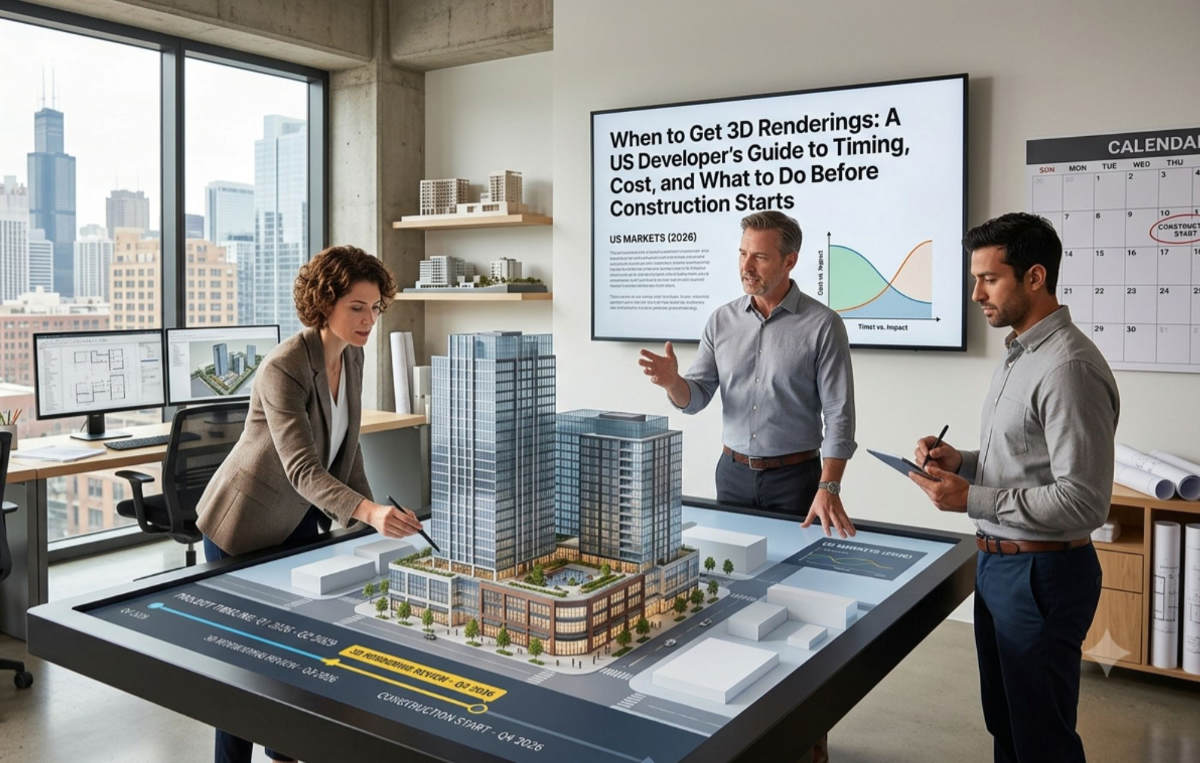
The builders who get the most from new construction 3D rendering treat a single 3D model as a reusable asset, extracting a dozen deliverables from one modeling investment. Below are the eight highest-impact applications, roughly in the order a project uses them across its life cycle. Each reuses the same underlying model, which is what makes the economics work. You won't need all eight on every project, but knowing the full menu helps you spec the right package before you commit a budget, so nothing gets rebuilt later.
3.1. Replace or delay the costly physical model home
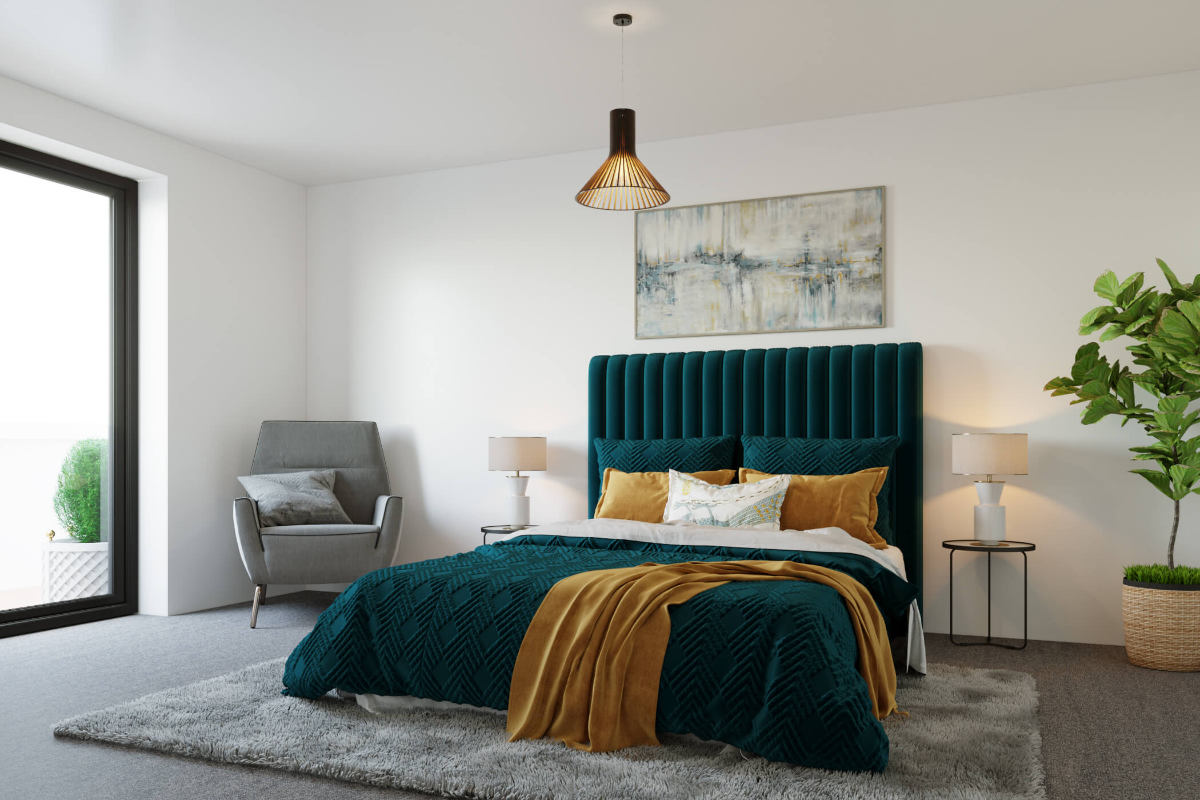
A furnished model home ties up a finished unit and tens of thousands of dollars in staging, and it can only be shown in one location. A virtual model home built from renders shows every floor plan, in every finish package, on any device, from day one, no construction required. Many builders use renders to start selling months before a physical model is ready, then keep the virtual version running for plans they never build out. The savings compound: on a scattered-lot or multi-community operation, one set of renders serves buyers everywhere at once, where physical models would each cost a small fortune to build and maintain.
3.2. Let buyers customize finishes with an option visualizer
New-home buyers pay premiums for upgrades, but only if they can picture them. An option visualizer built on 3D rendering lets a buyer swap countertops, flooring, cabinets, and exterior elevations and see the result instantly, turning abstract upgrade lists into desirable, tangible choices. This both increases upgrade revenue per home and reduces the buyer's-remorse cancellations that come from selecting finishes blind. It also shortens the design-center appointment, because buyers arrive having already explored combinations online instead of deliberating over physical swatches for hours.
3.3. Sell a whole community from a master-plan aerial
For a development, buyers aren't just choosing a house, they're choosing a neighborhood. A master-plan aerial render shows a lot of layout, amenities, green space, and phasing in one image, communicating the lifestyle of a community that doesn't exist yet. This 3D visualization for new residential developments is what sells the vision of the place, not just the individual home, and it anchors the sales-center display. It also helps buyers self-select the right lot corner versus interior, park-facing versus cul-de-sac, which speeds decisions and reduces the friction of choosing a homesite from a flat plat map.
3.4. Launch pre-sales before breaking ground
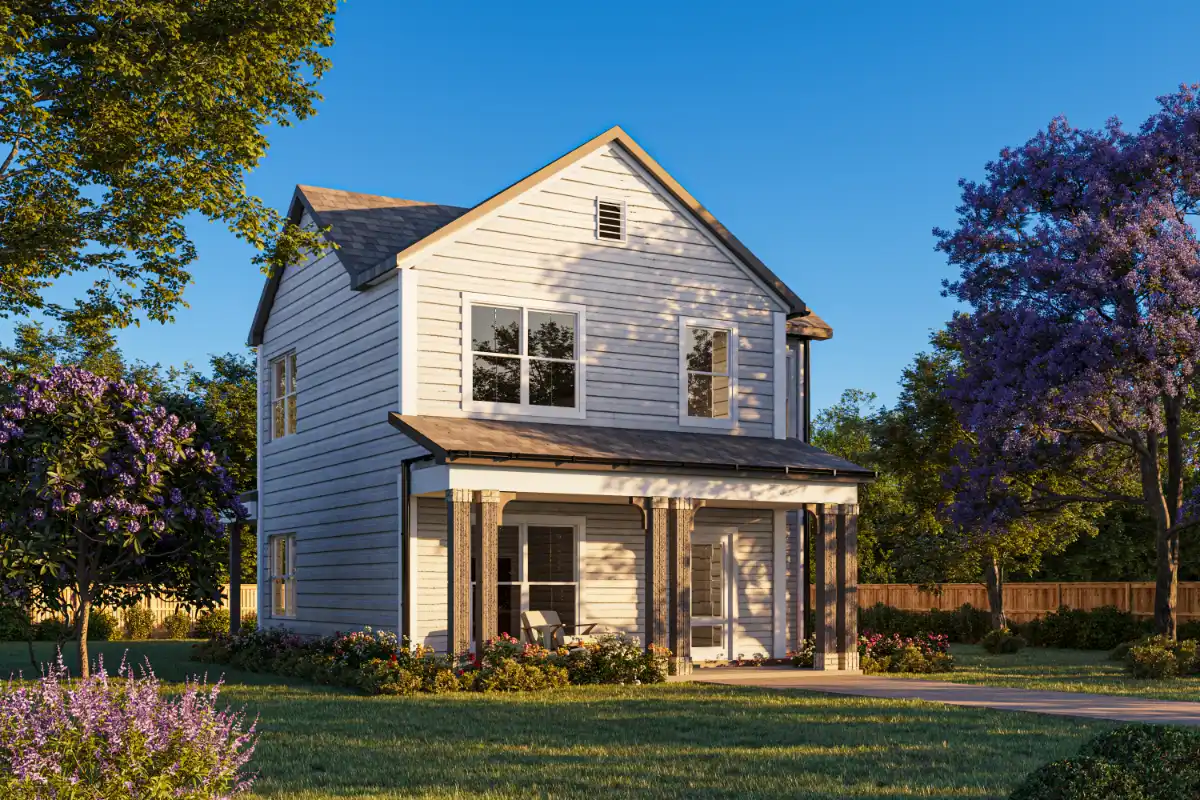
The earlier a builder can take reservations, the better the project's financing and cash flow. Renders make pre-selling possible by giving buyers something convincing to commit to before construction starts, which is the same engine behind pre-construction rendering for off-plan sales. Early reservations de-risk the build and give lenders confidence, so front-loading visualization at launch pays for itself many times over.
3.5. Win investor and lender buy-in with a pitch-ready deck
Renders aren't only for retail buyers. When a developer pitches investors or seeks construction financing, a photorealistic deck of the finished project communicates quality and viability far better than blueprints and spreadsheets. A polished photorealistic rendering of a modern house or a full community flythrough helps stakeholders see the return, not just the risk. The same visuals do double duty in permitting and community-approval meetings, where a realistic depiction of how a project will look once complete can ease neighborhood concerns and move an entitlement forward. In effect, one strong render set serves three very different audiences: buyers, capital, and municipalities from a single production.
3.6. Fill the MLS and portals with hero images
New-construction listings compete on Zillow, Realtor.com, and the local MLS alongside resale homes that have real photos. Renders let a builder populate those listings with striking, professional imagery from the moment a plan is released, so an unbuilt home never shows a blank or a bare lot. A strong exterior hero render is often the thumbnail that earns the click, and a full gallery of interior renders keeps a shopper on the listing long enough to inquire. Just remember to label images as renderings where the MLS requires it, so the presentation stays both compelling and compliant.

3.7. Power social and paid-ad campaigns
Renders are ready-made fuel for the channels where buyers actually discover new communities. The same 3D model yields exterior stills for a carousel, interior scenes for a slideshow, and short flythrough clips for Reels and TikTok, so a builder can run a full social and paid campaign long before there's a finished home to photograph. Motion content especially outperforms static images on these platforms, and a single flythrough can be recut into a dozen short vertical clips that keep a campaign fed for weeks. Because the assets are digital from the start, they're also trivially easy to update, swap a finish, refresh a season, or re-caption for a new audience without another shoot.
3.8. Show phasing and future amenities buyers can't see yet
In a multi-phase community, the pool, clubhouse, or park that sells Phase 1 may not be built for two years. Renders let a builder show those future amenities as if they already exist, so early buyers purchase into the completed vision rather than a construction site. The same applies to future views, landscaping maturity, and streetscapes that renders can portray at their eventual best. This is often the difference-maker for early phases, when the surroundings are still dirt, and the only way to convey the finished experience is through visualization, turning what looks like a risk into an obvious opportunity for the buyers willing to move first.
4. How to get new-construction renders: cost, brief, and outsourcing
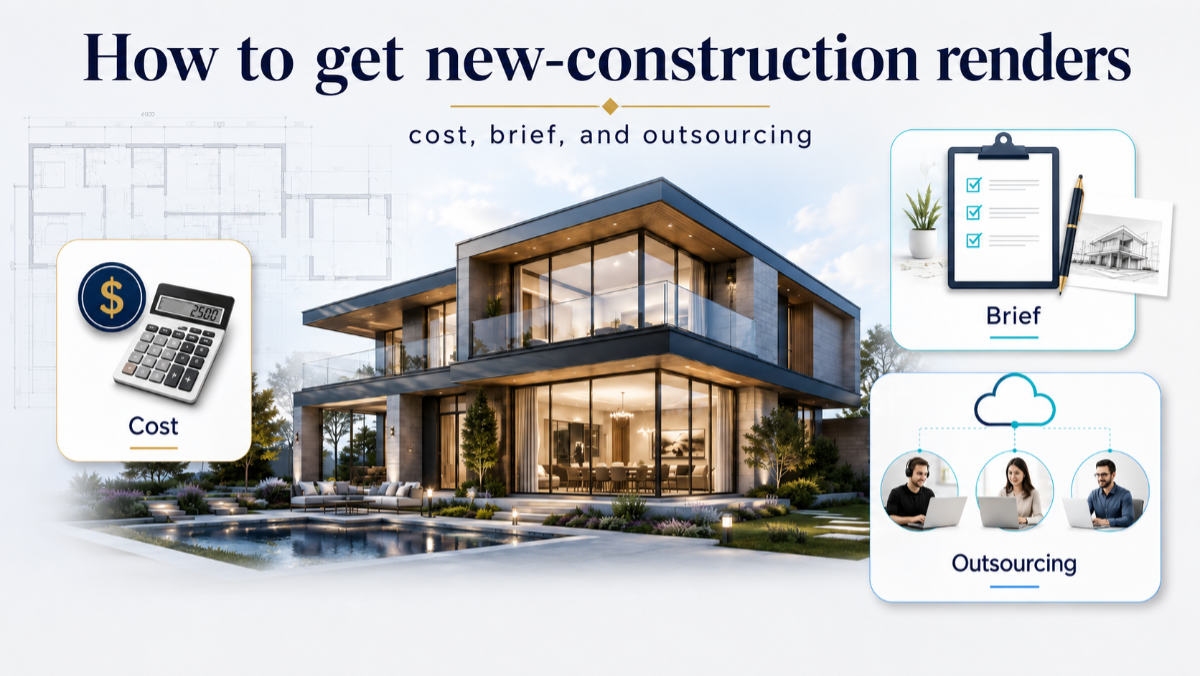
Getting new construction 3D rendering made is straightforward once you know what to expect on price, timeline, and process. The single most important idea is that one accurate 3D model feeds all eight uses above, so the modeling investment is amortized across your entire campaign rather than spent per image. Here's how builders manage it in practice.
4.1. Cost and timeline
Rendering is priced per image and scales with complexity, resolution, and revisions, with individual stills commonly ranging from a few hundred dollars to over a thousand for detailed hero shots; animations and interactive tools cost more but reuse the same model. A single high-quality render typically takes several business days, including revision rounds, so build visualization into your launch timeline rather than treating it as last-minute. Because so many deliverables come from one model, the per-asset cost drops sharply the more uses you plan for up front.
The planning lesson is to commission the model once, comprehensively, rather than piecemeal. If you know at the outset that you'll want exterior heroes, interior scenes for three finish packages, a master-plan aerial, and a flythrough, briefing all of it together lets the studio build a single reusable model and amortize the modeling hours across every deliverable. Ordering images one at a time months apart, by contrast, often means paying to rebuild or reopen the model repeatedly. A short up-front conversation about every place the renders will appear almost always lowers the total bill.
4.2. How to brief and whether to outsource
Give the render team complete architectural drawings, elevations, finish schedules, and site plans, plus references for the style you want, and flag which images are heroes versus supporting shots. The more accurate and complete the source material, the fewer revision rounds you pay for and the more faithful the final home looks to what buyers were shown, which matters because accuracy is what keeps renders from becoming cancellation-inducing overpromises. Wherever you can, lock your finishes and elevations before rendering begins, since late design changes force re-renders that cost time and money.
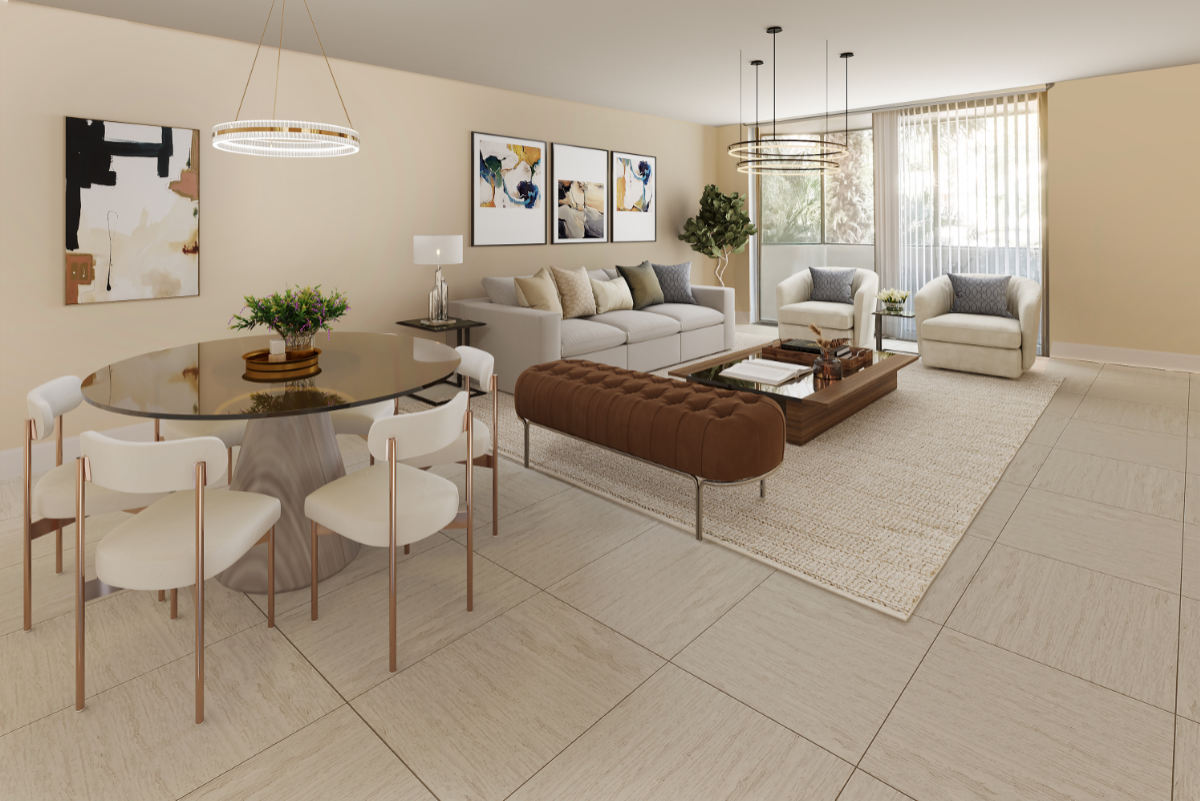
Most builders outsource rather than hire in-house, because a full-time visualization artist plus hardware and software only pays off with a constant pipeline; outsourced 3D rendering services for new construction convert that into a flexible per-project cost and give you surge capacity at launch. A specialist studio can also handle the different types of 3D rendering a campaign needs: exterior, interior, aerial, and floor plan, with consistent quality, and the pragmatic middle ground is to keep one internal person managing briefs while the studio produces the images. When choosing a partner, look for a portfolio of new-construction and community work specifically, since rendering a full development is a different discipline than a single house.
5. Where Fotober fits into a new-construction 3D rendering workflow
For builders who already have the architectural plans but do not want to build an in-house visualization department, Fotober can step in at the production stage and turn those source files into finished marketing visuals. The workflow can start with CAD drawings, elevations, floor plans, finish schedules, site plans, and reference images, then move through modeling, material setup, lighting, rendering, and post-production. That makes Fotober particularly useful when one accurate model needs to support several assets across the same launch, from exterior hero images and interior scenes to aerial views and floor-plan visuals.
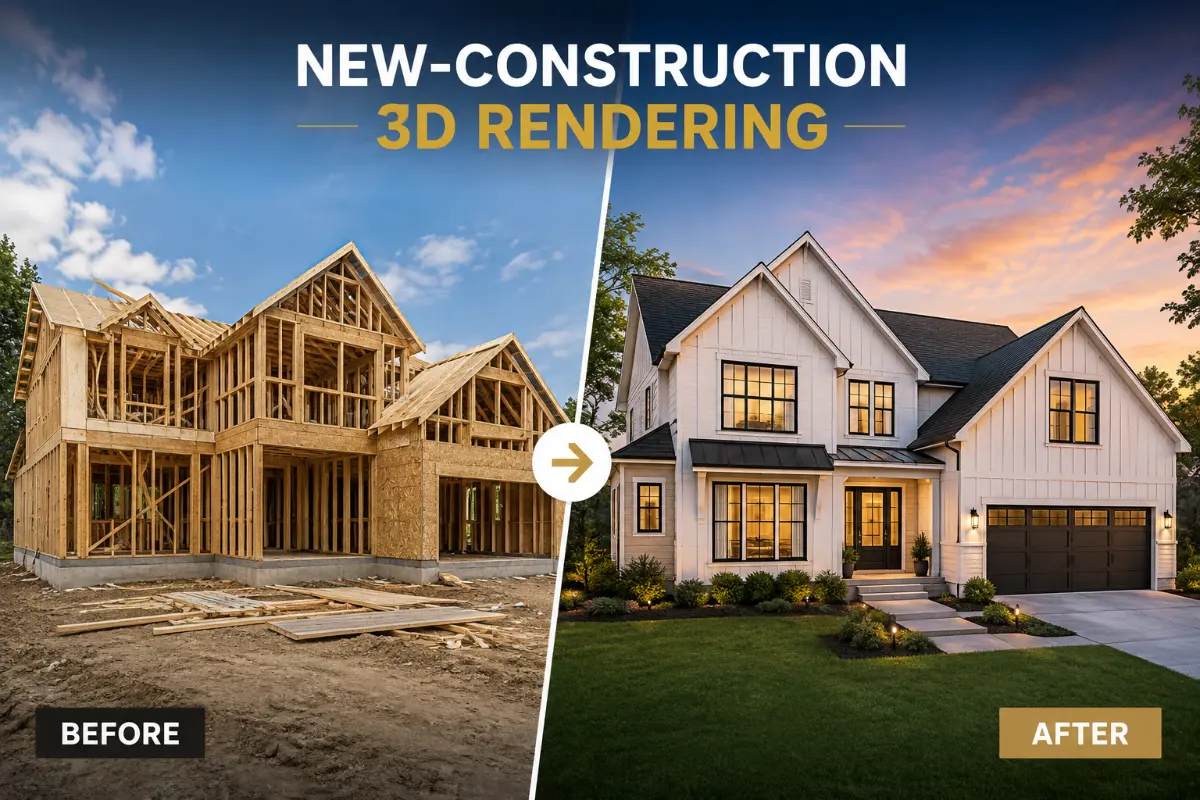
The main advantage is flexibility. A builder can keep design decisions, approvals, and sales strategy in-house while Fotober handles the rendering workload behind the scenes, scaling output up for a major launch and back down once the campaign is complete. Because multiple deliverables can be developed from the same approved model, the process also works well for projects with several elevations, finish packages, unit types, or marketing phases, where visual consistency matters across every touchpoint.
For teams trying outsourced rendering for the first time, the most practical approach is to start with one representative view and establish the visual standard before expanding the project. Once camera angles, materials, lighting, and revision expectations are aligned, Fotober can continue producing the remaining assets from the same model with a more predictable workflow. In that role, the rendering team becomes an extension of the builder’s marketing operation rather than a separate one-off vendor.
6. Frequently asked questions about new construction 3D rendering
How much does new construction 3D rendering cost?
Pricing is per image and depends on complexity and resolution, from a few hundred dollars for a standard still to over a thousand for a detailed hero render; animations and option visualizers cost more. Because one 3D model feeds many deliverables, planning several uses up front lowers the effective cost per asset.
When should a builder order renders?
As early as possible, ideally before breaking ground, so you can pre-sell. Renders let you launch marketing, populate the MLS, and take reservations months before a physical model home exists, which improves cash flow and de-risks the build.
Can renders replace a physical model home?
Largely yes, especially early in a project. A virtual model home built on new construction 3D rendering shows every floor plan and finish option on any device from day one, and many builders use it to sell before or instead of building a costly physical model.
Are renders accurate enough that buyers won't be disappointed?
They should be, when built from real architectural drawings and finish schedules and kept realistic. Accuracy protects you: renders that match the delivered home build trust, while exaggerated images create cancellations and complaints. A good studio keeps materials and proportions true to plan.
Should builders outsource rendering or hire in-house?
Most should outsource. An in-house artist only pays off with continuous work, while outsourced 3D rendering services for new construction offer per-project pricing and launch-time surge capacity. Large builders with a constant pipeline are the main exception.
7. Conclusion: put every render to work
New construction 3D rendering pays off not because you have images, but because of how many jobs each image does. The builders who sell fastest extract a virtual model home, an option visualizer, a community aerial, an investor deck, MLS heroes, and a social campaign from one 3D model, turning a single modeling investment into a sales engine that runs from pre-launch to sell-out. Order renders early, plan the uses, and keep them accurate.
The mindset shift is the takeaway: stop thinking of a render as a picture and start thinking of it as an asset you deploy across the whole funnel. A builder who maps out all eight uses before commissioning the work gets more marketing firepower per dollar than one who orders a lone exterior shot and calls it done. That planning, more than the size of the budget, is what separates communities that sell out at launch from those still advertising vacancies a year later.
Fotober helps builders and developers do exactly that. We produce photorealistic exteriors, interiors, aerials, floor plans, and animations for new residential developments with per-image pricing, fast turnaround, and dedicated artists who keep quality consistent across an entire community. Share your plans and put your renders to work place an order or start a free trial today.
Connect with Fotober
- Facebook: fotobermedia.co
- YouTube Channel: Fotober
- TikTok Channel: @fotober
- Instagram: fotober_media
- Email support: [email protected]
- Hotline: +84 942 110 297
Related posts

Cincinnati Housing Market 2026: Prices, Trends, and What It Means for Buyers, Sellers, and Investors
October 20, 2026

Modern Luxe Interior Design: Elements, Style Guide and How to Stage It
October 10, 2026

Minimalist Interior Design: Characteristics, Style Guide, and Staging
October 8, 2026

Coastal Interior Design: Style Definition & Staging Guide
September 30, 2026
