




Top 8 Popular Types of 3D Rendering: A Complete Guide for Real Estate & Architecture
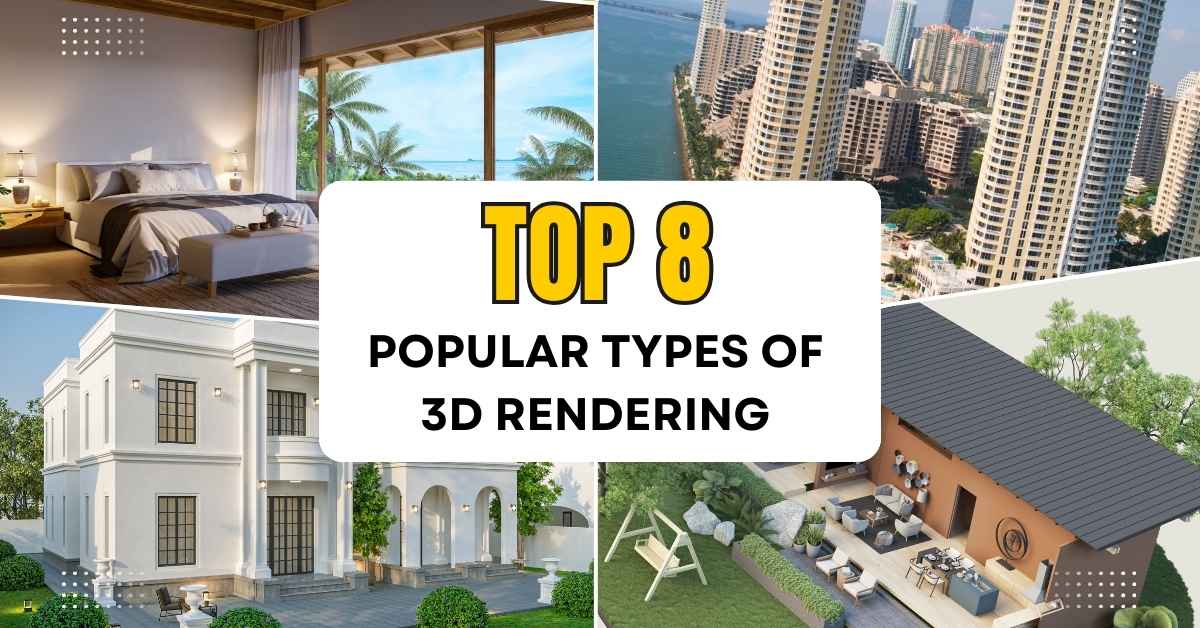

Share:
Table of Contents
3D rendering plays a critical role in today’s real estate and architectural landscape. Visual communication is no longer optional. It is foundational. Buyers, investors, and stakeholders expect clarity before making commitments, and that clarity increasingly comes from advanced 3D visualization. Despite its widespread adoption, many developers, architects, and marketing teams still struggle to fully understand the 3d rendering styles available and, more importantly, which one best aligns with their specific project goals. This guide breaks down the different types of 3D rendering, explains where each excels, and helps you choose the right approach based on real-world project scenarios.
1. What is 3D rendering?
3D rendering is the process of transforming architectural plans or digital 3D models into realistic or stylized visual images. These visuals simulate lighting, materials, depth, and environment to communicate how a space or structure will look, often before it is built.
What is 3D rendering?
At its core, rendering bridges the gap between technical design and human perception.
Architects may think in sections and elevations. Engineers may think in structure and load. But buyers and investors think in experience:
- What will it feel like to walk through this space?
- How does natural light enter the living room?
- Does the building stand out in its environment?
This is where understanding the types of 3D rendering becomes critical. Each type serves a distinct communication goal. Some prioritize realism. Others emphasize clarity, layout, or emotional impact.
Over time, rendering has evolved from simple shaded models to fully immersive, photorealistic simulations that rival professional photography. Today, multiple 3D rendering styles coexist each suitable for different phases of development and marketing. To use them effectively, you first need to understand the landscape.
2. Main types of 3D rendering
The most common types of 3D rendering are exterior, interior, 3D floor plan, aerial, 360° panorama, photorealistic, conceptual, and virtual staging, each designed to communicate architectural design, layout, scale, or lifestyle experience depending on project goals.
2.1. Exterior 3D rendering
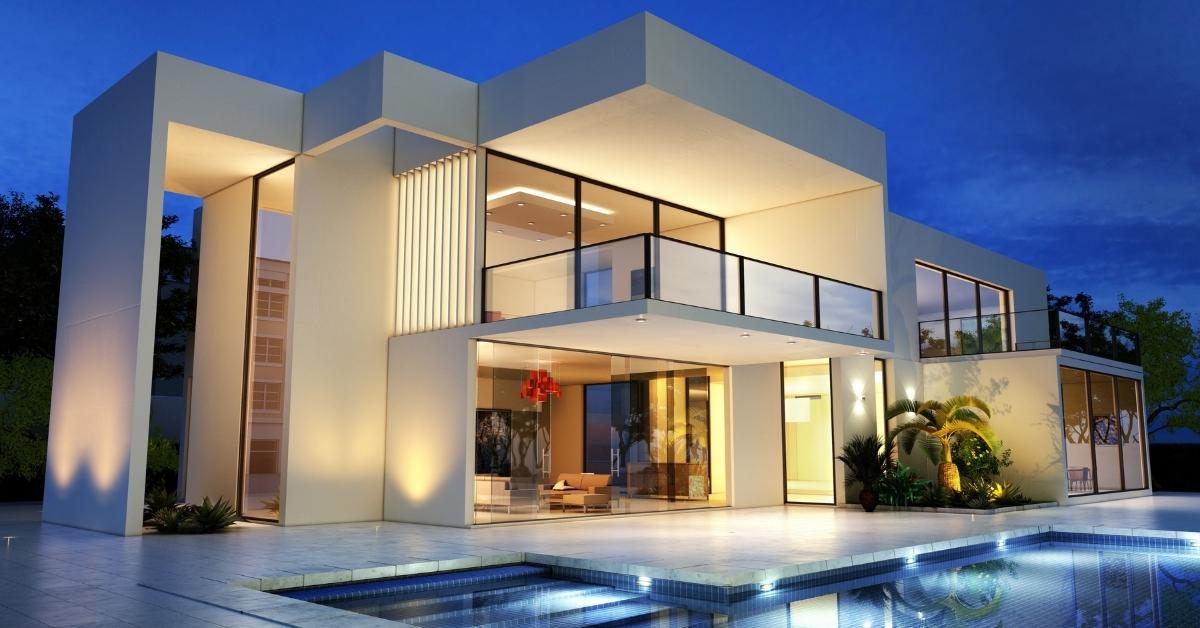
Exterior rendering focuses on the outside appearance of a building. It visualizes façade materials, landscaping, lighting conditions, and surrounding context.
This is one of the most recognizable real estate rendering types, particularly in pre-construction marketing.
Best used for:
- Pre-launch campaigns
- Developer websites
- Billboard visuals
- Sales brochures
Exterior visuals help potential buyers answer a simple but powerful question: What will this building look like in real life?
Advanced exterior renderings simulate:
- Natural daylight and golden hour lighting
- Realistic sky and reflections
- Urban or suburban surroundings
- Seasonal variations
Among all 3D rendering styles, exterior visualization often carries the strongest first impression. It defines project identity before anything is physically built.
2.2. Interior 3D rendering
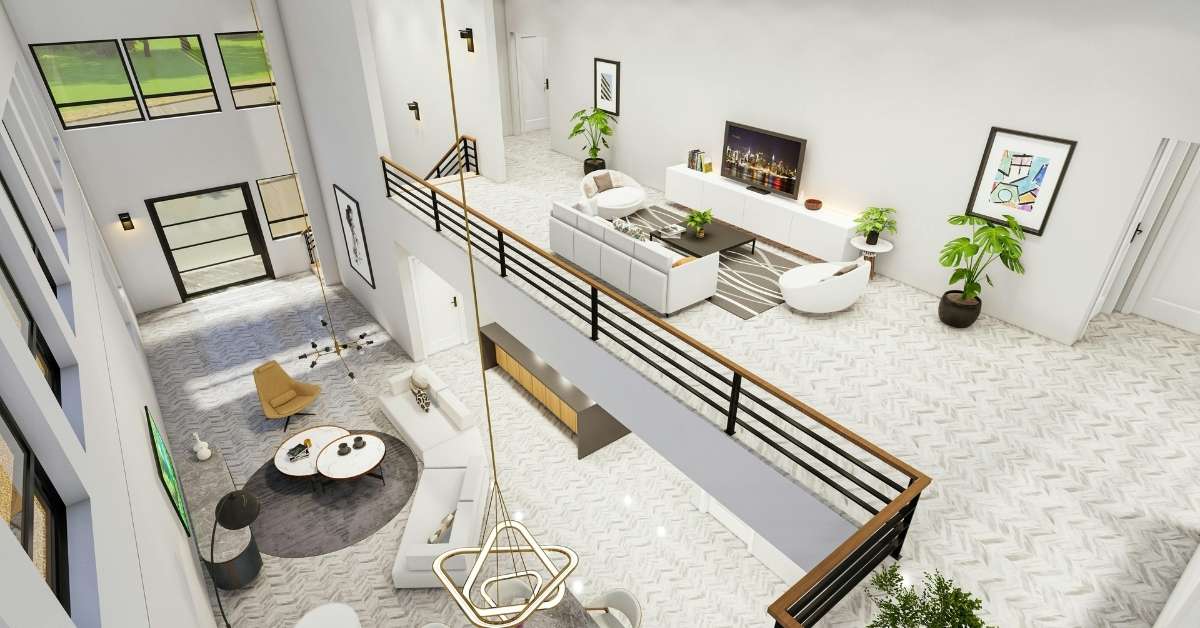
Interior rendering visualizes indoor spaces from residential living rooms to commercial offices and hospitality environments.
Interior 3D rendering
Unlike exterior visuals, interior scenes rely heavily on:
- Material accuracy
- Lighting balance
- Spatial proportions
- Furniture placement
- Interior work is one of the most emotionally driven types of 3D rendering because it allows viewers to imagine themselves inside the space.
There are multiple 3D rendering styles within interior visualization:
- Minimal staging for layout clarity
- Fully furnished luxury staging
- Lifestyle-driven scenes with human elements
Interior rendering is particularly valuable for:
- Pre-sale condos
- Model unit marketing
- Renovation previews
- Design approvals
When executed well, it reduces uncertainty and shortens decision cycles.
2.3. 3D floor plan rendering
While traditional 2D floor plans communicate layout, 3D floor plans translate technical drawings into spatial understanding.
This type presents:
- Room proportions
- Circulation flow
- Furniture placement
- Vertical relationships
Among the different 3D rendering styles, this format prioritizes clarity over dramatic realism.
It is especially helpful for:
- Online listings
- International buyers
- Complex layouts
Because not all buyers interpret blueprints easily, 3D floor plans bridge the cognitive gap between technical drawings and lived experience.
2.4. Aerial / Bird’s eye rendering
Aerial rendering visualizes projects from an elevated perspective. It shows context, scale, and master planning in a single image.
This is one of the most strategic real estate rendering types for large developments.
Common use cases:
- Mixed-use communities
- Resort projects
- Gated subdivisions
- Urban redevelopment plans
It answers questions like:
- How does the project connect to roads and amenities?
- What is the density?
- How does landscaping integrate with architecture?
Among all real estate renderings, aerial views communicate scope and positioning most effectively.
2.5. 360° / Panorama rendering
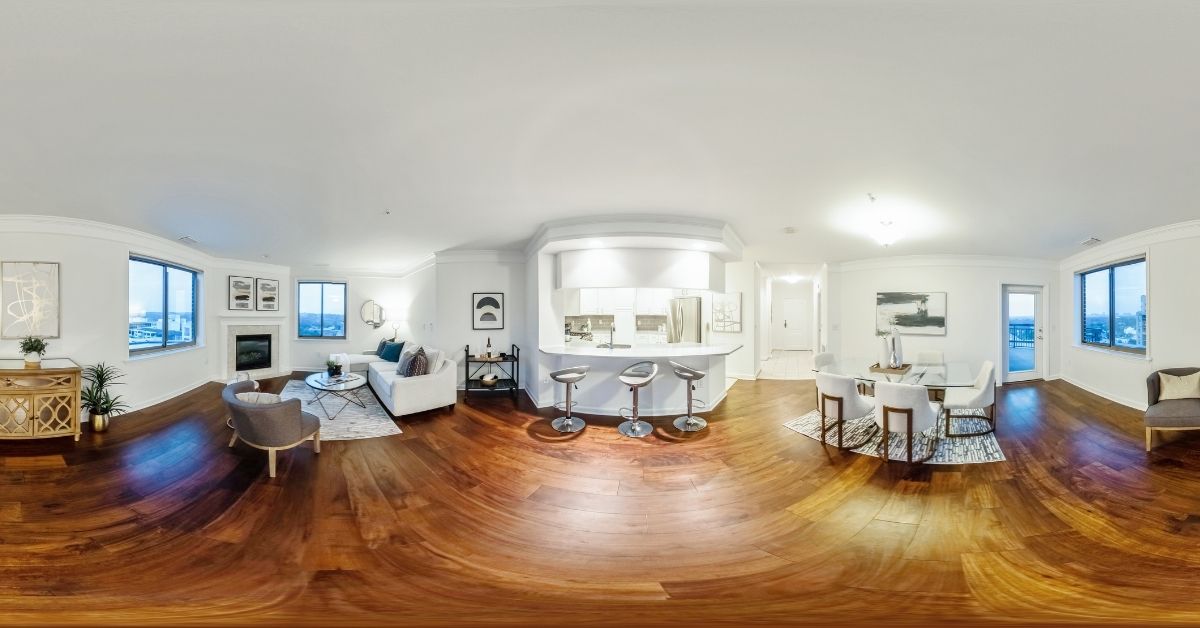
360° rendering creates immersive experiences where viewers can rotate the camera view.
Unlike static images, panorama visuals encourage engagement. They increase time-on-page and allow remote buyers to explore spaces interactively.
360° rendering for real estate
This format is especially relevant in:
- International real estate marketing
- Luxury condo launches
- Tech-forward developments
Within modern types of 3D rendering, immersive formats represent a shift from passive viewing to active exploration.
2.6. Photorealistic rendering
Photorealistic rendering aims to replicate real-world photography as closely as possible.
It includes:
- Accurate light physics
- Real material textures
- Depth of field
- Natural imperfections
This is less a category and more a quality level applied across many 3D rendering styles.
Photorealism is commonly used in:
- Luxury projects
- Premium investor decks
- High-end marketing campaigns
When realism is critical for credibility, this style becomes essential.
2.7. Conceptual rendering
Conceptual rendering focuses on mood and vision rather than technical precision.
It may include:
- Soft edges
- Stylized lighting
- Sketch-like textures
Among the different real estate rendering types, conceptual visuals are ideal for early-stage design presentations and creative direction approvals. They communicate intention without overcommitting to details that may change.
2.8. Virtual staging rendering
Virtual staging transforms empty spaces into furnished environments.

Virtual staging
Unlike full interior modeling from scratch, this method enhances:
- Unfurnished property listings
- Renovation previews
- Rental marketing
Within current 3D rendering styles, virtual staging offers one of the highest ROI formats due to its cost efficiency and fast turnaround.
3. How to choose the right type of 3D rendering
Selecting the right type of 3D rendering is not a design decision, it is a strategic one. The rendering format you choose should reflect where the project stands, who you are communicating with, and what decision you want to influence.
Too often, teams jump directly into photorealistic visuals without asking a more fundamental question: What problem is this rendering supposed to solve?
Below is a practical framework used in real estate and architectural development to align rendering types with real business objectives.
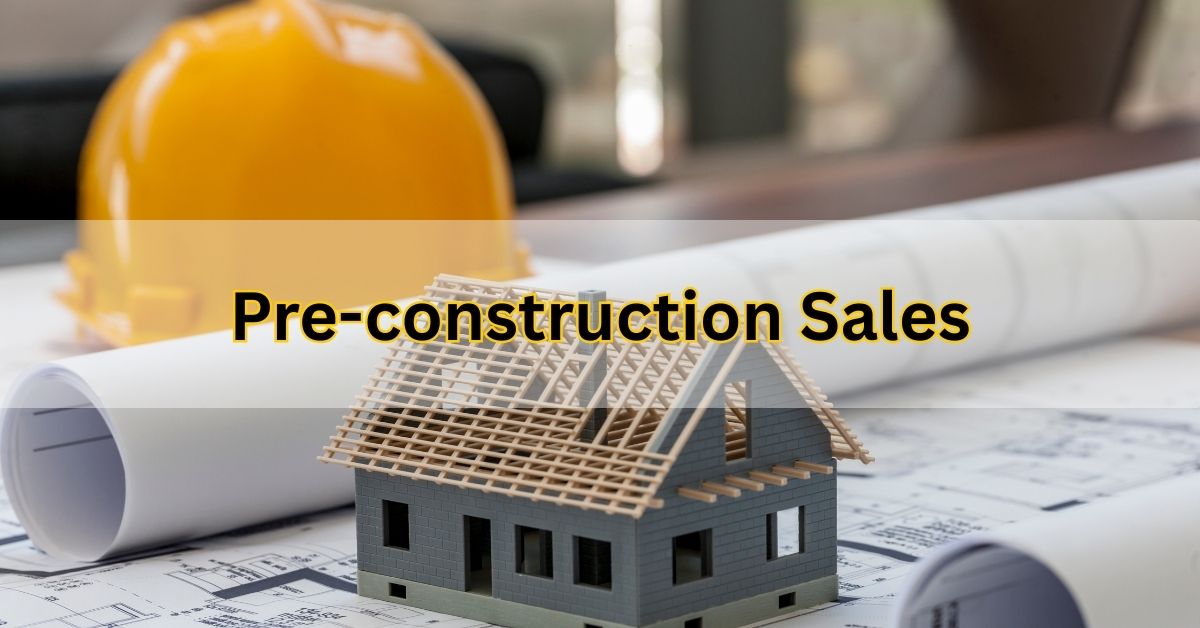
3.1. Pre-construction sales
In pre-construction phases, buyers are committing to something that does not yet exist physically. The primary challenge here is risk reduction. Your visuals must replace uncertainty with clarity.
Pre-construction phases
For this scenario, a combination of several real estate 3D rendering types is typically required:
- Exterior rendering to establish identity and curb appeal
- Interior rendering to communicate lifestyle and material quality
- 3D floor plan rendering to clarify layout and spatial logic
- Aerial rendering (for larger developments) to show context and master planning
The mistake many developers make is overinvesting in ultra-dramatic visuals too early. In pre-construction, buyers want reassurance more than cinematic beauty. Lighting should feel realistic, materials believable, and proportions accurate.
If your target audience includes international buyers or remote investors, consider adding 360° panoramas. Immersive formats can increase engagement and time-on-page while strengthening confidence.
In short, for pre-construction marketing, select 3D rendering types that answer practical questions before emotional ones.
3.2. Renovation marketing
Renovation projects operate differently from ground-up developments. The structure already exists. Buyers or investors need to visualize improvement, not invention.

Clarity and transformation storytelling matter more than grand architectural statements.
The most effective types of 3D rendering for renovation marketing include:
- Interior rendering focused on upgraded finishes
- Virtual staging to demonstrate furnishing potential
- Before-and-after comparison visuals
- Photorealism is useful, but it must remain grounded. Overly polished renders can create a credibility gap if the final renovation budget does not support that level of finish.
A practical approach is to maintain accurate lighting conditions and realistic material specifications. For renovation marketing, choose rendering styles that feel attainable rather than aspirational.
3.3. Investor pitch
When presenting to investors, your audience evaluates risk, scalability, and differentiation. The rendering strategy should support financial logic.
In this case, the most appropriate 3D rendering is:
- Aerial or bird’s-eye renderings to demonstrate scale and site integration
- Conceptual renderings to communicate design vision without overcommitting to details
- Select photorealistic hero images to support premium positioning
Investors do not necessarily require dozens of lifestyle interior visuals. They need confidence in density, circulation, and project viability.
Aerial renderings are particularly powerful in this context because they show how the development interacts with infrastructure, surrounding properties, and amenities. The key principle: prioritize strategic clarity over decorative imagery.
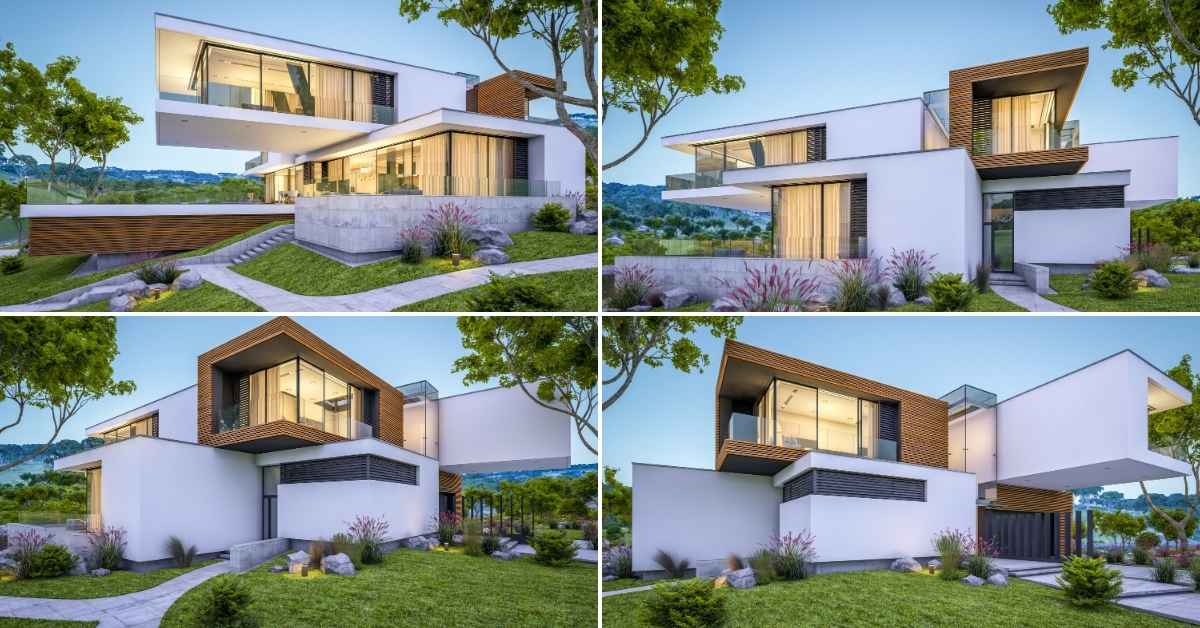
3.4. Luxury project
Luxury developments operate in a perception-driven market. Buyers expect refinement, emotional depth, and visual sophistication.
For high-end positioning, rendering quality must align with pricing strategy. In this segment, the recommended types of rendering include:
- High-resolution photorealistic exterior scenes, often in golden-hour lighting
- Lifestyle-driven interior renderings with curated furnishings
- 360° immersive views for digital engagement
- Detailed material close-ups
Luxury developments operate in a perception-driven market.
Luxury buyers are highly sensitive to authenticity. Lighting physics, texture realism, and shadow softness all influence perceived value.
However, sophistication does not mean excess. Even in luxury projects, rendering should feel intentional. Avoid visual clutter or exaggerated environmental effects that distract from architectural integrity.
When properly aligned, premium 3D rendering styles elevate perceived exclusivity and justify price positioning.
3.5. A strategic decision, not a design preference
Across all scenarios, the most common mistake is choosing a rendering format based on trend rather than objective.
Before selecting among the available types of 3D rendering, clarify:
- Who is the primary decision-maker?
- What uncertainty needs to be reduced?
- What stage is the project in?
- What is the timeline for marketing launch?
- What is the available budget?
The right rendering strategy is not about using the most advanced option. It is about using the most appropriate one.
When rendering supports the business goal whether that is early sales velocity, investor confidence, renovation storytelling, or luxury positioning. It becomes more than a visual asset—it becomes a tool for better decisions.
And that is ultimately how the right type is chosen: not by aesthetic preference, but by strategic alignment.
4. Common mistakes when choosing a rendering type
Choosing among the many types of 3D rendering is not simply a matter of aesthetics. When the wrong format is selected, the result is rarely catastrophic, but it is often inefficient. Budgets stretch unnecessarily. Timelines tighten. Marketing loses clarity. And most importantly, the rendering fails to influence the intended decision.
Below are the most common strategic mistakes developers, architects, and marketing teams make when selecting a rendering approach along with the reasoning behind why they matter.
4.1. Ignoring the target audience
The most frequent misstep is producing visuals without clearly defining who they are meant to persuade.

When the audience is clearly defined, the appropriate rendering type often becomes obvious.
Different audiences interpret visuals through different lenses:
- End buyers evaluate comfort, lifestyle, and emotional resonance.
- Investors evaluate scale, density, feasibility, and return potential.
- Architectural review boards assess compliance, proportion, and contextual harmony.
- Luxury clients assess refinement, exclusivity, and design credibility.
Yet many projects default to photorealistic interior scenes simply because they are visually impressive. While visually appealing, this may not address the investor’s primary concerns, such as site utilization or infrastructure access.
Among all the available real estate 3D rendering, no format is universally superior. The effectiveness depends entirely on audience alignment.
Before commissioning any render, ask:
- What decision does this visual need to support?
- What questions does the viewer have right now?
- What level of detail is required to reduce hesitation?
4.2. Overcomplicating early-stage projects
Another common mistake is applying high-detail, fully photorealistic rendering to projects that are still fluid.
In schematic design or feasibility phases, many architectural elements remain subject to change, façade treatments, material selections, landscaping, even unit configurations. Producing highly detailed visuals at this stage can create two problems:
- It consumes unnecessary time and budget.
- It locks stakeholder expectations prematurely.
Early-stage projects often benefit more from conceptual or semi-realistic 3D rendering. These communicate intent and massing without implying finality.
Conceptual visuals leave room for iteration. They guide discussion rather than finalize perception.
Over-rendering too soon can create friction later if the final design diverges from early visuals. Experienced teams know that clarity doesn’t always require hyper-realism..
4.3. Not considering the timeline and budget
Each of the available types of 3D rendering comes with different production demands.
Photorealistic exterior scenes with advanced lighting simulations require:
- Detailed modeling
- Material refinement
- Complex rendering passes
- Post-production adjustments
- 360° panoramic experiences require additional camera setup, stitching processes, and optimization for web platforms.
Aerial masterplan visuals demand extensive environmental modeling and contextual integration. When timeline constraints are tight, such as for a fast marketing launch, selecting an overly complex rendering type can jeopardize deadlines.
Similarly, when budgets are fixed, allocating disproportionate resources to a single hero image may limit the ability to produce supporting visuals such as floor plans or alternative views.
Professional decision-making involves balancing impact with efficiency. The most effective 3D rendering styles are not necessarily the most detailed, they are the ones that achieve communication goals within realistic production parameters.
4.4. Treating rendering as decoration instead of strategy
Rendering should never be approached as a decorative add-on. It is a communication tool embedded within a broader marketing and development strategy. A common mistake is producing isolated images without integration into:
- Sales funnels
- Website layout
- Brochure structure
- Investor decks
- Social media campaigns
For example, commissioning multiple high-quality interior renders without providing a clear exterior identity can dilute brand coherence. Conversely, producing only one dramatic exterior hero image without layout clarity may leave buyers uncertain about functionality.
The most effective use of types of 3D rendering happens when visuals are mapped intentionally across customer touchpoints.
Rendering should support narrative flow:
- First impression (exterior or aerial)
- Spatial understanding (floor plan or cutaway)
- Emotional connection (interior lifestyle scene)
- Immersion (360° view, if applicable)
When this structure is ignored, visuals may look impressive but fail to drive conversion.
4.5. Focusing on trends rather than objectives
Rendering trends evolve quickly, dramatic dusk lighting, ultra-saturated skies, cinematic lens effects, heavy depth-of-field blur.

While visually striking, these stylistic choices may not align with every project.
Among the many types of 3D rendering, stylistic treatment should serve positioning, not dominate it. Luxury developments may benefit from warm golden-hour tones and carefully curated staging. Urban mixed-use projects may require neutral daylight realism for planning approval. Renovation marketing may demand simple, credible visuals without cinematic exaggeration. When teams chase visual trends without evaluating project goals, the rendering may attract attention, but not necessarily trust.
4.6. Strategic alignment is the safeguard
The difference between effective and ineffective visualization rarely lies in technical execution alone. It lies in alignment. Before selecting from the various real estate 3D rendering types, professionals should clarify:
- Project phase
- Primary audience
- Budget constraints
- Launch timeline
- Brand positioning
Rendering is a powerful tool, but only when applied intentionally. Avoiding these common mistakes ensures that visualization strengthens credibility, accelerates decisions, and supports the broader architectural or real estate strategy. In the end, choosing the right type is not about producing the most visually impressive image. It is about producing the most appropriate one.
Conclusion
Understanding the various types of 3D rendering is not about selecting the most visually impressive option. It is about choosing the format that aligns with your project’s phase, audience, and strategic objective.
Exterior visuals establish identity. Interior renderings create an emotional connection. Floor plans clarify functionality. Aerial and immersive formats communicate scale and experience. Each of these plays a distinct role within the broader ecosystem of real estate and architectural communication.
When thoughtfully selected, the right rendering type becomes more than a marketing asset; it becomes a decision-making tool that reduces uncertainty, builds confidence, and accelerates momentum.
If you are evaluating which approach best fits your development or marketing plan, taking time to assess goals before production can significantly improve outcomes. Teams like Fotober, who work across multiple project scales and rendering formats, often emphasize this alignment-first mindset because in architectural visualization, strategy always comes before style.
- Facebook: fotobermedia.co
- YouTube Channel: Fotober
- TikTok Channel: @fotober
- Instagram: fotober_media
- Email support: [email protected]
- Hotline: +84 942 110 297
Related posts

Minimalist Interior Design: Characteristics, Style Guide, and Staging
October 8, 2026

Coastal Interior Design: Style Definition & Staging Guide
September 30, 2026

Contemporary Interior Design: Key Elements and How to Stage This Style
September 30, 2026

Scandinavian Interior Design: Key Elements, Style Guide, and Staging
September 30, 2026
