




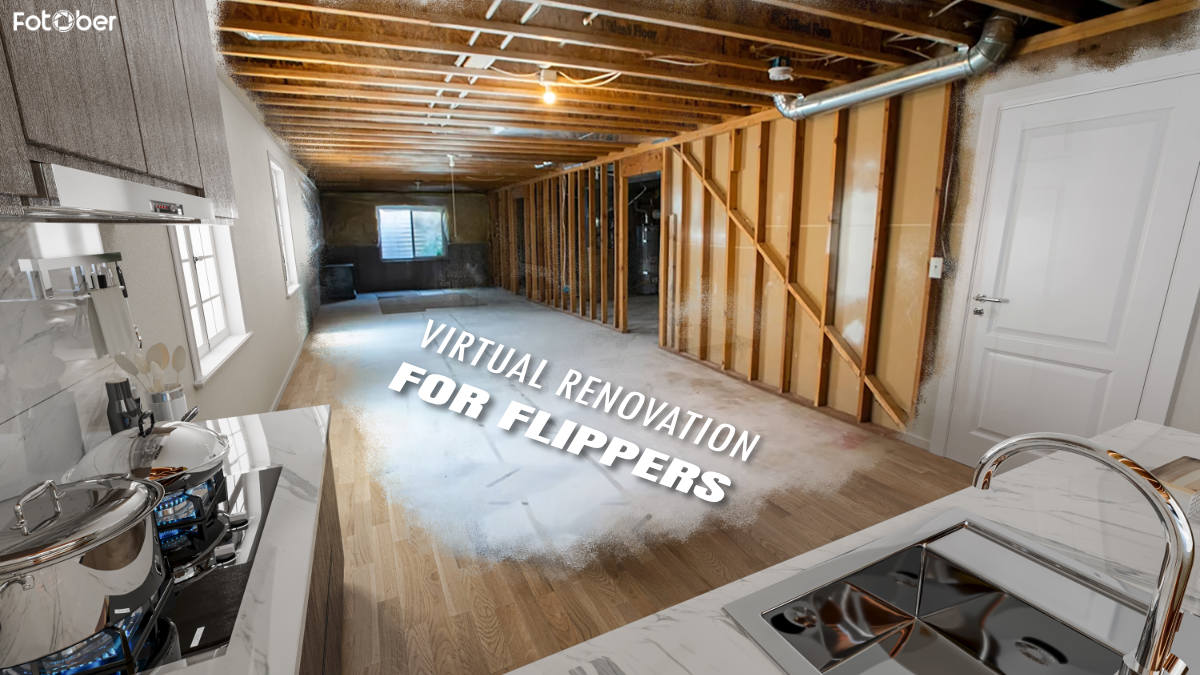
Virtual Renovation for Flippers: Up Your Home’s Worth with Pixels

Share:
Table of Contents
- 1. The architectural & visual mechanics of fix & flip properties
- 2. Why virtual renovation for flippers is a game-changer
- 3. Virtual renovation for flippers deep dive: From dilapidated to designer
- 4. Virtual staging for house flippers: Maximizing buyer emotional engagement
- 5. The strategic imperative of editing and outsourcing virtual renovation for flippers
- 6. Why Fotober is the ultimate visual partner for realtors, photographers, and investors
- 7. Step-by-step blueprint: Implementing virtual renovation for flippers strategy
- 8. Conclusion
For fix-and-flip investors, the faster you can acquire, renovate, market, and sell a property, the higher your Internal Rate of Return (IRR) and the lower your holding costs (hard money interest, taxes, insurance, and utilities). However, investors had to wait until the final coat of paint dried, the staging furniture was trucked in, and a professional photographer shot the finished product before listing the property. Not anymore. Through virtual renovation, we now have the power to market a property’s future potential long before the contractor pulls the first permit. In this deep dive, we will explore how virtual renovation for flippers is revolutionizing the fix-and-flip industry and how high-end editing and outsourcing provide realtors, photographers, and investors with an unshakeable competitive edge.
1. The architectural & visual mechanics of fix & flip properties
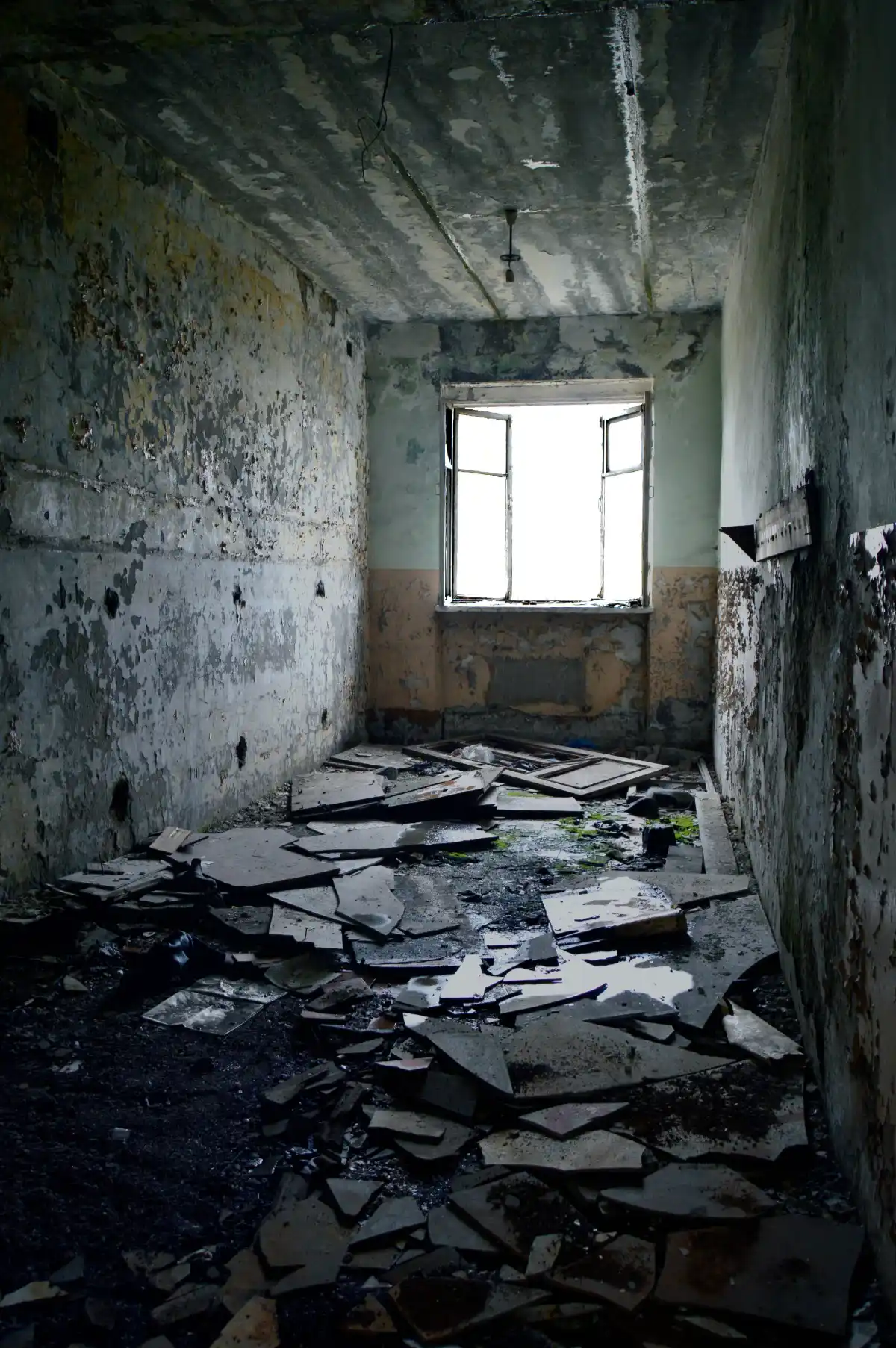
As an investor or builder, you walk through a distressed property and see opportunity. Where a buyer sees peeling wallpaper, outdated popcorn ceilings, and a claustrophobic wall between the kitchen and living room, you see an open-concept layout with quartz countertops and white oak flooring.
The fundamental problem? Over 90% of home buyers lack spatial visualization skills. When non-professional buyers look at dark, dilapidated, or completely gutted properties, they experience cognitive friction. They cannot look past dirty carpets or exposed framing. If you rely on raw progress photos or wait until the physical build is 100% complete to showcase a property, you lose thousands of dollars in holding costs while missing out on eager pre-construction buyers.
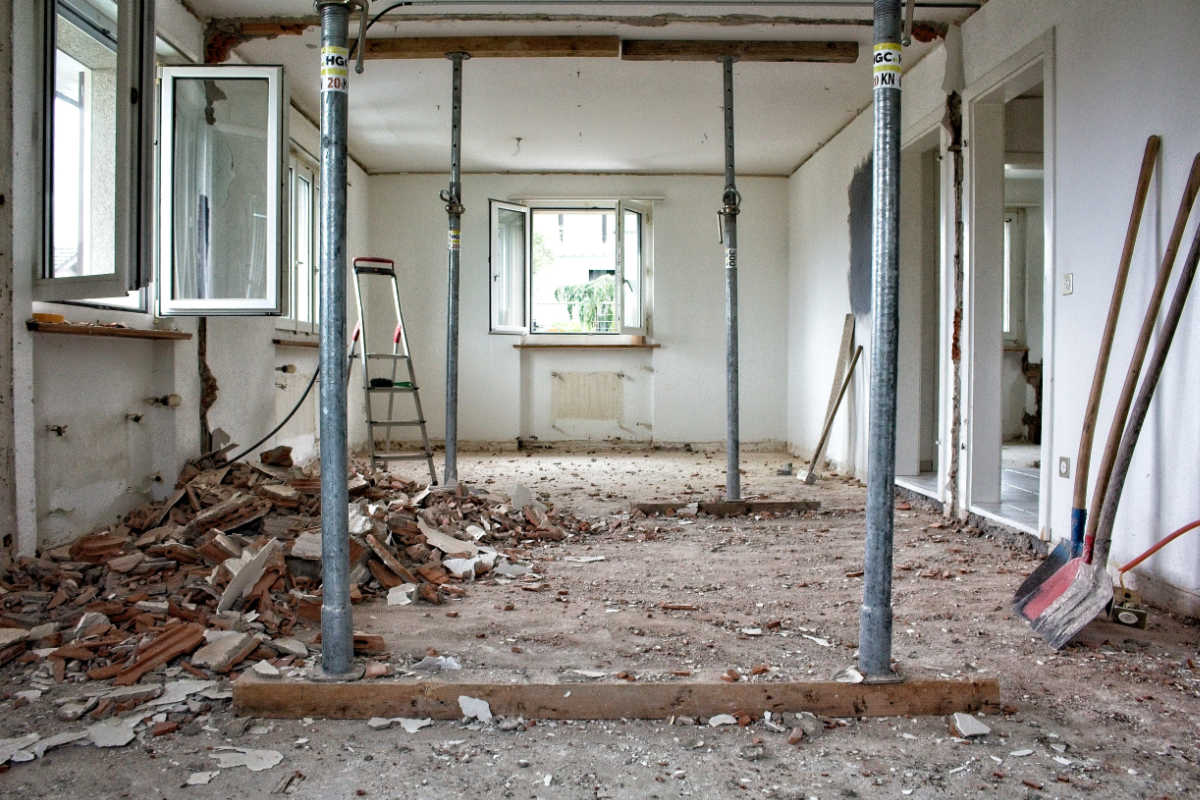 Modern buyers’ demands have raised the need for virtual renovation for flippers.
Traditional flip timeline: Acquisition -> Demo -> Construction -> Physical staging -> Photo/Video -> Listing -> Sale => High holding costs
Digital-first flip timeline: Acquisition -> Demo -> Virtual renovation/staging -> Early marketing -> Construction -> Pre-sold/Fast sale => Lower holding costs
To leverage digital visual marketing effectively, investors and real estate professionals must understand the technical distinctions between three key digital interventions:
- Virtual staging: Adding photorealistic 3D furniture, decor, artwork, and lighting into an empty, move-in-ready space. Ideal for post-construction clean-ups.
- Virtual renovation: Modifying existing surfaces, fixtures, and cosmetic details without altering structural load-bearing elements. This includes changing flooring, changing paint colors, updating kitchen cabinets, swapping light fixtures, and re-tiling bathrooms.
- Virtual remodeling: Full-scale digital architectural alterations. This involves digitally knocking down non-load-bearing walls, adding additions, altering floor plans, re-framing windows, and redesigning entire building facades.
2. Why virtual renovation for flippers is a game-changer
The primary financial driver for using virtual renovation for fix-and-flip assets is the dramatic reduction of holding costs. Consider a standard fix-and-flip project with a hard money loan carrying an 11% interest rate, plus taxes, insurance, and utilities totaling $3,500 per month. If physical construction takes four months, and marketing takes another two months post-completion, you incur six months of holding costs.
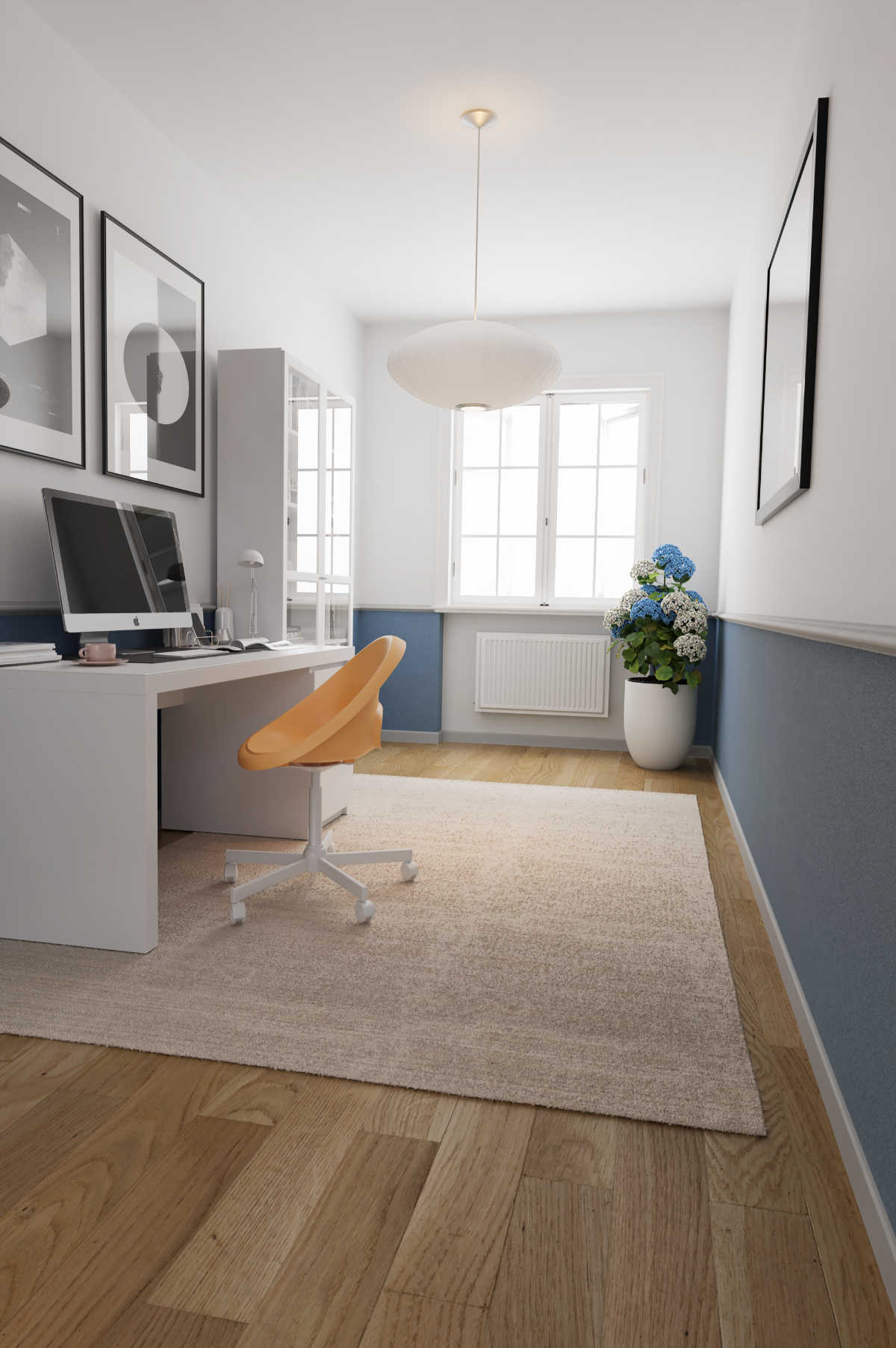
By employing hyper-realistic virtual renovation for flippers during the early construction phase, you can launch pre-marketing campaigns on the MLS, social media, and digital pitch decks. Buyers can see the exact proposed finish levels while contractors are still roughing in plumbing. Pre-selling or securing a buyer under contract prior to construction completion drastically compresses your cycle time, adding thousands back to your bottom line.
2.1. Cost-efficiency: Physical staging vs. digital rendering
Physical staging for a standard 2,500-square-foot home can range from $3,000 to $8,000 for an initial three-month contract, plus ongoing rental fees if the property sits. If structural modifications are needed to show potential, physical demo costs money and time.
|
Metric |
Physical staging & renovation |
Virtual staging & renovation |
|
Upfront cost |
$3,000 – $15,000+ |
$30 – $150 per image |
|
Turnaround time |
3 to 14 days |
24 to 48 hours |
|
Flexibility |
High labor/cost to swap styles |
Instant digital material/style swaps |
|
Risk |
Damage to floors/walls during move-in |
Zero physical risk |
|
Marketing reach |
Post-construction only |
Immediate / Pre-construction |
2.2. Architectural accuracy and buyer trust
A common critique of early digital rendering techniques was that they looked like low-budget video game graphics. Today, state-of-the-art post-production leverages linear perspective grid alignment, physically-based rendering (PBR) materials, realistic shadow casting, and ray-traced lighting models.
When executed by architectural visual artists, virtual remodeling for real estate investors isn't a deceptive trick; it is a precise, visually accurate blueprint brought to life. It gives buyers confidence that the end product will match their aesthetic expectations.
3. Virtual renovation for flippers deep dive: From dilapidated to designer
To understand how high-end visual edits work, let’s look at the photography and architectural post-processing workflow behind a successful transformation.
3.1. Structural changes and material swaps
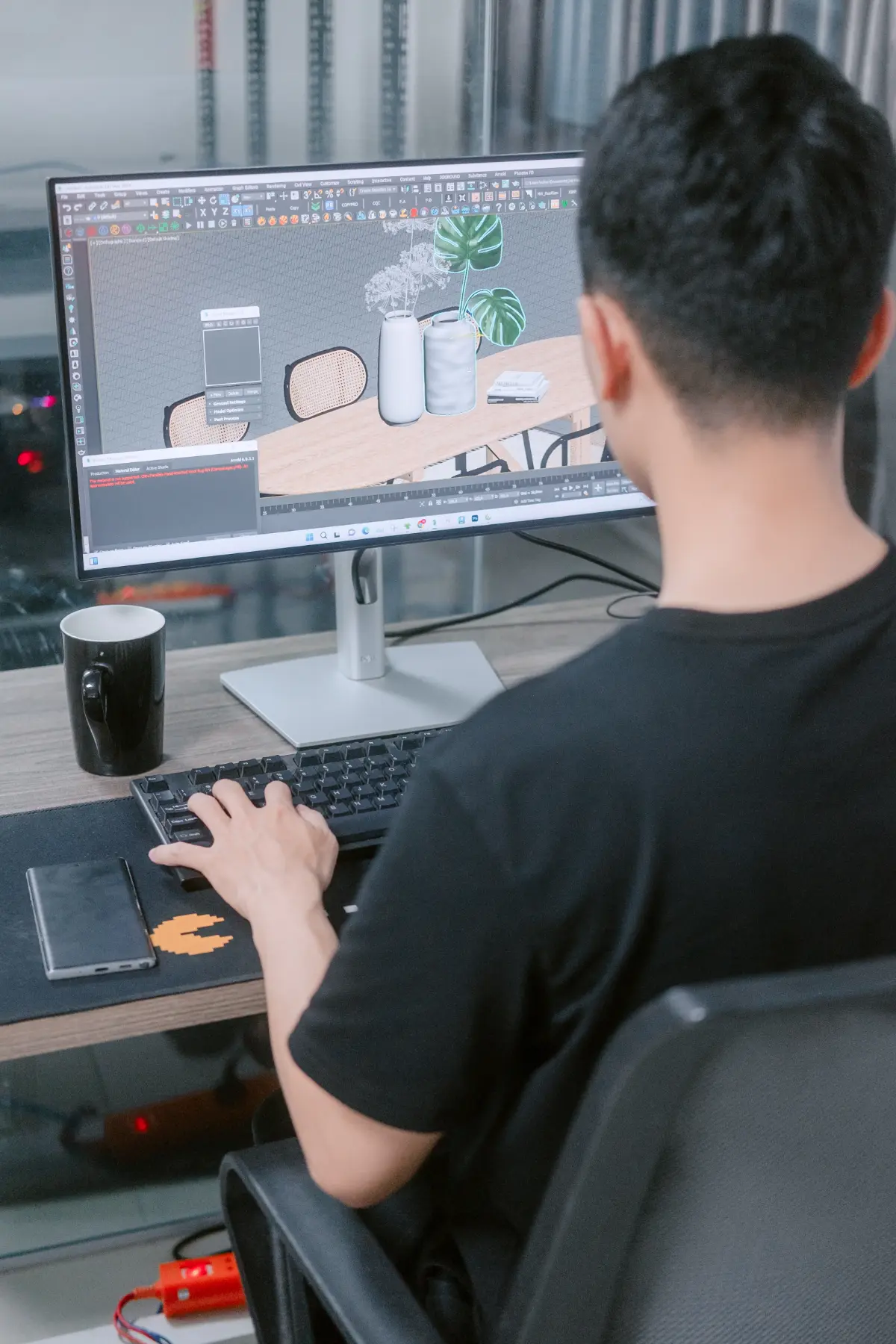
When an artist executes a virtual renovation for flippers, they work directly off low-resolution wide-angle photos or RAW capture files provided by photographers. The edit involves multi-layered digital composition:
- Decluttering and digital demolition: Removing trash, construction equipment, open wires, and broken drywall using advanced plate-cleaning algorithms and clone stamping.
- Surface replacement: Mapping real textures onto architectural planes. Outdated vinyl flooring is replaced with 7-inch wide-plank European oak. Stained laminate countertops become Calacatta Gold marble with realistic edge profiles and light reflections.
- Fixture and hardware upgrades: Inset lighting, modern matte black or brushed brass hardware, custom cabinetry, and energy-efficient double-pane windows are rendered into place with strict adherence to scale and vanishing points.
[Raw Distressed Capture] -> Digital Demolition & Surface De-cluttering -> Structural Mesh & Perspective Alignment -> PBR Texture Application (Wood, Quartz, Tile) -> Photorealistic Ray-Traced Lighting & Shadows -> [Final High-Yield Virtual Renovation]
3.2. Lighting, perspective, and camera mechanics
From a photographer and cinematographer's perspective, realism is dictated by light behavior. A fake edit fails because the light on the virtual couch does not match the directional sunlight coming through the real-world window.
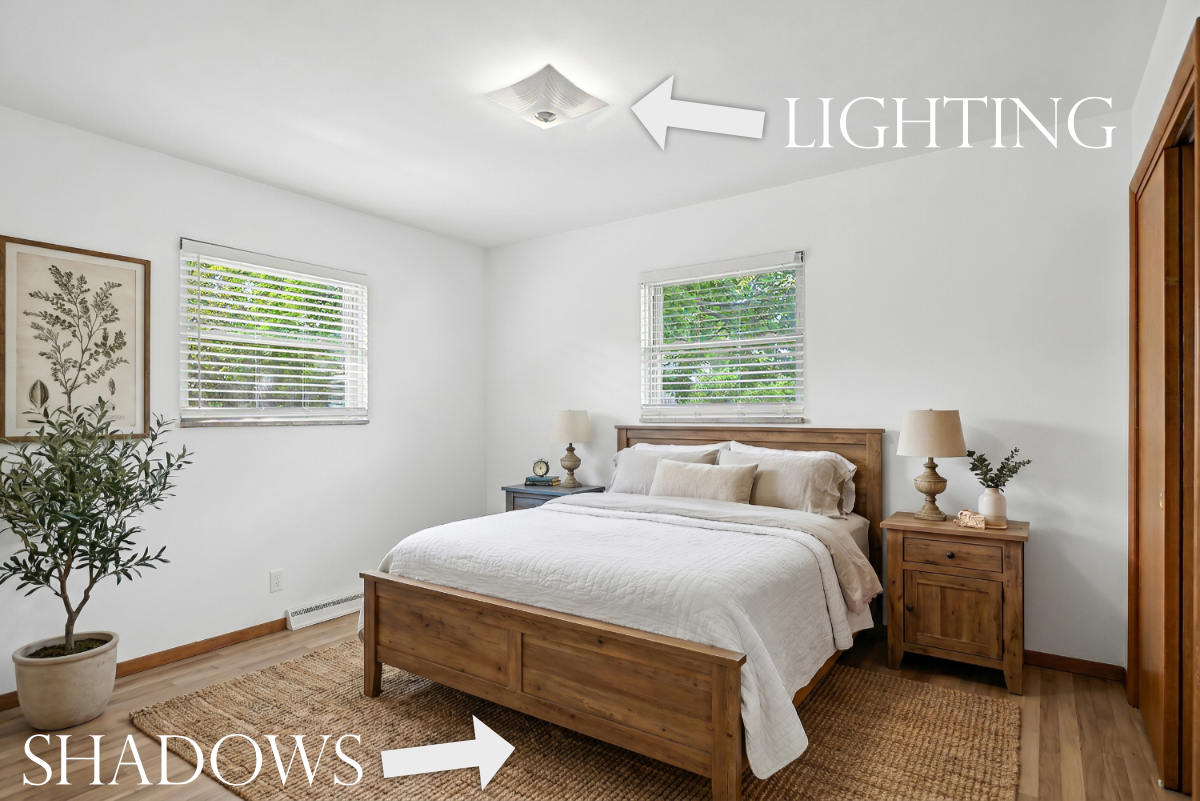
Master editors do not just paste 3D objects; they analyze:
- Color temperature (Kelvin): Matching warmer interior recessed lights (2700K–3000K) with cool ambient daylight spill (5500K–6500K).
- Shadow softness and ambient occlusion: Calculating how light bounces into corners and underneath furniture to drop natural, soft contact shadows.
- Lens distortion correction: Correcting barrel and pincushion distortion from ultra-wide lenses (e.g., 16mm or 17mm tilt-shift) so that digital walls remain perfectly vertical.
4. Virtual staging for house flippers: Maximizing buyer emotional engagement
Once structural repairs are conceptualized, virtual staging for house flippers fills the void. Empty homes feel cold, small, and uninviting. In fact, an empty room actually looks smaller to the human eye than a furnished room because it lacks visual anchor points to judge depth and scale.
- Empty room = Poor spatial reference = Perceived smaller footprint
- Furnished room = Clear scale anchors = Perceived optimal footprint
4.1. Spatial awareness and scale
When an investor completes a demo and leaves a home as a wide-open blank canvas, buyers struggle to figure out where to place a sofa, how big of a TV fits on the wall, or whether a dining table will block traffic flow.
Through virtual staging for house flippers, editors insert correctly scaled 3D assets into the scene. By placing a king-sized bed, nightstands, and lamps into a master bedroom, buyers instantly recognize that the room comfortably supports a master suite layout.
4.2. Matching architectural styles to target demographics
Every real estate market has a distinct design language. A fix-and-flip in suburban Dallas requires a different interior aesthetic than a loft in downtown Chicago or a beach bungalow in Miami.
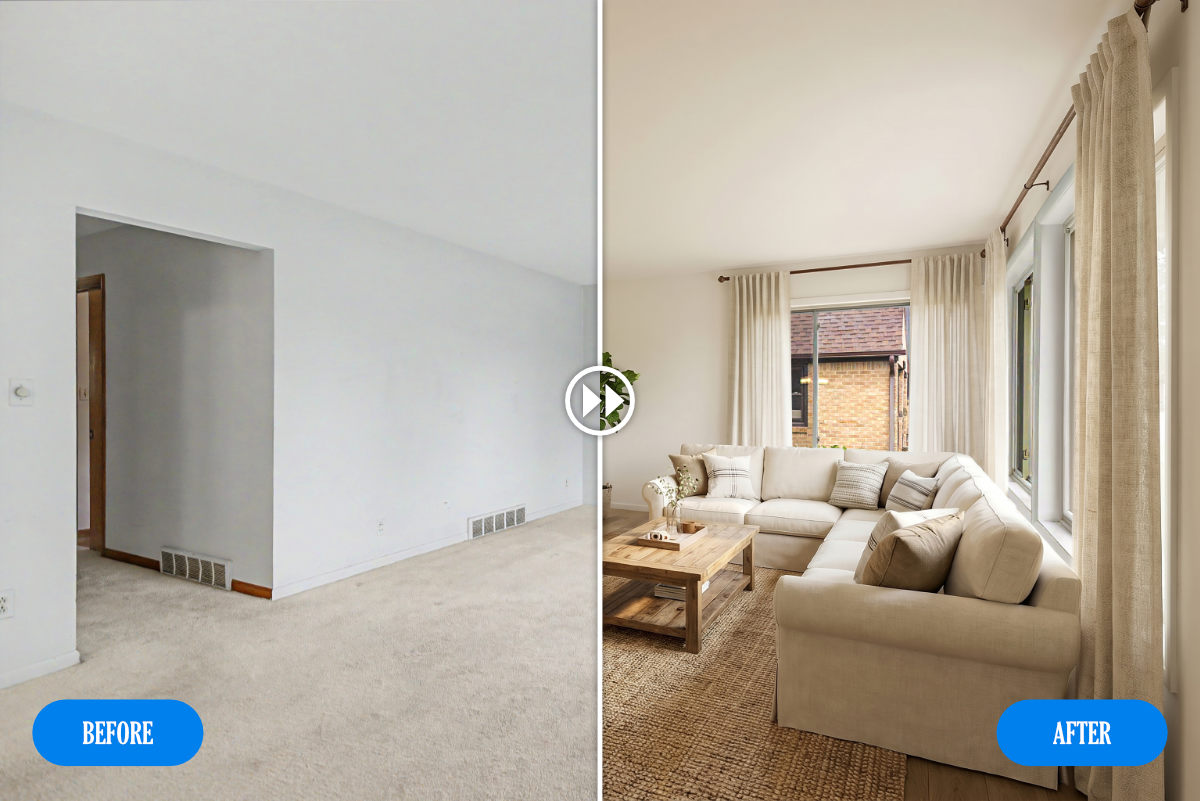 Virtual staging puts more emphasis on stylistic choices than the comprehensive approach of virtual renovation for flippers.
Virtual staging allows investors and realtors to match furniture aesthetics precisely to demographic buyer personas:
- Modern farmhouse: Light oak, board and batten walls, neutral linen sofas, iron fixtures.
- Mid-century modern: Tapered wood legs, rich walnut finishes, mustard or teal accents, geometric rugs.
- Contemporary luxury: Clean marble accents, low-profile Italian leather seating, minimalist brass light sculptures.
If an investor wants to test whether a modern or traditional aesthetic appeals more to local buyers, digital staging allows them to render both options at a fraction of the cost of physical staging.
4.3. Virtual remodeling for real estate investors: Capitalizing on pre-construction marketing
Virtual remodeling for real estate investors is not limited to retail buyer marketing; it is an invaluable asset for capital raising. When pitching private lenders, equity partners, or hard money lenders, presenting high-resolution visual renderings of the proposed finished project alongside your scope of work (SOW) establishes instant credibility. Lenders feel significantly more comfortable releasing higher rehab budgets when they can visually audit the planned architectural upgrades and compare them to neighborhood comps.

A/B testing design choices:
Design mistakes during a physical build are expensive. Changing your mind on a dark green kitchen cabinet paint job or a complex herringbone tile backsplash mid-build results in change orders, wasted materials, and timeline delays. By utilizing digital remodeling during pre-production, investors can preview different color palettes, countertop selections, and wall removals before placing orders with suppliers.
5. The strategic imperative of editing and outsourcing virtual renovation for flippers
Whether you are a real estate agent managing multiple listings, an investor overseeing five active flips, or a professional real estate photographer shooting three homes a day, time is your most valuable asset.
5.1. The bottleneck of in-house post-production
Consider the workload of a professional real estate photographer or digital media creator. Shooting a property takes 1 to 2 hours. However, the true labor occurs at the desk:
- HDR exposure blending and bracket integration.
- Perspective correction and lens calibration.
- Window masking and sky replacement.
- Color grading and flash-ambient blending (Flambient).
- Adding 3D virtual staging, digital wall removal, and lighting engine renders.

If a photographer spends 4 to 6 hours editing a single property, their earning potential is capped by the clock. They become an operator trapped in post-production rather than a business builder scaling their operational capacity.
Similarly, an investor or real estate agent trying to master complex 3D rendering software like Blender, 3ds Max, or Photoshop spends hundreds of hours learning technical skills far removed from their core competency: finding, funding, and selling real estate.
- In-house post-production (Low scale): Photographer -> Shoots property -> 6 hours editing -> Burns out -> Capped income
- Outsourced post-production (High scale): Photographer -> Shoots property -> Sends RAWs to Fotober -> Focuses on sales/shooting -> Unlimited scale.
5.2. The technical complexity of high-end CGI & edits
High-end virtual staging and renovation require immense computing power and specialized software ecosystems. Creating photorealistic imagery requires:
- Subsurface scattering for natural light penetration through translucent materials like marble and glass.
- Complex brush masking to preserve ambient reflection layers while altering wall colors.
- High-polygon 3D asset libraries populated with up-to-date furniture trends.
Outsourcing post-production to a dedicated team of digital visual artists eliminates software licensing costs, hardware upgrade cycles, and the steep learning curve required to produce professional results.
6. Why Fotober is the ultimate visual partner for realtors, photographers, and investors
When it comes to high-stakes real estate marketing, generic editing solutions and automated AI tools often fall short. Artificial intelligence frequently distorts architectural lines, misjudges proportions, and produces "uncanny valley" furniture that destroys buyer trust.
This is where Fotober stands apart as the premier outsourcing powerhouse for the global real estate industry.
|
FOTOBER ECOSYSTEM | ||
|
FOR REALTORS |
FOR CREATORS |
FOR FLIPPERS |
|
List fast & sell higher |
Shoot & scale business |
Pre-sell & cut costs |
6.1. Uncompromising technical precision
At Fotober, visual post-production is treated as a science. Every image undergoes strict quality control to guarantee the architectural accuracy needed for virtual renovation for flippers:
- True-to-scale modeling: Furniture and architectural elements are calibrated to actual room dimensions, ensuring that what buyers see matches real-world spatial limits digitally.
- Advanced lighting & reflection integration: Fotober's editing artists preserve natural reflections, account for directional shadows, and seamlessly blend interior ambient light with natural exterior daylight.
- Photorealistic texture mapping: From realistic wood grain patterns to metallic finishes, surfaces look tangible and natural.
6.2. A complete ecosystem of visual solutions
Fotober is a single-source post-production powerhouse for real estate visual media:
- Virtual renovation for fix and flip: Digitally upgrade kitchens, replace flooring, modernize bathrooms, change exterior siding, and alter fixtures based on your specific architectural directives.
- Virtual staging for house flippers: Access an extensive, modern library of 3D furniture and decor styles, perfectly curated to match your target demographic.
- Virtual remodeling for real estate investors: Visualize floor plan adjustments, wall removals, and complete exterior overhauls long before demo crews step foot on site.
- Core photography enhancements: Day-to-dusk twilight conversions, HDR exposure blending, sky replacements, lawn enhancement, flash-reflection removal, and decluttering.
- Floor plan rendering: Transform rough measurements or sketches into clean, branded 2D and 3D floor plans that complement your visual media packages.
6.3. Scalability, speed, and ROI for business growth
For photographers and videographers, partnering with Fotober unlocks exponential business growth. By delegating the time-consuming editing pipeline to Fotober’s dedicated team, creative studios can double or triple their daily shooting volume, lower turnaround times to 24 hours, and expand their service catalog to include high-margin upsells like virtual staging and renovation.
For realtors and house flippers, Fotober serves as an extension of your marketing department. Rapid turnaround times ensure you get properties onto the MLS ahead of schedule, while top-tier visual presentation drives higher click-through rates (CTR) on listing portals like Zillow, Realtor.com, and Redfin.
7. Step-by-step blueprint: Implementing virtual renovation for flippers strategy
If you are ready to integrate virtual renovation for flippers into your investment model, follow this simple execution framework:
7.1. Step 1: Capture high-quality source imagery
Whether you hire a professional photographer or shoot the property yourself during demo, capture high-resolution RAW photos using a wide-angle lens (16mm-24mm full-frame equivalent). Ensure the camera is mounted on a tripod at chest height (around 4.5 to 5 feet) to keep vertical lines straight and perspective natural.
7.2. Step 2: Define your design scope of work (SOW)
Compile a clear list of proposed changes or inspiration images. For example:
- Living room: Remove non-load-bearing accent wall; replace brown carpet with light oak vinyl plank; paint walls Pure White (SW 7005); add modern minimalist virtual staging.
- Kitchen: Change dark oak cabinets to shaker white; add quartz countertops with waterfalls; add brass pendant lights.
7.3. Step 3: Upload to Fotober
Submit your raw photo files along with your design specifications to the Fotober platform. Fotober’s team of professional artists processes the images, matching perspective grids, material textures, and environmental lighting.
7.4. Step 4: Multi-channel pre-construction marketing
Once you receive your photorealistic renders from Fotober:
- MLS & listing portals: Post the virtually renovated images as the primary media, clearly labeled as "Virtual Renovation / Proposed Finish" to build buzz and buyer inquiries.
- On-site signage: Print high-resolution yard signs or banners featuring the virtual transformation so neighbors, prospective buyers, and foot traffic can preview the upcoming finished home.
- Investor pitch decks: Attach the renderings to your private money lender proposals to justify your After Repair Value (ARV) and secure competitive funding terms.
8. Conclusion
The fix-and-flip model has evolved. Success no longer relies solely on physical labor and hammer-and-nail execution; it is equally driven by visual strategy and digital foresight.
By leveraging virtual renovation for flippers, virtual staging for house flippers, and photorealistic virtual remodeling for real estate investors, forward-thinking investors are slashing holding costs, pre-selling inventories, and maximizing project margins.
At the same time, real estate photographers and agents who embrace outsourced post-production are breaking free from desk-bound editing bottlenecks, elevating their service offerings, and scaling their businesses to new heights.
Don't let unfinished drywall, outdated finishes, or post-production bottlenecks hold back your growth. Partner with the visual experts who understand light, architecture, and real estate ROI. Ready to transform your fix-and-flip marketing and scale your operations? Visit Fotober today, upload your raw files, and experience the power of professional real estate visual editing.
- Facebook: fotobermedia.co
- YouTube: Fotober
- TikTok: @fotober
- Instagram: fotober_media.
Related posts

Cincinnati Housing Market 2026: Prices, Trends, and What It Means for Buyers, Sellers, and Investors
October 20, 2026

Modern Luxe Interior Design: Elements, Style Guide and How to Stage It
October 10, 2026

Minimalist Interior Design: Characteristics, Style Guide, and Staging
October 8, 2026

Coastal Interior Design: Style Definition & Staging Guide
September 30, 2026
