




AI Virtual Renovation: Supercharging Home Visualization

Share:
Table of Contents
- 1. The visual paradigm shift: Understanding AI virtual renovation
- 2. Exploring the frontier: Modern AI virtual home renovation tools
- 3. Top 5 AI virtual renovation services in 2026
- 4. The mechanics of photorealism: Bridging architecture, photography, and AI
- 5. The limitations of pure AI virtual renovation: Why machine learning isn't enough
- 6. The strategic imperative: Why professional editing and outsourcing are essential
- 7. How Fotober's AI virtual renovation bridges innovation with master craftsmanship
- 8. Step-by-step guide: Executing an AI virtual renovation project with Fotober
- 9. The future of real estate visuals: Spatial AI virtual renovation, video, and beyond
- 10. Conclusion
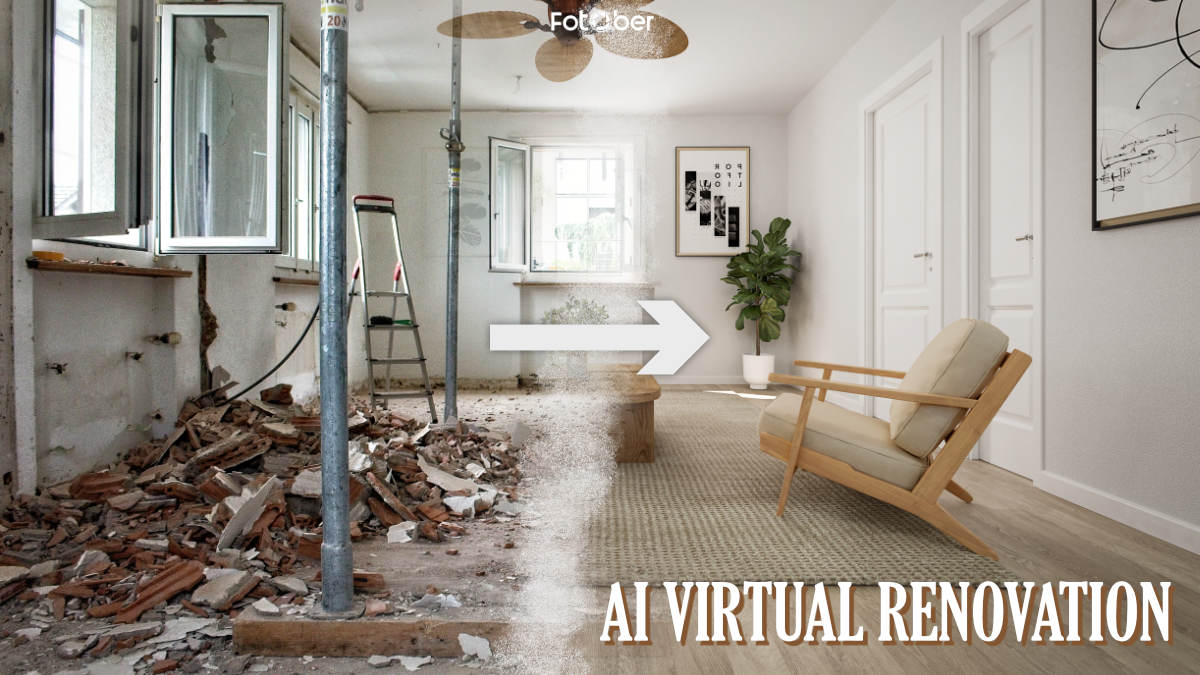
As an architectural photographer and cinematographer who has spent decades behind the camera, balancing ambient exposure with flash, calculating vanishing points, and analyzing floor plans, I have witnessed several tectonic shifts in real estate imagery. Today, we are standing in the middle of the most radical transformation yet: the convergence of artificial intelligence, architectural visualization, and digital post-production.
Property buyers no longer evaluate real estate purely based on physical reality; they evaluate it based on spatial potential. A modern buyer scrolling through Zillow, Redfin, or Instagram at 1:00 AM isn't just looking at wallpaper and dated floorboards; they are looking for a vision. This is where AI-powered virtual renovation has revolutionized the industry. It bridges the massive gap between a property’s present condition and its future blueprint. However, as the market gets flooded with automated AI tools, a critical divide has emerged between cheap, unnatural machine renders and true photorealistic AI virtual renovation.
In this comprehensive guide, we will break down the mechanics, architecture, light behavior, and strategic execution behind AI renovation. Furthermore, we will explore why pure artificial intelligence still requires a master’s eye, and how professional editing outsourcing with industry leaders like Fotober provides the competitive edge that top realtors, photographers, and videographers need to scale efficiently.
1. The visual paradigm shift: Understanding AI virtual renovation
|
TRADITIONAL STAGING |
Physical furniture -> Manual logistics -> High cost ($2k-$10k) |
|
EARLY 3D VIRTUAL STAGING |
Manual 3D modeling -> CAD/Max renders -> Slow lead time (48-72 hrs) |
|
MODERN HYBRID AI RENOVATION |
AI computer vision + Professional human artistry -> Photorealistic |
1.1. From spatial geometry to digital physics: How the tech works
Virtual renovation is not merely putting a digital couch over a photograph. At its highest level, it is a sophisticated interaction between generative computer vision, depth-map analysis, and digital spatial synthesis.
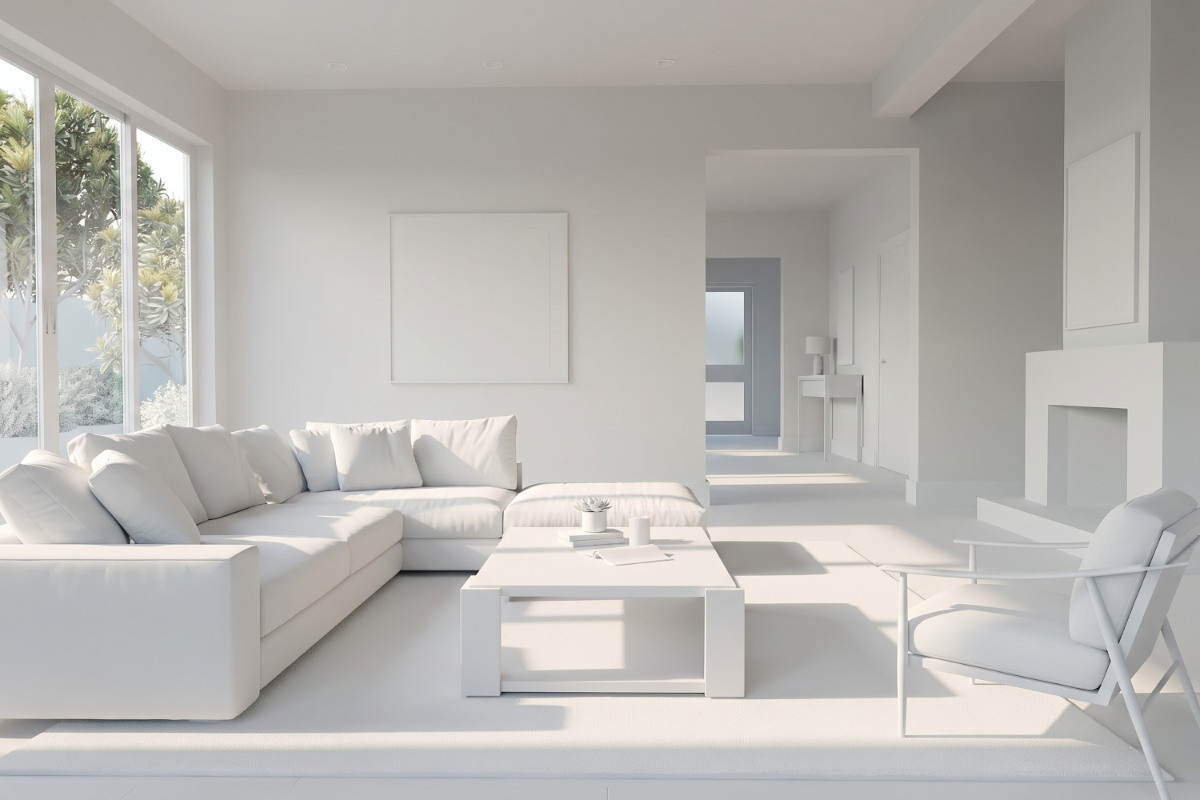
When you feed an image into modern AI virtual home renovation tools, the software performs several deep-learning processes simultaneously:
1. Geometric segmentation: The neural network calculates the structural bounds of the room, identifying ceiling lines, baseboards, load-bearing walls, windows, and structural door frames.
2. Surface normal estimation: The engine determines the direction every plane faces to accurately calculate how virtual light should reflect off floors, walls, and countertops.
3. Semantic inpainting & outpainting: The system removes unwanted elements (outdated cabinetry, stained carpets, cluttered furniture) and replaces them with synthesized pixels based on user prompts or design presets.
1.2. The intersection of architectural intent and visual storytelling
From an architectural perspective, every space tells a story through light, proportion, and flow. A poorly executed virtual edit disrupts this story. If the ceiling beams do not align with the focal plane, or if the artificial shadow of a kitchen island bleeds over an existing hardwood floor without specular highlight variations, the viewer's brain instantly registers a sense of visual dishonesty.
To capture high-value buyers, AI virtual renovation must respect the structural mechanics of real-world architecture. The goal is never to deceive; it is to remove visual clutter and reveal the true aesthetic potential of the space through precise digital craftsmanship.
2. Exploring the frontier: Modern AI virtual home renovation tools
The marketplace is currently experiencing a boom in software platforms promising instant property transformations. Understanding these tools, their capabilities, and their structural limitations is essential for media professionals and real estate practitioners alike.
|
AI TOOL MATRIX COMPARISON | ||
|
Feature |
Automated AI generators |
Professional hybrid editing (Fotober) |
|
Turnaround time |
Seconds |
12–24 hours |
|
Structural accuracy |
Low to medium |
100% guaranteed |
|
Photorealism/physics |
Synthetic/unstable |
Flawless/native |
|
Lighting & color matching |
Inconsistent |
Calibrated pro HDR |
|
Custom client prompts |
Rigid/generic |
Fully custom |
2.1. The current landscape of generative engines
Modern AI engines fall into two primary technical architectures:
- Diffusion-based models: Generative platforms synthesize new material by progressively denoising random visual fields guided by text or image inputs. These are excellent for rapidly experimenting with interior design concepts, paint colors, and modern flooring.
- NeRFs (Neural Radiance Fields) and Spatial AI: Advanced models synthesize 3D spatial data from 2D photographs, allowing editors to insert digital objects with consistent lighting across multiple camera angles.
2.2. Strengths of automated design systems
Automated AI virtual home renovation tools bring unmatched speed to conceptualization. They allow creators to:
- Instantly swap outdated dark oak kitchen cabinets for clean, white shaker-style cabinetry.
- Virtually demolish non-load-bearing visual dividers to present an open-concept layout.
- Replace overgrown yards or dead grass with pristine, manicured lawns and modern hardscaping.
- Digitally paint walls with trending neutral color palettes (e.g., modern warm greys or off-whites).
2.3. The quest for photorealistic AI virtual renovation: Where tech meets texture
While speed is impressive, real estate is a high-stakes asset class. A listing featuring glossy, video-game-like renders can damage a luxury brand’s reputation.
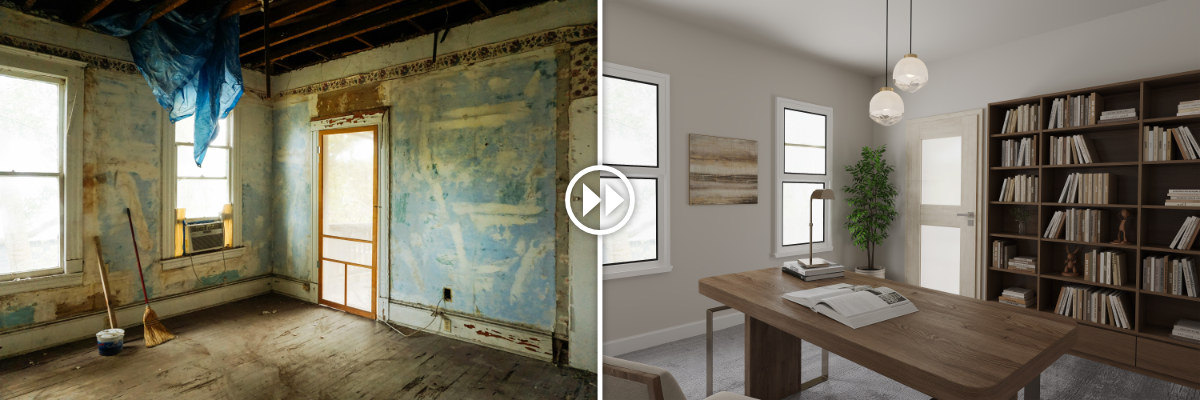
Achieving photorealistic AI virtual renovation requires meticulous attention to visual details:
- Subsurface scattering: How light passes through translucent materials like white marble countertops or linen curtains.
- Fresnel reflections: How reflectivity changes depending on the viewing angle relative to polished hardwood, sealed concrete, or glass panes.
- Micro-textures and imperfections: Real life is rarely perfectly smooth. True photorealism demands micro-bump mapping, subtle grain, ambient occlusion shadows, and soft light roll-off.
3. Top 5 AI virtual renovation services in 2026
To help real estate agents, photographers, and property marketers select the ideal solution for their workflow, here is a detailed breakdown of the top 5 AI virtual renovation services available today, evaluated by turnaround speed, structural accuracy, photorealism, and pricing.
Quick Comparison Table
|
Service provider |
Core production model |
Turnaround time |
Photorealism & accuracy |
Best target use case |
|
Fotober |
Hybrid (AI engine + master artist) |
12–24 hours |
Flawless / 100% Guaranteed |
High-value listings & pro photographers |
|
BoxBrownie |
Manual 3D / Hybrid editing |
24–48 hours |
High |
Full architectural overhaul & renders |
|
REimagineHome |
Fully automated generative AI |
< 30 seconds |
Moderate |
Instant design concepting & ideation |
|
ApplyDesign |
Self-service AI / 3D app |
~10 minutes |
Moderate to High |
DIY realtors needing pay-per-image |
|
AI HomeDesign |
Fully automated AI pipeline |
< 30 seconds |
Moderate |
High-volume budget virtual staging |
3.1. Fotober
Overview: Fotober is an industry-leading real estate post-production partner that seamlessly bridges advanced AI pre-processing with master human artistry. Designed specifically for professional photographers, cinematographers, and top realtors, Fotober corrects spatial geometry, color calibration, and machine learning artifacts to deliver studio-grade photorealistic results.
- Strengths: 100% guaranteed architectural scale and perspective alignment; flawless HDR light and shadow physics; custom client prompt and style matching; rigorous multi-point quality control pass.
- Weaknesses: Turnaround takes 12–24 hours due to human master artist quality verification (not instant automated rendering).
- Pricing: Tailored pay-per-project and volume tiers starting around $15–$25 per virtual renovation image with dedicated QA inspection included.
3.2. BoxBrownie
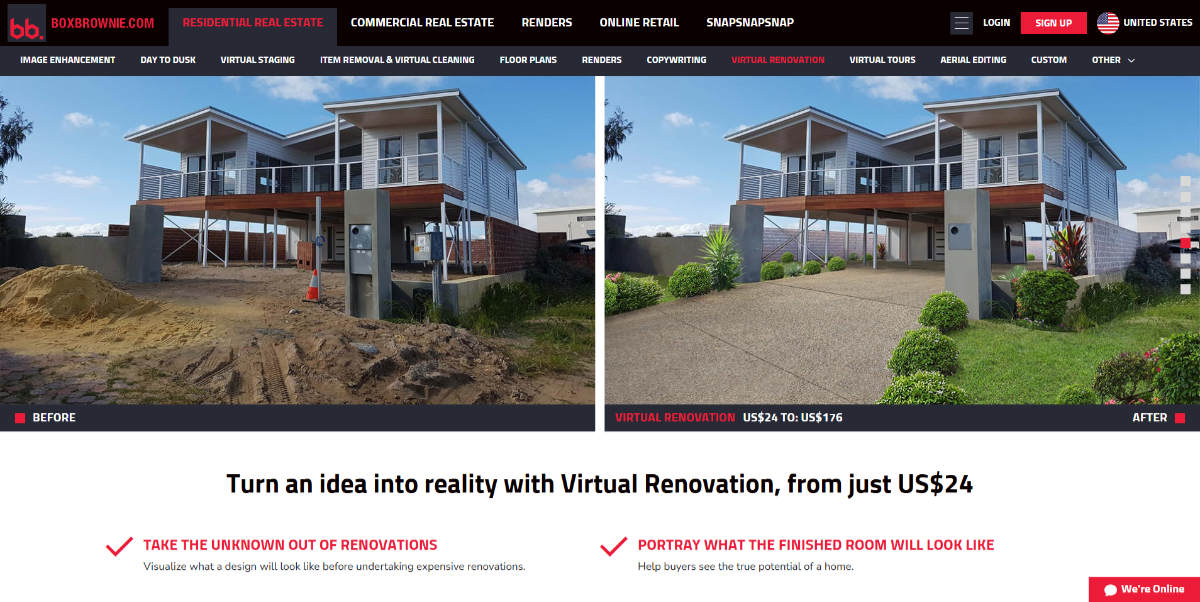
Overview: BoxBrownie is a well-established global real estate visual marketing service offering comprehensive virtual renovations, 3D floor plan redraws, item removals, and full property rendering services through a traditional digital artist model.
- Strengths: Highly reliable quality control; vast ecosystem of marketing services (2D/3D plans, day-to-dusk, copywriting); pay-as-you-go model with no monthly subscription required.
- Weaknesses: Higher per-image cost; slower turnaround time (24–48 hours) compared to fully automated generative engines.
- Pricing: $24 to $176 per photo for virtual renovations based on architectural complexity; $24 per standard virtual staging photo.
3.3. REimagineHome

Overview: REimagineHome is a conversational, fully automated AI virtual renovation web platform that allows users to rapidly redecorate interiors, alter wall textures, replace flooring, and redesign outdoor landscaping using text prompts.
- Strengths: Lightning-fast rendering in under 30 seconds; intuitive chat-based interface; versatile feature set covering interior, exterior, and patio spaces.
- Weaknesses: Fully automated generation can produce minor AI artifacts, spatial distortions, or floating furniture elements without human review.
- Pricing: Monthly subscription plans ranging from $14/month (Essential - 30 credits) to $99/month (1,200 credits); pay-per-download packages available ($19–$99).
3.4. ApplyDesign

Overview: ApplyDesign is an interactive, self-service AI virtual staging and 3D editing tool enabling real estate agents and photographers to drag, drop, and render 3D furniture sets directly onto property photographs within their web browser.
- Strengths: Flexible pay-per-image structure with no monthly commitment; extensive catalog of 18,000+ 3D furniture items; quick 10-minute processing time; on-the-spot revision controls.
- Weaknesses: Requires manual user effort to position and scale objects; final photorealism heavily depends on user editing skill and camera angles.
- Pricing: $10.50 per staged image (pay-as-you-go); DIY drag-and-drop staging options starting from $7 per image.
3.5. AI HomeDesign

Overview: AI HomeDesign is an automated real estate visual enhancement suite providing rapid AI virtual renovation, furniture removal, sky replacement, and basic room renovation capabilities.
- Strengths: Ultra-fast 30-second AI generation; exceptionally low cost per image for high-volume users; simple, web-based UI requiring zero design experience.
- Weaknesses: Pure machine learning output without human verification; complex structural edits may show geometric clipping or unnatural lighting reflections.
- Pricing: Subscription plans starting at $19/month (30 photos, ~$0.63/photo) up to $49/month (200 photos, ~$0.24/photo).
4. The mechanics of photorealism: Bridging architecture, photography, and AI
To understand why simple prompt-based AI outputs often fail to cross the "uncanny valley," we must examine property imagery through the combined lens of a director of photography and a senior architect.
4.1. Lighting, exposure, and dynamic range (The photographer's eye)
In physical real estate photography, capturing a room involves balancing mixed light sources: cool daylight (~5500K) coming through windows and warm tungsten light (~2700K) coming from interior recessed lamps.
When an AI model generates a new sofa or inserts modern recessed lighting into a room, it often fails to match the existing lighting temperature of the photograph. The result is a floating, detached object.
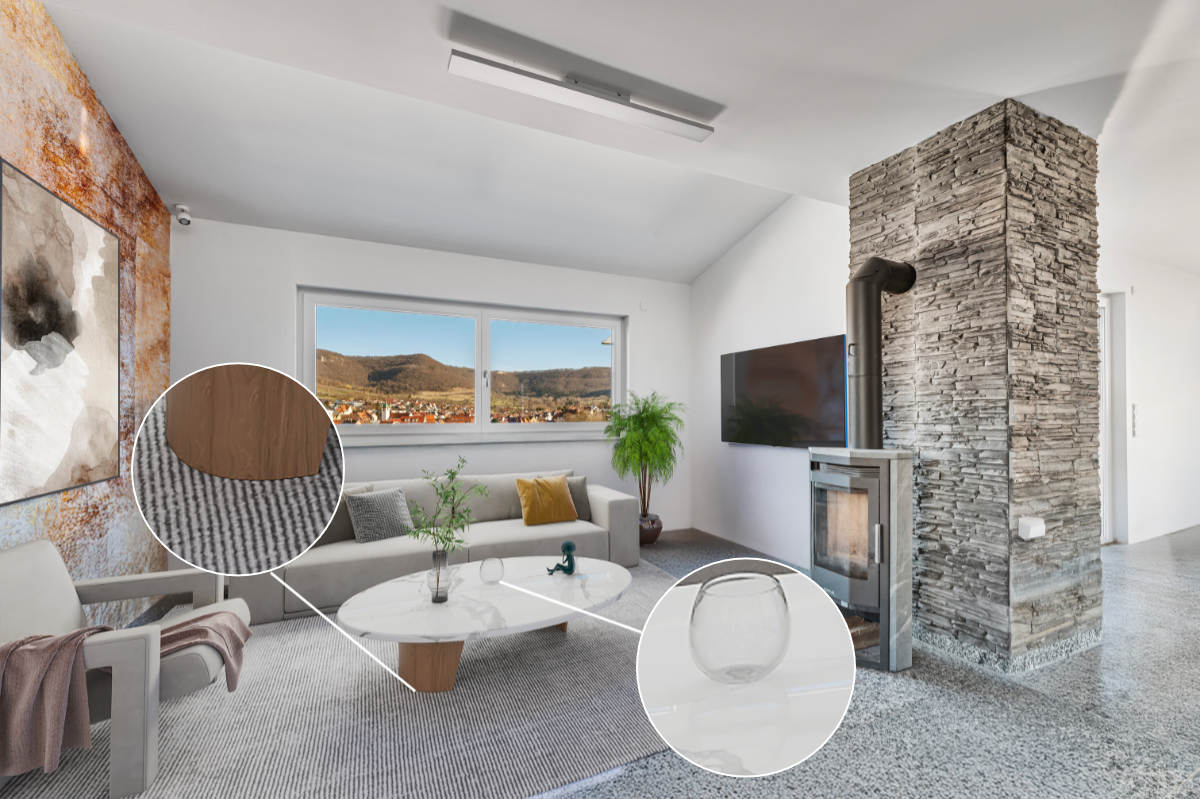
Achieving photorealistic AI virtual renovation requires:
- Matching global illumination vectors (ensuring shadows fall in the direction dictated by the natural light source).
- Retaining accurate specular highlights on newly rendered surfaces.
- Preserving realistic window exposures (ensuring the view outside the window maintains proper contrast and detail).
4.2. Scale, perspective, and architectural integrity (The architect's precision)
One of the biggest flaws in consumer-grade AI virtual home renovation tools is spatial distortion. A machine learning model might place a modern king-sized bed in a bedroom, but render it at an incorrect 85% scale, making the room look unnaturally large.
When real estate professionals present these images, they face immediate backlash during physical open houses when buyers discover the room cannot actually fit that furniture.
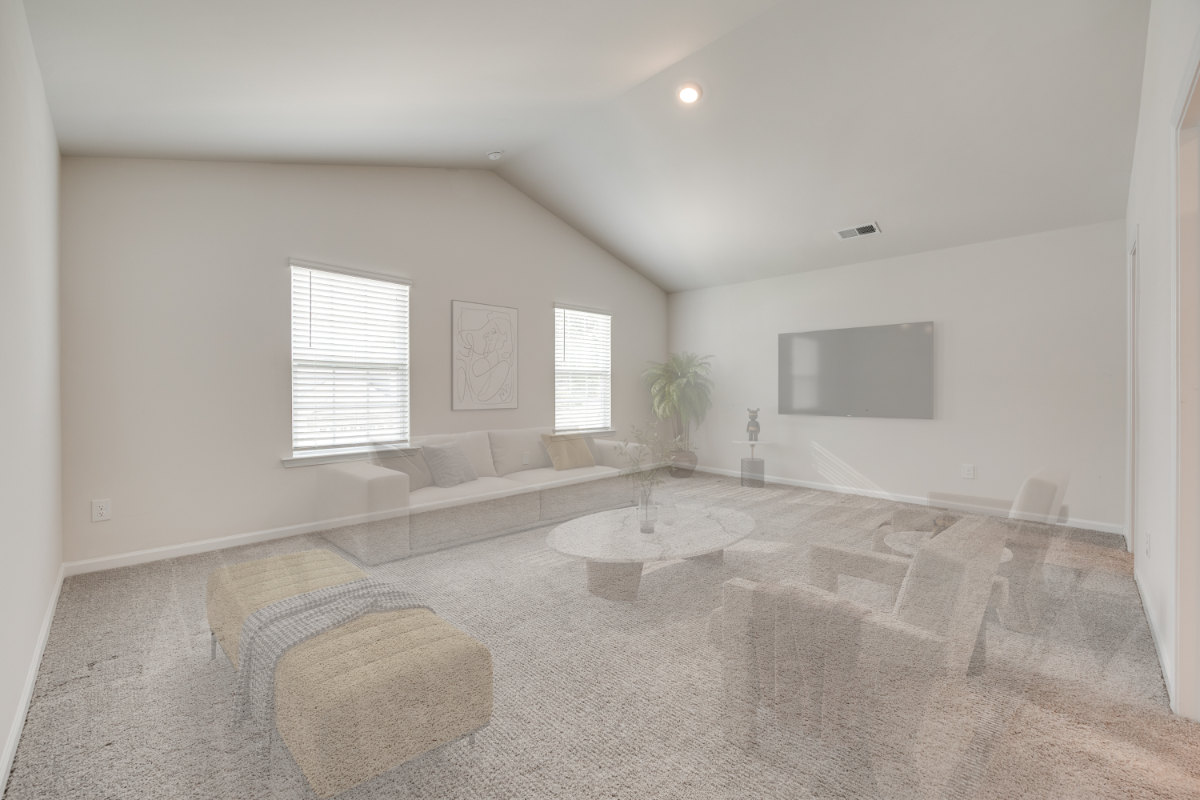
PROPORTION REASONING CHECK:
Incorrect AI scale: [Small virtual furniture] -> Creates false perception -> High buyer disappointment
Corrected pro edit: [Architectural scale anchor] -> Honest visualization -> Qualified buyers
Architectural realism requires precise camera calibration:
- Focal length matching: Ensuring that virtual furniture matches the focal length of the camera lens used to shoot the space (e.g., 16mm ultra-wide vs. 35mm natural perspective).
- Two-point perspective correction: Keeping all vertical lines perfectly parallel to avoid structural leaning.
- Anchor point realism: Ensuring table legs, cabinet bases, and rugs rest firmly on the ground plane, casting accurate ambient occlusion shadows where surfaces meet.
5. The limitations of pure AI virtual renovation: Why machine learning isn't enough
Despite the incredible advancement of generative AI platforms, relying exclusively on raw AI generation presents severe risks for real estate professional imagery.
5.1. Hallucinations, artifacts, and scale distortions
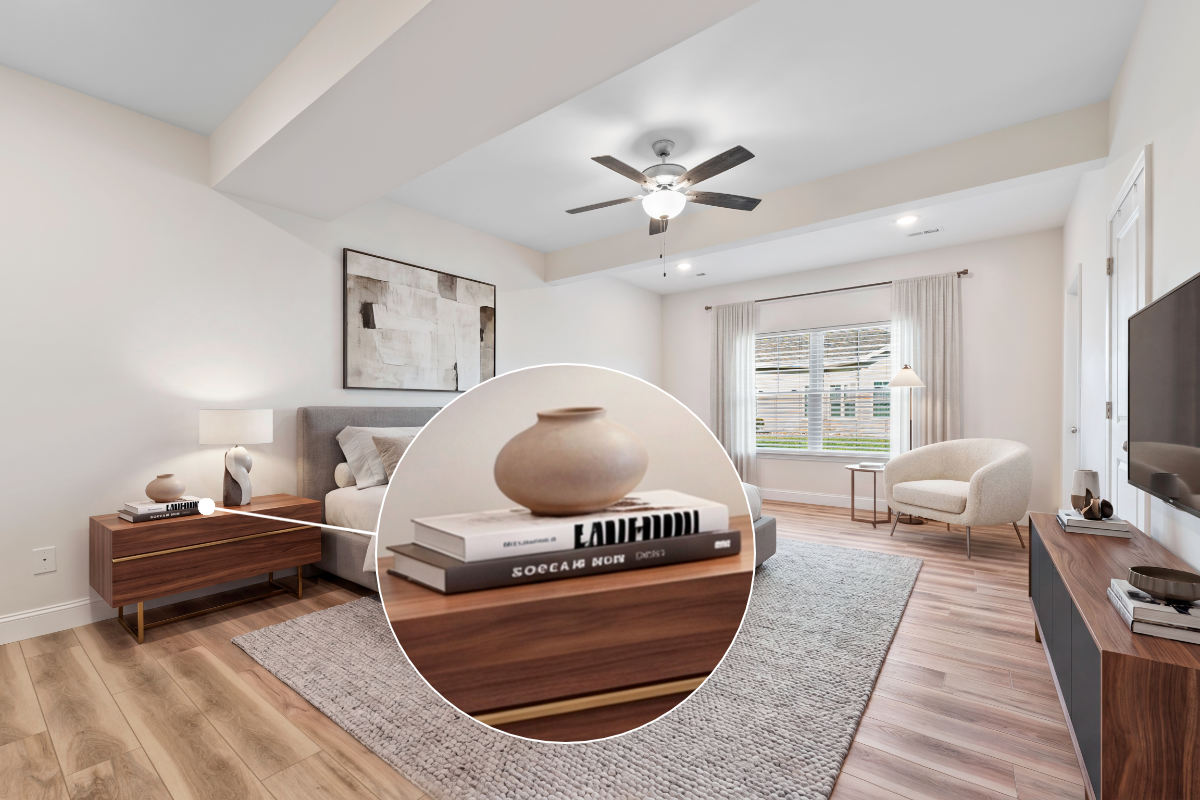
Generative AI models operate on statistical probability, not physical reality. As a result, fully automated outputs frequently suffer from:
- Structural hallucinations: Doors that lead nowhere, windows with crooked frames, or kitchen islands with five mismatched corner legs.
- Texture bleeding: Wood grain textures unexpectedly bleeding onto plaster walls or stainless steel appliances blending into quartz countertops.
- Pattern distortion: Tile backsplashes, parquet floors, and brickwork distorting near the edges of the image.
5.2. The missing lens: Nuance, emotion, and buyer psychology
An algorithm does not understand target demographics. It doesn't know whether a luxury penthouse in Manhattan requires sleek, minimalist Italian leather, or if a coastal cottage in Maine needs warm, layered organic textiles.
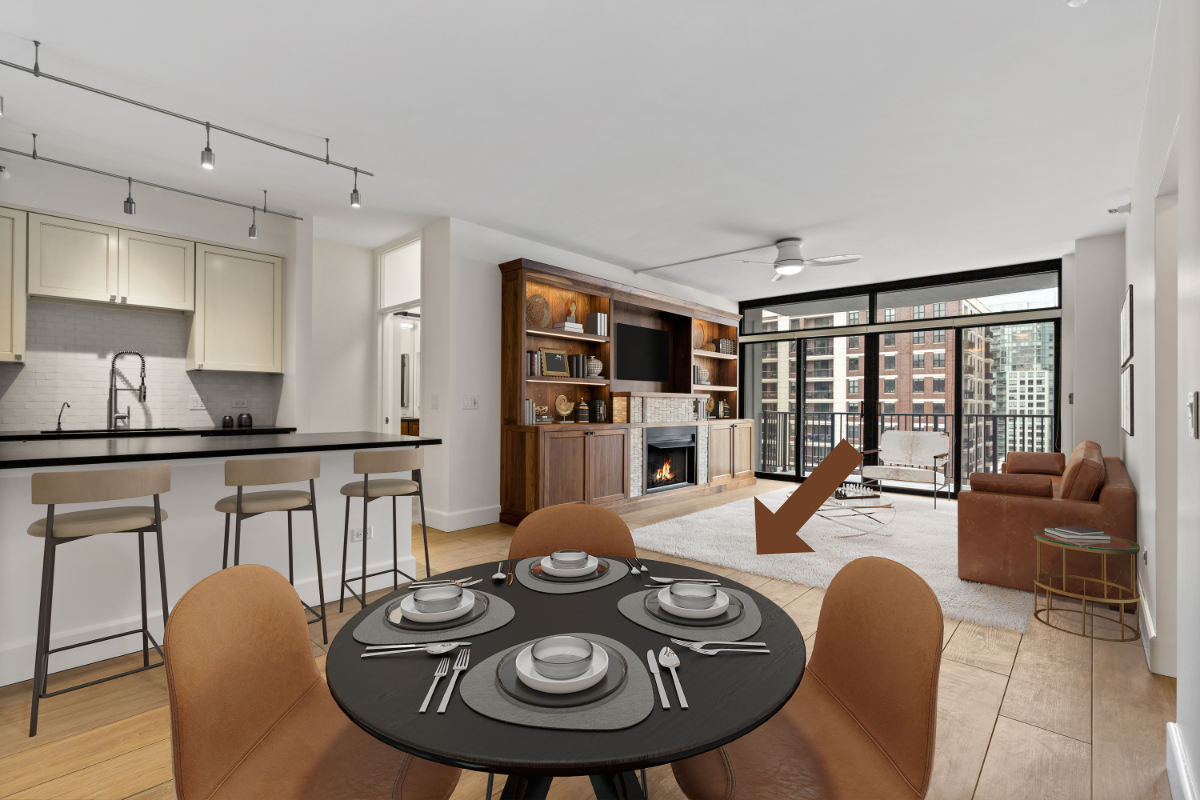
Visual storytelling requires human intent. It demands a creative director who understands:
- Sightlines: Guiding the viewer’s eye through the frame toward prime selling features (e.g., a custom stone fireplace or panoramic ocean view).
- Color psychology: Selecting color palettes that evoke warmth, luxury, spaciousness, or tranquility.
- Compositional balance: Avoiding cluttered, chaotic arrangements that make a room feel small or chaotic.
5.3. Ethical boundaries and misrepresentation in real estate
In many real estate jurisdictions, misrepresenting property dimensions or structural elements can lead to legal liability, MLS fines, and ethics violations.
|
ETHICAL BOUNDARIES OF EDITING | |
|
ETHICAL VIRTUAL RENOVATION |
UNETHICAL MISREPRESENTATION |
|
Removing temporary clutter/trash |
Removing permanent utility poles |
Automated AI tools often alter structural elements without permission, removing necessary load-bearing posts or changing permanent window locations. A human-driven workflow ensures that AI virtual renovation highlights a property's potential while remaining structurally accurate and legally compliant.
6. The strategic imperative: Why professional editing and outsourcing are essential
For real estate photographers, videographers, and high-volume realtors, post-production is often the primary operational bottleneck.
PHOTOGRAPHER'S TIME ALLOCATION:
Without outsourcing: [ 20% Shooting ] [ 80% Editing/Fixing AI Artifacts ] -> Growth stagnation
With Fotober partner: [ 70% Shooting & Client Acquisition ] [ 30% Strategy ] -> Business scalability
6.1. Time capital for realtors, photographers, and videographers
Consider the daily workflow of a highly sought-after real estate photographer:
- Shoot 3 to 5 properties per day.
- Capture hundreds of RAW exposures, HDR brackets, and drone clips.
- Manage client communications, scheduling, and billing.
If that photographer spends 4 to 6 hours every night wrestling with complex software, correcting AI errors, manually masking window pulls, or placing virtual furniture, their growth halts. Their time is trapped in execution rather than expansion.
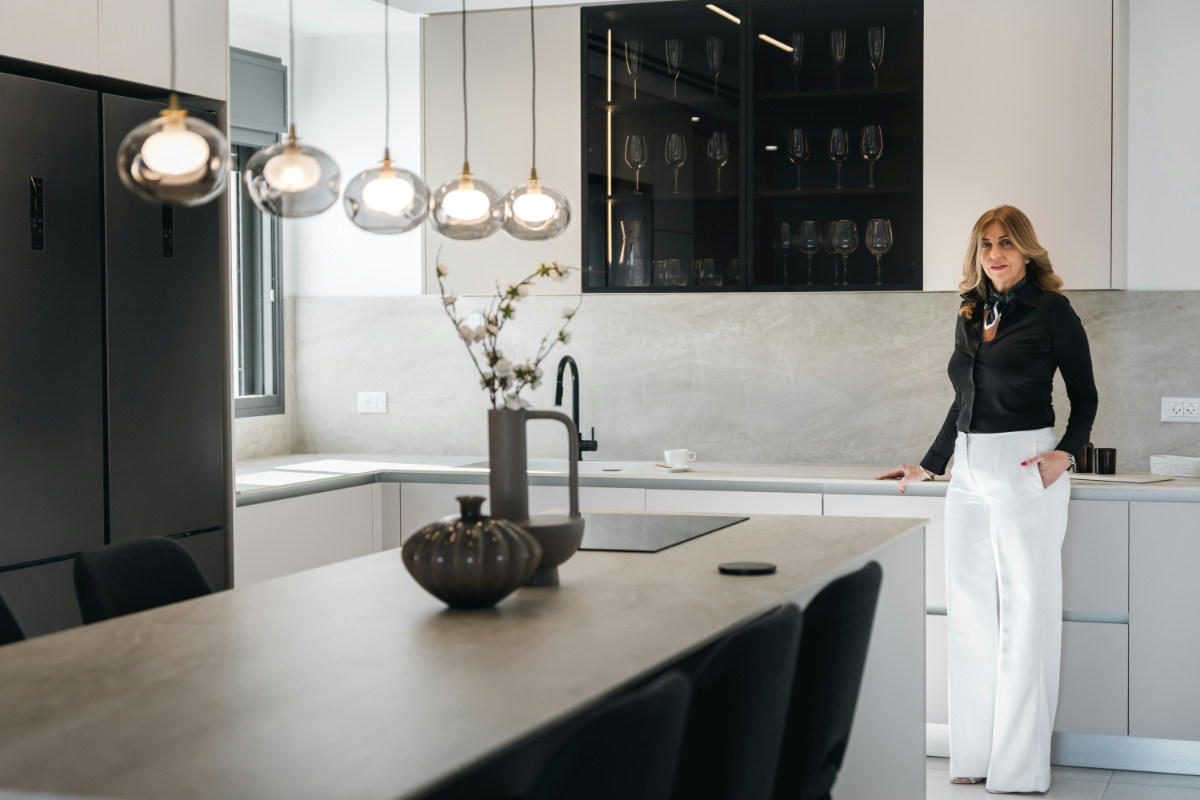
Similarly, busy listing agents who try to learn complex editing tools end up wasting hours producing subpar visual assets that underperform on the market.
6.2. Consistency across portfolios and campaigns
A real estate media brand or high-end brokerage relies on absolute visual consistency. Every photo across a multi-million-dollar portfolio must share:
- Identical white balance accuracy across all room transitions.
- Uniform sharpness, contrast, and color saturation.
- Flawlessly aligned vertical lines and consistent horizon placement.
Pure automated tools produce varied, unpredictable results image-to-image. Outsourcing to a professional team ensures every delivery meets rigorous, repeatable quality controls.
7. How Fotober's AI virtual renovation bridges innovation with master craftsmanship
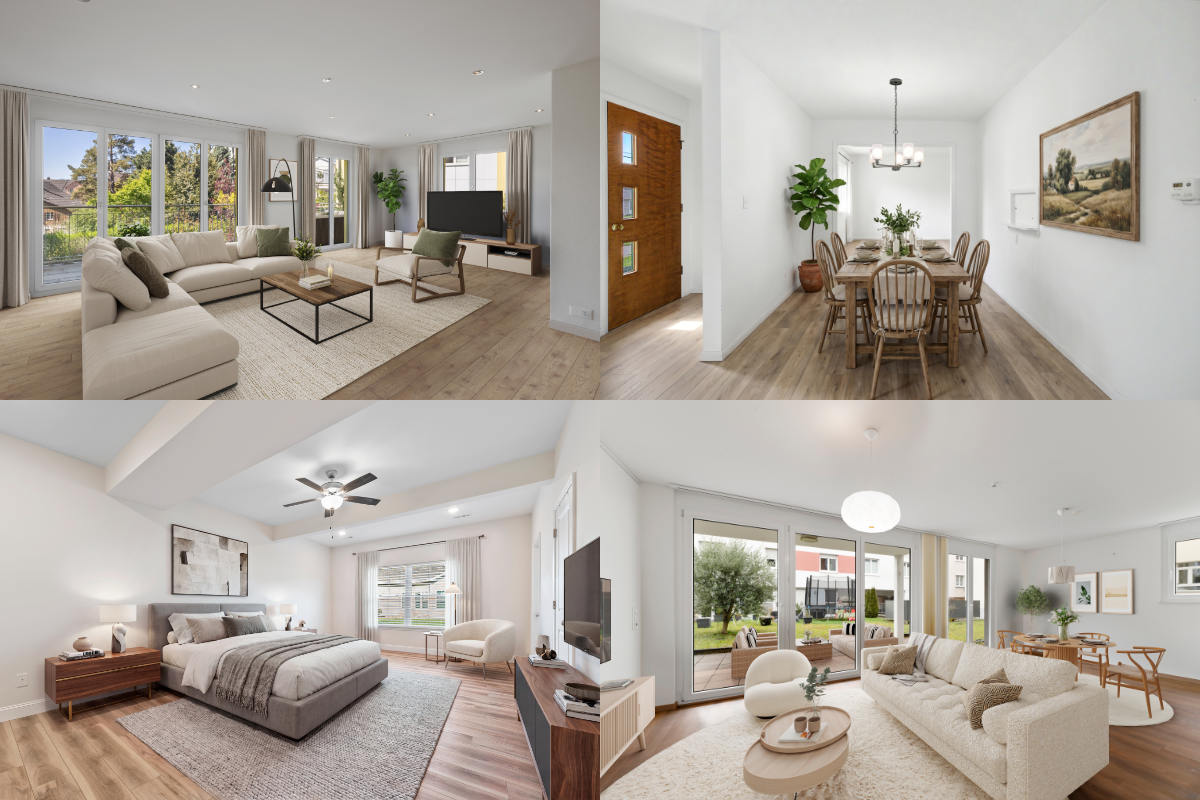
This brings us to the ideal solution for modern real estate visual marketing: the hybrid workflow. By pairing artificial intelligence speed with the refined craft of senior human artists, Fotober delivers an industry-leading visual editing ecosystem.
|
THE FOTOBER HYBRID PRODUCTION PIPELINE |
|
[Client raw upload] |
|
[AI pre-processing engine] |
|
[Master artist polish & correction] |
|
[Dedicated QC inspection] |
|
[Flawless 12-24 hour delivery] |
7.1. Tailored solutions for realtors: High-converting visual assets
For listing agents, speed to market directly impacts sales velocity. With Fotober as an editing partner, realtors gain access to high-end architectural visual assets without technical hassle:
- Unlocking property potential: Turn distressed, vacant, or dated homes into warm, inviting luxury listings in 24 hours.
- Higher ROI on marketing: Listings with photorealistic AI virtual renovation gain significantly higher click-through rates on digital portals, driving higher foot traffic to physical open houses.
- Clear client disclosures: Fotober produces renders that look incredible while accurately representing the true structural dimensions of the space.
7.2. Empowering photographers and videographers: Scale without sacrificing artistry
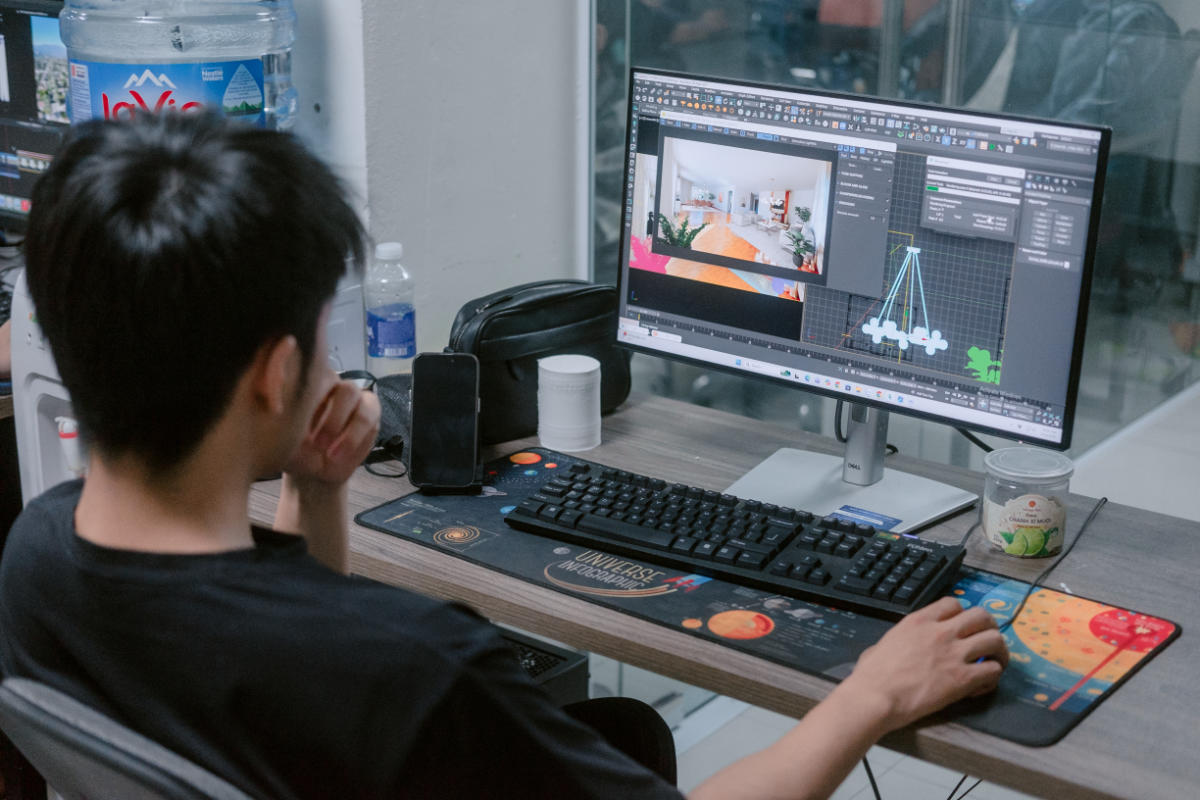
For real estate media producers, partnering with Fotober is like instantly adding a dedicated, world-class post-production division to your business.
- Complete post-production ecosystem: From basic HDR fusion and flash-ambient blending to complex AI virtual renovation, twilight conversions, and full video editing.
- Zero production overhead: Scale your daily shoot capacity from 2 properties to 8 properties without working late nights or hiring expensive in-house staff.
- Custom style matching: Fotober's master editors adapt to your unique signature visual style, learning your preferences for exposure, contrast, color temperature, and flash blending.
7.3. The Fotober advantage: Hybrid AI-human precision
Why is Fotober the preferred partner for elite real estate visual professionals?
1. Intelligent curation & clean-up: We don't just generate digital furniture. We manually clean room geometry, remove unwanted wall markings, fix carpet stains, and prep floor planes before applying virtual designs.
2. True architectural scale: Every virtual chair, table, and light fixture added by Fotober is mathematically anchored to match real-world proportions and camera focal lengths.
3. Advanced shadow and highlight physics: Our editors hand-craft soft ambient shadows, contact shadows, and specular floor reflections that pure automated engines miss.
4. Fast turnaround time: Receive studio-grade, marketing-ready images in as little as 12 to 24 hours, keeping your campaigns running ahead of schedule.
8. Step-by-step guide: Executing an AI virtual renovation project with Fotober
To maximize the impact of your AI virtual renovation project, follow this professional production framework from capture to final delivery.
|
STEP-BY-STEP PRODUCTION FRAMEWORK | |
|
STEP 1: CAPTURE |
Wide-angle (16-24mm), eye-level framing, multi-exposure HDR / Flash-Ambient set. |
|
STEP 2: CONCEPT & BRIEF |
Identify design style (Modern, Scandinavian, Traditional) and scope of structural changes. |
|
STEP 3: HYBRID EDITING |
Fotober cleans geometry, processes spatial AI elements, and applies human polish. |
|
STEP 4: REVIEW & LAUNCH |
Inspect lighting/scale integrity and launch high-converting marketing campaigns. |
8.1. Step 1: Capture with architectural intention
- Camera placement: Set the tripod at chest/eye level (roughly 4.5 to 5 feet high) to maintain a natural human perspective.
- Leveling: Use a digital level to ensure pitch and roll are perfectly calibrated at 0 degrees, reducing radial distortion.
- Lighting strategy: Shoot multi-exposure bracketed series or combine ambient exposures with off-camera flash sweeps to capture both deep shadow details and bright window views.
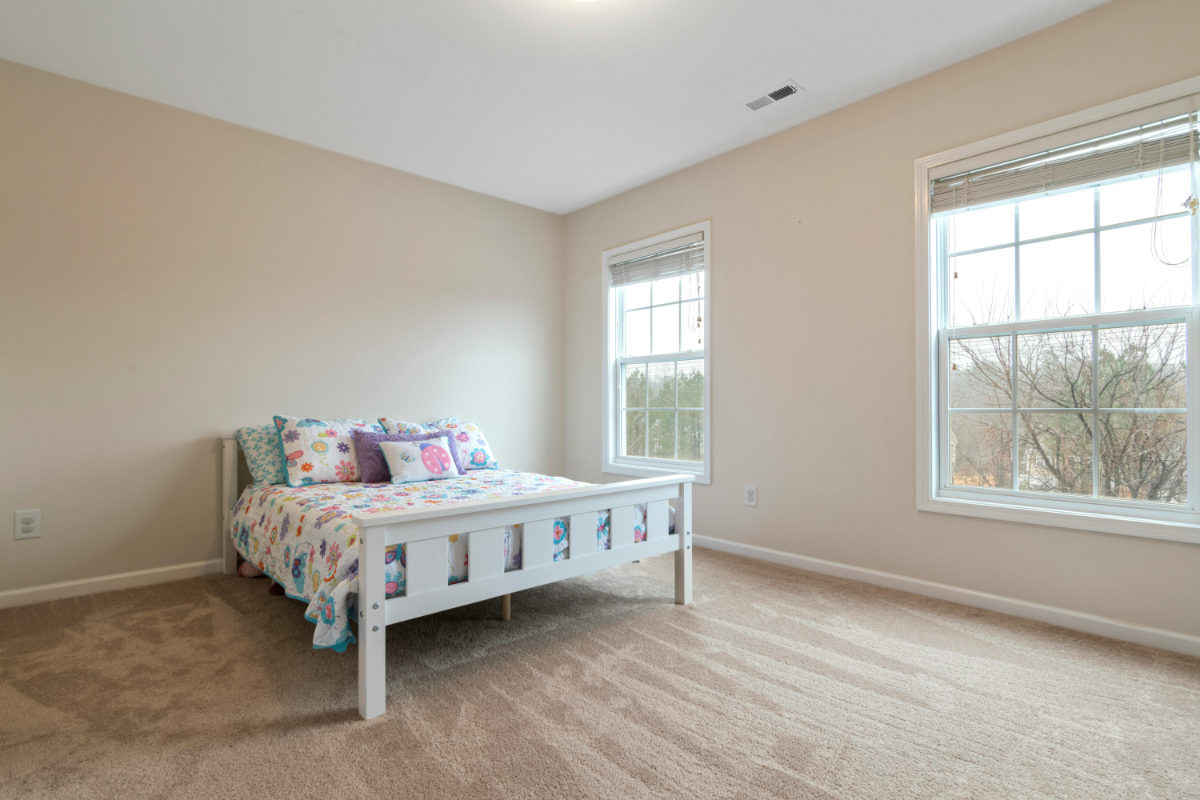
8.2. Step 2: Define the creative vision and scope
Before submitting files to Fotober, determine the specific scope of work needed:
- Is it a simple virtual staging job (adding furniture to an empty room)?
- Is it a full virtual renovation (replacing flooring, updating kitchen cabinets, changing wall finishes, and opening up walls)?
- Select design themes that match the property's architectural era and prospective buyer demographics (e.g., Mid-Century Modern, Transitional, Industrial Minimalist).
8.3. Step 3: Seamless cloud submission to Fotober
Upload your raw or bracketed images directly to the Fotober client portal with clear instructions regarding style preferences, key selling points, and target turnaround times.
8.4. Step 4: Quality review and campaign integration
Once Fotober’s team completes the hybrid edit:
- Review the files for lighting consistency, architectural scale, and texture quality.
- Deploy the final high-resolution assets across social media ads, print brochures, email campaigns, and MLS listings.
- Highlight "Virtually Renovated" or "Virtually Staged" in your listing descriptions to maintain transparency while building excitement.
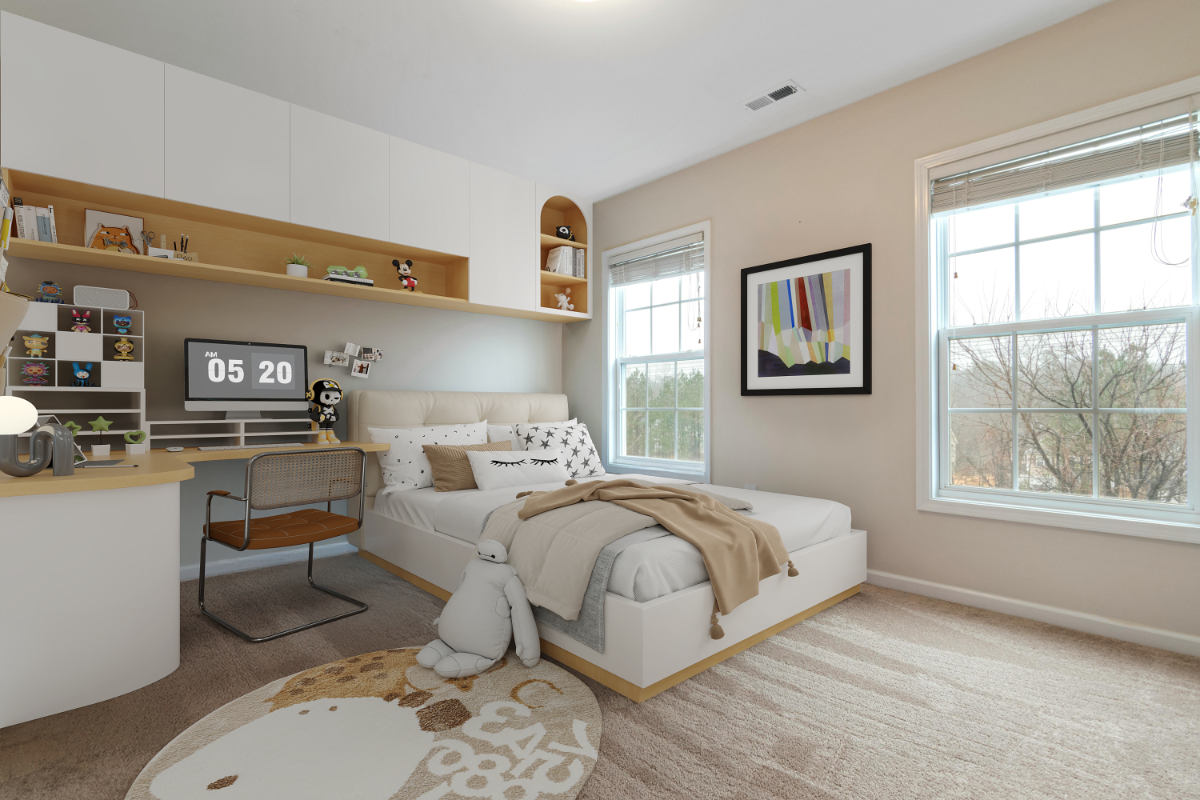
9. The future of real estate visuals: Spatial AI virtual renovation, video, and beyond
As real estate marketing continues to evolve, visual standards will only increase. We are rapidly moving toward a future where generative spatial video, interactive 3D virtual walkthroughs, and real-time augmented reality renovation tools become standard client expectations.
|
THE FUTURE OF PROPERTY VISUALS | |
|
TODAY |
Static photorealistic AI renovation & hybrid staging |
|
NEAR-FUTURE |
Real-time dynamic video staging & AI floorplans |
|
NEXT-GEN |
Immersive AR/VR spatial renovation engine integration |
However, even as software becomes more advanced, the fundamental rules of light, shadow, composition, scale, and human emotion remain unchanged. The technology will continue to evolve, but the need for a refined architectural eye will always be critical.
Creators and real estate professionals who rely solely on fully automated, cheap AI tools will struggle with distorted scale, unnatural lighting, and inconsistent branding. Conversely, those who adopt a hybrid approach, leveraging powerful generative AI accelerated by master photo and video editors, will lead the market.
10. Conclusion
In real estate, visual assets directly drive purchase decisions. High-quality visual storytelling builds trust, highlights property potential, elevates professional brands, and speeds up deal closures. AI virtual renovation is one of the most powerful visual tools developed in the last decade, but machine power only achieves its full potential when guided by master human artists.
Whether you are a listing agent looking to market a challenging property, a real estate photographer striving to scale your daily shoot volume, or a cinematographer delivering full property walkthrough videos, Fotober is your ultimate post-production partner.
By combining the precision of AI virtual home renovation tools with decades of architectural photo editing expertise, Fotober delivers photorealistic AI virtual renovation assets that set the gold standard in modern real estate marketing.
Ready to elevate your real estate imagery and grow your business? Stop wasting late nights editing photos and correcting AI errors. Partner with Fotober today and let our expert team handle your real estate photo editing, virtual staging, and video post-production needs with studio precision.
👉 Visit Fotober to explore our full suite of services and claim your free trial edit today!
Follow us on social media to stay updated with the latest visualization services to make every home look move-in ready.
- Facebook: fotobermedia.co
- YouTube: Fotober
- TikTok: @fotober
- Instagram: fotober_media.
Related posts

Minimalist Interior Design: Characteristics, Style Guide, and Staging
October 8, 2026

Coastal Interior Design: Style Definition & Staging Guide
September 30, 2026

Contemporary Interior Design: Key Elements and How to Stage This Style
September 30, 2026

Scandinavian Interior Design: Key Elements, Style Guide, and Staging
September 30, 2026
