




Victorian Style Home Floor Plans: From Classic Layouts to Modern ROI

Share:
Table of Contents
- 1. What is a Victorian-style home?
- 2. Key architectural features of Victorian-style home floor plans
- 3. Popular subtypes of Victorian style home floor plans
- 4. Room-by-room breakdown of a classic Victorian house layout
- 5. Adapting Victorian house layouts for modern lifestyles
- 6. Essential tips for maintaining & renovating historic Victorian homes
- 7. Key considerations when building a new Victorian-style home
- 8. Real-world case study of Victorian-style home floor plans: Selling a 19th-century gem
- 9. How Fotober’s floor plan services support home sellers & builders
- 10. Conclusion
Victorian architecture remains one of the most distinctive and cherished residential styles across North America and Europe. Unlike today’s seamless open-concept layouts, classic Victorian-style homes rely on dedicated, compartmentalized spaces designed for privacy, functionality, and formal entertaining. Whether you are exploring historic home floor plans to preserve their unique character, looking to renovate a classic Victorian house layout, or planning a modern interpretation from the ground up, understanding these intricate spatial designs is key. In this guide, we explore Victorian-style home floor plans, from traditional layouts and architectural variations to essential renovation considerations and modern adaptations.
1. What is a Victorian-style home?
Victorian architecture refers to the diverse residential building styles that flourished during the reign of Queen Victoria (1837–1901). Spurred by the Industrial Revolution, steam-powered manufacturing, and expanding railway networks, builders gained unprecedented access to mass-produced millwork and published pattern books. This technological leap enabled architects to move away from rigid, plain classical symmetry, embracing dramatic rooflines, layered textures, and expressive decorative trim.
At its core, Victorian design prioritizes craftsmanship, romance, and deliberate spatial privacy. Rather than relying on open-concept spaces, historic home floor plans from this era feature distinct, single-purpose rooms tailored to 19th-century social customs. Each room served a specific function, from formal front parlors for receiving guests to segregated rear service areas.
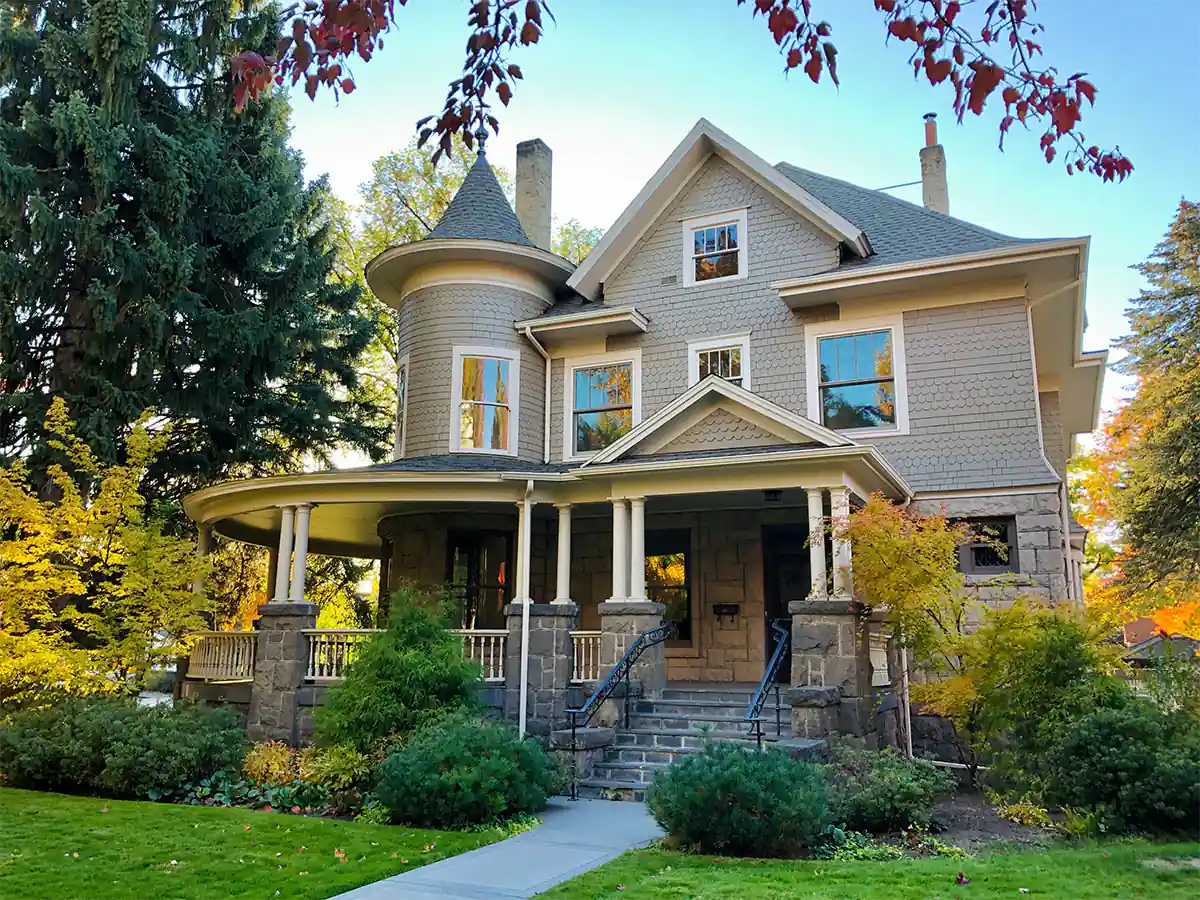
Stepping inside, classic Victorian interiors are renowned for their opulent textures and intricate wood details. Key interior hallmarks include:
- Elaborate millwork & molding: Deep baseboards, multi-tiered crown moldings, picture rails, and decorative ceiling roses around chandeliers.
- Grand fireplaces: Focal points in almost every principal room, framed in carved marble, ornate cast iron, or patterned hearth tiles.
- Rich color & material palettes: Deep jewel tones (burgundy, dark teal, hunter green), textured damask wallpapers, and stained glass accents that cast warm, colorful light into halls and stairwells.
Understanding these defining elements provides essential context before exploring the structural layouts of Victorian-style home floor plans that make Victorian homes so distinct.
2. Key architectural features of Victorian-style home floor plans
Victorian floor plans are defined by their dramatic departure from rigid, boxy shapes in favor of dynamic geometry, spatial segregation, and multi-story elegance. Understanding these core structural characteristics reveals how Victorian-style home floor plans balanced aesthetic grandeur with the functional needs of 19th-century living.
2.1. Asymmetrical footprints
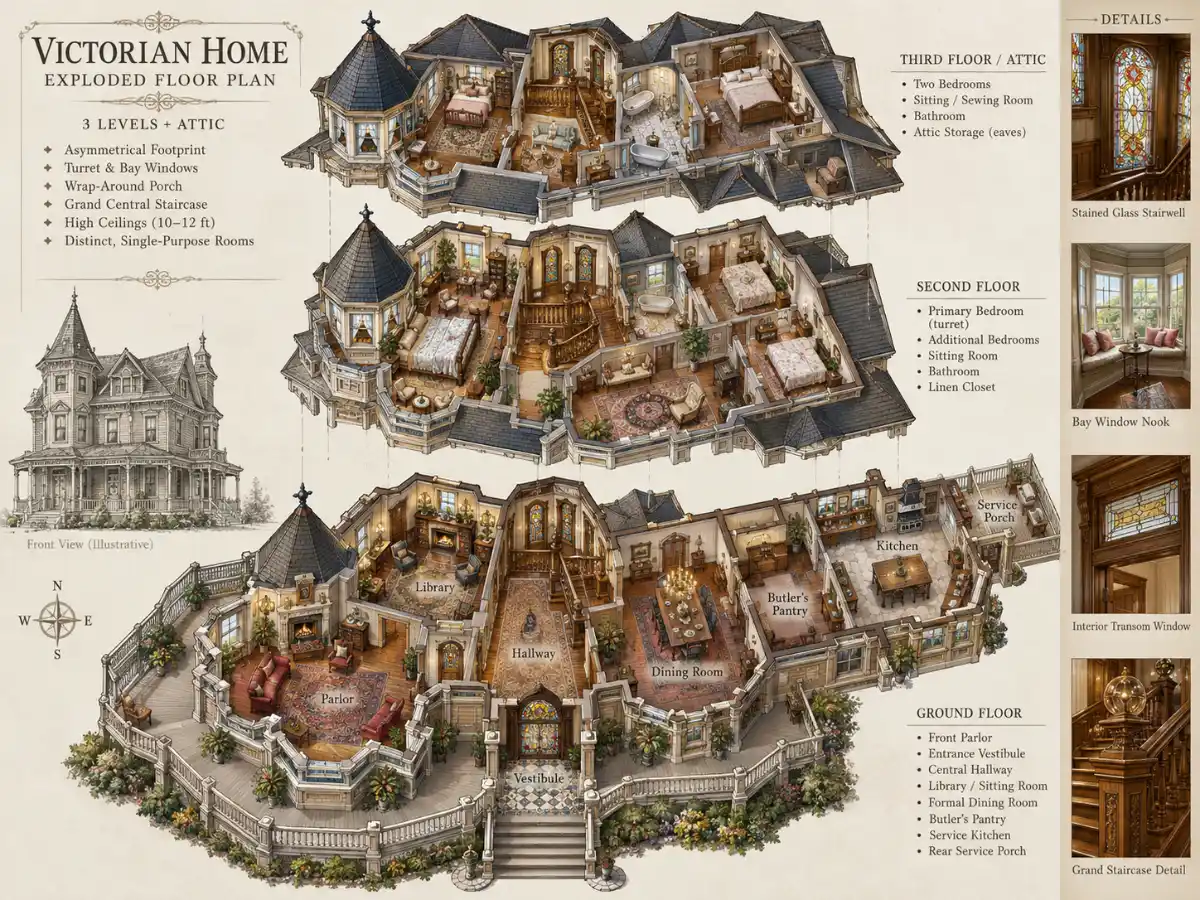
Unlike earlier Georgian or Federal homes that favored balanced facades, Victorian designs thrive on asymmetrical configurations. Floor plans feature irregular outer footprints characterized by protruding bay windows, corner turrets, octagonal towers, complex rooflines, and sprawling wrap-around porches. These exterior projections directly shape internal rooms, creating cozy seating nooks, curved alcoves, and distinct architectural angles inside.
2.2. Pronounced verticality and multi-story layouts
Due to narrow urban lot restrictions in growing industrial cities, Victorian layouts maximize space vertically rather than horizontally. Most homes span two to three stories, plus a full basement and attic level. To complement this vertical emphasis, main-level ceilings typically soar between 10 and 12 feet, anchored by grand multi-flight staircases positioned near the main foyer.
2.3. Compartmentalized, single-purpose rooms
The signature trait of classic Victorian spatial planning is compartmentalization. Rather than wide-open common areas, the interior is divided into a series of dedicated, single-purpose rooms accessed via central hallways:
- Formal parlors: Situated near the front entrance for receiving guests.
- Libraries & sitting rooms: Private family spaces deeper within the main level.
- Formal dining rooms: Positioned adjacent to butler’s pantries for elegant dinner service.
- Isolated service kitchens: Placed strictly at the rear or in the basement to keep heat, cooking odors, and domestic labor hidden from guests.
2.4. Strategic natural light channels
Because Victorian homes contained many enclosed interior rooms, architects incorporated strategic architectural features to maximize sunlight penetration. Deep multi-faceted bay windows extend outward to catch light from multiple angles, while glass transom windows mounted above interior doorways allow sunlight to flow between adjacent rooms and dark hallways. Stained glass panels placed in entry vestibules and stairwells filtered natural light into warm, decorative hues.
3. Popular subtypes of Victorian style home floor plans
Victorian architecture is not a single uniform style, but rather an umbrella term encompassing several distinct sub-styles, each featuring unique floor plan footprints and internal spatial dynamics. Understanding these regional and stylistic variations is essential when evaluating historic property layouts or selecting modern reproduction plans.
3.1. Queen Anne house plans: Intricate, asymmetrical, and picturesque
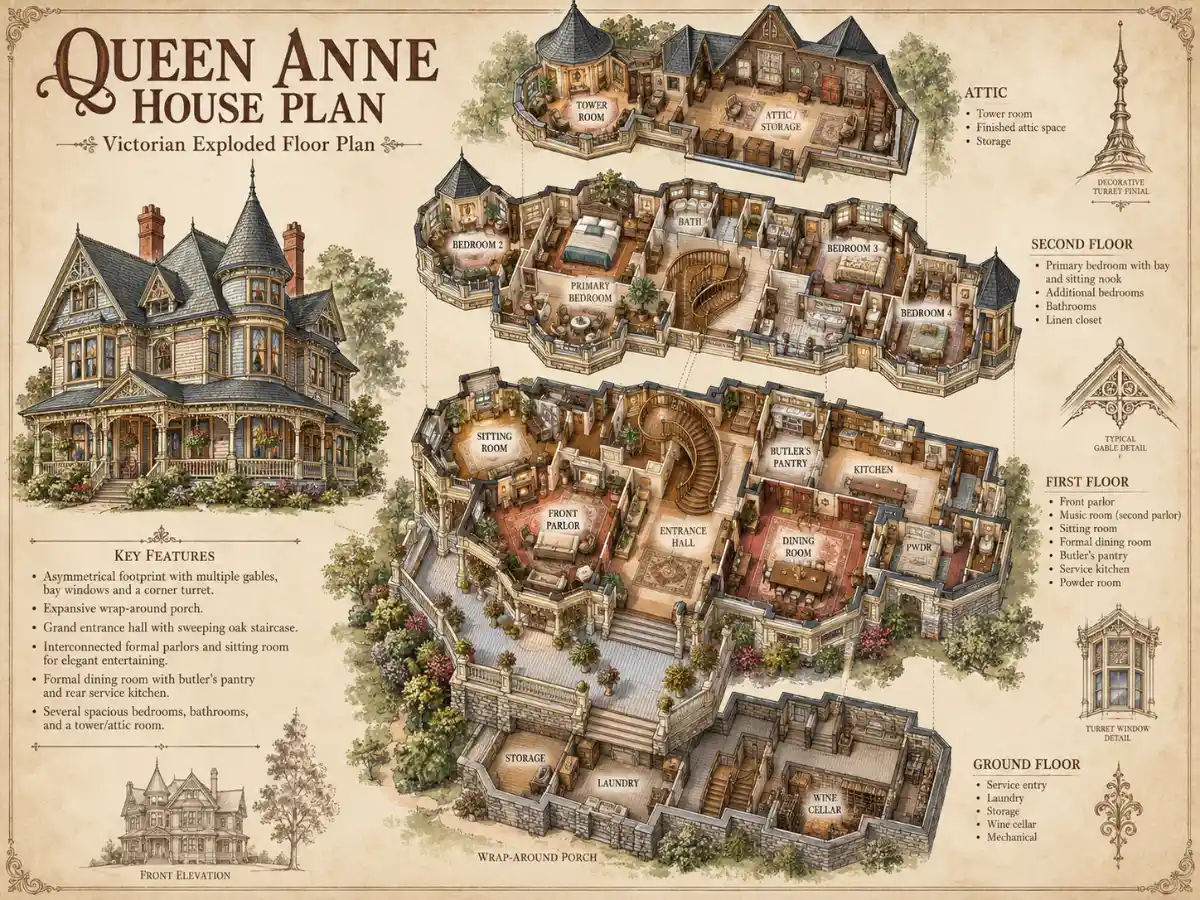
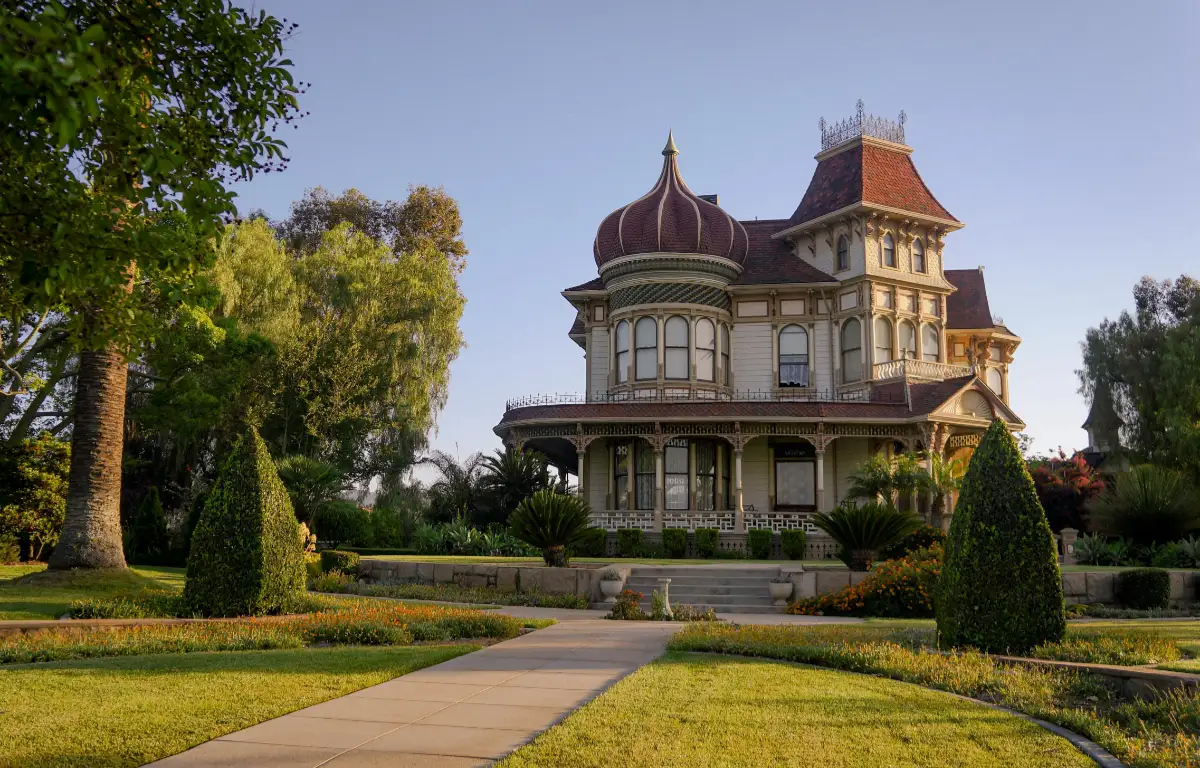
Among the most iconic and ornate variations, Queen Anne house plans showcase elaborate visual complexity. These layouts prioritize irregular exterior footprints, multi-gabled rooflines, corner turrets, and sprawling wrap-around front porches. Internally, Queen Anne floor plans feature dynamic flow between formal entertaining spaces, centered around a grand entrance hall, a sweeping oak staircase, and interconnected parlors linked by wide cased openings or pocket doors.
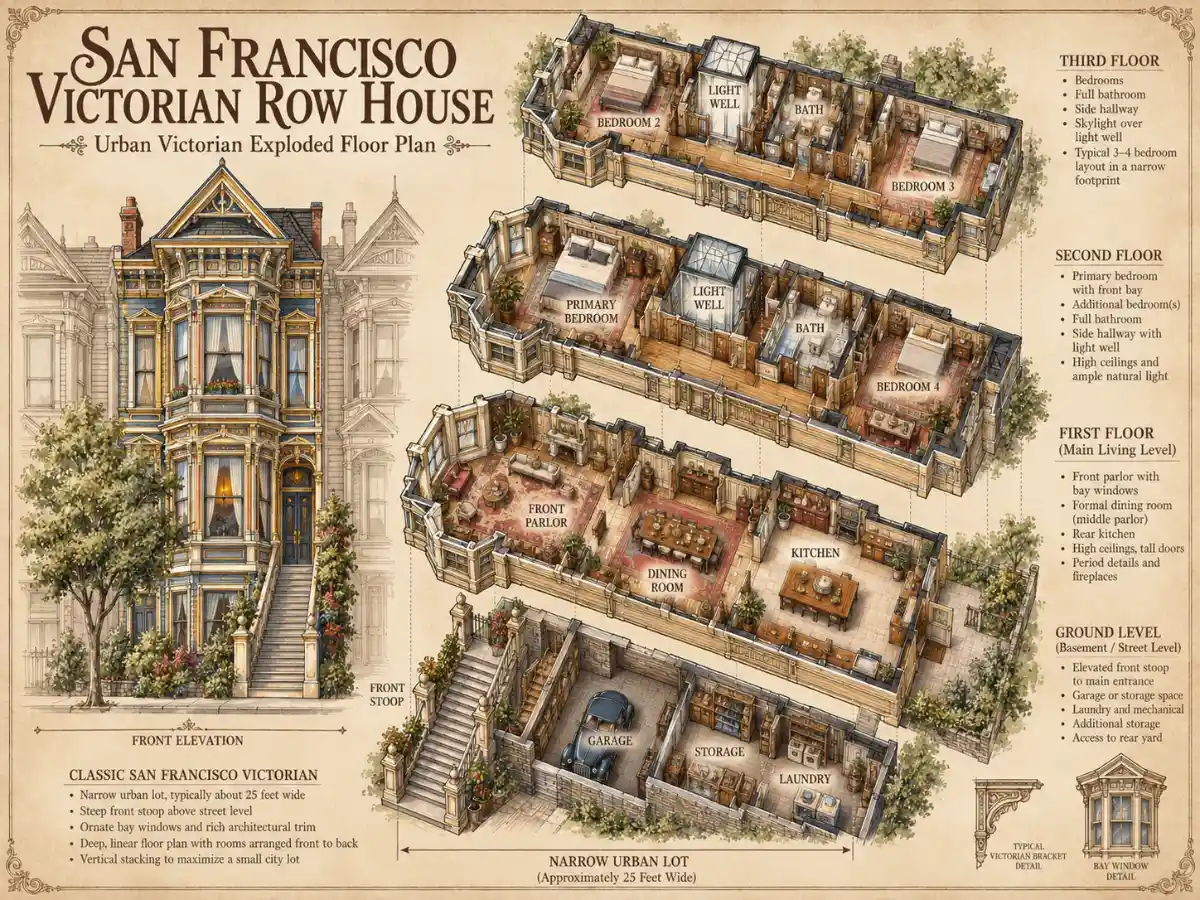
3.2. San Francisco Victorian homes: The classic urban row house
Engineered specifically for narrow, high-density city lots (typically 25 feet wide by 100 or 120 feet deep), San Francisco Victorian homes, including famous Italianate, Stick, and Eastlake "Painted Ladies", rely on deep, vertically stacked floor plans:
- Ground level/basement: Garage or storage space with a high elevated front stoop leading to the main entrance.
- Main living floor: A linear room sequence consisting of a front bay-windowed parlor, a middle parlor or formal dining room, and a rear service kitchen.
- Upper bedroom floors: Multiple bedrooms aligned along a single side hallway, utilizing skylights and light wells to illuminate interior spaces.
3.3. Italianate style plans
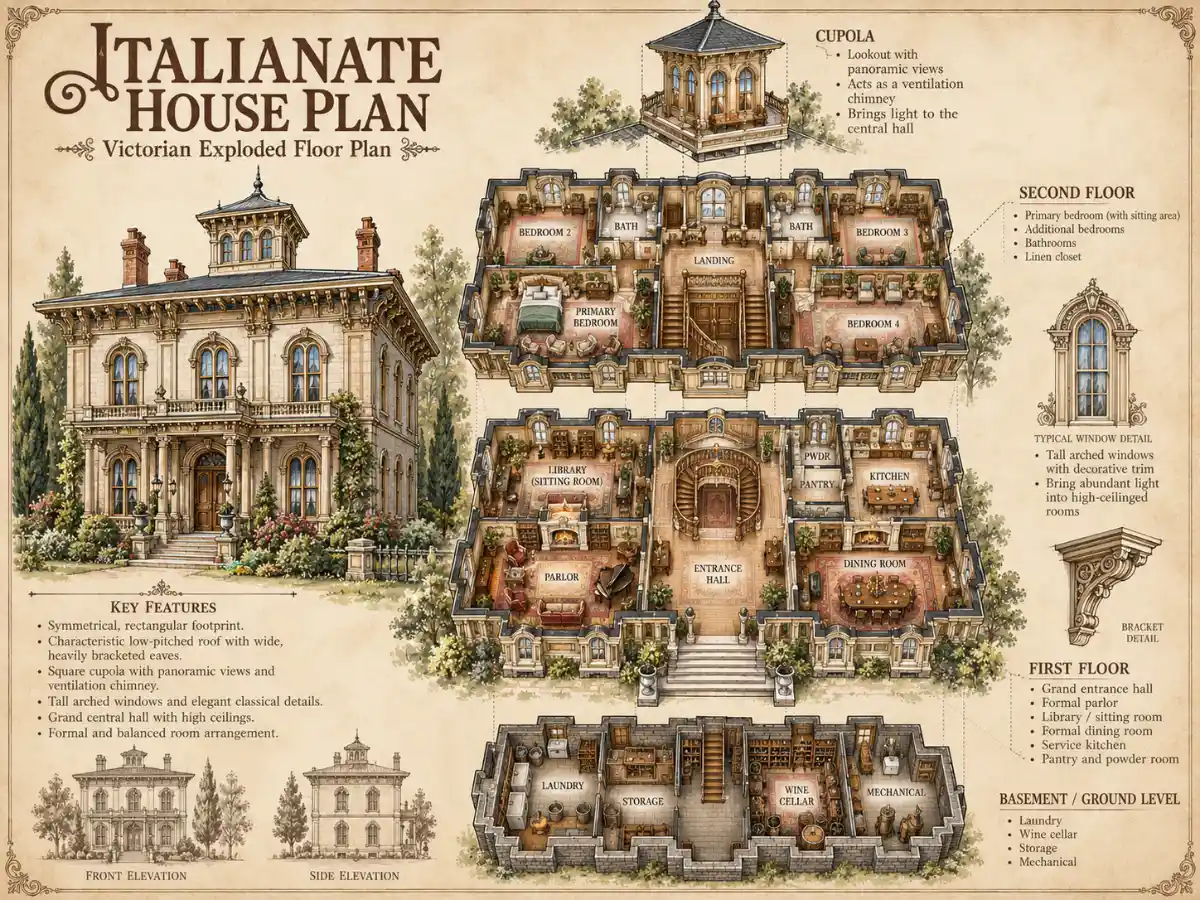
Inspired by 16th-century Italian Renaissance villas, Italianate floor plans tend to be more rectangular and symmetrical than Queen Anne designs. They feature low-pitched roofs supported by heavy decorative brackets, high ceilings, tall arched windows, and often a square central cupola or tower at the top. The cupola serves a dual purpose: providing panoramic views and acting as a natural ventilation chimney for the floors below. The influence of this style also extends to how mansions today are designed.
3.4. Gothic Revival & Second Empire plans
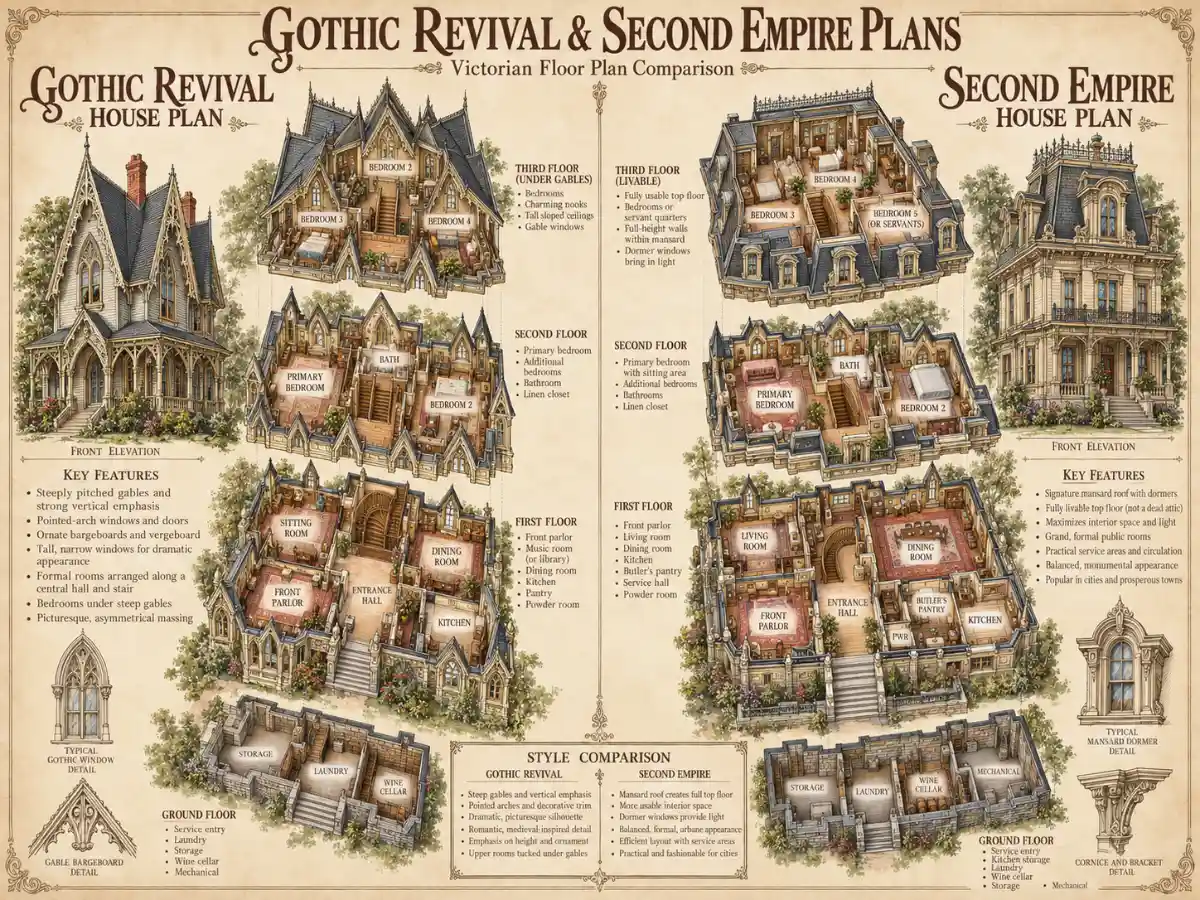
Gothic Revival layouts emphasize steep verticality, characterized by steeply pitched gables, pointed decorative arches, and gingerbread bargeboards. Second Empire plans, recognizable by their steep mansard roofs with dormer windows, maximize top-floor square footage, turning what would normally be dead attic space into fully livable upper bedrooms or servant quarters.
4. Room-by-room breakdown of a classic Victorian house layout
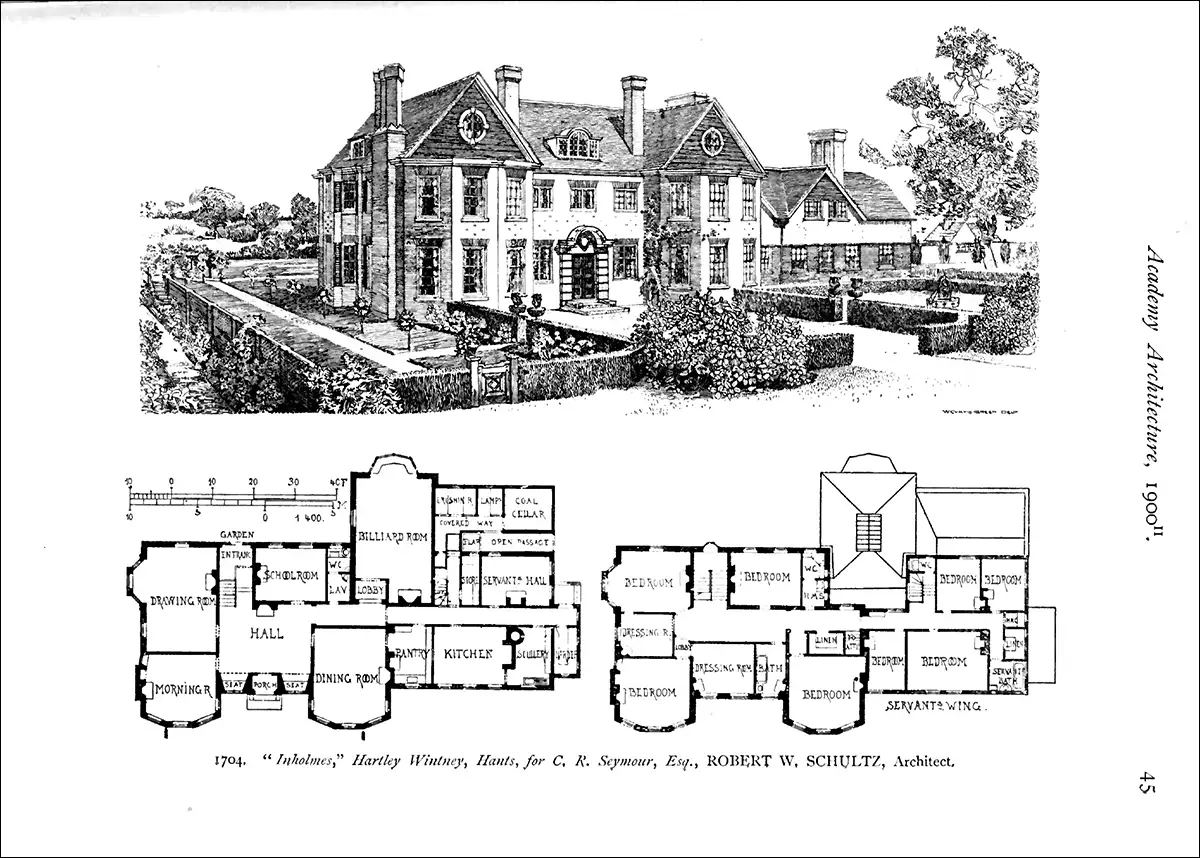
A traditional Victorian house layout is intentionally segmented to separate public social life from private domestic routines and back-of-house service operations. Unlike modern open-plan residences where the kitchen, dining, and living areas flow into a single continuous hall, historic Victorian homes treat every room as an enclosed, single-purpose destination.
4.1. Ground floor / Main level: Social & service zones
- Vestibule & grand entry foyer: Serving as a transitional buffer from the outside world, the entrance hall made a grand first impression on guests with an ornate staircase, wainscoting, and decorative floor tiles.
- Double parlors: Divided into a formal front receiving parlor for entertaining visitors and an informal back parlor for daily family gathering. These twin rooms were connected by heavy pocket doors, allowing homeowners to expand the space or seal off individual rooms for heat retention.
- Formal dining room & butler’s pantry: Located directly behind the parlors, the dining room anchored multi-course meals. An adjacent butler’s pantry provided built-in cabinetry for china and acted as a noise and scent buffer between the kitchen and dining hall.
- Isolated service kitchen: Positioned strictly at the far rear of the main floor, or situated in a lower basement level, the kitchen was kept completely isolated to contain cooking heat, odors, and domestic labor.
4.2. Upper levels: Private chambers & quarters
- Second floor bedrooms: Organized along a central corridor, the main bedrooms provided quiet retreats for family members. Before modern indoor plumbing became universal, primary bedrooms often included adjoining dressing alcoves or washstands.
- Third level & attic quarters: Accessible via a narrow, plain rear service staircase, top-floor rooms were generally assigned to live-in domestic staff, nurseries, or long-term storage.
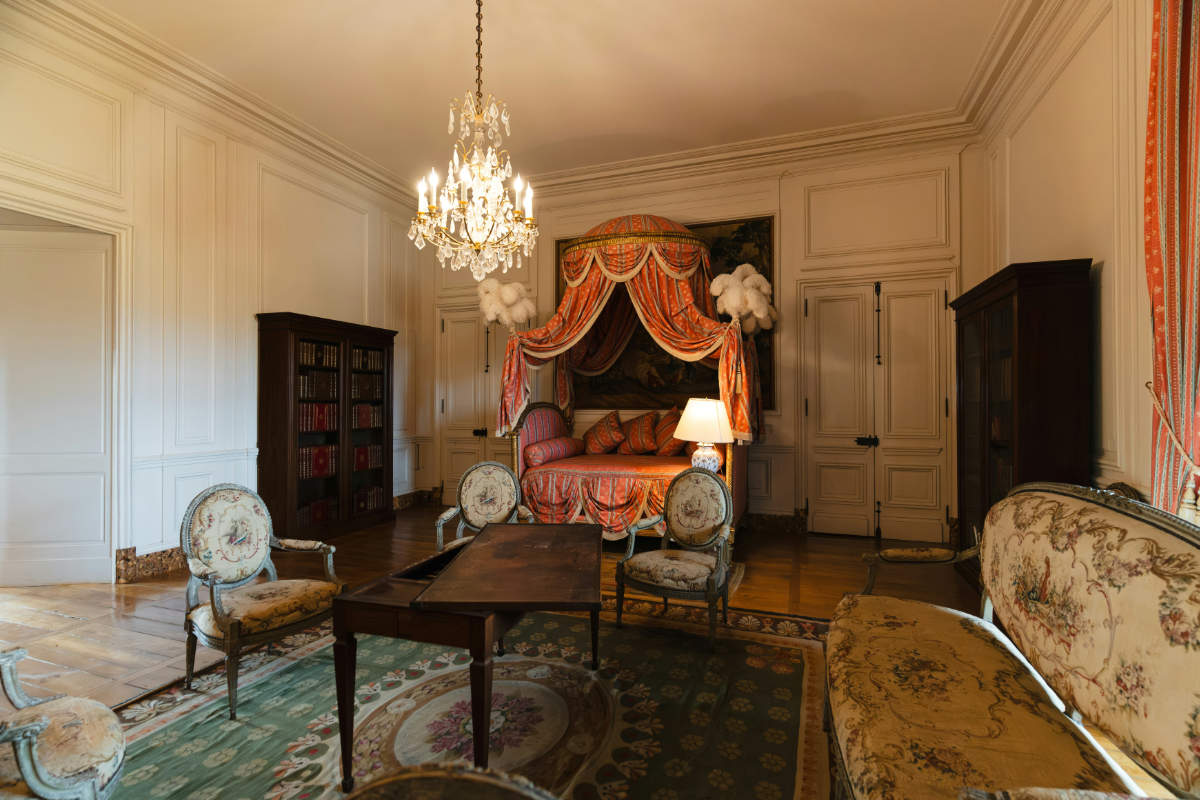
Understanding this traditional floor plan hierarchy is essential when preserving a historic layout or planning a sensitive modern adaptation.
5. Adapting Victorian house layouts for modern lifestyles
While historic architecture offers unmatched charm, 19th-century room divisions do not always align with modern living habits. Today's architects and interior designers frequently reimagine traditional Victorian house layout concepts, reconfiguring interior spaces to blend historical elegance with contemporary open-plan functionality.
5.1. Creating an open-concept kitchen & living hub
In authentic Victorian-style home floor plans, kitchens were tiny, isolated service zones at the rear. Modern renovations typically remove non-load-bearing walls between the small kitchen, pantry, and rear dining room, converting them into a unified, sunlit kitchen-dining-living area. Meanwhile, formal front parlors are preserved as quiet, closed-off sitting rooms or home offices.
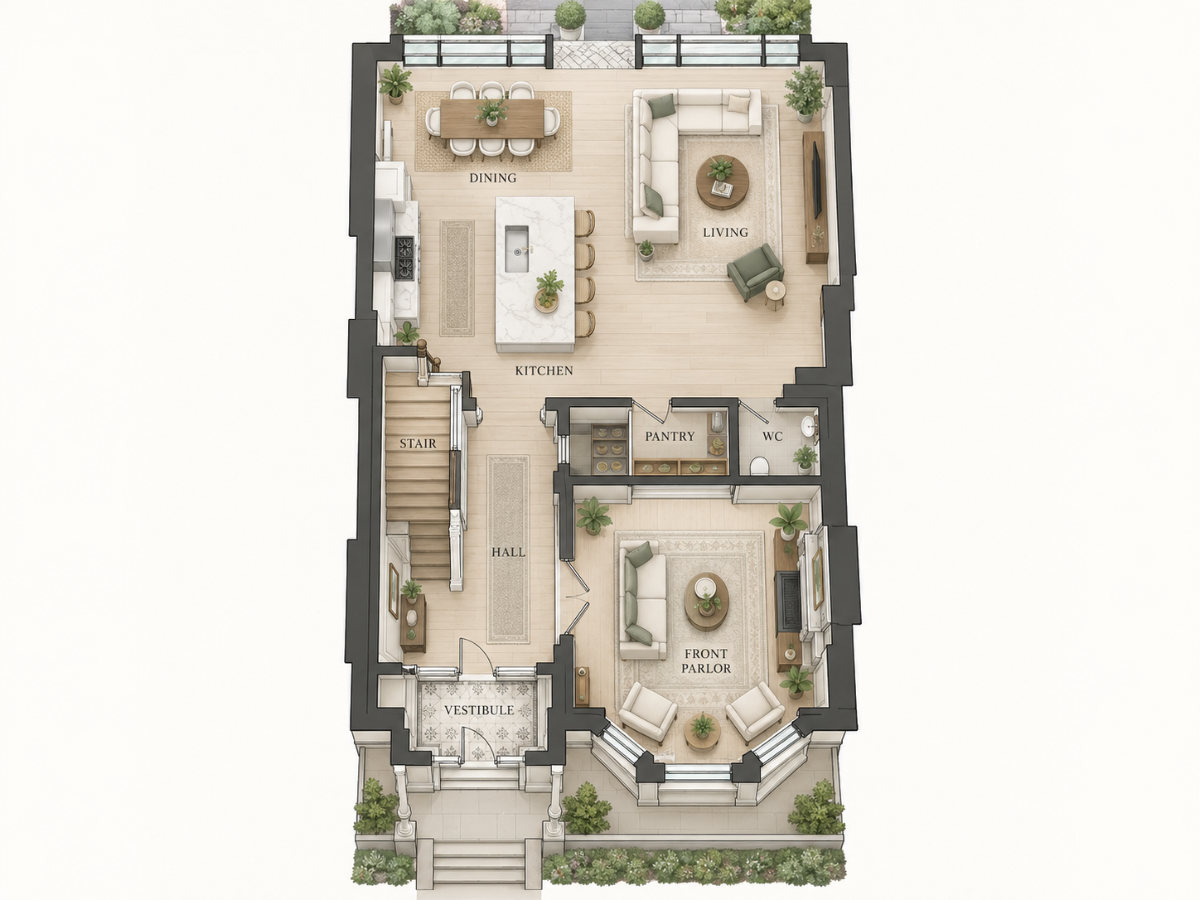
5.2. Primary suite & en-suite bath conversions
Traditional upper levels often featured four or five small, cramped bedrooms served by a single shared hall bathroom. A common modernization strategy combines two adjacent secondary bedrooms to form a luxurious primary suite complete with a walk-in closet, a dedicated en-suite bathroom, and second-floor laundry facilities.
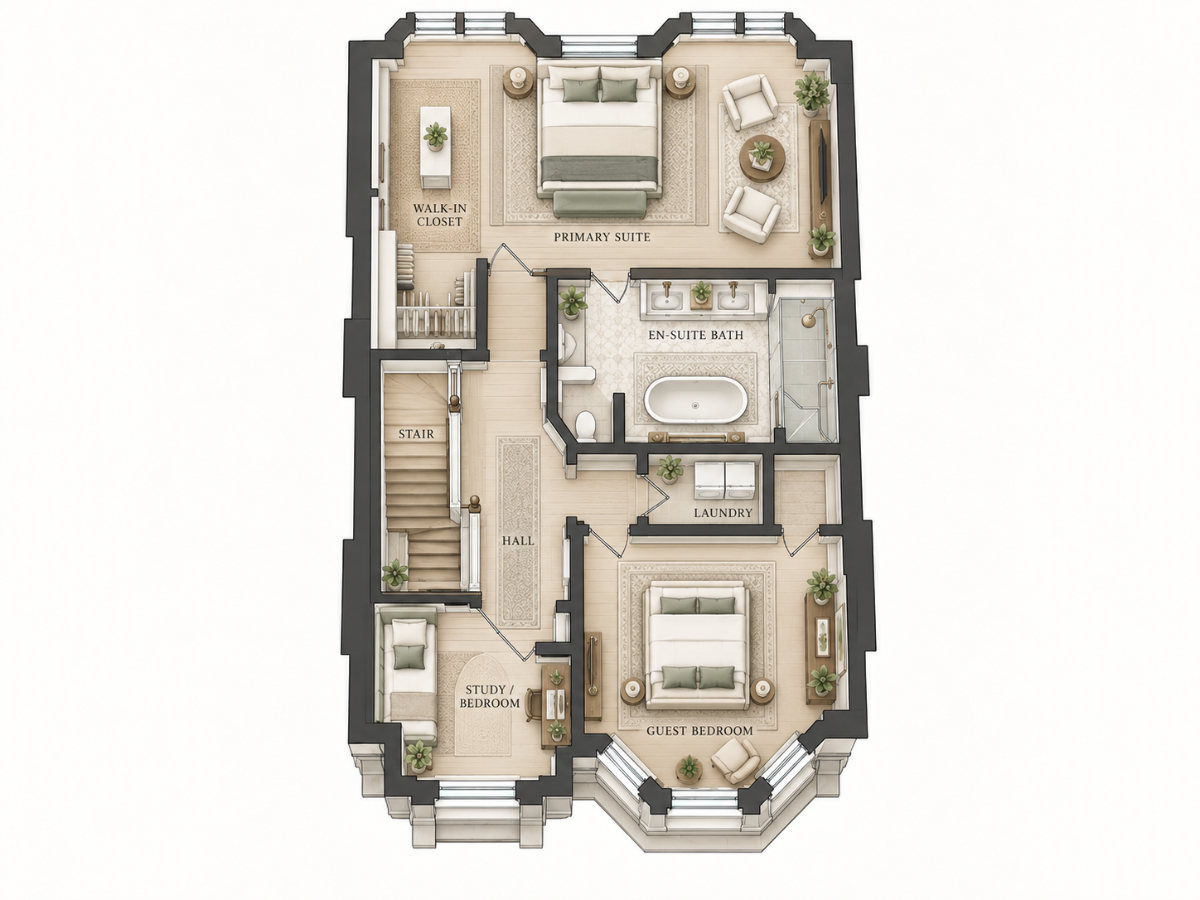
5.3. Enhancing indoor-outdoor connection
Historic Victorian homes rarely prioritized direct access to backyards. Modernized plans frequently add rear extensions with floor-to-ceiling glass, French doors, or sliding glass wall systems that open onto outdoor decks and landscaped gardens, flooding the interior with natural light and expanding functional entertaining space.
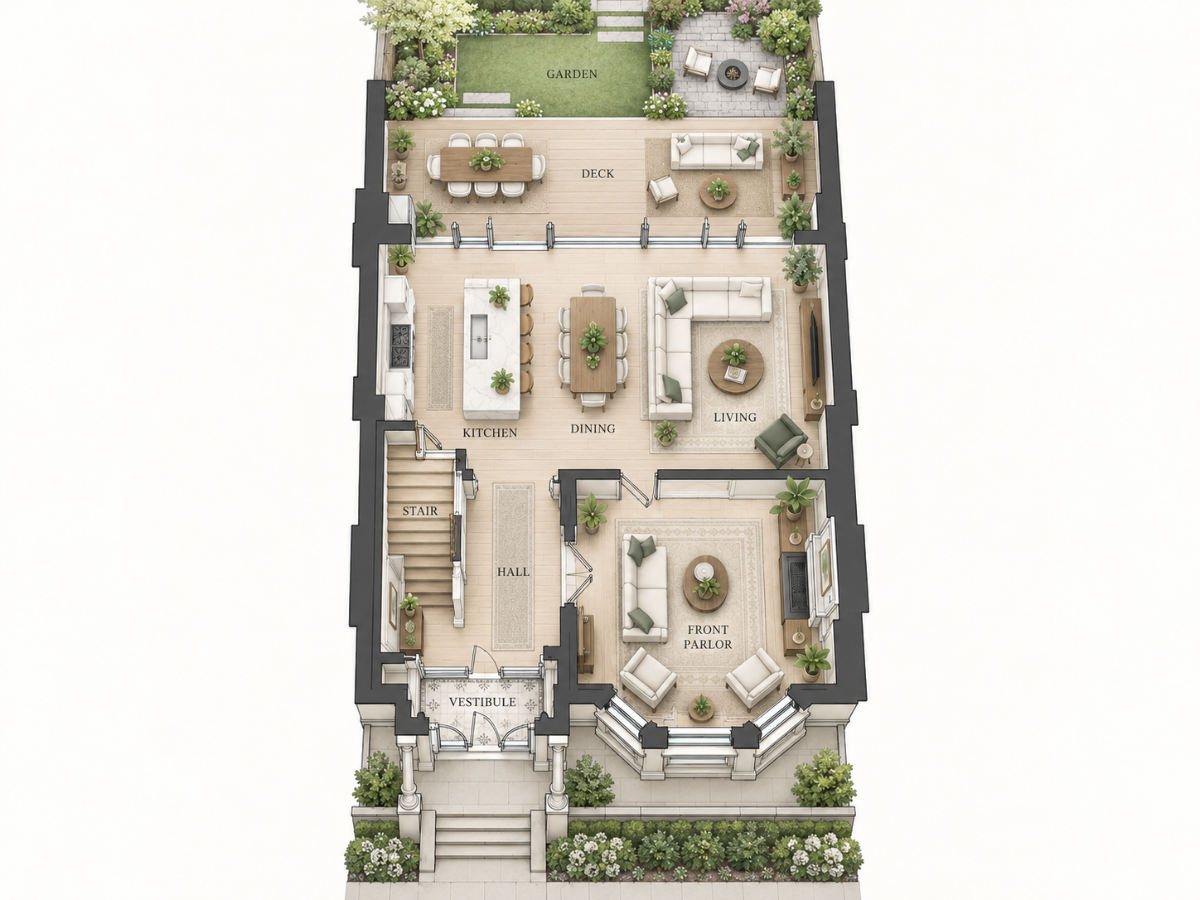
By preserving character-defining front spaces while opening up the rear and upper levels, homeowners achieve the ideal balance of historic nostalgia and modern luxury.
6. Essential tips for maintaining & renovating historic Victorian homes
Restoring or updating a Victorian property requires a delicate balance between preserving authentic architectural craftsmanship and modernizing structural systems for modern functionality. When working with historic home floor plans, thoughtful planning ensures the home retains its period charm while meeting contemporary living standards.
6.1. Preserving architectural integrity
Before removing walls or altering original layouts, identify non-negotiable historic details that define classic Victorian interiors. Preserving original plaster ceiling medallions, carved wooden stair balustrades, hardwood floors, stained glass, and operational pocket doors maintains both historical value and real estate appraisal worth.
6.2. Retrofitting mechanical systems safely
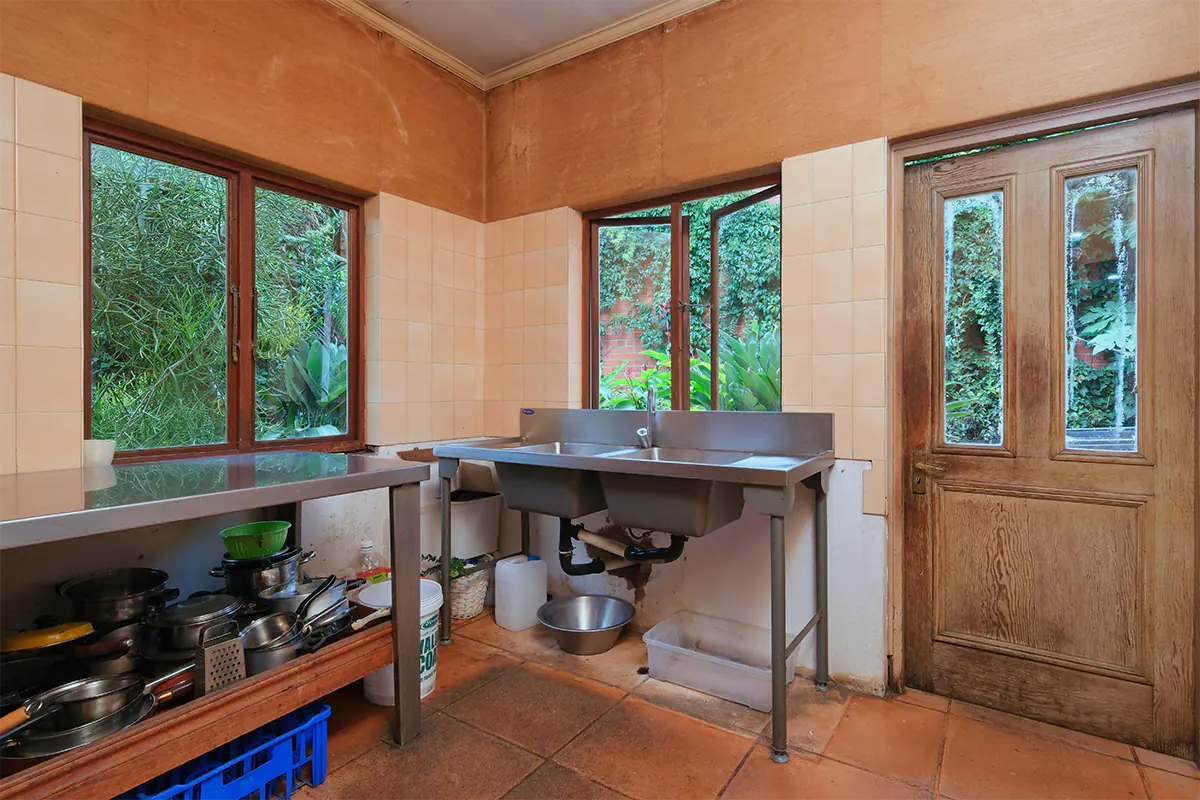
Victorian homes were built long before modern electrical wiring, central HVAC, and complex indoor plumbing. When upgrading utilities:
- Electrical & plumbing: Route new PEX plumbing and electrical conduits through existing vertical chase-ways, closet floors, or interior partition cavities rather than cutting through original decorative moldings.
- HVAC systems: Consider ductless mini-split systems or high-velocity mini-duct HVAC to avoid dropping ceilings or destroying historic plaster walls.
6.3. Balancing compartmentalization with open-plan flow
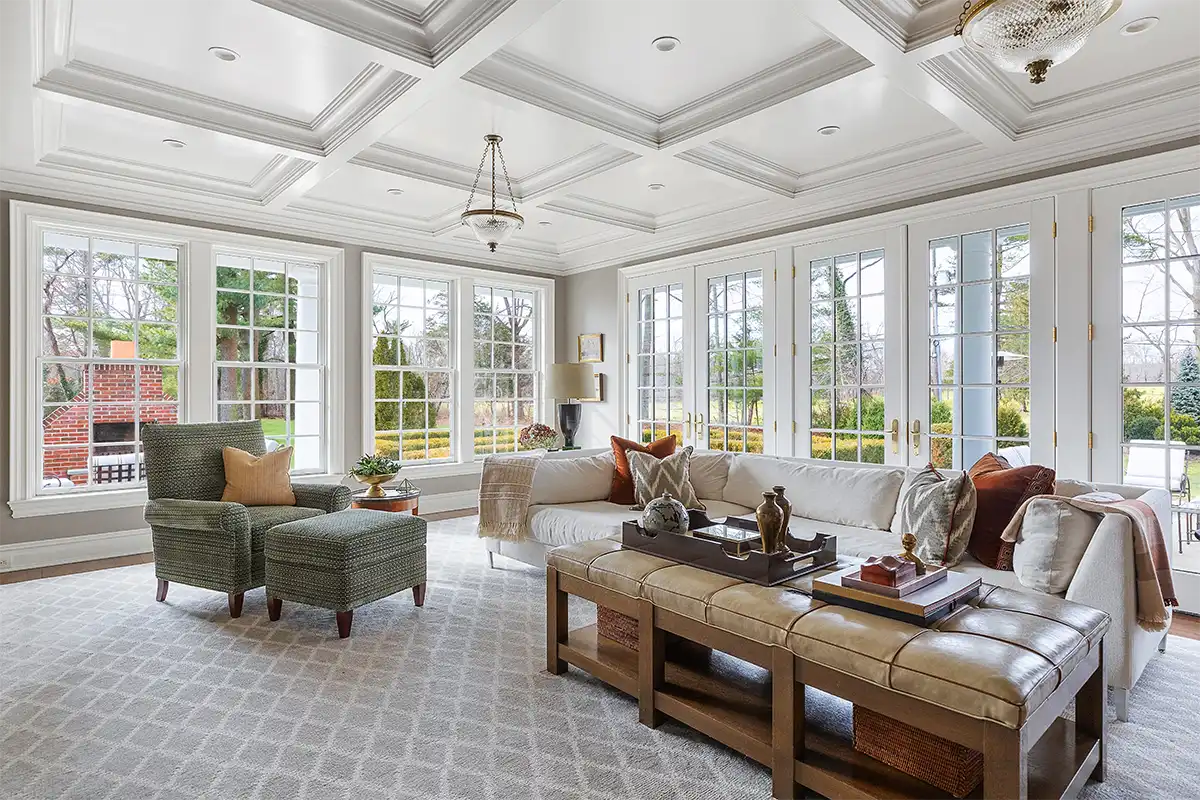
While modern homeowners often prefer open concepts, knocking down all interior walls strips away a Victorian home’s unique character. A subtle approach involves creating wider cased archways between the rear kitchen and dining spaces while keeping original structural casings in place to preserve the defined spatial logic.
6.4. Remediating age-related structural issues
Older Victorian foundations often experience minor settling or moisture retention. Ensure brick masonry is repointed with soft lime-based mortar, rather than modern Portland cement, to prevent moisture entrapment and brick spalling. Upgrading attic insulation and restoring original wood windows with weatherstripping will also improve thermal efficiency without compromising authenticity.
7. Key considerations when building a new Victorian-style home
Building a new custom home inspired by classic Victorian architecture allows you to blend timeless curb appeal with modern construction efficiency. However, recreating the intricate silhouettes and character of historic homes requires careful planning during the design phase.
7.1. Navigating local zoning & historic overlay rules
If building in an established neighborhood or historic overlay district, carefully review local setback limits, lot coverage ratios, and maximum height restrictions. Victorian designs often feature steep roof pitches and multi-story turrets that require specific zoning variances before breaking ground.
7.2. Integrating modern building science & energy efficiency
Custom replica plans allow you to bypass the drafty drawbacks of authentic 19th-century construction:
- Advanced envelope insulation: Utilize continuous exterior insulation, spray foam, and vapor barriers within wall cavities.
- High-performance windows: Install double- or triple-paned insulated glass featuring custom interior muntin bars to maintain historic sightlines while meeting modern energy codes.
- HVAC zoning: Plan dedicated heating and cooling zones for each level to accommodate heat rise across multi-story layouts.
7.3. Budgeting for exterior craftsmanship
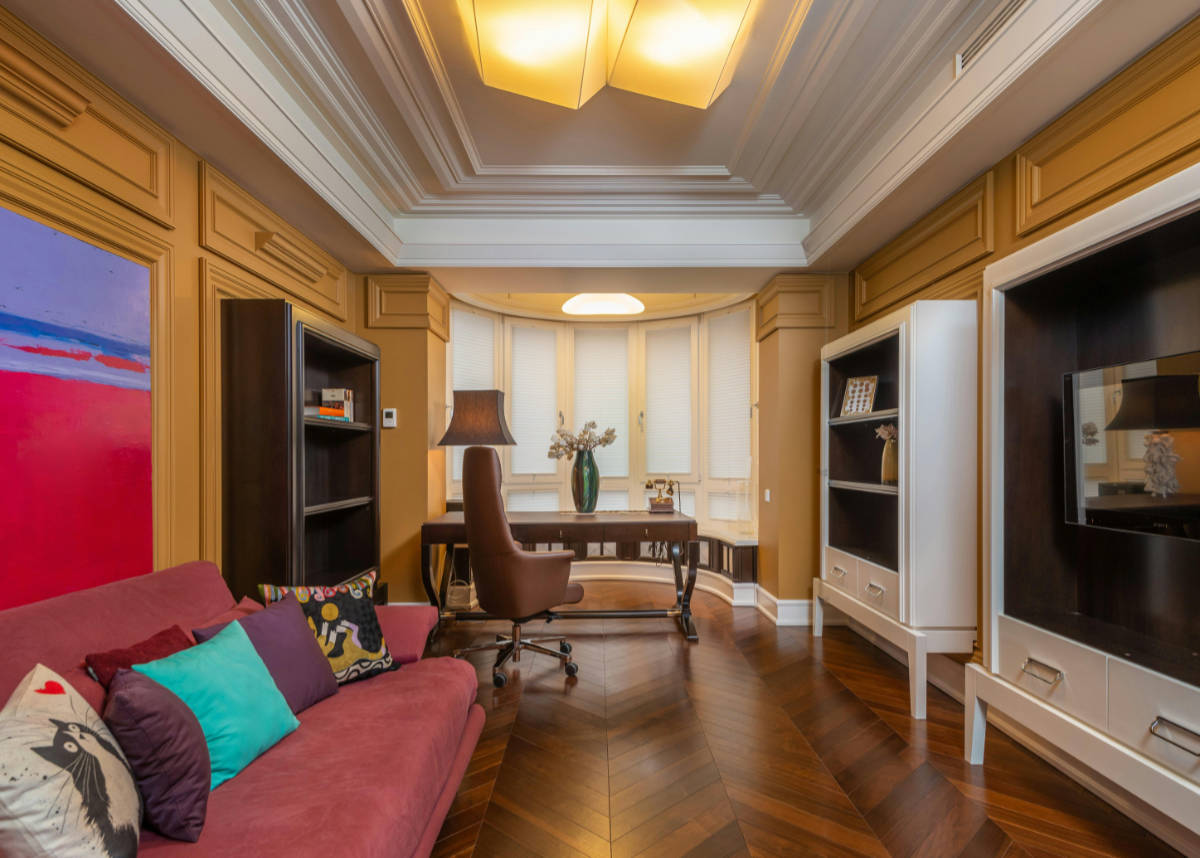
The defining charm of Victorian architecture lies in its detailed exterior trim. Allocate a dedicated portion of your construction budget for quality millwork:
- Fiber-cement or engineered wood siding for durability.
- Custom porch railings, turned balusters, decorative gables, and bracketed eaves.
- Architectural shingles or synthetic slate roofing to withstand severe weather.
Prioritizing these details upfront ensures your new build captures authentic historic character while delivering modern comfort and durability.
8. Real-world case study of Victorian-style home floor plans: Selling a 19th-century gem
To illustrate the power of strategic visualization, consider the case of a stunning 1890s Queen Anne-style residential home located in a high-demand district of Austin. Despite its impeccable classic Victorian interiors and breathtaking curb appeal, the property sat on the market for over 60 days with no serious offers. The feedback from open houses was consistent: prospective buyers were enchanted by the history but "intimidated" by the traditional Victorian house layout. The compartmentalized rooms made the 3,000-square-foot home feel cramped, and many struggled to see how their contemporary lifestyles or oversized furniture would fit into the historic architecture.
The listing agent decided to pivot by shifting the marketing focus from "what is" to "what could be." Instead of relying solely on standard photography with professional editing, they commissioned a set of high-precision Victorian-style home floor plans and premium video tours. These visuals clearly demonstrated how two small, dark parlors could function as a cohesive, sun-drenched Great Room and how a neglected turret could be transformed into a world-class home office.
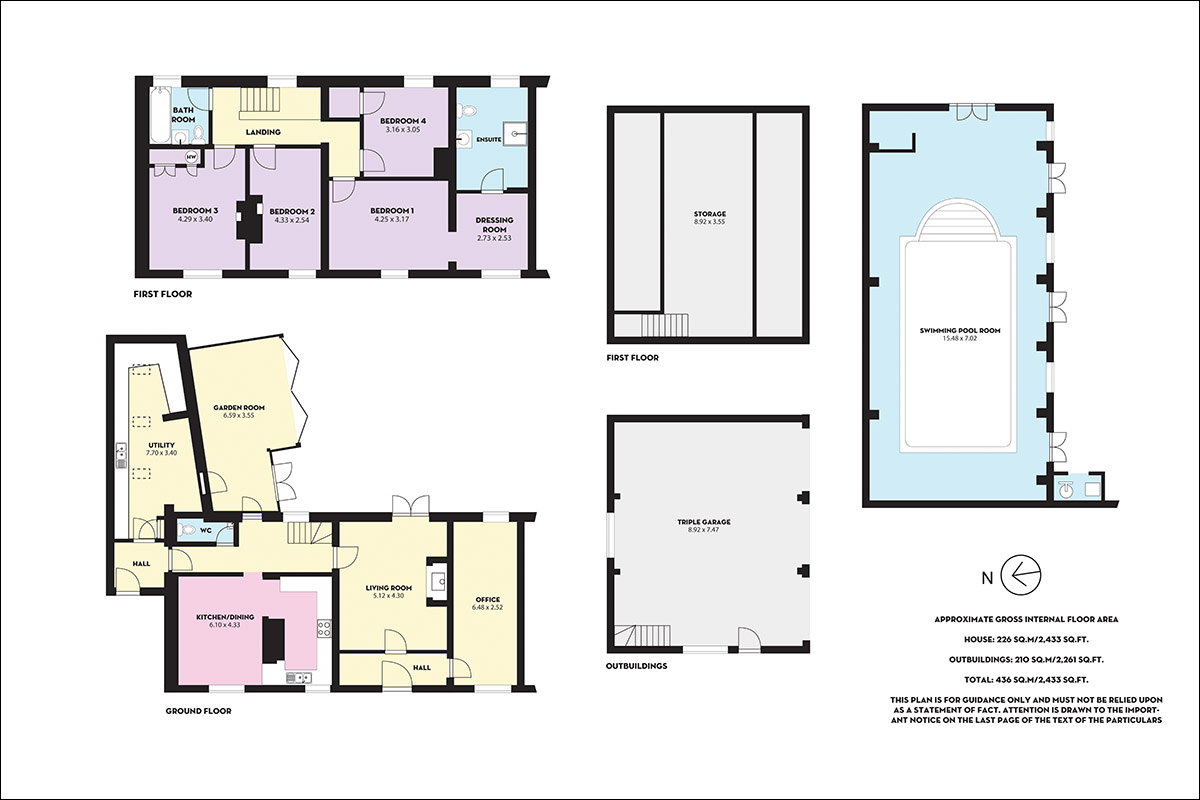 Classic buildings still appeal to modern buyers thanks to comprehensive high-end visual marketing.
By presenting these virtual possibilities, the agent removed the "imagination gap" for the buyer. Within two weeks of updating the listing with these visual tools, the property received multiple competitive offers. The winning buyers cited the 3D layout as the deciding factor, as it gave them the confidence to invest in a historic property while knowing it could satisfy their modern needs. The home eventually closed significantly over the asking price, proving that when you solve the visualization problem, you unlock a property's true market equity.
9. How Fotober’s floor plan services support home sellers & builders
Victorian homes are renowned for their charm, but their labyrinthine, multi-story layouts can easily confuse prospective buyers viewing standard listing photos. Fotober bridges this visual gap with high-impact floor plan solutions tailored for realtors, property owners, and custom home builders.
- Clear 2D floor plans: We convert complex, highly compartmentalized layouts into clean, professionally formatted 2D floor plans. Complete with precise dimensions, door swings, and clear room labels, buyers instantly understand the property's spatial flow.
- Immersive 3D floor plans & virtual renovation: Demonstrating a historic home’s true potential is effortless with Fotober’s 3D floor plans. Sellers and remodelers can visually communicate how segmented rooms can be modernized into open-concept hubs, helping buyers visualize future possibilities.
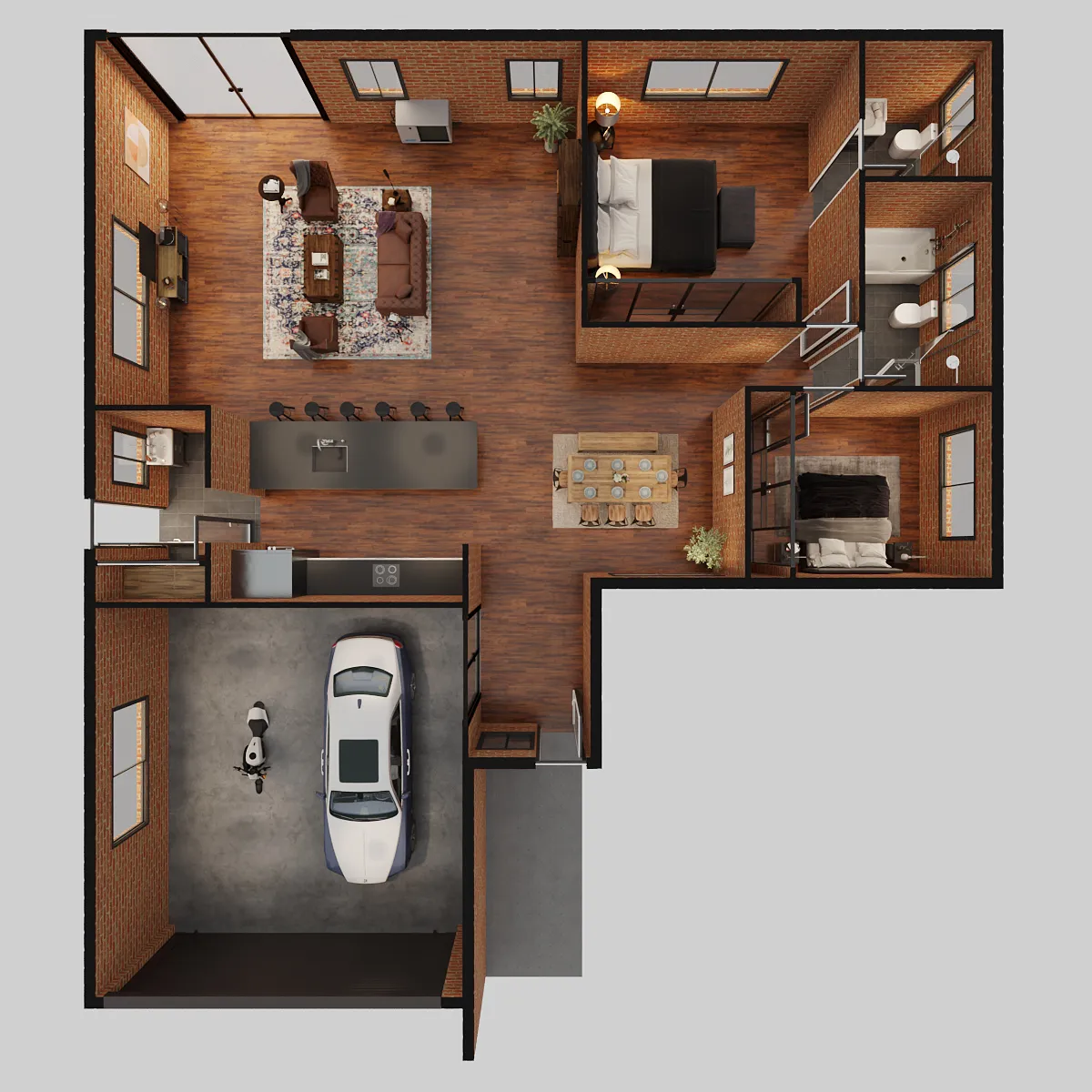
Whether you are marketing a historic San Francisco Victorian home or presenting new reproduction plans, Fotober delivers fast, high-quality floor plan assets that elevate property listings and drive faster sales.
10. Conclusion
Victorian style home floor plans offer a rich blend of architectural history, intricate detailing, and timeless spatial charm. Whether you are preserving a historic layout, renovating compartmentalized rooms for modern open-concept living, or designing a custom replica from the ground up, thoughtful spatial planning is essential to balancing period character with contemporary functionality.
Ready to showcase or reimagine your property with clarity? Fotober delivers professional 2D and 3D floor plan services that transform complex architectural layouts into clear, compelling visuals for home buyers, sellers, and builders. Visit Fotober today to elevate your real estate marketing and bring your property vision to life!
Follow us on social media to stay updated with the latest trends in the real estate market and popular architectural styles.
- Facebook: fotobermedia.co
- YouTube: Fotober
- TikTok: @fotober
- Instagram: fotober_media.
Related posts
Modern Luxe Interior Design: Elements, Style Guide and How to Stage It
October 10, 2026

Minimalist Interior Design: Characteristics, Style Guide, and Staging
October 8, 2026

Coastal Interior Design: Style Definition & Staging Guide
September 30, 2026

Contemporary Interior Design: Key Elements and How to Stage This Style
September 30, 2026
