




Mansion Floor Plans & Interior Layout Ideas: Designs For Your Heritage

Share:
Table of Contents
- 1. What defines a mansion?
- 2. Distinctive characteristics of mansion floor plans
- 3. Essential zones & components of modern mega mansion floor plans
- 4. Mansion floor plan layout ideas that drive real estate sales
- 5. Why mansion floor plans & architectural styles appeal to luxury buyers
- 6. Elevate luxury listings with professional floor plan services by Fotober
- 7. Case study: How strategic floor plan visualization accelerated an $18M estate sale
- 8. Conclusion
In 2026, a true mansion is defined by both immense square footage and architectural mastery. Since the structural flow determines the property’s ultimate market value and every detail must be perfect, detailing floor plans is the first step in creating a sanctuary that balances grandeur with modern functionality. This guide explores the key elements of mansion floor plans and how high-end visualization from Fotober bridges the gap between a simple blueprint and a sold masterpiece.
In short, key defining elements of a mansion floor plan include:
- Massive scale: Generally starting at 5,000 to 8,000+ square feet, featuring high volume (soaring ceilings) and expansive floor plans.
- Grand entryways: A signature "wow" factor, usually involving double-height foyers, sweeping staircases, and statement chandeliers.
- Purpose-built luxury: Rooms you won't find in a standard home, such as multi-level libraries, professional home cinemas, wine vaults, and indoor spa wings.
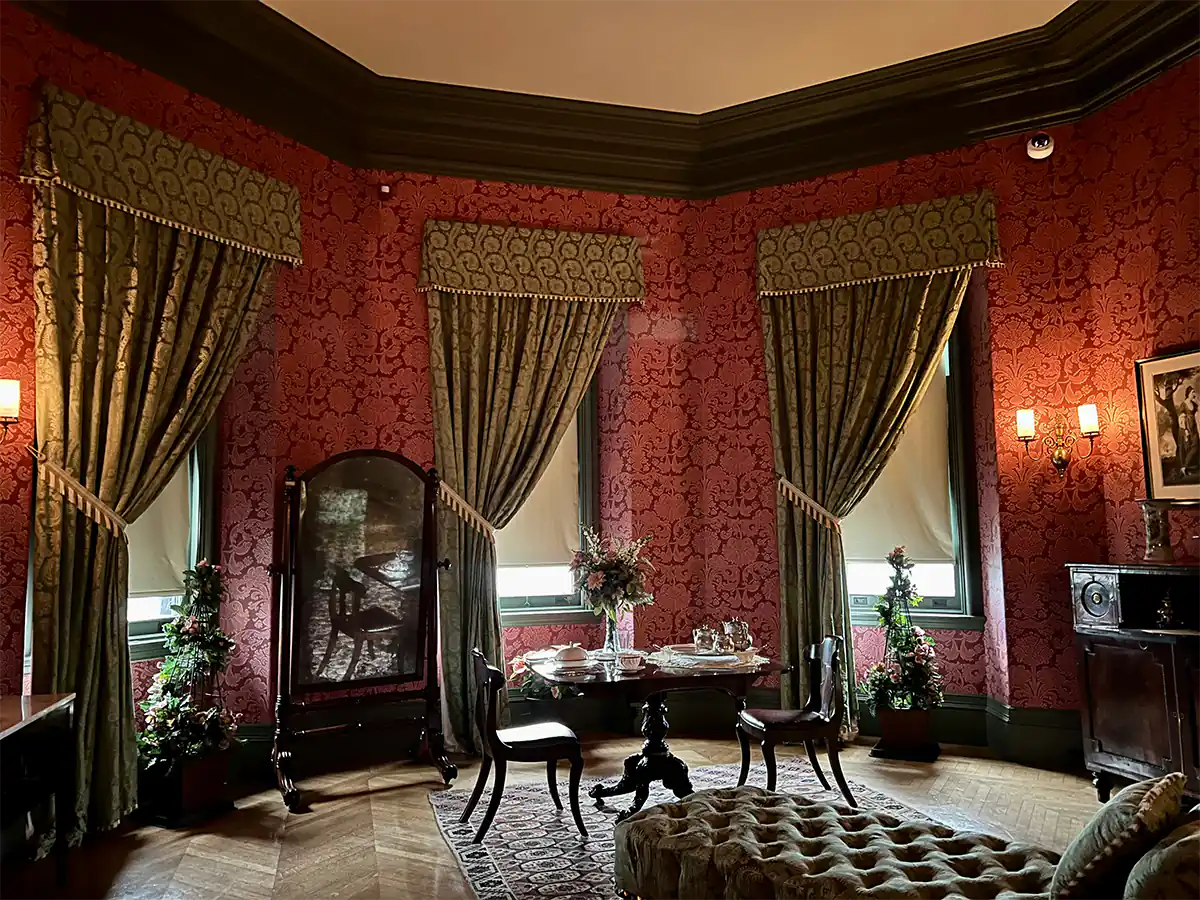
- Elite materials: Extensive use of premium finishes like book-matched marble, rare hardwoods, and custom stonework.
- Dedicated service zones: Separate wings or entrances for staff, prep kitchens, and high-security infrastructure.
- Indoor-outdoor synergy: Large-scale amenities like infinity pools, outdoor kitchens, and manicured grounds that feel like a private resort.
1. What defines a mansion?
While the term “mansion” often evokes images of grand historical estates, defining one in modern real estate involves a precise blend of spatial scale, architectural craftsmanship, and bespoke functionality. Generally, real estate experts consider a residence to be a mansion when its footprint starts at 5,000 to 8,000 square feet, with properties surpassing 10,000 square feet entering the realm of true mega mansions. However, physical scale alone does not qualify a home as a mansion; the distinction lies in custom structural design, ultra-premium materials, and expansive grounds engineered for luxury living.
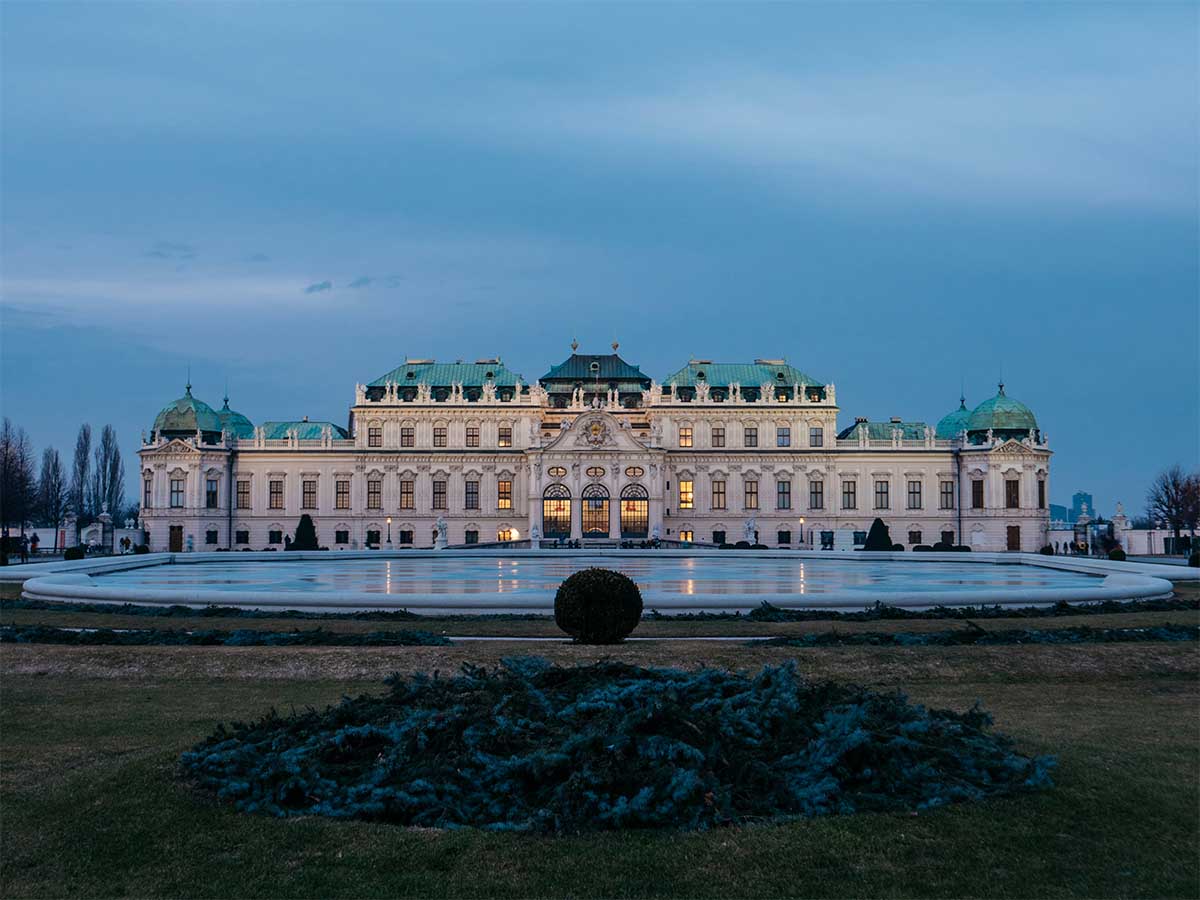
Unlike standard single-family homes or upscale residential villas, a mansion is characterized by specialized spatial programming and sophisticated layout zoning. Rather than simply enlarging standard bedrooms or living rooms, mansion floor plans incorporate hyper-specific functional zones, balancing high-capacity public entertainment halls with secluded family quarters, wellness wings, and discrete service infrastructure. A true mansion exhibits grand architectural volume, characterized by soaring ceiling heights, sweeping gallery corridors, and monumental entry halls, all while maintaining acoustic and visual privacy throughout.
Ultimately, a mansion is defined not merely by its impressive footprint, but by its ability to facilitate an uncompromising lifestyle. The floor plan must seamlessly orchestrate public grandeur, private sanctuary, and background domestic operations into a harmonious, prestigious living environment.
2. Distinctive characteristics of mansion floor plans
Designing mansion floor plans requires a delicate balance between monumental physical scale and intuitive daily usability. Unlike standard residential floor plans that focus primarily on space optimization, luxury estate design centers on spatial choreography, privacy, and architectural impact. A well-executed modern mansion layout is defined by three fundamental characteristics.
2.1. Masterful zoning and circulation flow
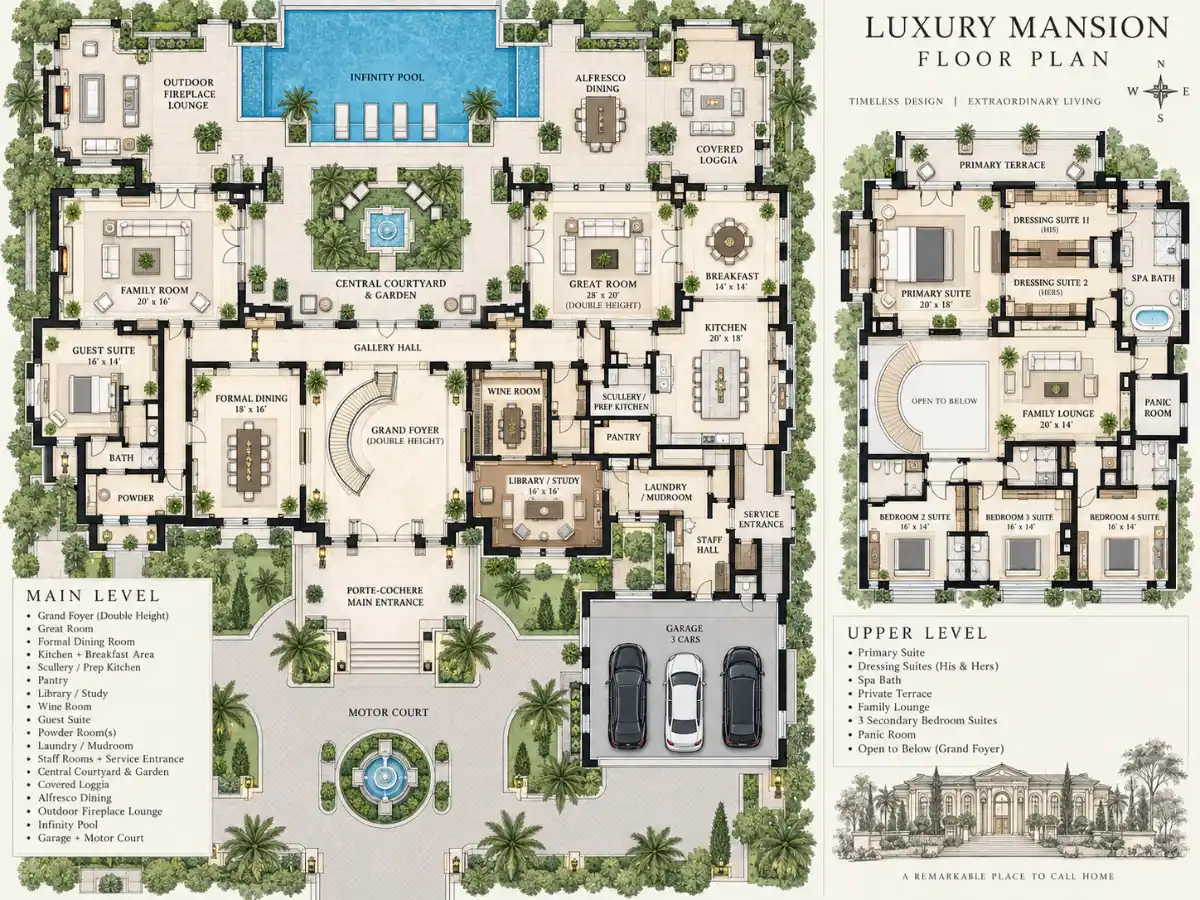
The hallmark of a world-class luxury floor plan is its precise tripartite zoning, which separates public entertaining spaces, private living quarters, and back-of-house service areas:
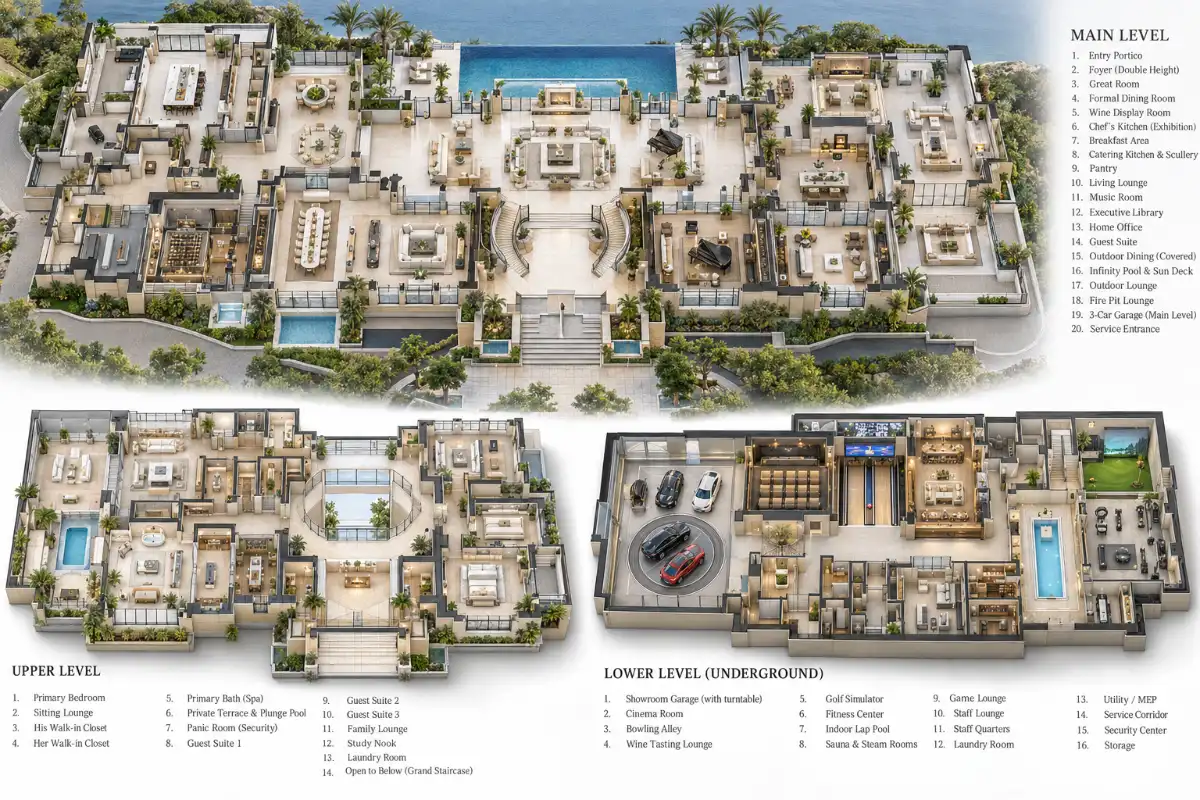
- Public entertaining zones: Engineered for high-capacity hosting, these areas incorporate soaring great rooms, grand ballrooms, formal dining quarters, and dedicated wine displays.
- Private family sanctuaries: Typically located in dedicated wings or upper levels, these quarters offer total isolation, complete with private lounge spaces, panic rooms, and luxury dressing suites.
- Service & staff corridors: Discrete operational pathways, sculleries, and service entrances allow estate staff, catering teams, and maintenance crews to work efficiently without disrupting family life or guest experiences.
2.2. Monumental scale and proportion
In luxury architecture, scale is utilized as an emotional tool. Floor plans deliberately leverage spatial volume to create dramatic focal points. Key architectural elements include double-height foyers with floating or curved staircases, gallery-style hallways framed for fine art displays, and soaring ceiling heights that maximize natural light. Strategic axial vistas draw the eye across expansive interior distances toward panoramic outdoor landscapes.
2.3. Seamless indoor-outdoor integration
Modern high-end estate design prioritizes a continuous relationship between interior living spaces and outdoor amenities. Contemporary mansion floor plans feature automated, pocketing glass doors, zero-threshold floor transitions, and expansive covered loggias with alfresco dining hubs and outdoor fireplaces. Layouts are carefully oriented around central courtyards, infinity pools, or landscaped gardens, ensuring every major room benefits from dynamic natural lighting and framed exterior sightlines.
By harmonizing intelligent zoning, dramatic vertical volume, and exterior connectivity, these distinct characteristics ensure that even the grandest properties feel cohesive, functional, and deeply inviting.
3. Essential zones & components of modern mega mansion floor plans
Designing mega mansion plans requires meticulous attention to functional specialization. Rather than merely increasing the square footage of standard rooms, high-end blueprints partition space into hyper-dedicated zones engineered to support lavish entertaining, absolute privacy, and commercial-grade domestic operations.
To create a cohesive layout across vast footprints, modern estate architects structure mansion interior layout ideas around four fundamental spatial hubs.
3.1. Grand entrance & public living quarters
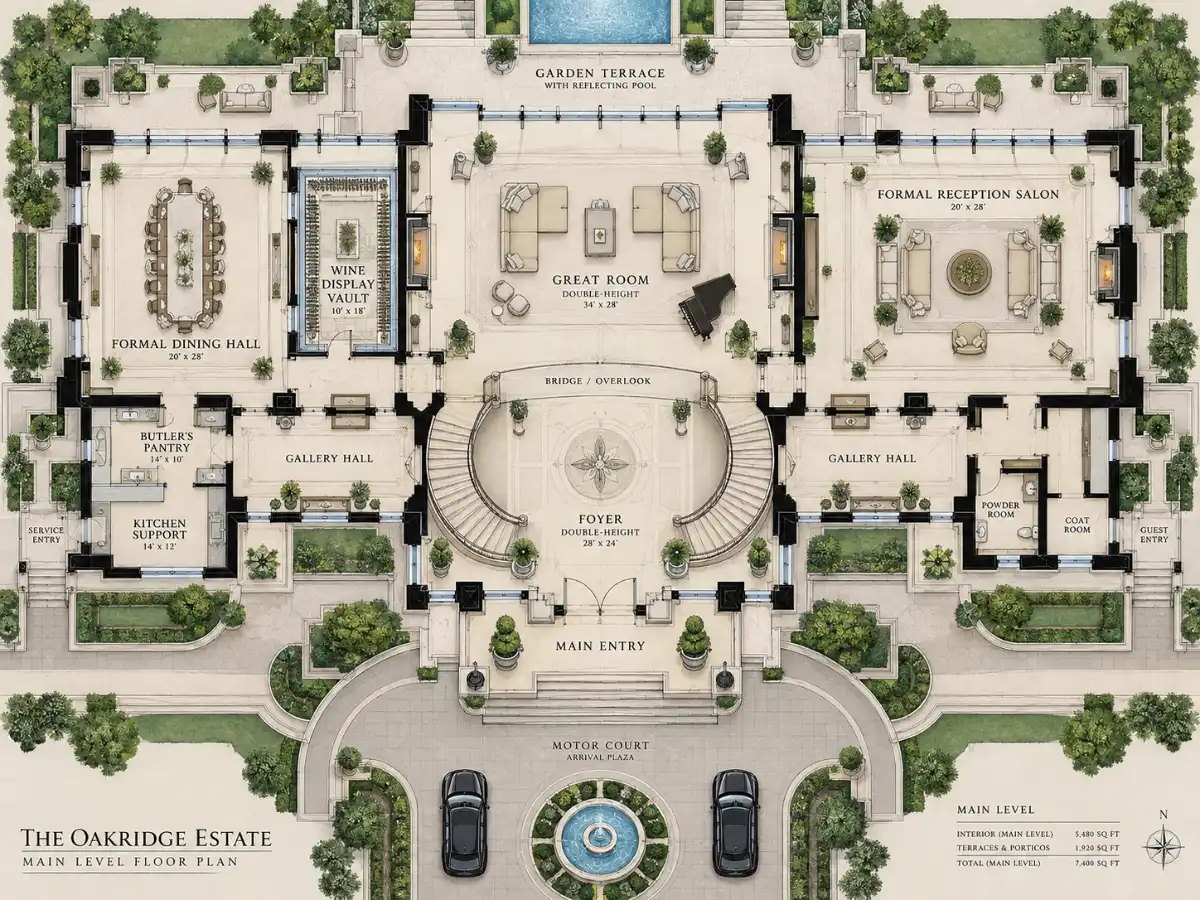
The entryway sets the architectural tone for the entire estate. Public zones prioritize high impact, grand volume, and fluid guest movement:
- Foyer & great room: Double-height ceilings framing monumental sweeping staircases, floating bridges, and floor-to-ceiling glass walls.
- Formal hospitality spaces: Banquet-style dining halls adjacent to custom, climate-controlled glass wine display vaults and formal reception salons.
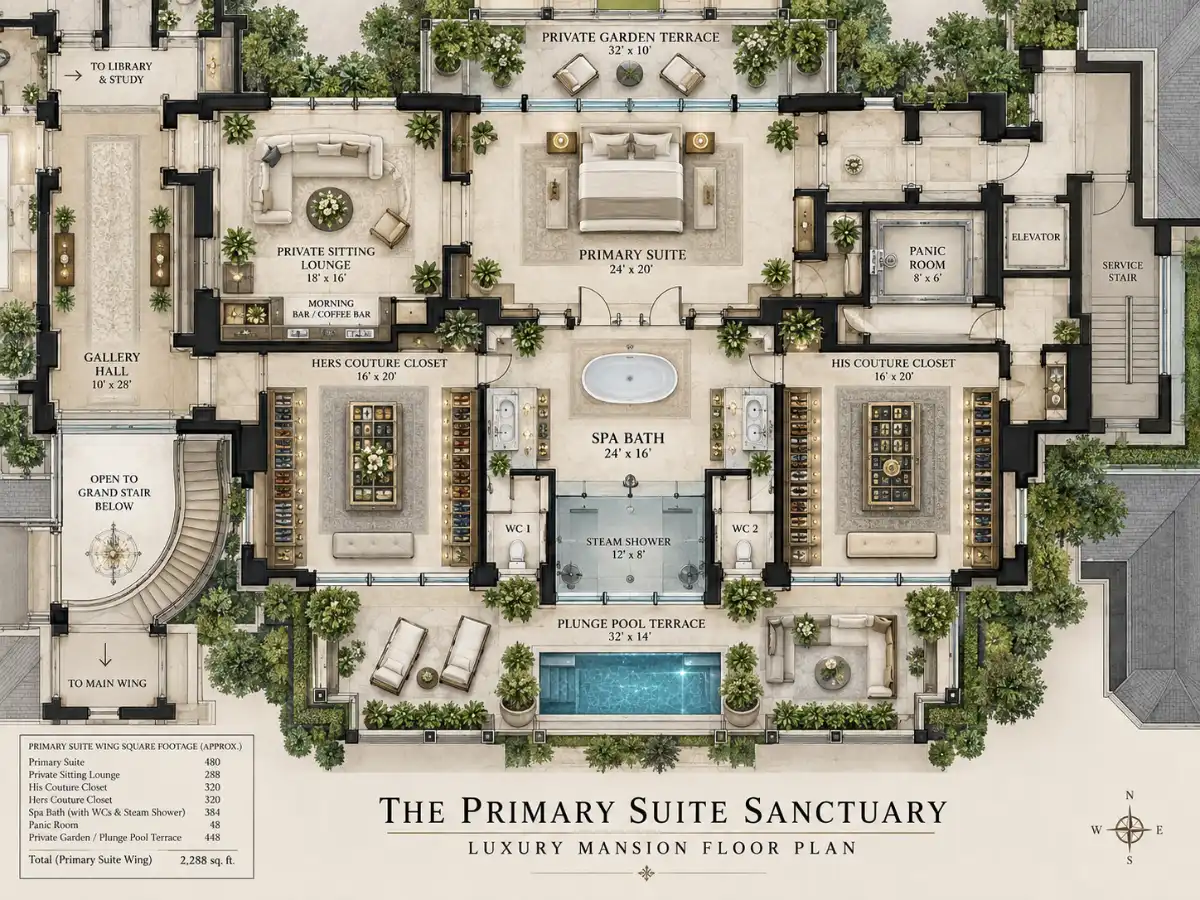
3.2. The primary suite sanctuary
More than just a master bedroom, the primary suite in modern mega mansion plans functions as a self-contained private penthouse wing:
- Dual couture closets: Expansive, climate-controlled walk-in dressing rooms with glass display islands and shoe galleries.
- Spa-inspired bathrooms: Dual private water closets, freestanding soaking tubs, steam showers, and private outdoor plunge pools or garden terraces.
- Security & retreat: Integrated morning bars, private sitting lounges, and discrete panic rooms fitted with independent security systems.
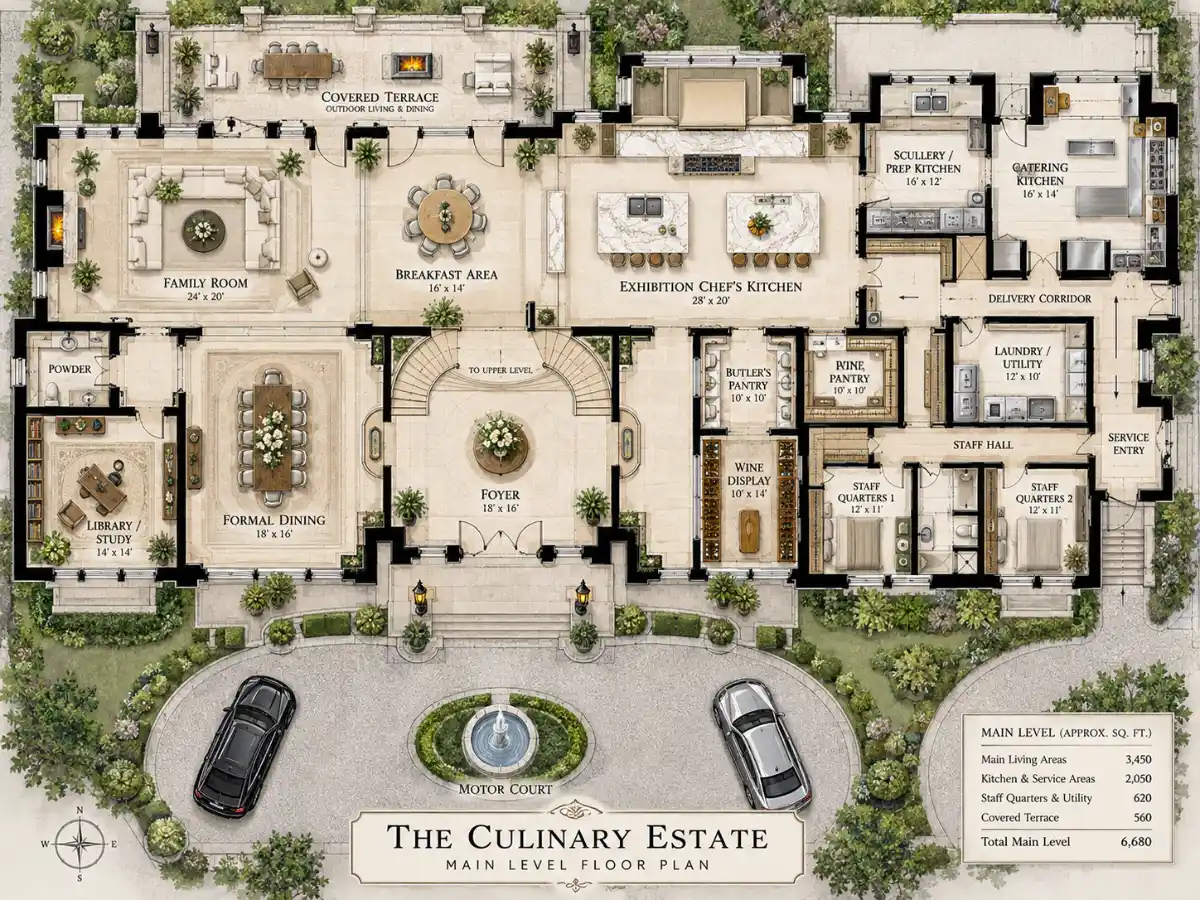
3.3. Culinary hub & back-of-house service
High-end estate layouts utilize a dual-kitchen system to keep heavy food preparation separate from guest entertainment:
- Exhibition chef’s kitchen: Open-concept kitchen featuring oversized marble islands designed for informal family dining and social cooking.
- Catering kitchen & scullery: Hidden behind seamless paneling, a commercial-grade kitchen allows private chefs and catering staff to handle high-capacity event prep discreetly.
- Service infrastructure: On-site staff quarters, utility hubs, and dedicated delivery corridors with private access routes.
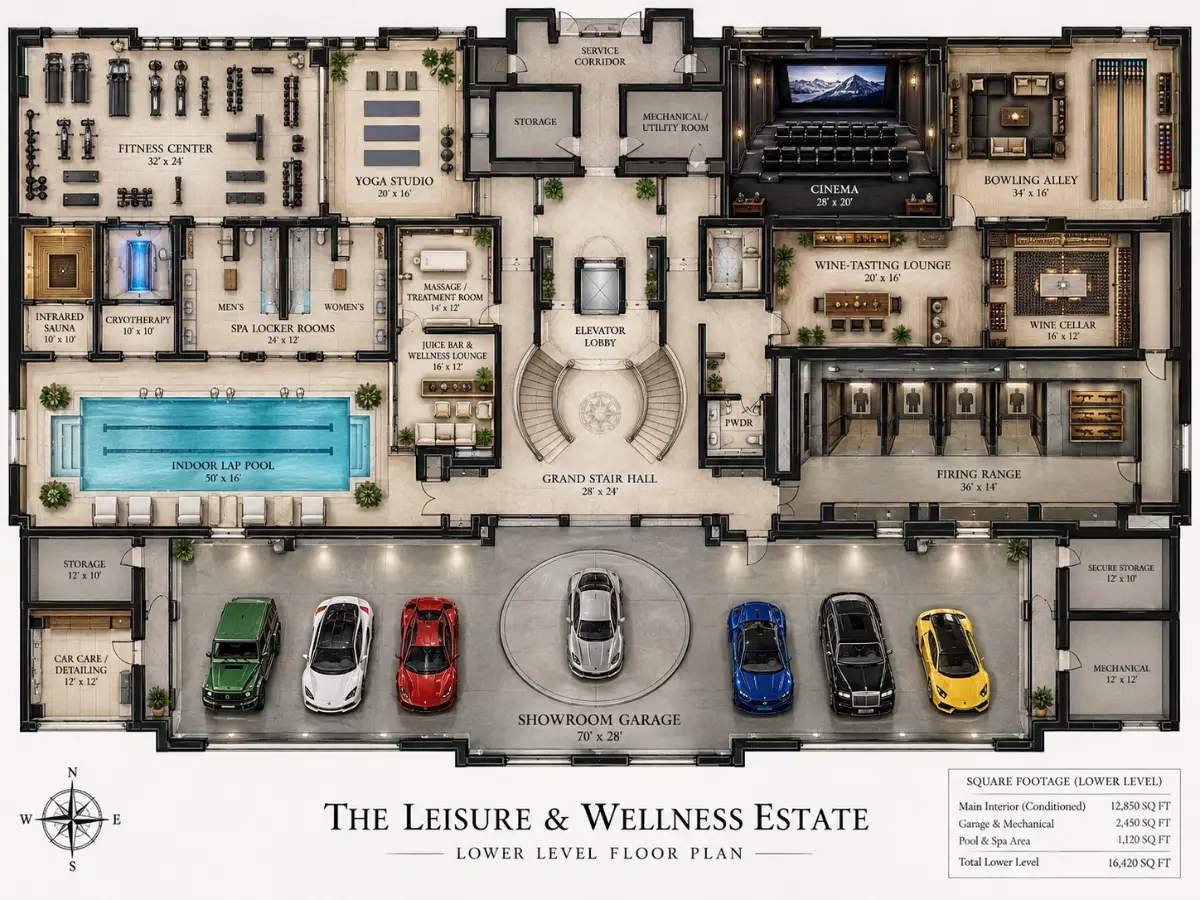
3.4. Leisure, wellness & underground entertainment
Extensive square footage allows for specialized luxury amenities that elevate daily living into a resort experience:
- Wellness & spa wings: Fully equipped indoor fitness centers, infrared saunas, cryotherapy chambers, and indoor lap pools.
- Subterranean entertainment: Acoustically isolated cinema rooms, bowling alleys, indoor firing ranges, wine-tasting lounges, and subterranean showroom garages with vehicle turntables.
By systematically organizing these four essential zones, mega mansion blueprints achieve a seamless balance between dramatic architectural grandeur and refined daily usability.
4. Mansion floor plan layout ideas that drive real estate sales
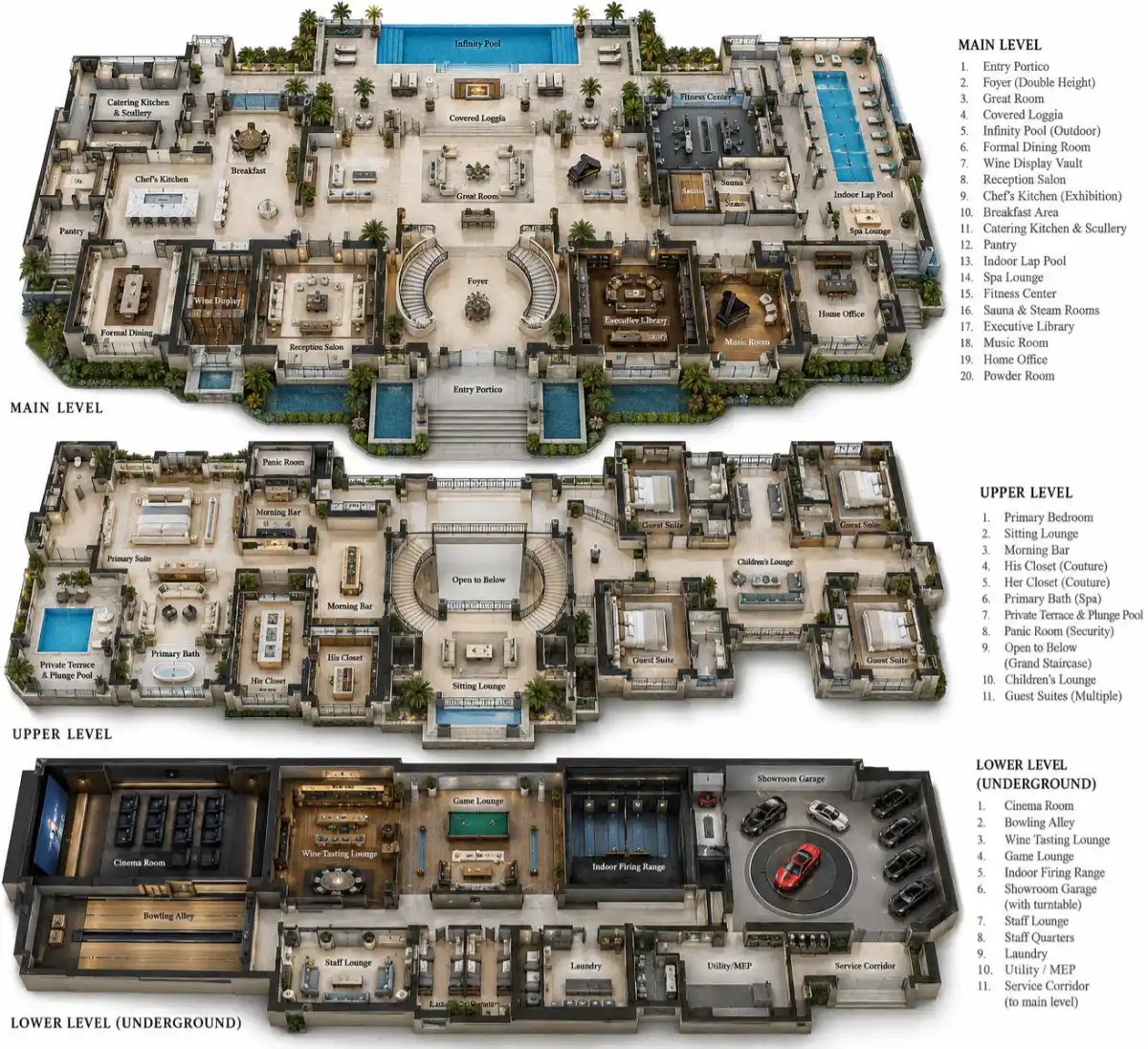
In the ultra-luxury market, an estate’s marketability depends heavily on how well its spatial flow aligns with modern lifestyle aspirations. High-net-worth buyers look beyond raw square footage; they search for intuitive spatial designs that seamlessly blend everyday family comfort with high-profile entertaining. Implementing strategic mansion interior layout ideas directly boosts listing engagement and accelerates sales velocity.
4.1. Balancing open-concept spaces with private retreats
While vast open-plan living areas create immediate visual impact, uninterrupted open spaces can lead to noise overlap and a lack of intimacy. The most marketable modern mansion layout strikes a delicate balance between expansive communal great rooms and secluded, purposeful sanctuaries. Incorporating quiet executive libraries, soundproofed home offices, sound-insulated music rooms, and cozy sitting nooks ensures the home accommodates remote work and personal reflection alongside large-scale social events.
4.2. Drawing inspiration from celebrity house floor plans
High-profile celebrity properties frequently set architectural trends that resonate with affluent buyers nationwide. Analyzing celebrity house floor plans reveals several high-value features that modern luxury clients increasingly prioritize:
- Glass-walled auto showrooms: Subterranean or indoor display garages that showcase curated vehicle collections directly to primary entertainment areas.
- Resort-style indoor-outdoor flow: Living areas equipped with automated pocketing glass doors that completely disappear, unifying interior lounges with alfresco dining hubs, cabanas, and infinity pools.
- Concealed security infrastructure: Discrete panic rooms, hidden access corridors, and dedicated security centers designed for total peace of mind.
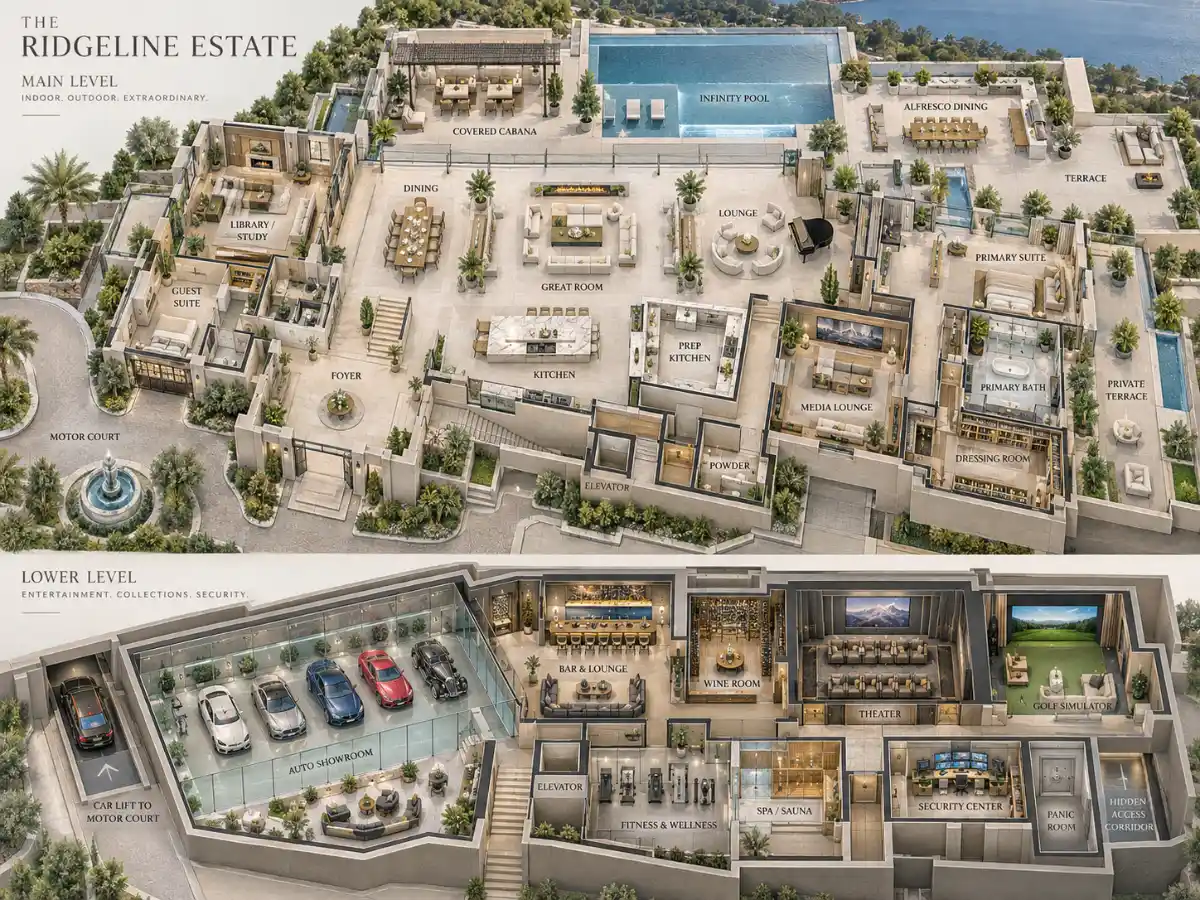
4.3. Strategic sightlines and natural light optimization
Visual connection to exterior landscapes significantly enhances emotional appeal during property showings. Top-tier layouts align main entry foyers, living halls, and primary suites with compelling architectural vistas, whether oriented toward ocean horizons, mountain ranges, or manicured central courtyards. Floor-to-ceiling curtain walls and internal glass partitions maximize natural daylight exposure throughout the day, ensuring expansive rooms feel warm and vibrant rather than cavernous.
4.4. Flexible multi-generational & guest suites
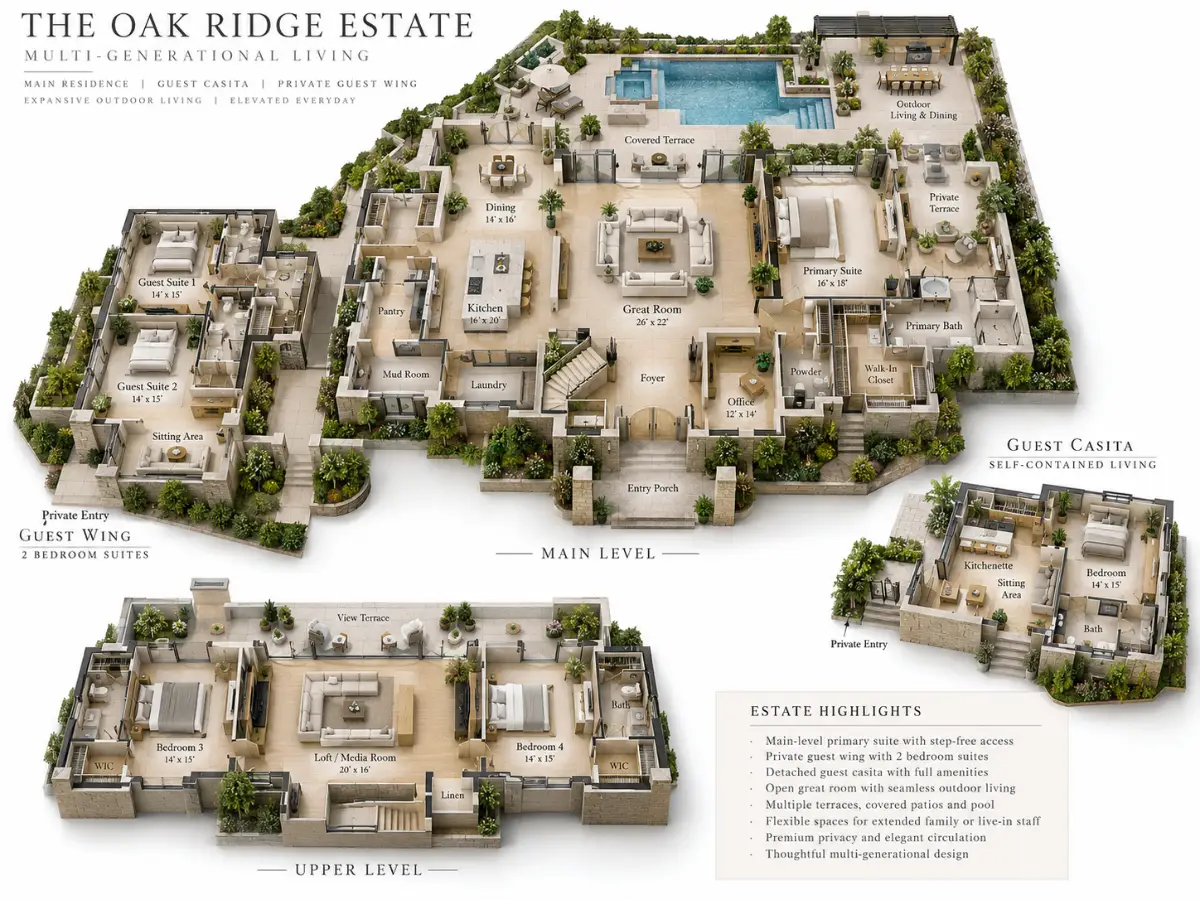
Modern luxury buyers frequently host extended family, live-in staff, or long-term visitors. Highly desirable mansion floor plans incorporate self-contained guest wings or detached guest casitas equipped with private entrances, kitchenettes, and dedicated outdoor terraces. Main-level primary or guest suites cater to multi-generational living, offering step-free accessibility without compromising on premium privacy or high-end finishes.
5. Why mansion floor plans & architectural styles appeal to luxury buyers
For high-net-worth individuals, purchasing an estate goes beyond acquiring physical land and luxury finishes; it is an emotional and financial investment in prestige, privacy, and lifestyle orchestration. The appeal of a thoughtfully designed modern mansion layout lies in its ability to deliver an immediate sense of accomplishment and sanctuary. Expansive spatial volumes, soaring foyers, and perimeter security integration evoke exclusivity and safety, fulfilling the psychological desire for a private compound.

Furthermore, modern luxury buyers require homes that dynamically adapt to multi-faceted lifestyles. Influenced by iconic celebrity house floor plans, affluent clients seek properties that effortlessly transition between high-capacity philanthropic galas, executive remote work, and quiet family living. Layouts featuring dedicated guest quarters, specialized wellness suites, and discreet service corridors allow homeowners to enjoy a resort-like experience without compromising domestic privacy.
From an investment perspective, architectural layouts with intuitive circulation and timeless spatial flow retain value far better than poorly zoned properties. In high-end real estate, a floor plan that seamlessly balances public grandeur with functional domestic operations commands higher market valuations and accelerates resale velocity. Ultimately, luxury buyers recognize that while interior finishes can be easily updated, exceptional spatial architecture of mansion floor plans is an irreplaceable asset that defines long-term property desirability.
6. Elevate luxury listings with professional floor plan services by Fotober
In ultra-luxury real estate marketing, static photography alone cannot fully communicate the fluid spatial flow of a sprawling estate. High-net-worth buyers and international investors require clear, visually captivating layout representations to visualize lifestyle possibilities before scheduling a private showing.
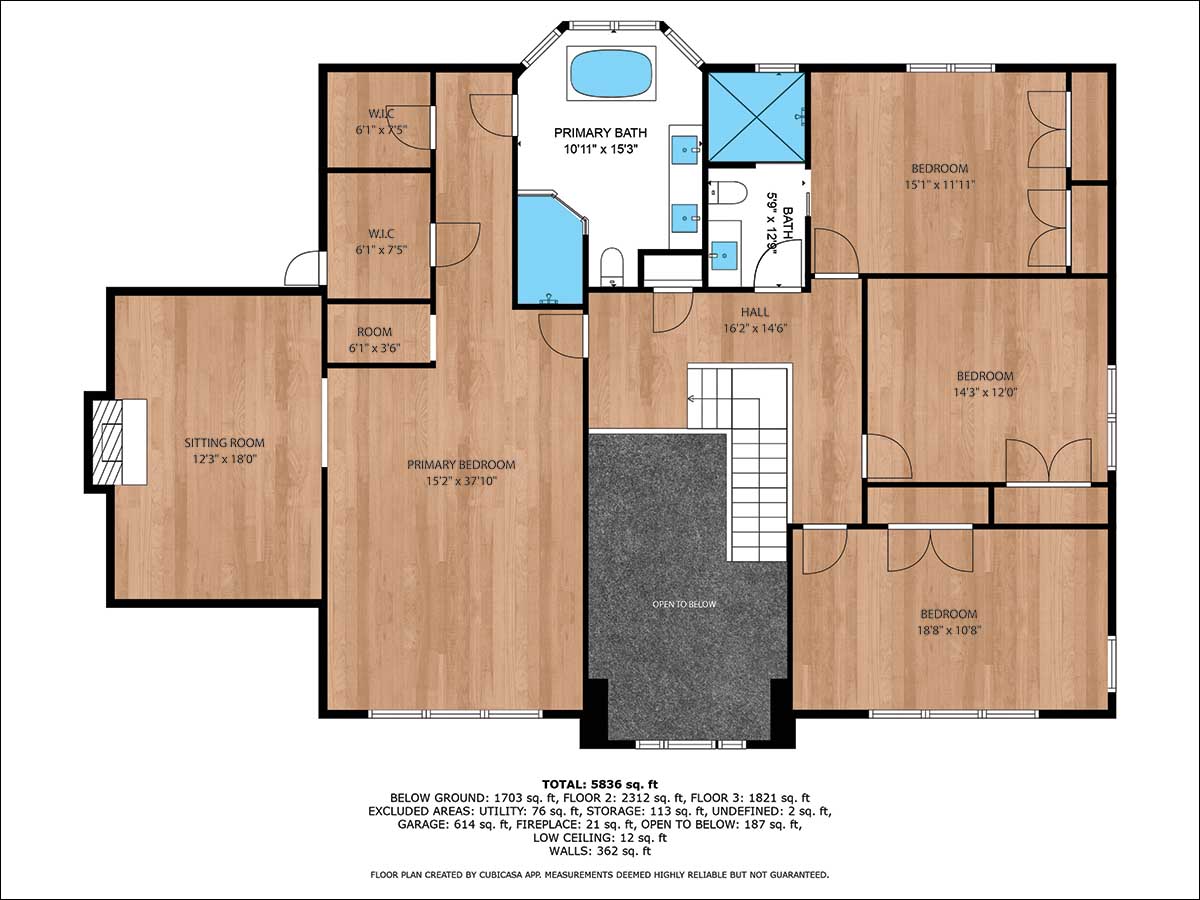
Fotober specializes in converting complex architectural blueprints, CAD files, and hand-drawn sketches into polished, high-converting visual assets tailored for luxury listings:
- 2D floor plan redraws: Crisp, professionally branded black-and-white or full-color luxury house floor plans optimized for MLS platforms, luxury print brochures, and digital pitch decks.
- 3D floor plan rendering: Immersive, photorealistic 3D visualizations that illustrate spatial volume, interior material transitions, room connections, and furniture placement across multi-level estates.
- Site plan & estate customization: Detailed visual layouts that capture expansive grounds, detached guest casitas, pool decks, and subterranean entertainment levels.
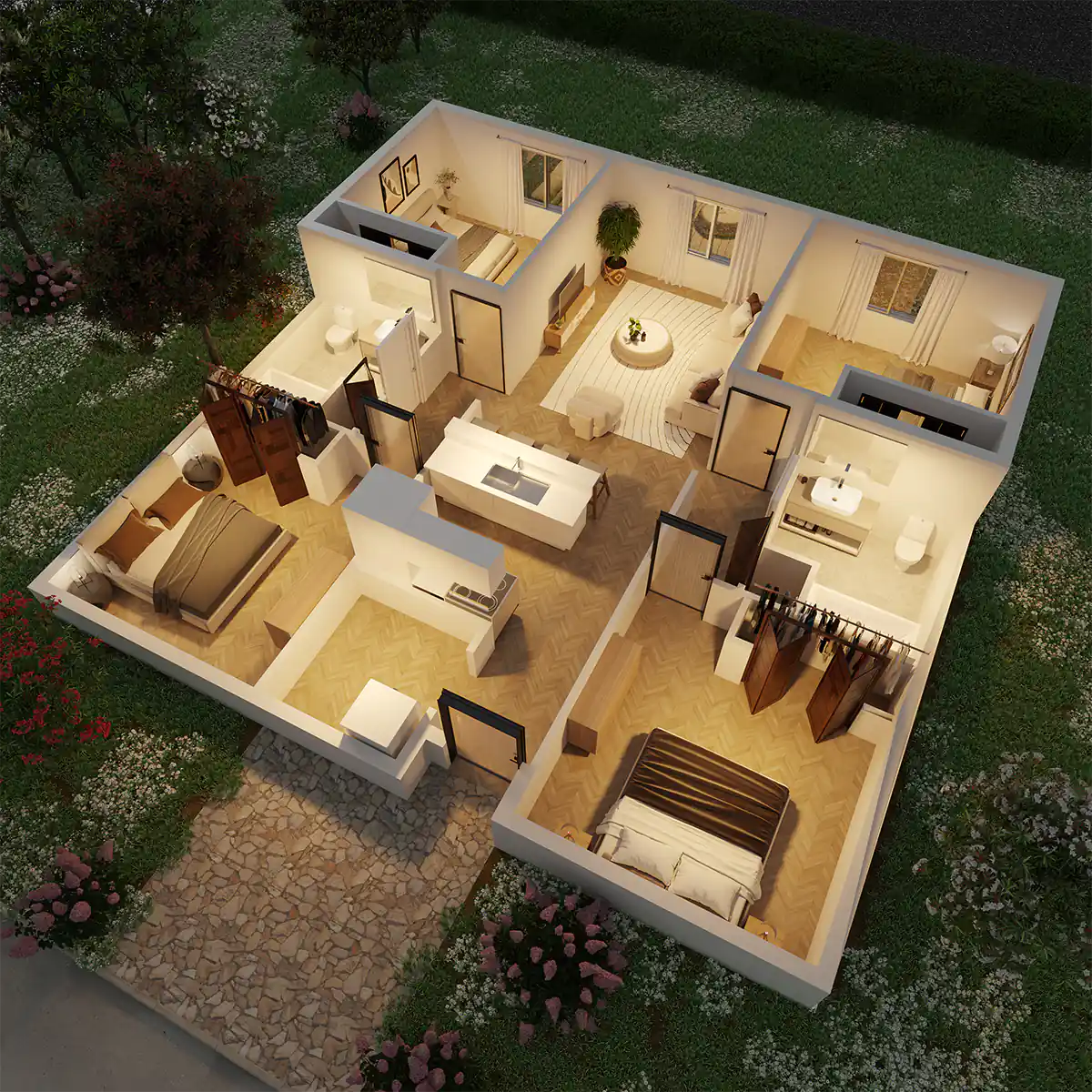
By combining rapid turnaround times and precision craftsmanship with cost-effective pricing, Fotober empowers real estate agents, developers, and media professionals to present mansion floor plans with maximum visual impact, building instant buyer confidence and accelerating high-end property sales.
7. Case study: How strategic floor plan visualization accelerated an $18M estate sale
Marketing a sprawling $18.5 million contemporary estate in Malibu presented a unique challenge for the listing agent. Despite breathtaking aerial drone footage and high-end photography with premium image post-production, the 12,000-square-foot property sat on the market for over 90 days. Prospective out-of-state and international buyers frequently struggled to understand how the complex three-level layout, subterranean entertainment hub, and detached guest casita connected across the hillside acreage.
7.1. The solution
To eliminate buyer hesitation, the listing team revamped the marketing strategy by incorporating a complete visualization package engineered by Fotober. Using original CAD drawings, Fotober produced crisp 2D floor plans with exact room dimensions and functional zoning labels, alongside photorealistic 3D floor plan renderings. The 3D layouts vividly highlighted the estate's key selling points: the seamless indoor-outdoor flow from the double-height great room to the infinity pool deck, the isolated primary penthouse suite, and the climate-controlled subterranean auto showroom.
7.2. The results
Integrating professional mansion floor plans into the digital brochure and MLS listing yielded immediate results:
- 45% increase in digital engagement: Online listing views and time spent on the virtual tour page nearly doubled.
- Qualified out-of-state buyers: International prospects cited the 3D floor plans as the deciding factor in scheduling private jet tours, having gained complete spatial confidence prior to visiting.
- Rapid closing: The estate received two competing offers within 30 days of re-launching with professional floor plan assets, ultimately closing at 98% of the asking price.
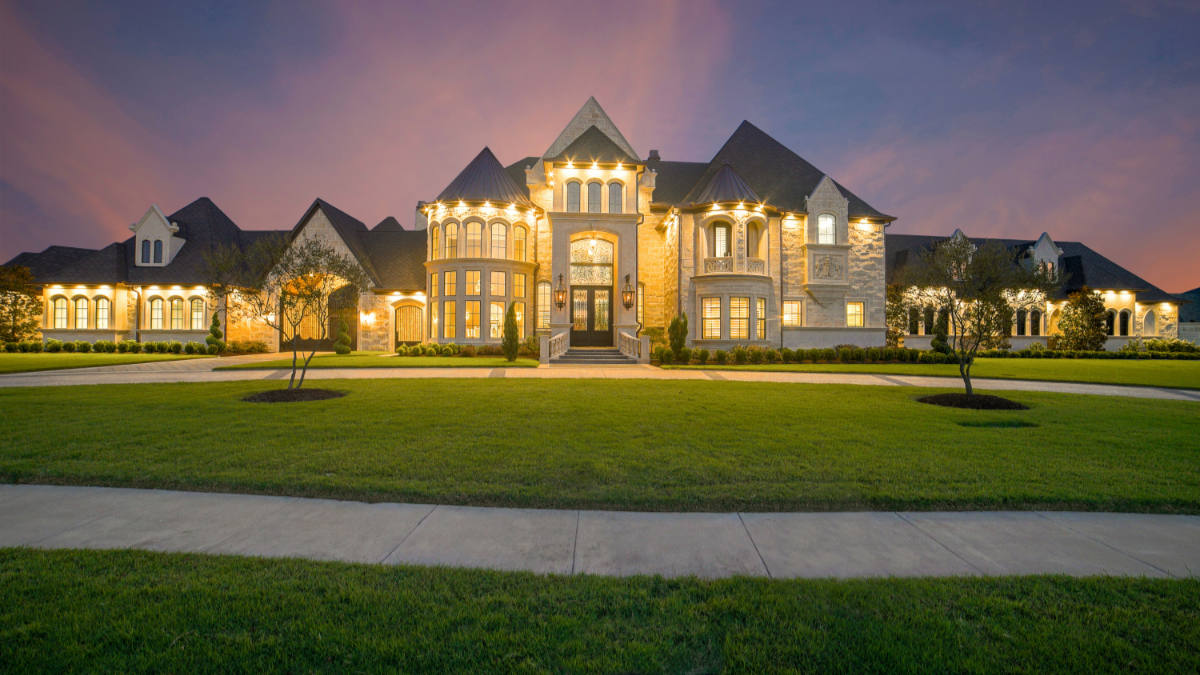
This case study demonstrates that clear spatial storytelling bridges the gap between passive browsing and confident high-net-worth acquisitions.
8. Conclusion
In the ultra-luxury real estate market, exceptional architectural design is only as compelling as its representation. High-net-worth buyers look beyond surface finishes; they seek harmonious spatial flow, functional zoning, and lifestyle alignment. Whether navigating complex mega mansion layouts or drawing inspiration from celebrity house floor plans, clear spatial storytelling bridges the gap between passive interest and confident acquisition.
Transforming intricate blueprints and multi-level layouts into engaging visual assets is critical to standing out in today’s competitive marketplace. By providing potential buyers with crisp 2D floor plans and photorealistic 3D renderings, real estate professionals can effectively highlight property flow, build buyer confidence, and significantly accelerate closing times.
Partner with Fotober to transform your architectural sketches and CAD files into high-converting 2D and 3D floor plan visualizations that captivate affluent clients and elevate your luxury listings. Also, enhance your property shots with twilight editing and precise HDR blending today.
Follow us on social media to keep track of the latest real estate analysis and architectural styles.
- Facebook: fotobermedia.co
- YouTube: Fotober
- TikTok: @fotober
- Instagram: fotober_media.
Related posts
Modern Luxe Interior Design: Elements, Style Guide and How to Stage It
October 10, 2026

Minimalist Interior Design: Characteristics, Style Guide, and Staging
October 8, 2026

Coastal Interior Design: Style Definition & Staging Guide
September 30, 2026

Contemporary Interior Design: Key Elements and How to Stage This Style
September 30, 2026
