




Is Twilight Real Estate Photography Still Worth Investing in 2026?

Share:
Table of Contents
- 1. Is twilight photography still alive and kicking in 2026?
- 2. Key benefits of twilight real estate photography
- 3. Essential techniques for capturing stunning twilight real estate photos
- 4. The challenges of twilight real estate photography
- 5. Twilight photography vs. virtual twilight
- 6. The cost breakdown: Investing in the glow
- 7. Why twilight photos are essential for luxury listings
- 8. The power of outsourced photo editing for high-end twilight real estate photography
- 9. Conclusion
The demand for authentic imagery in the property market has always been high. However, while standard daytime shots provide clarity, they often fall short of the emotional impact needed to close premium deals. Twilight photography can transform a structural shell into an aspirational lifestyle through the magical glow of the "blue hour." Despite the spread of AI visuals, the natural warmth of a true twilight shoot remains essential for luxury marketing. In this guide, we explore why premium twilight real estate photography is still the ultimate tool for capturing a buyer’s heart and maximizing your listing’s "stopping power."
1. Is twilight photography still alive and kicking in 2026?
In this fast-paced real estate market, where AI-generated content and virtual tours are becoming prominent, a critical question arises: Is authentic twilight real estate photography still worth the investment? The answer is a resounding yes, and the reasons are rooted as much in human psychology as they are in modern marketing metrics.
1.1. The psychology of "the glow"
While technology has advanced, human biology remains the same. The "blue hour", that brief window after sunset, naturally evokes feelings of warmth, security, and prestige. When a property is captured with its interior lights glowing against a deep indigo sky, what otherwise would be a cold and lifeless structure becomes a cozy "home." That's exactly what luxury buyers are looking for: an emotional sanctuary that transcends the boundary of square footage. Authentic twilight shots provide a level of color depth and natural light fall-off that even the most advanced AI filters struggle to replicate perfectly.
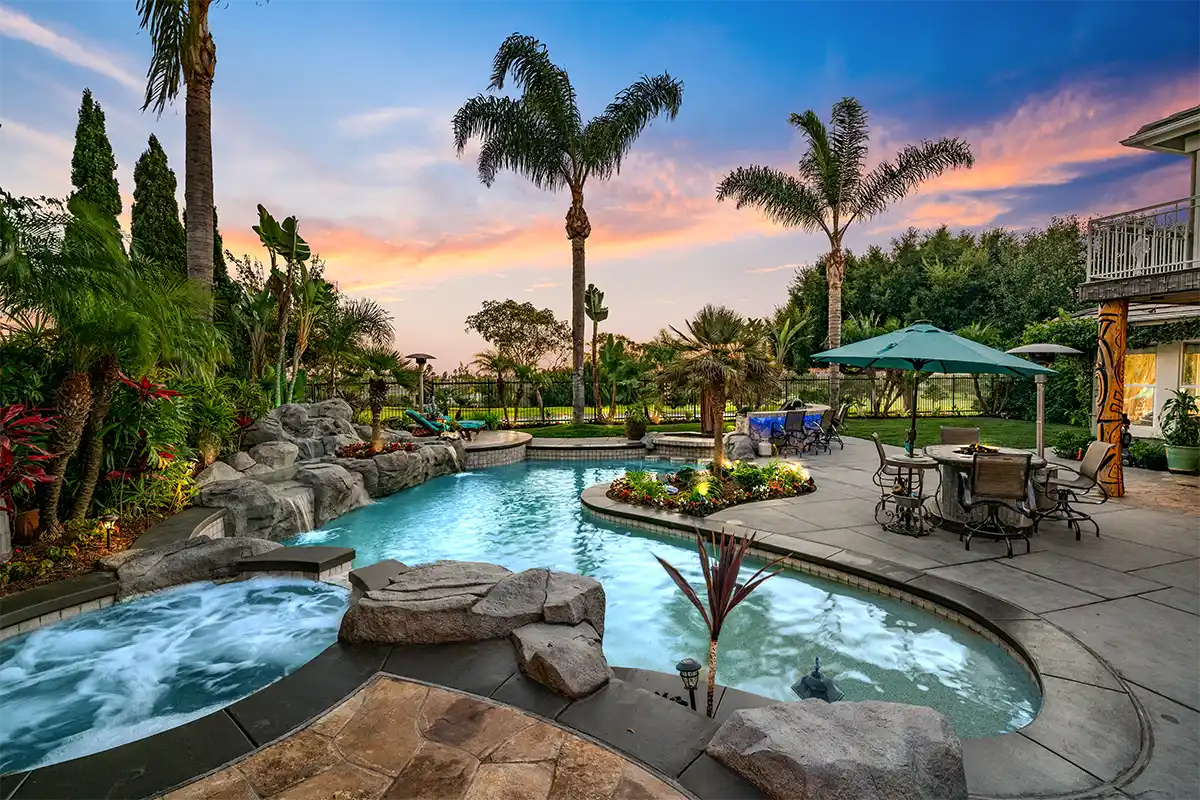 Sunset photos establish a relaxing mood that makes a property feel like home to viewers
1.2. The "thumb-stopping" metric
In a world of infinite scrolling, "stopping power" is the most valuable currency for a real estate agent. Statistical data from listing platforms shows that properties featuring a professional twilight image as the primary thumbnail receive up to 70% more clicks than those with standard midday photos. This initial engagement is the crucial first step in the sales funnel. If a buyer doesn't click on the listing, they will never see the granite countertops or the designer pool.
1.3. Versatility in a social-first era
Furthermore, twilight photography for real estate serves as the foundation for multi-channel marketing. High-resolution twilight stills are the perfect assets for modern day social media, alongside short-form cinematic reels and immersive AR (Augmented Reality) previews. A professional shoot captures the high-dynamic-range (HDR) data necessary to create "cinemagraphs" or "living photos" that go viral on platforms like Instagram and TikTok, ensuring your luxury listings stand out in a crowded digital landscape.
2. Key benefits of twilight real estate photography
In a high-stakes luxury market, a property is no longer just a collection of rooms; it is a curated experience. The benefits of twilight real estate photography lie in its unique ability to capture a home at its most architectural and emotional peak. By leveraging the soft, diffused light of the "golden hour," photographers can showcase a property in a way that standard midday photography simply cannot replicate.
2.1. Highlighting architectural excellence
One of the primary technical advantages is the ability to showcase a property’s lighting design. Modern luxury homes often feature sophisticated exterior lighting, from LED path lights and uplighting on specimen trees to glowing infinity pools and outdoor fire pits. During the day, these expensive features are invisible. At dusk, however, they become the stars of the show. Professional twilight shots use long-exposure techniques to balance the interior "glow" with the deep blue of the sky, creating a high-contrast, vibrant image that emphasizes the home's silhouette and premium materials.
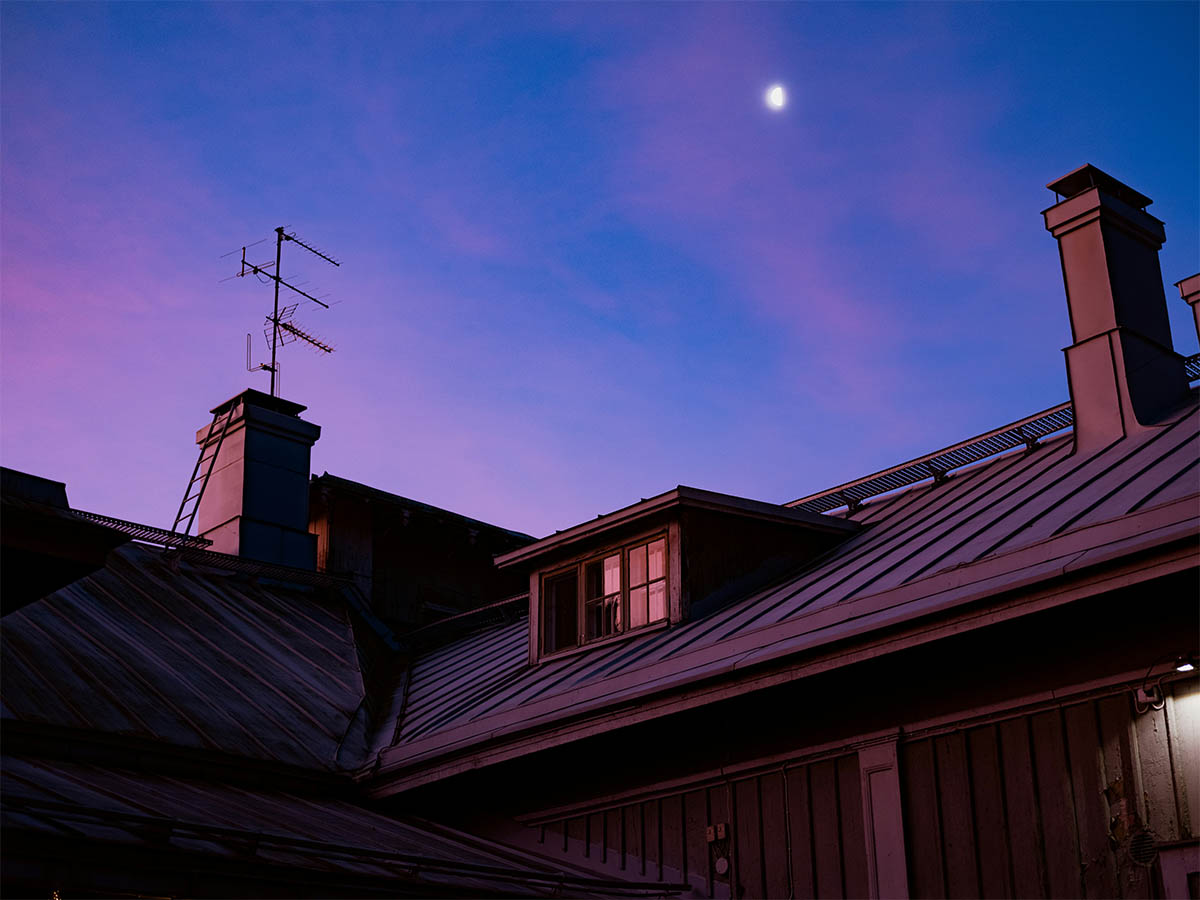 Oblique lights in the blue hour add “contour” to specific architectural elements
2.2. Crafting an aspirational narrative
Beyond the technicals, twilight photos for luxury listings serve as a powerful storytelling tool. These images tap into the "coming home" psychology. A photo of a warmly lit living room seen through a glass facade against a cooling evening sky suggests peace, security, and high-end entertaining. It invites the viewer to imagine themselves relaxing with a glass of wine on the terrace or hosting an elegant evening gala. When buyers are overloaded with data, it is this kind of emotional resonance that drives high-value offers.
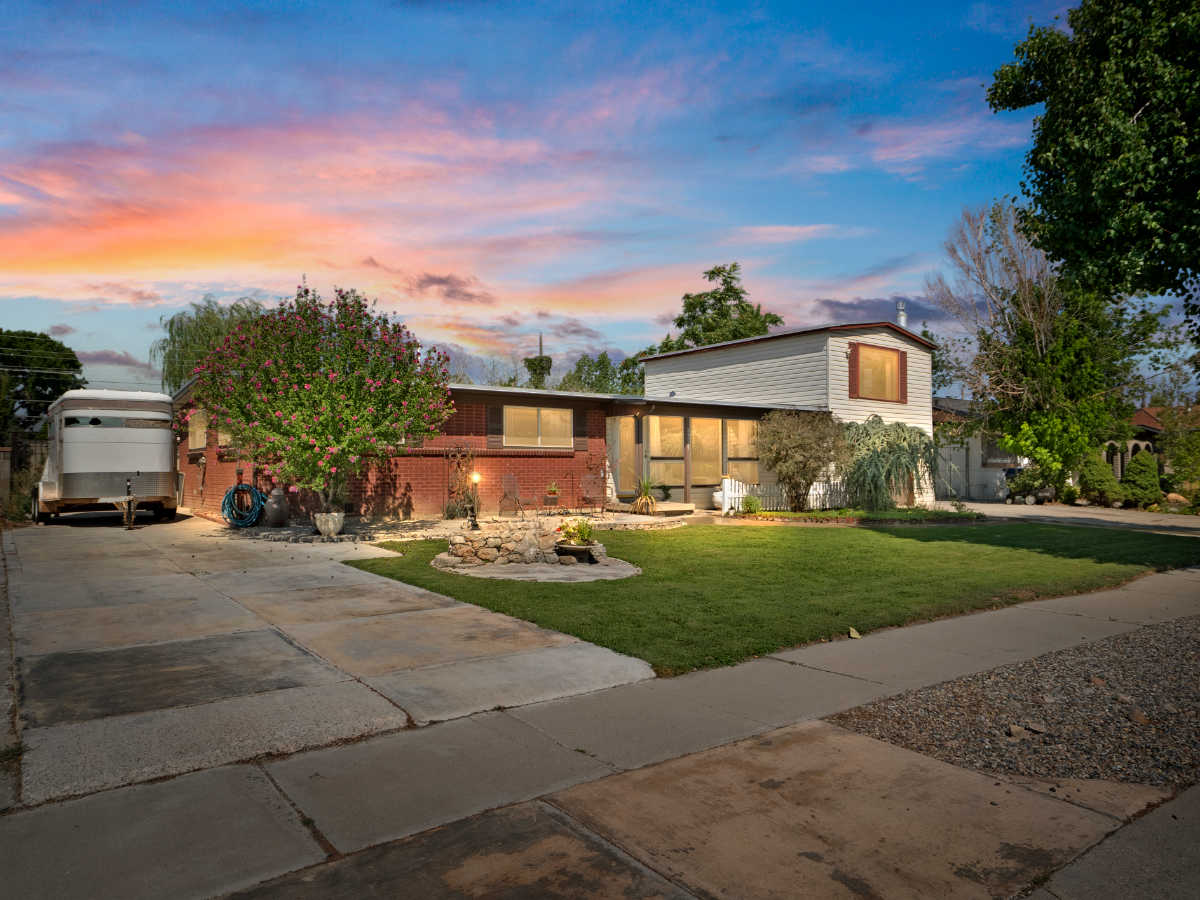 The twilight aspect adds a subtle narrative of comfort to the property.
2.3. Establishing a competitive prestige
Finally, twilight photography acts as a "prestige signal." Because these shoots require specific timing, advanced equipment, and meticulous post-processing, they are inherently associated with high-value properties. By opting for a twilight session, an agent immediately signals to the market that this listing is "special" and belongs in a higher echelon. This differentiation is vital in a crowded digital landscape; it separates your listing from the sea of standard "point-and-shoot" entries and positions you as a top-tier professional who understands the nuances of luxury branding.
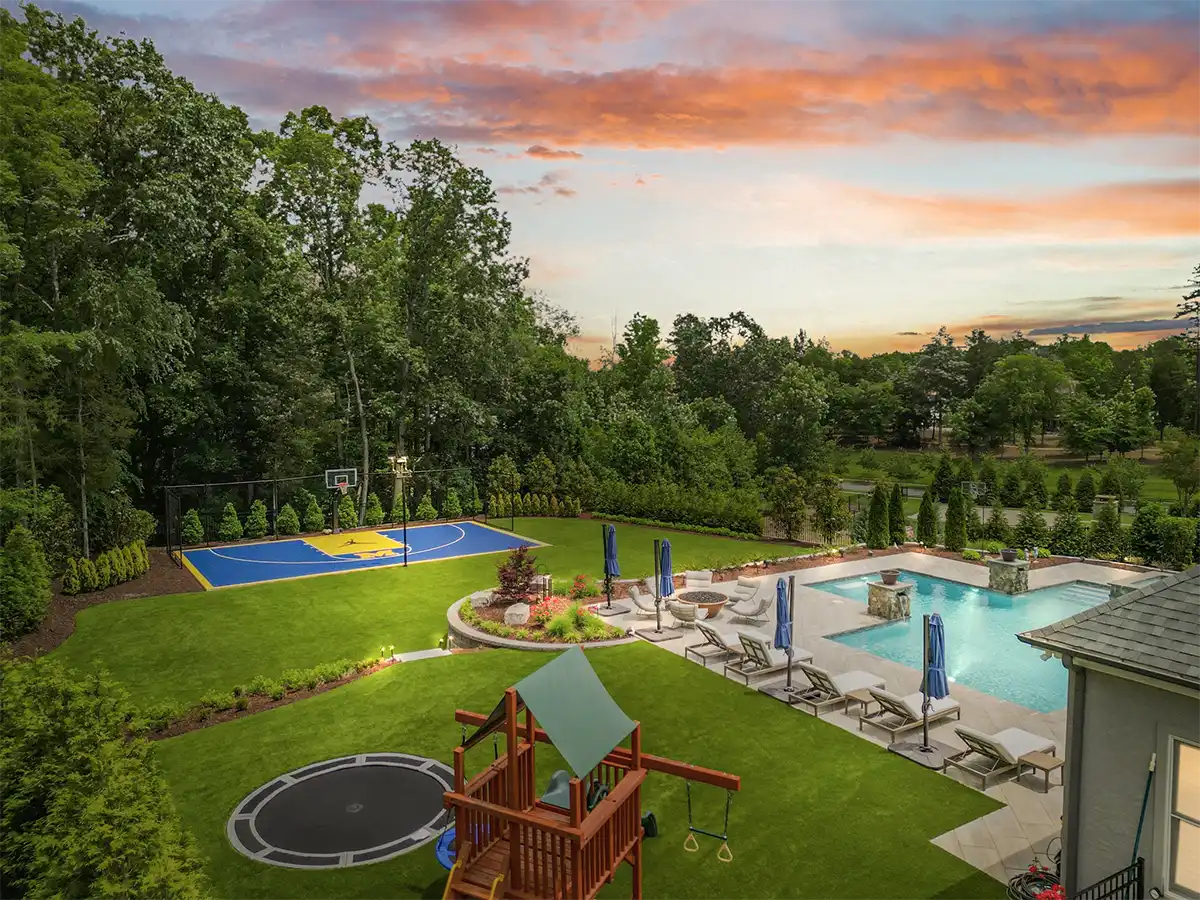 Twilight photos display how invested a realtor is in their branding
3. Essential techniques for capturing stunning twilight real estate photos
To effectively capture twilight photos for real estate, several essential techniques should be mastered. From timing and settings to equipment and composition, each plays a vital role in determining the quality and impact of your images.
3.1. Optimal timing: Understanding the "blue hour" and "golden hour"
The terms "blue hour" and "golden hour" refer to specific times after sunset or before sunrise that present unique lighting conditions for photographers.
The golden hour is named for the warm, golden tones produced just after sunrise and just before sunset. Photographers cherish this time because the sunlight is soft, diffused, and casts elongated shadows. This warmth can be particularly flattering for properties, accentuating features such as wooden decks, lush greenery, or exterior architectural details.
During the golden hour, it’s also important to consider the weather. Clearer skies can create dramatic effects, while scattered clouds can add depth and texture to the sky. In real estate photography, capturing these moments means positioning yourself optimally for light and composition.
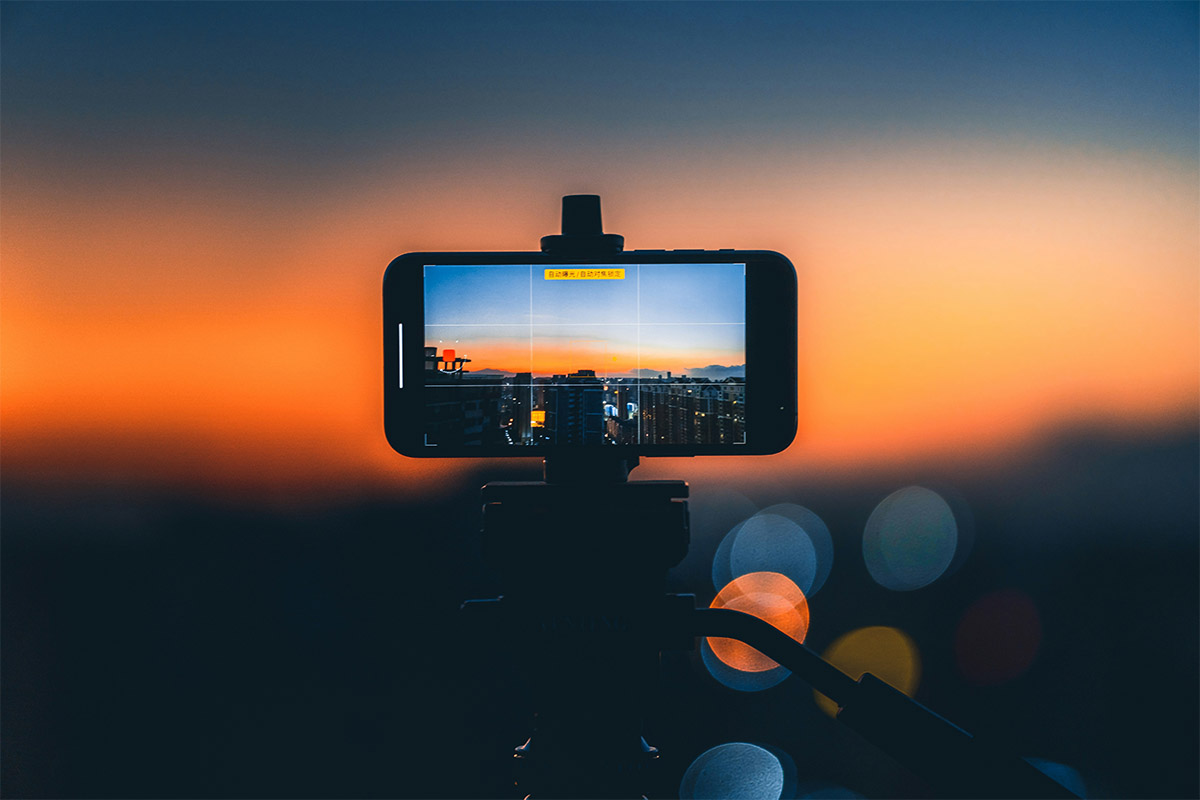 It gets increasingly more challenging to shoot a properly exposed photo when transitioning from golden hour to blue hour
The blue hour follows the golden hour and is defined by cooler tones of blue and indigo as the sun dips further below the horizon. This magical time provides an ideal backdrop for twilight photography as outdoor lighting starts to emerge.
For real estate shootings, the blue hour is desirable because it can emphasize indoor illumination from lamps or ambient lighting. The contrast between the warm lights glowing from within a home and the deep blue sky creates a striking aesthetic.
3.2. Camera settings: The exposure triangle and shooting in RAW format
Understanding camera settings for real estate photography is vital to achieving stunning twilight photos. The interplay of aperture, ISO, and shutter speed can dramatically affect the resulting images.
Aperture refers to the size of the lens opening, which controls the amount of light entering the camera. In twilight photography, it's often advantageous to use a small aperture (large f-number) to maximize the sharpness throughout the frame.
By adjusting the aperture, photographers can manage the exposure and artistic elements of their shots. However, caution must be taken, as an extreme aperture on either end (like f/1.4 or f/22) can lead to potential blurriness if not focused correctly.
The ISO setting determines the camera's sensitivity to light. In low-light situations, such as twilight, a higher ISO can help capture details without underexposing the image. However, noise is introduced with higher ISO settings, so it’s essential to find a balance.
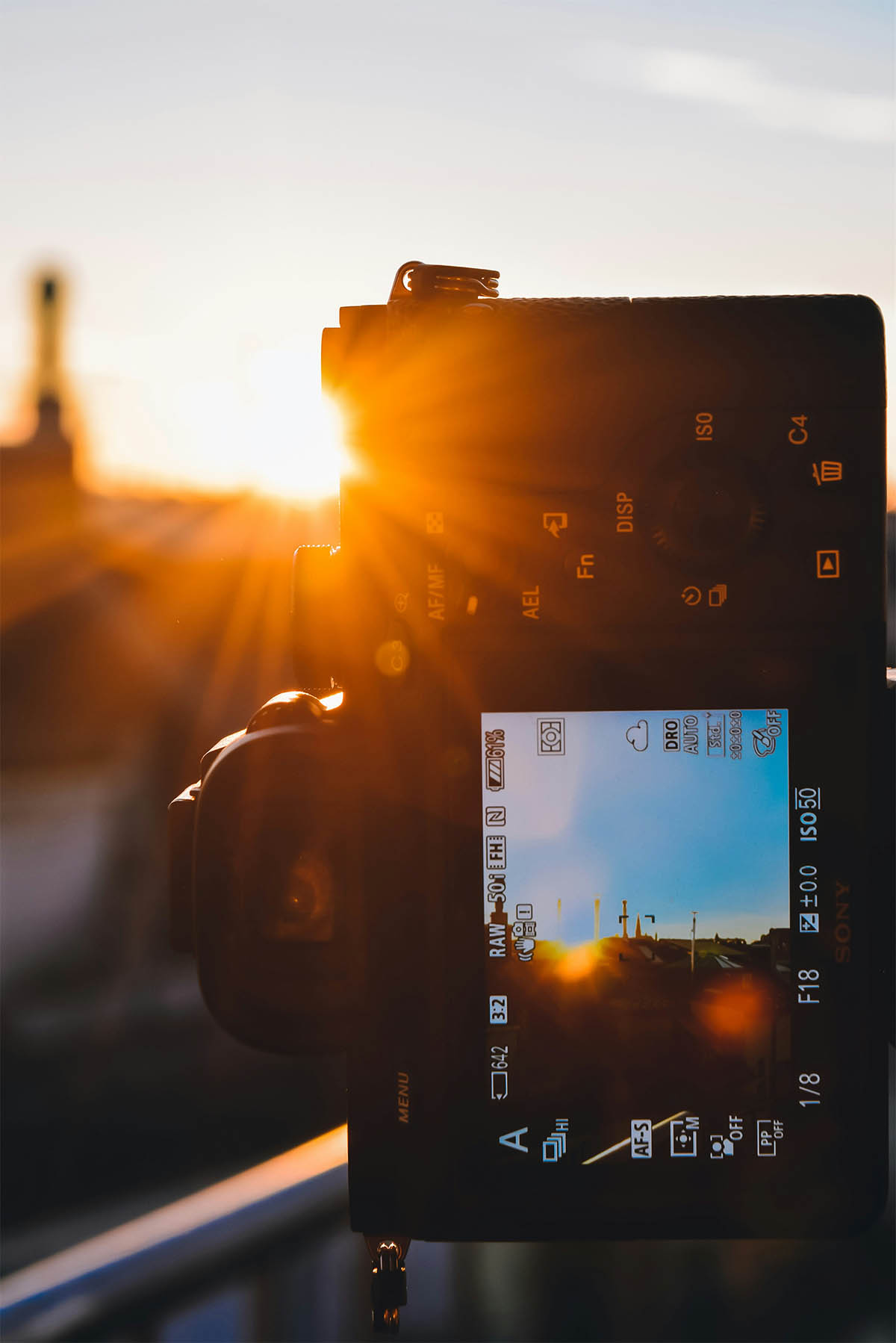 Proper camera settings, finely adjusted to a specific environment, are the first step to getting usable shots
Adjusting the shutter speed plays a pivotal role in controlling exposure. A slower shutter speed allows more light to enter the camera, but it can introduce motion blur if the camera isn’t stabilized. Using a tripod is basically required during twilight photography to maintain stability and avoid unwanted blur.
Shooting in RAW format is crucial for twilight photography since it retains more data than standard JPEG images. This format offers greater flexibility during post-processing, allowing photographers to recover highlights, adjust colors, and fine-tune details without sacrificing quality.
3.3. Equipment recommendations: Tripods, wide-angle lenses, and external lighting
The right equipment can make all the difference when it comes to capturing stunning twilight real estate photos. Investing in quality gear tailored for twilight conditions is essential for optimal results.
A sturdy tripod is one of the most important pieces of equipment for twilight photography. During low-light conditions, a tripod helps stabilize the camera, allowing for longer shutter speeds without introducing motion blur. Additionally, many tripods come with adjustable heads, providing versatility in camera positioning for unique angles and perspectives.
When selecting a tripod, consider weight, stability, and height. A lightweight, portable option may be ideal for moving from location to location, while a heavier tripod provides stability during blustery conditions.
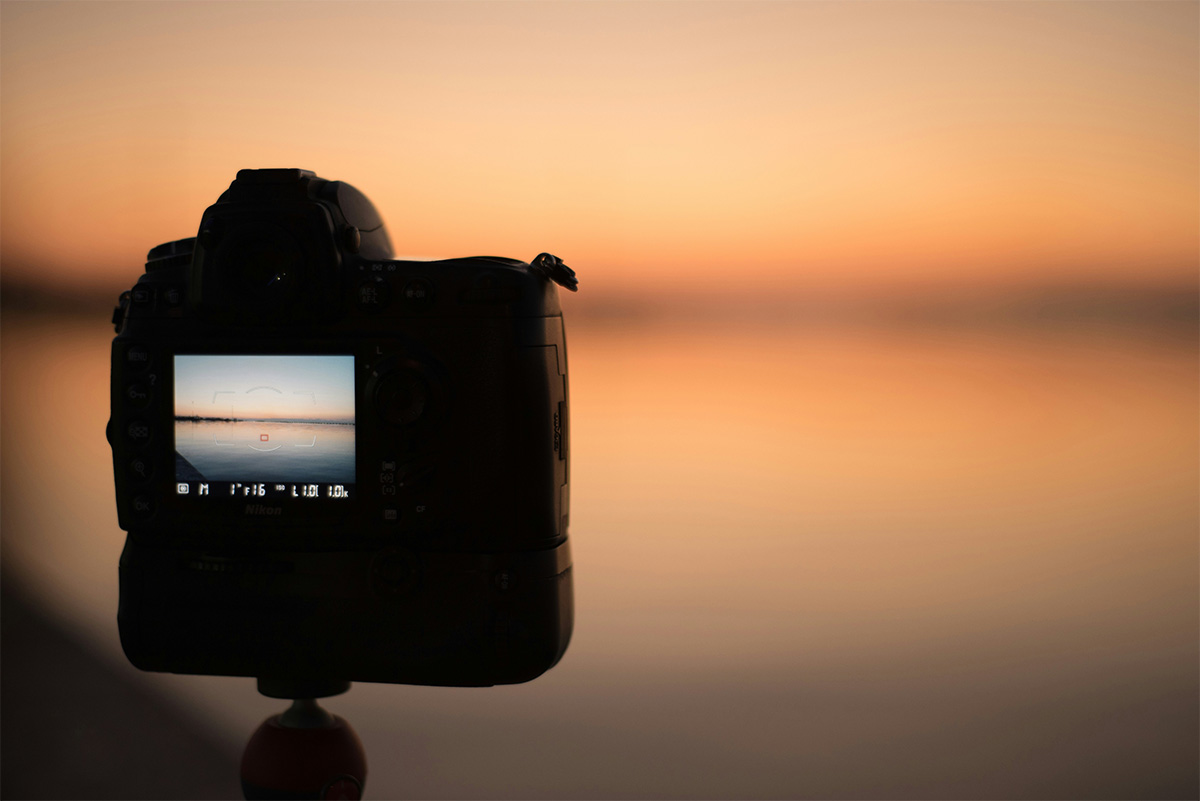 Opting for a tripod will help with the sharpness of your photos when the light is dim.
Wide-angle lenses are fantastic for real estate photography, as they can capture more of the property in a single shot. During twilight, a wide-angle lens with fast aperture is recommended. This can help showcase the spaciousness of rooms or outdoor areas without distortion.
Understanding the focal length and how it influences composition is critical. For instance, shooting at a wider perspective can include more of the surrounding landscape while also drawing viewers into the scenes.
While natural light is favored in twilight shots, sometimes it may be necessary to supplement it with external lighting. Using portable flashes or softbox lights strategically can help highlight critical features and create a desired ambiance.
When using external lights, consider the color temperature to avoid an artificially looking photo where the lighting appears mismatched with ambient light. Experimenting with different placements and modifiers can yield fascinating results.
4. The challenges of twilight real estate photography
While the final result of a twilight shoot looks effortless, the process behind the lens is a high-stakes exercise in precision and timing. In the competitive landscape of 2026, understanding the logistics of twilight real estate photography is essential for any agent looking to avoid common pitfalls and ensure a seamless production.
4.1. The "golden window"
The most significant challenge is the incredibly narrow timeframe. Unlike daytime shoots that can last hours, the ideal "blue hour" window typically lasts only 20 to 30 minutes after the sun dips below the horizon. This requires military-grade punctuality. If the photographer is stuck in traffic or the homeowner isn't ready, the opportunity is lost until the next day. Scheduling must be exact, often requiring the photographer to arrive 45 minutes early just to set up and "stage" the lighting.
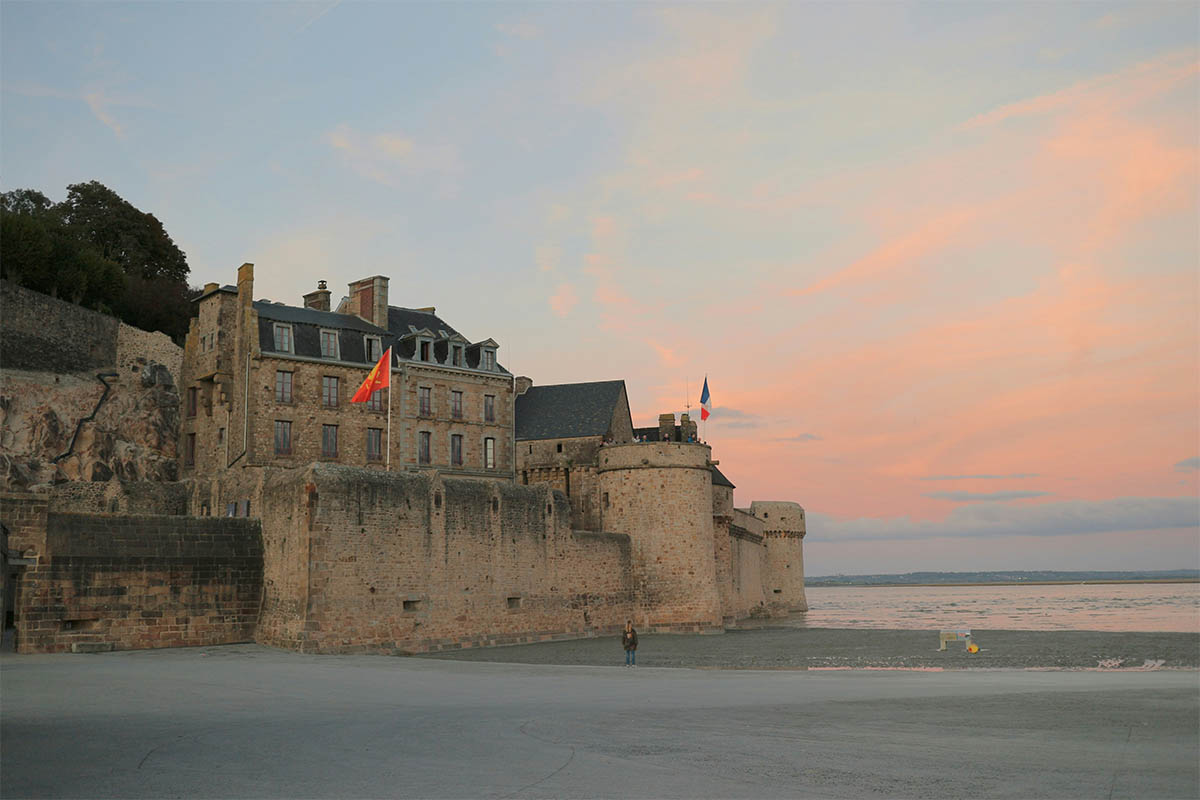 With lighting changing drastically in a short period of time, the chance to capture a perfect twilight shot is slim
4.2. Preparation and coordination
A successful twilight session is a team effort. Agents must coordinate a "pre-shoot checklist" with the property owner:
- Lighting: Every single interior and exterior light must be turned on. Blown bulbs need to be replaced in advance.
- Windows: Blinds and curtains should be opened uniformly to allow the interior "glow" to spill out.
- Exterior precaution measures: Cars must be removed from driveways, trash cans hidden, and pool cleaners taken out of the water.
4.3. Weather risk and 2026 solutions
Weather remains the ultimate wild card. In years past, a cloudy day meant a total cancellation. However, in 2026, advanced post-processing and "Sky Replacement" technology have become incredibly sophisticated. While a clear sky is always preferred for natural reflections on glass and water, modern HDR (high dynamic range) blending allows photographers to rescue a shoot even during "gray" weather. That said, heavy rain or high winds (which ground photography drones) still necessitate a "weather contingency" date in the contract. Understanding these logistical hurdles ensures that when the sun goes down, your listing is ready to shine without a hitch.
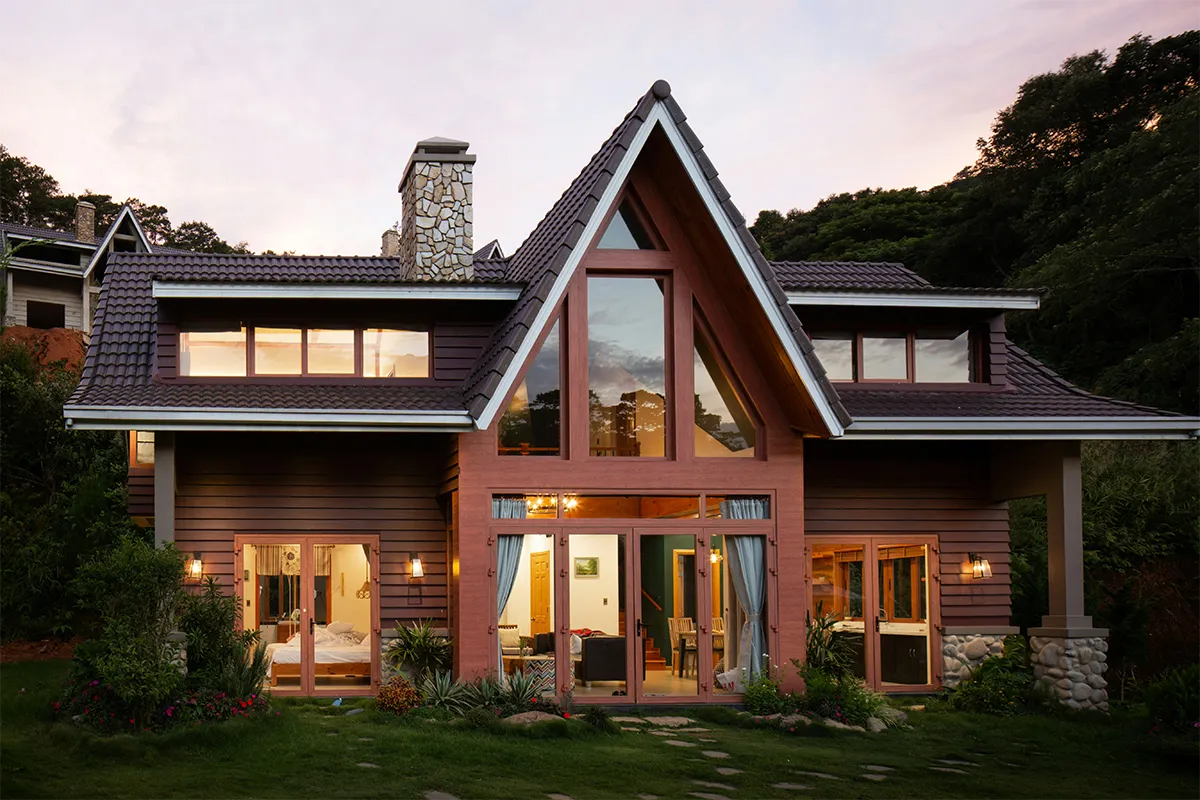 Sometimes light flatters the home nicely, but the sky doesn’t work out too well.
5. Twilight photography vs. virtual twilight
As we move through 2026, the debate between twilight photography vs virtual twilight has become more nuanced thanks to the rapid advancement of generative AI. For agents, choosing between these two methods is often a balance of budget, speed, and the specific "vibe" required for the listing.
5.1. Understanding the difference
An authentic twilight shooting involves a professional photographer physically on-site during the "blue hour." They capture multiple long-exposure shots to blend natural ambient light with the home’s interior glow. Conversely, virtual twilight, most notably day-to-dusk editing, is a post-processing technique where a photo taken during broad daylight is digitally manipulated: replacing the sky, adding "lit" windows, and adjusting shadows to mimic a sunset scene.
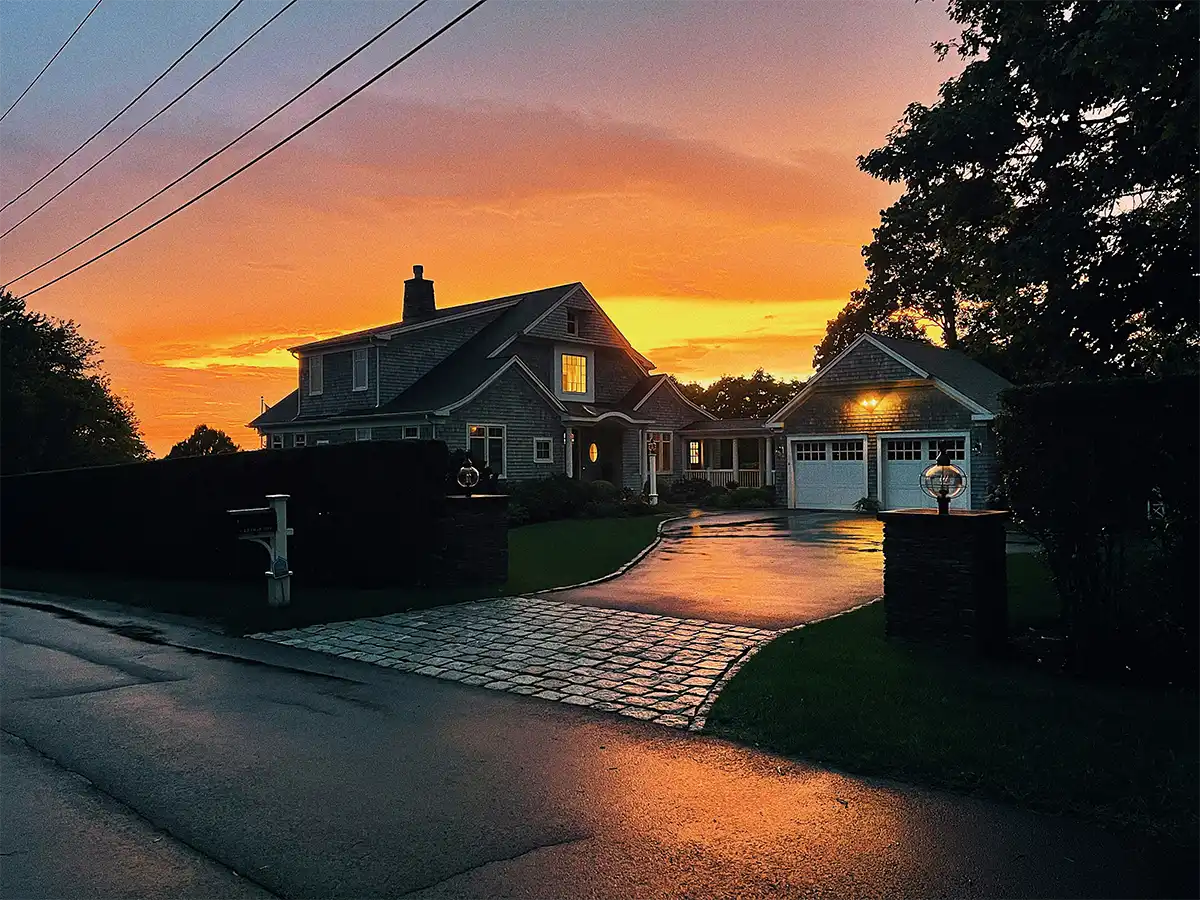 Getting the shot right from the source is rewarding for both photographers and agents
5.2. The 2026 comparison between actual shootings and virtual manipulation
While AI-driven virtual staging has become incredibly sophisticated, there remains a distinct "uncanny valley" in many virtual edits. Real photography captures the complex behavior of photons, how light reflects off a wet poolside deck or how the warm interior glow subtly bleeds onto the architectural stone of the entryway.
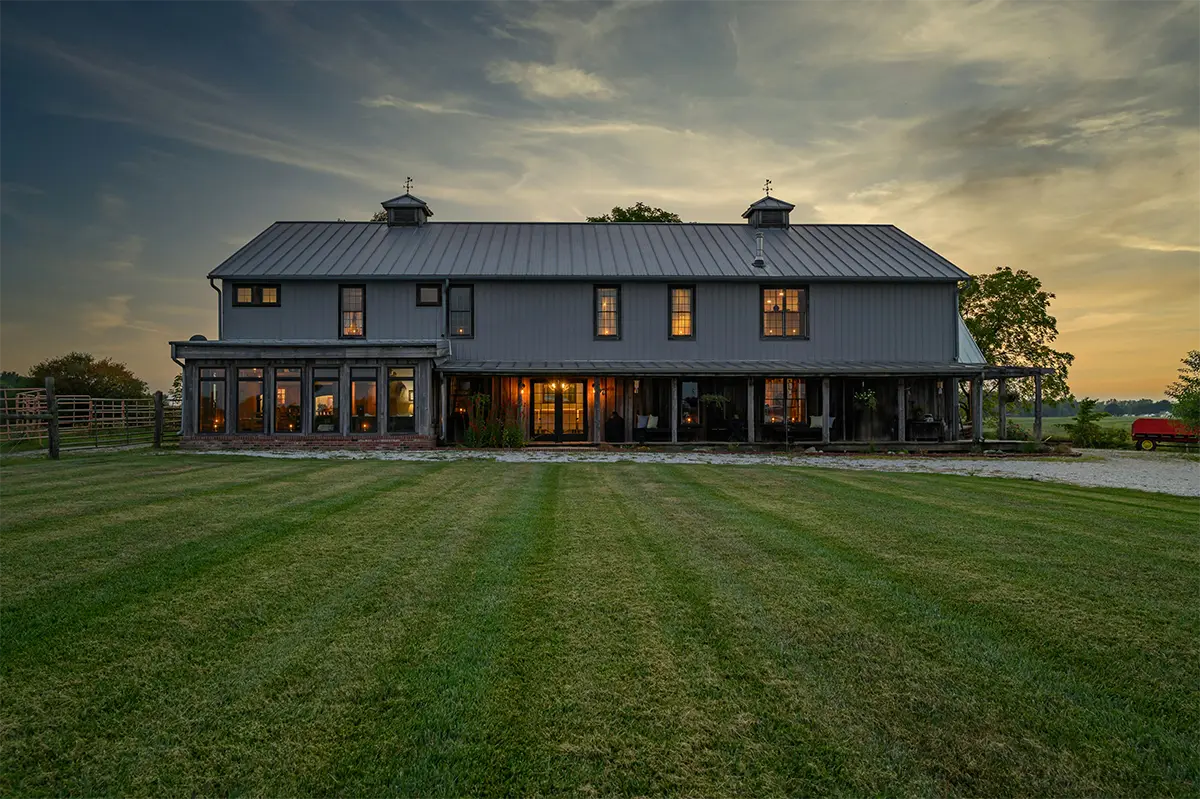 Virtual enhanced photos may be too “perfect” and “clean” to be believable
|
Feature |
Authentic twilight photography |
Virtual twilight (AI-enhanced) |
|
Authenticity |
100% natural reflections and shadows. |
High, but can look "flat" or artificial. |
|
Cost |
Premium (requires a second site visit). |
Budget-friendly (one-time editing fee). |
|
Turnaround |
24-48 hours (heavy post-processing). |
Near-instant or 12-24 hours. |
|
Light quality |
Captures real "glow" and depth. |
Simulated light; often lacks texture detail. |
|
Weather risk |
High; requires a clear or semi-clear sky. |
Zero; can be made from any daytime photo. |
5.3. The verdict: Which one should you choose?
The decision typically boils down to the property's price point. For luxury listings or homes with complex lighting and water features, authentic twilight is non-negotiable. The realism and "soul" captured by a real camera lens create a level of trust and prestige that AI cannot yet fully replicate.
However, for mid-range listings where a full twilight shoot isn't financially justifiable, virtual twilight is an excellent alternative to boost CTR (click-through rate) without the premium price tag. In 2026, the smartest agents use a "hybrid" approach: authentic shots for their flagship properties and high-end virtual edits for their standard inventory.
6. The cost breakdown: Investing in the glow
In 2026, transparency in marketing expenses is more critical than ever. When evaluating the twilight real estate photography cost, agents must view it not as a simple line-item expense, but as a high-yield investment.
6.1. Pricing trends of twilight photography in 2026
On average, a professional twilight session typically adds an additional $200 or more to a standard photography package. This premium accounts for several factors: the photographer’s specialized low-light equipment, the unsociable "after-hours" nature of the shoot, and the extensive post-processing required to blend multiple exposures into a single, luminous masterpiece. For high-end estates or sprawling commercial properties, custom quotes often reflect the complexity of the lighting setup and drone integration.
6.2. The hidden value: Editing & post-processing costs
A significant portion of the price tag is allocated to editing costs, which often range from $5 per image. Unlike daytime photos, twilight shots are rarely "straight out of the camera." They require:
- HDR blending: Merging 5-7 different bracketed exposures to capture both the bright interior lights and the dark sky details.
- Color correction: Neutralizing yellow "hot spots" from interior lamps against the cool blue of the exterior.
- Advanced retouching: Removing distracting elements like motion-blurred cars, pool cleaners, or temporary security signs that are more visible under artificial light.
- Sky enhancement: Ensuring the sky has that perfect "electric blue" or "burning orange" gradient that buyers find irresistible.
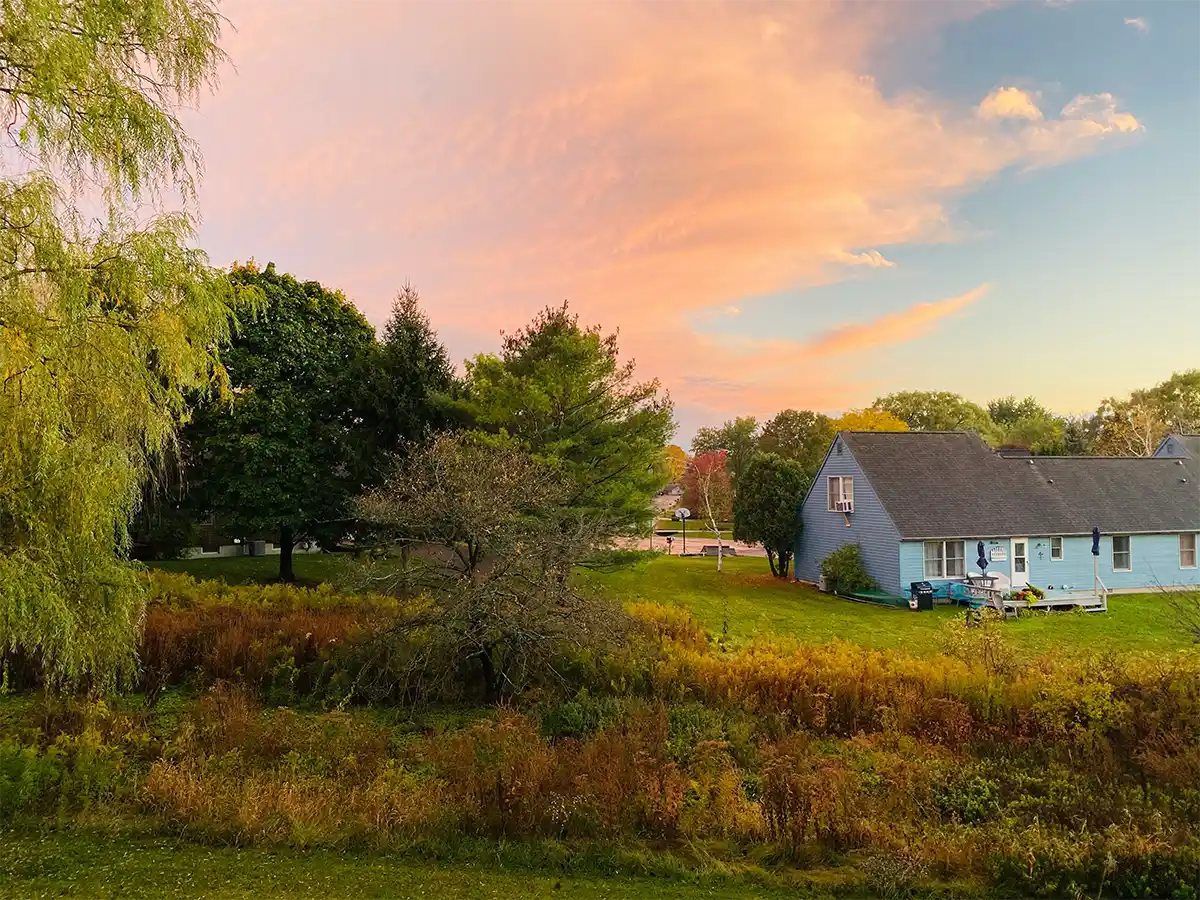 Editing is constantly adapting to the evolving demands of real estate clients.
6.3. The return on investment (ROI)
The justification for this cost is found in the closing statement. Data from the 2026 real estate market indicates that listings featuring professional twilight photography spend significantly less time on the market, often selling up to 30% faster than those without. Furthermore, because these images signal "luxury" and "exclusivity," they frequently attract higher initial offers.
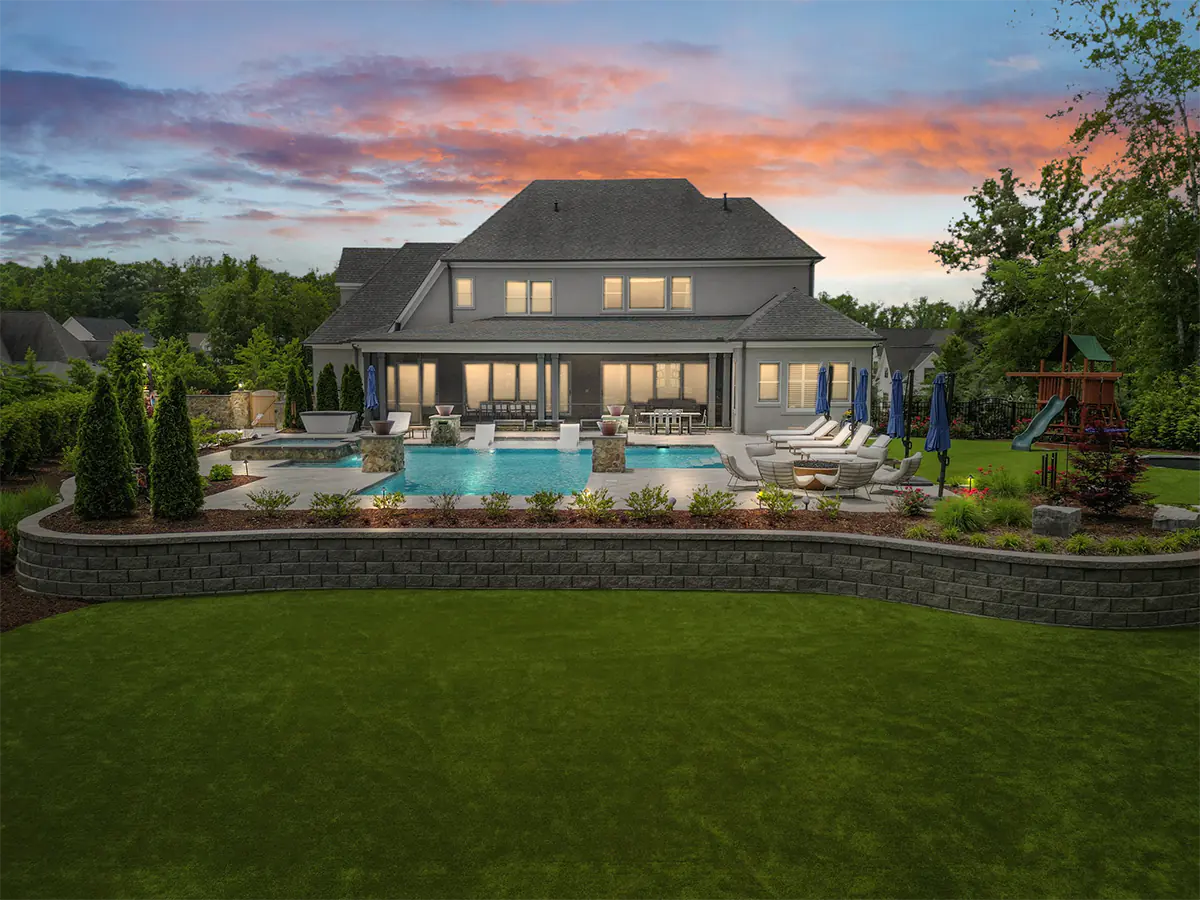 Twilight real estate photography can immensely enhance the perceived value of a property and attract more prospects
When you consider that the cost of a twilight shoot is often less than a single week’s price reduction on a stagnant listing, the math becomes clear. Investing in the "glow" of dusk vs twilight photography is a proactive strategy to maintain price integrity and accelerate the sales cycle. For a top-tier agent, the question isn't whether you can afford the twilight real estate photography cost, but rather, can you afford the cost of a listing that fails to stand out?
7. Why twilight photos are essential for luxury listings
In the world of ultra-high-end real estate, marketing is less about property features and more about lifestyle curation. Twilight photos for luxury listings serve as the ultimate narrative device, painting a picture of elegance that daytime photography simply cannot convey. When a multi-million-dollar estate is bathed in the soft, ambient glow of dusk, it transforms into an aspirational stage for life’s most prestigious moments.
For luxury buyers, the home is a venue for hosting, a sanctuary for relaxation, and a symbol of status. Twilight imagery captures this perfectly by showcasing architectural lighting, grand entryways, and outdoor entertainment spaces in their most dramatic light. It suggests an evening spent by a custom fire pit or a sophisticated cocktail party overlooking a glowing infinity pool. In 2026, when the "experience economy" dominates, these photos provide the visual proof of a property’s lifestyle value.
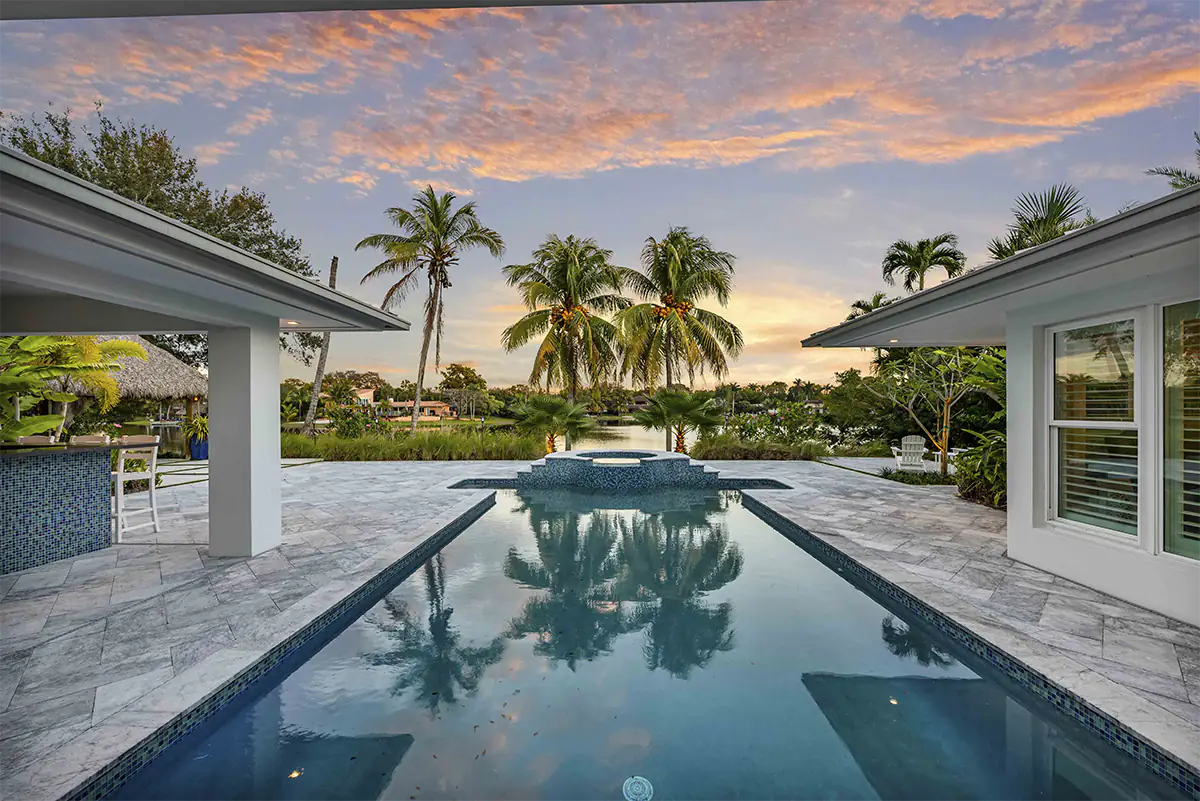 Sunset is the perfect background for a lavish lifestyle at a luxury villa
Furthermore, omitting twilight shots from a high-end listing can inadvertently signal a lack of effort or a "discount" approach, which can be a major deterrent for affluent clientele. By committing to a professional twilight session, agents affirm the property’s elite status and ensure it resonates with the refined tastes of global luxury investors.
8. The power of outsourced photo editing for high-end twilight real estate photography
For luxury properties, "good enough" editing is a risk to the brand. This is why top-tier agents in 2026 increasingly outsource their editing to professional studios. For example, an editing house like Fotober provides these benefits for luxury listings:
- Human finesse vs. AI automation: While AI can handle basic color correction, luxury listings require the "human touch" for complex flambient blending (combining flash and ambient light). Professional editors ensure that natural textures (like marble veining, hand-scraped hardwood, etc.) are preserved without the "plastic" look of over-processed AI filters.
- Elite retouching & object removal: Upscale buyers notice every detail. Outsourced professionals can meticulously remove distracting elements like security cameras, pool hoses, or neighbors’ houses, ensuring the property looks like a private sanctuary.
- Consistency across the portfolio: Outsourcing allows agents to maintain a "signature look" across all their listings. This consistency builds brand trust, signaling to potential sellers that their home will receive the same world-class treatment.
- Efficiency for high-value agents: Luxury agents' time is better spent nurturing high-net-worth relationships than sitting behind a computer. By offloading the 3-5 hours of post-production required for a single twilight shoot, agents can focus on closing deals while receiving magazine-quality assets within 24 hours.
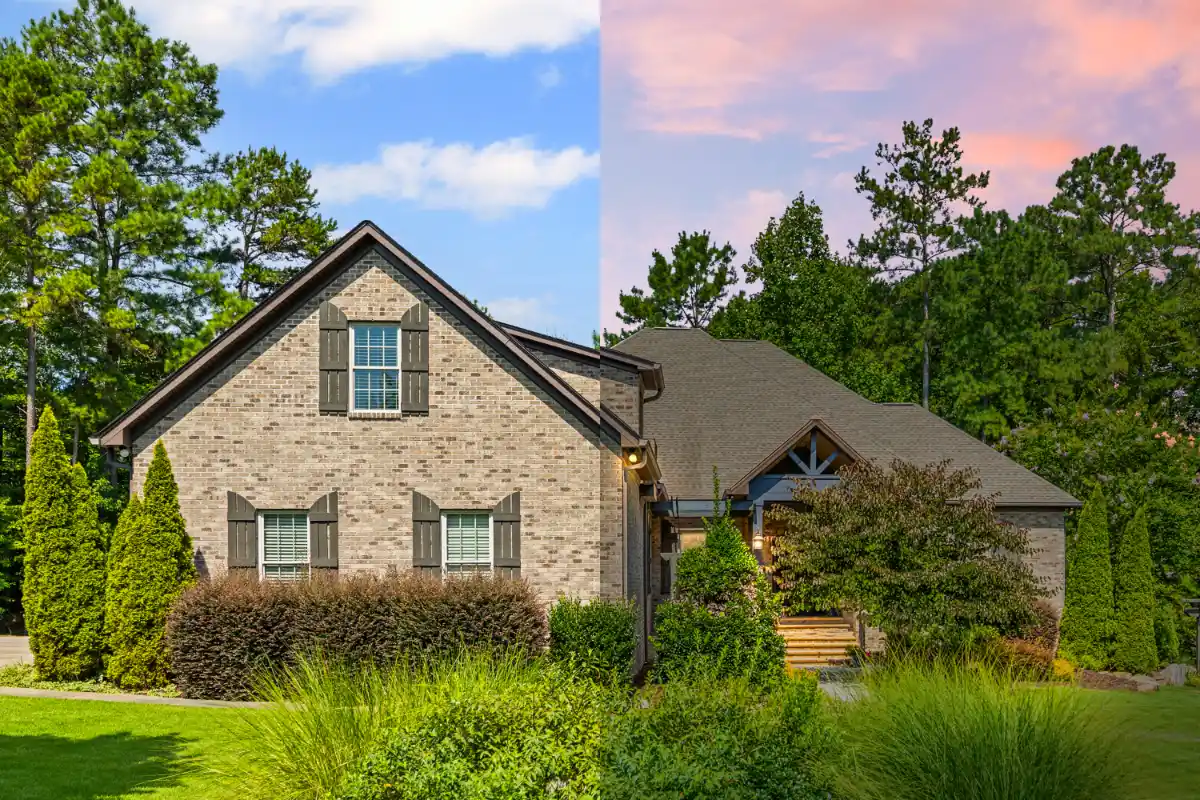 Many realtors and photographers are choosing twilight editing for real estate photos because of the unmatched efficiency of this method.
Last but not least, omitting twilight shots or settling for amateur edits can inadvertently signal a lack of effort. By committing to professional twilight sessions and specialized outsourced editing, agents express the property’s elite status and ensure it resonates with the refined tastes of global luxury investors. If you are facing this exact concern, let Fotober help you with our twilight editing, catered for real estate, so that every one of your listings can look outstanding with the most glorious light.
9. Conclusion
As we’ve explored, twilight real estate photography remains the gold standard for property marketing in 2026. While AI and virtual tools offer impressive shortcuts, the authentic "blue hour" provides an emotional resonance and technical depth that digital simulations simply cannot replicate. It is the bridge between showing a structure and selling an aspirational lifestyle.
In a crowded digital marketplace where "stopping power" is the ultimate currency, these luminous images ensure your listing doesn't just get seen but also gets remembered. Whether you are representing a luxury estate or a charming suburban home, the investment in professional twilight photography pays for itself through higher engagement, increased trust, and faster closing times.
Don’t let your next listing fade into the background of a standard daytime gallery. Embrace the magic of the golden hour to capture your buyers' hearts and secure the premium offers your clients expect.
Follow us on social media to acquire more useful tips and in-depth analysis on real estate marketing, twilight photography, and up-to-date details of our services!
- Facebook: fotobermedia.co
- YouTube: Fotober
- TikTok: @fotober
- Instagram: fotober_media.
Related posts

Cincinnati Housing Market 2026: Prices, Trends, and What It Means for Buyers, Sellers, and Investors
October 20, 2026

Modern Luxe Interior Design: Elements, Style Guide and How to Stage It
October 10, 2026

Minimalist Interior Design: Characteristics, Style Guide, and Staging
October 8, 2026

Coastal Interior Design: Style Definition & Staging Guide
September 30, 2026
