




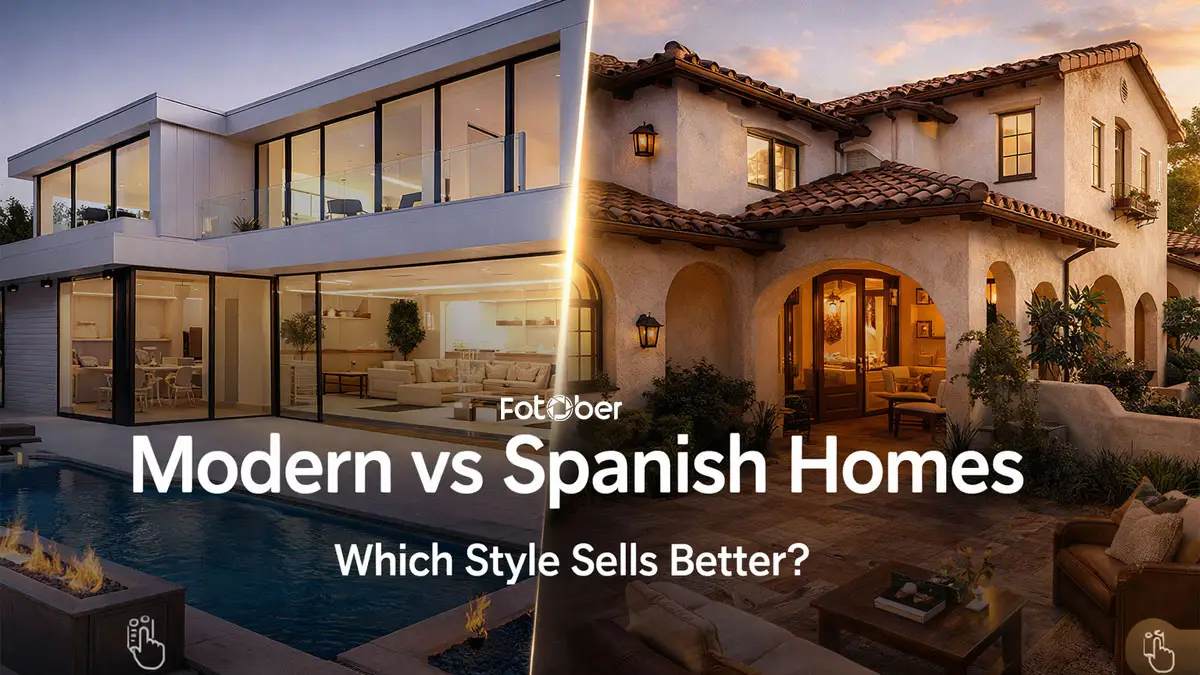
Modern vs Spanish Homes in San Diego: Which Style Sells Better?

Share:
Table of Contents
- 1. What defines Modern vs Spanish Homes in San Diego?
- 2. Key differences that impact buyer perception
- 3. Which home style performs better in San Diego listings?
- 4. The role of real estate photography in Selling Homes
- 5. Common mistakes when marketing each style
- 6. Modern vs Spanish Homes – Which one actually converts?
- 7. How to make any home style look high-end
- 8. Practical tips for agents
- 9. Conclusion
Modern vs Spanish homes in San Diego is a comparison that goes far beyond architectural style-it directly influences how listings perform in today’s competitive market. San Diego is known for its diverse architecture, but these two styles consistently stand out for both buyers and agents.
At first glance, the choice may seem purely aesthetic. Some buyers are drawn to the clean lines and open spaces of modern homes, while others are captivated by the warmth and character of Spanish-style properties. However, in reality, the decision goes deeper than visual preference.
Buyers don’t just evaluate a home based on its structure-they respond to how it appears in photos, how it feels in videos, and how effectively it stands out among competing listings. That’s why understanding the difference between these two styles isn’t just about design-it’s about marketing performance.
Which style attracts more clicks? Which one builds a stronger emotional connection? And more importantly, which is easier to present in a way that drives real interest and faster sales?
Which is Better-Modern or Spanish Homes in San Diego? When comparing Modern vs Spanish Homes in San Diego, there’s no one-size-fits-all answer-but there are clear differences in how each style performs.
-
Modern homes tend to be bright, minimal, and visually clean, making them easier to capture in photos and videos.
-
Spanish homes offer warmth, texture, and personality, but they often require more careful lighting and color balance to truly stand out.
In most cases, the better option isn’t about the style itself-it depends on your target buyer and how well the property is presented in your listing.
Modern homes in San Diego often generate more clicks because their bright, clean visuals are easier to present online. However, Spanish-style homes can achieve higher conversion rates when properly edited, as they create a stronger emotional connection with buyers. Ultimately, the better-performing style depends on how well the property is presented and matched to the target audience.
1. What defines Modern vs Spanish Homes in San Diego?
To really understand Modern vs Spanish Homes in San Diego, it helps to look beyond surface-level design and focus on what makes each style distinct. These differences aren’t just aesthetic-they shape how a property feels, how it’s perceived by buyers, and how it performs in listings.
Modern homes in San Diego are typically defined by simplicity and openness. You’ll often see clean lines, large glass windows, and a strong connection between indoor and outdoor spaces. The color palette tends to lean toward neutral tones-whites, grays, and soft earth colors-which create a bright, airy atmosphere. This minimalist approach is intentional. It removes visual clutter and allows the space itself to stand out, which is one reason modern homes often photograph so well.
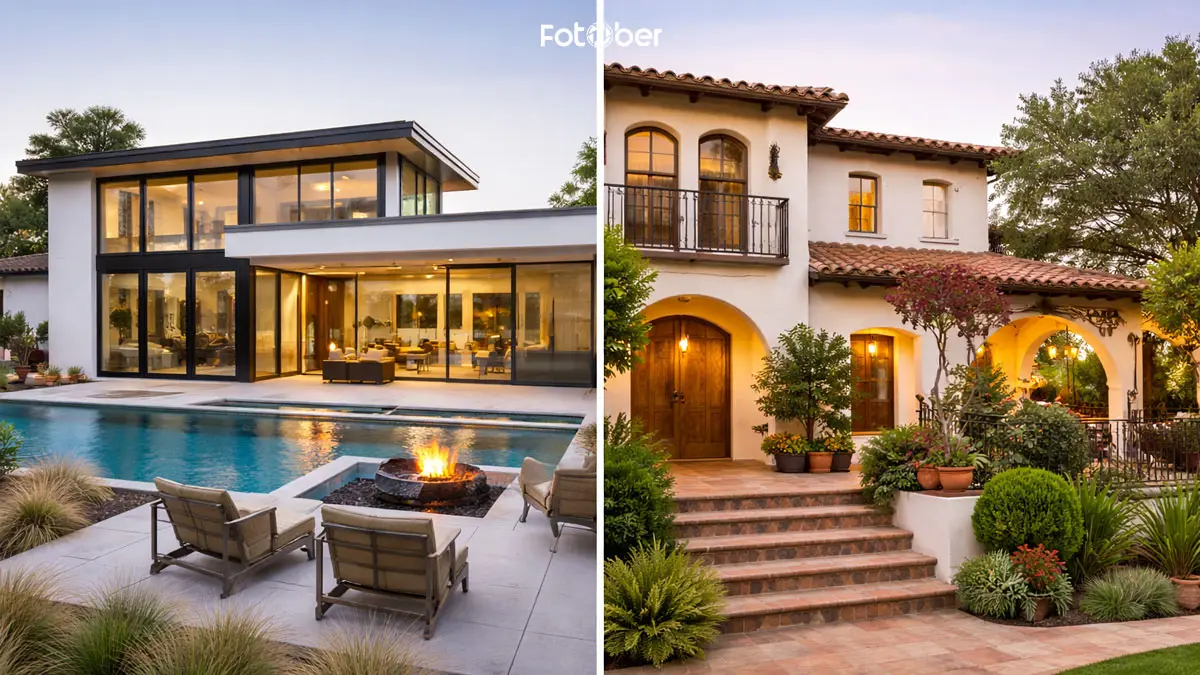
In contrast, Spanish-style homes bring a completely different kind of character. Inspired by Mediterranean architecture, these homes are rich in detail and texture. Features like terracotta roof tiles, arched doorways, wrought iron accents, and stucco walls give them a warm, inviting look. Instead of clean symmetry, Spanish homes embrace a more organic, lived-in feel. The color palette is typically warmer too-think earthy reds, creams, and sun-baked tones that reflect California’s coastal climate.
When comparing Modern vs Spanish Homes in San Diego, it’s clear that each style appeals to different emotions. Modern homes feel sleek and contemporary, while Spanish homes feel cozy and timeless. Neither is inherently better-but each creates a very different first impression, especially when viewed online.
2. Key differences that impact buyer perception
When buyers scroll through listings, they’re not analyzing architecture in detail-they’re reacting almost instantly to how a home feels. That emotional response is where the real difference lies when comparing Modern vs Spanish Homes in San Diego. It’s less about design theory and more about buyer psychology.
Modern homes tend to create a strong first impression because everything looks clean and intentional. The open layouts, straight lines, and neutral tones signal something new, organized, and “move-in ready.” For many buyers-especially younger ones or investors-this translates into a sense of convenience and low maintenance. There’s a subtle message: you don’t need to change anything; it already fits today’s lifestyle.
Spanish homes, on the other hand, tell a different story. They feel lived-in, warm, and full of personality. Instead of looking perfect, they feel inviting. Details like textured walls, arches, and earthy tones create a sense of comfort that resonates with buyers who value character and lifestyle over minimalism. Families, in particular, often connect with this style because it feels more “homey” and less like a showroom.

Here’s a simple way to visualize how these differences show up in buyer perception:
|
Feature |
Modern Homes |
Spanish Homes |
|
Visual style |
Clean, minimal |
Warm, detailed |
|
First impression |
Luxury, new |
Cozy, traditional |
|
Buyer appeal |
Younger buyers |
Family / lifestyle buyers |
Neither style is universally better. The key is understanding that each one attracts a different type of buyer-and that first impression, often formed in just a few seconds, can determine whether someone clicks on a listing or scrolls past it.
3. Which home style performs better in San Diego listings?
This is where things get more practi cal. When it comes to listing performance, the question isn’t just about preference-it’s about visibility and engagement. And in that context, the comparison between Modern vs Spanish Homes in San Diego becomes a question of how well each style translates on screen.
Most buyers today start their search online. Before they ever visit a property, they’re judging it based on photos and videos. That means listing performance is heavily influenced by three things: how the space is captured, how the lighting is handled, and how clear the visuals feel overall.
Modern homes often have an advantage here. Their open layouts and neutral colors naturally reflect light, making rooms look brighter and more spacious in photos. Clean lines also help create a sense of order, which translates well in both images and video. Even without heavy editing, modern homes tend to look polished and easy to understand at a glance.
Spanish homes can be more challenging. While they’re beautiful in person, their details don’t always show up clearly on camera. Dark wood elements, textured walls, and warmer tones can sometimes make spaces feel smaller or less defined if the lighting isn’t handled carefully. Without the right adjustments, the richness that makes these homes special can get lost in the visuals.
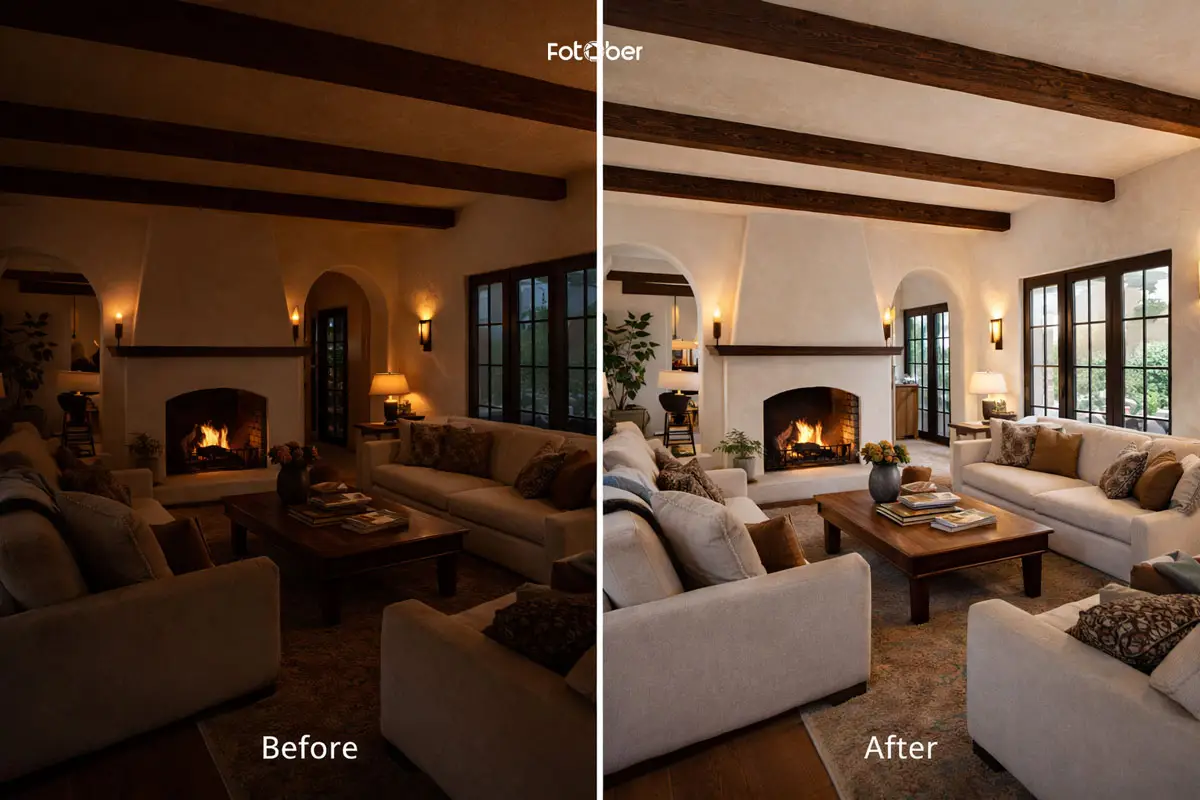
That’s why one key insight matters: Homes that look better in photos often get more clicks.
This is where real estate photography plays a critical role. It’s not just about capturing a space-it’s about presenting it in a way that highlights its strengths. A well-shot Spanish home can feel just as compelling as a modern one, but it usually requires more attention to lighting and color balance to achieve that effect.
In the end, neither style automatically performs better. The real difference comes down to presentation. A modern home may have a natural advantage, but a well-prepared Spanish home can compete just as strongly when the visuals are done right.
4. The role of real estate photography in Selling Homes
By the time a buyer clicks into a listing, one thing has already done most of the work: the visuals. This is where the conversation around Modern vs Spanish Homes in San Diego shifts from style to execution. Because no matter how beautiful a home is in person, if it doesn’t translate well on screen, it simply won’t perform.
Modern homes generally have a built-in advantage. Their open layouts, large windows, and neutral color palettes make them naturally easier to photograph and film. Light flows more evenly, lines are clean, and spaces feel more defined. Even with basic shooting, modern homes tend to look bright and organized, which helps them stand out quickly in search results.
Spanish homes, however, are a bit more demanding. Their charm comes from texture, depth, and warmer tones-but those same qualities can become challenges on camera. It’s common to see Spanish-style interiors appear slightly darker than they actually are, or for colors to shift toward overly warm or muted tones if lighting isn’t handled carefully. Details that feel rich in real life can end up looking heavy or unclear in photos and videos.
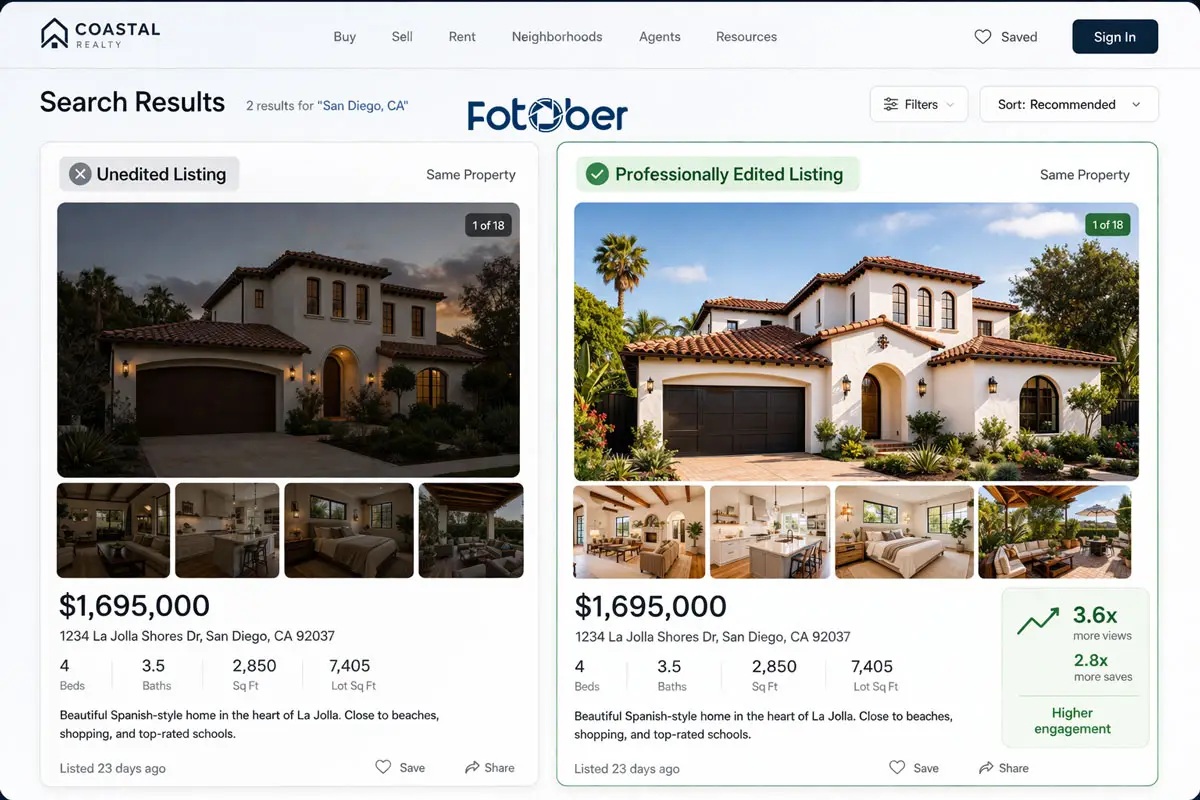
That’s why one important insight stands out: Not all homes are equally “camera-friendly.”
This is also where real estate photography becomes more than just documentation-it becomes a tool for shaping perception. A well-lit, color-balanced image can completely change how a space feels to a buyer. And for styles like Spanish homes, that difference can be the deciding factor between a listing that gets ignored and one that attracts serious interest.
In other words, the gap between average and high-performing listings often isn’t the property itself-it’s how well the visuals are handled.
5. Common mistakes when marketing each style
Even when agents understand the strengths of each style, small presentation mistakes can still hold a listing back. And interestingly, the most common issues often come from misunderstanding how each style should be shown.
With modern homes, the biggest problem is going too minimal. While clean and neutral spaces are appealing, they can sometimes feel flat in photos if not handled properly. When lighting is too even or the editing is too subtle, the result can look lifeless-more like a showroom than a place someone would actually want to live. Without a bit of warmth or contrast, modern listings risk blending into each other instead of standing out.
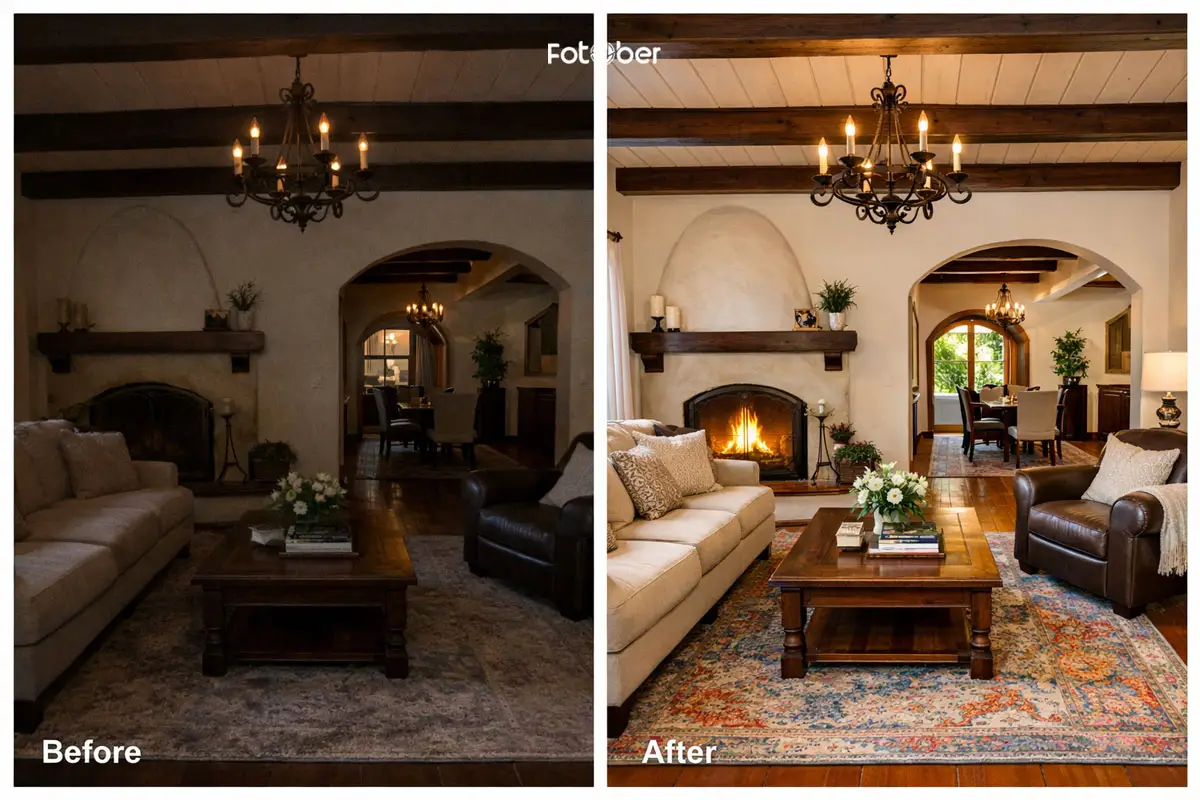
Spanish homes face almost the opposite issue. Their richness can easily turn into visual heaviness if the lighting isn’t right. One of the most common mistakes is underexposing the space, which makes rooms feel smaller and darker than they really are. Another is poor color balance-when warm tones become too saturated or muddy, the entire home can lose its natural charm.
When comparing Modern vs Spanish Homes in San Diego, it becomes clear that each style has its own set of challenges. Modern homes need more depth and character in presentation, while Spanish homes need clarity and balance. Missing that distinction is where many listings fall short-not because of the property itself, but because of how it’s presented.
6. Modern vs Spanish Homes – Which one actually converts?
At some point, every agent asks the same question: which style actually leads to better results? When it comes to Modern vs Spanish Homes in San Diego, the honest answer is-there’s no absolute winner.
Conversion doesn’t come from the style alone. It comes from how well that style matches your target buyer and how effectively it’s presented in your listing. A sleek modern home might attract younger, design-focused buyers, while a Spanish home may resonate more with families looking for warmth and character. Both can perform extremely well-but only when positioned correctly.
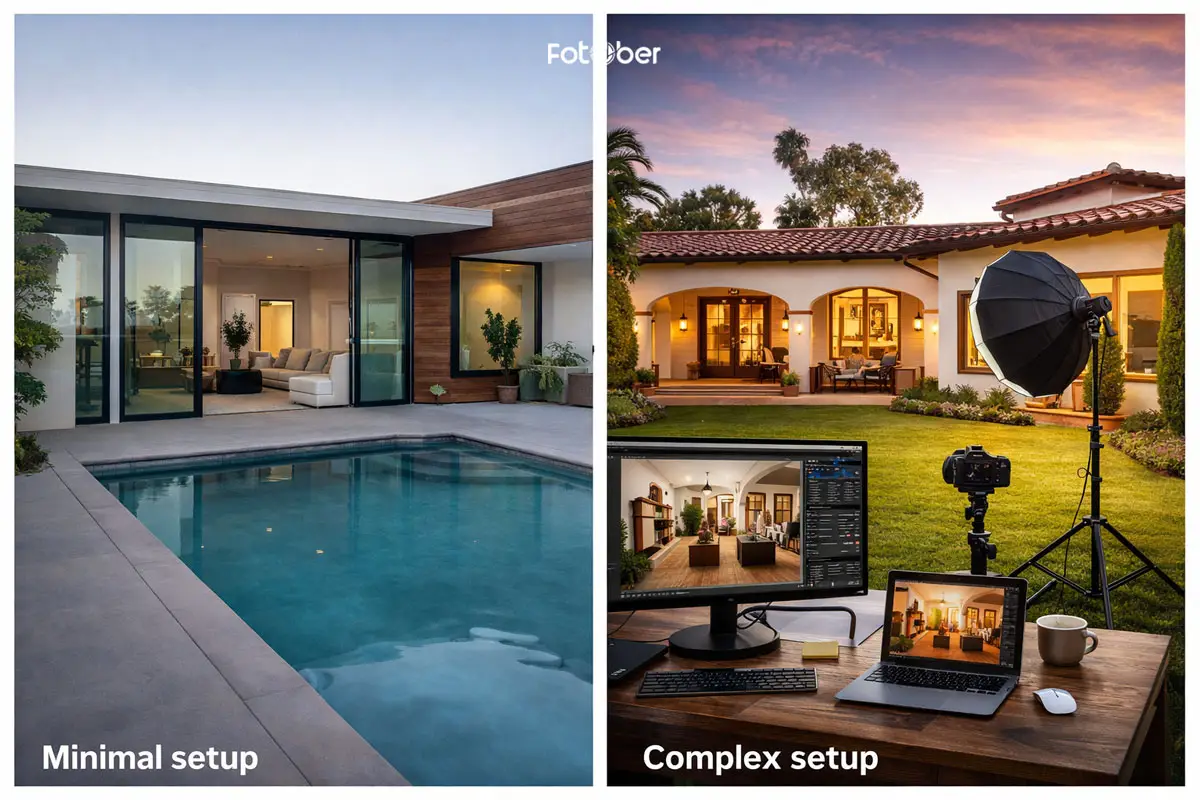
Here’s the key insight: The same home can perform very differently depending on how it’s presented.
A modern home with poor lighting or flat visuals can feel cold and uninspiring. On the other hand, a Spanish home with balanced lighting and refined colors can feel premium and inviting. In other words, presentation can amplify-or completely diminish-the natural strengths of each style.
To make this clearer, here’s a simple comparison:
|
Factor |
Modern Homes |
Spanish Homes |
|
Easy to shoot |
✅ |
❌ |
|
Needs editing |
Medium |
High |
|
Conversion potential |
High |
High (if done right) |
Modern homes often have a head start because they’re easier to capture cleanly. But that doesn’t mean they always convert better. Spanish homes, while more challenging to present, can create a stronger emotional pull when done right.
When you look at Modern vs Spanish Homes in San Diego from a performance perspective, it becomes clear that success isn’t about choosing the “better” style-it’s about making each style look its best in front of the right audience.
7. How to make any home style look high-end
If there’s one takeaway from everything above, it’s this: the problem is rarely the home style itself. What really determines how a listing performs is how well the visuals are executed.
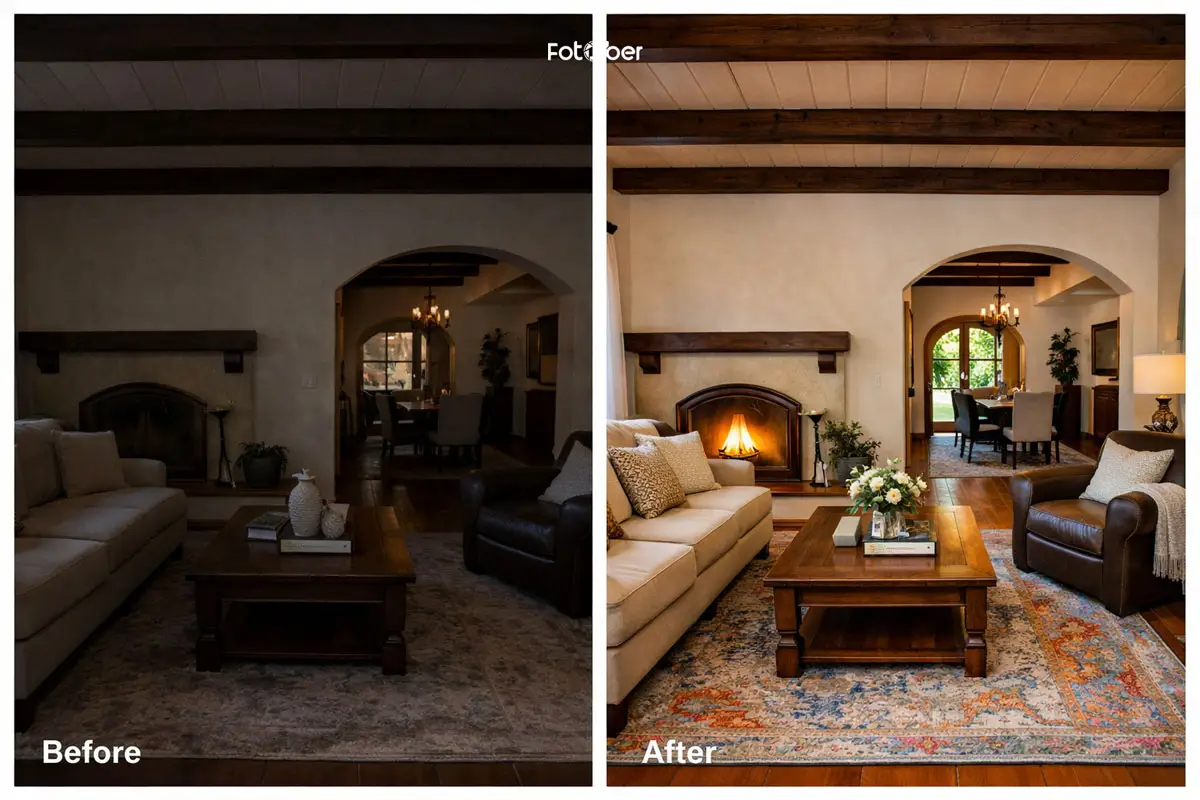
Regardless of whether you’re working with modern or Spanish homes, three factors consistently make the biggest difference:
-
Lighting – Is the space bright, balanced, and natural-looking?
-
Color – Do the tones feel accurate and appealing, or dull and inconsistent?
-
Consistency – Do all images and videos follow the same visual standard?
When these elements are handled properly, even a simple property can feel high-end. When they’re not, even a luxury listing can look average.
This is where post-production becomes a powerful advantage. Instead of relying entirely on how the footage was captured, editing allows you to refine and elevate what’s already there-adjusting exposure, correcting color, and creating a consistent look across all visuals.
And this is exactly where many agents underestimate the impact of real estate photography. It’s not just about taking good shots-it’s about finishing them in a way that matches buyer expectations. Especially with styles like Spanish homes, where lighting and color are more complex, thoughtful editing can completely transform how the property is perceived.
When thinking about Modern vs Spanish Homes in San Diego, the smartest approach isn’t trying to control the style-it’s optimizing how that style is presented. Because in the end, buyers don’t compare raw properties. They compare what they see on screen.
👉 And that’s where high-quality post-production becomes the fastest way to turn any home into a listing that stands out.
8. Practical tips for agents
If you’re working with different property styles, the goal isn’t to force one approach-it’s to adapt your strategy to what actually works. When thinking about Modern vs Spanish Homes in San Diego, a few practical adjustments can make a noticeable difference in how your listings perform.
First, always start with your target buyer. A modern home might appeal more to younger professionals or investors, while a Spanish home often connects better with families or buyers looking for character. Understanding who you’re trying to attract helps you decide how to position the property from the beginning.
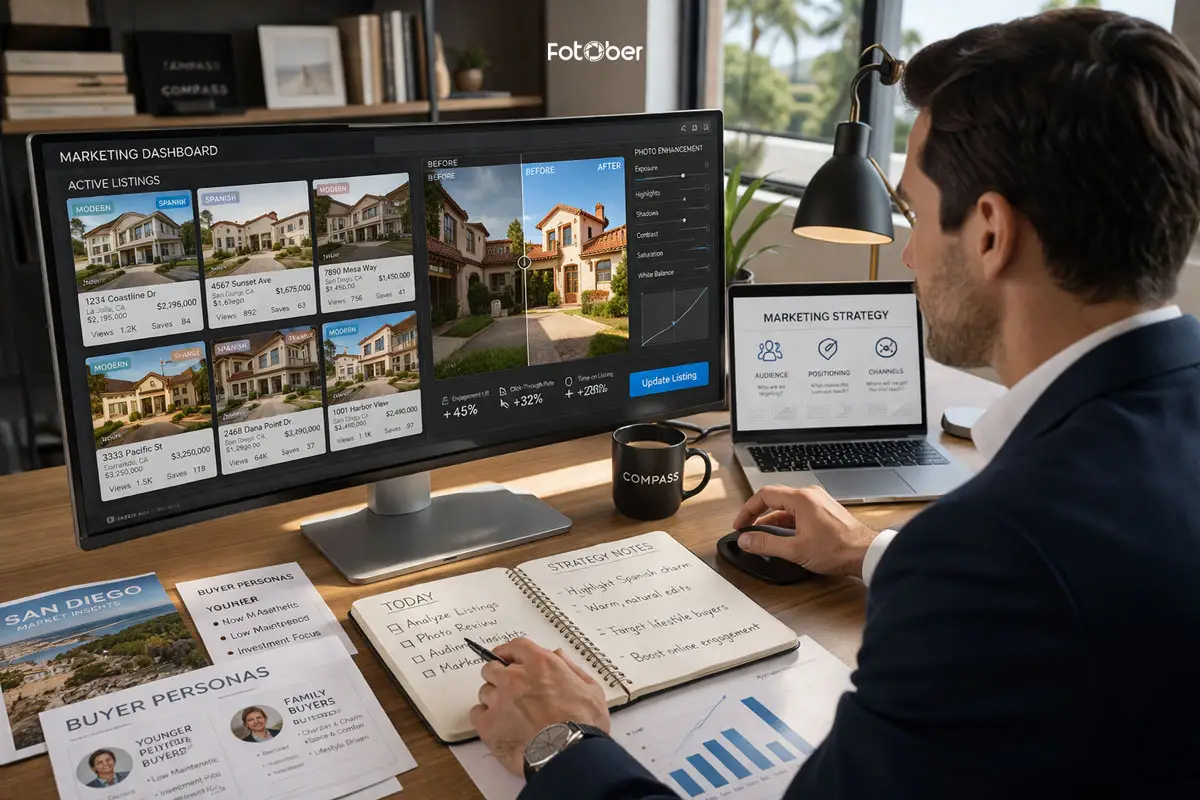
Second, don’t underestimate the impact of visual quality. Buyers make decisions quickly, and your photos and videos are doing most of the selling before anyone steps inside. Investing in strong visuals-whether during shooting or in post-production-can significantly improve how a listing is perceived.
Finally, treat your content like something you can test and refine. Small changes in lighting, color, or framing can lead to big differences in engagement. If one version of a listing isn’t performing well, it’s often worth adjusting the visuals rather than assuming the property itself is the issue.
At the end of the day, success comes from aligning the right presentation with the right audience.
9. Conclusion
Modern vs Spanish Homes in San Diego ultimately isn’t about choosing which style is better—it’s about understanding how each one performs when presented to the right audience. While both styles bring unique strengths to the market, the real difference lies in execution, not architecture.
A modern home can feel flat if the visuals lack depth, just as a Spanish home can appear dark or overwhelming when lighting and color aren’t handled correctly. In both cases, performance depends less on the property itself and more on how effectively it’s showcased online.
That’s why the smartest strategy isn’t picking a winning style—it’s making sure every listing is presented at its full potential. When your visuals are clear, balanced, and consistent, you’re not just displaying a property—you’re shaping how buyers perceive its value and whether they choose to engage.
If your listings aren’t generating enough clicks or interest, the issue is often not the home—but how it’s presented. And especially with more complex styles like Spanish homes, the difference between being overlooked and standing out often comes down to the quality of your visuals.
Follow Fotober on social media:
-
YouTube Channel: Fotober
-
TikTok Channel: @fotober
-
Email support: [email protected]
-
Hotline: +84 942 110 297
Related posts

Cincinnati Housing Market 2026: Prices, Trends, and What It Means for Buyers, Sellers, and Investors
October 20, 2026

Modern Luxe Interior Design: Elements, Style Guide and How to Stage It
October 10, 2026

Minimalist Interior Design: Characteristics, Style Guide, and Staging
October 8, 2026

Coastal Interior Design: Style Definition & Staging Guide
September 30, 2026
