




Mediterranean Home Rendering: The Art of Architectural Visualization

Share:
Table of Contents
- 1. The visual magic of Mediterranean architecture
- 2. Anatomic blueprint of a photorealistic Mediterranean home exterior rendering
- 3. Why editing and outsourcing are essential for Mediterranean home rendering
- 4. Step-by-step workflow: Bringing a Mediterranean villa visualization to life with Fotober
- 5. Real-world case studies: The business impact of photorealistic Mediterranean home renderings
- 6. Conclusion: Elevate your visual brand with Fotober
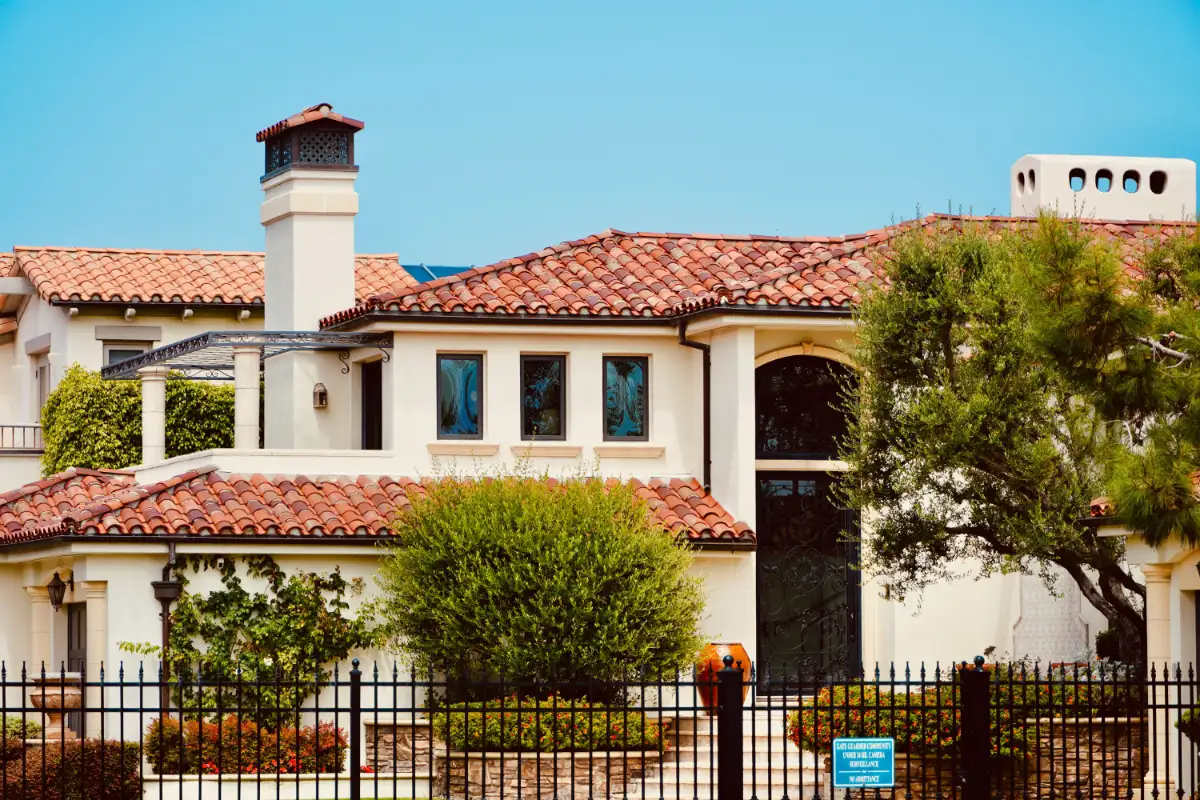
From the rustic coastlines of Tuscany and Spain to the sun-drenched hills of Malibu and Miami, Mediterranean homes possess a unique interplay of light, texture, and natural harmony. However, bringing a Mediterranean estate to market, whether it is an unbuilt architectural concept, a major renovation, or an active high-end listing, presents distinct visual challenges. Capturing the organic warmth of hand-troweled stucco, the deep shadows of barrel roof tiles, and the gentle golden hour glow requires an artist’s eye and advanced technical tools.
This is where high-end home rendering proves its worth. In this guide, we will explore the nuances of Mediterranean home rendering, the rising trend of modern Mediterranean architectural rendering, and the precise formula needed to produce a truly photorealistic Mediterranean home exterior rendering. Furthermore, we will examine why outsourcing your rendering and photo-editing workflows to specialized partners like Fotober is the ultimate leverage for realtors, photographers, and videographers aiming to scale their businesses.
1. The visual magic of Mediterranean architecture
To create or photograph an exceptional visual of a Mediterranean home, one must first understand its architectural DNA. Originating from countries bordering the Mediterranean Sea, this style relies on natural, earth-drawn materials designed to keep interiors cool while blending seamlessly into warm landscapes.
|
Key elements of Mediterranean visuals | |
|
Organic materials |
Dynamic light & shadow |
|
Terracotta roof tiles |
Deeply recessed windows |
|
Hand-troweled lime-wash stucco |
Arched loggias & porticos |
|
Wrought iron balconies |
Cast shadows from foliage |
1.1. The Interplay of texture, light, and shadow
The magic of a Mediterranean villa lies in how sunlight interacts with rough surfaces. Unlike modern glass-and-steel structures that reflect light crisply, Mediterranean exteriors absorb and diffuse light:
- Textured stucco: Light catches the high points of coarse stucco while casting micro-shadows in the crevices, creating a tactile warmth.
- Curved roof tiles: Terracotta tiles create repeating S-curves that cast rhythmic shadow patterns across the roofline as the sun moves.
- Archways and loggias: Deeply recessed windows and sweeping arches generate dark, cool interior shadows that contrast dramatically with sunlit outer walls.
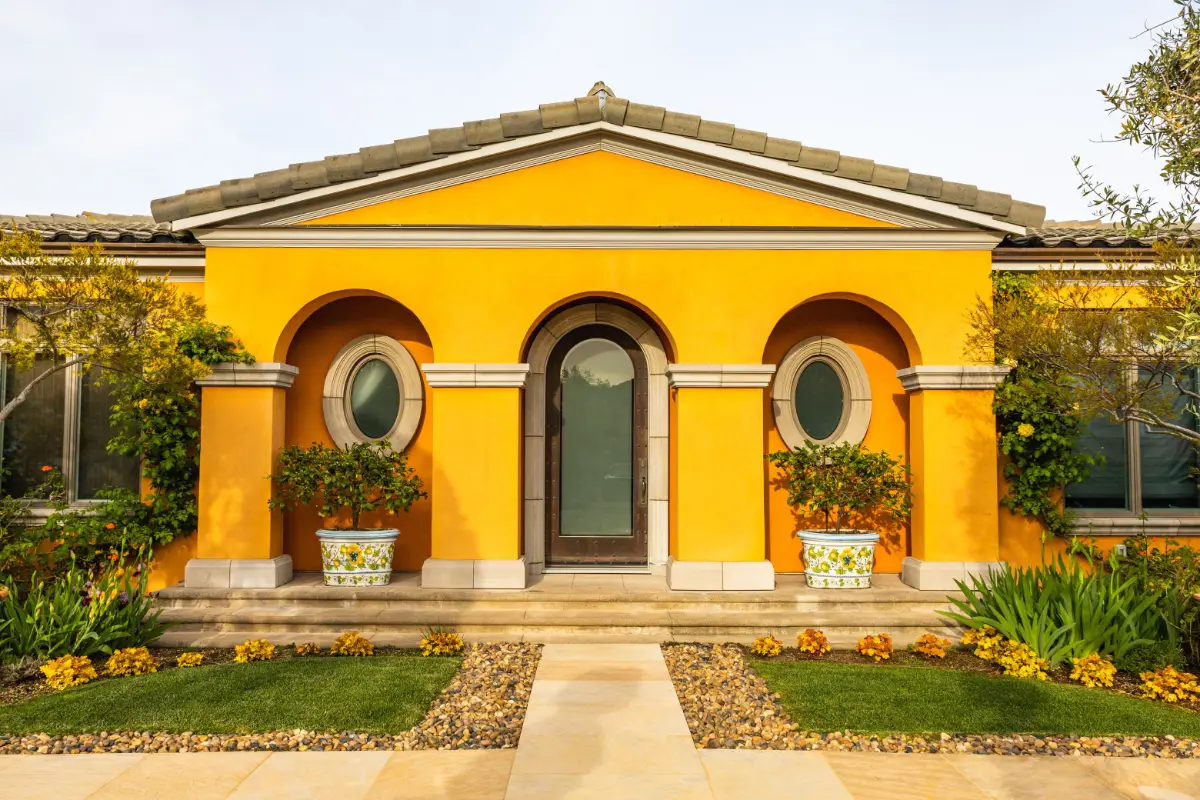
In photography and Mediterranean villa exterior 3D visualization, capturing these subtle gradations of shadow is what separates a flat image from a three-dimensional masterpiece.
1.2. The evolution: Traditional vs. modern Mediterranean architectural rendering
The classical Mediterranean style, characterized by heavy ornate details, dark wrought iron, and deep warm tones, has evolved dramatically over the past decade. Today’s luxury buyers are increasingly drawn to clean lines and open-concept indoor-outdoor living.
|
TRADITIONAL MEDITERRANEAN |
MODERN MEDITERRANEAN |
|
Heavy barrel terracotta tiles |
Low-profile flat tile or slate |
|
Deep yellow/beige stucco |
Off-white, crisp lime-wash stucco |
|
Small, recessed windows |
Floor-to-ceiling glass systems |
|
Intricate ironwork details |
Minimalist metal trim |
1.3. The rise of modern Mediterranean style
A modern Mediterranean home rendering bridges old-world charm with contemporary minimalism. Key features of this evolution include:
- Sleeker lines: Rooflines are simplified, often replacing heavy barrel tiles with flat slate or low-profile tiles.
- Brighter color palettes: Warm beiges give way to soft off-whites, creamy limestone, and subtle chalky finishes that amplify natural daylight.
- Expansive glass: Massive floor-to-ceiling sliding glass doors replace small traditional windows, blurring the boundary between the internal courtyard and the external pool deck.
- Natural wood accents: Teak, bleached oak, and cedar warm up smooth stucco surfaces on ceilings, pergolas, and decorative screens.
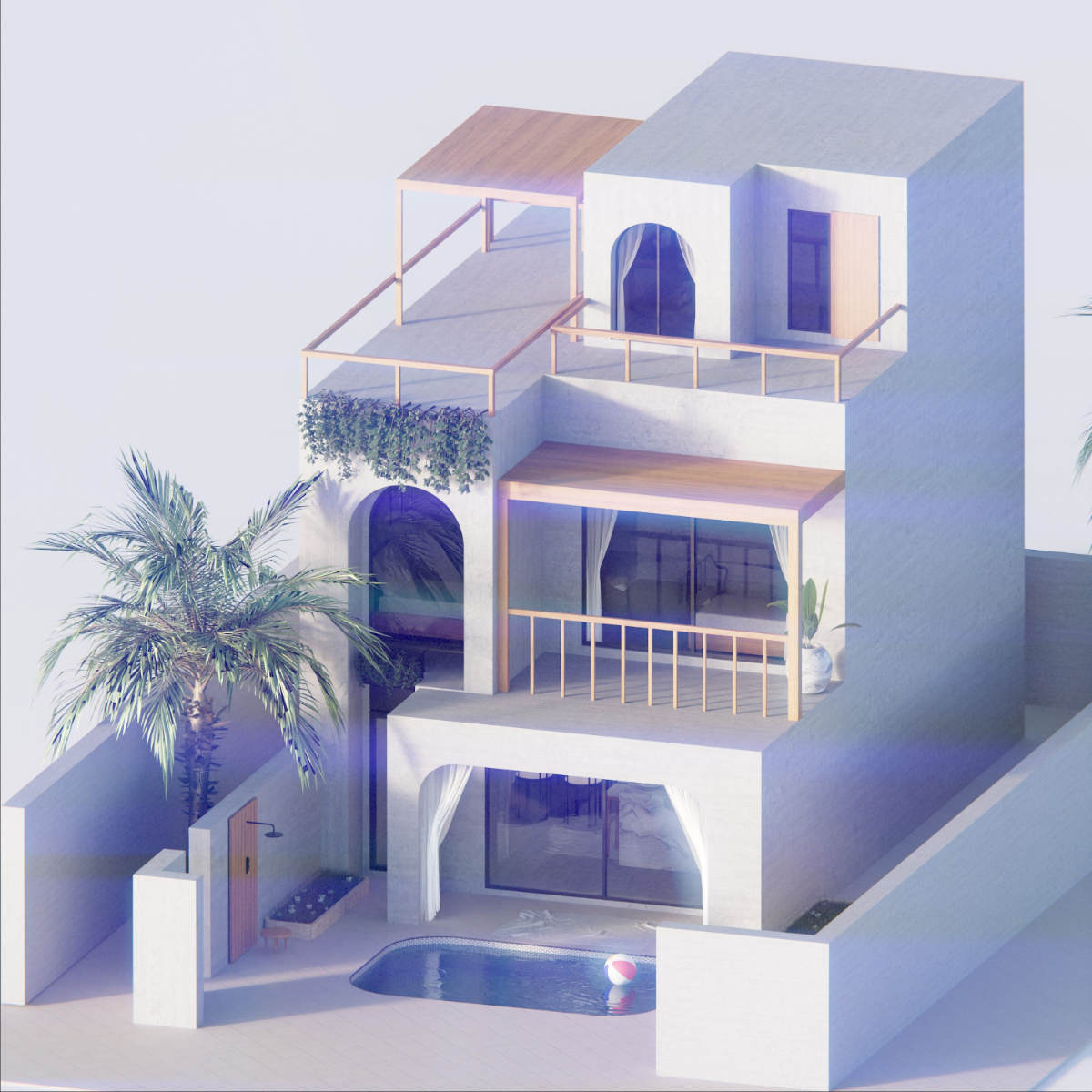
When creating a modern Mediterranean architectural rendering, balance is critical. If the render is too smooth, it looks like a generic modern box. If it is too heavily textured, it loses its modern appeal. The artist must carefully calibrate material roughness, specular highlights, and edge bevels to strike the perfect harmony.
2. Anatomic blueprint of a photorealistic Mediterranean home exterior rendering
Achieving true photorealism in architectural rendering is not simply about using fast computer hardware; it is about mimicking the physical behavior of real-world camera optics, natural light, and organic weathering. When analyzing a photorealistic Mediterranean home exterior rendering through the lens of a cinematographer, four critical elements must be perfectly executed:
|
4 pillars of photorealistic renderings | |
|
1. Camera optics & framing |
Tilt-shift lenses, realistic FOV |
|
2. Atmospheric lighting |
HDRI sky, volumetric light, color temp |
|
3. PBR textures & imperfections |
Roughness maps, edge wear, displacement |
|
4. Organic landscaping |
Subsurface scattering on olive/cypress |
2.1. Camera framing and perspective control
In real estate photography, architectural tilt-shift lenses (such as a 17mm or 24mm TS-E) are essential to maintain vertical lines. In 3D visualization, the digital camera must mirror this exact behavior:
- Vertical correction: Ensure two-point perspective is applied so the walls do not appear to fall backward.
- Human-eye elevation: Setting the camera height at 5 feet (1.5 meters) gives the viewer an authentic walk-up perspective, while an elevated camera angle (8 to 12 feet) is ideal for showing expansive courtyards and pool decks.
- Depth of field (DOF): A subtle depth-of-field effect on foreground landscaping adds cinematic depth without obscuring key architectural features.
2.2. Lighting and atmospheric conditions
Light defines architecture. Mediterranean properties look best during specific times of day:
- The Mediterranean golden hour: Sun angles between 15° and 30° cast long shadows and wrap the stucco in a honey-gold glow.
- HDRI environment lighting: High Dynamic Range Images (HDRI) provide accurate ambient skylight, subtle cloud cover, and true-to-life reflections on infinity pools and window glass.
- Volumetric atmosphere: A touch of haze or dust scattering in the air mimics coastal atmospheric conditions, softening far-off background trees and mountains.
2.3. Advanced PBR (Physically Based Rendering) materials
To make a Mediterranean home rendering look real, materials must respond naturally to light:
- Displacement mapping: Terracotta tiles and stone walls must have actual 3D geometry via displacement maps, rather than flat textures.
- Roughness and specular maps: Lime-wash stucco has high roughness with zero specular shine, while wet pool coping stone features glossy specular highlights.
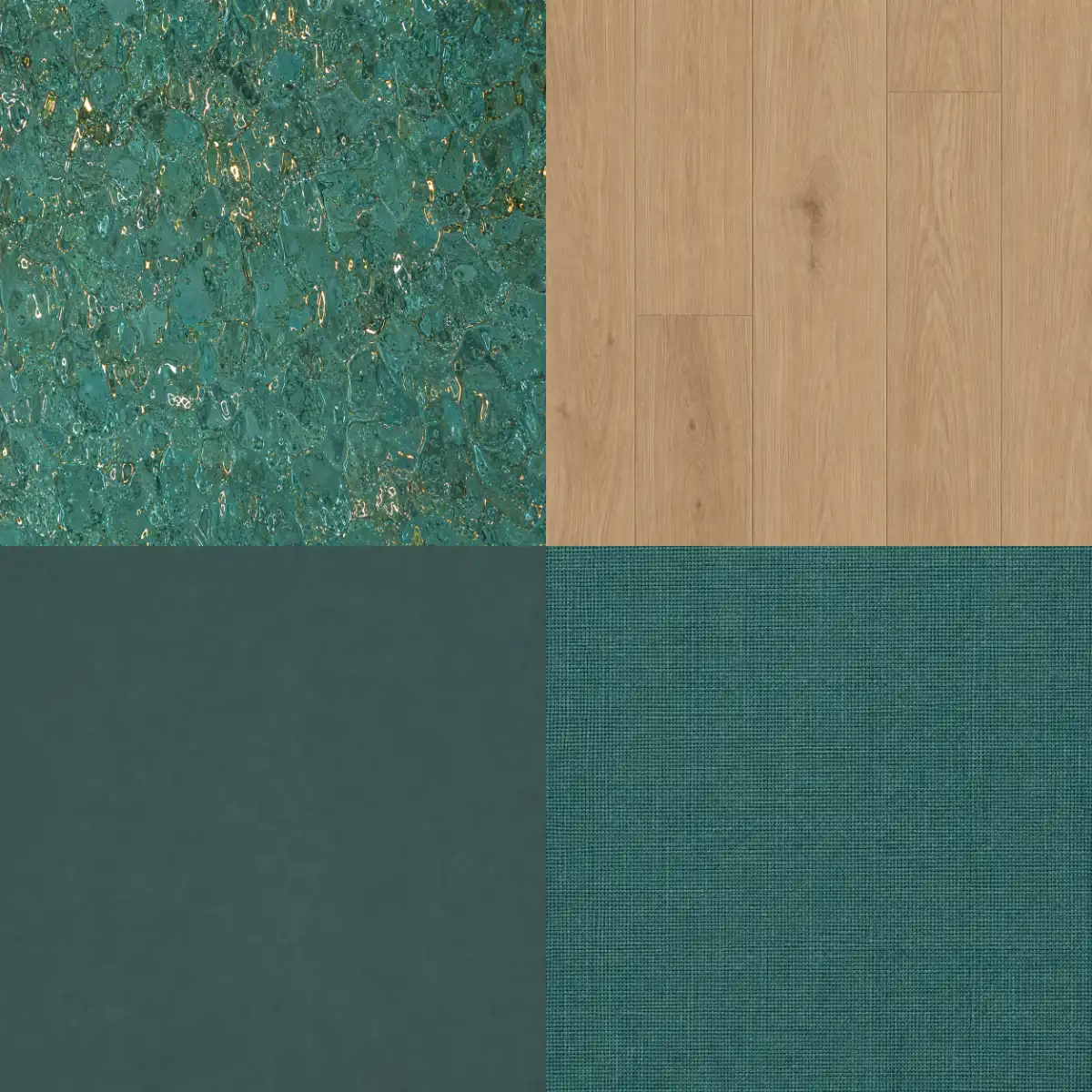
- Subtle imperfections: Real houses are not sterile. Adding subtle color variations on tile roofs, minor stucco stains near ground level, and tiny cracks along garden walls creates authentic realism.
2.4. Authentic foliage and landscaping
A Mediterranean villa looks incomplete without its native flora. Generic 3D trees instantly ruin photorealism. Renders should feature high-polygon models of:
- Gnarled, silvery-green Olive trees (Olea europaea).
- Slender, dark-green Italian Cypress trees (Cupressus sempervirens).
- Vibrantly colored Bougainvillea cascading over wrought-iron balconies.
- Weathered terracotta pots filled with lavender and rosemary.
Using Subsurface Scattering (SSS) on plant leaves allows sunlight to pass through foliage, creating translucent green and magenta accents that bring the yard to life.
2.5. Essential technical checklist for your next render project
Before submitting your next architectural design or photoshoot files for processing, review this quick technical checklist to ensure you achieve the highest quality results:
|
Visual quality control checklist | |
|
Architectural vertical lines: Are all vertical wall lines 100% straight? | |
|
Material scale: Do stucco textures and roof tile dimensions match real life? | |
|
Environment accuracy: Are the foliage species appropriate for the region? | |
|
Color balance: Is the white point calibrated to avoid harsh yellow casts? | |
|
Reflection logic: Do pool and glass surfaces reflect ambient sky accurately? | |
|
Lighting contrast: Are shadows soft-edged with natural ambient bounce light? | |
3. Why editing and outsourcing are essential for Mediterranean home rendering
Whether you are a real estate agent managing high-value listings, an architectural photographer shooting multiple homes a week, or a videographer delivering promotional reels, time is your most valuable asset.
|
The in-house bottleneck vs. outsourced advantage | |
|
IN-HOUSE (DIY) PROCESSING |
OUTSOURCED (FOTOBER) WORKFLOW |
|
Hours spent behind a monitor |
Focus on shooting & client networking |
|
High cost for software & hardware |
Scalable team available 24/7 |
|
Slow turnaround times |
Overnight delivery & fast revisions |
|
Fixed operational overhead |
Pay-per-project flexibility |
3.1. The operational bottleneck of in-house post-production
Post-processing high-end architectural images and rendering 3D visualizations require immense computational power and tedious manual labor:
- Time consumption: A single photorealistic Mediterranean home rendering can require days of modeling, texturing, lighting, and hours of machine render time.
- Loss of billable hours: For photographers, every hour spent masking windows, balancing flash-ambient mixes, or editing out power lines is an hour not spent on set shooting high-paying clients.
- Scaling bottlenecks: Real estate agencies and visual media companies cannot scale smoothly if their principal artists are trapped doing repetitive editing tasks late into the night.
Outsourcing post-production and 3D rendering allows real estate media businesses to shift from working in their business to working on their business.
3.2. The bridge between photography, 3D rendering, and post-production in Mediterranean home rendering
As photographers and videographers, we often face real-world limitations on location: overcast skies, dead lawns, unfinished construction, tight shoot schedules, or poor seasonal lighting.
|
VISUAL SOLUTION WORKFLOW | ||
|
1. Raw capture / Blueprint |
2. 3D render / Base photo |
3. Advanced post-production |
|
Architectural plans |
Base geometry |
Dynamic range expansion |
|
On-site photo capture |
Daylight/Sky setup |
Texture enhancement, color grading & twilight editing |
This is where photography, 3D visualization, and post-production intersect:
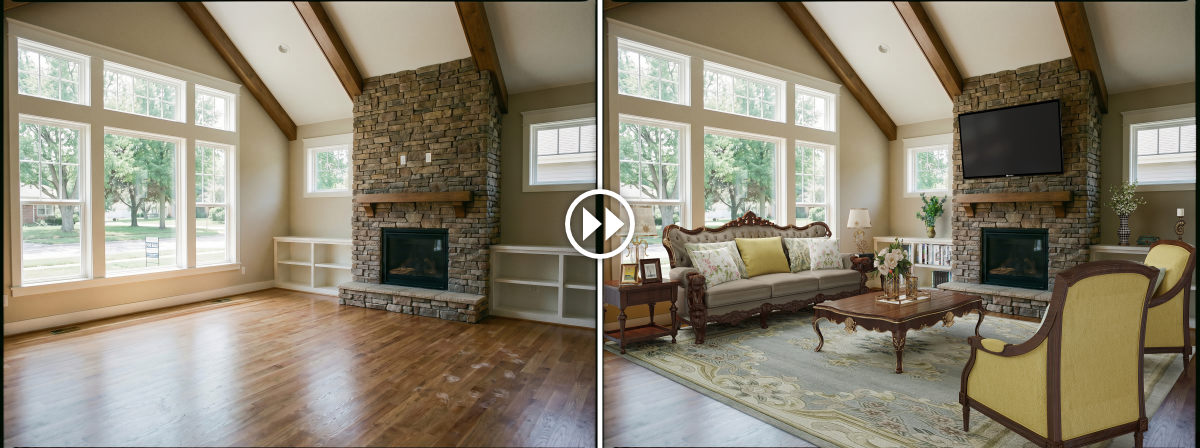
- Virtual staging & renovation: For existing Mediterranean homes that are outdated, photographers can capture the raw structure, while post-processing artists update the stucco color, replace old tile roofs, and virtually stage modern outdoor furniture.
- Day-to-dusk conversions: Twilight photos drive higher click-through rates on real estate portals. When on-site timing doesn't allow for a live evening shoot, high-end post-production can convert bright daylight images into glowing twilight scenes with warm interior lights and deep blue skies.
- Hybrid CGI compositing: Combining high-resolution photographic drone plates with a Mediterranean villa exterior 3D visualization allows developers to showcase unbuilt homes directly within real neighborhood settings.
3.3. Why Fotober is the ultimate visual partner for realtors, photographers, and videographers
When outsourcing sensitive architectural visualizations and property photo edits, working with a generalist platform often leads to missed deadlines and poor artistic quality. You need a specialized visual production partner who understands light, composition, optics, and architectural nuances.
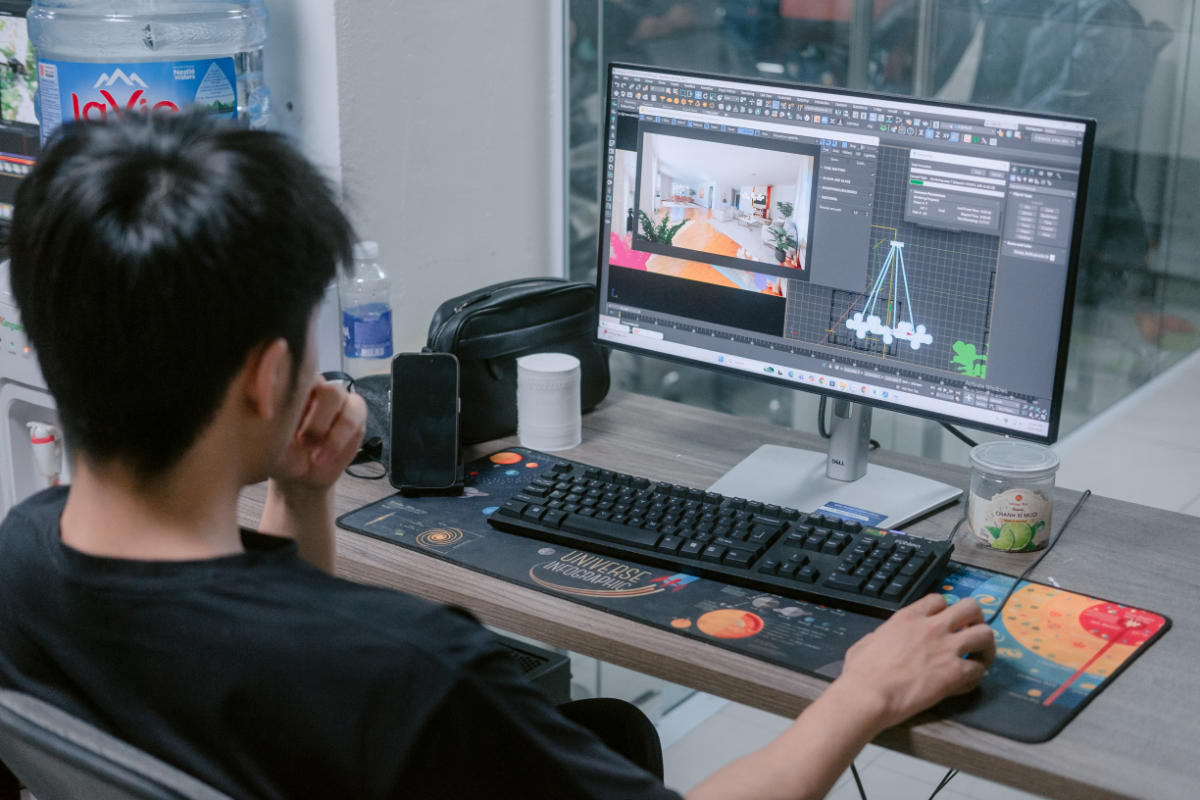
Fotober is built specifically to support high-performing real estate professionals, photographers, and videographers. Here is how Fotober empowers your business:
|
How Fotober supports your growth | ||
|
FOR REALTORS |
FOR PHOTOGRAPHERS |
FOR VIDEOGRAPHERS |
|
Unbuilt project CGI |
Complex HDR/Flash-ambient edit |
Video color grading |
|
Virtual staging |
Twilight conversions |
Sky replacement |
|
Fast listing launch |
Object removal |
Seamless flow edits |
Deep technical & architectural expertise: At Fotober, team members are trained not just in editing software, but in spatial design, architectural lighting, and camera optics. Whether crafting a complex modern Mediterranean architectural rendering, farmhouse home rendering, or balancing high-dynamic-range photos of a sunlit courtyard, Fotober understands how real materials react to natural light.
Comprehensive service suite: Fotober acts as an all-in-one visual engine for real estate marketing:
- 3D architectural renderings: Transforming 2D floor plans and CAD elevation drawings into breathtaking Mediterranean villa exterior 3D visualizations.
- Real estate photo editing: Precision window pulls, lawn enhancement, sky replacements, clutter removal, and flash-ambient blending.
- Virtual staging & renovation: Dressing empty Mediterranean outdoor patios with high-end modern furniture and decor.
- Video editing & color grading: Enhancing real estate walk-through videos, drone clips, and social media reels with cinematic color palettes.
Lightning-fast turnaround times: Real estate operates at a breakneck pace. Fotober offers standard overnight delivery, ensuring photographers can deliver proof galleries to agents the next morning, and realtors can launch listings ahead of weekend open houses.
Cost-effective scalability: Partnering with Fotober allows small agencies and solo photographers to operate with the capacity of a large production agency. You only pay for what you edit, keeping overhead low while taking on larger, more profitable client projects.
4. Step-by-step workflow: Bringing a Mediterranean villa visualization to life with Fotober
To help you understand how simple and seamless working with an outsourced partner can be, here is a breakdown of the production workflow for a luxury Mediterranean home rendering project:
|
Fotober production workflow | |
|
1. Briefing & CAD |
Send blueprints, CAD files, mood boards & material specs |
|
2. Clay render |
Review 3D camera angles and spatial geometry |
|
3. Textures & light |
Apply PBR stucco, tiles, HDRI lighting & landscaping |
|
4. High-res render |
Perform photorealistic rendering at native 4K/8K |
|
5. Post-processing |
Color grading, atmospheric effects & final delivery |
Step 1: Design brief & asset submission
The client submits architectural CAD files, PDF floor plans, elevation views, and a brief detailing material specifications (e.g., lime-wash white stucco, dark terracotta tiles, bleached oak pergolas, bronze window frames).
Step 2: Camera setup & clay blockout
Fotober builds the 3D geometry of the Mediterranean villa and sets up virtual cameras. Clay renders (white models without textures) are delivered to the client to confirm camera angles, height, focal length, and compositional balance.
Step 3: Material assignment & lighting design
Once the angle is approved, PBR materials are applied. The team configures sun angles and HDRI skies to simulate warm afternoon light or dynamic twilight. Mediterranean landscaping, cypress trees, olive groves, bougainvillea, and limestone poolside decking is positioned around the structure.
Step 4: High-resolution rendering & fine post-production
The scene is rendered at high resolution. Fotober’s post-production artists then fine-tune contrast levels, adjust color balance, enhance foliage translucency, add subtle lens flare, and ensure window reflections look realistic.
Step 5: Final delivery & revisions
The photorealistic final renders are delivered in high resolution, ready for MLS listings, print brochures, billboards, or developer investment presentations. Any minor client adjustments are handled promptly.
5. Real-world case studies: The business impact of photorealistic Mediterranean home renderings
To understand the real-world value of photorealistic Mediterranean home exterior rendering, let's look at how high-quality visuals transform business outcomes across key real estate sectors.
|
ROLE |
PRIMARY VALUE DELIVERED |
|
Property developer |
Pre-sells properties months before ground-breaking |
|
Real estate agent |
Drives higher click-through rates & premium listing price |
|
Media photographer |
Doubles weekly shooting capacity by outsourcing post-work |
5.1. Case study 1: Pre-selling a luxury Mediterranean villa complex
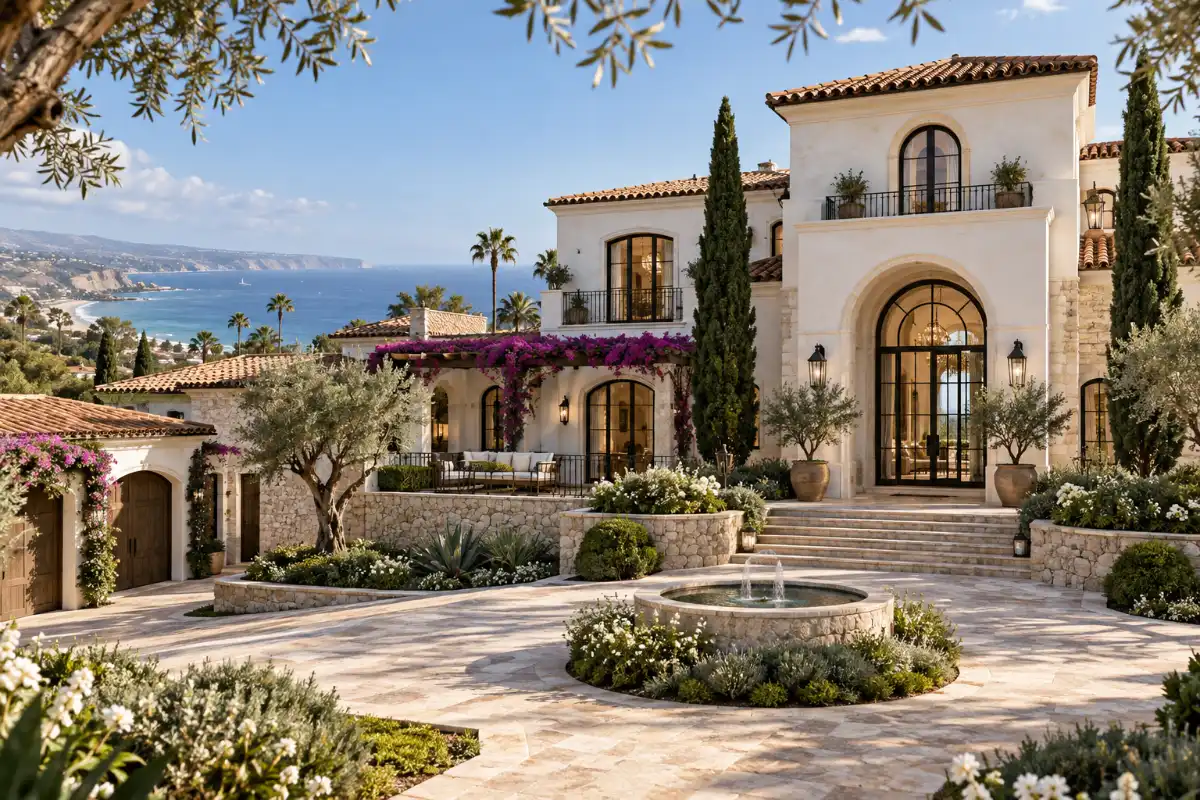
- The client: A luxury home developer in Coastal California.
- The challenge: The developer needed to secure financing and pre-sales for a $12M modern Mediterranean estate before construction began.
- The solution: Fotober produced a series of high-resolution modern Mediterranean architectural renderings, including daytime facade views, rear pool deck shots, and sunset courtyards.
- The result: The developer pre-sold the home within 30 days of releasing the visuals, cutting marketing costs significantly and securing construction financing ahead of schedule.
5.2. Case study 2: Scaling an architectural photography studio
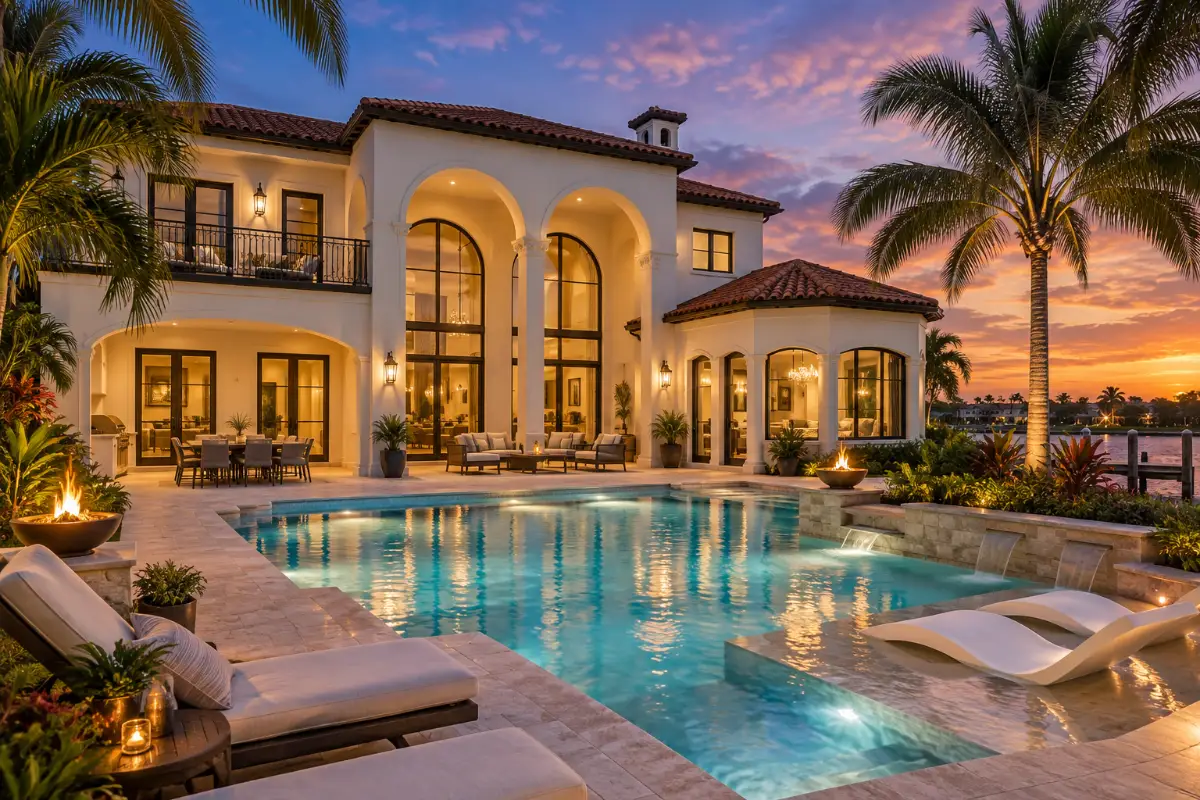
- The client: A boutique real estate photographer based in Florida.
- The challenge: The photographer was spending 4 to 5 hours every evening editing HDR exposures, replacing skies, and managing colors, limiting him to only three shoots per week.
- The solution: The photographer partnered with Fotober for all post-production editing and day-to-twilight conversions.
- The result: Free from editing tasks, the photographer doubled his shooting capacity to six homes per week, increasing monthly revenue while maintaining consistent image quality.
6. Conclusion: Elevate your visual brand with Fotober
Mediterranean architecture is an enduring celebration of warmth, light, and natural beauty. Capturing this essence, whether through a camera lens or digital 3D software, demands technical mastery, artistic vision, and attention to detail. Creating a stunning Mediterranean home rendering, perfecting exterior 3D visualization, or building a photorealistic home exterior rendering does not have to eat up your time or strain your resources.
By partnering with Fotober, real estate agents, photographers, and videographers gain access to a world-class production engine. You deliver breathtaking visuals to your clients, accelerate your project timelines, and scale your business with confidence.
Let your vision shine in its best light. Contact Fotober today to explore how our 3D rendering, photo editing, and post-production services can elevate your next project.
Key term summary for reference:
- Mediterranean home rendering: Digital 3D representation of traditional or modern Mediterranean residential architecture.
- Mediterranean villa exterior 3D visualization: Comprehensive CGI scenes showing surrounding landscapes, pools, courtyards, and light conditions.
- Modern Mediterranean architectural rendering: A balanced modern interpretation featuring simplified rooflines, off-white stucco, and larger glass openings.
- Photorealistic Mediterranean home exterior rendering: Ultra-detailed CGI achieving camera-accurate optics, physical materials (PBR), atmospheric depth, and realistic landscaping.
Follow us on social media to acquire more useful tips and in-depth analysis on real estate marketing, home rendering, and up-to-date details of our services!
- Facebook: fotobermedia.co
- YouTube: Fotober
- TikTok: @fotober
- Instagram: fotober_media.
Related posts

Modern Luxe Interior Design: Elements, Style Guide and How to Stage It
October 10, 2026

Minimalist Interior Design: Characteristics, Style Guide, and Staging
October 8, 2026

Coastal Interior Design: Style Definition & Staging Guide
September 30, 2026

Contemporary Interior Design: Key Elements and How to Stage This Style
September 30, 2026
