




Maine Real Estate in 2026: Market Update & How to Market Listings


Share:
Table of Contents
Maine real estate has quietly become one of the most interesting housing markets in the Northeast. Once seen mainly as a summer-cottage state, it now draws year-round buyers priced out of Boston, remote workers chasing space and coastline, and second-home buyers who decided the vacation should be permanent. For anyone selling here, understanding the Maine real estate market and how to market a listing there has never mattered more.
The state's appeal is also its marketing challenge. A coastal cottage in Camden, a farmhouse on twenty acres near Bangor, and a condo in Portland's Old Port sell to very different buyers, many of them shopping from out of state and deciding online before they ever drive up. That puts enormous weight on how a property is presented, because the photos and video are doing the work an in-person tour can't.
This guide gives agents and sellers both halves of the picture: where the Maine real estate market stands in 2026, what's driving demand, and most practically how to market a Maine listing so it stands out and sells. It closes with the specific post-production services that make Maine listings shine.
1. Key takeaways
- The Maine real estate market in 2026 is steady and appreciating modestly, with median prices roughly in the $390,000 - $439,000 range depending on the data source.
- Demand is driven by out-of-state migration, remote work, and strong second-home and coastal interest, much of it from buyers shopping online first.
- Marketing wins listings here: professional photography, virtual staging, and video are what convert remote, seasonal buyers.
- Fotober supports Maine agents with photo editing, virtual staging, video and drone editing, and day-to-dusk, matched to how Maine homes actually sell.
2. The Maine real estate market in 2026
The Maine real estate market in 2026 is best described as steady and modestly appreciating rather than frenzied, with prices still climbing but at a calmer pace than the pandemic boom. Figures vary by source and methodology, which is normal, but they cluster in a consistent band: Redfin reported a June 2026 median sale price of about $438,627, up 3.2% year over year, while Zillow put the average Maine home value near $421,966, up 1.3%. Other trackers place the statewide median closer to $390,000–$400,000, a spread that reflects different samples and timing more than disagreement about direction.
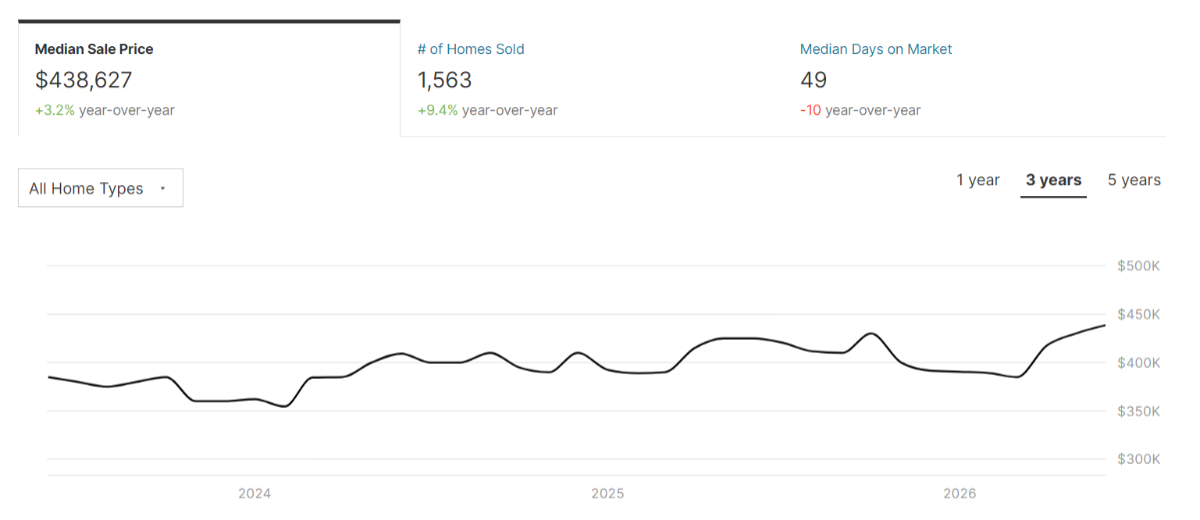
Activity has held up, too. Redfin's data showed homes sold rising year over year, a sign that buyers remain active even as affordability tightens, and inventory sitting in the range of a few months' supply keeps the market competitive without being the extreme seller's market of a few years ago. Days on market have normalized into a healthier rhythm, giving well-marketed listings a clear edge over poorly presented ones. In short, the market rewards good preparation: homes that show well still move, while those that don't now sit.
Prices also vary sharply by region, which matters for how you position a listing. Coastal and resort towns like Kennebunkport command premiums, Portland and its suburbs stay competitive on strong demand, and more rural inland areas remain comparatively affordable. For national context, the National Association of REALTORS® tracks how the broader housing market is shifting toward equity-rich, often all-cash buyers, exactly the profile fueling much of Maine's second-home and relocation demand.
For sellers and their agents, the practical read of these numbers is that time-on-market has become the real battleground. When homes sold quickly at any asking price, presentation mattered less; in a normalized market where buyers can be choosier and mortgage rates keep affordability tight, the listings that move fastest are the ones that look best online. That's not a cosmetic point, days on market translate directly into carrying costs, price reductions, and negotiating leverage, so the money spent making a home show well is among the highest-return dollars in the whole transaction.
3. What's driving demand for Maine homes
Demand for Maine homes is driven by a durable mix of migration, lifestyle, and remote work that outlasted the pandemic that accelerated it. Buyers priced out of Boston, New York, and other Northeast metros find that Maine offers space, coastline, and a slower pace within driving distance of major cities, and many now stay year-round rather than seasonally. This steady inflow of out-of-state buyers is the single biggest force in the state's housing market, and it shapes how listings should be marketed because so many of these buyers shop remotely first.

The second-home and coastal segment is the other engine. Maine's islands, lakefronts, and coastal villages continue to attract affluent buyers looking for vacation properties and investment homes, and this is where Maine luxury real estate marketing becomes its own discipline; high-end coastal estates need a presentation that matches their price tier. Remote and hybrid work has made these purchases more practical, since a buyer can now spend far more of the year in a Maine home they once used only in summer.
Seasonality remains a defining feature that a smart marketer plans around. Maine shows beautifully in summer and fall foliage but can look bare and gray in winter, so a listing photographed in February faces a real disadvantage, one that professional editing and virtual staging can offset. Understanding this rhythm, and the classic New England architecture buyers are drawn to, is part of selling well here; it helps to know the classic home styles of New England when positioning a Cape, a colonial, or a shingle-style coastal home.
Buyer demographics reinforce the marketing imperative. A large share of purchasers are relocating from higher-cost metros or buying a second home from a distance, which means they often make their shortlist and sometimes an offer before setting foot in the state. For that audience, the listing gallery and video aren't a supplement to the tour; frequently they are the tour. A property that photographs poorly simply never makes the shortlist, no matter how special it is in person, while one presented with polished, complete media punches well above its price point in a crowded search results page.
4. How to market a Maine real estate listing so it sells
Marketing a Maine listing well comes down to presenting the property beautifully to a buyer who is very likely viewing it on a screen from another state. Because so much of the demand is remote and seasonal, the visual package does the persuading, and four elements carry most of the weight. Get these right and even an off-season listing can compete.
4.1. Photography and photo editing for Maine light and seasons
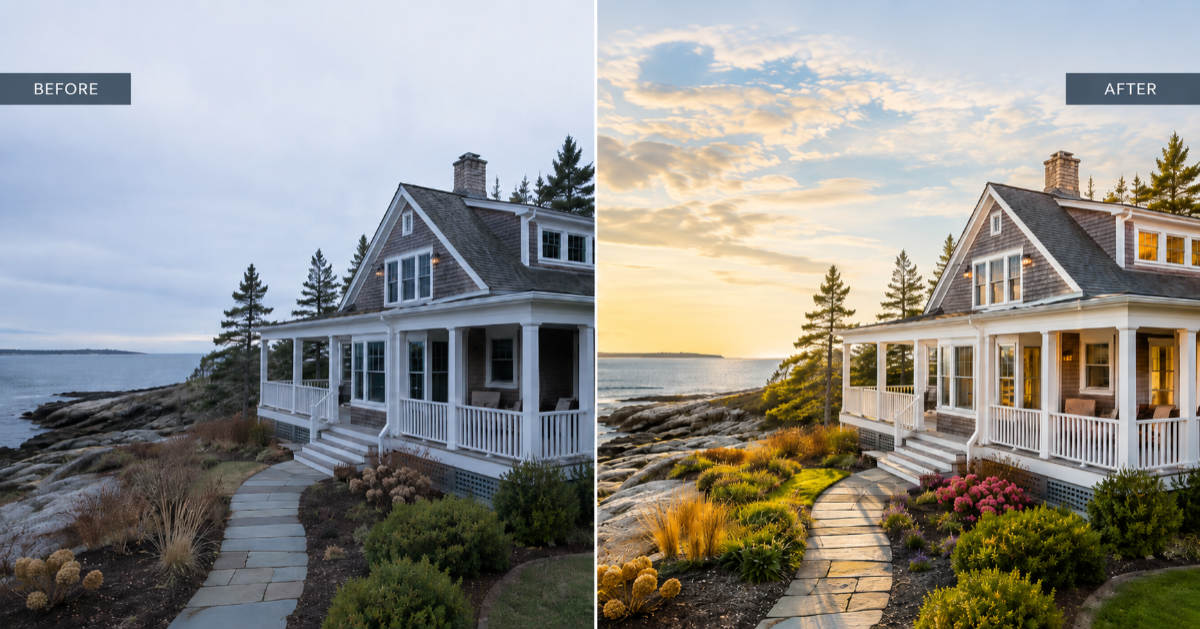
Great listing photos start with a good shoot, but Maine's variable light and seasons make the edit just as important. Professional Maine real estate photo editing corrects flat winter light, balances the warm-cool contrast of coastal scenes, replaces gray skies with believable blue, and brings out the character of wood interiors and water views. When a home was photographed in the off-season, skilled professional photo editing for listings can make a February shoot look bright and inviting, so the listing doesn't wait for spring to show its best.
4.2. Virtual staging for vacant and seasonal homes
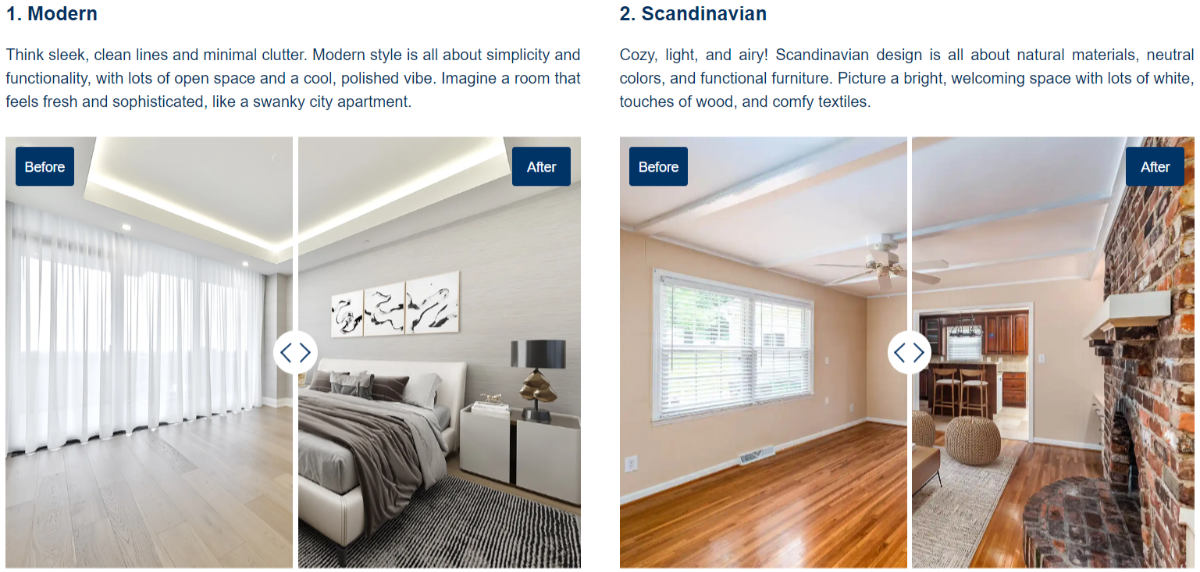
Many Maine listings are vacant, second homes, estates, and relocations often sit empty and empty rooms are photographed as cold, which is a real liability in a state buyers already associate with long winters. Virtual staging for Maine real estate solves this by digitally furnishing rooms so buyers can picture living there, at a fraction of physical staging's cost. It's especially valuable for seasonal cottages and coastal homes shown out of season, where warm, styled interiors counteract the bare-and-gray problem; Fotober's virtual staging fills those rooms with appropriate New England style.
4.3. Video and drone for coastal and rural properties
Video and aerials are close to mandatory for Maine's land, water, and view-driven listings. A drone reveals coastline, acreage, dock access, and the setting of a rural farmhouse in ways no ground photo can, and a cinematic walkthrough lets a remote buyer experience the flow of a home before booking a trip. For large or waterfront parcels especially, aerial storytelling is what conveys the value that makes the price make sense.
4.4. Luxury marketing for Maine's high-end properties
The coastal luxury tier deserves a marketing approach to match. High-end Maine luxury real estate marketing pairs cinematic film, twilight imagery, and a cohesive, magazine-quality visual set to reach the affluent, often out-of-state buyers who drive this segment. Day-to-dusk conversion is a favorite here, turning a daytime exterior into a glowing golden-hour hero shot that captures the romance of the Maine coast.
5. Frequently asked questions about Maine real estate in 2026
Is Maine a good real estate market in 2026?
Yes, it's stable and modestly appreciating, with median prices roughly in the $390,000 - $439,000 range depending on the source and steady buyer activity. It's less frenzied than the pandemic boom, which rewards well-marketed listings and gives buyers a slightly calmer market than a few years ago.
What is driving Maine real estate demand?
Out-of-state migration, remote work, and strong second-home and coastal interest. Buyers priced out of Boston and other Northeast metros are drawn to Maine's space, coastline, and lifestyle, and many now buy year-round rather than only seasonally.
How should I market a vacant Maine home?
Use professional photo editing and virtual staging. Empty rooms are photographed as cold, especially in Maine winters, so virtual staging for Maine real estate warms them up and helps remote buyers visualize living there without the cost of physical staging.
Does virtual staging work for coastal and seasonal listings?
Yes. It's ideal for second homes and cottages shown out of season, letting you present bright, styled interiors year-round instead of waiting for summer. Always disclose that images are virtually staged, per standard real estate practice.
Why does photo editing matter so much for Maine listings?
Maine's light and seasons vary dramatically, and many homes are shot in the off-season under gray skies. Maine real estate photo editing corrects exposure and color, replaces dull skies, and makes a listing look its best regardless of when it was photographed.
6. Conclusion: How Fotober helps you market your Maine listings
Fotober is the post-production partner behind Maine listings that show beautifully, handling exactly the services this market demands. For everyday listings, that means fast, consistent professional photo editing for listings, HDR blending, color correction, sky replacement, and off-season cleanup plus virtual staging to warm up vacant and seasonal homes. For land, water, and view properties, Fotober edits drone footage and cinematic walkthroughs, and its day-to-dusk conversion delivers the glowing coastal twilight shots that anchor Maine luxury real estate marketing. Every service is matched to how Maine homes actually sell, and delivered with per-image pricing and fast turnaround so a listing never waits on its media.
If you list or shoot homes across Maine, Fotober can be your on-call editing and visualization team, no in-house hires, no software, just polished, on-brand media for every property. Reach us at [email protected] or the hotline below, and send your next Maine shoot to see the difference, place an order or start a free trial today.
Connect with Fotober
- Facebook: fotobermedia.co
- YouTube Channel: Fotober
- TikTok Channel: @fotober
- Instagram: fotober_media
- Email support: [email protected]
- Hotline: +84 942 110 297
Related posts

Cincinnati Housing Market 2026: Prices, Trends, and What It Means for Buyers, Sellers, and Investors
October 20, 2026

Modern Luxe Interior Design: Elements, Style Guide and How to Stage It
October 10, 2026

Minimalist Interior Design: Characteristics, Style Guide, and Staging
October 8, 2026

Coastal Interior Design: Style Definition & Staging Guide
September 30, 2026
