




Luxury Real Estate Marketing Trends California Agents Love in 2026


Share:
Table of Contents
- 1. Key takeaways
- 2. Why luxury marketing in California is shifting and what buyers expect now
- 3. The four luxury real estate marketing trends defining California luxury listings
- 4. Putting luxury real estate marketing trends in California to work: Critical points
- 5. Frequently asked questions about luxury real estate marketing trends in California
- 6. Conclusion
Selling a $4 million home in Montecito is nothing like selling a $600,000 condo in Sacramento, and the marketing gap between the two has never been wider. The luxury real estate marketing trends California agents are betting on this year revolve around one idea: affluent buyers now judge a property, and the agent represents it by the quality of its media before they ever request a showing. A listing that leads with dim phone photos loses the game in the first three seconds of a scroll. That standard keeps rising because the buyers themselves have changed. Many are relocating executives touring remotely, international purchasers shopping from another time zone, or equity-rich repeat buyers who have seen hundreds of beautifully presented homes online. They expect film-quality video, staged interiors, aerial context, and floor plans they can study at midnight.
This guide breaks down the luxury real estate marketing trends California professionals need to master in 2026, what's driving them, which four visual formats matter most, what they cost, and how listing teams produce this caliber of media without hiring an in-house studio. The focus is deliberately practical: what to produce for each listing, what a realistic budget looks like, and who should actually do the work. Everything here is written for working agents, brokers, and the photographers who serve them.
1. Key takeaways
- Affluent California buyers increasingly shop remotely, so listing media: video, staging, aerials, floor plans now does the first showing's job.
- Four formats dominate: cinematic listing films with vertical cuts, virtual staging and digital renovation, drone storytelling, and immersive extras like 3D floor plans and twilight photos.
- NAR's 2025 data shows repeat buyers (median age 62, 30% all-cash) driving the market exactly the demographic luxury media is built to persuade.
- Most teams get the best economics by shooting locally and outsourcing post-production, turning edits around in 12-48 hours instead of days.
2. Why luxury marketing in California is shifting and what buyers expect now
The short answer: the luxury real estate marketing trends California is generating in 2026 are a response to a buyer pool that is older, wealthier, and far more digital than the market it replaced. According to the National Association of REALTORS®' 2025 Profile of Home Buyers and Sellers, first-time buyers fell to a record-low 21% of the market, while repeat buyers, median age 62, made up the rest, with 30% of them paying all cash. In California's coastal metros, where entry prices for luxury products routinely clear several million dollars, that equity-rich, discretionary buyer is essentially the entire audience.

Discretionary buyers behave differently. Nobody needs a second home in Palm Springs or a view estate in La Jolla; they buy when a property captures their imagination, which puts enormous weight on presentation. "We're seeing buyers with significant housing equity making larger down payments and all-cash offers, while first-time buyers continue to struggle to enter the market," notes Jessica Lautz, NAR's deputy chief economist. For the luxury segment, the practical translation is that sellers are competing for attention rather than financing.
Distance amplifies the effect. A meaningful share of California luxury demand now arrives from out of state or overseas, and NAR's same survey found 88% of all buyers worked with an agent, an agent those remote buyers often choose based on how well their previous listings were presented online. Your media portfolio has quietly become your listing presentation.
The channel mix has shifted along with the buyer. Glossy print spreads and open-house brochures still have a ceremonial place in the luxury segment, but the discovery moment now happens on a phone in a saved search alert, an Instagram Reel, or a link forwarded by an adult child who found the property first. That means every asset has to work at two sizes: full-screen on a home theater during a family decision meeting, and thumb-sized in a feed. Teams that design their media for both moments consistently out-market teams that only think about the MLS gallery.
There is also a competitive-lag advantage worth naming. The luxury real estate marketing trends California leads on cinematic film, AI-assisted staging, twilight aerials, typically show up in Texas, Florida, and Arizona a year later. Agents who adopt early aren't just marketing one property better; they're building a visible edge over every competitor whose media still looks like 2022.
3. The four luxury real estate marketing trends defining California luxury listings
If you only track four luxury real estate marketing trends California is producing this cycle, make them these: cinematic video, virtual staging, aerial storytelling, and immersive listing extras. Each one answers the same buyer question: “What would it feel like to live here?” through a different lens. Together they form the media stack that top-producing teams now treat as standard for any listing above roughly $2 million.
3.1. Cinematic listing films and vertical social cuts
Luxury video has split into two deliverables from one shoot. The first is the cinematic listing film: a 2-3 minute piece with stabilized movement, graded color, licensed music, and pacing that treats the home like a character rather than a floor plan checklist. The second is the vertical cut: 30- to 60-second Reels and TikTok edits sliced from the same footage, which is where younger heirs, relocating tech buyers, and referral audiences actually discover properties. Licensed music, captions, and platform-native aspect ratios are part of the deliverable now, not an afterthought.
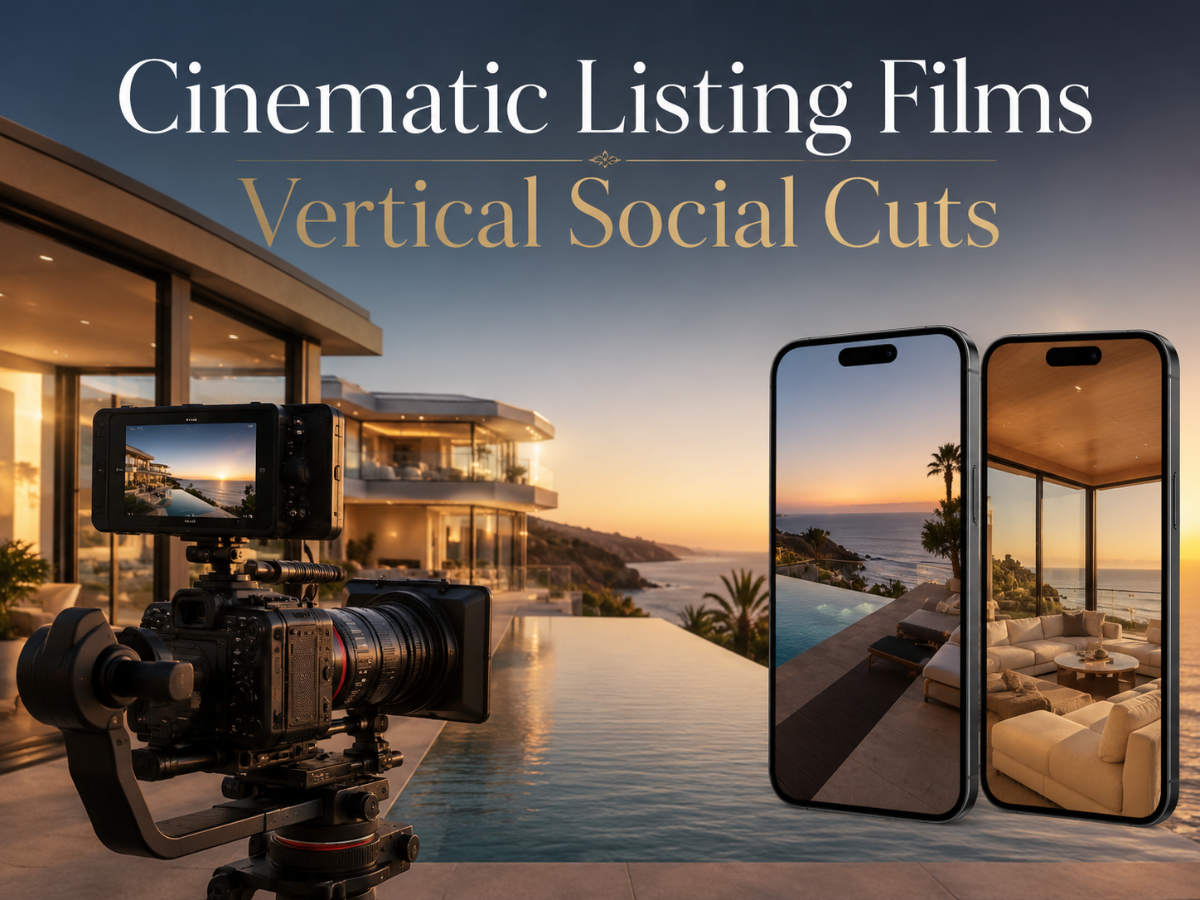
The differentiator is rarely the camera; it's the edit. Professional cinematic real estate video editing, consisting of color grading, sound design, rhythm, and seamless transitions between drone and interior footage, is what separates a film that feels like Architectural Digest from one that feels like a slideshow. Teams that nail this consistently either employ a full-time editor or send raw footage to a specialized post-production partner and get finished cuts back within a couple of days.
3.2. Luxury virtual staging and digital renovation
Vacant rooms are conversion killers at every price point, but in the luxury tier an empty 6,000 sq ft house can read as cold or even distressed. Luxury virtual staging solves this at a fraction of physical staging's cost: designer-grade furniture, correct scale and shadows, and styles matched to the architecture, organic modern for Malibu, Spanish revival warmth for Santa Barbara. Where physical staging of a large home can run $15,000-$60,000 for a few months, virtual staging typically costs under $100 per image.
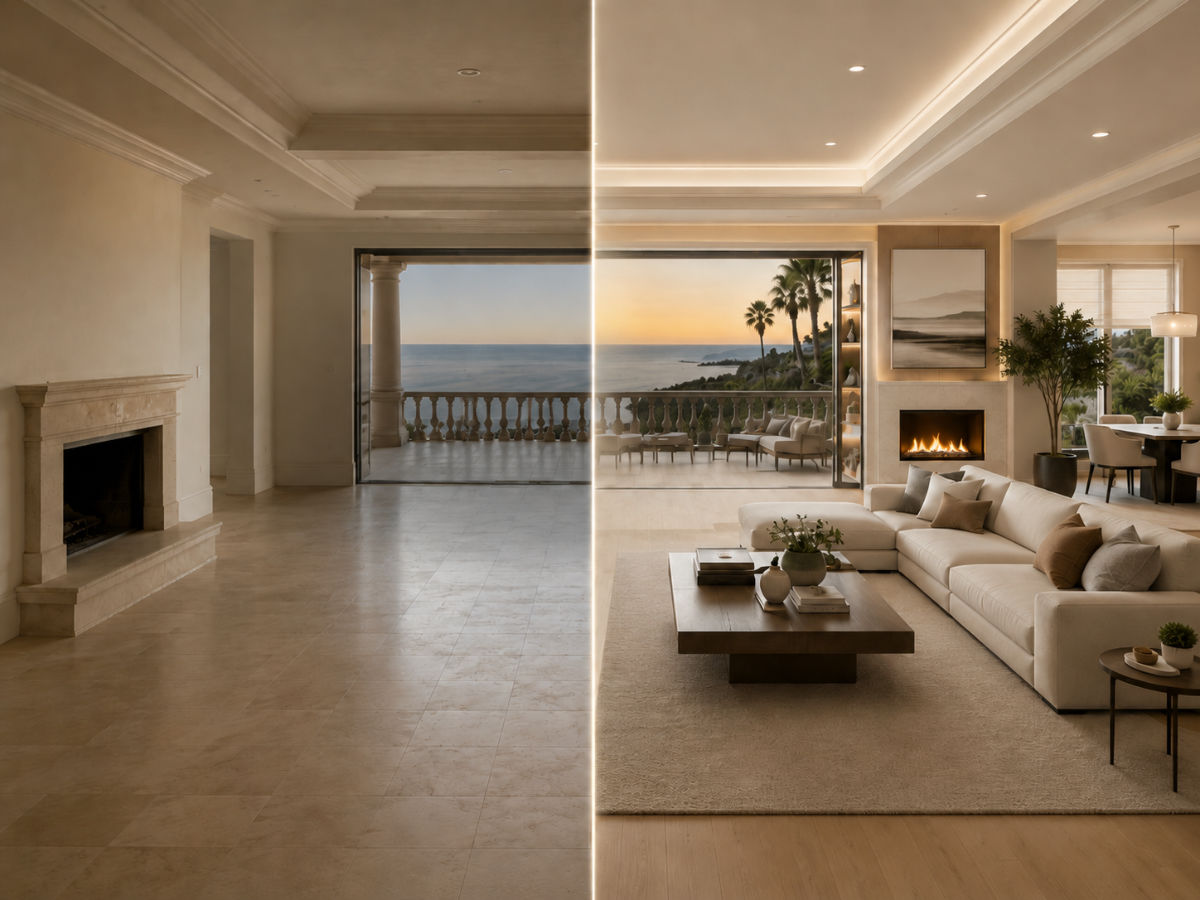
The trend has matured beyond furniture into digital renovation: virtually refreshing dated kitchens, re-landscaping yards, or showing a bonus room as a home theater versus a gym. Done ethically, always disclosed, always plausible, it lets buyers see potential instead of problems. There's a deeper playbook in this guide to how California agents use virtual staging to win listings, including how top agents use staged renders in listing presentations to win the property itself, not just to sell it.
3.3. Drone and aerial storytelling for estates
Aerials stopped being optional the moment estates started competing on land, privacy, and views, the three things a ground-level photo can't prove. Drone photography for luxury real estate has evolved from a single overhead shot into narrative sequences: an approach shot tracing the private drive, an orbit revealing the ocean horizon, a twilight aerial showing the property glowing against the hillside. For vineyard properties, equestrian facilities, and coastal parcels, the aerial is the story.

Two practical notes for California shoots. First, commercial drone work falls under the FAA's Part 107 rules, and much of coastal and metro California sits in controlled airspace requiring authorization; so remember to hire licensed operators, full stop. Second, raw drone footage rarely impresses on its own; haze removal, color matching to interior shots, and virtual twilight conversion happen in post, which is where an average aerial becomes a hero image.
3.4. Immersive extras: 3D floor plans, twilight photos, and 360 tours
Remote buyers don't just want to see a home; they want to understand it, and that's what this cluster of luxury real estate marketing trends California teams have adopted delivers. Interactive 360 tours let a buyer in Singapore walk the hallway at 2 a.m. their time. Twilight photography (increasingly done as day-to-dusk conversion in post, at a fraction of a twilight shoot's cost) gives the listing its emotional hero shot. And floor plans have quietly become one of the most-requested listing assets among serious buyers who need to know whether the primary suite really fits their furniture.
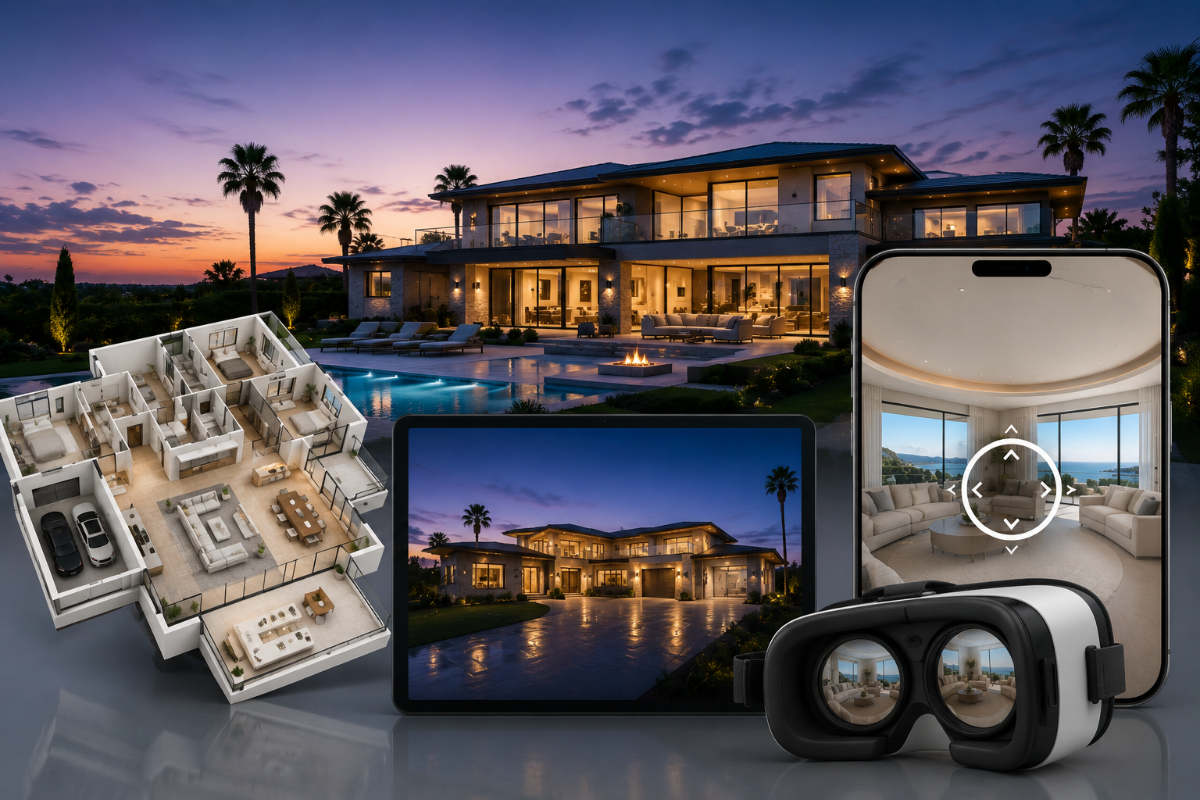
For large or architecturally complex properties, upgraded plans are worth the small premium. A photorealistic 3D floor plan rendering built for California listings shows spatial flow, finishes, and furniture scale in a single image. That's the difference between a buyer squinting at line drawings and a buyer mentally moving their furniture in, and for remote purchasers, it often decides whether the property makes the fly-out shortlist at all.
4. Putting luxury real estate marketing trends in California to work: Critical points
Executing the luxury real estate marketing trends California buyers now expect comes down to three decisions: what to spend, who does the post-production, and which mistakes to avoid. The good news is that the full stack costs far less than most agents assume, typically a fraction of one percent of a luxury commission, when the workflow is set up correctly. Here's how experienced teams structure it.
4.1. What luxury listing media actually costs
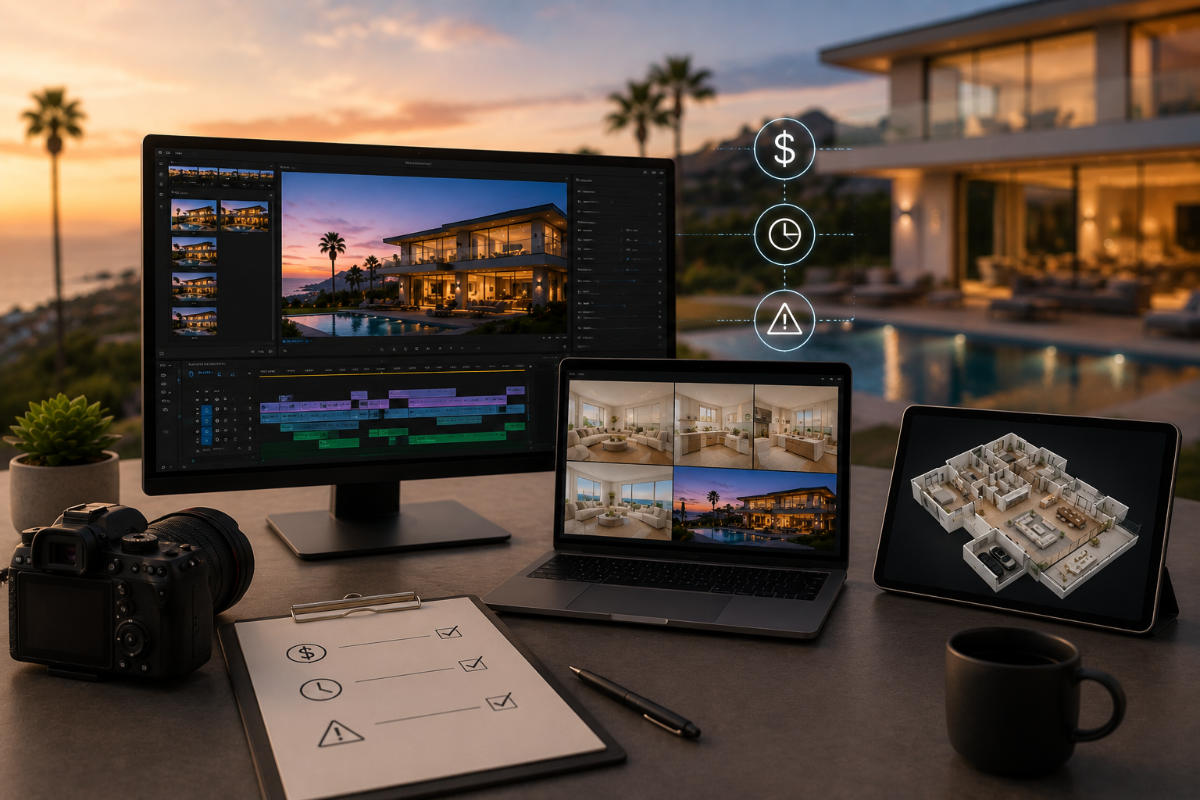
Plan on a realistic all-in range of $1,500–$5,000 for a complete luxury media package in most California markets: professional photography with twilight coverage, a cinematic film with vertical cuts, licensed drone work, virtual staging for key rooms, and a rendered floor plan. On a $3 million listing at a typical luxury commission, that's a rounding error, and it's the rounding error sellers notice most when choosing an agent. Skimping here to save a few hundred dollars is the most expensive discount in real estate.
The often-overlooked line item is editing. Every deliverable above lives or dies in post-production; the same raw files can come back looking like a magazine spread or a missed opportunity depending on who edits them. Per-asset pricing from specialized providers (a few dollars per photo edit, fixed rates per staged image or video minute) makes costs predictable enough to build into a standard listing package you quote to every seller.
4.2. In-house versus outsourced post-production
The most consistent lesson from high-volume teams: shoot locally, edit globally. Keeping a photographer behind the camera while outsourcing HDR blending, video editing, staging renders, and floor plans to a dedicated post-production partner turns edits around in 12 - 48 hours, keeps quality consistent across hundreds of listings, and frees the local team for shoots and showings. An in-house editor, by contrast, costs $60,000+ a year in California and becomes a bottleneck the week two listings launch at once.
This is precisely the model Fotober is built for. Photographers and teams send raw files at the end of a shoot day and receive polished photos, broadcast-quality video edits, staged images, and rendered plans back, often before the next morning's shoot. The economics scale in both directions: solo agents pay per image with no retainer, while agencies standardize quality across every listing without adding headcount.
4.3. Mistakes that cheapen a luxury listing
The fastest way to undermine a seven-figure listing is inconsistency: spectacular drone footage cut against yellow-tinted interior photos, or a staged living room next to an obviously vacant bedroom. Buyers may not consciously diagnose the problem, but they feel it, and the property reads as less valuable. Among the luxury real estate marketing trends California has cycled through, coherence across every asset has proven more durable than any single format.
Three other traps come up constantly. Over-editing, plastic skies, glowing windows, lawn the color of a golf green, triggers skepticism in exactly the sophisticated buyers luxury listings court. Undisclosed virtual staging can create legal exposure and showing-day disappointment; label renders clearly. And skipping the vertical social cut wastes the single cheapest distribution channel luxury marketing has, since the film is already shot and the extra edit costs almost nothing.
5. Frequently asked questions about luxury real estate marketing trends in California
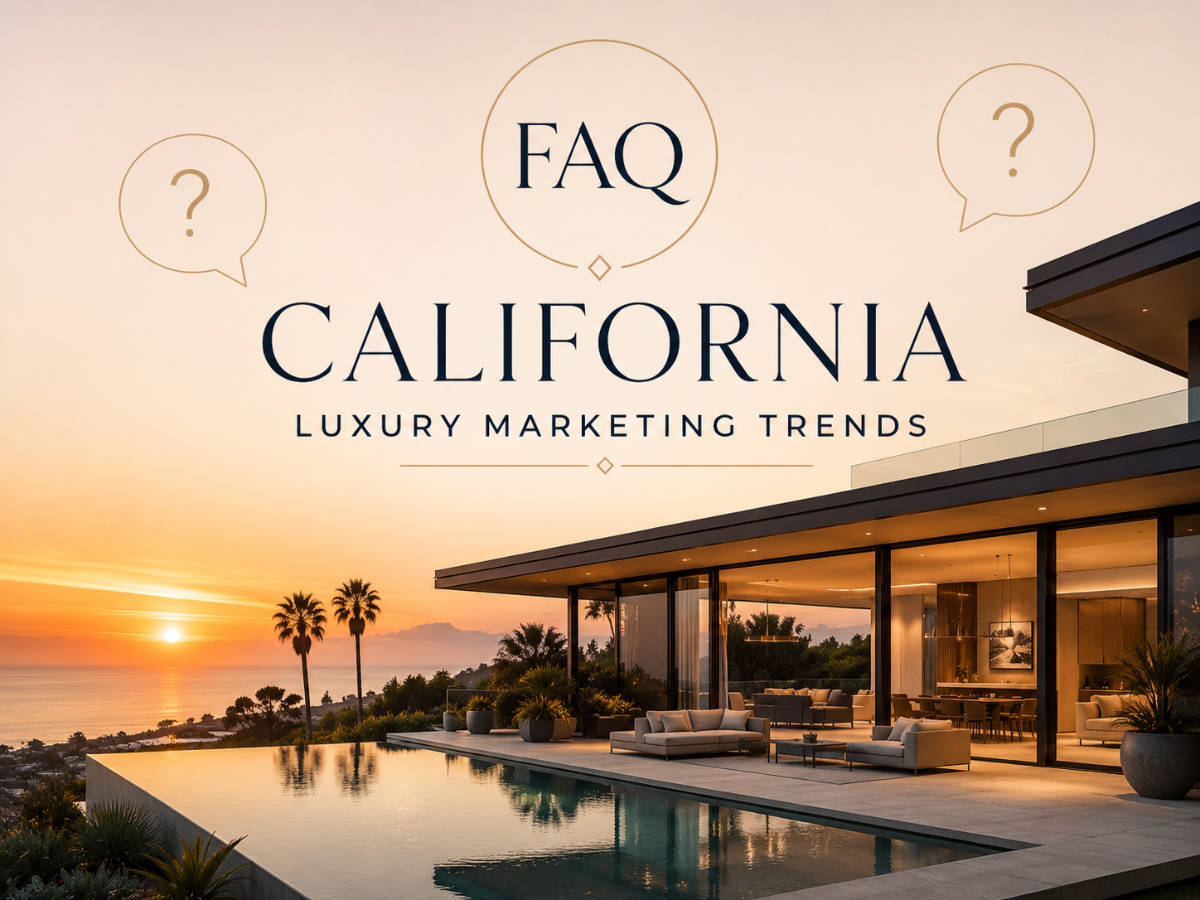
What are the most important luxury real estate marketing trends California agents should adopt first?
Start with the two highest-leverage formats: a cinematic listing film with vertical social cuts, and virtual staging for any vacant or dated rooms. These deliver the largest perceived-value jump per dollar. Add drone sequences and a 3D floor plan for properties where land, views, or complex layouts drive the price.
How much should I budget for luxury listing media?
A complete package, photos, twilight coverage, cinematic film, drone, virtual staging, floor plan typically runs $1,500 - $5,000 in California markets. Per-asset outsourced editing keeps the post-production share of that predictable. Relative to a luxury commission, the spend is usually well under one percent.
Is virtual staging acceptable on high-end listings?
Yes, when it's designer-quality and disclosed. Affluent buyers respond to staging that matches the home's architecture and price tier; they react badly to generic furniture or hidden edits. Always label staged images and keep the unstaged originals available on request.
Do I need a licensed drone operator in California?
Yes, commercial real estate drone work requires an FAA Part 107-certified pilot, and much of coastal and urban California is controlled airspace needing prior authorization. Using an unlicensed operator exposes both agent and brokerage to liability. The post-production polish (haze removal, twilight conversion, color matching) matters as much as the flight itself.
How fast can outsourced post-production turn around a luxury shoot?
Standard turnaround at specialized providers like Fotober is 12–48 hours depending on the asset: photo edits usually overnight, video and staging renders one to two days. That cadence lets a team shoot Monday and launch a complete luxury listing by Wednesday. Rush options exist for time-sensitive launches.
6. Conclusion
The luxury real estate marketing trends California rewards in 2026 all trace back to a single obligation: give a remote, discerning, all-cash buyer every reason to fall for a property before they board a plane. Cinematic film, luxury virtual staging, aerial storytelling, and immersive extras aren't garnish anymore. For the buyers most likely to write the check, they are the showing.
The agents winning with this playbook aren't necessarily the ones with the biggest budgets; they're the ones with the most reliable pipeline from shoot to publish. That's the quiet advantage behind many of the luxury real estate marketing ideas that California teams execute so consistently. The common denominator is a post-production partner who returns polished, on-brand media in 12–48 hours, listing after listing, at per-asset prices that make premium quality routine rather than exceptional.
Fotober does exactly that for photographers, agents, and agencies across the US: photo editing, video, virtual staging, floor plans, rendering, and day-to-dusk conversion. Dedicated editors learn your style and keep it consistent across every property you take on. Send over a recent shoot and see the difference on your next luxury listing, place an order, or start a free trial today.
Connect with Fotober
- Facebook: fotobermedia.co
- YouTube Channel: Fotober
- TikTok Channel: @fotober
- Instagram: fotober_media
- Email support: [email protected]
- Hotline: +84 942 110 297
Related posts

Modern Luxe Interior Design: Elements, Style Guide and How to Stage It
October 10, 2026

Minimalist Interior Design: Characteristics, Style Guide, and Staging
October 8, 2026

Coastal Interior Design: Style Definition & Staging Guide
September 30, 2026

Contemporary Interior Design: Key Elements and How to Stage This Style
September 30, 2026
