




Home Floor Plans for Narrow Lots: Top 10 Smart Layout Ideas

Share:
Table of Contents
- 1. What makes home floor plans for narrow lots challenging
- 2. Core design principle of home floor plans for narrow lots
- 3. Top 10 smart ideas for home floor plans for narrow lots
- • 3.1. Build up instead of out
- • 3.2. Use an open core layout
- • 3.3. Add a central light well or skylight
- • 3.4. Keep the layout linear and simple
- • 3.5. Combine functions in one space
- • 3.6. Use sliding doors or glass partitions
- • 3.7. Optimize staircase design
- • 3.8. Integrate built-in storage
- • 3.9. Maximize front and rear openings
- • 3.10. Design for future flexibility
- 4. Why visualization matters for narrow lot floor plans
- 5. Conclusion
In today’s dense urban environments, home floor plans for narrow lots have shifted from a niche option to a practical solution. As land becomes more limited, the focus is no longer on size but on efficiency, flexibility, and long-term usability. This has led to the rise of narrow lot house design and small width house plans that maximize function without sacrificing comfort.
At the same time, modern urban home layouts and innovative skinny house plans continue to evolve, optimizing both horizontal and vertical space. Even traditional townhouse floor plans are adapting these principles, making them essential for anyone looking to design or invest effectively.
1. What makes home floor plans for narrow lots challenging
Designing for a narrow lot is not simply about reducing width, it fundamentally changes how space functions. A narrow footprint affects light distribution, airflow, and the overall spatial experience from front to back. Instead of thinking in terms of room count, designers must focus on proportion, sequence, and how spaces connect.
1.1. Limited width changes everything
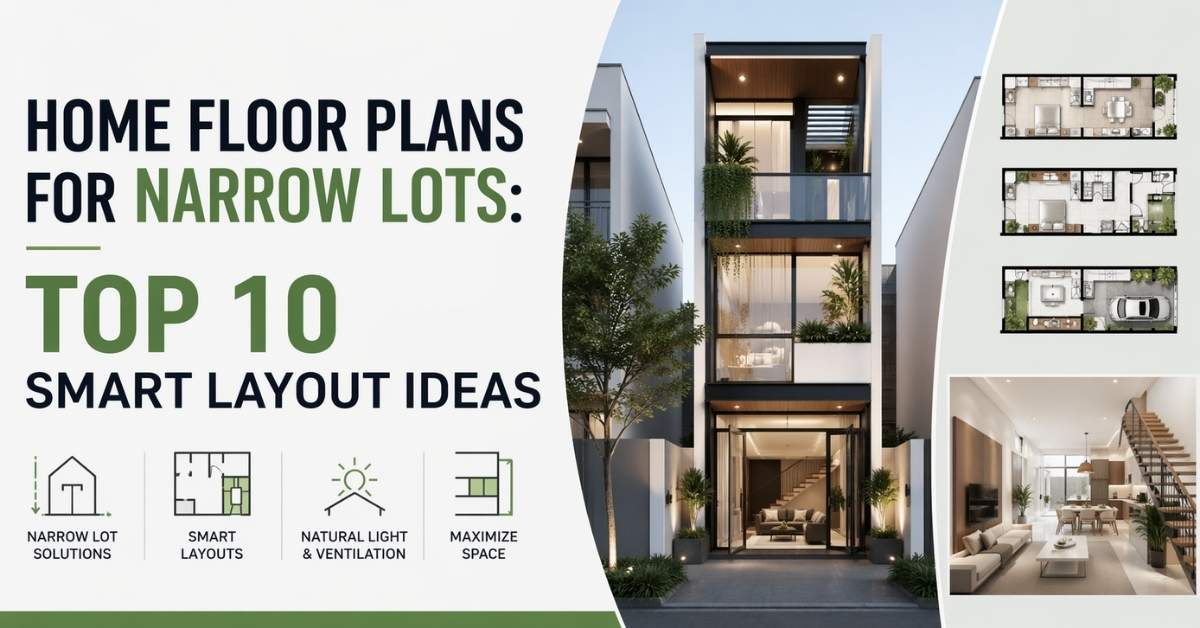
The biggest constraint is the inability to arrange rooms horizontally as in traditional homes. Layouts must extend deeper into the site or develop vertically, which impacts circulation and usability. This requires a shift in mindset, where movement and spatial transitions take priority over simple room placement.
Limited width changes everything
Because of this, home floor plans for narrow lots demand greater precision. Small mistakes become more noticeable due to limited flexibility. Successful narrow lot house design focuses on intentional placement rather than size. Many small width house plans work well because every function is carefully positioned. In contrast, inefficient urban home layouts like 1200 sq feet floor plan can feel tight despite having similar square footage. The best skinny house plans treat width as a design discipline, not just a limitation.
1.2. Natural light is harder to distribute
Lighting becomes a major challenge when side windows are restricted. In many cases, daylight can only enter from the front and rear, leaving the center of the home darker. As depth increases, it becomes harder for light to reach interior zones.
To address this, designers often use skylights, voids, or internal courtyards. These are not optional features but essential components of effective layouts. Strong narrow lot house design integrates light into the structure from the beginning. In many cases, designers rely on open sightlines and minimal partitions to improve brightness. Advanced urban home layouts also incorporate glass and vertical openings to enhance light flow. In high-quality skinny house plans, light is used to create depth and comfort within limited space.
1.3. Airflow and ventilation are restricted
Limited side exposure also affects ventilation. Unlike wider homes, cross airflow is harder to achieve, which can lead to stagnant indoor conditions. Without proper planning, this impacts comfort and air quality over time.
In home floor plans for narrow lots, ventilation is often achieved through vertical airflow rather than horizontal flow. Stairwells, voids, and upper-level openings play a key role in circulating air. Effective narrow lot house design considers airflow early in the process instead of treating it as an afterthought. Many small width house plans perform better when ventilation is integrated into the overall structure. Well-designed urban home layouts also balance airflow with privacy. The most successful skinny house plans feel comfortable because ventilation is built into the architecture itself.
1.4. Circulation can feel long and narrow
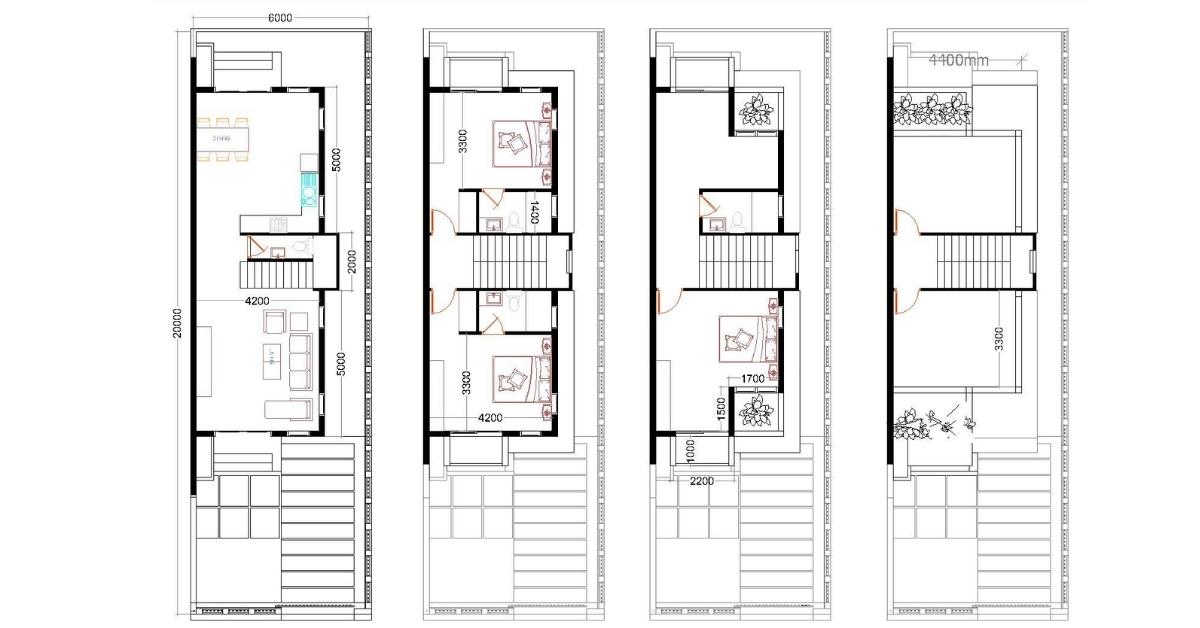
Circulation is often the biggest factor affecting user experience. Poor layouts can feel like long corridors with disconnected rooms, making the home feel smaller than it is. Even with adequate space, inefficient movement patterns can reduce comfort.
Circulation becomes part of the experience rather than just a function
This issue usually comes from overusing hallways or dividing spaces too rigidly. Every transition must be intentional. Good design minimizes wasted movement space and integrates circulation into living areas. Many small width house plans use open zones to guide movement naturally. Better urban home layouts also introduce visual variation to avoid monotony. In strong skinny house plans, circulation becomes part of the experience rather than just a function.
2. Core design principle of home floor plans for narrow lots
To create a livable narrow home, design must focus on how space is experienced rather than simply how it is divided.
2.1. Design for flow, not just rooms
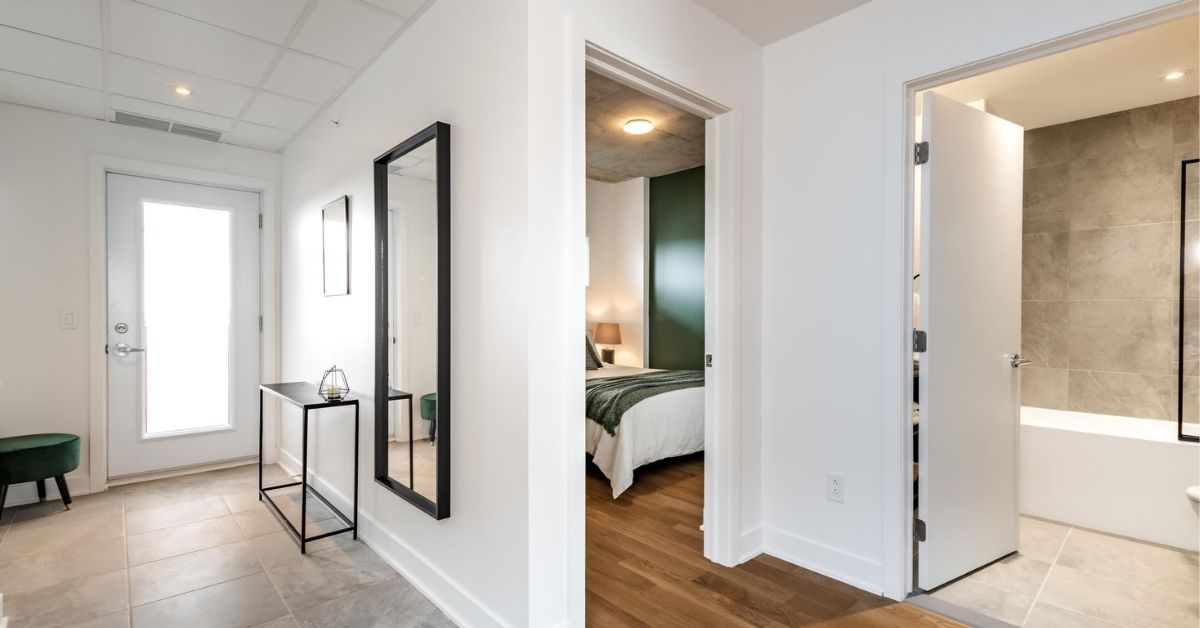
A successful layout prioritizes movement over rigid room separation. Too many enclosed spaces can make a narrow home feel fragmented and restrictive. Instead, designers aim for a continuous spatial experience.
A successful layout prioritizes movement
Living, dining, and kitchen areas are often connected to improve flow and usability. This approach is central to effective narrow lot house design, where circulation defines the layout. Many small width house plans use subtle transitions instead of full partitions. In modern urban home layouts, this improves both comfort and flexibility. High-quality skinny house plans reduce barriers and create adaptable spaces. Even evolving townhouse floor plans now emphasize flow over strict zoning.
2.2. Maximize light penetration
Light is a critical factor in making narrow homes feel livable. Without proper distribution, interior spaces can become dark and disconnected. This is why home floor plans for narrow lots must treat light as a core design element.
Designers use skylights, voids, and reflective materials to bring light deeper into the home. These strategies improve both comfort and perception of space. Many small width house plans succeed because they integrate lighting early in the design process. In advanced urban home layouts, light also helps define zones without adding walls. Well-planned skinny house plans ensure that even transitional spaces receive adequate daylight. Efficient townhouse floor plans rely on controlled lighting to enhance usability.
2.3. Create visual openness
Visual perception plays a major role in how spacious a home feels. Even with fixed dimensions, reducing partitions can significantly improve openness. This is why visual continuity is essential in narrow layouts.
Designers often use glass, aligned openings, or partial dividers to maintain connection between spaces. In narrow lot house design, transparency enhances both function and aesthetics. Many small width house plans rely on long sightlines to create a sense of depth. In modern urban home layouts, this improves flexibility and usability. Strong skinny house plans carefully align elements to reinforce openness. Even traditional townhouse floor plans are evolving to incorporate these ideas.
2.4. Use vertical space effectively
When width is limited, vertical space becomes a key advantage. Expanding upward allows designers to increase usable area without enlarging the footprint. This approach is essential in narrow home design.

Smart skinny house plans
Stacking functions across multiple levels helps organize the home more efficiently. Public and private areas can be clearly separated, improving comfort and usability. Many small width house plans use mezzanines or split levels to maximize height. In dense urban home layouts, vertical design is what makes compact homes feel complete. Smart skinny house plans utilize height for storage, circulation, and spatial variation. Even efficient townhouse floor plans demonstrate the value of vertical planning.
3. Top 10 smart ideas for home floor plans for narrow lots
To make a narrow home truly effective, design must go beyond basic layout planning and focus on real-life usability. These strategies are not just trends but proven solutions that help narrow home floor plans become more functional, open, and adaptable. When applied correctly, they improve both spatial experience and long-term value.
3.1. Build up instead of out
When width is limited, vertical expansion is one of the most effective solutions. Trying to fit everything on a single level often leads to inefficient layouts and compromises in functionality. Building upward allows clearer zoning without overcrowding any one area. Stacking functions vertically helps separate public and private zones more effectively. Living areas can remain on lower levels, while bedrooms are placed above to improve privacy and reduce noise. Many small width house plans benefit from this structured organization.
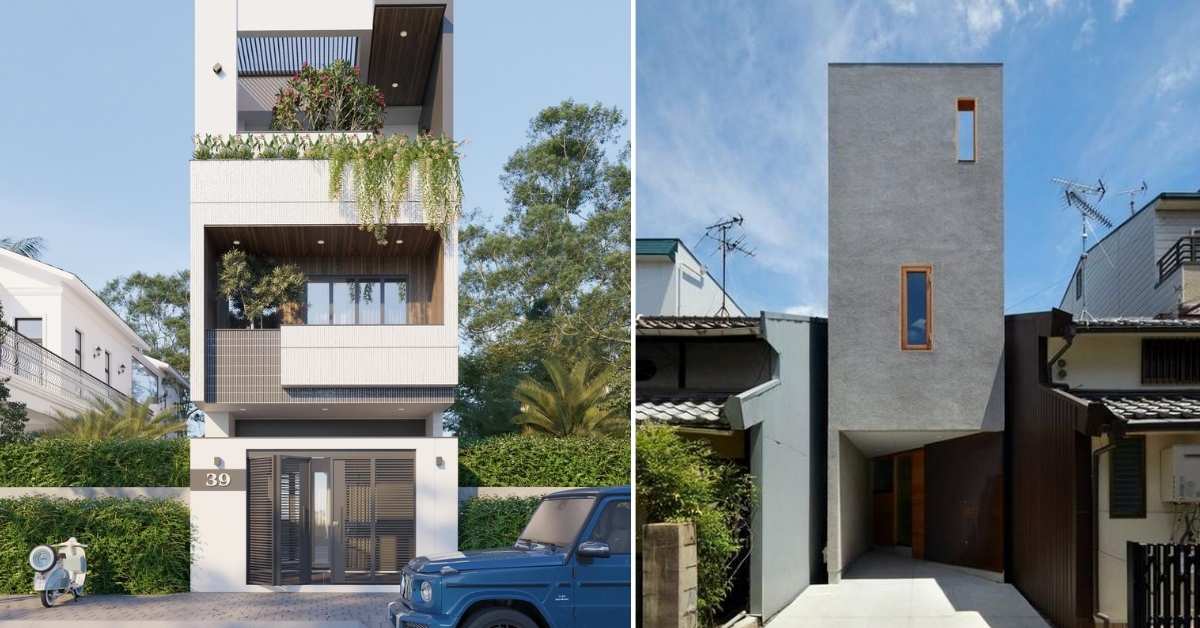
Vertical expansion
Well-planned urban home layouts use height to enhance both usability and value. Strong skinny house plans often feel more spacious simply because vertical space is used intelligently. Even compact townhouse floor plans show how vertical design improves comfort and efficiency.
3.2. Use an open core layout
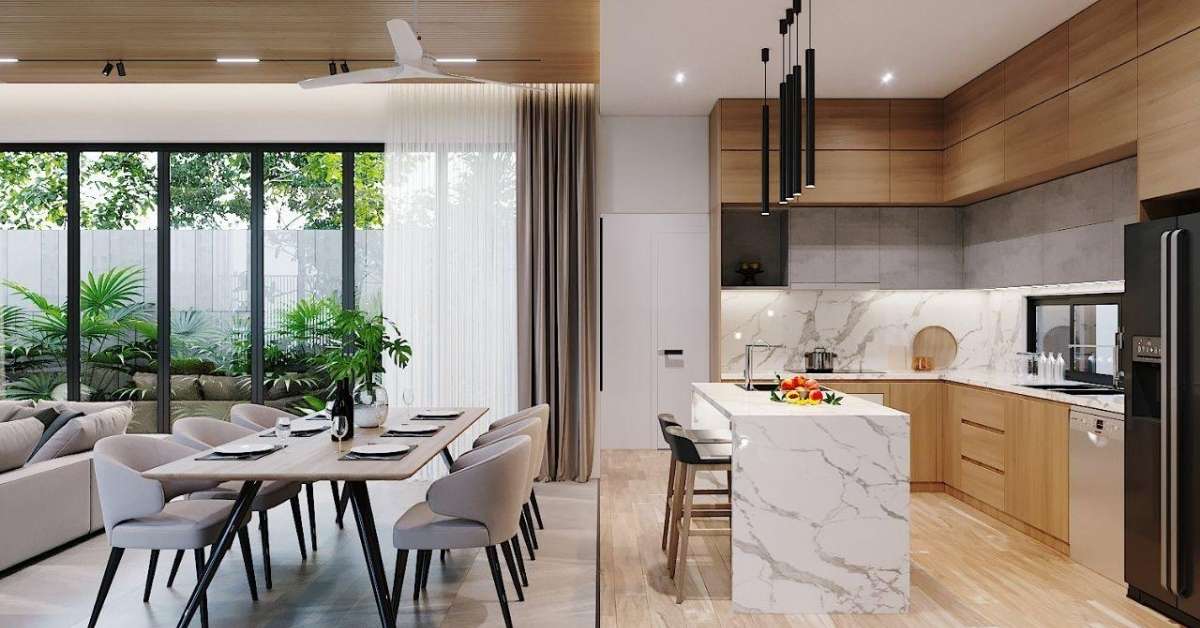
An open core layout helps maintain continuity by reducing unnecessary walls. Instead of dividing rooms, the central area connects key functions, making the home feel more cohesive. This also improves how people move through space. In home floor plans, the core often combines kitchen, dining, and living areas into one flexible zone. This allows light to travel more freely and enhances interaction between spaces. It also reduces visual fragmentation.
Many small width house plans feel larger because of this approach. In modern urban home layouts, open cores improve both airflow and usability. High-quality skinny house plans use subtle zoning instead of rigid partitions.
3.3. Add a central light well or skylight
Natural light is difficult to distribute in narrow homes, especially when side windows are limited. A light well or skylight introduces daylight from above, improving brightness and comfort. This is often a necessary solution rather than an optional feature.
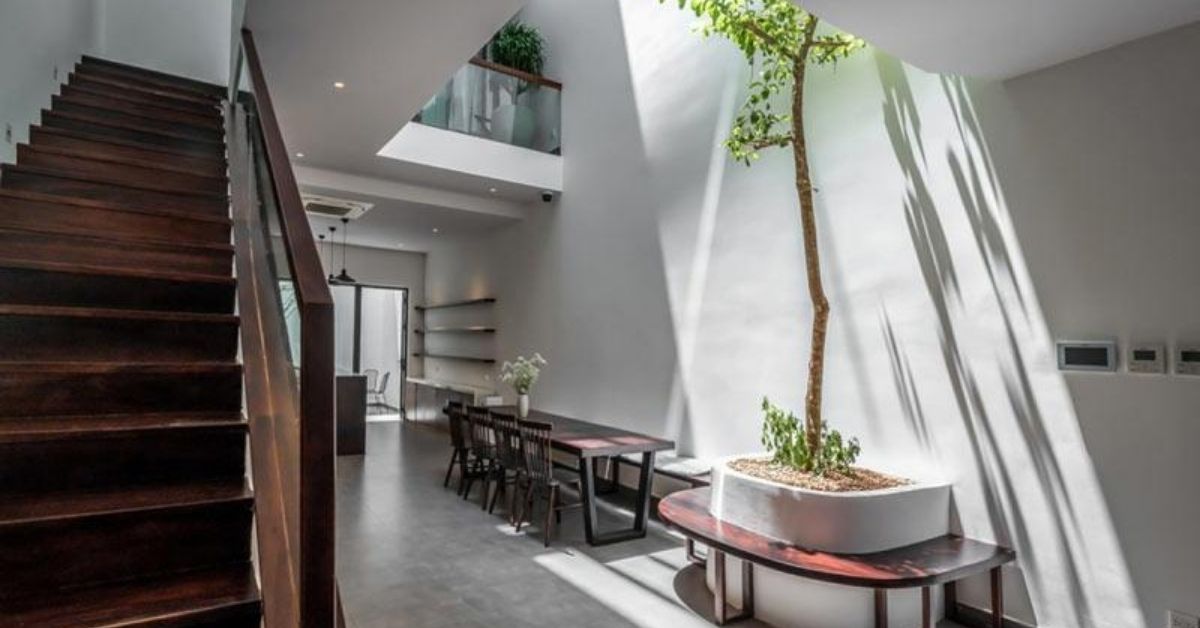
A light well or skylight
These elements are typically placed near stairs or transition zones so light can spread across multiple levels. They help balance darker interior areas and reduce reliance on artificial lighting. This is especially useful in deeper layouts. Effective narrow lot house design integrates light vertically instead of relying only on front and rear openings. Many small width house plans use this strategy to improve energy efficiency. Strong skinny house plans use light to enhance spatial depth and livability.
3.4. Keep the layout linear and simple
Simplicity is essential in narrow homes, where complex layouts can reduce usability. A linear arrangement allows spaces to connect logically and improves overall flow. This makes the home easier to navigate and understand.
In home floor plans for narrow lots, a clear front-to-back sequence ensures that each space has a defined role. It also reduces confusion and improves daily movement. This is particularly important when circulation overlaps with living areas. Good narrow lot house design eliminates unnecessary turns and redundant partitions. Many small width house plans rely on clean pathways to improve efficiency. Well-designed skinny house plans feel more comfortable because of their clarity.
3.5. Combine functions in one space
Flexibility is critical in narrow homes, and combining functions is one of the most effective ways to achieve it. Multi-functional spaces reduce the need for additional rooms while maintaining usability. This approach increases efficiency without expanding the footprint. For example, a dining area may double as a workspace, or a guest room may function as an office. These overlaps allow the layout to adapt to changing needs. They also improve long-term usability.
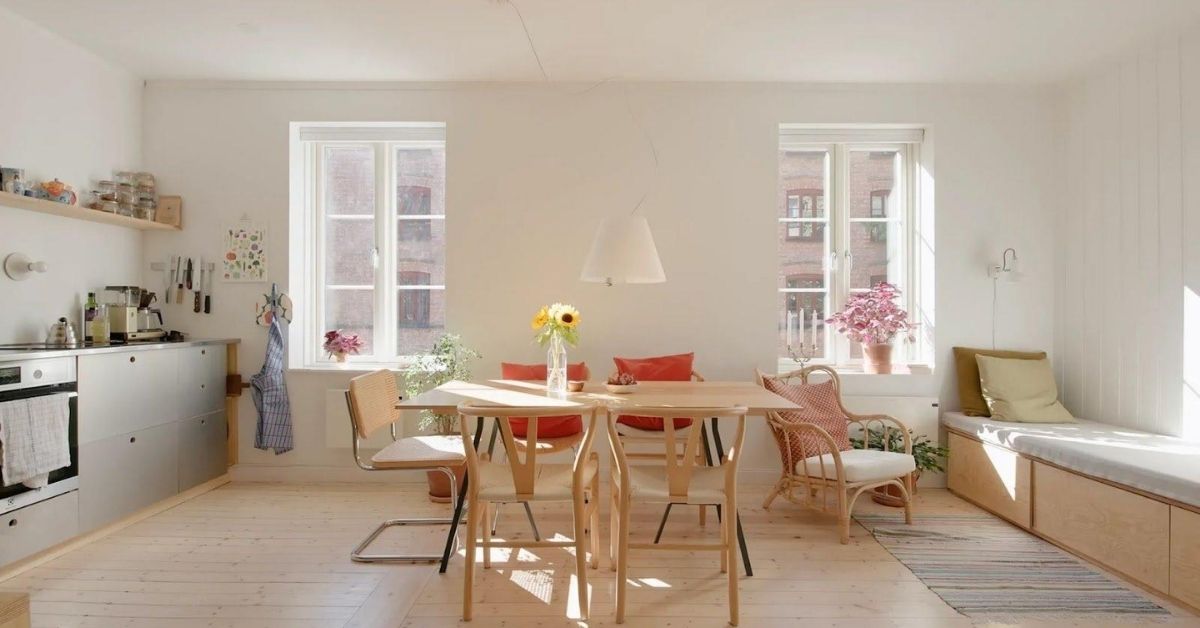
Flexibility is critical in narrow homes
Many small width house plans integrate flexible furniture or modular layouts from the beginning. In dense urban home layouts, this strategy enhances practicality. Smart skinny house plans allow spaces to evolve throughout the day.
3.6. Use sliding doors or glass partitions
Flexible partitions help balance openness and privacy. Sliding doors or glass panels allow spaces to expand or close off depending on usage. This adaptability is especially useful in narrow layouts. In home floor plans for narrow lots, these elements maintain visual continuity while still providing separation when needed. Glass also allows light to pass through, improving brightness across the home. This enhances both function and perception. Many small width house plans use these solutions to avoid permanent walls. In modern urban home layouts, they create more dynamic living environments. Well-designed skinny house plans use transparency to enhance openness.
3.7. Optimize staircase design
Staircases play a critical role in narrow homes beyond connecting levels. They influence circulation, storage, and spatial organization. A well-designed staircase can significantly improve the layout.
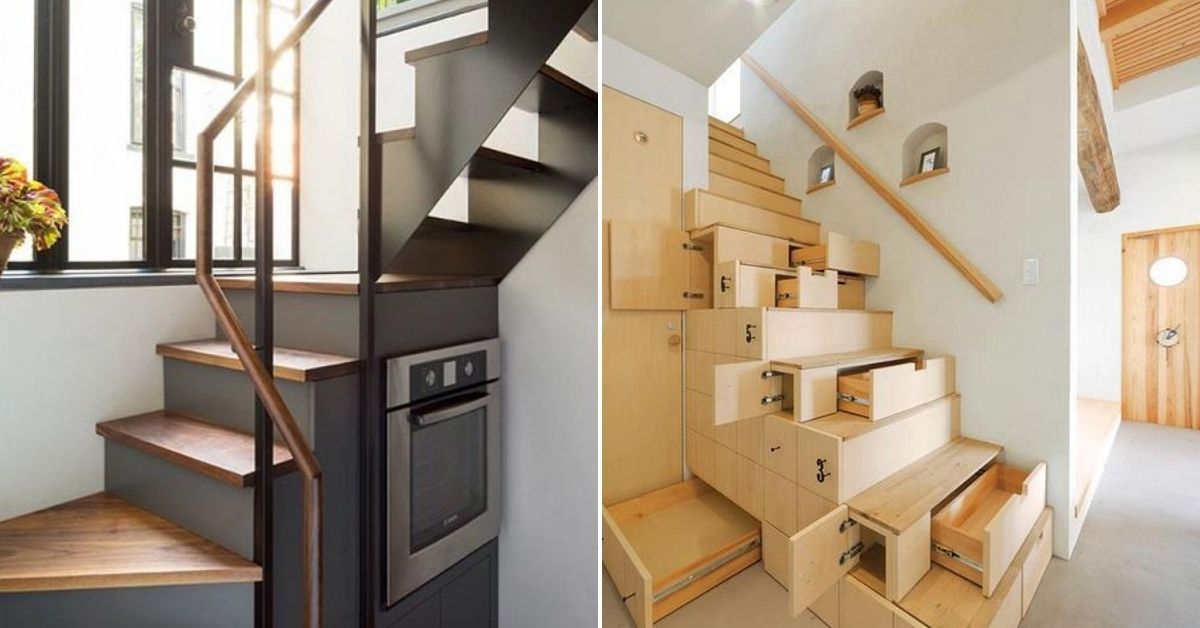
A well-designed staircase
In home floor plans for narrow lots, stairs are often placed centrally to reduce travel distance. Compact designs help save space while maintaining efficiency. This improves overall usability. Many small width house plans integrate storage into stair structures. In optimized urban home layouts, stairs also help define zones. Smart skinny house plans treat them as multifunctional elements.
3.8. Integrate built-in storage
Storage is essential in narrow homes, where clutter can quickly reduce usability. Built-in solutions maximize space without adding bulk. This helps maintain a clean and organized interior.
In home floor plans, storage is often integrated into walls, furniture, or under stairs. This reduces the need for additional furniture. It also improves overall efficiency. Many small width house plans use custom cabinetry to optimize space. In dense urban home layouts, built-in storage becomes a core strategy. Efficient skinny house plans eliminate wasted areas.
3.9. Maximize front and rear openings
With limited side exposure, the front and rear become the main sources of light and air. Maximizing these openings improves both comfort and spatial quality. It also strengthens the connection between indoor and outdoor spaces. Large windows or sliding doors allow more natural light to enter. They also improve ventilation and create a sense of openness. This makes the home feel less confined.
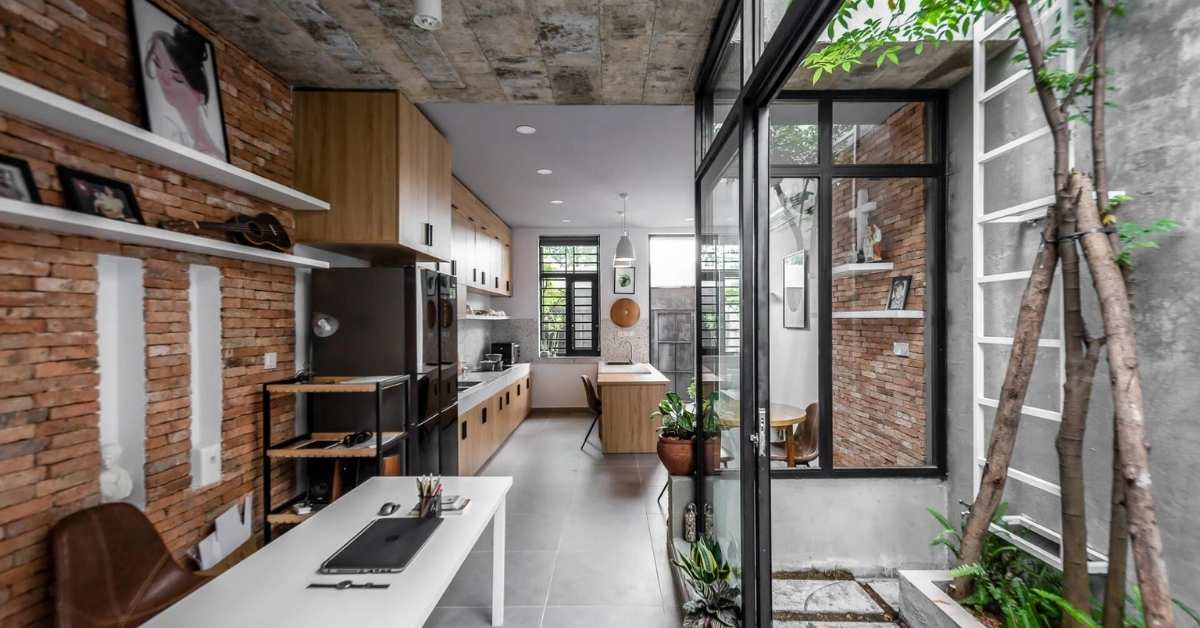
Maximizing these openings
In home floor plans for narrow lots, these openings define the spatial experience. Many small width house plans use full-height glazing to enhance depth. Strong skinny house plans rely on this strategy for better livability.
3.10. Design for future flexibility
A good layout should adapt to changing needs over time. Flexibility ensures long-term usability without requiring major renovations. This is especially important in compact homes. In narrow lot house design, flexibility can be achieved through modular layouts or multi-purpose rooms. These features allow spaces to evolve with lifestyle changes. They also increase property value. Many small width house plans are designed with adaptability in mind. In modern urban home layouts, flexibility is becoming a standard expectation. Smart skinny house plans support both present and future needs.
4. Why visualization matters for narrow lot floor plans
A layout only delivers value when people can understand it quickly, especially with narrow homes where spatial logic is less intuitive. The challenge is not just design quality, but how clearly that design is communicated to buyers or stakeholders.
4.1. How to improve layout understanding
One common issue with home floor plans for narrow lots is that traditional drawings are hard to interpret. Because layouts extend in depth, buyers often struggle to understand how spaces connect or flow. While 2D plans provide structure and dimensions, they rarely convey the actual spatial experience.
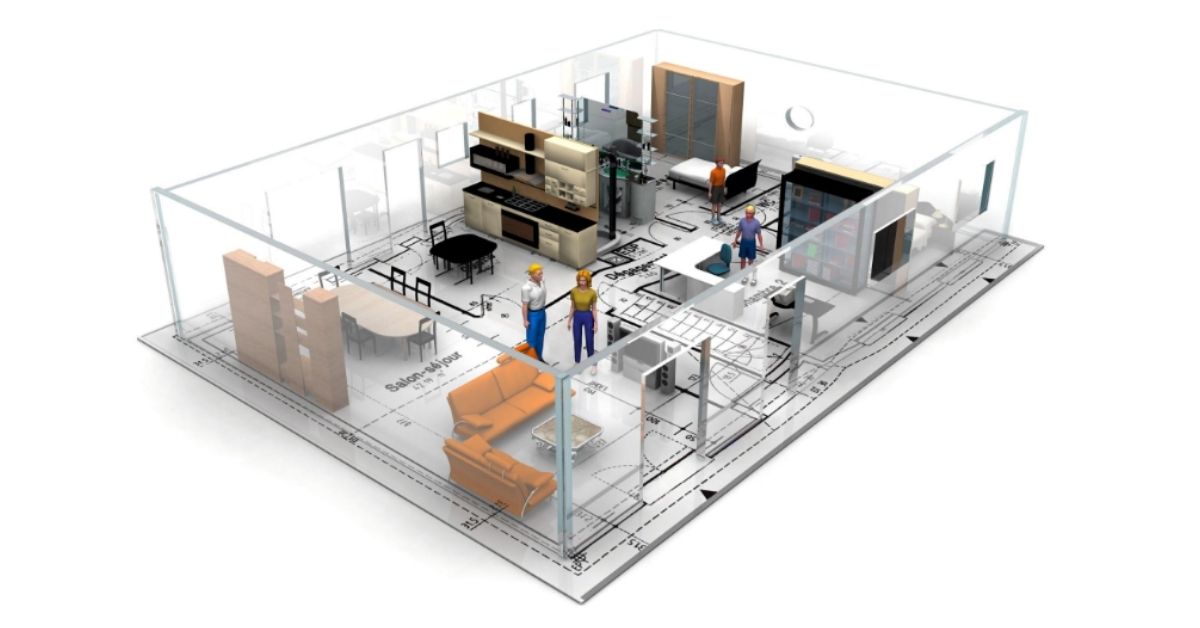
3D floor plans
This is why additional visualization is essential. 3D floor plans help users understand proportions, alignment, and circulation more intuitively. Virtual staging adds context by showing how the space functions in daily life. Together, these tools make layouts easier to grasp, reduce confusion, and improve buyer confidence.
4.2. Professional support for better results
For more complex layouts, basic visuals are often not enough. Professional visualization presents the design in a clearer and more engaging way, helping avoid misunderstandings that could affect buyer decisions. Strong presentation builds trust and makes the property more appealing.
2D and 3D floor plan service in Fotober
Companies like Fotober help real estate professionals turn complex layouts into clear, buyer-friendly visuals-reducing confusion and increasing listing engagement. In competitive markets, this can significantly improve engagement and conversion. Visualization is not just support, it is a strategic advantage that connects design with real-world understanding.
5. Conclusion
Designing home floor plans for narrow lots is not about overcoming limitations but using them to create smarter, more efficient spaces. With the right approach to flow, light, and spatial perception, narrow homes can be just as comfortable and functional as wider layouts. Modern narrow lot house design, along with evolving small width house plans and urban home layouts, proves that limited width does not restrict potential. When combined with strong visualization, even skinny house plans and townhouse floor plans can deliver outstanding living experiences and long-term value.
- Facebook: fotobermedia.co
- YouTube Channel: Fotober
- TikTok Channel: @fotober
- Instagram: fotober_media
- Email support: [email protected]
- Hotline: +84 942 110 297
Related posts

Cincinnati Housing Market 2026: Prices, Trends, and What It Means for Buyers, Sellers, and Investors
October 20, 2026

Modern Luxe Interior Design: Elements, Style Guide and How to Stage It
October 10, 2026

Minimalist Interior Design: Characteristics, Style Guide, and Staging
October 8, 2026

Coastal Interior Design: Style Definition & Staging Guide
September 30, 2026
