




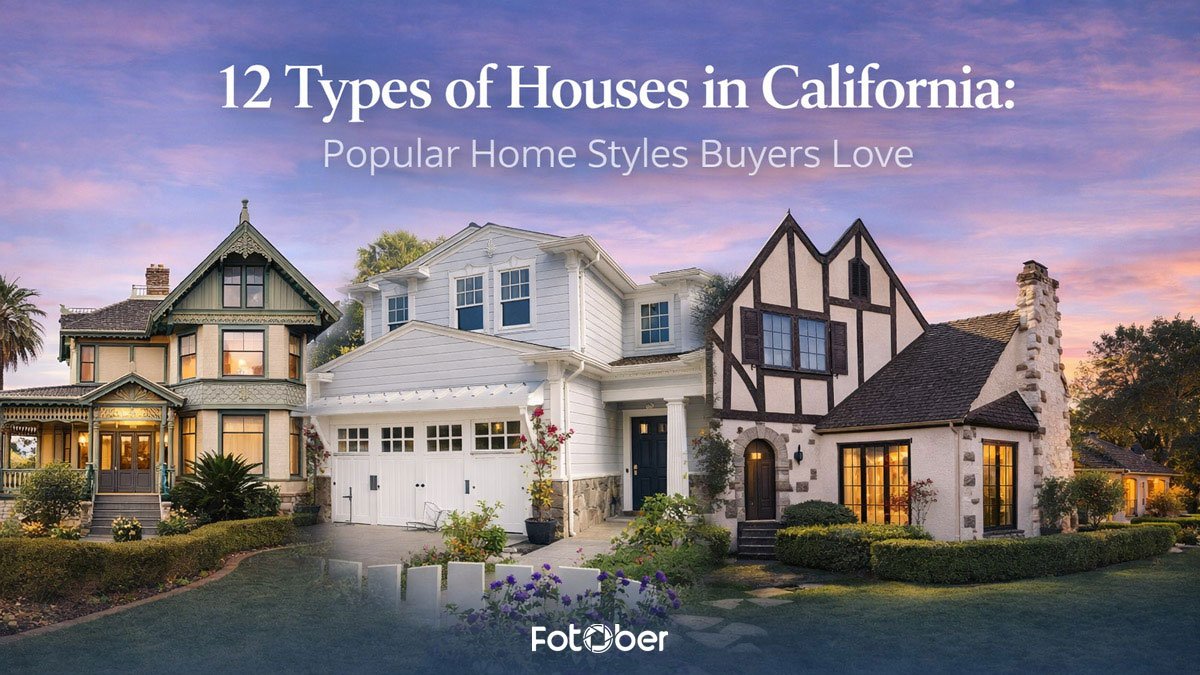
12 Types of Houses in California: Popular Home Styles Buyers Love

Share:
Table of Contents
- 1. Why California has so many unique home styles
- 2. 12 Most popular types of houses in California
- • 2.1. Mediterranean Homes
- • 2.2. Spanish Colonial Homes
- • 2.3. Craftsman Homes
- • 2.4. Ranch-Style Homes
- • 2.5. Modern Contemporary Homes
- • 2.6. Mid-Century Modern Homes
- • 2.7. Victorian Houses
- • 2.8. Cape Cod Homes
- • 2.9. Tudor-Style Houses
- • 2.10. Farmhouse Style Homes
- • 2.11. Beach Houses
- • 2.12. Tiny Homes
- 3. Why real estate photography matters for California homes
- 4. Best editing techniques for different California home styles
- 5. Conclusion
- FAQ About California Home Styles
Few places in the United States offer the architectural diversity found in California. From historic neighborhoods in Los Angeles to modern coastal homes in San Diego, the state showcases an impressive range of residential design. This diversity reflects the unique character of the California real estate market, where climate, culture, and lifestyle shape how homes are built and marketed.
Over the past century, California has attracted people from around the world, each bringing architectural influences that gradually blended into the region’s housing landscape. Warm coastal weather encourages open layouts and outdoor living spaces, while historic immigration patterns introduced Mediterranean, Spanish, and European design traditions. As a result, homebuyers today encounter a rich mix of styles that rarely exist in such concentration anywhere else in the country.
Understanding the types of houses in California is valuable for several groups involved in the property market. Homebuyers can better identify which styles match their lifestyle preferences, real estate agents can market listings more effectively, and photographers can highlight architectural details that attract attention in competitive online listings.
In the sections below, we explore some of the most recognizable and beloved home styles across California and explain why they continue to appeal to modern buyers.
1. Why California has so many unique home styles
California’s housing landscape is shaped by a combination of geography, history, culture, and economic growth. These forces have produced some of the most recognizable architectural styles in California, creating neighborhoods where homes built in different decades and cultural traditions stand side by side. To understand why the state offers such diversity, it helps to look at four major influences.
1.1. Climate and Outdoor Living
California’s mild climate plays a major role in how homes are designed. With long sunny seasons and relatively moderate winters, residential architecture often emphasizes outdoor living. Large windows, open courtyards, balconies, and patios are common design elements that allow residents to enjoy the environment year-round.
This climate advantage is one reason many architectural styles in California feature bright interiors, open floor plans, and seamless transitions between indoor and outdoor spaces. Buyers are often drawn to homes that maximize natural light and provide easy access to gardens, pools, or coastal views.
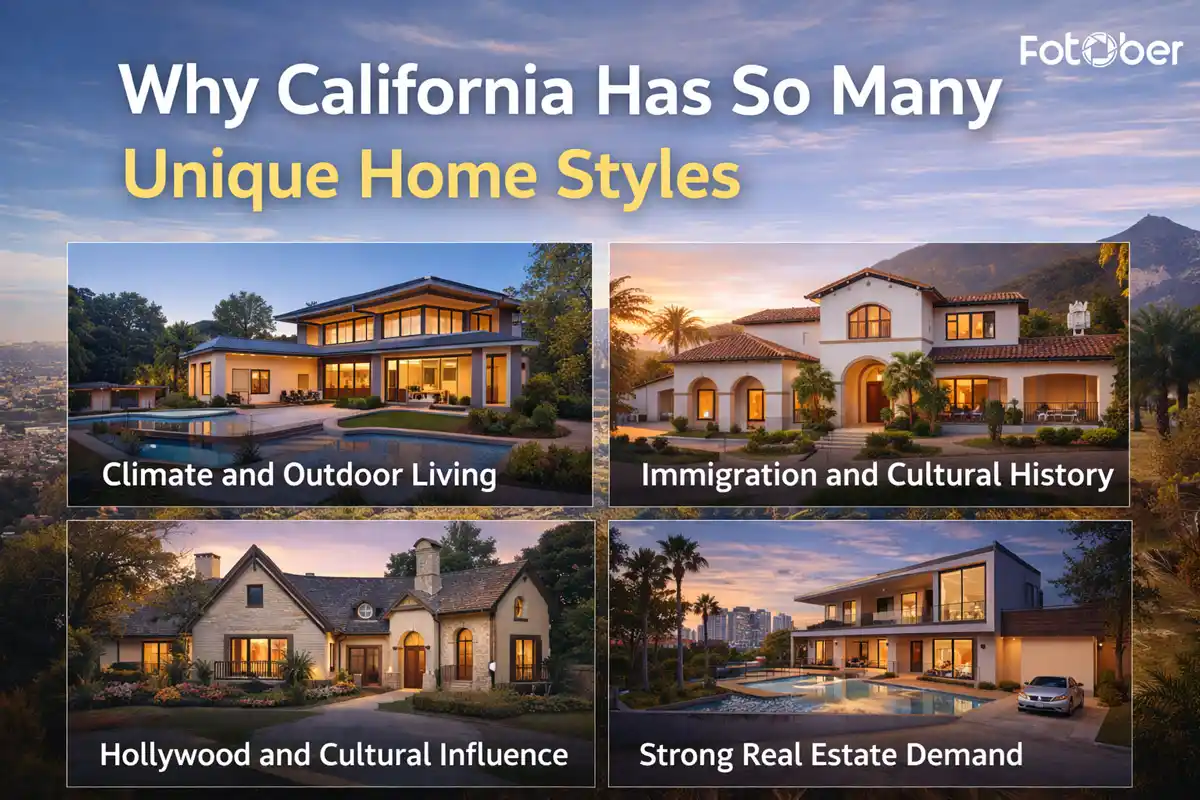
1.2. Immigration and Cultural History
California has long been one of the most culturally diverse states in the country. Waves of immigration from Spain, Mexico, Europe, and Asia introduced new building traditions that gradually shaped local architecture.
Spanish Colonial and Mediterranean designs, for example, became particularly influential in Southern California. Meanwhile, European craftsmanship helped inspire early twentieth-century bungalows and Craftsman homes. These influences contributed significantly to the wide range of residential design seen across the state today.
1.3. Hollywood and Cultural Influence
Entertainment and media have also played a surprising role in shaping housing trends. The growth of the film industry in Los Angeles during the early twentieth century helped popularize distinctive home designs, especially in affluent neighborhoods. Many celebrity homes showcased luxury architecture that later influenced residential development throughout the region.
Hollywood’s cultural reach helped turn certain designs into aspirational lifestyles, reinforcing the appeal of distinctive homes in coastal and urban communities.
1.4. Strong Real Estate Demand
Finally, the state’s dynamic property market has continuously encouraged architectural experimentation. Developers often introduce new designs to attract buyers seeking unique homes in competitive areas. As the population grows and cities expand, demand for visually distinctive properties continues to influence design choices.
This combination of climate, history, cultural influence, and market demand explains why the types of houses in California remain remarkably diverse. In the next section, we will explore some of the most popular home styles that buyers encounter across the state today.
2. 12 Most popular types of houses in California
California’s housing landscape reflects more than a century of cultural influence, design experimentation, and lifestyle-driven architecture. From historic homes built during the state’s early development to modern residences shaped by technology and coastal living, the state offers an unusually wide variety of residential designs. For buyers exploring the types of houses in California, understanding the most common styles can help identify properties that match both aesthetic preferences and practical needs. Below are twelve home styles that consistently appear across California neighborhoods and continue to attract strong buyer interest.
2.1. Mediterranean Homes
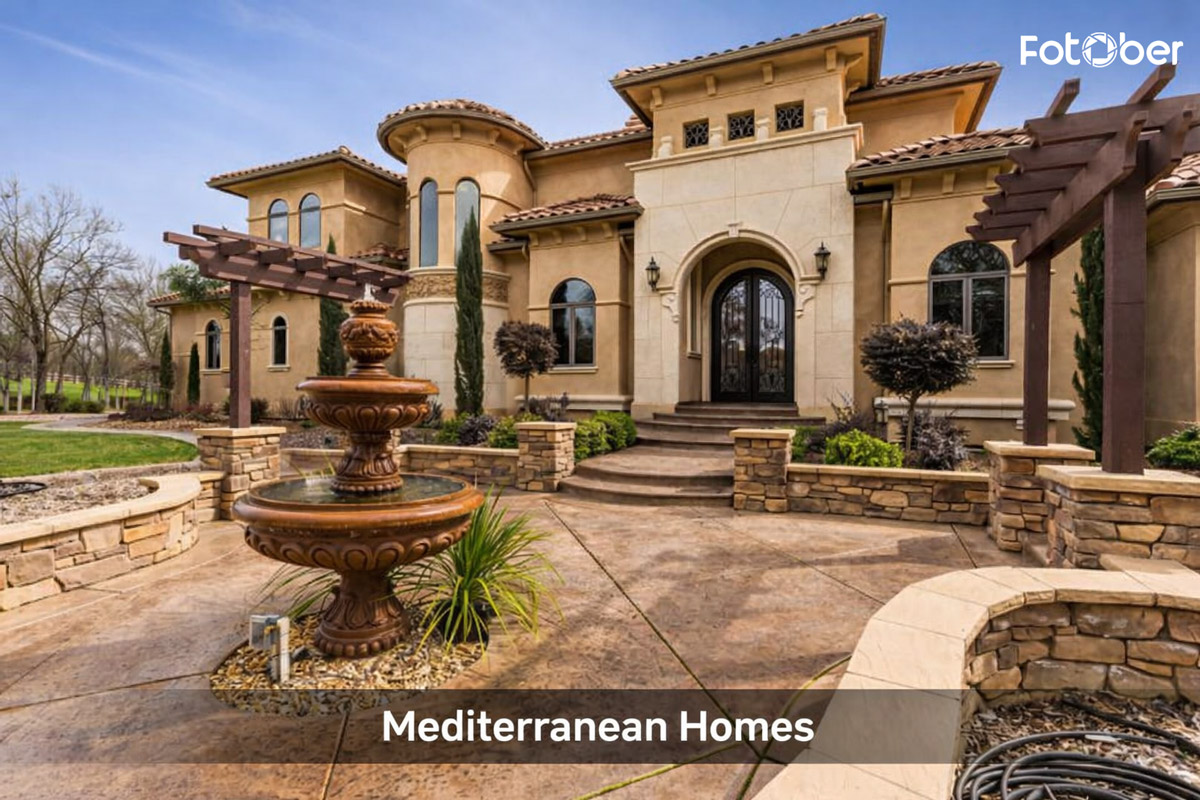
Mediterranean-style houses became popular in California during the early twentieth century, inspired by Spanish and Italian coastal architecture. These homes typically feature stucco walls, red clay tile roofs, arched windows, and decorative wrought-iron elements. Courtyards, balconies, and outdoor patios are common features that support the region’s outdoor lifestyle. Mediterranean homes California are particularly prevalent in coastal cities such as Santa Barbara, San Diego, and parts of Los Angeles. Buyers are drawn to these homes for their elegant appearance and the relaxed, resort-like atmosphere they create.
2.2. Spanish Colonial Homes
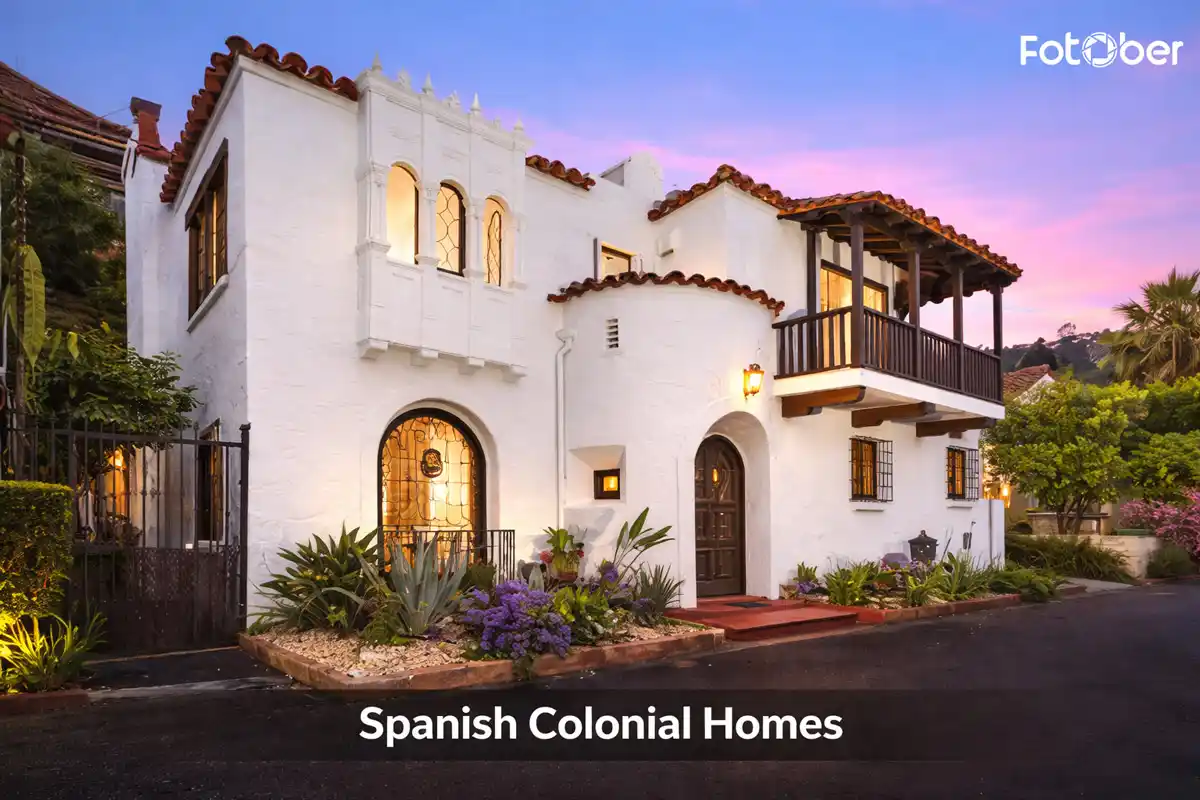
Spanish Colonial architecture has deep historical roots in California, dating back to early Spanish settlements in the region. These homes usually include white stucco exteriors, red tile roofs, wooden beams, and decorative tile accents. Many properties also feature interior courtyards or shaded arcades that provide cool outdoor spaces. Spanish Colonial homes are especially common in Southern California communities. Buyers appreciate their historic charm and cultural significance, which make them feel authentic to the region’s architectural heritage.
2.3. Craftsman Homes
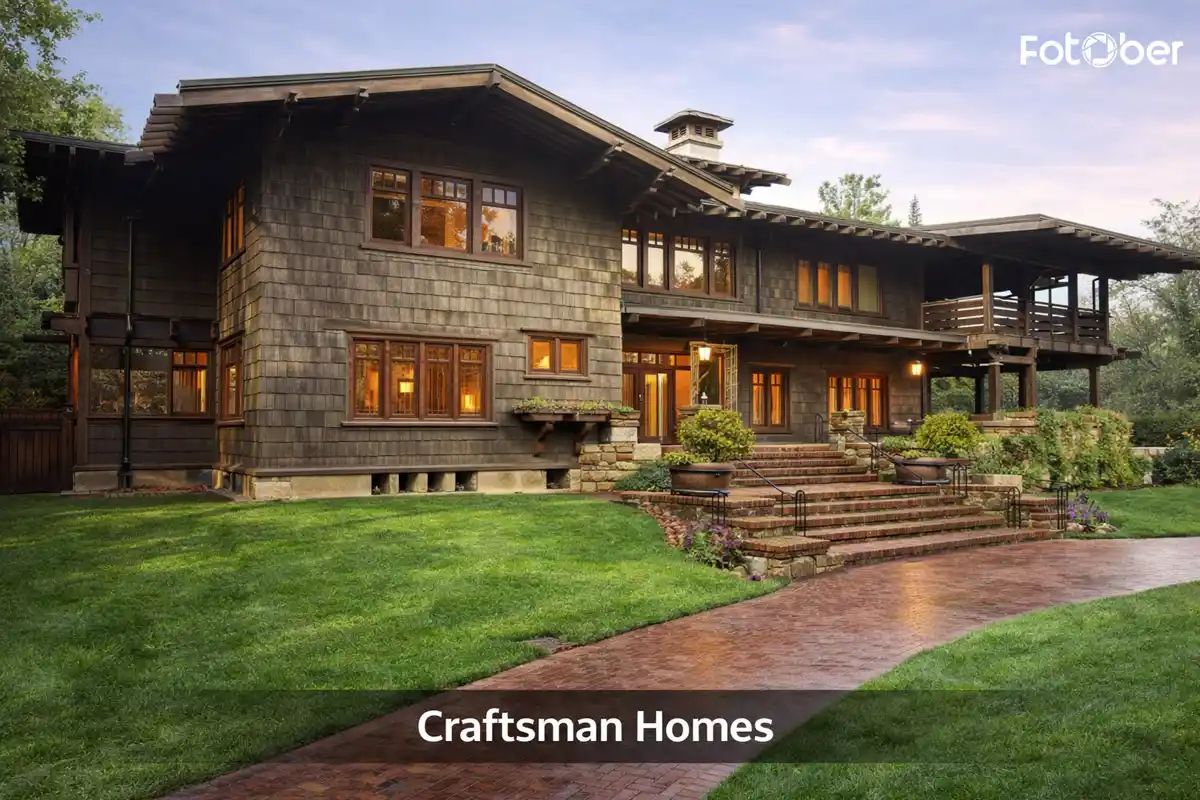
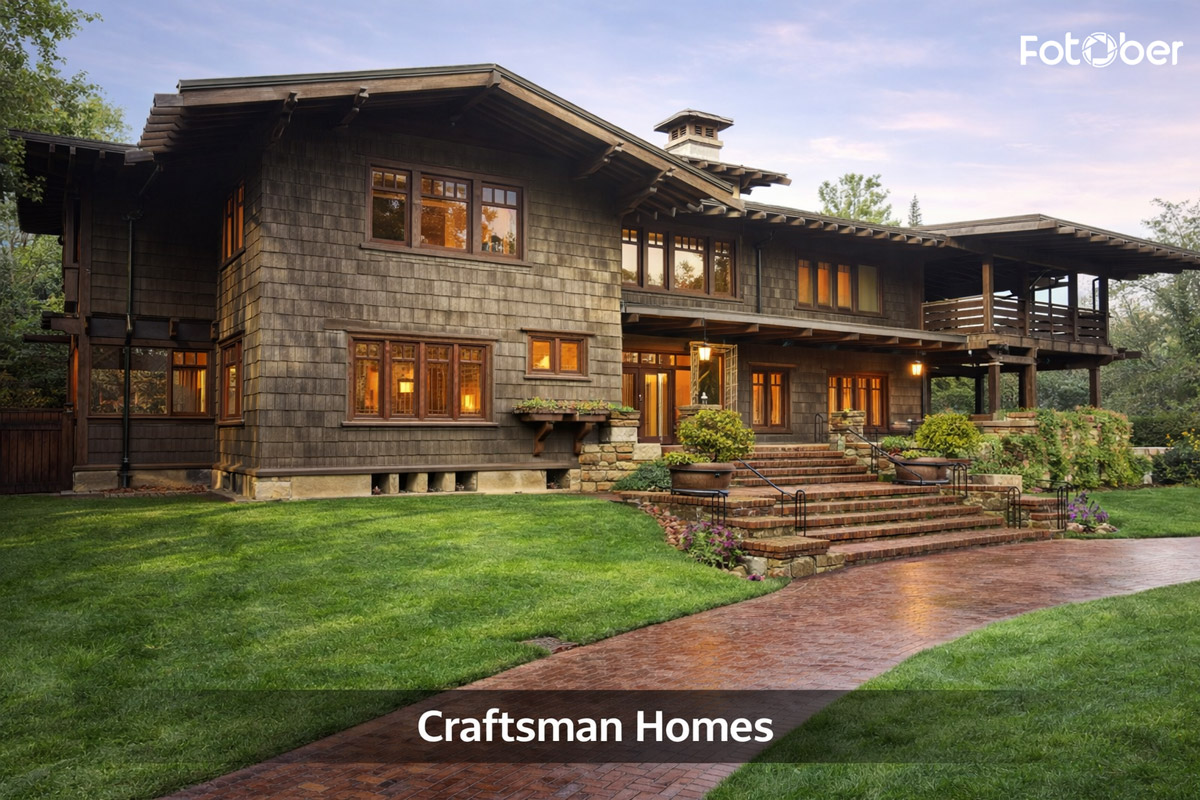
Craftsman houses emerged in California during the early 1900s as part of the Arts and Crafts movement, which emphasized handcrafted materials and natural design. Craftsman houses California are known for their low-pitched roofs, exposed wooden beams, wide porches, and detailed interior woodwork. Neighborhoods in Pasadena, Berkeley, and older parts of Los Angeles contain many well-preserved examples. Buyers often value these homes for their strong craftsmanship, warm interiors, and timeless design character, which continues to appeal even in modern real estate markets.
2.4. Ranch-Style Homes
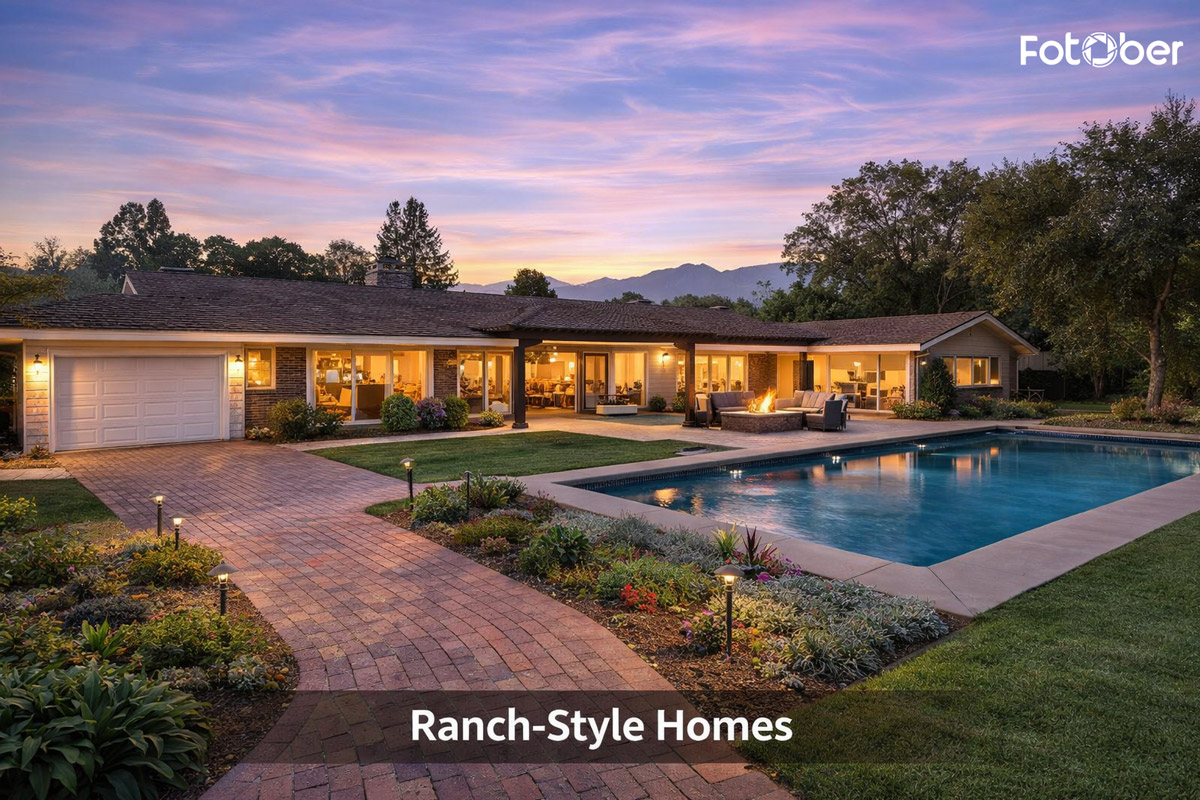
Ranch-style homes became widely popular after World War II as suburban development expanded across California. These houses typically feature single-story layouts, long horizontal shapes, and open floor plans designed for comfortable family living. Large windows and sliding doors connect indoor spaces with patios or backyards. Ranch homes are commonly found in suburban areas throughout Southern California and the Central Valley. Buyers often favor them for their accessibility, spacious layouts, and easy connection to outdoor living areas.
2.5. Modern Contemporary Homes
Modern contemporary homes represent a more recent architectural trend that reflects California’s evolving design culture. These homes typically showcase minimalist aesthetics, geometric shapes, and expansive glass walls that bring natural light into interior spaces. Flat roofs and open layouts are common elements. Modern homes are especially visible in cities such as Los Angeles, San Jose, and San Francisco. Buyers who prefer clean lines and cutting-edge architecture are often drawn to this style for its sleek appearance and modern functionality.
2.6. Mid-Century Modern Homes
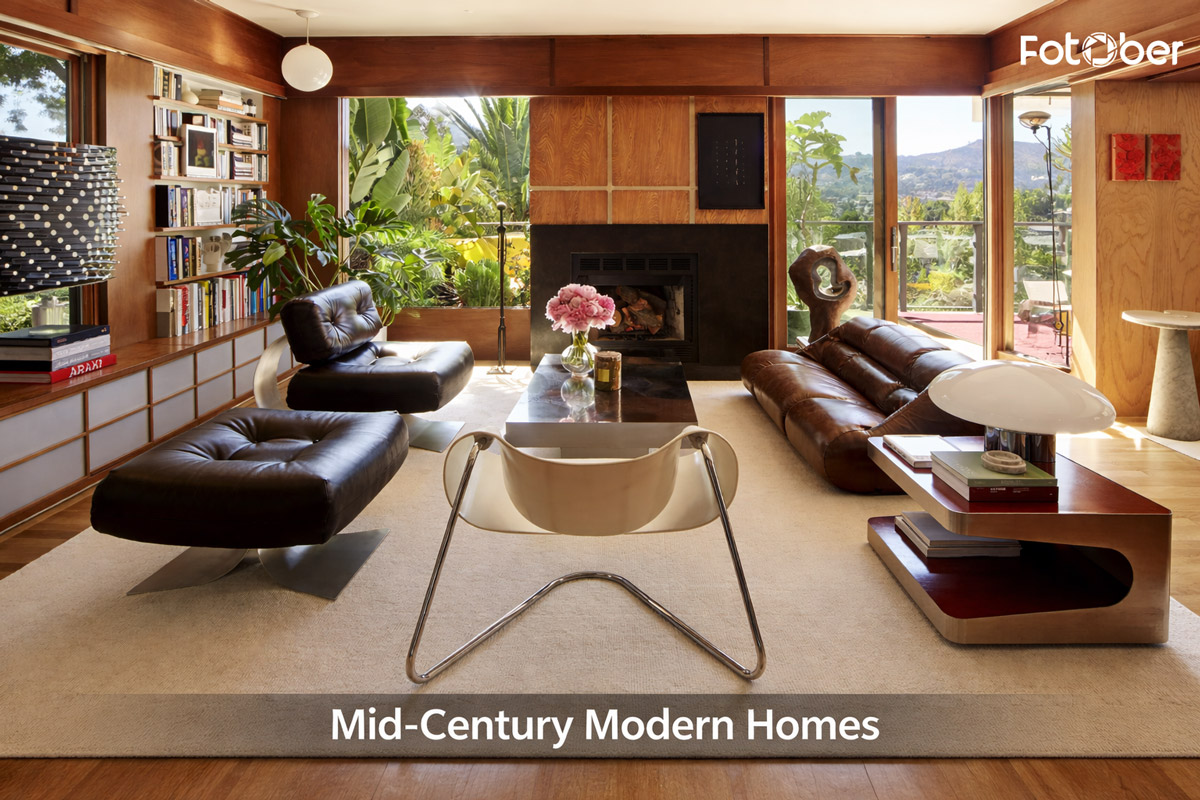
Mid-century modern architecture became influential in California during the 1950s and 1960s. Designers from that era focused on simplicity, functionality, and integration with the surrounding environment. These homes often feature large windows, open interiors, and flat or gently sloped roofs. Palm Springs is particularly famous for neighborhoods filled with mid-century modern residences. Buyers today are attracted to the style’s distinctive retro aesthetic and its emphasis on natural light and indoor-outdoor living.
2.7. Victorian Houses
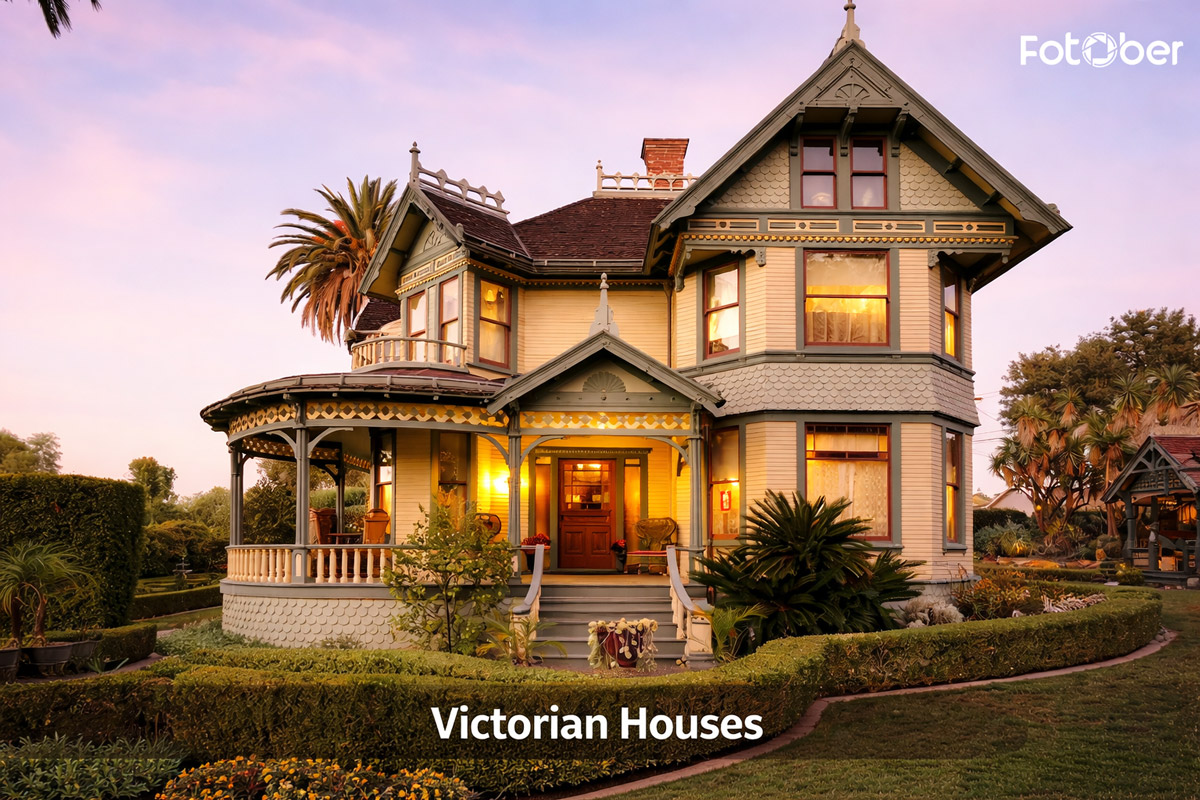
Victorian houses date back to the late nineteenth century and remain some of the most visually distinctive homes in California. They are easily recognized by ornate decorative trim, steep roofs, bay windows, and elaborate facades. San Francisco is especially famous for colorful Victorian homes that line historic streets. Buyers who appreciate historic architecture often gravitate toward these properties because they offer unique character and craftsmanship that modern homes rarely replicate.
2.8. Cape Cod Homes
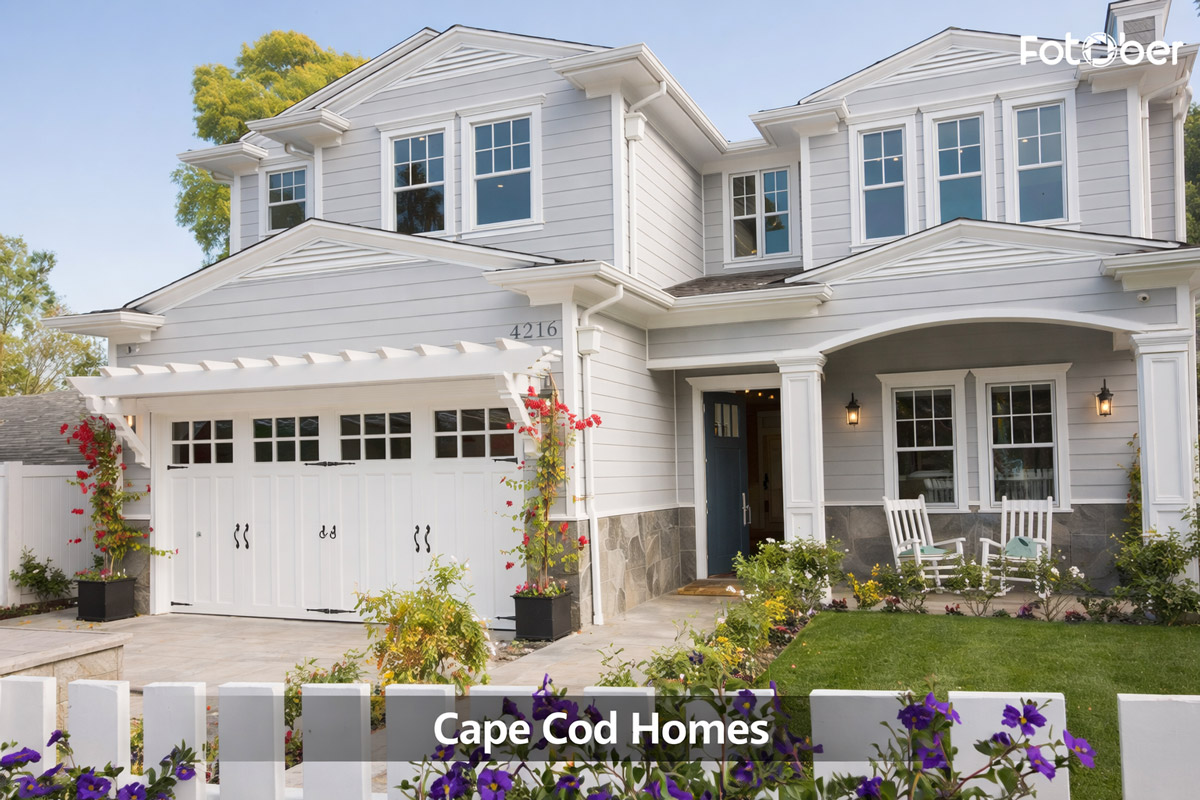
Cape Cod homes originally developed in New England but eventually appeared in several California coastal communities. These homes usually feature symmetrical facades, steep roofs, dormer windows, and simple siding materials. Although less common than some other styles, Cape Cod homes can be found in seaside areas where their classic design complements the coastal environment. Buyers often appreciate their cozy proportions and traditional charm.
2.9. Tudor-Style Houses
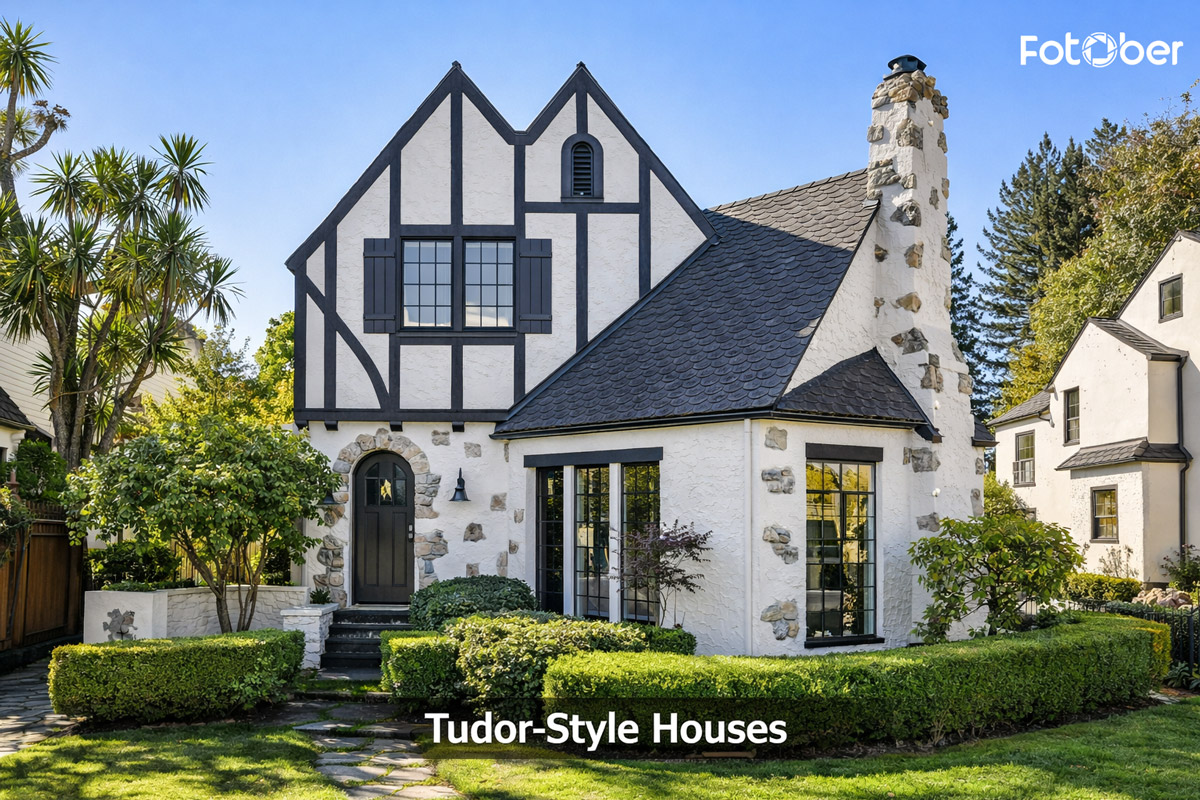
Tudor-style homes are inspired by medieval English architecture and became popular in California during the early twentieth century. These houses are recognizable by steeply pitched roofs, decorative half-timber framing, tall narrow windows, and brick or stucco exteriors. Tudor homes appear in several historic neighborhoods, particularly in older urban communities. Buyers who enjoy classic European design often find Tudor houses appealing because of their distinctive appearance and strong architectural identity.
2.10. Farmhouse Style Homes
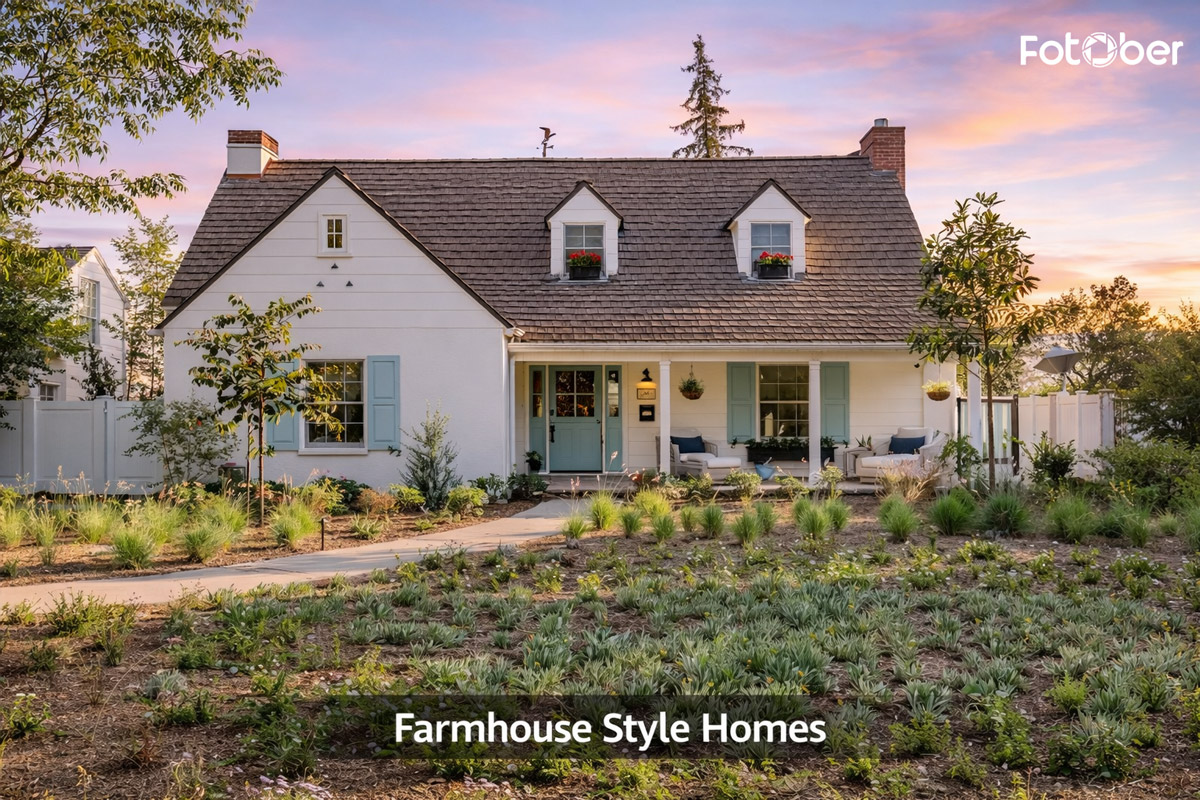
Farmhouse-style homes have experienced a resurgence in popularity in recent years. Traditionally associated with rural properties, these homes feature simple rectangular layouts, large porches, and functional interiors designed for practical living. Modern farmhouse versions often combine rustic elements with contemporary finishes. They are increasingly common in suburban developments and semi-rural areas. Buyers appreciate the comfortable atmosphere and family-friendly layouts that farmhouse homes typically provide. Reading more about video editing in California.
2.11. Beach Houses
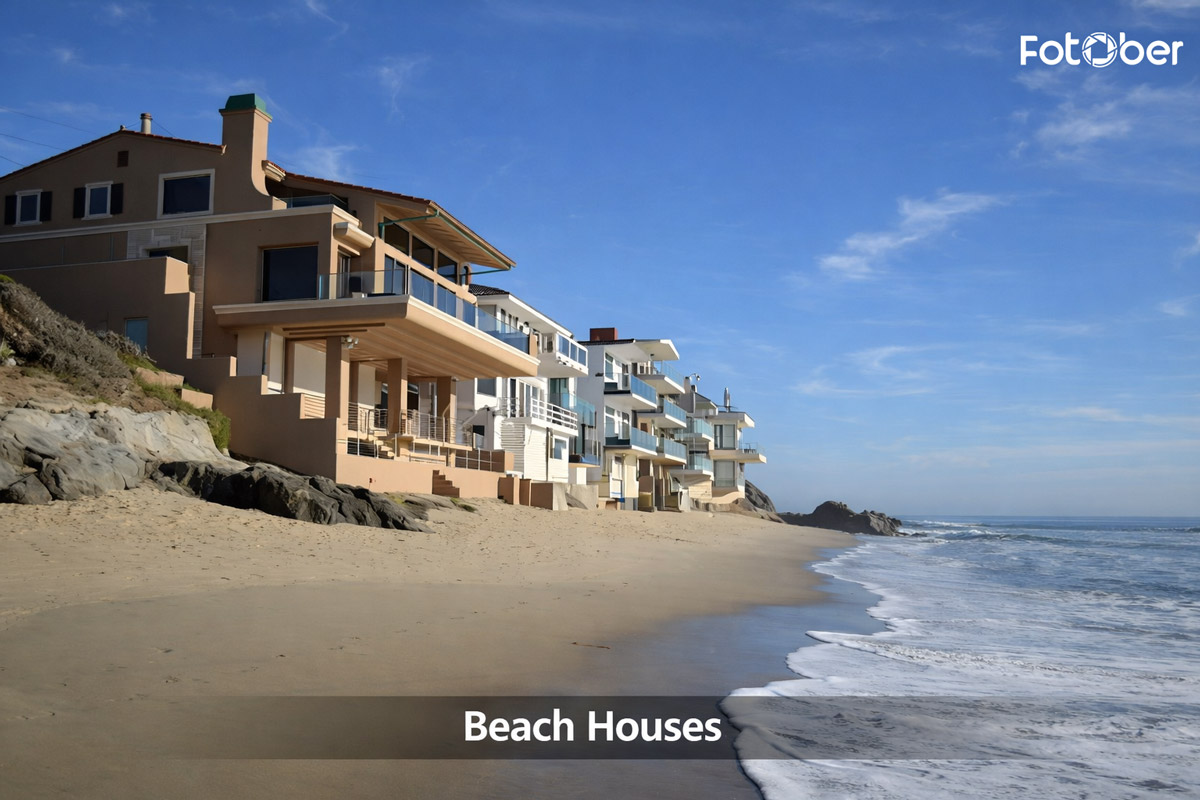
Beach houses are a defining part of coastal California real estate. Designed to maximize ocean views and natural breezes, these homes often include large windows, balconies, and open living spaces. Light colors and natural materials help create a relaxed atmosphere suited to seaside living. Beach houses are especially common along the Pacific coastline in areas such as Malibu, Santa Cruz, and Orange County. Buyers are attracted to the lifestyle these homes represent, where everyday living feels connected to the ocean.
2.12. Tiny Homes
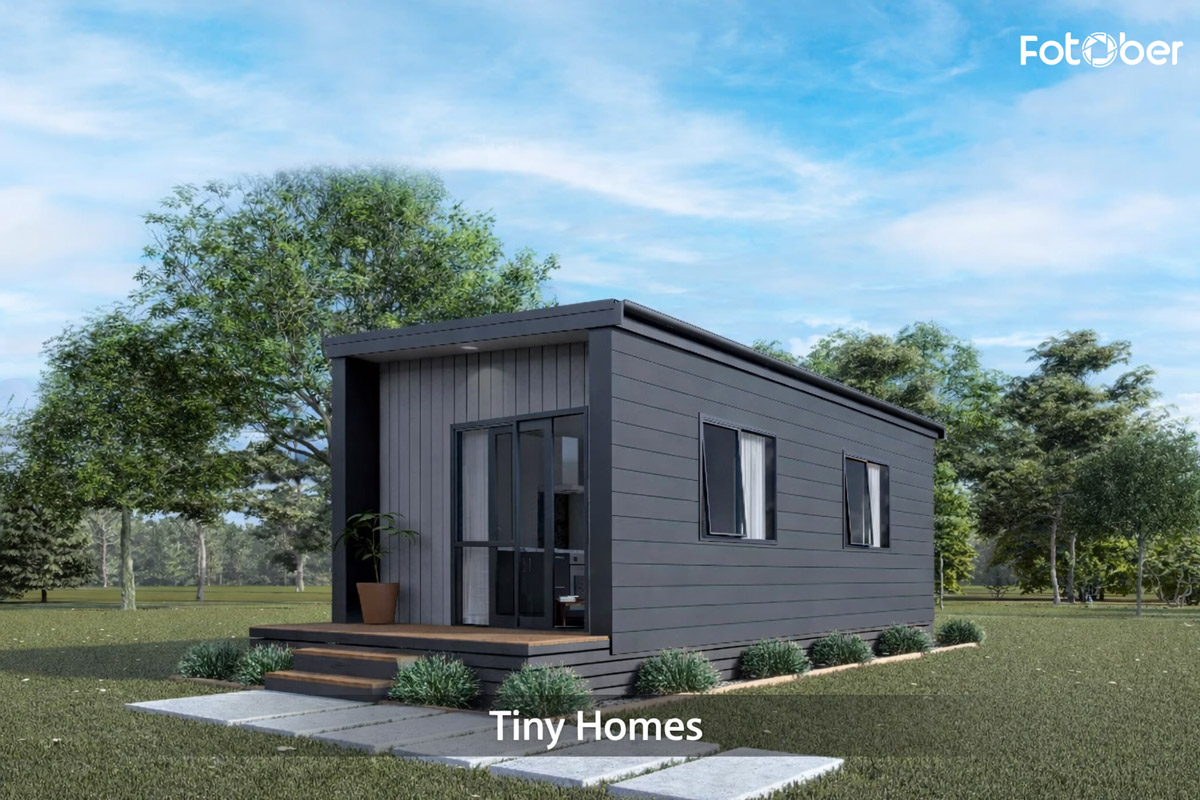
Tiny homes have gained attention in recent years as housing costs increase across many parts of California. These compact residences typically measure less than 400 square feet and focus on efficient use of space. Many tiny homes feature multifunctional furniture, loft sleeping areas, and sustainable building materials. While they are not as widespread as traditional houses, they are becoming more common in alternative housing communities. Buyers interested in minimalist living or affordable homeownership often explore this option among the many types of houses in California available today.
Together, these architectural styles demonstrate the remarkable diversity of California’s housing market. From historic homes rooted in European traditions to modern residences designed for contemporary lifestyles, the wide range of types of houses in California reflects the state’s unique blend of culture, climate, and innovation. Iconic designs such as Mediterranean homes California continue to symbolize coastal luxury, while classic options like Craftsman houses California remain beloved for their craftsmanship and enduring character.
The table below summarizes several well-known house styles commonly found across California and the regions where they are most frequently seen.
|
House Style |
Popular Regions |
Key Features |
|
Mediterranean |
Santa Barbara, coastal Southern California |
Stucco exterior walls, red clay tile roofs, arched windows |
|
Craftsman |
Pasadena, Berkeley, historic Los Angeles neighborhoods |
Exposed wood beams, wide front porches, handcrafted details |
|
Mid-century modern |
Palm Springs, Los Angeles suburbs |
Open floor plans, large glass windows, indoor-outdoor living |
|
Beach houses |
Malibu, Santa Cruz, Orange County coast |
Ocean views, balconies, bright interiors, natural light |
This diversity illustrates how different architectural traditions have shaped residential design across the state.
3. Why real estate photography matters for California homes
In California’s highly visual property market, the quality of listing images can strongly influence how buyers perceive a home before they ever schedule a tour. With so many architectural styles across the state, photography plays a critical role in highlighting the distinctive features that make each property appealing.
Different architectural designs require different visual approaches. A Mediterranean-style house, for example, often features arches, stucco textures, and warm exterior tones that should be emphasized through balanced lighting and thoughtful composition. Craftsman homes, on the other hand, showcase wood craftsmanship and detailed structural elements that deserve clear, well-lit images. Without strong photography, these design details can easily be overlooked in online listings.
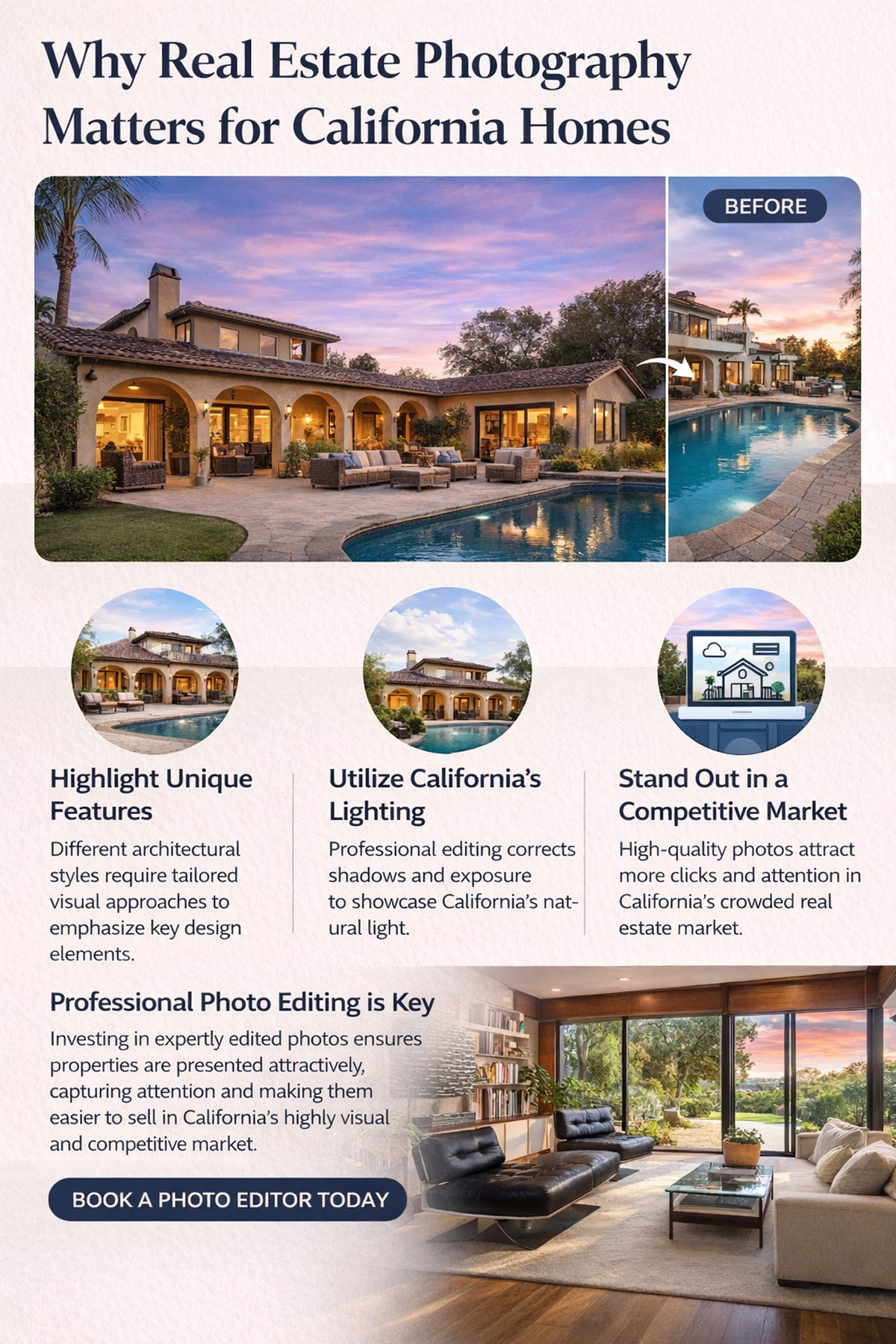
California’s natural lighting also presents unique opportunities-and challenges-for property photography. Coastal sunshine, bright skies, and dramatic sunsets can produce stunning images when captured correctly. However, strong sunlight and high contrast conditions can also create shadows, blown highlights, or uneven color tones. Skilled editing helps correct these issues while preserving the natural atmosphere that buyers expect from California homes.
At the same time, the state’s housing market is extremely competitive. Thousands of listings appear online every day across major platforms, meaning buyers often make their first impressions within seconds of viewing property photos. High-quality images can help listings stand out, attract more clicks, and encourage buyers to explore further.
For real estate professionals, investing in professional real estate photo editing can make a significant difference in how properties are presented online. Careful color correction, exposure balancing, and sky replacement can dramatically improve the overall look of a listing. In situations where properties are empty, virtual staging for empty homes can also help buyers visualize how the space might function with furniture and décor, making listings more engaging and easier to imagine as future homes.
Ultimately, in a visually driven market like California, photography is no longer just documentation-it is a key marketing tool that helps transform architectural design into compelling real estate stories.
4. Best editing techniques for different California home styles
Because California features such a diverse range of residential architecture, editing techniques often need to be adjusted to match the visual character of each home style. Effective photo editing should enhance the design elements that buyers already find attractive while maintaining a natural and realistic appearance.
Mediterranean homes, for example, typically benefit from warmer color tones that highlight their terracotta roofs, stucco walls, and sunlit courtyards. Slight adjustments to color temperature and contrast can help emphasize the relaxed coastal atmosphere that defines these properties.
Craftsman homes often require a different approach. Since these houses are known for their detailed woodwork and handcrafted materials, editing should focus on improving texture clarity. Careful sharpening and balanced exposure can bring out the grain of wood beams, porch columns, and interior cabinetry without making the image appear overly processed.
Modern and contemporary homes tend to look best with stronger contrast and clean color balance. These designs rely heavily on glass, straight lines, and minimalist interiors, so editing should enhance brightness and architectural symmetry. Clear skies and crisp edges can help reinforce the sleek, modern aesthetic buyers expect from these properties.
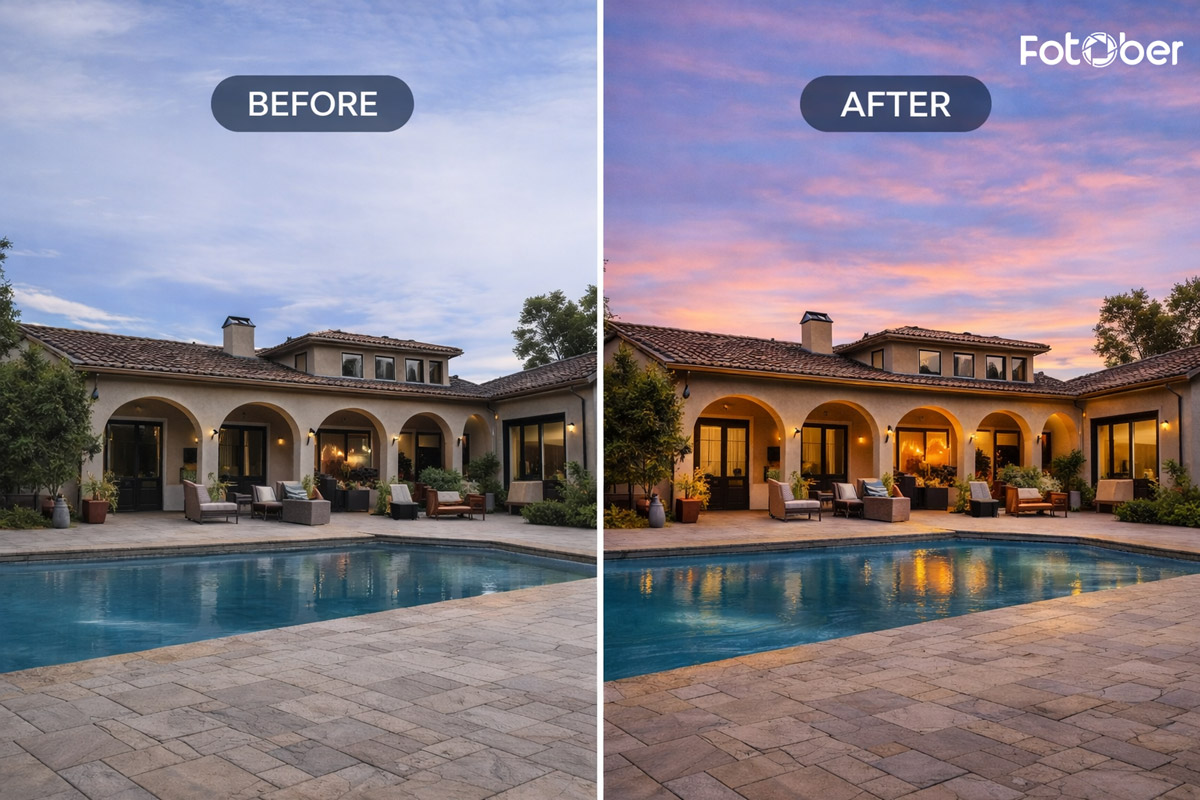
Exterior presentation also plays a major role in attracting attention. In many cases, twilight photo enhancement can transform a standard daytime image into a dramatic evening scene, highlighting landscape lighting and creating a welcoming atmosphere for online listings.
For new construction projects or properties still in development, 3D rendering for new developments provides another powerful visualization tool. Rendered images allow developers and agents to showcase how a completed property will look even before construction is finished, helping potential buyers better understand the final design.
By adapting editing techniques to match each architectural style, real estate professionals can present California homes in a way that captures their unique character and appeals to today’s visually driven buyers.
5. Conclusion
California’s housing landscape reflects an extraordinary mix of history, culture, and design innovation. From coastal Mediterranean villas to classic Craftsman bungalows and sleek modern residences, each architectural style offers a unique character that attracts different types of buyers. Understanding the types of houses in California not only helps buyers recognize what suits their lifestyle, but also helps real estate professionals market properties more effectively. In such a visually driven market, strong presentation-especially high-quality images-plays a crucial role in highlighting architectural details and making listings stand out to potential buyers.
Follow us:
● Facebook: fotobermedia.co
● YouTube Channel: Fotober
● TikTok Channel: @fotober
● Instagram: fotober_media
● Email support: [email protected]
FAQ About California Home Styles
What is the most common house style in California?
Single-story ranch homes and traditional Craftsman houses are among the most widely seen residential styles across California. Ranch homes became especially popular after World War II as suburban neighborhoods expanded, while Craftsman houses remain common in older urban communities because of their distinctive woodwork and historic charm.
Why are Mediterranean homes popular in California?
Mediterranean-inspired homes fit naturally with California’s warm climate and outdoor-focused lifestyle. Features such as courtyards, tile roofs, and shaded balconies help keep homes cool while creating comfortable outdoor living areas. Because of these qualities, this architectural style remains particularly popular in coastal and southern regions of the state.
Are Victorian homes common in California?
Victorian homes are not the most widespread style statewide, but they are very recognizable in certain historic cities. San Francisco, for example, is famous for its colorful Victorian houses built during the late nineteenth century. Many of these homes have been carefully preserved and are valued for their ornate details and architectural history.
Related posts

Cincinnati Housing Market 2026: Prices, Trends, and What It Means for Buyers, Sellers, and Investors
October 20, 2026

Modern Luxe Interior Design: Elements, Style Guide and How to Stage It
October 10, 2026

Minimalist Interior Design: Characteristics, Style Guide, and Staging
October 8, 2026

Coastal Interior Design: Style Definition & Staging Guide
September 30, 2026
