




Top 10 Most Famous Victorian Homes in San Francisco


Share:
Table of Contents
- 1. What makes Victorian houses in San Francisco famous
- 2. Top 10 famous Victorian houses in San Francisco
- • 2.1. The Painted Ladies (Steiner Street)
- • 2.2. Haas-Lilienthal House
- • 2.3. Westerfeld House
- • 2.4. Turreted Queen Anne
- • 2.5. The Archbishop’s Mansion
- • 2.6. Octagon House
- • 2.7. Victorian Home Walk (Heritage Victorian residential streets)
- • 2.8. Pacific Heights Victorian estates
- • 2.9. Alamo Square Victorian district
- • 2.10. Painted Ladies
- 3. Why Victorian houses remain valuable in San Francisco today
- 4. Why visual presentation matters for historic Victorian homes
- Conclusion
San Francisco is one of the few cities in the United States where historic architecture remains deeply integrated into everyday urban life. Among the most recognizable properties in the city, Victorian Homes in San Francisco stand out as symbols of architectural heritage, cultural identity, and long-term real estate value.
These historic properties represent more than just another category among the many types of houses in California. They reflect a period of economic expansion, craftsmanship, and urban design that continues to influence residential architecture today. While Southern California may be known for Luxury Home Architecture in Los Angeles or coastal developments reflecting Modern vs Spanish Homes in San Diego, San Francisco remains globally associated with Victorian architecture.
Today, these homes continue to attract investors, preservationists, photographers, and buyers who appreciate historic design. Their strong visual identity also makes them highly dependent on professional marketing assets, including architectural photography, detail-focused image enhancement, and floor plan rendering for historic homes to help communicate their unique layouts.
In this guide, we explore what makes Victorian homes famous, highlight ten of the most notable examples, and explain why these historic properties remain some of the most desirable homes in Northern California.
1. What makes Victorian houses in San Francisco famous
The popularity of Victorian Homes in San Francisco comes from a distinctive combination of historical significance, architectural complexity, and strong visual identity. Built primarily between the mid-19th century and the early 1900s, these homes were developed during a period when residential architecture was used as a statement of craftsmanship and financial success. Rather than focusing on efficiency or minimalism like many modern homes, Victorian properties were designed to showcase detail, ornamentation, and individuality.
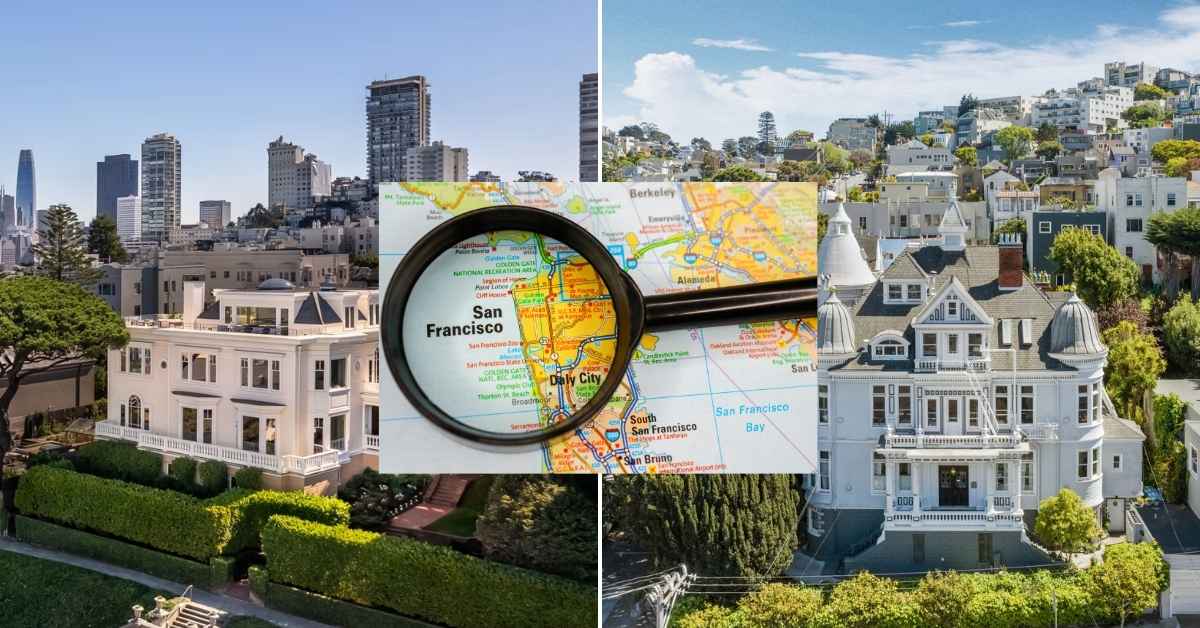
Victoria homes are famous in San Francisco
One of the reasons these homes continue to stand out among the many types of houses in California is their unmistakable architectural language. Their decorative façades often feature intricate wood trim, sometimes referred to as “gingerbread detailing,” along with bay windows designed to maximize natural light in San Francisco’s dense urban environment. Many properties also include narrow vertical layouts adapted for compact city lots, while Queen Anne variations may incorporate towers or turrets that add dramatic visual character. Multi-color exterior paint schemes further emphasize architectural details, and complex rooflines add another layer of visual depth rarely found in contemporary construction.
Beyond their design, the historical context of Victorian homes also plays a major role in their fame. Following the California Gold Rush, San Francisco experienced rapid economic expansion, leading wealthy merchants and developers to commission elaborate residences that reflected both prosperity and permanence. Although the devastating 1906 earthquake and fire destroyed large parts of the city, many Victorian homes survived or were carefully rebuilt. Over time, preservation efforts helped protect these structures, ensuring they remained an essential part of San Francisco’s architectural identity. Compared to newer developments or evolving architectural styles in California, Victorian homes remain among the oldest residential designs still widely visible in their original form.
Another key factor behind their popularity is their marketing appeal. From a real estate perspective, Victorian Homes in San Francisco tend to perform differently from typical listings because buyers often form emotional connections with historic properties. Their uniqueness, character, and historical narrative frequently make them feel more like legacy investments than standard residential purchases.
Because of this emotional appeal, visual presentation becomes especially important. Photographers and real estate marketers often rely on advanced editing techniques such as detail-focused image enhancement to ensure the architectural textures, colors, and craftsmanship are accurately represented. These techniques help maintain authenticity while improving brightness, contrast, and clarity, factors that are critical when presenting historic homes online.
This combination of architectural beauty, historical importance, and strong visual storytelling explains why Victorian homes continue to appear prominently in premium listings and remain some of the most recognizable historic properties within the California housing market.
2. Top 10 famous Victorian houses in San Francisco
Victorian Homes in San Francisco are among the most recognizable historic residences and remain one of the most iconic types of houses in California. Built mainly between the 1870s and early 1900s, these homes reflect the city’s rapid growth after the Gold Rush and are known for their decorative woodwork, bay windows, and colorful façades.
Today, many of these homes are preserved in historic districts like Alamo Square and Pacific Heights, where they continue to attract buyers, architects, and tourists. Below are ten of the most famous Victorian Homes in San Francisco, highlighting their history, architectural features, and cultural significance.
2.1. The Painted Ladies (Steiner Street)
Year built: 1892–1896
Architectural style: Queen Anne Victorian
Location context: Alamo Square Historic District
The Painted Ladies are a row of seven Victorian houses located along Steiner Street, directly facing Alamo Square Park. These homes were constructed during a housing boom when San Francisco developers sought to create visually impressive residences for the growing upper-middle class.

The photo of The Painted Ladies
Historically, these houses survived the 1906 earthquake and became part of a major preservation movement in the 1960s, when artists began repainting Victorian homes using historically accurate color palettes. This movement led to the term “Painted Ladies,” referring to Victorian homes painted in three or more colors to highlight architectural details.
Structurally, the homes feature classic Queen Anne elements including asymmetrical façades, decorative trim, bay windows, and steeply pitched roofs. Their alignment along a gentle slope provides a rare urban composition where the downtown skyline appears directly behind the historic homes, making the location one of the most photographed residential streets in America.
The surrounding Alamo Square neighborhood is characterized by historic zoning protections, which help maintain the architectural continuity of this Victorian district.
2.2. Haas-Lilienthal House
Year built: 1886
Architectural style: Queen Anne Victorian
Location context: Pacific Heights
The Haas-Lilienthal House is one of the only fully preserved Victorian homes in San Francisco that remains open to the public as a historic museum. Built for William and Bertha Haas, prominent members of San Francisco’s business community, the home reflects the lifestyle of affluent families during the late 19th century.
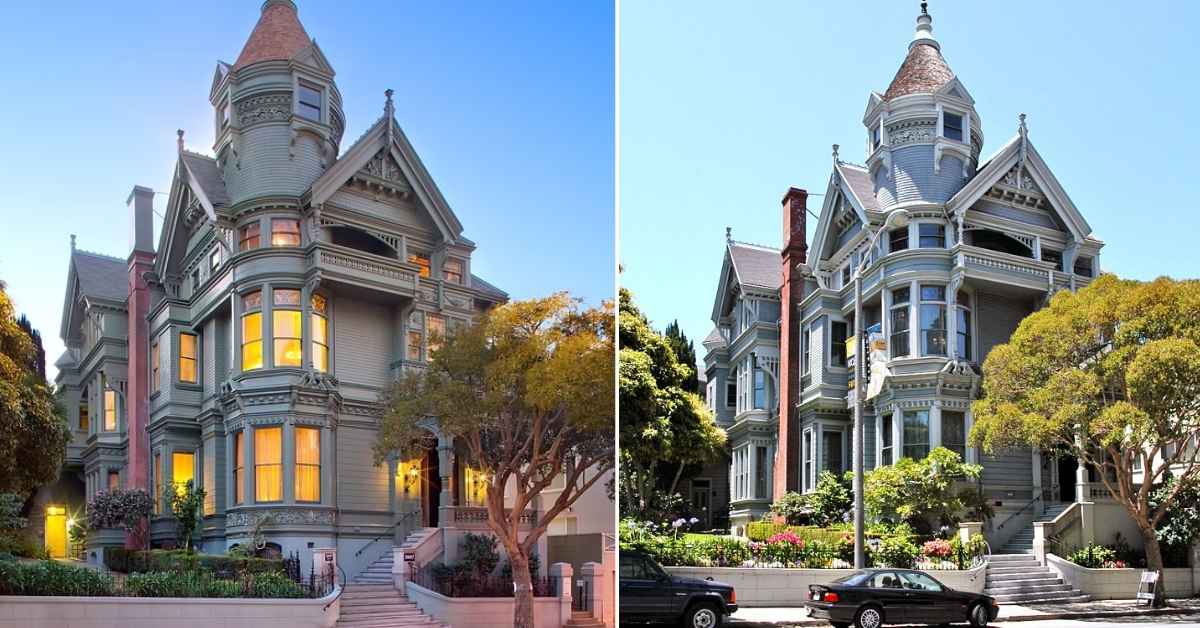
The Pacific Heights
Unlike many historic houses that were heavily remodeled, this property maintains its original floor plan, furnishings, and interior finishes. The structure includes detailed woodwork, original fireplaces, stained glass windows, and period wallpapers that illustrate authentic Victorian design principles.
The Pacific Heights neighborhood surrounding the house developed as an elite residential district after the 1906 earthquake, when wealthy families relocated from the destroyed downtown areas. Today, the area remains one of the most expensive residential districts in the city, demonstrating how Victorian Homes can retain long-term real estate value.
2.3. Westerfeld House
Year built: 1889
Architectural style: Gothic Victorian
Location context: Alamo Square area
The Westerfeld House is one of the most visually distinctive Victorian residences due to its Gothic Revival influences. Built by German immigrant William Westerfeld, the house reflects the craftsmanship and decorative ambition common among successful entrepreneurs of the era.
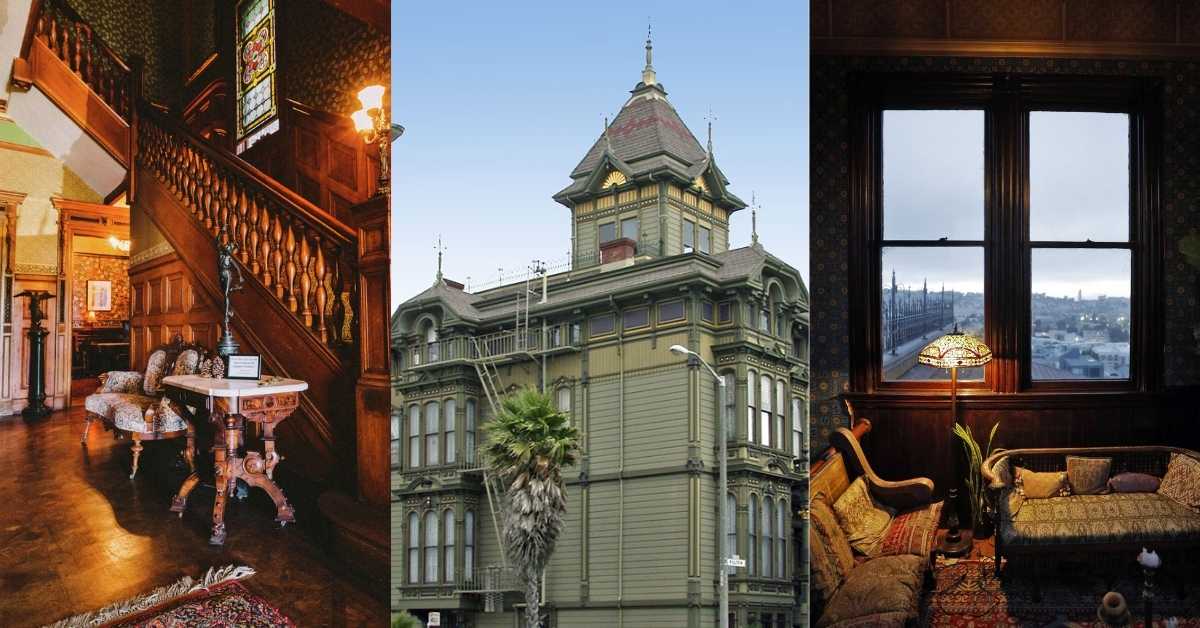
Construction of The Westerfeld House
The structure is known for its dramatic vertical emphasis, including pointed towers, elaborate cornices, and detailed wood ornamentation. The façade incorporates strong Gothic elements such as narrow windows and sharp roof angles, making it visually distinct from the more colorful Queen Anne houses nearby.
Historically, the house became associated with San Francisco’s counterculture movement during the 1960s and 1970s, when it was occupied by artist communities. Despite periods of neglect, restoration efforts later returned the home to its historic appearance.
The surrounding neighborhood remains one of the densest collections of preserved Victorian Homes in San Francisco, reinforcing the architectural continuity of the district.
2.4. Turreted Queen Anne
Year built: Late 1880s
Architectural style: Queen Anne Victorian
Location context: Haight-Ashbury / Alamo Square vicinity
The Turreted Queen Anne Victorian represents one of the most visually expressive examples of Victorian Homes in San Francisco, particularly known for its distinctive corner turret structures. Built during the late 19th century when Queen Anne architecture was at its peak popularity, these homes were designed to showcase craftsmanship through asymmetry and ornamental detailing.
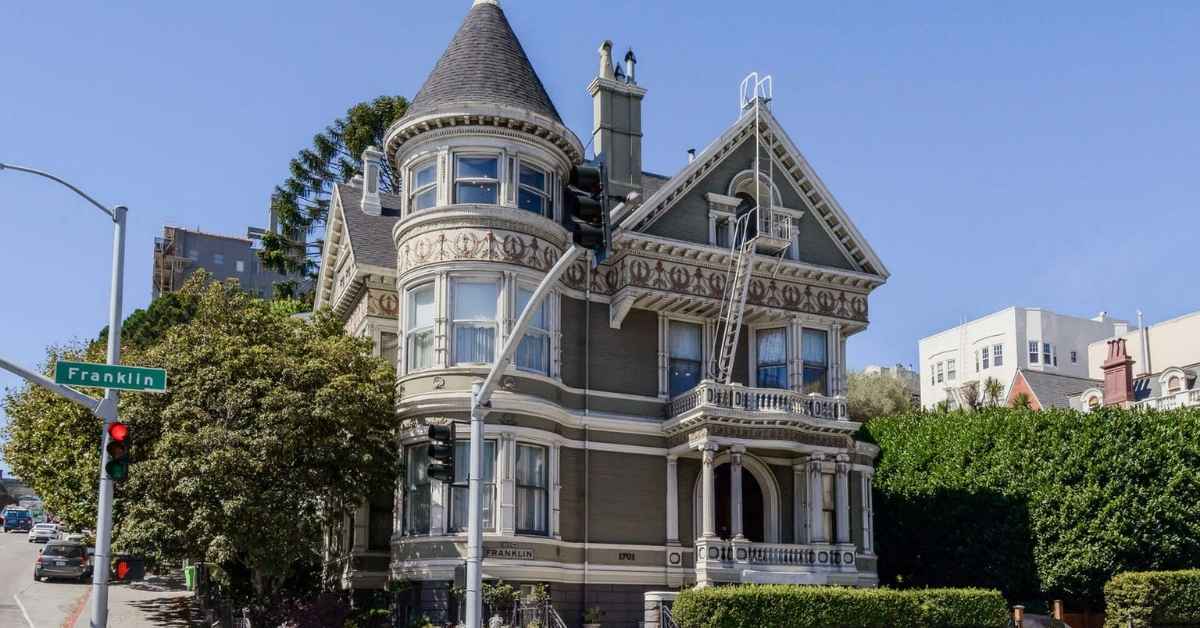
The Turreted Queen Anne Victorian
One of the defining structural elements is the rounded turret, which often extends vertically through multiple floors and is topped with a conical or polygonal roof. These towers were not only decorative but also functional, often used to create small reading rooms or viewing spaces that maximized natural light.
The surrounding neighborhoods where these homes are commonly found developed during San Francisco’s rapid residential expansion between 1880 and 1900. Today, these areas remain some of the best preserved historic districts, reinforcing the long-term desirability of these properties among the many types of houses in California.
Compared with more contemporary housing developments, these turreted Victorian homes demonstrate the level of artistic detail rarely seen in modern residential construction.
2.5. The Archbishop’s Mansion
Year built: 1904
Architectural style: Victorian with Edwardian influences
Location context: Pacific Heights
The Archbishop’s Mansion represents the transition between late Victorian and early Edwardian architecture. Built as the official residence of the Roman Catholic Archdiocese of San Francisco, the mansion reflects the institutional importance of religious organizations during the early 20th century.

The Archbishop’s Mansion
The structure is notable for its large scale compared to typical Victorian residences. It includes multiple floors, grand staircases, formal reception rooms, and extensive decorative stonework. The exterior combines Victorian detailing with emerging Edwardian design elements, including simplified ornamentation and more symmetrical forms.
Located in Pacific Heights, the mansion sits among some of the city’s most prestigious historic properties. The surrounding neighborhood features panoramic views of the San Francisco Bay, further enhancing the prestige of historic estates located there.
2.6. Octagon House
Year built: 1861
Architectural style: Octagonal Victorian experimental design
Location context: Russian Hill
The Octagon House represents an unusual architectural experiment based on 19th-century theories that octagonal buildings allowed better air circulation and natural light. Designed by architect William McElroy, the home is one of the few remaining examples of this architectural concept in the United States.
The structure features an eight-sided layout, a central staircase, and surrounding verandas. The design was intended to improve ventilation and reduce dark interior corridors, which were common in rectangular Victorian homes.
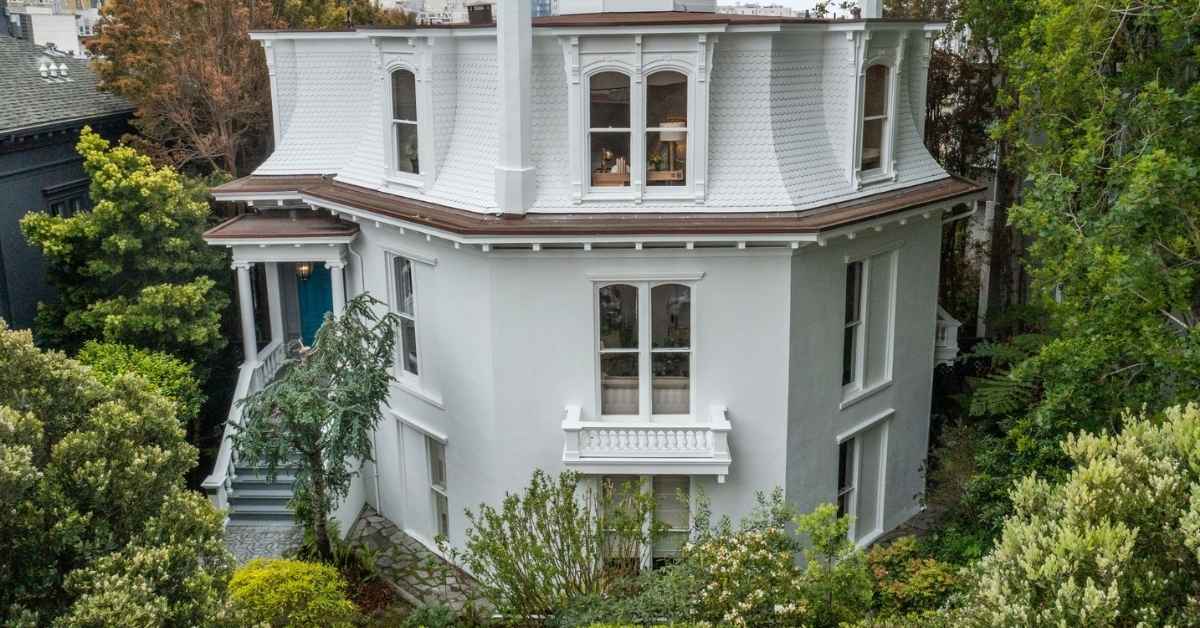
The Octagon House
Located in the Russian Hill neighborhood, the house sits in an area known for steep streets and historic residential buildings. Today, it operates as a museum, preserving its unique place among early Victorian Homes in San Francisco.
2.7. Victorian Home Walk (Heritage Victorian residential streets)
.Year developed: Primarily 1875–1900
Architectural style: Mixed Victorian styles (Queen Anne, Italianate, Stick style)
Location context: Heritage walking districts such as Pacific Heights and Alamo Square
The term Victorian Home Walk typically refers to historic residential streets where multiple preserved Victorian homes form a continuous architectural landscape. These areas were originally developed as middle- and upper-class residential corridors during the city’s late 19th-century expansion.

Victorian Home Walk
Unlike standalone landmark homes, these streets are notable because they demonstrate how Victorian architecture was adapted for entire neighborhoods rather than individual showcase properties. Homes in these districts often share similar heights and setbacks while maintaining individuality through decorative trim, paint schemes, and façade ornamentation.
Many of these streets are now designated preservation zones, meaning renovations must maintain architectural authenticity. This contributes to the continued value of Victorian Homes in San Francisco, particularly as historic neighborhood consistency is considered a major advantage in the California real estate market.
These heritage districts also provide insight into how historic residential planning differs from modern suburban development patterns, offering a contrast to newer housing discussions such as Modern vs Spanish Homes in San Diego, where design priorities often emphasize interior openness rather than exterior ornamentation.
2.8. Pacific Heights Victorian estates
Year built: primarily 1880–1905
Architectural style: Queen Anne and transitional Edwardian
Location context: Pacific Heights
Pacific Heights contains numerous Victorian mansions built by San Francisco’s financial elite. After the 1906 earthquake, many wealthy families rebuilt homes in this area because of its elevation and distance from industrial zones.
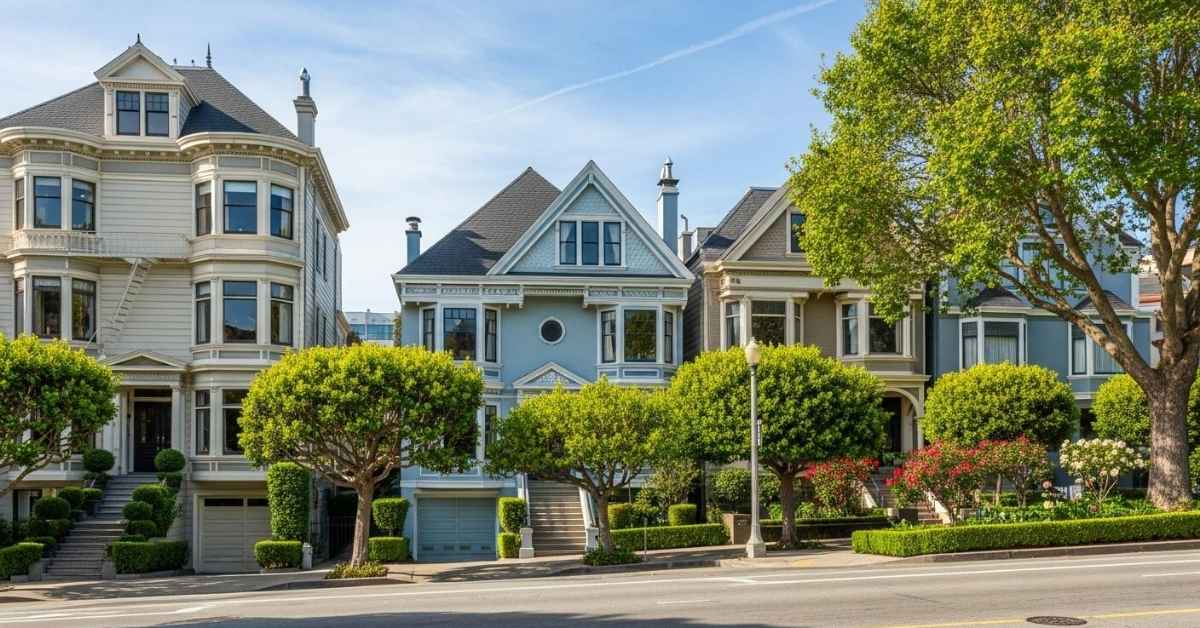
Pacific Heights
These properties often feature large footprints, formal entryways, and extensive decorative woodwork. Many also include landscaped gardens, which were uncommon in denser downtown Victorian districts.
The neighborhood today represents one of the highest-value historic residential areas in the city. Victorian homes here often compete with modern luxury developments, similar to the competition seen between historic properties and Luxury Home Architecture in Los Angeles.
2.9. Alamo Square Victorian district
Year developed: primarily 1870–1895
Architectural style: Queen Anne and Italianate
Location context: Alamo Square Historic District
Alamo Square represents one of the most important Victorian preservation zones in San Francisco. The neighborhood developed rapidly during the late 19th century as streetcar expansion made the area more accessible.
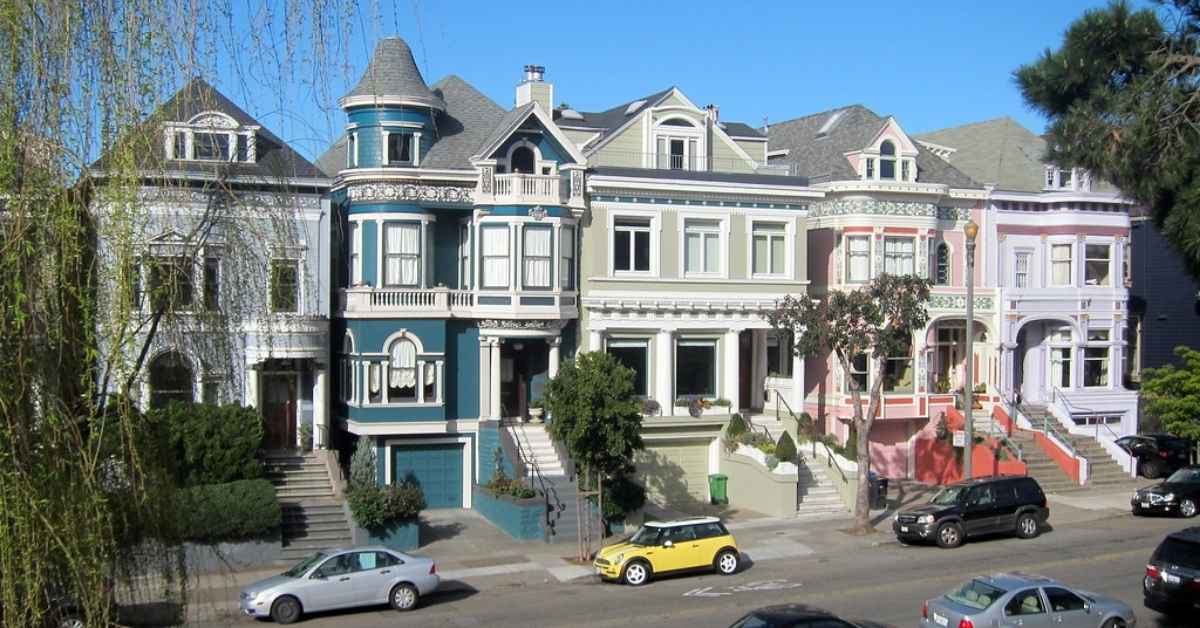
Alamo Square
Many homes here feature raised foundations, elaborate staircases, and decorative façades designed to impress visitors. The park itself serves as a visual centerpiece, allowing unobstructed views of historic homes.
Because of strict historic zoning regulations, this district remains one of the most intact Victorian neighborhoods in the United States, reinforcing the long-term cultural value of Victorian Homes in San Francisco.
2.10. Painted Ladies
Year built: 1892–1896
Architectural style: Queen Anne Victorian
Location context: Steiner Street facing Alamo Square Park
The Painted Ladies represent the most famous collection of Victorian Homes in San Francisco and are widely considered one of the most photographed residential streets in the United States. Built by developer Matthew Kavanaugh during a housing boom in the 1890s, these homes were designed to attract affluent buyers seeking architecturally distinctive residences.

The Painted Ladies
Their defining feature is the use of multiple exterior paint colors to highlight architectural elements such as trim, columns, and window frames. This painting technique became especially popular during the 1960s and 1970s preservation movement, when artists and historians sought to restore Victorian homes using historically appropriate color palettes.
Structurally, the houses feature steep gabled roofs, ornate spindlework, decorative brackets, and detailed façade carvings typical of Queen Anne architecture. Their elevated position across from Alamo Square Park allows uninterrupted sightlines toward downtown San Francisco, creating one of the most recognizable urban compositions in American architecture.
The surrounding Alamo Square Historic District remains one of the most protected Victorian neighborhoods in the country. Strict preservation guidelines help maintain the architectural integrity of the area, ensuring these homes remain among the most culturally significant historic types of houses in California.
Today, the Painted Ladies continue to serve as both architectural landmarks and symbols of San Francisco’s historic identity, demonstrating how preservation and visual character can contribute to long-term real estate and cultural value.
3. Why Victorian houses remain valuable in San Francisco today
Despite the emergence of newer housing trends, Victorian Homes in San Francisco continue to hold strong value because they combine scarcity, architectural significance, and prime urban locations.
Unlike many newer developments among the broader types of houses in California, Victorian homes cannot be easily replicated. Preservation laws and historic protections limit supply, which supports pricing stability even during shifting market conditions.
Buyers interested in character properties often view Victorian homes as legacy investments rather than simply housing. This differs from more standardized housing markets or newer luxury developments.
Additionally, historic homes benefit from storytelling value. Properties with documented architectural history often attract design-focused buyers who appreciate authenticity.
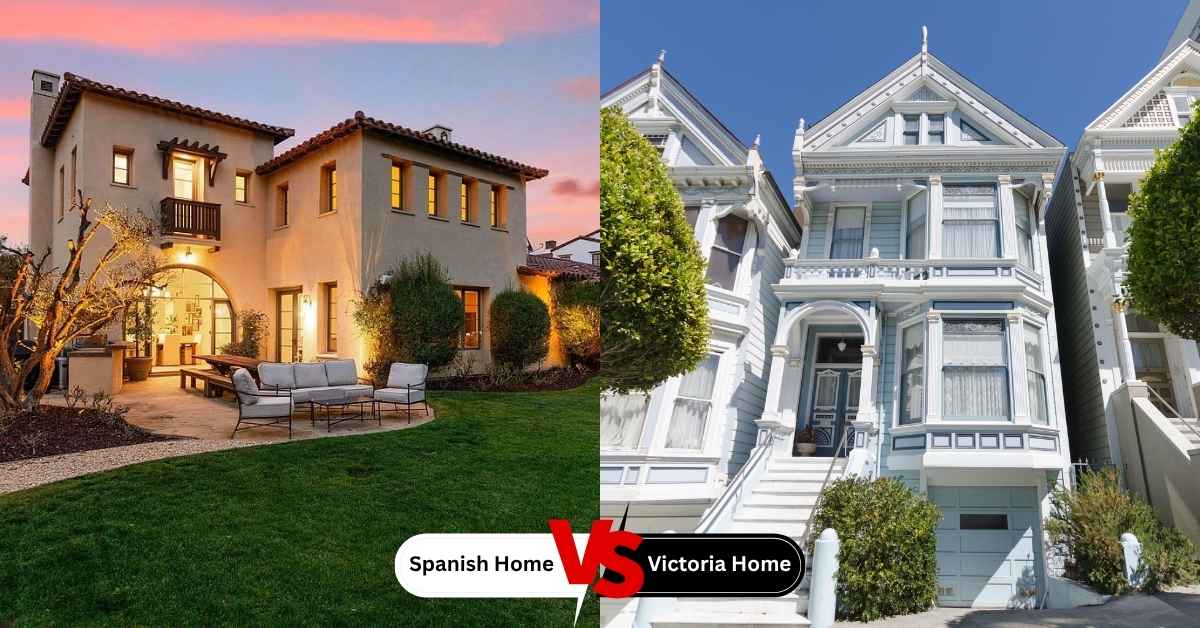
The differences between Spanish home and Victoria home
Compared to coastal comparisons such as Modern vs Spanish Homes in San Diego, Victorian homes appeal more to buyers seeking historic charm rather than contemporary lifestyle design.
This unique positioning ensures that Victorian homes remain competitive within the evolving housing landscape.
4. Why visual presentation matters for historic Victorian homes
Visual marketing plays an essential role in how Victorian Homes in San Francisco are perceived in the marketplace. Because these homes rely heavily on architectural detail, even small presentation improvements can significantly impact buyer perception.
Historic homes are also more difficult to photograph due to:
- Complex exterior textures
- Deep interior shadows
- Mixed lighting conditions
- Tight urban surroundings
Because of these challenges, photographers often rely on professional workflows such as detail-focused image enhancement to ensure architectural details remain visible without appearing artificial.
Advanced editing techniques may include:
- HDR blending
- Perspective correction
- Color balancing
- Sky enhancement
- Object removal
These processes help listings communicate architectural beauty more effectively.

How editing improves Victorian listing presentation
In addition to photography, layout understanding is equally important. Because Victorian homes often contain complex room arrangements, services such as floor plan rendering for historic homes can help buyers better understand interior flow. Many agents now rely on 2D and 2D - 3D Floor Plan visualization to communicate these layouts clearly.
Professional real estate marketing companies such as Fotober often combine photography enhancement with floor plan visualization to help historic listings compete with modern developments. As competition increases, these services help ensure historic properties remain competitive with other premium listings across the state.
Conclusion
Among all residential architecture across the state, Victorian Homes in San Francisco remain one of the most recognizable and culturally important housing categories. Their detailed design, historical significance, and limited availability ensure they remain desirable long after newer housing trends emerge.
While buyers may also consider other types of houses in California, including contemporary developments or coastal luxury homes, Victorian properties continue to stand apart because of their architectural storytelling and cultural heritage.
Their visual character also ensures they remain among the most photographed homes in the country, reinforcing the importance of professional presentation, photography, and layout visualization.
As the housing market continues to evolve, Victorian homes will likely remain key examples of how historic architecture can coexist with modern real estate strategies, preserving both cultural history and long-term property value.
- Facebook: fotobermedia.co
- YouTube Channel: Fotober
- TikTok Channel: @fotober
- Instagram: fotober_media
- Email support: [email protected]
- Hotline: +84 942 110 297
Related posts

Modern Luxe Interior Design: Elements, Style Guide and How to Stage It
October 10, 2026

Minimalist Interior Design: Characteristics, Style Guide, and Staging
October 8, 2026

Coastal Interior Design: Style Definition & Staging Guide
September 30, 2026

Contemporary Interior Design: Key Elements and How to Stage This Style
September 30, 2026
