




How Fed Rate Cuts Affect Home Buyers 2026: What Realtors Need to Know


Share:
Table of Contents
How Fed rate cuts affect home buyers in 2026 is more complicated than many headlines suggest. While a rate cut can signal relief, mortgage rates do not always fall immediately, and buyers are still dealing with high monthly payments, tight affordability, and cautious market conditions. For realtors, this means the listing strategy should be more diversified to avoid their properties sitting far longer than they did a few years ago. This article explains why Fed cuts may not quickly lower mortgage costs and how agents can use smarter pricing and stronger presentation to keep listings competitive.
Key takeaways:
- Fed rate cuts do not lower mortgage rates one-for-one; the 30-year fixed tracks the 10-year Treasury yield and lender spreads.
- In 2026, elevated financing costs have kept affordability tight and left many would-be sellers locked into low pandemic-era loans.
- Buyers are cautious and payment-sensitive, so listings have to work harder to sell.
- Presentation is the lever agents control, strong photography and virtual staging stimulate demand.
- The fastest-selling homes in a high-rate market look move-in ready before a buyer ever steps inside.
1. Why Fed rate cuts don't move mortgage rates the way buyers expect
The single biggest misconception in 2026 is that a Fed cut automatically drops mortgage rates. It doesn't. The Fed sets the federal funds rate, which directly influences short-term borrowing like credit cards and home equity lines, but the 30-year fixed mortgage tracks the 10-year Treasury yield plus the spread lenders add on top. That gap is exactly why mortgage rates after Fed cuts can stay flat, or even drift higher, when bond investors worry about persistent inflation or heavy government borrowing. Research from Morgan Stanley's mortgage-rate outlook and reporting from CNBC have both stressed this disconnect between the policy rate and what buyers pay at the closing table.
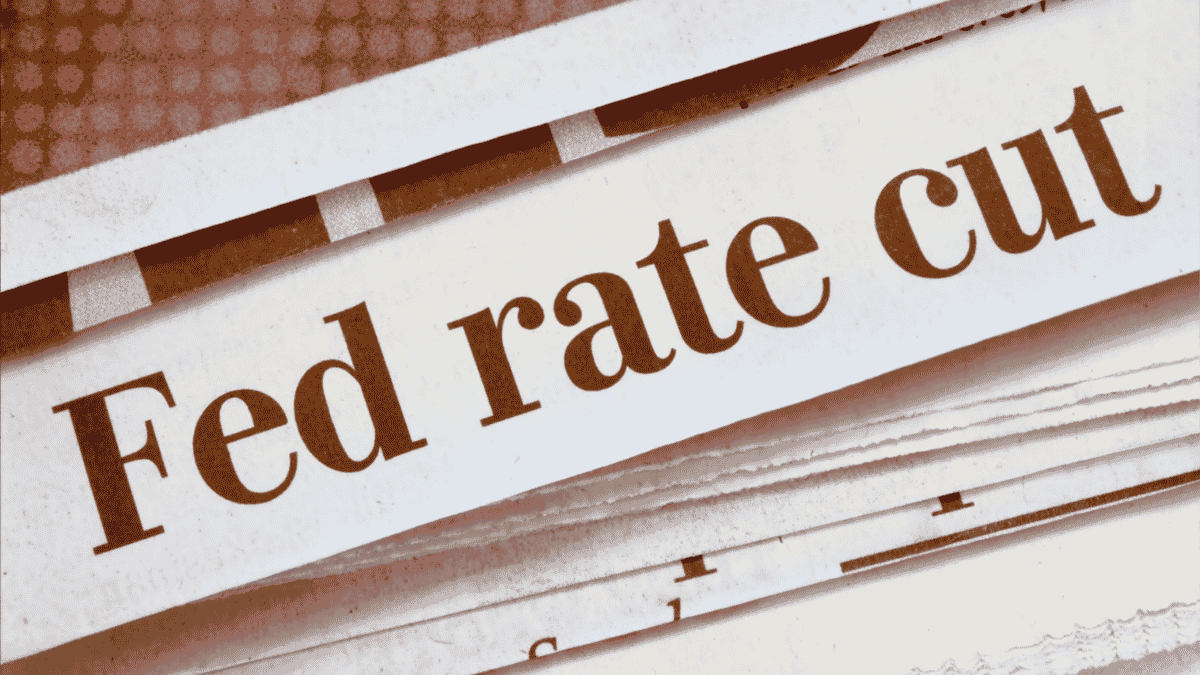 Mortgage rates are seemingly unfazed by Fed decisions.
It helps to think of a mortgage rate as a bet on the future, not a mirror of today's Fed decision. When policymakers signal cuts but markets still fear inflation, long-term yields hold firm and mortgages move very little, which is central to how Fed rate cuts affect home buyers in 2026. For buyers, a celebrated quarter-point cut can produce almost no relief on the monthly payment. For agents, the takeaway is blunt: you cannot count on the Fed to rescue a slow listing, so it is smarter to plan as if rates stay roughly where they are.
What makes 2026 distinct is the size of that lender spread. Spreads widened during years of rate volatility and have been slow to fully normalize, so even when Treasury yields ease, the savings do not always reach the borrower in full. That stickiness is a big part of how Fed rate cuts affect home buyers in 2026, because it blunts the relief a headline cut appears to promise. Until spreads compress and inflation expectations settle, buyers should expect a stubborn gap between Fed policy and the rate they are actually quoted.
2. How Fed rate cuts affect home buyers in 2026
At a practical level, the effect of Fed rate cuts comes down to three things: monthly affordability, the supply of homes for sale, and buyer confidence. Even small moves in rates swing a typical mortgage payment by a meaningful amount, which quietly reshapes who can afford what. At the same time, millions of owners holding cheap pandemic-era loans have little reason to sell and trade up into a higher rate. The result is a market where demand is real but hesitant, and supply is constrained in an unusual, self-reinforcing way.
2.1. Monthly payments and home affordability 2026
For a buyer, the rate is the payment, full stop. When financing costs stay high, the same list price turns into a larger monthly obligation, which is why home affordability in 2026 has remained among the tightest in recent memory. A household that once qualified comfortably can be pushed into a smaller price band when rates barely budge after a Fed cut. Agents who internalize this can steer sellers toward realistic pricing instead of chasing a market that has already moved on.
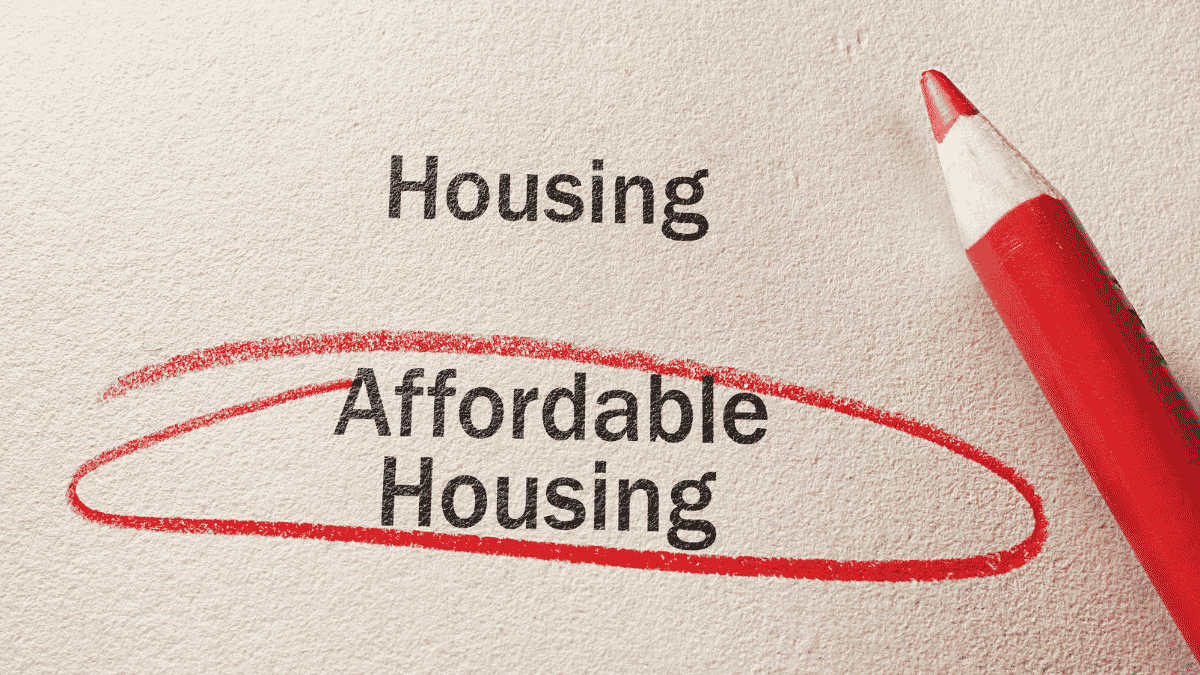 Monthly payments still drive buyer decisions.
Consider the arithmetic every buyer is now running. On a mid-priced home, a difference of even half a percentage point can swing the monthly payment by a few hundred dollars, which compounds into real money over a 30-year term. That is why so many shoppers feel priced out even when list prices are flat or softening slightly. For listing agents, it reframes the entire job: you are not just selling a house, you are selling a monthly payment a nervous buyer can actually live with.
2.2. The lock-in effect and tight inventory
The lock-in effect is the quiet force shaping the whole year. Homeowners who refinanced into very low rates are reluctant to surrender them, so they stay put rather than list, which keeps existing-home inventory thin. That dynamic can prop up prices even as demand softens, a tension housing economists have unpacked in coverage like CBS News on home prices when rates stay high. For the sellers who do come to market, though, thin competition is an opening: a well-presented home stands out sharply when buyers have fewer polished options to compare it against.
The flip side is that the buyers who remain are serious but selective. With fewer homes to choose from, they can afford to be patient and ignore anything that looks tired or poorly marketed. A seller benefits from low competition only if their listing is the one that looks unmistakably move-in ready. That single distinction often decides which of two similar homes on the same street sells first.
2.3. Buyer confidence and timing
Confidence is the third lever, and it is psychological as much as financial. Plenty of buyers in 2026 are waiting for a "better time," hoping the next Fed move finally brings rates down, which makes them slow to commit. This hesitation is the heart of buying a home after rate cuts: purchasers expect relief that may never arrive on their timeline, so they sit on the fence and keep shaping how Fed rate cuts affect home buyers in 2026 on the ground. Sellers and agents who can make a listing feel like an obvious, move-in-ready choice are the ones who turn that hesitation into signed offers.
 Buyers are cautious about when to act.
This waiting game has a cost that buyers often underestimate. While they hold out for a lower rate, home prices in tight-inventory markets can keep inching up, quietly eroding any savings a future cut might deliver. Some buyers also forget they can refinance later if rates do fall, which means marrying the house and dating the rate is often the more rational play. Agents who can explain that calmly give hesitant buyers the permission they need to act now rather than someday.
3. Why listings sit in 2026 and how to sell them faster
In a high-rate market, listings stall for a simple reason: cautious, payment-stretched buyers will not look past a home that fails to impress in the first few seconds online. Days on market stretch out, price cuts pile up, and the homes that actually move are the ones that look effortless and ready to live in. Knowing how fed rate cuts affect home buyers in 2026 only helps if it changes what you do with a listing, and the part you fully control is presentation. For a deeper market context to share with your sellers, it helps to walk them through credible 2026 housing market predictions so they understand what to expect from pricing and demand through the year.
3.1 Why homes stall when money is expensive
When borrowing is expensive, every buyer becomes more discerning and more price-sensitive at once. They scroll faster, dismiss listings with dark or cluttered photos, and mentally subtract the cost of anything that looks like work. A vacant home reads as cold and hard to picture living in, while a dated or messy one screams "project" to someone already anxious about their budget. The listings that sit are rarely overpriced in isolation; they usually also fail to make an emotional case in the very first photo.
There is a feedback loop worth naming here. The longer a listing lingers, the more buyers assume something must be wrong with it, and the deeper the eventual price cut tends to be. A stale listing quietly trains the market to wait for a discount, which is the exact opposite of what a seller wants in a slow year. Breaking that cycle means launching with the strongest possible presentation from day one, not scrambling to fix it after weeks of silence.
3.2. Virtual staging: Stimulating demand without the cost
Virtual staging is the most cost-effective way to make a listing feel desirable when buyers need convincing. Rather than renting physical furniture for thousands of dollars and weeks of logistics, virtual staging for real estate digitally furnishes empty rooms so buyers can instantly imagine living there. It is fast, costs a fraction of traditional staging, and lets you present several styles tuned to different buyer profiles on the same property. In a market where demand is hesitant, that "I can see myself here" reaction is precisely what nudges a cautious buyer toward an offer.
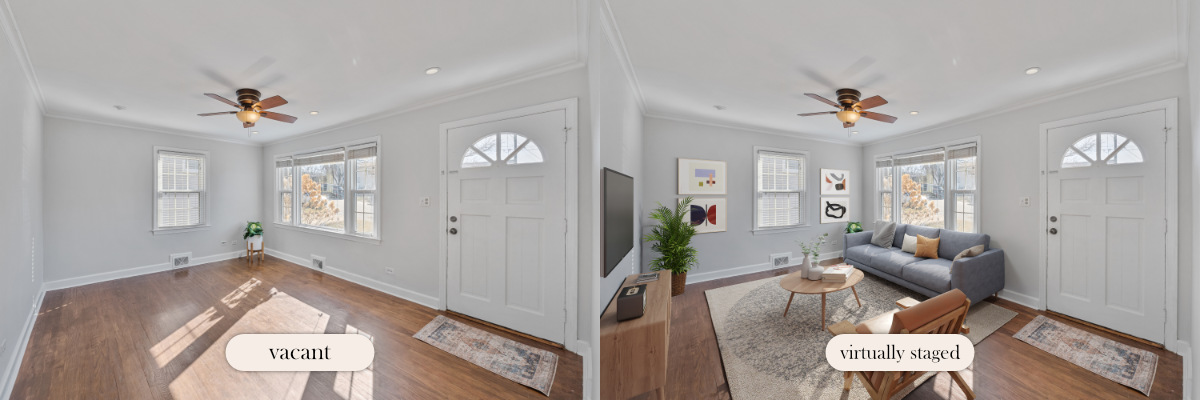 Virtual staging makes empty rooms feel more livable.
Virtual staging also solves a problem unique to a high-rate market: hesitant buyers struggle to commit to anything that demands imagination. An empty three-bedroom can feel smaller and colder than the same space dressed with a sofa, a rug, and a dining set scaled correctly to the room. Showing a vacant home, both empty and virtually staged, gives buyers proof of the square footage and the emotional pull in a single gallery. For investors and flippers watching every dollar, it is the rare upgrade that costs little yet consistently shortens days on market.
3.3 Photography that earns the click
Even a beautifully staged home falls flat if the photos are dim or crooked, so professional imagery is the other half of the equation. Bright, properly exposed, well-composed photos are what stop the scroll on a crowded portal, and the National Association of Realtors has long reported that the overwhelming majority of buyers start their search online (NAR Research & Statistics). Consistent real estate photo editing, exposure blending, color correction & sky replacement make every listing look its best, no matter the weather or the hour it was shot. Pair sharp photography with virtual staging, and a sluggish listing starts to feel like the obvious choice rather than the compromise.
None of this is about tricking a buyer; it is about removing friction. When the photos are honest, bright, and consistent, a buyer spends their limited attention picturing their life in the home instead of squinting past bad exposure and clutter. That clarity is one of the few reliable levers agents hold over how Fed rate cuts affect home buyers in 2026, because it works no matter what the Fed does next. Presentation is the variable you can fix this week; the rate is the one you cannot. Treated together, photography and staging are not marketing extras but the most direct demand-generation tools an agent has in a market this slow.
4. Frequently asked questions
Here are some quick answers to the most common questions buyers, sellers, and real estate agents have about how Fed rate cuts affect home buyers in 2026. These FAQs clarify how mortgage rates, affordability, buyer confidence, and listing presentation all connect in today’s high-rate housing market.
 Common questions about Fed cuts and buyers.
Q: Do mortgage rates go down when the Fed cuts rates?
A: Not necessarily. Mortgage rates track the 10-year Treasury yield and lender spreads rather than the federal funds rate directly, so mortgage rates after Fed cuts can stay flat or even rise if markets expect inflation.
Q: How do Fed rate cuts affect home buyers in 2026 in practice?
Mostly through affordability and confidence rather than big rate drops. Buyers face stretched budgets and often wait for relief that may not come, so well-presented, move-in-ready homes are the ones that win.
Q: Is 2026 a good time for buying a home after rate cuts?
A: It depends on the buyer's finances and local market. Many find that buying a home after rate cuts brings less payment relief than expected, so choosing the right home and a comfortable payment matters more than trying to time the Fed.
Q: Why are homes taking longer to sell in 2026?
Elevated rates make buyers cautious and price-sensitive, so listings that look dated, dark, or empty get skipped. Strong photography and virtual staging help a home stand out and sell faster.
Q: Does virtual staging really help sell homes faster?
Yes. Virtual staging helps buyers visualize a space, especially valuable for vacant or dated listings, and it costs a small fraction of physical staging while taking a day or two rather than weeks.
5. Conclusion
Understanding how Fed rate cuts affect home buyers in 2026 helps real estate agents set better expectations in a market where mortgage rates may not fall as quickly as buyers hope. Fed cuts can improve confidence, but affordability, tight inventory, the lock-in effect, and cautious buyer behavior still shape how homes sell.
For agents, the best strategy is to focus on what they can control: realistic pricing, strong listing presentation, professional photography, and virtual staging. In a high-rate market, buyers need to feel confident before they act, and polished visuals can make a listing stand out faster. Fotober supports agents and real estate teams with US-focused photo editing and virtual staging that help turn hesitant online views into stronger buyer interest.
Connect with Fotober
- Facebook: fotobermedia.co
- YouTube Channel: Fotober
- TikTok Channel: @fotober
- Instagram: fotober_media
- Email support: [email protected]
- Hotline: +84 942 110 297
Related posts
Why Home Sellers Must Have Virtual Staging Kitchen Photos in 2026
June 15, 2026

Virtual Staging Services vs AI Software: Has AI Become Reliable?
June 11, 2026

How to Virtually Stage a Living Room: Staged Photos Bring Real Results
June 8, 2026

How Geographical Characteristics of Rhode Island Shape Home Architecture
May 28, 2026
