




Coastal Interior Design: Style Definition & Staging Guide

Share:
Table of Contents
- 1. Key takeaways
- 2. What is coastal interior design?
- 3. How to create coastal interior design style
- 4. Top 5 trending coastal interior design styles
- 5. Why coastal interior design sells homes
- 6. Staging a listing in a coastal look with virtual staging
- 7. Frequently asked questions about coastal interior design
- 8. Conclusion
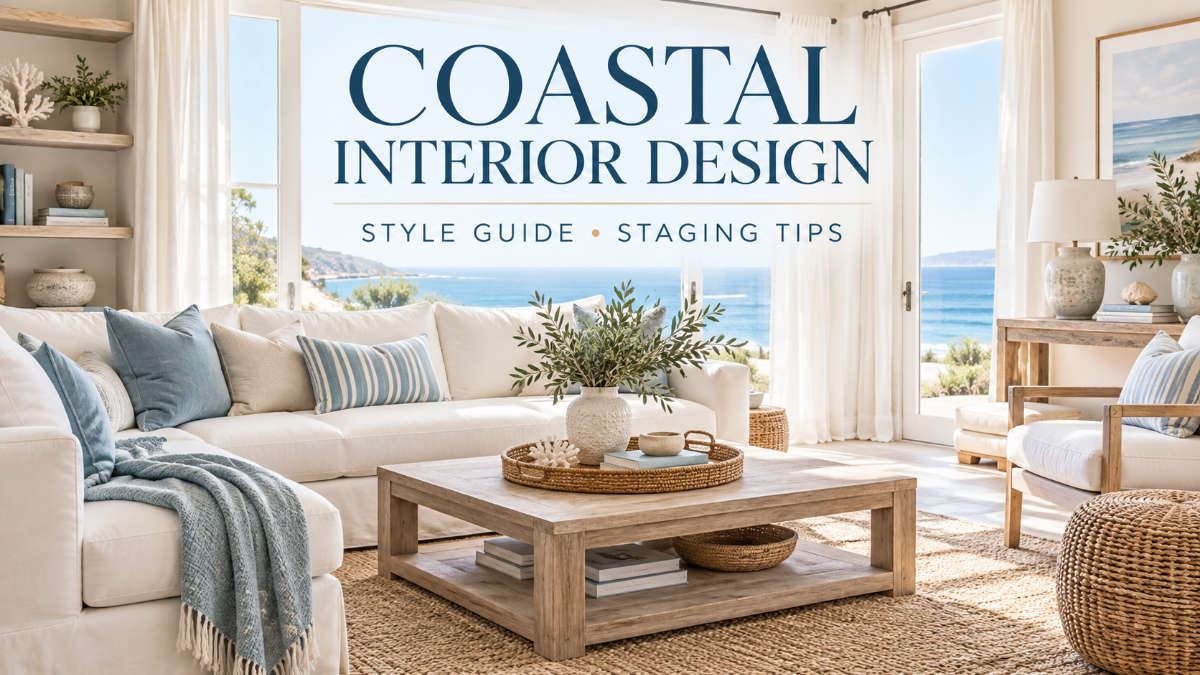
Coastal interior design captures the easy, sunlit feeling of life by the water and brings it into everyday spaces. Defined by soft sandy neutrals, ocean-inspired blues, natural materials, and bright, breathable layouts, the style feels calm, polished, and effortlessly inviting. Its appeal goes far beyond beachfront homes: from suburban living rooms to city apartments, coastal interiors can make almost any space feel lighter, more open, and more relaxed.
In this guide, we explore coastal interior design from both a design and real estate perspective. You’ll learn what defines the style, its key elements, furniture choices, popular variations, and how it differs from similar aesthetics. We’ll also look at why coastal interiors can be especially effective in property marketing and how virtual staging can transform an empty or dated listing into a bright, aspirational space that helps buyers imagine the lifestyle. Whether you’re designing a home or preparing one for the market, this guide covers everything you need to know.
1. Key takeaways
- Coastal interior design is a light, airy, beach-inspired style built on pale palettes, natural materials, and a relaxed, breezy feel.
- Its hallmarks are soft blues and sandy neutrals, natural textures like rattan and weathered wood, abundant light, and subtle nautical decor.
- It's distinct from, but related to Hamptons, farmhouse, and contemporary looks, sharing their love of bright, comfortable space.
- Coastal interiors sell homes well because they feel relaxed, aspirational, and photograph beautifully, especially in beach and vacation markets.
- Fotober's virtual staging can furnish any listing in a polished coastal look photorealistically, for a fraction of physical staging.
2. What is coastal interior design?
Coastal interior design is a decorating style inspired by the beach and the sea, built around light, airy spaces, natural materials, and a calm, relaxed atmosphere. It uses a palette drawn from the shoreline: sand, sky, sea, and driftwood, along with breezy fabrics and natural textures to bring the feeling of a seaside retreat indoors.
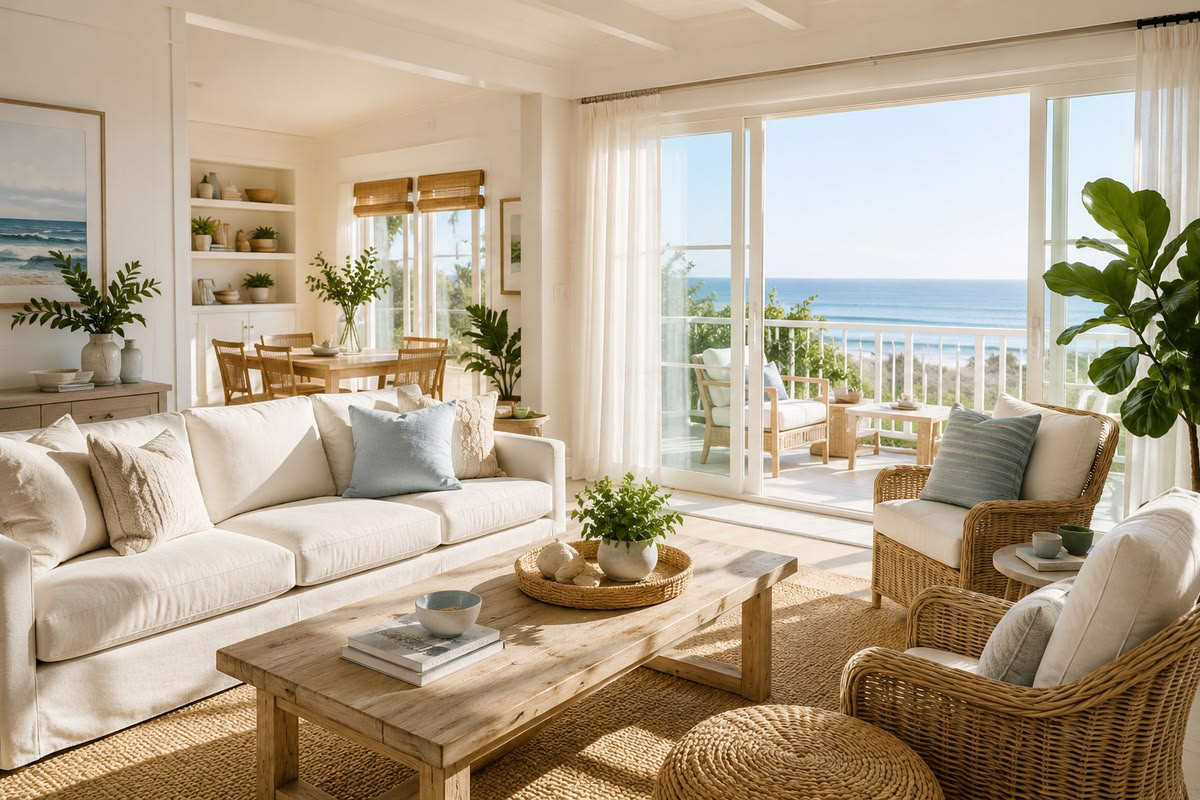
At its heart, the style is about lightness and ease. Rooms are bright and uncluttered, colors are soft and sun-washed, and materials feel natural and slightly weathered, evoking a home that's comfortable, unpretentious, and made for relaxing. So when someone asks what coastal interior style is, the simplest answer is that it's the art of capturing a beach-vacation mood: airy, serene, and connected to nature, whether or not the home is anywhere near the ocean.
It's worth clearing up one misconception: true coastal interior design is subtle, not a theme park of seashells and anchors. The best versions hint at the sea through color, light, and texture rather than literal nautical props. Understanding that restraint is the key to the whole look, and it leads directly into the elements that define it.
3. How to create coastal interior design style
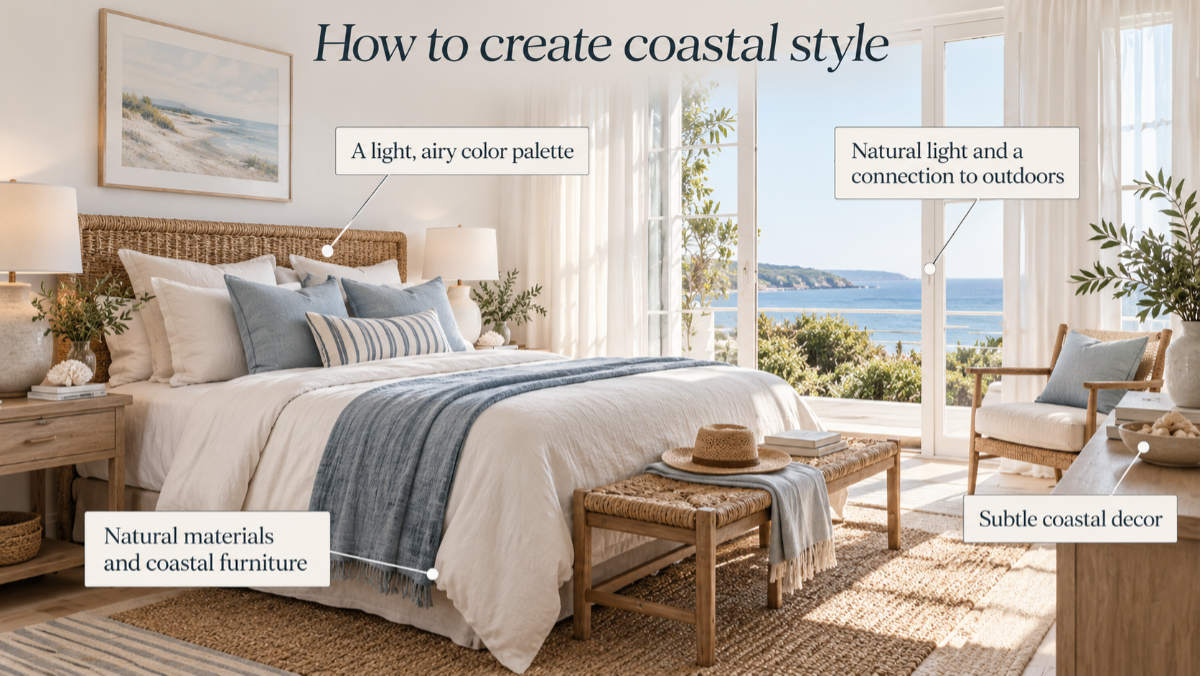
Coastal rooms share a recognizable set of ingredients, and knowing them lets you create or spot the look. The style is a coordinated feeling more than a checklist, but these four elements do most of the work.
3.1. A light, airy color palette
The foundation is a bright, sun-washed palette: crisp whites and creams, sandy beiges, and soft blues and greens drawn from sea and sky, sometimes with a deeper navy accent. Light dominates, keeping rooms feeling open and breezy. Walls are usually pale, letting the gentle colors and natural textures carry the mood rather than bold, saturated hues.
3.2. Natural materials and coastal furniture
Texture is where the style comes alive. Coastal style furniture leans on natural, often weathered materials: rattan, wicker, light or driftwood-toned woods, and slipcovered sofas in linen and cotton. Pieces feel casual, comfortable, and unfussy, built for bare feet and lazy afternoons rather than formality. Layered natural textures like jute rugs, woven baskets, and rope accents add warmth and that relaxed, lived-in beach-house feel.
3.3. Natural light and a connection to the outdoors
Coastal interiors worship light and views. Windows are left largely unobstructed or dressed in sheer, gauzy fabrics, and the layout invites the outdoors in, blurring the line between inside and the landscape. Mirrors amplify brightness, and airy, open arrangements let real or implied breezes move through the space. This emphasis on daylight is central to the style's fresh, uplifting feeling.
3.4. Subtle coastal decor
Finally, the finishing touches are where restraint matters most. The best coastal home decor hints at the sea rather than shouting it: a few natural elements like driftwood, a bowl of shells, some greenery, or soft ocean-toned art, kept minimal and tasteful. Skip the literal nautical clichés; a single rope-wrapped lamp or a woven pendant does more than a room full of anchors. Done with a light hand, this decor completes the breezy, effortless look.
4. Top 5 trending coastal interior design styles
Coastal interior design is not limited to one specific look. While most coastal spaces share an emphasis on natural light, relaxed layouts, organic materials, and colors inspired by the sea and shoreline, the final result can vary widely depending on location and architectural influence. From clean modern homes to elegant Hamptons-inspired interiors, these five popular coastal interior design styles offer different ways to bring a fresh, breezy atmosphere into a home.
4.1. Modern coastal interior design
Modern coastal interior design combines the relaxed feeling of a beach house with the clean lines and simplicity of contemporary interiors. Instead of obvious nautical decorations, the style relies on subtle coastal references through color, texture, and materials. Typical features include warm white walls, pale oak furniture, linen upholstery, woven accents, and muted blue or sandy beige details. Furniture usually has streamlined silhouettes, while decor is kept minimal to preserve an open and sophisticated appearance.
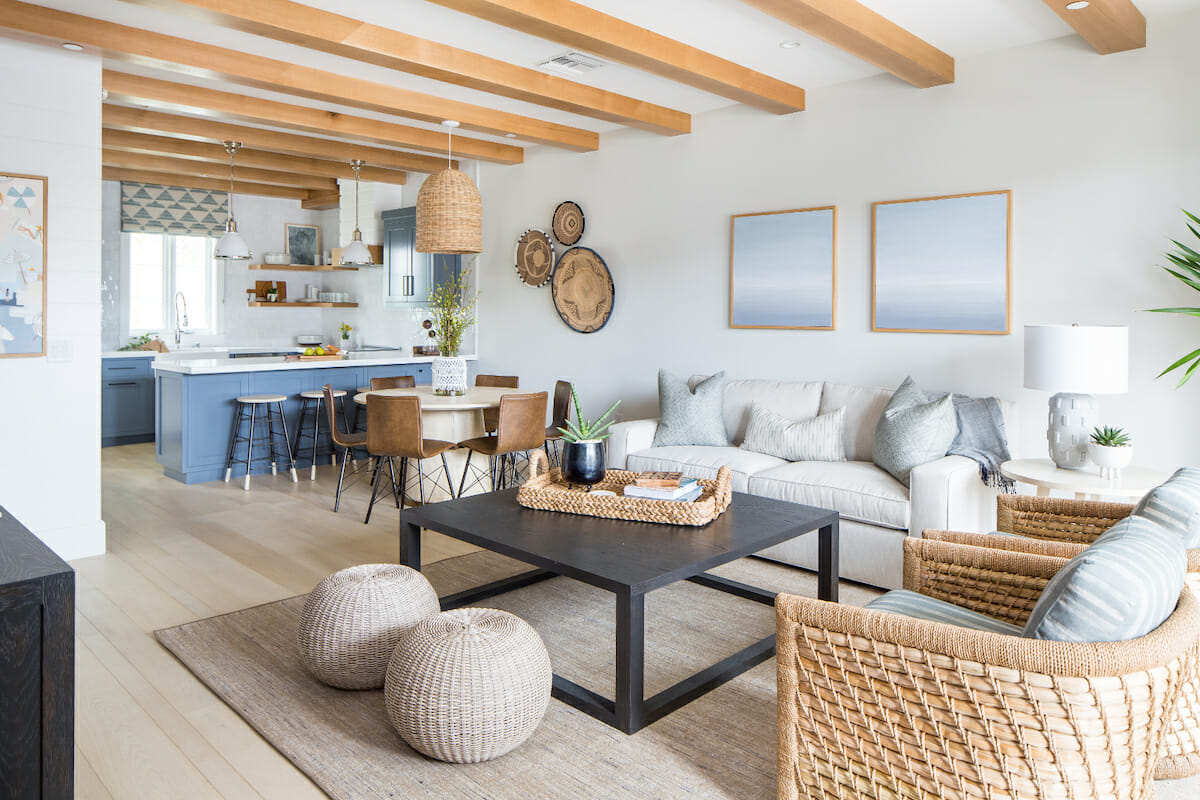
Modern coastal style works particularly well for newly built homes, luxury apartments, and properties where owners want a coastal atmosphere without creating a traditional beach-house look.
4.2. California coastal style
California coastal interiors feel casual, bright, and slightly more organic than traditional coastal spaces. The style blends beach-inspired design with influences from modern California living, resulting in interiors that feel comfortable rather than overly polished. Common elements include white or cream walls, light wood, textured fabrics, oversized sofas, woven rugs, natural stone, and indoor greenery. Earthy tones such as tan, terracotta, olive, and muted blue may appear alongside traditional coastal neutrals.
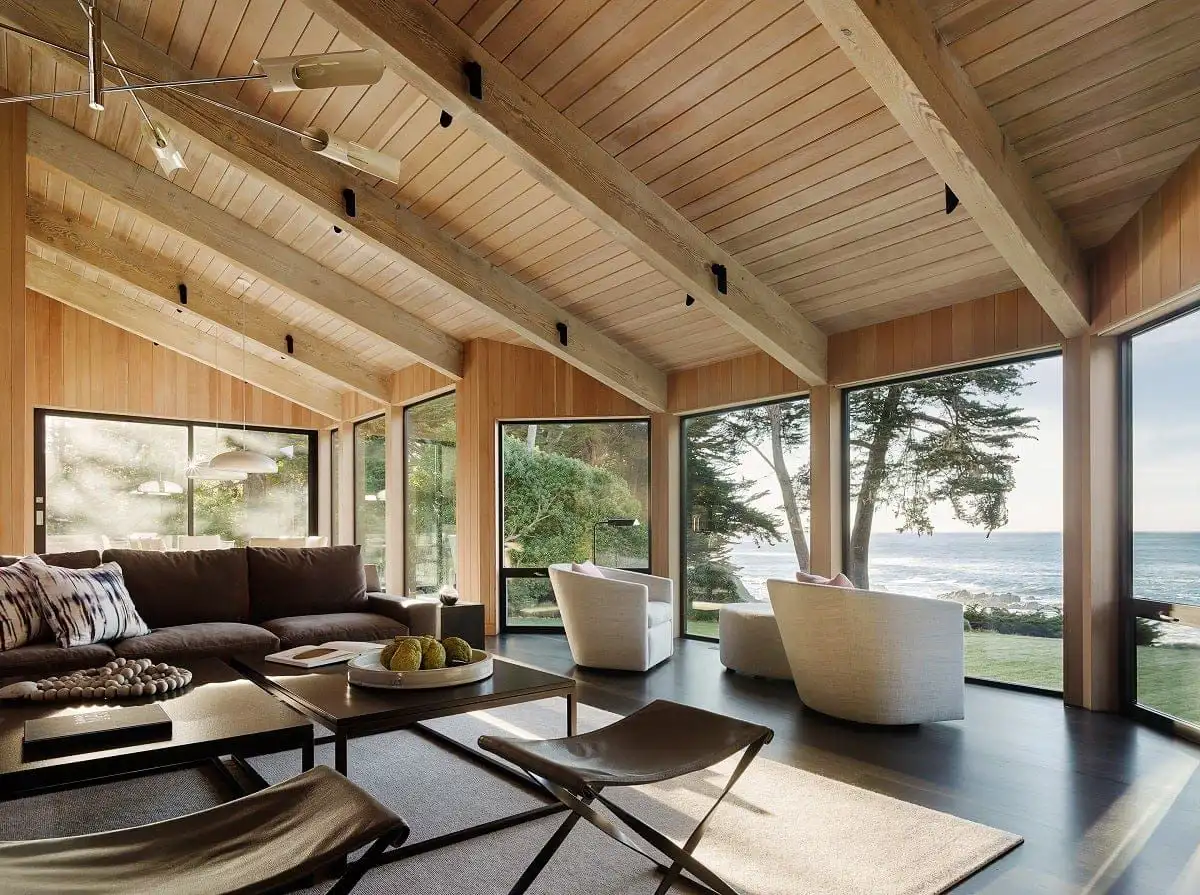
The overall effect is relaxed and effortless, making California coastal style especially suitable for open-plan living rooms, family homes, and properties designed around indoor-outdoor living.
4.3. Hamptons coastal style
Hamptons style offers a more refined and elegant interpretation of coastal design. Inspired by luxury homes along the eastern end of Long Island, this style typically combines classic architectural details with a crisp blue-and-white palette.
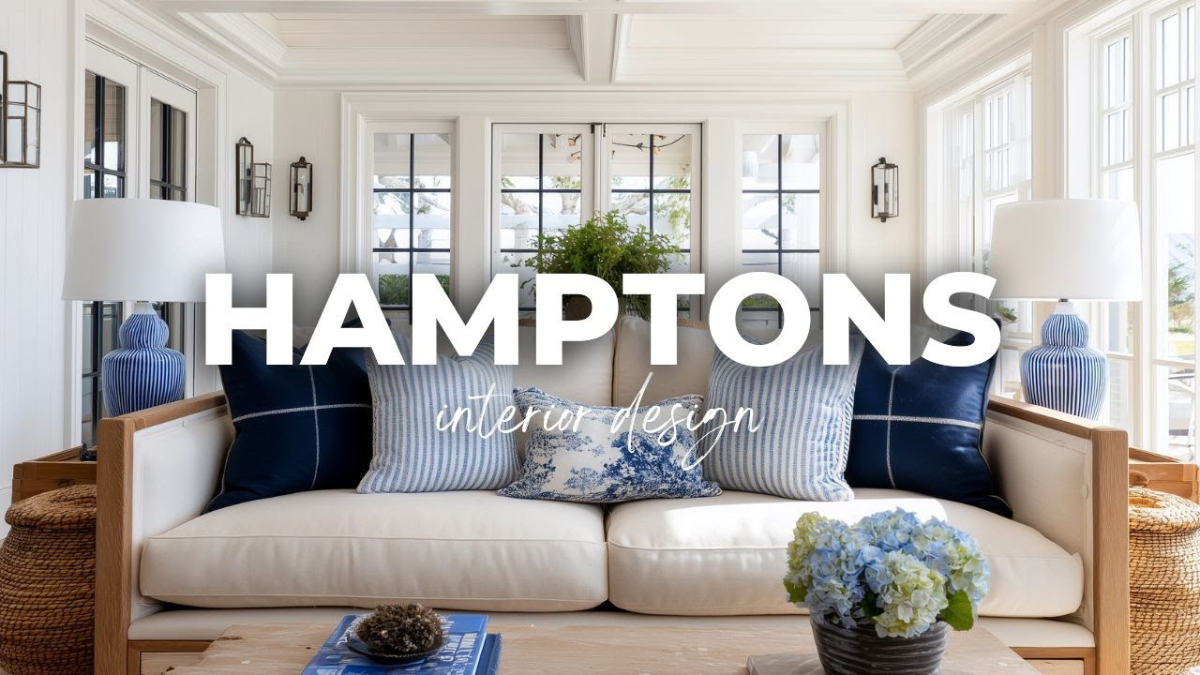
Expect white cabinetry, shaker-style doors, decorative wall paneling, polished wood furniture, upholstered seating, and subtle navy or soft blue accents. Large windows and symmetrical layouts help create a bright, sophisticated atmosphere. Compared with modern coastal interiors, Hamptons spaces tend to feel more formal and structured. This makes the style particularly effective for larger homes, upscale real estate, and properties where a timeless coastal aesthetic is preferred.
4.4. Mediterranean coastal interior design
Mediterranean coastal style takes inspiration from seaside homes in countries such as Spain, Italy, and Greece. Instead of the cool whites and blues often associated with American coastal interiors, this style introduces warmer colors and more tactile architectural finishes.
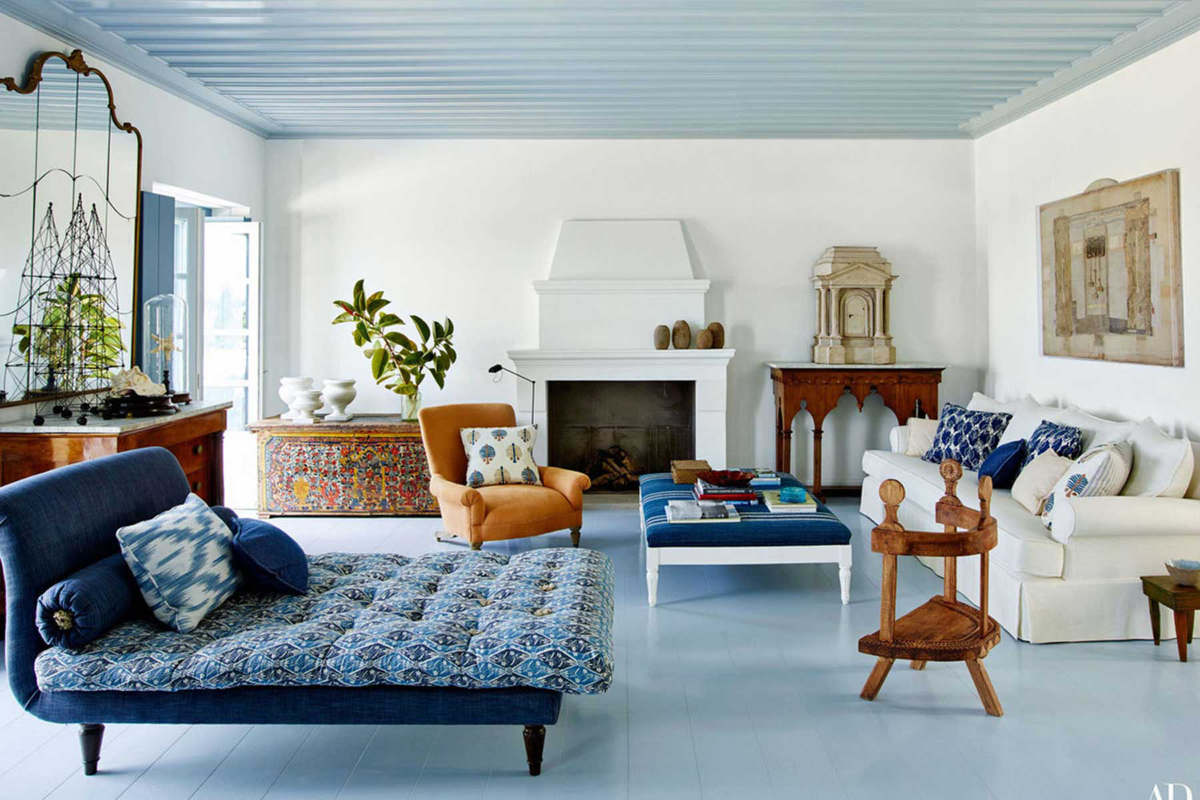
White or cream plaster walls are commonly paired with terracotta flooring, natural stone, exposed wood, linen fabrics, and handmade ceramics. Curved doorways, arched niches, and rustic furniture can add architectural character, while shades of ocean blue, olive green, and sun-baked brown reflect the surrounding landscape. Mediterranean coastal interiors are ideal for homeowners who want a beach-inspired space that feels warm, earthy, and slightly rustic.
4.5. Tropical coastal style
Tropical coastal design takes a more vibrant approach, drawing inspiration from beach homes in Hawaii, the Caribbean, Southeast Asia, and other warm coastal regions.
Natural materials play a major role, including rattan, bamboo, cane, teak, jute, and linen. The neutral base may be complemented by leafy greens, turquoise, ocean blue, or warm wood tones. Large indoor plants and botanical elements further strengthen the connection between the interior and its natural surroundings. Furniture is generally casual and lightweight, while rooms are designed to encourage airflow and indoor-outdoor living. Used carefully, tropical coastal style can feel fresh and sophisticated rather than overly themed.
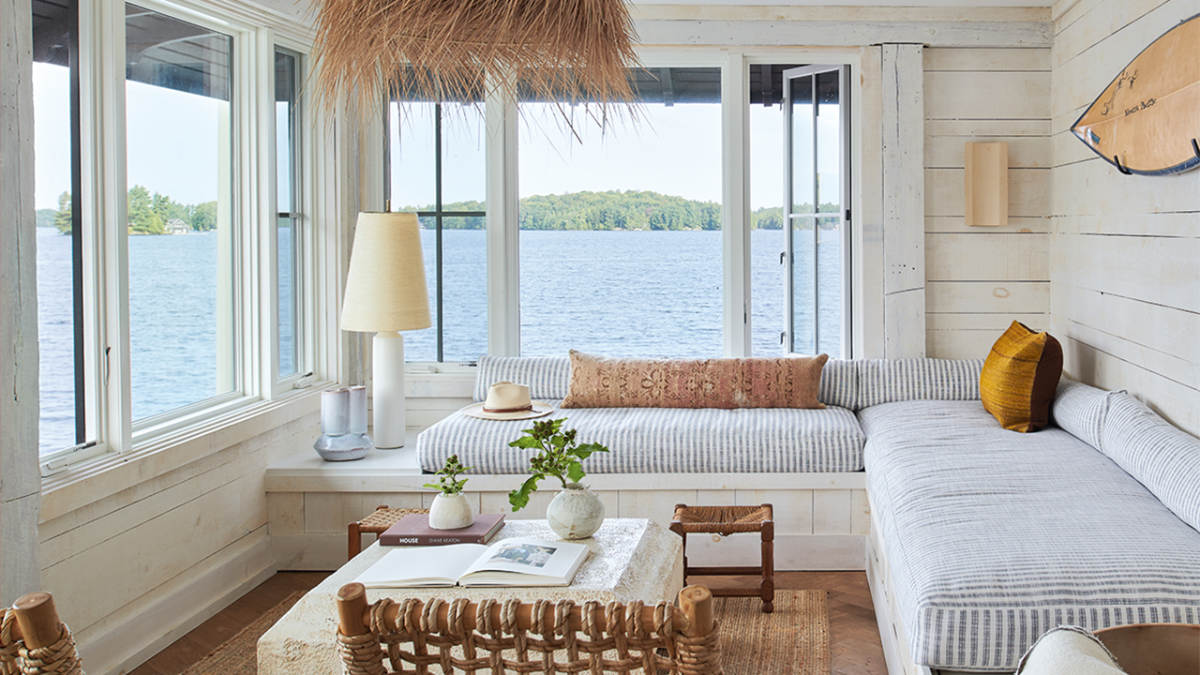
Although these five coastal interior design styles share similar foundations, their personalities are very different. Modern coastal emphasizes simplicity, California coastal feels relaxed and organic, Hamptons style introduces classic elegance, Mediterranean coastal adds warmth and craftsmanship, and tropical coastal embraces natural materials and lush greenery. Choosing the right variation depends on the property's architecture, location, target audience, and the atmosphere you want the space to communicate.
5. Why coastal interior design sells homes
Beyond its beauty, Coastal is a highly effective style for selling real estate, because the relaxed, bright feeling it creates is exactly what buyers are drawn to. Light, airy, aspirational spaces photograph well and stir an emotional response, and that combination moves listings.
The style sells a feeling as much as a look. A coastal interior design reads as a getaway calm, uplifting, and easy to live in, which helps buyers form an emotional attachment to a home, especially in beach towns, lake communities, and vacation markets where the aesthetic fits naturally. Its bright palette and natural light also translate into gorgeous listing photos: crisp, sunny images that stand out in a crowded search results page. And because impressions form online first, that visual appeal is decisive, the National Association of REALTORS® reports in its research on home staging that staging helps buyers picture a property as their future home and can shorten time on market. Even away from the coast, the style's neutral, breezy base gives a home broad appeal and a move-in-ready feel. For a vacant or dated property, dressing it in a coastal look is a proven way to make it feel fresh and desirable, which is where staging comes in.
6. Staging a listing in a coastal look with virtual staging
The practical challenge is that physically furnishing a home in any style is slow and expensive, and for a vacant beach or lake listing it's often impractical. Virtual staging solves that: it lets you present a home in a polished coastal look without renting a single piece of furniture. Here's how it works and why it fits the style so well.
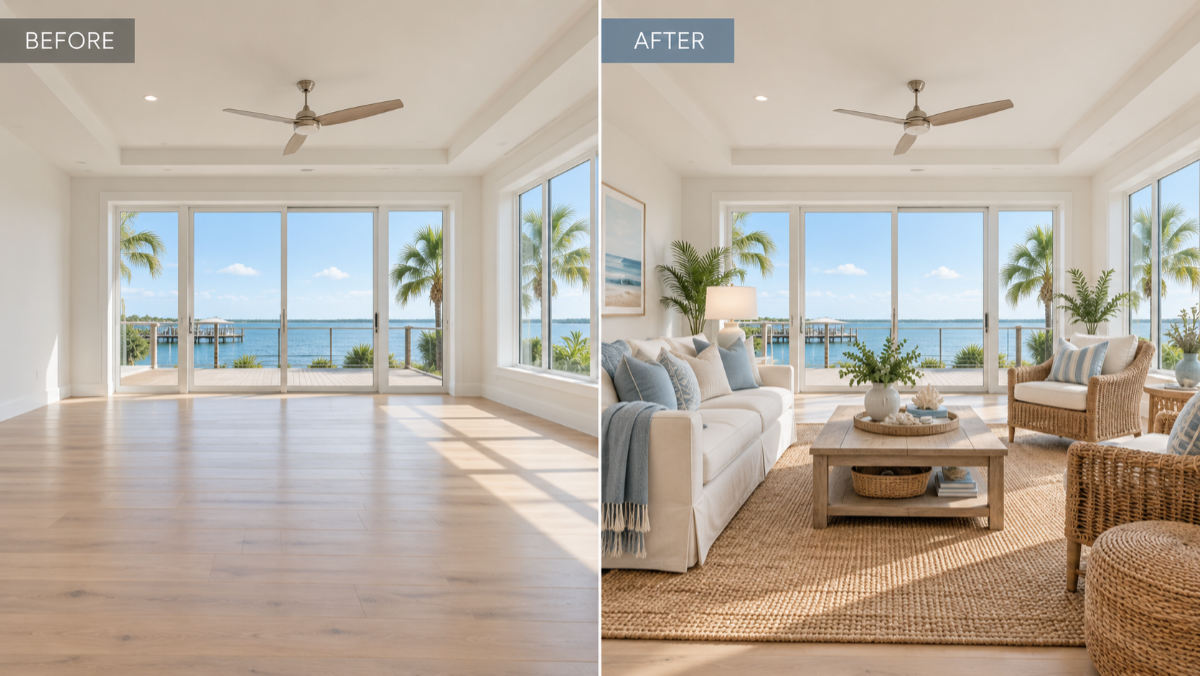
With virtual staging, a professional editor digitally furnishes photos of an empty room, adding light coastal furniture, a breezy blue-and-sand palette, natural textures, and tasteful decor to create photorealistic images buyers see in the listing. Because coastal style relies on light, consistent tones and natural textures, it renders convincingly and looks inviting. The cost advantage is dramatic: virtual staging runs a small fraction of physical staging and can be turned around in a day or two, so a vacant home never sits on the market looking bare. Sellers can even preview a room in more than one style to see what resonates with local buyers. For agents marketing empty or tired listings especially in beach and vacation areas, staging them virtually in a sunny coastal look is a fast, affordable way to help buyers fall for the space.
Fotober helps agents, sellers, and developers present their listings in a bright, on-trend coastal look through professional virtual staging. From photos of an empty room, our team digitally furnishes the space with light coastal furniture, a breezy blue-and-sand palette, and tasteful decor, so buyers see a relaxed, move-in-ready home instead of bare floors. We can stage living rooms, bedrooms, kitchens, and more, and even present the same space in multiple styles so you can market to different buyers. Every image is photorealistic, priced per photo, and delivered fast, so your vacant listings never wait to look their best.
7. Frequently asked questions about coastal interior design
What is coastal interior design?
It's a beach-inspired decorating style built on light, airy spaces, natural materials, and a relaxed feel. It uses a shoreline palette of whites, sandy neutrals, and soft blues, plus natural textures like rattan and linen, to bring a serene, vacation-like mood indoors.
What colors define the coastal palette?
Crisp whites and creams, sandy beiges, and soft blues and greens drawn from sea and sky, sometimes with a deeper navy accent. The palette stays light and sun-washed to keep rooms feeling bright, open, and breezy.
What furniture works in a coastal home?
Coastal style furniture uses natural, often weathered materials rattan, wicker, light or driftwood-toned woods, and slipcovered linen or cotton seating. Pieces are casual, comfortable, and unfussy, layered with jute rugs and woven baskets for that relaxed beach-house texture.
How do I add coastal decor without it looking tacky?
Keep it subtle. The best coastal home decor hints at the sea through color, light, and natural texture driftwood, greenery, soft ocean-toned art rather than literal seashells and anchors. A light hand reads as elegant; overdoing the nautical props reads as themed.
Can I stage a vacant home in a coastal style without buying furniture?
Yes. Virtual staging digitally furnishes photos of empty rooms in a coastal look with light furniture, a blue-and-sand palette, and natural textures, photorealistically, for a fraction of the cost of physical staging and with fast turnaround.
8. Conclusion
Coastal interior design endures because it captures something universal: the calm, bright, easy feeling of a day by the water. For homeowners, it's a relaxed, timeless look that works far beyond the beach; for anyone selling a property, it's a proven way to make a home feel fresh, aspirational, and broadly appealing especially in coastal and vacation markets. And with virtual staging, you can bring that sunny look to any listing quickly and affordably, no furniture rental required. If you're marketing a vacant or dated home, Fotober can help you show it at its breezy, coastal best. Reach us at [email protected] or the hotline below, and send your listing photos to see the difference, place an order or start a free trial today.
Connect with Fotober
- Facebook: fotobermedia.co
- YouTube Channel: Fotober
- TikTok Channel: @fotober
- Instagram: fotober_media
- Email support: [email protected]
- Hotline: +84 942 110 297
Related posts

Cincinnati Housing Market 2026: Prices, Trends, and What It Means for Buyers, Sellers, and Investors
October 20, 2026
Modern Luxe Interior Design: Elements, Style Guide and How to Stage It
October 10, 2026
Minimalist Interior Design: Characteristics, Style Guide, and Staging
October 8, 2026
Contemporary Interior Design: Key Elements and How to Stage This Style
September 30, 2026
