




2D vs 3D Floor Plan: Which Is Better for Real Estate Marketing?

Share:
Table of Contents
- 1. Quick verdict: 2D vs 3D floor plan (Which is better?)
- 2. What are 2D floor plans? The traditional blueprint
- 3. What are 3D floor plans? The modern visualization
- 4. Head-to-head: 2D floor plan vs 3D floor plan
- 5. Why 3D floor plans are the new standard for real estate marketing
- 6. Which is better for your listing? 2D or 3D floor plan?
- 7. Future trends in 2D vs 3D floor plan visualization
- 8. Conclusion
- 9. Frequently asked questions about floor plans
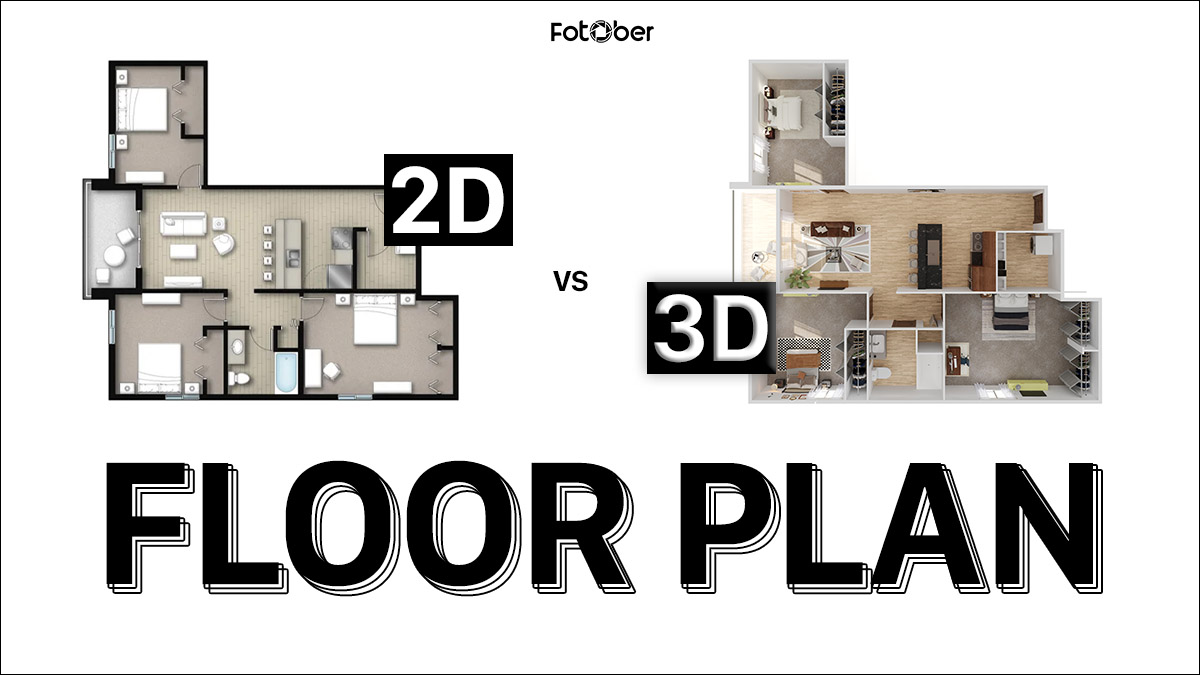
While professional photography captures the beauty of a home, only a floor plan reveals its soul and spatial flow. However, many real estate professionals find themselves at a crossroads between 2D and 3D floor plans. In this comprehensive guide, we will dive deep into the nuances of both visualization styles, helping you answer the ultimate question: 2D vs 3D floor plan? Which one truly converts curious browsers into committed buyers?
1. Quick verdict: 2D vs 3D floor plan (Which is better?)
When deciding between a 2D vs 3D floor plan, there is no one-size-fits-all answer. The ideal choice depends on your marketing strategy, property type, and target audience:
- Choose a 2D floor plan if: You need precise room dimensions, fast 24-hour delivery, a budget-friendly option, or technical clarity for architectural blueprints and renovations.
- Choose a 3D floor plan if: You are marketing luxury listings, selling off-plan/pre-construction homes, or want to create an emotional connection through realistic textures and virtual furniture.
- The hybrid approach (Recommended): For maximum listing engagement and ROI, pair a clean 2D layout (for measurements) with a photorealistic 3D render (for spatial feel).
- Pro tip: Listings featuring floor plans generate up to 52% more interest on MLS and Zillow compared to photos alone.
2. What are 2D floor plans? The traditional blueprint
A 2D floor plan is the foundational element of any real estate marketing floor plan. In its simplest form, a 2D floor plan is a flat, orthographic projection showing a property from a "bird’s-eye view." For decades, these blueprints have served as the primary language between architects, builders, and buyers, using a series of lines and symbols to represent the physical layout of a home.
In a professional 2D floor plan, every line serves a purpose. Bold lines typically indicate load-bearing walls, while thinner lines represent interior partitions. You will find standardized symbols for doors, windows, and stairs, along with precise measurements that define the length and width of each room. This technical clarity is exactly why many still favor them when comparing a 2D floor plan vs a 3D floor plan. For a contractor or a buyer planning a renovation, the exact dimensions provided by a 2D layout are indispensable for calculating square footage and material costs.
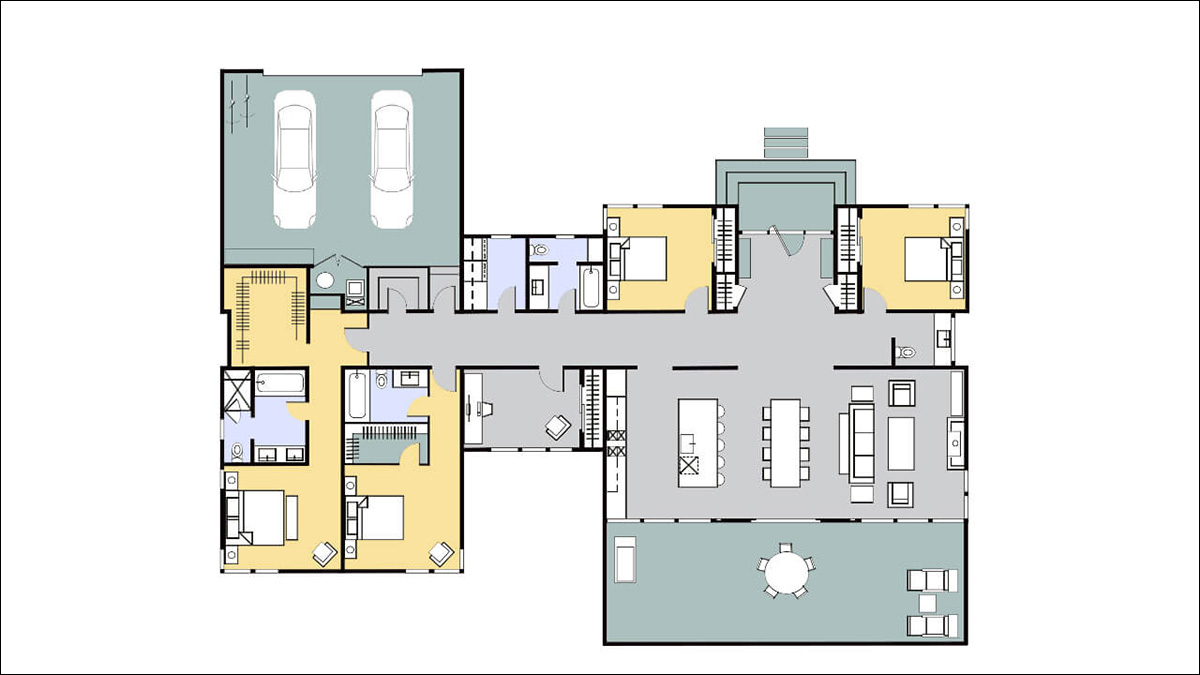 A 2D floor plan is the first blueprint to be provided to buyers to help them understand the property’s structure.
Furthermore, 2D plans are the most cost-effective and time-efficient option in the industry. They can be generated quickly from hand-drawn sketches or old blueprints, making them ideal for high-volume real estate listings or budget-conscious projects. Their simplicity ensures that the viewer isn't distracted by interior design choices, focusing purely on the structural flow and spatial logic of the property.
However, the main drawback surfaces when we consider the psychological aspect of a sale. When asking which is better, 2D or 3D floor plan, one must acknowledge that 2D plans require a certain level of spatial intelligence to interpret. Many potential buyers struggle to visualize how tall a ceiling is or how a room actually feels just by looking at a flat diagram. While a 2D plan tells you where the walls are, it rarely tells you what it’s like to live between them. This "visualization gap" is precisely why 3D alternatives have surged in popularity in recent years.
3. What are 3D floor plans? The modern visualization
If a 2D layout is the skeleton of a property, the 3D floor plan is its living, breathing form. In modern real estate marketing, a 3D floor plan is a high-quality virtual model that provides a three-dimensional perspective of a property’s interior. Unlike a flat blueprint, it utilizes isometric views, adding height, depth, and volume to the representation. This "dollhouse" perspective allows potential buyers to see exactly how the rooms connect, the height of the walls, and the spatial relationship between different areas of the home.
The benefits of 3D floor plans extend far beyond mere aesthetics. These visualizations are meticulously rendered to include realistic textures, such as hardwood flooring, granite countertops, and even the play of natural light through windows. By incorporating virtual staging, placing photorealistic furniture like sofas, dining tables, and beds, 3D plans provide an immediate sense of scale. This helps viewers understand not just the size of a room, but its functional potential. For example, a buyer can instantly see if a home office setup will fit comfortably alongside a guest bed, a task that is often difficult when analyzing a standard 2D floor plan vs a 3D floor plan.
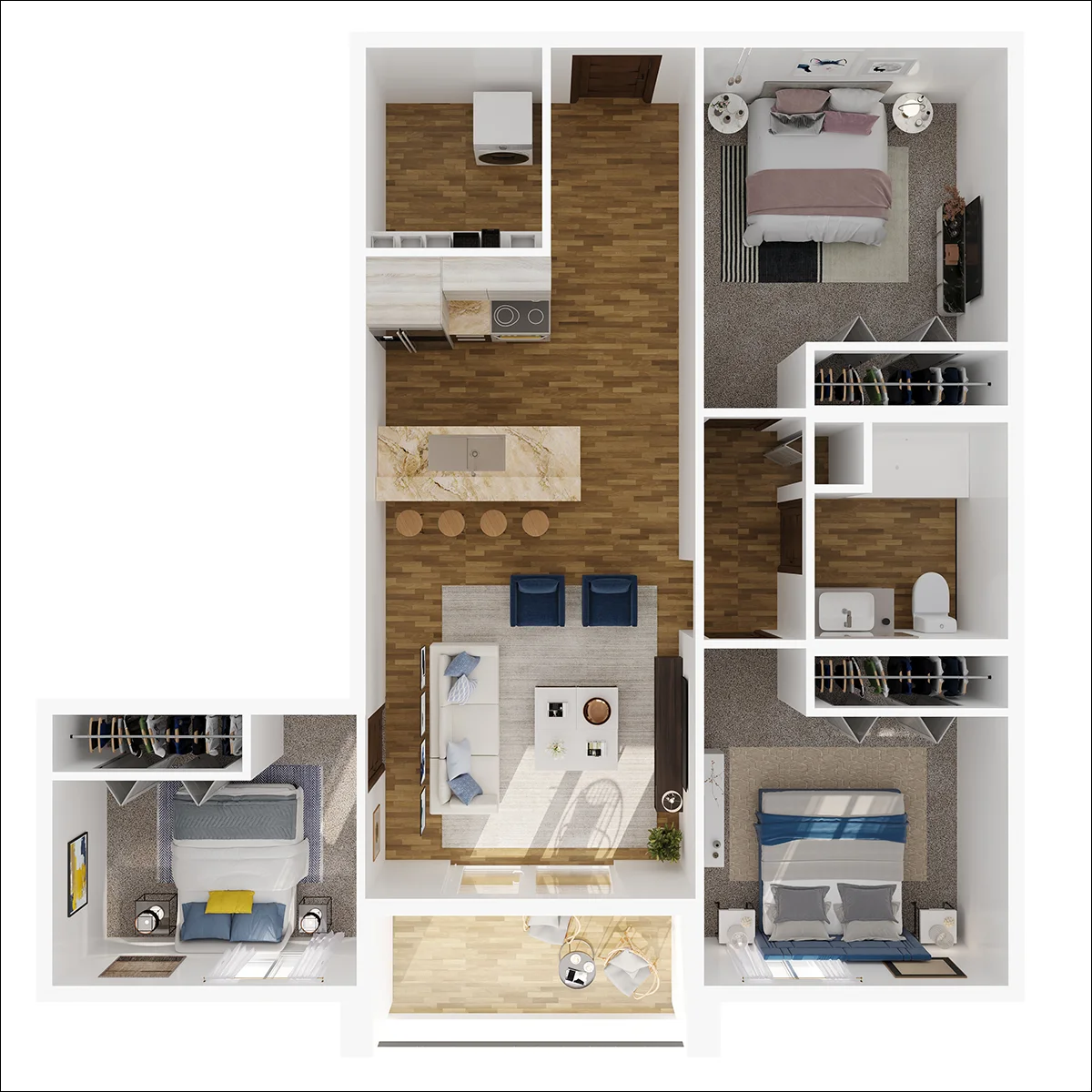 3D floor plans get closer to the actual construction.
This immersive quality is the primary reason why 3D visualizations have become the gold standard for off-plan sales and pre-construction marketing. When a physical property doesn't exist yet, a 3D model serves as the ultimate sales tool, bridging the gap between a builder’s vision and a buyer’s reality. It eliminates "spatial illiteracy," ensuring that even the most non-technical clients can understand the layout instantly.
However, when debating which is better, 2D or 3D floor plan, it is important to note that 3D models require more advanced software, specialized expertise, and a larger time investment to produce. They are a premium marketing asset. While they may carry a higher initial cost, the return on investment (ROI) is often reflected in higher engagement rates and a significantly faster sales cycle, as they build a much stronger emotional rapport with the viewer from the very first click.
4. Head-to-head: 2D floor plan vs 3D floor plan
Selecting the right visual tool is a strategic decision that depends on whether you are communicating technical data or emotional lifestyle potential. When evaluating 2D vs 3D floor plan options, the "best" choice is often dictated by the specific needs of your audience at a particular stage of the property's lifecycle. To understand the practical differences, let’s look at how they perform side-by-side.
|
Feature |
2D floor plan |
3D floor plan |
|
Information focus |
Technical measurements & structure |
Lifestyle, aesthetics, & spatial flow |
|
Visual depth |
Flat, black-and-white or simple color |
Volumetric, textured, & shadowed |
|
Production speed |
Fast (typically 24 hours) |
Moderate (48-72 hours) |
|
Cost point |
Budget-friendly / Essential |
Premium / Marketing investment |
|
Cognitive load |
High (requires mental translation) |
Low (instantly recognizable) |
The most significant differentiator in the 2D floor plan vs 3D floor plan debate is what experts call "The visualization gap." Architectural psychology suggests that a large portion of the general public struggles to translate a flat, two-dimensional drawing into a three-dimensional mental image. For these individuals, a 2D blueprint feels like a complex puzzle. They may see the lines representing a kitchen, but they cannot "feel" the workflow between the island and the stove or perceive the true volume of a vaulted ceiling.
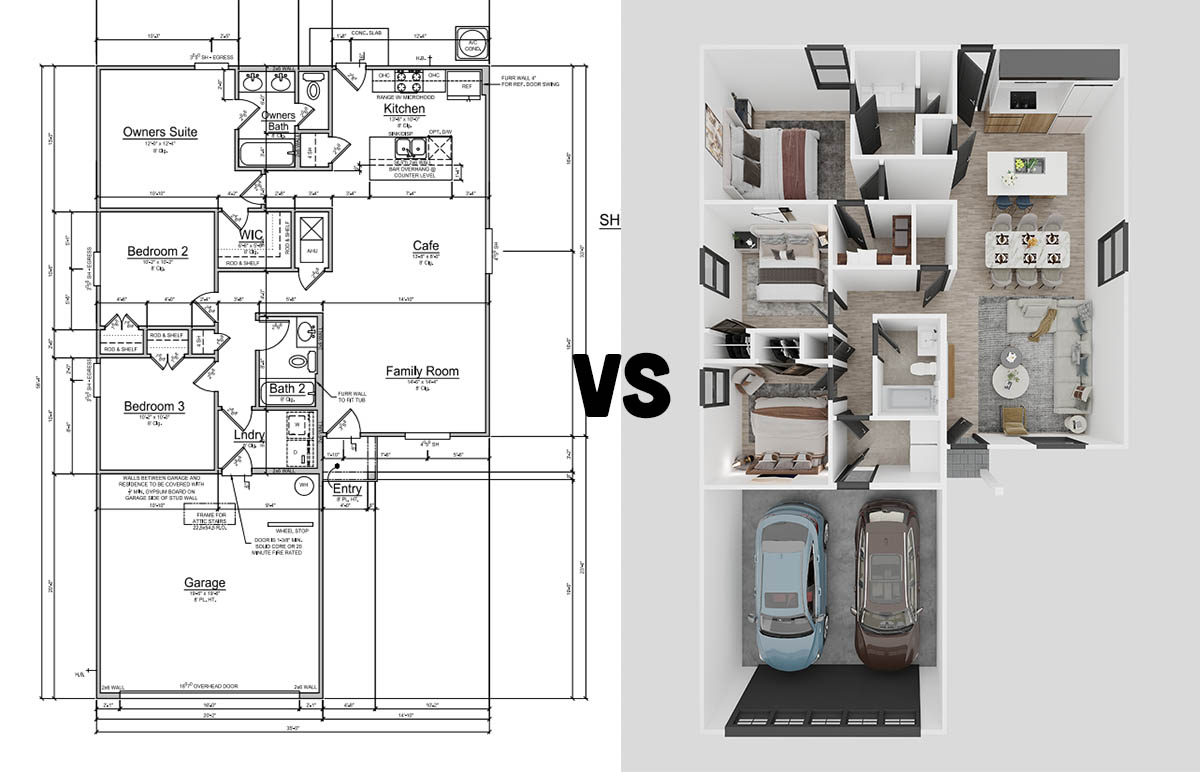 2D vs 3D floor plan: each serves a specific purpose in building and selling homes.
Conversely, a 3D floor plan bridges this gap effortlessly. By presenting height, texture, and furniture, it removes the cognitive burden from the potential buyer. Instead of trying to decipher symbols, the buyer can focus on how their daily life fits into the space. This is why, when asking which is better between a 2D or 3D floor plan for digital lead generation, 3D is the clear winner. It transforms a technical document into an aspirational real estate marketing floor plan asset.
However, the industry still relies heavily on 2D for the "logic" phase of a transaction. Once a buyer moves from the "dreaming" stage to the "logistics" stage, they demand the exact dimensions, wall placements, and structural symbols that only a high-quality 2D plan provides. In the final analysis, while 3D is the "hook" that captures attention and drives emotional engagement, 2D remains the "anchor" that provides the factual foundation for a sale.
5. Why 3D floor plans are the new standard for real estate marketing
In the competitive landscape of modern real estate, standing out requires more than just a standard listing. According to the National Association of Realtors (NAR), over 80% of home buyers rank floor plans as one of the most important features on a property listing. This is where the specific benefits of 3D floor plans come into play. A 3D model is not merely a layout; it is a powerful sales narrative that translates architectural lines into a vivid lifestyle preview. For marketers and agents, these visuals serve as a bridge between a property’s physical constraints and a buyer’s aspirations.
5.1. Emotional resonance and "mental move-In"
The primary advantage of using a 3D model in your real estate marketing floor plan is its ability to trigger an emotional response. Humans are inherently visual creatures, and 3D renderings tap into this by creating a sense of "home" rather than just a "house." When a potential buyer sees a 3D plan complete with soft lighting, stylish furniture, and realistic textures, they begin the process of a "mental move-in." They can imagine where their morning coffee will be brewed or how the sunlight will hit the living room floor. This level of engagement is virtually impossible to achieve when looking at a sterile 2D vs 3D floor plan comparison.
5.2. Eliminating spatial uncertainty
One of the greatest hurdles in online real estate is the lack of physical context. Buyers often ask, "Will my sectional sofa fit here?" or "Is the kitchen too cramped?" A 3D floor plan provides an immediate and accurate sense of scale. By including photorealistic furniture, these plans show the true functional capacity of every square foot. This clarity reduces the "bounce rate" of listings; buyers who visit the property in person are already well-informed and more likely to make an offer because their expectations have been managed accurately by the 3D visual.
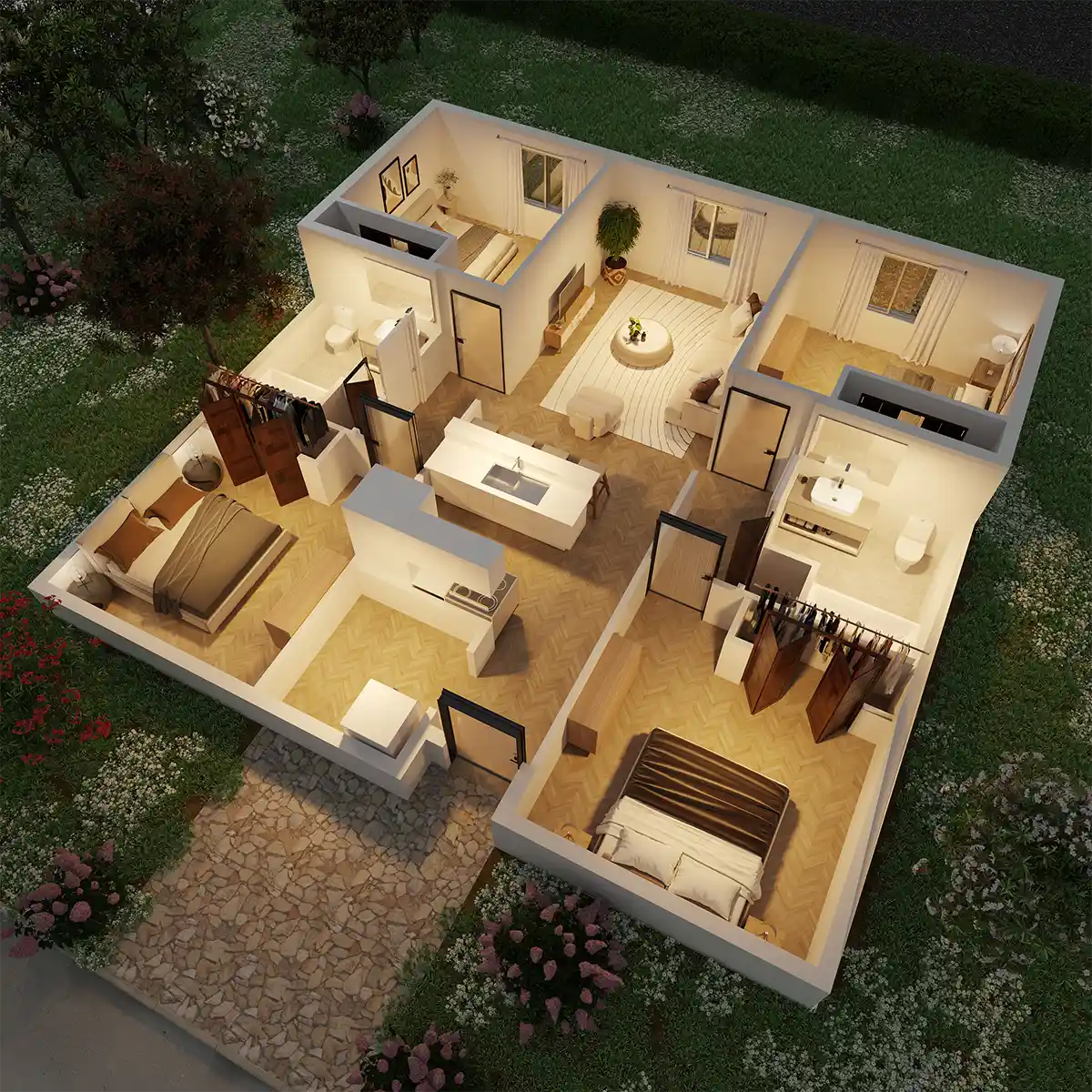 A 3D floor plan provides an imaginable sense of scale.
5.3. Boosting engagement and listing ROI
From an SEO and digital marketing perspective, 3D content is gold. Real estate portals and social media algorithms favor high-engagement media. Listings that feature 3D floor plans typically see a significant increase in "time on page" and click-through rates. When deciding between a 2D or a 3D floor plan, consider the long-term ROI. While the initial cost of 3D is higher, the ability to reuse these assets across social media, brochures, and video walkthroughs makes them a versatile marketing powerhouse. In a market where buyers are often scrolling through hundreds of properties, a 3D floor plan is the visual "hook" that stops the scroll and starts the conversation.
6. Which is better for your listing? 2D or 3D floor plan?
Determining which is better: 2D or 3D floor plan requires identifying which tool aligns with your specific sales objectives, property type, and budget. Both formats serve distinct roles within a high-converting real estate marketing floor plan strategy.
2D floor plans are better for technical clarity, construction, and budget-friendly listings, providing essential measurements and structural details. 3D floor plans are better for high-end marketing, off-plan sales, and emotional engagement, as they offer a photorealistic "dollhouse" view that helps buyers visualize lifestyle and spatial flow. For maximum impact, a hybrid approach using both is the gold standard for a professional real estate marketing floor plan.
6.1. When to choose a 2D floor plan
The 2D format remains the industry workhorse for several reasons. It is the ideal choice for high-volume rental listings, standard residential resales, or commercial properties where technical precision is paramount. If your primary goal is to provide contractors with a layout for renovations or to satisfy a buyer’s need for exact dimensions, the simplicity of a 2D floor plan vs 3D floor plan is a significant advantage. It is professional, cost-effective, and leaves no room for ambiguity regarding structural measurements.
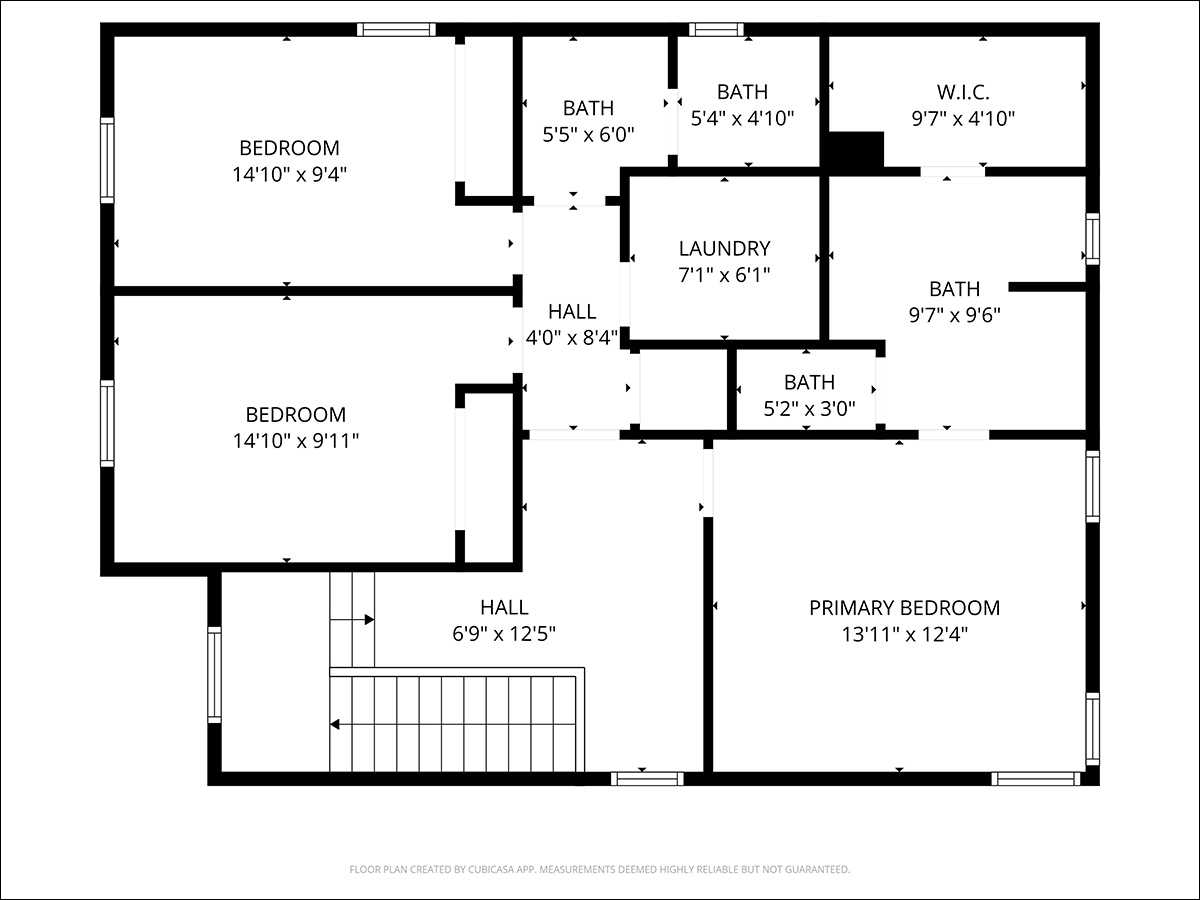 2D floor plans are still irreplaceable when it comes to providing a precise technical blueprint.
6.2. When to choose a 3D floor plan
If you are marketing a luxury listing, an "off-plan" development that has yet to be built, or a vacation rental, 3D is the superior choice. Its ability to communicate lifestyle and spatial flow is unmatched. A 3D plan acts as a 24/7 virtual open house, making it the perfect asset for international buyers or busy professionals who cannot visit in person.
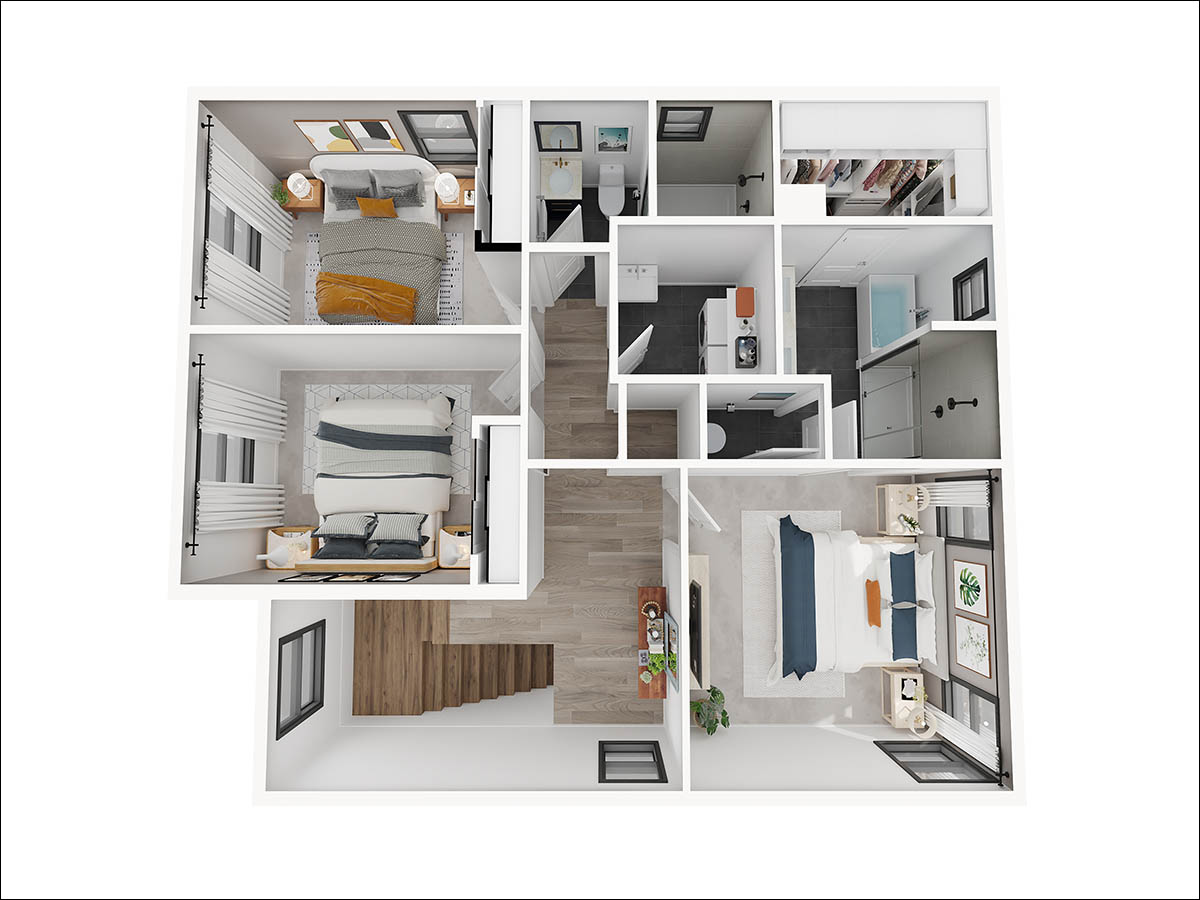 A 3D floor plan can be an immersive marketing asset.
6.3. The pro verdict: The hybrid approach
In a competitive market, the most successful agents know how to combine the strengths of both media. By offering a comprehensive 2D-3D package, you satisfy the "logical" buyer with a 2D technical layout and the "emotional" buyer with a 3D visual experience. This dual-strategy ensures your marketing reaches the widest possible audience, providing both the facts and the feelings required to close a deal.
7. Future trends in 2D vs 3D floor plan visualization
The future of the real estate marketing floor plan is rapidly moving toward total immersion. Let’s see the most noticeable shifts regarding how floor plans are created and viewed today.
7.1. The integration of VR in the floor plan experience
We are seeing a shift from static images to interactive VR (Virtual Reality) environments and AI-driven floor plan generation. Soon, the 2D floor plan vs 3D floor plan debate may become obsolete as they merge into a single, seamless digital experience. Imagine a listing where a buyer can toggle between a technical 2D blueprint and an interactive 3D walkthrough with a single click, or even use Augmented Reality (AR) to overlay a 3D plan onto an empty plot of land.
7.2. The rise of outsourcing real estate floor plans
A major emerging trend is the strategic shift toward professional 3D floor plan service outsourcing. Real estate agents are increasingly moving away from DIY apps or expensive in-house designers in favor of specialized visualization studios.
The strategic benefits for agents:
- Cost efficiency & scalability: Outsourcing allows agents to access high-end 3D rendering technology without the overhead costs of expensive software licenses or hardware. Whether you have one listing or one hundred, you only pay for what you need.
- Focus on core business: By offloading the technical creation of 2D floor plans vs 3D floor plans to experts, agents can spend more time on high-value activities: networking, showing properties, and closing deals.
- Rapid turnaround (The "follow the sun" model): Professional outsourcing partners often operate across time zones, meaning an agent can upload a sketch in the evening and receive a polished real estate marketing floor plan by the next morning.
- Quality consistency: Expert studios stay updated on the latest visual trends, ensuring your brand always presents the most modern benefits of 3D floor plans, such as realistic lighting and hyper-accurate textures, which are superior and more reliable compared to automated AI tools.
As the market grows more visual, the ability to quickly deploy high-quality floor plans through a reliable outsourcing partner like Fotober will become a decisive competitive advantage for modern real estate professionals. At Fotober, we specialize in high-converting real estate marketing floor plans tailored to your specific needs. From crisp blueprints to photorealistic 3D renderings, our team ensures your listings stand out in a crowded market.
8. Conclusion
Ultimately, deciding between a 2D vs a 3D floor plan depends on your specific marketing goals. While 2D plans provide the essential technical clarity required for the "logic" of a sale, the benefits of 3D floor plans in driving emotional engagement and "mental move-in" are unmatched. To stay ahead in today’s competitive market, a hybrid strategy that utilizes both formats is the most effective way to satisfy every potential buyer's needs.
Ready to elevate your real estate marketing? Don't let potential buyers get lost in translation. Whether you need the surgical precision of a 2D floor plan or the immersive storytelling of a 3D floor plan, Fotober is here to help you close deals faster.
Contact Fotober now, and let’s discuss how we can bring your property to life! Follow us on social media to stay updated with the latest insights into the real estate market.
- Facebook: fotobermedia.co
- YouTube: Fotober
- TikTok: @fotober
- Instagram: fotober_media.
9. Frequently asked questions about floor plans
How much does a 3D floor plan cost compared to 2D?
Typically, a 3D layout is a larger marketing investment. While 2D plans are budget-friendly and fast, the benefits of 3D floor plans in boosting engagement often justify the higher price point for premium listings.
Which is better: 2D or 3D floor plan for social media?
For platforms like Instagram or Facebook, 3D is superior. Its visual depth and realistic textures capture attention much faster than a flat blueprint.
Can I use both for one property?
Absolutely. Using a hybrid 2D vs 3D floor plan approach provides both technical data and emotional appeal, satisfying every type of potential buyer.
What information should I provide when ordering a floor plan from Fotober?
To ensure the highest accuracy and fastest turnaround, we recommend providing the following: Clear labels: Specify the name of each room (e.g., Master Bedroom, Home Office, Powder Room). Precise dimensions: Include the measurements for each area to ensure the scale is perfect. Spatial layout: A rough sketch or blueprint showing the arrangement of rooms, including the kitchen, living area, and bathroom fixtures. Reference samples: If you have a specific style or branding guide in mind, providing a reference sample helps our team match your vision exactly.
Related posts

Modern Luxe Interior Design: Elements, Style Guide and How to Stage It
October 10, 2026

Minimalist Interior Design: Characteristics, Style Guide, and Staging
October 8, 2026

Coastal Interior Design: Style Definition & Staging Guide
September 30, 2026

Contemporary Interior Design: Key Elements and How to Stage This Style
September 30, 2026
