




Best Nikon Cameras for Real Estate Photography in 2026: Our Top Picks

Share:
Table of Contents
- 1. Why are Nikon cameras great choices for real estate photography?
- 2. What to look for in a real estate photography camera
- 3. Top 8 best Nikon cameras for real estate photography
- • 3.1. Nikon Z7 II: Best overall full-frame mirrorless
- • 3.2. Nikon Z6 II / Z6 III: Best value hybrid for photo & video
- • 3.3. Nikon Z8: Best flagship for high-end & hybrid creators
- • 3.4. Nikon Z5: Best budget full-frame mirrorless entry
- • 3.5. Nikon Zf: Best mid-range with retro style & modern tech
- • 3.6. Nikon Z50 / Z50 II: Best lightweight APS-C budget pick
- • 3.7. Nikon D850: Best DSLR workhorse for real estate
- • 3.8. Nikon D750: Best budget used/refurbished DSLR
- 4. Must-have accessories & the best Nikon lenses for real estate photography
- 5. Pro tips for real estate photography success with the best Nikon camera for real estate photography
- 6. Gear isn't everything: Why professional editing is still essential for real estate photography
- 7. Partner with Fotober for flawless real estate photo editing
- 8. Conclusion
Capturing crisp, bright, and dimensionally accurate property photos directly influences listing engagement, sales speed, and final offer prices. To achieve these professional standards, selecting the best Nikon camera for real estate photography is one of the smartest investments a photographer or real estate agent can make. Whether you need to navigate challenging high-contrast interiors with bright exterior window views or capture vast, sweeping estate exteriors, Nikon offers reliable gear tailored to every budget and skill level. In this comprehensive guide, we will break down key camera features to look for, review the top 8 best Nikon cameras for real estate photography, and explore essential lenses and editing techniques to elevate your portfolio.
1. Why are Nikon cameras great choices for real estate photography?
When shooting property interiors and exteriors, your camera must handle demanding lighting environments while maintaining strict geometric precision. Nikon remains a preferred brand among professional architectural and real estate photographers for several compelling reasons:
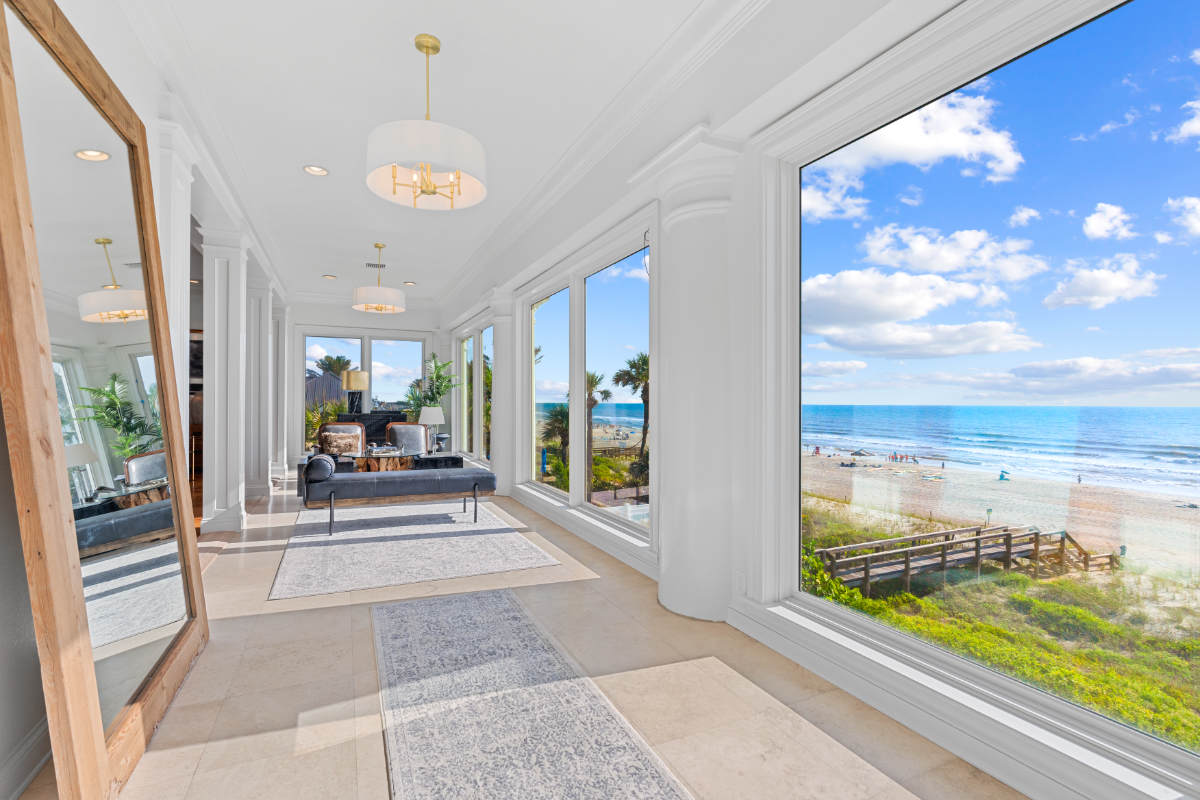
1.1. Exceptional dynamic range for complex lighting
Real estate interiors present extreme lighting contrasts, ranging from dark corner shadows to blown-out exterior window views. Nikon’s full-frame FX sensors consistently set industry benchmarks for dynamic range. They preserve fine shadow detail without introducing digital noise, making multi-exposure HDR bracketing and shadow recovery effortless during post-processing.
1.2. True-to-life color science & architectural accuracy
Accurate color fidelity is crucial when representing property materials like natural hardwood, granite countertops, and wall paints. Nikon’s color science delivers neutral, realistic tones right out of the box. This minimizes unsightly color casts generated by competing light sources, such as warm interior tungsten bulbs mixed with cool natural daylight.
1.3. Industry-leading NIKKOR optical ecosystem
A camera body is only as good as the glass in front of it. Nikon’s extensive lineup of NIKKOR lenses includes ultra-wide-angle zooms known for minimal distortion and edge-to-edge sharpness. Furthermore, Nikon’s specialized Perspective Control (PC) tilt-shift lenses enable photographers to correct converging vertical lines in-camera, delivering clean, professional architectural lines instantly.
2. What to look for in a real estate photography camera
Investing in the right camera body requires understanding which technical specifications directly impact interior and exterior property imagery. Here are the essential features to evaluate before making your purchase:
- Sensor size (full-frame FX vs. crop DX): While crop-sensor (APS-C/DX) bodies are budget-friendly, full-frame (FX) sensors are the gold standard for real estate. Full-frame sensors maximize your lens's wide-angle field of view, allowing ultra-wide lenses to capture compact bathrooms and tight bedrooms without extreme distortion, while delivering superior low-light performance.
- Dynamic range & ISO performance: Real estate photography routinely deals with severe exposure contrasts between sunlit windows and dim interior corners. A sensor with broad dynamic range lets you recover clean shadow detail during post-processing without introducing distracting digital noise.
- In-body image stabilization (IBIS) & dual card slots: IBIS enables sharp handheld bracketed exposures when deploying a tripod is impractical. Meanwhile, dual memory card slots provide immediate data redundancy, saving photos to two cards simultaneously to protect against card failure during critical client shoots.
- Articulating or tilting LCD screen: Maintaining level vertical lines often requires positioning the camera at waist level or in awkward corners. A tilting or fully articulating touch screen simplifies composition in tight spaces without requiring physical contortions.
- 4K video capabilities: Modern real estate marketing increasingly relies on video walkthroughs and social media reels alongside static photos. Selecting a body capable of 4K recording at 60fps ensures smooth motion panning and versatile hybrid media production.

3. Top 8 best Nikon cameras for real estate photography
Choosing the best Nikon camera for real estate photography depends on whether you prioritize cutting-edge mirrorless speed, high pixel resolution for commercial architecture, or cost-effective DSLR durability. Below are the top 8 Nikon camera bodies available today, divided into modern mirrorless systems and reliable DSLR workhorses.
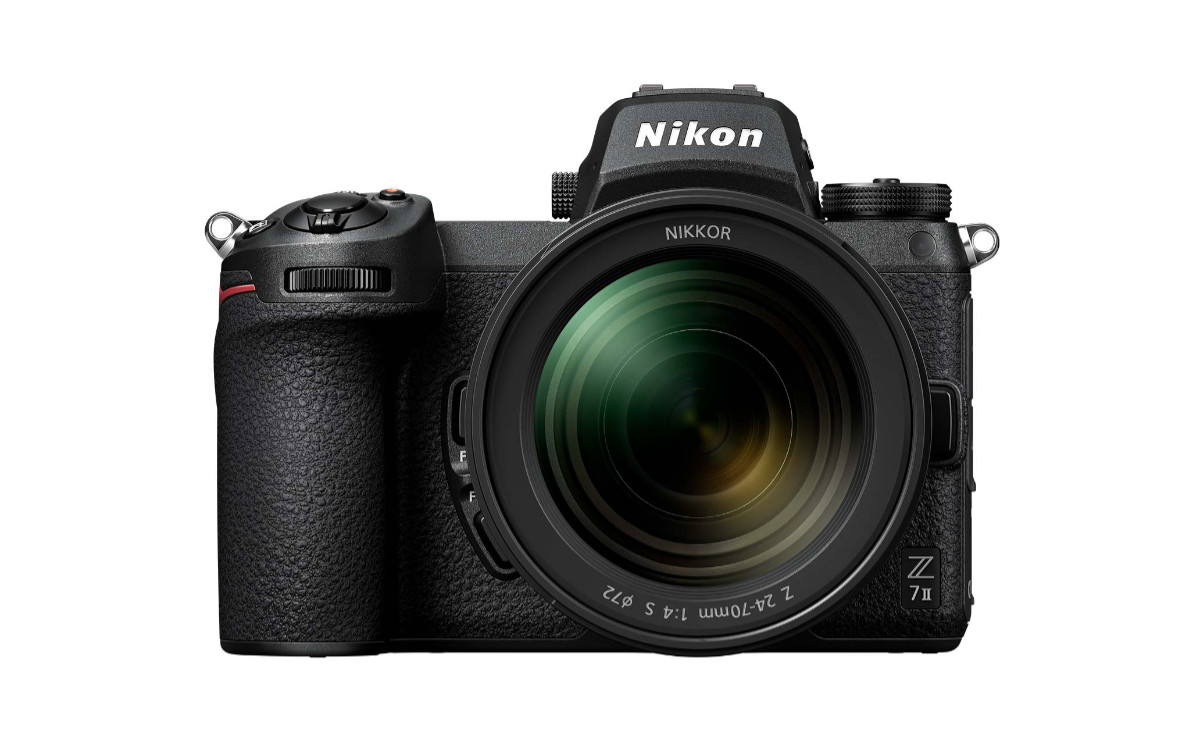
3.1. Nikon Z7 II: Best overall full-frame mirrorless
- Key specs: 45.7 MP FX BSI CMOS sensor, Dual EXPEED 6 processors, 5-axis IBIS, Dual card slots (CFexpress/SD UHS-II), ISO 64 base.
- Why it’s great: The Z7 II stands out as arguably the best Nikon mirrorless camera for real estate photography overall. Its high 45.7 MP resolution captures intricate architectural textures, luxury interior finishings, and sweeping estate grounds with breathtaking clarity. A native base ISO of 64 yields exceptional dynamic range, allowing you to lift deep shadow details out of unlit interior corners without introducing digital grain. With dual memory slots and a rugged weather-sealed magnesium chassis, it is built for daily professional media shoots.
3.2. Nikon Z6 II / Z6 III: Best value hybrid for photo & video
- Key specs: 24.5 MP FX sensor (Partially Stacked CMOS on Z6 III), EXPEED 7 processor (Z6 III), 4K/60p & 6K internal RAW video, 5-axis IBIS, Dual card slots.
- Why it’s great: For photographers offering both static listing photos and cinematic video walkthroughs, the Z6 series delivers the perfect balance between price and performance. The 24.5 MP resolution produces manageable file sizes for quick MLS uploads while maintaining outstanding low-light sensitivity. The updated Z6 III introduces faster processing and oversampled 6K/4K video, making it a versatile hybrid workhorse for modern real estate media teams.
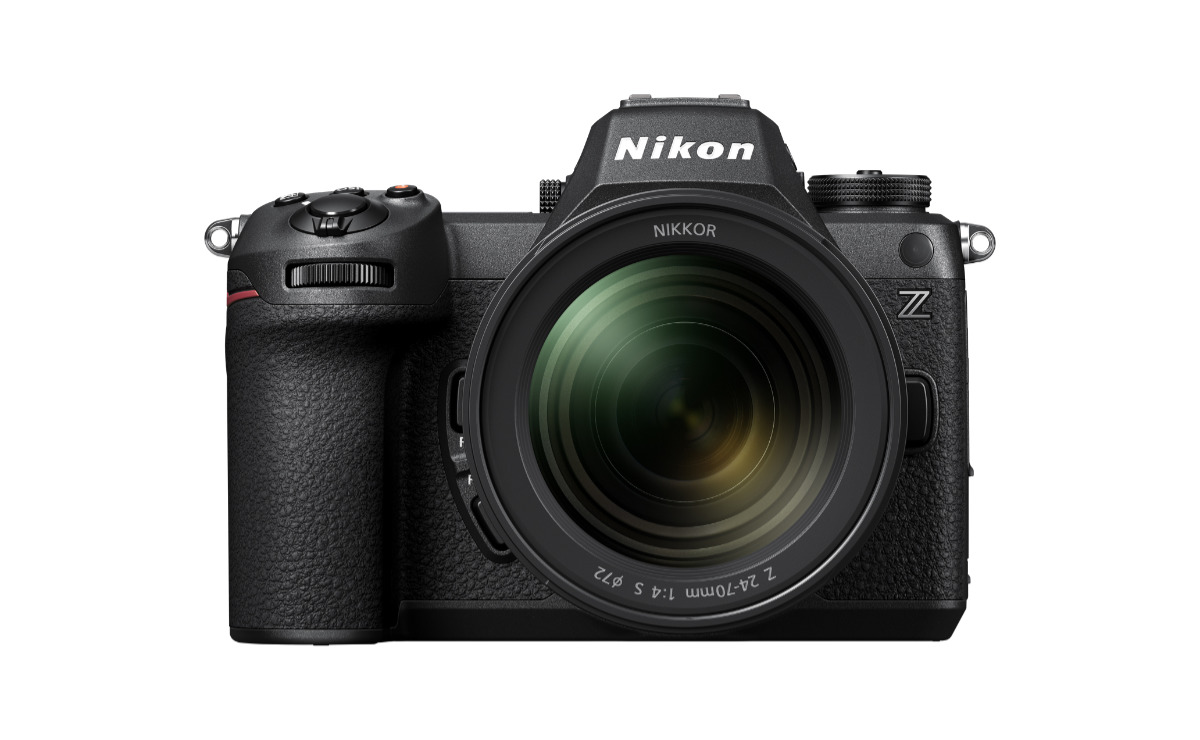
3.3. Nikon Z8: Best flagship for high-end & hybrid creators
- Key specs: 45.7 MP Stacked CMOS sensor, EXPEED 7 processor, 8K/60p internal RAW video, blackout-free EVF, Dual card slots.
- Why it’s great: Inheriting flagship performance in a streamlined body, the Nikon Z8 is designed for luxury real estate and commercial architectural production. Its stacked sensor eliminates rolling shutter distortion when panning across wide interiors. With internal 8K video, 4K 120p slow-motion capabilities, and instant AI-driven autofocus, the Z8 seamlessly handles high-resolution bracketed exposures and high-end video reels on a single rig.
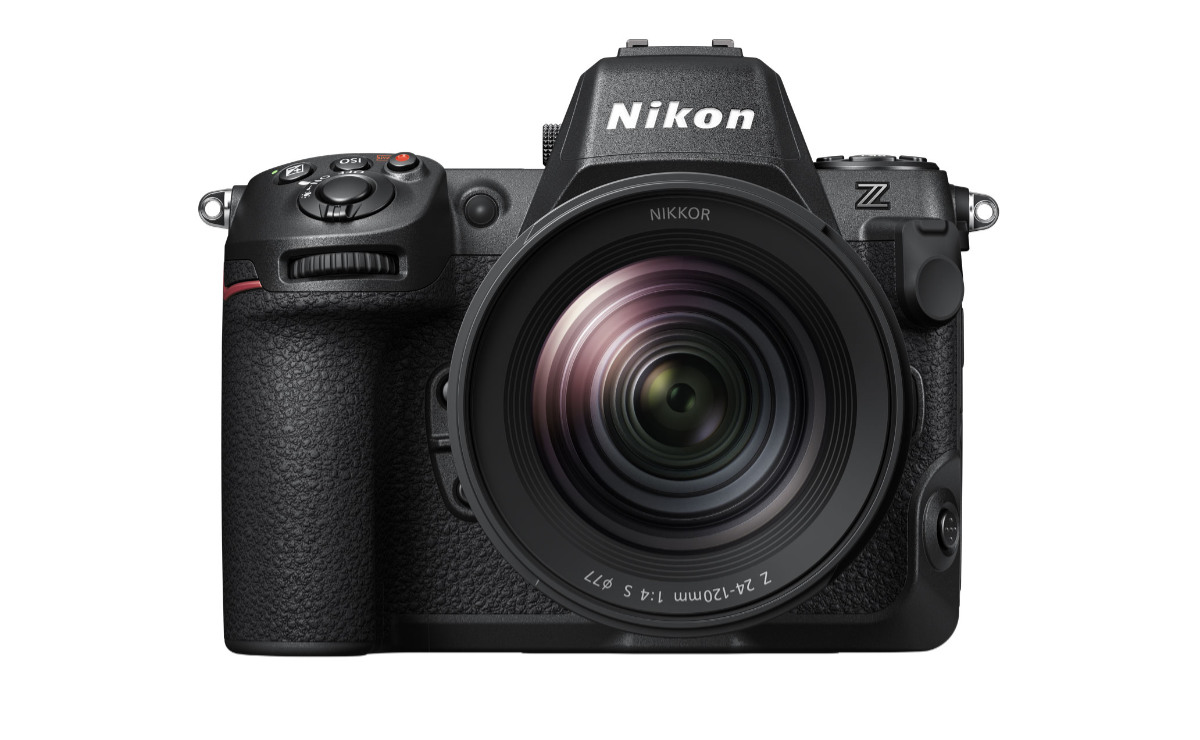
3.4. Nikon Z5: Best budget full-frame mirrorless entry
- Key specs: 24.3 MP FX CMOS sensor, 5-axis IBIS, Dual SD card slots (UHS-II), tilting touchscreen LCD.
- Why it’s great: If you want full-frame performance on a tight budget, the Nikon Z5 is the most accessible entry point into Nikon’s FX mirrorless lineup. Unlike many entry-level bodies, the Z5 retains 5-axis in-body image stabilization (IBIS) and dual card slots, two essential features for bracketed interior shots and file backup security. It delivers broad dynamic range and clean color accuracy at an unbeatable price point.
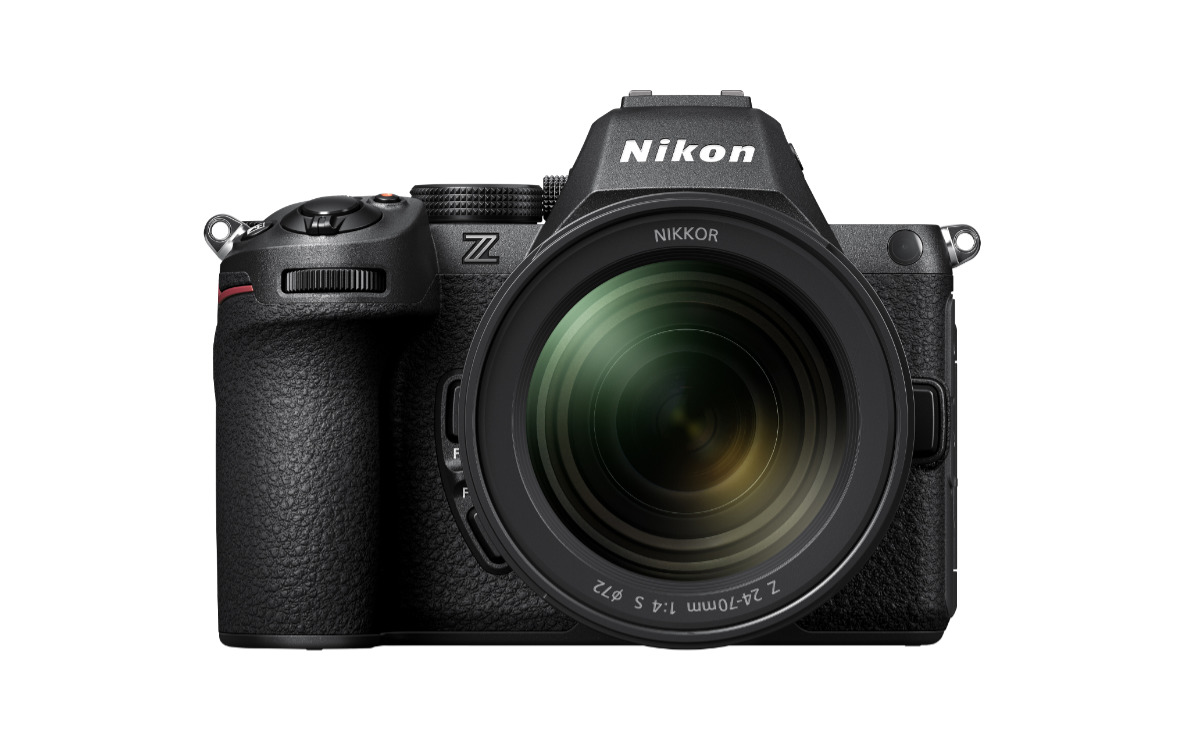
3.5. Nikon Zf: Best mid-range with retro style & modern tech
- Key specs: 24.5 MP FX sensor, EXPEED 7 processor, 8-stop IBIS, fully articulating touchscreen, tactile brass controls.
- Why it’s great: Combining iconic vintage styling with modern internals, the Nikon Zf is surprisingly well-suited for real estate work. Its class-leading 8-stop IBIS enables steady handheld shooting in tight spaces where setting up a tripod is awkward. Additionally, its fully articulating touch screen makes framing extreme low-angle kitchen counter shots or high-angle bathroom angles effortless.
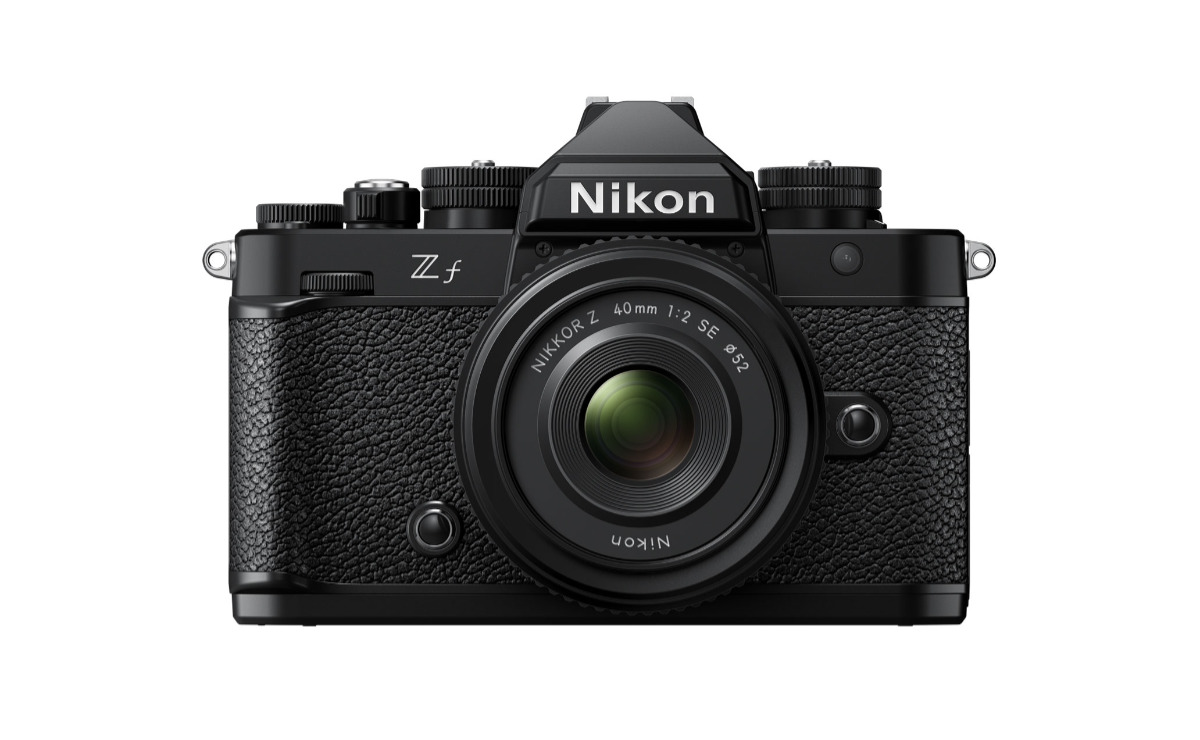
3.6. Nikon Z50 / Z50 II: Best lightweight APS-C budget pick
- Key specs: 20.9 MP DX (APS-C) sensor, ultra-compact body, 4K/30p video, flip-out LCD.
- Why it’s great: The DX-format Z50 (and Z50 II) serves as a lightweight, affordable starting camera for new real estate agents shooting their own listings. When paired with an ultra-wide DX lens, it delivers crisp 20.9 MP images and clean 4K video. Its compact form factor makes it easy to pack into a small shoulder bag for rapid property walkthroughs.
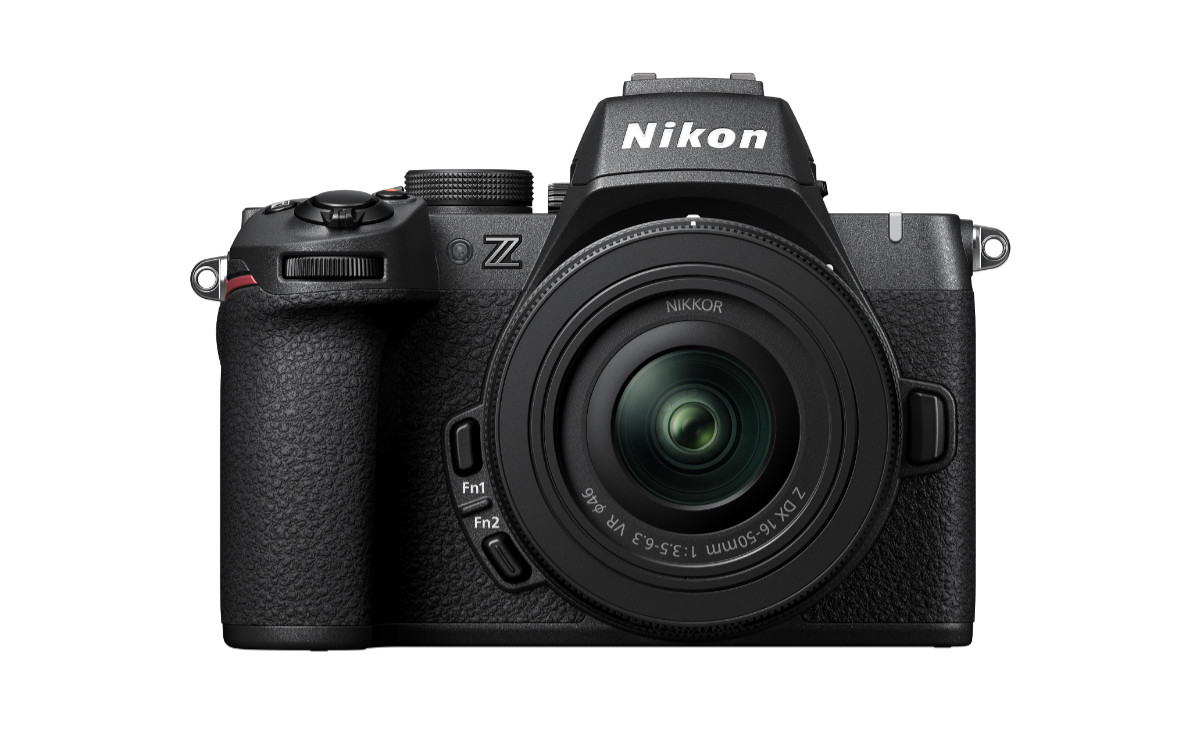
3.7. Nikon D850: Best DSLR workhorse for real estate
- Key specs: 45.7 MP FX BSI sensor, optical viewfinder, base ISO 64, 1,840-shot battery life, dual card slots (CFexpress/SD).
- Why it’s great: Even in a mirrorless-dominated market, the legendary Nikon D850 remains a benchmark for architectural photographers who prefer traditional optical viewfinders. Its 45.7 MP sensor delivers image sharpness and dynamic range equal to top-tier mirrorless bodies. With an indestructible build and battery life capable of surviving multi-property shoots on a single charge, the D850 is a timeless workhorse.
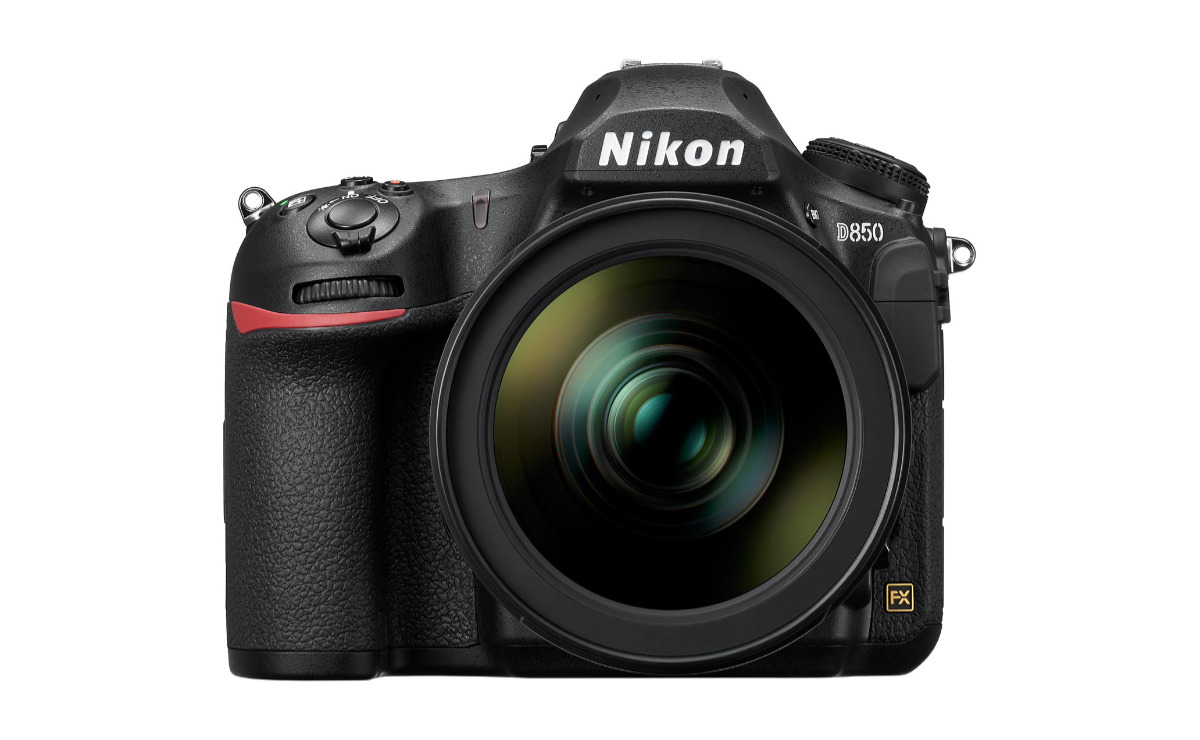
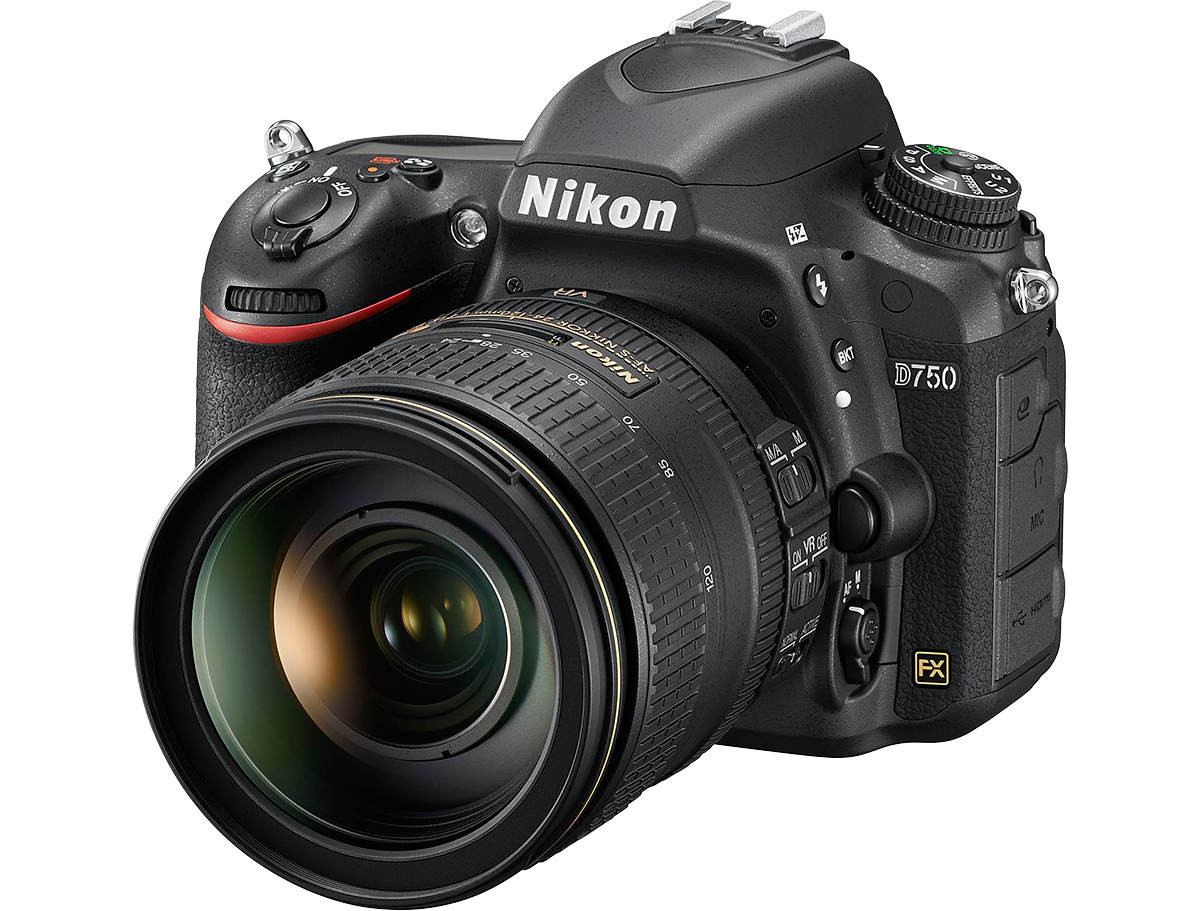
3.8. Nikon D750: Best budget used/refurbished DSLR
- Key specs: 24.3 MP FX sensor, tilting LCD screen, dual SD card slots, compact DSLR design.
- Why it’s great: For photographers launching a real estate media business on a slim budget, a used or refurbished Nikon D750 offers incredible value. Its 24.3 MP full-frame sensor provides excellent shadow recovery during exposure bracketing. Paired with low-cost pre-owned F-mount wide lenses, the D750 remains one of the most cost-effective full-frame options available.
4. Must-have accessories & the best Nikon lenses for real estate photography
Pairing your camera body with the best Nikon lens for real estate photography is essential to avoid extreme barrel distortion, edge softness, and unnatural room stretching. A high-quality ultra-wide-angle lens ensures interior spaces look open, spacious, and optically accurate.
4.1. Top Nikon lenses for interior & exterior shots
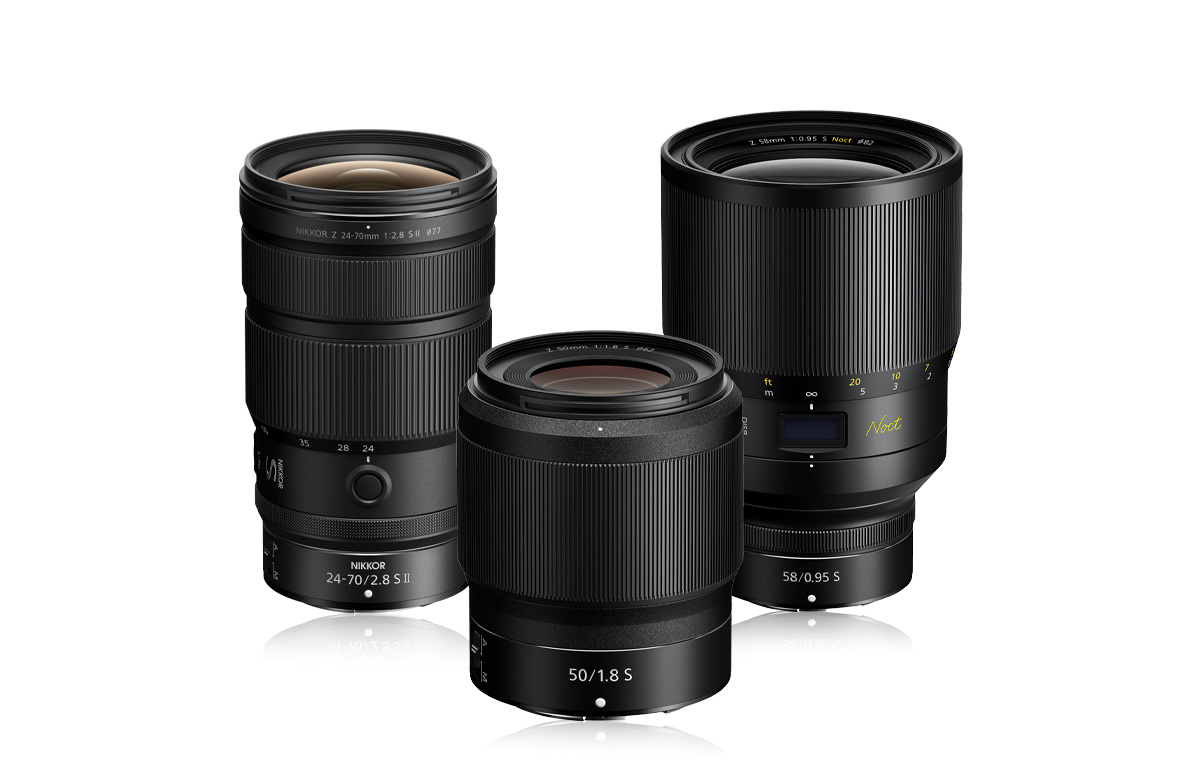
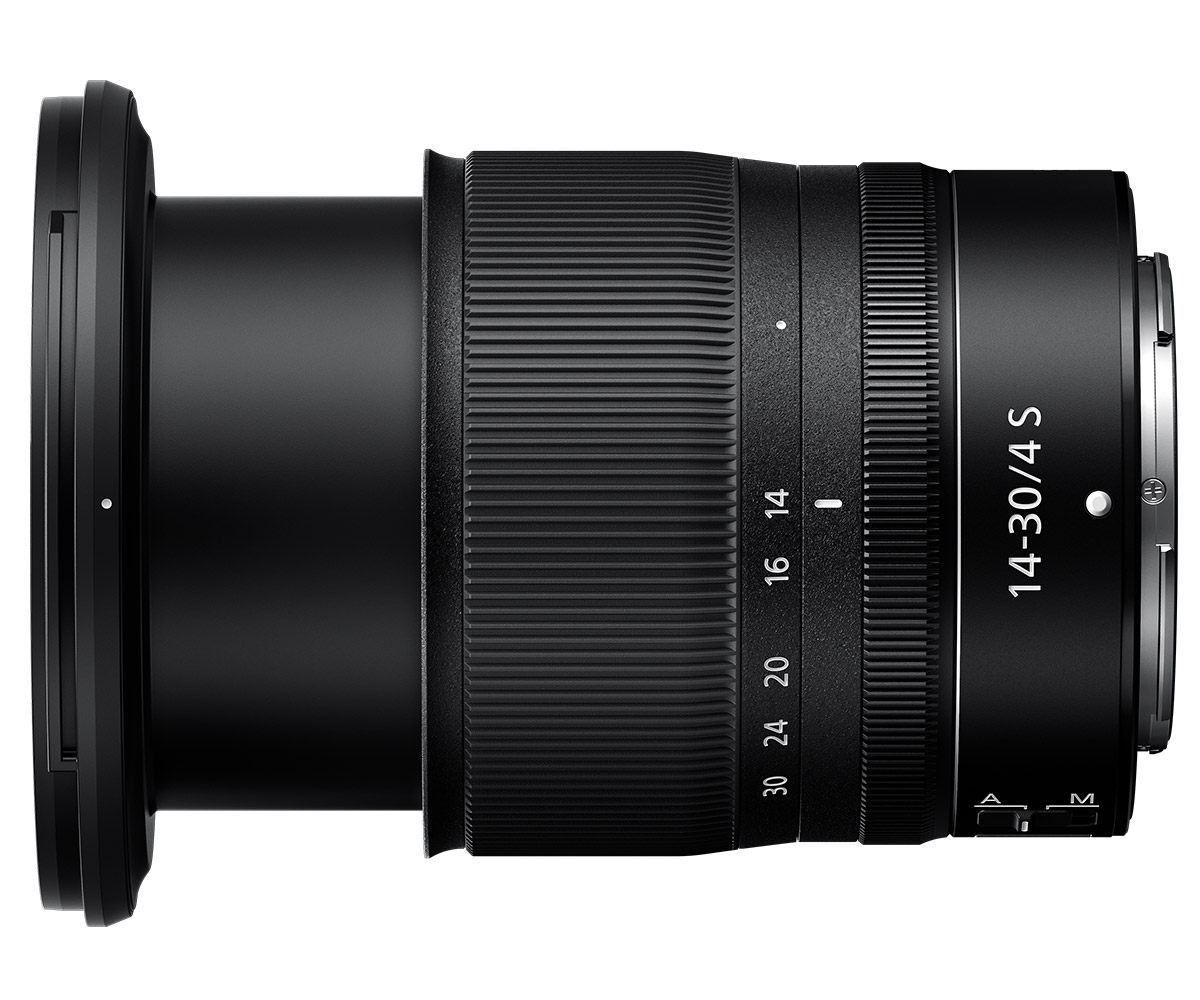
- NIKKOR Z 14-30mm f/4 S (Z-Mount): Widely considered the ultimate wide-angle zoom for Nikon mirrorless shooters. Its 14mm focal length easily captures tight powder rooms and small bedrooms without severe edge distortion. Uniquely for an ultra-wide lens, its flat front element accepts standard 82mm screw-in filters.
- NIKKOR Z 17-28mm f/2.8 (Z-Mount): A lightweight, fast ultra-wide zoom featuring a bright f/2.8 aperture. It is excellent for capturing shallow depth-of-field detail shots and low-light property exteriors during twilight shoots.
- PC NIKKOR 19mm f/4E ED Tilt-Shift (F-Mount via FTZ Adapter): The gold standard for high-end architectural photographers. Its perspective-control tilt-shift movements allow you to eliminate converging vertical lines physically in-camera before post-production.
- AF-S NIKKOR 16-35mm f/4G ED VR (F-Mount): A dependable, sharp ultra-wide zoom for DSLR users, equipped with Vibration Reduction (VR) to assist in sharp handheld framing.
4.2. Crucial real estate photography accessories
Beyond camera bodies and lenses, specialized real estate photography equipment is essential for executing professional listing shoots:
- Sturdy tripod with a geared head: Exposure bracketing requires exact frame alignment across multiple shots. A precision geared head allows fine micro-adjustments to ensure perfectly level horizons and straight architectural lines.
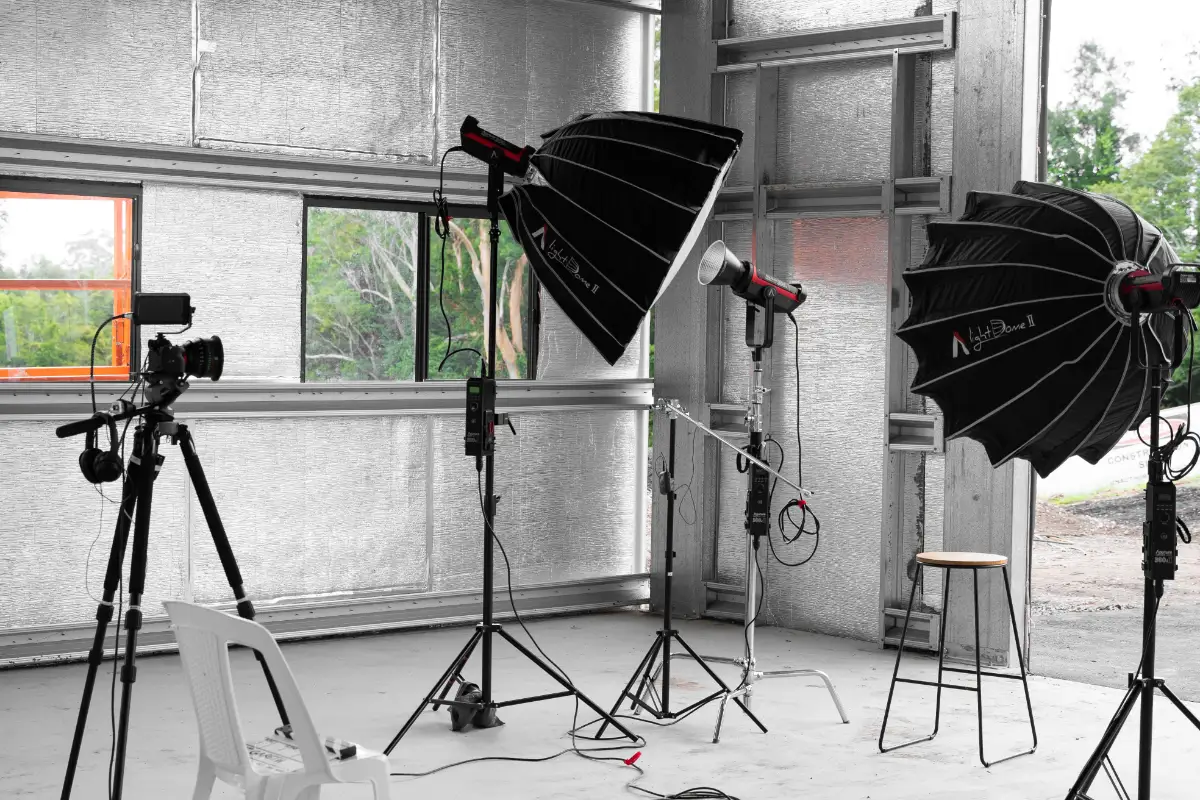
- Off-camera speedlights or wireless strobes: Executing the popular "Flambient" technique (combining ambient natural exposures with flash) requires wireless lighting to bounce clean light off ceilings, pop window views, and eliminate interior color casts.
- Wireless remote shutter release: Triggering your camera remotely prevents micro-vibrations and camera shake during bracketed long exposures.
5. Pro tips for real estate photography success with the best Nikon camera for real estate photography
Professional real estate photographers use several techniques to capture compelling property images:
- Shoot at eye level: This creates natural perspectives and emphasizes spatial flow.
- Bracketing exposures: This balances interior and exterior lighting, ensuring a harmonious image.
- Declutter spaces: Remove unnecessary items and stage rooms to enhance appeal.
- Align vertical lines: Properly align walls and architectural elements for an accurate representation of the property.
- Blend natural and artificial lighting: This creates inviting atmospheres.
- Post-processing: Keep editing subtle to maintain realism while showcasing the best property features.
- Get the camera settings right for each scene: This step ensures that the RAW files are captured with the most useful data possible for editors to work with.
6. Gear isn't everything: Why professional editing is still essential for real estate photography
Having the best Nikon camera for real estate photography is only half the battle in real estate media production. Even with top-tier full-frame sensors and prime wide optics, raw unedited photos rarely capture a property as the human eye perceives it on location. Professional post-processing bridges the gap between raw camera data and polished, market-ready listings.
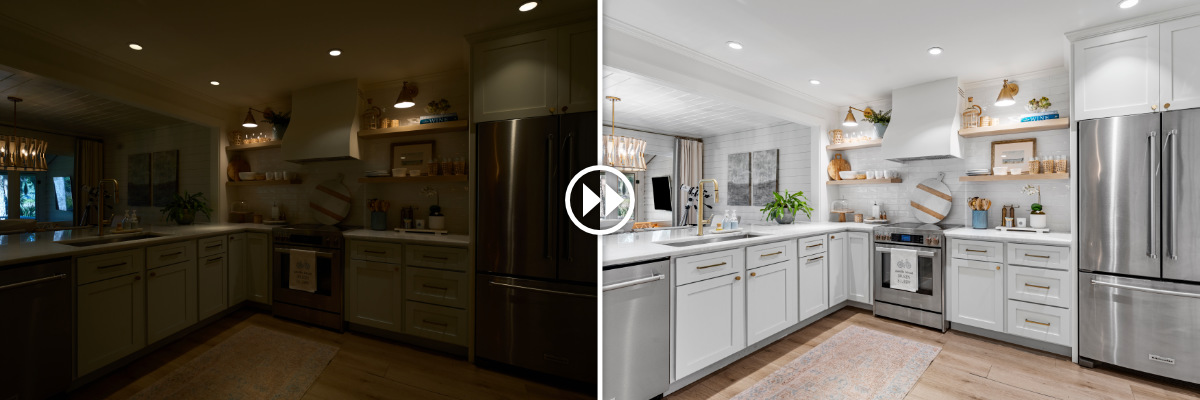
Here is why expert real estate photo editing remains non-negotiable for architectural media:
- Exposure blending & window pulls: Cameras struggle to capture dark interior corners and brightly sunlit windows in a single exposure. High-end HDR and flambient editing blend multiple bracketed shots to reveal crisp exterior window views while keeping room interiors bright and balanced.
- Optical & geometric correction: Ultra-wide lenses inevitably introduce minor barrel distortion or light falloff (vignetting). Post-processing corrects these optical quirks, ensuring walls stay plumb, doorframes remain straight, and spatial perspectives look accurate.
- Color cast elimination: Interior shoots frequently mix warm artificial ceiling light with cool natural sunlight entering through windows. Expert color correction removes muddy, conflicting color casts to display true-to-life wall paint and natural wood tones.
- Atmospheric enhancements: Gloomy skies or dull lighting can ruin outdoor curb appeal. Editing techniques like sky replacement, lawn greening, and virtual twilight conversions turn overcast photos into vibrant marketing assets.
7. Partner with Fotober for flawless real estate photo editing
Capturing stunning RAW images with your Nikon camera setup is only the first step; delivering market-ready, high-converting property media requires professional post-production. Fotober is a specialized real estate photo editing studio dedicated to helping photographers, agents, and media agencies scale their business effortlessly.

Fotober provides a comprehensive suite of post-processing solutions, including expert HDR and Flambient blending, window pulls, Day-to-Twilight conversions, virtual staging, item removal, and custom floor plans. By combining meticulous hand-editing with strict quality control, Fotober guarantees consistent, true-to-life color fidelity and sharp architectural accuracy on every single order.
With a rapid 12- to 24-hour turnaround time and scalable pricing, Fotober allows you to reclaim valuable hours spent behind the computer screen. Focus on shooting on location and winning new clients while our team handles the editing heavy lifting.
Ready to elevate your property portfolio? [Claim your free trial with Fotober today] and experience professional real estate editing tailored to your brand style.
8. Conclusion
Selecting the best Nikon camera for real estate photography comes down to balancing your budget, workflow needs, and client expectations. Whether you opt for a high-resolution mirrorless body like the Nikon Z7 II, a hybrid powerhouse like the Z8, or a proven DSLR workhorse, Nikon’s superior dynamic range and sharp NIKKOR ultra-wide lenses ensure your property shots stand out in a competitive market.
However, top-tier gear is only half the equation. Combining precise camera techniques on location with professional post-processing from Fotober guarantees flawless, high-converting property listings that capture client attention and drive real estate sales.
Also check out the best Sony cameras for real estate photography if you’re not into the Nikon ecosystem.
- Facebook: fotobermedia.co
- YouTube: Fotober
- TikTok: @fotober
- Instagram: fotober_media.
Related posts

Cincinnati Housing Market 2026: Prices, Trends, and What It Means for Buyers, Sellers, and Investors
October 20, 2026

Modern Luxe Interior Design: Elements, Style Guide and How to Stage It
October 10, 2026

Minimalist Interior Design: Characteristics, Style Guide, and Staging
October 8, 2026

Coastal Interior Design: Style Definition & Staging Guide
September 30, 2026
