




3D Real Estate Photography: Cost, ROI & When It Actually Helps Sell Homes Faster


Share:
Table of Contents
- 1. What is 3D real estate photography & How it works
- 2. 3D real estate photography cost: What you’ll actually pay in 2026
- 3. Is 3D real estate photography worth it? (ROI + when to use)
- 4. 3D vs virtual staging vs video: Which one should you use?
- 5. How to choose the right 3D real estate photography service
- 6. Conclusion
If you’ve ever tried to market an empty listing—or even a beautifully staged one—you already know the problem: photos alone don’t always tell the full story. Buyers scroll fast, attention is limited, and if they can’t “feel” the space within seconds, they move on. That’s exactly why more agents are turning to 3D real estate photography. As home search becomes increasingly digital, especially with out-of-state buyers, static images are no longer enough to keep people engaged.
1. What is 3D real estate photography & How it works
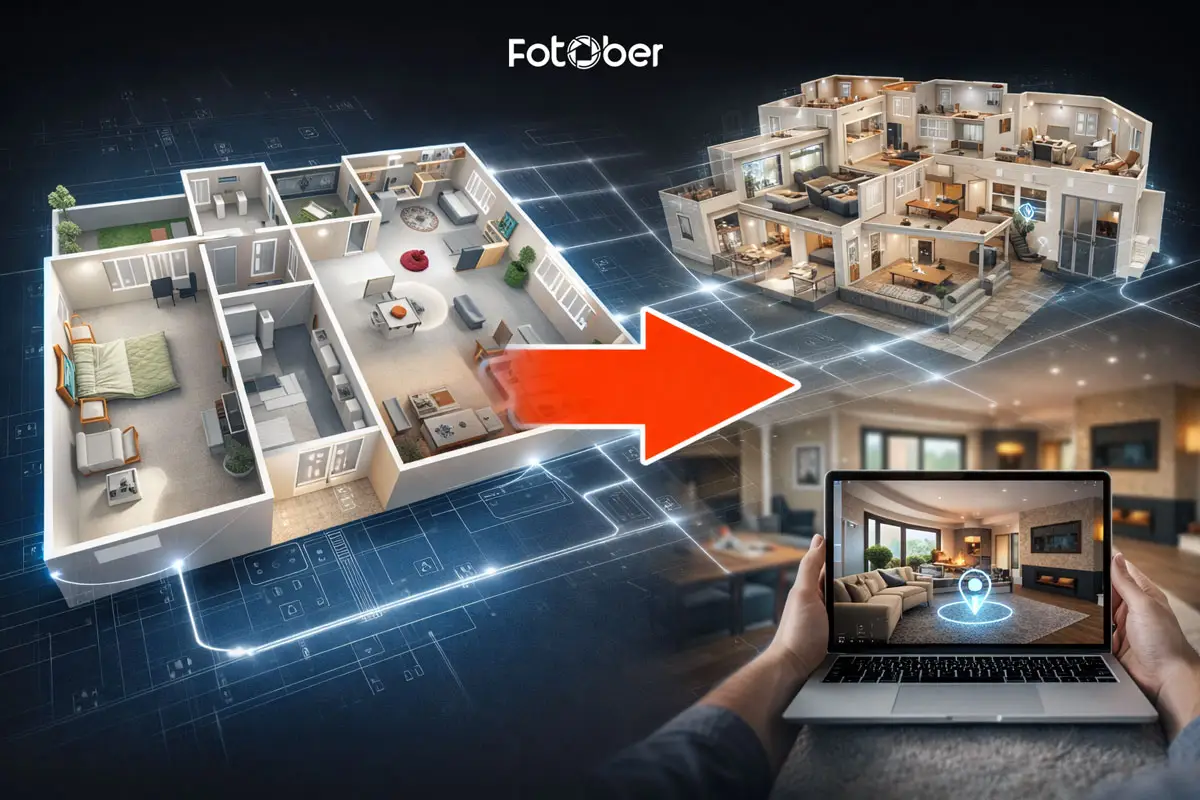
3D real estate photography is a technology that creates interactive, virtual walkthroughs of a property using 360-degree imaging and spatial mapping. It allows buyers to explore a home online as if they were physically inside, improving both engagement and decision-making.
According to the National Association of Realtors, 67% of buyers say they want virtual tours when browsing listings online. In practice, listings with 3D tours tend to hold attention longer and generate more qualified inquiries—especially in competitive or remote markets.
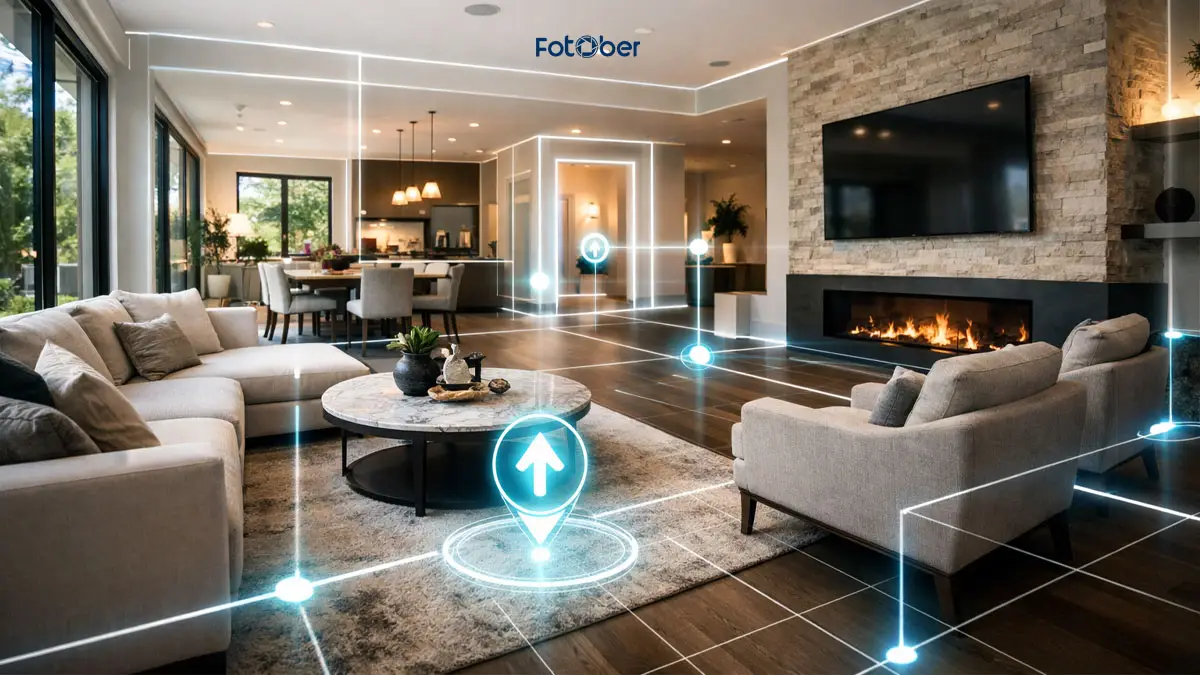
An example of a 3D real estate photography tour, where buyers can move freely through the property and understand layout, scale, and flow in a way static images cannot provide.
In other words, this isn’t just a visual upgrade. It’s a shift in how properties are experienced and sold.
At its core, 3D real estate photography is designed to replicate the experience of physically walking through a property—without being there.
Instead of viewing a series of flat images, buyers can move room to room, look around freely, and understand how spaces connect. This makes it significantly easier to evaluate layout, scale, and flow—three things traditional photos often fail to communicate.
It’s important not to confuse this with similar formats:
-
360 photos: These allow you to look around from a fixed point, but you can’t move naturally through the home.
-
Rendering: This is computer-generated imagery, typically used for pre-construction or renovations—not actual spaces.
A true 3D tour combines real-world capture with spatial data, creating a fully navigable environment.
The process behind a 3D tour is more technical than standard photography, but straightforward in practice.
First, a photographer scans the property using a specialized 3D camera, capturing hundreds of data points throughout the space. Tools like Matterport are commonly used in the industry for this purpose.
Next, the system stitches these scans together into a complete digital model. This model allows users to move freely, switch perspectives, and even view a “dollhouse” layout of the home.
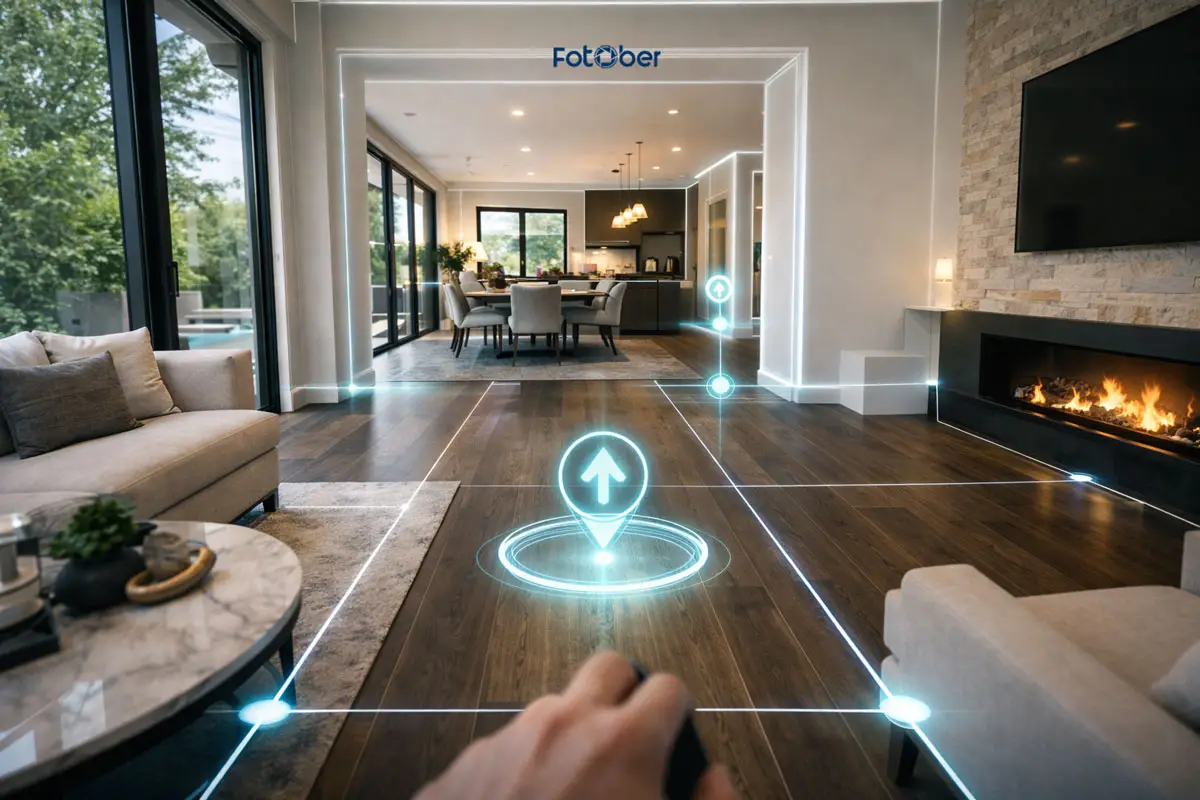
Finally, the tour is processed and hosted online, ready to be embedded into listings or shared with buyers.
2. 3D real estate photography cost: What you’ll actually pay in 2026
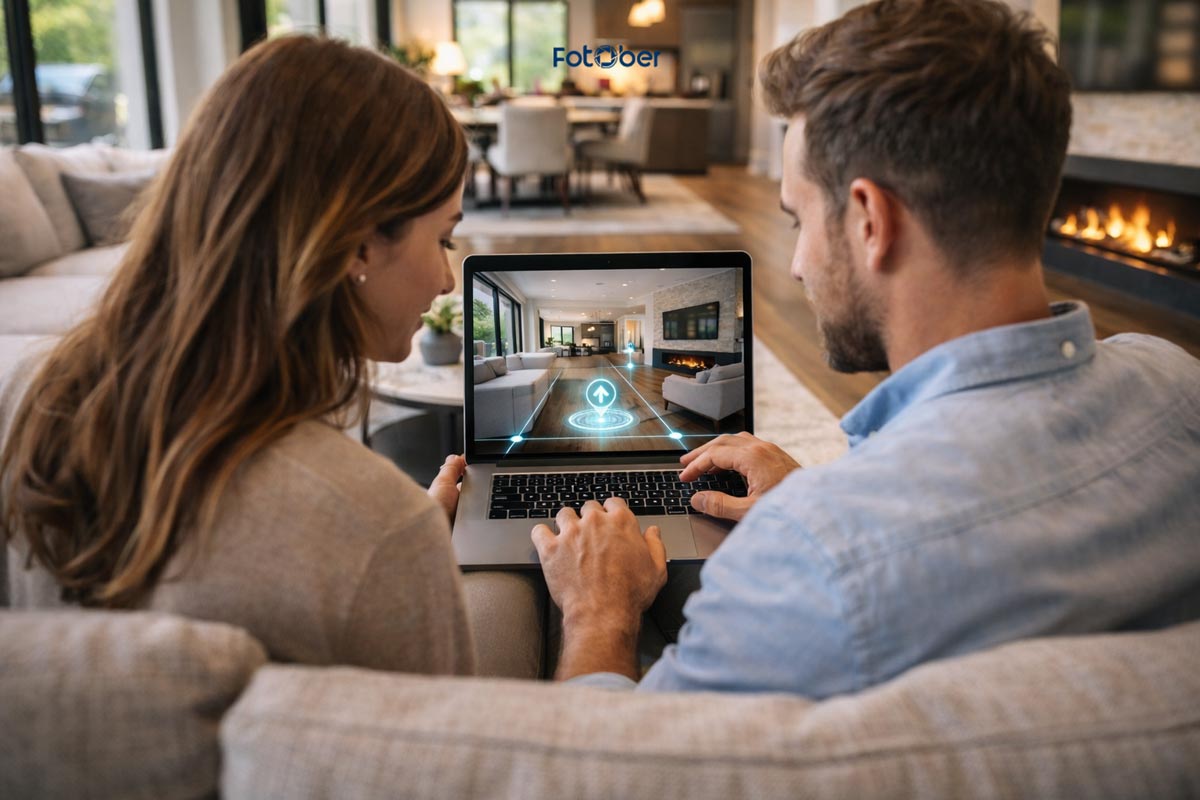
Typical 3D real estate photography cost varies based on property size, with most U.S. listings ranging from $150 to $500 or more.
2.1. Average cost in the U.S. market
One of the most common questions agents ask is: How much does 3D real estate photography actually cost? According to platforms like Thumbtack and HomeAdvisor, most agents in the U.S. pay between $150 and $500 per property, with larger or luxury homes exceeding $700 depending on complexity.
Here’s a general breakdown:
|
Property size |
Estimated cost |
|
Small homes (under 1,500 sq ft) |
$150 – $250 |
|
متوسط homes (1,500 – 3,000 sq ft) |
$250 – $400 |
|
Large / luxury homes |
$400 – $700+ |
According to platforms like Thumbtack and HomeAdvisor, these ranges are consistent across most major markets, though pricing can vary locally.
2.2. What affects the price
Several factors influence the final cost of a 3D tour:
-
Property size: Larger homes require more scan points and longer processing time.
-
Location: Prices tend to be higher in competitive urban markets.
-
Turnaround time: Rush delivery often comes at an added fee.
-
Add-ons: Features like floor plans, measurement tools, or integration with listing platforms can increase cost.
In short, the more complex the property and deliverables, the higher the investment.
2.3. Hidden costs to consider
Beyond the upfront shooting fee, there are a few ongoing costs that are easy to overlook:
-
Hosting fees: Many 3D tours require monthly or annual hosting to remain active online.
-
Re-scans: If the property changes (e.g., staging, renovations), you may need to reshoot the space.
-
Platform subscriptions: Some tools charge additional fees for advanced features or analytics.
These costs aren’t always included in the initial quote, so it’s worth clarifying with your provider upfront.
3. Is 3D real estate photography worth it? (ROI + when to use)

3.1. When 3D photography is worth it
Not every listing needs advanced media—but in the right context, 3D real estate photography can directly impact how fast a home sells and how qualified your inquiries are.
It tends to deliver the strongest ROI in three scenarios:
Luxury and high-value listings: For properties above the median price point, buyers expect more than photos. They want to explore the space before committing to a showing. A 3D tour reduces friction in that process. Instead of scheduling multiple low-intent visits, agents often see fewer but more serious inquiries.
Remote and relocation buyers: According to the National Association of Realtors, over 60% of buyers say virtual tours are a key factor in deciding which homes to visit. For out-of-state buyers, that percentage is even higher, making 3D tours a critical first-touch experience.
Homes with complex layouts: Open-concept homes, split-level properties, or homes with unusual flow benefit significantly from spatial visualization. Static images flatten space; a 3D walkthrough clarifies it instantly.
In all three cases, the value isn’t just visual—it’s decision efficiency. Buyers spend less time guessing and more time qualifying themselves.
3.2. When it’s NOT worth it
There’s a tendency to treat 3D as a default upgrade. That’s a mistake.
For entry-level listings or lower-priced properties, the added cost doesn’t always translate into higher returns. If the property is likely to sell quickly due to pricing or location, standard photography combined with light editing may be enough.
Similarly, in high-turnover markets, where listings move within days, speed often matters more than depth. In these situations, adding a 3D tour can delay go-live time without meaningfully improving outcomes.
Another overlooked case is investor-driven inventory—properties bought for flipping or rental. These buyers are typically more numbers-focused and less influenced by immersive media.
The key takeaway: 3D real estate photography is a leverage tool, not a universal requirement. Its value depends on the listing strategy, not just the technology itself.
3.3. What results can you expect
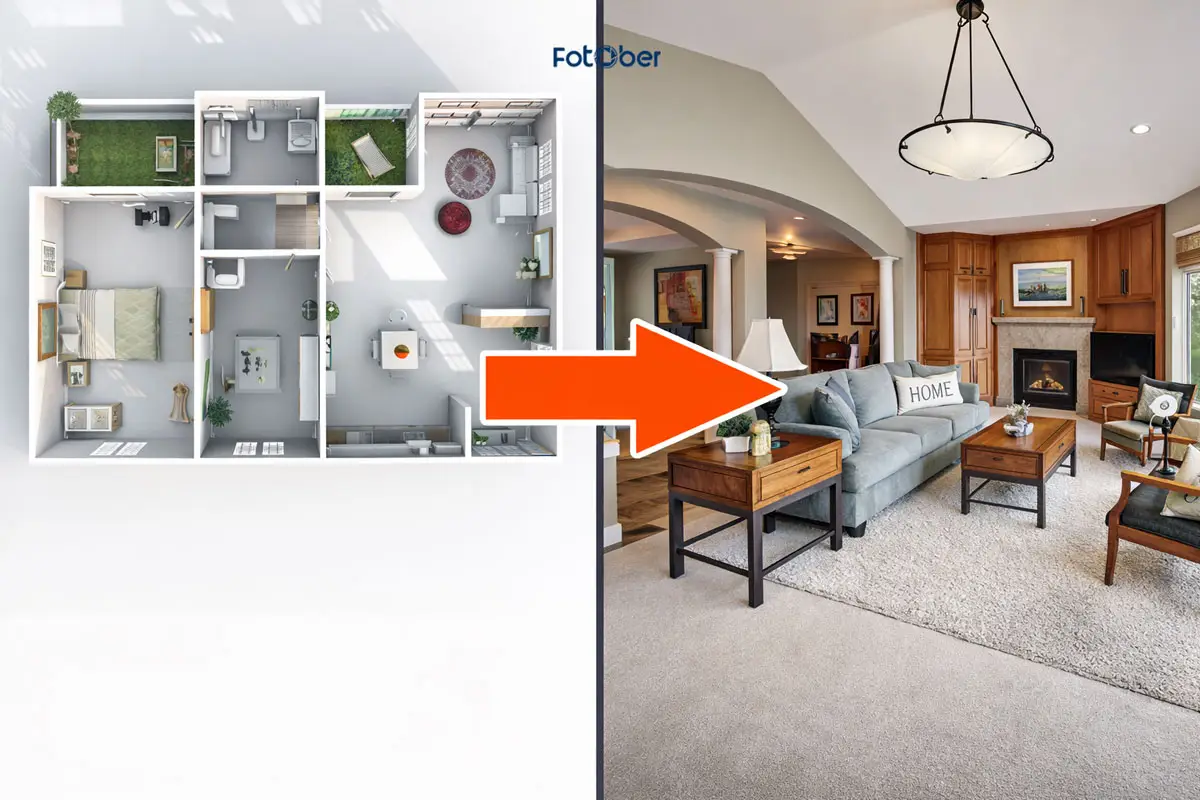
When used in the right context, the performance gains are measurable.
Listings with virtual tours consistently outperform traditional listings in terms of engagement. According to Zillow, homes with 3D tours can receive up to 50% more saves and significantly higher view counts compared to listings without immersive media.
In addition, data from the National Association of Realtors shows that buyers spend more time interacting with listings that include virtual tours, often exploring multiple rooms before deciding whether to schedule a showing.
From a sales perspective, this means:
-
Fewer wasted showings
-
Better-prepared buyers
-
Shorter decision cycles
That’s where the real ROI comes from—not just visibility, but efficiency in closing.
4. 3D vs virtual staging vs video: Which one should you use?
4.1. Key differences
Agents often ask whether 3D real estate photography can replace other visual tools. In reality, each format solves a different problem.
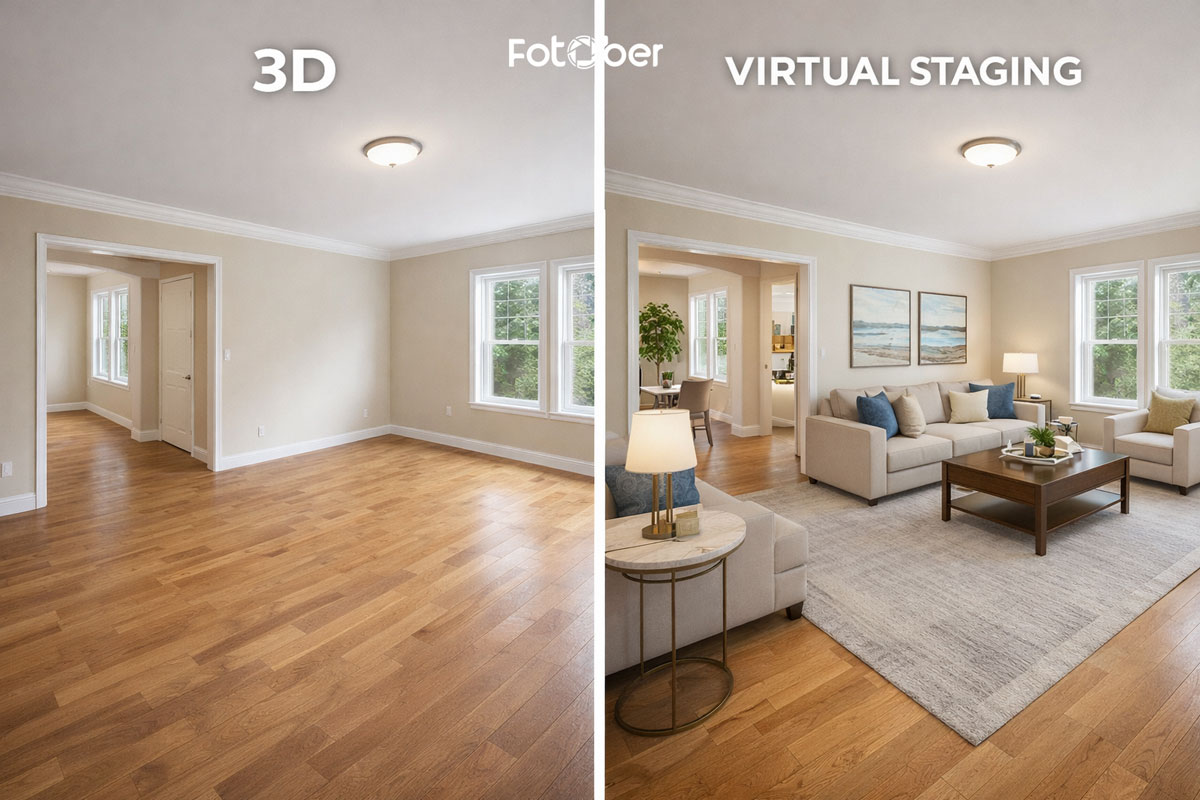
3D tours are about navigation and spatial understanding. They help buyers move through a property and evaluate layout.
Virtual staging is about visual imagination. It answers the question: What could this space look like furnished?
The video focuses on emotion and storytelling. It’s designed to capture attention and create a first impression, especially on social platforms.
From a cost perspective:
-
Virtual staging is typically the most affordable per image
-
Video sits in the mid-range depending on production quality
-
3D tours often require a higher upfront investment due to equipment and processing
But cost alone isn’t the right metric. The real question is: what problem are you trying to solve?
4.2. When to combine them
The highest-performing listings rarely rely on a single format. Instead, they combine assets strategically.
3D + virtual staging: This is particularly effective for vacant homes. The 3D tour provides spatial context, while staging helps buyers emotionally connect with the space. Without furniture, even the best 3D tour can feel cold.
3D + video: This combination works well for marketing funnels. Video attracts attention and drives traffic, while the 3D tour keeps users engaged once they land on the listing.
3D + rendering: For pre-construction or renovation projects, rendering fills the gap where physical space doesn’t exist yet, while 3D can later validate the final result.
In practice, the decision isn’t “which one to choose,” but how to layer them based on the buyer's journey—from discovery to decision.
5. How to choose the right 3D real estate photography service
Not all 3D services deliver the same results. The difference often comes down to execution. First, image quality and accuracy matter. Poor stitching or distorted proportions can do more harm than good, especially for discerning buyers. Second, turnaround time is critical. In fast-moving markets, delays in publishing a listing can directly impact visibility.
Third, look at feature depth:
-
Interactive floor plans
-
Measurement tools
-
Mobile optimization
These details shape how usable the tour actually is. Finally, always review real portfolio examples—not just demo showcases.
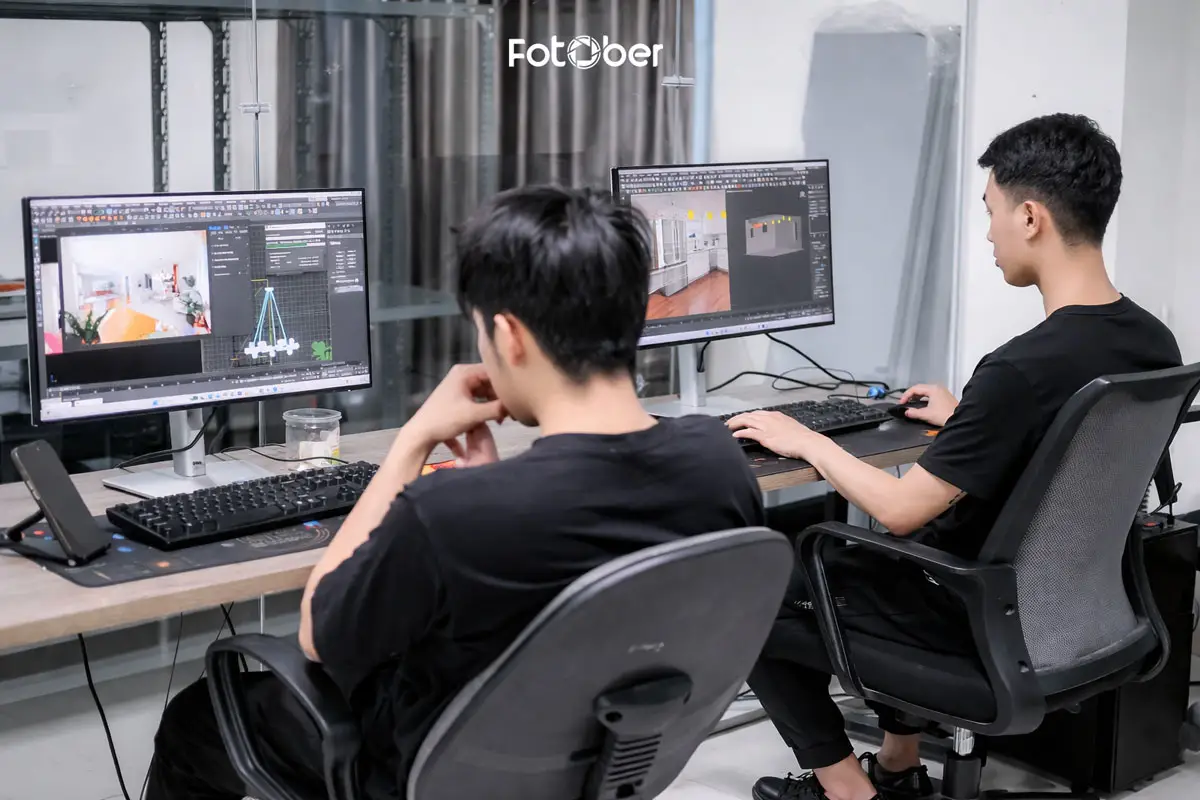
In practice, many agents are moving toward providers that offer integrated solutions rather than standalone services. Instead of treating 3D as a one-off product, they combine it with editing, staging, and rendering to streamline the entire listing workflow. This is where platforms like Fotober position themselves differently—focusing on:
-
Faster turnaround cycles
-
Cost efficiency at scale
-
The ability to bundle multiple services into one pipeline
The result isn’t just better visuals—it’s less operational friction when managing multiple listings at once.
6. Conclusion
3D real estate photography isn’t a universal solution—but when used strategically, it can significantly improve how buyers engage with a listing and how quickly decisions are made. The key is knowing when it adds real value—and when it doesn’t.
If you’re working with higher-end properties, remote buyers, or complex layouts, it’s often worth the investment. And when combined with the right supporting assets, it becomes part of a much more effective marketing system.
Want to see how it works in your listings? Try a 3D tour with Fotober and evaluate the difference firsthand.
Follow Fotober on social media:
-
YouTube Channel: Fotober
-
TikTok Channel: @fotober
-
Email support: [email protected]
-
Hotline: +84 942 110 297
Related posts

Modern Luxe Interior Design: Elements, Style Guide and How to Stage It
October 10, 2026

Minimalist Interior Design: Characteristics, Style Guide, and Staging
October 8, 2026

Coastal Interior Design: Style Definition & Staging Guide
September 30, 2026

Contemporary Interior Design: Key Elements and How to Stage This Style
September 30, 2026
