




3D Architectural Rendering Services: Developers’ Key to Help Pre-sales

Share:
Table of Contents
- 1. What are 3D architectural rendering services?
- 2. Deep dive: Interior vs. exterior rendering
- 3. When do you need 3D architectural rendering services?
- 4. The great debate: 3D render vs. real photography
- 5. The future: Human-led 3D rendering vs. AI
- 6. Case study: Maximizing real estate ROI with 3D architectural rendering services
- 7. Choosing the right partner for architectural visualization
- Conclusion
Real estate listings nowadays don’t rely solely on 2D blueprints or hand-drawn sketches to imagine a future structure. Architectural visualization has bridged this gap between concepts and reality. With professional 3D rendering, developers, architects, and designers can now create hyper-realistic, immersive showcases of every detail before the first brick is laid. This has become a pillar of modern property marketing, fostering emotional connections with buyers and streamlining the approval process with investors. In this guide, we will explore why 3D architectural rendering services are crucial for turning creative visions into profitable realities.
1. What are 3D architectural rendering services?
At its core, 3D architectural rendering services represent the sophisticated process of translating mathematical 3D models into photorealistic 2D or 3D images. Think of it as a "digital photo shoot" for a building that has yet to be constructed. This process is the cornerstone of modern architectural visualization services, allowing designers to communicate complex spatial ideas with absolute clarity.
The creation of a high-end render typically involves three critical technical phases:
- 3D modeling: The foundation where artists build a digital skeleton of the structure based on precise CAD or BIM data. Every wall, window, and structural element is meticulously shaped to scale to ensure the digital model matches the real-world blueprint.
- Texturing and lighting: Where the artistry begins. Professionals apply digital "materials" such as the specific grain of oak flooring or the reflective properties of tempered glass and simulate global illumination. Accurate sunlight, shadows, and artificial lighting are calculated to mimic real-world physics.
- Rendering and post-production: Using specialized rendering apps like V-Ray, Corona, or Lumion and dedicated, powerful GPUs to generate the final image from a 3D model. Afterward, artists perform post-production tasks like adding "embellishment": people, vegetation, and atmospheric effects to breathe life into the scene.
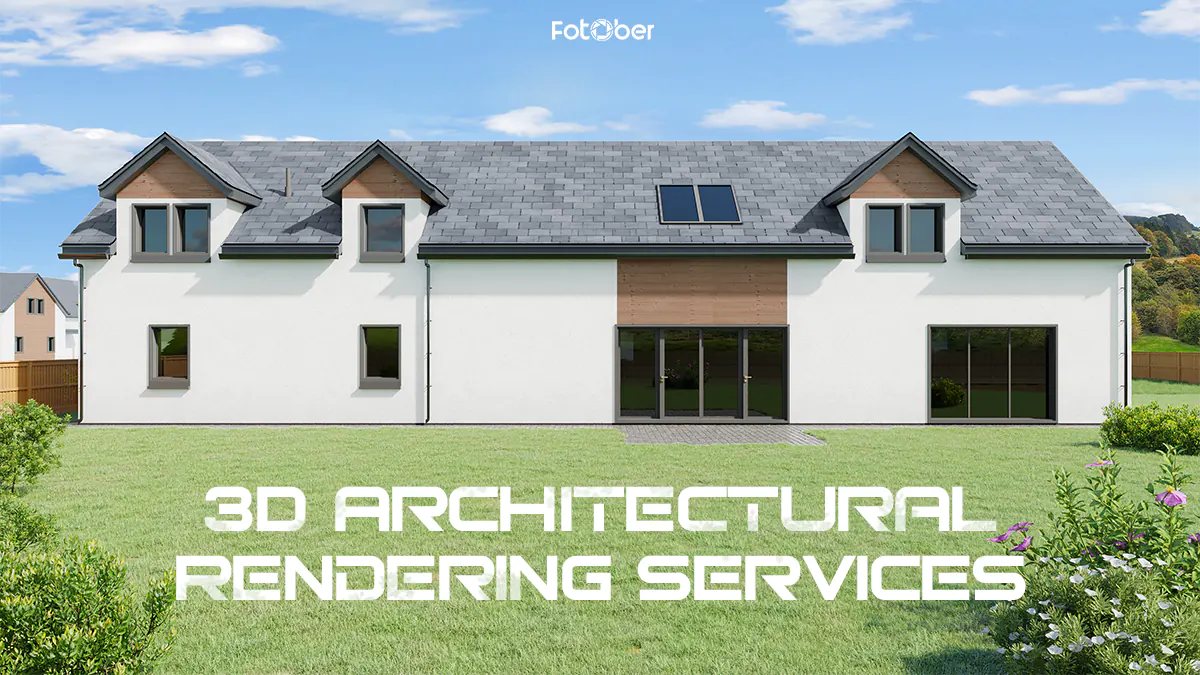
 3D architectural rendering services create architecture photos and videos from detailed 3D models of buildings
It is crucial to distinguish these services from basic CAD drafting. While CAD focuses on technical accuracy and dimensions for construction, professional architectural visualization services focus on the experience. It’s the difference between a cold technical blueprint and a compelling visual narrative that sells a lifestyle. This blend of technical precision and artistic flair is what makes 3D rendering an indispensable asset in the modern real estate toolkit.
2. Deep dive: Interior vs. exterior rendering
As the two primary types of 3D rendering, interior and exterior renders serve two distinct psychological and marketing purposes. Understanding these differences is key to utilizing 3D architectural rendering services effectively for your project.
2.1. Interior architectural rendering: Crafting atmosphere
Interior architectural rendering is essentially the art of digital storytelling within a confined space. Its primary goal is to evoke an emotional response by showcasing how it feels to live or work inside a building. Unlike a simple floor plan, a high-quality interior render focuses on the tactile nature of materials and the subtle play of light.
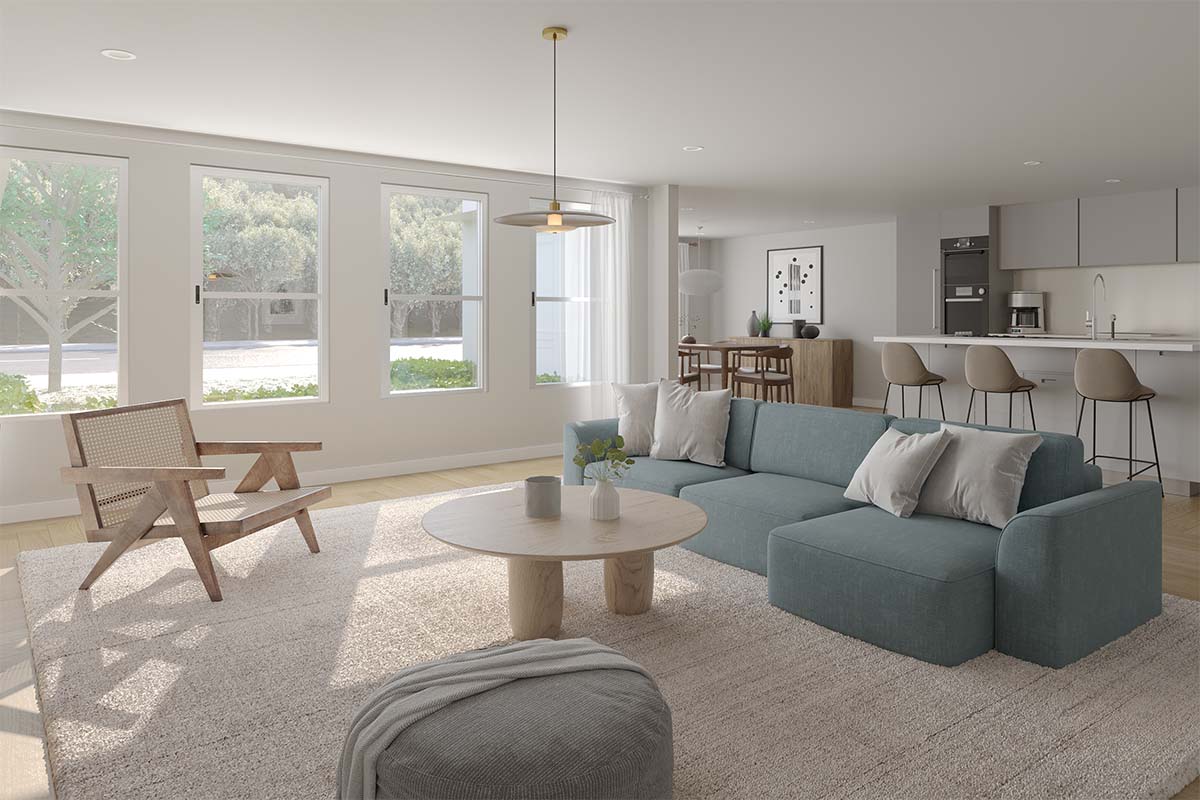 Interior renderings emphasize materials, flow and lights of indoor spaces
To create a photorealistic interior, artists must master "global illumination", the technique of simulating how light bounces off surfaces. Whether it is the soft morning sun filtering through sheer curtains or the warm, ambient glow of a designer pendant lamp in the evening, lighting defines the mood. Furthermore, the inclusion of high-fidelity textures, such as the intricate veins in a Calacatta marble countertop or the soft pile of a velvet sofa, adds a layer of realism that makes the space feel "habitable." Beyond aesthetics, these renders allow designers to demonstrate spatial flow, proving that the transition from a gourmet kitchen to an open-plan living area is both functional and beautiful.
2.2. Exterior 3D rendering: Selling the curb appeal
If the interior is about the lifestyle, then exterior 3D rendering delivers the "wow" factor and the structural soul of the project. It focuses on the building’s relationship with its surroundings, its architectural silhouette, and its overall "curb appeal." For real estate developers, this is often the most important asset for billboards and hero images on landing pages.
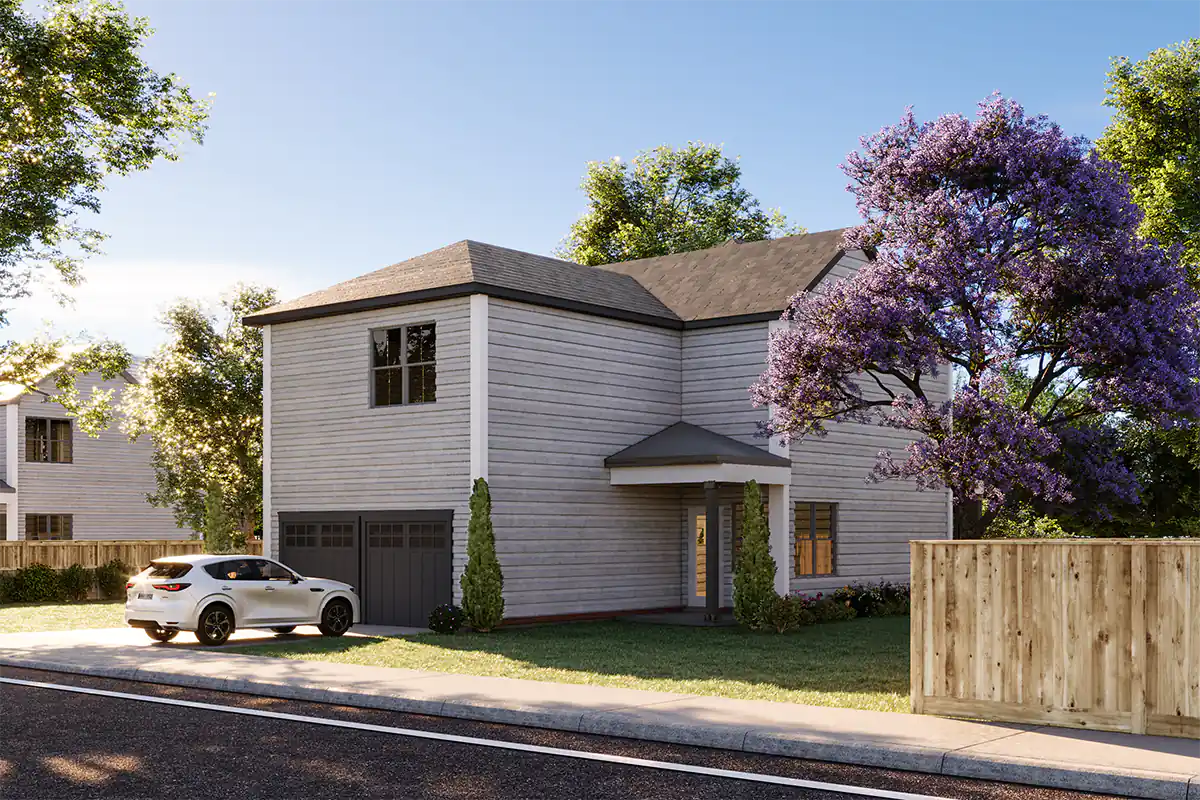
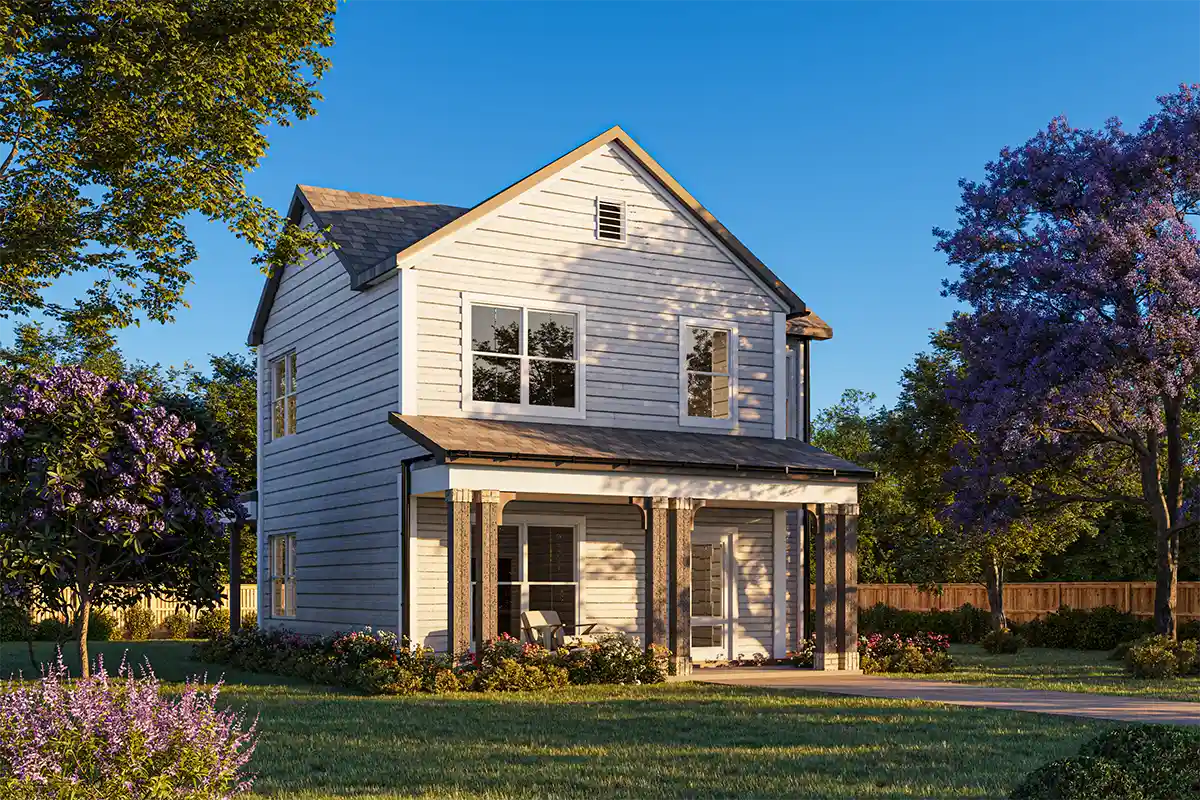 Exterior renderings focus on the outer appeals and the surrounding environment of a building
A professional 3D rendering of a modern house tells the bigger picture than just a building. It involves "environmental storytelling", integrating realistic landscaping, weather conditions, and urban context. One of the most powerful techniques used today is photo-matching, where a 3D model of the proposed building is seamlessly blended into high-resolution drone photography of the actual site. This provides stakeholders with an undeniable look at how the structure will impact the existing skyline or neighborhood.
By manipulating the "golden hour", that brief period of perfect, warm sunlight just before sunset, exterior renders can transform a standard apartment block into a stunning piece of architectural art. This level of visual persuasion is vital for securing government permits and attracting high-value investors who need to see the project's impact at scale.
3. When do you need 3D architectural rendering services?
Identifying the right timing to invest in 3D architectural rendering services is crucial for maximizing project efficiency and profitability. While some view visualization as a final "polishing" step, the most successful firms integrate these services much earlier in the project lifecycle to solve specific business and technical challenges.
- Pre-construction marketing and sales: Real estate is a game of timing and cash flow. To minimize financial risk, developers often need to sell or lease units before groundbreaking even begins. High-quality architectural visualization services allow for "off-plan" sales by providing potential buyers with a digital "home" to fall in love with. Without a physical structure to tour, these photorealistic renders become the primary sales engine for brochures, social media campaigns, and immersive websites.
- Design validation and cost savings: Even the most detailed 2D blueprints can hide spatial conflicts or aesthetic inconsistencies. Rendering serves as a final "stress test" for the design. By seeing a project in a 3D environment, architects can catch awkward layouts, lighting shadows, or material clashes that would be incredibly expensive to fix once construction has already started. It is, in essence, a high-value insurance policy against costly on-site revisions.
- Stakeholder and government approval: Large-scale developments often face scrutiny from local councils, planning boards, or neighborhood committees. Using exterior 3D rendering to show how a project integrates with the existing urban fabric, including shadow impacts and aesthetic harmony, helps demystify the project for regulators, often significantly speeding up the permitting process.
- Securing investor funding: When seeking millions in capital, a pitch deck filled with numbers and flat floor plans is rarely enough. Investors need to see the vision to believe in the ROI. High-impact renders bridge the gap between a "concept" and a "commodity," instilling the professional confidence required to secure significant financial backing.
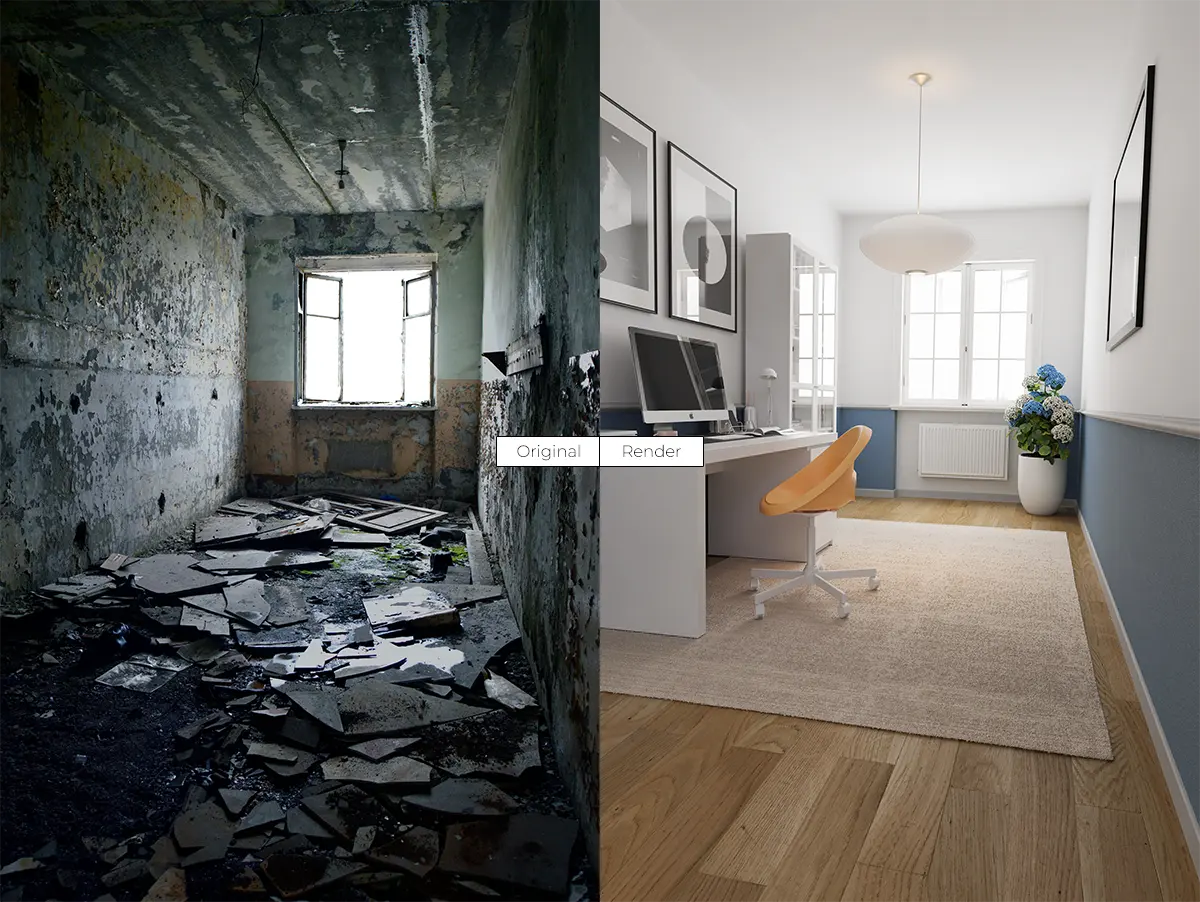 3D renderings can help with the realization of a property before construction finishes, allowing for quicker listing and selling
4. The great debate: 3D render vs. real photography
The rivalry between 3D rendering and traditional photography is often misunderstood. While photography captures the "soul" of a finished space, 3D architectural rendering services capture the "potential" of a vision. In the 2026 real estate market, the choice is no longer about which is "better," but which is most effective for your current project stage.
|
Feature |
3D rendering |
Traditional photography |
|
Availability |
Available during the design phase. |
Requires a 100% completed project. |
|
Control |
Total control over weather and lighting. |
Dependent on nature and site conditions. |
|
Staging |
Digital staging is limitless and "free." |
Physical staging costs thousands in labor. |
|
Flexibility |
Change materials or layouts in clicks. |
Requires a full, expensive "re-shoot." |
The primary advantage of architectural visualization services is their independence from physical constraints. A photographer might wait days for the perfect "golden hour," only to be thwarted by a sudden storm or a parked truck blocking the view. In a digital environment, the sun stays exactly where you need it.
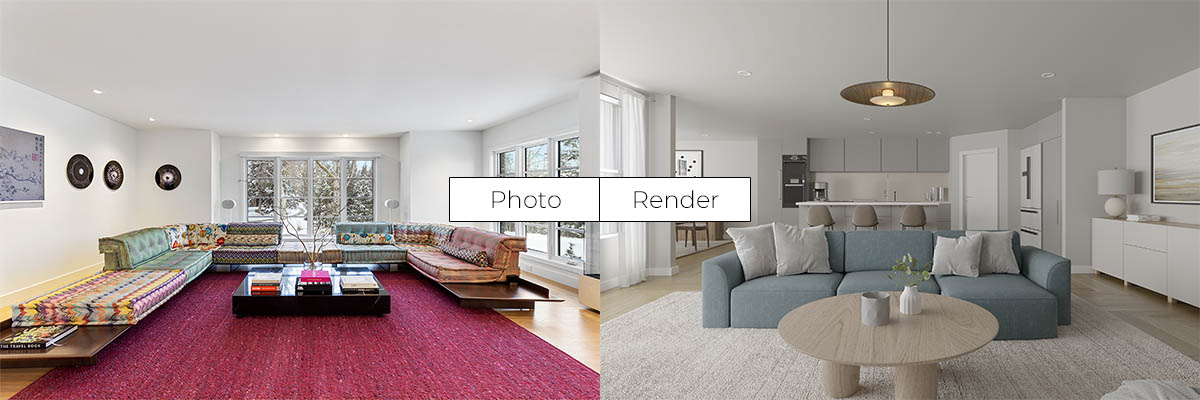 3D renderings are only limited by creativity, not by lighting conditions and the completion status of the property like camera photos
Furthermore, 2026 has introduced technologies like 3D Gaussian splatting, which allows us to bridge the gap by turning high-resolution video into immersive 3D environments. While AI-enhanced photography can now "virtually stage" an empty room, only professional 3D rendering can visualize a skyscraper before the first stone is laid. For pre-sales, investor pitches, and design validation, rendering remains the undisputed king of ROI, offering a level of precision and "what-if" flexibility that a physical lens simply cannot match.
5. The future: Human-led 3D rendering vs. AI
As we move through 2026, the architectural visualization industry stands at a fascinating crossroads. The explosion of Generative AI tools like Midjourney, DALL-E 3, and specialized architectural plugins has sparked a global debate: Can an algorithm replace a professional 3D artist? While AI has revolutionized the "ideation" phase, the reality of high-end 3D architectural rendering services remains firmly rooted in human expertise.
5.1. The "hallucination" vs. precision problem
The most significant limitation of current AI tools is their lack of spatial awareness and technical grounding. AI generates images based on visual patterns, not architectural physics. For interior architectural rendering, an AI might create a stunning "vibe" but place a structural pillar in a physically impossible location or ignore the specific dimensions of a CAD file. In contrast, professional architectural visualization services are built on "Digital Twins." Every pixel is grounded in real-world measurements, ensuring that what the client sees is exactly what can be constructed.
5.2. The challenge of consistency
A marketing campaign for a luxury development requires solid coherence of visuals. You need the exterior 3D rendering to match the master plan perfectly across ten different angles. AI notoriously struggles with "spatial consistency", it might change the window frames or the building’s texture when you ask for a different perspective. A human artist manages a centralized 3D model, ensuring that if a specific marble is used in the kitchen, it remains identical in every subsequent shot.
5.3. The hybrid workflow: The 2026 standard
The future isn't "human vs. AI". It is "human-augmented AI." Today’s top-tier firms use AI as a high-speed assistant to generate complex custom textures, automate the placement of "entourage" (people and greenery), or enhance atmospheric lighting during post-production. This synergy allows for faster turnaround times without sacrificing the surgical precision required for legal approvals and investor pitches. Ultimately, while AI can provide rapid inspiration, only a professional service can meet specific technical demands. It is the human eye that ensures the soul of the architecture isn't lost in the digital noise.
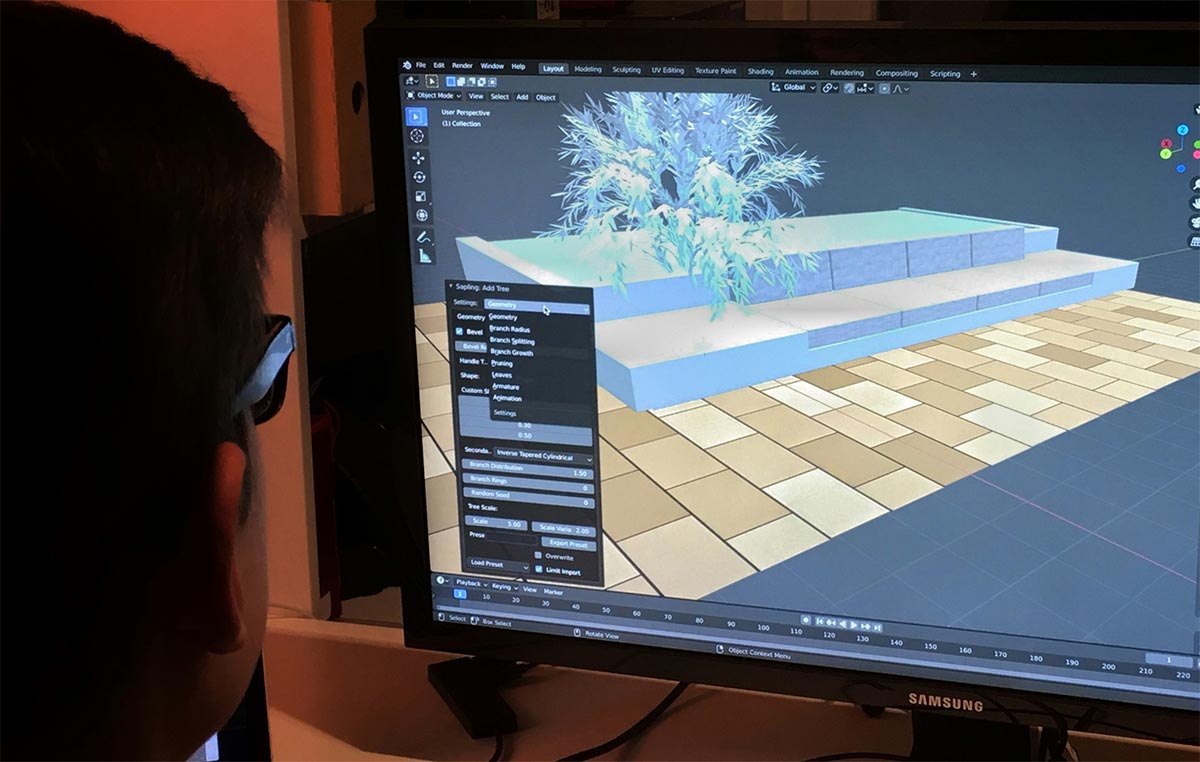 Combining automations with human finesse is the standard to deliver consistent results with speed
6. Case study: Maximizing real estate ROI with 3D architectural rendering services
To understand the true commercial impact of 3D architectural rendering services, look no further than M. Realty, a mid-sized agency known for curating some of the most prestigious addresses in New York City.
Details:
- Location: Manhattan, New York
- Specialty: High-end apartments, penthouses, and luxury brownstones
- Project: A new 30-story luxury condominium in Midtown, featuring floor-to-ceiling windows, a rooftop garden, and concierge-level amenities.
- Goal: Pre-sell at least 40% of the units before the official launch to secure investor confidence and generate early buzz in the market.
In early 2025, the developer faced a common but daunting challenge: they needed to secure 40% pre-sales to unlock construction financing in a neighborhood where three other projects were launching simultaneously. Without a physical building to show, the marketing team needed a way to build trust and evoke desire among high-net-worth investors long before groundbreaking.
The strategy: Immersive visual storytelling
The developer partnered with Fotober, a top-tier firm, to provide comprehensive architectural visualization services. The campaign was built on two strategic pillars:
- Exterior 3D rendering: Instead of a static building image, the team created a "Hero Shot" during the daylight, showing the exact view from the 30th-floor loggia. This allowed buyers to see precisely how the building would harmonize with the existing skyline.
- Interior architectural rendering: They developed hyper-realistic sets for three different interior design "moods": Minimalist, Industrial, and Classic. This gave potential buyers the ability to virtually "step into" their future homes, seeing the exact grain of the wood flooring and the play of light on marble countertops.
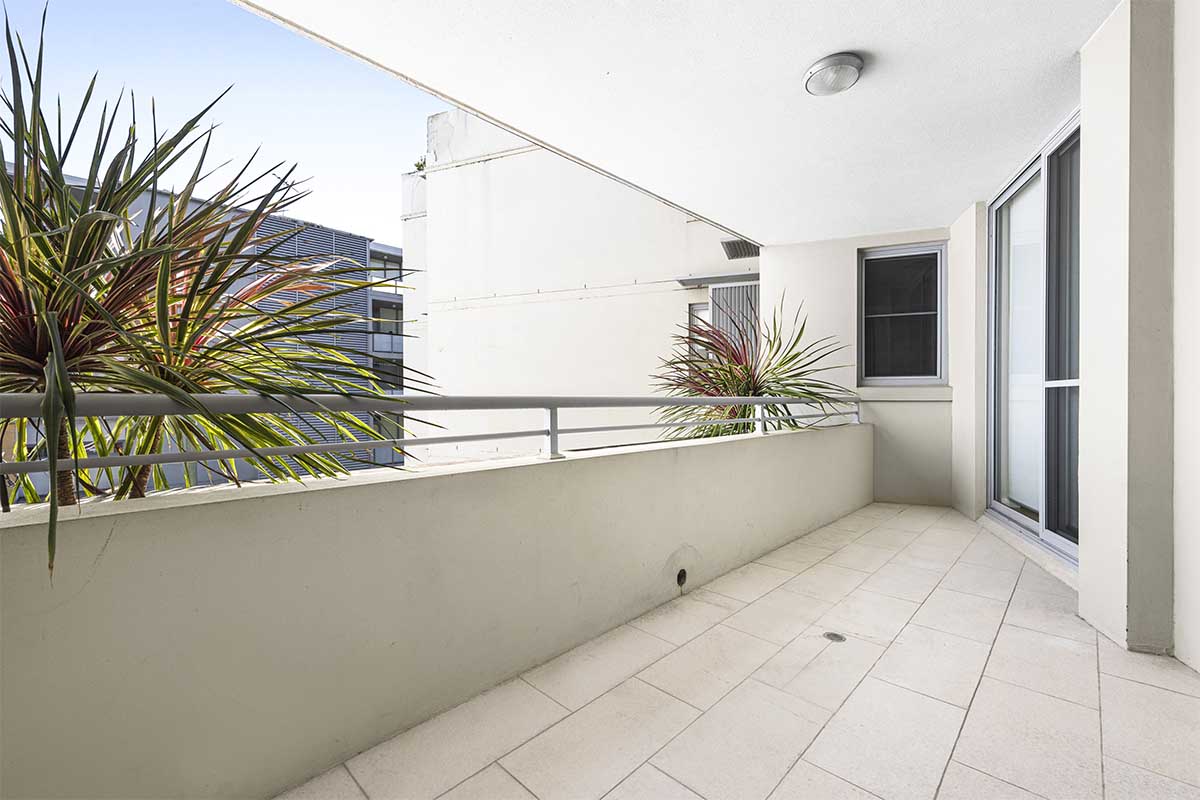 The loggia before 3D rendering
The results: Beyond expectations
The ROI was immediate and measurable. By the end of the first quarter, long before the foundation was even finished, the project had reached 49% pre-sales, exceeding the bank's 40% requirement.
Furthermore, the "premium" feel generated by the renders allowed the developer to set an asking price 15% higher than neighboring developments that relied on basic 2D plans. Because the 3D assets were of such high quality, they were repurposed across Instagram ads, VR headsets in the sales center, and international billboards. As a result, social media engagement on posts with renders increased by 30% compared to regular property listings. This also eliminated the need for expensive physical mock-up units, saving the company an estimated $200,000 in traditional marketing costs. This case study proves that in 2026, 3D architectural rendering services are not just a line item in a budget; they are a high-yield investment that significantly accelerates capital returns.
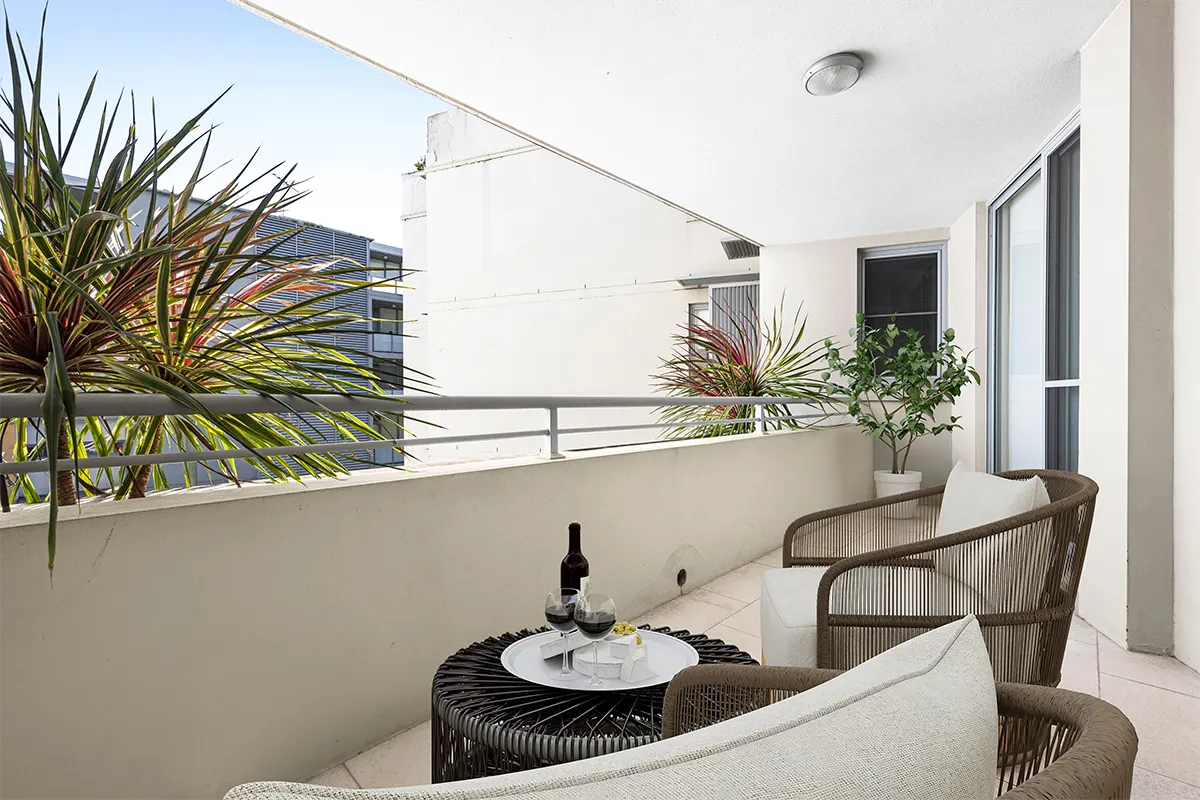 The loggia after being 3D-modeled and rendered
7. Choosing the right partner for architectural visualization
Choosing the right partner for your architectural visualization services is a strategic decision that impacts both your budget and your brand’s reputation. In 2026, a great rendering firm should offer more than just a "pretty picture"; they must act as a technical extension of your design team.
First, evaluate their portfolio, look for consistency in lighting and material accuracy within your specific niche, whether it’s high-end residential or complex urban infrastructure. Second, inquire about their technical stack. A top-tier provider should be proficient in BIM integration and offer VR-ready or interactive outputs to future-proof your marketing assets. Finally, prioritize communication and workflow. The best 3D architectural rendering services thrive on a collaborative feedback loop, ensuring that revisions are handled with surgical precision. Don't just hire a vendor; find a partner who understands the nuances of architectural storytelling, ensuring your vision is translated into a digital masterpiece that converts leads into buyers.
Why choose Fotober for 3D architectural rendering?
With so many rendering options available today, Fotober is unique in its ability to combine speed, quality, and market knowledge, particularly in highly competitive markets such as the US, Canada, the UK, and Australia.
Fotober's key benefits include:
- Proven track record in high-value real estate markets
- Consistent photorealistic results that will meet the demands of high-end buyers
- Quick turnaround time with no compromise on detail
- Collaborative process with flexibility in making changes
- More cost-effective than creating an internal team to create renderings.
 Fotober provides 3D rendering services catered for real estate marketing
Whether you want to pre-sell, attract investors or blow away potential buyers with your new building, Fotober has the ability to bring your project to life prior to the actual build. Contact us at Fotober to begin our FREE TRIAL today.
Conclusion
In the fast-paced real estate landscape of 2026, 3D architectural rendering services have evolved from a "nice-to-have" visual aid into a definitive business catalyst. As we’ve explored, the synergy between technical precision in architectural visualization services and artistic storytelling is the key to unlocking higher ROI, faster approvals, and deeper emotional buyer connections.
Whether you are bypassing the physical limits of traditional photography or navigating the emerging potential of AI, professional rendering remains your most reliable bridge from blueprint to reality. Don't let your vision stay flat; let’s elevate your next project and secure your market position.
Ready to transform your architectural concepts into photorealistic masterpieces? Talk with our architectural team today for a custom quote or visit our gallery to see our latest work in action.
Follow us on social media to get more useful tips and in-depth analysis on real estate 3d rendering and up-to-date details of our services!
- Facebook: fotobermedia.co
- YouTube: Fotober
- TikTok: @fotober
- Instagram: fotober_media.
Related posts
Las Vegas Virtual Staging: Best Platforms to Enchant Your Listings
July 23, 2026

Best Austin Real Estate Photography Options for Perfect Listing Photos
July 22, 2026

Best Aperture for Real Estate Photography: The Range for Sharp Photos
July 18, 2026

Short-Term Rental Photography: Shoot & Edit Photos That Gain Bookings
July 17, 2026
