




How to Identify Serious vs Non-Serious Buyers (and Focus on High-Value Clients)


Share:
Table of Contents
If you’ve ever felt like your pipeline is full—but your revenue isn’t—there’s a good chance you’re dealing with the wrong mix of leads. In most high-value sales environments, the real challenge isn’t getting more inquiries. It’s figuring out which ones actually matter. The gap between serious and non-serious buyers is where time, energy, and money are either multiplied—or wasted.
Understanding that difference early can completely change how your team sells, how your marketing performs, and ultimately how your business grows.
Serious buyers have a real need, a workable budget, and a timeline they care about. They’re not just asking questions—they’re trying to get to a decision. Non-serious buyers are still in exploration mode. They might be curious, comparing options, or just gathering information, but they’re not ready to move forward yet. A simple way to think about it: if a lead can’t clearly communicate at least two out of three—need, budget, or timeline—they’re usually not a serious buyer.
1. What are serious and non-serious buyers?
When people refer to serious and non-serious buyers, they’re really talking about intent, not personality. A serious buyer is someone who is already leaning toward action. They may not have everything figured out, but they know what they’re trying to solve, they’re willing to invest in a solution, and they have some sense of urgency. Conversations with them tend to move forward naturally because there’s a reason behind every question they ask.
Non-serious buyers are different in a more subtle way. They’re not necessarily wasting your time on purpose—they’re just not in a position to buy yet. Maybe they’re researching, maybe they’re comparing vendors, or maybe they’re just curious about pricing. The issue is that their behavior often creates the illusion of interest without the substance behind it. They ask questions, but the conversation doesn’t really go anywhere.
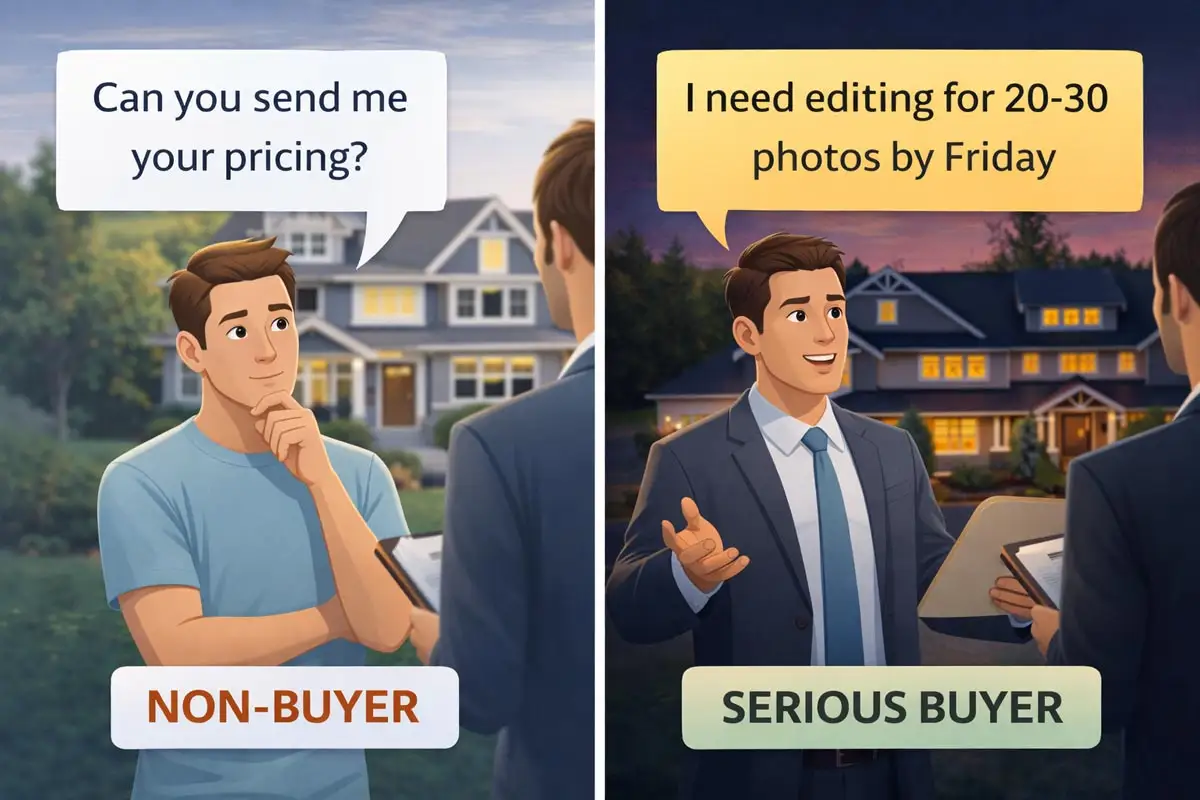
You can see this clearly in real-world situations. In real estate, a serious buyer might say, “I have a property going live next week and need editing for 20–30 photos by Friday. Can you handle that?” That kind of message gives you everything you need—scope, urgency, and intent. A non-serious buyer, on the other hand, usually starts with something like, “Can you send me your pricing?” and leaves it at that. No context, no timeline, and often no follow-up after you respond.
In service-based businesses, the pattern is the same. Serious buyers tend to share details early—volume, expectations, even past frustrations. Non-serious buyers stay vague and keep things at surface level. Once you start paying attention, the difference between serious and non-serious buyers becomes less about what they say and more about how they say it.
2. Why you should stop chasing every lead (and start focusing on serious and non-serious buyers)
One of the fastest ways to stall growth is to treat every lead as if they have the same potential. In reality, most pipelines are filled with a mix of serious and non-serious buyers, and the difference between the two is exactly where performance is won or lost.
A large portion of incoming leads—especially in high-value or B2B services—are naturally non-serious buyers. That’s not a problem by itself. The issue starts when teams fail to recognize it early and end up investing the same time and effort into everyone. Sales teams follow up endlessly, marketing keeps pushing for more volume, and the entire system starts to feel busy without actually producing better results.
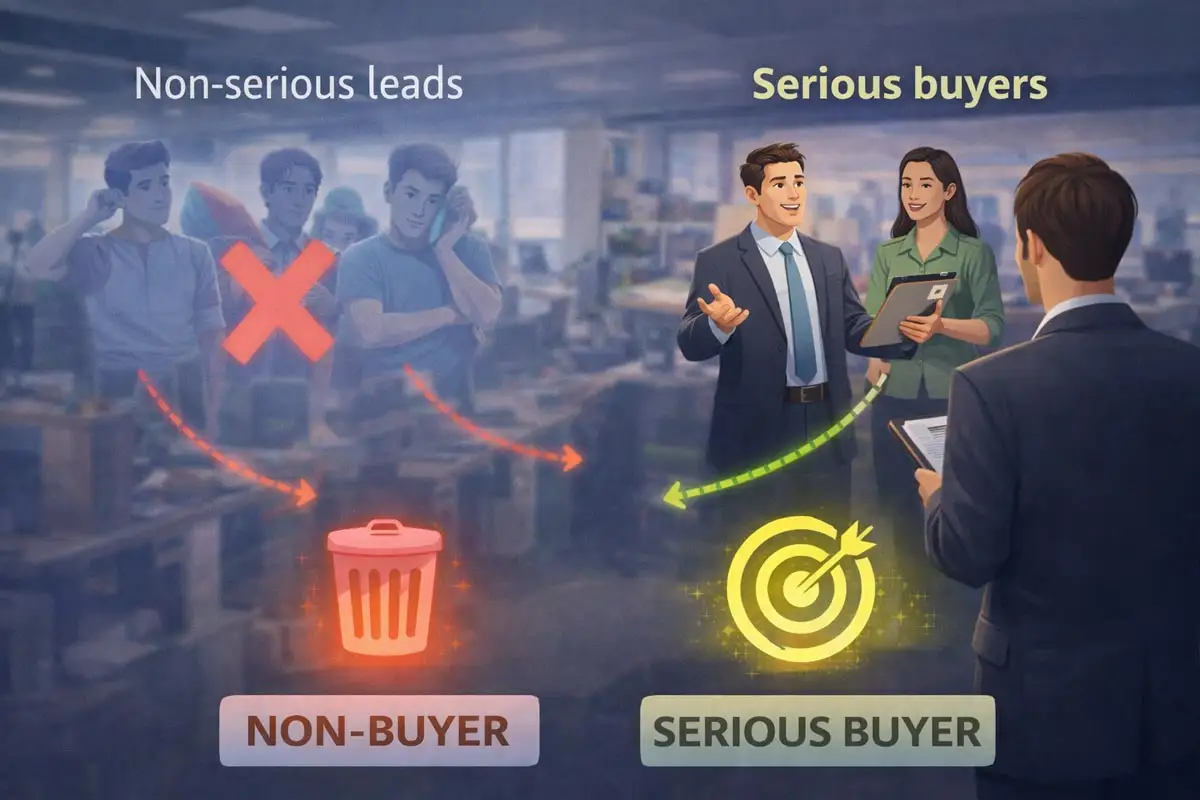
When you don’t clearly separate serious and non-serious buyers, a few things happen almost automatically. Your team spends too much time on conversations that don’t move forward, response time slows down for high-intent prospects, and over time, the pipeline looks full but lacks real opportunities. From a marketing perspective, it creates a misleading signal—lead numbers go up, but conversion rates stay flat, and revenue doesn’t scale the way it should.
This is why the idea that “more leads = more growth” often backfires. If most of those leads are non-serious buyers, you’re not improving performance—you’re just adding noise into your system. The real shift happens when you stop chasing every inquiry and start prioritizing serious buyers over non-serious buyers. That’s when sales cycles shorten, close rates improve, and your overall ROI becomes much more predictable.
A practical way to do this is by recognizing the early warning signs. Most non-serious buyers don’t explicitly say they’re not ready—but their behavior gives it away if you know what to look for.
5 Red flags of non-serious buyers
-
They ask for pricing immediately, without any context about their needs or project
-
Their answers are vague or incomplete when you try to qualify them
-
They disappear after one or two messages, especially after you provide details
-
They keep comparing options endlessly but never move toward a decision
-
They show no real urgency or timeline for moving forward
None of these signals alone is a deal breaker, but when you see several of them together, you’re most likely dealing with a non-serious buyer. Recognizing this early allows you to adjust your approach—either by filtering them out or by not over-investing your time—so you can stay focused on the leads that actually have a chance to convert.
3. How to identify serious buyers
If there’s one skill that consistently separates high-performing teams from average ones, it’s the ability to quickly identify serious buyers. Not after three calls. Not after a long email thread. But early—often within the first interaction.
It sounds obvious, but it’s often overlooked: serious buyers behave very differently. They don’t just say they’re interested—their actions show it. And once you know what to look for, the pattern becomes surprisingly consistent.
3.1. 10 Signals of a serious buyer
When evaluating serious and non-serious buyers, these are the signals that tend to show up again and again in high-intent leads:
#1 They have a clear timeline: Serious buyers don’t operate in vague terms. They’ll say things like, “I need this done by Friday” or “We’re launching next week.” A defined timeline signals urgency, and urgency is one of the strongest indicators of buying intent.
#2 They proactively share details: Instead of waiting to be asked, they offer context—project scope, expectations, past experience. This reduces friction and shows they’re already thinking about execution, not just exploration.
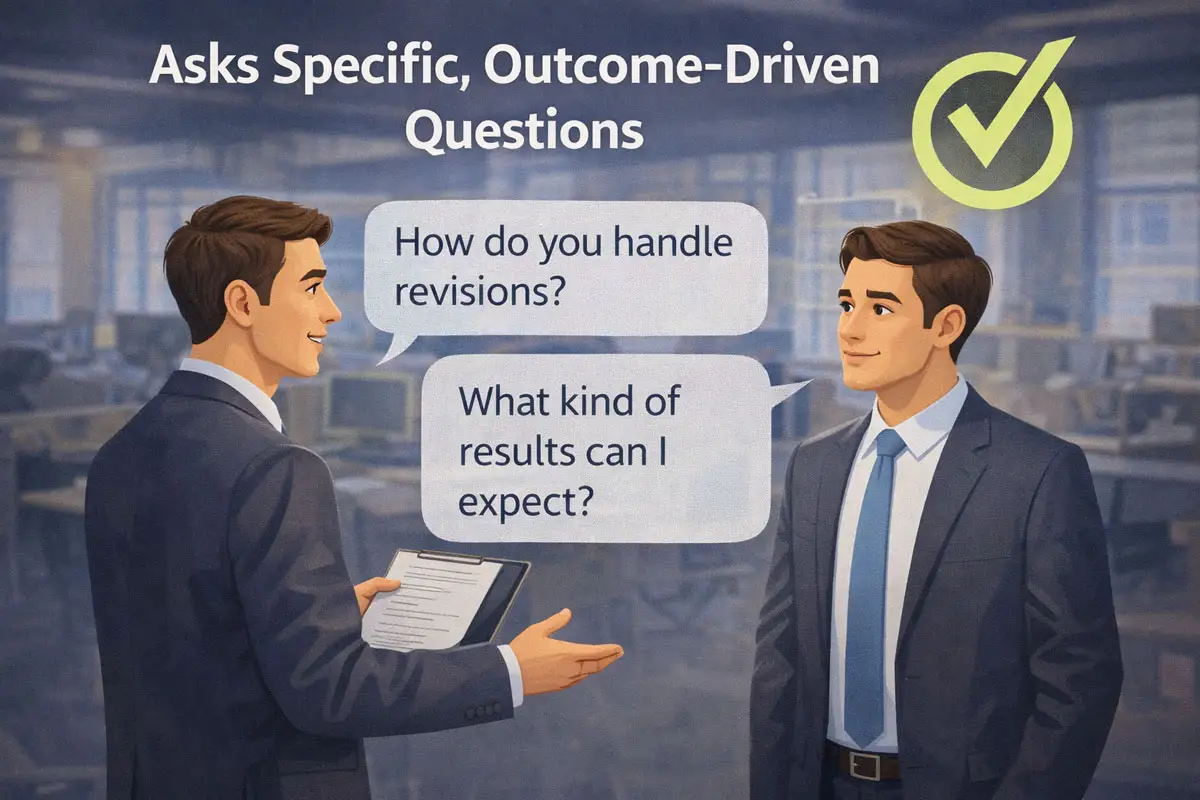
#3 They ask specific, outcome-driven questions: You’ll notice a shift in the type of questions. Instead of “How much does it cost?”, they ask things like “How do you handle revisions?” or “What kind of results can I expect?” That’s a buyer thinking about the end result, not just the entry price.
#4 They respond quickly and consistently: Speed matters. According to multiple sales studies, leads contacted within the first 5–10 minutes are significantly more likely to convert. Serious buyers tend to match that energy—they reply fast because they’re actively engaged in the process.
#5 They don’t fixate only on price: Price comes up, of course. But it’s part of a broader conversation. If someone is only focused on getting the lowest number without discussing value, they’re usually not a serious buyer.
#6 They reference a real use case: Serious buyers almost always tie the conversation to something concrete—a listing, a campaign, a client project. This anchors the discussion in reality, not hypotheticals.
#7 They show decision-making awareness: They might mention internal processes, stakeholders, or how they typically choose vendors. This signals they’ve been through buying decisions before and know what they’re doing.
#8 They’re open about constraints: Budget, timeline, expectations—serious buyers don’t hide these. They understand that sharing constraints actually helps move things forward faster.
#9 They follow through on small commitments: If they say they’ll send files, schedule a call, or review a proposal, they do it. This kind of follow-through is a strong predictor of whether they’ll close later.
#10 They’re trying to reduce risk, not delay decisions: You’ll notice they ask questions that help them feel confident—about quality, process, reliability. That’s very different from someone who asks questions just to stall or compare endlessly.
Individually, these signals might not mean much. But when you see several of them together, you’re almost always dealing with a serious buyer.
3.2. Simple qualification framework (that actually works)
You don’t need a complex system to filter serious and non-serious buyers. In most cases, a simple structure works better because your team will actually use it.
The most practical approach is to focus on three variables: Budget, Need, and Timeline.
-
Budget: Can they realistically afford your service? You don’t always need an exact number, but you should know if expectations align.
-
Need: Is there a real problem to solve, or are they just exploring options?
-
Timeline: When do they need this done? Urgency often separates serious buyers from everyone else.
A useful rule of thumb is this: If a lead doesn’t clearly meet at least 2 out of these 3 criteria, they’re likely a low-quality lead.
This doesn’t mean you ignore them completely, but it does mean you shouldn’t invest the same level of time and attention. In practice, this framework can be applied through just a few simple questions:
-
“When are you planning to start?”
-
“What kind of volume or scope are you working with?”
-
“Have you worked with a service like this before?”
The answers will tell you almost everything you need to know.
3.3. Real example: Filtering leads to increase conversions
A common mistake—especially in growing teams—is trying to capture every possible lead. It feels like a safe move. More leads, more opportunities, right?
In reality, it often creates the opposite effect.
We’ve seen this pattern firsthand when working with real estate photographers. At one point, our team was handling a high volume of inquiries, but many of them weren’t converting. Their pipeline was full, but conversion rates were inconsistent, and the sales team spent a lot of time on conversations that never went anywhere.
The shift was simple. Instead of changing their ads or increasing budget, they added just a few qualification steps:
-
A short intake form asking about project volume and timeline
-
A minimum requirement for order size
-
One follow-up question to confirm urgency before sending full pricing
At first, it felt like a bad move. Total lead volume dropped by around 35–40%. But the leads that remained were much closer to being serious buyers.
Within a few weeks, conversion rates improved significantly, sales cycles became shorter, and the team spent less time chasing low-quality conversations. Revenue didn’t drop with fewer leads—it actually became more stable and predictable.
This is how most high-performing service teams actually operate. They don’t try to attract everyone. They design their funnel to naturally filter out non-serious buyers and make it easier for serious buyers to move forward.
4. How to attract more serious buyers (without chasing everyone)
Once you understand the difference between serious and non-serious buyers, the next step isn’t to chase harder—it’s to attract better. The goal here is simple: make it easier for serious buyers to recognize your value, and harder for low-intent leads to enter your pipeline.
4.1. Stop attracting the wrong people
A lot of businesses unintentionally attract non-serious buyers through the way they position themselves. Broad, generic content might bring traffic, but it rarely brings high-intent buyers. When your messaging tries to appeal to everyone, it usually resonates with no one who’s ready to act.
The same goes for pricing strategy. Leading with “cheap” or heavily discounted offers tends to pull in price-sensitive leads who are more likely to compare endlessly than commit. Instead, positioning around outcomes—quality, consistency, reliability—naturally filters toward serious buyers who care about results, not just cost.
4.2. Use content to pre-qualify leads
Good content doesn’t just attract traffic—it filters it. If you want more serious buyers, your content should help them quickly see whether you’re the right fit.
Case studies are one of the most effective tools here. When you show real projects, real challenges, and real outcomes, you’re speaking directly to people who have similar needs. The same applies to before-and-after examples—they set clear expectations about quality.
Equally important is transparency. A simple breakdown of your process—how projects are handled, how revisions work, what timelines look like—helps serious buyers move forward faster while naturally discouraging those who aren’t ready.
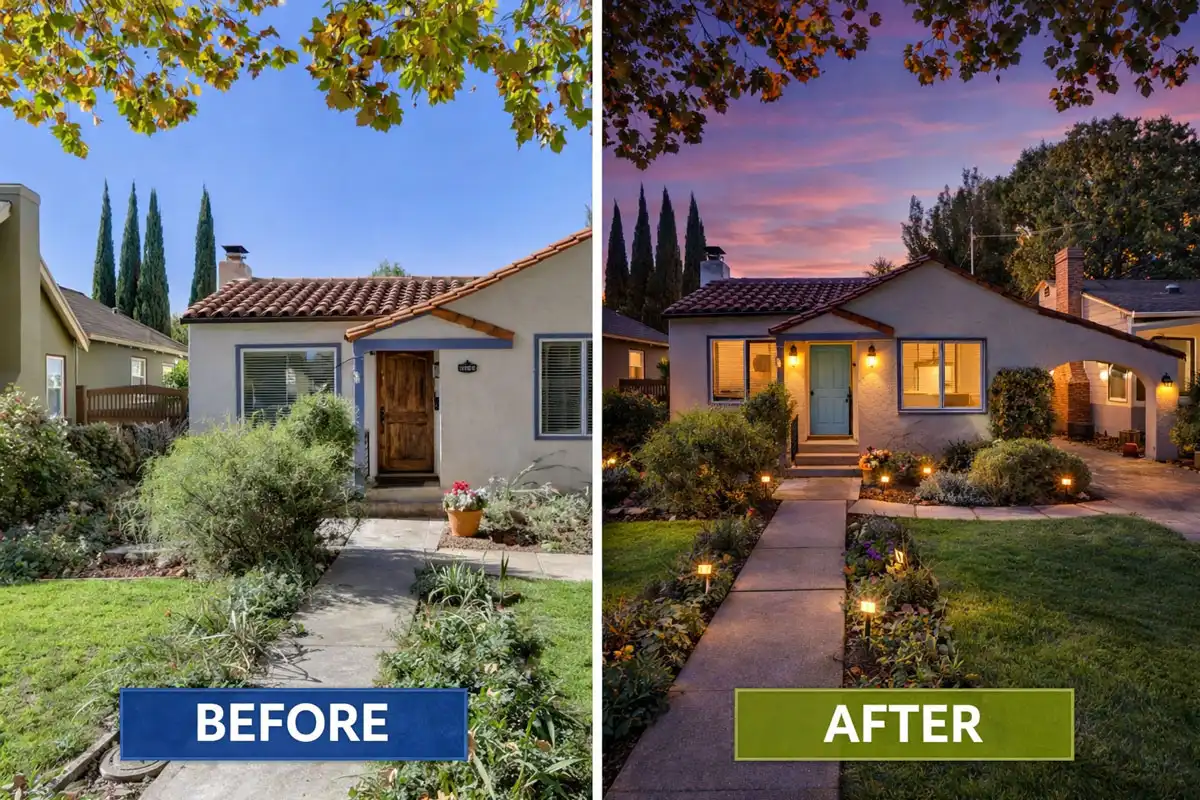
If you offer services like real estate photo editing, this is also where you can guide readers toward your solution. For example, you might internally link to your real estate photo editing services page or a detailed workflow guide to give qualified leads a clearer next step.
Another subtle way to attract more serious buyers is by showing that you understand the full client journey—not just the transaction itself. High-intent clients tend to think beyond the immediate service; they care about long-term relationships, client experience, and retention.
For example, in real estate, professionals who invest in thoughtful client experiences—like personalized follow-ups or even closing gifts—are often the ones working with more serious, repeat-ready buyers. If you’re in that space, it’s worth exploring strategies like these to strengthen your positioning. You can check out this guide on real estate closing gifts for buyers to see how top agents build stronger client relationships after the deal is done.
This kind of content doesn’t just educate—it signals that you’re working at a higher level, which naturally attracts high-intent buyers who think the same way.
4.3. Add a simple filter
You don’t need a complicated system to filter non-serious buyers. Small barriers often work best. A short intake form asking about volume, timeline, or project type can immediately reveal intent. Adding “starting from” pricing or a minimum order requirement also helps set expectations early.
These aren’t obstacles—they’re signals. Serious buyers won’t be discouraged by them; in fact, they often appreciate the clarity.
A soft way to guide the right audience forward could be as simple as: “If you’re working with high-volume listings or need consistent editing quality across projects, having the right workflow in place makes a bigger difference than most people expect. That’s usually where working with a dedicated editing partner starts to pay off.” No pressure, no hard sell—just a clear invitation for the right people.
Conclusion
This structure works because it balances intent. The earlier sections bring in traffic and build understanding around serious and non-serious buyers, while the core section establishes authority. This final section does just enough to convert—without pushing too hard.
When done right, you don’t need an overly long article. A focused piece in the 1200–1500 word range is often enough to attract high-intent buyers, educate them, and move them one step closer to working with you.
-
YouTube Channel: Fotober
-
TikTok Channel: @fotober
-
Email support: [email protected]
-
Hotline: +84 942 110 297
Related posts

Modern Luxe Interior Design: Elements, Style Guide and How to Stage It
October 10, 2026

Minimalist Interior Design: Characteristics, Style Guide, and Staging
October 8, 2026

Coastal Interior Design: Style Definition & Staging Guide
September 30, 2026

Contemporary Interior Design: Key Elements and How to Stage This Style
September 30, 2026
