




Real Estate Photo Editing Jobs: Understanding the 2026 High-end Demand
Share:
Table of Contents
- 1. What is a real estate photo editor?
- 2. The surging demand for real estate photo editing jobs and editors
- 3. Career paths and income potential in real estate photo editing
- 4. Essential skills and tools for real estate photo editors to land a job
- 5. The future of the Industry: Trends impacting jobs in 2026 & beyond
- 6. Where to find real estate photo editing jobs
- 7. Conclusion
The demand for real estate photo editing jobs has been steadily growing as the property market becomes more competitive and visual-first. High-quality, professionally edited images are crucial for real estate agents and property managers looking to attract buyers and tenants. This surge has created numerous career opportunities for skilled editors around the world. Whether you’re seeking full-time employment, freelance gigs, or a flexible remote career, real estate photo editing could be the path for you. Let’s dive into what this job involves, the skills you’ll need, and where to find opportunities.
1. What is a real estate photo editor?
A real estate photo editor is a specialized digital artist responsible for transforming raw property images into high-quality, market-ready visual assets for real estate listings and MLS platforms. Unlike general portrait or fashion retouchers, their primary mission is to optimize architectural spaces, light, and geometry, making homes look as spacious and inviting as possible. They bridge the gap between what a camera lens captures, often limited by harsh shadows or tight angles, and how a home truly feels in person, directly influencing a buyer's emotional connection to a listing.
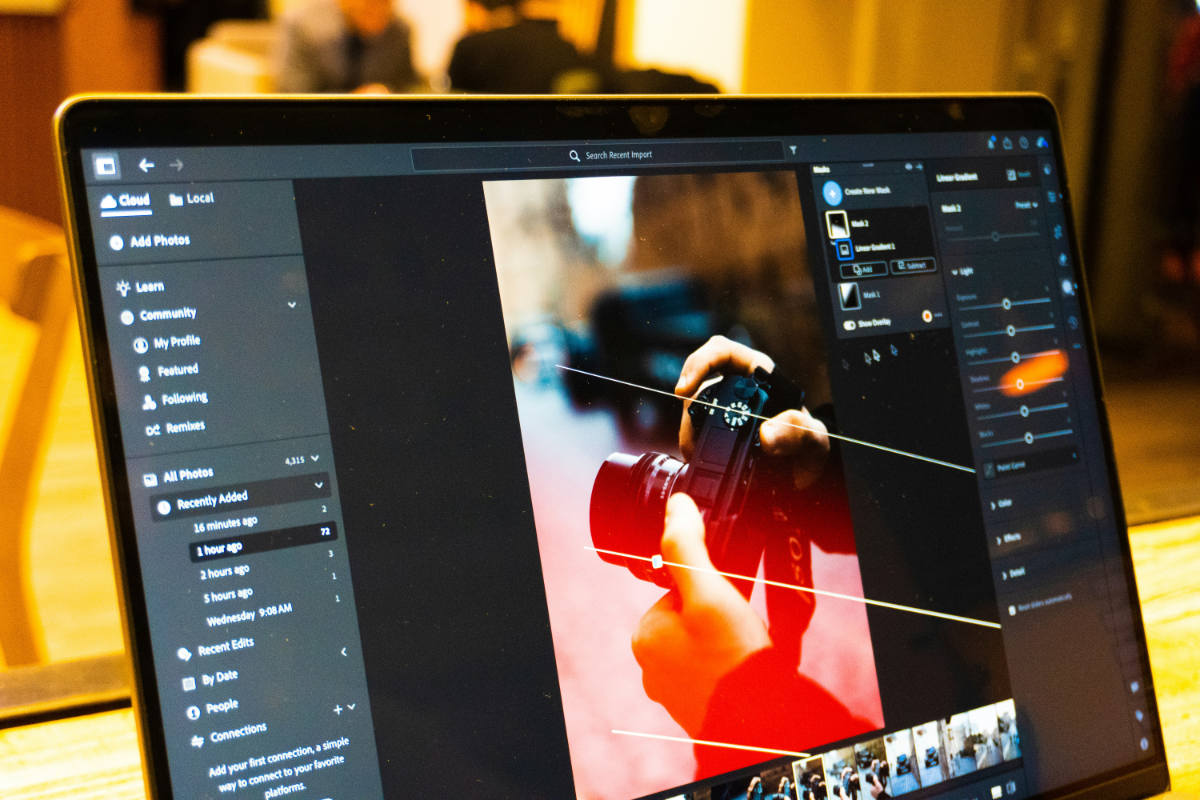 Photo editors should understand exactly what a photo needs to shine.
To achieve this flawless look, an editor’s daily workflow involves several highly technical core tasks:
- HDR blending and exposure balancing: Photographers routinely shoot multiple bracketed exposures to handle tricky indoor lighting. Editors blend these layers to ensure interior spaces are bright and crisp while the view through the windows remains perfectly visible, a process often called window masking.
- Perspective and vertical correction: Wide-angle lenses used in real estate photography often cause geometric distortion, making straight walls appear tilted or bowed. Editors meticulously correct these vertical lines to ensure the property's architecture looks structurally accurate and professionally framed.
- Color cast removal and white balance tuning: Mixed lighting from yellow interior bulbs and blue outdoor daylight creates distracting, unwanted color casts. Editors neutralize these tones so that wall paint, hardwood floors, and countertops reflect their true-to-life colors without looking artificially saturated.
- Digital de-cluttering and object removal: To maintain a clean, high-end aesthetic, editors use cloning and healing tools to remove distracting elements. This includes erasing power cords, pool cleaners, vehicles in the driveway, or stray trash cans.
Ultimately, a real estate photo retoucher is a crucial link in the property marketing supply chain. More than just manipulating pixels, they strategically enhance visual narratives that help agents sell homes faster and at higher prices.
2. The surging demand for real estate photo editing jobs and editors
The global market for real estate photo editing is experiencing unprecedented growth, projected to expand at a compound annual growth rate (CAGR) of nearly 15% over the next several years. This massive surge in demand is driven by three critical shifts within the property marketing ecosystem:
- Digitization of property searches: Over 97% of home buyers now begin their real estate journey online. On modern listing portals, buyers make split-second decisions while scrolling through feeds. If an image fails to captivate them instantly, the lead is lost. High-quality visuals are no longer a luxury; they are a fundamental requirement for generating clicks and physical showings.
- The photographer's bottleneck: Real estate media is a volume-driven industry. During peak listing seasons, a single photographer may shoot multiple properties a day. Spending an additional two to three hours editing each shoot creates a severe operational bottleneck. By outsourcing 60% to 80% of their post-production workflow, photographers can stay behind the lens, shoot more listings, and scale their businesses efficiently.
- The "HGTV effect": Decades of home renovation television and curated social media have trained consumers to expect magazine-quality aesthetics. Raw, flat photographs or amateur phone snapshots simply do not build buyer trust. Listings demand flawless execution, from pristine sky replacements to complex "flambient" blending techniques.
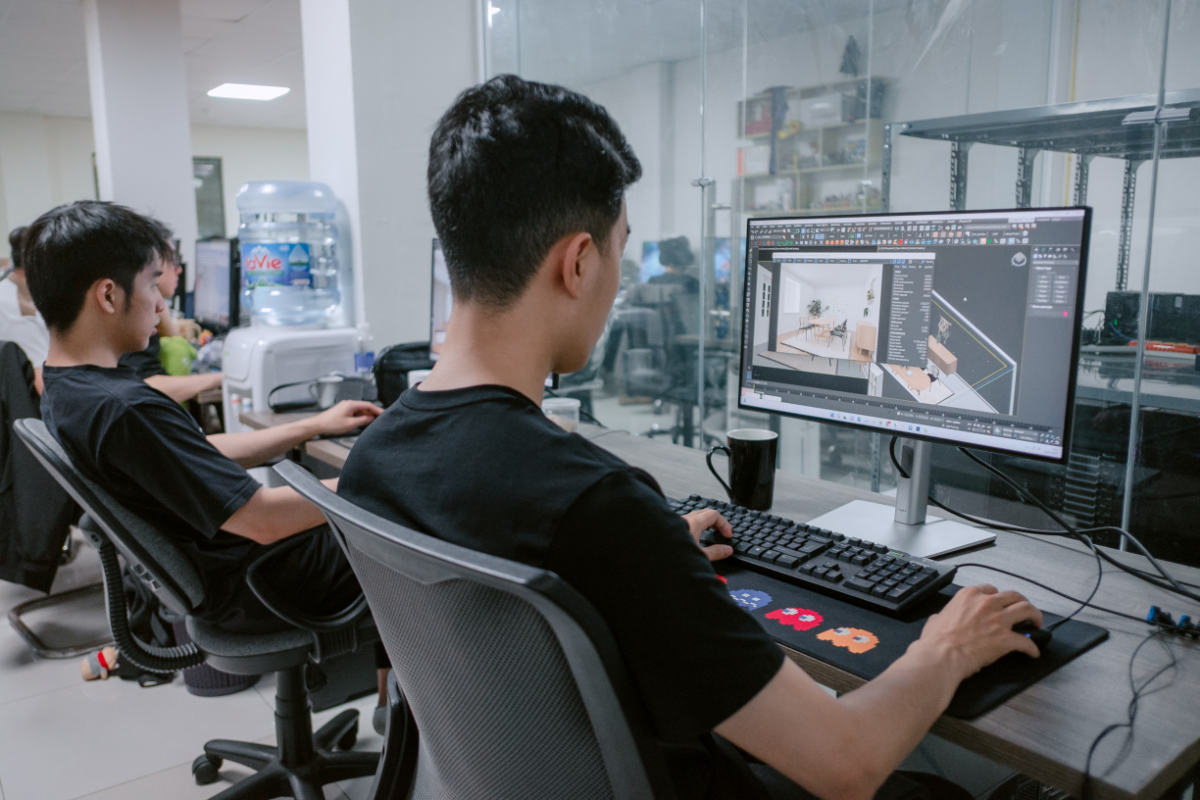 The demand for photo editors, especially those with remarkable prowess in high-end retouching techniques, is higher than ever.
Consequently, media agencies across the United States and Europe are aggressively adopting global outsourcing models. To guarantee strict 12-to-24-hour turnaround times without skyrocketing internal overhead, these companies heavily recruit talent from offshore graphic hubs, particularly in Southeast Asian countries like Vietnam. For skilled local retouchers, this cross-border reliance creates a massive, stable pipeline of remote job opportunities.
3. Career paths and income potential in real estate photo editing
The career landscape for real estate photo retouchers offers diverse pathways, catering to different lifestyle preferences and technical skill levels. Professionals generally choose between the independence of freelancing and the stability of corporate agency employment.
3.1. Career opportunities for real estate photo editors
Freelance photo editors: Freelancers benefit from maximum flexibility and geographic freedom. They operate as independent business owners, sourcing their own clients, often real estate photographers or boutique agencies, and setting their own hours. Freelance compensation is typically structured per image (ranging from $0.50 to $5.00+, depending on complexity) or per project. This model allows motivated individuals to scale their volume and unlock uncapped earning potential. However, for editors looking for a steady stream of income in the form of a real estate photo editor salary, keep reading; there are some more viable options right below.
In-house and agency roles: For those prioritizing stability, joining an established media production agency or an in-house corporate marketing team is ideal. This path provides a steady, predictable monthly salary, structured shifts, and collaborative team environments. It also offers a clear vertical trajectory, allowing talented editors to climb the ranks into Quality Control (QC) specialists, training managers, or creative directors.
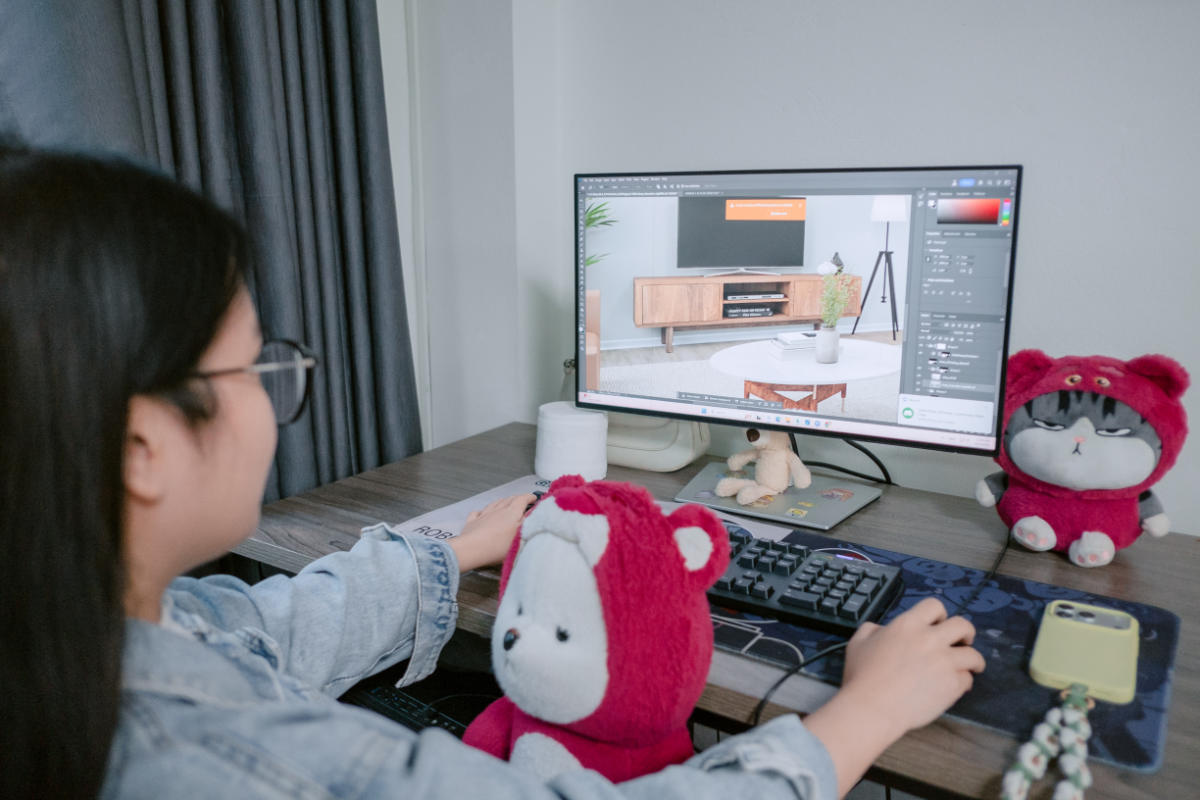 Remote jobs allow editors to take part in projects worldwide while staying in their home countries.
Outsourcing companies: Another option in finding real estate photo editing jobs is working for outsourcing companies specializing in real estate post-production. Firms like Fotober handle editing for clients across the US, Canada, Australia, and beyond. Editors working for these companies benefit from a steady stream of projects, exposure to various editing styles, and opportunities to hone their skills across different property types. The workflow in these real estate photo editor remote jobs is typically structured, with clear guidelines and deadlines, making it a reliable option for editors seeking consistent income without constantly hunting for new clients.
3.2. Potential income for property photo editors
A photo editor’s salary and income are directly tied to their technical proficiency and efficiency. The global remote market generally categorizes income potential into three distinct tiers:
- Entry-level ($800 - $1,500/month): Editors at this stage handle fundamental tasks such as high-volume automated HDR blending, basic color corrections, and straightforward perspective adjustments.
- Mid-level ($1,500 - $3,000/month): At this tier, editors master complex multi-exposure balancing, manual daylight-to-dusk (virtual twilight) conversions, and intricate object removal. They demonstrate a keen eye for maintaining visual consistency across entire property sets.
- Expert level ($3,000+/month): Top-tier editors specialize in premium luxury listings. They are masters of the meticulous "flambient" technique, manually blending ambient light shots with multiple flash frames. They also command premium rates by offering high-margin add-on services like 3D virtual staging for vacant spaces.
4. Essential skills and tools for real estate photo editors to land a job
Securing high-paying real estate photo editing jobs requires more than general graphic design knowledge. Because real estate media is a highly niche field, global clients look for a specific blend of advanced technical techniques, industry-standard software mastery, and reliable workplace habits.
4.1. Technical editing skills
To stand out to recruiters and premium photography agencies, you must master the following specialized techniques:
- Flambient and advanced HDR blending: This is the gold standard of real estate editing. You must know how to seamlessly blend ambient light frames (for natural shadows and warmth) with multiple flash frames (for crisp details and true colors). This includes advanced window masking, ensuring the view outside a window is perfectly balanced with the interior brightness.
- Sky replacement and virtual dusk: Overcast skies ruin property appeal. Editors must be adept at replacing gray backdrops with clear blue skies. Furthermore, converting daytime exterior shots into dramatic "virtual twilight" (golden hour) images is a high-demand skill that commands premium pricing.
- Geometric and architectural realism: Maintaining structural accuracy is vital. You must know how to perfectly align vertical and horizontal planes so walls do not lean and ceilings do not sag, keeping the property looking architecturally sound.
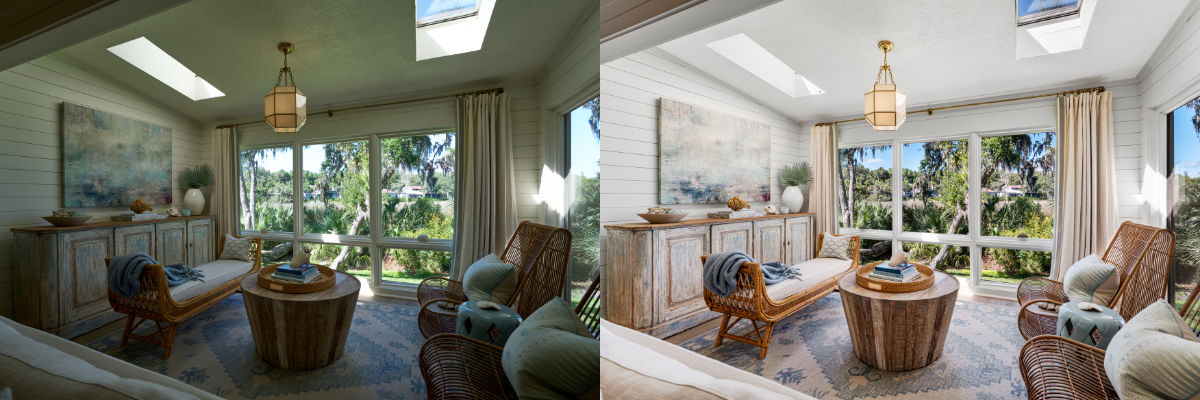 Photo editors working on listing images are expected to address the technical and aesthetic flaws in the raw files, delivering faithful and appealing results.
4.2. The core software ecosystem
The professional real estate media workflow revolves around two mandatory platforms from the Adobe Creative Cloud:
- Adobe Lightroom: This is your control center for efficiency. Lightroom is used for batch processing, initial file organization, color culling, and applying consistent global adjustments (like basic exposure and contrast) across hundreds of property images at once.
- Adobe Photoshop: Where the intricate work happens. Photoshop is essential for advanced layer masking, manual flambient photo blending, and detailed pixel cloning. Experienced editors also leverage modern AI features, such as Generative Fill, to accelerate complex object removal tasks while maintaining believable textures.
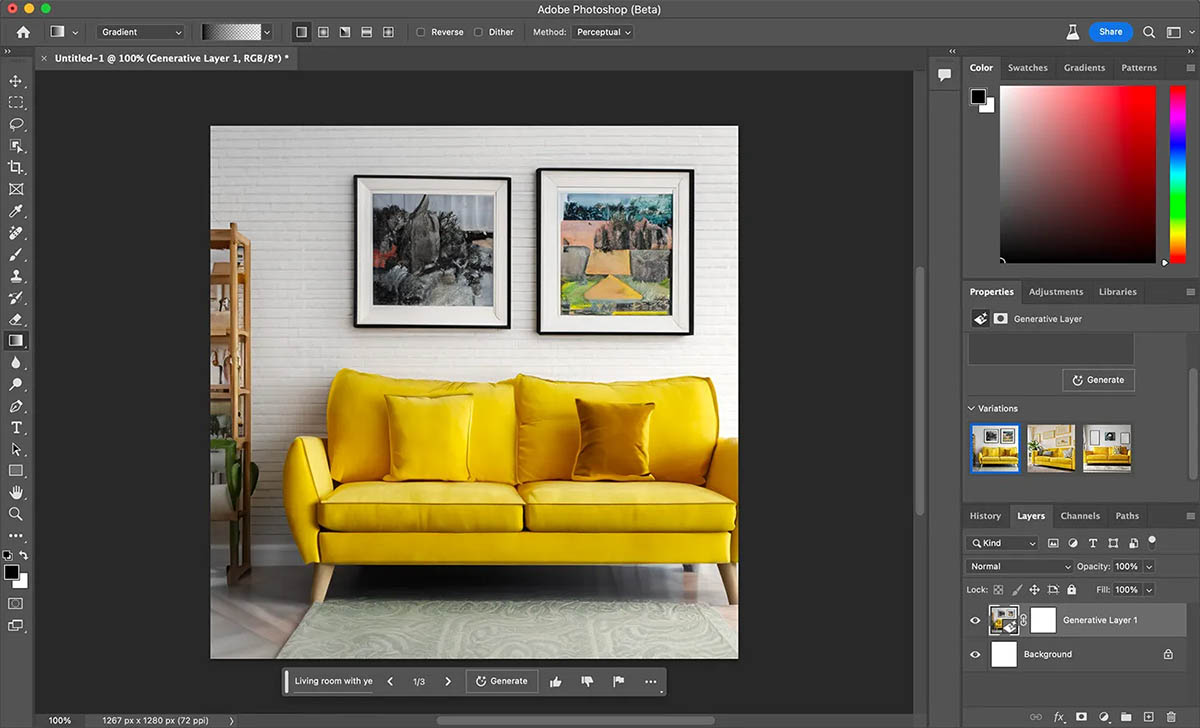 The interface of Adobe Photoshop, the essential app in any photo editor’s toolkit.
4.3. Critical soft skills
While technical proficiency gets you noticed, your soft skills determine your career longevity and client retention:
- Rapid turnaround time (TAT): Real estate agents operate in a fast-paced market. Delivering flawless work within a strict 12-to-24-hour window is non-negotiable.
- Visual consistency: You must ensure that the color temperature, exposure levels, and overall mood remain uniform across all 25 to 50 photos of a single property listing.
- Adaptability and communication: Every photographer has a unique signature style (some prefer bright and airy, others moody and dramatic). Being able to interpret client style guides and accept constructive feedback without friction is the key to building long-term remote partnerships.
5. The future of the Industry: Trends impacting jobs in 2026 & beyond
The real estate media industry is undergoing a rapid evolution. As we move through 2026, the role of a photo editor is shifting from a basic technical editor to a strategic visual storyteller, heavily influenced by technological advancements and changing buyer expectations.
5.1. The hybrid AI-human workflow and the authenticity standard
Artificial intelligence has officially become a staple in real estate workflows. Modern AI tools can batch-process high-volume HDR blending, execute automated sky replacements, and perform rudimentary color corrections in minutes. However, in my opinion, this is not the human editors’ doom. Instead, it has raised the bar. Buyers are increasingly sensitive to the cold, over-processed, "photoshopped" look. The current market demands a hybrid model: AI handles the tedious groundwork, while human editors provide the critical quality assurance layer, ensuring geometric accuracy, sophisticated "flambient" blending, and believable, true-to-life tones that preserve buyer trust.
5.2. High-margin virtual staging: The shift to "curated calm"
Virtual staging has evolved far beyond simply throwing generic digital furniture into an empty room. In 2026, interior design trends have shifted completely away from sterile, matchy-matchy minimalism toward "curated calm," warm minimalism, and textured, organic materials like matte wood and linen. High-earning editors are leveraging advanced 3D staging tools to inject personality, earthy color palettes (like terracotta and deep olive), and realistic textures into vacant listings. Mastering these specific design aesthetics allows editors to command premium rates.
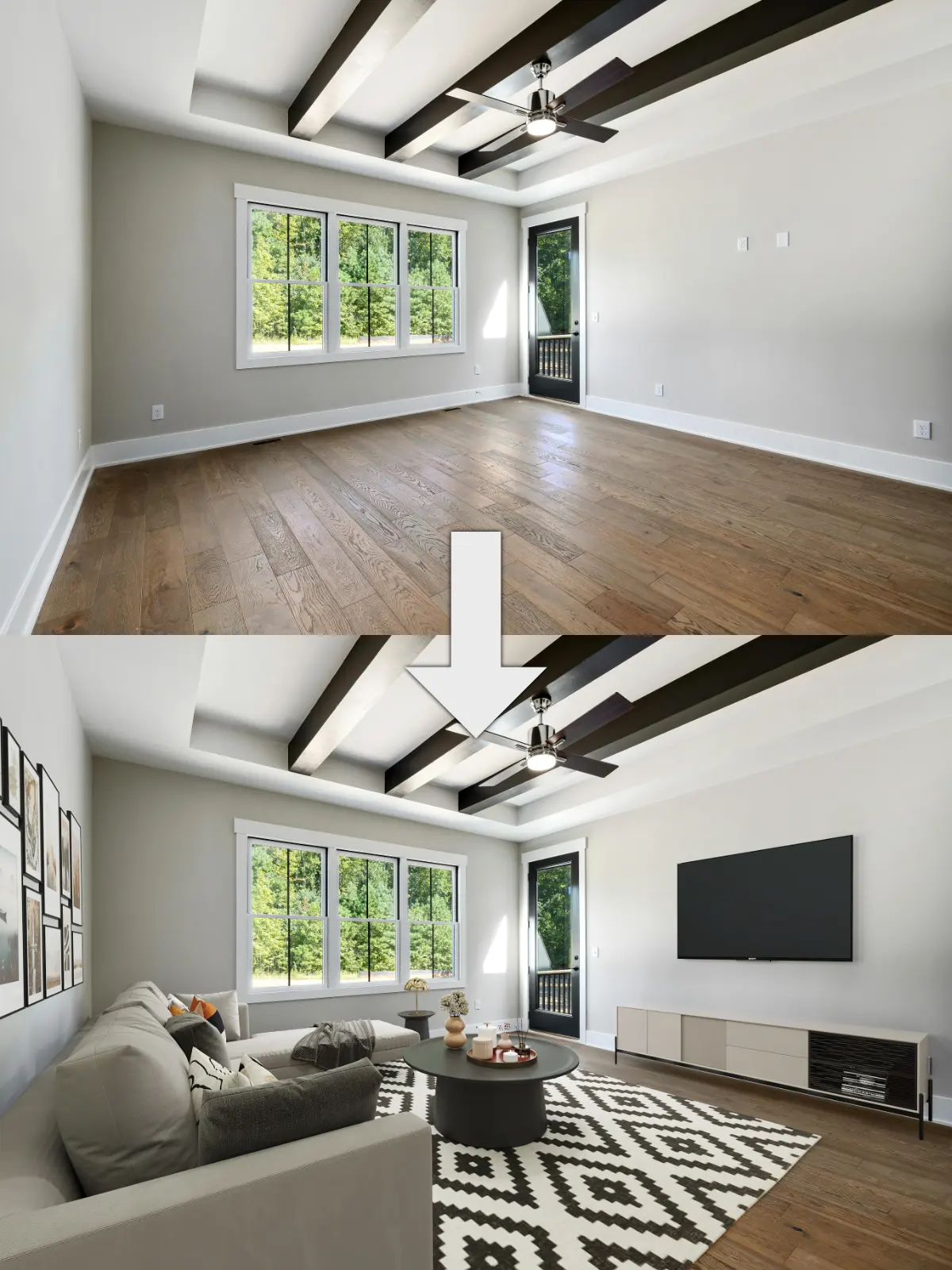 The fusion between different types of media in real estate marketing will be the prominent trend in the near future.
5.3. The all-in-one media pivot
The standard property listing package has expanded. Because the majority of buyers browse listings on mobile devices, there is an explosive demand for mobile-first, short-form vertical videos (9:16 format for Instagram Reels and TikTok). Photographers now look for "all-in-one" media editors who can not only retouch stills but also sync cinematic drone clips into engaging social media video walk-throughs and process interactive 2D/3D floor plans. Broadening your toolkit to include these multimedia services is the ultimate way to future-proof your career.
6. Where to find real estate photo editing jobs
Finding real estate photo editing jobs is easier today thanks to the rise of remote work and the growing global demand for property marketing visuals. Here’s where to look.
6.1. Freelance platforms
Freelance marketplaces like Upwork, Freelancer, and PeoplePerHour are excellent starting points. Clients from the US, UK, Australia, and other real estate hotspots frequently post job listings seeking reliable editors for ongoing or project-based work. Building a strong profile, showcasing a quality portfolio, and delivering excellent customer service can lead to steady freelance income. Over time, many editors establish long-term relationships with repeat clients, creating a stable freelance career.
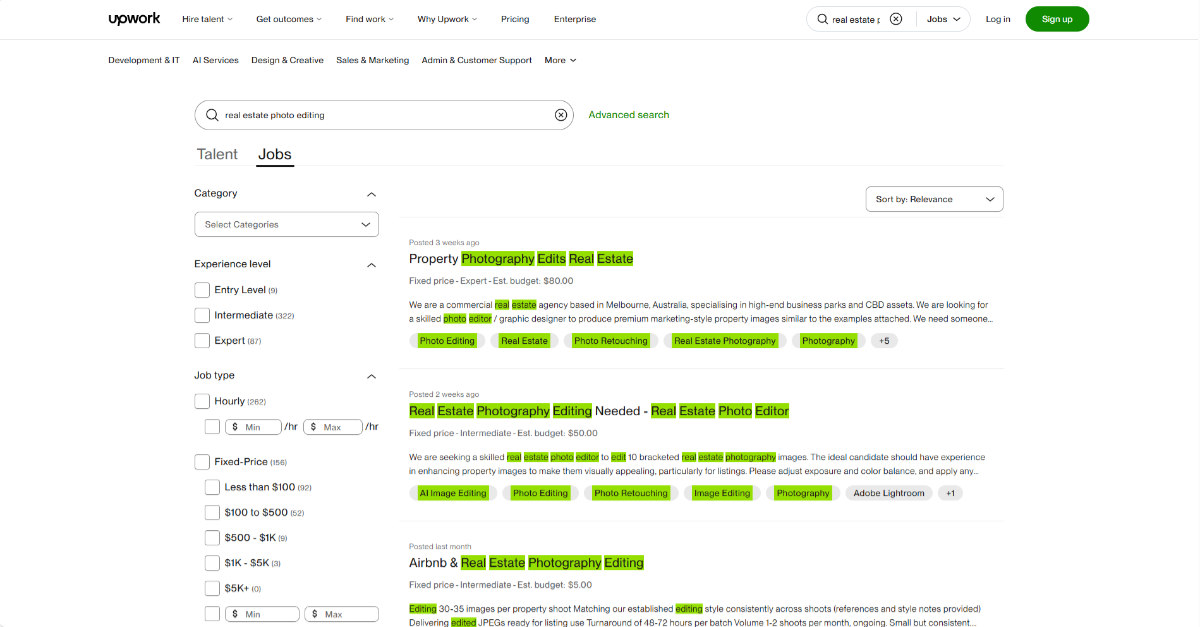 Freelancing is an excellent choice for editors not wanting to be tied to any periodic paycheck.
6.2. Job boards
General job boards like Indeed, Glassdoor, and LinkedIn regularly feature openings for real estate photo editing jobs. Typing in specific keywords like "real estate photo editor" or "photo retoucher real estate" can reveal full-time, part-time, and freelance opportunities. Many real estate photography companies advertise directly on these platforms, seeking editors for both remote and on-site roles.
6.3. Specialized agencies
Specialized outsourcing agencies such as Fotober, Phixer, and PhotoUp are major employers of property photo editors, providing consistent workflows and structured real estate photo editing services for clients across global markets. Working with an agency often means a steady workflow, professional development opportunities, and exposure to different editing styles and requirements. Agencies usually offer a structured environment with clear editing guidelines and consistent expectations.
6.4. Networking
Networking remains a powerful tool for landing real estate photo editing jobs. Joining real estate photography groups on Facebook, participating in forums like Reddit’s r/photography, and attending virtual photography meetups can open doors to direct client referrals. Many editors also find opportunities by collaborating with independent photographers who need reliable editing support but prefer not to handle post-production themselves.
 Actively reaching out to other editors and photographers can lead to more income opportunities.
7. Conclusion
The real estate photo editing industry offers immense long-term career potential for editors who adapt to a hybrid AI-human workflow and expand into high-demand multimedia services. No matter whether you choose the dynamic independence of freelancing or the stable, skill-accelerating path of a global powerhouse like Fotober, becoming an indispensable asset to high-volume clients is your ultimate key to professional longevity.
Ready to claim your share of these lucrative remote opportunities? Start today by sourcing raw bracketed exposures, mastering advanced flambient blending techniques, and building a polished, high-converting digital portfolio. The global real estate market demand for top-tier visual talent is skyrocketing. Refine your workflow, elevate your editing standards, and take the necessary action steps to land your dream job today.
Follow us on social media to gain more useful real estate photography tips, explore exciting real estate photo editing jobs, and see our latest editing projects.
- Facebook: fotobermedia.co
- YouTube: Fotober
- TikTok: @fotober
- Instagram: fotober_media.
Related posts
Cincinnati Housing Market 2026: Prices, Trends, and What It Means for Buyers, Sellers, and Investors
October 20, 2026

Modern Luxe Interior Design: Elements, Style Guide and How to Stage It
October 10, 2026

Minimalist Interior Design: Characteristics, Style Guide, and Staging
October 8, 2026

Coastal Interior Design: Style Definition & Staging Guide
September 30, 2026
