




Photoshop AI Remove Background: Secrets to Perfect Real Estate Photos

Share:
Table of Contents
- 1. How Photoshop AI removes background: The technology explained
- 2. AI background removal for real estate photos: Key use cases
- 3. Limitations of Photoshop AI Remove Background in complex real estate scenes
- 4. AI vs. manual photo editing: The professional verdict
- 5. AI vs. professional object removal: When accuracy trumps speed
- 6. Strategic advice: When realtors should outsource photo editing
- Conclusion
Perfected visuals on social media are what basically shape real estate buyers’ expectations these days. How listings are presented has been revolutionized by tools like Adobe Photoshop. From seamless AI object removal to rapid background removal for real estate photos, technology offers incredible speed. However, as editing demands grow more complex, the debate of AI vs manual photo editing remains more relevant than ever. This guide explores the mechanics of Photoshop AI remove background and helps realtors decide when to DIY and when to outsource for professional-grade results.
1. How Photoshop AI removes background: The technology explained
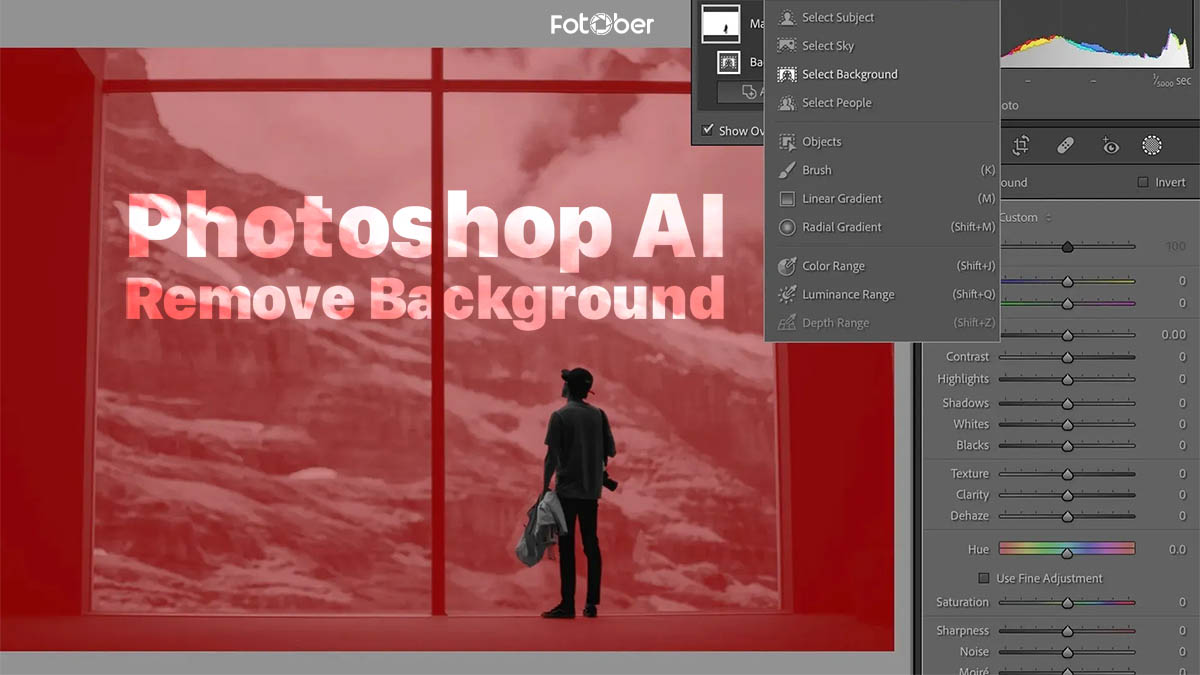
The transition from the tedious "Pen Tool" era to one-click automation has been driven by Adobe’s massive investment in artificial intelligence. At the heart of Photoshop AI Remove Background capabilities are two primary engines: Adobe Sensei, the long-standing machine learning framework, and Adobe Firefly, the newer generative AI model.
The power of neural networks
Modern background removal is no longer just about detecting color contrasts or brightness levels. Instead, it utilizes Deep Learning Neural Networks that have been trained on millions of diverse images. When you click "Select Subject," the AI performs a semantic analysis of the scene. It identifies "classes" of objects, distinguishing a residential building from the sky, or a piece of furniture from the floor. By understanding the geometry of a house versus the organic shape of a tree, the AI can create a high-fidelity mask in seconds.
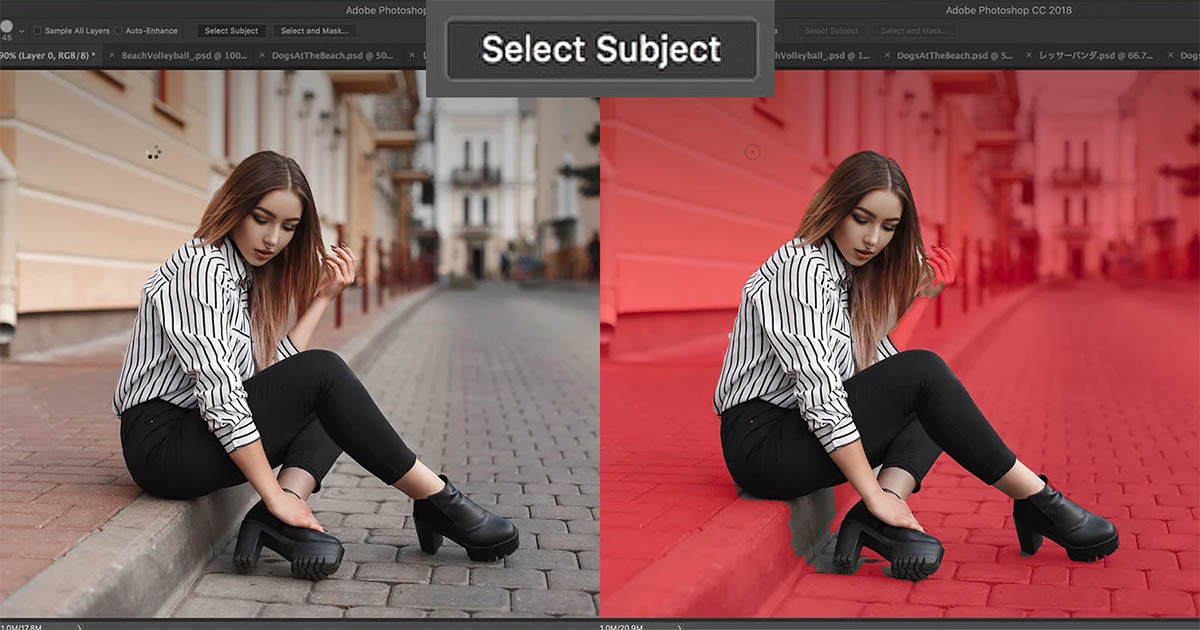 The Select Subject feature is the result of intensive machine learning, aiming to assist editors in highly technical masking tasks.
Semantic segmentation and edge refinement
One of the most impressive feats of AI object removal and background isolation is semantic segmentation. The software partitions the image into meaningful regions. For real estate photography, this means the AI recognizes the boundaries of rooflines, window frames, and chimneys. Advanced algorithms then apply "Refine Edge" logic automatically, attempting to handle difficult transitions like the glass of a window or the leaves of a backyard oak tree, which previously took editors hours to mask manually.
Generative Fill and context awareness
When discussing AI object removal, we must mention Generative Fill. This technology doesn't just "delete" pixels; it "imagines" what should be there based on the surrounding context. If a realtor removes a distracting car from a driveway, the AI analyzes the texture of the concrete, the angle of the sunlight, and the perspective of the house to fill the void realistically.
For real estate professionals, this technology represents a monumental shift. It allows for the rapid isolation of properties for marketing flyers and the quick cleanup of cluttered scenes, providing a powerful foundation for further digital enhancement.
2. AI background removal for real estate photos: Key use cases
In the competitive world of property listings, the primary goal is to sell a lifestyle. To achieve this, photos must be clean, aspirational, and free of distractions. Background removal for real estate photos has become an essential tool in an agent's arsenal, allowing for several high-impact transformations that directly influence a buyer's decision-making process.
The "blue sky" transformation
The most common use case is sky replacement. A gloomy, overcast day can make even the most luxurious estate look uninviting. Using Photoshop AI Remove Background features, editors can instantly isolate complex rooflines and replace gray clouds with a vibrant sunset or a crisp blue sky. This "golden hour" effect is proven to increase click-through rates on listing portals like Zillow or Realtor.com.
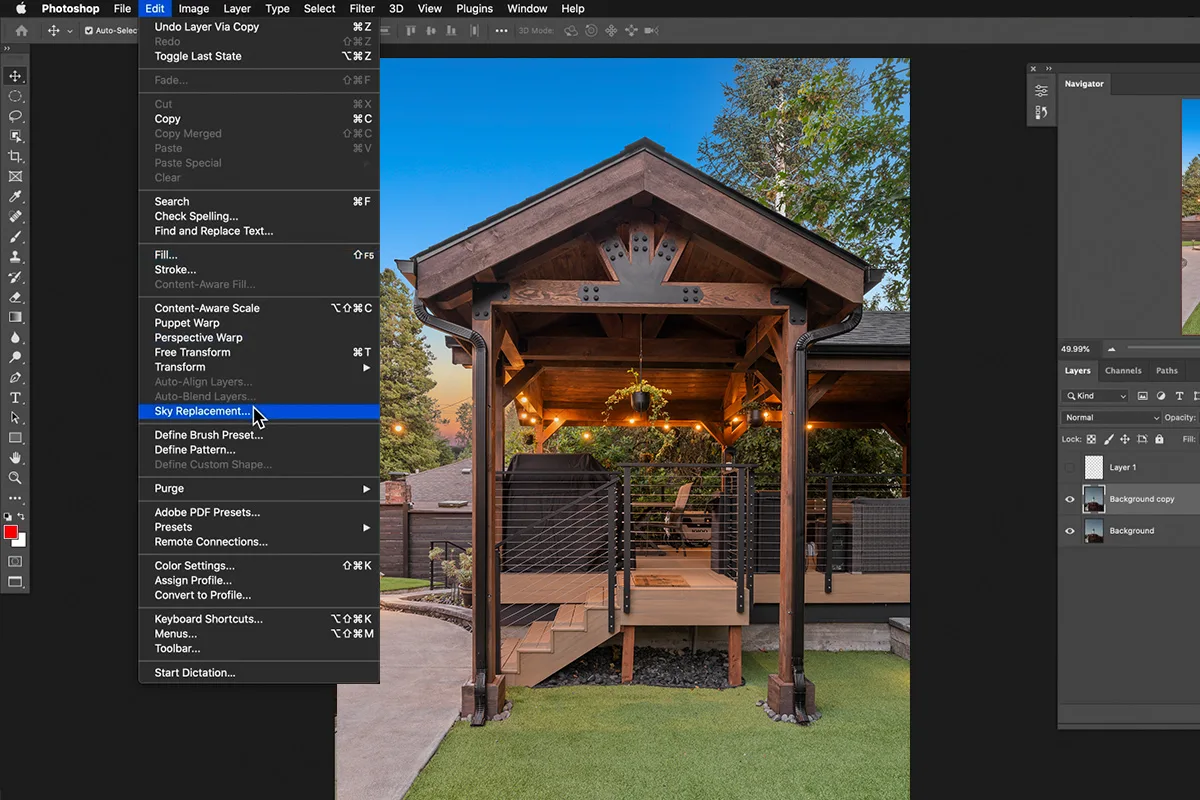 Replacing the sky is one of the most common applications of AI background removal
Virtual staging preparation
Before a room can be virtually staged with modern furniture, it often needs to be emptied of its current contents. Virtual staging preparation relies heavily on seamless item removal to clear out bulky, dated furniture, cluttered countertops, or personal items like family photos. By digitally "depersonalizing" the space, AI helps create a blank canvas that allows potential buyers to visualize their own lives within the home.
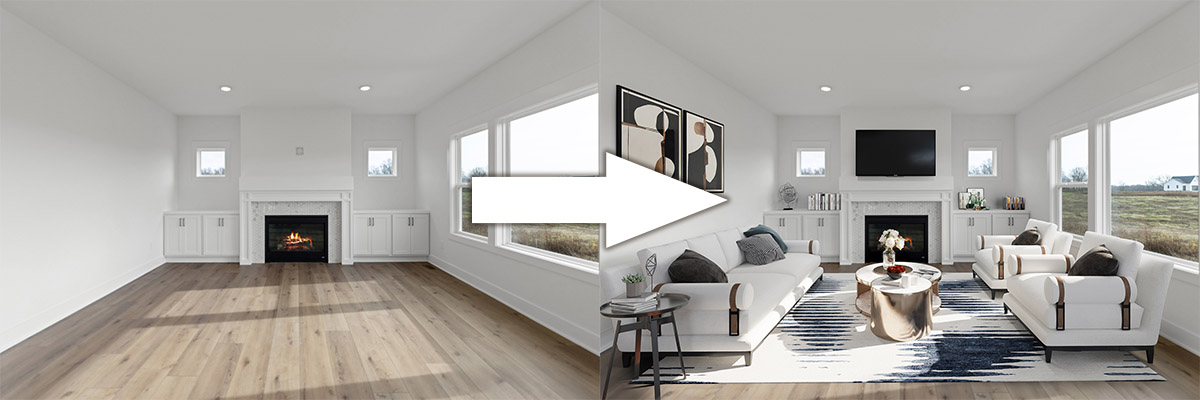 A clean photo with interior items removed is the prerequisite for virtual staging
Creating high-impact marketing collateral
Beyond the standard listing gallery, realtors need professional graphic assets for brochures and social media ads. Clean background removal allows for "property cut-outs": isolating the house from its environment to place it on a stylized background for "Just Listed" flyers or direct mail postcards. This creates a high-end, magazine-quality aesthetic that elevates the agent’s personal brand.
Eliminating neighborhood distractions
Sometimes, a great house is hampered by its surroundings: an unsightly power line, a neighbor’s trash cans, or a car parked in the driveway. Precise AI object removal allows editors to "clean up" the neighborhood context without misrepresenting the property itself, ensuring the viewer's focus remains entirely on the home's best features.
3. Limitations of Photoshop AI Remove Background in complex real estate scenes
Despite the rapid evolution of Photoshop AI Remove Background technology, it is not a "magic wand" that works perfectly in every scenario. Real estate photography is uniquely challenging because it involves complex lighting, transparency, and intricate structural details that often baffle even the most advanced neural networks.
The struggle with fine details
One of the most common issues in AI vs manual photo editing is the handling of "organic" edges. When isolating a property, AI frequently struggles with fine-line elements like tree branches, picket fences, or power lines against a variegated sky. Instead of a clean cut, the AI often creates "halos", blurry artifacts or jagged edges, where the software couldn't distinguish between the foreground object and the background texture. In high-end listings, these imperfections make the photo look "edited" and unprofessional.
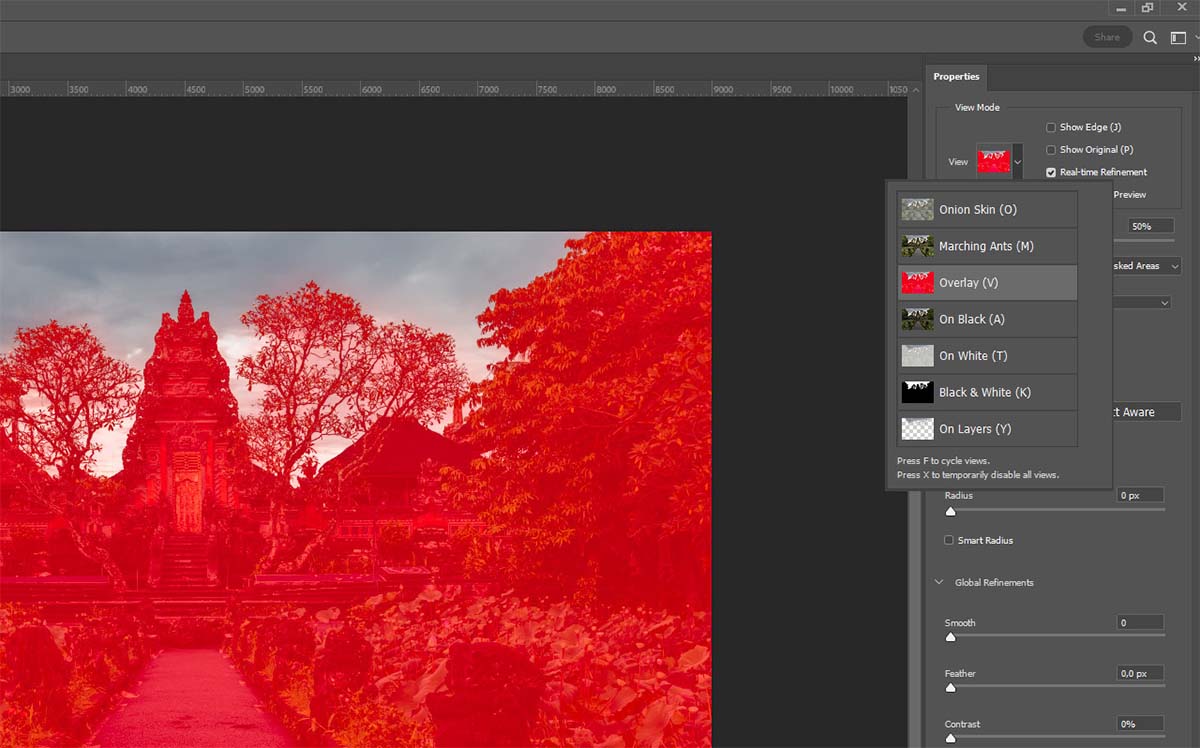 Fine organic details make it harder for automated models to separate the subject and background
Transparency and window pulls
Real estate editors often perform "window pulls," a technique where the interior room and the exterior view are both perfectly exposed. AI often fails here because it cannot differentiate between the glass's reflection and the view behind it. An automated tool might accidentally "remove" parts of a window frame or fail to maintain the realistic sheen of the glass, leading to a flat, artificial appearance that lacks depth.
The "floating" object syndrome
A major limitation of automated AI object removal is the loss of natural shadows. When AI removes an object or a background, it often deletes the "contact shadows" that ground the house or furniture in reality. Without these subtle shadows, a house can look like it is floating on top of a new background rather than sitting naturally within it. This lack of spatial awareness is a primary reason why professional editors still rely on manual techniques to paint back realistic lighting and shadows, ensuring the final image remains believable to the human eye. If you want to tackle these darker parts in the most precise method, we have you covered with a guide on how to remove shadow in Lightroom.
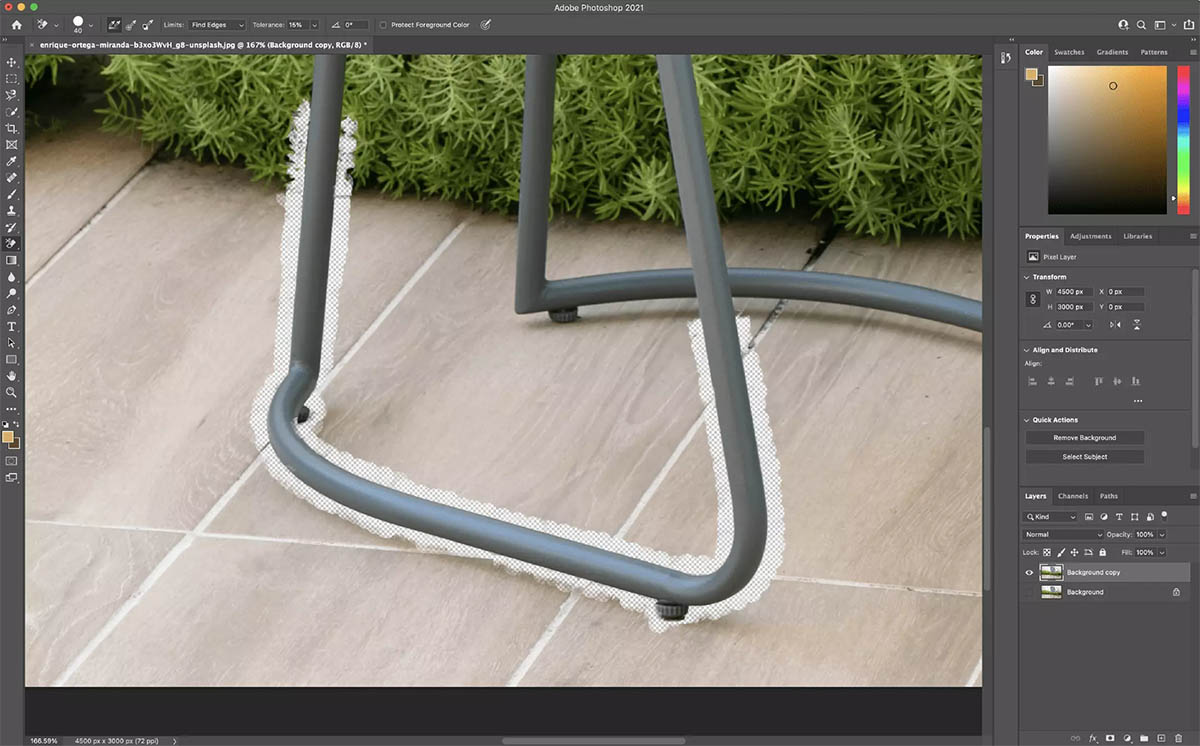 AI background removal tends to eliminate the shadow beneath objects, which results in an unnatural image.
4. AI vs. manual photo editing: The professional verdict
In 2026, the debate over AI vs manual photo editing has shifted from "which is better" to "how can they work together." While AI has reached a point of near-human capability in basic tasks, the professional verdict remains clear: AI provides the speed, but human editors provide the soul and the final 10% of quality that closes high-value deals.
The speed-to-market advantage
For high-volume real estate photographers, AI is an unbeatable asset. Tools like Photoshop’s integrated Nano Banana (Gemini 3 Flash) and Firefly 3 models can process a 25-photo listing in minutes, tasks that previously took a human editor an entire workday. For rental properties or lower-priced listings where margins are tight, AI-driven editing is often the most cost-effective solution to get a property live within hours of the shoot.
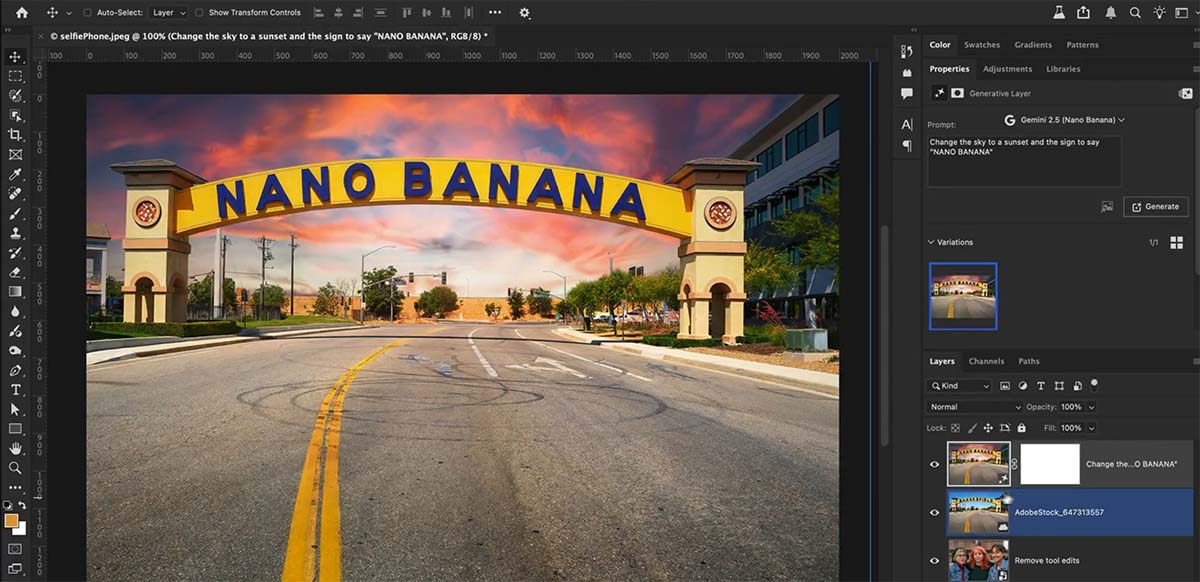 Complex editing that used to take hours of refining can be accomplished in much shorter times, thanks to generative models
The accuracy gap in premium listings
However, AI still suffers from "hallucinations" and a lack of emotional intelligence. In luxury real estate, a "plastic" look or a slightly mismatched sky-to-interior light ratio can be a dealbreaker. Manual editing excels in Manual HDR blending, where a human eyes specific "hero" areas to reveal detail in a fireplace or a view through a window that AI might flatten. Humans also understand "visual flow", ensuring that every room in a house feels like part of the same cohesive home, rather than a collection of disjointed, AI-enhanced boxes.
From my experience testing different generative models in Photoshop, some surgical tasks like removing a specific color are also better handled by a trained human editor. A profound, nuanced vision for real estate imagery will ensure coherent and visually appropriate results, free from the deformations that AI creates due to the lack of context understanding.
Comparison table: 2026 industry standards
|
Feature |
AI-powered editing (2026) |
Manual professional editing |
|
Turnaround time |
Seconds to minutes |
12 - 24 hours |
|
Consistency |
High (follows strict logic) |
Moderate (human variation) |
|
Complex lighting |
Struggles with window glares |
Expert "window pulls" |
|
Price point |
$0.10 - $0.50 per image |
$1.00 - $5.00 per image |
|
Best for |
Rentals, standard listings, social media |
Luxury listings, "Hero" shots, magazines |
The hybrid workflow: The true winner
To sum up, the most efficient approach from my experience is the adoption of a hybrid workflow. Most top-tier editing services now use AI like Photoshop AI Remove Background for the "first pass": handling color correction, noise reduction, and initial background isolation. A professional human editor then steps in to perform "Quality Control," fixing AI artifacts, painting back natural shadows, and ensuring the property adheres to ethical disclosure laws. This blend offers the best of both worlds: the efficiency of AI vs manual photo editing's unmatched precision.
5. AI vs. professional object removal: When accuracy trumps speed
While AI object removal has become incredibly sophisticated, there is a fundamental difference between "filling a gap" and "accurately reconstructing a scene." In real estate marketing, where the structural integrity of a home is under scrutiny, the "good enough" results of automated tools can often lead to visual disasters that alienate savvy buyers.
The risk of AI "hallucinations"
When an AI tool removes a large object, such as a van parked in front of a garage, it doesn't actually "know" what is behind it. Instead, it uses generative algorithms to predict the missing pixels. This often leads to "hallucinations," where the AI might create a third garage door that doesn't exist, warp the perspective of the siding, or misinterpret the pattern of the brickwork. In the high-stakes world of AI vs manual photo editing, these structural errors can be seen as deceptive or simply sloppy. A professional editor, by contrast, uses reference photos or architectural logic to manually clone and heal the area, ensuring the garage or wall looks exactly as it does in reality.
Lighting, texture, and shadow matching
The most significant giveaway of an AI-edited photo is the "flatness" of the reconstructed area. Professional AI object removal often fails to account for the way light wraps around corners or how shadows should fall across a newly revealed surface. Human editors meticulously match the grain of the wood, the grit of the driveway, and the directional flow of sunlight. By painting in contact shadows and matching the ambient occlusion of the scene, a professional ensures the edit is invisible to the naked eye.
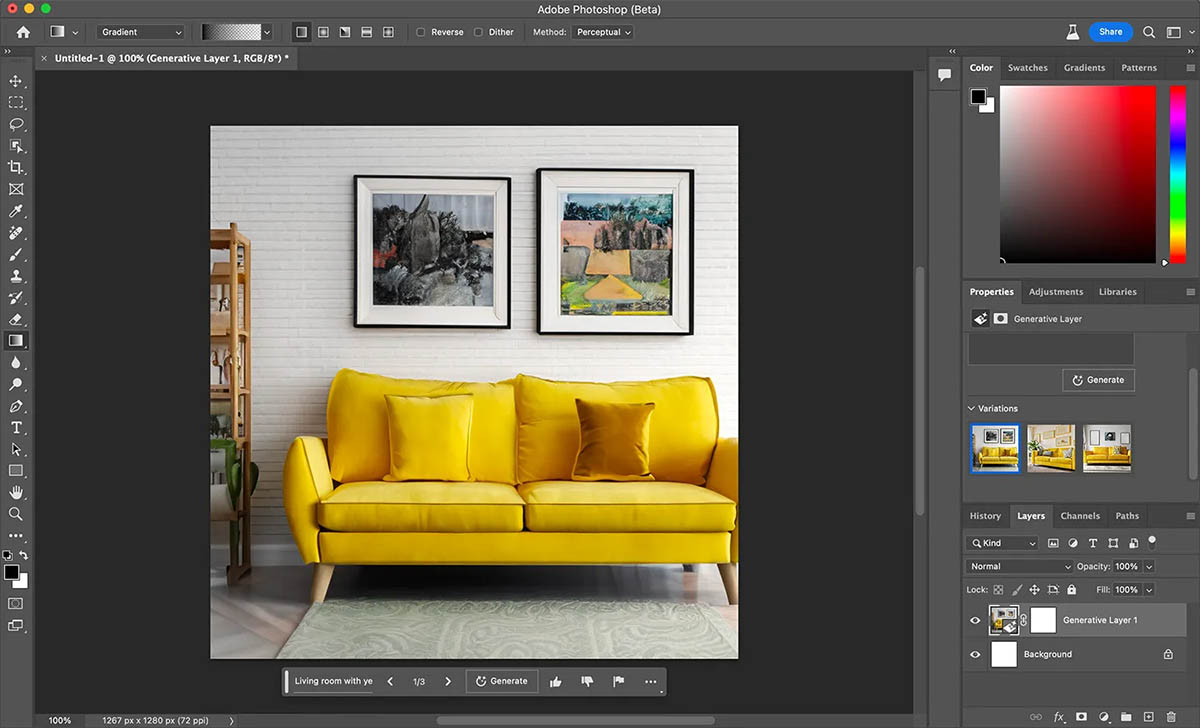 Context awareness of AI models is rapidly improving, even though a human editor is still required to supervise the final output
Accuracy as a trust factor
For a realtor, the photo is a promise of what the buyer will see during the walkthrough. If an AI-edited photo shows a flawless lawn where a rusted shed used to be, but leaves behind blurry, "smudged" artifacts, it creates a sense of distrust. When accuracy trumps speed, professional manual editing ensures that the property is presented in its best light without sacrificing the realism that builds buyer confidence.
6. Strategic advice: When realtors should outsource photo editing
The advent of Photoshop AI Remove Background has made basic editing accessible to everyone. However, for a high-performing realtor, the decision to outsource is often a matter of business strategy rather than technical prowess. Knowing when to open Photoshop yourself and when to hire a pro can significantly impact your turnover.
The opportunity cost
Your core strength lies in networking, negotiating, and closing deals. Spending two hours tweaking a single listing’s virtual staging preparation or manually correcting artifacts left by automatic object removal is an inefficient use of your billable time. This is where professional partners like Fotober become invaluable. By entrusting your imagery to Fotober’s real estate photo editing services, you gain access to a dedicated team that perfectly balances AI speed with manual craftsmanship, ensuring every listing looks its absolute best without costing you a single hour of your precious time.
High-stakes vs. high-volume
Evaluate the listing tier. While AI might suffice for a quick rental, luxury properties demand perfection. At Fotober, we understand that high-end buyers have a keen eye for "uncanny" or artificial-looking photos. If a property requires intricate background removal for real estate photos or complex window blending, our human-in-the-loop approach ensures the image remains grounded, believable, and breathtaking.
Brand consistency
Finally, think about your personal brand. A professional service like Fotober guarantees that the color temperature, exposure, and editing style remain identical across all 25+ images of a listing. While DIY AI tools often produce inconsistent results between different lighting conditions, our expert editors ensure a cohesive "look" from the front curb to the master suite, building your reputation as a premium agent who leaves no detail to chance.
 Fotober’s photo editing service is the optimal choice for combining AI’s speed with human finesse to deliver a consistent polish to real estate photos
Conclusion
As we have explored, Photoshop AI Remove Background and automated enhancement tools have fundamentally changed the speed and accessibility of real estate marketing. However, the ongoing debate of AI vs manual photo editing highlights a crucial truth: technology is a powerful assistant, not a complete replacement for the human eye. While AI excels at the heavy lifting of isolation and basic cleanup, the final polish that sells a luxury lifestyle still requires human artistic judgment. Ensuring that depth, lighting, and structural accuracy are perfectly maintained is what ultimately transforms a simple image into a compelling visual narrative that resonates with buyers.
Don’t let clunky AI artifacts or "floating" furniture ruin a high-value property listing. At Fotober, we bridge the gap between cutting-edge technology and expert manual retouching to deliver flawless results. From seamless virtual staging preparation to surgical-grade AI object removal, our real estate photo editing service ensures your properties look their absolute best.
Ready to stand out in a crowded market and win more listings? Upload your photos today and see the professional difference for yourself.
Follow us on social media to explore more practical techniques in real estate photo editing and up-to-date details of our services!
- Facebook: fotobermedia.co
- YouTube: Fotober
- TikTok: @fotober
- Instagram: fotober_media.
Related posts

Cincinnati Housing Market 2026: Prices, Trends, and What It Means for Buyers, Sellers, and Investors
October 20, 2026

Modern Luxe Interior Design: Elements, Style Guide and How to Stage It
October 10, 2026

Minimalist Interior Design: Characteristics, Style Guide, and Staging
October 8, 2026

Coastal Interior Design: Style Definition & Staging Guide
September 30, 2026
