




How to Master AI Video Generation for Real Estate

Share:
Table of Contents
- 1. What is AI video generation for real estate?
- 2. Why AI video is a game-changer for marketing and business
- 3. How to create your first AI real estate video: step-by-step guide
- • 3.1. Step 0: Prepare your listing assets
- • 3.2. Step 1: Define the video goal and create a clear prompt
- • 3.3. Step 2: Upload your content (photos, text, or video)
- • 3.4. Step 3: Add voiceover, branding, and visual elements
- • 3.5. Step 4: Review and finalize the video
- • 3.6. Step 5: Publish and distribute the video
- 4. The Best AI video tools for real estate marketing in 2026
- Conclusion
AI video generation for real estate is rapidly transforming how properties are marketed in 2026. Instead of relying only on static photos, agents can now turn listing images, floor plans, and property descriptions into engaging marketing videos within minutes. These AI-powered videos help potential buyers visualize the space more clearly and experience the property in a far more dynamic way.
The shift toward video is not accidental. According to the National Association of Realtors, listings that include video content tend to generate significantly higher engagement than those that rely solely on photos. Yet traditional real estate video production often costs between $300 and $1,000 per listing and requires filming, scheduling, and post-production editing.
This is why AI video generation is becoming such a powerful tool for modern real estate marketing. With the right tools, agents can quickly convert existing listing materials into cinematic property videos designed for MLS platforms, social media, and digital campaigns. In this guide, Fotober explores how AI video technology works and how real estate professionals can use it to create more compelling property marketing content.
1. What is AI video generation for real estate?
AI video generation for real estate refers to the use of artificial intelligence to automatically create property videos from existing listing materials such as photos, floor plans, property descriptions, or short video clips. Instead of filming and editing a video manually, AI tools analyze the provided assets and assemble them into a structured visual story that showcases the property.
These systems use technologies such as machine learning, computer vision, and generative media models to organize images, animate transitions, add voice narration, and highlight key features of a home. The result is a professional-looking property video that can be produced in minutes rather than hours or days.
For real estate agents and photographers, this technology offers a faster way to transform traditional listing materials into engaging marketing content.
How does AI create property videos?
AI video generation platforms follow a fairly straightforward workflow. After uploading listing assets, the system automatically analyzes the content and generates a structured video sequence.

Typically, the process includes several steps:
-
Content analysis: The AI scans property photos, floor plans, or footage to detect rooms, layouts, and visual features such as kitchens, living spaces, or exterior shots.
-
Automated video sequencing: Based on the detected content, the system arranges scenes into a logical property tour—often starting with exterior shots, followed by main living areas, bedrooms, and outdoor spaces.
-
Motion and visual effects: The software applies subtle animations such as zoom effects, transitions, or camera movement to turn static images into a dynamic viewing experience.
-
Voiceover and text generation: Some platforms can generate voice narration or on-screen captions that describe property features, nearby amenities, or design highlights.
-
Final video rendering: The completed video can then be exported in different formats for listing platforms, websites, or social media.
This automated workflow dramatically reduces the time required to produce real estate marketing videos.
Common use cases in real estate marketing: AI-generated videos are becoming increasingly popular in real estate because they allow agents to create multiple types of content quickly and cost-effectively.
-
Listing videos. One of the most common uses is turning standard property photos into short listing videos. These videos provide a more engaging overview of a home compared to static image galleries and can be used on listing websites or agent websites.
-
Social media marketing. Agents often create short vertical videos for platforms like Instagram Reels, TikTok, or YouTube Shorts. AI tools can automatically adapt property visuals into social-media-ready formats designed to capture attention quickly.
-
Neighborhood and lifestyle showcases. Beyond the property itself, AI video tools can help present nearby parks, schools, restaurants, or local attractions, giving potential buyers a better understanding of the surrounding community.
-
Luxury property marketing. High-end listings benefit from cinematic video storytelling. AI editing tools can enhance lighting, color grading, and pacing to create more polished presentations that appeal to luxury buyers.
2. Why AI video is a game-changer for marketing and business
The way buyers search for homes has changed dramatically over the past decade. Most property research now happens online before a buyer ever schedules a viewing. Because of this shift, visual content has become one of the most important factors influencing how listings perform.
While high-quality photos remain essential, video content often creates a more immersive experience for potential buyers. Instead of viewing a property as a collection of still images, buyers can understand the layout, atmosphere, and design flow of a home in a much more natural way.
AI video generation makes it possible to produce this type of content quickly and consistently, even for agents who do not have access to traditional video production resources.
Below are several reasons why AI video technology is becoming an important tool for real estate marketing.
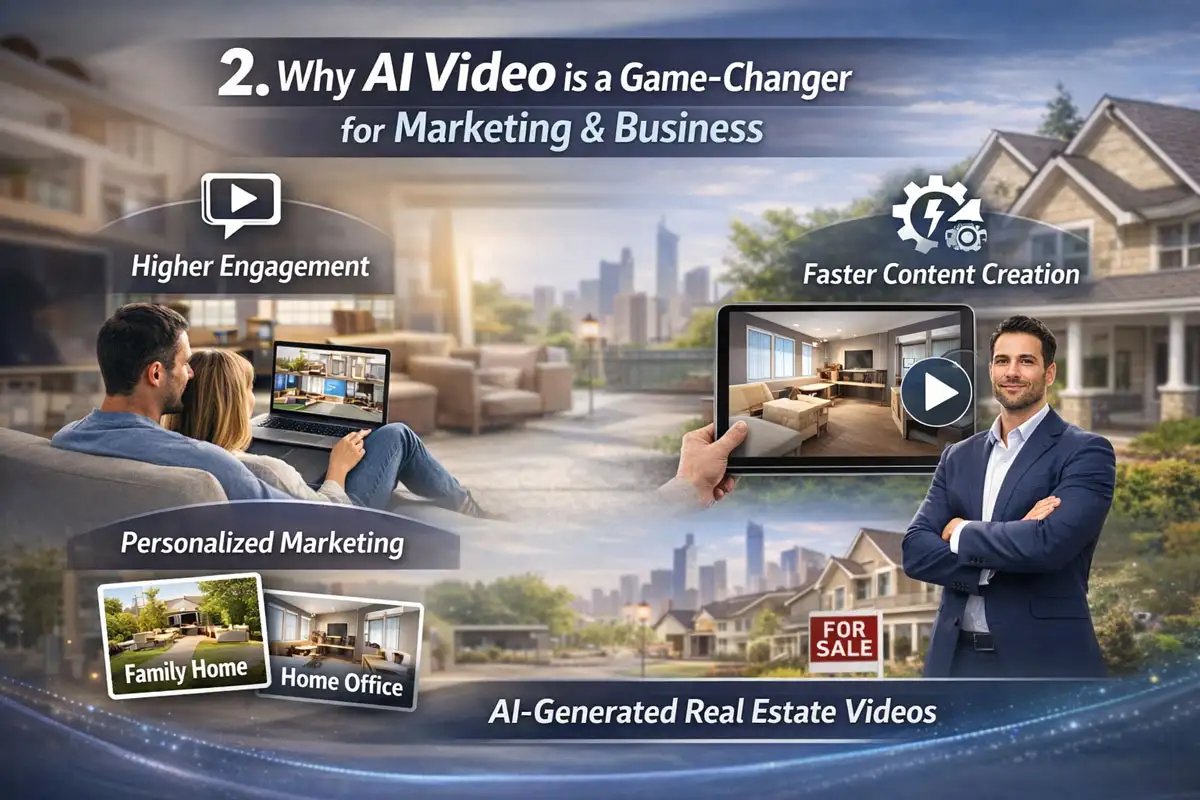
2.1. Higher engagement and buyer interest
Video tends to capture attention more effectively than static images alone. Property videos allow viewers to experience a home as a visual narrative rather than a gallery of individual photos.
Industry research also supports this trend. The National Association of Realtors reports that property listings with video often generate significantly higher engagement compared to listings that rely only on photos.
For agents, this increased engagement can translate into more listing views, longer time spent on property pages, and stronger interest from potential buyers.
2.2. Faster and more scalable content creation
Traditional real estate video production usually requires scheduling a shoot, filming the property, and completing post-production editing. This process can be time-consuming and costly, especially when agents manage multiple listings at the same time.
AI video tools simplify this workflow. By using existing listing materials—such as property photos, descriptions, or floor plans—agents can generate marketing videos automatically.
This makes it possible to create video content for nearly every listing, not just high-value properties. As a result, marketing teams can scale their content production without significantly increasing time or budget.
2.3. More personalized marketing experiences
Another advantage of AI video technology is the ability to adapt content for different audiences.
Some platforms allow agents to customize videos by highlighting features that may appeal to specific buyer profiles. For example, a property video might emphasize outdoor spaces for families, home office areas for remote workers, or premium design elements for luxury buyers.
This level of customization helps make marketing content more relevant to the viewer, which can improve engagement and encourage potential buyers to take the next step in the property search process.
2.4. A competitive advantage in digital marketing
Real estate marketing continues to evolve as new technologies reshape how properties are presented online. Video content, virtual tours, and interactive media are becoming increasingly common on listing platforms and social media channels.
Agents who adopt AI video tools early can create more dynamic marketing materials while maintaining efficient workflows. Over time, this ability to produce engaging visual content consistently may help agents stand out in highly competitive markets.
For many real estate professionals, AI video generation is not simply a trend—it is becoming part of a broader shift toward more technology-driven property marketing.
3. How to create your first AI real estate video: step-by-step guide
Creating a real estate video used to require professional filming, editing software, and hours of post-production work. Today, AI video generation tools allow agents and marketers to produce property videos much faster using existing listing materials.
The process is usually straightforward. Below is a practical step-by-step workflow that shows how to create your first AI-generated real estate video.
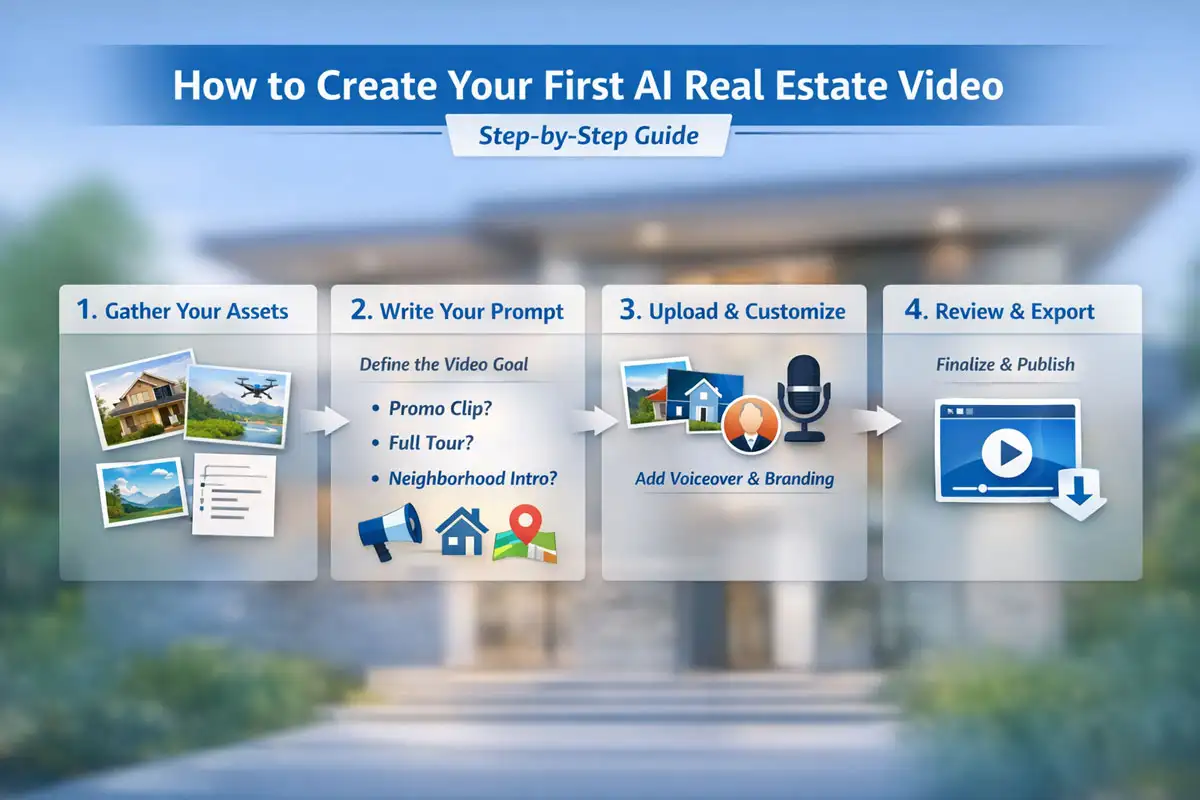
3.1. Step 0: Prepare your listing assets
Before using any AI video platform, gather the core materials from your property listing. High-quality input will always produce better video results.
Typical assets include:
-
Professional property photos
-
Drone footage or exterior shots (if available)
-
Floor plans or layout visuals
-
A short property description
-
Key highlights of the home (renovations, views, amenities)
Organizing these materials in advance makes the AI generation process faster and ensures the final video tells a clear story about the property.
3.2. Step 1: Define the video goal and create a clear prompt
Every effective property video starts with a clear objective. Think about the purpose of the video before generating it.
For example:
-
A short promotional clip for social media
-
A complete property walkthrough for listing platforms
-
A neighborhood introduction highlighting nearby amenities
Once the goal is clear, write a detailed prompt for the AI tool. Most AI video systems rely heavily on prompts to understand the structure and tone of the video.
Example of a weak prompt
“Create a video of 123 Main St.”
Example of a stronger prompt
“Create a 60-second property video for 123 Main St. Start with the exterior and front yard, then show the open-concept living room and modern kitchen. Highlight the balcony view and natural lighting. Use a modern, energetic style suitable for social media.”
A clear prompt helps the AI organize scenes more effectively and generate a more engaging video.
3.3. Step 2: Upload your content (photos, text, or video)
AI video platforms need source material to build the final video. Most tools support several types of input.
-
Property photos: Photos are the most common source for real estate videos. AI tools can animate still images with subtle motion effects and transitions to create the feeling of a moving camera.
-
Text descriptions: Some tools allow you to generate a video directly from written content. By uploading a property description or script, the AI can generate scenes and captions that match the text.
-
Existing video footage: If you already have drone shots or walkthrough footage, AI can enhance the material by adding subtitles, transitions, or automated narration.
Using multiple input types often results in a richer and more engaging property video.
3.4. Step 3: Add voiceover, branding, and visual elements
After the basic video structure is created, you can customize the presentation to match your brand and marketing style.
-
AI voice narration: Many AI platforms provide realistic voiceover options. These voices can narrate the property features clearly without requiring manual recording.
-
AI avatars: Some tools include digital presenters who can introduce the property or guide viewers through the listing. This feature is often used for marketing videos or personalized client presentations.
-
Branding elements: Adding your logo, brand colors, and contact details ensures viewers recognize your business and know how to reach you after watching the video.
These small branding details can significantly increase the professionalism of the final marketing video.
3.5. Step 4: Review and finalize the video
AI tools usually generate a draft version first. Before exporting the video, review the sequence carefully.
Check the following elements:
-
Scene order and transitions
-
Accuracy of captions or narration
-
Timing of visual highlights
-
Overall pacing of the video
Most platforms allow quick adjustments such as replacing images, editing text, or changing background music. Once the edits are complete, export the video in the appropriate format and resolution for your intended platform.
3.6. Step 5: Publish and distribute the video
Creating the video is only part of the process. To maximize visibility, publish the content across the channels where potential buyers are most active.
Common distribution channels include:
-
Property MLS listings
-
Real estate platforms like Zillow
-
Instagram Reels and TikTok
-
YouTube Shorts
-
Email marketing campaigns for buyers
Sharing the video across multiple platforms increases exposure and helps attract more potential buyers to the listing.
4. The Best AI video tools for real estate marketing in 2026
As AI video technology continues to evolve, real estate professionals now have access to a wide range of tools that simplify video creation and editing. Some platforms focus on generating videos from photos or scripts, while others specialize in editing, automation, or social media optimization.
Instead of relying on a single solution, many agents combine several tools depending on their workflow. Below are some of the most useful AI video platforms that can support real estate marketing in 2025.
4.1. AI video creation: Pictory
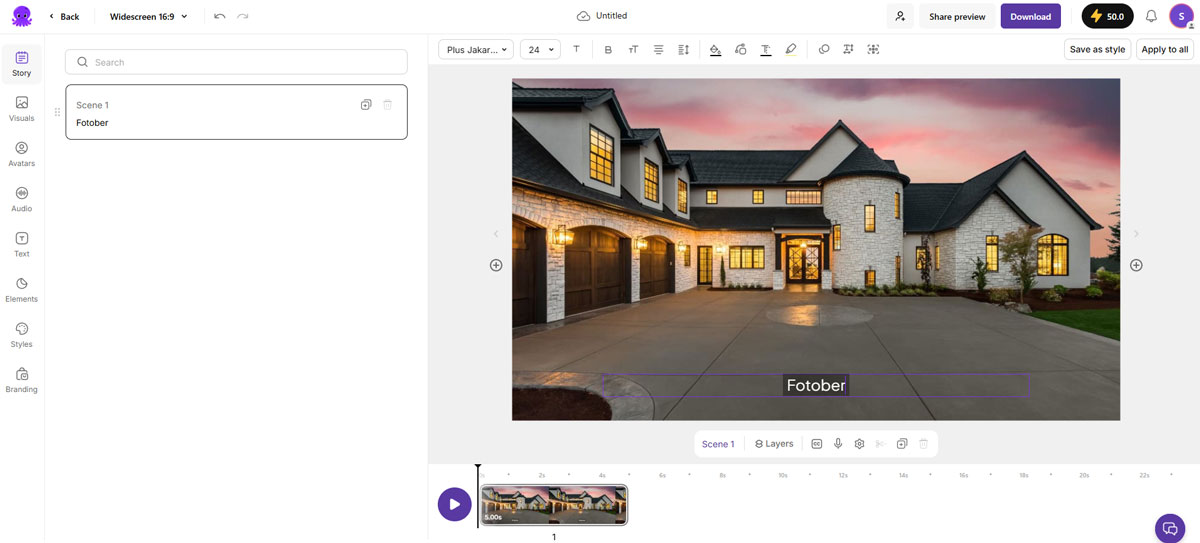
Pictory is designed to transform text or images into short marketing videos. This makes it a useful option for agents who want to convert property descriptions or blog content into engaging visual material.
Key advantages include:
-
Turning listing descriptions into short property marketing videos
-
Automatically adding subtitles and transitions
-
Creating social-media-ready video formats
For agents who frequently publish property updates or market insights, this tool helps convert written content into video quickly.
4.2. Listing video generator: Invideo
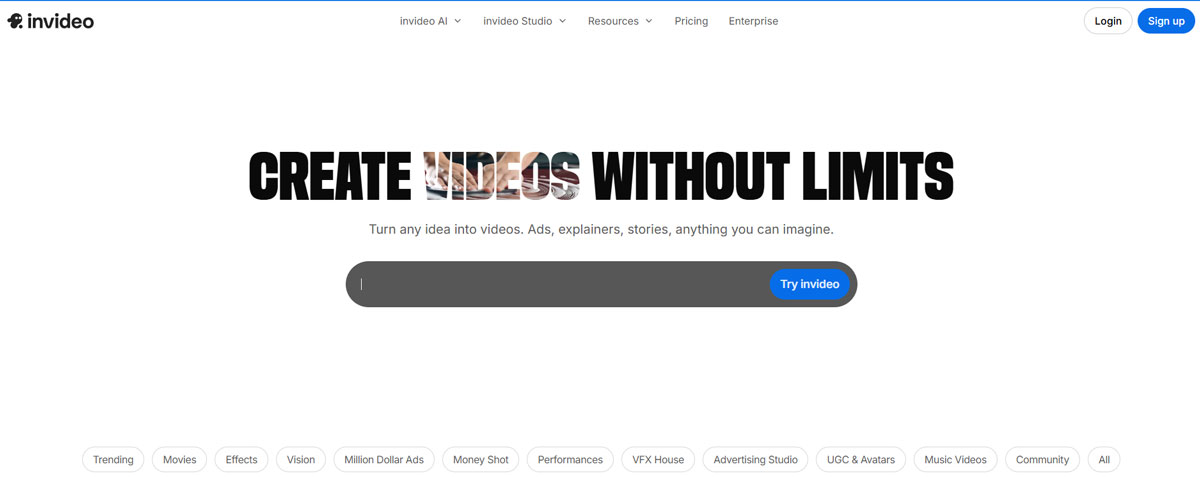
InVideo is another popular platform used by marketers to create videos from templates, photos, and scripts. Its library of real estate templates makes it especially convenient for listing promotions.
Some useful features include:
-
Pre-built real estate video templates
-
Drag-and-drop editing for property photos and clips
-
Large libraries of music, transitions, and visual elements
This makes it easy to produce consistent marketing videos for multiple listings without complex editing skills.
4.3. Social media video editing: CapCut
Short-form video content is becoming increasingly important for property promotion on social platforms. CapCut is widely used for creating vertical videos designed for fast-paced social media feeds.
Agents often use CapCut to:
-
Create Instagram Reels or TikTok listing videos
-
Add captions, music, and quick visual transitions
-
Edit short walkthrough clips or property highlights
For agents who want to maintain an active presence on social media, this tool provides a fast way to produce engaging content.
4.4. Advanced AI video effects: Runway
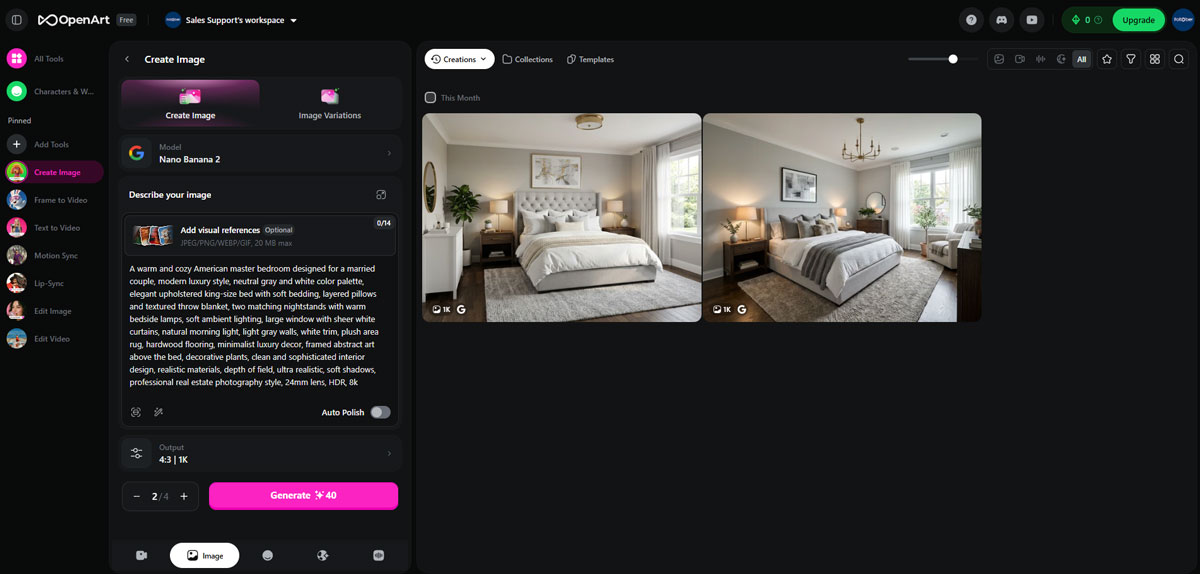
Runway focuses on AI-powered editing features that can enhance video quality and visual storytelling. While it is often used by content creators and designers, it can also be valuable for high-end real estate marketing.
Some powerful capabilities include:
-
Removing unwanted objects from video footage
-
Applying cinematic color grading
-
Generating creative visual effects or motion elements
For luxury property marketing, these features can help produce more polished and visually striking videos.
4.5. 3D and immersive video creation: Luma AI
Luma AI introduces a different approach to property visualization by generating 3D scenes from simple smartphone recordings. This technology can create immersive views of spaces that go beyond traditional video.
Potential use cases include:
-
Creating 3D property walkthroughs
-
Producing interactive visualizations for listings
-
Capturing spatial details of rooms and interiors
For agents exploring next-generation real estate media, tools like Luma AI offer exciting possibilities.
4.6. Choosing the right AI tools for your workflow
There is no single platform that solves every marketing need. Many real estate professionals combine multiple tools depending on the stage of their content production process.
For example:
-
A video may be generated using Pictory or InVideo
-
Edited and optimized for social media with CapCut
-
Enhanced with advanced effects using Runway
This flexible workflow allows agents to produce high-quality content while keeping production efficient.
Conclusion
Mastering AI video generation for real estate in 2025 isn't just an advantage-it's an imperative. This technology fundamentally transforms how properties are showcased, enabling the rapid creation of cost-effective, personalized virtual tours and marketing assets that captivate today's digital-first buyers.
From using AI avatars for guided walkthroughs to applying instant virtual staging, these tools give forward-thinking professionals a definitive competitive edge. You can now build stronger client connections and close deals faster, all while automating your content creation. Real estate video editing is now an essential skill to master, allowing for dynamic, engaging content that stands out in the competitive market.
The future of real estate marketing is already here. To stop just competing and start leading, explore the power of AI video generation with Fotober today.
Related posts

Cincinnati Housing Market 2026: Prices, Trends, and What It Means for Buyers, Sellers, and Investors
October 20, 2026

Modern Luxe Interior Design: Elements, Style Guide and How to Stage It
October 10, 2026

Minimalist Interior Design: Characteristics, Style Guide, and Staging
October 8, 2026

Coastal Interior Design: Style Definition & Staging Guide
September 30, 2026
