




Hottest Housing Markets for 2026: Where Real Estate Is Booming Next


Share:
Table of Contents
- 1. What Defines a “Hot” Housing Market in 2026?
- 2. Top 10 Hottest Housing Markets for 2026
- 3. Emerging Housing Markets to Watch in 2026
- • 3.1. Markets That Aren’t Overheated Yet - but Offer Strong Long-Term ROI
- • 3.2. Secondary Cities Benefiting From Major Metro Spillover
- • 3.3. Markets Where Job Growth Is Outpacing Home Prices
- • 3.4. Areas Where Housing Supply Is Starting to Tighten
- • 3.5. Accessible Pricing With Long-Term Hold Potential
- • 3.6. What This Means for Realtors and Marketing Strategy
- • 3.7. Closing Perspective for 2026
- 4. How Competition in Hot Markets Is Changing Real Estate Marketing
- 5. Conclusion
Gradually stabilizing interest rates, coupled with the continued impact of remote work, are making the US real estate market even more volatile. Some markets, such as the Northeast and California, are projected to have a lower supply of homes than buyers. Below are the top 10 hottest housing markets for 2026, compiled and analyzed by Fotober experts based on publicly available financial data.
1. What Defines a “Hot” Housing Market in 2026?
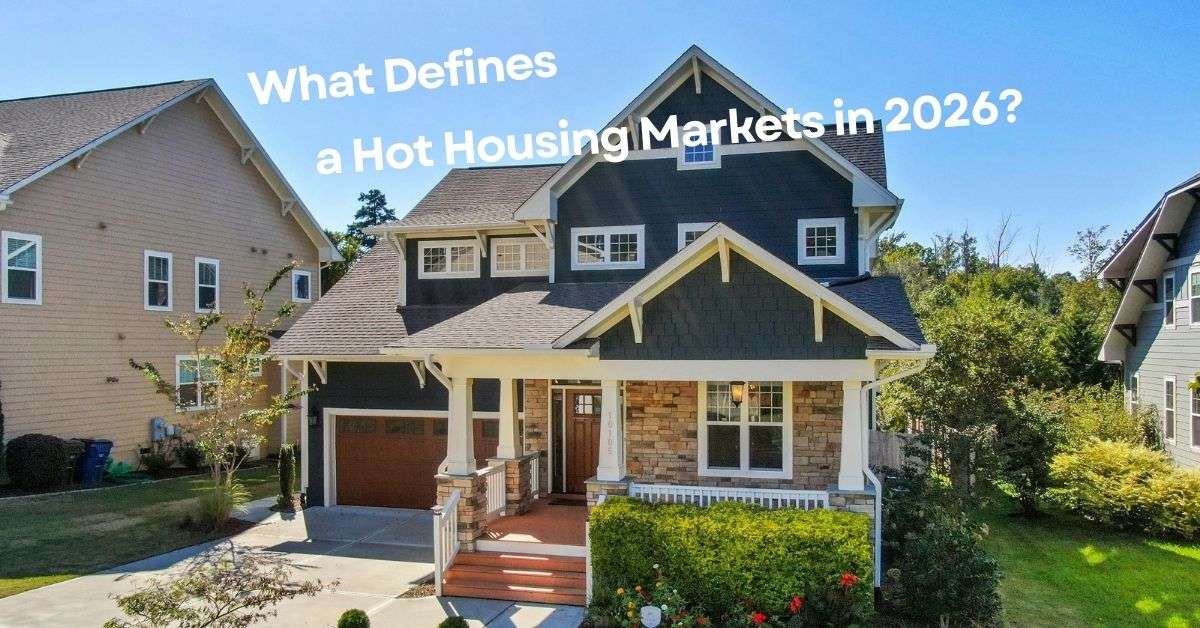
When discussing the hottest housing markets for 2026, many people often only look at the rate of price increases. This is an incomplete perspective. A hot housing market is defined not only by rapid price increases but also by sustainability, the quality of demand, and long-term economic signals.
After two years of significant volatility due to interest rate adjustments and a period of post-pandemic stabilization, the US real estate market is entering a more realistic cycle, according to experts. The hottest markets of 2026 are no longer speculative growth hotspots, but rather areas of development based on data and clear economic foundations, driven by population movement, employment, and housing supply scarcity.
1.1. Population Growth and Domestic Migration
Population migration continues to be the strongest early indicator of emerging housing markets in 2026. Americans are increasingly choosing where to live based on lifestyle flexibility, cost of living, and job opportunities, rather than clinging to traditional urban centers.
Areas experiencing net migration consistently outperform the national average in terms of home demand and price retention. States like Florida, Texas, North Carolina, and parts of Arizona continue to attract buyers from high-cost coastal cities.
Importantly, this isn't a temporary wave. Young families, retirees, and the remote workforce are choosing to settle permanently, creating stable home demand, rather than short-term surges. A market is truly hot when demand is structural, not seasonal.
1.2. Job Growth and Local Economic Strength
The best housing markets in 2026 are directly tied to diversified job creation. Single-industry cities are far more vulnerable to downturns. In contrast, hot real estate markets are fueled by multiple employment engines such as technology, healthcare, logistics, manufacturing, and professional services.
Markets attracting corporate expansions, startup ecosystems, or large-scale infrastructure investments tend to experience steady homebuyer activity even when mortgage rates fluctuate. Employment stability translates to mortgage confidence - and that’s what keeps transactions moving.
In 2026, real estate heat follows payrolls, not hype.
1.3. Housing Supply Constraints and New Construction Gaps
Limited housing inventory continues to be a defining factor in the hottest real estate markets in the U.S. for 2026. Zoning restrictions, labor shortages, and rising construction costs have slowed new housing delivery in many high-demand areas.
When supply fails to keep pace with population and job growth, competition intensifies. Homes sell faster, listings receive more online views, and sellers gain pricing power - even in a normalized interest rate environment.
A hot market isn’t one with the most listings. It’s one where quality inventory is scarce.
1.4. Affordability Relative to Income Growth
Contrary to popular belief, affordability still matters. The fastest growing housing markets in 2026 are not necessarily the cheapest - but they are markets where income growth offsets price appreciation.
Cities with rising wages, business-friendly tax structures, and moderate cost-of-living increases continue to attract qualified buyers. These markets avoid the boom-and-bust cycles seen in areas where home prices disconnect from local earning power.
In short, the hottest housing markets for 2026 are balanced. They reward buyers, sellers, and investors - not just speculators.
1.5. Buyer Behavior and Digital Demand Signals
One overlooked indicator of market heat is online engagement. In competitive housing markets, buyers research listings aggressively before scheduling showings. Click-through rates, listing video views, and time spent on property pages increase significantly in hot markets.
This shift has changed how homes compete. In 2026, a housing market isn’t truly hot unless listings must fight for attention digitally. Markets with high buyer demand amplify the importance of professional listing presentation - photography, video walkthroughs, and visual storytelling - long before a buyer steps inside the home.
1.6. Defining Heat in the 2026 Housing Cycle
The hottest housing markets for 2026 share one common trait: they are driven by fundamentals, not frenzy.
Population growth, job stability, limited supply, income alignment, and digital buyer behavior together create real estate markets that remain competitive even as economic conditions evolve. Understanding these factors is essential before identifying which cities and regions will outperform in the year ahead.
In the next section, we’ll break down the specific U.S. cities and regions leading the housing market in 2026 - and why they stand out from the rest.
2. Top 10 Hottest Housing Markets for 2026
To identify the hottest housing markets for 2026, we don’t look at a single metric in isolation. At Fotober, market “heat” is defined by the interaction between pricing momentum, inventory pressure, and buyer competition - the same forces that determine how aggressively listings need to perform online.
First, home price growth, both historical and forward-looking, remains a core signal. Markets that posted consistent appreciation in recent years - and are still projected to grow - tend to attract higher-quality demand rather than speculative buyers. These are the best housing markets in 2026 where pricing reflects real economic strength, not short-term volatility.
Speed matters just as much as price. Transaction data shows that the fastest-growing housing markets in 2026 are also the ones where homes move quickly, sellers rarely need to reduce asking prices, and a meaningful share of listings close above list price. This pattern signals sustained buyer urgency and limited negotiation leverage on the buyer side.
Another critical indicator is the imbalance between job creation and housing supply. In many of today’s emerging housing markets for 2026, local economies are adding jobs at a pace that far outstrips the number of new residential building permits. When employment growth consistently outpaces new construction, inventory tightens - and competition intensifies almost immediately.
Inventory trends tell an even clearer story. Most of the hottest real estate markets in the U.S. for 2026 are still operating with significantly fewer homes for sale than they had in the 2018–2019 period, before the pandemic reshaped buyer behavior and pushed home values sharply higher in certain metros. Markets that have rebuilt inventory back to pre-pandemic levels tend to experience softer competition, giving buyers more negotiating room.
Geographically, this year’s hottest list reflects a noticeable shift. Several Northeast metros remain strong performers, continuing momentum from last year. In contrast, many Midwest markets - among the most affordable regions in 2025 - are notably absent. That absence suggests these areas are stabilizing rather than overheating, remaining comparatively buyer-friendly housing markets in 2026.
Across all hot markets, the same seller-advantage pattern appears. Price reductions are rare, bidding activity is stronger, and homes are more likely to close above their original asking prices. Even during 2025, a year characterized by relatively flat national price growth, these markets continued to post gains - a key reason they stand out heading into 2026.
Looking ahead, home values are expected to keep climbing, and transaction velocity is projected to remain high in the hottest housing markets for 2026. For sellers and real estate professionals operating in these metros, competition won’t be about finding buyers - it will be about winning attention in increasingly crowded digital marketplaces.
Read more: US housing market trends by city in 2026
2.1. Hartford, CT

Hartford Connecticut suburban home sold above asking price in a competitive housing market.
Key metrics:
-
Median home value: $381,760
-
66% of homes in Hartford sold above the original asking price in 2025, reflecting strong buyer competition
-
Active inventory is 63% lower than pre-pandemic levels, creating ongoing supply pressure
-
Only 16.5% of listings experienced price reductions, indicating accurate pricing and solid demand
-
Home values increased by 4.3% in 2025, outperforming many national averages
-
Prices are projected to rise another 3.9% in 2026, signaling continued market momentum
Opportunity for investors & realtors:
-
Investors benefit from steady appreciation driven by limited supply rather than speculative spikes
-
Realtors gain an edge by using high-quality visuals to compete in a market where most homes sell quickly and often above list price.
2.2. Buffalo, NY
Key metrics:
-
Typical home value: $277,499
-
65% of homes sold above asking price in 2025, signaling persistent buyer competition
-
Housing inventory remains 39.1% below pre-pandemic levels, limiting available options for buyers
-
Just 17% of listings saw price reductions, suggesting stable pricing power for sellers
-
Home values rose 3.7% in 2025, even as many markets experienced slower growth
-
Values are expected to increase by 2.5% in 2026, pointing to continued but controlled appreciation
Opportunity for investors & realtors:
-
Investors can enter at a relatively accessible price point while still capturing steady value growth.
-
Realtors who invest in strong listing presentations can stand out in a competitive market where buyers move quickly on well-positioned homes.
2.3. Milwaukee, WI
Key metrics:
-
Typical home value: $369,303
-
50% of homes closed above their listed price in 2025, reflecting balanced but active buyer demand
-
Available inventory is 26% lower than pre-pandemic levels, keeping supply relatively tight
-
Only 17% of listings recorded price reductions, indicating stable seller leverage
-
Home prices increased by 3.7% in 2025, despite slower growth across many U.S. markets
-
Values are projected to rise another 2.1% in 2026, supporting expectations of moderate, ongoing appreciation
Opportunity for investors & realtors:
-
Investors can benefit from predictable price growth in a market that favors long-term stability over short-term speculation
-
Realtors who prioritize professional photos and video walkthroughs can differentiate listings in a market where buyers still act decisively on well-presented homes
2.4. Richmond, VA
Key metrics:
-
Typical home value: $383,275
-
40.5% of homes sold above their initial asking price in 2025, indicating steady but selective buyer competition
-
Active listings remain 34% below pre-pandemic inventory levels, keeping supply constrained
-
24% of homes underwent price reductions, suggesting a market that still allows room for pricing strategy adjustments
-
Home values increased by 1.3% in 2025, reflecting a more measured pace of appreciation
-
Prices are expected to rise 2.1% in 2026, pointing to improving momentum
Opportunity for investors & realtors:
-
Investors can find value in a market transitioning from stabilization to renewed growth, making it suitable for medium- to long-term holds
-
Realtors who focus on clear pricing and high-quality listing visuals can capture buyer attention in a market where presentation increasingly influences decision-making.
2.5. Philadelphia, PA
Key metrics:
-
Typical home value: $378,054
-
41% of homes closed above their listed price in 2025, reflecting consistent buyer demand
-
Housing inventory stands 39% below pre-pandemic levels, maintaining supply-side pressure
-
Just 22% of listings experienced price adjustments, indicating firm seller positioning
-
Home values rose 3% in 2025, outperforming several comparable metro areas
-
Prices are projected to increase by 1.7% in 2026, signaling continued but moderating growth
Opportunity for investors & realtors:
-
Investors can leverage Philadelphia’s stable demand profile to pursue long-term appreciation strategies rather than short-term flips
-
Realtors who enhance listing quality through professional visuals and clear property storytelling can gain a competitive edge in a market where buyers compare options quickly.
2.6. Providence, RI
Key metrics:
-
Typical home value: $503,409
-
50% of homes sold above their original asking price in 2025, highlighting strong buyer competition
-
Active inventory is 55% lower than pre-pandemic levels, keeping supply extremely tight
-
20% of listings recorded price reductions, reflecting disciplined pricing in a high-demand market
-
Home values increased by 2.5% in 2025, maintaining steady upward movement
-
Prices are forecast to rise another 3% in 2026, suggesting accelerating momentum
Opportunity for investors & realtors:
-
Investors benefit from a supply-constrained market where long-term appreciation is supported by limited inventory.
-
Realtors who leverage high-quality photos and video walkthroughs can better position listings in a competitive environment where buyers act fast.
2.7. New York, NY
Key metrics:
-
Typical home value: $704,284
-
49% of metro-area homes closed above their listed price in 2025, reflecting sustained buyer competition
-
Available housing supply is 48% below pre-pandemic levels, reinforcing inventory scarcity
-
Only 13.5% of listings experienced price reductions, underscoring strong seller pricing power
-
Home values increased by 2.9% in 2025, even amid broader market stabilization
-
Prices are projected to rise 1.5% in 2026, indicating continued, though more moderate, appreciation
Opportunity for investors & realtors:
-
Investors gain exposure to a high-demand, low-inventory market where price resilience supports long-term value preservation
-
Realtors who differentiate listings with premium visuals and compelling property presentation can capture buyer attention in one of the most competitive housing markets in the U.S.
2.8. Boston, MA
Key metrics:
-
Typical home value: $717,711
-
51% of homes sold above their original asking price in 2025, reflecting strong buyer demand in a supply-constrained market
-
Housing inventory remains 30% below pre-pandemic levels, continuing to limit buyer options
-
19% of listings saw price reductions, indicating relatively disciplined pricing strategies
-
Home values increased by 1.2% in 2025, showing resilience despite slower overall market growth
-
Prices are expected to rise another 1.5% in 2026, pointing to steady, moderate appreciation
Opportunity for investors & realtors:
-
Investors benefit from Boston’s long-term price stability and demand driven by education, healthcare, and technology sectors
-
Realtors who emphasize high-quality visuals and clear property positioning can stand out in a competitive environment where buyers compare listings quickly.
2.9. Los Angeles, CA
Key metrics:
-
Typical home value: $941,869
-
42% of homes closed above their asking price in 2025, indicating ongoing buyer competition despite market cooling
-
Housing inventory remains 18.5% below pre-pandemic levels, keeping supply relatively constrained
-
21% of listings experienced price reductions, reflecting a more price-sensitive buyer environment
-
Home values declined by 1.2% in 2025, marking a short-term correction
-
Prices are forecast to rebound with a 1.1% increase in 2026, signaling early signs of stabilization
Opportunity for investors & realtors:
-
Investors may find selective entry opportunities during the correction phase ahead of expected price recovery
-
Realtors who invest in strong visual marketing and accurate pricing can help listings compete effectively in a market where buyers are increasingly selective.
2.10. San Jose, CA
Key metrics:
-
Typical home value: $1.56 million
-
62% of homes sold above their listed price in 2025, underscoring intense buyer competition
-
Available inventory is 27% lower than pre-pandemic levels, sustaining supply-side pressure
-
Just 17% of listings saw price reductions, highlighting strong seller pricing discipline
-
Home values decreased by 2.1% in 2025, reflecting a temporary market adjustment
-
Prices are expected to recover with a 1.2% increase in 2026, pointing toward renewed stability
Opportunity for investors & realtors:
-
Investors can target long-term upside in a tech-driven market experiencing short-term price corrections
-
Realtors who differentiate listings with premium photography and video marketing can capture attention in one of the most competitive luxury housing markets in the country.
Read more: Professional Virtual Staging Services
3. Emerging Housing Markets to Watch in 2026

3.1. Markets That Aren’t Overheated Yet - but Offer Strong Long-Term ROI
Not every real opportunity in 2026 will be found in markets already dominating headlines. In fact, the most attractive upside often lies in emerging housing markets - areas that remain relatively affordable, show early demand signals, and have not yet reached peak competition.
These markets share several defining traits: prices are still accessible, demand is forming steadily, and supply pressures are beginning to surface. More importantly, the data suggest their fundamentals are aligning for growth over the next two to five years.
3.2. Secondary Cities Benefiting From Major Metro Spillover
One of the clearest trends in U.S. domestic migration is the movement away from core metros toward nearby secondary cities that offer lower housing costs without sacrificing access to jobs.
Cities located within 60 to 120 minutes of major metros such as New York, Washington D.C., Atlanta, Dallas, or Phoenix are seeing:
-
Consistent increases in buyer demand
-
Less price pressure than core urban markets
-
Higher shares of owner-occupied purchases rather than speculative activity
These markets may not appear “hot” in national rankings, but they show durable demand fundamentals, making them well-suited for long-term investment strategies.
3.3. Markets Where Job Growth Is Outpacing Home Prices
One of the most reliable indicators we track at Fotober is the gap between employment growth and housing price appreciation. Several U.S. markets are adding jobs faster than home values are rising.
These areas often feature:
-
New corporate investment in logistics, manufacturing, healthcare, energy, or infrastructure
-
A growing working-age population
-
Home prices that remain below regional or national averages
When income growth leads to price appreciation, it creates a clear ROI window for investors who understand market timing.
3.4. Areas Where Housing Supply Is Starting to Tighten
Not every emerging market is supply-constrained today - but building permit data and inventory trends indicate that some markets are entering an early tightening phase while demand continues to build.
As new construction slows relative to population and job growth:
-
Days on market begin to shorten
-
Price reductions become less common
-
Market dynamics shift from buyer-friendly to more balanced
This transition period often represents the most favorable entry point before competition intensifies.
3.5. Accessible Pricing With Long-Term Hold Potential
Unlike the hottest housing markets for 2026, where entry prices are already high and short-term margins are compressed, emerging markets offer a more favorable cost basis.
In many of these areas, home prices remain:
-
Below national averages
-
On a steady, sustainable growth trajectory
-
Well-suited for 3- to 7-year hold strategies
For investors, returns are driven by long-term value accumulation, not short-term speculation.
3.6. What This Means for Realtors and Marketing Strategy
In emerging markets, success is less about volume and more about positioning early.
As these markets gain momentum:
-
Seller expectations rise
-
Buyers become more research-driven
-
Listings with strong visuals and clear storytelling outperform the rest
This is the stage where realtors who invest in professional presentation, visual marketing, and personal brand build a lasting advantage before the market becomes crowded.
3.7. Closing Perspective for 2026
Emerging housing markets in 2026 may not generate headlines - but they are backed by data, not hype. They offer:
-
Better entry points
-
Lower competitive pressure
-
Clear long-term ROI potential
For investors and real estate professionals focused on medium- to long-term growth, these are the markets where being early matters more than being loud.
4. How Competition in Hot Markets Is Changing Real Estate Marketing
The hottest housing markets for 2026, real estate marketing is no longer just about pricing-it’s about perception and speed. With limited inventory and buyers moving fast, listings have only a few seconds to capture attention and build trust.

As competition intensifies, agents are investing more heavily in professional visuals, especially high-quality photo and real estate video editing, to create emotional impact and urgency. Marketing strategies are becoming more performance-driven, optimized for MLS visibility, mobile viewing, and social media discovery, where buyers increasingly start their search.
Ultimately, in hot markets, the listings that win are those that look premium and feel credible. Consistent branding, polished visuals, and clear storytelling have become essential components of modern real estate marketing, not optional add-ons.
5. Conclusion
As the U.S.'s hottest housing markets for 2026, success will increasingly depend on how well real estate professionals adapt to tighter inventory, shifting buyer behavior, and uneven price growth across regions. In both hot and emerging markets, the common denominator is clear: properties that are marketed with clarity, speed, and visual excellence outperform those that rely on pricing alone.
From high-demand metros to undervalued growth areas, effective real estate marketing, powered by strategic storytelling and professional visuals, will be the key differentiator. Those who invest early in quality presentation and data-driven marketing strategies will be best positioned to capture attention, build trust, and maximize long-term returns in an increasingly competitive landscape.
----------------
Fotober is a professional real estate photo editing company trusted by photographers and real estate professionals to enhance property images with precision, speed, and consistency.
- Facebook: fotobermedia.co
- Youtube Channel: Fotober
- TikTok Channel: @fotober
- Instagram: fotober_media
- Email support: [email protected]
- Hotline: +84 942 110 297
Related posts

How Geographical Characteristics of Rhode Island Shape Home Architecture
May 28, 2026

7 Iconic Types of Houses in New England: A Guide For Real Estate
May 28, 2026

Types of Houses in New York: Top Styles that Buyers Seek in 2026
May 28, 2026

5 Iconic House Types in Georgia: A Guide to Southern Architecture
May 27, 2026
