




Dusk vs Twilight Photography: The Glow of Premium Real Estate Listings

Share:
Table of Contents
- 1. Defining the basics: What is twilight?
- 2. Defining the specific: What is dusk?
- 3. The core comparison: Difference between dusk and twilight
- 4. Dusk vs twilight photography: A professional guide for real estate
- 5. Dusk vs twilight: Which is better for real estate listings?
- 6. How can editing transform your real estate twilight and dusk photo?
- Conclusion
- Frequently asked questions (FAQs)
There’s a magical window just after the sun dips below the horizon when the world is bathed in a soft, ethereal glow. But is this moment dusk or twilight? While many use these terms interchangeably in casual conversation, understanding the nuance is essential for scientists, navigators, and creators alike, especially those looking to master twilight photography. So, is dusk the same as twilight? Not exactly. While they are closely related, there is a technical difference that defines how we experience the evening sky. This guide dives into the science of dusk vs twilight, the three stages of evening light, and the artistic timing needed to capture a perfect "blue hour" shot.
1. Defining the basics: What is twilight?
To truly grasp the difference between dusk and twilight, we first have to look at the sky through a scientific lens. Twilight isn’t just a "vibe" or a poetic term for the end of the day; it is a specific atmospheric phenomenon. It occurs when the sun is physically below the horizon, but its rays still strike the upper layers of Earth’s atmosphere. This scattering of light creates the soft, indirect glow that defines our mornings and evenings.
It is crucial to remember that twilight is a period of time, not a single moment. It begins the second the sun disappears from view and ends when the sky transitions into total darkness. Astronomers divide this transition into three distinct phases based on the sun's angle (solar elevation) below the horizon.
1.1. Civil twilight (0° to -6°)
This is the brightest phase and what most people refer to as "early evening." During civil twilight, there is usually enough natural light to carry out outdoor activities without artificial lamps. The horizon is clearly defined, and only the brightest stars or planets (like Venus) are visible. This is a high-traffic window for dusk vs twilight photography, as it offers the perfect balance of sky color and terrestrial detail.
 Civil twilight is the first stage of transitioning into the night
1.2. Nautical twilight (-6° to -12°)
As the sun dips further, we enter nautical twilight. Historically, this phase was vital for sailors; it is dark enough to see the stars used for navigation, yet light enough to still distinguish the horizon line against the sky. The colors here shift from warm oranges to moody, deep indigos.
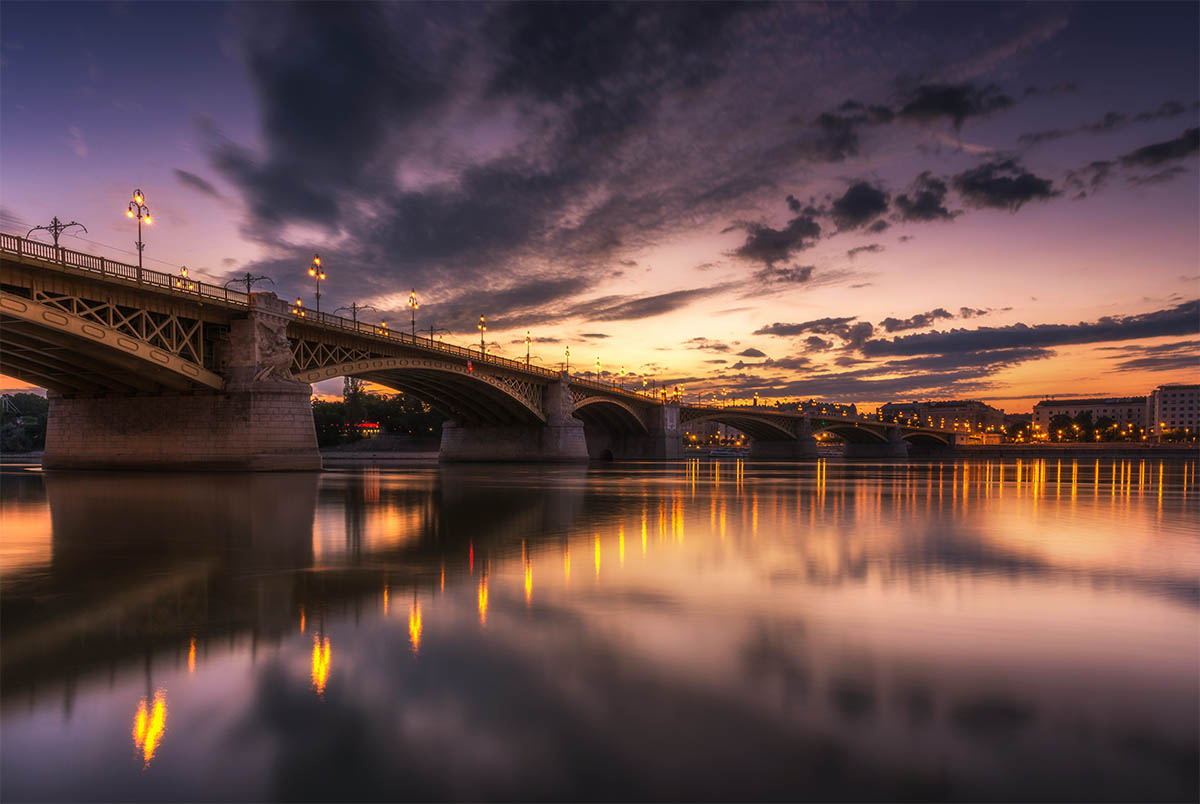 We see more of the deep blue sky in nautical twilight
1.3. Astronomical twilight (-12° to -18°)
This is the final frontier before true night. To the untrained eye, the sky looks completely dark. However, for astronomers, there is still just enough lingering solar light to interfere with deep-space observations. Once the sun drops past -18°, twilight officially ends.
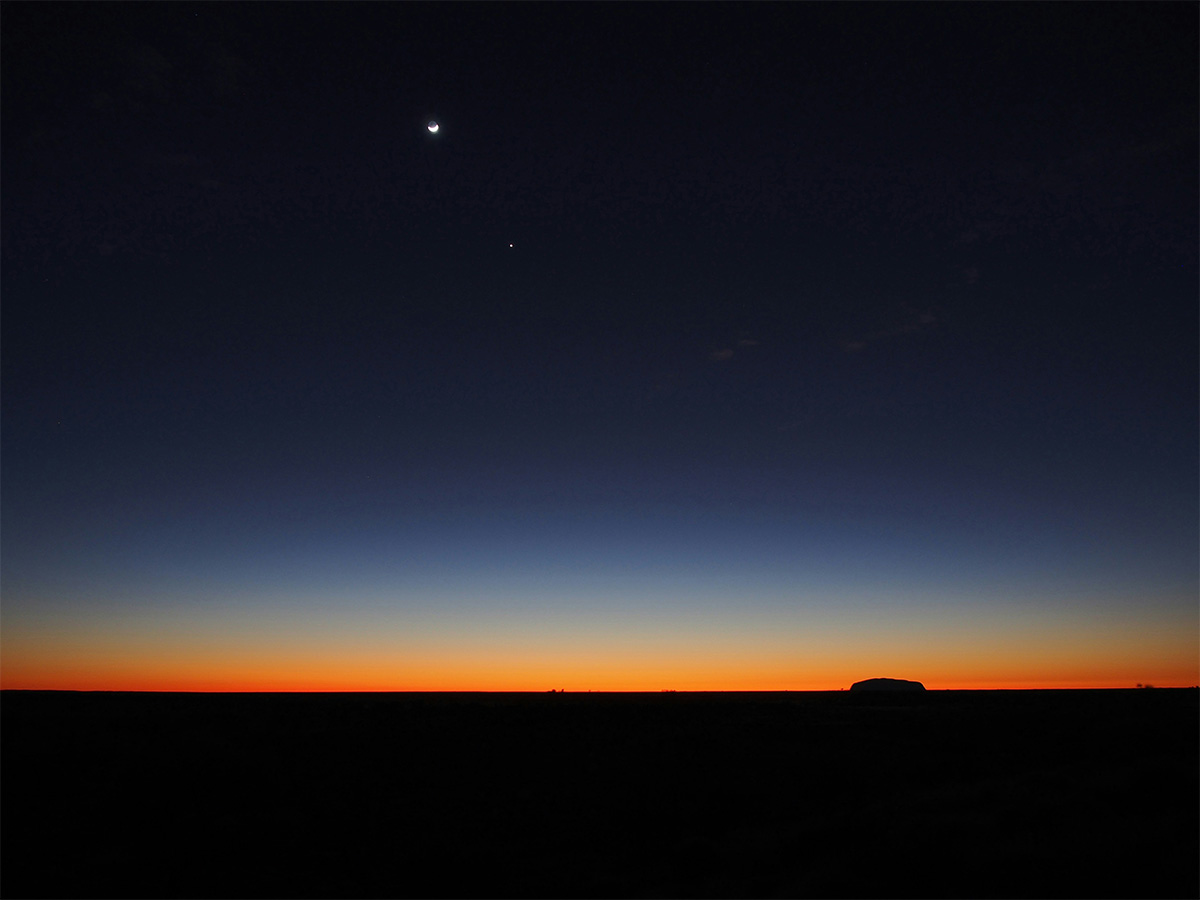 The last lingering sunlight in astronomical twilight
Understanding these stages is the first step in answering the question: Is dusk the same as twilight? While twilight is the entire journey of fading light, dusk is the specific destination.
2. Defining the specific: What is dusk?
If twilight is the marathon, then dusk is the finish line. One of the most common points of confusion when discussing dusk vs twilight is that many people use them as synonyms. However, in technical and astronomical terms, there is a clear difference between dusk and twilight. While twilight represents the entire duration of fading light, dusk refers to the specific moment when a particular stage of twilight ends.
Essentially, dusk is a series of milestones that mark the transition toward total darkness. Just as there are three stages of twilight, there are three corresponding types of dusk, each occurring when the sun reaches a specific angle below the horizon:
- Civil dusk: This is the precise instant when the sun reaches 6 degrees below the horizon. It marks the end of civil twilight and the beginning of the nautical phase. For most of us, this is "true" dusk, the moment when streetlights flicker on and the sky begins to lose its daytime clarity.
- Nautical dusk: Occurring when the sun is 12 degrees below the horizon, this moment signifies the end of nautical twilight. At this point, the horizon becomes nearly impossible to distinguish against the sky, and the stars are bright enough for marine navigation.
- Astronomical dusk: This is the absolute end of the light show. When the sun hits 18 degrees below the horizon, astronomical dusk occurs. This is the official start of night, where no solar illumination remains in the atmosphere.
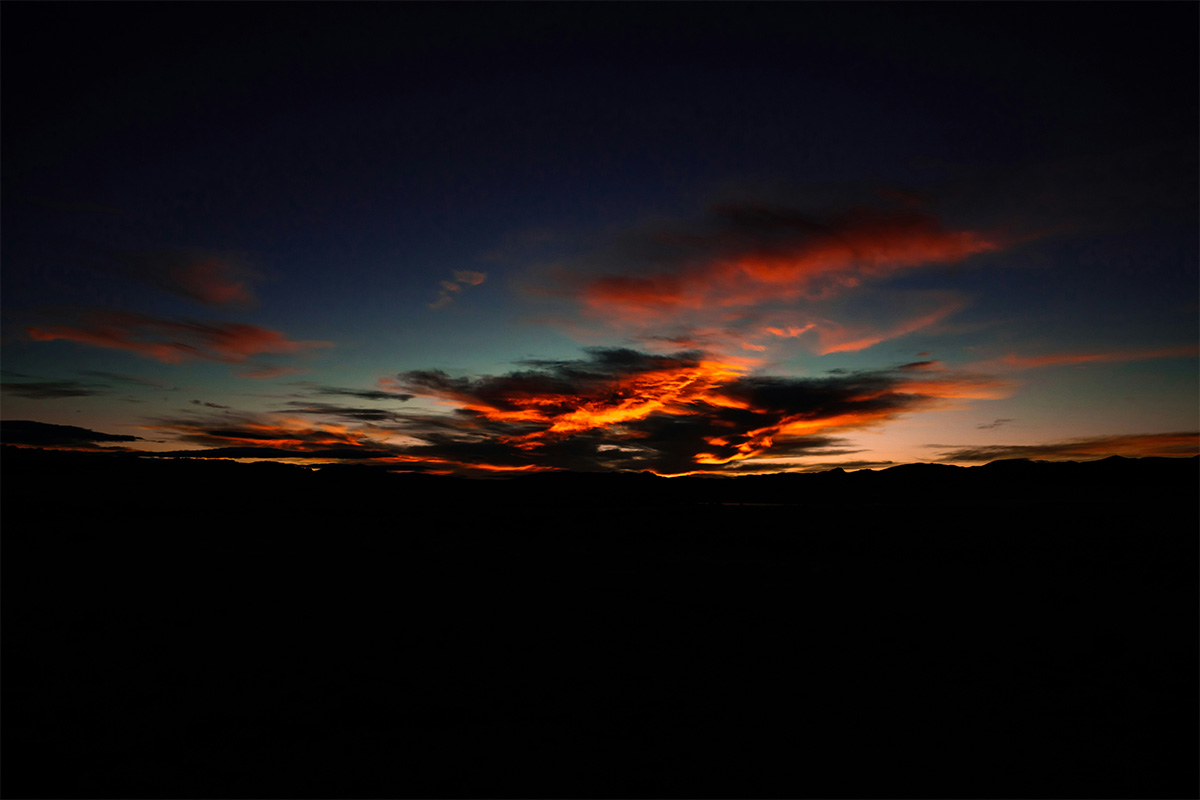 Dusk begins when the sun is below the horizon and casts faint lights onto the sky
Understanding these specific markers is vital for dusk vs twilight photography. While twilight provides the beautiful gradient of colors, "dusk" often serves as the technical deadline for creators. Once you hit nautical dusk, your camera sensor has significantly less light to work with, requiring a tripod and long exposure to avoid trading detail for noise. So, is dusk the same as twilight? No, it is the punctuation mark at the end of the evening’s light.
3. The core comparison: Difference between dusk and twilight
To truly understand the difference between dusk and twilight, it helps to think of them as a process versus a milestone. While we often use these words interchangeably in casual conversation, like saying we’ll meet "at dusk", they represent two very different ways of measuring the evening’s light.
The most fundamental distinction is that twilight is a duration of time, whereas dusk is a specific point in time. Think of twilight as the entire performance of the setting sun; it begins the moment the sun disappears below the horizon and continues until the sky is completely black. In contrast, dusk is the "punctuation mark" at the end of that performance. Technically, there isn't just one dusk, but three: civil, nautical, and astronomical. Each one marks the exact moment a specific phase of twilight concludes.
Visually, this distinction matters. During twilight, the sky undergoes a dramatic transformation. It starts with the golden and pink hues of the "golden hour" and transitions into the deep, saturated indigos of the "blue hour." When someone asks, "is dusk the same as twilight?", the answer lies in that progression. Twilight is the fading light itself, while dusk is the threshold where that light reaches a specific degree of darkness. For example, once "civil dusk" hits, the sun is 6 degrees below the horizon, and most people will feel the need to turn on their headlights or porch lights.
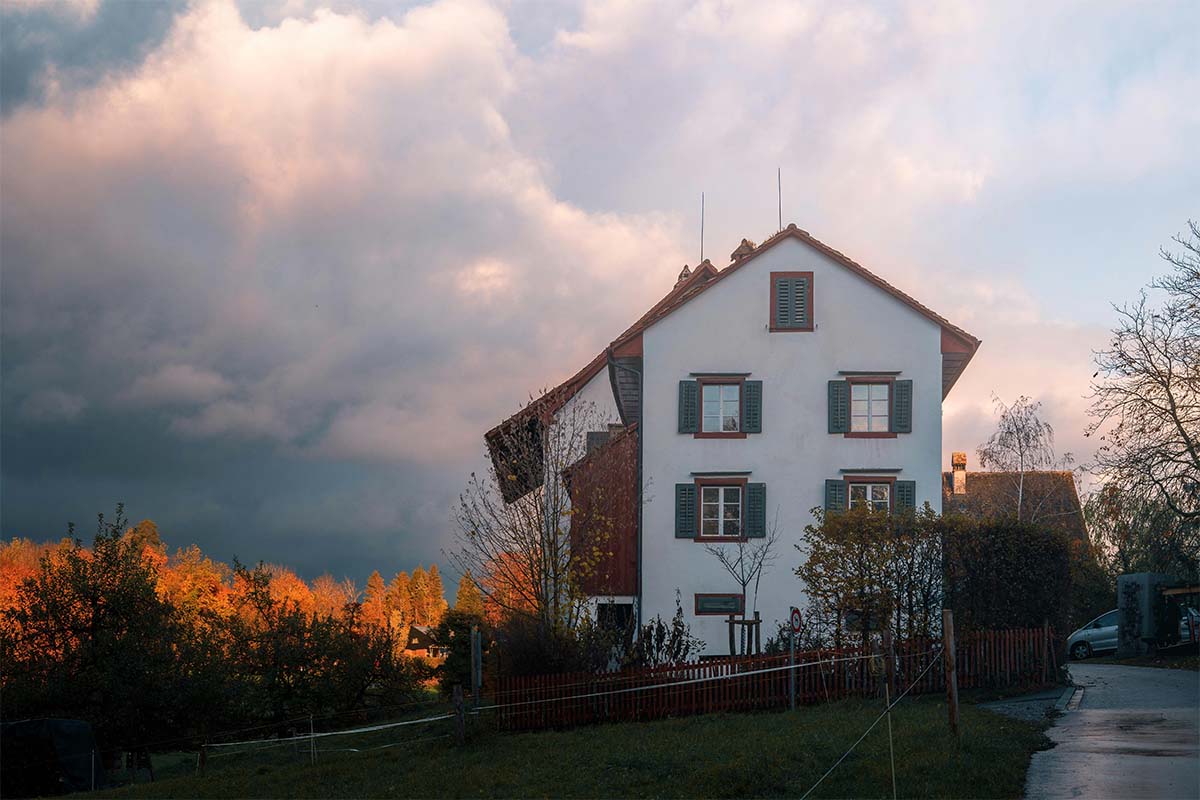 Twilight sky literally displays more “light” and shades of colors than dusk
For anyone tracking the evening sky, whether you are a hiker, a stargazer, or just someone enjoying a sunset, knowing this difference between dusk and twilight allows for much better planning. If you want to watch the colors change, you are watching the twilight. If you are waiting for the stars to become clearly visible, you are waiting for nautical or astronomical dusk.
How twilight and dusk affect real estate visuals
In the high-stakes world of property marketing, this technical distinction dictates your shooting schedule and your final image quality.
- Twilight creates the "vibe": As it is a period of time, it provides the window where the sky transitions from warm gold to deep indigo. For real estate, this period allows for the "glow effect", where the interior lights of a home balance perfectly with the natural light outside. It’s the time when a property looks most inviting and prestigious.
- Dusk defines the "limit": Because this is a point in time, it serves as the cutoff for natural light photography. Once you hit civil dusk (the end of the first twilight stage), the natural light has faded enough that interior lights will begin to "blow out" or appear too bright in comparison to the sky. If you wait until nautical dusk, the house will likely look like a dark silhouette against a black sky, losing all architectural detail.
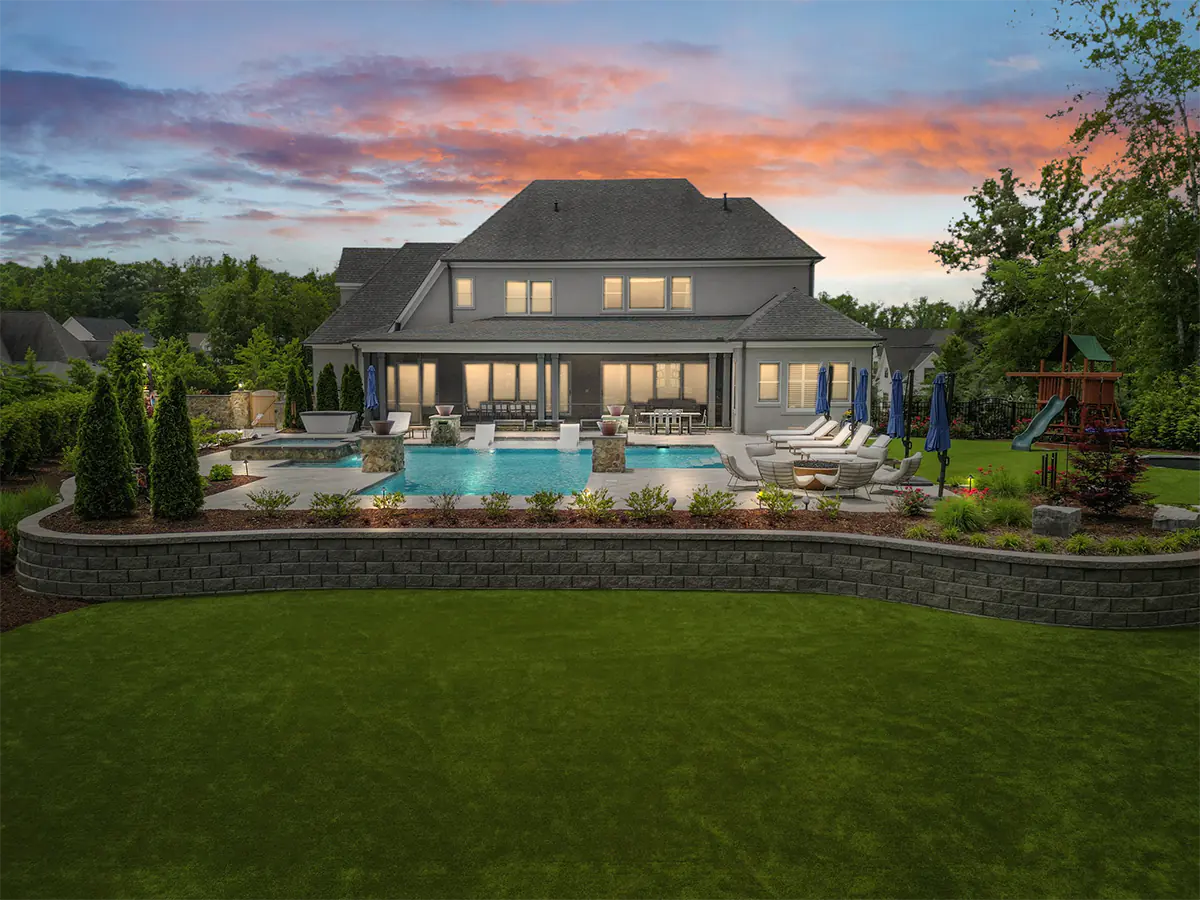 Twilight and dusk can impart an ethereal ambience for your real estate photos
Visually, the difference between dusk and twilight is the difference between a photo that feels "warm and lived-in" versus one that feels "dark and cold." Real estate photographers must race against the clock to capture the home during twilight, before the definitive moment of dusk turns the sky too dark to showcase the property’s exterior textures.
Common use cases in real estate
Twilight photography has become a favorite in real estate because it presents homes in their most welcoming light. The combination of the cool sky and the warm glow from interior lights makes a property feel alive and inviting. Large windows sparkle against the darker background, landscaped gardens appear more refined, and pools or water features reflect the fading light beautifully. In the dusk vs twilight comparison, twilight is often chosen for suburban family homes or listings where the goal is to create a sense of comfort, warmth, and balance rather than dramatic intensity.
The effect of dusk on real estate photography is striking. A modern villa or luxury waterfront home framed by a glowing, colorful sky immediately stands out in any listing. The drama of dusk gives a sense of exclusivity, making the property appear aspirational and unique. While this type of photography can be technically challenging due to the rapidly changing light, the results are worth it. In the dusk vs twilight choice, dusk is the option that delivers bold visuals designed to grab attention and leave a lasting impression.
To make this easier to digest, here is a quick-reference comparison:
|
Feature |
Twilight |
Dusk |
|
Type |
A duration or period of time. |
A specific moment or ending point. |
|
Function |
Describes the transition from day to night. |
Marks the completion of a twilight phase. |
|
Duration |
Lasts from 20 minutes to several hours. |
Technically instantaneous. |
|
Visuals |
Characterized by a gradient of colors. |
The darkest point of its respective stage. |
|
Real estate impact |
The window for the "golden/blue hour" glow. |
The deadline before the property loses detail. |
4. Dusk vs twilight photography: A professional guide for real estate
For photographers, the distinction between these two terms isn't just a matter of semantics. It’s the difference between a professional masterpiece and a missed opportunity. Understanding dusk vs twilight photography is essentially about mastering "The Blue Hour." This is that coveted window during civil and nautical twilight when the sky holds a deep, saturated blue that balances perfectly with artificial city lights or the warm glow of a home’s interior.
The primary difference between dusk and twilight in a photographic context is that twilight provides the duration of usable light, while dusk often signals the end of your shooting window. During twilight, the light is soft and multidirectional, meaning you won’t have to deal with the harsh, directional shadows of midday. However, as you approach nautical dusk, the light levels plummet rapidly, requiring a shift in your technical approach.
Definition of twilight in real estate photography
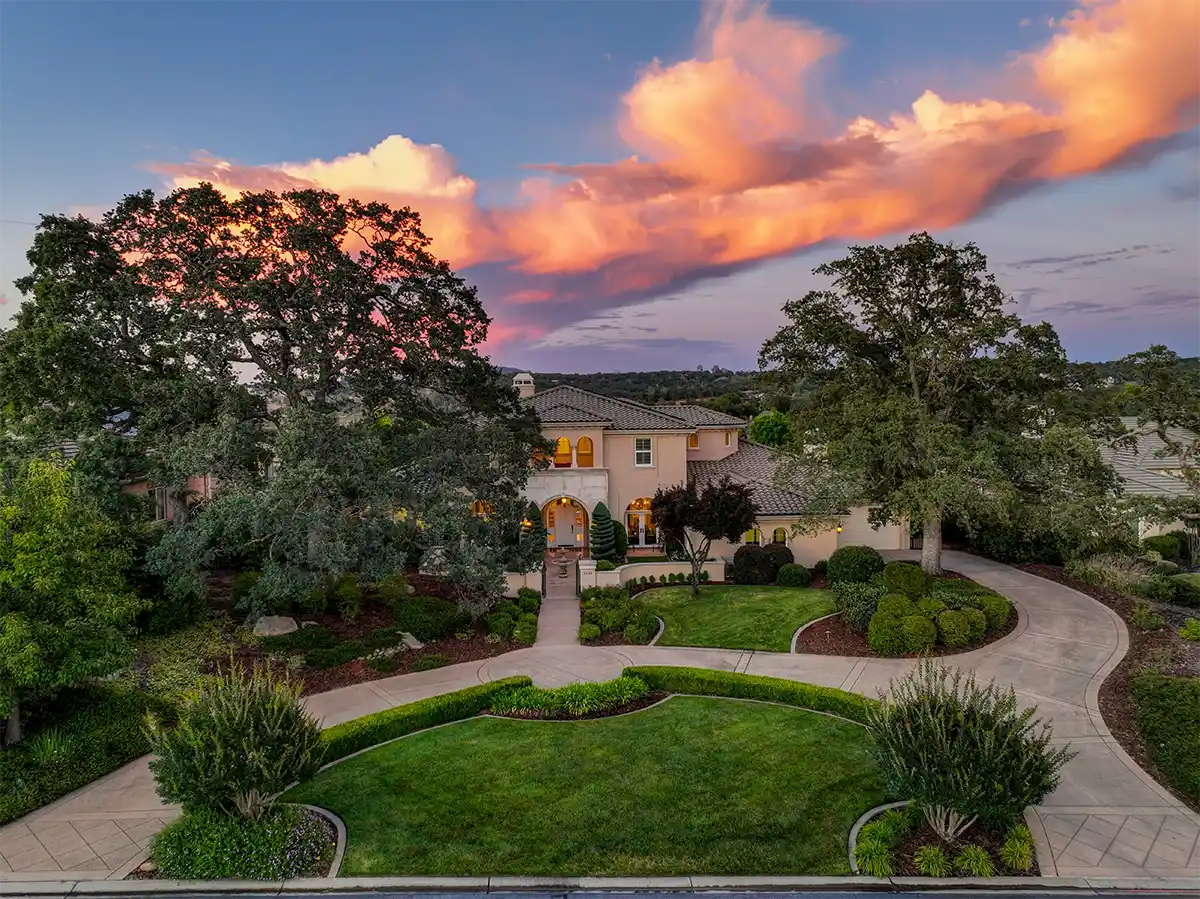
When we look at dusk vs twilight in real estate photography, twilight refers to the short period right after the sun sets but before the sky turns completely dark. During this time, the light is soft and evenly spread, casting a natural blue glow across the horizon. Unlike the strong colors of dusk, twilight creates a calm atmosphere where both the home’s architecture and its lighting appear balanced. Photographers often call it the “blue hour” because the gentle tones bring out detail without overwhelming the viewer.
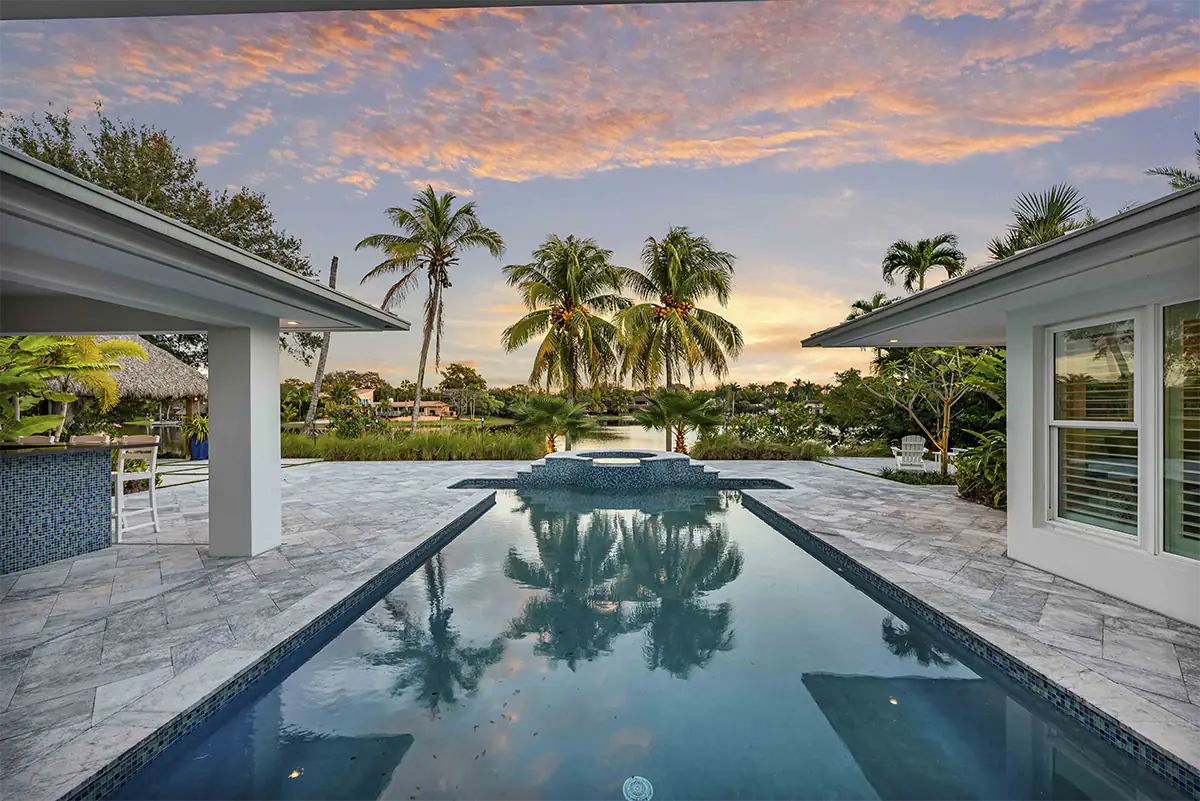 Twilight photography: the calm side of dusk vs twilight
Definition of dusk in real estate photography
On the other hand, dusk photography captures the moments just before the sun completely disappears below the horizon. This is when the sky often bursts into a spectacular range of colors - fiery oranges, deep purples, and streaks of red or gold that shift within minutes. Dusk creates a bold and vibrant backdrop that makes any property look more dramatic and visually powerful. Unlike twilight’s softer tones, dusk is about contrast, mood, and impact.
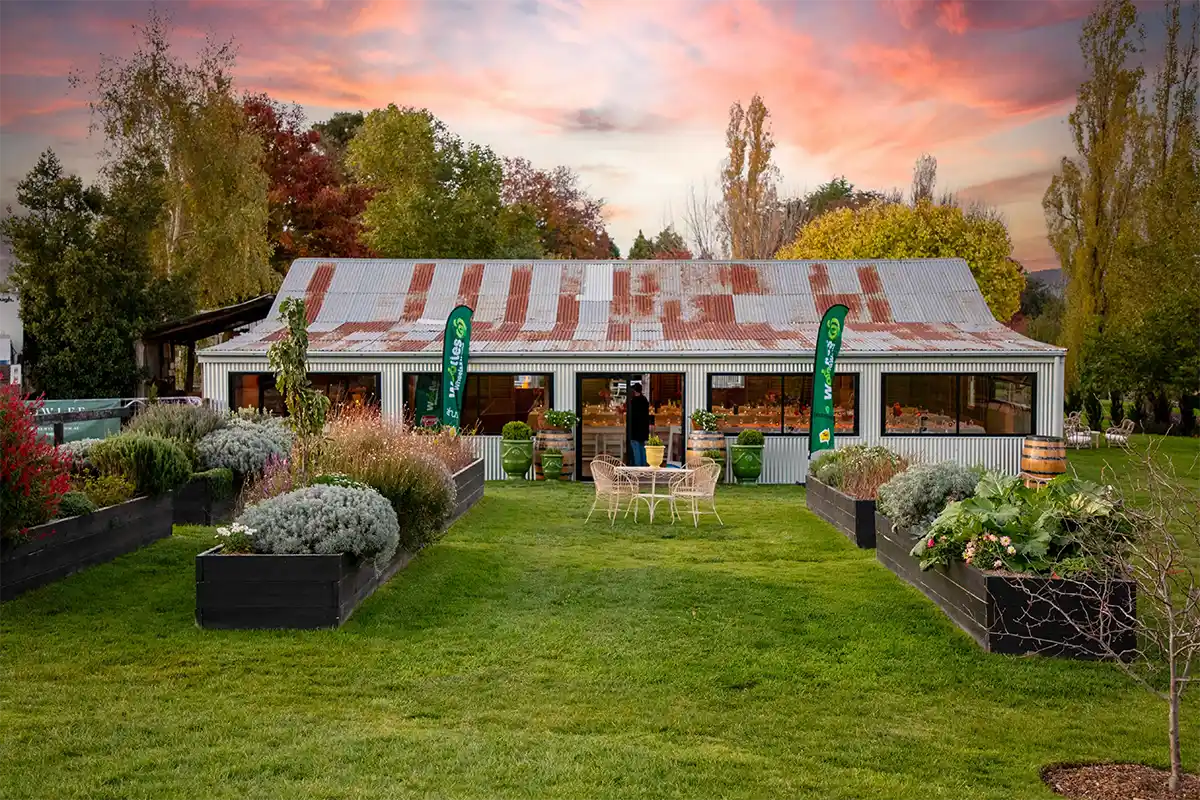 Dusk photography: bold contrasts in dusk vs twilight
Equipment and settings for dusk and twilight
To capture the magic of this transition with maximum clarity, a tripod is absolutely non-negotiable. Unlike handheld shooting during the day, twilight photography requires stability because you should avoid wide apertures like f/2.8. While this setting lets in more light, it creates a shallow depth of field that can leave parts of your landscape or building out of focus. To ensure edge-to-edge sharpness, you should "stop down" your lens to its "sweet spot", typically between f/8 and f/11.
Because you are using a narrower aperture and the sun is dipping toward astronomical dusk, your shutter speeds will naturally lengthen, often extending to several seconds. This is why a tripod and a remote shutter release (or a 2-second timer) are essential to prevent camera shake. Keeping your ISO at its base (usually 100) will also ensure your "Blue Hour" shadows remain clean and free of digital noise.
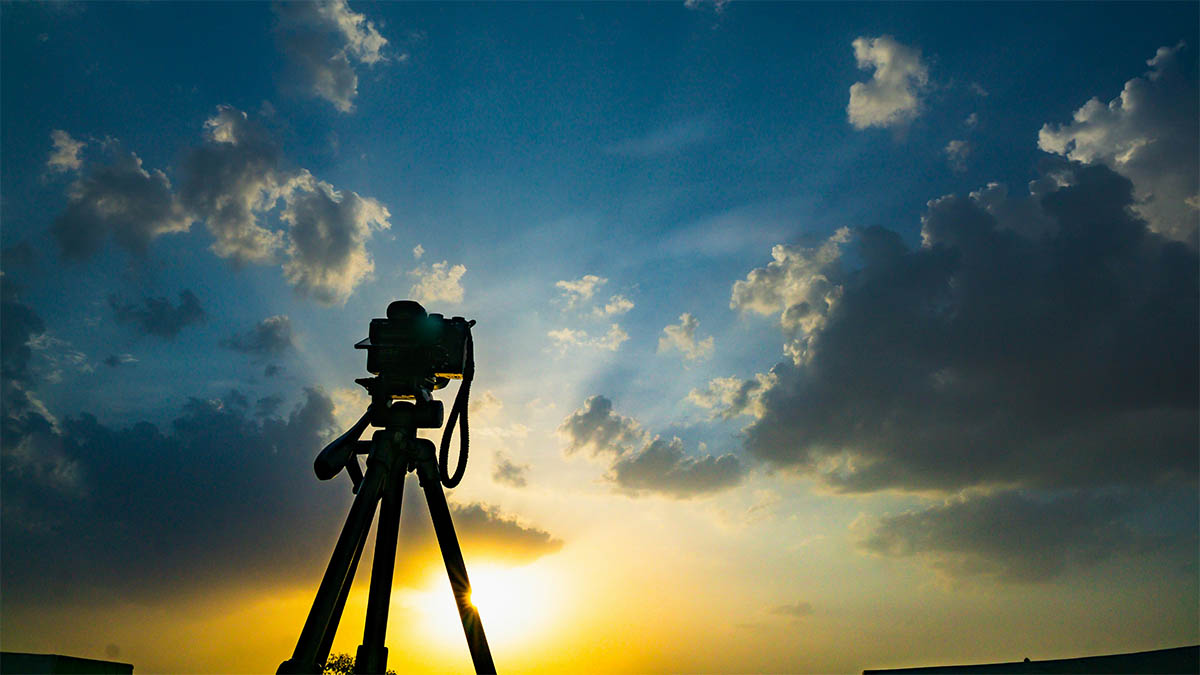 Stability is the key to achieving sharpness in a dim situation like twilight
Many beginners ask, "Is dusk the same as twilight?" when looking at their watch, but the camera sensor knows better. Twilight is your canvas, a 20-to-40-minute window of shifting colors where you can play with long exposures to turn moving clouds into silk. Dusk is your deadline. Once you hit astronomical dusk, the "blue hour" is officially over, and the sky loses that vibrant blue glow. By mastering the timing of these phases and using the right aperture, you can capture the exact atmospheric mood with professional-grade precision.
5. Dusk vs twilight: Which is better for real estate listings?
In the world of luxury real estate, the "money shot" is almost always a twilight image. But when choosing between dusk vs twilight photography for a listing, what actually sells?
While a standard sunset photo captures the golden sky, a true twilight shot taken during that window between civil and nautical dusk allows the home’s interior and exterior lighting to glow against a deep blue backdrop. This contrast creates an emotional "homely" feel that daytime photos simply can’t match. However, capturing this naturally is a logistical nightmare. You have to be at the property at the exact technical moment of dusk, hope for no clouds, and move fast before the light disappears.
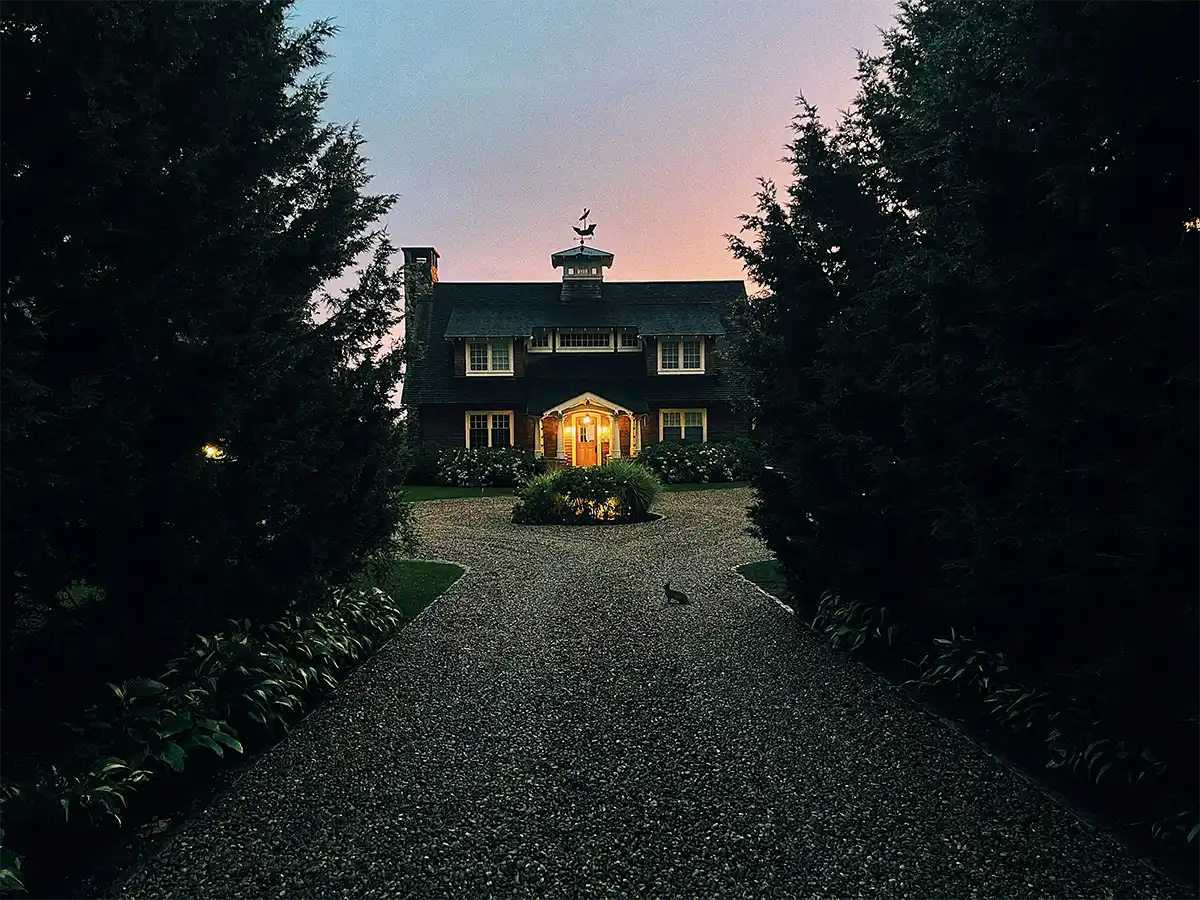 Dusk and twilight might look gorgeous on their own, but they pose many lighting challenges for real estate photographers
This is why many top-tier agents are moving away from the "natural vs. artificial" debate. Instead of worrying about whether dusk is the same as twilight while on-site, they focus on high-quality daytime shots and rely on professional post-production from editors knowing how to edit day-to-dusk real-estate photos in Photoshop to create the perfect evening atmosphere.
6. How can editing transform your real estate twilight and dusk photo?
Even if you miss that perfect 20-minute window, modern technology means you don't have to reschedule the shoot. Professional real estate photo editing can bridge the gap between a flat daytime photo and a stunning evening masterpiece.
This is where a specialized service like Fotober becomes a game-changer for photographers and agents. Through their advanced day-to-dusk (virtual twilight) service, Fotober can take a photo captured in broad daylight and transform it into a high-end twilight image. Here is how professional editing elevates the shot:
- Sky replacement: Swapping a blown-out white sky for the vibrant gradients of nautical twilight.
- Window glowing: Digitally "turning on" the interior lights to give the home an inviting, warm glow.
- Color balancing: Adjusting the white balance to mimic the "blue hour" while keeping the house's textures sharp.
- Streetlight & landscape enhancement: Adding realistic light casts on the driveway and trees to match the evening mood.
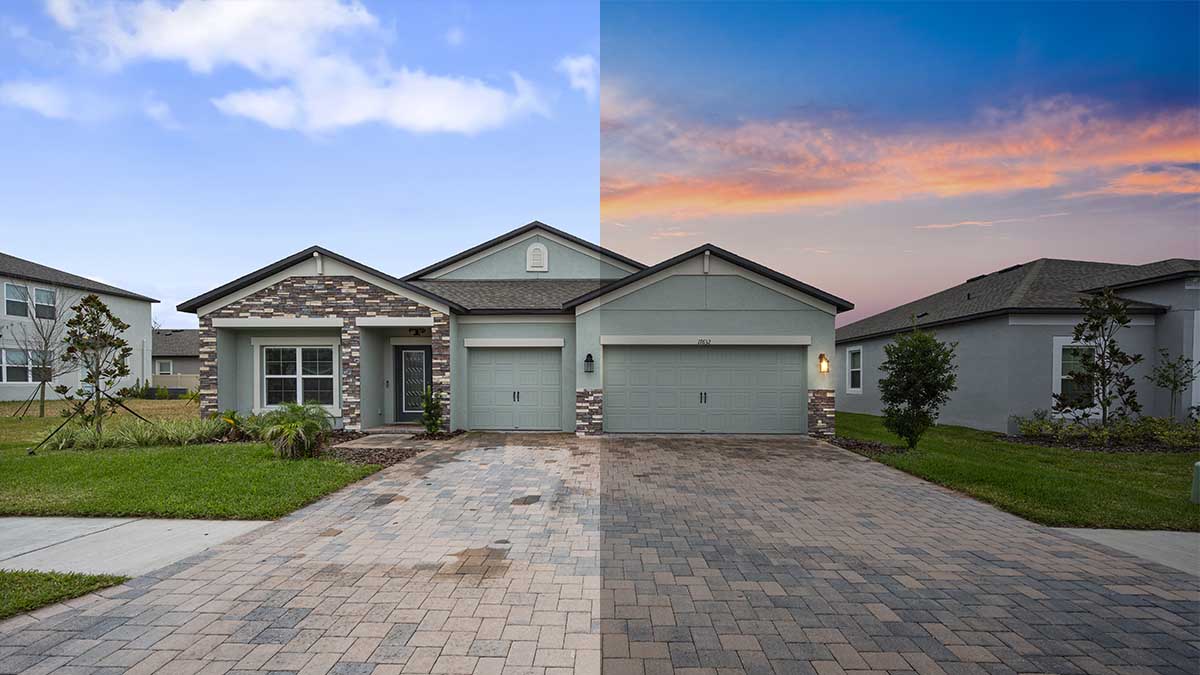 Didn’t catch that twilight on-site? No worries. Fotober can make your dream scene come true
By using Fotober’s editing expertise, you get the premium look of a twilight shoot without an off-putting price tag or the stress of racing against the setting sun. It ensures your listings look consistent, professional, and most importantly, more expensive than the competition.
Conclusion
In the debate of dusk vs twilight photography, there is no single “winner.” Each brings unique strengths: dusk delivers drama, energy, and luxury appeal, while twilight offers calmness, balance, and a welcoming atmosphere. The right choice depends on the type of property, the target audience, and the story you want your listing to tell.
For real estate professionals, that "blue hour" glow is the secret to high-converting listings. Whether you are timing your shoot to hit the exact moment of civil dusk or utilizing Fotober’s expert virtual twilight editing, mastering these phases ensures your work stands out long after the sun goes down.
Ready to elevate your property listings with stunning twilight visuals? Explore Fotober’s professional real estate editing services today and turn any daytime shot into an evening masterpiece with just a few clicks.
Follow us on social media to acquire more useful tips and in-depth analysis on real estate marketing, twilight photography and up-to-date details of our services!
- Facebook: fotobermedia.co
- YouTube: Fotober
- TikTok: @fotober
- Instagram: fotober_media.
Frequently asked questions (FAQs)
Navigating the terminology of the evening sky can be tricky. Here are the most common questions people ask when trying to distinguish between dusk and twilight.
Is dusk before or after twilight?
Technically, dusk is the end of a specific twilight phase. For example, civil twilight begins at sunset and ends at civil dusk. Therefore, you experience the period of twilight first, and dusk serves as the final boundary of that light.
What comes after dusk?
Once you pass the final stage (astronomical dusk), the sky officially enters "night." This is the period of total darkness where no solar illumination remains in the atmosphere, making it the ideal time for deep-space stargazing and astrophotography.
Is dawn the same as dusk?
They are opposite bookends of the day. Dawn is the morning equivalent of dusk, marking the moment when a twilight phase begins (before sunrise). Dusk marks the moment when a twilight phase ends (after sunset).
Is dusk the same as twilight?
No. While often used interchangeably, the technical difference between dusk and twilight is that twilight is the journey (the duration), and dusk is the destination (the specific moment it ends).
Related posts

Modern Luxe Interior Design: Elements, Style Guide and How to Stage It
October 10, 2026

Minimalist Interior Design: Characteristics, Style Guide, and Staging
October 8, 2026

Coastal Interior Design: Style Definition & Staging Guide
September 30, 2026

Contemporary Interior Design: Key Elements and How to Stage This Style
September 30, 2026
