




Beach House Floor Plans to Maximize Coastal Property Value

Share:
Table of Contents
- 1. What is a beach house floor plan?
- 2. Essential characteristics of outstanding coastal house floor plans
- 3. Beach house floor plans by size: Finding your ideal footprint
- 4. Top beach home layout ideas for every property type
- 5. How to choose the right beach house floor plan for your lot
- 6. Bringing your beach house floor plans to life with Fotober
- 7. Case study for beach house floor plans: How professional media sold a coastal property 30% faster
- 8. Conclusion
Imagine waking up to panoramic ocean views, feeling warm coastal breezes, and living in a space that seamlessly connects indoor comfort with outdoor living. Designing a seaside retreat starts with selecting the right foundation: a thoughtful floor plan for a coastal house. Whether you envision a compact cottage on stilts or a multi-story luxury estate, your layout dictates how light, air, and ocean sightlines move through your home. In this guide, we explore popular beach house floor plans, functional layout ideas, size variations, and resilient features to help you build, renovate, or market your ideal coastal haven.
If you are looking for a quick breakdown, the essence of a beach house floor plan is defined by four core characteristics:
- Seamless indoor-outdoor flow: Massive glass walls and wraparound decks that treat the ocean as an extension of the living room.
- Open-concept "great rooms": Merging the kitchen, dining, and living areas into one fluid, airy space to maximize communal interaction and views.
- Light & air optimization: High ceilings and strategic window placement (like clerestory windows) to flood the interior with natural light and ocean breezes.
- Environmental resilience: The use of salt-resistant materials and, frequently, elevated foundations to protect against tides while elevating the panoramic vista.
1. What is a beach house floor plan?
A modern beach house is far more than a typical residence built near the shore; it is a specialized architectural response to the coastal environment. Engineered to embrace seaside living while withstanding harsh salt air, humidity, and coastal winds, a beach home prioritizes expansive sightlines, natural illumination, and effortless indoor-outdoor flow. From casual waterfront cottages to contemporary coastal estates, these homes balance structural resilience with a relaxed, restorative atmosphere.
1.1. Understanding beach house floor plans
Unlike conventional suburban layouts that prioritize formal interior rooms and front-yard curb appeal, beach house floor plans are designed from the inside out to interact dynamically with their surrounding landscape. Their primary goal is to capture environment-driven benefits: sweeping ocean vistas, abundant natural daylight, and optimal cross-ventilation.
To achieve this, coastal blueprints frequently feature open-concept social zones, soaring ceilings, sliding glass walls, and generous outdoor living extensions such as wrap-around decks, screened porches, and elevated balconies. Additionally, these plans directly address coastal realities through practical design solutions, such as stilt or piling foundations for flood protection, resilient building materials, and lower-level utility spaces like sand showers and beach gear storage.
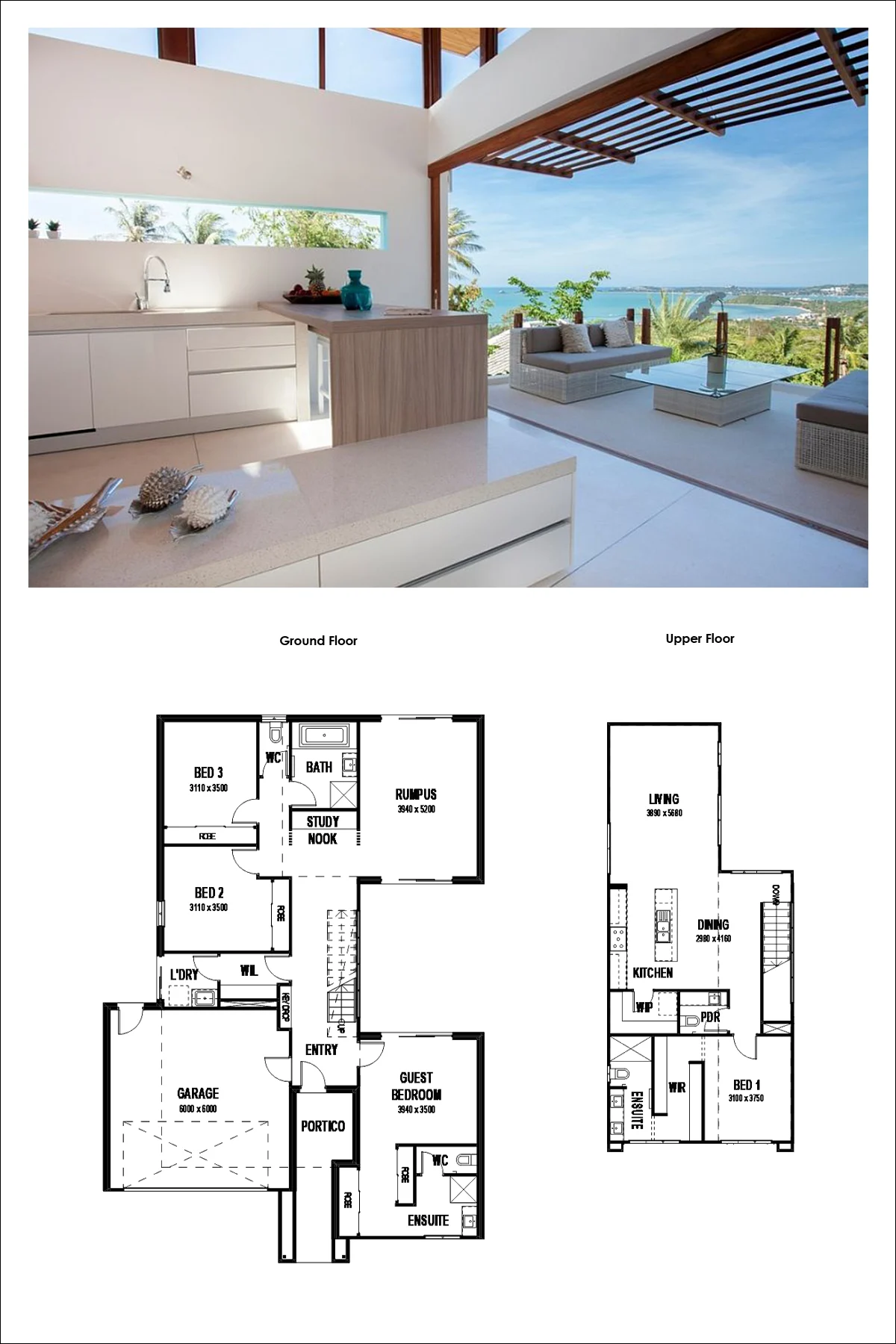
By integrating intelligent beach home layout ideas, these floor plans ensure every square foot serves both lifestyle enjoyment and climate durability, providing an essential framework for any successful coastal build or renovation.
1.2. Why beach house floor plans are surging in popularity
The appeal of coastal living & biophilic design: In recent years, the desire for tranquil, nature-infused living environments has transformed coastal real estate. Modern homeowners increasingly seek architectural designs that support well-being, stress reduction, and an outdoor-centric lifestyle. Today’s coastal house floor plans embrace biophilic design principles by using expansive glass walls, covered verandas, and continuous indoor-outdoor layouts. By inviting abundant sunlight, natural sea breezes, and panoramic water views directly into core living spaces, these floor plans turn everyday living into a restorative, resort-like retreat.
High return on investment for vacation rentals & resale: Beyond personal lifestyle benefits, well-designed beach house floor plans offer exceptional financial advantages. In competitive short-term rental markets on platforms like Airbnb and VRBO, properties featuring intuitive, open-concept layouts command significantly higher nightly rates and maintain stronger occupancy metrics. Layout elements such as main-floor primary suites, multiple bedrooms with private ensuite bathrooms, and expansive outdoor decks directly boost rental appeal. For property sellers and developers, coastal homes with flexible, light-filled floor plans deliver sustained equity growth and accelerated resale velocity.
Adaptability for multi-generational living: Coastal residences frequently serve as gathering hubs for family reunions, holiday celebrations, and extended getaways. Contemporary coastal layouts excel at balancing large social spaces with private sanctuaries. Features such as dual primary suites, dedicated bunk rooms for children, versatile lofts, and separate guest wings allow multi-generational families to comfortably coexist under one roof. This adaptability ensures that beach homes remain functional, inclusive, and enjoyable for family members of all ages.
2. Essential characteristics of outstanding coastal house floor plans
Designing a coastal sanctuary requires a delicate balance between climate resilience and architectural beauty. Outstanding coastal house floor plans go beyond standard home designs by incorporating specialized structural and spatial characteristics built to withstand coastal elements while maximizing seaside comfort.
2.1. Seamless indoor-outdoor integration
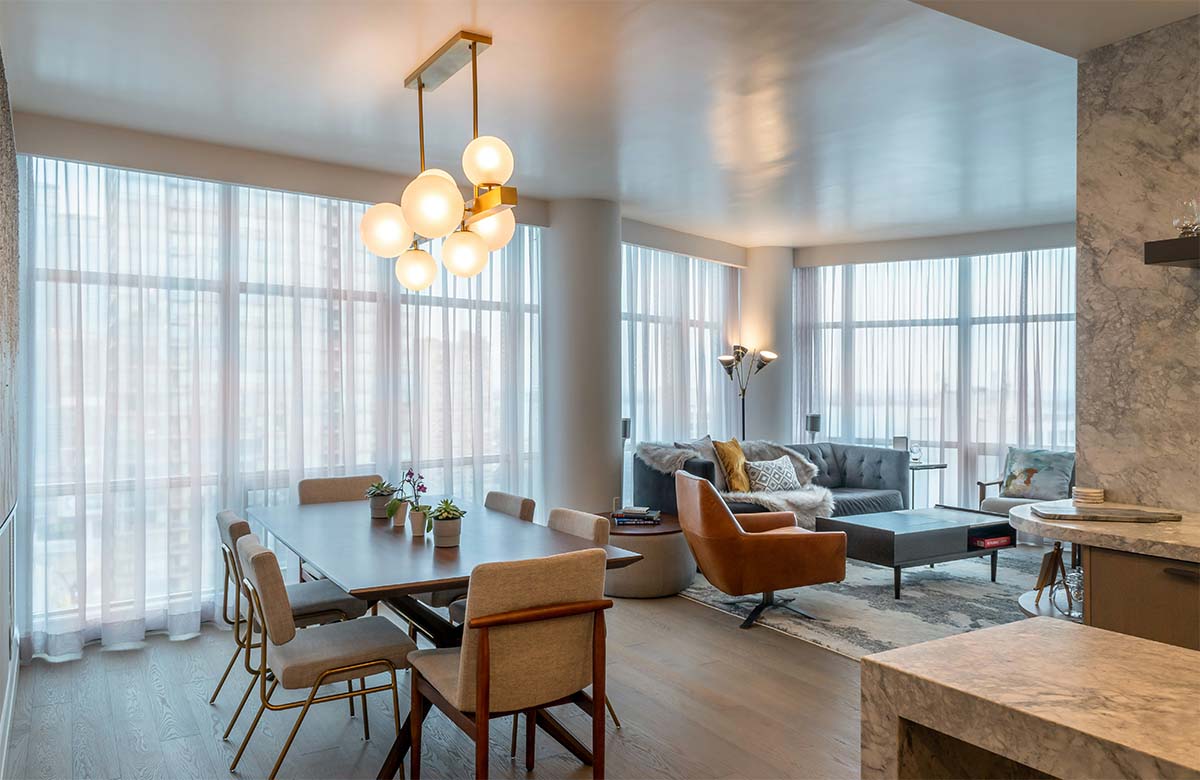
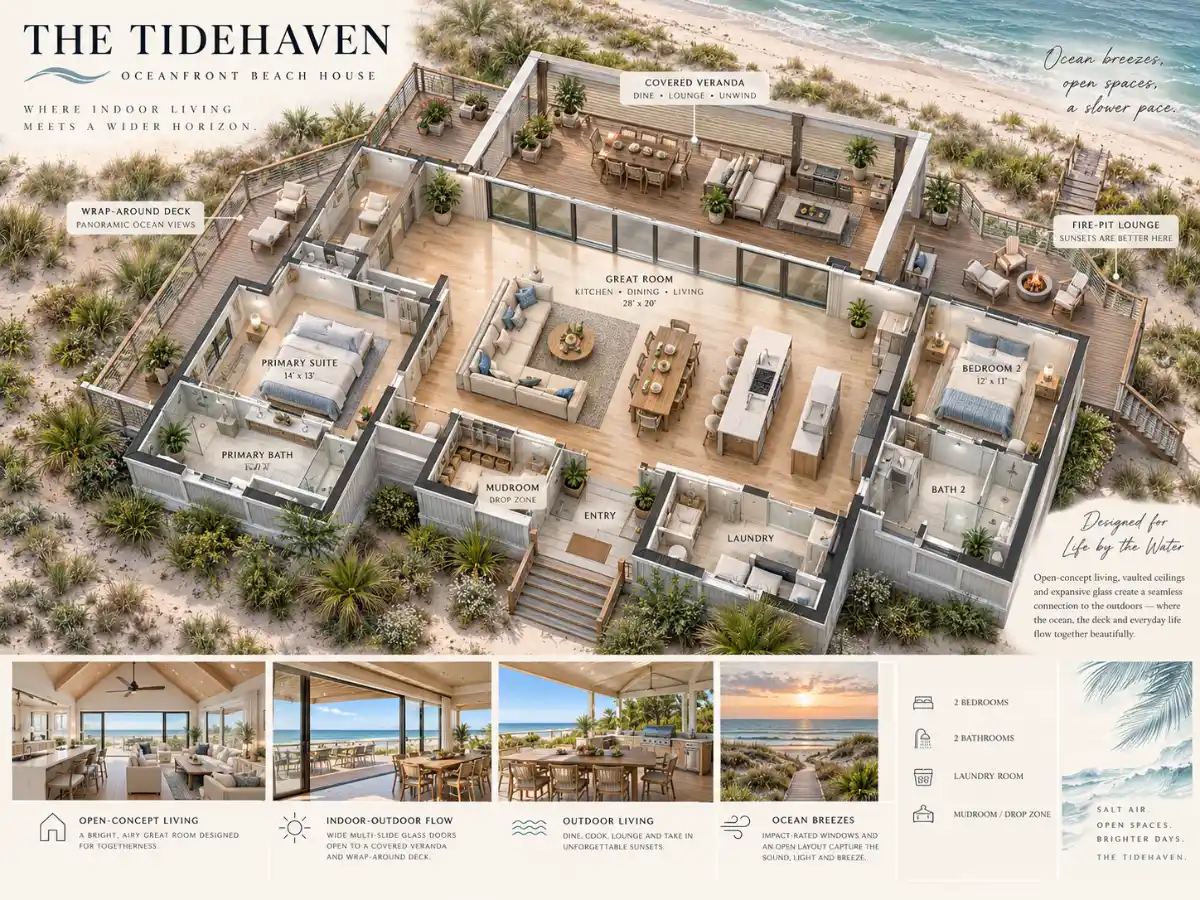
Coastal living revolves around connection with nature. Top-tier floor plans prioritize transitional spaces that erase the line between interior and exterior living. Features like multi-slide glass doors, multi-panel pocket doors, covered verandas, wrap-around decks, and screened-in porches extend the core living area outward. Adding alfresco dining spaces, outdoor kitchens, and fire pits allows occupants to entertain while taking full advantage of temperate coastal weather and ocean breezes.
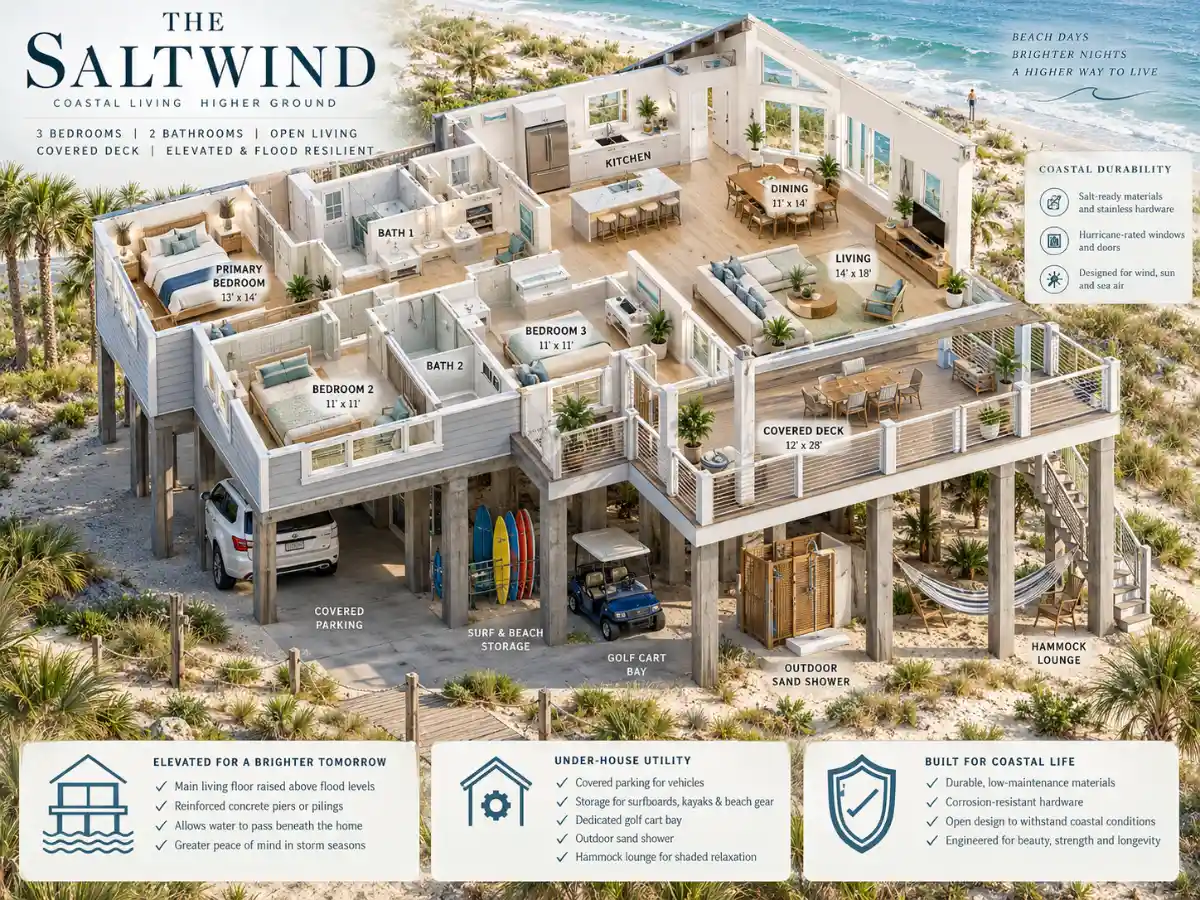
2.2. Raised & elevated foundations
To comply with FEMA flood zone regulations and safeguard against high tides and storm surges, specialized foundations are a staple of seaside architecture. In elevated beach homes, living spaces are raised above flood levels using heavy-duty pilings, stilts, or reinforced concrete piers. Intelligent floor plans convert the ground level beneath the home into practical utility, using it for shaded parking, surfboard storage, golf cart bays, and breezy outdoor lounge areas.
2.3. Open-concept living & high ceilings
To optimize natural illumination and spatial volume, coastal layouts favor open-concept great rooms that merge the kitchen, dining, and main living zones into a continuous social hub. Vaulted, cathedral, or coffered ceilings encourage passive air circulation and impart an airy, sunlit feel. Coupled with oversized impact-rated windows and transom glass, these open configurations ensure ocean vistas remain visible from virtually every angle.
2.4. Smart storage & practical utility zones
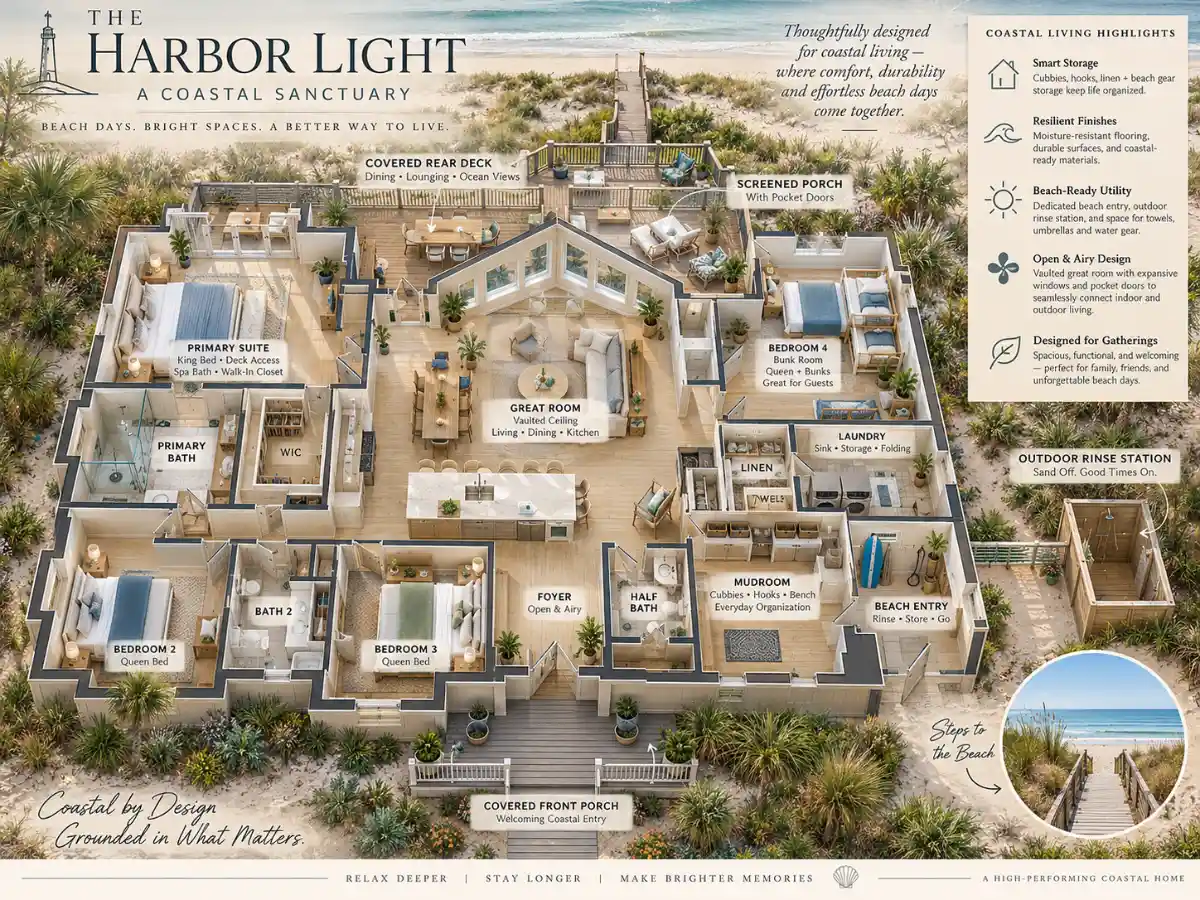
Saltwater, damp air, and persistent sand present unique daily maintenance challenges. High-performing coastal floor plans address these realities through dedicated, low-maintenance transition zones:
- Ground-level sand showers: Exterior rinse stations to wash away sand and saltwater before entering the main home.
- Functional mudrooms & lockers: Drop zones equipped with custom cubbies, hooks, and bench seating for beach towels, umbrellas, and water gear.
- Strategic laundry placements: Primary or dual laundry setups located near entryways or upper-level bedrooms for efficient towel management.
- Resilient finishes: Integration of moisture-resistant, non-porous flooring, such as luxury vinyl plank (LVP) or porcelain tile, at all major entry points.
3. Beach house floor plans by size: Finding your ideal footprint
Selecting the appropriate square footage is a critical first step when choosing beach house floor plans. Your overall footprint determines not only your construction budget and lot coverage on tight coastal properties, but also how efficiently the home adapts to your lifestyle, family size, or vacation rental goals.
3.1. Small beach house plans (Under 1,500 sq. ft.)
For tight oceanfront lots, eco-friendly retreats, or cozy guest cottages, small beach house plans offer an ideal combination of affordability and architectural efficiency. Typically ranging from 800 to 1,500 square feet, these compact designs prioritize open-concept studio, 1-bedroom, or 2-bedroom layouts that eliminate wasted hallway space.
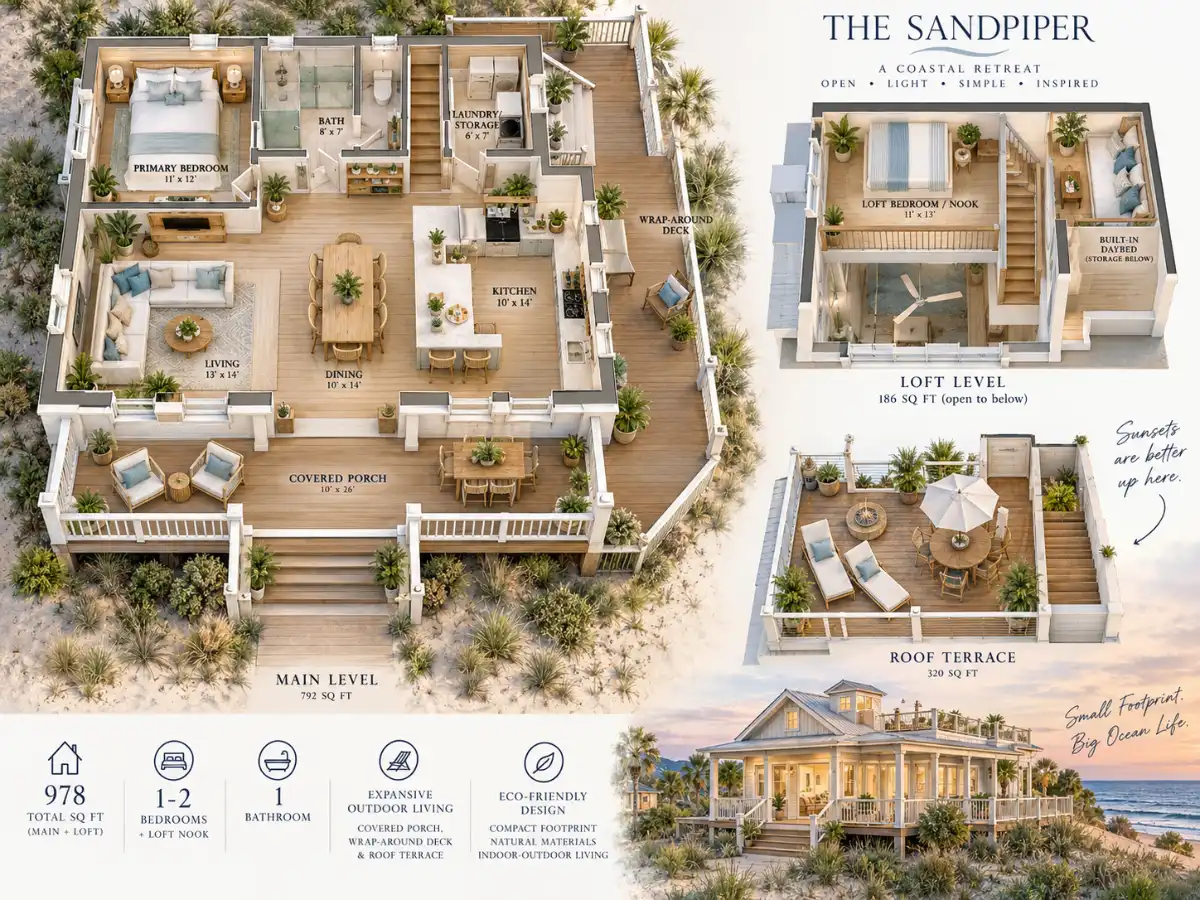
High vaulted ceilings, lofted sleeping quarters, and multi-functional furniture, such as built-in daybeds or under-stair storage, maximize interior space without feeling cramped. Expansive exterior features like covered porches, wrap-around decks, and roof terraces effectively double the usable footprint, proving that small-scale coastal living can feel remarkably airy and expansive.
3.2. Mid-sized coastal layouts (1,500 – 3,000 sq. ft.)
Striking a versatile balance between functional utility and spacious comfort, mid-sized coastal home blueprints remain the most popular choice for growing families and vacation rental investors alike. Encompassing 1,500 to 3,000 square feet, these 3-to-4-bedroom coastal house floor plans seamlessly blend private retreats with open social hubs.
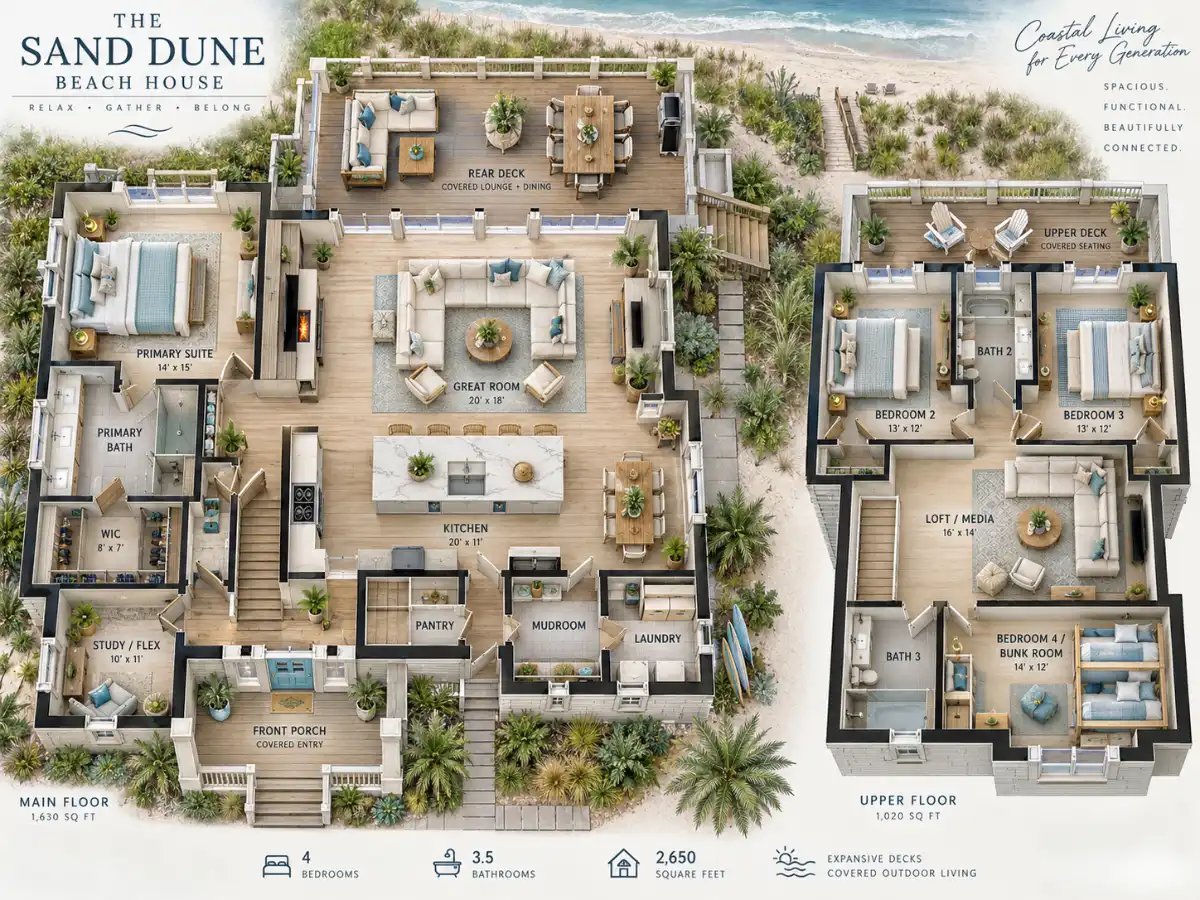
Key structural highlights usually include a main-floor primary suite for age-in-place convenience, a central island-centered kitchen, a dedicated mudroom/laundry zone, and a spacious great room opening directly onto expansive rear decks. This footprint easily accommodates multi-generational family vacations while keeping long-term maintenance, heating/cooling costs, and utility overhead at a practical level.
3.3. Luxury beach house design (3,000+ sq. ft.)
When space and luxury are paramount, upscale coastal estates offer grand architectural features tailored for sophisticated entertaining and ultimate coastal comfort. A luxury beach house design spanning 3,000 square feet or more typically spans multiple levels, incorporating residential elevators for easy access across floors, dual owner suites, and private balcony access for every bedroom.
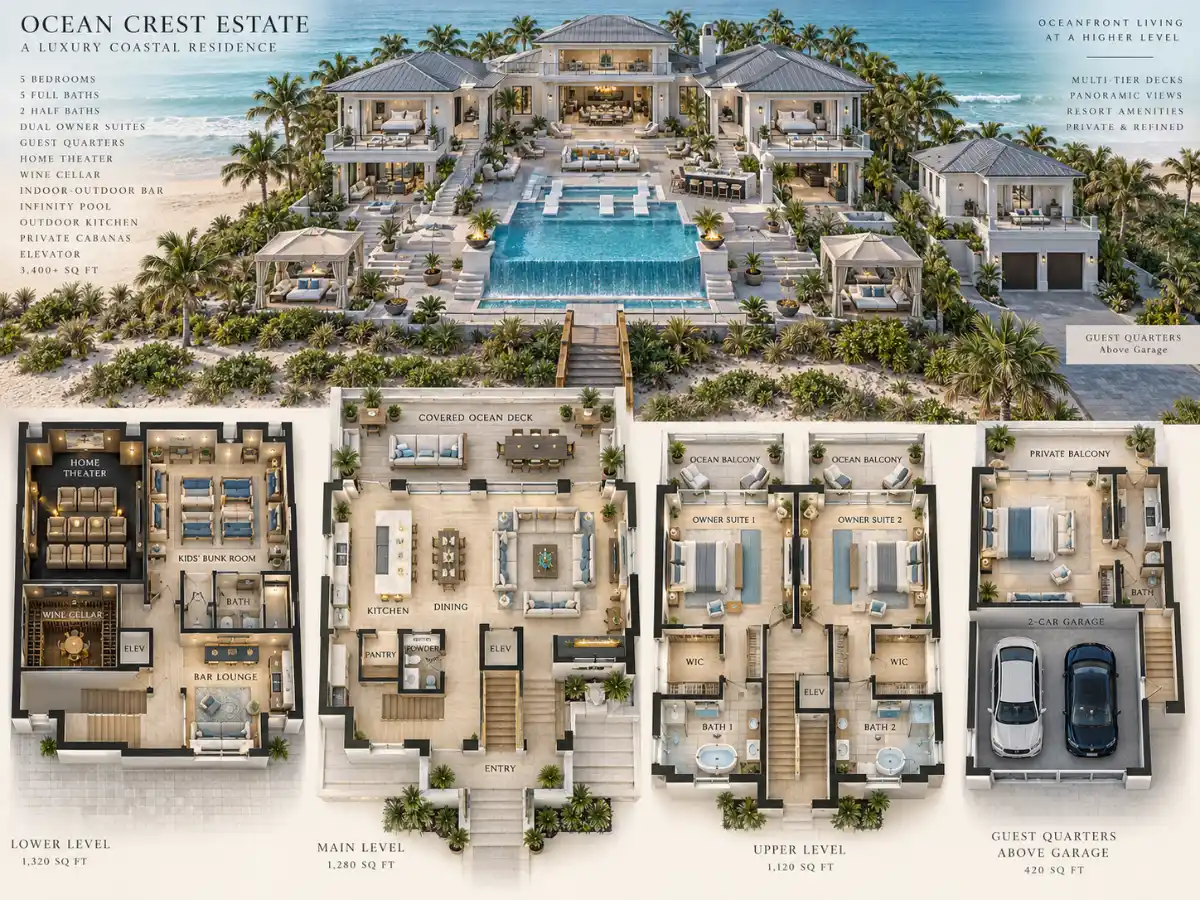
These premium layouts frequently incorporate high-end amenities such as indoor-outdoor wet bars, home theaters, wine cellars, custom bunk rooms for kids, and separate guest quarters over the garage. Outside, extensive multi-tier decks integrate infinity-edge pools, outdoor kitchens, and private cabanas, creating an unrivaled oceanfront sanctuary.
4. Top beach home layout ideas for every property type
Every seaside site presents a unique set of geographic, climatic, and structural opportunities. Whether you are building on a narrow oceanfront parcel, a steep coastal bluff, or a storm-prone flood plain, selecting the right architectural arrangement is essential. Here are four of the most effective beach home layout ideas engineered to maximize comfort, safety, and breathtaking ocean views.
4.1. The open-concept great room layout
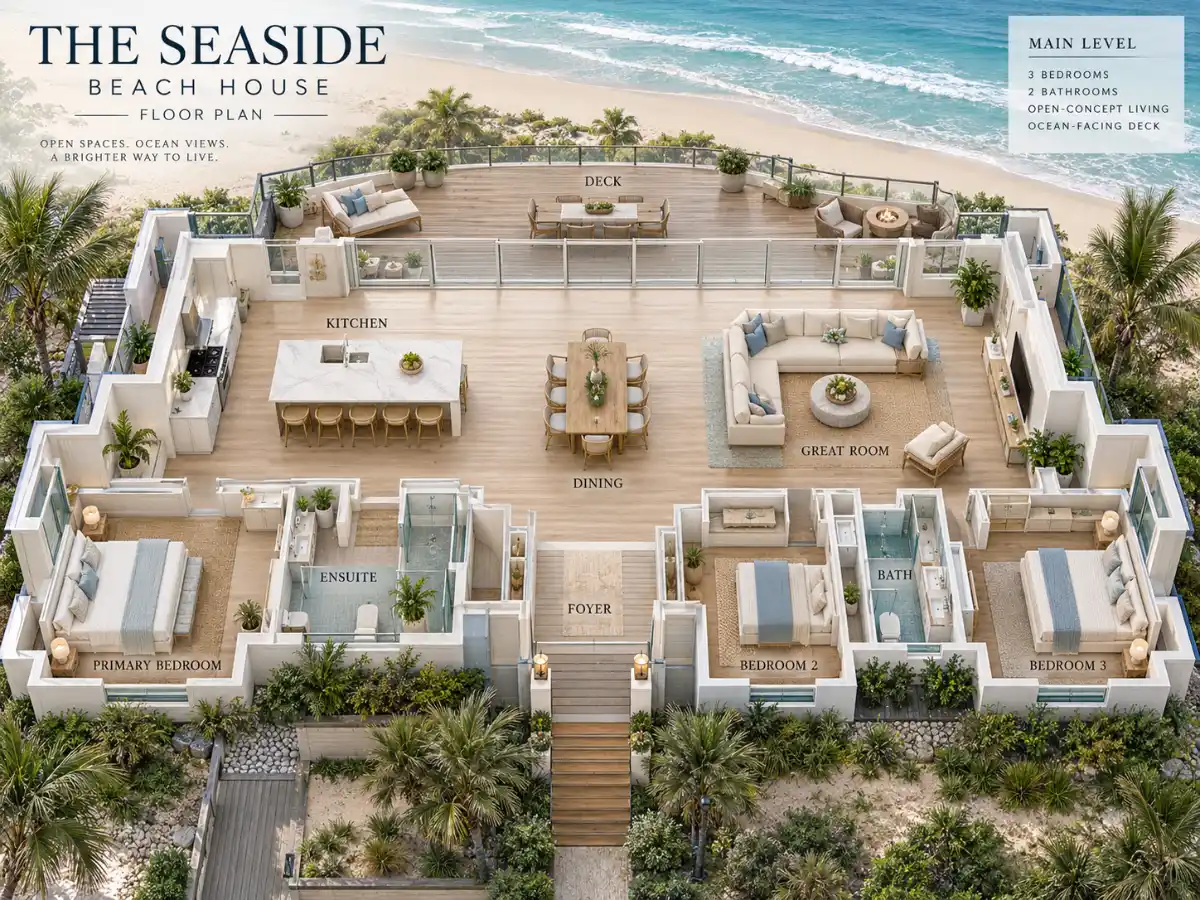
At the heart of modern coastal architecture is the open-concept great room layout. This design eliminates interior non-structural walls to seamlessly merge the kitchen, dining room, and primary living lounge into one expansive social central hub. Centered directly toward the water, this configuration utilizes full-height glass sliding walls to create an uninterrupted sightline from the kitchen island all the way out to the ocean horizon. Ideal for both daily family life and entertaining guests, it ensures that anyone preparing meals or relaxing indoors remains fully connected to the coastal view and natural light.
4.2. Elevated stilt & piling home layouts
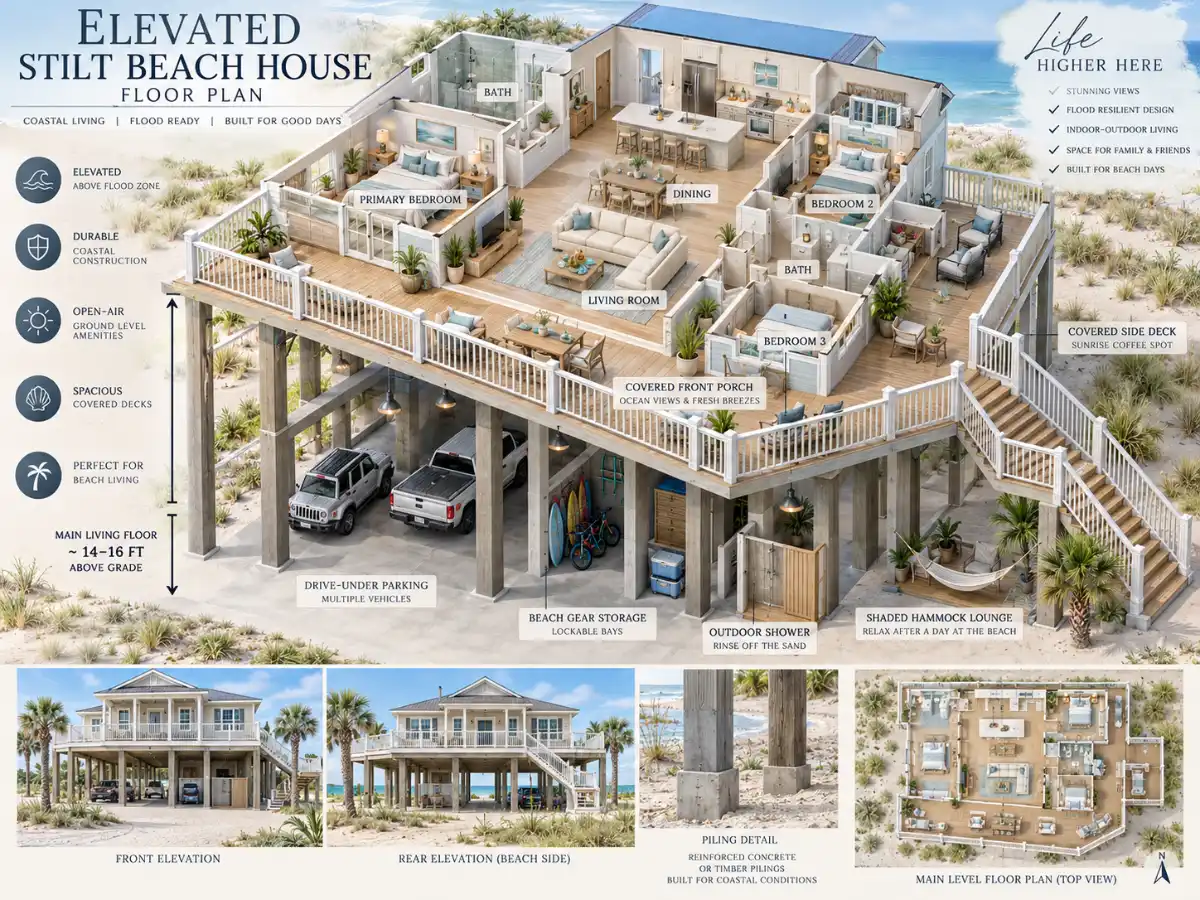
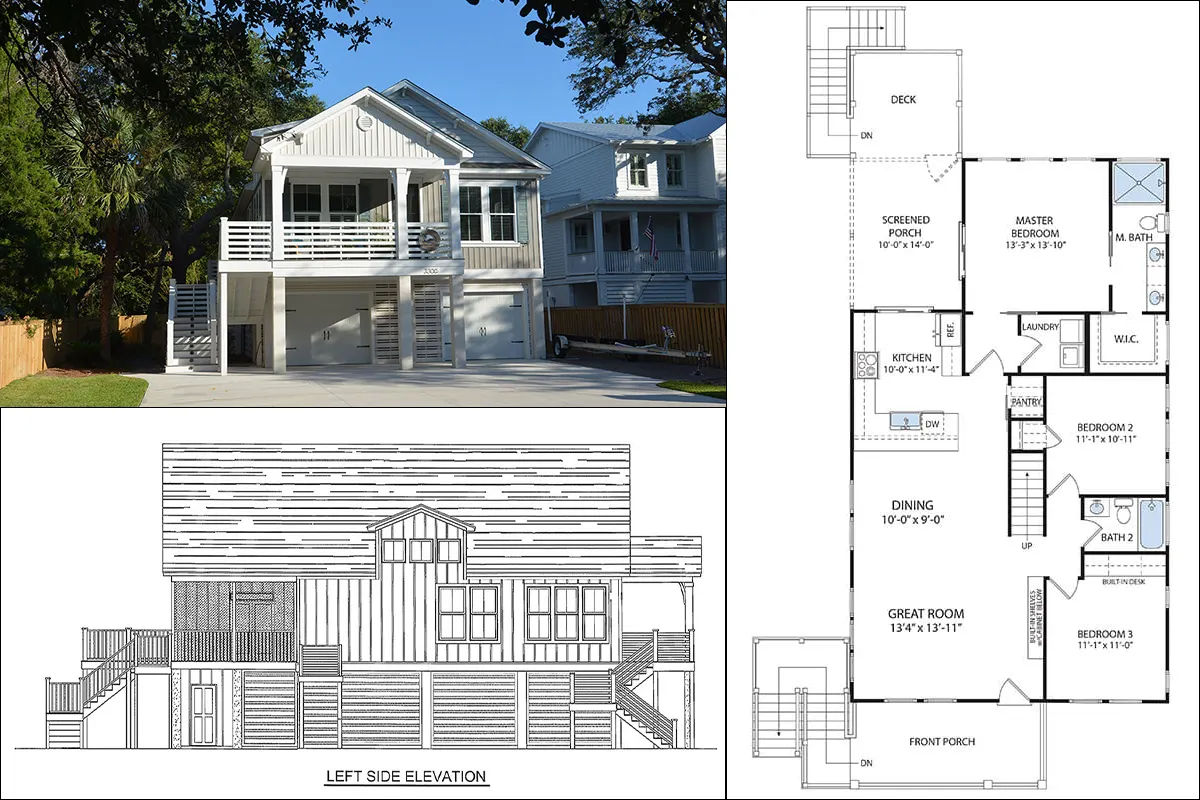
For oceanfront properties located in high-risk surge sectors or FEMA-designated flood zones, elevated beach homes built on heavy timber pilings or reinforced concrete stilts are essential. In these specialized beach house floor plans, the main living level is raised significantly above ground elevation to let stormwater pass safely beneath the structure. The ground level underneath the home is optimized for open-air functions, such as covered drive-under parking, secure beach gear storage bays, outdoor sand showers, and shaded hammock lounges, turning structural safety requirements into practical lifestyle amenities.
4.3. Reverse floor plan (Inverted living)
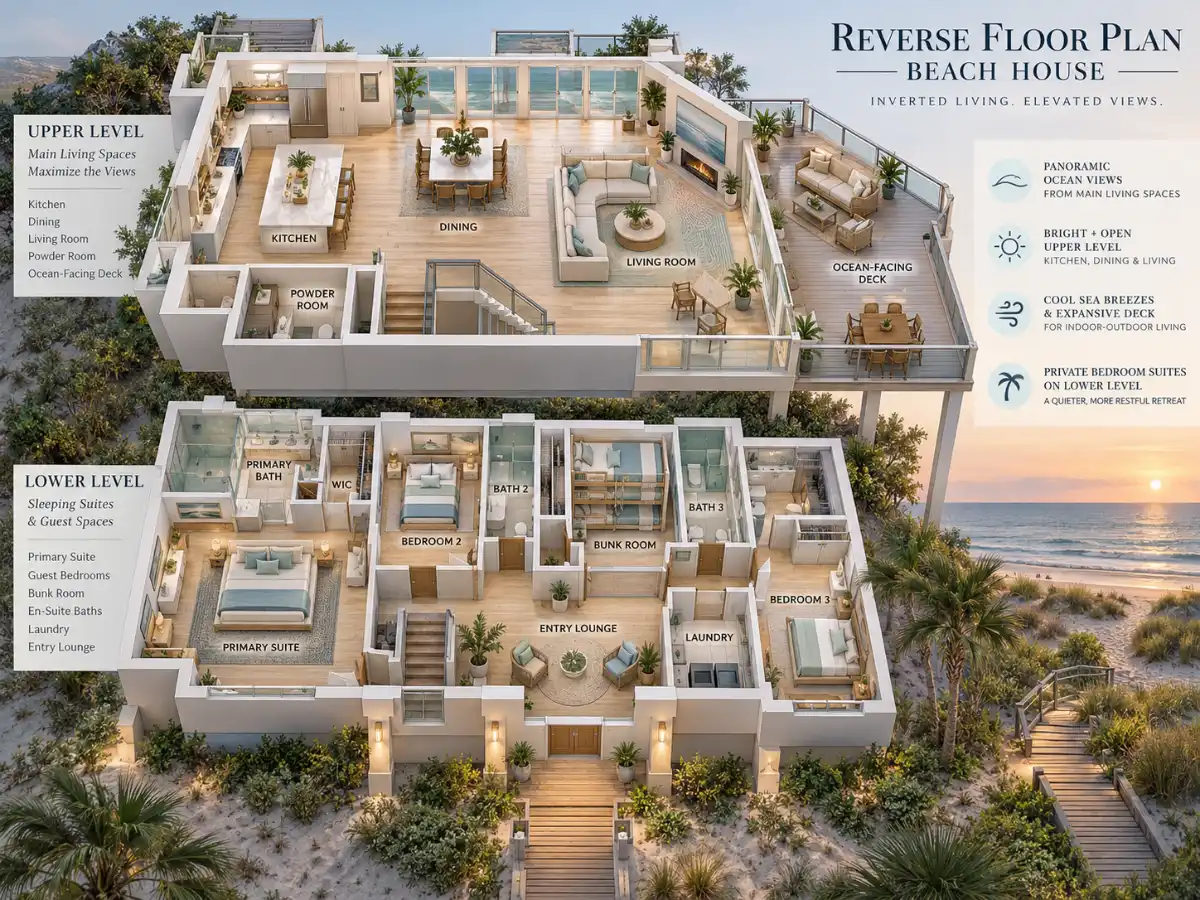
In standard residential architecture, bedrooms are situated on lower levels while living spaces reside on the main floor. However, in coastal environments where sand dunes, sea walls, or neighboring structures obstruct ground-level views, a reverse floor plan (also known as inverted living) flips this traditional arrangement. By placing sleeping suites on the lower level and elevating the kitchen, dining, and main living areas to the top floor, homeowners enjoy sweeping panoramic ocean vistas where they spend most of their waking hours. Higher elevation also maximizes cooling sea breezes and natural daylight exposure.
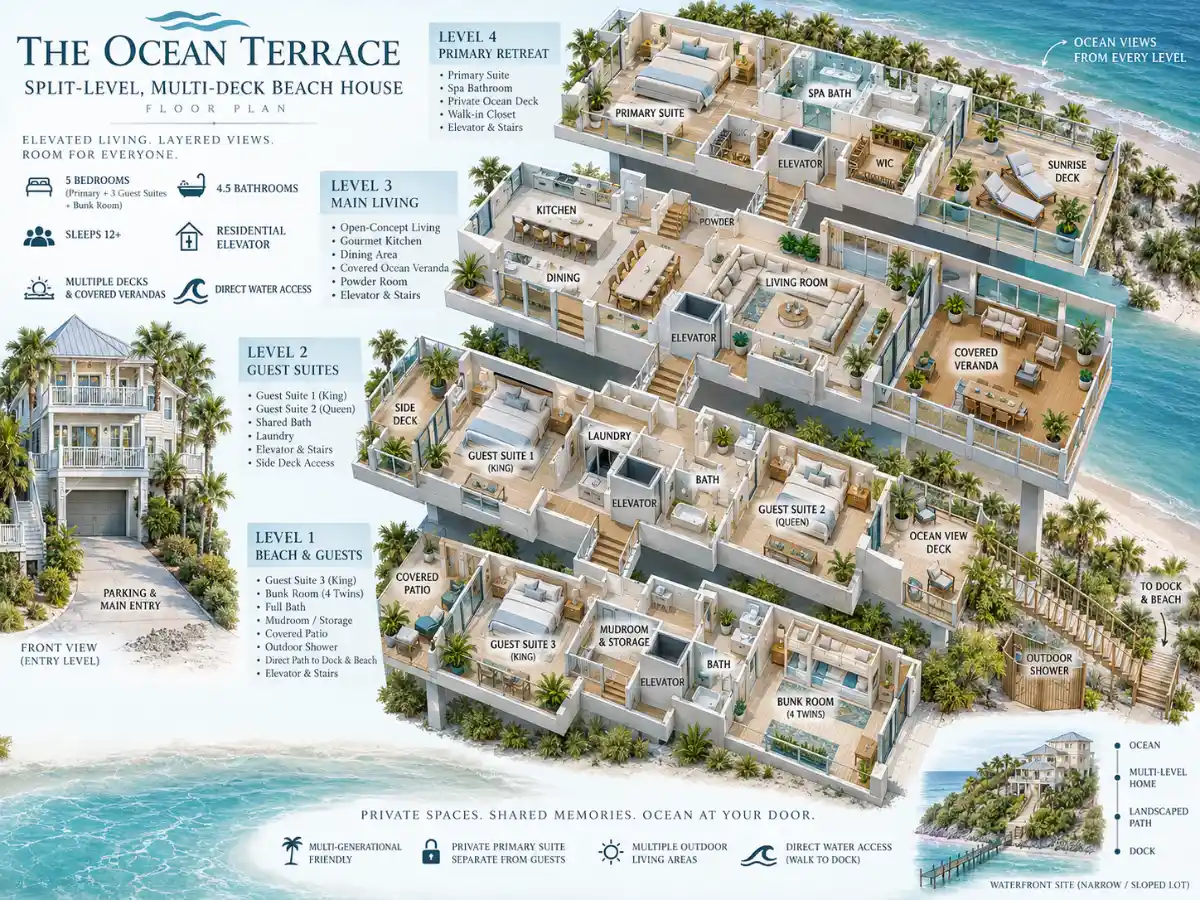
4.4. Split-level & multi-deck coastal designs
On narrow or sloped waterfront lots, multi-deck and split-level beach home layout ideas offer a brilliant solution for space optimization and personal privacy. These floor plans organize rooms across staggered levels connected by short staircases or centralized residential elevators. By incorporating wrap-around balconies and covered verandas at multiple elevations, the layout establishes clear operational boundaries between primary living quarters and guest suites. Each floor gains direct, private access to exterior outdoor spaces, making it perfect for hosting visitors, multi-family vacations, or vacation rental setups.
5. How to choose the right beach house floor plan for your lot
Selecting the ideal blueprint for a coastal property requires balancing personal aesthetic preferences with environmental realities, legal codes, and long-term functionality. To choose the right beach house floor plans for your specific parcel, follow these strategic steps:
5.1. Step 1: Analyze lot topography & coastal zoning regulations
Selecting the perfect layout begins with a thorough evaluation of your site's physical and legal boundaries. Coastal building zones are strictly regulated by local municipalities, FEMA flood maps, setback requirements, and dune protection laws. Before finalizing an architectural plan, verify whether your lot mandates elevated beach homes built on stilts or pilings, as well as any height restrictions and lot-coverage limits that dictate your maximum building footprint.
5.2. Step 2: Determine sun exposure and wind orientation
Orienting your floor plan to work with natural elements improves daily comfort and energy efficiency. Analyze prevailing coastal wind patterns and solar trajectories across seasons. Position main living spaces, expansive glass walls, and outdoor decks toward sweeping ocean vistas and gentle sea breezes, while placing garage structures or secondary walls strategically to buffer against harsh winter storms and intense afternoon glare.
5.3. Step 3: Align the layout with property purpose
How you intend to use the property dictates room distribution, spatial flow, and bedroom-to-bathroom ratios:
- Vacation rental investments: Prioritize multiple primary suites with ensuite bathrooms, open social areas, durable low-maintenance finishes, and secure owner storage closets to maximize nightly rates and guest comfort.
- Primary residences: Focus on everyday functionality, incorporating dedicated home offices, expanded walk-in pantries, private retreat zones, and abundant year-round storage.
5.4. Step 4: Balance architectural complexity with long-term maintenance
Intricate architectural features, such as deep piling foundations, cantilevered upper balconies, and multi-panel sliding glass systems, dramatically enhance curb appeal and view capture, but increase upfront construction costs. Choose a layout that balances build complexity with climate resilience, ensuring your home withstands harsh saltwater environments without requiring excessive ongoing upkeep.
6. Bringing your beach house floor plans to life with Fotober
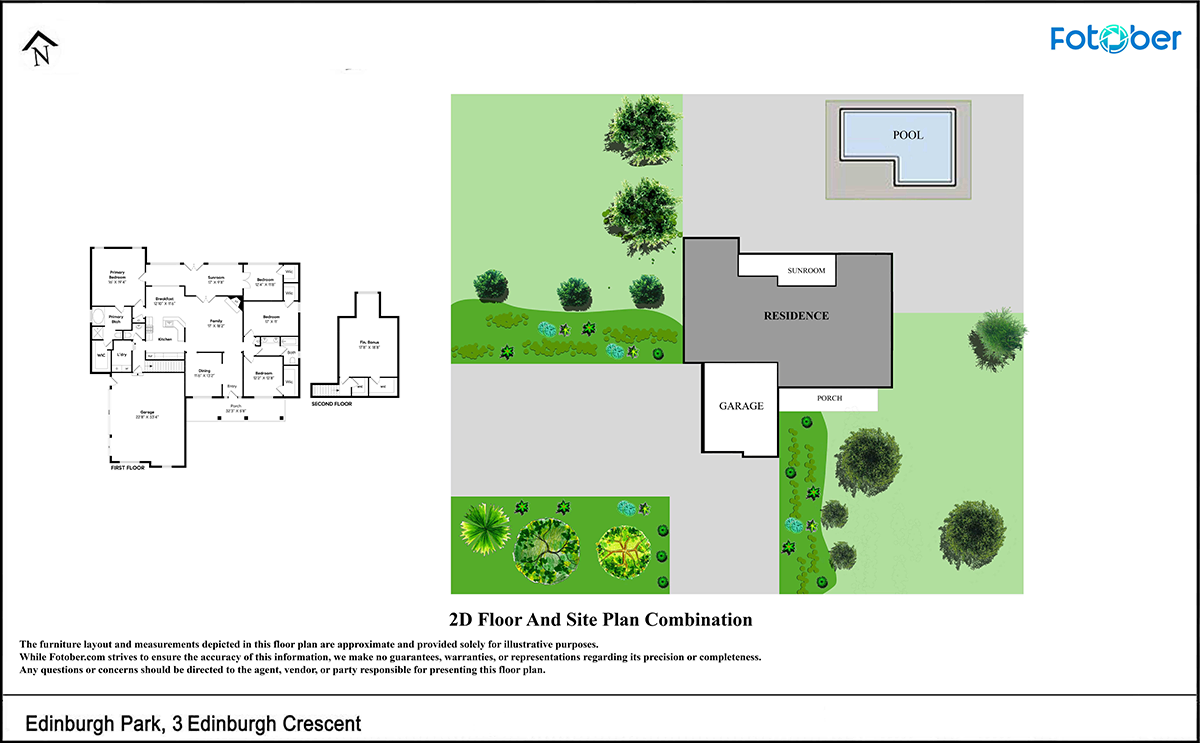
Raw architectural blueprints and technical floor schematics can be difficult for prospective home buyers and investors to interpret. Professional visual assets bridge the gap between technical lines and emotional connection, enabling buyers to instantly understand spatial flow, room dimensions, and indoor-outdoor layouts before construction begins or physical walkthroughs occur.
6.1. How Fotober helps real estate professionals & builders
Fotober provides high-impact visual media services tailored specifically for coastal property developers, architects, real estate agents, and home builders:
- High-precision 2D floor plan redraws: Crisp, clean, and customizable 2D layouts optimized for MLS listings, property brochures, and online marketing channels.
- Immersive 3D floor plan renderings: Realistic 3D spatial models featuring authentic material textures, lighting, and interior styling that showcase the full potential of beach home layout ideas.
- Virtual staging & digital renovation: Flexible digital design solutions that allow sellers to showcase fully furnished coastal interiors without high physical staging costs.
6.2. Speed & precision for faster property sales
In fast-moving real estate markets, high-quality visual presentation directly translates to higher engagement and faster closing times. Fotober delivers rapid turnaround times, exact scale representations, and fully customized branding, ensuring your coastal listings stand out to qualified buyers worldwide.
7. Case study for beach house floor plans: How professional media sold a coastal property 30% faster
To understand the true impact of high-end visualization, one must look at the data behind the listings. A recent project handled by the Fotober Media team involved a stunning $3.5M estate in a prime coastal market that had languished on the MLS for over 90 days. Despite its prime location and brilliant luxury beach house design, the initial listing used standard architectural photography editing and a 2D floor plan that failed to capture the home's "soul."
7.1. The challenge: A "flat" presentation
The property featured a complex elevated beach home structure with a "reverse living" layout. In flat 2D photos, the home appeared disjointed, and potential buyers couldn't grasp the flow between the third-floor social deck and the primary suites. The "coastal vibe" was lost in harsh midday shadows, making the premium price tag hard to justify. In addition, the 2D floor plan does not seem to help much with the property's appeal. It just displays cold, hard technical objects and figures.
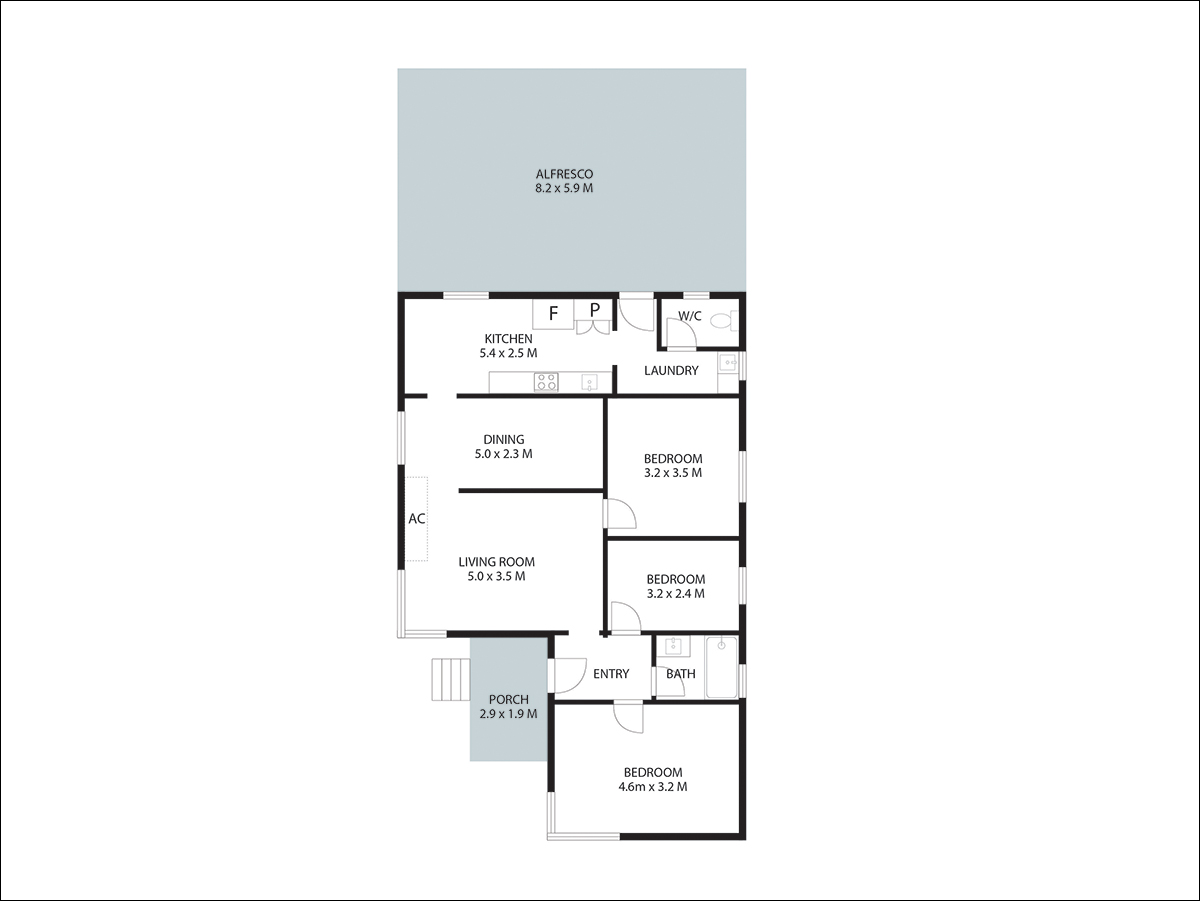 2D blueprints fall short in capturing the actual appearance of a home.
7.2. The Fotober intervention
Our team of Vietnamese-based editors and architectural experts implemented a three-tier media strategy:
- 3D floor plan reconstruction: We transformed static blueprints into intuitive 3D models. This allowed buyers to virtually "walk through" the layout, understanding exactly how the "Sand Room" connected to the beach access.
- Day-to-dusk photo editing: We applied our signature twilight retouching. By adding a warm "window glow" and sky replacement with a vibrant coastal sunset sky, we transformed cold architectural shots into emotional "lifestyle" portraits.
- Virtual staging & rendering: For the vacant guest wing, we used 3D rendering to add high-end, organic-texture furniture, demonstrating the potential of the "Flex" bunk rooms.
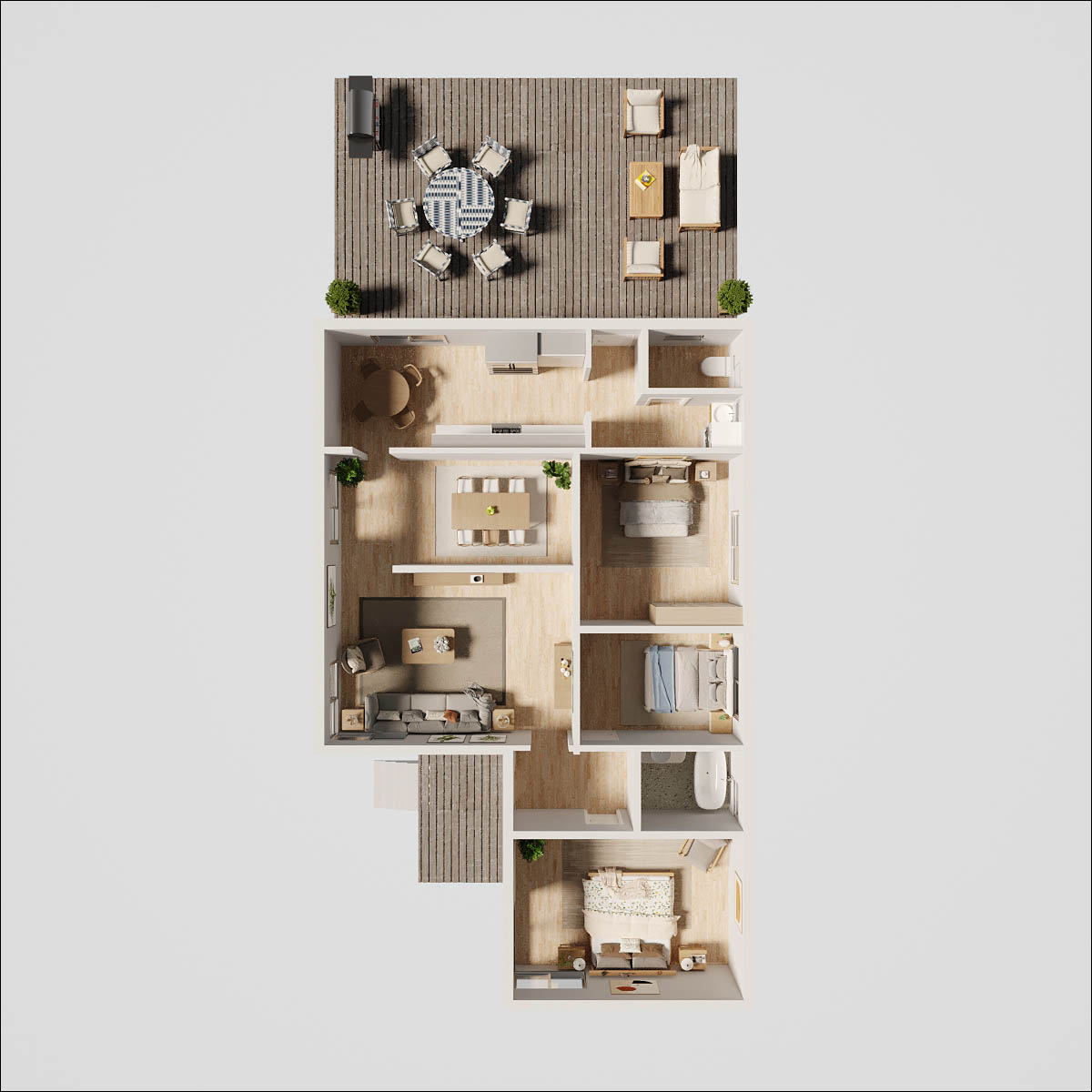 Providing a 3D floor plan helps the beach house attract more high-intent buyers.
7.3. The result: Sold in record time
Within 48 hours of the media refresh, the listing saw a 400% increase in saves on Zillow and Redfin. The property, which had previously seen zero movement, received three competing offers within the first week. It ultimately closed in just 21 days, 30% faster than the area average, and sold for $75,000 above the original asking price. This case proves that while a 2D floor plan builds the house, it is the professional, comprehensive media package that sells the dream.
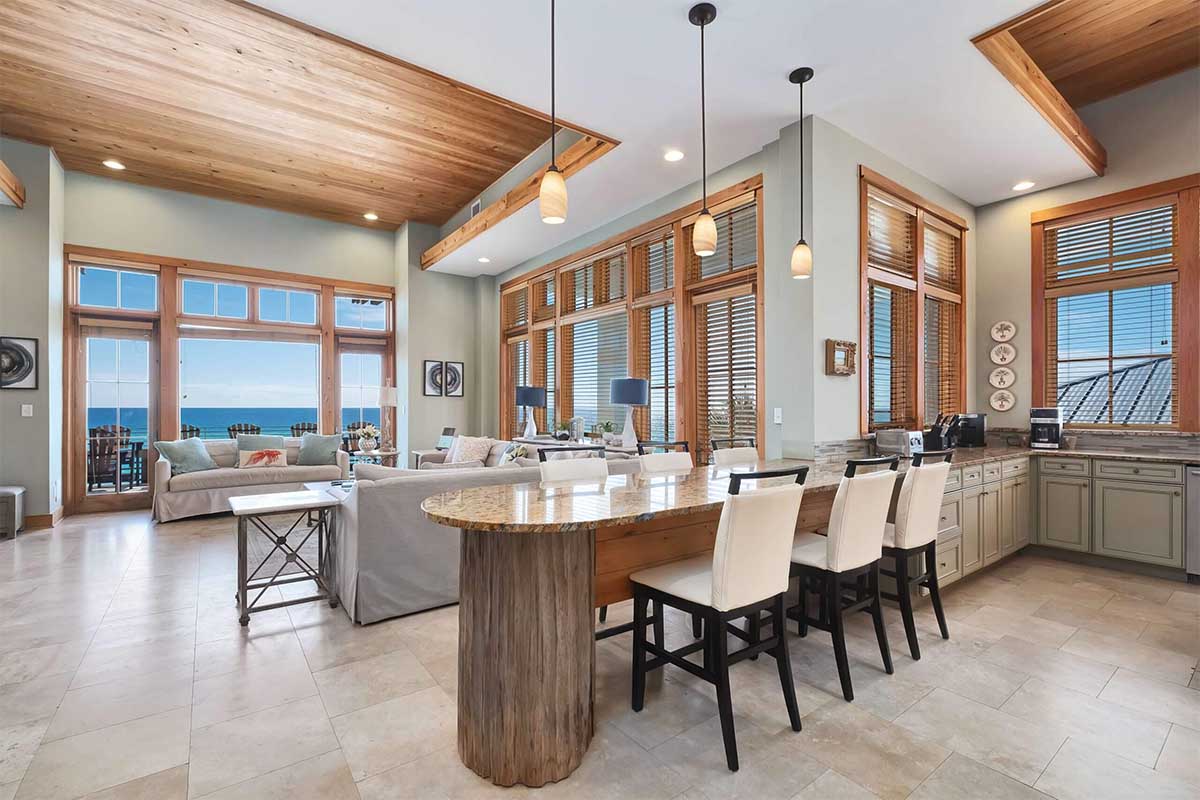 Fotober provides floor plan drawing, photo editing, and virtual staging/rendering services, specialized for coastal properties.
8. Conclusion
Designing or selling the ultimate coastal home requires a thoughtful balance of aesthetic charm, functional spatial flow, and environmental resilience. Whether you prefer an efficient compact cottage, an elevated stilt home, or a sprawling luxury estate floor plan, selecting the right beach house floor plan ensures your living space maximizes panoramic views and effortless indoor-outdoor living.
Ready to bring your coastal vision to life? Partner with Fotober to transform technical blueprints into high-impact 2D and 3D floor plan renderings. Explore Fotober’s professional floor plan redraw and visual media services today to captivate buyers and market your properties at their absolute best.
Follow us on social media to stay updated with the latest trends in the real estate market and popular architectural styles.
- Facebook: fotobermedia.co
- YouTube: Fotober
- TikTok: @fotober
- Instagram: fotober_media.
Related posts

Cincinnati Housing Market 2026: Prices, Trends, and What It Means for Buyers, Sellers, and Investors
October 20, 2026

Modern Luxe Interior Design: Elements, Style Guide and How to Stage It
October 10, 2026

Minimalist Interior Design: Characteristics, Style Guide, and Staging
October 8, 2026

Coastal Interior Design: Style Definition & Staging Guide
September 30, 2026
