




AI Real Estate Photo Editing: Enhance Property Photos Smarter in 2026

Share:
Table of Contents
- 1. Why modern agencies need AI real estate photo editing for
- 2. Core capabilities: What can AI real estate photo editing actually do?
- 3. Step-by-step guide: How to edit real estate photos using AI
- 4. Head-to-head comparison: AI vs. professional outsourcing real estate photo editing
- 5. Limitations of AI real estate photo editing
- 6. Top free and freemium AI real estate photo editing options
- 7. Conclusion
Studies show that buyers spend over 60% of their time on a listing scrolling through photos before even reading the property description. Consequently, high-quality visuals are the primary differentiator that attracts clicks and offers. However, traditional photo editing presents major bottlenecks. Real estate agents and photographers often face 24-to-48-hour turnarounds from manual offshore editing, coupled with high costs that can significantly delay getting a property live on MLS.
Powered by computer vision and machine learning, automated tools can now handle sky replacements, lawn greening, and lighting corrections in seconds rather than hours. This technological shift is revolutionizing how property listings are brought to market. Whether you are an agent trying to cut marketing expenses or a photographer looking to scale your output, using AI to edit real estate photos offers a faster, highly cost-effective alternative to traditional workflows. In this guide, we will explore why AI real estate photo editing matters, break down its core capabilities, compare AI against professional human outsourcing, and provide a simple step-by-step tutorial to help you get started.
1. Why modern agencies need AI real estate photo editing for
The real estate market operates at a breakneck pace. Properties listed first with compelling visual assets consistently secure faster inquiries and higher closing prices. In this high-stakes environment, leveraging AI photo editing for real estate is rapidly transitioning from a modern luxury to an industry necessity. Here is why forward-thinking brokerages and photographers are making the shift.
1.1. Unmatched speed-to-market
Traditional post-production workflows rely on manual retouchers, often requiring 12 to 48 hours to deliver finished media assets. When a seller needs a property listed immediately, these turnaround delays cost valuable market exposure. Automated AI tools process images in bulk within seconds or minutes, enabling agents to upload crisp, professionally enhanced photos to MLS on the exact same day as the shoot.
 AI-assisted editing is the definitive workflow breakthrough of this era, replacing many tedious manual tasks to significantly reduce editing time.
1.2. Massive cost reductions at scale
Outsourcing every listing photo shoot to manual human editing teams can quickly rack up expenses ranging from $2 to $10+ per image. For high-volume real estate agencies or media providers handling dozens of listings monthly, post-production overhead significantly eats into profit margins. Subscription-based and pay-per-credit AI real estate photo editing solutions reduce editing costs down to pennies per image without sacrificing visual fidelity.
1.3. Consistent brand aesthetics across portfolios
Maintaining a cohesive visual style across hundreds of property photos is notoriously difficult with human editors, who naturally vary in technique, color perception, and mood. AI algorithms apply precise, standardized processing parameters, ensuring uniform color temperature, balanced white points, and crisp exposure levels across every single room and property in your portfolio.
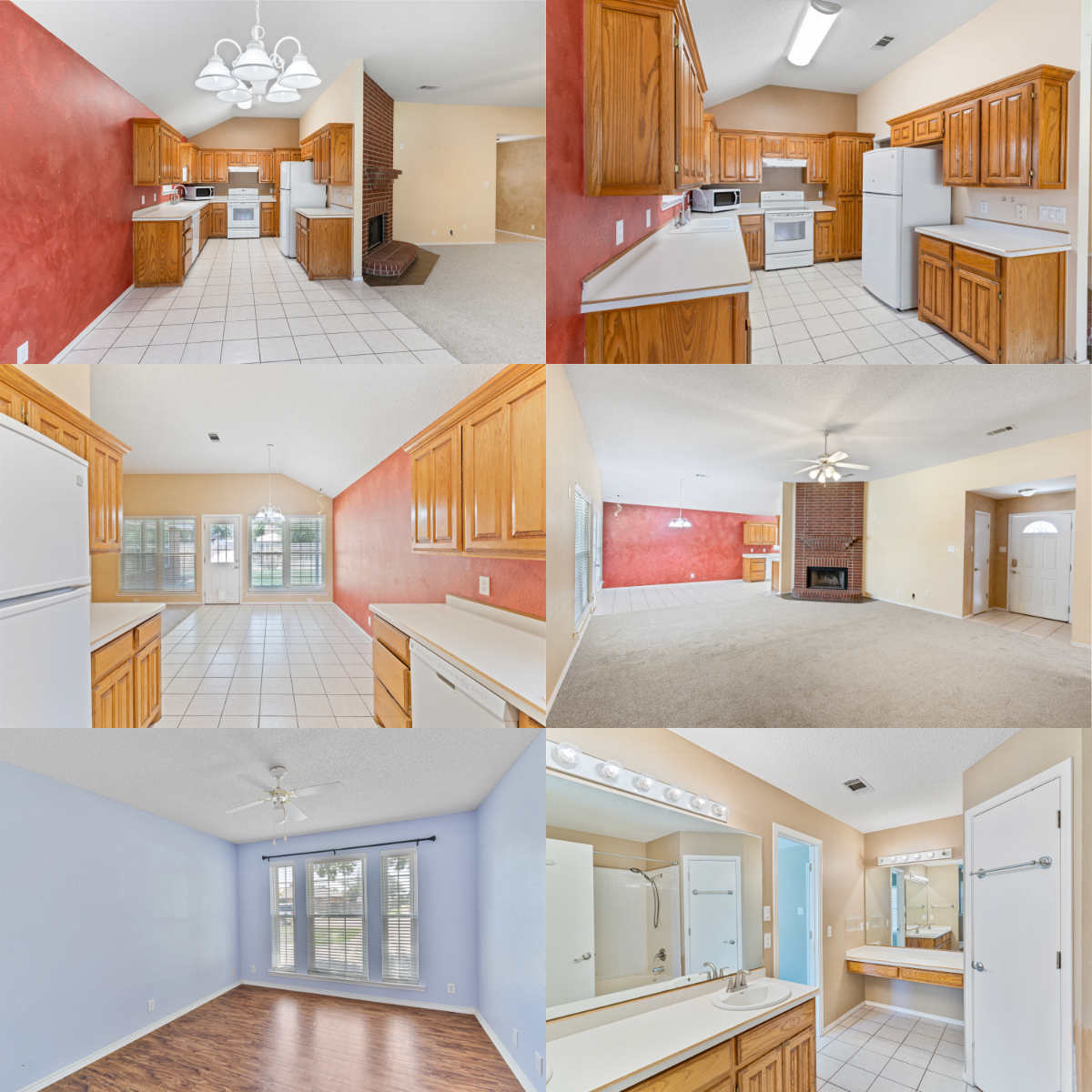 Advanced AI tools can understand a preferred aesthetic of clients.
1.4. Empowering non-professional photographers
Not every property budget justifies hiring a full-scale commercial photography team. Intelligent AI photo editing for real estate software bridges the skill gap. Solo agents taking photos on mid-tier mirrorless cameras or modern smartphones can automatically fix harsh indoor shadows, correct lens distortion, and balance blown-out window views, achieving high-end DSLR visual quality effortlessly.
2. Core capabilities: What can AI real estate photo editing actually do?
AI editing software has progressed far beyond basic exposure and contrast tweaks. Powered by advanced computer vision and generative AI models, modern image processing tools can execute complex spatial and pixel-level manipulations in seconds, tasks that previously required hours of skilled manual retouching in Photoshop.
Here is a look at what modern AI real estate photo editing platforms can accomplish to elevate property visual assets:
2.1. Sky replacement & day-to-dusk transformations
Gloomy, overcast skies can make even a luxury listing feel uninviting. AI algorithms automatically detect complex rooflines, trees, and structural edges to seamlessly swap out grey skies with vibrant blue skies or soft sunset clouds. Going a step further, AI-driven day-to-dusk features convert bright midday exterior shots into dramatic, warm twilight scenes, complete with glowing indoor lighting and exterior landscape illumination, without scheduling an expensive golden-hour shoot.
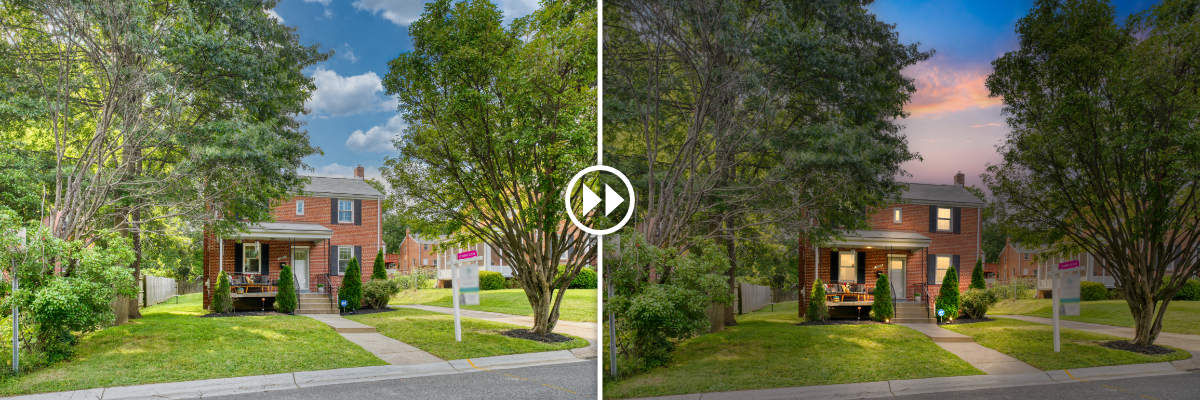 Day-to-dusk editing can be made easier with the help of AI.
2.2. Virtual staging & automated decluttering
Vacant homes often struggle on the market because buyers find it difficult to gauge room scale and potential. Generative AI virtual staging places photorealistic furniture, rugs, and decor into empty rooms matching specific design aesthetics (such as Scandinavian, modern, or luxury mid-century). Additionally, object-removal models automatically erase unwanted clutter, from cars in driveways and power lines to personal photos and tenant belongings, leaving rooms looking pristine and market-ready.
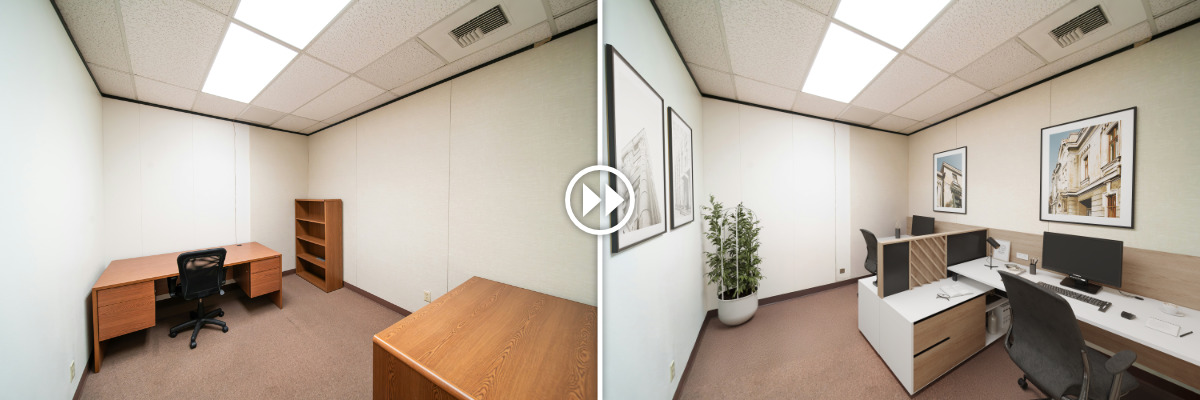 With the rise of AI platforms, virtual staging has become more accessible now.
2.3. HDR tone mapping & window pull correction
Interiors with large windows present a classic exposure challenge: balancing dark interior shadows with bright outdoor light streaming through the glass. AI tone-mapping tools perform single-shot or multi-exposure "window pulls" automatically. The software identifies glass panes, balances high dynamic range (HDR) exposure levels, and reveals crisp, clear outdoor views while maintaining natural warmth inside the room.
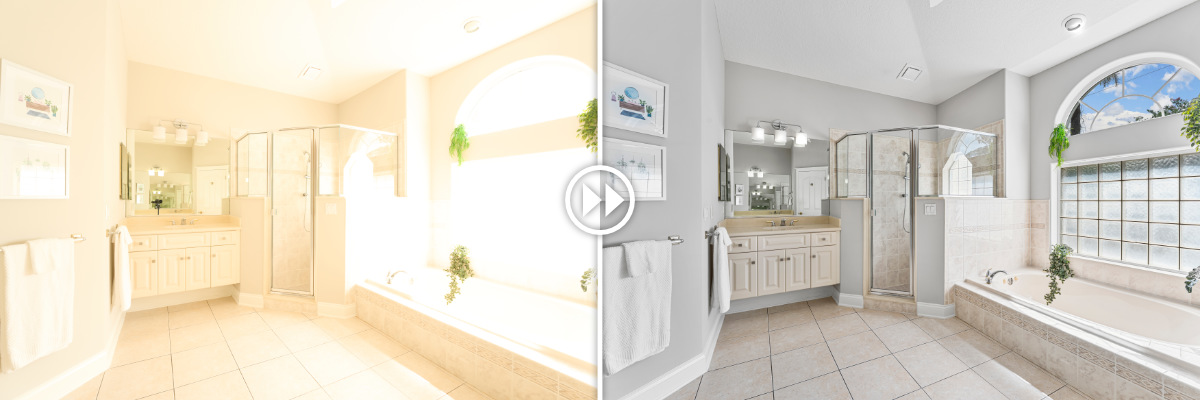 More intricate exposure corrections in real estate photo editing can also be automated.
2.4. Perspective correction & lawn greening
Wide-angle lenses frequently introduce vertical distortion, causing walls and doorframes to appear to lean inward. AI perspective engines instantly calculate room geometry to straighten vertical and horizontal lines across every image. To boost curb appeal, AI color-enhancement models also detect patchy, dead grass or dry soil and replace them with rich, natural-looking green lawns, all while preserving realistic textures and ambient shadows.
3. Step-by-step guide: How to edit real estate photos using AI
Integrating automated processing tools into your daily workflow is remarkably straightforward and requires zero prior Photoshop expertise. By following a structured pipeline when using AI to edit real estate photos, you can transform flat, unedited camera shots into polished, MLS-ready marketing assets within minutes. Here is how to get started.
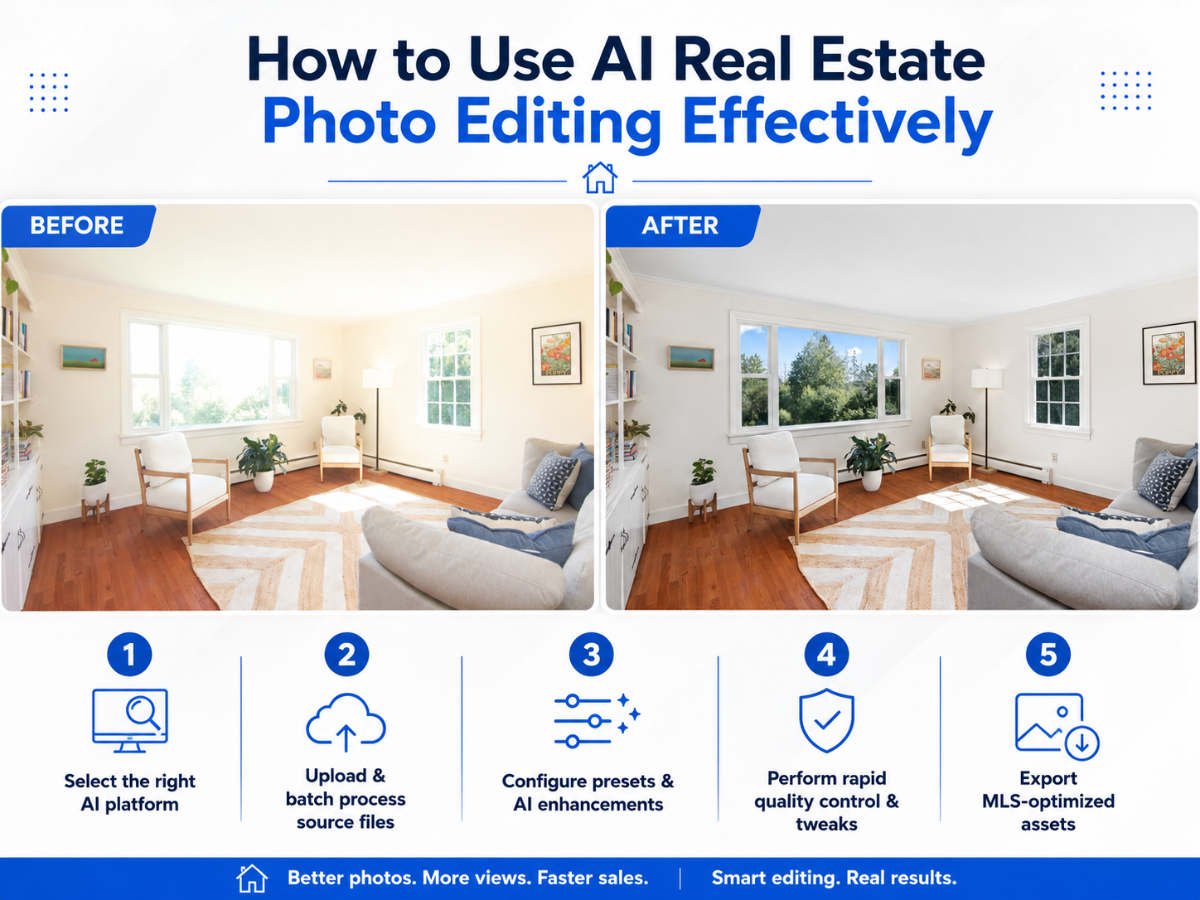 The foolproof process for working with AI real estate photo editing.
Step 1. Select the right AI platform
Choose a dedicated real estate AI editing platform tailored to property media (such as AutoEnhance.ai, BoxBrownie AI, or Photoroom). Ensure the software offers specialized real estate algorithms like automated sky replacement, perspective correction, and indoor HDR tone balancing.
Step 2. Upload & batch process source files
Upload your high-resolution image files directly to the platform’s web portal or desktop app. Most AI tools accept both standard JPEG and camera RAW formats. Batch uploading an entire property shoot at once enables the AI engine to analyze global lighting across the whole portfolio.
Step 3. Configure presets & AI enhancements
Select your target output settings before initiating the automated render. Enable specific enhancement modules such as blue sky swap for exterior shots, vertical line straightening, grass greening, and "window pull" balancing for interiors.
Step 4. Perform rapid quality control & tweaks
Once processing completes, typically within 10 to 30 seconds per photo, conduct a quick manual review. Check window masks for edge bleed and verify color accuracy. Most tools feature intuitive slider controls to tweak color warmth, contrast, or crop framing if minor adjustments are needed.
Step 5. Export MLS-optimized assets
Export your finished photos in web-optimized formats (such as JPEG or WebP) tailored to regional MLS upload requirements. Ensure your export settings strike the ideal balance between sharp resolution and compressed file size to optimize website loading speeds.
Pro Tip: Always maintain an unedited archive of your original RAW or source files. If a unique luxury shot requires custom, manual retouching down the line, you will retain the full uncompressed dynamic range.
4. Head-to-head comparison: AI vs. professional outsourcing real estate photo editing
As automated tools mature, real estate professionals face a strategic choice: Should you fully automate your post-production workflow using AI, or continue relying on human retouchers?
Understanding the trade-offs in AI photo editing vs professional outsourcing is essential for optimizing both your marketing budget and operational workflow. While AI delivers unprecedented speed and cost savings, human craftsmanship still holds distinct advantages in high-end, custom real estate marketing.
Direct comparison matrix
|
Performance metric |
AI real estate photo editing |
Professional outsourcing (Human editors) |
|
Turnaround time |
Seconds to 5 minutes |
12 to 24+ hours |
|
Average cost per image |
$0.10 – $0.50 |
$2.00 – $10.00+ |
|
Handling complex edits |
High efficiency on standard presets; improving on generative tasks |
Exceptional nuance, custom architectural retouching |
|
Production scalability |
Near-infinite instant scaling |
Constrained by human workforce & shift availability |
|
Quality consistency |
Algorithmic uniformity across all images |
Varies based on individual editor experience and fatigue |
4.1. When to choose AI photo editing
Automated AI solutions excel in high-volume, fast-turnaround environments where speed and cost efficiency are paramount. Consider adopting AI processing for:
- Standard residential listings: Mid-tier single-family homes, rentals, and apartment units where standard enhancements (sky replacement, grass greening, color correction) are all that's required.
- Tight MLS deadlines: When a listing needs to go live on the market the same afternoon the shoot takes place, eliminating the overnight wait for offshore manual editing teams.
- High-volume photography studios: Media providers shooting 5 to 10+ properties a day can automate 80% of their baseline post-production, dramatically lowering labor overhead and widening operational profit margins.
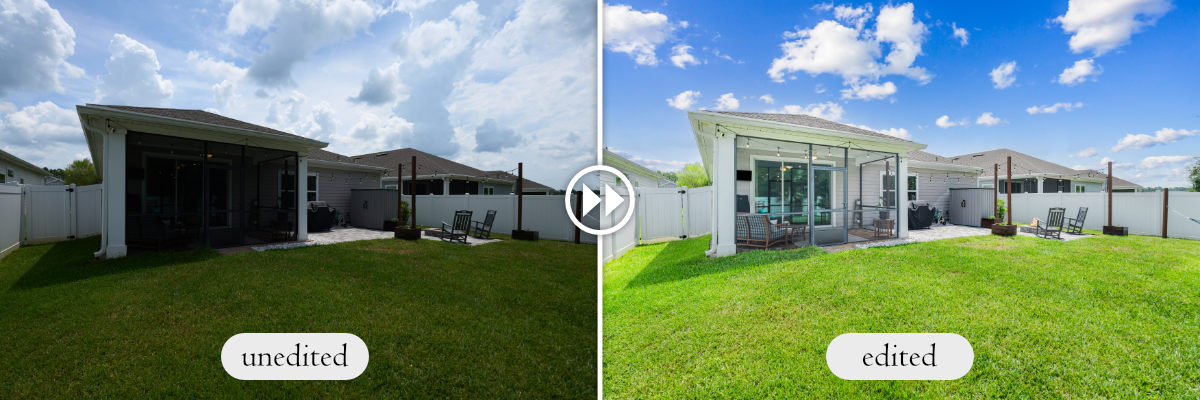 Choose AI when you are facing deadlines and volumes.
4.2. When to stick with professional outsourcing
Despite rapid technological advancements, human retouchers remain invaluable for complex, high-stakes visual asset creation. You should continue leveraging professional human editors for:
- Luxury & architectural real estate: Multi-million dollar luxury estates requiring complex lighting blendings, subtle glare adjustments on high-gloss finishes, or highly specific ambient mood creation.
- Bespoke virtual staging: High-end staging projects where specific interior designer furniture lines, custom textures, or exact spatial dimensions must be matched precisely to vendor specifications.
- Custom branding requirements: Brokerages with strict, highly customized editing guidelines (e.g., unique warm color palettes or specific artistic shadows) that standardized AI presets cannot easily replicate.
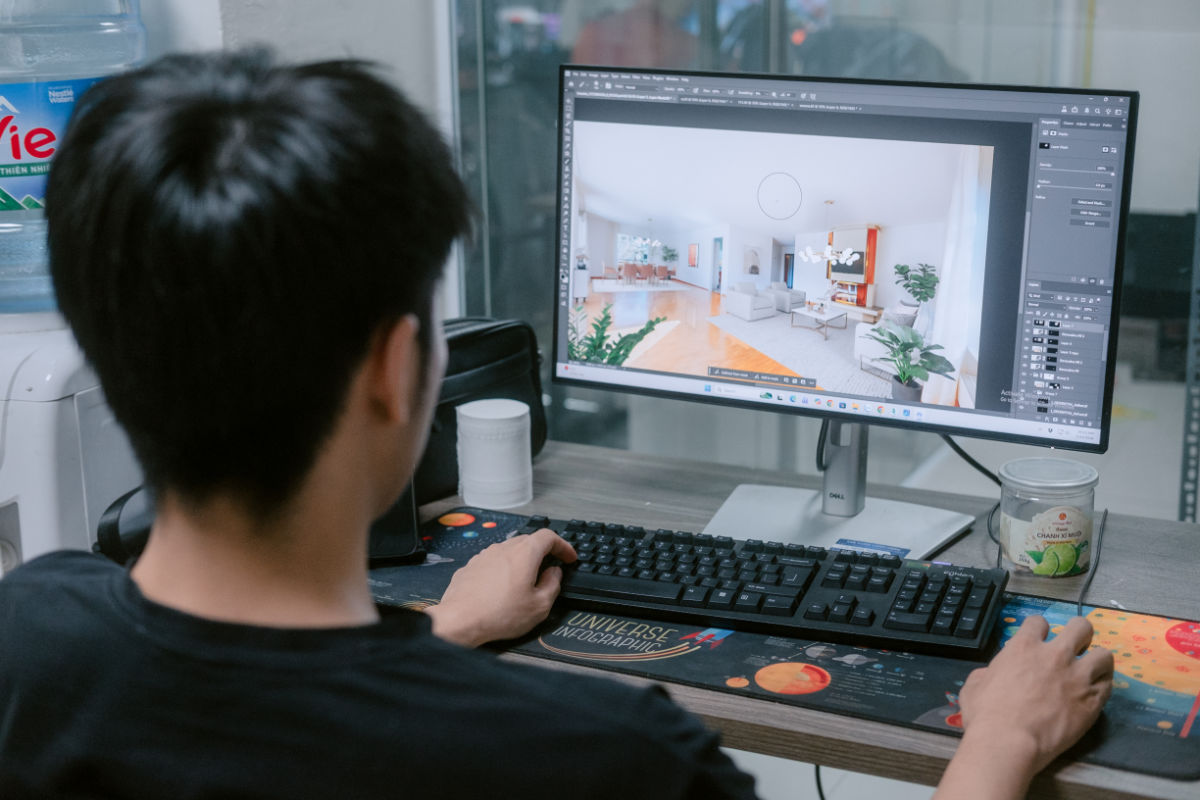 Humans are still irreplaceable when it comes to refined quality and tasteful edits that cater to boutique studios and high-end listings.
The verdict: The debate isn't strictly about choosing one over the other. The most competitive media teams are adopting a hybrid workflow, using AI real estate photo editing to process 80% of daily listing photos instantly, while routing complex luxury properties to professional human editors.
5. Limitations of AI real estate photo editing
While automated tools have drastically reduced post-production friction, AI real estate photo editing is not without its flaws. Understanding these technological and legal boundaries is crucial to avoiding costly marketing mistakes and maintaining professional credibility.
5.1. Ethical and MLS compliance risks
Over-editing is one of the most critical pitfalls when using automated AI tools. Generative AI makes it effortless to erase permanent neighborhood distractions, such as power lines, nearby water towers, or a neighbor's unsightly fence. However, removing permanent physical features can violate local MLS truth-in-advertising guidelines and lead to buyer misrepresentation claims. Real estate photography must enhance a property's authentic appeal, not alter reality.
5.2. Struggles with architectural nuance & complex reflections
AI models rely on pattern recognition, which often struggles when encountering complex interior architecture. Glass railings, large room mirrors, transparent curtains, and intricate ceiling beams frequently trigger edge-detection errors. This can result in unnatural halos, blurred structural lines, or distorted reflections during sky replacements and object removal.
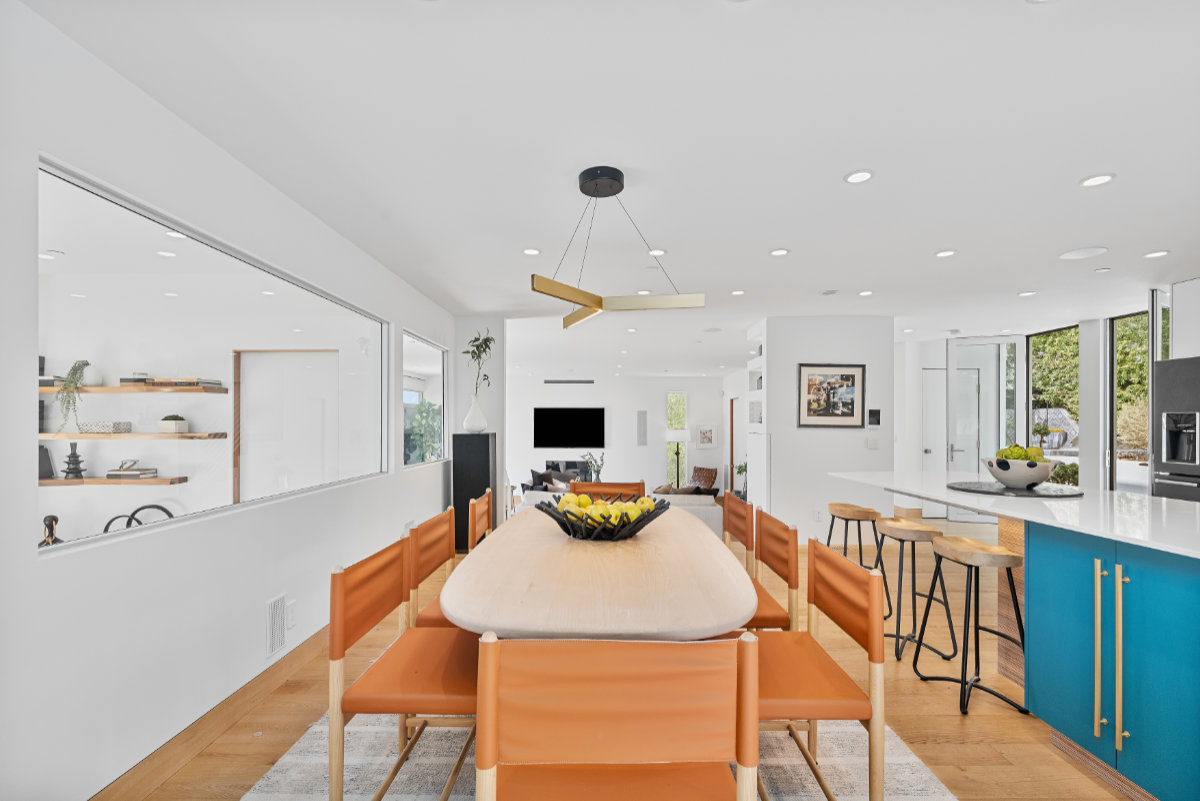 A typical over-edit with virtually no natural micro-contrast and texture on objects’ surfaces, while architectural lines turn out mushy.
5.3. The "uncanny valley" in automated staging
While standard AI furniture placement works well for quick room visualizations, basic generative algorithms occasionally misjudge room scale or lighting angles. This can produce synthetic, "floating" furniture or awkward perspective shifts. For high-end luxury listings, discerning buyers can easily spot artificial renders, which may lessen the property's perceived value.
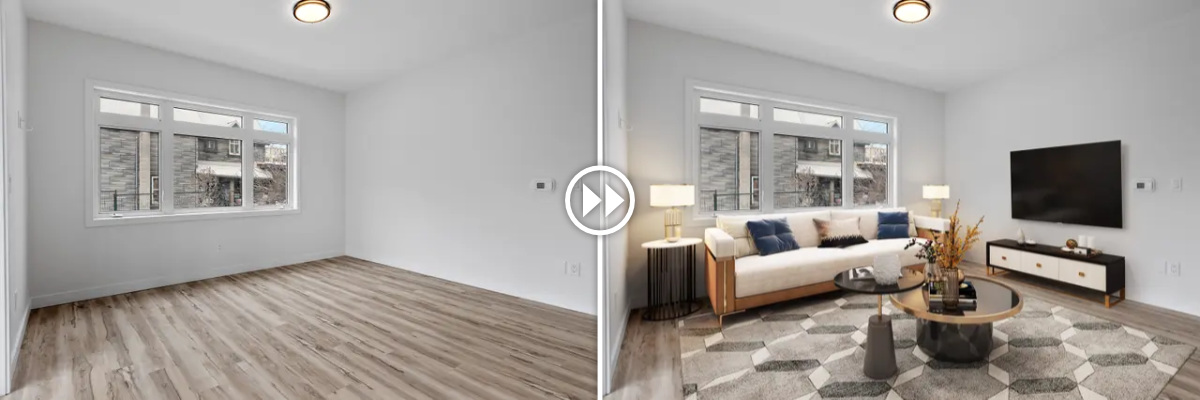 AI results may lack the resolution needed for high-end listings. Sometimes the edit doesn’t “gel” with the rest of the image.
6. Top free and freemium AI real estate photo editing options
If you want to test using AI to edit real estate photos without committing to an upfront subscription, several platforms offer free tiers, web-based tools, or generous trial credits.
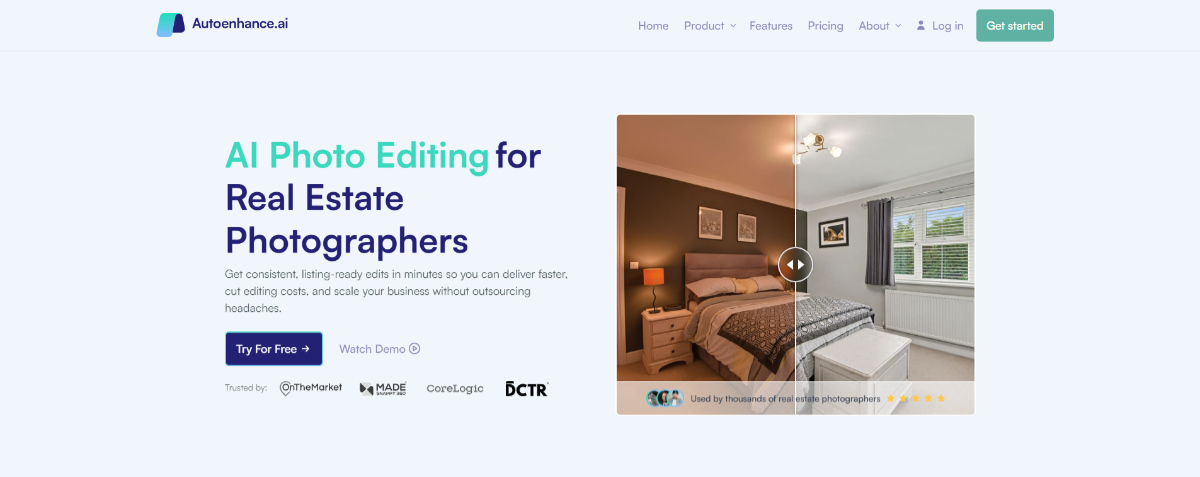
6.1. Autoenhance.ai (Free trial credits)
- Best for: Automated sky replacement and exterior enhancements.
- Overview: Purpose-built for property marketing, Autoenhance.ai automatically corrects white balance, straightens leaning vertical walls, and replaces dull grey skies. New accounts receive free initial credits upon signup to test batch image quality.
6.2. Imagen for Real Estate (250 free edits trial)
- Best for: High-volume batch processing and window pull correction.
- Overview: Designed specifically for real estate media providers, Imagen offers a browser-based AI platform. Their free trial provides up to 250 free edits, giving you a full-scale test of their automated HDR merging, perspective fixes, and window pull capabilities.

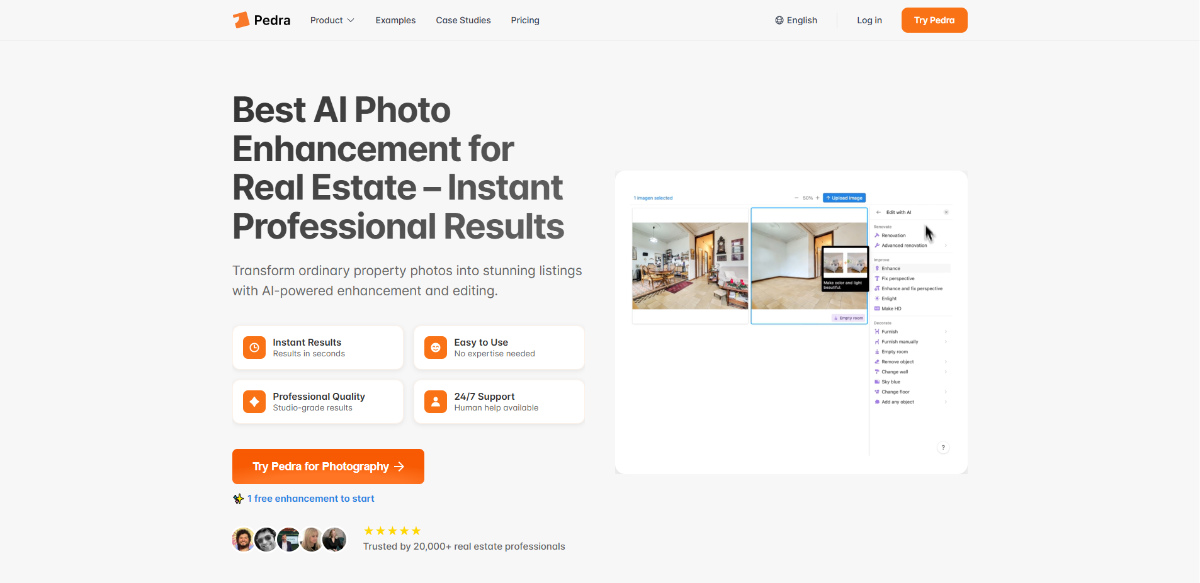
6.3. Pedra AI real estate photo editor (Free web tool)
- Best for: Quick, single-shot enhancements without signing up.
- Overview: Pedra provides a free online tool where agents can drop raw interior or exterior photos directly from their browser. The AI automatically balances interior lighting, fixes sky color, and straightens vertical lines in seconds.
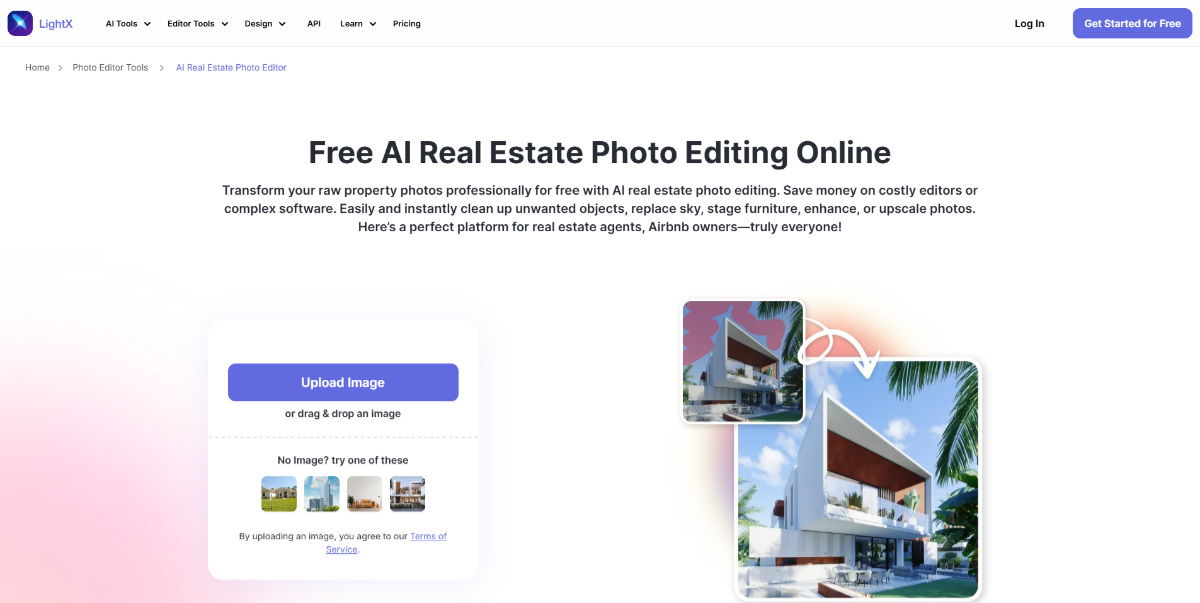
6.4. Pixelbin & LightX (Freemium object erasers)
- Best for: Free decluttering and item removal.
- Overview: These browser-based tools feature specialized AI generative fill and object erasers. They are ideal for solo agents who need to clean up minor clutter, power cords, or driveway vehicles from individual listing photos for free.
Key Takeaway: Free tiers and trial credits are excellent for testing pipeline speeds and handling occasional listings. However, if you process dozens of properties monthly, upgrading to dedicated paid plans or integrating a hybrid workflow ensures consistent 6K resolution and brand uniformity.
7. Conclusion
AI real estate photo editing is not about replacing human artistry; it is about eliminating repetitive post-production friction. By automating routine tasks like sky replacements, color balancing, and line straightening, AI elevates baseline visual quality while slashing turnarounds from days to seconds.
The future of property marketing belongs to hybrid workflows. Forward-thinking real estate agents and photographers should leverage AI tools to handle 80% of daily listing media effortlessly, reserving manual human retouching for high-stakes luxury properties.
Ready to accelerate your marketing pipeline and lower editing expenses? Test an AI real estate photo editing platform today to experience how automated post-production can transform your listings.
Follow us on social media to stay updated with the latest real estate photo editing techniques for making your listing stand out.
- Facebook: fotobermedia.co
- YouTube: Fotober
- TikTok: @fotober
- Instagram: fotober_media.
Related posts
Cincinnati Housing Market 2026: Prices, Trends, and What It Means for Buyers, Sellers, and Investors
October 20, 2026

Modern Luxe Interior Design: Elements, Style Guide and How to Stage It
October 10, 2026

Minimalist Interior Design: Characteristics, Style Guide, and Staging
October 8, 2026

Coastal Interior Design: Style Definition & Staging Guide
September 30, 2026
